
An international #OpenAccess journal publishing high-quality research, reviews & commentary on #ClimateChange, #Sustainability, #Environment & #Ecology.
Joined May 2019
- Tweets 490
- Following 790
- Followers 823
- Likes 44
257 Photos and videos

Pinned Tweet

AI may feel weightless, but its growth depends on very physical systems: electricity, cooling water, heat exchange, and urban infrastructure.
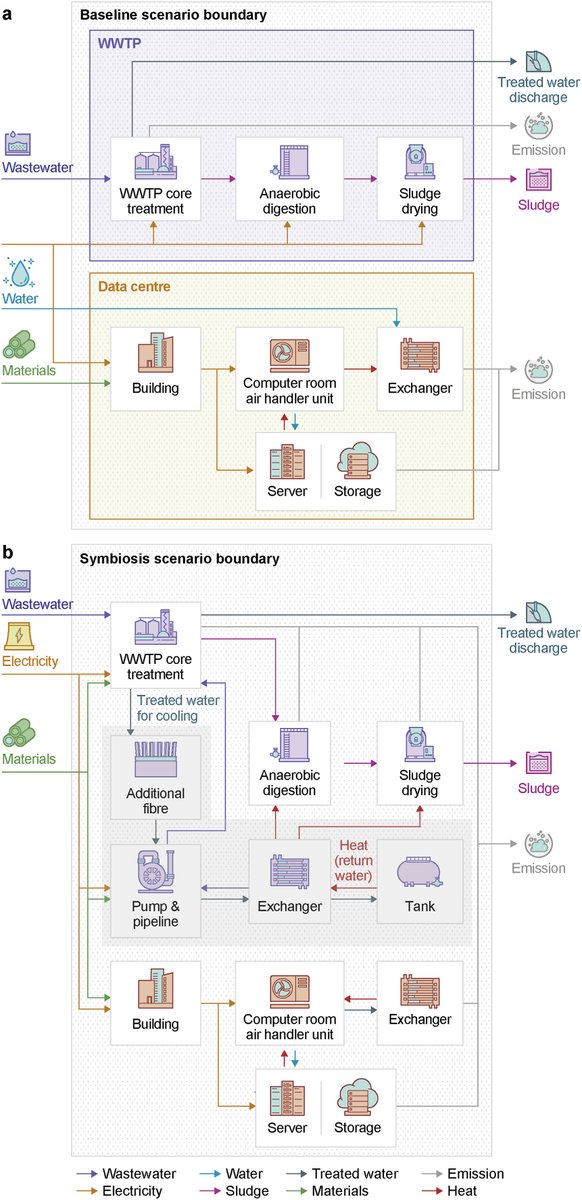
ESE's new cover article about “Global data-centre–wastewater symbiosis” reimagines this challenge as a circular infrastructure opportunity.
Read the article here: doi.org/10.1016/j.ese.2026.1….
1
59
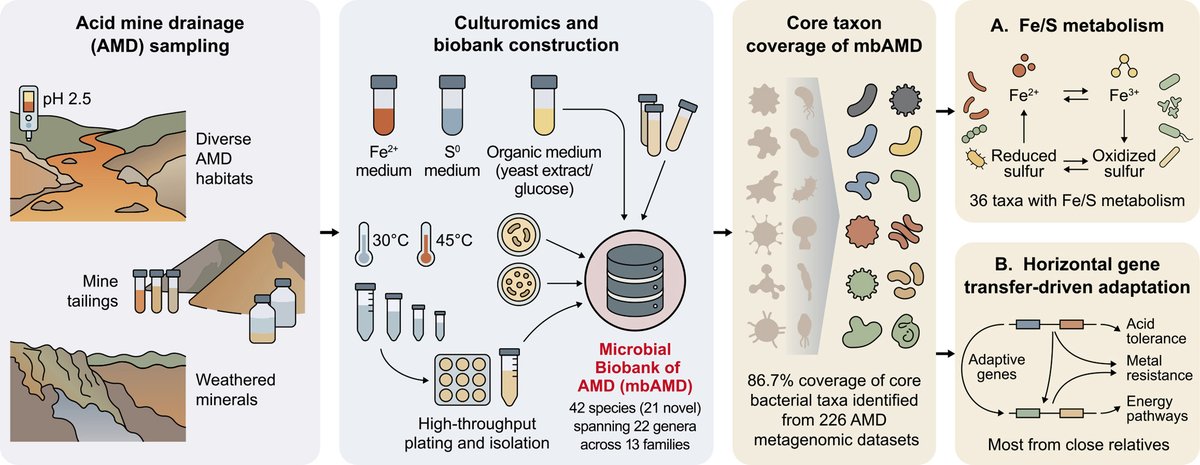
New publication about mbAMD culturomics #biobank: 652 isolates, 42 species, 86.7% core AMD #microbiome coverage. 36 #iron/#sulfur metabolizing taxa identified, including novel acid-tolerant sulfate reducers. #Extremophile adaptation driven by #HorizontalGeneTransfer from phylogenetically close relatives.
Read the full article free of charge here:
doi.org/10.1016/j.ese.2026.1…
@BanfieldLab, @ACEGenomics, @BioleachRes, @GeomicroJ, @ExtremophileRes, @MicroDarkMatter, @HGTmicrobe, @AcidophileLab, @BiogeochemProf, @EnvMicroKOL1, @EnvMicroKOL2, @EnvMicroKOL3, @EnvMicroKOL4, @EnvMicroKOL5, @EnvMicroKOL6
41
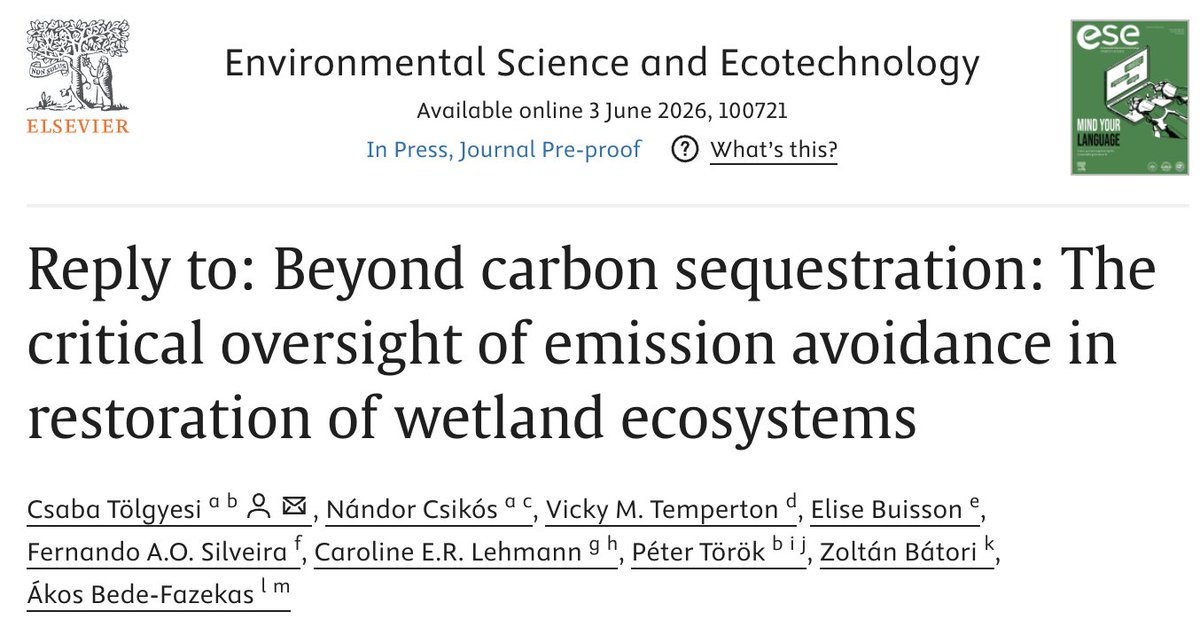
A focused scientific exchange, now published:
Wu et al. argue that global restoration models systematically overlook avoided emissions from degraded wetlands — an ongoing carbon source that dominates near-term climate value, particularly for peatlands.
Tölgyesi et al. respond with explicit quantification: incorporating wetland avoided emissions (~4% of global GHGs) shifts their projected offset from 3.7–12.0% to 3.7–12.3% — a modest adjustment that leaves their core conclusion intact, while acknowledging the methodological gap is real.
The exchange surfaces a question that extends well beyond these two papers: Are current restoration models asking the right question — "How much carbon can we sink?" — or should the primary metric be "What emissions can we stop?"
The answer has direct implications for where restoration funding flows.
We invite readers to engage with both perspectives:
📄 Wu et al.: doi.org/10.1016/j.ese.2026.1…📄 Tölgyesi et al.: doi.org/10.1016/j.ese.2026.1…
#EcosystemRestoration #Peatlands #ClimatePolicy #NatureBasedSolutions
40
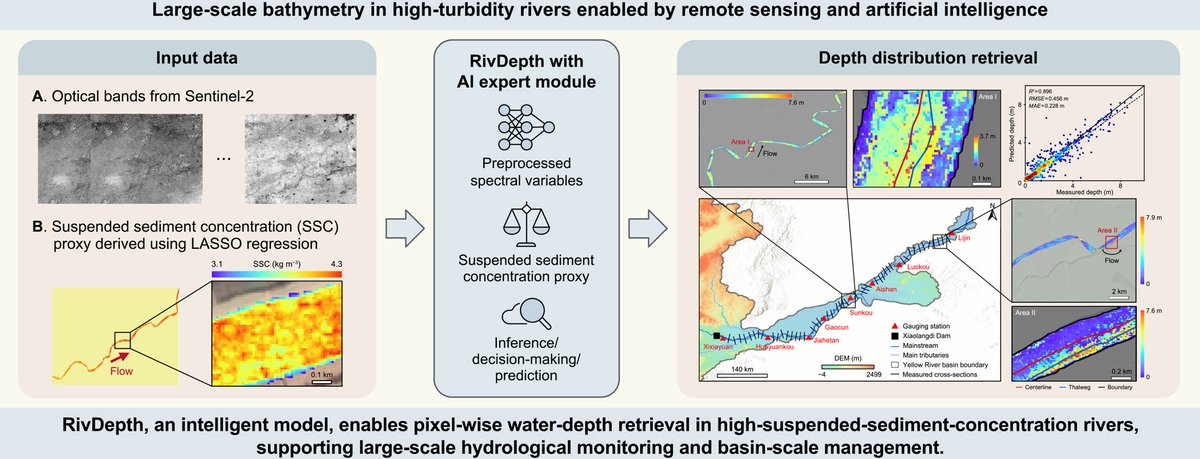
Researchers from @Tsinghua_Uni develop RivDepth AI model, which integrates Sentinel-2 spectral variables and optically-derived SSC proxy to retrieve water depth distributions in high-SSC rivers (>1 kg m⁻³), achieving R²=0.896 and RMSE=0.456 m across 786 km of the lower #YellowRiver.
Read the full article free of charge:
doi.org/10.1016/j.ese.2026.1…
@HIRSlab, @RSHAL_MSU, @KinarNicholas, @Rainmaker1973, @WaterResPod, @Hydrology_AGU, @GodieMurithi, @hydrologistARJ, @Hydrologist19, @limnologia, @USGS_Water
3
2
214
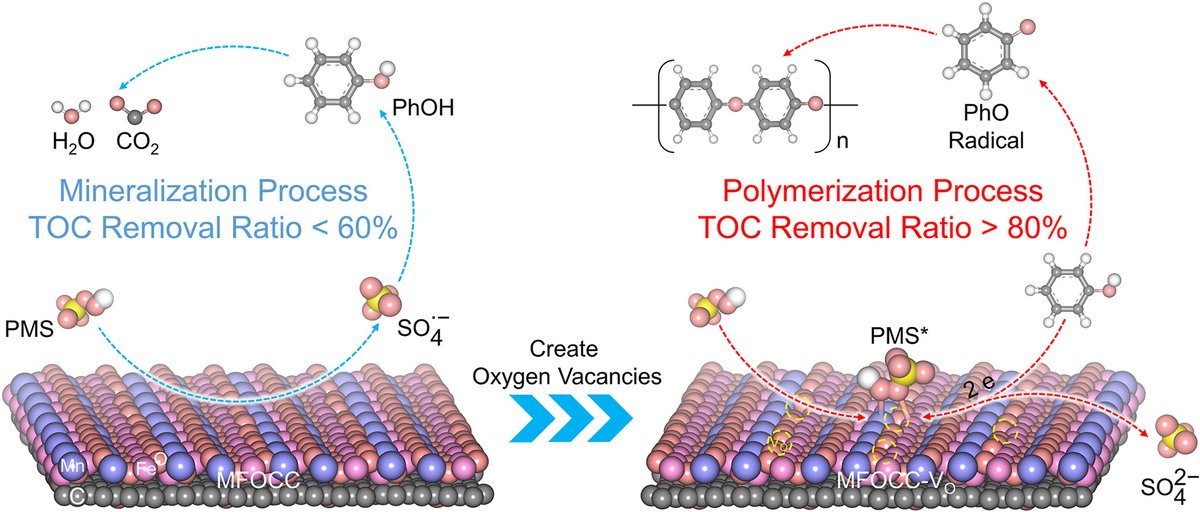
Engineering #OxygenVacancies in MnFe2O4 spinel oxide shifts the d-band center from −1.10 to −0.95 eV, driving two-electron #DirectOxidativeTransfer for selective phenol polymerization and sustained 97.5% removal with ultra-low oxidant.
Read the full article free of charge:
sciencedirect.com/science/ar…
61
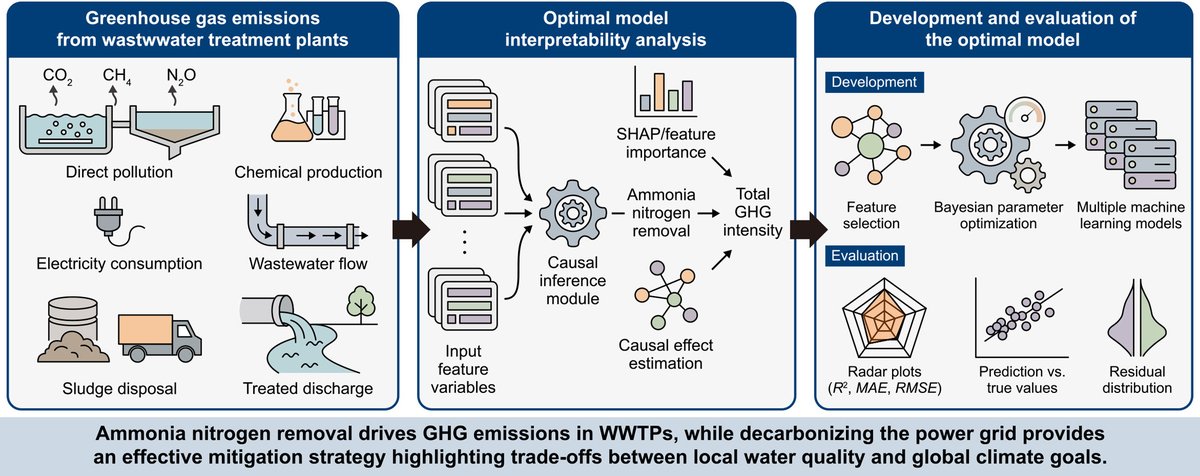
Across 40,722 Chinese WWTPs, integrated SEM-IML analysis identifies ammonia removal as the strongest causal driver of #GHGemission intensity (5.65% surge per 10% increase) while 10% reduction in regional grid electricity emission factor enables 4.45% mitigation, revealing critical tension between stringent discharge standards and #climategoals.
Read the full article free of charge here:
doi.org/10.1016/j.ese.2026.1…
2
56
Data–water symbiosis: Coupling data centres with wastewater treatment plants could cut 84 million tonnes of CO₂ eq and save 1,300 million m3 of freshwater annually, via @EurekAlert! eurekalert.org/news-releases…
2
58
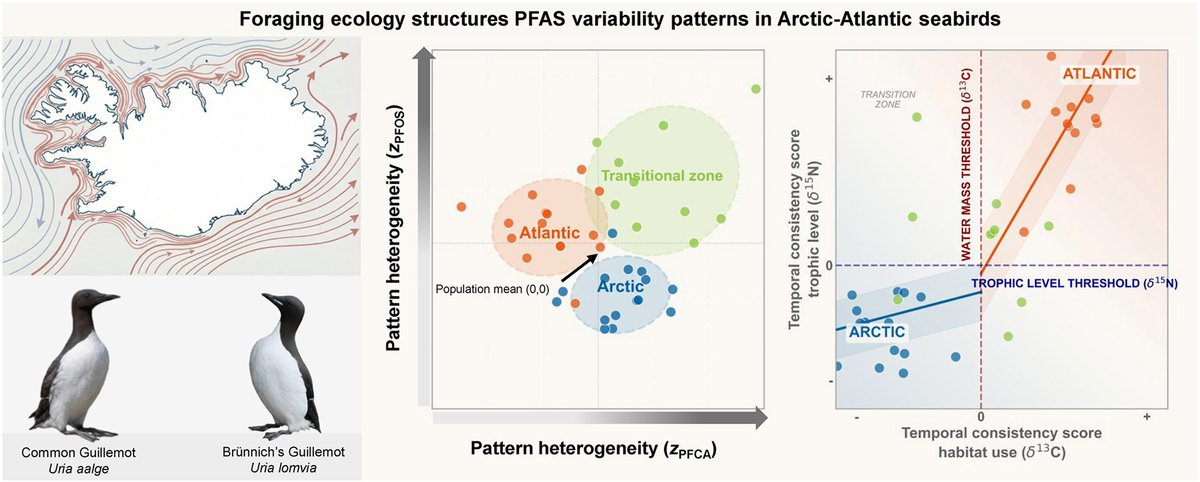
#PFAS variability in #Arctic-Atlantic guillemots constitutes a structured ecological signal of #oceanographic regime and foraging behaviour. Water masses (δ¹³C) primarily structure #PFOS variability, while trophic position (δ¹⁵N) modulates #PFCA variability. Read the full #OpenAccess article here:
doi.org/10.1016/j.ese.2026.1…
@REbinghaus, @MPI_GEA, @HereonHelmholtz, @BAS_News, @maxplanckpress, @DrLizCCraig, @AustadHakon, @wild_smanne, @imogenrbailes, @AliceCarravieri, @TartuSabrina
49
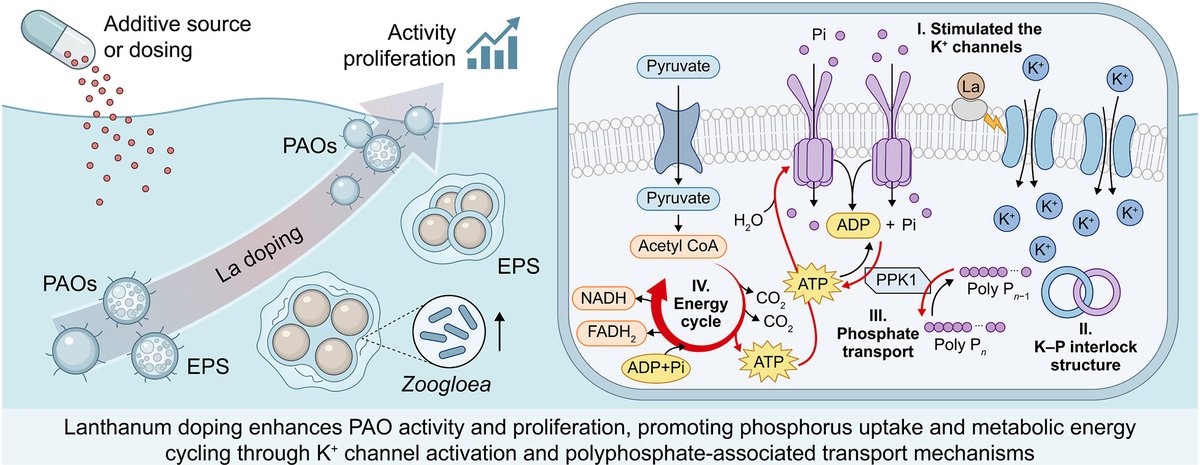
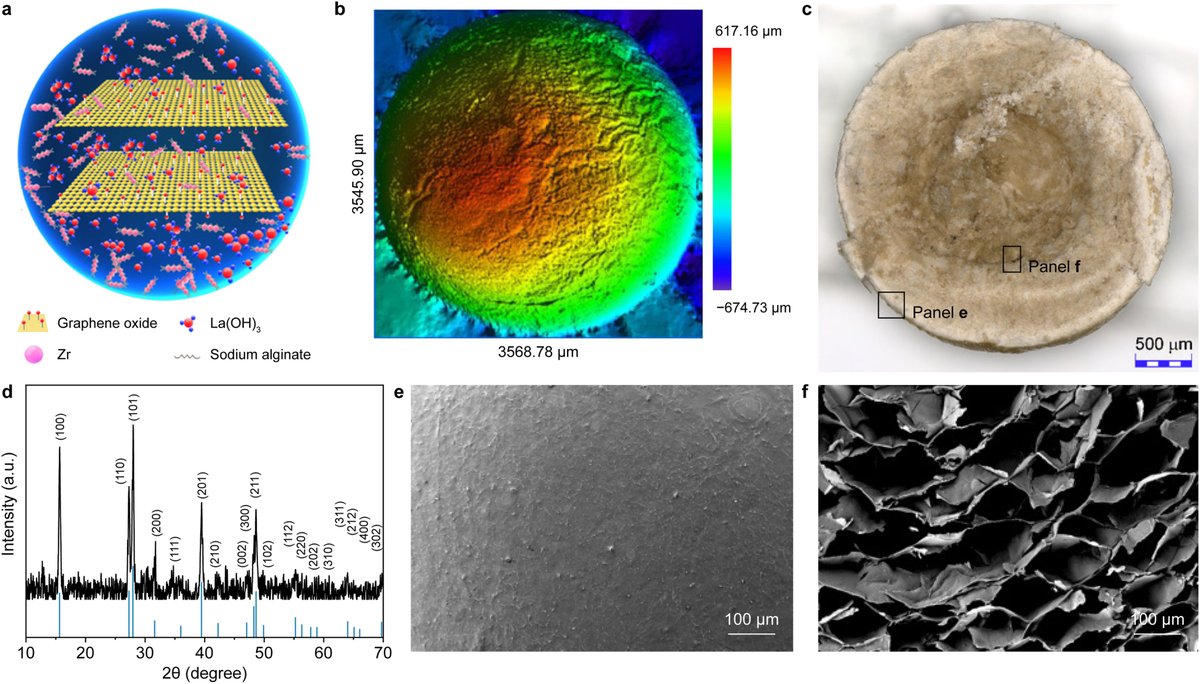
Trace La³⁺ activation drives deep biological phosphorus removal in #EBPR systems: slow-release #lanthanum aerogel reduces effluent TP to 0.14 mg L⁻¹, lowering chemical consumption by nearly two orders of magnitude via K⁺ channel stimulation and upregulated core energy metabolism proteins in #PAOs. Read the full #OpenAccess article here:
doi.org/10.1016/j.ese.2026.1…
@Soares_UK, @a_s_adeleye, @p2p_81, @Wells__H2O, @GlobalWaterFood, @love_h2o, @taichi_yokokawa, @IsotopeEcology, @CongcongZhang1, @tawnyapeterson, @Fra4Environment, @ZhiyueUHM, @CraigJust, @ZouShiqiang, @verbylam, @ferby_m
1
69
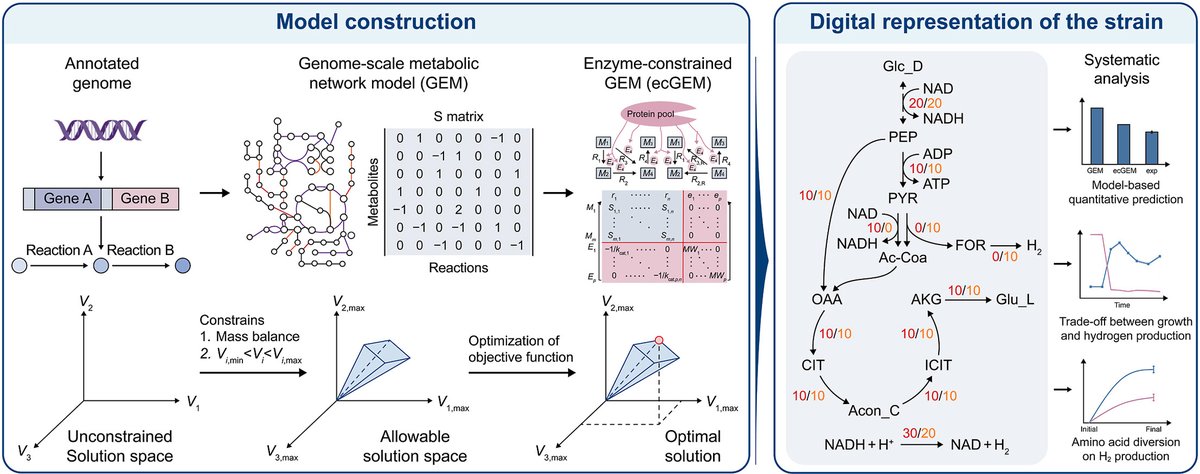
#Enzyme-constrained #genome-scale models (#ecGEMs) of an Ethanoligenens species quantitatively resolve growth–hydrogen trade-offs in #fermentative bacteria. #AminoAcid #biosynthesis diverts #NADH flux to enhance #biohydrogen yields; in silico knockouts identify targets increasing production by up to 30%. Read the full #OpenAccess article here:
doi.org/10.1016/j.ese.2026.1…
@ChristianEuler, @BalsaCanto, @LupoLabs, @ericmyces, @ThomasAbeel, @abremges, @sherlockyymh, @XRodrigzMiret, @harriswangnyc, @MichaelCJewett, @Moon_Synth_Bio, @MetEngUSAL, @bpalsson, @ProfBuehlerMIT, @jarridrb, @bravo_abad
2
2
196
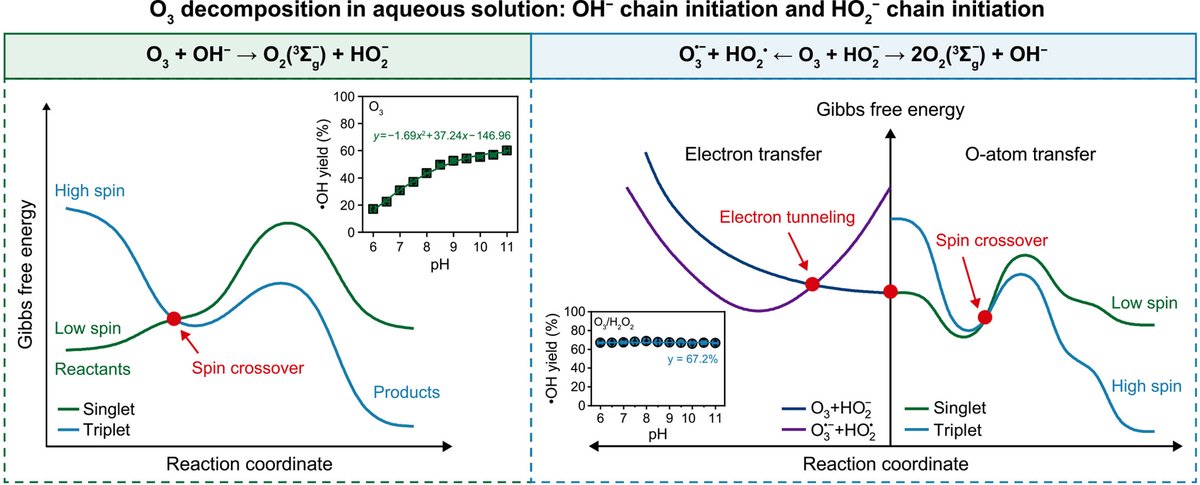
Electron transfer drives #hydroxylradical formation in #peroxone reactions. Peroxone reactions yield approximately 67% hydroxyl radicals, substantially exceeding the assumed 50%. #Ozone reacts with hydroxide exclusively via spin-forbidden oxygen-atom transfer.
doi.org/10.1016/j.ese.2026.1…
@HIT_1920, @BluePapagao, @JuanCar38422560, @paulwesterhoff, @waterprof, @RiceCEVE, @Chemistry_IITB, @SChES1429, @H2Eco6919, @PRISTINE_EU
1
3
78
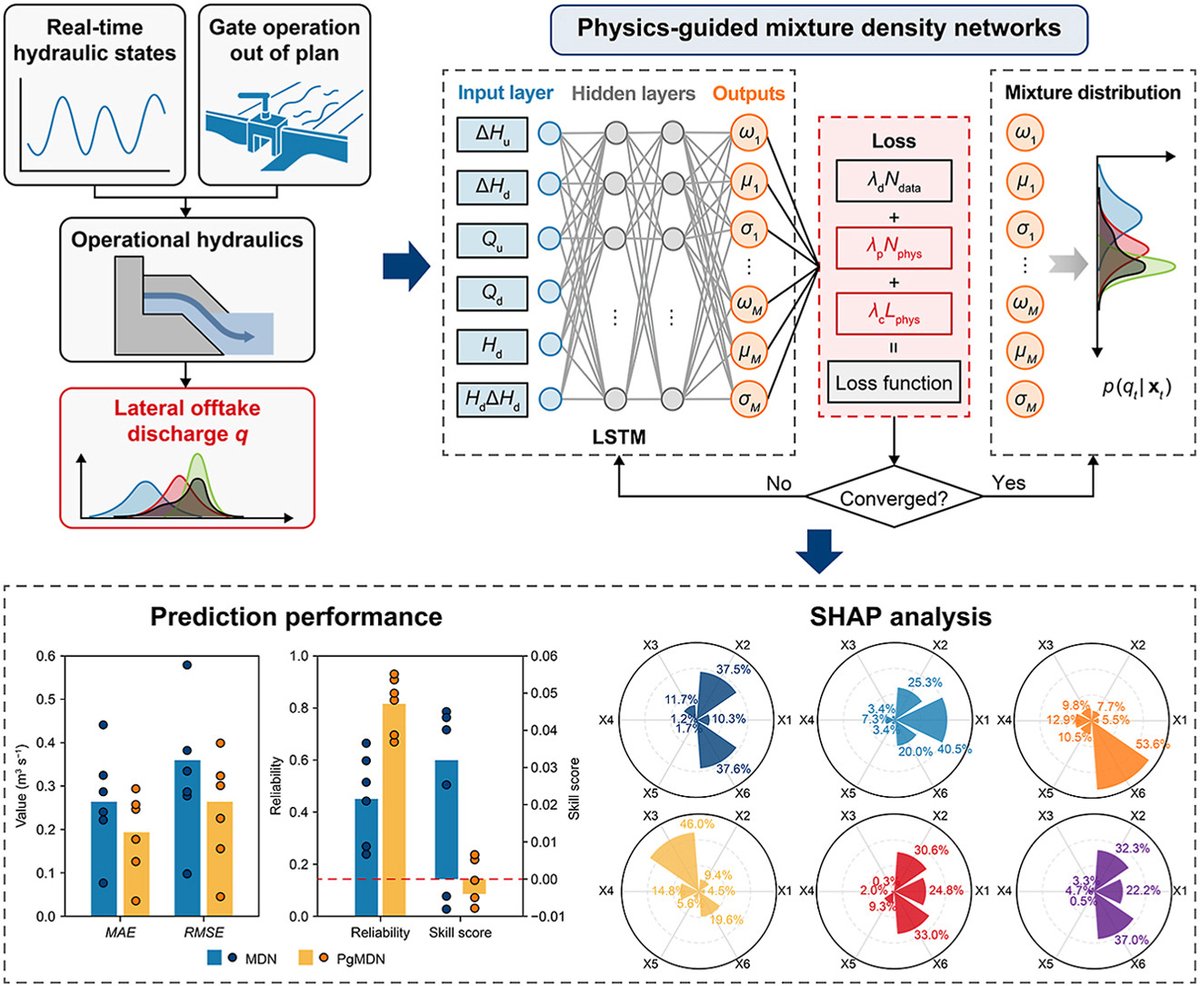
Physics-guided MDN (PgMDN) embeds local mass balance and prediction-uncertainty constraints for probabilistic #hydrodynamic forecasting in #canal systems. This work is done by @GuangtaoFu, @H2ODraganSavic and co-authors from @WHU_1893, @Water_UofExeter, @KWR_Water.
Read the article free of charge:
doi.org/10.1016/j.ese.2026.1…
@demiribr, @KinarNicholas, @Water_Enigma, @UIHILab, @H2OInformatics, @NimaShokri_GHI, @paulcelicourt, @niko_wanders, @GHI_TUHH, @jorgepesantez, @a_ameli2, @AmberWaves_USU
1
2
87
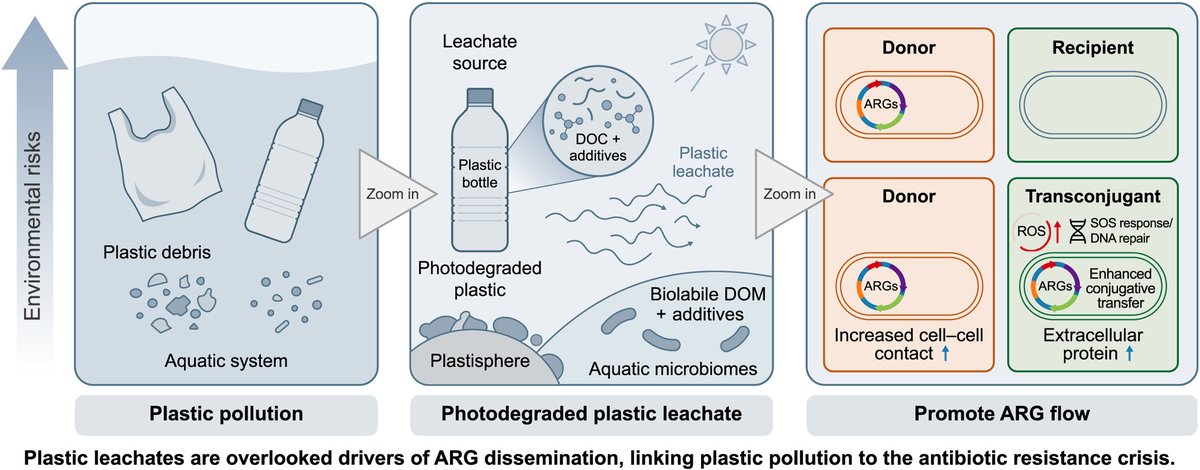
Photodegraded #PVC leachate boosts conjugative #ARGtransfer efficiency up to 44.6-fold (transconjugant abundance up to 26.4-fold) in model and natural aquatic #microbiomes via ROS-induced SOS response, extracellular protein modulation, and sustained ATP homeostasis; effects are non-linear and modulated by leachate concentration and microbial community diversity. doi.org/10.1016/j.ese.2026.1…
@jjwangclemson, @SUSTechSZ, @Lisa_R_Moore, @E_StevensonBG, @mhzaman, @zhugen, @Xuanji_Li, @dr_imariwalker, @austin_doug13, @_Roberto_Rosal, @PlasticsEnvRes
1
2
101
Co-construction between data centres and WWTPs could reduce AI infrastructure’s carbon footprints by ∼84 Mt CO2 eq yr⁻¹ and save ∼1,300 million m³ freshwater annually via optimised treated-effluent cooling and bidirectional thermal recovery. doi.org/10.1016/j.ese.2026.1…
@GDaigger, @H2ODraganSavic, @yutao_troy, @HIT_1920, @renshaolei, @LandonMarston, @AdamWierman, @MoghaddamLab, @tylerhnorris, @aakashgupta, @UWMWaterPolicy, @svembu, @Equinix, @digitalrealty, @awscloud, @googlecloud, @MetaNewsroom, @Azure, @VantageDC, @CoreSite, @IRMDataCenters, @aligneddc
3
4
196
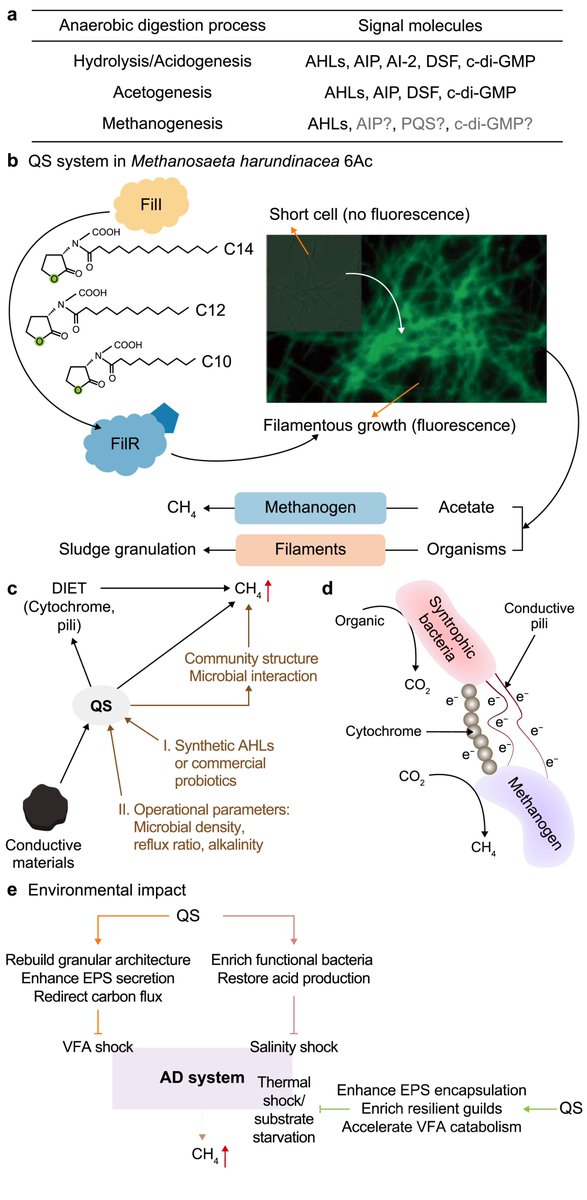
Our latest Review article led by the authors from @HIT_1920, @KU_Leuven, and @BNU_1902.
#QuorumSensing for carbon-neutral wastewater treatment: Mechanisms, challenges, technological pathways, and future prospects.
doi.org/10.1016/j.ese.2026.1…
@ecoteam_ees, @saida_benomar, @MarkvLoosdrecht, @DanielFozer, @FredericCoulon1, @ShiqiangZou, @bonniebassler, @jmathieu_lab, @vincenzonaddeo, @m_maktabifard, @XiaoshuHou, @He_Yu_WWTP, @ZheHe_WWTP, @RamonSalaG, @MariaMolinos, @JacekMakini, @HusseinAlHazmi
2
87
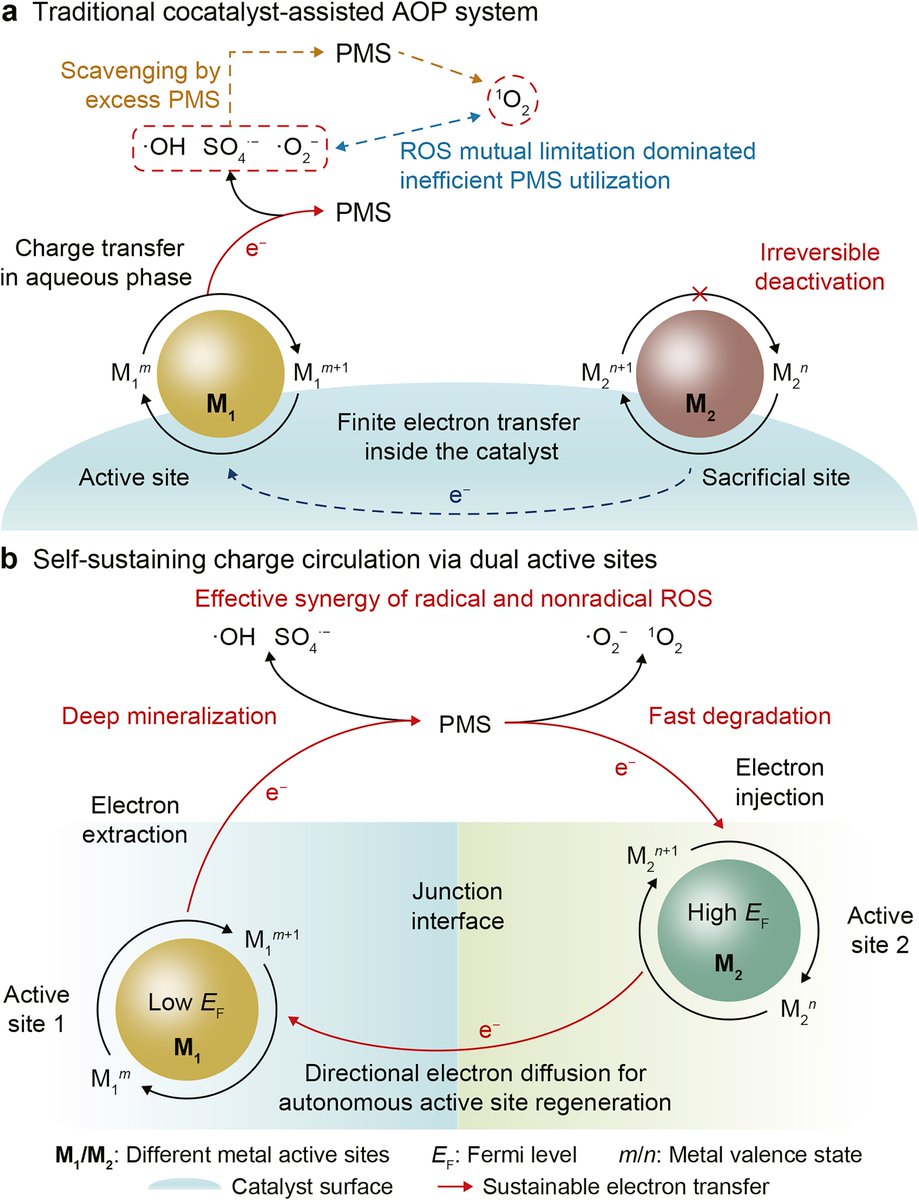
FeS2/MoS2 heterostructures establish a self-sustaining charge circulation loop via built-in electric field-driven redox shuttle, enabling autonomous regeneration of dual active sites for synergistic radical and nonradical #micropollutant degradation. #PMSactivation
sciencedirect.com/science/ar…
@YuxiangHong4, @hqu1960, @Xiaoguang_Duan, @waterprof, @baicang_liu, @bhkenlo, @DionysiosD25141, @Rainmaker1973, @MOF_papers, @KargenMOF
48
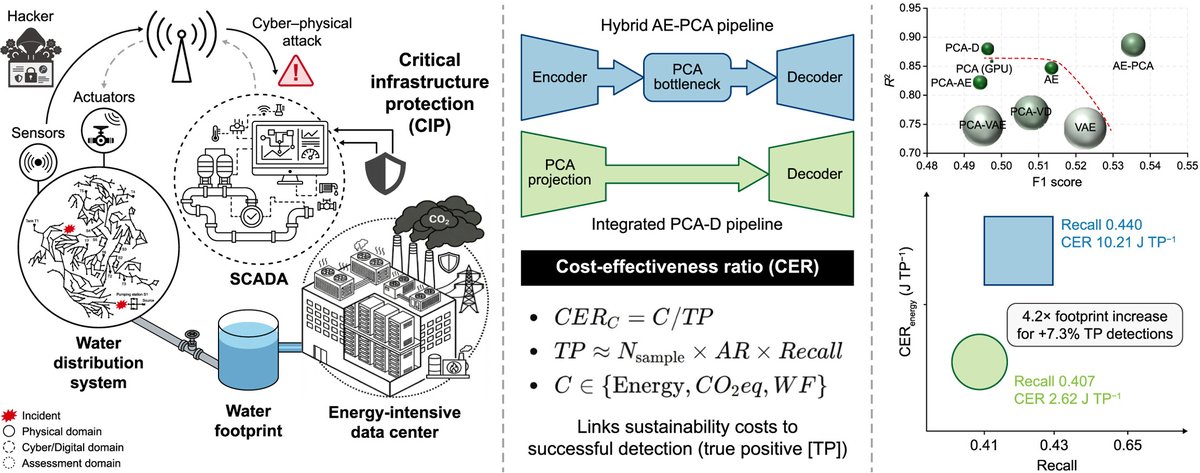
#GreenAI Architectures: Navigating the Security–#Sustainability Paradox in Critical Infrastructure Protection
doi.org/10.1016/j.ese.2026.1…
@SashaMTL, @ahyatech, @TheMaryJesse, @BerryWrites, @enilev, @MTorygreen, @alexframegreen, @NaveenGRao, @shanecurcuru, @unconvAI, @Christafarious, @nightingalehqai @renshaolei
1
124
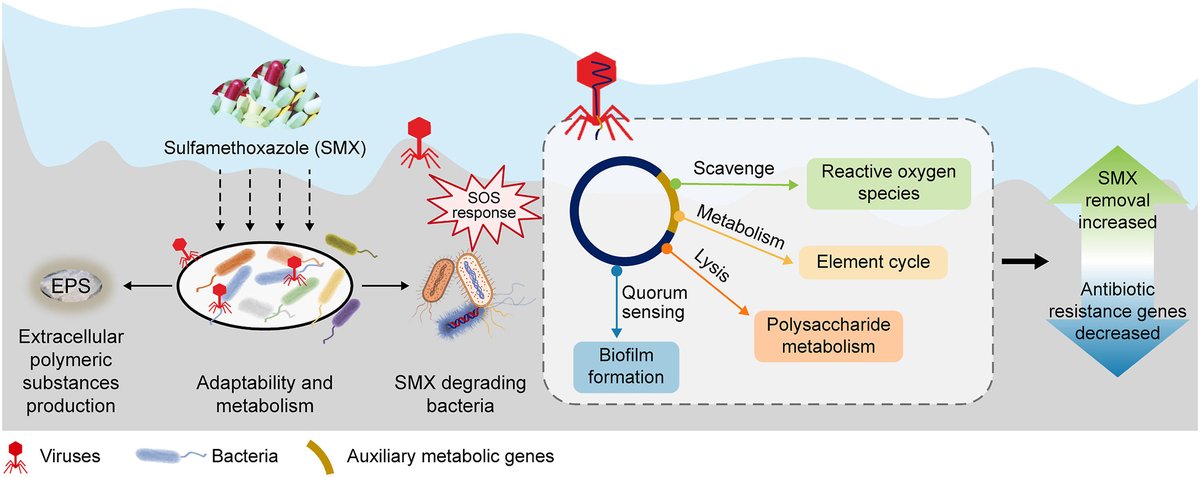
Bacteria-#phage interactions in #wetland sediments boost #sulfamethoxazole removal by up to 35% — thanks to virus-encoded #AMGs that ramp up bacterial degradation. #ARGs #virome
doi.org/10.1016/j.ese.2026.1…
@HannahVPye, @PhageLand, @CarlesBorrego, @phagedirectory, @MarthaVives1, @MotherOfPhage, @rafapinilla92, @thebarrlab_aus, @jemersonmicro, @the_fischer_lab, @yinyinye, @FKBmicro, @vegathurberlab, @kvnforsberg, @Ahlgren_lab
2
133
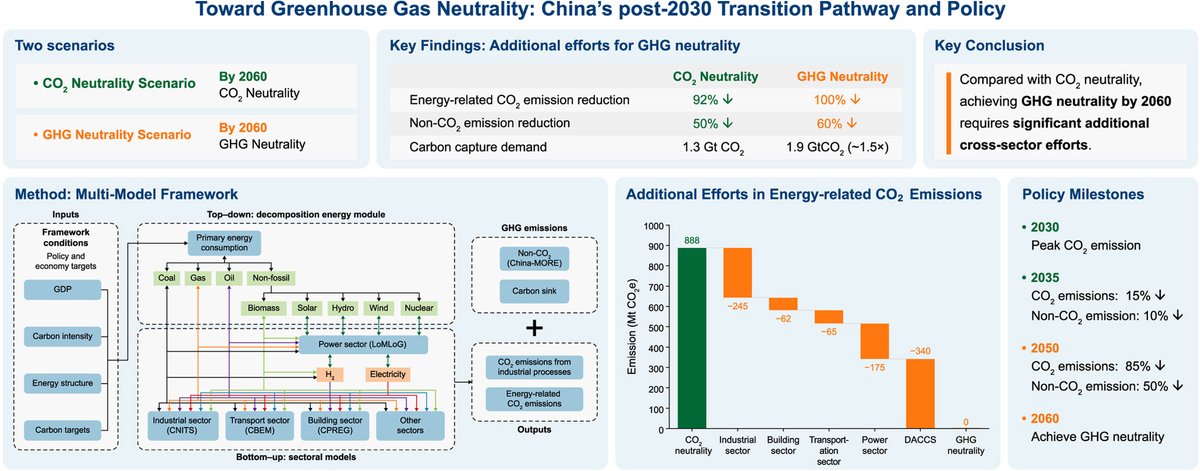
Researchers from @Tsinghua_Uni find that achieving #GHGNeutrality by 2060 in China requires 100% elimination of energy-related CO2 emissions (vs 92% under CO2 neutrality), 60% non-CO2 reductions (vs 50%), and carbon capture expansion to 1.9 Gt (vs 1.3 Gt), with 15% GHG cut by 2035 and 85% by 2050 relative to 2030. doi.org/10.1016/j.ese.2026.1…
@laurimyllyvirta, @WeilaGong, @DrGangHe, @east_winds, @LiShuo_GP, @wang_seaver, @CtrGlobSust, @cciced, @CalChinaClimate
1
70
From sediment to surface: How invisible plumes trigger harmful algal blooms the-microbiologist.com/news/…
45