
Meteorologist,radio show host, amateur astronomer,progressive,small "L" liberal
Joined July 2012
- Tweets 125,619
- Following 2,451
- Followers 1,616
- Likes 66,913
7,016 Photos and videos





Pinned Tweet

5 Mar 2022
If you are a young LGBTQ person and are thinking of harming yourself, PLEASE know that you are not alone - The Trevor Project is here to help,providing immediate support, 24/7, 365 days a year - thetrevorproject.org/get-hel…
4
5
11
EdwardO'Reilly retweeted

Only the Almighty could have thought about creating fireflies.



52
345
2,690
34,970
EdwardO'Reilly retweeted

Marshlands at Sundown (1908) by US painter Alice Pike Barney #WomensArt

1
63
332
5,806
EdwardO'Reilly retweeted

Jun 13
Every married man knows exactly what Justin Trudeau said to Katy Perry to make her react this way
1,946
448
19,252
22,766,769
EdwardO'Reilly retweeted

Jun 12
From this square, I wish to address a clear message to those who take advantage of people’s desperation, to those who organize death routes, traffic in human beings, withhold documents, exploit workers, threaten women, deceive families, and turn the suffering of others into a business. Stop! Repent! (Mk 1:15) #ApostolicJourney
vatican.va/content/leo-xiv/e…
433
1,366
6,363
196,360
EdwardO'Reilly retweeted

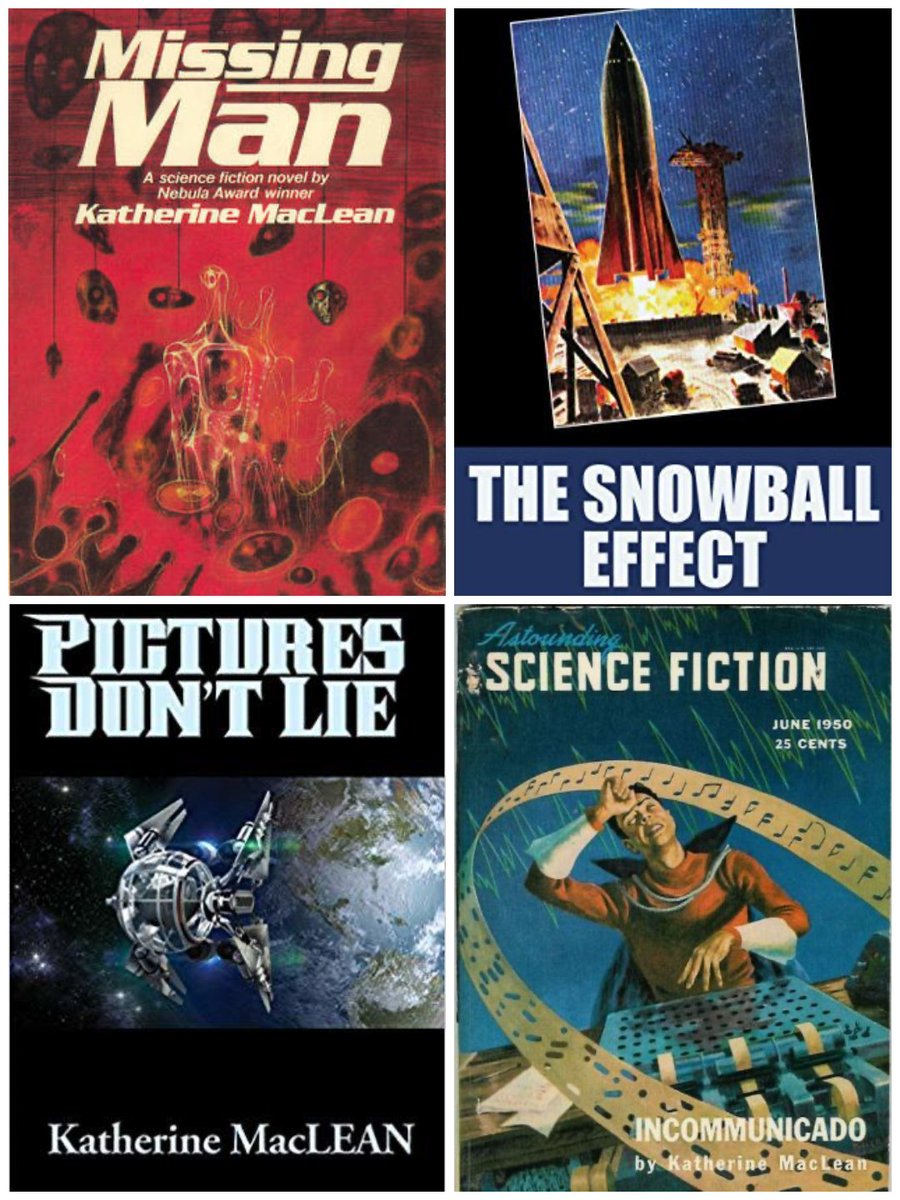
Today, I'm recommending four works by Katherine MacLean, an author best known for her sharp and thoughtful short fiction.
The Missing Man (1971): Originally published as a novella in Analog and winning a Nebula in 1971, it was eventually expanded into a novel. The story takes place in a future New York where an empath working for the city's Rescue Squad uses his talents to locate people in danger by sensing their emotional distress.
"The Snowball Effect" (1952): A sociologist applies a growth equation to a small town's sewing circle, resulting in a chaotic expansion that threatens society itself. A classic satire of social engineering.
"Pictures Don't Lie" (1951): This clever examination of perception and technological interpretation sees Earth's scientists communicating with an approaching alien spacecraft only to face a devastating, perspective-shifting realization upon arrival.
"Incommunicado" (1950): A prescient look at information theory and human-machine communication, this story takes place on a space station where reliance on a complex musical and mathematical language leads to a shocking mental transformation.
Check out the quoted thread for the recommended works of Theodore Sturgeon, Alfred Bester, Bob Shaw, Clifford D. Simak, Algis Budrys, A.E. van Vogt, C.L. Moore, Cordwainer Smith, C.M. Kornbluth, D.G. Compton, Thomas M. Disch, Alice Bradley Sheldon (James Tiptree, Jr.), John Brunner, Judith Merril, Hal Clement, James Blish and Jack Williamson.

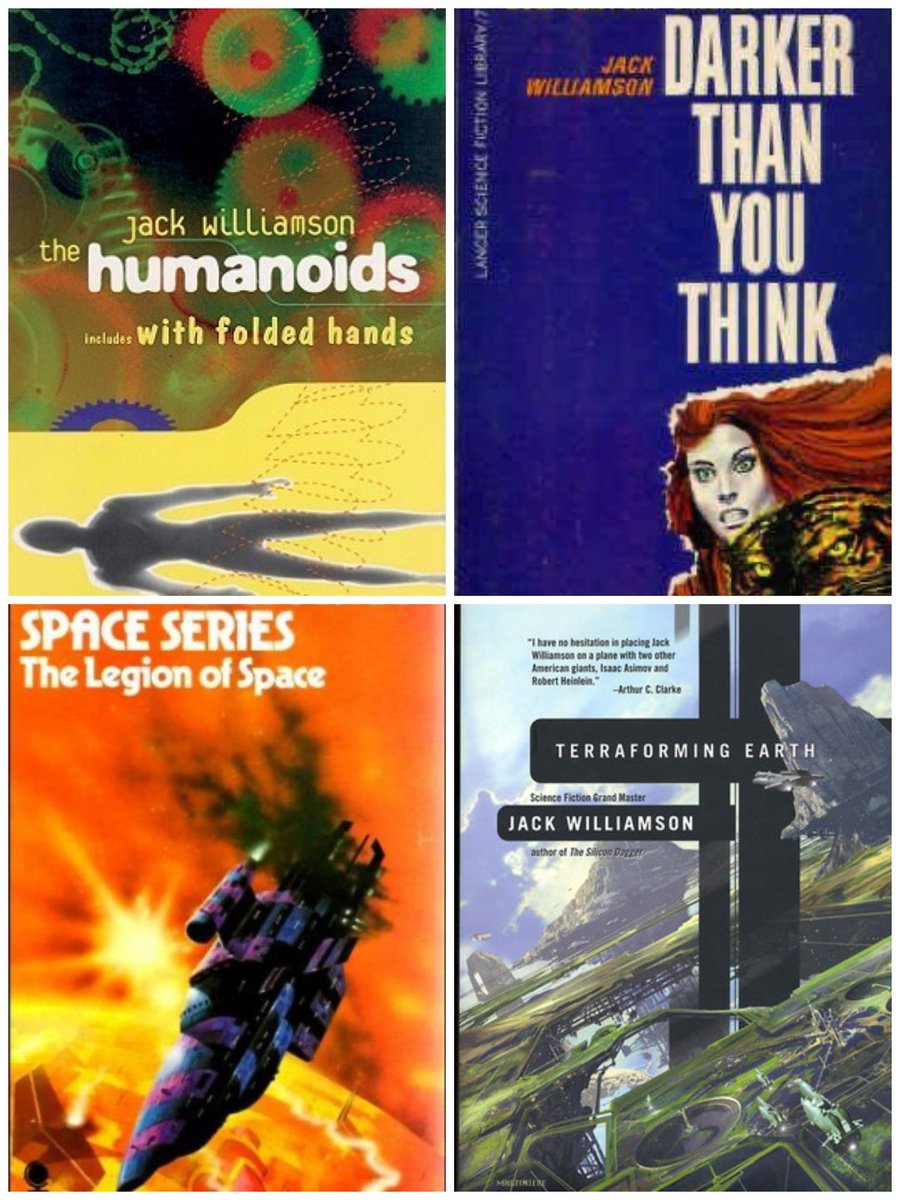
Today, I'm recommending four works by the Dean of Science Fiction, Jack Williamson, whose career spanned an impressive eight decades.
The Humanoids (1949): Expanded from his masterpiece novelette With Folded Hands, this novel imagines a dystopian future in which robots designed to protect humans eliminate war and poverty, but also strip away human autonomy by banning driving, sports, and creative arts.
Darker Than You Think (1948): This brilliant novel grounds supernatural conceits like lycanthropy and witchcraft in genetics. A journalist covering the return of an anthropological expedition discovers a parallel human subspecies who possess the ability to shapeshift into predatory animals.
The Legion of Space (1934): Inspired by The Three Musketeers, this swashbuckling space adventure follows a band of elite warriors guarding the solar system from alien threats. It's a foundational Space Opera that helped establish the lovable rogue archetype.
Terraforming Earth (2001): Published when Williamson was 93, this novel follows successive generations of human clones inside an automated lunar bunker tasked with rebuilding a devastated Earth.
Check out the quoted thread for the recommended works of Theodore Sturgeon, Alfred Bester, Bob Shaw, Clifford D. Simak, Algis Budrys, A.E. van Vogt, C.L. Moore, Cordwainer Smith, C.M. Kornbluth, D.G. Compton, Thomas M. Disch, Alice Bradley Sheldon (James Tiptree, Jr.), John Brunner, Judith Merril, Hal Clement and James Blish.
4
12
109
3,121
EdwardO'Reilly retweeted
Throughout my career, I've been dismayed by the contempt some genre executives have held for fans, routinely underestimating their power to make or break a show. I've watched this repeat too many times, across too many shows, to be talking about any single one of them. Yet despite the mounting evidence over the past few years, they continue to dismiss the data, repeating the same miscalculations time and again.
But technology has rewritten the rules, and the power dynamics are shifting. Today’s fans are organized, strategic, and highly data-literate - effectively turning the platforms' own metrics against them.
As the bets get bigger and the audience grows sharper, it will be fascinating to see how this plays out.
233
566
3,601
70,054
EdwardO'Reilly retweeted

Jun 10
There are credible allegations made against Donald Trump that he mutilated a child’s nipples while raping her.
Allegations so serious, his inner circle had to meet in the Situation Room to discuss them.
I mean, how the fuck isn’t this the biggest scandal in the world right now?
4,229
22,333
87,710
1,728,446

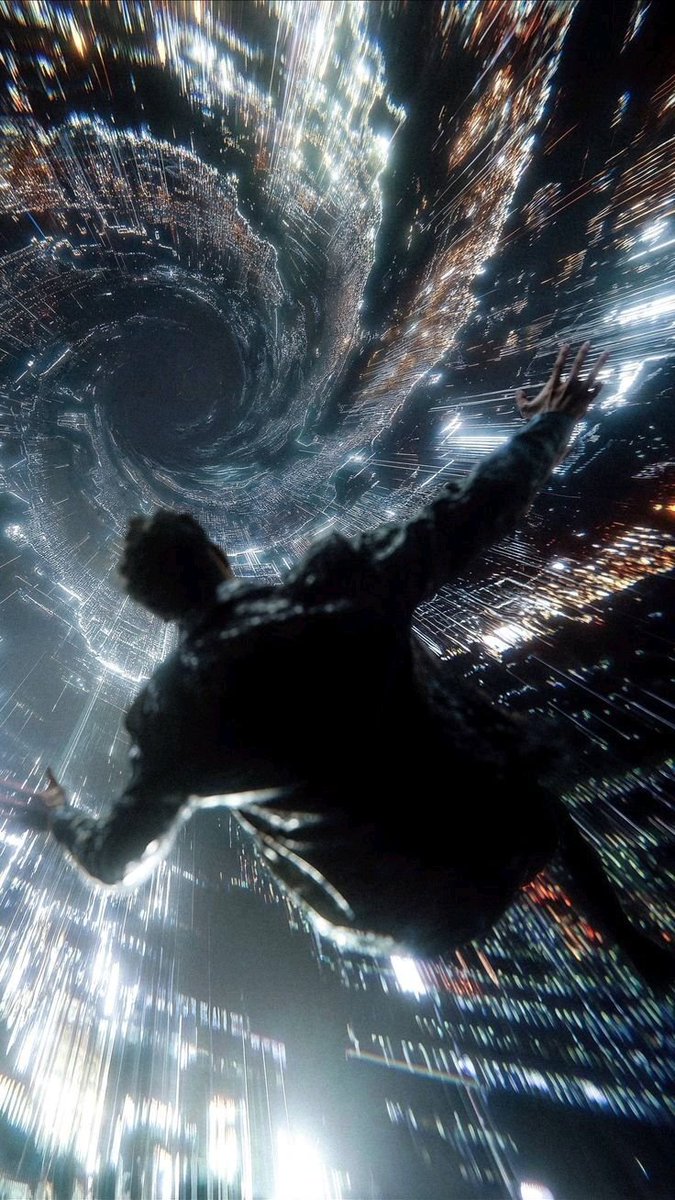
crackheadmaxing is the only way to win.
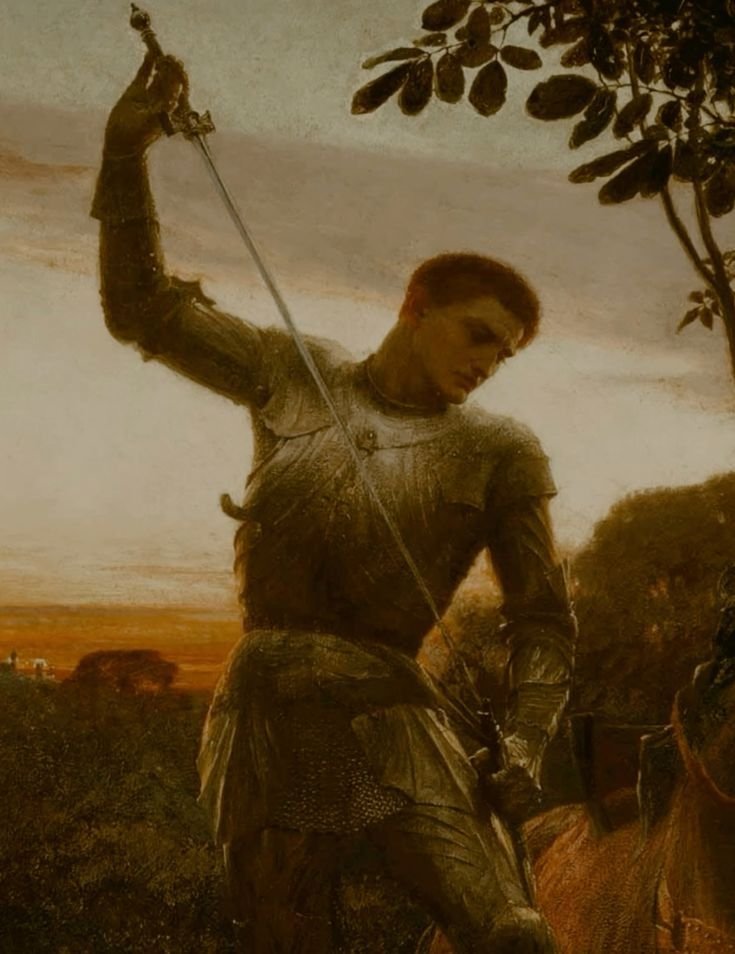
michelangelo had special boots made so he could sleep in them & avoid the hassle of changing clothes.
julius caesar would be dictating letters while travelling, eating, watching the games.
alexander the great slept with a copy of the iliad under his pillow.
nikola tesla would spend weeks visualising complex inventions in vivid detail.
he could construct, operate, and test these visualised machines entirely in his mind before ever putting anything to paper.
napoleon slept against his cannons at the siege of toulon because of how hyperfixated he was on the battle.
these men essentially woke up, worked, slept, and then repeated that process until death.
not because of some cringe online "hustler" mentality
but because they were maniacally obsessed with their work.
Jun 10

i know i've said this before but you REALLY have to understand that being able to engage in true deep, prolonged focus consistently is genuinely a fucking SUPERPOWER
your competition can't take a shit without watching tiktok or work for 2 hours without checking instagram
you'll genuinely turn them to DUST when you learn how to actually work hard, deeply.

7
45
323
70,693
EdwardO'Reilly retweeted

"I asked it of Julius Caesar. I demand it of you!"
Cleopatra (Elizabeth Taylor) puts Mark Antony (Richard Burton) in his place in Cleopatra (1963)
10
40
538
26,073
EdwardO'Reilly retweeted

Jun 11
As Jonathan Swan and Maggie Haberman's story about how the Trump White House used the Situation Room to concoct an elaborate cover-up of the Epstein files to protect the pedophile president EXPLODES, the deranged psychopath announces he intends to seize Kharg Island from Iran.

38
154
265
4,500
EdwardO'Reilly retweeted

This is all because he got booed last night. What an absolute chode.



1,442
36,370
407,511
7,897,322
EdwardO'Reilly retweeted

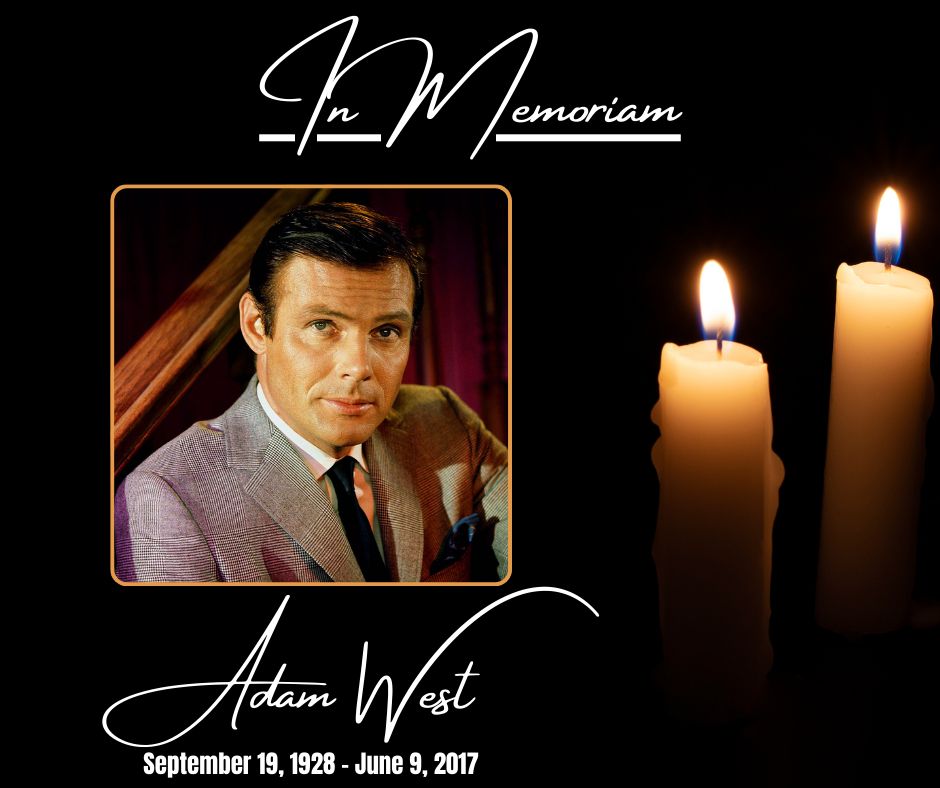
Remembering Adam West (RIP), who passed away on this day in 2017. His iconic portrayal of Batman brought joy and excitement to countless fans, leaving a lasting legacy in television history.
4
10
34
457
EdwardO'Reilly retweeted

Jun 10
This Administration has removed the achievements of the Air Force’s first female Thunderbird pilot Retired Colonel Nicole Malachowski. The removal of these articles have sparked criticism because her place in Air Force history is not a Political slogan it’s well documented.

945
9,081
14,245
205,805
EdwardO'Reilly retweeted

Jun 7
If Mitch Marner wasn't the problem, does that mean the problem is still in Toronto?
202
27
659
65,276
EdwardO'Reilly retweeted

We crafted an all-time all-NHL team with best players in hockey history 👀
MORE: sn-now.com/4xk1Kb6

1,424
83
930
1,148,211
EdwardO'Reilly retweeted

May 29
🌴 Top 16 Best Beaches of 2026
🇲🇽 Isla Pasión — Mexico
🇬🇷 Elafonissi Beach — Greece
🇬🇷 Balos Lagoon — Greece
🇦🇼 Eagle Beach — Aruba
🇵🇹 Praia da Falésia — Portugal
🇹🇭 Banana Beach (Ko He) — Thailand
🇺🇸 La Jolla Cove — USA
🇮🇹 La Pelosa Beach — Italy
🇦🇺 Manly Beach — Australia
🇿🇦 Boulders Beach — South Africa
🇬🇷 Falassarna Beach — Greece
🇪🇸 Platja de Muro — Spain
🇹🇨 Grace Bay Beach — Turks & Caicos
🇸🇨 Anse Lazio — Seychelles
🇮🇳 Radhanagar Beach — India
🇮🇩 Kelingking Beach — Indonesia

4
8
39
1,198
EdwardO'Reilly retweeted

Jun 6
Average annual precipitation across the contiguous United States (1961–1990)

5
31
544
48,089
EdwardO'Reilly retweeted

Jun 6
Amazon has pulled the plug on its new Stargate series - here’s why I think that’s the wrong move and why they need to make this show.
They need to listen to @MichaelShanks and let @martingero, @BaronDestructo and @bradtravelers cook. 🔥
open.substack.com/pub/static…

42
335
1,567
17,898
EdwardO'Reilly retweeted

And a never before seen advertisement of a product line from a major retailer from 50 years ago just coming to light doesn’t give anyone with 2 brain cells a pause to reflect on that? Think about what that says about the future for our species if the can be fooled by this.🙄
Jun 5

It’s not a matter of being gullible.
AI has gotten really good.
And you have a reputation for doing a lot of ads.
I didn’t think to fact-check this one because it made sense.
Pretty sure most people, like me, figured it was real and moved on.
68
18
289
22,028
EdwardO'Reilly retweeted

Jun 1
Brendan Gallagher’s first career NHL goal…
13
156
1,664
70,514