- Tweets 1,406
- Following 1,395
- Followers 1,188
- Likes 854

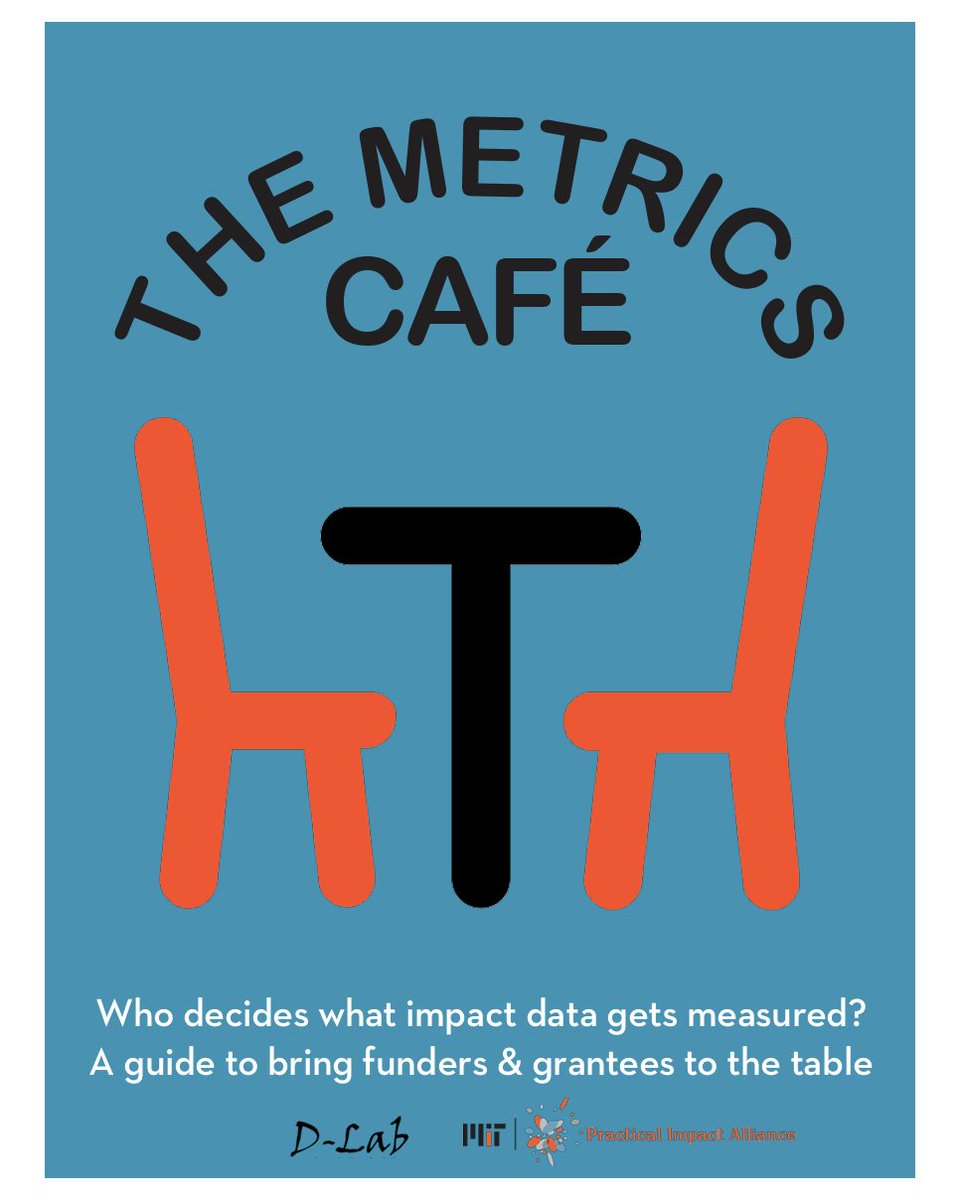
ALT The Metrics Café | Who decides what impact data gets measured? A guide to bring funders and grantees to the table





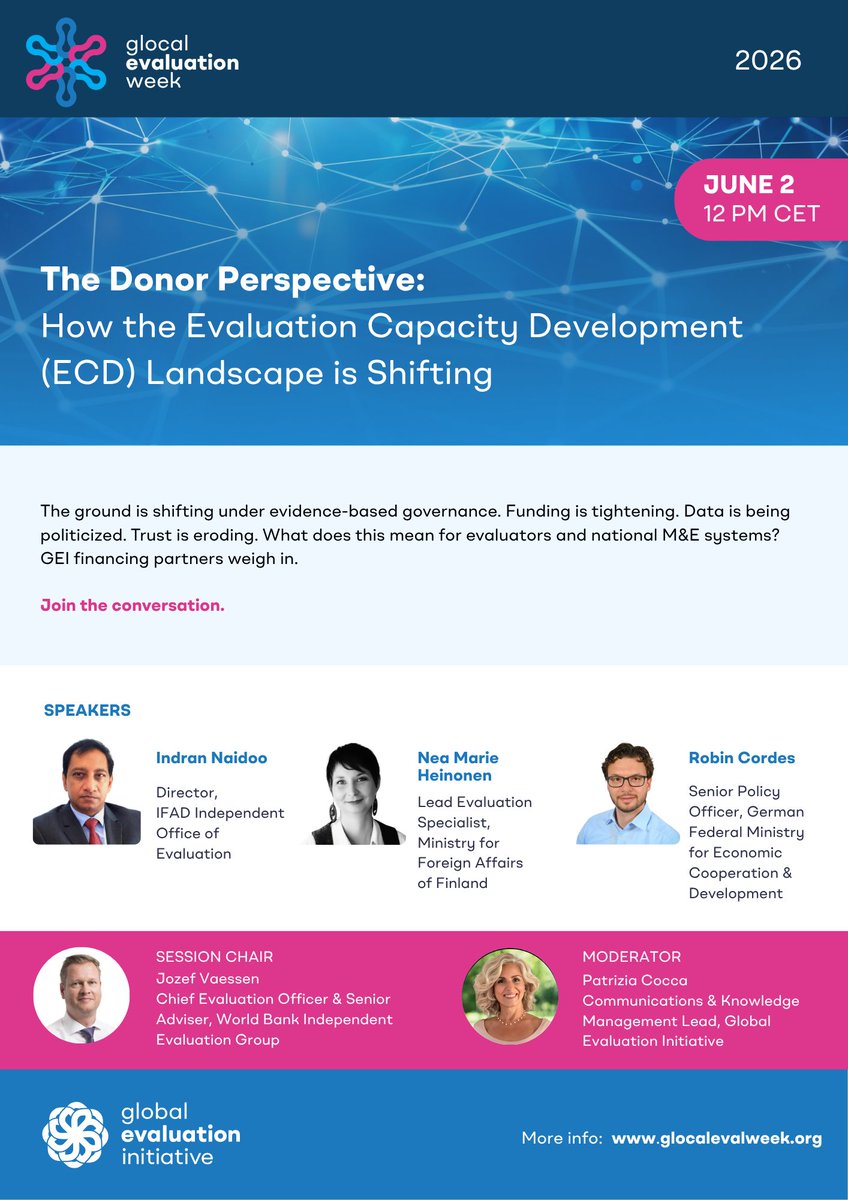
ALT Glocal 2026 Session | The Donor Perspective: How the Evaluation Capacity Development (ECD) Landscape is Shifting | June 2, 12:00 PM CET) Speakers: Indran Naidoo - Director, IFAD Independent Evaluation Office Nea Marie Heinonen - Lead Evaluation Specialist, Ministry for Foreign Affairs of Finland Robin Cordes - German Federal Ministry for Economic Cooperation and Development Session Chair: Jozef Vaessen - Chief Evaluation Officer and Senior Adviser, World Bank Independent Evaluation Group Patrizia Cocca - Communications and Knolwedge Management Lead, Global Evaluation Initiative

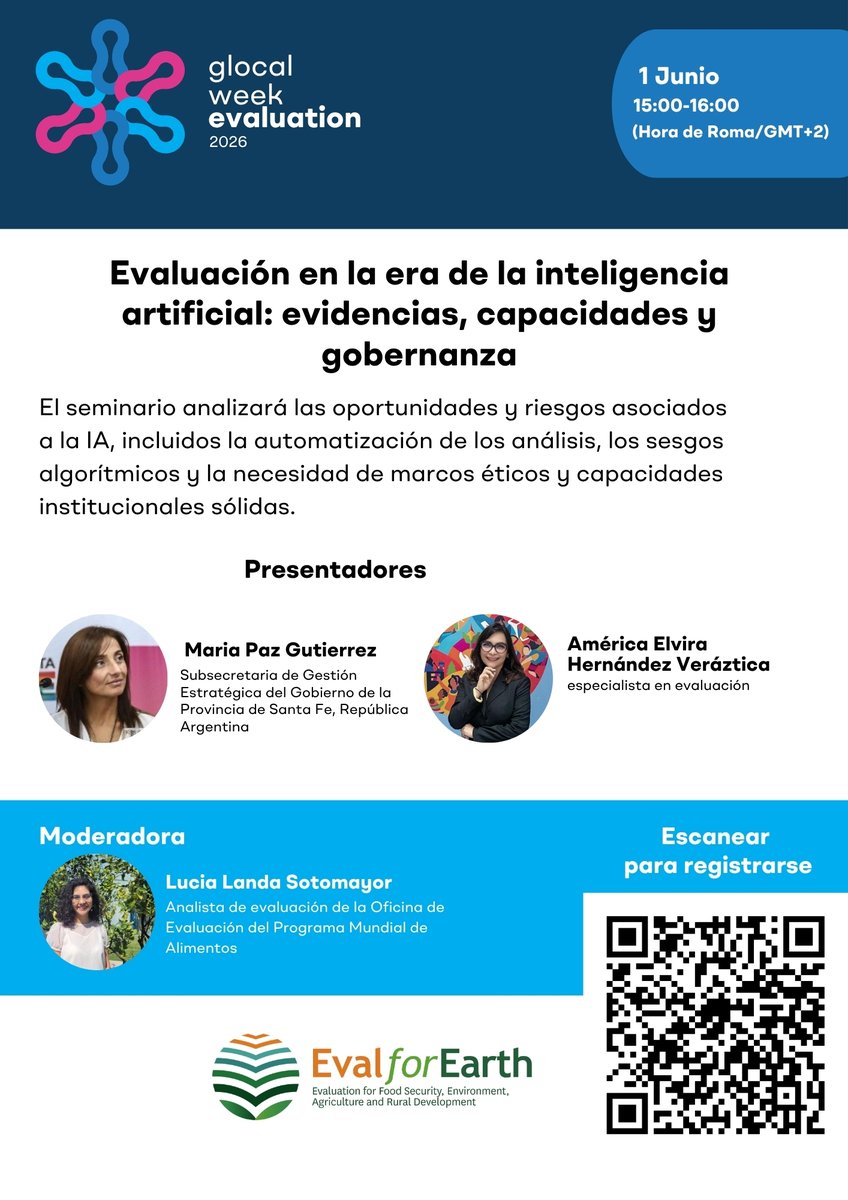
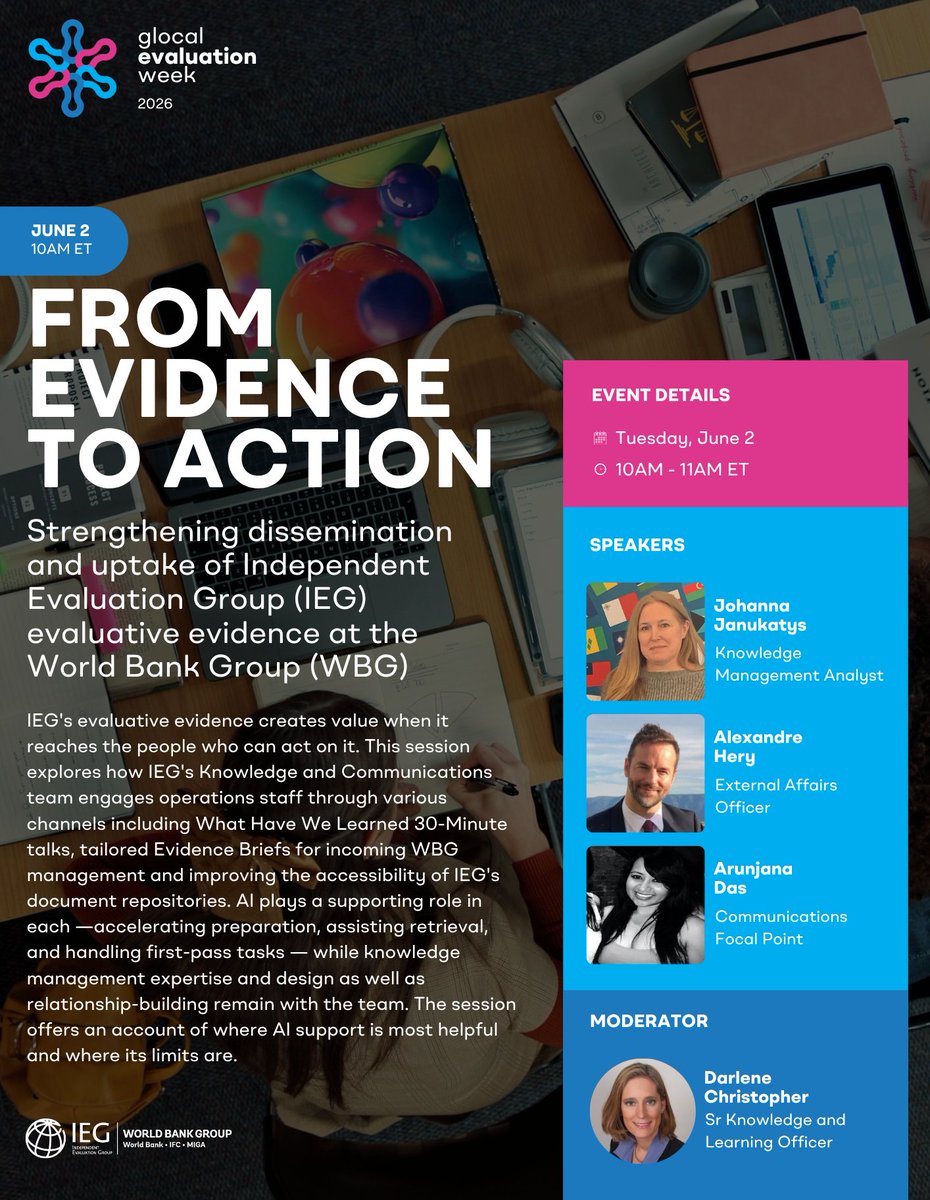


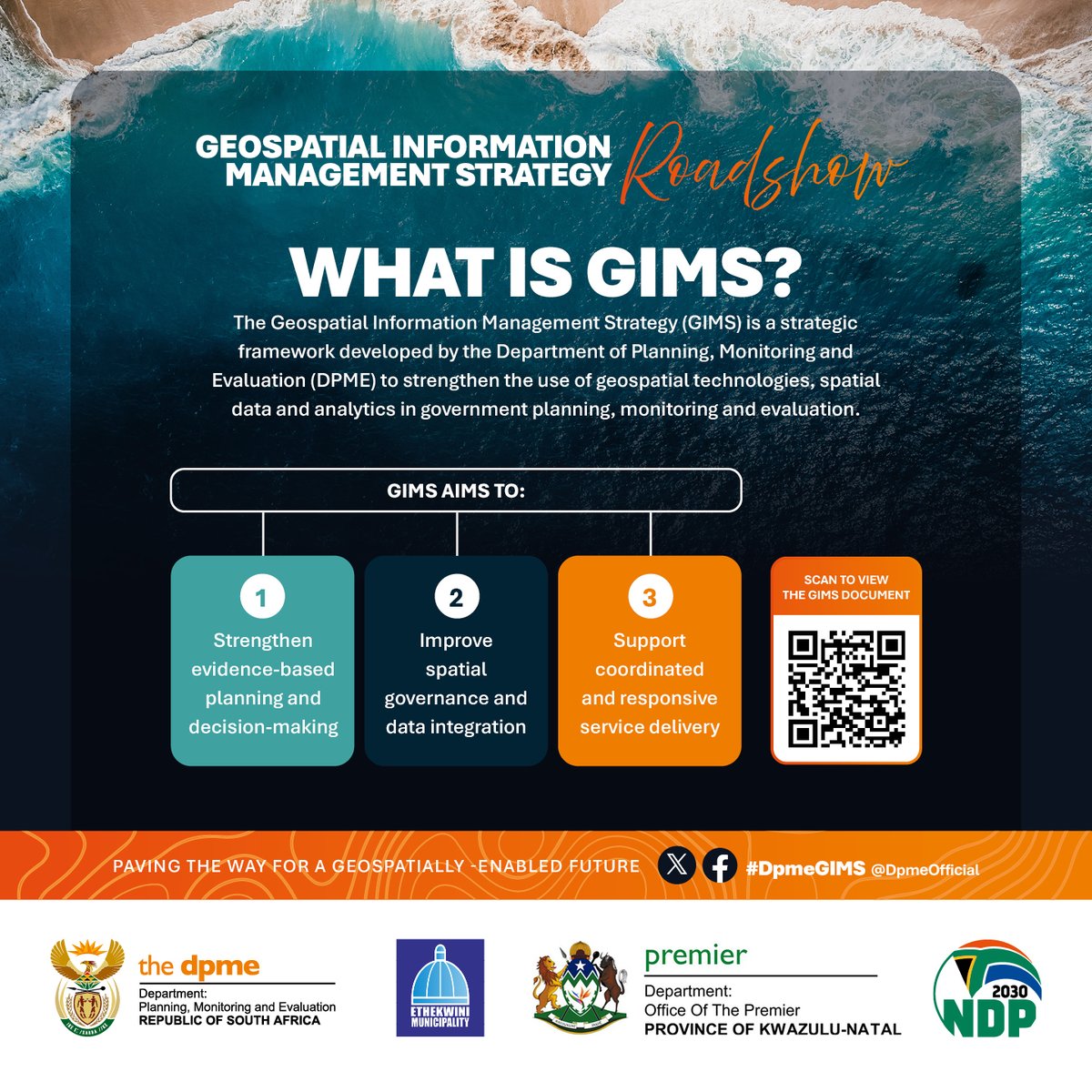
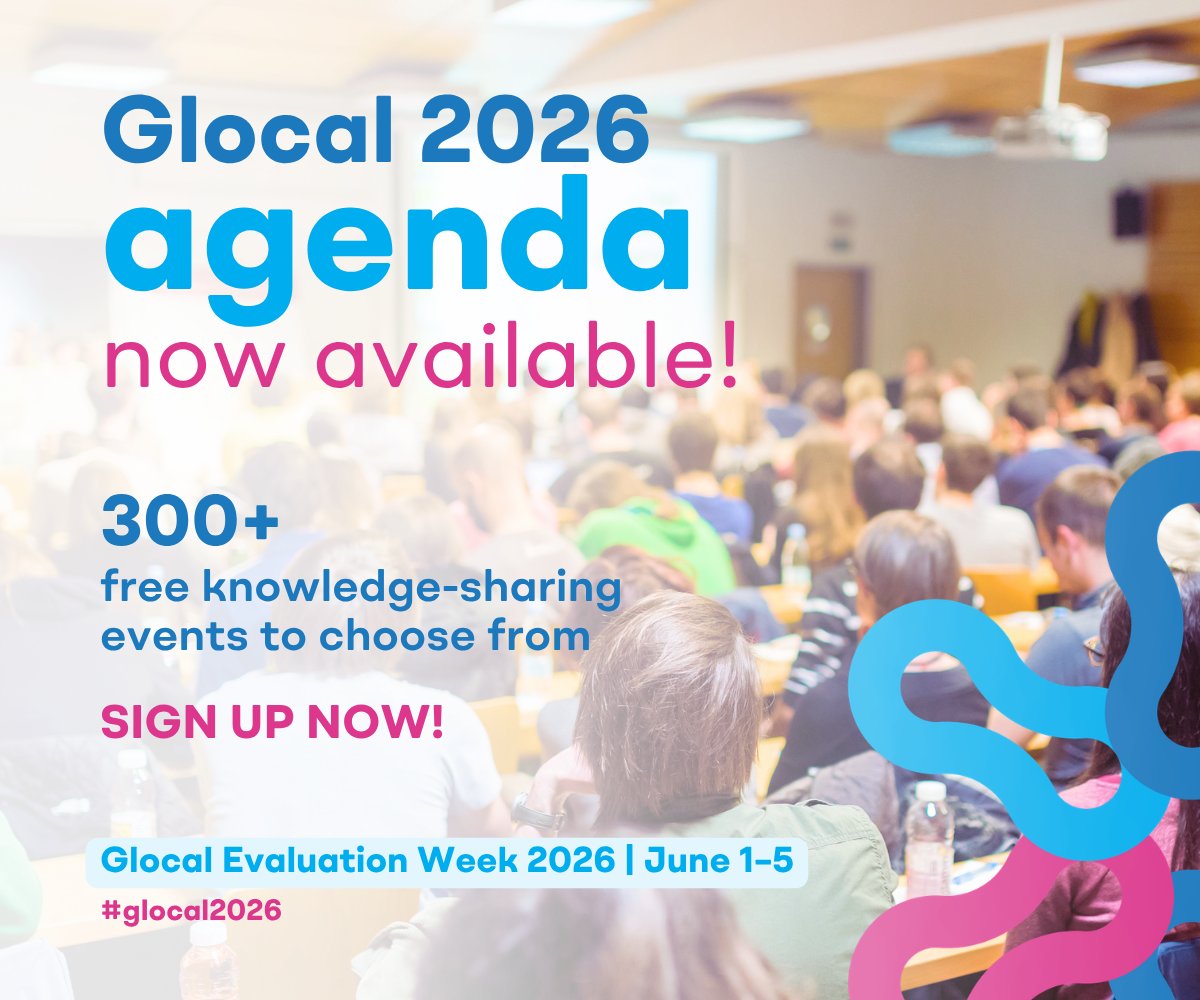
ALT Glocal 2026 agenda now available | 300 free knowledge-sharing events to choose from | sign up now Glocal Evaluation Week 2026 | June 1-5



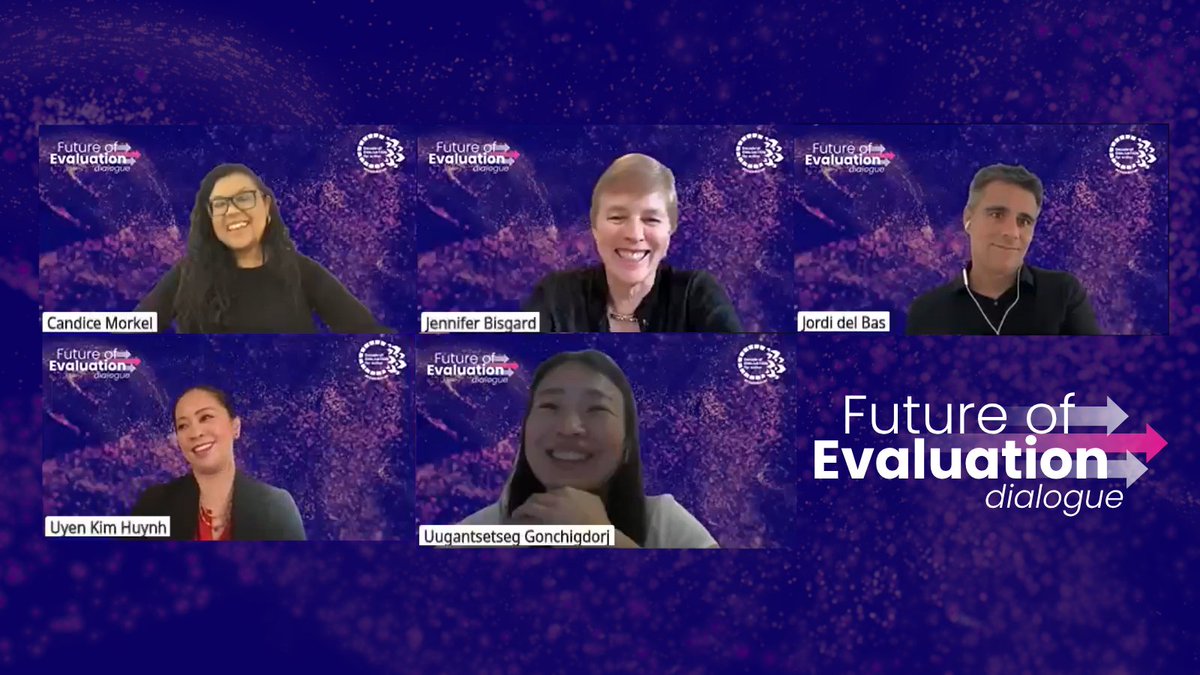
ALT The panel at the 9th Future of Evaluation dialouge. Candice Morkel, Jennifer Bisgard, Jordi del Bas, Uyen Kim Huynh, Uugantsetseg Gonchigdorj.
ALT Working Paper: Navigating AI & Digitalization in M&E - A Three-Lens Framework for M&E and Evaluation Professionals and Institutions (by the Global Evaluation Initiative)