Math | EdTech | Tech fan by day🌎, periodically adulting 🌘, & secret Batman groupie on weekends.🦇 #MIEExpert 💻💗 #iteachmath #mathed #ISTE25
Joined June 2012
- Tweets 3,553
- Following 4,450
- Followers 5,047
- Likes 9,462
552 Photos and videos





Pinned Tweet

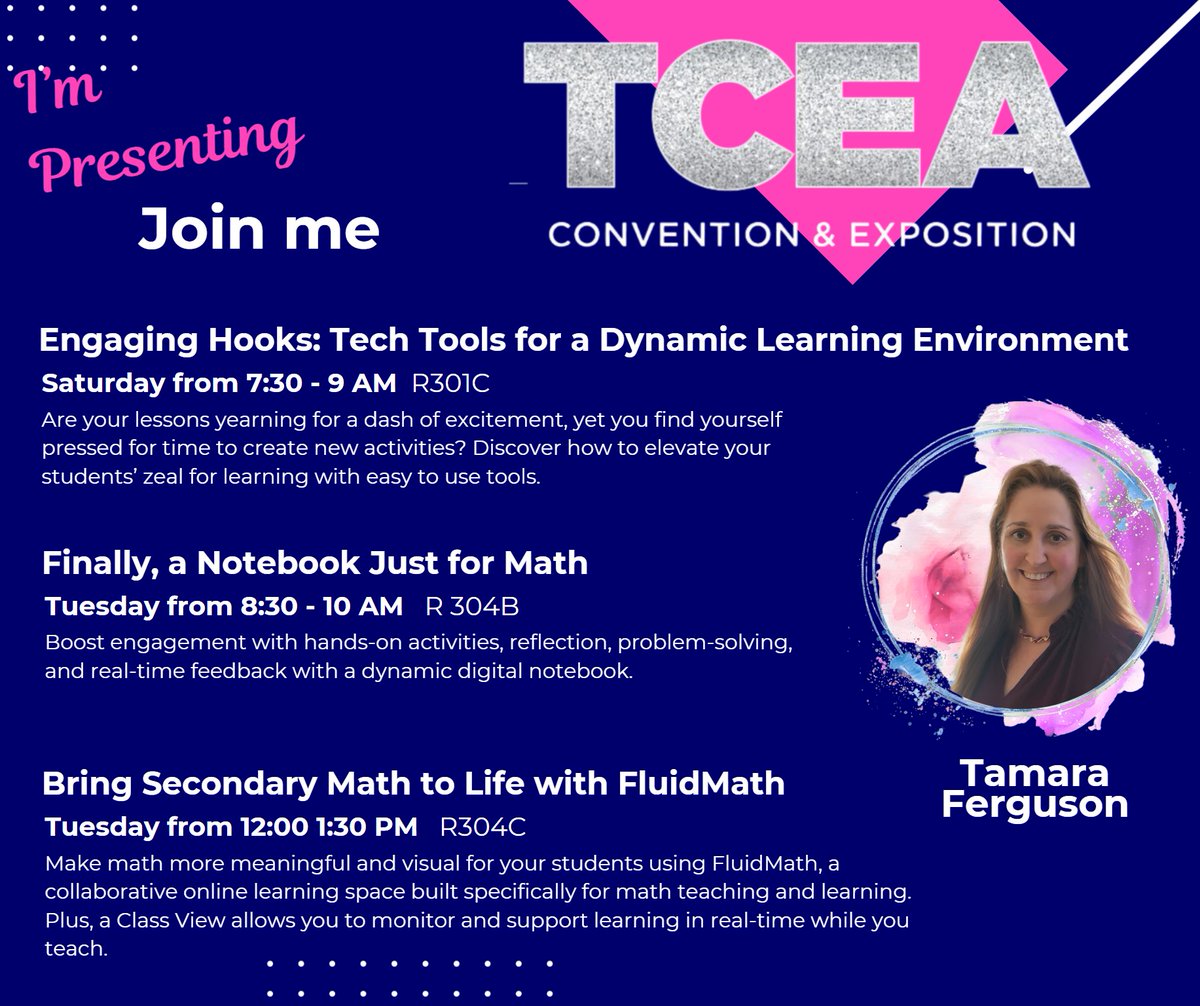
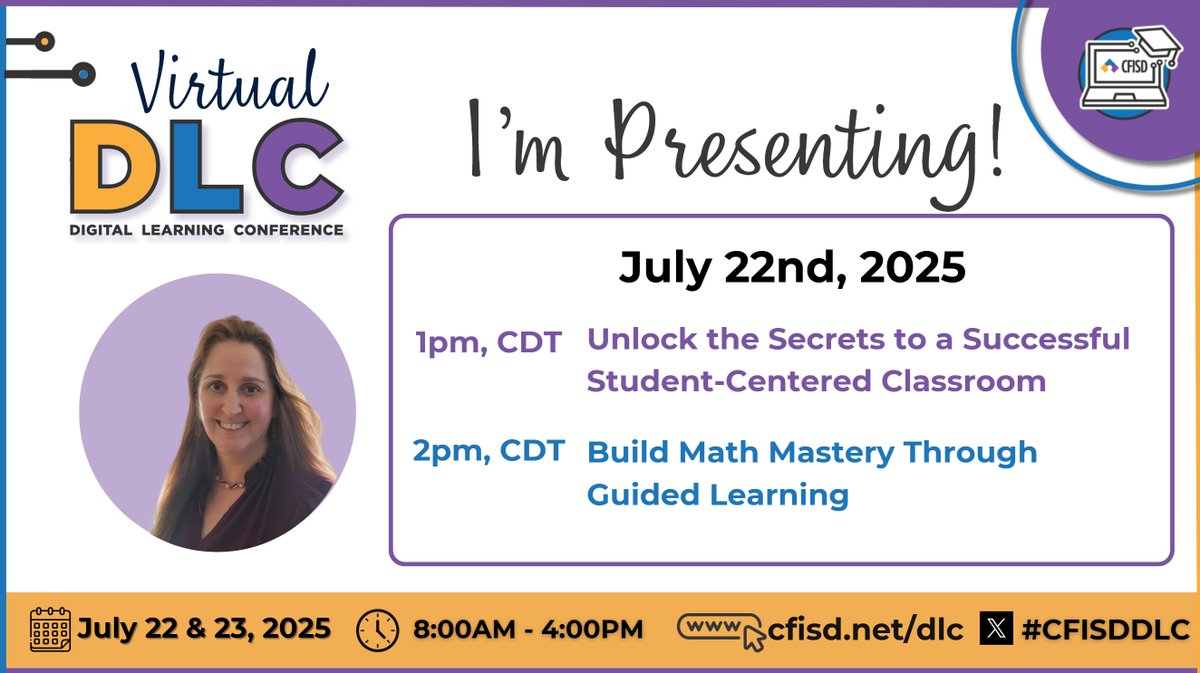
TCEA is coming up fast. It will be an amazing opportunity to reconnect and discover new ideas. I am happy to share that I too will be contributing to this learning community.
I hope to see you all.
#TCEA #EducationForAll #Iteachmath
3
1
9
610
Fergy (Tamara Ferguson) retweeted

Apr 20
Cognitive load theory tells us that students can only coordinate so much genuinely new information at once.
That is one reason breaking mathematics into many small, carefully layered topics is not a gimmick. It is a way of controlling how much novelty enters working memory at one time.
For optimal learning, depth has to be staged.
1
4
37
2,418
Fergy (Tamara Ferguson) retweeted

Apr 6
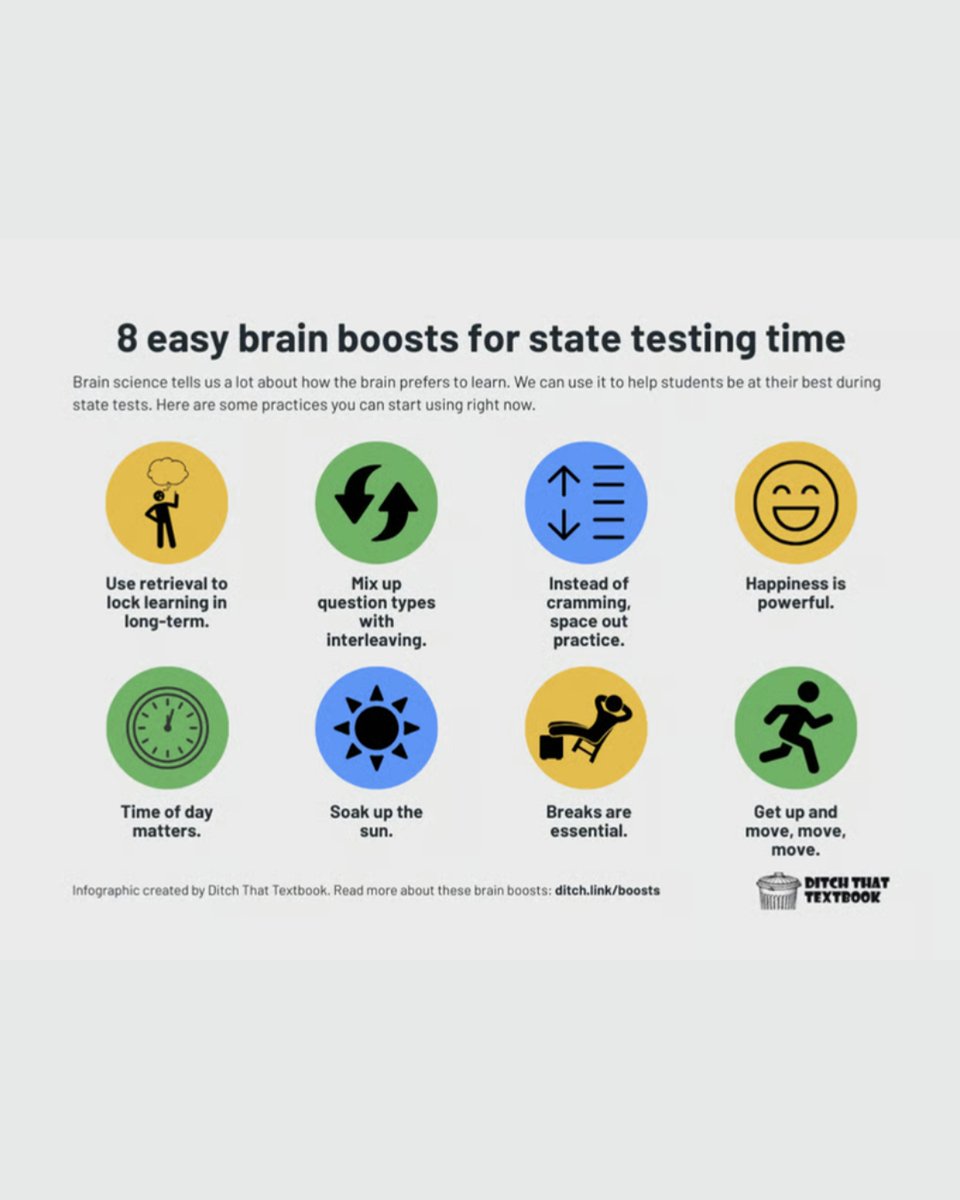
Unlock eight research-backed strategies, from retrieval practice to sunlight, that actually boost student performance. These simple "brain boosts" prove that joy and movement are just as essential for high scores as the study material itself. You can access these here: f.mtr.cool/hqrpqdondf
#CognitiveScience #StudentSuccess #DitchThatTextbook
15
24
2,004
Fergy (Tamara Ferguson) retweeted

Apr 6
Self-checking answer boxes tell you when you are right...BUT
Do they help Students think critically? Show value in the learning process - Help students self-analyze, identify their mistakes, & then self-correct with confidence.
NO AI required.
Just student brains.
#FluidMath
1
1
3
196
Fergy (Tamara Ferguson) retweeted

Apr 5
People don’t hate math. They hate the feeling of hitting a wall they were never equipped to climb. Give them a ladder and it can change their whole experience.
10
14
192
5,813
Fergy (Tamara Ferguson) retweeted

This is the beauty of calculus. Wish someone had taught it like this to me.
( 🎥 Dm fro credit)
25
485
2,285
111,386
Fergy (Tamara Ferguson) retweeted

Apr 2
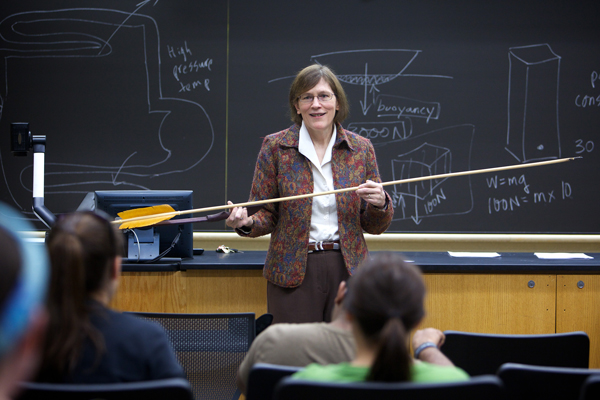
A professor of engineering who failed math all through school built one of the most popular online courses in history by figuring out exactly why her brain had been working against her the whole time.
Her name is Barbara Oakley, and she did not teach herself how to learn until she was in her mid-twenties, after leaving the military with a head full of Russian and almost no useful science knowledge. What she discovered about her own brain eventually became a Coursera course that over 4 million people have taken, and the core insight she teaches has been sitting in neuroscience research for decades waiting for someone to explain it in plain language.
Here is the framework that changed how I think about every hard thing I am trying to learn.
Your working memory is an octopus sitting in your prefrontal cortex with exactly four arms. Those four arms reach out and grab pieces of information, hold them in place, and manipulate them while you are actively thinking through a problem. Four is the limit.
When you try to hold more than four things in conscious awareness at once, the arms start dropping things and everything becomes a scramble which is exactly what you experience as confusion when learning something genuinely difficult.
This is not a flaw. It is a design feature. And the entire game of becoming expert at anything is learning how to game this constraint.
The mechanism is something neuroscientists call chunking, and it is the most underexplained concept in all of learning.
When you practice something enough times that it becomes automatic a guitar chord, a grammatical structure, a mathematical procedure, a debugging pattern in code your brain compresses it into a single neural package stored in long-term memory. That compressed package now fits in just one of your four working memory slots instead of filling all of them.
Which means once you have built enough chunks, your octopus can reach down into long-term memory, pull up an entire complex procedure in a single grab, and still have three arms free to work with new information on top of it.
This is what expertise actually is. Not raw intelligence. Not natural talent. A library of compressed patterns that can be retrieved quickly and stacked together to solve problems that would overwhelm a beginner whose working memory is still occupied with fundamentals.
The finding that Oakley emphasizes most forcefully is the one that sounds backward until you understand the mechanism. People with smaller working memory capacity those who can only hold two or three items at once rather than four are often forced to develop stronger chunking habits earlier and more aggressively than people with larger working memories, because they have no choice. Their constraint becomes their training. Over time, that aggressive chunking practice can produce more robust expertise than a larger working memory that never had to be disciplined in the same way.
The most powerful practical implication is this: when you feel completely overwhelmed trying to learn something, that feeling is almost always your four-slot octopus running out of arms. The solution is not to concentrate harder. The solution is to stop, isolate one small piece of the problem, practice it until it compresses into a single chunk, and only then pick up the next piece.
You cannot learn everything at once because your brain was never designed to hold everything at once. It was designed to build libraries of compressed knowledge and retrieve them on demand.
Every expert you have ever admired is not smarter than you. They just have a bigger library.
49
692
2,909
136,255
Now, this is appropriate use of AI. Hahaha.

111
Fergy (Tamara Ferguson) retweeted

You don’t teach critical thinking as a program.
You teach it by:
comparing texts
asking better questions
writing
debating
It’s not separate from reading.
It is reading.
3
12
67
1,248
It was a moment my of quiet reflection as I stood with my family on a deck in California. A place where we each travelled to, so we could be together.
#family #WorkLifeBalance
1
87
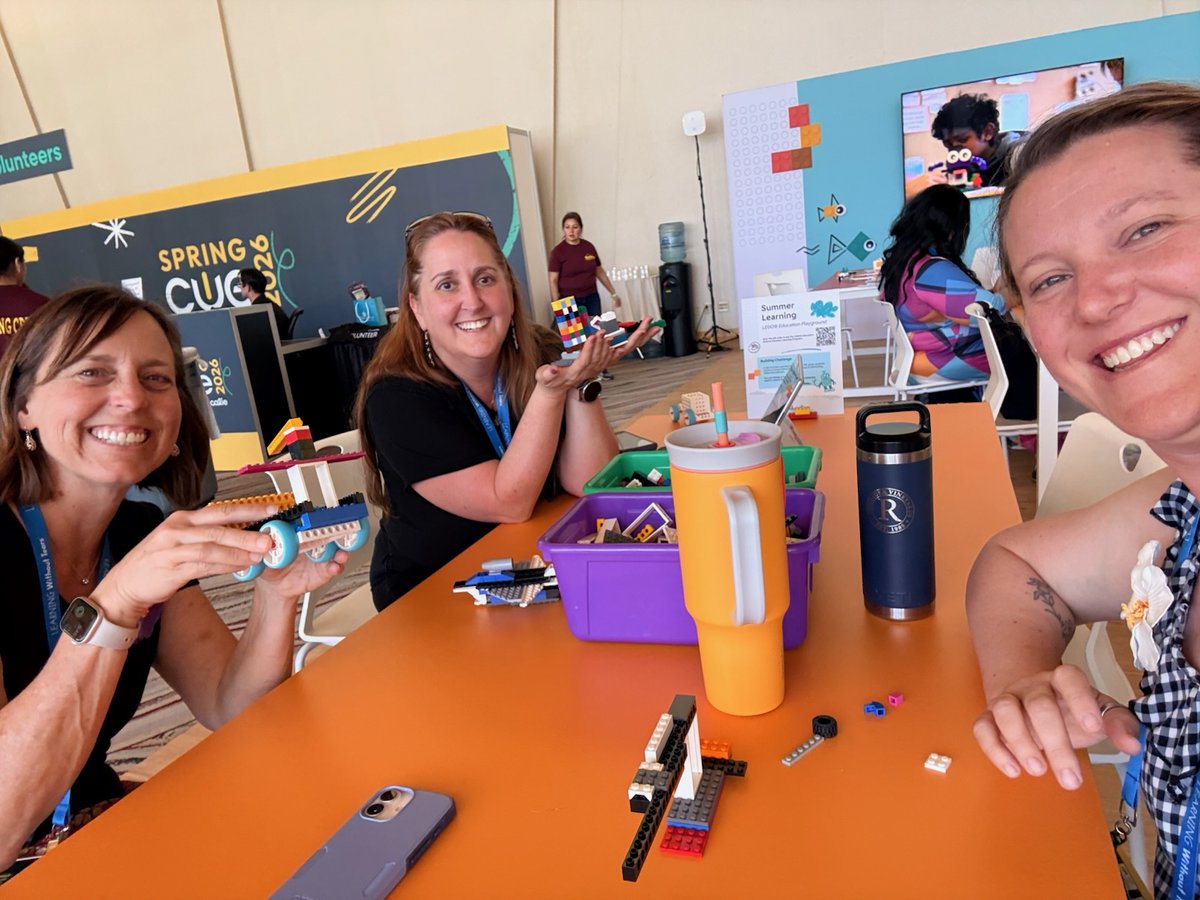
After a long but rewarding day at #springcue, it's time to rewind with new friends and a bucket of Lego.
2
151
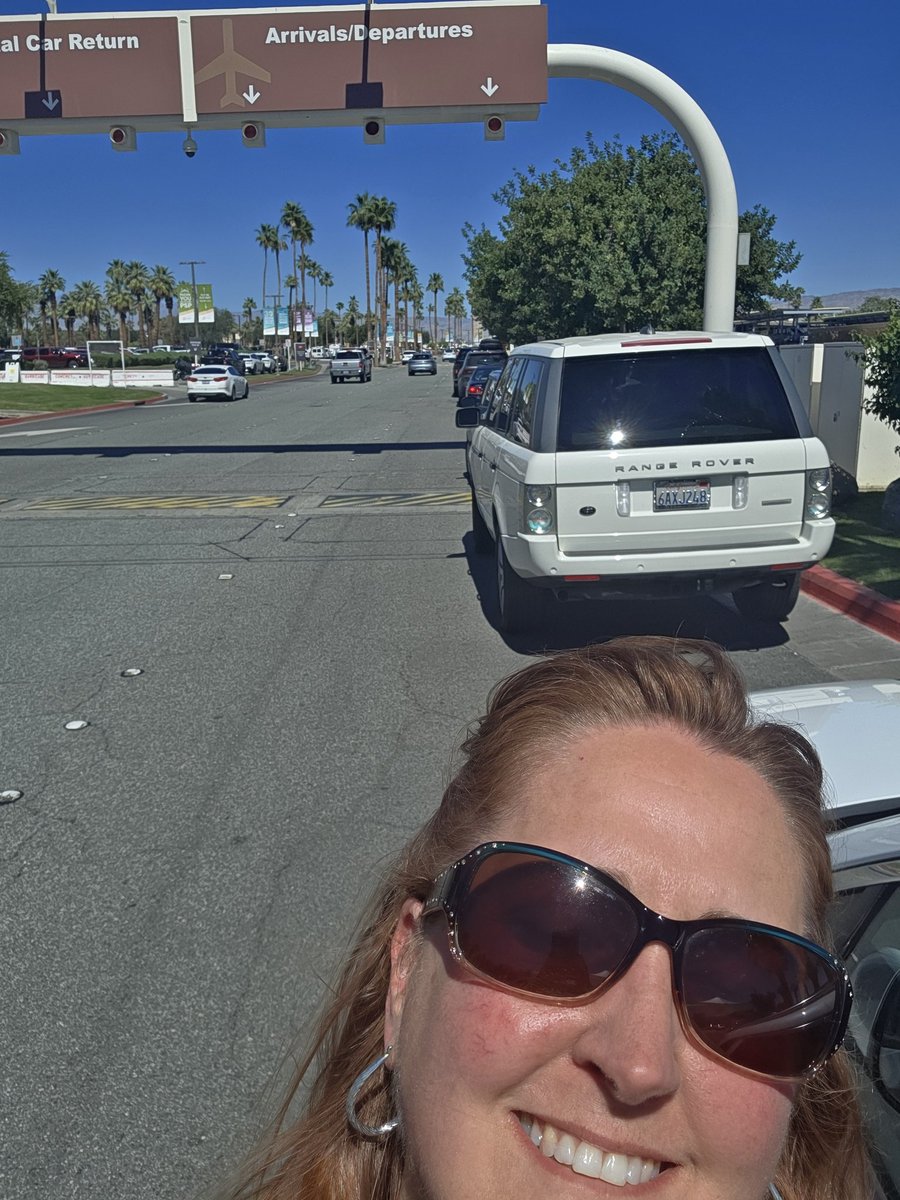
I have arrived. CALIFORNIA! Here I come. First it's Spring CUE, then the beach. Looking forward to meeting all the fun people here, and discovering new ideas. Of course 😁
#springcue #teacherlife #edtech
2
167
Fergy (Tamara Ferguson) retweeted

Mar 17
New study involving 770 high school students over 5 months across 10 schools. All students got the same lectures, course material, and GenAI tutor. The only difference: half received a fixed sequence of practice problems (easy to hard, standard practice), while the other half had their problem sequence dynamically personalized by a reinforcement learning (RL) algorithm.
The result: students with adaptive sequencing scored 0.15 standard deviations higher on an in-person, handwritten final exam: no devices, no AI assistance.
By some estimates, that's equivalent to 6–9 months of additional schooling. No extra instruction time or additional teacher workload. Beginners with no prior experience saw the largest gains (0.215 SD). Students at lower-tier schools benefited more than those at elite schools.
linkedin.com/posts/johnbaile…

14
83
469
65,615
Fergy (Tamara Ferguson) retweeted

Mar 18
Without question, this is one of the worst things I’ve read online in a while… I wish I could say don’t read it, but you really need to. I’m so tired of watching our labor be used to create horrifying conditions for humanity for the perverse enrichment of a handful of billionaires.

68
1,291
4,984
273,959
Fergy (Tamara Ferguson) retweeted
Mar 15
Teachers: If students are over using AI, let's turn the tables on them ...
This activity can be FUN ... and talk about your content ... AND help students analyze and think deeply.
This is one idea in a series I'm doing on keeping students thinking in the AI age.
#teacher #teachersfollowteachers #teacherlife #edtech #aiineducation
4
11
42
4,539
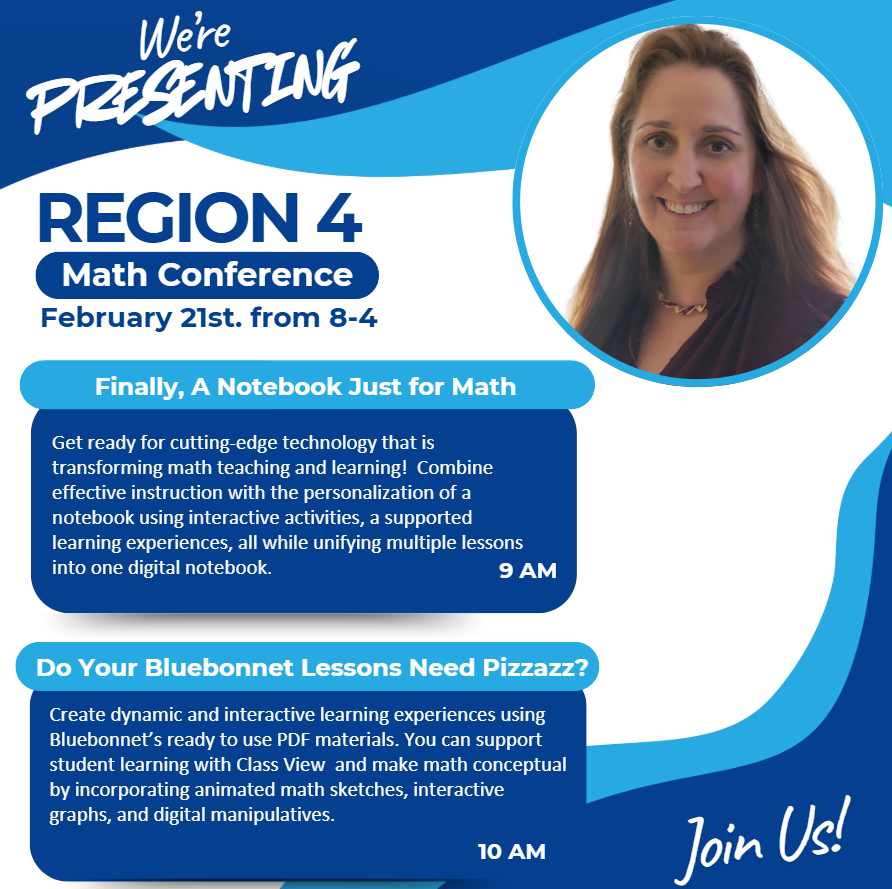
Come see me pizzazzify Bluebonnet Lessons at Region 4 Math conference!
These are my session titles:
✔️Do your Bluebonnet lessons need a little pizzazz?
✔️Finally, a Notebook Just for Math
esc4.net/event/math-conferen…
02-02-2026
9-3
#iteachmath #education #Learning
2
163
Fergy (Tamara Ferguson) retweeted

Jan 28
🚨HOLY SH*T🚨
This is absolutely terrifying…ESPECIALLY if you have children.
Omg…this makes me rethink everything❗️
Is anything safe, anymore?
332
5,264
13,320
1,706,918
It was one small thing that gave her hope she could travel a different path. A book.
Last night, she may have become that one small thing for others. She shared her tangible examples of her successful process, and answered questions. The teachers connected at a deep level.
1
77
As educators, we are a learning community and Facilitating PD should foster that community. A successful learning experience is one that amplifies all the expert voices in the room and transfers knowledge and guidance in a supportive manner.
70