
Joined November 2020
- Tweets 167
- Following 2,024
- Followers 718
- Likes 17,094
6 Photos and videos



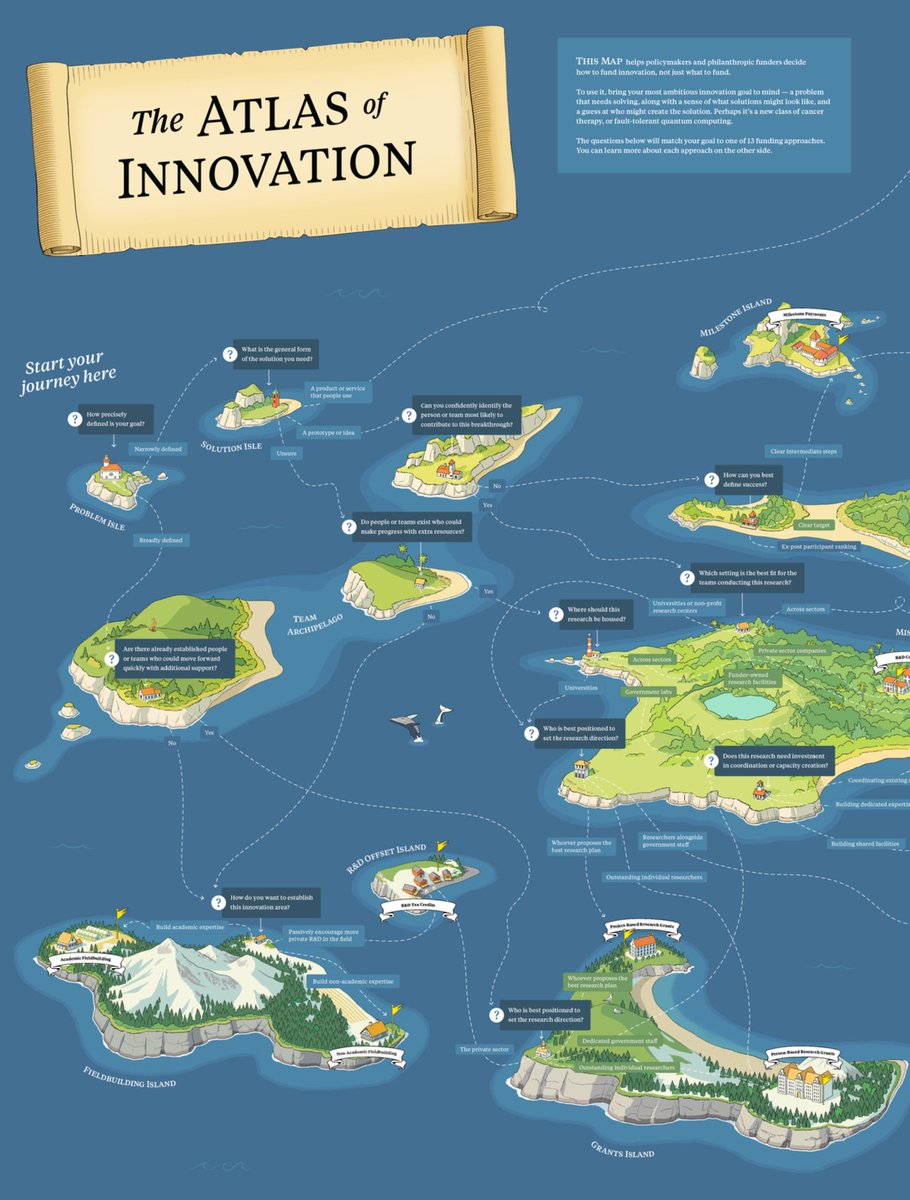
It's never been easier to figure out the best way to fund a specific R&D project! atlasofinnovation.org
Government will put this to good use, but so should the "third wave" of philanthropy.
Jun 2

At @IFP, we’ve spent the past 3 years thinking about all the different ways the US government & philanthropy fund R&D.
Until now, R&D funders haven’t had a systematic way to match the innovation problem to the right funding tool.
We built THE ATLAS OF INNOVATION to fill that gap.
atlasofinnovation.org
Alongside @UChi_MSA, we’ve boiled down thousands of hours of research into a handful of questions covering how much the R&D funder knows about:
- the problem they want to solve
- the solution it should have
- the team that should build the solution
Why the Atlas matters:
The US government spends close to $200 billion every year on R&D. And after the Anthropic and OpenAI IPOs, there will be hundreds of billions of dollars in new philanthropic giving.
Choosing the correct funding approach to the social problems they’re trying to solve will mean the difference between success and failure.
For example, NSF research grants have helped seed breakthroughs from MRI machines to search engines, but grants aren’t built to deliver the kind of industrial speed and scale that a project like Operation Warp Speed required.
Picking the wrong funding approach can leave programs behind schedule, over budget, or without anything to show for all the money they spent.
How we built the Atlas:
1. We began by creating a matrix of dozens of considerations that a thoughtful policymaker or funder would ideally weigh before deciding how to fund a project.
2. We looked at every major funding approach, from grants to R&D tax credits to advance market commitments, analyzing when they work well and when they fail to meet the mission.
3. We spent months deep in the weeds of contract theory and incentive design, looking at historical examples and the state-of-the-art research in innovation economics.
4. We then worked to turn that research into a tool that time-strapped policymakers and philanthropic funders could rely on at the start of an innovation funding cycle.
5. Three years later, we are launching just that: a new (and visually stunning) website to help funders decide how to best incentivize innovation. And all they have to know… is what they currently know about their innovation goal! The Atlas takes care of the rest.
How to navigate the Atlas:
Answer questions about your goal to find the funding approach aligned with the information you have.
Each funding mechanism has its purpose for particular technologies and specific moments in development.
There shouldn’t be an ARPA for every field, just like we don’t need a prize or AMC for every innovation. The Atlas helps you navigate those tradeoffs.
4
15
1,890

May 24
I decided to start writing more on substack! Curious to hear what you think :)
open.substack.com/pub/frauke…
1
2
52
Frauke Stehr retweeted

May 14
This is a major issue, I wish that it was debated more.
May 14

I think this is a really important constraint. We won't be able to commit to a single European innovation hub, so our model *must* be different from the American one & we should think about how to get the knowledge spillovers of physical proximity in multi-innovation-hub Europe.
1
3
19
3,903
May 13
Why is it so hard to build transport infrastructure in Germany?
Next Tuesday, 19.05., I’ll be giving a talk on that question at a Stripe / Works in Progress event.
If you are in Berlin and interested in Progress Studies, make sure to come!
3
6
17
2,028
May 14
There will be a great lineup of people thinking seriously about housing, transport, urban development, and how Europe can build better!
luma.com/bdc8as5a
1
1
98
Frauke Stehr retweeted

Apr 20
How to write a paper:
1. Think of the upside of the idea if true. Discard if not high
2. Try as quickly as possible to falsify the idea
3. If it survives, move quickly to the MVP
4. Present that paper, and iteratively respond to comments
5. Submit and respond to referees
7
10
236
16,214
Frauke Stehr retweeted

Apr 2
Here at [famous scientist’s name].ai, we’re developing tools to accelerate science. Unlike academia, which has stifled the production of high quality scientific work by demanding it be correct, here at [fsn].ai, we know that you can just do (wrong) things.
36
231
2,512
78,457
Mar 30
This was a great episode!
2 observations that should inform the debate:
- we observe a similar trend of less beauty on average in many other domains
- the problem seems particularly strong with housing, e.g. modern churches seem mostly fine!
fraukestehr.substack.com/p/o…
Mar 25

Why do new buildings seem, on average, uglier than old buildings? We discuss some options:
- Survivorship bias: only the beautiful old buildings have survived (we reject this option);
- Cycles of taste: everyone always finds new buildings uglier (we mostly reject this too);
- Ornament became too expensive because of rising labour costs (we reject this);
- Ornament became too cheap because of mechanisation and then became low status (we reject this);
- Some sort of Protestant or Puritan anti-beauty inheritance (we are doubtful);
- Some kind of elite status game, perhaps a response to democratisation or elite overproduction (we think there is promise here, but serious work is needed on the details).
I discuss this and more with @Aria_Babu and @bswud.
Apple podcasts: podcasts.apple.com/gb/podcas…
Spotify: open.spotify.com/episode/2pI…
Youtube: youtube.com/watch?v=qvueKtEk…
1
149

Frauke Stehr retweeted

Mar 25
Inject it into my veins.
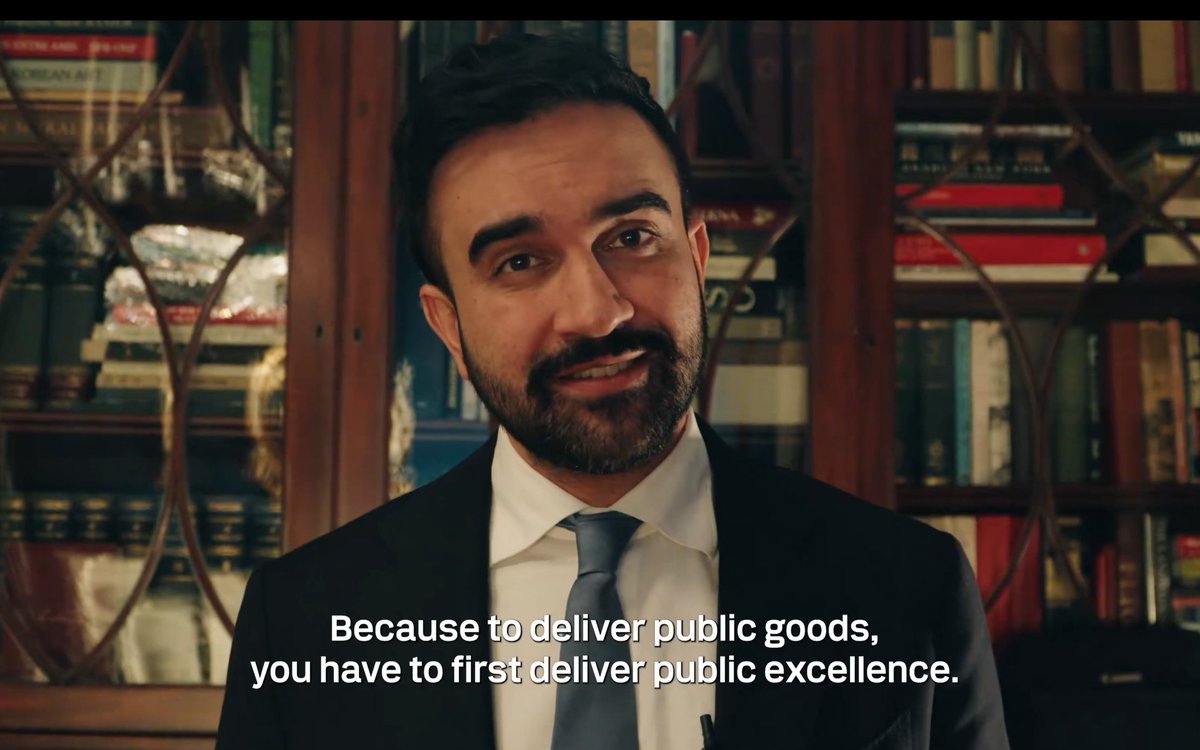

Government must deliver for working people—and every dollar in our budget should work as hard as they do.
That’s why I directed every agency to cut waste and help close our budget gap.
Here’s some of what we found.
38
539
6,700
166,590
Frauke Stehr retweeted

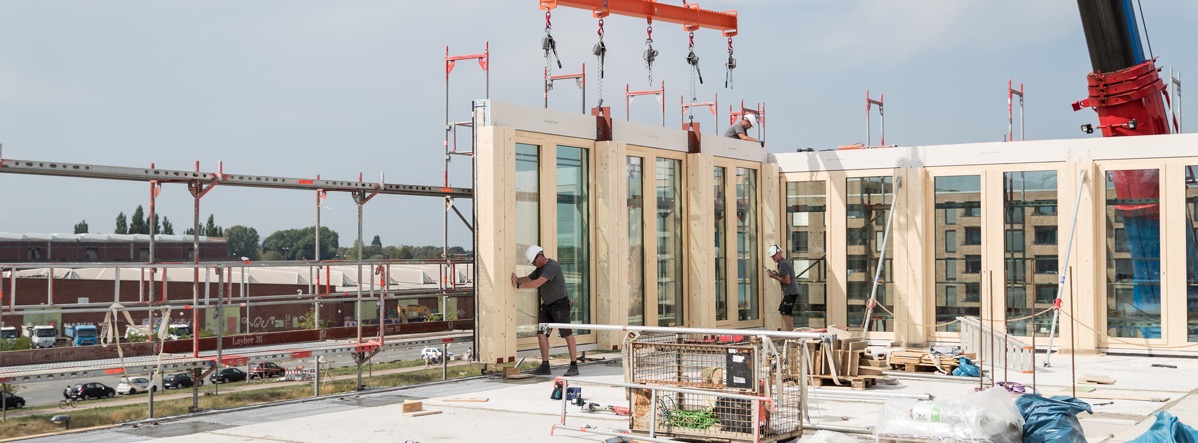
8 days to complete a 4 story, eight unit, courtyard building with timber prefab kit.
That's one interesting detail I took away from a FASCINATING meeting today with an Austrian prefab company.

53
173
1,979
125,985
Frauke Stehr retweeted

Mar 21
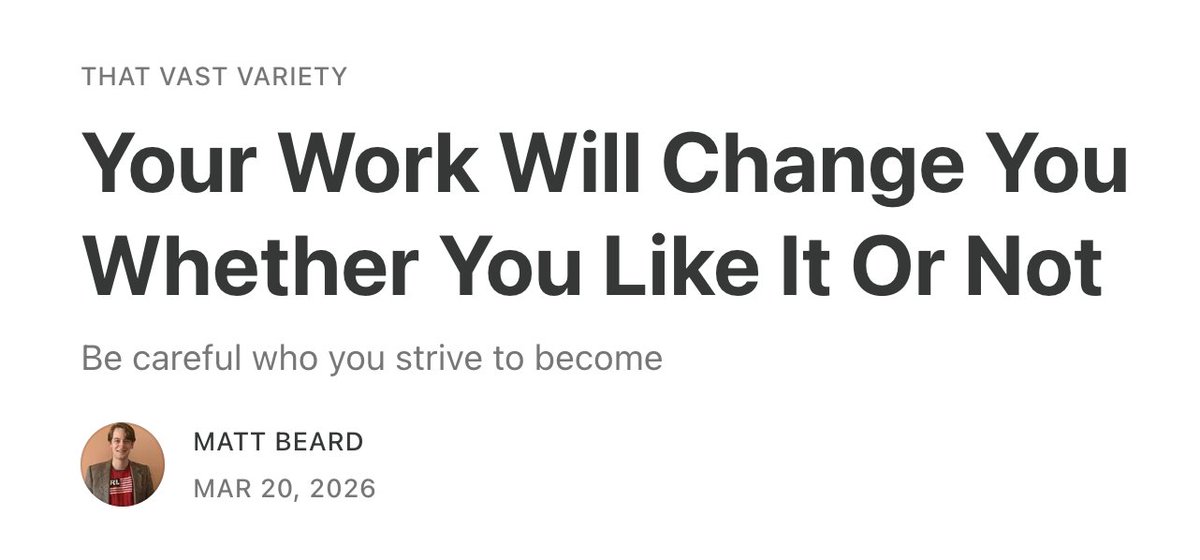
@matt_beard_ is on a roll, been very excited about everything he's put out recently
3
8
70
4,039
Frauke Stehr retweeted

Mar 7
Gutenberg invented the most important technology of the millennium and immediately went bankrupt — and so did the bank that foreclosed on him, and so did his apprentices.
Gutenberg could make a batch of 300 books for the cost of one, but there weren't enough buyers in his small, landlocked village in Germany.
It it took the better part of a century of further innovations, social changes, and setting up of distribution networks before you could have a pamphlet like Luther's 95 thesis get from Wittenberg to London in 17 days.
308
1,682
10,227
1,243,508
Frauke Stehr retweeted

Mar 8
Das wäre ein großer Fehler.

Sachsens MP @MPKretschmer schlägt eine befristete Aussetzung der CO2-Bepreisung zur Entlastung der Wirtschaft vor.
🎙️👇
podcasts.apple.com/de/podcas…
160
49
452
68,636
Frauke Stehr retweeted

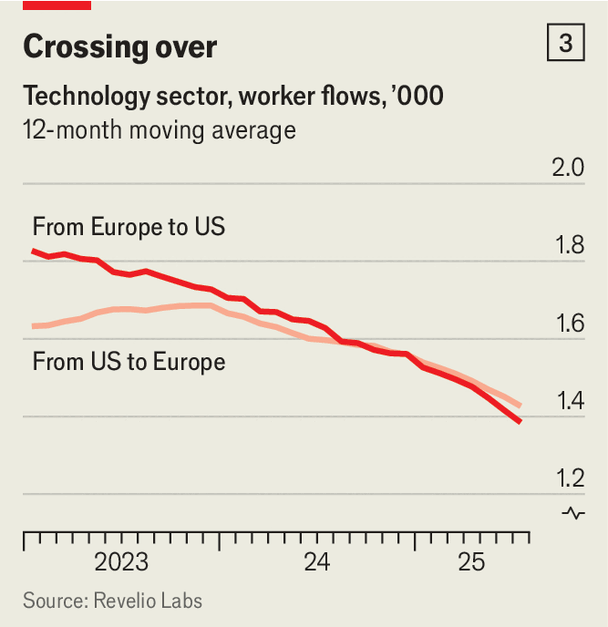
There are now more tech workers going from the US to Europe than the other way around
260
1,011
5,201
452,766
Frauke Stehr retweeted

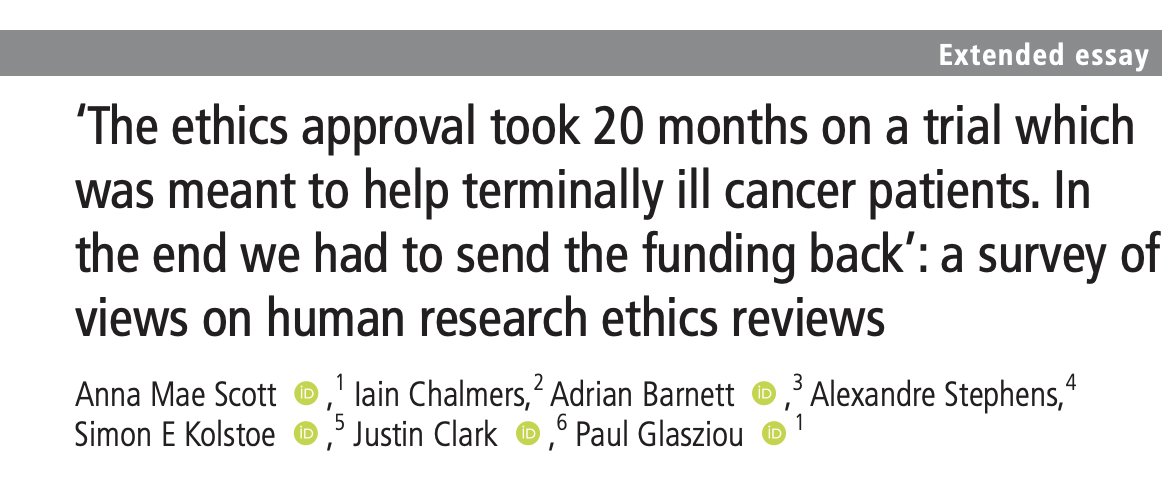
omg this title, this paper
45
1,277
19,112
623,321
Frauke Stehr retweeted

Feb 28
I spent time in Shenzhen last year and when I saw Merz come back from China saying Germans need to work more I immediately knew what broke his brain because I lived the exact same cognitive shock
my first week in Huaqiangbei I burned through 4 prototype iterations of a motor controller board for less than a thousand bucks total, back home a friend was working on something similar and spent over 12 thousand for a single revision that took almost two months to arrive
when you live that contrast in your own hands with your own project something permanently shifts in how you see the world and it goes way deeper than speed & cost
what Shenzhen actually built is a collective learning organism, imagine 20 PCB fabs 15 injection mold shops 30 component distributors and a hundred firmware freelancers all within a 2km radius, looks insanely redundant from the outside until you realize redundancy is actually information density in disguise
I watched this firsthand with an injection mold supplier I was working with, this guy had seen a hundred founders iterate similar thermal designs over 6 months so he proactively modified his tooling before I even opened my mouth, he knew what I needed before I knew what I needed, the intelligence lives in the relationships between the nodes and it compounds daily
the west thinks about manufacturing as a cost center you optimize by centralizing…
China accidentally built a distributed neural network of manufacturing intelligence where knowledge diffuses horizontally across thousands of agents faster than any single western company can process internally
so when Merz comes back and says we need to work a bit more I think he saw the problem but COMPLETELY misdiagnosed the solution, telling Germans to work harder is like telling a horse to gallop faster when the other side built a combustion engine
the gap is ARCHITECTURAL
it’s ecosystem density, you need a custom connector in Shenzhen you walk 200 meters, in Munich you send an email and wait 3 weeks
it’s iteration speed, parallel search vs sequential optimization at the system level, it’s risk tolerance, Chinese founders ship something broken on Monday fix it Tuesday ship again Wednesday while European companies are still in the approval phase for the pilot program of the feasibility study…
and Merz only saw the surface, what he missed is the tier 2 cities like Hefei Chengdu Wuhan replicating the Shenzhen model at scale right now
BYD going from irrelevant to outselling every european automaker combined in roughly 5 years, Huawei building its own 7nm chip under maximum sanctions when every analyst said it was physically impossible & behind all of that a government that treats advanced manufacturing as an existential national priority while europe debates whether AI needs another ethics committee
I think what we’re watching is the most asymmetric economic competition in modern history and most western leaders are still framing it as a productivity problem when it’s actually an ontological one
Europe & America are optimizing variables that China stopped tracking years ago meanwhile China is compounding on dimensions the west has no framework to even measure
Merz at least had the courage to name
it out loud and I respect that genuinely but working a bit more inside a broken architecture just means you arrive at the wrong destination slightly faster
Feb 27

NEW:
🇩🇪🇨🇳 German Chancellor Merz says Germans need to work more in order to match China:
“We are simply no longer productive enough. Each individual may say, “I already do quite a lot.” And that may be true.
But when you return from China, ladies and gentlemen, you see things more clearly.
With work-life balance and a four-day week, long-term prosperity in our country cannot be maintained. We will simply have to do a bit more.”
894
5,463
26,453
4,058,858
Frauke Stehr retweeted

Feb 25
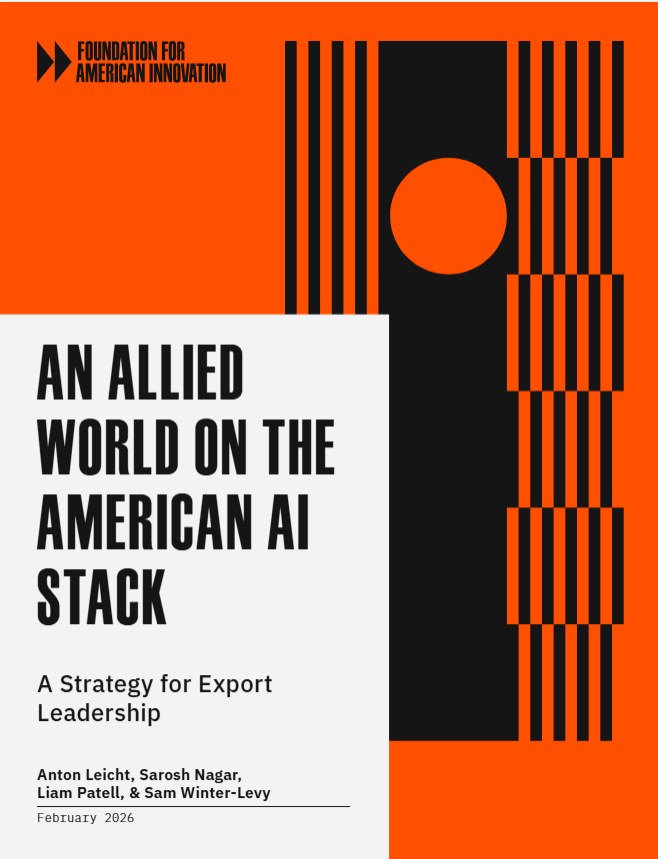
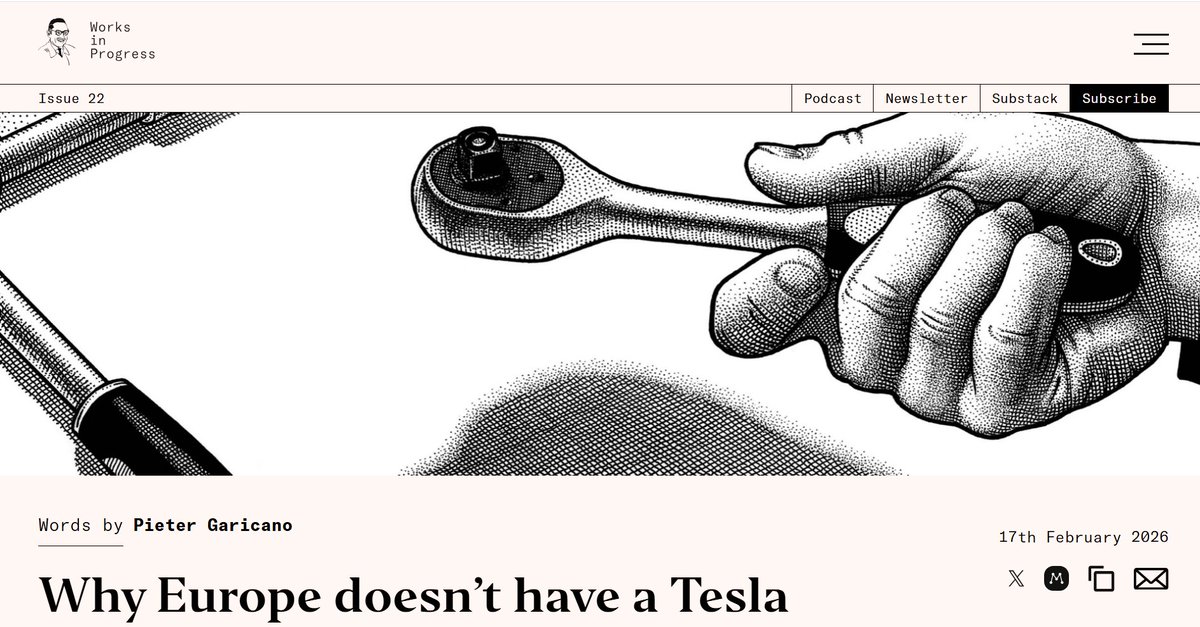
I love that the EA/Progress intersection has such good design. Literally among the best on the internet - a kind of minimalist American Modernism, but not pastiche. Web native, for sure, but not "Squarespace nonsense". 1/2


7
18
291
14,301
27 Nov 2025
Housing Theory of Everything strikes again
93
Frauke Stehr retweeted

27 Nov 2025
Ok which one of you got Jesse Eisenberg to donate a kidney?

7
4
172
7,709