Joined February 2009
- Tweets 41,202
- Following 953
- Followers 47,096
- Likes 30,823
4,901 Photos and videos



Lenore Skenazy retweeted

Jun 12
Great piece about how we hate on people when something, out of the blue, goes wrong. Look at this "Dear Harriet" col today:
Kid slips from monkey bars, breaks arm. Was it WRONG to let her climb, as she does all the time?
NO.
But there's blame a-plenty!
mercurynews.com/2026/06/11/h…

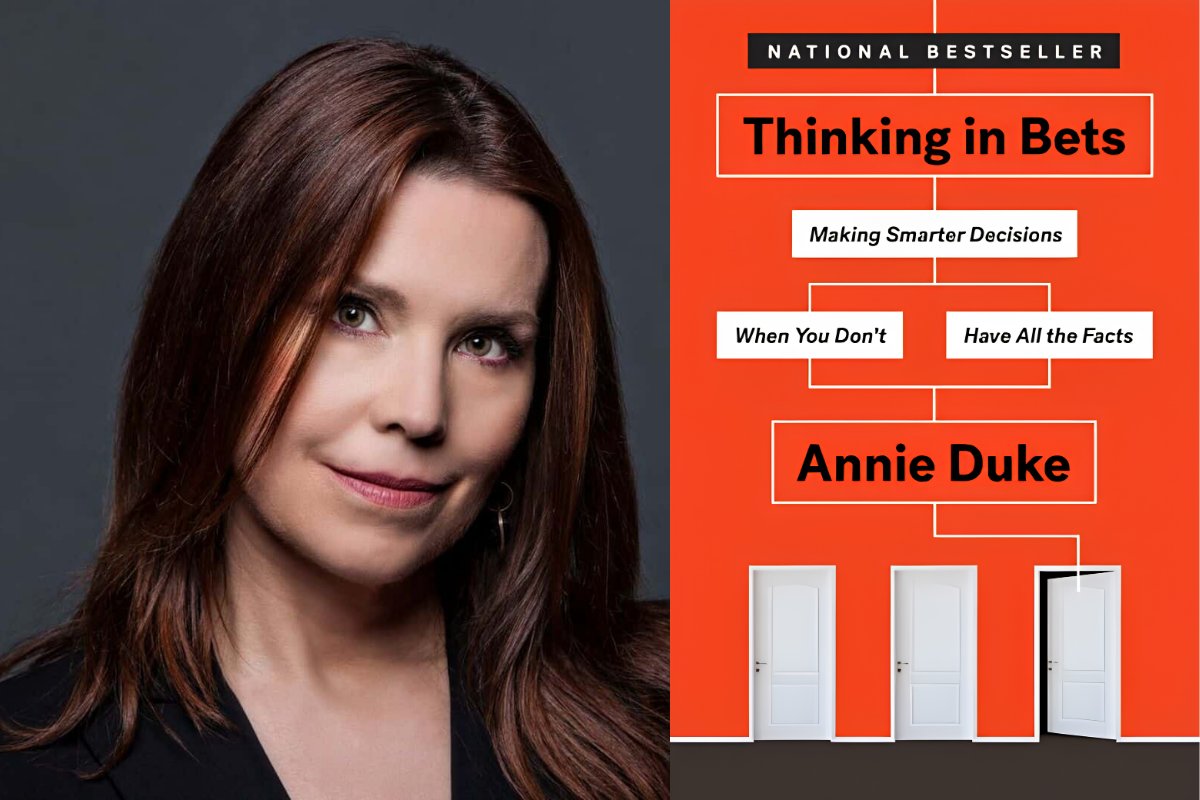
A cognitive psychology PhD student dropped out of her program, spent 20 years playing professional poker against the smartest gamblers on earth, and came back to write the book proving that almost every decision smart people make is being judged the wrong way.
Her name is Annie Duke.
She was finishing a PhD in cognitive psychology at the University of Pennsylvania under one of the most respected psycholinguists in the country when she got sick, took a leave of absence, and never went back.
Her brother Howard Lederer was already a professional poker player in Las Vegas. He invited her to come out and try a few games while she recovered.
She liked it. She kept playing. She kept winning. Twenty years later she had won over 4 million dollars at the table, taken home a World Series of Poker bracelet, and beaten almost every famous player in the game at one point or another.
What she did not know during those twenty years was that she was running the longest, most expensive cognitive psychology experiment of her life.
Poker is the cleanest natural laboratory ever invented for studying how humans make decisions under uncertainty.
Every single hand forces you to commit money to a future outcome that you cannot fully predict. You see some of the cards. You do not see all of them. Your opponent is hiding information. The deck is shuffled. Luck plays a role in every result. And after the hand is over, you find out only one piece of the truth, which is what happened that one time.
This is exactly how almost every important decision in real life works.
A career move. A hiring decision. A medical treatment. A relationship. A startup investment. A surgery. A trade. In every case you are committing to an outcome you cannot fully predict, with information you do not fully have, in a world where luck is one of the variables.
Annie Duke spent twenty years training under the cruelest possible feedback loop for exactly this kind of decision making, and when she finally came back to write a book about what she had learned, she opened with the single insight that almost everyone reading this is getting wrong every single day.
She calls it resulting.
Resulting is the cognitive error of judging the quality of a decision by the quality of the outcome it produced. If the outcome was good, you assume the decision was good. If the outcome was bad, you assume the decision was bad.
This sounds obvious. It sounds like common sense. It is also, she argues, the single dumbest habit that intelligent people have, and it is silently making almost every smart person reading this worse at thinking over time.
The reason it is wrong is the entire content of her book.
In any environment where luck plays a role, the outcome of a single decision tells you almost nothing about whether the decision was good.
A great decision can produce a terrible outcome. A terrible decision can produce a great outcome. The smaller your sample size, the more luck dominates the result. The bigger your ego, the more likely you are to mistake luck for skill on the way up and mistake bad luck for incompetence on the way down.
Her favorite example is the most famous play in modern NFL history.
Super Bowl XLIX. February 1, 2015. Seattle Seahawks versus New England Patriots.
26 seconds left. Seahawks on the Patriots' one-yard line. They had Marshawn Lynch, one of the most powerful running backs in the league, in their backfield. Every commentator on earth was waiting for them to hand him the ball and let him pound it into the end zone for the winning touchdown.
Coach Pete Carroll called a pass play instead.
The ball was intercepted. The Seahawks lost. The next morning, every sports columnist in America called it the worst play call in Super Bowl history. Pete Carroll became, for years, the most criticized coach in modern football. Some writers called it the dumbest decision ever made on a football field.
Annie Duke watched the coverage and could not believe what she was seeing.
Because the actual math of the decision, ignoring the result, was completely defensible. The interception probability on that specific pass play was around 2 percent. The other 98 percent of outcomes were either a touchdown, an incomplete pass that stopped the clock, or a no-gain that still left time for a run.
Carroll had a legitimate strategic reason to want to throw on second down so he could save his timeouts. The decision was not stupid. The result was just on the wrong end of the 2 percent.
Every commentator in the country was running the same cognitive error in unison. They were judging the decision by the outcome. They were doing it because the outcome was vivid and emotional and on every screen in America the next morning. The decision itself, evaluated on its own terms, was unremarkable. The outcome was dramatic, so the decision had to be dramatically wrong. That is resulting.
The deeper point Duke makes is the part that should change how you think about your own life.
You are doing this every day.
Every time you look back on a decision and grade it by how it turned out, you are running the same error. The startup you joined did well, so joining it was a great decision. The startup failed, so joining was a stupid decision. The marriage worked, so marrying was wise. The marriage ended, so marrying was foolish. The investment paid off, so you are a good investor. The investment lost money, so you are bad at this.
None of these conclusions are reliable.
All of them are confusing the outcome with the decision. And the longer you do this, the worse you get at thinking, because you are training yourself to update your beliefs based on noise instead of signal. You congratulate yourself on lucky wins. You punish yourself for unlucky losses. You learn the wrong lessons in both directions.
The fix is the part poker teaches you brutally.
You have to separate the decision from the result.
When you sit down to evaluate a choice you made, you have to ask whether the process that produced the decision was sound. Did you have the right information? Did you consider the right alternatives? Did you account for what you did not know? Did the expected value of the decision look reasonable at the moment you made it, given what you could have known at the time?
If the answer is yes, and the result was still bad, you absorb the loss and move on.
You do not punish yourself. You do not change your process. You do not write a long blog post about what you learned. Bad outcomes from good decisions are the cost of operating in a world that contains luck, and there is nothing useful to learn from them except that luck exists.
If the answer is no, and the result was still good, you do the opposite.
You congratulate yourself privately and quietly fix the process anyway. Good outcomes from bad decisions are the most dangerous thing that can happen to a smart person, because they convince you to keep running a broken process that will eventually catch up with you.
This is how the best poker players in the world think about every hand they play.
This is also, Duke argues, how the best executives, the best investors, the best surgeons, and the best parents quietly think about every important decision they make.
The book is small. About 240 pages.
You can finish it in two evenings. It will not give you a system or a framework or a checklist. It will give you one habit, repeated until it sticks.
Stop grading your decisions by how they turned out instead start grading them by how they were made.
The first version will keep you stuck.
The second one quietly compounds for the rest of your life.
2
1
12
1,585
Jun 11
.@LetGrowOrg has helped pass "Reasonable Childhood Independence" bills in 13 states--so far!
Now one is pending in PA and a bipartisan federal bill was introduced in CONGRESS by @RepBlakeMoore & @RepMcClellan!
Unsupervised time is not against the law!
letgrow.org/congress-introdu…

Probably the #1 reason kids aren't playing outside is that their parents get arrested when they do.
1
3
15
1,729
Lenore Skenazy retweeted

Jun 11
Each extra day a kid plays outside drops their odds of mental health problems by up to 14%. Free. Ancient. No clinician required. We swapped it for screens, then built an industry to treat the wreckage.
2
8
731
Lenore Skenazy retweeted
Jun 11
Surprised? No.
Delighted? Yes.
Worried? Also yes.
Study of 4000 kids indicates that "increasing outdoor play may be a useful public health approach to reduce child mental health problems."
So why am I worried?
Kids aren't playing outdoors very much.
acamh.onlinelibrary.wiley.co…
5
18
39
2,280
Lenore Skenazy retweeted

Jun 11
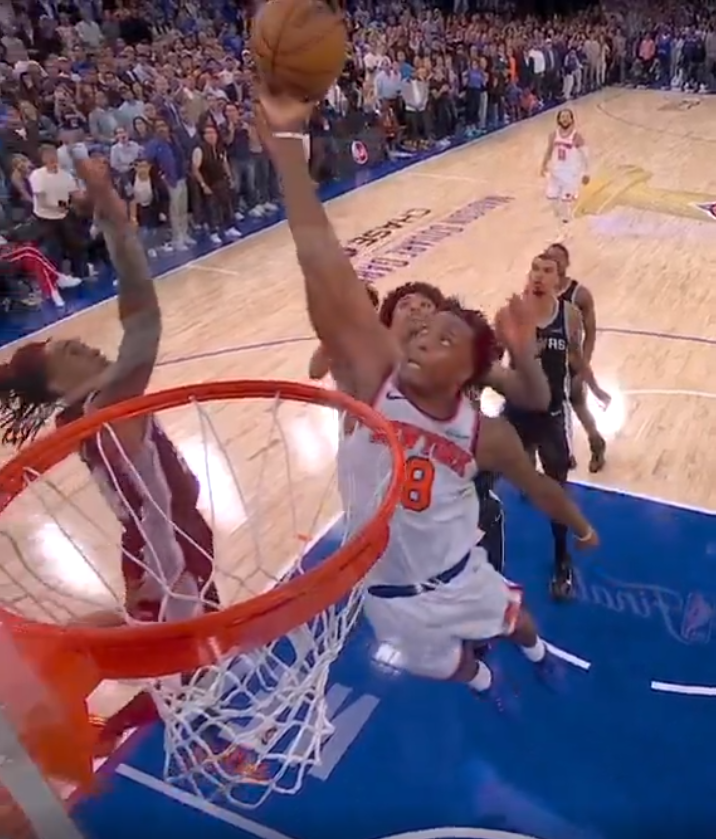
OG Anunoby really hit the Statue of Liberty for Game

2
9
74
4,080
Jun 11
Delighted to talk to calm, insightful @mrdad on the Healthy Family Show about how kids grow -- when we let them, and tune out all the fear being shoved down our throats!
podcasts.apple.com/us/podcas…
1
5
677
Lenore Skenazy retweeted
Jun 10
Helpful parenting hacks, including this one I love because it's simple, smart, and makes it easier for parents to let their kids play outside:
"Use a lint roller on clothes to check for ticks after playing outdoors."
bit.ly/3S1iJPp
3
18
1,439

That is what @FreeRangeKids has been advocating for years.
Jun 9

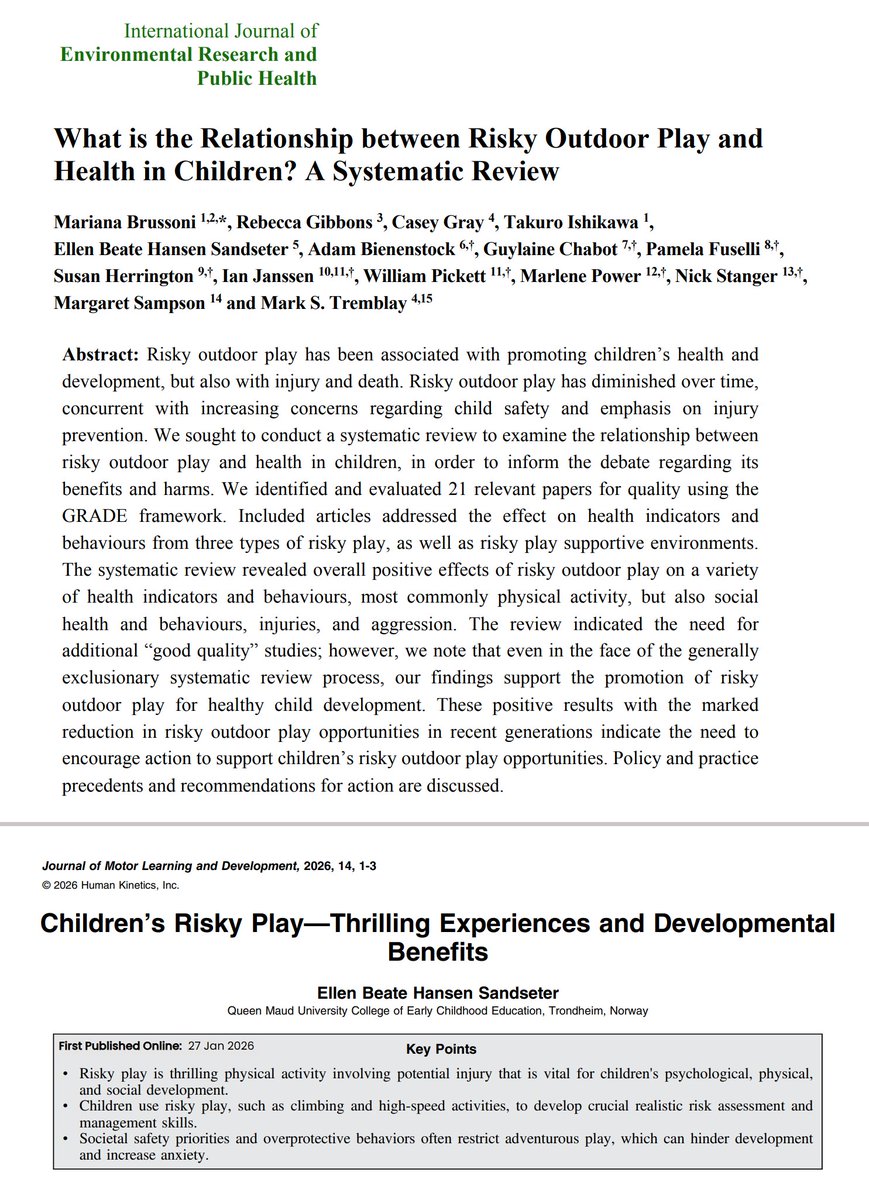
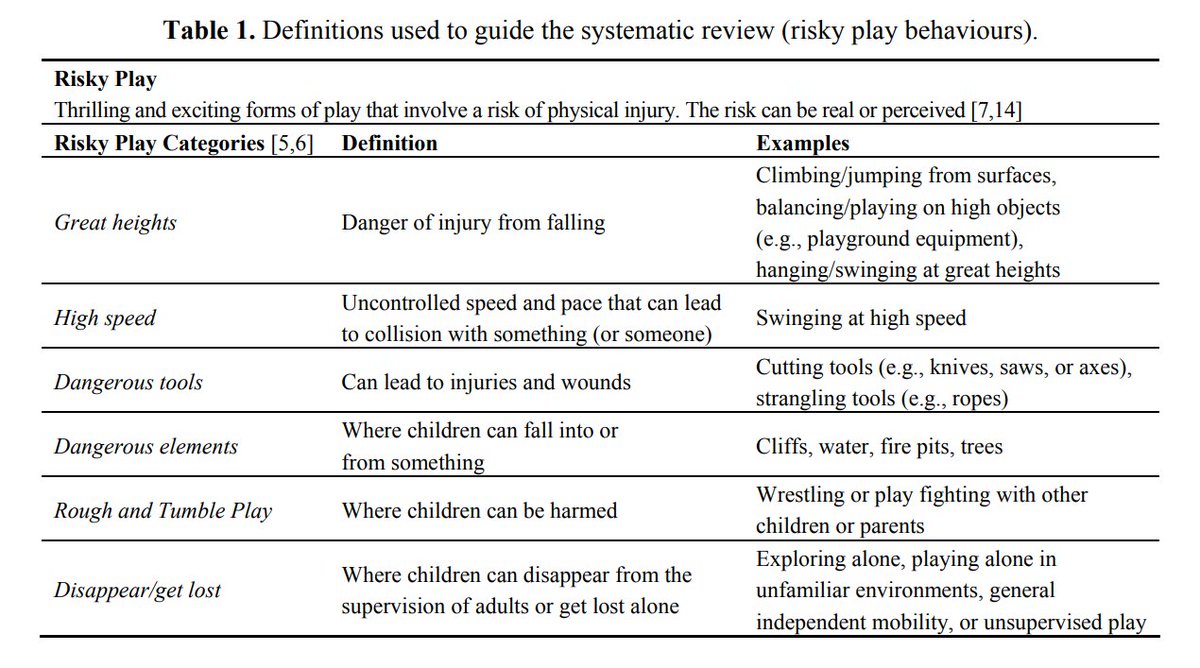
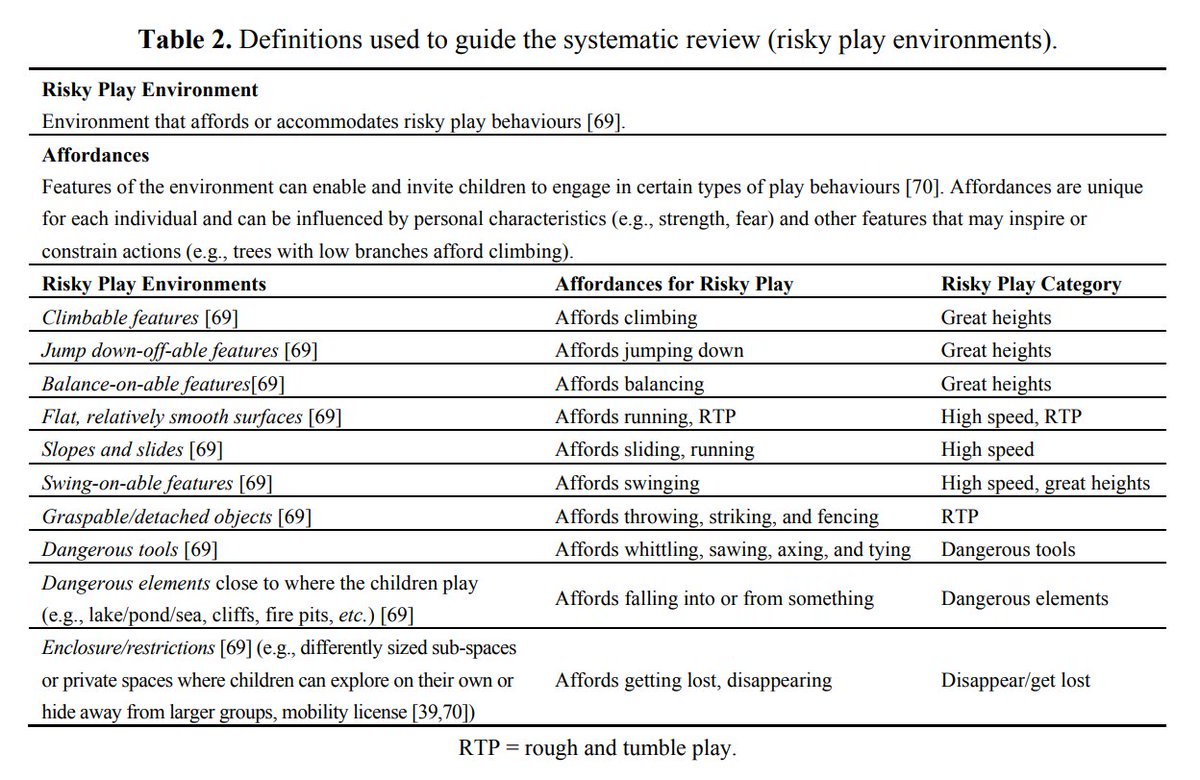
Dejar a los niños jugar solos al aire libre exponiéndose a riesgos controlados (escalar árboles, jugar con agua o fuego, luchar de broma, explorar zonas donde hay riesgo de perderse, correr a gran velocidad, saltar desde cierta altura...) es necesario para su correcto desarrollo.
Aumenta significativamente su autoconfianza y su sentimiento de competencia, mejora el bienestar psicológico, fortalece la resiliencia emocional y les ayuda a regular el miedo de forma saludable (efecto anti-fóbico). Además, favorece el desarrollo físico (fuerza, coordinación, equilibrio y habilidades motoras), incrementa la actividad física y reduce el sedentarismo. A nivel social, mejora sus habilidades de interacción con otros niños, la resolución de conflictos, la cooperación y el liderazgo. También estimula la creatividad, la resolución de problemas y la capacidad de evaluar y gestionar riesgos reales por sí mismos.
Por el contrario, apartarlos de cualquier peligro y sobreprotegerlos aumenta notablemente el riesgo de desarrollar fobias y ansiedad, reduce su resiliencia, disminuye su autoestima y su capacidad para manejar el estrés y los desafíos de la vida. También favorece el sedentarismo, la obesidad, un menor desarrollo de habilidades motoras y peores competencias sociales, dejando a los niños menos preparados para enfrentarse al mundo real.
1
6
653
Lenore Skenazy retweeted
Jun 9
Great insight into our hindsight-judging of PARENTS, too.
We can make truly decent, even wise decisions that sometimes turn out to be bad.
That is the fault of RANDOMNESS, not bad parenting.
Yet we love to BLAME UNLUCKY PARENTS.
Like these: reason.com/2025/12/04/new-le…
A cognitive psychology PhD student dropped out of her program, spent 20 years playing professional poker against the smartest gamblers on earth, and came back to write the book proving that almost every decision smart people make is being judged the wrong way.
Her name is Annie Duke.
She was finishing a PhD in cognitive psychology at the University of Pennsylvania under one of the most respected psycholinguists in the country when she got sick, took a leave of absence, and never went back.
Her brother Howard Lederer was already a professional poker player in Las Vegas. He invited her to come out and try a few games while she recovered.
She liked it. She kept playing. She kept winning. Twenty years later she had won over 4 million dollars at the table, taken home a World Series of Poker bracelet, and beaten almost every famous player in the game at one point or another.
What she did not know during those twenty years was that she was running the longest, most expensive cognitive psychology experiment of her life.
Poker is the cleanest natural laboratory ever invented for studying how humans make decisions under uncertainty.
Every single hand forces you to commit money to a future outcome that you cannot fully predict. You see some of the cards. You do not see all of them. Your opponent is hiding information. The deck is shuffled. Luck plays a role in every result. And after the hand is over, you find out only one piece of the truth, which is what happened that one time.
This is exactly how almost every important decision in real life works.
A career move. A hiring decision. A medical treatment. A relationship. A startup investment. A surgery. A trade. In every case you are committing to an outcome you cannot fully predict, with information you do not fully have, in a world where luck is one of the variables.
Annie Duke spent twenty years training under the cruelest possible feedback loop for exactly this kind of decision making, and when she finally came back to write a book about what she had learned, she opened with the single insight that almost everyone reading this is getting wrong every single day.
She calls it resulting.
Resulting is the cognitive error of judging the quality of a decision by the quality of the outcome it produced. If the outcome was good, you assume the decision was good. If the outcome was bad, you assume the decision was bad.
This sounds obvious. It sounds like common sense. It is also, she argues, the single dumbest habit that intelligent people have, and it is silently making almost every smart person reading this worse at thinking over time.
The reason it is wrong is the entire content of her book.
In any environment where luck plays a role, the outcome of a single decision tells you almost nothing about whether the decision was good.
A great decision can produce a terrible outcome. A terrible decision can produce a great outcome. The smaller your sample size, the more luck dominates the result. The bigger your ego, the more likely you are to mistake luck for skill on the way up and mistake bad luck for incompetence on the way down.
Her favorite example is the most famous play in modern NFL history.
Super Bowl XLIX. February 1, 2015. Seattle Seahawks versus New England Patriots.
26 seconds left. Seahawks on the Patriots' one-yard line. They had Marshawn Lynch, one of the most powerful running backs in the league, in their backfield. Every commentator on earth was waiting for them to hand him the ball and let him pound it into the end zone for the winning touchdown.
Coach Pete Carroll called a pass play instead.
The ball was intercepted. The Seahawks lost. The next morning, every sports columnist in America called it the worst play call in Super Bowl history. Pete Carroll became, for years, the most criticized coach in modern football. Some writers called it the dumbest decision ever made on a football field.
Annie Duke watched the coverage and could not believe what she was seeing.
Because the actual math of the decision, ignoring the result, was completely defensible. The interception probability on that specific pass play was around 2 percent. The other 98 percent of outcomes were either a touchdown, an incomplete pass that stopped the clock, or a no-gain that still left time for a run.
Carroll had a legitimate strategic reason to want to throw on second down so he could save his timeouts. The decision was not stupid. The result was just on the wrong end of the 2 percent.
Every commentator in the country was running the same cognitive error in unison. They were judging the decision by the outcome. They were doing it because the outcome was vivid and emotional and on every screen in America the next morning. The decision itself, evaluated on its own terms, was unremarkable. The outcome was dramatic, so the decision had to be dramatically wrong. That is resulting.
The deeper point Duke makes is the part that should change how you think about your own life.
You are doing this every day.
Every time you look back on a decision and grade it by how it turned out, you are running the same error. The startup you joined did well, so joining it was a great decision. The startup failed, so joining was a stupid decision. The marriage worked, so marrying was wise. The marriage ended, so marrying was foolish. The investment paid off, so you are a good investor. The investment lost money, so you are bad at this.
None of these conclusions are reliable.
All of them are confusing the outcome with the decision. And the longer you do this, the worse you get at thinking, because you are training yourself to update your beliefs based on noise instead of signal. You congratulate yourself on lucky wins. You punish yourself for unlucky losses. You learn the wrong lessons in both directions.
The fix is the part poker teaches you brutally.
You have to separate the decision from the result.
When you sit down to evaluate a choice you made, you have to ask whether the process that produced the decision was sound. Did you have the right information? Did you consider the right alternatives? Did you account for what you did not know? Did the expected value of the decision look reasonable at the moment you made it, given what you could have known at the time?
If the answer is yes, and the result was still bad, you absorb the loss and move on.
You do not punish yourself. You do not change your process. You do not write a long blog post about what you learned. Bad outcomes from good decisions are the cost of operating in a world that contains luck, and there is nothing useful to learn from them except that luck exists.
If the answer is no, and the result was still good, you do the opposite.
You congratulate yourself privately and quietly fix the process anyway. Good outcomes from bad decisions are the most dangerous thing that can happen to a smart person, because they convince you to keep running a broken process that will eventually catch up with you.
This is how the best poker players in the world think about every hand they play.
This is also, Duke argues, how the best executives, the best investors, the best surgeons, and the best parents quietly think about every important decision they make.
The book is small. About 240 pages.
You can finish it in two evenings. It will not give you a system or a framework or a checklist. It will give you one habit, repeated until it sticks.
Stop grading your decisions by how they turned out instead start grading them by how they were made.
The first version will keep you stuck.
The second one quietly compounds for the rest of your life.
2
1
15
3,983
Lenore Skenazy retweeted
Jun 9
Great point!
I don't believe that organized sports are bad and only free play is good. It's just frustrating that organized sports seem to be turning into a massive, expensive, all-consuming part of childhood, crowding out the free play, and stressing out whole families.
Jun 9

@FreeRangeKids
A major conceptual problem is that “free play” and “organized sports” are framed as opposites on a single continuum, in which gains in one are necessarily losses in the other, and only the former is tied to mental health, independence, and social skills. When we rhetorically exalt *only* the sandlot, we implicitly denigrate organized sports as inauthentic, over‑structured, or even harmful, rather than seeing them as one of the few robust, real‑world social infrastructures many kids still have
6
4
49
3,859
Lenore Skenazy retweeted

Jun 9
夏休み、学校から解放された子どもたちのため、涼をとりながら同時に創造性を発揮できるアイディアを考えたお母さん。
これはめちゃくちゃクールだ…。
17
234
3,774
931,300
Jun 9
I love the International Day of Play (THIS THURS!) but it's sort of like, "International Day of Eating."
Something kids should be doing EVERY DAY.
EVERY.
DAY.
1
2
10
832
Lenore Skenazy retweeted
Jun 8
How sandlot baseball died in the '80s:
"Parenting culture shifted... The idea that a good parent actively manages their child’s development, schedules their free time, and invests in structured activities with clear payoffs became mainstream."
studyfinds.com/pickup-games-…
5
13
51
5,088
Lenore Skenazy retweeted
Jun 8
Ah...America.
This summer, according to a press release, parents are packing "adventure snack kits" filled with "freeze-dried fruit snacks made from 100% real fruit."
Gosh. What other form of fruit could they possibly take on a car ride? I'm wracking my brain...
1
1
33
2,499