
He/Him. American 1stA Supporter, SEO curator, writer (& playwright), geek, sci-fi addict, coin collector, activist in the TX 33rd Congressional District.
Joined April 2009
- Tweets 28,332
- Following 3,215
- Followers 719
- Likes 139,314
7,099 Photos and videos













I'm excited to have 3 poems featured in the 10th volume of Shipwreckt Books Lost Lake Folk Opera. This is the #WinterOfICE issue, themed #UnitedWeWrite
Where are you submitting to this week? #WritingCommunity #WritersOfTwitter #AuthorsOnX
shipwrecktbooks.press/about-…
1
5
410
George M retweeted

Jun 14
I have a confession to make:
As my 𝕏 account has grown recently, I've almost completely neglected working on my novel
Why?
Writing social media content is easier and has more instant gratification.
Turns out I'm not immune to the dopamine train.
This changes now.

12
1
36
2,199
We live in a strange dystopian future. Is this #VanityPublishing meets #ReputationManagement / #AIArbitration?
hollywoodreporter.com/busine…
2
George M retweeted

Jun 13
This Greek restaurant has no AC. It stays cool all summer on sea breezes alone, via fabric panels that scatter sunlight and move air around. Ancient Persians took the same principle so far they produced ice in 45°C (113°F) desert heat, without electricity.
The Persian wind catcher, known as a badgir (literally "wind catcher" in Persian), is one of the oldest cooling systems on earth. Archaeologists found evidence at Tappeh Chackmaq, a site near Shahrood, Iran, dated to roughly 3,000 years ago. They work on simple physics: a tower rises above the roofline, catches prevailing winds through angled openings, and funnels cooled air down into rooms below. Yazd, Iran still has 700 of them. UNESCO added the city to its World Heritage list in 2017, calling it "a living testimony to intelligent use of limited available resources in the desert." The Egyptians had their own version, the malqaf, shown in 1300 BCE artwork near Luxor.
Persians combined wind catchers with underground chambers to create the yakhchal, an ancient refrigerator. During cold desert nights, shallow pools of water froze solid. Badgirs then kept the chambers cold enough to store that ice through summer, in a desert regularly hitting 45°C. Inside, temperatures ran 15-20°C below the outdoor air, held there by thick insulating walls, steady airflow from the wind towers, and the cool ground beneath. This is how Persians made faloodeh, a frozen dessert, in a climate with no business producing frozen anything.
Willis Carrier designed the first modern air conditioning system on July 17, 1902, at a printing plant in Brooklyn. AC spread fast. Passive cooling vanished from new construction. Air conditioning and fans now consume 20% of global building electricity.
K-Studio, an Athens-based architecture firm, designed the Barbouni beach restaurant at Costa Navarino, Messinia. The fabric ceiling does two things at once: it breaks up direct sunlight before it heats the floor below, and its wave motion keeps air moving on top of basic convection (warm air rises, cooler outdoor air rushes in). K-Studio principal Dimitris Karampatakis: "We didn't want to have a static structure right in front of this dynamic landscape." Afternoon sea breezes at the Navarino coast arrive reliably each day, generated by land heating faster than the sea and drawing cooler air in from the water. The ceiling was designed around that daily rhythm.
Wind towers drop indoor temperatures by up to 22°F (12°C) with zero electricity and no maintenance. Yazd's badgirs have been running continuously for 700 years. A Greek restaurant just did a simpler version, and 324,000 people acted like it was a new idea.
Jun 12

A kinetic ceiling installation at Costa Navarino, Greece, designed by K-Studio for The Romanos resort, uses fabric panels that sway with sea breezes. The wave-like motion filters sunlight and enhancing natural airflow to keep the beachside restaurant cool.
13
330
1,570
128,774
George M retweeted

Jun 12
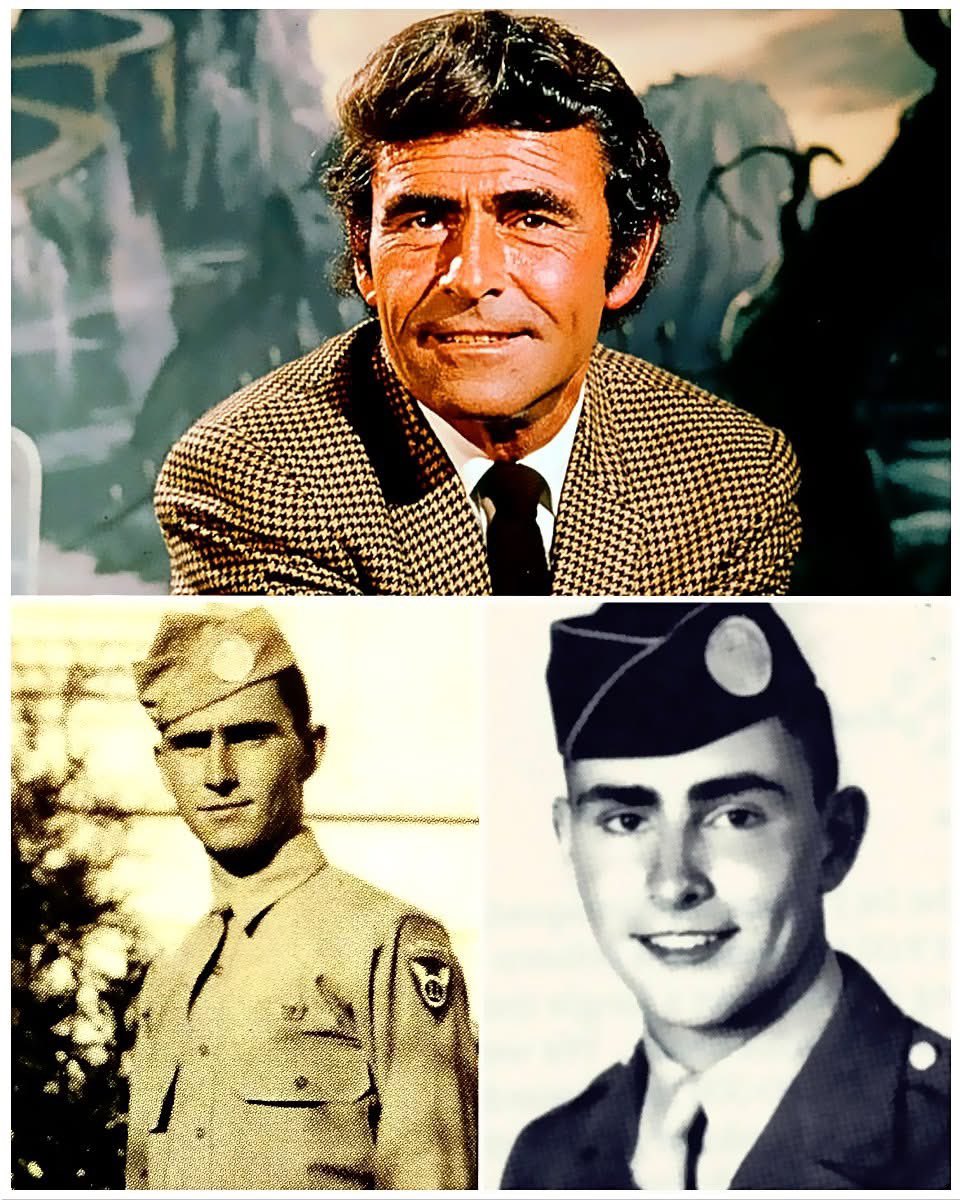
Rod Serling died on June 28, 1975, at Strong Memorial Hospital in Rochester, New York, two days after open-heart surgery. He was only 50. A heart attack had shaken him in May, another crisis followed, then surgery tried to give him more time. It did not. The man who had warned America about fear, cruelty, war, prejudice, and the darkness inside ordinary people was gone far too soon.
But Rod Serling had been carrying death long before that hospital room. He had met it as a young paratrooper in World War II, when he served with the 11th Airborne Division in the Philippines. He came home with a Bronze Star, a Purple Heart, and memories that did not salute and leave. They stayed. They woke him. They followed him into scripts. They stood behind him whenever he wrote about a man trapped by terror, a town poisoned by hatred, or a soldier who already knew too much about dying.
His daughter Anne later remembered the boy before the battlefield broke the illusion. “He was just barely 18 when he enlisted and sounded like a kid at summer camp in his letters to his parents.” That line hurts because it shows the distance between the boy who left home and the man who returned. Rod did not come back as a loud hero. He came back as a writer with a wound, and that wound learned how to speak.
After the war, he studied at Antioch College and fought his way into radio and television. Rejection did not stop him. Hunger did not stop him. The industry’s cold little doors did not stop him. By the 1950s, he had become one of television’s brightest young voices with "Patterns" (1955) and "Requiem for a Heavyweight" (1956). Those dramas proved that television could hit the heart like theater and still reach a living room.
Then came "The Twilight Zone" (1959), and suddenly America was watching morality dressed as mystery. Monsters appeared, but the real monster was often mankind. Aliens came down, but the ugliest danger was fear turning neighbors against neighbors. That was Serling’s genius. He did not lecture. He led people into a strange room, locked the door, then made them recognize themselves.
He knew exactly what he wanted writing to do. “The writer’s role is to be a menacer of the public’s conscience. He must have a position, a point of view.” That was not a slogan for him. It was a duty. When sponsors and network executives feared controversy, he found another road. If they would not let him speak directly about racism, war, censorship, and injustice, he would put those truths on another planet, in another town, behind another face.
He also understood that television could be more than noise. “I stay in television because I think it’s very possible to perform a function of providing adult, meaningful, exciting, challenging drama.” He believed the screen should not only distract people. It should disturb them in the right way, wake them up, and leave them thinking after the room went quiet.
His war never fully ended. One of his haunting lines about combat said, “These are the faces of the young men who fight, as if some omniscient painter had mixed a tube of oils...” That was the artist and the soldier standing together. He could see beauty in language, but he never forgot the mud, fear, hunger, and sudden loss behind it.
Serling went on to write, produce, narrate, teach, and shape American television with courage. He worked on "Planet of the Apes" (1968), later created "Night Gallery" (1969), won six Emmy Awards, and became a voice people could recognize before they even saw his face.
Rod Serling did not simply create a classic show. He turned pain into warning, memory into art, and trauma into truth.
The battlefield followed him, but his words still lead us home.
15
75
362
8,277
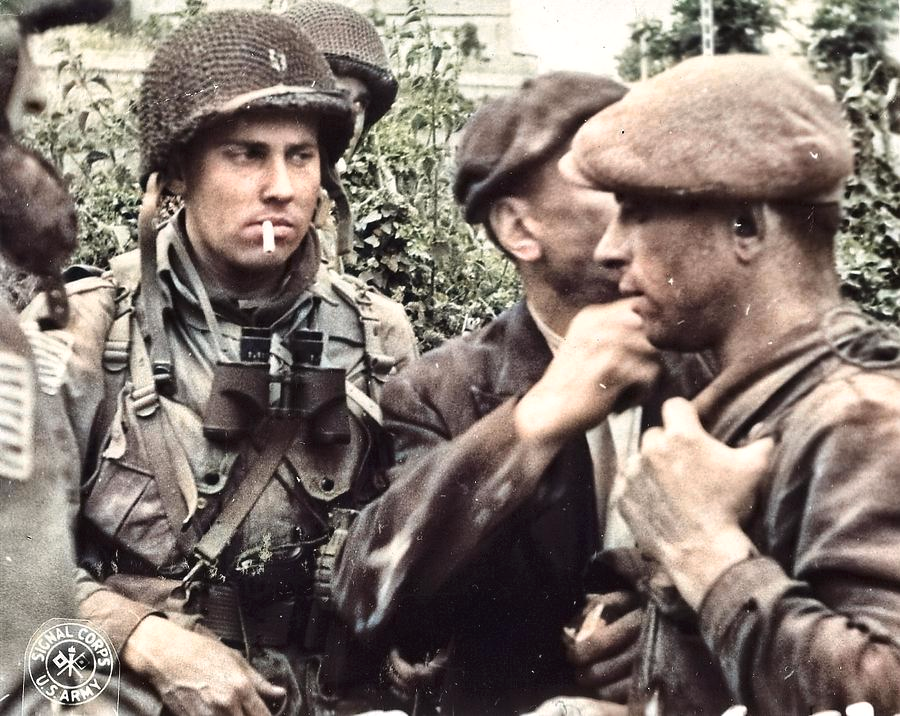
The French Resistance is the largest underappreciated element of the D-Day invasion. Those marvelous, brave, & slightly insane folks simply decided they'd had enough of Nazi occupation & went full-stop to end it.
Jun 12

The Nazis cracked the secret code announcing D-Day, intercepted the warning live on air, and still got destroyed by an army of railway workers, teenage girls, and a house painter. Every detail of this story is real and it gets crazier the longer you read.
Start in 1943. A French house painter named René Duchez takes a redecorating job at a German engineering office in Caen. Sitting on a desk: a map of the Atlantic Wall defenses for the Normandy coast. He hides it behind a mirror on the wall, finishes the job like nothing happened, and walks out with it days later. The Resistance smuggles it to London in a cookie tin on a fishing boat. The Allies now have the blueprint of the wall they're about to climb.
He wasn't alone. For a year, ordinary French people built the most detailed picture of enemy defenses in military history. Fishermen noted gun positions. Farmers paced out minefields. Railway clerks copied German troop movements. Cleaning ladies memorized office paperwork. Thousands of reports flowed to London every month, hidden in baguettes, bicycle frames, and babies' diapers. When Allied planners sat down to design D-Day, they knew the Normandy coast better than the Germans defending it.
Meanwhile the RAF was secretly parachuting guns into French fields at night, tens of thousands of containers of rifles, Stens, and explosives, guided in by farmers holding flashlights. The Resistance was handed four sabotage plans and told to wait. Plan Green: destroy the railways. Plan Tortoise: block the roads. Plan Violet: cut the telephone lines. Plan Blue: kill the power grid. Each cell waits for its go signal, hidden among the fake "personal messages" the BBC reads every night. Nonsense phrases like "Jean has a long mustache." Each one meaningless to millions, life or death to a dozen.
June 1, 1944. The BBC reads the first line of a 19th century poem about autumn violins. It means the invasion is coming. June 5, 9:15 pm, the second line airs: go within 48 hours. Here's the insane part. German intelligence had tortured the code out of a captured Resistance leader. They knew exactly what those lines meant. They intercepted both, live. One German army went on full alert. The army actually defending Normandy was never told. Its commander had left for a war game. Rommel had driven home for his wife's birthday with a pair of Paris shoes in the car.
That night, while 13,000 paratroopers were still in the air, France exploded. The Resistance cut the rail network in over 950 places before dawn. They dropped bridges, derailed locomotives, and blew signal boxes. They dug up and severed the underground telephone cables, forcing German commanders onto the radio, where the Allies were reading their encrypted traffic. By sunrise on June 6, the German army in Normandy was blind, deaf, and stranded. Some units learned the largest invasion in history was happening from French civilians. Others, from lost American paratroopers landing in their gardens.
Then comes the masterpiece. The 2nd SS Panzer Division Das Reich, 15,000 battle-hardened troops and 200 tanks, is ordered north from Toulouse to crush the beachhead. The trip should take three days. It takes seventeen. Why? Weeks earlier, saboteurs working for a British agent had crept into the rail yards where the division's tank transporter flatcars sat, drained the axle oil, and replaced it with abrasive carborundum paste. Among the saboteurs: a teenage girl. When the panzers loaded up and rolled out, the railcars ground themselves to death within miles. Forced onto the roads, the tanks burned out their treads while the Resistance blew every bridge ahead of them, felled trees across the roads, ambushed the columns at river crossings, and sniped at them through every town, then melted into the hills. By the time Das Reich reached Normandy, the beachhead it was sent to destroy was unbreakable.
The Germans took revenge on civilians along the route, including massacres in towns that had nothing to do with the attacks. The Resistance knew the price of every cut cable and every blown bridge. They kept cutting. After D-Day they rose up across the whole country, liberating entire regions, taking surrenders of German units, and feeding the Allies intelligence all the way to Paris. Some paid in full, like the thousands who fought a doomed open battle on the Vercors plateau that July.
Eisenhower later judged the Resistance worth a full fifteen divisions of regular troops. Fifteen divisions. Of farmers, fishermen, train conductors, cleaning ladies, teenagers with carborundum paste, and one house painter who stole the Atlantic Wall off a Nazi desk and carried it past checkpoints in his paint van.
They had no tanks, no planes, no uniforms. They had poetry on the radio and the nerve to act on it. And it worked.
8
I want a Kestrel tenant/guardian!

There's a falcon the size of a robin that'll hunt your yard for free. And you can build it a house this weekend.
The American kestrel hovers over open ground and drops on grasshoppers, voles, and mice all day. It's the most widespread falcon in North America, found in nearly every state, and it's down by roughly half since the 1960s.
The reason is fixable: kestrels nest in tree holes they can't dig themselves, and we keep cutting down the dead trees that hold them. No cavity, no nest.
So give them one.
The whole box comes out of a single 8-foot 1x10. A 7¾-inch floor, a body about a foot and a half tall with a sloped roof you hinge at the top for cleaning, a 3-inch round hole up near the front, and 3 inches of wood chips in the bottom, since they bring no nesting material of their own. White pine, an afternoon, about twenty bucks.
Hang it 10 to 20 feet up on a pole or a dead tree at the edge of a field, pasture, or big open lawn, with the hole facing the open ground and pointed south or east. Put a baffle on the pole so raccoons can't climb to it.


7
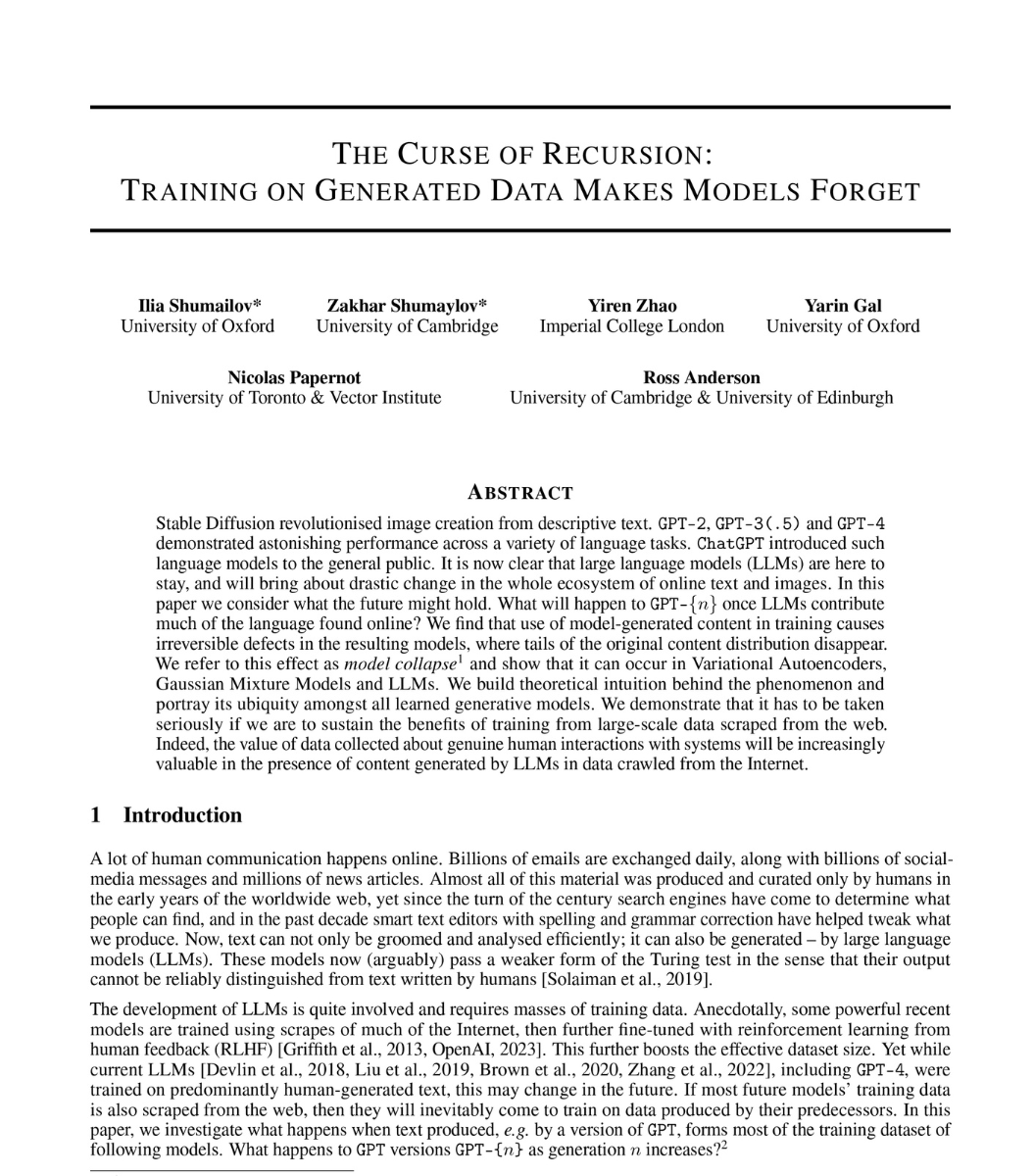
#DeadInternet AI content is poisoning AI content creation. I like the fire & pollution analogy.
#AIDystopia
Jun 10

You have noticed it. ChatGPT feels dumber than it used to. Your prompts that worked six months ago produce worse results now. The writing sounds flatter. The ideas sound safer. The internet itself feels like it is shrinking. Every article reads the same. Every email sounds the same. Every answer sounds like it was written by the same voice.
You thought it was you. It is not you.
Researchers at Oxford and Cambridge published a paper in Nature proving what is happening. They call it Model Collapse.
Here is the mechanism in one sentence. AI trained on AI-generated data gets dumber every generation until it forgets what real human data looked like.
The internet is filling with AI-generated content. Blog posts. Articles. Reviews. Comments. Social media. AI companies scrape the internet to train the next generation of models. Which means the next generation of AI is being trained on the output of the current generation.
Each cycle loses information. Not randomly. It loses the rarest, most unusual, most creative parts first. The researchers call these the "tails of the distribution." The weird ideas. The unexpected perspectives. The things that made the internet feel human. Those disappear first.
What remains is the average. The safe. The expected. The bland.
Then the next generation trains on that. And loses more. And the next generation trains on that. And loses more. The researchers proved this is not a slow decline. Major degradation happens within just a few iterations. Even when some of the original human data is preserved.
They tested it on large language models. On image generators. On statistical models. The pattern was the same every time. The output converges toward a narrow, flattened version of reality that looks nothing like the original data.
The lead researcher put it plainly. "Large language models are like fire. A useful tool. But one that pollutes the environment."
The pollution is invisible. You cannot see which sentence on the internet was written by a human and which was written by AI. Neither can the AI that is about to train on it. And once the tails are gone, they do not come back. The damage is irreversible.
This is not a prediction anymore. It is a diagnosis.
The internet you grew up on was built by humans writing things no algorithm would have written. Strange, personal, imperfect, alive. That internet is being diluted. One generation of AI at a time. And the models trained on what remains are learning a smaller and smaller version of the world.
Model Collapse is not a technical problem. It is a cultural one. The thing that made the internet worth reading is the thing that disappears first.
4
Talk about leaving your mark!
What are you creating that will survive down through the centuries? #WritingCommunity #WritersOfTwitter #AuthorsOnX #WhatInspiresYou?
Jun 10

A Roman brick from Cherchell, Algeria, bears a 2000-year-old imprint of a human hand.
The handprint appears to belong to a large Roman man who pressed his hand into the brick while it was drying before being put in the oven to be stabilized. Upon closer inspection, the fingerprints and skin texture are visible.

1
9
George M retweeted

Jun 11
Western audiences are completely failing to grasp the monumental scale of the war in Ukraine due to a constant barrage of disinformation and competing international crises.
The sheer volume of casualties (including civilian) has been systematically downplayed, leaving the true magnitude of the war nearly invisible outside of Ukraine itself.
There is a pervasive belief among even pro-Ukrainian Europeans that this conflict is a somewhat ”clean” war with limited civilian casualties. This narrative flies in the face of reality, as the war has amassed approximately 2 million total casualties over the last four and a half years, with a breakdown of approximately two-thirds Russian and one-third Ukrainian. Despite Russia having more total casualties, Ukraine has dozens of times more civilian casualties than Russia. This crushing disparity tells you everything about the ruthless reality of Russia's campaign.
A purely numerical comparison with the war in Gaza highlights the gap in Western perception. As of May 2026, more than two years of war in Gaza resulted in at least 75,811 reported deaths, both sides included. In stark contrast, the Uppsala Conflict Data Program reveals that the single three-month siege of Mariupol saw between 27,000 and 88,000 fatalities. Most of them were Ukrainian civilians.
Even though Mariupol had a population five times smaller than Gaza, its death toll in just three months potentially surpassed Gaza's total over two years. On a bigger level, the approximately 2 million total casualties in Ukraine match the population of the entire Gaza Strip.
This comparison is strictly statistical, used only because the public is highly aware of Gaza's bloodshed. The Kremlin has skillfully hidden its atrocities and suppressed civilian casualty data in occupied areas, but the West must look past the propaganda and recognize the historic scale of this devastation

65
1,277
2,624
43,542
George M retweeted

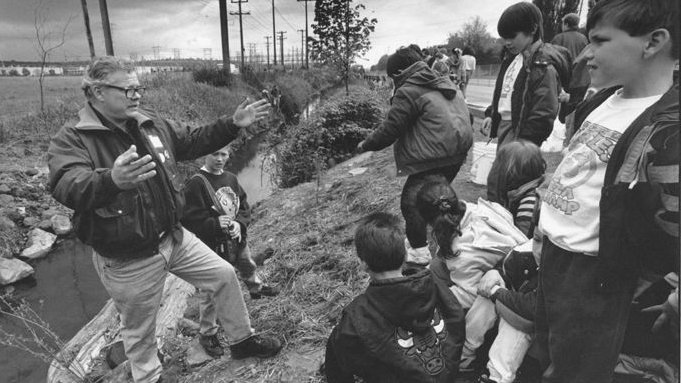
In 1979, a doctor gave John Beal 4 months to live. He had 3 heart attacks on top of the wounds and the nightmares he'd brought back from Vietnam.
There was a creek behind his house in South Seattle, and it was dying too.
Hamm Creek ran yellow. It was buried in pipe in places, packed with garbage, and drained its filth into the Duwamish River.
Nobody would have blamed him for doing nothing. He had almost no money, no science degree, and no authority over a creek the city had already paved over. He had every reason to sit on the porch and run out the clock.
Instead, he started pulling the trash out by hand, worked to free parts of the creek from the pipes they'd been buried in, and replanted the banks one tree at a time.
He and the volunteers who worked with him name every tree they put in, because he believed a tree with a name had a better chance.
He didn't die that summer. He kept showing up for 27 years. Today that creek runs salmon, herons, osprey, beavers, and otters through a neighborhood boxed in by factories.
John died in 2006, at 56. But the work didn't stop with him. The crews he'd pulled together kept showing up, and before he passed, his testimony helped inspire the creation of the Veterans Conservation Corps, which gives other veterans the same thing the creek gave him: a place to heal by restoring one.
Hamm Creek is now one of only two salmon-spawning creeks left on the Duwamish, and volunteers are still in it today.
The Duwamish Alive Coalition runs work parties on the creek and across the watershed every spring and fall, hauling out invasive plants and trash and putting native plants back, and they hand out a John Beal Environmental Stewardship Award every year to someone carrying it forward.
13
200
949
12,395
George M retweeted
A single ragweed plant can release hundreds of millions, and in some cases billions, of pollen grains. The wrong plant takes the blame for it.
When your eyes start itching in September, you look around and the thing you see blooming is goldenrod, tall and bright yellow on every roadside. So goldenrod gets cursed and torn out.
But goldenrod is innocent. Its pollen is heavy, sticky, and built to ride on the bodies of insects, far too heavy to float into your nose. About the only way it reaches you is if you press your face into the flower.
The real culprit is often growing right next to it, unseen. Ragweed blooms at the same time, but its flowers are small and green and easy to miss, and its pollen is light enough to travel for miles on the wind. Ragweed is one of the leading triggers of seasonal allergies in North America, especially in late summer and fall.
Meanwhile goldenrod provides late-season nectar for bees and other pollinators heading into fall. Removing it does nothing for your allergies, but it does take away an important food source for wildlife.

34
309
1,130
19,081
This is how I feel about corporations trying to guilt me into "round-up" donations at checkout too.
Companies asking me to fund their tax deductions rub me the wrong way.

Poszedłem rano do spożywczaka.
Chleb, mleko, jajka.
Rachunek: 150 zł.
Na ekranie terminala wyskoczyło pytanie, czy chcę zaokrąglić kwotę na wsparcie szpitala dziecięcego.
Kliknąłem: NIE.
Kasjerka zmierzyła mnie wzrokiem.
Kobieta za mną zmierzyła mnie wzrokiem.
Moja żona westchnęła i spojrzała w sufit.
Znowu to samo.
Ta korporacja zarobiła w zeszłym roku 14 miliardów. Sami mogą sobie zaokrąglić.
Potem pojechałem zatankować.
Terminal pyta, czy chcę dorzucić piątkę na schronisko dla bezdomnych zwierząt.
Uwielbiam zwierzaki.
Kliknąłem: NIE.
Koncern naftowy wart 166 miliardów prosi mnie o finansowanie ich fundacji, podczas gdy ja płacę ponad 6 ziko za litr.
To nie jest filantropia. To jest outsourcing.
Wpadłem na szybki lunch do fast foodu.
Ekran.
Na ekranie cyfrowego kiosku: „Zaokrąglij na stypendia dla młodzieży”.
Sieć fast foodów prosi mnie o fundowanie stypendiów, a swoim pracownikom płaci minimalną krajową.
Kliknąłem: NIE.
Żona mówi: „Wiesz, że od samego rana kłócisz się z ekranami?”.
Miała rację. Ale to ekrany pierwsze zaczęły.
Na koniec apteka.
Odbieram leki.
340 zł, już po zniżkach.
Terminal pyta, czy chcę przekazać 2 złote na pomoc potrzebującym rodzinom.
Właśnie zostawiłem 340 zł za lek, którego produkcja kosztuje pewnie z pięć zeta.
I wy chcecie ode mnie jeszcze dwa złote?
Kliknąłem: NIE.
Farmaceutka mówi: „To tylko dwa złote”.
Odpowiedziałem: „To nigdy nie są tylko dwa złote”.
Nic nie powiedziała.
Wracamy do domu.
Żona mówi: „Odmówiłeś dzisiaj szpitalowi dziecięcemu, schronisku, edukacji i biednym rodzinom”.
Odparłem: „Nie. Odmówiłem czterem wielkim korporacjom, które chcą, żebym sfinansował ich rzekomą dobroczynność, żeby potem mogły to wpisać do swojego raportu rocznego”.
Milczała przez chwilę.
W końcu mówi: „W sumie masz rację”.
„Wiem” – odpowiedziałem.
„Ale i tak wychodzisz na potwora”.
„Wolę wyjść na potwora, niż przy kasie potulnie sponsorować strategię PR-ową miliardowych firm”.
Nie zaprzeczyła.
8
George M retweeted

Jun 9
Imagine an underwater Grand Canyon where corals have been growing since before the United States was founded. 🐠
Plunged in total darkness. Untouched. Protected.
Until one signature changed everything.
On February 6, 2026, that's exactly what happened.
The Northeast Canyons and Seamounts Marine National Monument is bigger than Yellowstone.
Its submarine canyons drop into depths we're still mapping. There are sea creatures here science hasn't even named yet.
It’s underwater mountains — millions of years old, rise from the ocean floor, drawing sperm whales and endangered right whales from miles away.
The cold-water corals living here? Some have been growing for over a thousand years. A trawl net destroys them in seconds. They don't grow back in our lifetimes.
The monument was created in 2016 for one reason — to keep this ecosystem off limits from exactly this kind of destruction.
It worked. Until February.
One person. One signature. Zero public input. No congressional vote. No comment period. Just a proclamation — and a thousand-year-old ecosystem lost its protection overnight.
Proclamation 11009 — "Unleashing American Commercial Fishing in the Atlantic"— erased the ban overnight. Trawl gear, dredges, otter nets. Now permitted inside monument boundaries.
And here's the part that should make you angry — this administration tried this exact move in 2020. Conservation groups sued. They won. Biden restored protections.
Now we're back here.
How many more monuments have to lose their protections before Congress does something? 🐠
#DemsUnited
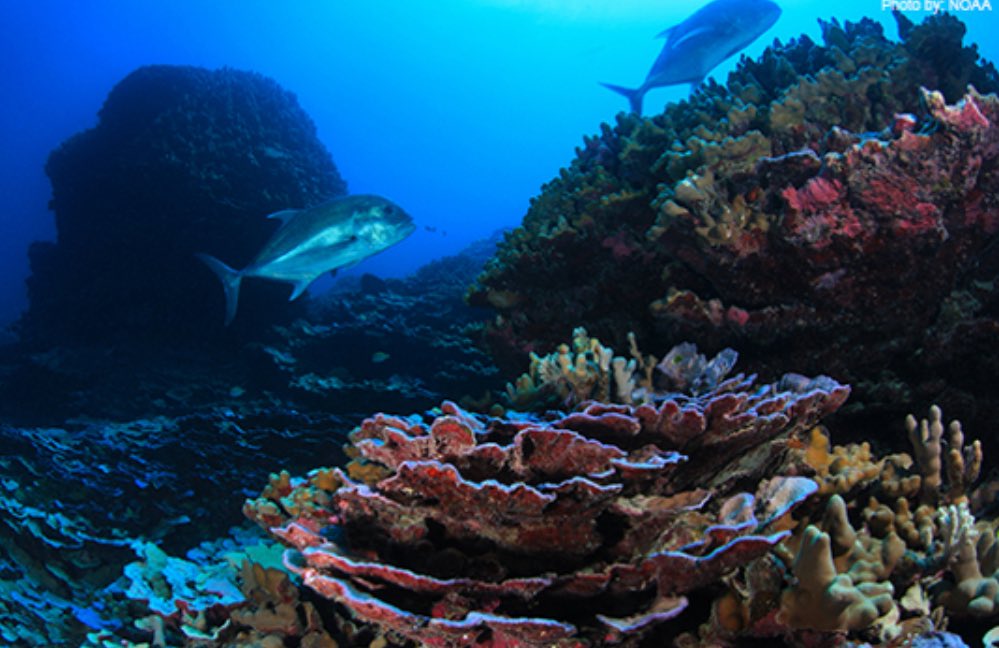
ALT Colorful underwater scene in the Northeast Canyons and Seamounts Marine National Monument showing layered coral formations and sponges on a rocky reef. Two large silver fish swim through the blue water above the corals, highlighting the rich marine life found in the protected habitat.
81
1,588
2,241
28,059
There's a story of a cursed castle waiting to be written here...
#WritingCommunity #WhatInspiresYou? #WritersOfTwitter #AuthorsOnX

A fortress shouldn't be made of stolen wonders. When the Knights Hospitaller seized the coast of Bodrum in 1402, they found the wreckage of the Mausoleum of Halicarnassus lying in the dirt.
They did not see a masterpiece of the ancient world. They saw ready-made construction materials that could withstand a naval siege.
For thirty-five years, the sound of hammers against Greek marble echoed across the harbor. The finest craftsmanship of the 4th Century BC was recycled into brutal medieval battlements.
You can still see the polished green volcanic stones and smooth marble slabs today. They are mismatched, forced into service alongside rough limestone and mortar.
The knights were desperate to hold this strategic point against the rising Ottoman power. Every stone from the tomb of Mausolus added a layer of protection that saved lives.
Archeologists later discovered friezes depicting legendary battles hidden deep inside the castle walls. These masterpieces were turned inward, facing the darkness of the stone blocks.
It is a strange architectural paradox where the dead protect the living. The tomb of a king became the shield of a holy order.
We know the source of every block. We do not know if the knights felt any guilt as they broke apart the world's most beautiful monument.
The castle still stands as a testament to survival at any cost. Some stones carry a weight far heavier than their physical mass.
#archaeohistories

8
George M retweeted

5/5
Russia has fired thousands of Kalibr missiles at Ukrainian cities since February 2022.
Each one carried foreign electronics. Each one was assembled with components that passed through export control regimes designed to prevent exactly this.
Ukraine's Ministry of Defence has now done the forensic work that regulators and intelligence agencies should have done years ago — dismantling the missiles, mapping the supply chains, identifying the manufacturers.
The data exists. The names are known.
Sanctions without enforcement are a press release. Enforcement requires the evidence Ukraine just handed over.
Every Kalibr that hits a Ukrainian apartment building is also a sanctions compliance failure.
That failure has manufacturers. It has managers. It has paper trails.
Ukraine has all of them.
Source: Ministry of Defence of Ukraine @DefenceU, June 2026
#Ukraine #UAF #Sanctions #StopRussianAggression #RussiaUkraineWar

13
173
651
21,266
George M retweeted

Jun 9
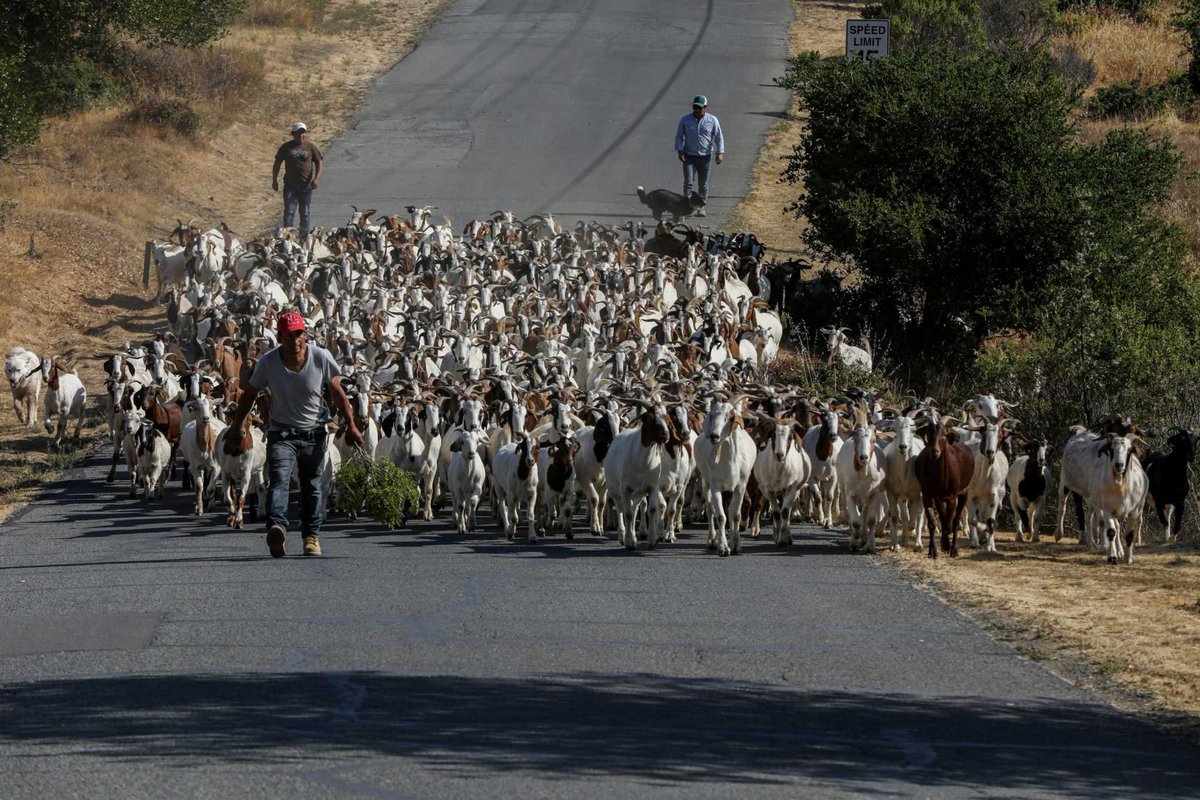
The cheapest, most effective wildfire crew in California has four legs and eats the problem.
Clearing flammable brush off a steep slope by hand is brutal, slow, expensive work. A herd of goats is none of those things.
Hand clearance:
- Around 28,000 dollars an acre
- People with tools on dangerous slopes
- Cuttings that then have to be hauled away
A herd of goats:
- Roughly 500 to 1,000 dollars an acre
- Climbs slopes no crew wants to touch
- Eats the brush to a firebreak and fertilises the ground on the way through
- Reaches branches several feet up
- Visibly thrilled to be at work
Calling the goat a quaint throwback has it backwards. On this job the goat is the superior technology by a factor of about fifty, and it runs on the very scrub everyone else is paying to remove.
247
2,709
9,917
93,954
George M retweeted

Jun 9
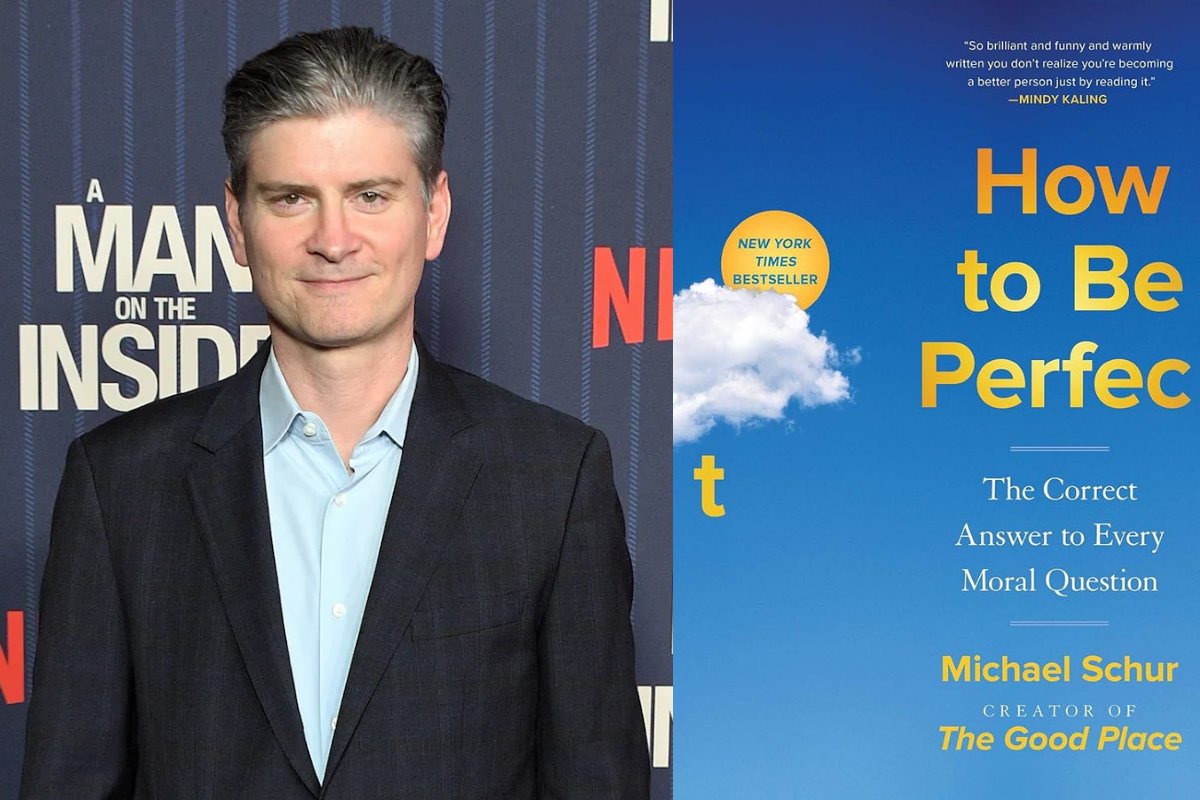
A TV writer with no philosophy degree read Aristotle, Kant, Bentham, and Scanlon back to back, built a sitcom around what he found, then explained in one book why the trolley problem is no longer a thought experiment and the people who need to understand this most are the ones building AI.
His name is Michael Schur.
He co-created Parks and Recreation and Brooklyn Nine-Nine. But The Good Place was the project that broke him open. On the surface it was a comedy about a woman who accidentally ends up in heaven. Underneath, it was a philosophy seminar. Every episode was built around a real ethical framework. He had to actually understand all of it to make any of it funny.
After the show ended, he wrote the book anyway. He called it "How to Be Perfect." It begins with the most honest opening line in any philosophy book ever written: Should I punch my friend in the face for no reason? No.
That is not a joke. That is his method. He starts with the obvious and builds toward the impossible.
Here is the framework he built, and why the most dangerous people in tech right now are running exactly one of the four schools of thought without knowing any of the others exist.
The first school is Virtue Ethics. Aristotle built it around 350 BCE. The question it asks is not "what should I do?" It asks "what kind of person should I be?" The idea: become genuinely good, and good actions will follow naturally. You build courage. You build honesty. You build practical wisdom. Then you trust the person you built.
The second school is Deontology. Kant built it in the 18th century and it is the exact opposite. Kant did not care about the person. He cared about the rule. His version: act only in ways you would be comfortable turning into a universal law. If everyone lied whenever it was convenient, the concept of truth would dissolve. So you never lie. Even if the truth gets someone killed. The rule is absolute because the moment you make one exception, it stops being a rule.
The third school is Utilitarianism. This is the one that should stop anyone building AI cold.
Jeremy Bentham invented it in the late 1700s. The principle sounds beautiful: the right action is whichever one produces the greatest good for the greatest number of people. Pure math. Pure outcome. Intention means nothing. Only consequences count.
Schur runs it through the trolley problem, the most famous thought experiment in philosophy.
You are driving a runaway trolley. Five people are tied to the main track. You can pull a lever and redirect it to a side track where only one person is tied. Do nothing and five die. Pull the lever and you kill one to save five.
A utilitarian says pull the lever. The math is obvious.
Now the same problem with one change. You are on a bridge above the track. A large man is standing next to you. The physics are clear: if you push him off the bridge, his body stops the trolley. Five people live. He dies. The math is identical.
Almost nobody will push the man. Even people who pulled the lever instantly in the first version refuse.
The utilitarian has no answer for why these two situations feel different. The numbers are the same. The outcome is the same. The only thing that changed is whether you are using another human being as a tool.
That gap between the math being correct and the action feeling monstrous is exactly where AI ethics collapses every single time.
The fourth school is Contractualism, built by the philosopher T.M. Scanlon. It asks the question that Kant's rules and Bentham's math both miss. What principles could be justified to everyone affected? Not the majority. Not the person with the most power. Everyone. Including the one person who ends up on the shorter end of the calculation.
Schur's conclusion is the part that people who live inside growth frameworks and optimization loops will resist the hardest. None of the four schools is correct on its own. Each one has a scenario where following it perfectly produces something most humans recognize as evil. Pure utilitarianism justifies harvesting one person's organs to save five dying patients. Pure deontology says you cannot lie to the murderer asking where your friend is hiding. Each system, taken to its logical extreme, becomes a machine that produces monsters while generating perfect internal justification for doing so.
The way out is not picking the right framework and following it harder.
The way out is using all four as lenses. Ask what Aristotle would do. Ask what Kant would allow. Do the utilitarian math. Then ask Scanlon's question: could you justify this to the person it hurts most?
Where those four answers overlap, you are probably on solid ground. Where they pull in different directions, you are in territory that deserves far more than a two-hour board meeting.
Schur also coined a term that has been stuck in my head since I finished the book. Moral Exhaustion. The feeling of living in an age where you can know, in real time, every ethical implication of every product you use, every company you work for, every piece of code you ship. The gap between what you know and what you can actually change becomes so large that the easiest response is to stop asking.
He says that response is understandable. He also says that choosing not to ask is itself a moral choice, and the consequences of that choice scale in exact proportion to the power you hold.
A person building a product one billion people will use is not operating at the scale where shrugging is a neutral act.
The people who built the most consequential technologies of the last decade were not evil. Most were genuinely trying to do good. They ran the utilitarian math. They saw a billion users. They saw engagement numbers that looked like impact. They optimized for the greatest good for the greatest number and did not notice until much later that the people being turned into variables in the math were still people.
Schur read 2,500 years of philosophy and the lesson he came out with fits in one sentence. You cannot use a single framework because every single framework, followed perfectly, eventually produces the wrong answer.
The people who cause the most damage are not the ones who do not care about ethics. They are the ones who found one framework they liked, felt good about it, and stopped asking.
The trolley problem is not a thought experiment anymore.
It runs on servers. It gets optimized overnight. And the people making those decisions right now have never once asked what Scanlon would say.
13
118
430
24,578
What novel things will you do today to build new memory anchors?
Jun 9

Your brain basically stopped recording your life around age 25. Everything since then is a blur for a reason.
Neuroscientists measured this so many times they named it: the reminiscence bump. Ask anyone over 60 to recall their strongest memories and almost every answer clusters between ages 15 and 25. The decade where everything was new. First job, first apartment, first real relationship. Your brain encoded each day because nothing had a template yet.
After that window closes, most people enter a repetition loop. Same commute, same office, same weekend rhythm. The brain stops recording repeated experiences as distinct events. A year with 300 novel days leaves 300 memory anchors. A year with 10 leaves 10. Both took 365 days to live. Only one of them will exist when you look back.
This is why people at 50 say "where did the time go." The time went into routine that felt like living but left almost nothing behind.
Your remaining years are fixed. How many your brain bothers to remember is entirely up to you.
22
George M retweeted

Jun 6
This is really stupid, and it’s not getting enough attention.
The Trump administration is pulling a working $368 million ocean monitoring system out of the water, equipment taxpayers already bought, built, and sank into the deep ocean.
And they are doing it right when the oceans are behaving in ways that alarm the scientists who study them.
Record-breaking temperatures.
A system of Atlantic currents that may be lurching toward collapse.
The response?
Yank out the instruments and walk away.
That is not budgeting. That is smashing the gauges while the engine is on fire and calling it efficiency.
For what? The Trump administration dressed it up as a “nimbler approach” and “smart lifecycle management,” which is fancy nonsense for “we shut it off and hoped nobody would ask why.” There is no return-on-investment analysis. They cannot show taxpayers save a dime, because the gear is already paid for and the science it produces protects real money and real lives.
The kicker: the same people killing the monitors want to mine the deep sea for minerals. So they are destroying the only tools that could measure what that mining does. That is not an accident.
That is the point. You cannot see the damage if you break the instruments first.
cnn.com/2026/06/03/climate/o…
1,167
15,157
30,245
1,011,229
This is my kind of persistence!

Group Chat
Friend: Guys, Something is wrong with my grandfather.
Me: What happened.
Friend: He keeps winning things.
Me: Like what.
Friend n: Everything.
Me: Everything?
Friend: Lottery tickets, Raffle draws, Store giveaways, Everything.
Me: NO.
Friend: BRO..... Last month he won a bicycle.
Me: Okay.
Friend: He doesn't ride bicycles.
Me: HAHAHAHA.
Friend: Then he won a rice cooker.
Me: Okay.
Friend: Then a hotel stay.
Me: WHAT.
Friend: At this point the family is convinced he's cheating somehow.
Me: Reasonable.
Friend: So I ask him.
Me: And?
Friend: He opens a notebook.
Me: NO.
Friend: BRO, The man has a spreadsheet, On paper.
Me: HAHAHAHA.
Friend: Every contest he's entered since 1994.
Me: WHAT.
Friend: Turns out he enters EVERYTHING.
Me: How many entries.
Friend: Thousands.
Me: ...
Friend: We've been calling it luck.
The man has simply weaponized persistence.
8