
🤗
Joined December 2020
- Tweets 75,199
- Following 1,888
- Followers 7,788
- Likes 60,930
1,560 Photos and videos
















Pinned Tweet

13 Jan 2022
Single dad adopts 5 siblings so they can stay together❤️

808
19,691
179,167
Getseen Media retweeted

Jun 10
This tweet is a mirror, not a complaint.
Everyone's friend has that job. Six figures, zero urgency, chicken pictures on a Tuesday afternoon. And the quiet reaction most people have is not outrage. It's envy.
Here's what the data actually says about that reaction.
Research by Voucher Cloud found that the average office worker is productive for only 2 hours and 23 minutes per day, regardless of the 8-hour contract they signed. Your $250K biotech manager friend is not an anomaly. He is just more transparent about it.
The average American works about two hours and 53 minutes a day. The rest goes to reading news, scrolling social media, chatting with coworkers, and sometimes quietly looking for a new job. What changes at $250K is not the output. It is the leverage, the title, and the cost of being replaced.
That's the uncomfortable truth buried in this tweet.
Corporate compensation at the manager level in knowledge industries is not a payment for hours. It is a payment for availability, accountability, and institutional memory. The chicken pictures are the interface. The decade of relationships, jargon fluency, and political capital is the asset.
And the market agrees. The average Glassdoor-reported biotech professional in the U.S. earns $157,058 per year, with top earners at the 90th percentile reaching $221,123. $250K is real. It is not a fluke.
Now here is the part that should genuinely surprise you.
The r/overemployment subreddit, with more than 430,000 members, has a single stated mission: "Work multiple jobs, reach financial freedom." Tens of thousands of knowledge workers are not just coasting at one job. They are collecting two or three full salaries simultaneously. One user shared how he balanced two full-time jobs and made an extra $300,000 in a single year in the process.
The person sending chicken pictures might be doing it from two Slack workspaces at once.
Many employees see corporations as unreliable, especially after widespread layoffs during the pandemic. Stories of workers denied promotions, left without raises, and blindsided by colleagues' advancements resonate with people who feel overlooked. The low-effort high-salary job is not laziness. For a lot of people, it is a rational response to a system that normalized disposability.
The real question this tweet raises is not "how do I get that job."
It is: what are you building outside of it? The people who will be fine in ten years are the ones who used the margin that cushy role gave them, time, money, and mental space, to build something that compounds.
The chicken pictures are fine. Just make sure they are not the whole portfolio.

I'm 38.
At this point of my life/career, I have so many friends working corporate W2 jobs making $200-400K/year (mostly in NYC/NJ/PA corridor) who just don't actually work that much.
One friend makes $250K as a manager at a biotech... all he does is send pictures of his chicken coop or other DIY projects all day during the week.. no idea what value he actually provides his company.
Then there's my "jiggler" friend who you might recall... guy makes $250-300K and just plugs a "mouse jiggler" into his laptop and just goes to the gym, homeschools his kids, tans, does yard work... all day. I ask him what he does and he can't even articulate it...
Another friend makes $150K at a remote startup and just travels around the world all the time... don't ask don't tell situation on where people are at any given time... but does seemingly little actual work.. maybe 1 hour a day.
This is truly what's going on out there... BS W2 jobs all over the place. And AI is a bubble?
Really?
5
32
175
24,601
Getseen Media retweeted
For my first five years in corporate America I had no promotion.
Then in my next five, I had three.
Same me. Same company. Different results.
What changed? 👇
60
348
1,980
113,894

Getseen Media retweeted

30 Sep 2024
If you wait too long, the coffee gets cold, the door closes, you get old, the girls move on, & dreams fade. You must act w/ a sense of urgency today
196
11,047
65,315
2,058,153
Getseen Media retweeted

May 23
I dated a girl with a male best friend once.
At first I tried to be mature about it.
“You’re just insecure bro” type mature.
She’d say things like,
“he’s basically my brother”
while this man was calling her at 1am to “vent” 😭
I ignored every red flag because I liked her.
Then one night we’re all out together and I go to the
May 23

ONLY FOR MEN.
Would you date a girl who has a male bestfriend.???
72
93
4,005
2,923,831

this is one of the reasons i always feel long distance relationships creates the best lovers fr.. the moment you can take intimacy off the table & they still fill that void in you, offer you value, without being blinded by lust or inordinate affections, now that’s your person.
May 23

When we say no s3x before marriage is for your own good because good s3x can make you blind to obvious red flag — Solomon Buchi
215
1,492
6,581
596,133
Getseen Media retweeted

May 21
No course will get you a cybersecurity job. Labs will. Here are the 10 you need to practice right now.
1. TryHackMe SOC Level 1 Path: the single best starting point for anyone who wants to work in a SOC. Covers log analysis, SIEM tools, threat detection, and incident response in a fully guided, beginner-friendly format. tryhackme.com/path/outline/s…
2. HackTheBox Starting Point: step-by-step guided machines that take you from zero to your first real exploitation. Once you finish Starting Point, move to the easy machines and build from there. hackthebox.com/starting-poin…
3. PortSwigger Web Security Academy: the best free resource for learning web application security. Every OWASP Top 10 vulnerability covered with real labs you actually hack, not just read about. Free. portswigger.net/web-security
4. Blue Team Labs Online: defensive security labs focused on forensics, threat hunting, SIEM analysis, and incident response. Built specifically for people who want to work on the blue team side. blueteamlabs.online
5. OWASP WebGoat: a deliberately insecure web application you run locally and attack. One of the best ways to understand how web vulnerabilities actually work from the inside. owasp.org/www-project-webgoa…
6. VulnHub: free downloadable vulnerable virtual machines you spin up in VirtualBox and practice on locally. No internet required, no subscription, just download and hack. vulnhub.com
7. PicoCTF: a free beginner CTF platform built by Carnegie Mellon University. Covers web exploitation, forensics, cryptography, reverse engineering, and binary exploitation through hundreds of challenges. picoctf.org
8. OverTheWire Bandit: a wargame that teaches Linux fundamentals, SSH, file permissions, and basic exploitation through progressive challenges. If your Linux skills are weak, start here before anything else. overthewire.org/wargames/ban…
9. Immersive Labs: used by enterprise security teams globally for hands-on skills development. Has a free tier with labs covering SOC, malware analysis, cloud security, and threat intelligence. immersivelabs.com
10.Cyberdefenders: blue team focused labs built around real-world attack scenarios with PCAP files, malware samples, and memory forensics. The closest thing to working a real incident without being on the clock. cyberdefenders.org
The gap between people who get hired and people who keep applying is not certificates. It is lab hours. Put in the reps.
Save this and share it with someone trying to break into cybersecurity.
Repost for others to see.

36
362
1,134
124,332
Getseen Media retweeted

May 21
A good read

2
80
472
52,549

Getseen Media retweeted

May 17
Dey with you 🤣🤣🤣
May 17

Papaya ex with the tongue. What’s that? Ref?
24
171
1,642
68,899
Getseen Media retweeted
May 17
Alapini na dangbana choko 🤣😂🤣
36
143
1,323
37,994
Getseen Media retweeted

May 14
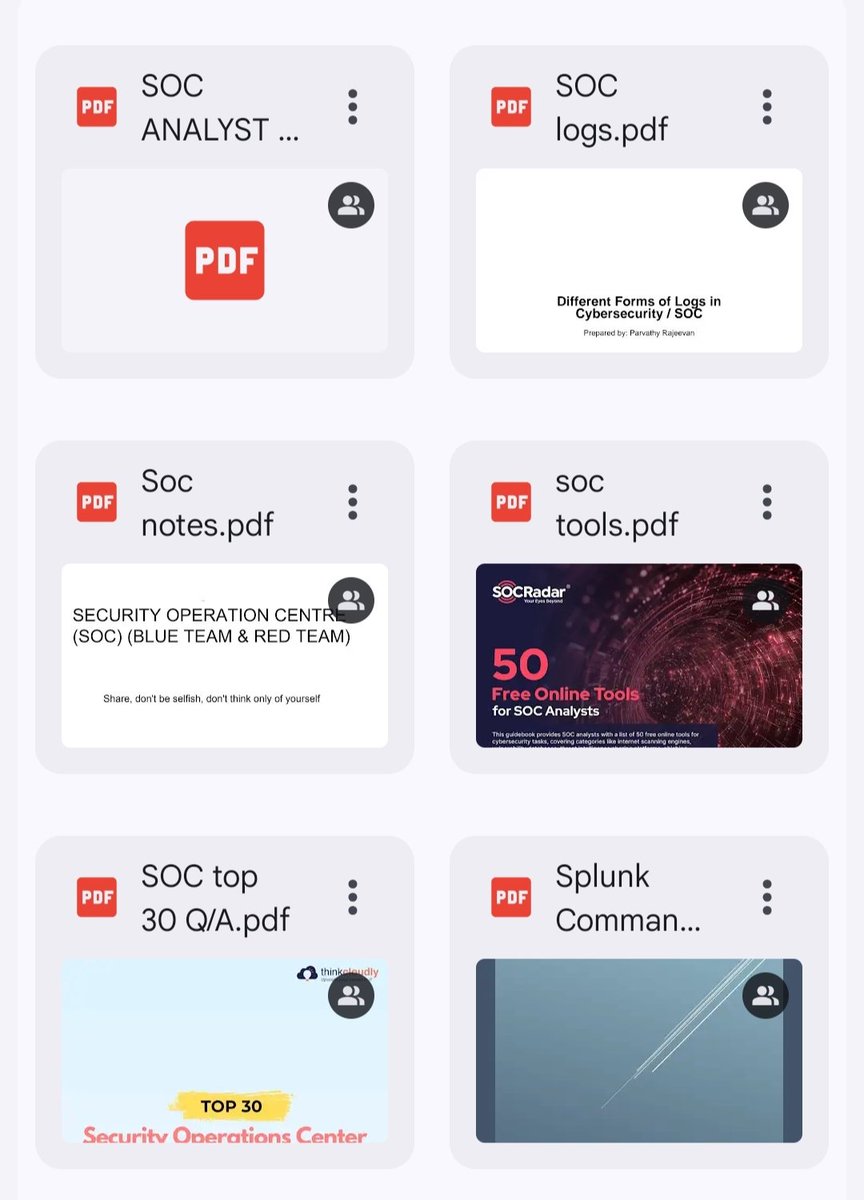
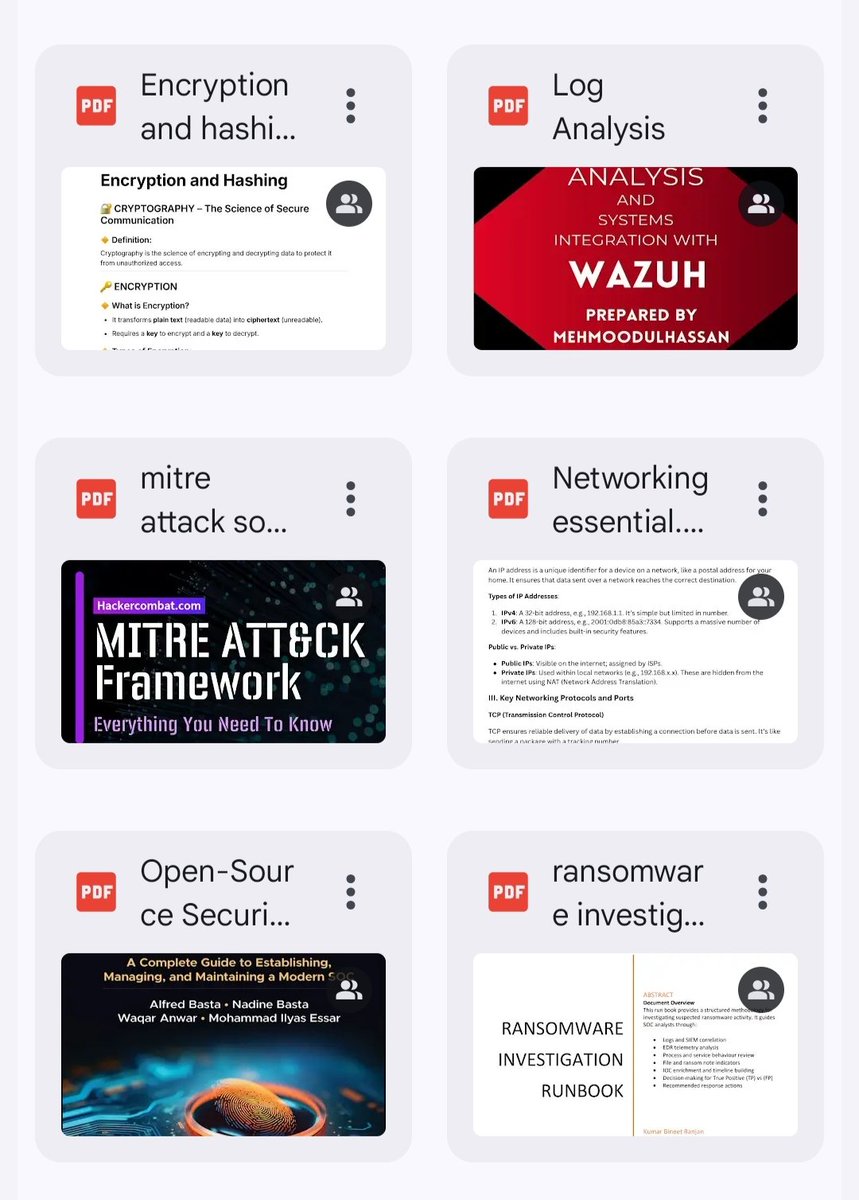
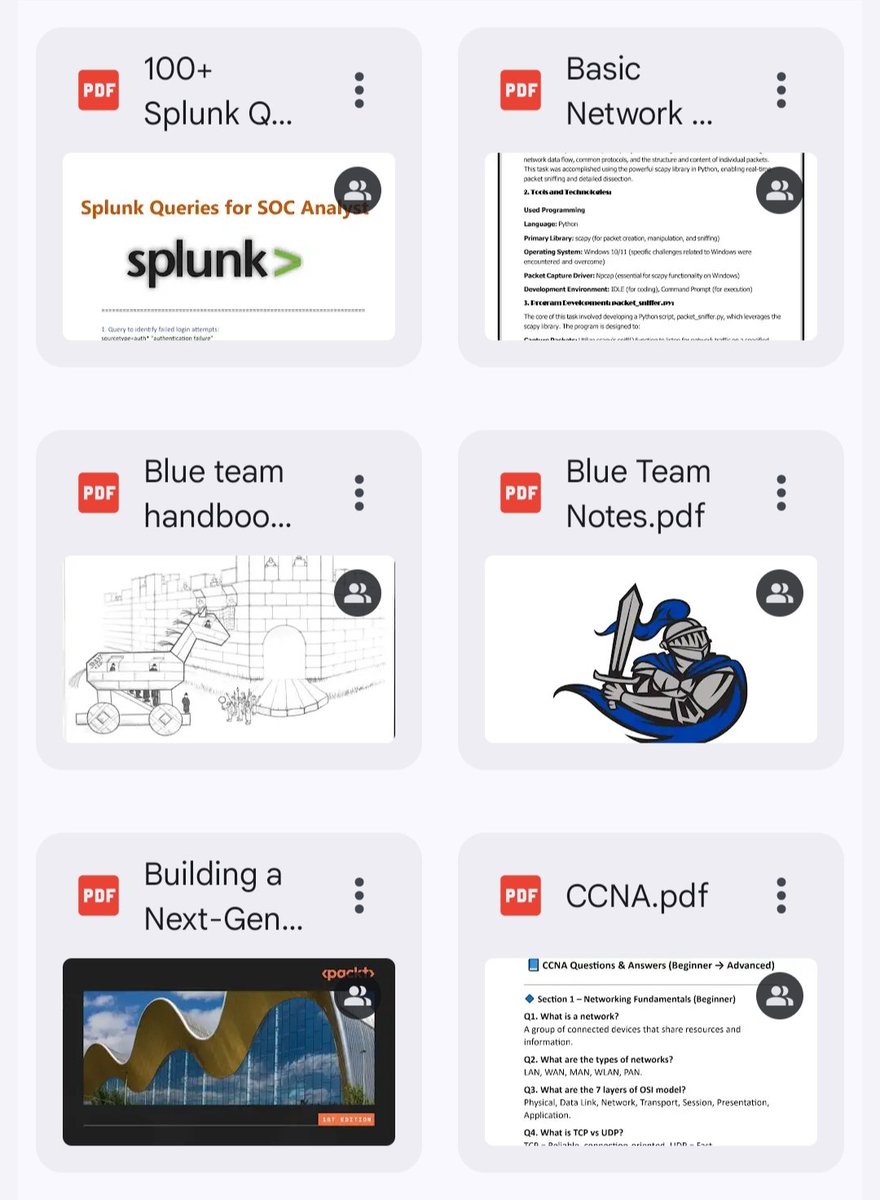
🔥 SOC Analyst & Blue Team PDF Collection — From Networking to Threat Detection
(Splunk • Wazuh • MITRE ATT&CK • SIEM • SOC Tools • CCNA • Threat Hunting • Incident Response)
This collection covers practical Blue Team and SOC fundamentals:
• Splunk Queries & Commands
• SOC Analyst Notes & Interview Q/A
• Wazuh Log Analysis
• MITRE ATT&CK Framework
• Threat Intelligence Basics
• SIEM & EDR Concepts
• Ransomware Investigation
• Encryption & Hashing
• Cisco SD-WAN & CCNA Notes
• Open-Source SOC Setup
• Networking Essentials
• Incident Detection & Log Analysis
⚠️ PDFs alone won’t get you a SOC job.
You still need: • Hands-on labs
• Log analysis practice
• Splunk/Wazuh setup
• Windows & Linux fundamentals
• Networking clarity
• Consistent alert investigation practice
📥 Free PDF Collection:
drive.google.com/drive/folde…
#SOCAnalyst #BlueTeam #CyberSecurity #MITREATTACK #SIEM #CCNA #IncidentResponse #threatintel

5
92
447
19,872
Getseen Media retweeted

May 7
Beginner’s Guide to Becoming a SOC Analyst
1. Learn Networking Basics
Understand IPs, DNS, HTTP/HTTPS, ports, VPNs, and firewalls.
2. Understand Operating Systems
Get comfortable with both Windows & Linux commands/logs.
3. Learn Cybersecurity Fundamentals
Study threats like phishing, malware, brute force, ransomware, and social engineering.
4. Practice With SIEM Tools
Start with Splunk, Wazuh, or Microsoft Sentinel to analyze logs and alerts.
5. Build Hands-on Skills
Use TryHackMe, Blue Team Labs, or home labs to investigate real scenarios.
6. Learn Incident Response
Know how to detect, investigate, contain, and report security incidents.
7. Improve Communication
SOC Analysts write reports, escalate alerts, and explain risks clearly.
8. Stay Consistent
Cybersecurity rewards people who practice daily, not people who only watch tutorials.
Every expert SOC Analyst started as a beginner. Keep learning & keep defending.
2
33
197
5,252
Getseen Media retweeted
May 6
But as a guy why would you wear one underwear the whole day?
1
1
23


Getseen Media retweeted

Most people break into cybersecurity the hard way.
They collect certifications with no direction.
Here’s the only path you need as a beginner 👇
If your goal is SOC Analyst:
Certifications:
CompTIA A , Network , Security
Skillset:
Log analysis, Linux, basic scripting
Tools:
Splunk, Wireshark, Microsoft Sentinel
In that order. No shortcuts.
Anything else is a distraction.
6
30
191
6,502

Apr 9
Successful recreated😊


2
39