Independent analysis of and commentary about philanthropy and giving
Joined July 2019
- Tweets 5,706
- Following 289
- Followers 581
- Likes 719
107 Photos and videos



The Giving Review retweeted

Blockbuster public offerings from SpaceX, Anthropic and OpenAI will mint new millionaires and billionaires, which could deliver a windfall for philanthropic organizations wsj.com/finance/investing/te… via @WSJ
2
50
The Giving Review retweeted
commonplace.org/p/ruy-teixei…
“Gender ideology now thoroughly dominates Brahmin Left parties. Nowhere has it been clearer that the priorities of radical professional class voters, activists and NGOs take precedence over those of the working class,” @AEI’s Ruy Teixeira writes in @AmerCompass’ @commonplc.
2
1
31
The Giving Review retweeted

Jun 13
Big story out today with the names of a dozen tech tycoons in a secret Signal chat plotting California’s political future much more!! sfstandard.com/2026/06/13/bi…
6
55
135
22,527

As cultural organizations across the country face a deepening financial crisis, Remuseum founding director Stephen Reily and Doris Duke Charitable Foundation president and CEO Samsher (Sam) Singh Gill believe foundations and funders need to actively back not just new ideas but also the innovators brave enough to see them through. trib.al/5zOy8NQ
4
1
312

Ohio voting rights group facing criminal fraud investigation, sources say. cbsn.ws/4emk379
14
8
16
14,079
The Giving Review retweeted

Jun 12
philanthropydaily.com/gdt-po…
@GivingReview co-editor @WilliamSchambra talks about differences between establishment and everyday philanthropy with @amphil co-founder Jeremy Beer on @center4civilsoc’s last Givers, Doers, & Thinkers podcast …
The dominant model of large-scale grantmaking by establishment philanthropy in America, Schambra argues, arises from a Progressive Era faith in elite-credentialed professional experts, data-drivenness, and top-down attempts to solve social problems. By contrast, he champions everyday philanthropy, which trusts citizens, community leaders, and local institutions to deal with problems from the ground up—however messily in our democratic civil society.
Establishment philanthropy and progressivism “originated in this same notion that American public life is chaotic because we rely too much on citizens to run their own lives,” according to Schambra. “The point was our life is chaotic because people are caught up in these minor concerns like their own neighborhoods, their own religions. I mean, this was a period, as you know, of mass migration from southern and eastern Europe, and all of these people were bringing these very peculiar religious beliefs over here.”
Schambra also discusses Alexis de Tocqueville, Robert L. Woodson, Sr., Cordelia Taylor, his experience at the Bradley Foundation, humility as a philanthropic virtue, and the need to balance philanthropic freedom against concerns about philanthropic power that is concentrated and anti-democratic.
2
1
62
The Giving Review retweeted

Jun 12
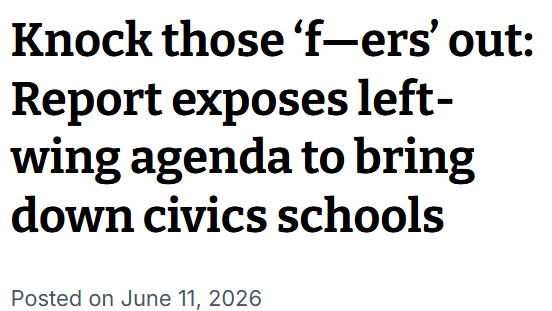
Great scoop by @JohnDSailer of the Manhattan Institute exposing how the American Association of University Professors’ Center for the Defense of Academic Freedom plans to conduct opposition research campaigns against campus civics centers.
thecollegefix.com/knock-thos…
14
31
2,009
The Giving Review retweeted

OpenAI and Anthropic could pour hundreds of billions of dollars into the philanthropic ecosystem, as Nan Ransohoff recently posited in a widely-shared piece. How might that play out?
Mike Scutari Reports: tinyurl.com/3pw6y7yd
#ArtificialIntelligence #AI #OpenAI #Anthropic
2
74
The Giving Review retweeted
Jun 12
bloomberg.com/news/audio/202…
@MerrynSW talks to @joldmcginn about his book Why Democracy Needs the Rich …
2
1
48
Mar 11
thegivingreview.com/a-conver…
In 1st part of 2-part conversation, @NorthwesternLaw professor and Why Democracy Needs the Rich author @joldmcginn talks to @GivingReview’s @mhartmannke about the “clerisy” and how to think about the relationship of the wealthy and their philanthropy to it …
The book presents a “variety of arguments about what the rich do for democracy, why they’re a positive effect on democracy, unlike what many people think,” according to McGinnis. “One that’s important is that they serve as a counterweight to other people with more influence. A premise of my book is that not everyone has equal influence in democracy, in a representative democracy,” and it’s “impossible to make sure that they have equal influence.
“The real question is, Do we have a pluralism of views and perspectives?” he asks. “The rich do have that pluralism, and they are one of the few groups—because of their independence and resources—that can counter what I call professional influencers ,who obviously have a lot more influence, because that’s what they do for a living. They include the media, they include academics, they include entertainers, and they include the bureaucracy. And all of those groups, unlike the rich, lean in one political direction: all to the left, and sometimes very dramatically so.”
This “clerisy,” McGinnis says, “does not begin with support from the rich. That term comes from Samuel Coleridge, so it’s a term that comes from a long time ago.” Coleridge and others thought that “with the decline of the nobility and the clergy, there will be some group that would be shaping society and that’s the name he gave to it.”
1/2
4
2
1
127
Jun 12
bloomberg.com/news/audio/202…
@MerrynSW talks to @joldmcginn about his book Why Democracy Needs the Rich …
2
1
48
The Giving Review retweeted

Jun 12
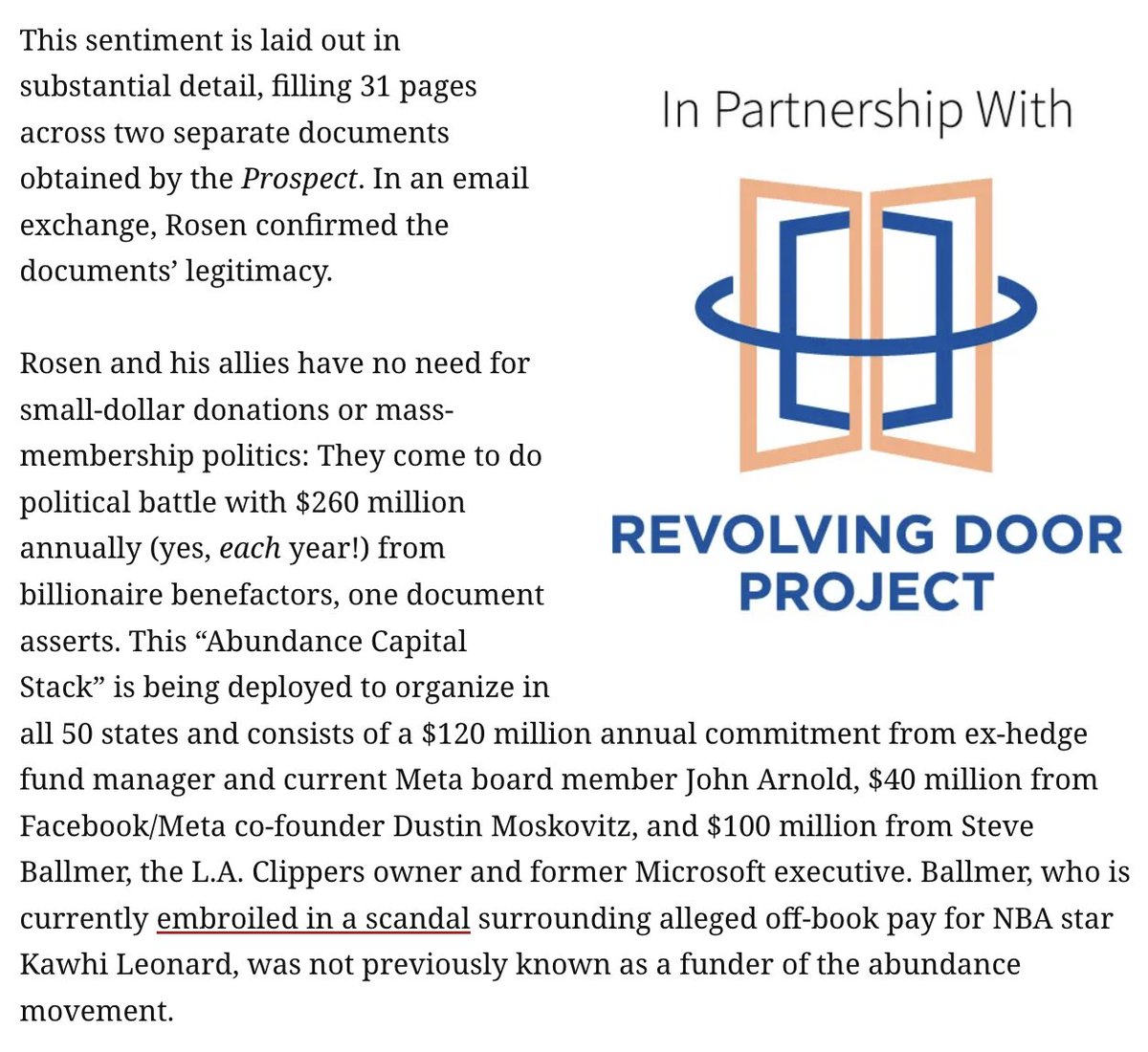
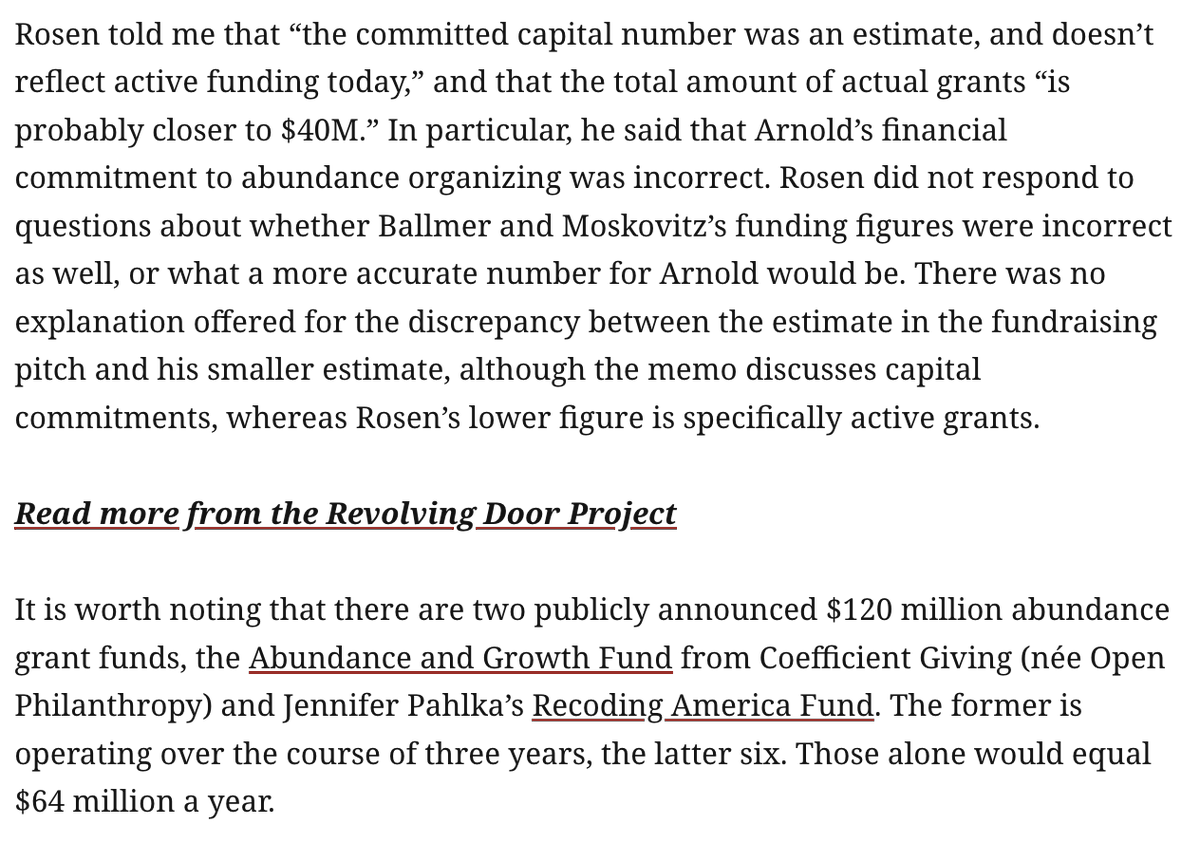
We obtained documents detailing the abundance movement's "capital stack."
It's $260 million/year, including $100 million from former Microsoft CEO/LA Clippers owner Steve Ballmer, who hadn't been listed as an abundance donor before.
prospect.org/2026/06/12/new-…
19
196
546
107,368
The Giving Review retweeted

Welfare grants in the collection box: Taking federal money has made the Catholic Church a handmaid of the welfare state, writes Stephen Ford
on.wsj.com/4olp4Bk
3
3
1,148
The Giving Review retweeted

Jun 11
I reported last month that @johnofa, one of the first partners at Andreessen Horowitz, left his role at the firm due to political disagreements with Marc Ben.
Today, he's expanding on that in a column in NYT.
"Some of the most powerful players in A.I. — led by some of my friends and former partners, to my great sadness — have raised hundreds of millions of dollars to forestall a more serious and meaningful debate about how A.I. should be governed."
nytimes.com/2026/06/11/opini…
11
116
385
77,094
The Giving Review retweeted
Jun 12
eotaxjournal.com
“Tax-exempt organizations, unlike other parts of the Internal Revenue Code, don’t really deal with money, even though there’s a fair amount of money in the sector. What tax-exempt organizations deal with is everything else of value to people: their education, their health care, their religion, their social activities and their politics,” former IRS Commissioner Marcus Owens tells Paul Streckfus during interview published in EO Tax Journal this morning.
“It’s things that are extremely important to people, maybe even more important than money in many cases,” Owens says, “and that’s what the exempt organization function must address and regulate with the blunt tool of federal tax law.”
3
1
49
The Giving Review retweeted

Jun 11
NEW: The Mellon Foundation gave $1.5 million to establish a "center for the defense of academic freedom."
In audio I've obtained, the group's leader says his goal is to undermine the newly launched classical civics centers: "map who these f---ers are... and knock them out." 🧵
144
1,266
4,513
516,979
The Giving Review retweeted

Jun 11
Avril Haines, Former Intelligence Chief, Will Lead Carnegie Peace Endowment nytimes.com/2026/06/11/us/po… via @NYTimes
12
31
75
101,150