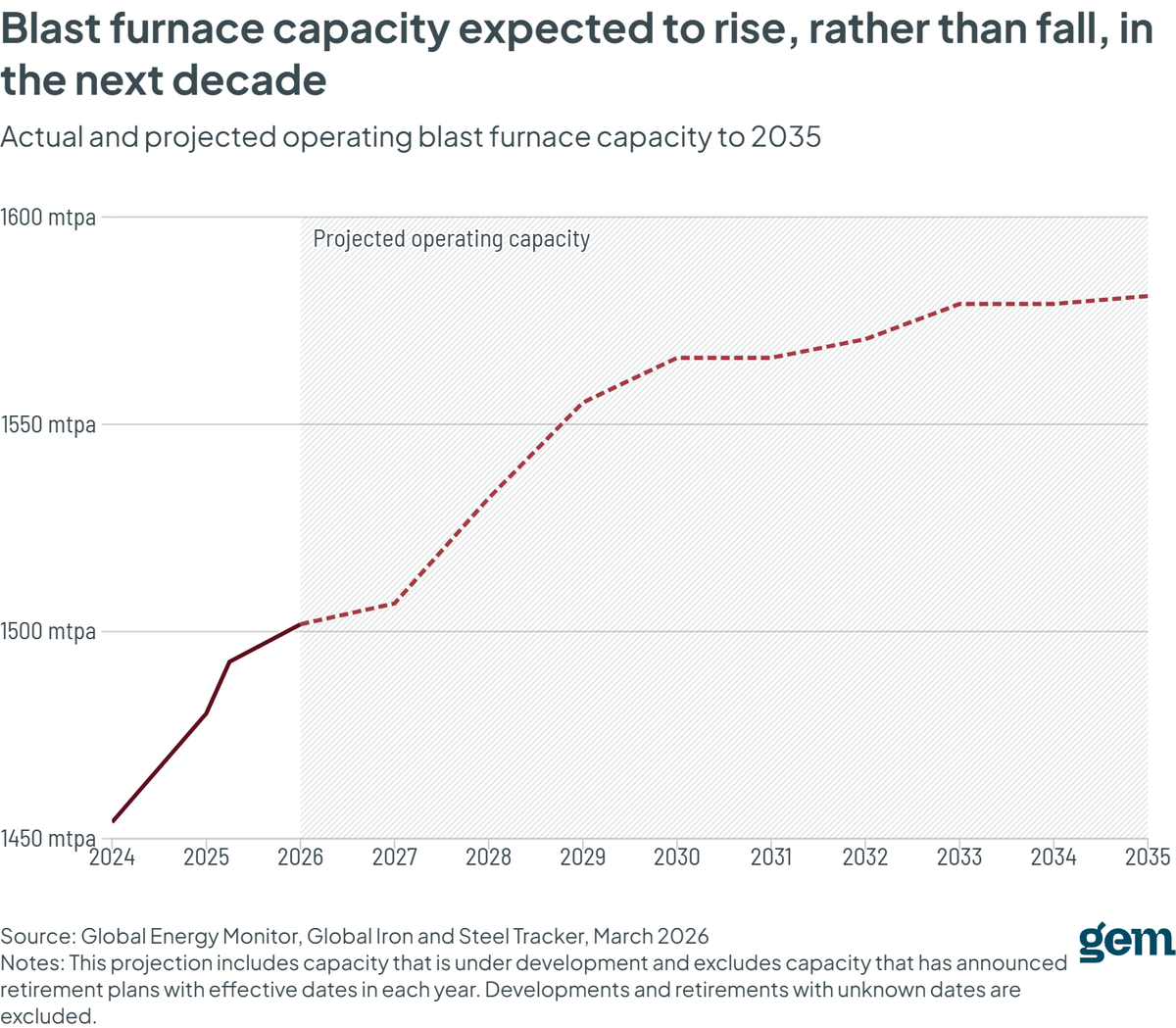
ICYMI: The global steel industry faces a major "coal lock-in"crisis, but a window for intervention remains.
Whether you've read the full PTM '26 report or want an expert breakdown of key findings, join us for a live discussion w/report authors.
Register: zoom.us/webinar/register/151…
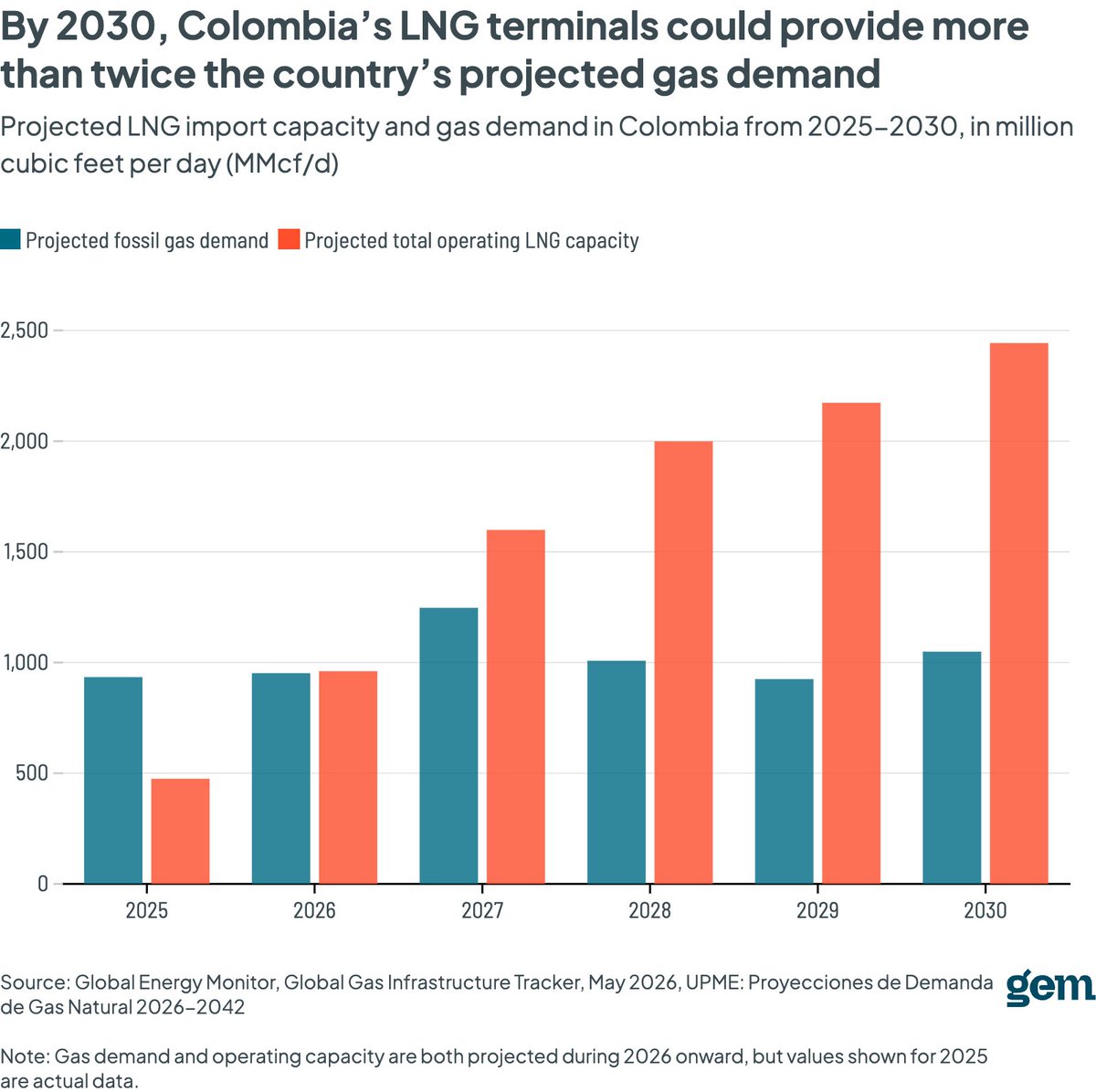
🇨🇴 Colombia is at a critical energy crossroads. Despite its strong climate leadership, the country remains tied to #fossil infrastructure.
The incoming gov't has a unique window to secure the grid without locking into a costly, massive LNG overbuild.
globalenergymonitor.org/rese…
Who owns the world's coal mines, power plants, and gas pipelines? The ownership data is often opaque.
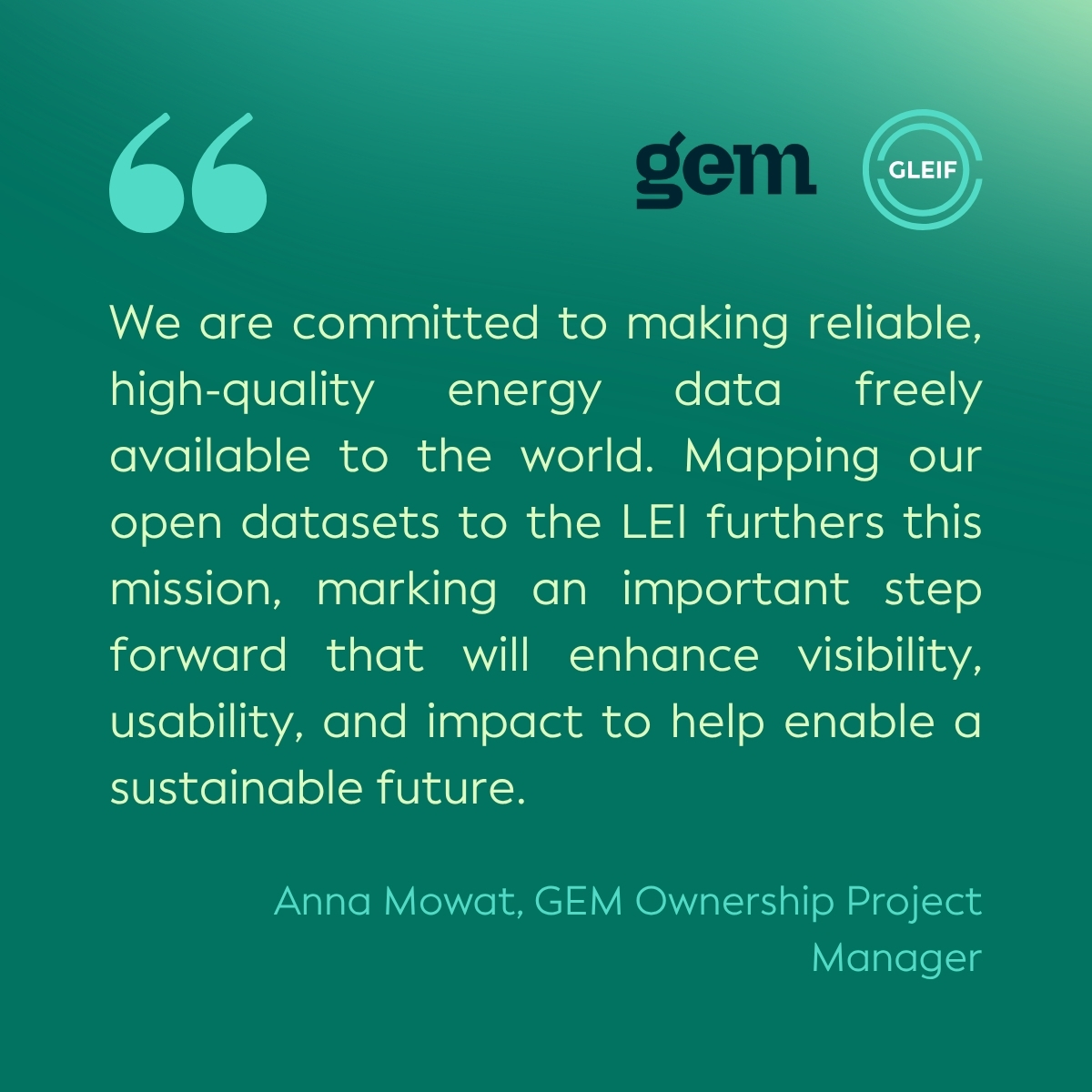
#GLEIF and the Global Energy Monitor (@GlobalEnergyMon) have completed the first certified mapping of GEM Entity IDs to the Legal Entity Identifier (#LEI), connecting open energy asset data to the entities behind it. #GODIN
🔗 gleif.org/en/newsroom/press-…
📢 Big news! We're thrilled to welcome Erica Scott-Adjei as our new Chief Development Officer.
Erica brings 20 years of expertise to keep GEM’s independent energy data open and accessible to all.
Learn more about her background: globalenergymonitor.org/prof…
Read GEM’s Pedal to the Metal '26 report but still have questions? 📊
Join the report authors on June 18 for a live deep dive and Q&A covering asset-level data from nearly 1,300 steel plants and 949 iron ore mines globally.
Register: zoom.us/webinar/register/151…
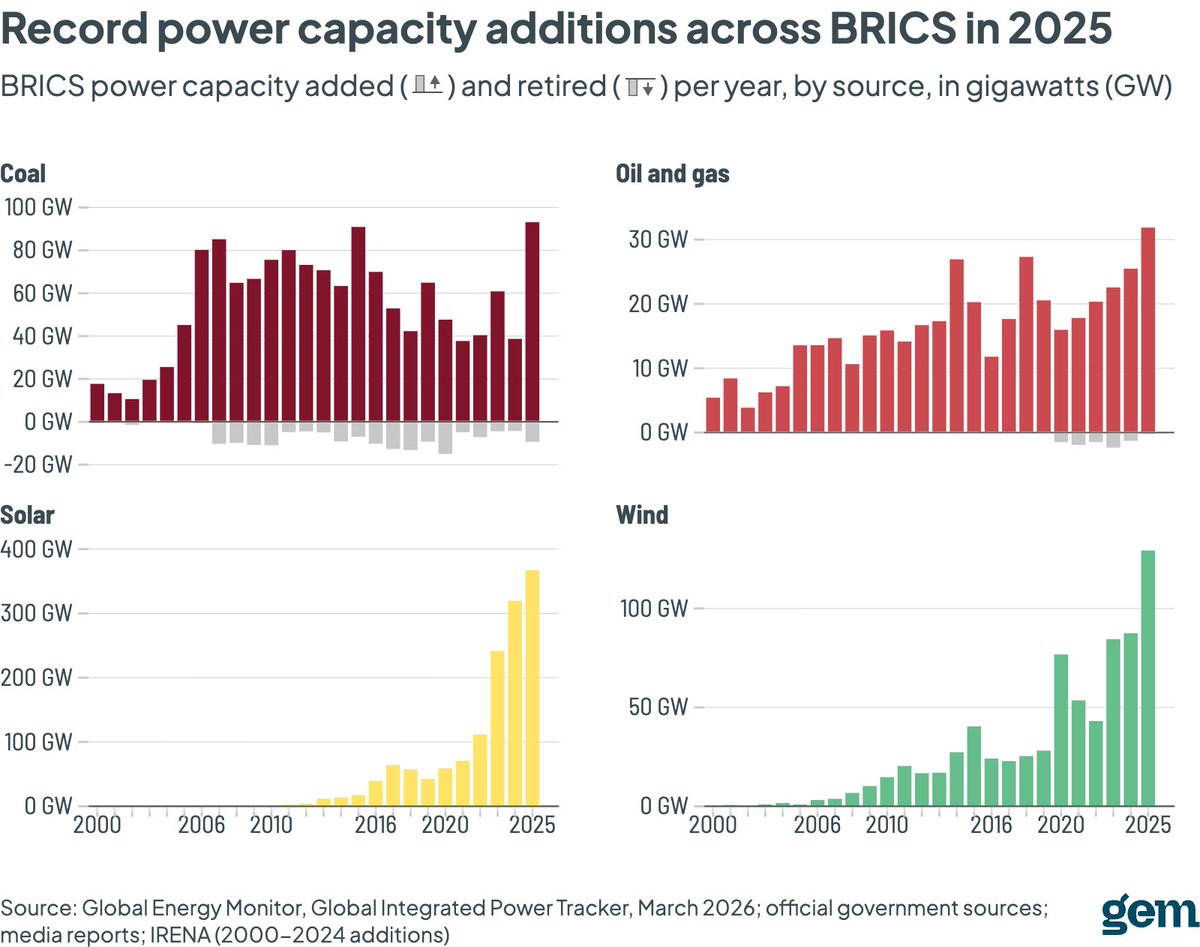
BRICS broke renewable records in 2025 — & fossil records too.
Solar wind additions hit 497GW, but the bloc also added 125GW of coal, oil & gas capacity.
A split transition: renewables are cutting coal generation in places, while fossil capacity grows.
globalenergymonitor.org/rese…
ALT Four bar charts from Global Energy Monitor showing BRICS power capacity additions and retirements from 2000 to 2025 across four sources: Coal, Oil and gas, Solar, and Wind. In 2025, capacity additions reached historic highs. Solar experienced massive, exponential growth, peaking at around 370 GW added in 2025. Wind also surged dramatically to a record high of approximately 130 GW. Meanwhile, fossil fuels also saw notable increases in 2025, with coal additions spiking back up to nearly 90 GW and oil/gas additions hitting a peak of over 30 GW, accompanied by minor retirements.
⬅️➡️ Coal phaseout pathways are rapidly diverging in two of Asia’s largest economies: 🇯🇵&🇰🇷
📊 New insights from @GlobalEnergyMon’s Boom and Bust Coal 2026 show:
🇰🇷 South Korea: No new coal ~50% phaseout of its ~40GW fleet by 2040 → positioning itself as a mid-power leader in energy transition and unlocking clean energy investment
🇯🇵 Japan: 53GW coal fleet, no clear phaseout timeline → continued reliance on abatement over plant retirement risks delaying structural phaseout and renewable scale-up
🗝️ Key Takeaways
🌏 Public & private finance play a pivotal role in coal phase‑out by driving transition instruments such as green bonds while scaling renewables to cut fossil import risks.
💸 Sovereign green bonds & transition finance, paired with renewable energy investment, are key to phasing out coal & securing industrial resilience.
📘 Full report: globalenergymonitor.org/rese…#ClimateAction#CoalPhaseout#BoomandBust#GEM#SFOC
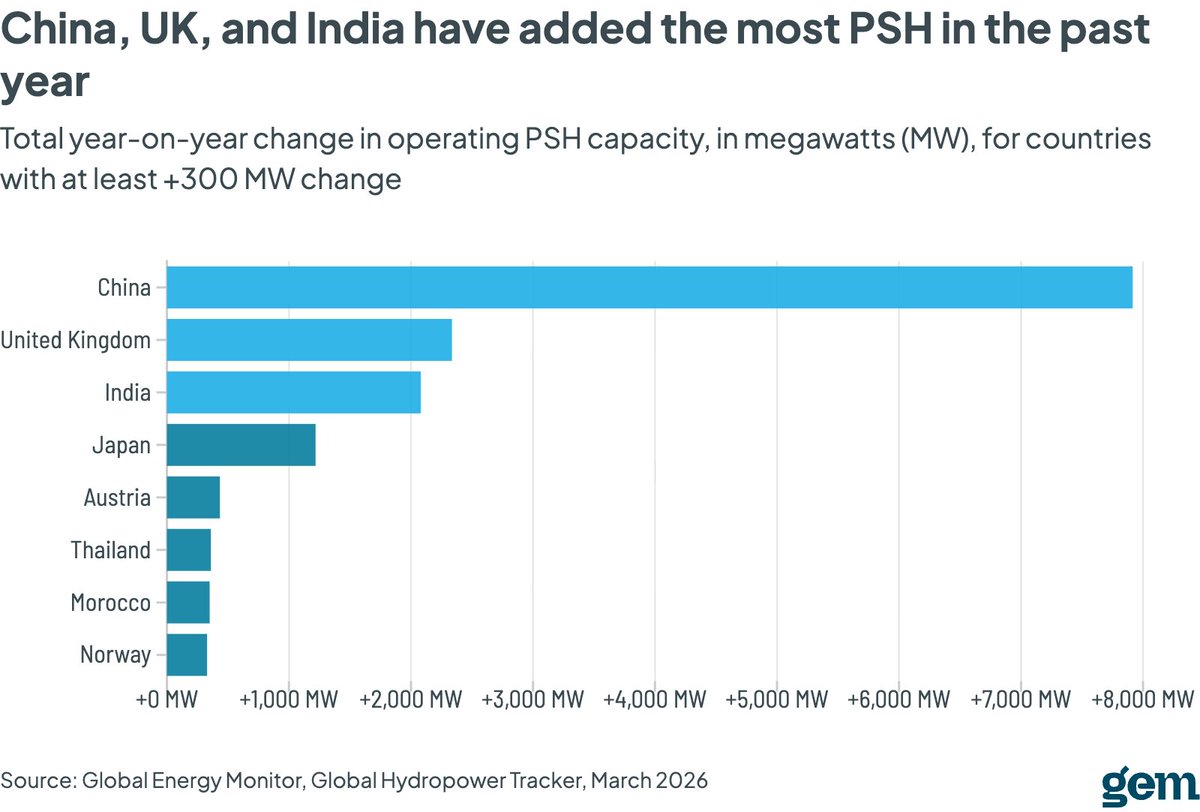
Who added the most pumped storage #hydropower (PSH) this year? 🗺️
🇨🇳 China, 🇬🇧 the UK, and 🇮🇳 India are leading the world in newly operating PSH. China alone has 168 GW currently under construction.
Track the global leaders: globalenergymonitor.org/proj…
The geographic footprint of #coal dev't is narrowing sharply. Only 32 countries were proposing or building new plants in '25 — less than 1/2 the 75 countries doing so in '14
A 🧵 on key findings from GEM’s 11th annual Boom & Bust Coal report, out today 👇
globalenergymonitor.org/rese…
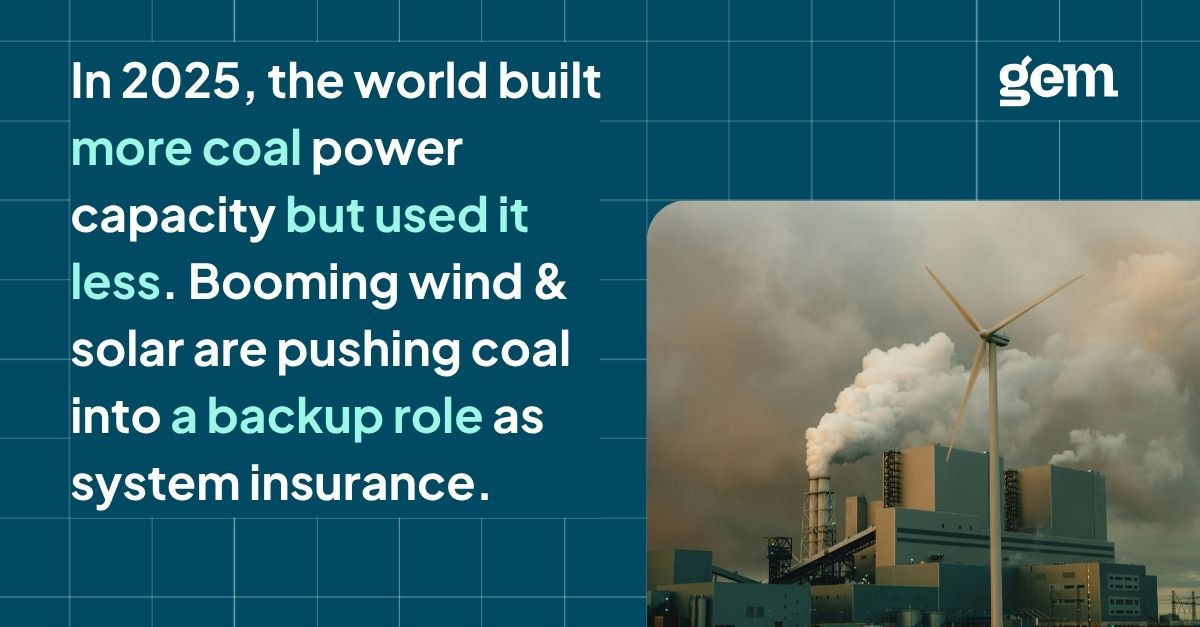
ALT A graphic by GEM featuring text on a dark teal gridded background next to an image of a coal power plant with a wind turbine in the foreground. The text reads: "In 2025, the world built more coal power capacity but used it less. Booming wind & solar are pushing coal into a backup role as system insurance."
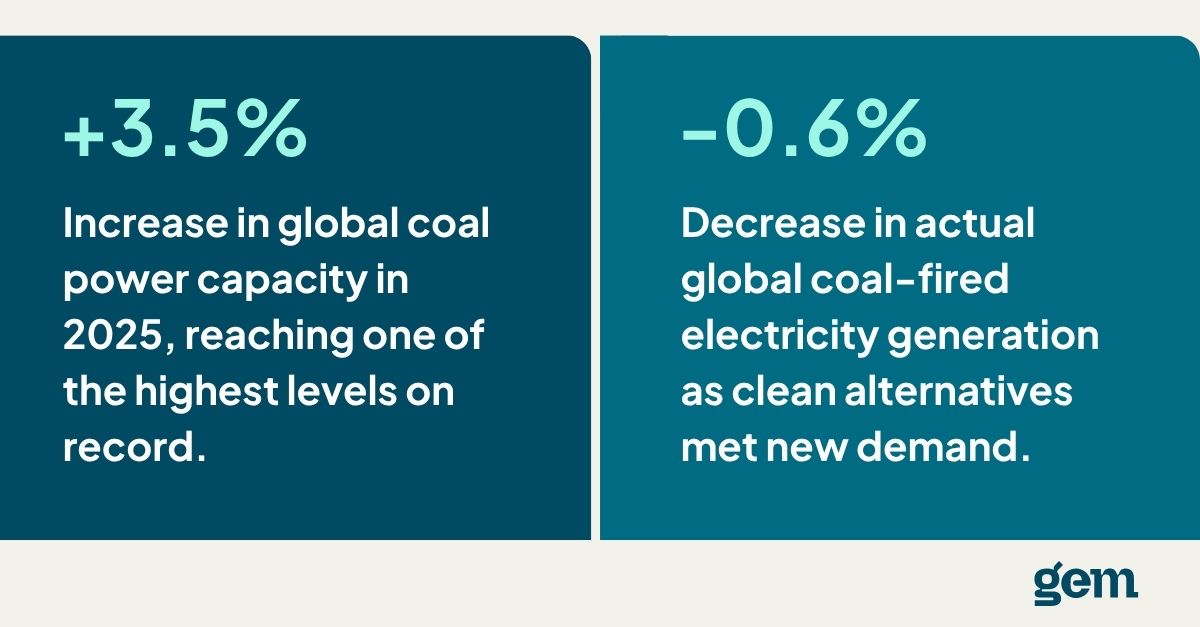
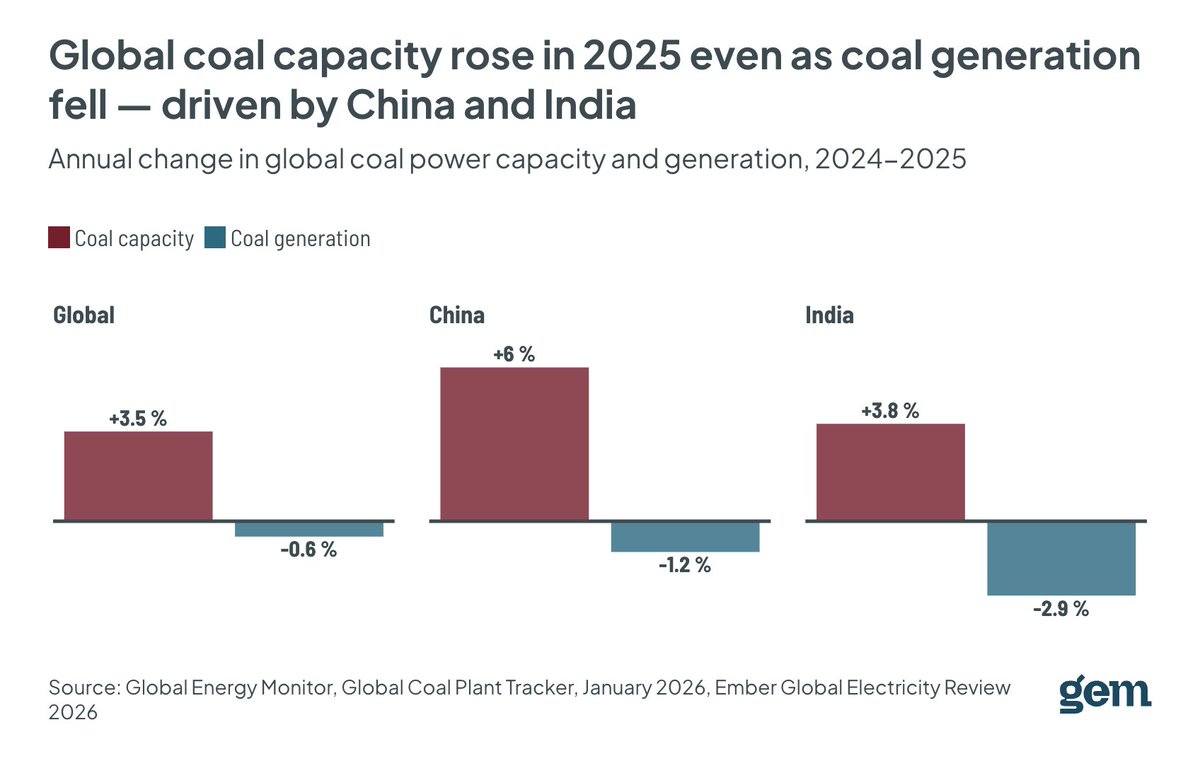
Global coal power generation fell 0.6% in 2025, but coal-fired capacity still rose 3.5%, @GlobalEnergyMon found.
Even as renewables expand rapidly, energy security concerns continue to slow coal plant retirements worldwide.
#Coal#EnergyTransitiontinyurl.com/5fcchy9z
📣 Boom and Bust Coal 2026 is out now!
💡@GlobalEnergyMon ’s 11th annual report found growing paradox in global energy transition: Coal power capacity continued to expand in 2025, even as actual use of coal for electricity generation declined
globalenergymonitor.org/rese…
The geographic footprint of #coal dev't is narrowing sharply. Only 32 countries were proposing or building new plants in '25 — less than 1/2 the 75 countries doing so in '14
A 🧵 on key findings from GEM’s 11th annual Boom & Bust Coal report, out today 👇
globalenergymonitor.org/rese…
ALT A graphic by GEM featuring text on a dark teal gridded background next to an image of a coal power plant with a wind turbine in the foreground. The text reads: "In 2025, the world built more coal power capacity but used it less. Booming wind & solar are pushing coal into a backup role as system insurance."
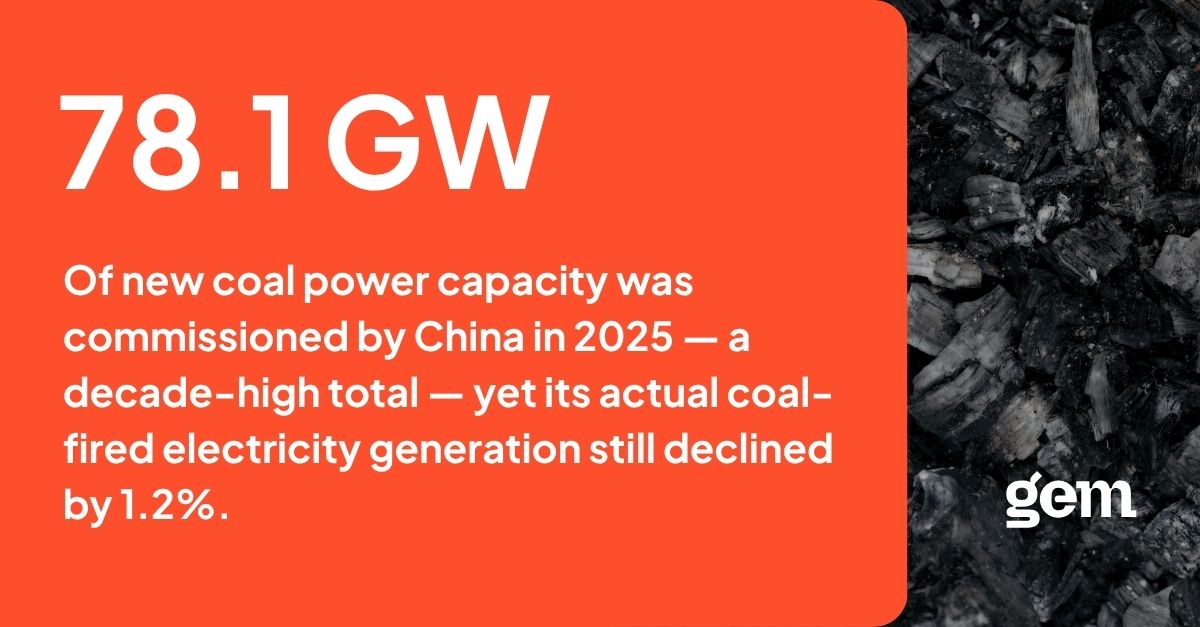
🇨🇳 While actual generation drops, the physical capacity buildout remains highly concentrated.
Just 5% of active coal power construction globally is happening outside of China and India — a hyper-concentration driven by the massive scale of China's recent additions.
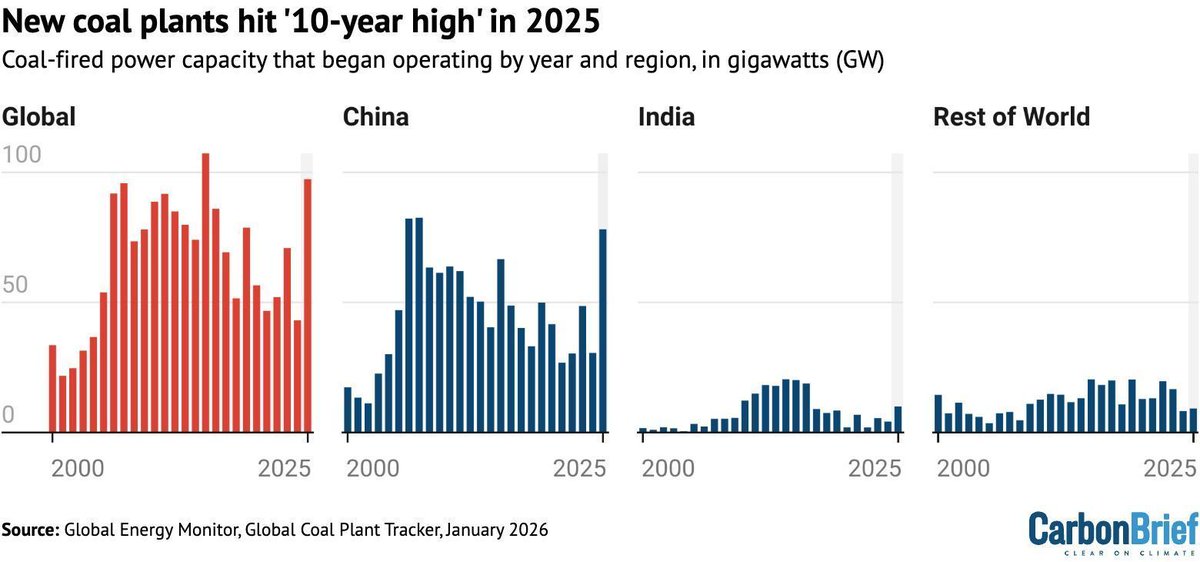
ALT An orange graphic featuring an image of charcoal pieces on the right. Large white text on the left reads: "78.1 GW of new coal power capacity was commissioned by China in 2025 — a decade-high total — yet its actual coal-fired electricity generation still declined by 1.2%."
Even as power systems move increasingly beyond fossil fuels, 2025’s data details how the world is navigating an uneven but accelerating exit from the coal era.
📘 Read the full global survey: globalenergymonitor.org/rese…
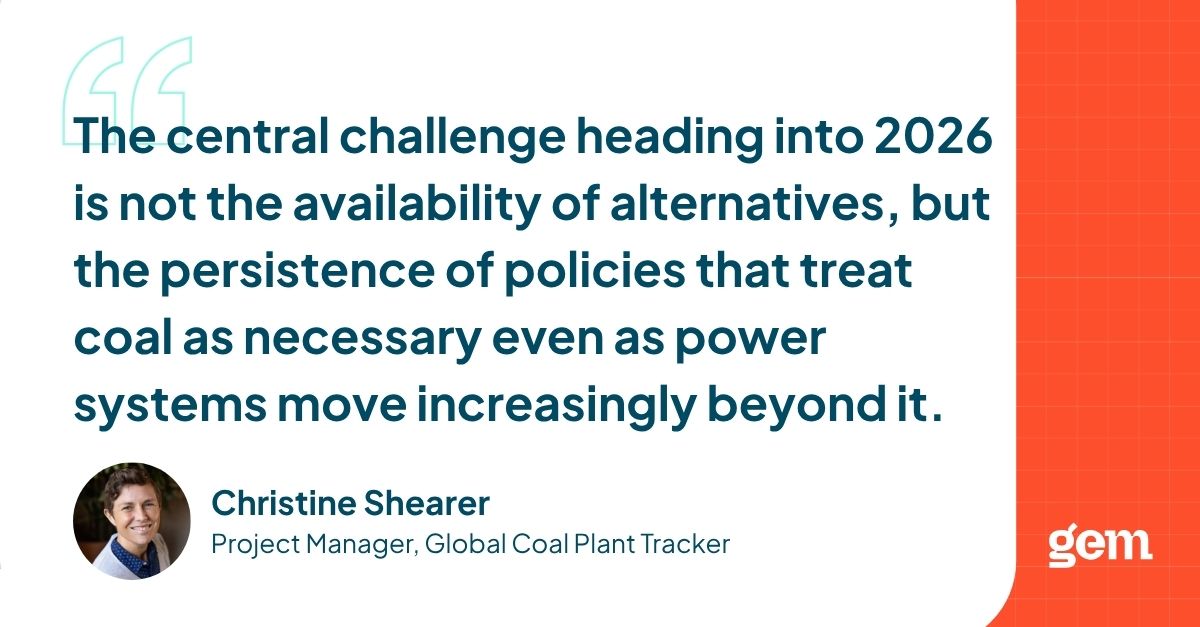
ALT A quote graphic featuring a headshot of Christine Shearer, Project Manager, Global Coal Plant Tracker. The quote reads: "The central challenge heading into 2026 is not the availability of alternatives, but the persistence of policies that treat coal as necessary even as power systems move increasingly beyond it."
🚨 NEW DATA: The 2026 Global #CoalMine Tracker update is live.
Tracking 7,000 assets across 5,300 active and proposed mines & 1,700 retired sites.
New:
🔹 Mine-level coal-to-chemicals tracking in 🇨🇳
🔹 Enhanced methane data & mine boundaries
Download: globalenergymonitor.org/proj…
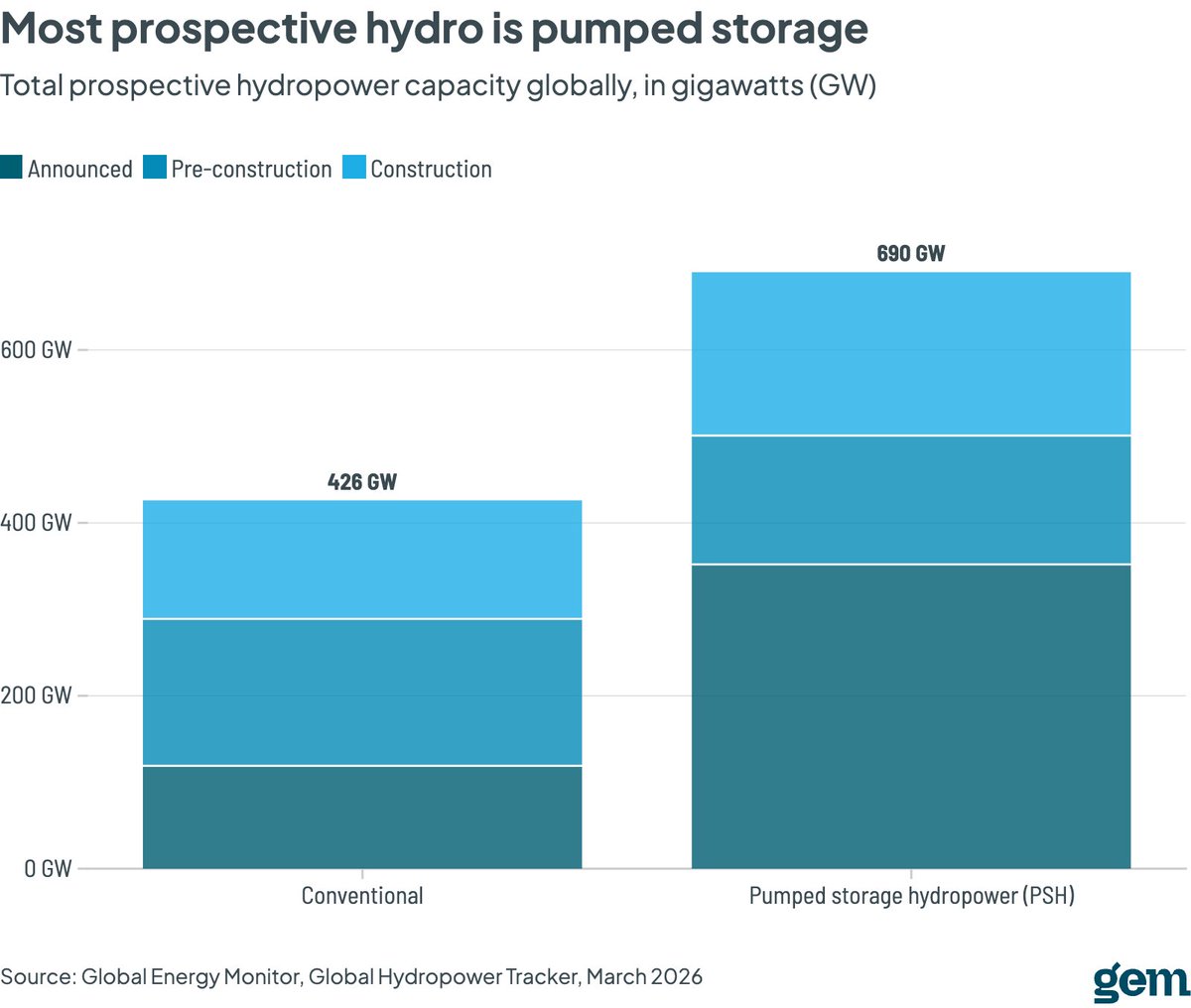
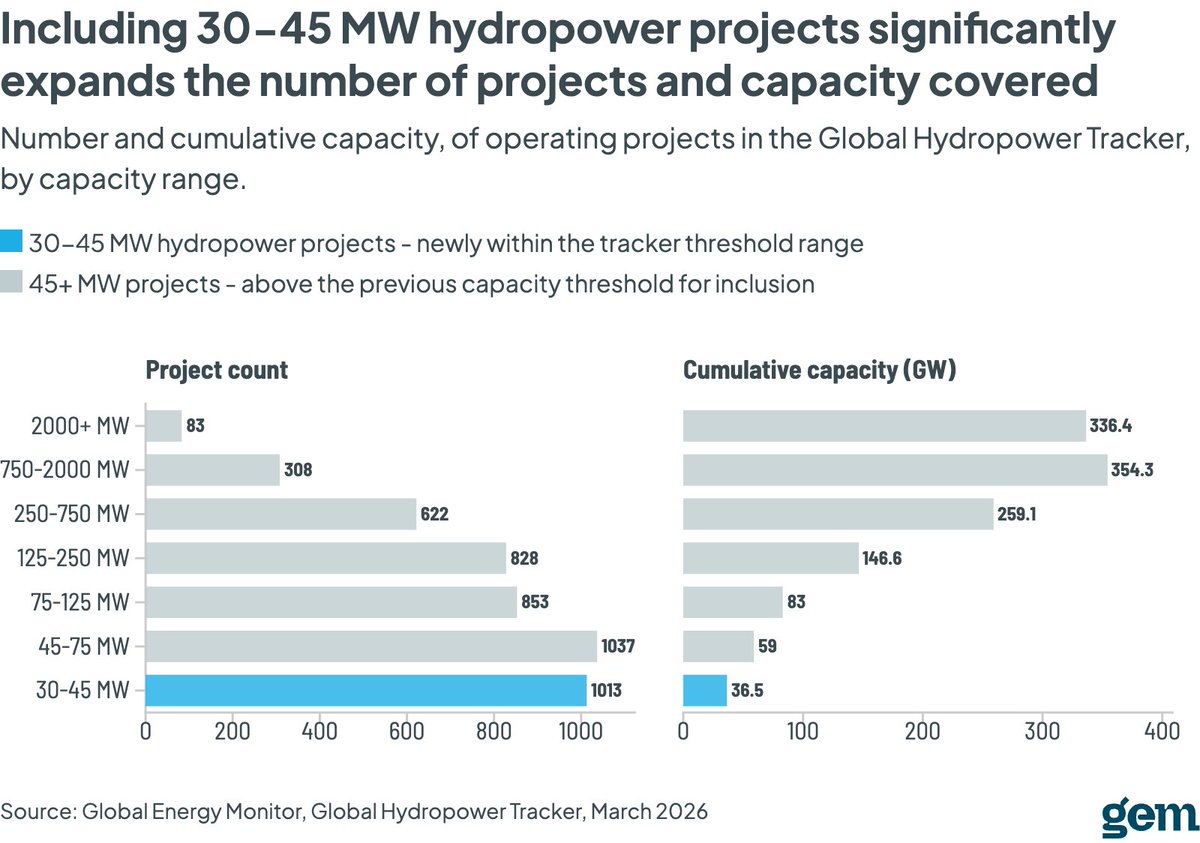
NEW DATA: Pumped storage #hydropower (PSH) now makes up 62% of all prospective hydropower capacity worldwide. With 690 GW in the pipeline, PSH is outpacing conventional hydro projects by 1.6 to 1.
Download the data: globalenergymonitor.org/proj…
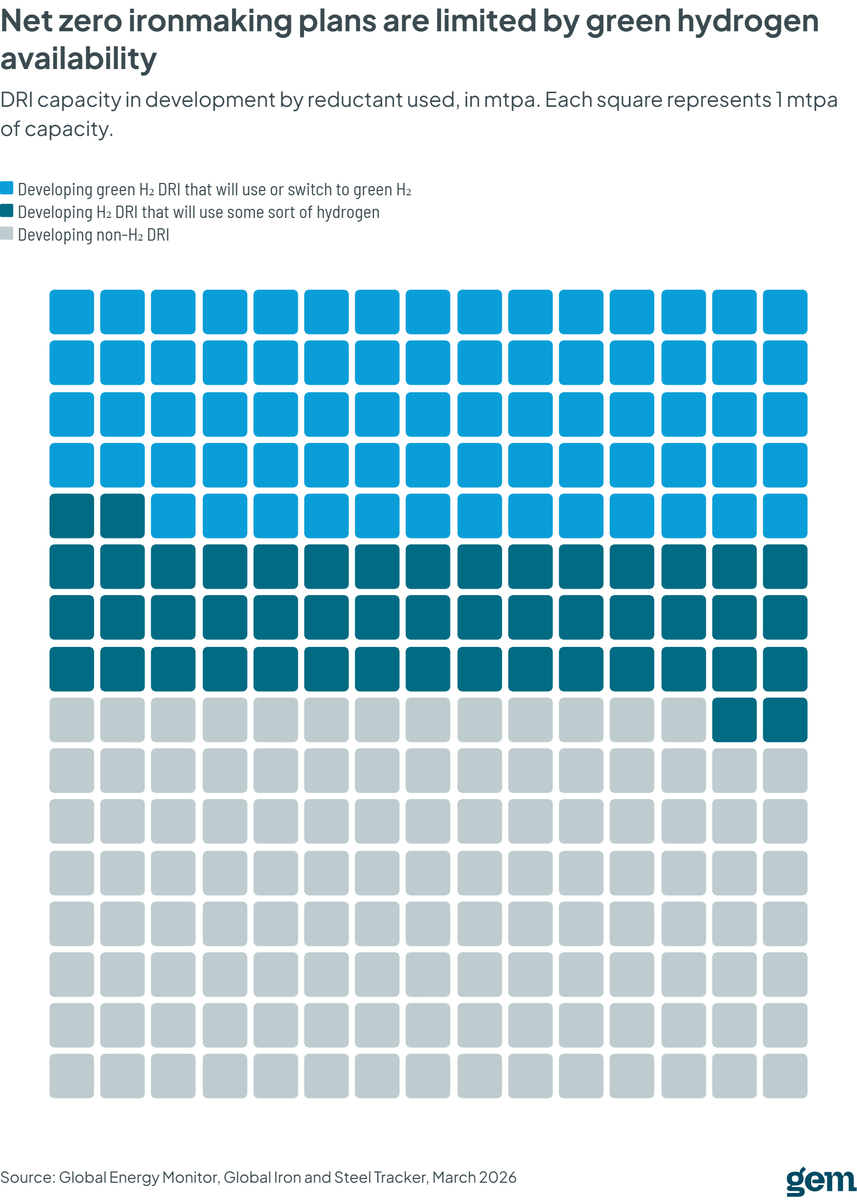
🧵The #steel sector is dvlping more coal-based capacity than it plans to retire.
GEM’s new Pedal to the Metal report finds 319mtpa of BF capacity expansion threatens to make the industry coal-reliant for the foreseeable future w/o a change of course
globalenergymonitor.org/rese…
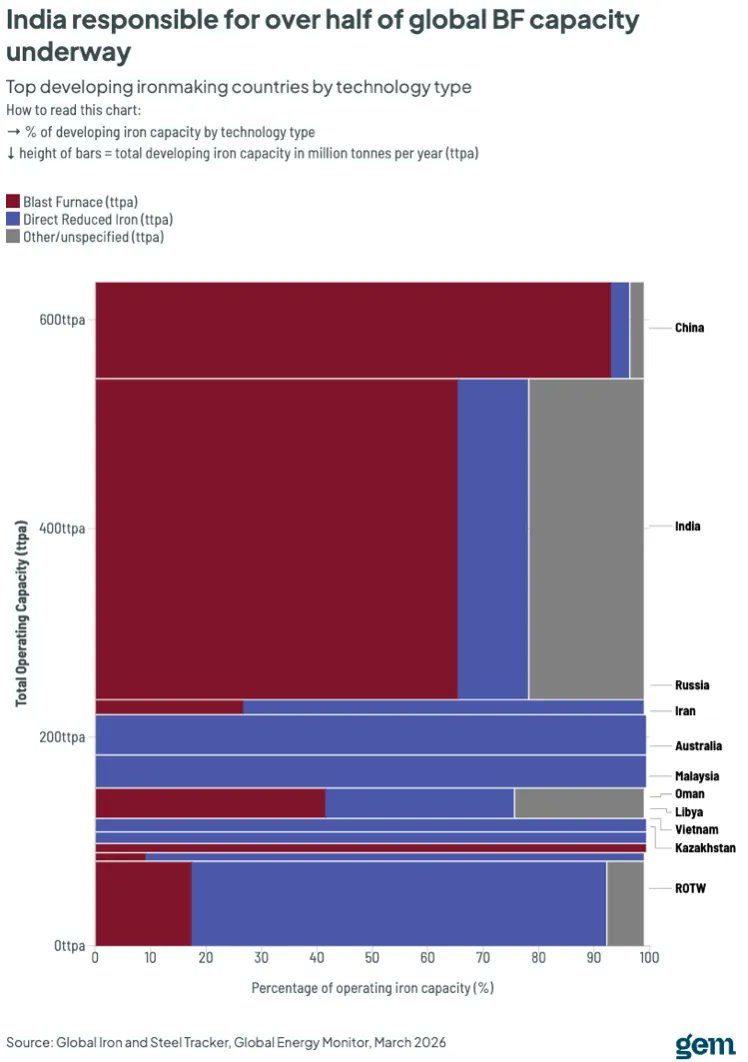
India & China’s are shaping steel’s future.
🇨🇳 Operates > 60% of BF capacity today
🇮🇳Accounts for > 60% of BF developments
China is locked in by its fleet, India still has room to change course 🏗️
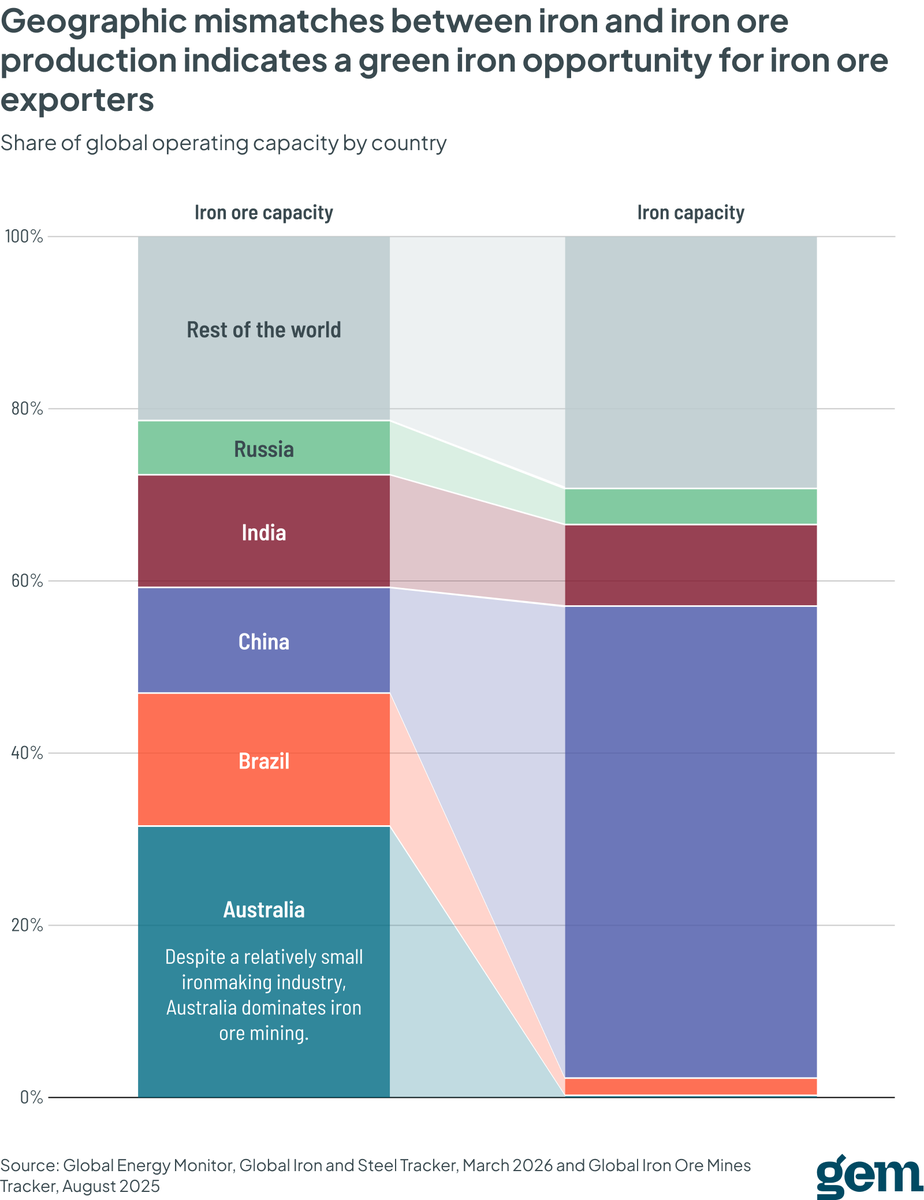
🇦🇺 & 🇧🇷 lead in iron ore mining but export most of it.
🇦🇺: Produces ~ ⅓ of global supply
🇨🇳: Consumes 59% of global iron ore
Massive opportunity: Producers can pivot to lower-emissions ore & decarbonize the steel industry