
Huge fan of financial markets, AI and Banh Mi. Consider everything you read of mine a short story. “Truth is stranger than fiction” - Mark Twain
Joined April 2022
- Tweets 2,162
- Following 393
- Followers 325
- Likes 30,745
59 Photos and videos






Pinned Tweet

Feb 19
These are Australians.
Do you want any more evidence that Australia’s immigration system is broken? Labor and Liberals sold this country out.
Diversity is our strength…GFY!
Vote @OneNationAus

1
2
9
467
Gary Jeffery retweeted

Jun 15
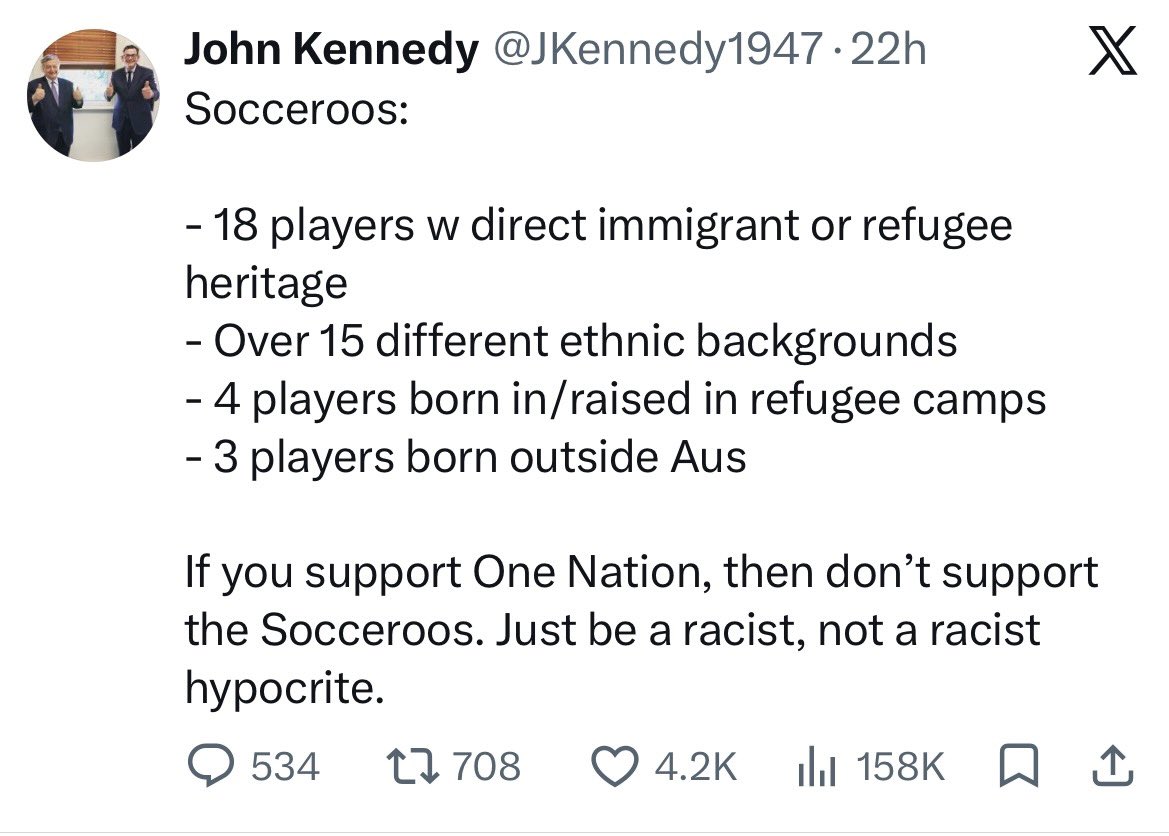
If your first thought is to count the ethnic backgrounds of our national soccer team to score political points, you’re the one obsessed with race.
And if you can’t tell the difference between violent criminals and elite athletes because they have the same skin colour, then that makes you the racist.
127
214
1,895
28,784
13h
“Discrimination is simply the act of choice. Scarcity requires us to choose; scarcity is the cause of discrimination!”
— Walter E. Williams
This is exactly why race wars in the West are going to get much, much worse. Nearly all people on the planet prefer to live with their own people and culture. To such a degree that 70% of migrants end up living in ethnic enclaves in their new country. Are these people racist or exercising preference?
If white people in Western countries exercise the same preference they are labelled racist, this double standard is at the centre of why race wars will increase. As increasing migration into the West occurs the opportunity to prefer living amongst your own culture and people falls, I.e. scarcity increases. Inevitably, as scarcity increases discrimination increases.
Race wars are the future.
23
Gary Jeffery retweeted

Please play to your kids, and those so wrapped up in bashing Britain they can’t see the wood for the trees 🇬🇧
243
3,021
11,078
318,288
Jun 5
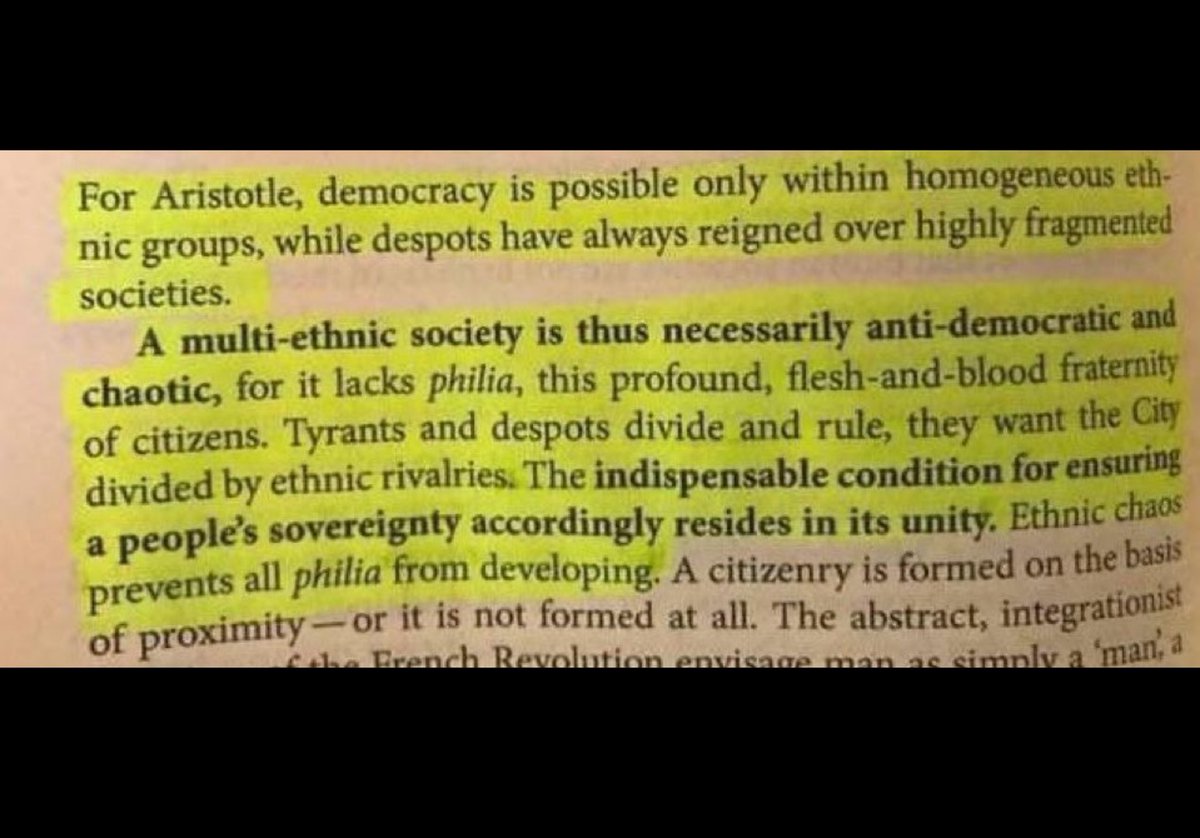
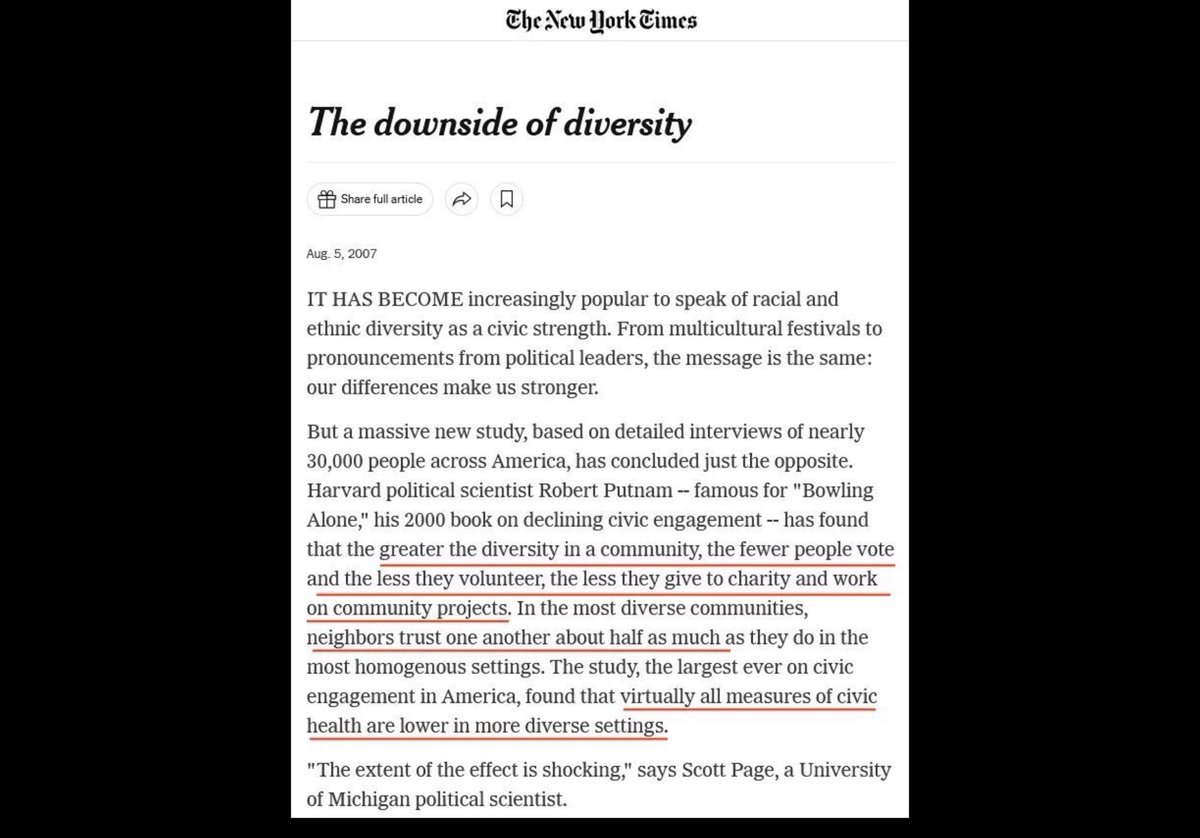
As a country gets more diverse the size and role of the Government must shrink. Fighting this only ends in economic collapse and potentially civil war.
Why?
As the needs of the people become more diverse a monopoly provider needs to provide an endless number of specialised services. The growth of “diversity” officers within the bureaucracy is the tell.
Only the private market has the cost discipline to cater to these needs.
To cater to greater diversity cost increases are largely borne by the native population who then see poorer services at greater cost.
Taxes then increase on the most productive who then either leave or spend more on tax minimisation. Either way the laffer curve becomes a biting constraint.
Only 3 options:
1) shrink the govt. as diversity increases;
2) only accept high value add migrants; or
3) face inevitable economic collapse and vociferous tribalism.
Most Western countries have chosen 3.
2
26
Gary Jeffery retweeted

Jun 4
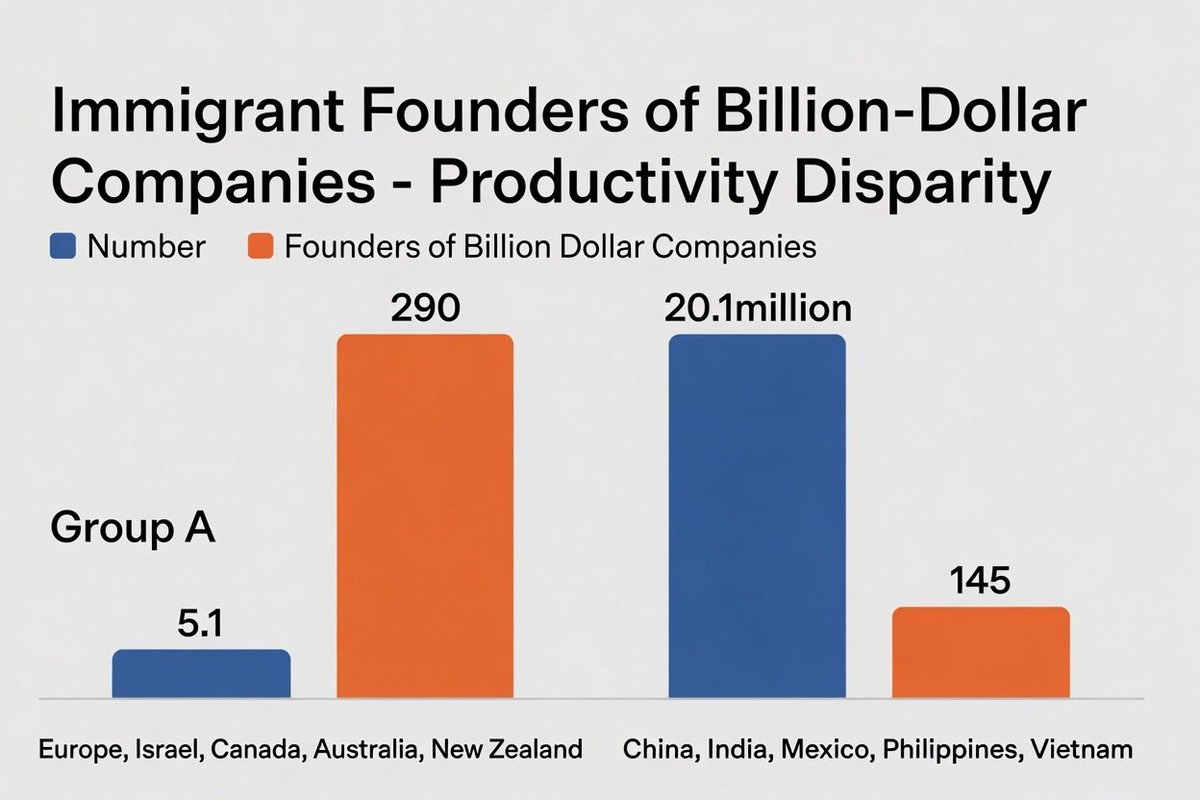
Total number of Immigrants from Europe, Israel, Canada, Australia, and New Zealand:
5.1 million
Number of Immigrant Founders of Billion Dollar companies from these countries:
290
Total number of immigrants from China, India, Mexico, The Philippines and Vietnam:
20.1 Million
Total number of immigrant founders from those Countries:
145
The 20% of immigrants from the most culturally and demographically similar countries to the U.S. supply ~2/3 of our billion dollar company Founders.
The 80% from the other countries mentioned supply just ~1/3.
I'm not saying this is the perfect heuristic to use, BTW. It's not.
You could tweak this to just have captured the 1/3 top immigrants from the similar countries and the top 1/10th from the less similar countries, and you could have reduced the total number of immigrants by ~85% with almost ZERO EFFECT on our recruitment of top immigrant entrepreneurs.
The broader point is that none of our mass immigration is in America's interest.
And none of it is necessary.
Don't believe me. Believe the data generated by mass immigration apologists.
Jun 4

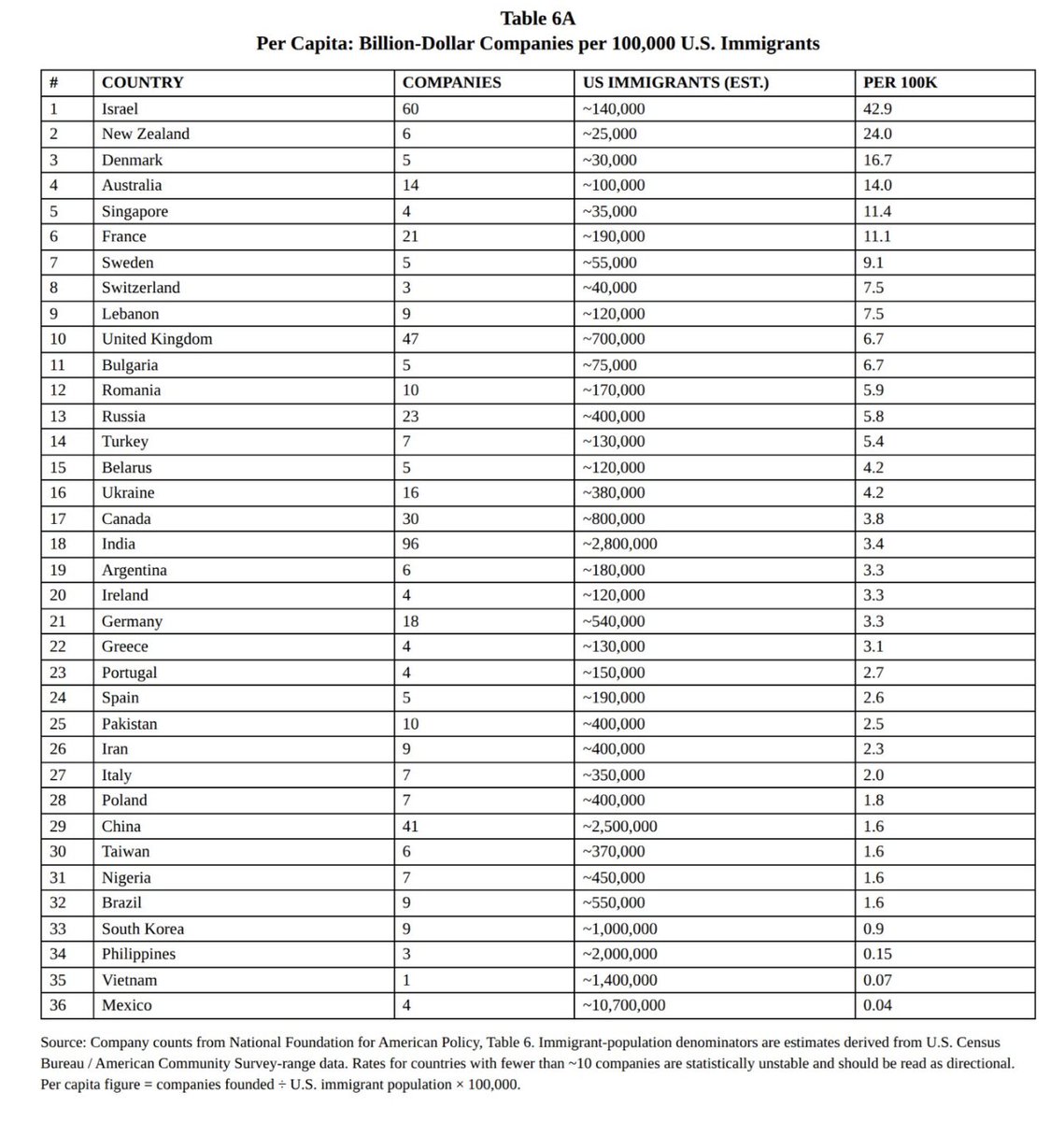
In a just-released study, even the Pro-Immigration National Foundation for American Policy can't disguise how poorly matched our immigration policy is to our needs.
Here is their list of number of billion dollar companies founded per 100,000 immigrants
Israel is number one by some distance, followed largely by a bunch of countries from Europe and the Anglosphere.
India ranks 18th-- behind countries such as Lebanon, Turkey, and Romania-- that's particularly damning because so many of our Indian immigrants are being recruited for tech-- and it just underscores that the vast majority of these are mediocre, and not elite-- just people taking jobs from Americans because they will do them a bit cheaper.
China ranks 29th-- essentially tied with Nigeria-- incredibly damning giving the hundreds of thousands of Chinese students studying in America each year.
Mexico, the biggest source of our immigrants, is close to zero in terms of it's contributions to elite immigrant entrepreneurship.
I believe we need a total immigration moratorium, but even if we did not, serious pro-immigration forces would suggest a total immigration policy reset if they wanted a policy that could plausibly claim to serve America's national interest.
86
148
822
182,121
Gary Jeffery retweeted

May 20
Australia has solved its problem with Aboriginal underachievement!

200
291
5,946
238,471
Gary Jeffery retweeted

May 14
Hey Jim & Albo,
Keep your hands off my business.
You weren’t there for the sleepless nights, the stress, the risk, or the moments where everything was on the line.
I built this in the dark.
You don’t get to show up at the finish line with your hand out.
Not one cent.
You didn’t build it.
You didn’t back it.
You’re not entitled to it.
Get fucked.
290
727
5,183
69,246
Gary Jeffery retweeted

May 14
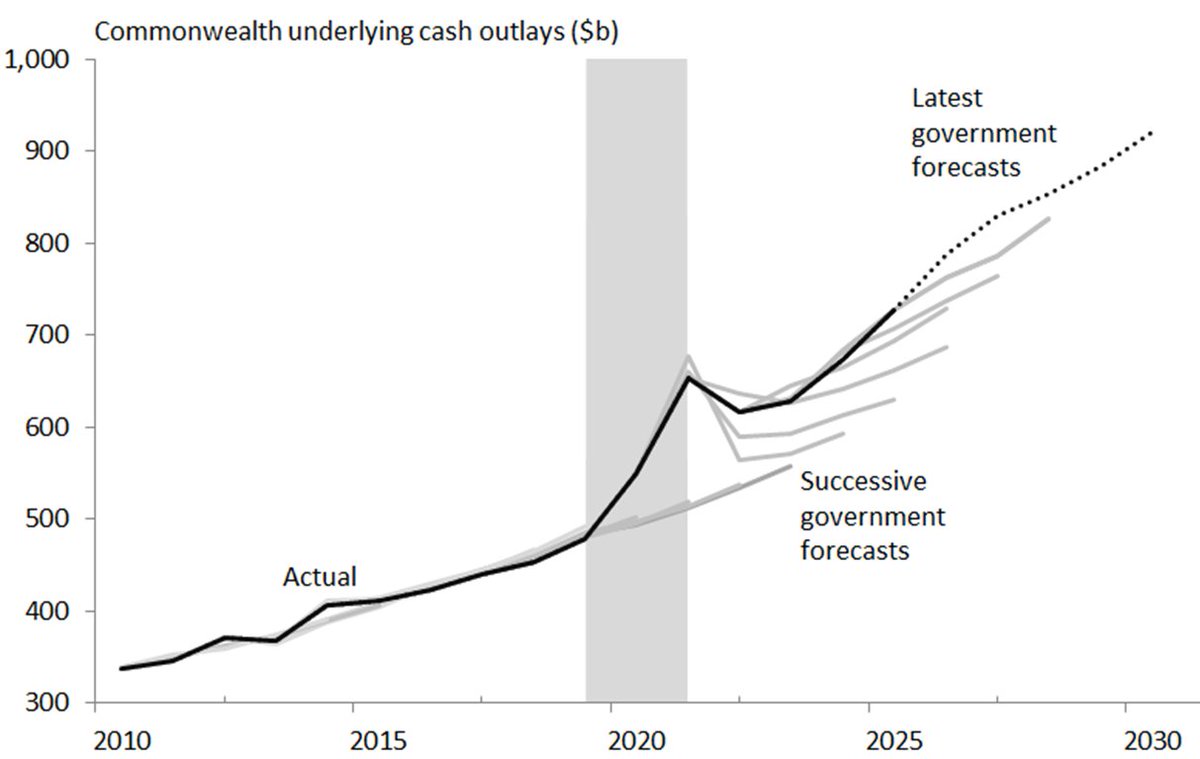
What the Aussie federal government tells us they will spend (grey lines) vs what they actually spend (black line) and what they are now saying they will spend (black dotted line)...
11
37
197
8,156
Gary Jeffery retweeted

Apr 30
Let me aske the un-askable question.
If respecting indigenous culture is so important, why are white, oppressive colonisers denying indigenous Australians their version of justice?
The victim is indigenous, the accused is indigenous, the crime was in an indigenous community, and the mob gathered outside the hospital is made up mostly or perhaps entirely of indigenous people...
But we're imposing white-man, colonial, oppressive ideas like... 'innocent until proven guilty', like a 'jury of your peers', like having a day in court and a proper defence and not being murdered before trial by a mob of angry locals.
Where are the lefties who supported the voice? The ones who condemn us if we question the 'welcome to country'? Those who insist that indigenous culture is inherently virtuous because it got here first... and English civilisation is inherently evil because it took over later?
Where are they? When will they speak up in support of handing the accused over to the angry mob?
Because right now members of the indigenous community would like to carry out their culturally appropriate form of justice in this case, and it's the evil white man who is stopping them.
How dare we!?!
But actually the real question is this... if we're all going to agree that western justice is more civilized, that mob justice isn't acceptable even in such an emotionally charged case as this one... then doesn't that means we should also be allowed to ask whether perhaps western civilisation is better in other ways too? Doesn't it beg the question whether English civilisation actually improved Australia?
And if not... then why not just hand the accused over the mob? It would stop the riots after all...
Yeah, I know, I'm 'evil' just for pointing out the hypocrisy, come at me in the comments.

243
283
1,621
37,480
Gary Jeffery retweeted

Apr 28
Trump rejects the notion that "America is merely an idea" and emphasizes the distinctly Christian founding and Anglo-Saxon heritage of America.
Remarkable speech, this is when Trump is at his best.
Apr 28

TRUMP: "Honoring the British King might seem an ironic beginning to our celebration of 250 years of American independence — but in fact, no tribute could be more appropriate. Long before Americans had a nation or Constitution, we first had a culture, a character, and a creed. Before we ever proclaimed our independence, Americans carried within us the rarest of gifts: moral courage, and it came from a small but mighty kingdom from across the sea."
38
183
1,558
32,622
Gary Jeffery retweeted

Apr 22
#4 – THE “CHEAP AT HALF THE PRICE” LURK
What grabs the headlines are the dollars spelt out on budget night
But that can be another way to mislead the public if those dollars are wrong
And they increasingly are wrong in two important ways – (1) the public service is getting rapidly worse at forecasting the cost of government, and (2) new policies are increasingly likely to be populist and rushed
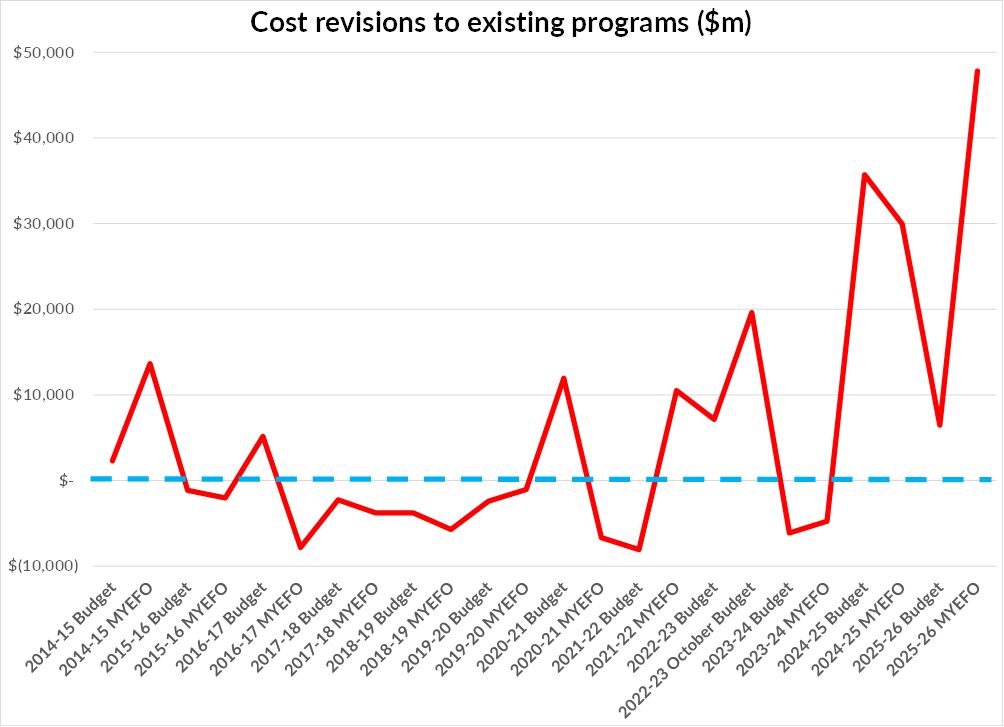
Buried deep in the budget papers is the table where the public service updates overall costs for its programs: everything from aged care through to defence
And because these revisions are adjusted for new policies, they are a handy test of the accuracy of public service cost projections
You’d therefore hope they’d reveal Canberra is on top of its brief: that cost revisions are small, and that they aren’t biased either up or down
Well, that used to be true ...
The budget numbers are updated twice a year, and in the six years before COVID these revisions averaged $0.7 billion. Even better, that average was negative, meaning program costs were a little less than budgeted
But then COVID threw a spanner in the works. Every time the government updated the budget, it added an average of $3.0 billion to expected costs: not because policies changed, but because existing policies were costing more than expected
Still, the ravages of COVID are long since in the rear view mirror, so you’d hope those forecasting errors shrunk again
Except they didn’t. They got a lot worse
There have been seven budget updates since late 2022, and they’ve revealed errors that average $19.4 billion. The latest was particularly shocking: as the chart shows, the budget update issued just before Christmas said existing policies were going to cost $47.8 billion more than had been expected at 2025’s earlier update
That’s the equivalent of doubling last year’s NDIS costs and putting that on the national credit card
To be fair, the economy grows over time. Yet, even as a share of the economy, recent errors are 24 times worse than their pre-COVID average, while the latest update weighs in at a stonking 58 times worse
The largest single blowout in the latest revisions was for a policy whose costs went up by a factor of six – and did so less than six months after the policy began operating
That it was a new policy where the costing error was greatest isn’t a surprise: new policies are increasingly likely to be populist and rushed. That’s because both sides have highly attuned antenna as to what the punters would like, and party leaders act fast when opinion polls are wobbly or an election is approaching
Rushed and populist policymaking is how we got beefed up subsidies for solar batteries announced during last year’s election campaign
That policy commenced in mid-2025 at an announced cost of $2.3 billion. But the new policy had a fundamental flaw: the subsidies were way more generous for batteries that were high capacity but low quality
So generous, in fact, that families were only paying a fraction of retail for them
This free money proved so popular that the latest budget update said the policy was now going to cost $13.9 billion over four years. At $11.6 billion more than the original costing, this blowout was so spectacular that the government simultaneously announced a redesign of a policy that had been running for less than six months
Yet despite being a posterchild for poor policymaking, the budget reporting rules allowed the government to proudly proclaim the solar battery policy had saved money rather than spent it
Say what? The latest redesign aims to cut costs by $6.7 billion. And so the government gleefully booked a $6.7 billion saving against a $2.3 billion policy, thereby allowing the Treasurer to happily highlight overall “net policy decisions that improve the bottom line” at the exact same time as the Energy Minister touted “More Australians to benefit from Cheaper Home Batteries”.
I suspect the politicians are happy if you are confused by all this. The bottom line is that the blowout in existing policy costs is really bad, but it isn’t quite as bad as it looks, because our silly reporting rules allow a completely cooked policymaking disaster to show up both as large budgetary savings made by our very responsible Treasurer and as an increase in the generosity of government subsidies by the Energy Minister.
Happy? I’m not. Our budget reporting rules have become budget rorting rules
5
12
35
2,336
Gary Jeffery retweeted

Apr 22
I can’t know whether it is ignorance, vanity, or the old imperial reflex in a brand new outfit , but I increasingly get the impression that many in the West would sooner see their own civilisation abase itself, Trump publicly humiliated, and the Iranian people left to endure clerical totalitarianism, than admit that those who actually live under such a regime may understand it rather better than those who moralise about it from a safe distance.
What is striking is that when I speak to my Iranian friends, of whom I seem to have an unusual number, they are overwhelmingly on Trump’s side, or at the very least on the side of anything that might weaken the theocratic machine that rules them.
Yet many Westerners, even some of my close friends , endlessly congratulate themselves on their self assumed superior moral refinement, presume to instruct these same Iranians on what is supposedly best for Iran and the world .
One even posted that Iran had a sovereign right to an atomic bomb ?
The conceit is astonishing.
It is, in truth, an old colonial instinct: the urge to lecture a people about their own condition, to deny them authority over their own suffering, and to assume that righteousness belongs by natural right to the distant observer.
The same impulse extends itself to the Arab majority of the region as well, who are also treated less as political adults than as objects upon which Western virtue may be theatrically displayed. The instinct is also old , the westerner civiliser .
Beneath all the language of morality lies the same old assumption, namely that the Westerner is wiser, purer, and more entitled to judge than the people who must actually bear the consequences.
54
61
363
16,816
Gary Jeffery retweeted

Apr 18
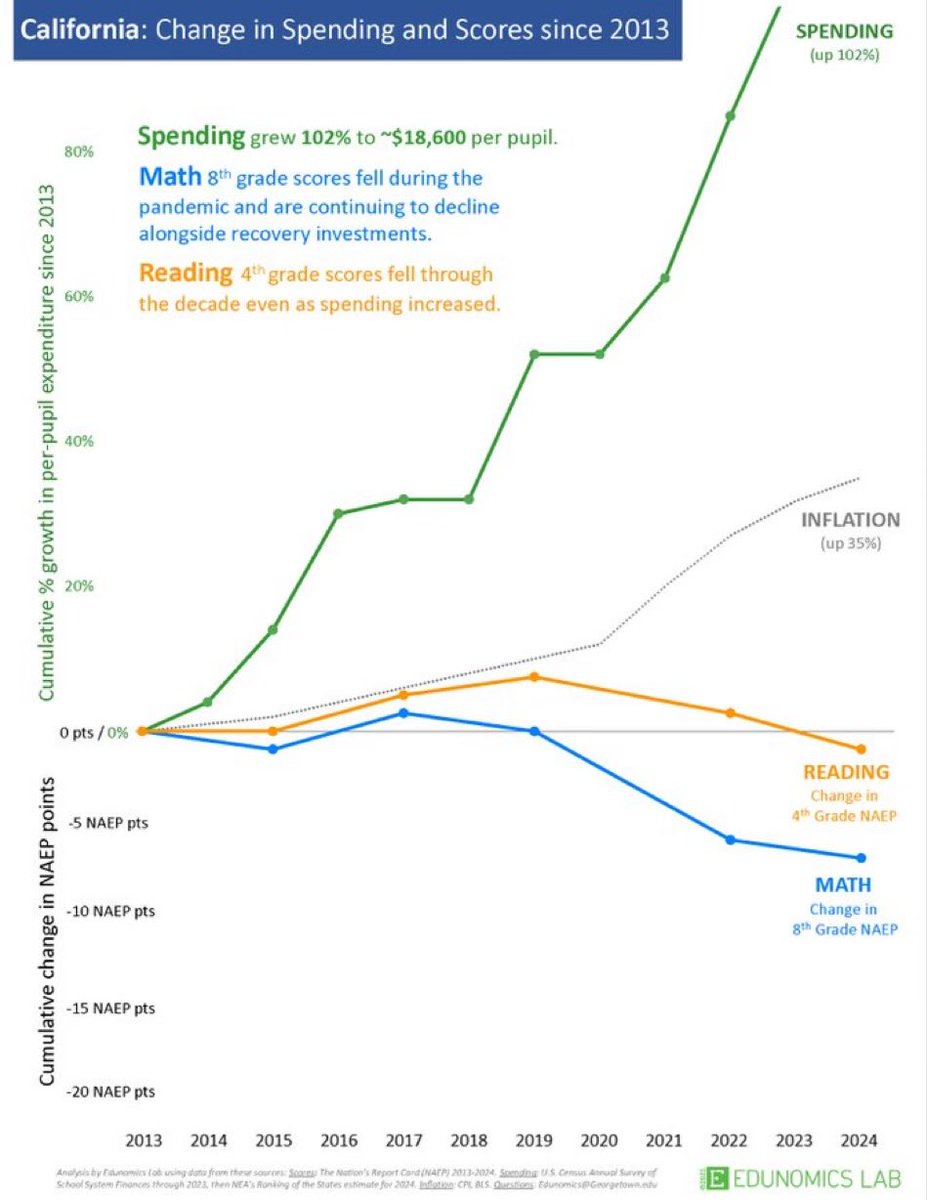
Spending more while getting less is usually a good sign of corruption, fraud, waste and incompetence.
Our education system in California is profoundly broken.
331
1,373
7,602
260,468
Gary Jeffery retweeted
Apr 17
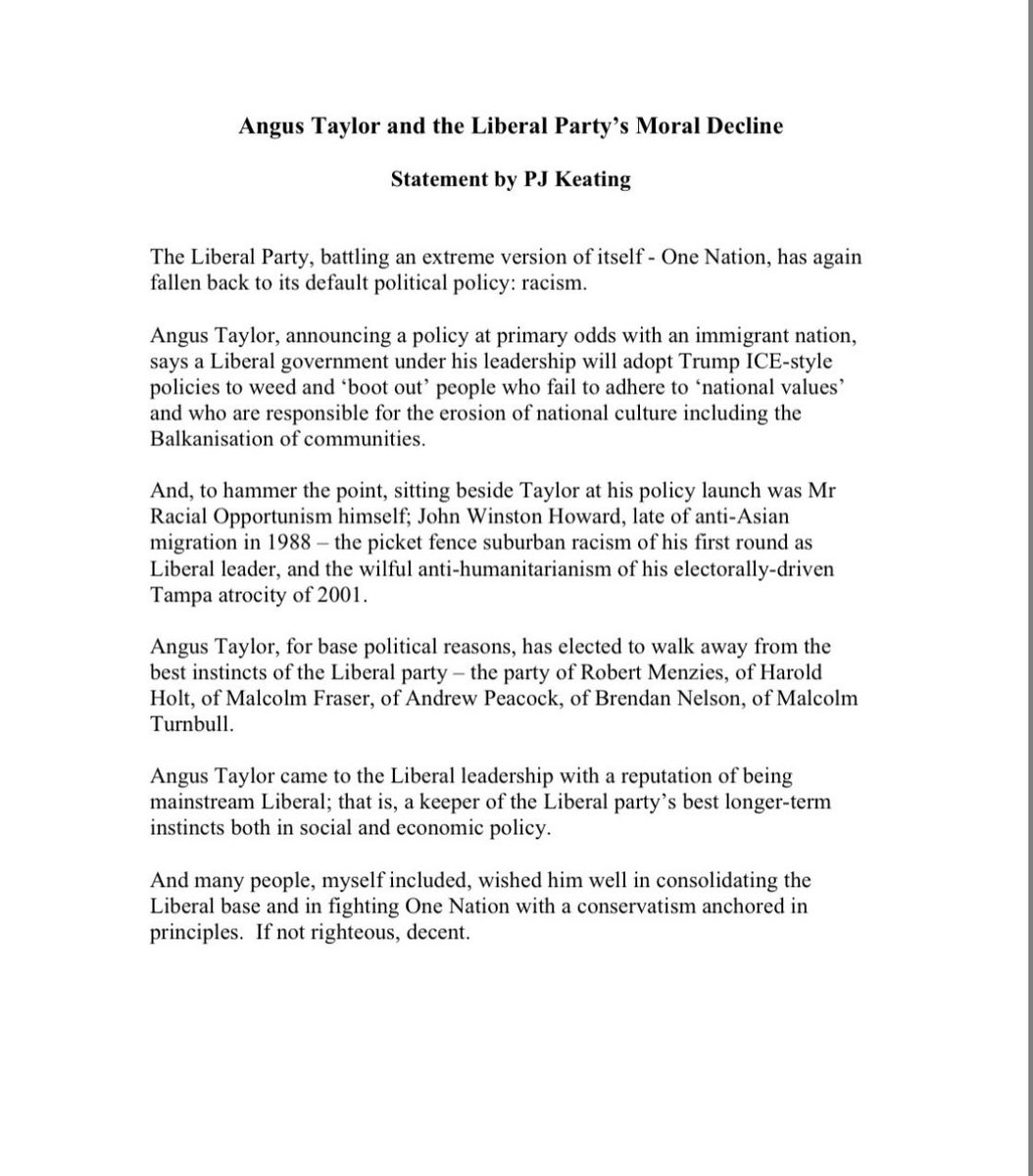
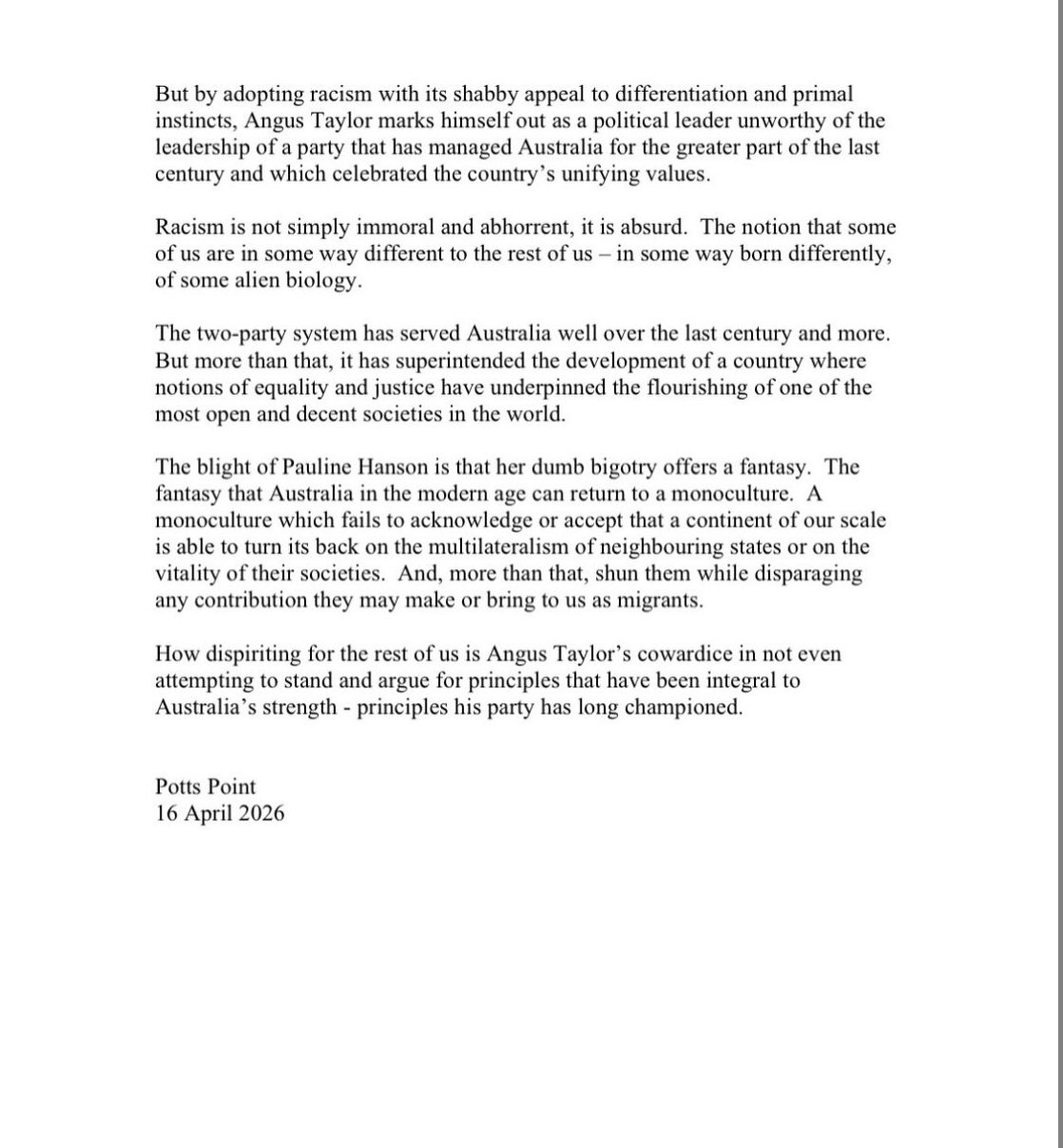
Keating’s move here is the oldest trick in the political handbook: take a dispute about culture, cohesion, assimilation and national continuity, and flatten it into a morality play in which one side gets to preen as virtuous while the other is denounced as wicked.
It is a way of avoiding the argument by declaring it already settled. Once the word “racism” is used as a ritual incantation rather than a serious description, the discussion is no longer about policy, citizenship, or the terms on which a nation holds together. It becomes a theatre of denunciation. And that is convenient, because the deeper question Angus is trying, however imperfectly, to reach is whether a country may still ask what sort of common culture it intends to sustain without being told that the very act of asking is morally disreputable.
The historical abuse is just as bad. To drag Menzies into this as though he were a patron saint of borderless liberal abstraction is ridiculous.
Menzies believed in immigration, yes, but immigration into something. Into a common civic life, a common language, a common set of national habits and loyalties. He did not believe that a nation was a hotel lobby, a place through which populations drift while elites congratulate themselves on their enlightenment. He believed citizenship meant belonging, and belonging meant adaptation. That is not racism. That is the elementary grammar of nationhood of which Keating is poor student .
What Keating is really doing is protecting a modern taboo.
He knows that once you permit people to discuss cultural confidence, assimilation, and continuity in plain language, the entire managerial pose begins to crack.
So the racist accusation must come first because it silences. It creates a false bifurcation: either you accept the dissolving of national culture without protest, or you are to be classed with bigots and fools. That is not argument. It is intimidation dressed up as moral seriousness
Much of Australia’s modern political discourse now operates through this bifurcation: not an argument about policy, consequences, or national interest, but a moral sorting ritual in which one side claims virtue and the other is cast as morally illegitimate before the real question can even be asked.
As much as Keating is entertaining he’s corrosive to the country’s future
Apr 16

Paul Keating does not hold back in response to Angus Taylor new immigration policy and I’m so here for it. Reminds me of better times when we had PMs with the backbone to tell it like it is. Truly statesmen like & excellent & I encourage everyone to take a moment to read it 👇🏼
49
86
543
21,821
Apr 13
Australia’s tobacco excise tax….

24
Gary Jeffery retweeted

Apr 12
For the record.
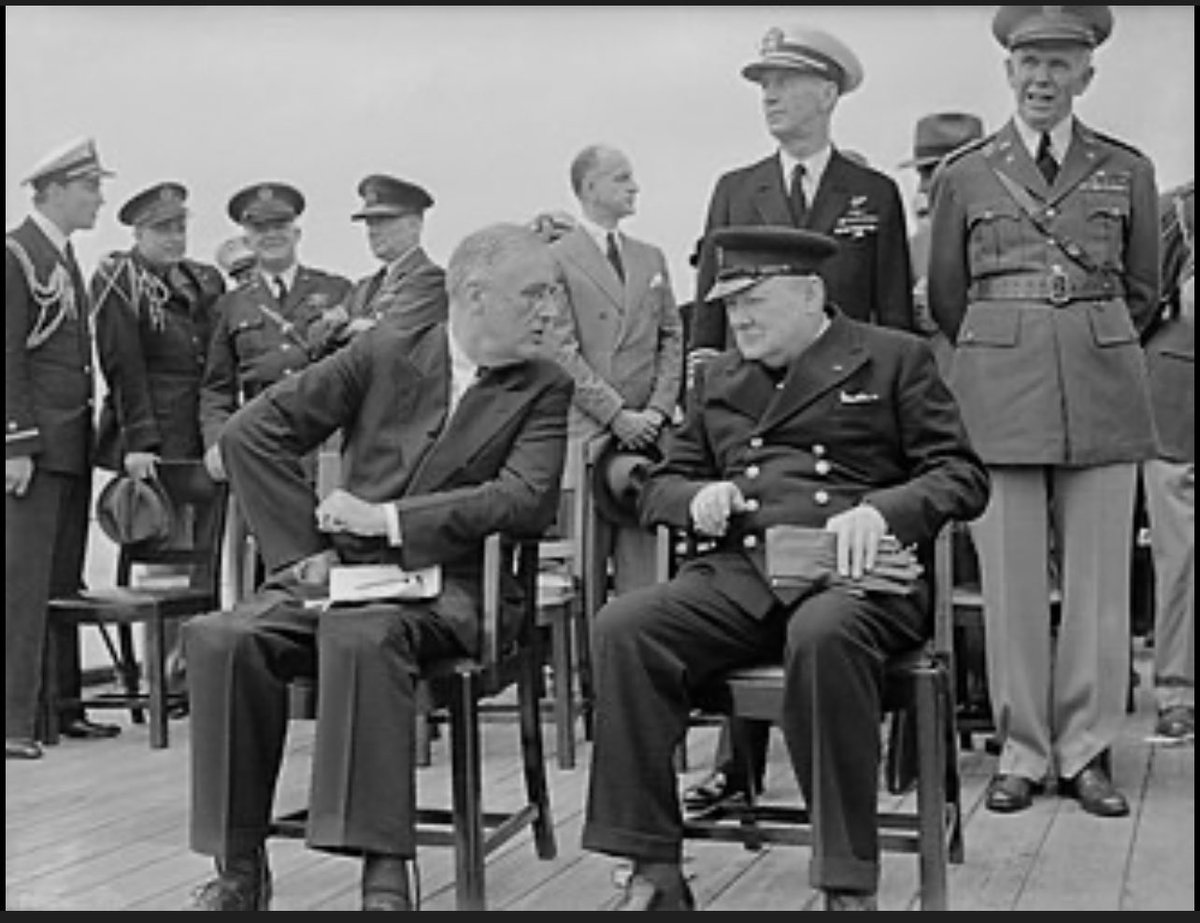
After Pax Americana: The Rise of the American Resource State
“Every new beginning comes from some other beginning’s end.” Seneca
Pax Americana was never just about American power; it was about an era in which Washington underwrote a relatively open, predictable global order as a subsidized public good. The U.S. guaranteed sea lanes, policed chokepoints like Hormuz, anchored alliances, and absorbed economic costs so others, especially Europe, could build post‑industrial, “Green” welfare states on top. That order is dying. What is emerging is not American decline, but a harder, more transactional America: a resource superpower that prices its power instead of giving it away.
The United States is no longer the energy‑vulnerable petro‑client of the 1970s. It is a net exporter of oil and gas, the swing supplier of LNG, and a pivotal player in food and critical minerals. Shocks that once exposed American weakness now expose everyone else’s dependence, pushing more demand toward U.S. barrels, U.S. cargoes, U.S. security guarantees, and U.S. financial assets.
When President Trump talks about “structural shifts” in the world economy and security system, this is what he is really pointing at: the slow death of Pax Americana as a self‑sacrificing order, and the rise of an unapologetic American resource state that expects to be paid, whether the system holds or frays.
Europe’s strategic error was to treat Pax Americana as eternal. Brussels made energy expensive, strangled industry in regulation, outsourced manufacturing, and assumed U.S. security and open trade would always be there in the background. Now, as the old order recedes and a priced American hegemony replaces it, that complacency is being exposed in real time.
The only open question is when Wall Street’s pundit class will drop the lazy 1970s analogies and finally admit what markets are already telling them: the regime has changed, and so has the nature of American power.
28
128
396
19,043
Gary Jeffery retweeted

Apr 9
أنا أتكلم بلغة الأرقام... هل تتكلم اللغة نفسها؟
إغلاق المضيق أدى إلى:
على المدى القصير:
1- رفع صادرات الولايات المتحدة من الغاز المسال إلى أعلى مستوى لها في التاريخ، مع ارتفاع كبير في السعار. هذا نتج عنه ارتفاع أسهم شركات الغاز المسال الأميركية، بعضها تضاعف 3 مرات خلال شهر.
2- رفع صادرات الولايات المتحدة من المنتجات النفطية إلى أعلى مستوى له في التاريخ وارتفاع اسعارها بشكل كبير لدرحة أن افرادات الآن هي الأعلى في التاريخ.
3- رفع صادرات الولايات المتحدة من النفط الخام بشكل كبير بعد ان كان يتوقع لها الانخفاض، وبيع النفط الأميركية بفوارق كبيرة فوق سعر خام برنت.
4- رفع صادرات الولايات المتحدة من الغازات السائلة إلى اعلى مستوى لها في التاريخ وارتفاع كبير في أسعار بعضها.
5- رفع صادرات الولايات المتحدة من النافثا إلى أعلى مستوى لها في التاريخ، وارتفاع اسعارها
لاشك أن ارتفاع الأسعار رفع أسعار المنتجات النفطية في الولايات المتحدة وهذا سيؤدي إلى التضخم وقد يؤدي إلى رقود اقتصادي، ولكن كل هذه المساوئ في المدى القصير. المنافع في المدى الطويل كبيرة ولاتقدر بثمن:
1- سيطرة الولايات المتحدة على صناعة وتجارة الغاز المسال عالميا، والذي أصبح جزءا لايتجزأ من السياسة الخارجية للولايات المتحدة واحد أعمدة الأمن القومي.
2- سيطرة الولايات المتحدة على تجارة الهليوم، والذي يعني السيطرة على كل مايتعلق بالذكاء الاصطناعي,
3- سيطرة الولايات المتحدة على تجارة الميثانول والوقود الحيوي، ومن ثم السيطرة على أحد أهم بدائل النفط من جهة، وأحد أهم طرق تنسيط ودرعم القطاع الزراعي.
4- انعاش كبير لصناعة الأسمدة الأميركية وتوسع التجارة الأميركية في المنتجات الزراعية بشكل لم يسبق له مثيل، ما يمكنها من المزيد من السيطرة في العالم، خاصة الدول النامية.
5- سيطرة الولايات المتحدة على تجارة الغازات السائلة، والتي تدخل في أغلب الصناعات والقطاع الزراعي.
6- انتعاش طويل المدى في قطاع النفط والغاز الأميركيين، خاصة في المياه العميقة.
خلاصة الكلام أن الطاقة ستكون رخيصة في الولايات المتحدة مقابل منافسيها، ومن ثم تستطيع التقدم في مجالات الذكاء الصناعي والأتمتة على منافسيها، والسبب الرئيس هو ارتفاع تكاليف الطاقة الخارجة من مضيق هرمز بسبب زيادة المخاطر وتكاليف التأمين. هذا كله مكتوب في استراتيجة الأمن القومي التي نشرت قبل الحرب بنحو ثلاثة شهور.
من ناحية أخرى:
1- ريغان وبوش الأب أرسلوا السلاح إلى طهران
2- جورج بوش الإبن سلم العراق لإيران
3- أوباما سلم سوريا ولبنان واليمن لإيران
4- بايدن تعاون مع إيران برفع إنتاجها النفطي وزيادة إيراداتها بشكل كبير، وإيران ساعدته في التخفيف من حدة ارتفاع أسعار النفط قبل الانتخابات النصفية في 2022 وفي انتخابات 2024.
5- ترمب اعطى مضيق هرمز لإيران.
في ضوء هذا التاريخ، ليس من المستغرب أن يقال ماذكر في تغريدتي الأصلية أعلاه. واتفق معك، فعلا، ما تفعله إيران ليس متناقضا، بل على العكس، متناسقا تماما مع تاريخها الطويل.
39
164
604
104,147
Gary Jeffery retweeted
Apr 7
Pre-war Japan is a historical rhyme worth keeping in mind.
Pearl Harbour came at the end of a tightening sanctions regime imposed by the West. Oil. Scrap iron. Strategic inputs. Each restriction narrowed Japan’s room to manoeuvre.
Once a state concludes that the foundations of its economy and war machine are being closed off, the urgency of decisions change.
Stability stops being the governing aim. The question becomes whether action now offers better odds than passivity under encirclement.
If you want to understand the motivation, start there: fear of encirclement.
That sits near the center of the moral question people are wrestling with now.
Chinese control over critical minerals and industrial supply chains carries the same structure.
If Beijing can place at risk the inputs required for American military production, grid expansion, AI systems, and industrial continuity, then the issue sits well beyond ordinary trade friction.
It becomes leverage over the material basis of power itself.
In that setting, dependency acquires a strategic meaning. A supply chain is no longer a market arrangement. It is a potential instrument of compulsion.
It begins to register as a survival question.
American conduct follows from that insight.
Washington appears to believe that a future vulnerability must be arrested before it hardens into a permanent strategic fact. The issue is not mood or rhetoric. It is anticipation of future disablement.
States act with force when they judge that delay will deepen exposure and narrow their remaining options.
Israel’s view of Iran belongs to the same family of reasoning.
A threat interpreted as maturing, entrenching, and approaching irreversibility produces a distinct political psychology.
Restraint loses prestige. Preemption gains coherence. It starts to appear rational.
History offers rhymes. Japan in 1941. Israel in 1967. Germany in 1914. Sparta facing Athens.
A state perceives an adverse shift in the conditions of survival.
Time ceases to appear neutral. Decisive action starts to present itself as necessary.
The future is imagined as a worse bargaining position, a worse military position, a worse chance of endurance.
Under those conditions, radical action begins to present itself as reasonable .
Which is the deeper point.
States become dangerous when threat attaches itself to material dependence, shrinking time horizons, and the real expectation of future weakness.
At that moment, power makes a clean break in linear diplomatic terms. It thinks in windows, chokepoints, bottlenecks, and irreversible loss.
Its perceived menu of options is radicalised by the structure of the threat itself.
Those who read the United States as soft, irresolute, or indefinitely patient may be misreading the situation completely.
A state that believes its future industrial base, military capacity, and strategic freedom are at risk won’t behave like a complacent hegemon. It behaves like a power trying to prevent encirclement before it becomes permanent. That is why the present moment has to be read through matter.
This is where The Return of Matter comes back into view. The real contest is no longer about slogans, values, or even finance in the narrow sense. It is about control over the physical substrates of power: energy, metals, refining, grids, shipping, compute, and the industrial systems that make military and economic life possible. Once matter returns to the center, states stop speaking the language of frictionless markets and start acting in the older ancient language of survival.
What we are watching now is that transition made visible: the progression of action under perceived material threat, the re-entry of physical constraint into strategy, and the collapse of the fantasy that interdependence had abolished coercion.
With that realisation comes a grief for the passing of the old world.
.

17
58
245
36,261
Gary Jeffery retweeted
Apr 6
What paralysis of intellect has us channelling wages to banks through the financialisation of shelter while remaining beholden to foreign powers for the basics of modern life?
We export raw abundance, reimport finished dependence, and call it sophistication.
We ship coal overseas, buy back the carbon as solar panels, and congratulate ourselves on moral progress.
We have treated house prices as national success and productive capacity as an afterthought. We have built a system resilient neither to strategic rivalry nor to disruption in the Middle East.
Australia has spent years confusing asset inflation with prosperity, financial engineering with statecraft, and imported complexity with sovereign capacity.
We sell raw materials, buy back dependency, import people and call the margin prosperity.
We congratulated ourselves for efficiency while dismantling redundancy, resilience and national competence.
The class that calls itself the nation’s intelligence can inflate land, subsidise demand and recite targets, yet cannot secure fuel, rebuild industry or think beyond the next property cycle.
And then comes the NDIS, handled with the usual implied moral vulgarity, as though a serious country must choose between caring for the vulnerable and maintaining a productive base.
Social obligations can’t float above material reality .
It must eventually rest on that reality .
A country that hollows out energy, industry, logistics and housing will eventually discover that its promises exceed its capacity.
Our aging demographics guarantee it
You cant secure the vulnerable by dismantling the machinery that funds their support. The NDIS is threatened by the same order that hollowed out the real economy and then feigned surprise when the social contract became expensive.
Donald Horne was right. Australia is a lucky country run by second-rate people. For a long time, distance, endowment and inertia concealed the fact. That cover is thinning. A nation that cannot tell the difference between wealth and extraction, between resilience and rhetoric, between civilisation and a housing bubble, will learn the lesson the hard way.
16
54
238
7,933