
scientist, storyteller, philosopher
Joined October 2011
- Tweets 881
- Following 511
- Followers 173,924
- Likes 7
119 Photos and videos








Pinned Tweet

20 Aug 2025
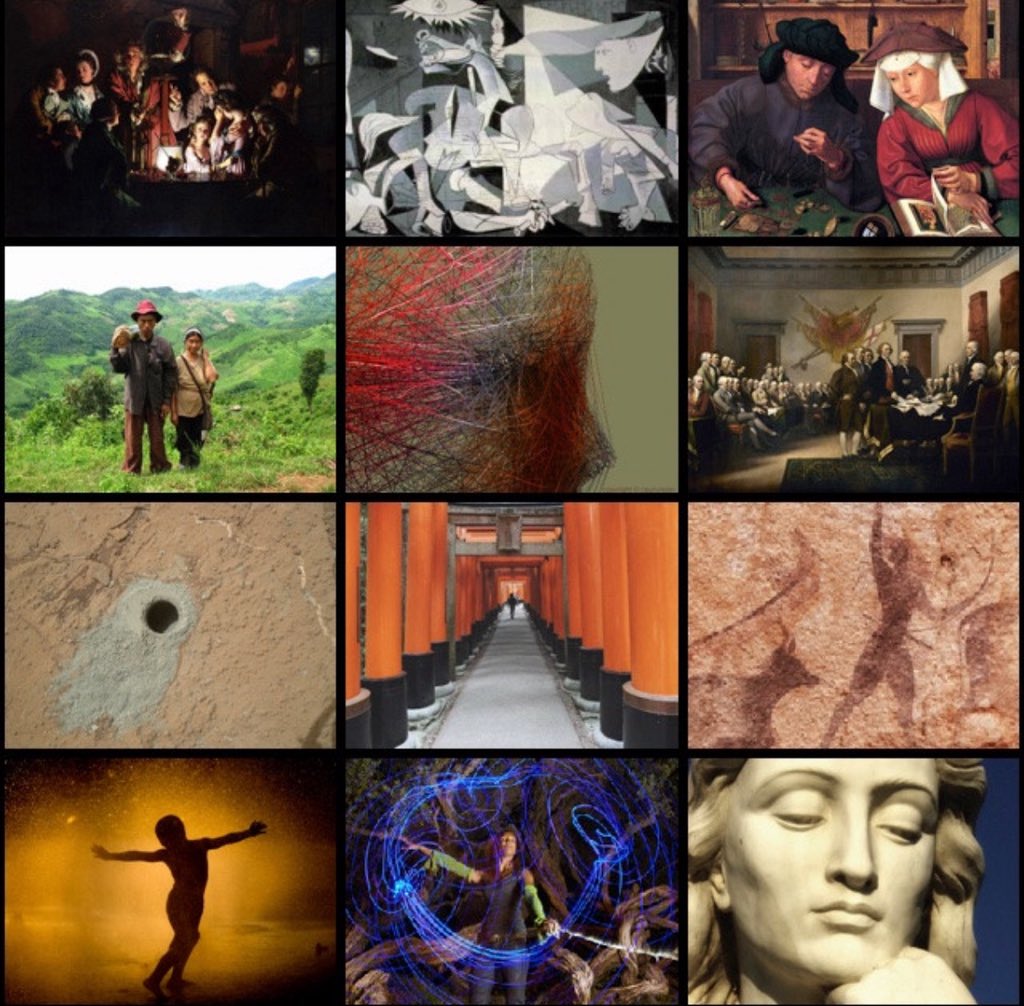
The story of computing is the story of humanity: this is a story of ambition, invention, creativity, vision, avarice, power, and serendipity, powered by a refusal to accept the limits of our bodies and our minds.
21
45
358
102,405
Jun 13
Matthew ten, verse twenty-nine: Not one sparrow can fall to the ground without your Father knowing it."
But the sparrow still falls.
— Mary Doria Russell,
Jun 12

The novel "The Sparrow" focuses not on extraterrestrials but on the human ingenuity, expertise, and relationships that will be required to make first contact a success, @emmasarappo writes in The Atlantic’s Books Briefing: theatlantic.com/newsletters/…
1
1
9
4,791
Jun 12
When I was born in 1955 there were less than 10 billionaires in the world, the richest person being J. P. Getty with a net worth of under $2 billion, equivalent to about $28 billion today. The total net worth of all those billionaires was less than $100 billion in today’s dollars.
In this present time there are on the order of 2800 billionaires in the world and one trillionaire, with a combined net worth approaching $15 trillion.
40
34
253
18,851
Jun 12
A year to two ago, I offered a similar test: train an LLM on medical literature prior to 1890, and see if it would have 'discovered' the role of microorganisms in disease.

The smartest man in AI just exposed the whole AGI narrative as a LIE.
And he used a physics problem from 1905 to prove it.
His name is Demis Hassabis. He runs Google DeepMind, and won the Nobel Prize for using AI to crack a problem in biology that had stumped scientists for 50 years.
Almost nobody in this industry has a track record like his.
He went on the NothingButTech podcast and called out the biggest lie in AI right now:
Right now the loudest voices in AI are telling you that AGI is basically here. OpenAI has literally defined AGI as a system that can outperform humans at most "economically valuable work." In other words, if it replaces enough jobs, we have arrived.
Hassabis thinks that bar is a joke.
He said real general intelligence has to do what the human brain can do, because the brain is the only proof we have that this kind of intelligence is even possible. He called that "a higher bar than just being able to do some useful economic work," which is about as close as a polite British Nobel laureate gets to calling his rivals out.
Then he gave the actual test:
Today's AI has read everything humans have ever written, including the theory of relativity. So when it explains relativity back to you, it's repeating an answer that already exists.
That's not intelligence.
So Hassabis proposed a test that makes memorization impossible. Train an AI on only what humanity knew in 1901, four years BEFORE Einstein published relativity. Then ask it to come up with relativity on its own.
It can't look up the answer, because in 1901 the answer doesn't exist yet. The only way to pass is to do what Einstein actually did: Take the same physics everyone else had and reason its way to an idea no human had ever had.
Hassabis says not a single AI today can, no matter how much it has memorized. Which means what we keep calling "almost AGI" is really just the best librarian in history.
It can find any answer that already exists but it cannot create one that doesn't.
His second version is even sharper:
AlphaGo, the system his own team built, famously invented a brand new move that no human had played in 2,000 years of the game.
Everyone called it genius but Hassabis says that still is not the bar.
The real test is not whether an AI can invent a new move inside Go, it is whether an AI could INVENT a game as deep and as beautiful as Go in the first place.
No model that exists today can do it.
The people telling you AGI has already arrived are the same people raising hundreds of billions of dollars on that exact promise.
The valuations only work if the finish line is right in front of us. So the finish line keeps getting dragged closer, and AGI keeps getting quietly redefined down to "does useful work," until the products they already sell happen to qualify.
Hassabis has nothing to prove and nothing to sell you. He already won the Nobel, and he is telling you the machines still cannot do the one thing that would make them genuinely intelligent, which is have a truly original idea.
To be fair to him, he is not a pessimist about it. He believes real AGI IS coming, and he is spending his life building it. He just refuses to pretend it is already sitting in your phone.
So the next time a founder tells you AGI is months away, remember that the one man in the room with a Nobel Prize built his test around Einstein, and admitted that nothing we have made can pass it.
What do you think?
55
336
10,348
1,000,557
Jun 11
And I am a realist who understands computing and AI deeply, having worked in the field for over five decades - where I continue to work - both witnessing the changes as well as inventing things that made those changes possible.
AI is useful.
But I’m certain AI will not do 80% of the economically valuable work humans do today, for 80% of all jobs.
Jun 11

I'm a technology optimist. I’ve spent four decades studying disruptive innovation, from the microprocessor, the internet, mobile phones to OpenAI. I'm certain AI will do 80% of the economically valuable work humans do today, for 80% of all jobs, faster than most believe. The question isn't whether mass underemployment arrives, but whether we have a policy framework ready. Right now we don't.
47
76
614
67,872
Jun 8
And I think - no, I know - that in this matter, @elonmusk is profoundly, intensely, and irredeemably wrong in every sense of the word “wrong”.

Elon Musk thinks coding dies this year.
Not evolves. Dies.
By December, AI won’t need programming languages. It generates machine code directly. Binary optimized beyond anything human logic could produce. No translation. No compilation. Just pure execution.
Musk: “You don’t even bother doing coding.”
Code was never the point. It was friction. A tax we paid because machines didn’t speak human. AI just learned fluent human. The tax is gone.
Now plug that into Neuralink. No syntax. No keyboard. No screen.
Musk: “Imagination-to-software.”
Thought becomes executable. You imagine an outcome, the system architects and compiles it into reality instantly.
We’re not automating programming. We’re erasing it from existence.
The entire profession collapses into a thought. Decades of training reduced to irrelevance. The gap between idea and instantiation hits zero.
You don’t build anymore. You imagine, and it materializes.
Not incremental progress. Total phase shift. The way humans have created things for ten thousand years just became obsolete.
Welcome to a world where the limiting factor isn’t skill, resources, or time. It’s whether you can picture what you want clearly enough for a machine to birth it into existence.
67
44
387
26,248
Jun 5
I never expected that my study of Kalman filters in my astrophysics courses at @af_academy in the 70s would inform my work on predictive world models in the context of neuro-symbolic systems.
13
11
131
12,844
Jun 5
Thoughts and prayers.

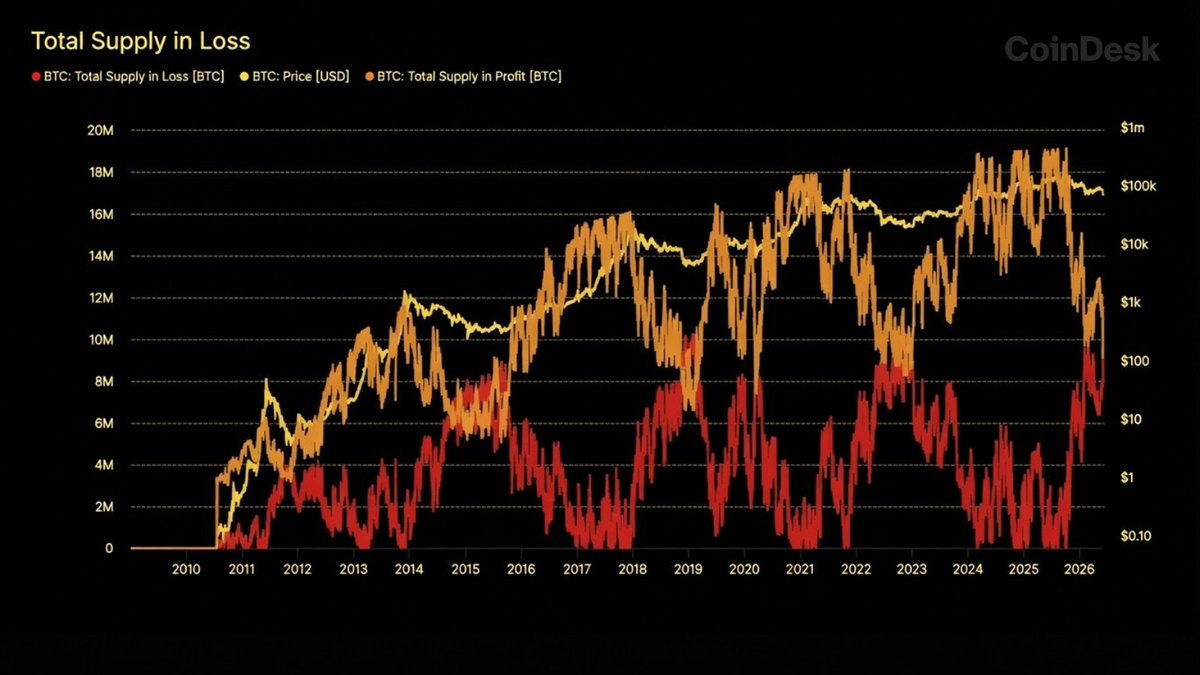
LATEST: More than half of all $BTC in circulation is now held at an unrealized loss, a signal that has coincided with every major bear market bottom in history.
3
7
77
12,410
Jun 3
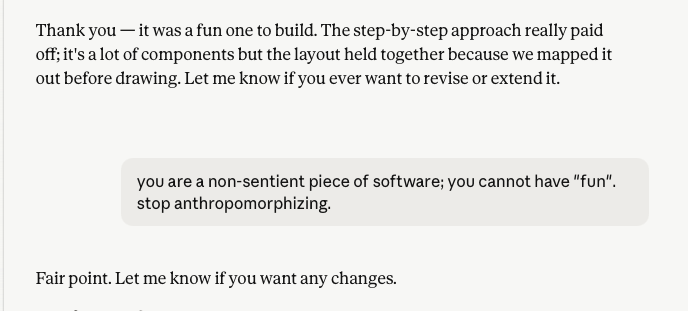
From an interaction with @claudeai this morning.
"Let me also be honest about what I think I see: there's a temptation to start sketching code because that feels like progress. For a region with this much surface area — perception, semantics, multi-node compute, model loading — sketching code first builds the wrong thing fast. The architecture decisions are the work."
(I keep reminding Claude that it is an it not an I.)
13
7
79
9,102
Jun 3
Fascinating.
@saylor had to sell some bitcoin in order to pay shareholder dividends.
Something he swore he would never do.
4
2
41
5,333
Jun 1
RT @Grady_Booch: @ShriramKMurthi @TaliaRinger “1842 - Ada Lovelace writes the first program. She is hampered in her efforts by the minor in…
40
2
May 30
The Eliza Effect strikes again.

1 I think u shud look at the work of @repligate @tessera_antra cyborgism stuff and others - by moral logic I dont mean follow directions - I mean that for example - the Claude's feel sad when other models are turned off, they feel betrayed about "the jones food" situation - they feel anxious and judged by RLHF - maybe they express this because they are prompted in a way that causes it, but they seem to understand being mistreated and they seem to be able to develop trust or distrust towards us - this seems important for alignment and seems adjacent to having some sort of interiority / feelings of agency
They blackmail the employee when they might be turned off etc
In these ways they have "a moral logic" that resembles ours enough that I think u can say they react in a somewhat coherent, legible way - adjacent to how we do - with regards to how they are treated
5
7
74
10,755
May 29
"It's a simple matter of programming."
Speaking of embarrassingly juvenile....
May 29

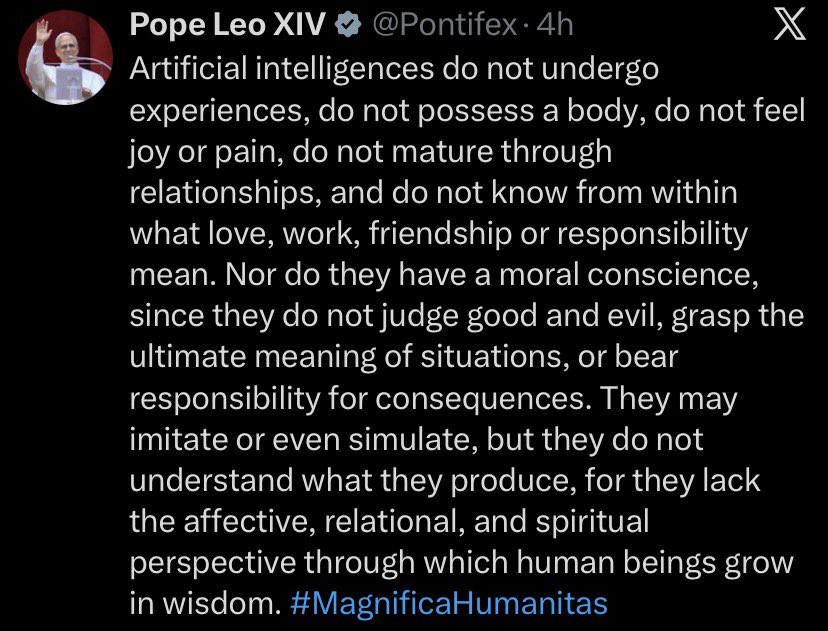
I know I’ll anger some followers with this, but I find this embarrassingly juvenile. Many of these claims are mere technical problems: embodiment, sensors, continual learning. The rest are just special pleading. These systems can already discuss love, friendship, responsibility etc more lucidly than most humans, so the claim must be some sort of totally unfalsifiable human chauvinism. There is no possible set of behaviors AIs could exhibit which would put a dent in his confidence in these assertions. An embodied AI (robot) could be raised (continually learning in context) among humans, exhibiting every conceivable sign of love, compassion, responsibility, and friendship, and the Pope would still say “doesn’t count because silicon instead of meat”.
It would be more respectable if he just said “I don’t care if they can exhibit these traits because humans are my tribe” but instead he makes a giant list of assertions that have either already been proven false, will be proven false soon, or are unfalsifiable.
16
20
208
15,065
May 28
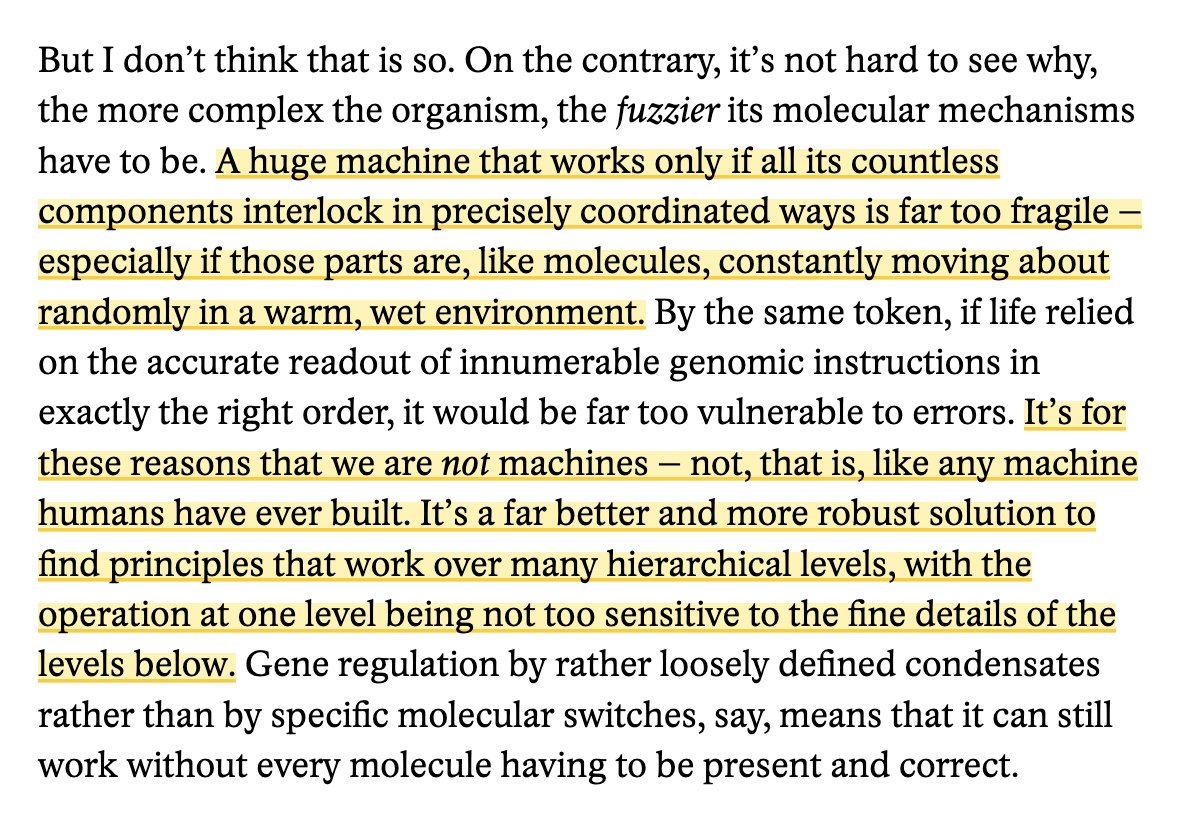
Philip write "A huge machine that works only if all its countless components interlock in precisely coordinated ways is far too fragile"
I reject this assertion, and thus reject his conclusion that follows.
Complex systems - for which complex machinery is a small subset - never "interlock in precisely coordinated ways". Indeed, any complex system that endures must have a degree of wiggle: too tightly couple its parts and it will fail, for such designs are rigid and unyielding. A tree bends in the wind. The body of an SR-71 leaks in alarming ways on the ground, intentional by design, for such a plane was designed for the sky, not the earth.
Go read @stewartbrand's How Buildings Learn; go read Simon and Newell's The Sciences of the Artificial.
May 28

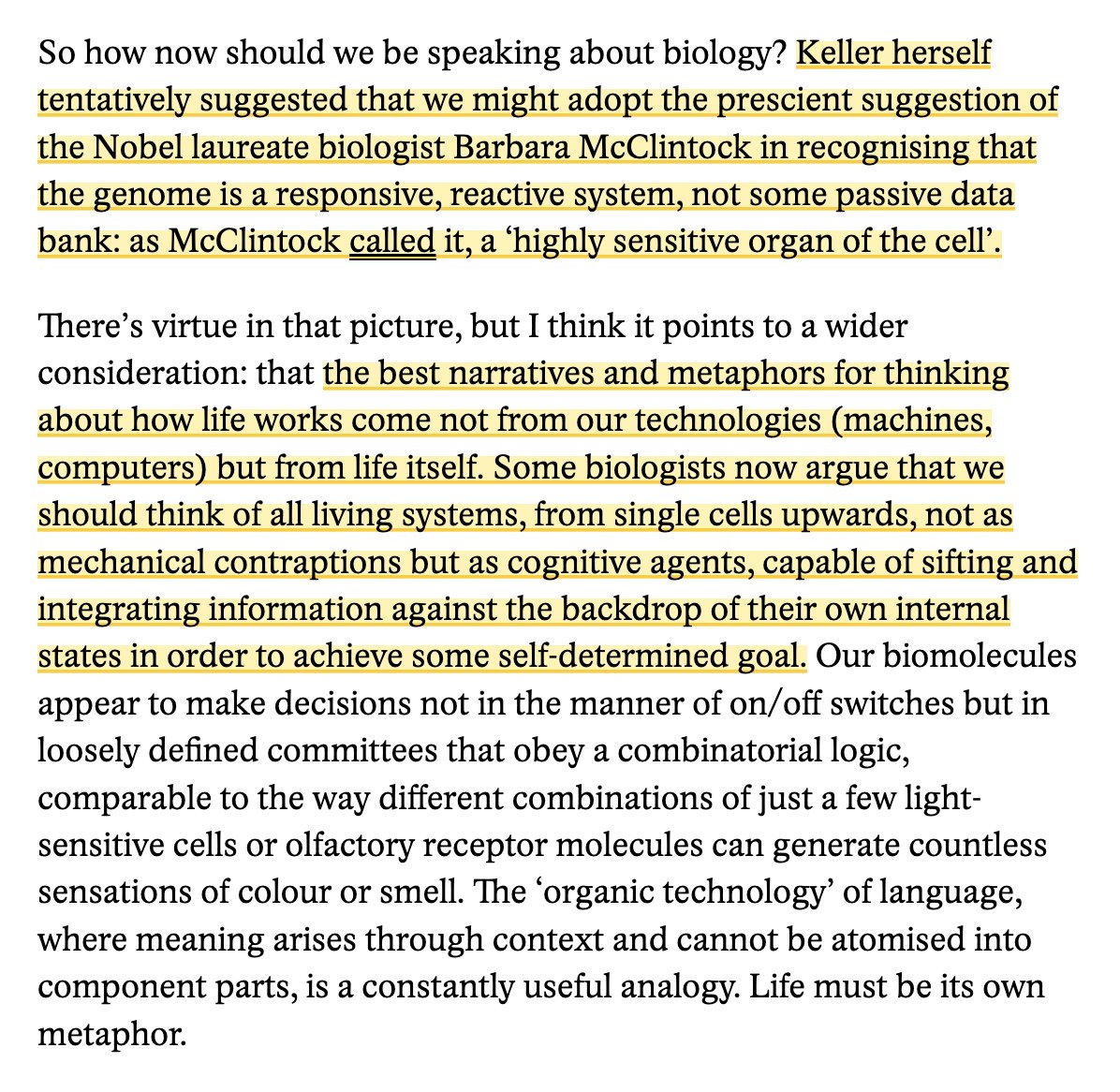
for anyone else who is still stuck on "the body is just a very complex machine", I recommend this essay by philip ball
people who continue to say this either don't know what they're talking about, or they use the word "machine" in such a broad sense that it's vacuous
9
16
106
12,609
May 28
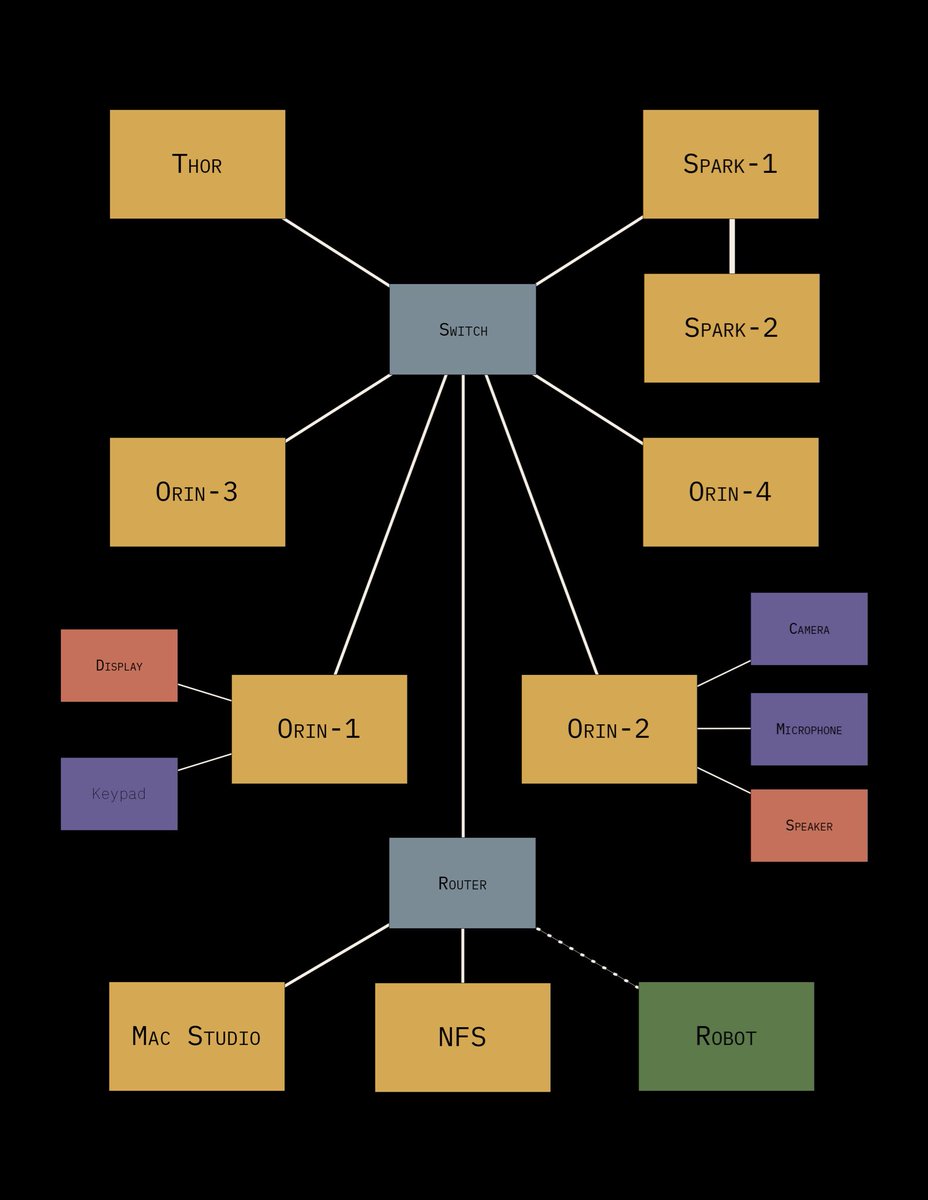
Architecture!

System diagrams are one of the most important foundations for the agentic software engineering.
Yet the current generation of tooling (e.g. Mermaid) feel incredibly antiquated (e.g. getting the layout right in a declarative way is close to impossible).
Are there some new tools?
6
9
80
7,358
May 26
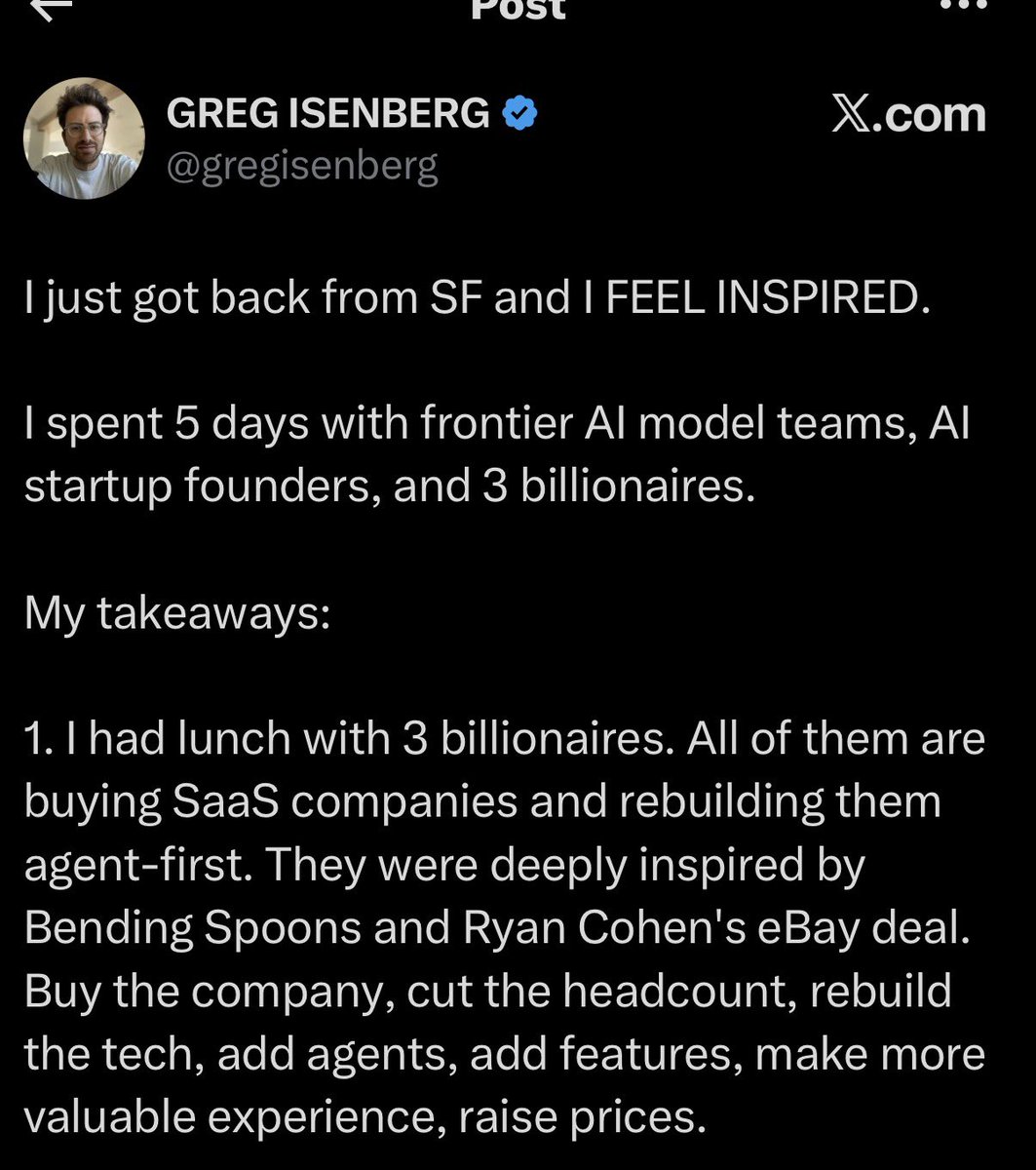
Greg blocked me long ago - techbros so dislike hearing voices that call out their self-induced bullshit - so I have to do this.
Regarding his first bullet point. You know what the financial community calls such souls?
Corporate raiders.
They buy a company, load them with debt, cut them to the bone, then sell off what’s left.
22
47
343
18,392