
Climate dad, Canadian energy policy nerd. I post about energy technology and policy and how they can stop and eventually reverse climate change. Views my own.
Joined May 2009
- Tweets 10,529
- Following 688
- Followers 1,065
- Likes 6,342
279 Photos and videos












Pinned Tweet

14 Dec 2025
On the train all day, a good day to get back into posting nerdy energy commentary - now to try and train the algorithm to only show me stuff about energy and the Jays.
3
586
Harris Berton retweeted

Also no one yet has solved the explore/exploit problem: how do you round the square of (1) a fast moving, sky-high-valuation, general purpose AI lab that discovers materials, vs (2) the high-CAPEX, low margins, long timeline commodity mfg markets that capture the value.
1
231
Jun 14
Why is this useful? Seriously, someone explain to me why this is relevant analysis if you also agree net zero is necessary.
Jun 13

An MIT-led study found EVs usually beat gas cars on emissions, but the advantage varies sharply by location and driving habits.
insideevs.com/features/79861…
1
2
1
386
Jun 14
Because being conservative makes you sound smart, and sounding smart is more important than doing good analysis.
Also a commitment to using "real data" - which is abjectly ridiculous in the context of projecting the future.
Drives me nuts, so much bad analysis due to this.
Jun 13

Why do researchers have such fear of projecting trends into the future, yes it is uncertainty in the numbers, but to not include several scenarios here are just fact, the world is changing. Same thing in demographics in other sciences, it’s so static
1
289
Jun 10
I am pretty sure this was the exact reaction to tractors...
Will report back if I find a specific study, but tons of transition scholarship shows these patterns are old.
Jun 9

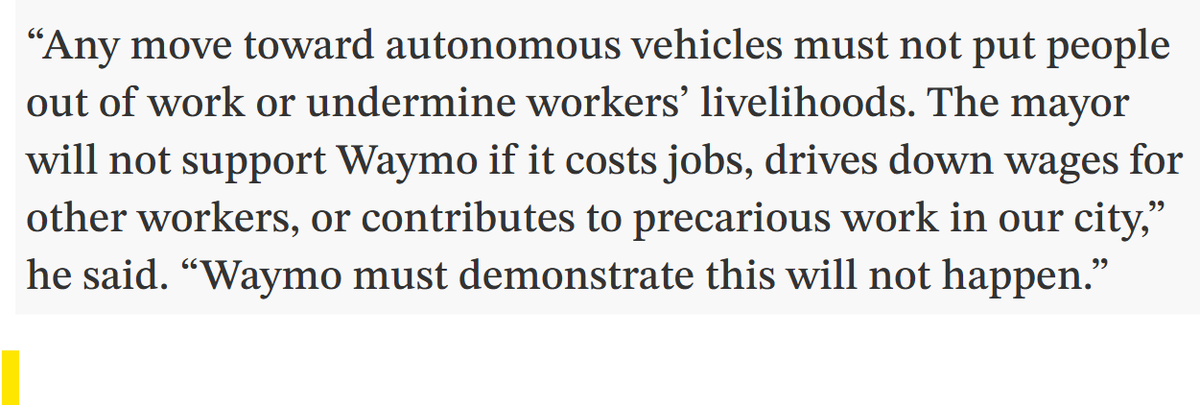
Imagine if this had been the response to the introduction of the tractor.
via Toronto Star
110
kWh sold / total system cost =
price/kWh
👇

Right now the big explicit narrative is "growth drives up prices", but effectively every state large load tariff is more worried about the affordability impacts of if data centers don't show up to consume a bunch of energy.
1
136
Harris Berton retweeted

Jun 7
And like at the durations and reliability levels you actually need for capacity adequacy, batteries get v expensive and VRE overbuild gets enormous which seems tough given what we are seeing now. There are def tradeoffs.
3
2
14
859
This is a big problem in the electrification polciy. Demand response mostly just offsets the need for batteries (great!) but they don't solve the big money issue (firm capacity during seasonal peaks with electric heat).
Jun 7

The political problem I am worried about is that the peak shaving stuff is often cheaper, faster, and less controversial, so there’s enormous institutional pressure to claim they solve the capacity adequacy problem when they actually do not
3
1
12
694
Harris Berton retweeted

Jun 6
This is coming from a famous economist, so it's probably worth clarifying that there's no economics in this report showing that their degrowth pathway is either an ideal or likely decarbonization path. It's an opinion they work backwards from.
Jun 4

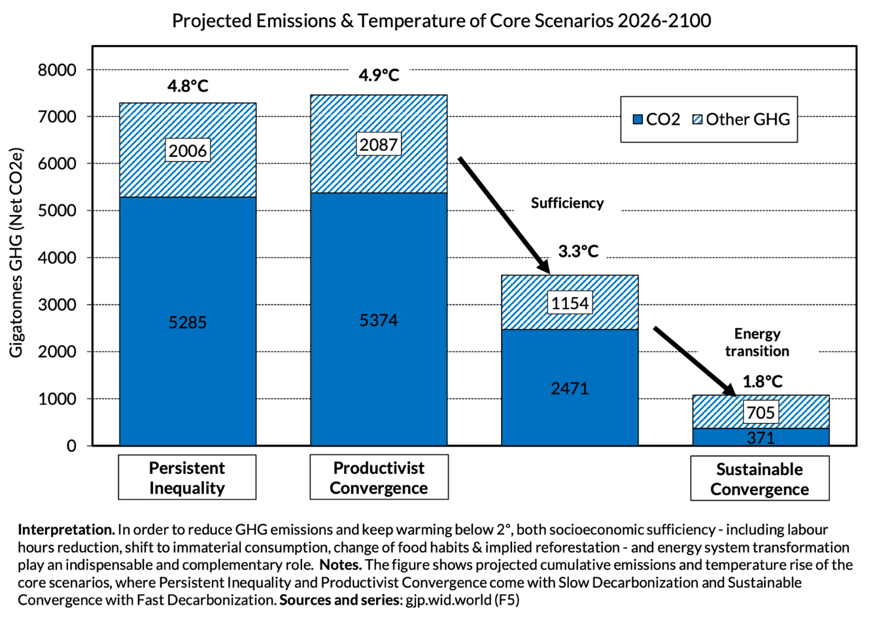
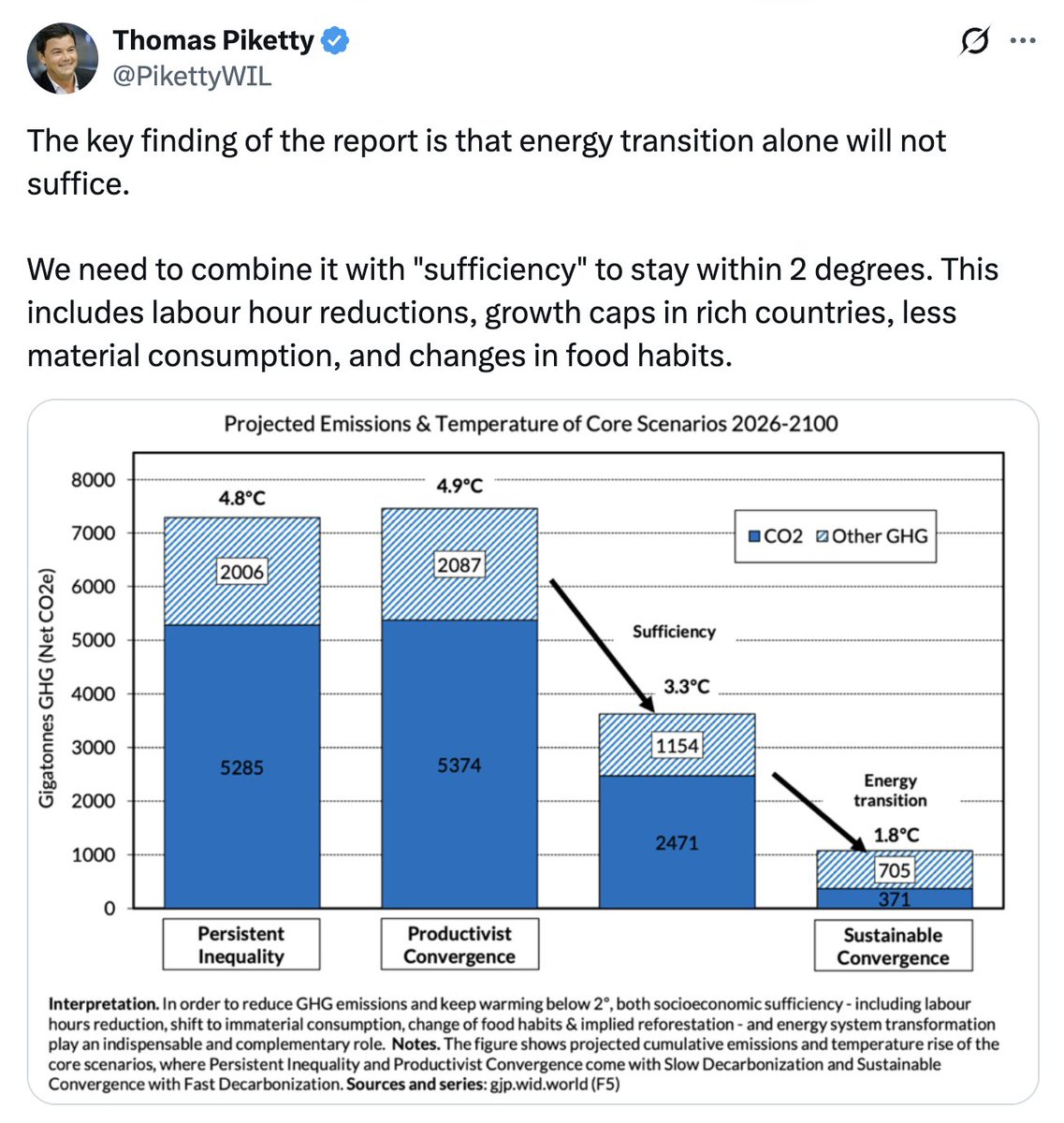
The key finding of the report is that energy transition alone will not suffice.
We need to combine it with "sufficiency" to stay within 2 degrees. This includes labour hour reductions, growth caps in rich countries, less material consumption, and changes in food habits.
Community note
This report uses a ~4.8°C baseline. In May 2026, the U.N. climate panel officially retired this scenario (RCP8.5) as "implausible." Updated projection: ~3.5°C. Sources: NYT & Washington Post, May 2026.
nytimes.com/2026/05/26/cli…
washingtonpost.com/climate-enviro…
lemonde.fr/en/environment…
26
114
823
174,850
It is truly maddening for public intellectuals to promote (impractical) ideas like this without proposing practical policy mechanisms.
Get to work or shut up.
Jun 6

Definition of lost the plot.
Do writers/believers of these big framework reports realize less rich countries, less prosperity, less technology advancement, positions society to be FAR LESS prepared to grapple with the impacts of climate change?
These changes are impossible to coordinate on a global scale - good luck policing that or restricting people from working and earning a living for themselves - and is more attuned to "let's do nothing" then actually trying to apply technology and human ingenuity at these very real societal challenges.
3
1
10
1,568
A few points on this:
- hydrocarbons are really useful, but there's nothing special about fossil hydrocarbons besides cost
- bio and e-kerosene are both fine options but FF plus DAC probs cheaper
- there are non-FF innovation options, so in the far future would be less sure
Jun 6

The amount of kerosene used for rare earth separations is one example of why I doubt we will abandon fossil hydrocarbons in my lifetime
6
371
Harris Berton retweeted

Jun 6
Definition of lost the plot.
Do writers/believers of these big framework reports realize less rich countries, less prosperity, less technology advancement, positions society to be FAR LESS prepared to grapple with the impacts of climate change?
These changes are impossible to coordinate on a global scale - good luck policing that or restricting people from working and earning a living for themselves - and is more attuned to "let's do nothing" then actually trying to apply technology and human ingenuity at these very real societal challenges.
13
12
76
9,960
Beware the underlying assumptions in reports making bold claims like "solar and batteries can provide power 24/7"
The report revolves around 95% matching, which still requires upwards of 50-60% gas capacity to peak for capacity value.
It's still 20x cleaner than a pure gas grid in aggregate, but it gas still plays an outsized firming value in battery wind solar gas system (BSWAG).
1
7
499
Harris Berton retweeted
May 31
Residential/commercial loads are not the way to increase the capacity factor of the grid, too peaky. Super important for decarb but high utilization industrial electricity use (esp if somewhat flexible) is the path to diluting the rate base in a meaningful way.
1
1
147
Harris Berton retweeted
May 26
My whole life people have been saying we need better incentive structures in energy. Still true. Hope now is the time that changes.
My whole life people have been saying our infrastructure is getting old and we can’t build big things. Still true. Hope now is the time that changes
4
5
32
1,872
May 27
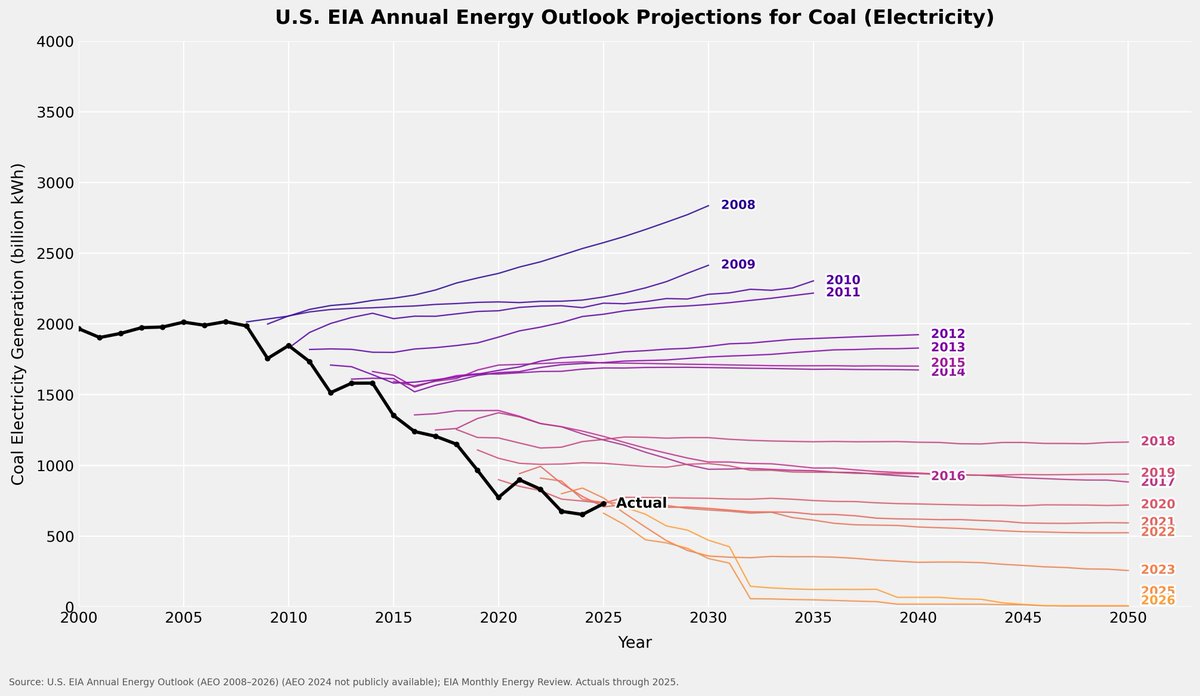
Good opportunity to consider the distinction between predictions and projections. Any energy system modeller will tell you they are not predictive tools, much as everyone would like them to be.
May 26

On The Climate Brink, I write about how hard it is to predict the future of our energy system. The failure of past predictions should make us hesitant to put too much faith in future predictions.
4
154
Harris Berton retweeted

May 18
The operations of the modern Internet uses (US):
~5% of the electricity in the US (half of air conditioning)
~1.5% of primary energy
~0.1% of evaporative water usage (0.002% of annual rainfall)
~0.01% of land
None of these numbers are zero, but the Internet is pretty useful.
5
15
87
7,917
Harris Berton retweeted

May 15
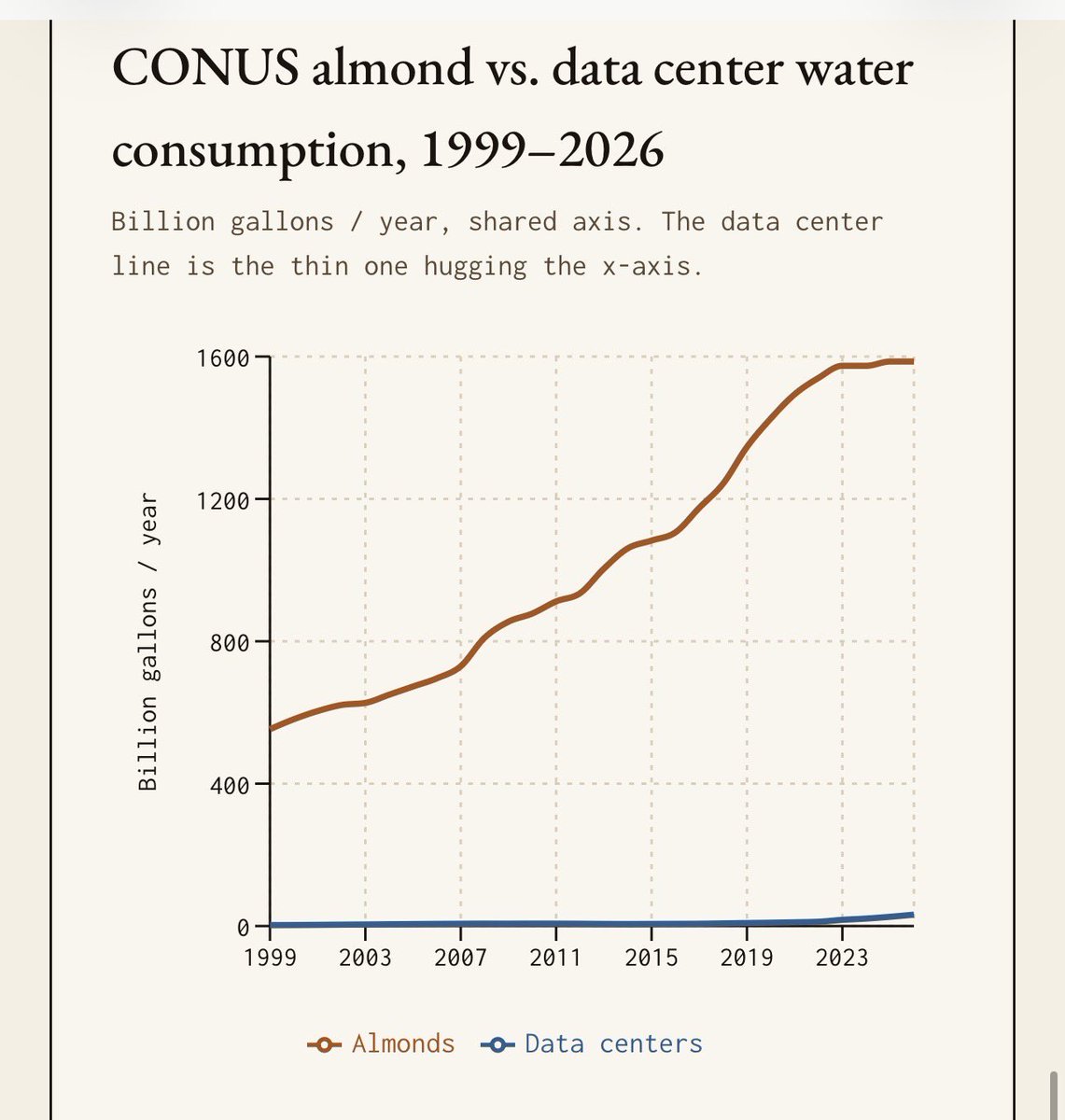
Irrigated ag frequently uses *trillions* of gallons of water.
It'd be interesting to see an analysis of if a data center is built on irrigated farmland, what the net water consumption looks like.

7
5
20
3,339
May 10
Thought experiment for the energy density/EROI folks - how much less energy dense/how much poorer an EROI would coal have needed to be/have for the industrial revolution to have been a non-starter?
2
245
May 10
Thinking about this more - hourly matching is almost more important as an *education* piece than getting it 100%. Buying green energy is not the same as CDR offsets - you can't just throw money at it. That highlights an important decarb reality, but it's not critical short-run.
This is tbf a rock solid milestone. Net zero, but not true zero, purely voluntary is strong. You’re in the 60-70% range of true zero, depending on wind/solar split.
Again, 100% hourly matching has extreme diminishing marginal returns in the final 10% that likely are cheaper to handle with removals (esp final 3). This is true for companies and the grid as a whole.
Clean firm is gonna start rolling early 2030s at the earliest. We are missing key pieces, which is why corporate engagement in deployment led innovation is an important part of the puzzle
2
2
3
569
Harris Berton retweeted
This is tbf a rock solid milestone. Net zero, but not true zero, purely voluntary is strong. You’re in the 60-70% range of true zero, depending on wind/solar split.
Again, 100% hourly matching has extreme diminishing marginal returns in the final 10% that likely are cheaper to handle with removals (esp final 3). This is true for companies and the grid as a whole.
Clean firm is gonna start rolling early 2030s at the earliest. We are missing key pieces, which is why corporate engagement in deployment led innovation is an important part of the puzzle

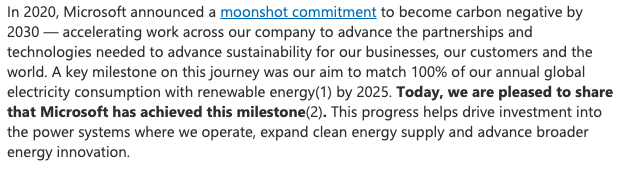
2. Microsoft recently celebrated achieving a goal of 100% renewable energy (annually matched) by 2025. It did not mention the 2030 goal in the announcement. blogs.microsoft.com/blog/202…
2
2
12
3,601