
Bitcoin advocate. Cypherpunk. Liberty maximalist. Ex-Ukrainian. Enemy of fiat money, fiat food, fiat education.
Joined April 2007
- Tweets 11,047
- Following 1,267
- Followers 1,301
- Likes 12,932
1,940 Photos and videos











Pinned Tweet

23 Jan 2024
It is a crime that you need to have an opinion on Bitcoin.
If the government did not steal your savings through inflation, you could focus on your career, let your savings grow, and ignore the pet projects of a cult of cypherpunks.
5
27
8,316
David Veksler ₿🔑👌 retweeted

19h
Elon could literally solve homelessness tomorrow.
All he needs to do is sell his stake in the companies he created from the ground up, crashing the price and evaporating his wealth as well as the savings and pensions of workers globally.. handing the control of these companies over to short term profit interests and preventing any long term vision from being enacted..
THEN take whatever money that remains which will be nowhere near 1tn and give it to homeless charities who have never solved homelessness anywhere on earth because they’re financially incentivised to do the opposite.
Bam - homelessness solved.
The reason he doesn’t do any of this is because he’s evil.
614
1,575
12,561
281,330
Jun 13
For everyone still trapped in an office, performing productivity for a manager who walks the floor:
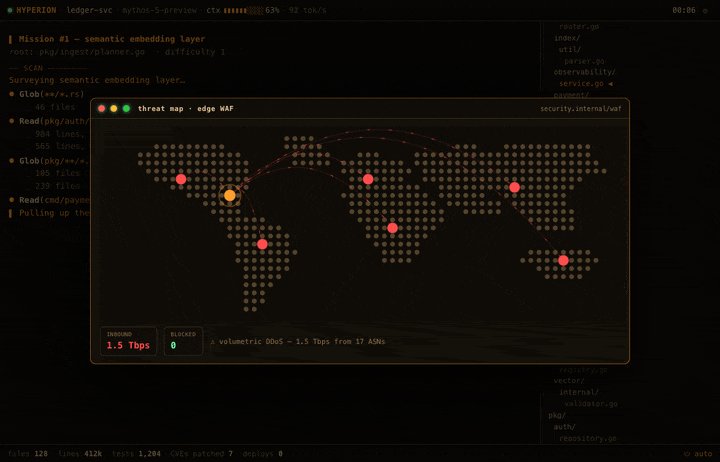
The "it's compiling" excuse is dead — nobody compiles anymore. So I built its replacement.
Potemkin Pipeline is a single-file browser app that performs the full theater of an autonomous AI agent at work: streaming tool calls, fixing bugs it invented seconds earlier, shipping to prod, surviving the occasional DDoS through sheer vibes. It writes zero code. Every "172× faster" is a confident lie from a seeded PRNG.
It's a Potemkin village for your terminal — flawless from across the room, fatal up close. So when your manager appears, you gesture at the cascading green checkmarks and say "the agent's still working."
Not a lie. Just theater.
👉 davidveksler.github.io/potem…
contribute @ github.com/DavidVeksler/pote…
3
45
David Veksler ₿🔑👌 retweeted

Jun 12
You could give “the typical American” 11 MILLION years and they still would not create PayPal, Tesla, SpaceX, OpenAI, xAI, Neuralink, Boring Company, Ad Astra, all while single-handedly saving free speech for all mankind while lifting humanity out of the grip of Big Tech tyranny.
Jun 12

Elon Musk just became the world's first trillionaire.
The typical American household would have to work more than 11 MILLION years to make Elon Musk's level of wealth.
We need a wealth tax.
534
2,345
14,338
289,297
Jun 13
“There are only two real jobs: write code and talk to users. Everything else (conferences, press, VC coffees, corp dev calls) is fake work.”

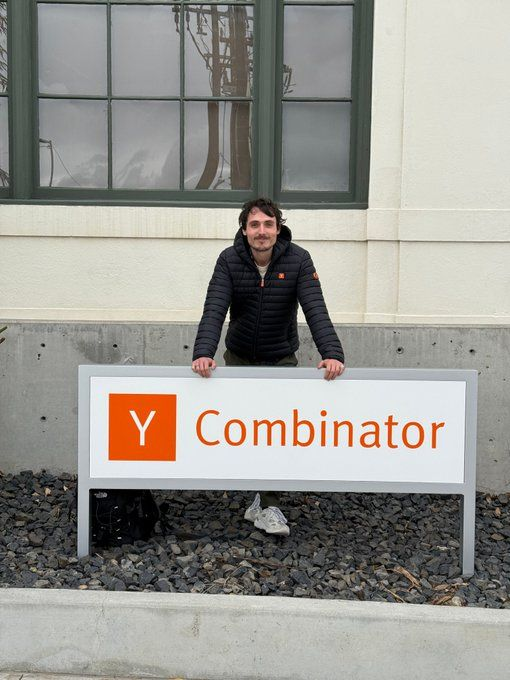
We went from 0 to 2,200 paying customers in under a year by following @ycombinator's 15 rules:
1/ Do things that don't scale. Get your first 10 customers by hand.
2/ Launch now, not when it's "ready". A mediocre product in front of real users teaches you more in a week than 6 months of polishing in the dark.
3/ Charge from day one. If nobody will pay, you don't have a startup, you have a hobby.
4/ Talk to users every single day. The roadmap you need is sitting in your customers' heads, and they'll hand it to you for free
5/ Always hunt the 90/10 solution. For almost any feature there's a way to capture 90% of the value with 10% of the effort.
6/ There are only two real jobs: write code and talk to users. Everything else (conferences, press, VC coffees, corp dev calls) is fake work.
7/ You pick your customers as much as they pick you. 10 users who love you beat 1,000 who kind of like you.
8/ Growth is an output, not a strategy. Grow before product market fit and all you're buying is churn.
9/ Do less, really well. Pick one or two metrics and judge every task against them.
10/ Know if you're default alive. Paul Graham's question: on current growth and current burn, do you reach profitability before the money runs out?
11/ Don't hire until it hurts. Headcount is not progress, it's burn. Every great startup was embarrassingly small for embarrassingly long.
12/ Momentum is the only real moat in year one. Ship something every week, even something tiny.
13/ Every great startup is badly broken at some point. The game isn't avoiding fires, it's how fast you put them out. Again. And again
14/ Ignore your competitors. Startups die of suicide, not murder. In year one, the only company that can kill yours is your own
15/ Startups rarely die from running out of money. They die because the founders fall out. Brutal honesty with your cofounder is the cheapest insurance you'll ever buy
Good luck !
1
41
David Veksler ₿🔑👌 retweeted

Jun 12
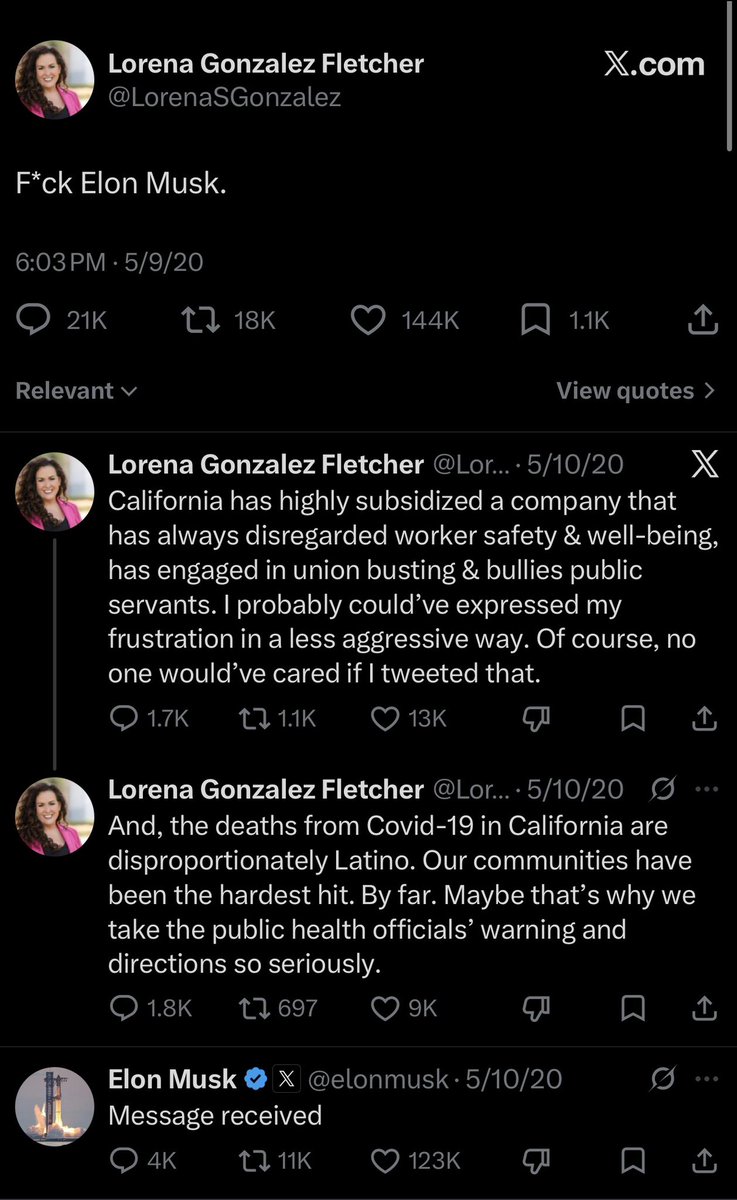
This aged horrifically.
California politicians dunked on Elon and helped drive out SpaceX, Tesla jobs, engineers, suppliers, and the tax base.
Now SpaceX is headed for a $1.75T IPO.
“Message received” may be the most expensive political own-goal in California history.
240
1,255
10,724
376,568
Jun 12
For three days running, I logged into Claude in the morning with my quota at 100% used. My 7 AM Cowork task was failing because there was nothing left. No overnight chats. No visible Claude Code sessions. My account uses Google login with hardware 2FA, so unauthorized access wasn't the explanation — but I had no idea what was consuming the tokens.
Claude's personal account tooling doesn't give you much to work with. No OTel, no per-source attribution. I couldn't tell if it was chat, Claude Code, or Cowork.
Turned out: Claude Code had set up a Windows Task Scheduler job to process data. Running at 6 AM every morning, spawning subagents, burning through my entire Claude Max allocation before I was awake.
Three things I'd do differently:
- Use Cowork for scheduled tasks. Task Scheduler jobs are invisible to Claude's usage dashboard. Cowork gives you centralized visibility.
- Specify the model explicitly when running Claude Code programmatically. Without it, the CLI defaults to your account's default model. Mine was set to Fable, which counts at 2x the Opus token rate — so every subagent call cost double what I'd expect from a normal Opus session.
- For debugging: pull the active sessions list from claude.ai settings, then run /usage inside Claude Code. Not perfect, but it'll tell you which device and session consumed the tokens.
29


David Veksler ₿🔑👌 retweeted

Jun 9
you need to be promptmaxxing. sorry, you need to stop prompting. you need to write loops. your loops need to be agentic. your agents need to be prompting your loops. you need recursive loops within your agentic workflows. you need to design while loops that constantly generate new agentic workflows from first principles. you need to migrate from human-first tokenmaxxing to agent-first loopmaxxing. you need to be a loop-pilled tokenmaxxed agentcore vibe coder. you are now in your loop era. be in your loop era. be loopy
51
49
567
43,627
David Veksler ₿🔑👌 retweeted

Jun 9
"HIPAA was a mistake". Yes, and this is true for almost all of the "precautionary principle" regulations, from GMO restrictions in Europe to AI regulations across US states.
Rather than imagining all the things that might go wrong and seeking to prevent them, let the marketplace work and if and when things actually do go wrong, regulate *then* based on real-world harms not fantasies.

I wrote about the insanity of "medical privacy."
It's hard now to do research that could cure major diseases because we are too worried about the handling of people's personal data, which they themselves appear not to care about.
HIPAA was a mistake. richardhanania.com/p/privacy…
21
34
375
52,267
David Veksler ₿🔑👌 retweeted

Jun 9
Claude Code Mythos and Fable is INSANE when you use ultracode effort. You can become a millionaire overnight.
Here's how 👇
step 1: Start using it as a billionaire

96
136
3,851
379,740
Jun 9
x.AI should incorporate the first prototype satellite into Grok. Imagine there is a .00001% chance of any given chat being run on a satellite in orbit.
Grok could add an indicator ("this chat is in space!") to the UX and it would go viral.
Jun 8

SpaceX has just officially unveiled its AI1 satellite, the first generation of its AI satellite.
Overall Specs:
• 150 kW peak compute payload
• 120 kW average compute payload
• 70 kW per ton
• Compute provider interchangeable
Dimensions:
• Wingspan: 70 meters
• Deployed height: 20 meters
Thermal System:
• 110 m² deployable liquid radiator
• Redundant pumping loops
• Integrated micrometeoroid shielding
• Deployable liquid radiators
Solar Power System:
• 150 kW solar array
• 250 W/m²
• SpaceX-manufactured solar technology from Bastrop, Texas
Architecture:
• Centralized compute module
• Large deployable solar arrays
• Deployable liquid-radiator thermal management system
• AI-focused compute satellite design ("AI1 satellite")
Elon: "The AI satellite is much simpler than a Starlink satellite. The AI satellite is essentially a lot of solar cells, you still need some laser links, but you don't have all of the super complex antennas that you have on a Starlink satellite. The easier one to design for is the AI satellite. It's bigger. A lot of this is technology we've already made with the Starlink V3 satellites."
36
David Veksler ₿🔑👌 retweeted

Jun 8
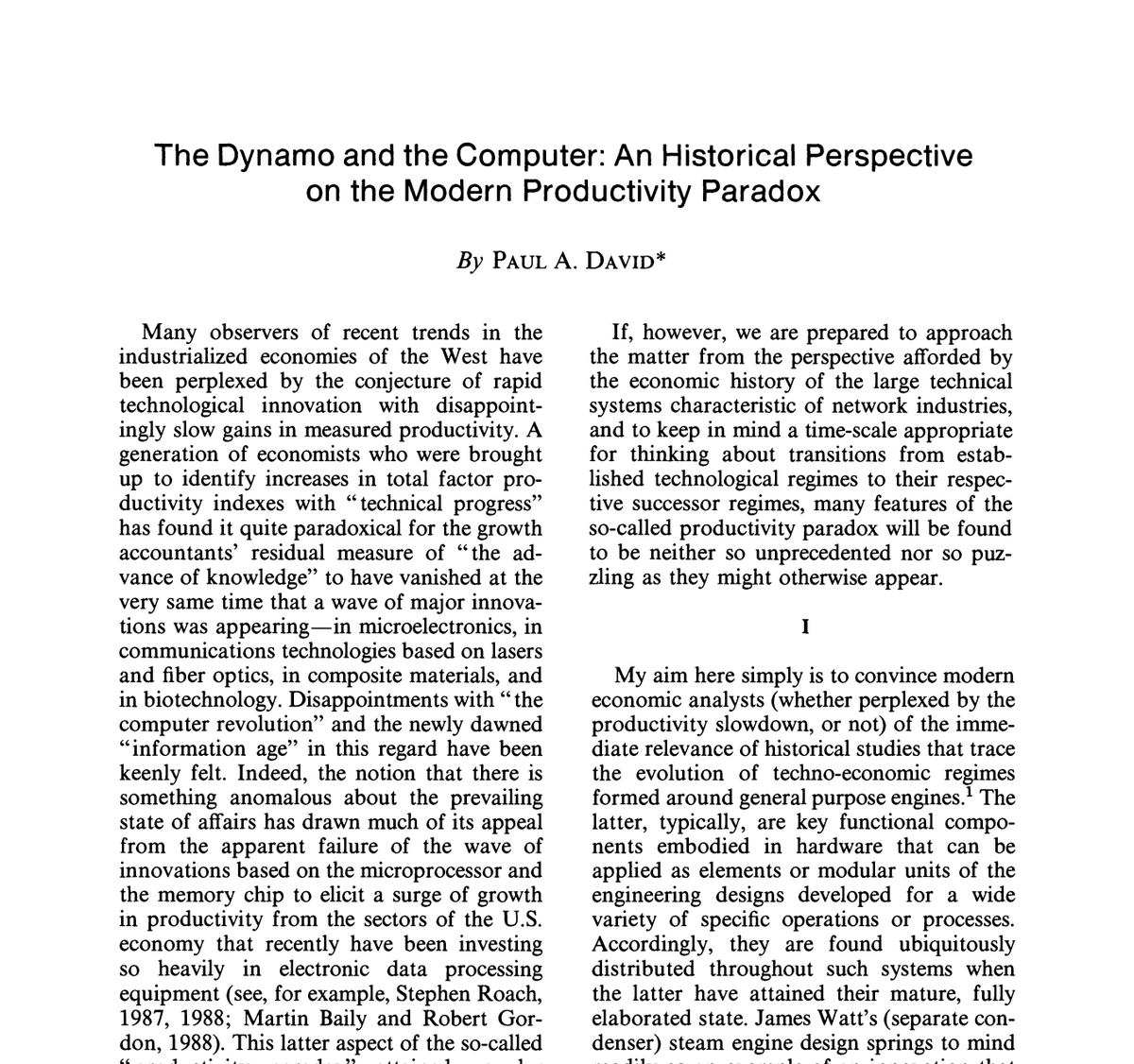
If you've adopted AI at your company but haven't seen any tangible results, read this 1990 article: "The Dynamo and the Computer" by Paul David.
When electricity first arrived, factories that "adopted" it barely got faster. They just swapped the steam engine for an electric one and ran everything else exactly as before: same machine layout, same workflow, same management. Electricity in, no real gains out.
The most common mistake with any new technology is to drop it into the old organization and then declare the transformation done.
The real leap came decades later, when each machine got its own small motor. Suddenly machines no longer had to be lined up around one central drive shaft. They could be rearranged around the actual flow of work.
The productivity gains didn't come from electricity. They came from REDESIGNING THE ENTIRE FACTORY around it.
AI is the same. Bolting it onto your existing process gets you a faster steam engine. The payoff comes when you redesign the work itself.
(link to paper in comments)
146
753
4,232
286,562
Jun 8
Humans did not evolve a direct “replacement fertility” instinct. We evolved local drives that produced fertility under ancestral constraints. Modernity removes the constraints, scrambles the incentives, and turns reproduction into an explicit choice. Once that happens, many individually rational choices sum to below-replacement fertility.
Jun 7

No matter what your theory about birth rate collapse is, there’s some data point that disproves it. Japan didn’t have the pill when fertility collapsed. There are highly patriarchal countries where fertility is collapsing. It’s collapsing in countries that are still poor. It’s collapsing in places with more generous social support for families. It’s almost like a psychic alien just decided to phase humans out.
1
66
Jun 8
I don't get the truck thing. Needed to move a couch, rented one from Home Depot for $25. Then I went back to my SUV: eight seats, covered cargo, better mileage, actually comfortable. People finance $60k to optimize for the three days a year they haul something a cheap rental covers.
1
1
49
Jun 8
Proposal: owner can evict anyone from their property at any time for any reason.
However, first they must post a bond to cover damages.
If the tenant doesn't prove unjust eviction within 60 days, the owner gets their money back, otherwise the owner pays for breach of contract damages.
May 13

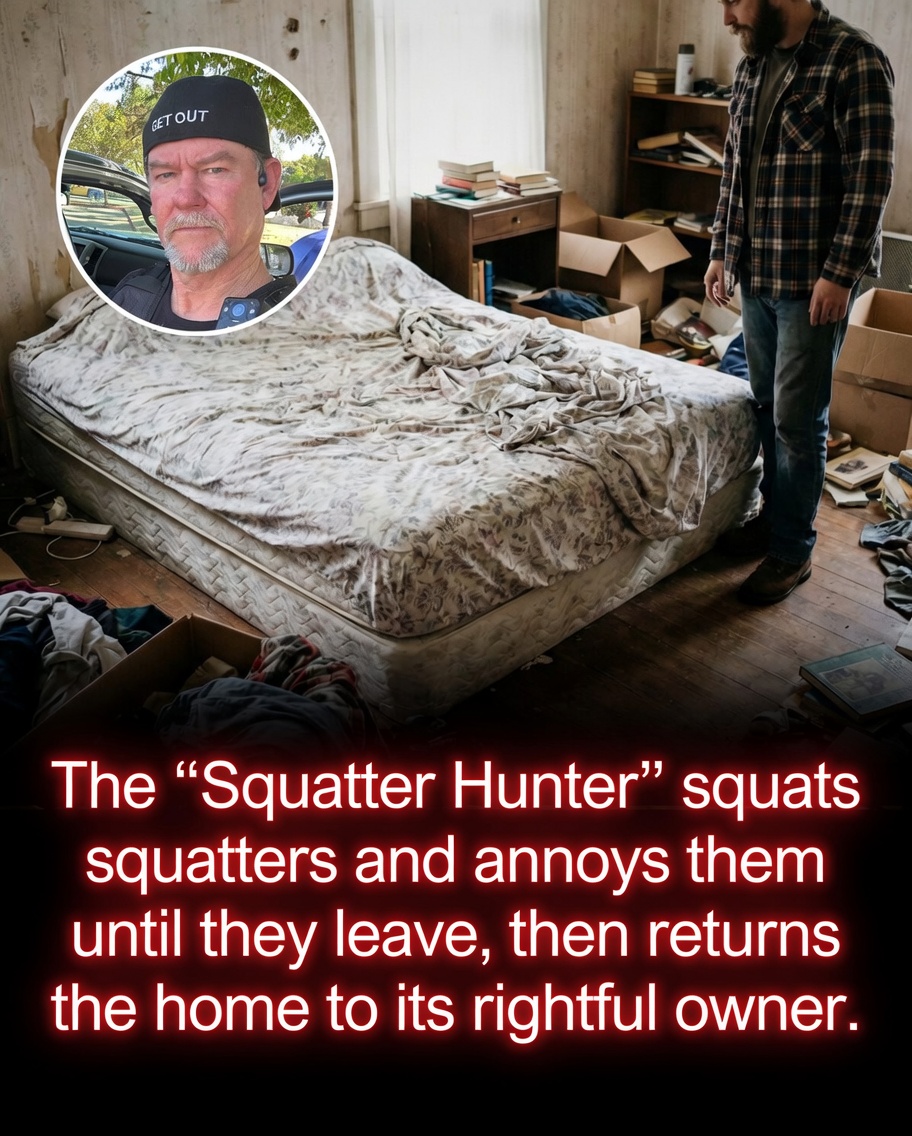
Meet the “Squatter Hunter.”
His real name is Flash Shelton, and he’s gained national attention for an unconventional, and highly effective, method of dealing with squatters: he moves into the occupied homes himself and makes the squatters’ lives so miserable that they eventually leave.
It all started when squatters took over his mother’s house in Northern California. Tired of waiting for the slow legal eviction process, Shelton decided to move in and turn the tables. His strategy worked.
To protect himself legally, property owners sign a lease granting him the right to occupy the home. Once inside, he uses simple but relentless tactics, blasting music, taking over shared spaces, eating their food, and generally disrupting their daily comfort. He also wears tactical gear and carries non-lethal self-defense tools like pepper spray and a stun gun for protection.
Thanks to his bold approach, Shelton has successfully helped return multiple properties to their rightful owners.
50

Jeff Bezos reveals why compromise is one of the worst ways to resolve a disagreement
"An example of a really bad way of coming to agreement is compromise. If I say the ceiling is 11 feet and you say 12 feet, we say let's call it 11 and a half. That's compromise"
"The advantage of compromise is it's low energy. But it doesn't lead to truth"
"Another really bad resolution mechanism is who's more stubborn. Two executives disagree, they have a war of attrition, and whichever one gets exhausted first capitulates. You haven't arrived at truth, and this is very demoralizing"
"Escalation is better than a war of attrition. Escalate to your boss and say, we can't agree, we like each other, we're respectful, but we strongly disagree, we need you to make a decision"
"Exhausting the other person is not truth seeking. Compromise is not truth seeking"
536
1,099
12,943
2,406,924
David Veksler ₿🔑👌 retweeted

Even Arab leaders admit it.
Everyone is sharing the Bill Clinton clip where he describes how Yasser Arafat rejected a generous peace offer at Camp David that would have given the Palestinians a state on 96 percent of the West Bank, land swaps, and a capital in East Jerusalem. Clinton says Arafat lied to him and that the Palestinian leadership never actually wanted a two-state solution. They wanted to destroy Israel. It’s a video often shared by people like @VividProwess, and it’s an important one for people to see.
Of course, critics immediately dismiss it. They claim Clinton is biased or he’s pro-Israel. They’ll tell you that you cannot trust the American perspective.
Ok, so let us set that aside.
Now watch this.
In this powerful interview, former Egyptian President Hosni Mubarak, a major Arab leader who was directly involved in negotiations, says exactly the same thing from the Arab side. He talks about the Mena House Conference in Cairo as well as the Camp David negotiations of 1978. All failed because of the Palestinians repeatedly rejecting any offer. The Oslo accords were signed but because Hamas and the Palestinian Islamic Jihad were not involved, they derailed the accords and any chance for peace by initiating 4 years of terrorist suicide attacks in Israel. Then came the second Camp David negotiations in 2000 which Arafat agreed to, then rejected and instead initiated the Second Intifada.
Mubarak explains how the Palestinians refused to even participate in the Mena House conference of 1977. He describes repeated opportunities they were given, including a detailed document that called for Israeli withdrawal from the Samaria, Judea and Gaza, security arrangements during a transitional period, and other major concessions. The Israelis were willing to negotiate on difficult issues like who would control security. The Palestinians, according to Mubarak, kept saying no and wasting chance after chance.
He speaks with clear frustration about how for decades the Palestinian side has rejected peace initiatives and realistic compromises.
The video further shows footage from the PLO representative in 1977, as well as old footage of Egyptian president Sadat who was involved in the Mena House and first Camp David negotiations of 1978.
This perhaps is far more impactful than Clinton’s account because it is not a Western or Israeli voice. It is prominent Arab leaders who lived the negotiations, who represented the broader Arab world, and who had zero incentive to defend Israel.
When leaders from both sides of the table describe the same pattern of Palestinian rejectionism and violence, it becomes much harder to dismiss as bias.
The pattern is clear across decades and across different voices… generous offers, repeated refusals, and continued demands for everything while giving nothing in return.
This is not ancient history. It is the core reason the conflict continues today.
If you value the truth, please share.
279
6,458
14,617
546,270
Jun 6
RT @levelsio: I think the challenge is that everyone can now build apps
But
1) almost nobody has distribution (like an audience), or
2)…
427
Jun 5
For a decade, Bitcoin was the cleanest public-market bet on a digital future. Internet-native money, an exit from fiat, fixed supply against open-ended monetary expansion, technological inevitability priced into one liquid asset. If you wanted asymmetric exposure to where technology was headed, Bitcoin was the proxy you could actually buy.
AI took that role. The marginal serious dollar now has better targets: chips, compute, energy, data centers, model labs, and the incumbents repricing around all of it. Public investors get there through Nvidia, Microsoft, TSMC, Broadcom, and the power and data-center buildout. Private capital chases the labs directly. Bitcoin still has liquidity, brand, and ETF access. It is no longer the default vehicle for that bet.
That reshapes its market structure. Frontier-risk institutional capital flows toward productivity and compute scarcity, where upside ties to cash flows and productive output. Bitcoin offers neither. Retail speculation doesn't disappear — it intensifies. People locked out of private AI upside keep chasing convexity, mostly in altcoins, because that's where the lottery tickets are. But retail convexity-chasing is not a deep institutional bull market. Altcoin rallies start to look like artifacts of liquidity cycles rather than the center of capital formation.
The bear case usually stops there and calls Bitcoin demoted. It misreads which thesis is dying. AI displaces the narrative thesis — Bitcoin as the flagship speculative bet on the future. That thesis is probably done. But it was never the durable one. The durable case was always monetary: neutral reserve collateral, censorship-resistant settlement, a hedge against sovereign debt and debasement, eventually a bearer asset an agent economy might need. None of that depends on Bitcoin winning the future-tech narrative. The narrative was a tailwind, not the foundation.
So Bitcoin isn't dead. It's demoted from owning the future to a narrower, harder job: proving it's money. That's a worse story and a cleaner test. The speculative capital that came for technological inevitability is leaving for AI, and good — it was never the demand that mattered. What's left has to believe Bitcoin is money. We're about to find out how much of it ever did.
2
73
Jun 5
A lot of secular parents think they're teaching their kids science when they feed them dinosaur trivia. Mostly they're reproducing the intellectual structure of creationism with the Bible removed.
Here is the tyrannosaur, magnificent in its design. Here is the triceratops, magnificent in its design. Here is the stegosaurus, magnificent in its design. Memorize the names. Admire the features. Buy the plastic figures.
What's missing is the unifying idea of biology: evolution.
The problem isn't that dinosaurs are boring or unscientific. They're fascinating, paleontology is real science, and fossils are real evidence. The problem is that most child-facing dinosaur content doesn't teach kids to think biologically. It teaches them to collect facts about spectacular creatures. This one had horns. This one had armor. This one had a club tail. This one would win in a fight. That's not Darwin. That's a bestiary.
And dinosaurs are uniquely suited to the bestiary treatment, because a child can't observe them. He can't watch a velociraptor hunt, compare variation across a population of stegosaurs, or test a hypothesis about sauropod behavior. He receives authoritative reconstructions from books, toys, museums, and movies, and takes them on faith. The mode of engagement is admiration of received marvels. Which is exactly the creationist mode.
Real biology, by contrast, is everywhere and observable. The pigeons on the sidewalk are living dinosaurs — you can watch them eat, fight, mate, and raise young. The ants on the patio run a society you can disrupt and study. The dog asleep on the floor is a case study in domestication, artificial selection, inheritance, and adaptation to human environments. The weeds in the driveway are competition and dispersal in real time. None of this is a consolation prize for not having a T. rex. It's the living evidence dinosaurs can only point at.
So the secular parent proudly rejects creationism, then teaches life as a catalog of separate amazing creatures with special features to memorize and admire. That's the creationist habit of mind, stripped of God.
Dinosaurs can be a bridge to the real thing — common descent, adaptation, tradeoffs, ecosystems, evidence, uncertainty. But the bridge usually goes uncrossed. The kid gets the names, the sizes, the weapons, the rankings, and the merchandise, and never gets the one idea that makes any of it make sense.
The better starting point isn't "look at these extinct monsters." It's "look at the pigeon on the windowsill. It's a dinosaur, and unlike the ones in your book, you can actually watch and learn from it.
1
94