
Curator, Recruiting Brainfood
Joined May 2009
- Tweets 84,951
- Following 3,001
- Followers 13,821
- Likes 40,058
4,618 Photos and videos




Recruiting Brainfood - Issue 505
recruitingbrainfood.substack…
Europe 2031, export ban of Fable 5 for all non-Americans, shift from Talent Acquisition to Talent, job board for staffing agency roles, startup guide to People Ops & Nature's human migration tracker..
2
4
238
Hung Lee retweeted

Seven years building @Remote and most of what I've learned comes down to people:
1. I'd rather hire someone obsessed than someone gifted. I've lost count of the brilliant people I've met who never shipped anything. Obsession gets you back up when you fail and keeps you learning long after most people quit. It beats talent every time.
2. Hire at the intersection: The best teams come from people who care deeply and people who act decisively. Find both in the same person.
3. We dropped "years of experience" as a requirement for jobs at Remote. I value what you can do far more than how long you've done it. A lot of the best people I ever hired had no experience in the role and won on execution.
4. The best hires never need someone to tell them what to do. They spot what's broken before others notice, step in without waiting for permission, and stay aligned with the mission. These are the people who change the trajectory of a company. As a leader, you don't manage these people. You clear the path so they can run.
5. You're more likely to notice bad managers than great ones. The best managers prevent fires. You rarely notice them because things don't burn.
6. Scaling a company is more about growing yourself than growing the team. The hardest part of going from CTO to President was learning to trust others with the things I used to control directly. Evolve. Your comfort zone becomes your company's ceiling if you don't push beyond it.
7. I've never been a fan of artificial deadlines and structured sprints. Parkinson's Law reveals why: Tasks expand to fill the time you give them. Give yourself two weeks? It'll take two weeks. Two days? You'll surprise yourself. We chose intensity over arbitrary timelines.
Getting the people right makes the rest easier.
Seven years in, it still feels like day one!
1
1
15
713
Hung Lee retweeted

10h
Globalisation is dead.
Why?
Because on a regular Tuesday, Anthropic decided that people in India and dozens of other countries could not access its most advanced AI models. No warning. No negotiation. They just closed the door. And there was nothing anyone could do about it.
Sridhar Vembu co-founder of Zoho, who has been building world-class software out of Chennai for thirty years, said this out loud. He called it a wake up call. That India cannot keep building its future on tools that another country can switch off whenever it decides its national interest comes first.
He is right. But to understand why, you have to go back a little.
Globalisation was a genuine idea. Open your borders, trade freely, let technology and money move without friction, and everyone gets richer together. And for a while it worked. Indian software engineers built careers serving companies in forty countries. A startup in Pune could use the same tools as one in Palo Alto. That was real. Not an illusion.
But Yuval Noah Harari had been pointing out a problem underneath all of this. He said we built a global economy but never built global politics to go with it. Governments stayed national. They answered to their own voters, protected their own industries. And for as long as everyone was benefiting, that tension stayed manageable.
It is not manageable anymore.
America restricted chips to China. China restricted rare earth minerals back. Europe built walls around its data. And now a private company in San Francisco decided its most powerful AI is too strategically important to share freely. Harari called technology the fourth frontier after land, air and sea. And in that kind of competition, you do not hand your best weapons to everyone.
The people who push back will say India has made progress. That is fair. We have researchers doing foundational AI work at every major lab in the world. But here is the problem. That researcher from Mumbai joins OpenAI in San Francisco. The capability he builds stays there. India gets the pride of producing him. America gets the benefit of keeping him.
And when Anthropic closes access, he cannot help the hospital in Nagpur using AI for diagnostics. Cannot help the small business owner in Coimbatore who had finally found a tool that saved him three hours a day. These are not hypothetical people. They exist. And they woke up one morning to find that a decision made in California had quietly taken something away from them.
Harari says humanity must either de-globalise the economy or globalise the politics. What we are watching right now is neither. Just every country quietly starting to build walls and call it strategy.
A country of 1.4 billion people should not be in a position where one boardroom decision determines what tools its doctors and teachers can use.
Jun 13

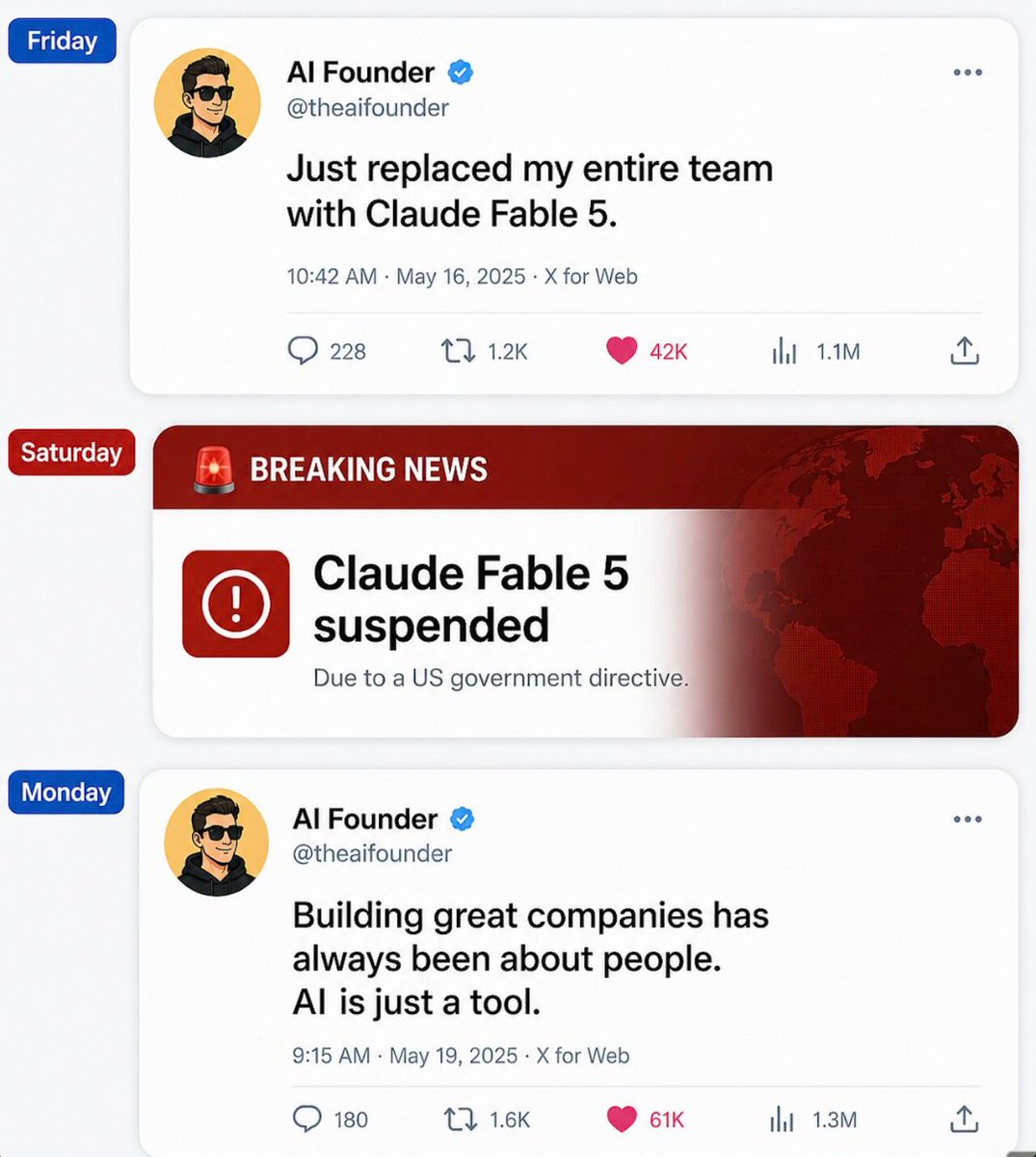
The US government, citing national security authorities, has issued an export control directive to suspend all access to Fable 5 and Mythos 5 by any foreign national, whether inside or outside the United States, including foreign national Anthropic employees.
The net effect of this order is that we must abruptly disable Fable 5 and Mythos 5 for all our customers to ensure compliance.
Access to all other Claude models is not affected.
We apologize for this disruption to our customers. We believe this is a misunderstanding and are working to restore access as soon as possible.
Read our full statement: anthropic.com/news/fable-myt…
2
1
6
708
Hung Lee retweeted

this is f*cking gold
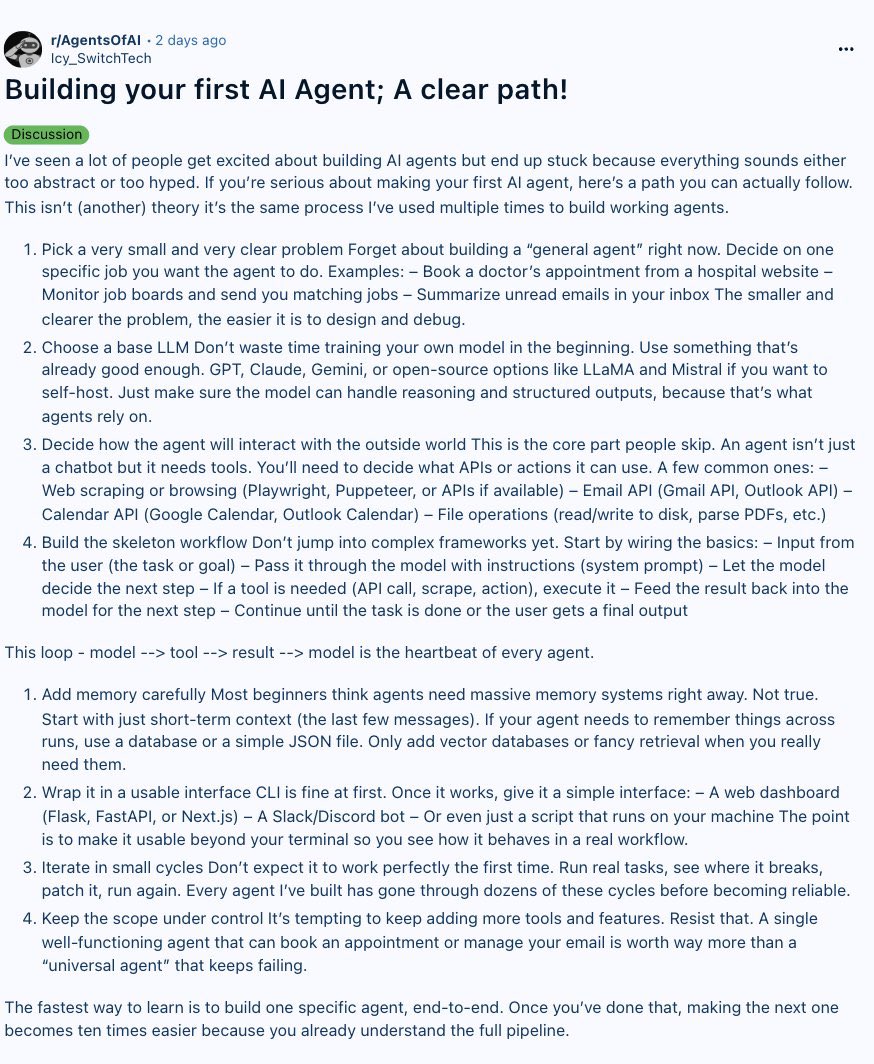
How to build your first AI agent (Full guide)
if I had this a year ago, I would've shipped my first agent in a day instead of 2 weeks
in the right hands, this changes everything:

39
274
2,066
340,857
Hung Lee retweeted

Anthropic has been on a downwards spiral lately...
- Quietly downgrading Claude Opus.
- Overhyping Mythos as too dangerously advanced to release.
- Covertly worsening Claude for frontier AI researchers.
- Barring Fable from researchers in biology or cybersecurity.
- The US Government now banning Fable for non-US citizens.
How to destroy trust and brand image 101. This will possibly be a case study in business schools for many decades - about what not to do.
19
15
104
5,871
Hung Lee retweeted

Okay, this is seriously cool.
A team from @GoogleDeepMind, including DeepMind Cofounder Shane Legg, published a paper "From AGI to ASI".
In the paper, they include instructions for an AI agent to read along with you.
You can open the paper in Codex's in-app browser and have GPT-5.5 read it with you and explain all the concepts.
This is the future. AI agents will be part of the target audience, and help us to understand anything we want.
21
33
344
39,953
Hung Lee retweeted

1,678
3,577
18,967
27,197,841
Hung Lee retweeted

🚨💣 EXCLUSIVE: Real Madrid reach verbal agreement to sign Marc Cucurella from Chelsea, HERE WE GO!
Verbal agreement in place between all parties, player too — he’s the left back wanted by Mourinho. Details to follow.
Cucurella leaves #CFC and joins Madrid after World Cup. ⚪️🇪🇸

27,452
33,925
313,344
49,949,315
Hung Lee retweeted

Jun 13
Fable is banned. Long live local AI.
Full episode breaking down exactly how to get good at local models. the runtime, the hardware, quantization, connecting it to Hermes agent and local AI startup ideas (25 minutes)
Jun 13

The takeaway from Fable 5 being BANNED by the government: GET GOOD AT LOCAL MODELS SO YOU HAVE 100% CONTROL.
My entire weekend was going to be building my craziest ideas with Fable 5. That's now cancelled.
So instead of building with Fable this weekend, I've decided I'll go deep on local models:
1. Start with the runtime. Download Ollama or LM Studio first. This is the thing that actually runs models on your machine.
2. Match the model to your hardware. A model's size is measured in billions of parameters (7B, 32B, 70B). Bigger is smarter but needs more memory. Rule of thumb: a 7B model runs on almost any laptop, a 32B needs a good Mac with 32GB RAM, a 70B needs serious hardware like a DGX Spark or a maxed-out Mac Studio.
3. Know which model for which job. Qwen 3 is the best all-around choice for most tasks. DeepSeek for reasoning and coding. Gemma 4 when you need something tiny that runs on a phone. Llama when you want the biggest community and the most fine-tunes.
4. Quantization. You can shrink a model to run on weaker hardware with barely any quality loss. Look for versions labeled Q4 or Q5. This is how a model that "needs" a server runs on your laptop. Learning this one concept changes everything.
5. Connect it to your agent. Point Hermes or your agent stack at a local model.
6. Context window is your real constraint locally. Cloud models give you huge context for free. Local models make you pay for it in memory. A bigger context window eats RAM fast. Keep your sessions tight and your prompts lean or your machine chokes.
7. Learn to give local models tools. A smaller local model with web search, file access, and code execution beats a giant model with none. The capability gap closes fast when you wire up the right tools. The model is the engine but the tools are the wheels.
8. Fine-tuning is more accessible than you think. You don't need this on day one, but know it exists. You can take an open model and train it on your own data so it gets good at your specific domain.
I'll probably do a breakdown at some point on this @startupideaspod if people are into it.
The lesson from this ban is basically don't build your entire workflow on something that can disappear with a single letter. Own part of your stack. Local models are insurance.
It reminds me when people realized they don't own social media accounts. And then you saw people build email lists etc.
I remember running a startup and my biggest traffic source was organic FB. All of a sudden, algo changed, and I lost 99% of my traffic.
Same sorta moment (but bigger) for AI.
This is a wake up call.
71
123
971
123,862
Hung Lee retweeted

The most humbling part for Europe about the Fable/Mythos ban is that it isn't even about us
We are collateral damage in Trump's campaign against Anthropic and China, but that's enough to feel the full extent of our dependence
When Elephants fight, it's the grass that suffers
12
24
160
5,088
Hung Lee retweeted

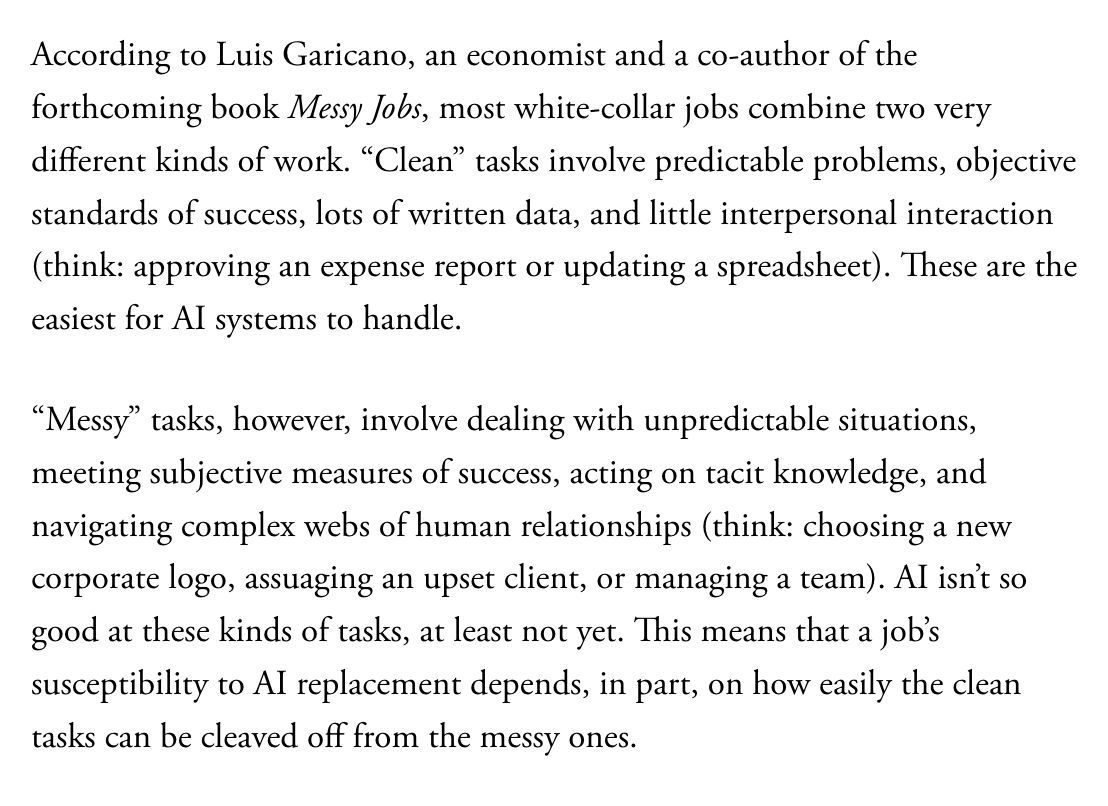
This is an interesting way to think about AI and jobs. The more intertwined your routine and discretionary tasks are, the more resilient you likely are to it. theatlantic.com/economy/2026…
3
21
92
8,914

London is ground zero for the AI jobs shift, as listings for roles in the Square Mile see a startling drop-off bloomberg.com/news/articles/…
20
46
197
66,813
Hung Lee retweeted

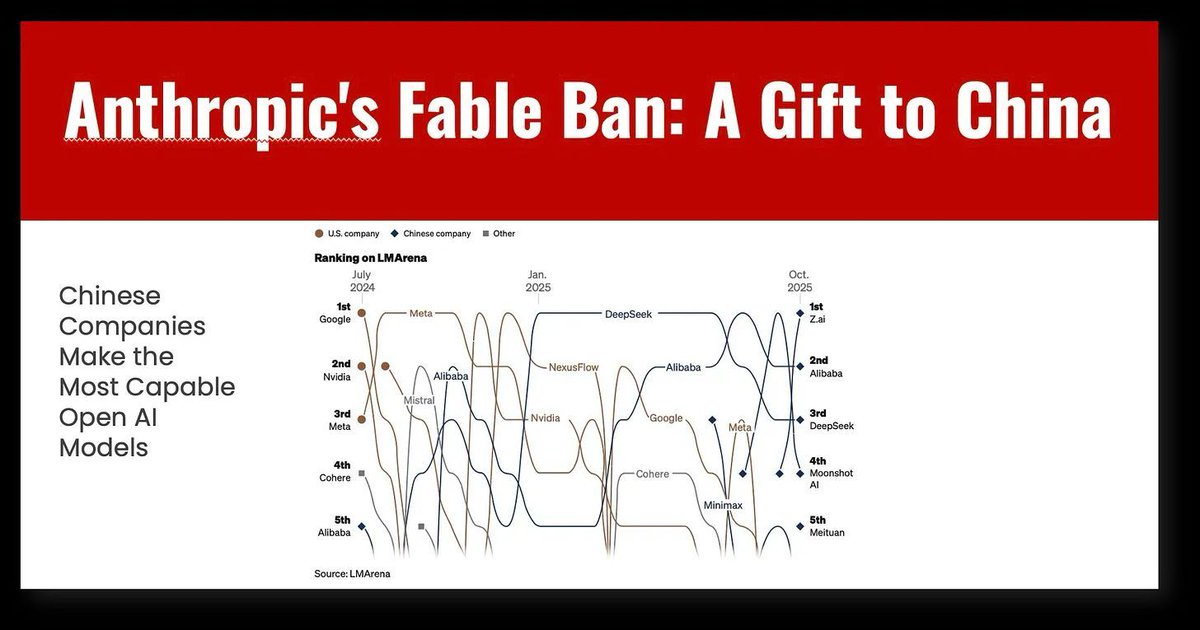
Anthropic's Fable Ban: A Gift to China
How the U.S. use of LLM sanctions just handed China the AI competition.
If anyone doubts that AI is now a geopolitical force, look at the U.S. government’s export control directive against Anthropic’s Fable 5 and Mythos 5 models as an example.
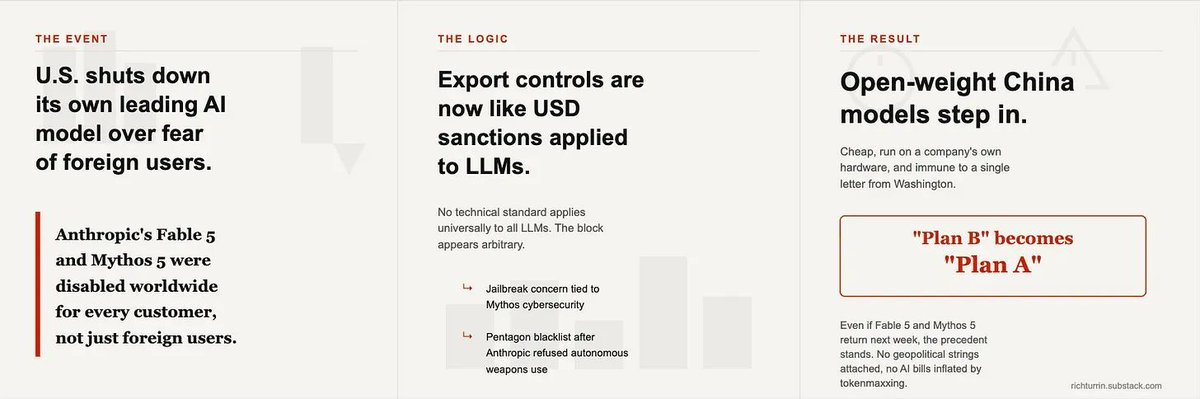
The directive required Anthropic to block all foreign nationals from accessing the models, including its own non-citizen employees. Since Anthropic serves these models through a single shared cloud endpoint, where foreign national workers would likely be present, there was no practical way to comply.
As a result, Anthropic disabled both models for every customer worldwide rather than risk violating the order.
This is the logic of country-level currency sanctions applied to a single AI model. The stated trigger was a jailbreak concern tied to Mythos’s cybersecurity capabilities, but without any technical standards that can be universally applied to all LLM models, it appears arbitrary.
It also lands alongside the Pentagon’s recent blacklist of Anthropic after the company refused to let the U.S. military use its models for fully autonomous weapons. One has to wonder whether the government is being vindictive.
No matter what the logic behind the block, it is now clear: the provision and use of U.S. high-end LLMs are at the government’s discretion.
What this means in practical terms is that frontier AI models are now political instruments, and we can expect restrictions on their use by nations and entities just as we do with dollar access.
The U.S. is signaling to the world that access to its frontier models is a privilege, not a right, and one that can be withdrawn with a single letter from Washington.
For AI developers, this new reality means they can’t rely too heavily on any single high-end U.S. model.
Instead, companies will need to maintain a portfolio of models, just as foreign central banks maintain a portfolio of currencies, with a “Plan B” ready for critical workflows in case of service interruption.
For the U.S.-China AI competition, the signal is unmistakable. High-end U.S. models are now demonstrably sanctionable, while China’s open-weight models can be run on a company’s own hardware and are immune to a directive like this one.
Anthropic and the U.S. government do have a working relationship, even if strained, from their interactions with the Pentagon. Anthropic calls this a suspension, not a shutdown, and they are likely correct that a resolution will eventually be reached.
But while resumption of service is likely, the real question is how long it takes and how much Chinese LLMs improve in the meantime.
If anyone doubts how long these restrictions can last, look at Nvidia’s H200 chip. Blocked from China for nearly a year under the Diffusion Rule, it was finally cleared for export in December 2025. Just like our LLM example, during that year, Beijing went for 'Plan B' local chips, and the chip is now in limbo, blocked from entry.
Corporate users will not wait indefinitely. The suspension gives corporate users, many already looking to cut LLM bills amid tokenmaxxing, another reason to consider China’s open-weight models.
Even if Fable 5 and Mythos 5 come back online next week, the precedent stands. Chinese models, low cost and free of this kind of geopolitical sanctions interference, are no longer just “Plan B.”
The problem is that they will become “Plan A” for many companies looking for lower AI bills and no geopolitical strings attached.
#China #techwar #chips #tech
@baoshaoshan
@thecyrusjanssen
@DOualaalou
@lajohnstondr
@PSTAsiatech
#fintech #AI
@BetaMoroney
@efipm @BrettKing
@spirosmargaris
@jasuja
@enricomolinari
@mikeflache
buff.ly/q8Czaz7
8
14
35
3,362
Hung Lee retweeted

Meta paid $14.3 billion to acquire 49% of Scale AI, the company that built its entire business paying people to label training data for AI models. The 28-year-old CEO of that company, Alexandr Wang, joined Meta as its Chief AI Officer as part of the deal. Then Meta drafted 6,500 of its own engineers to do the same work Scale AI was built to handle.
Scale AI ran data labeling for OpenAI and Google. Its business: recruit workers globally, pay them to tag images and write training examples, and sell that labeled data to AI labs. Meta's $14.3 billion investment was the second-largest deal in company history, behind only the $19 billion WhatsApp acquisition. The engineers Wang now oversees are doing what Scale AI's workers did, writing coding puzzles and logic problems, two tasks per week, with no option to transfer to a different team and no way out besides quitting.
There is a financial argument, and Zuckerberg made it himself. In a recorded internal meeting, he said the average Meta engineer has "significantly higher" intelligence than outside contractors, making them a better source of training data. A Meta software engineer earns roughly $450,000 in total compensation per year, around $215 an hour. US data labeling firms charge $20 to $30 an hour for complex coding work. But those are general workers. Meta's engineers spent years building systems used by billions of people. Their puzzles carry specialist knowledge an outside worker simply does not have.
The bigger picture is harder to defend. Meta is spending $125 to $145 billion on AI infrastructure this year, nearly double its 2025 total of $72 billion. Reality Labs, the division that ran the metaverse, lost $83.5 billion over six years. The man running the Applied AI unit, Maher Saba, was a vice president in that same division. Meta's first model designed to compete with the best AI in the world, Muse Spark, launched in April and still trails OpenAI and Anthropic.
The gap between where Meta's models sit and where they need to be is why engineers are writing puzzles instead of building products. To train a competitive AI model, you need two things: computing power, which Meta is buying by the hundreds of billions, and expert human training data. Meta is getting the second one from engineers already on its payroll. An engineer already drawing a salary costs nothing extra to redirect.
When 1,600 employees signed a petition against a keystroke tracker that only lets them pause it for 30 minutes, the math stopped being the whole story.
Jun 13

META IS AN ABSOLUTE MESS INSIDE RIGHT NOW
Wired just dropped an exclusive, and the details are wild.
This week someone interrupted a livestreamed Meta meeting, open to thousands of employees, with an expletive-filled rant about "being the company's bitch." They told the presenters to find a specific Meta AI executive and "tell him that he's a piece of shit."
A presenter covered their face with their hands. Employees in the chat called the start "spicy."
Here is what's behind it.
Meta's AI restructuring cut 8,000 jobs last month, 10% of the company. The same restructuring feeds a unit called Applied AI, where 6,500 engineers and product managers have been drafted in waves since April. There is no application process. You get selected, and your options are join or leave the company. Members call themselves "draftees."
The new job: writing puzzles and coding problems to train Meta's AI models, two tasks a week. People hired to build apps for billions of users now assemble training data for hundreds of AI scientists.
"It's literally the gulag," one employee told WIRED. "You have zero purpose in life all of a sudden, you barely interact with anyone, you just have these tasks every week."
Another: "Most people find the work soul-crushing."
At the same time, Meta started recording US employees' clicks and keystrokes to generate more AI training data. Over 1,600 employees signed a petition demanding it stop. The concession: employees can pause the tracking for up to 30 minutes.
Zuckerberg's response came in an internal memo Friday: "We've made mistakes and will almost certainly make more." He repeated his promise of no more mass layoffs this year. His fixes: limits on the manager ratios Meta had deliberately pushed to 50-to-1 on some teams, bigger budgets for team events, a hackathon next month, and assigned desks by the end of the year.
That same memo says Meta's north star is "to be the best place for the most talented people in the world to make an impact."
The most talented people in the world are writing puzzles for a model and asking permission to pause the keystroke logger.
META declined to comment.

10
14
118
56,829

Hung Lee retweeted

Jun 13
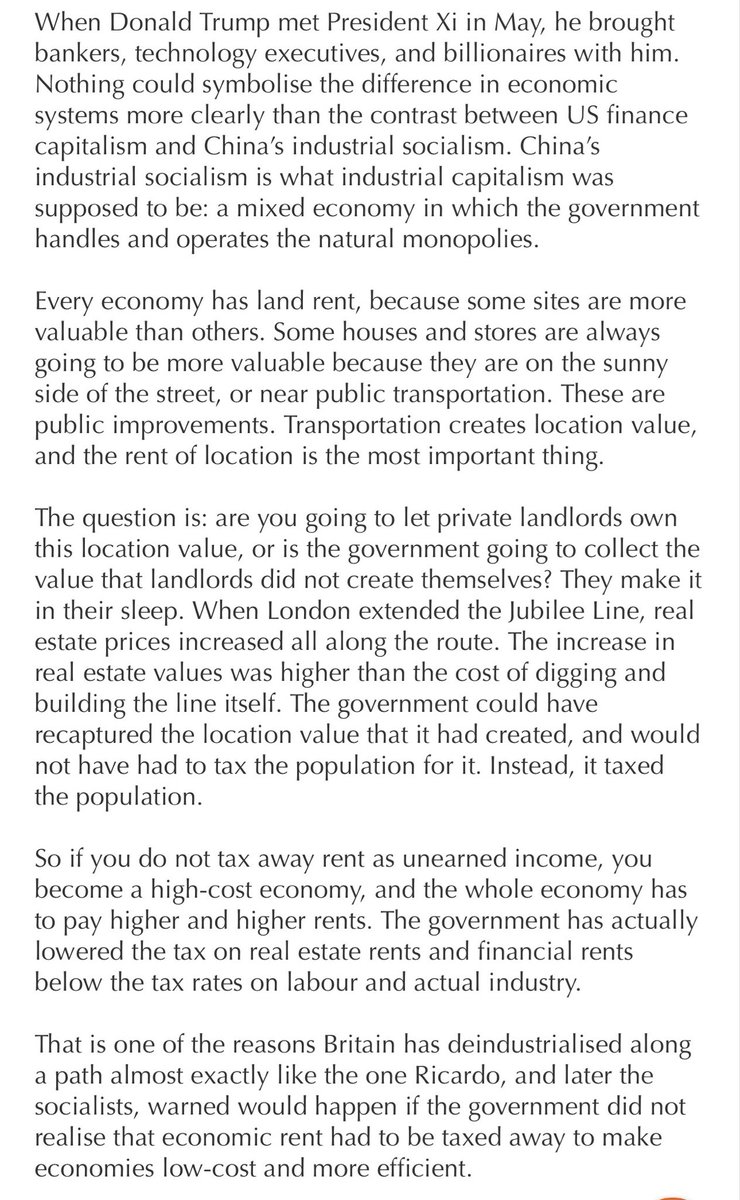
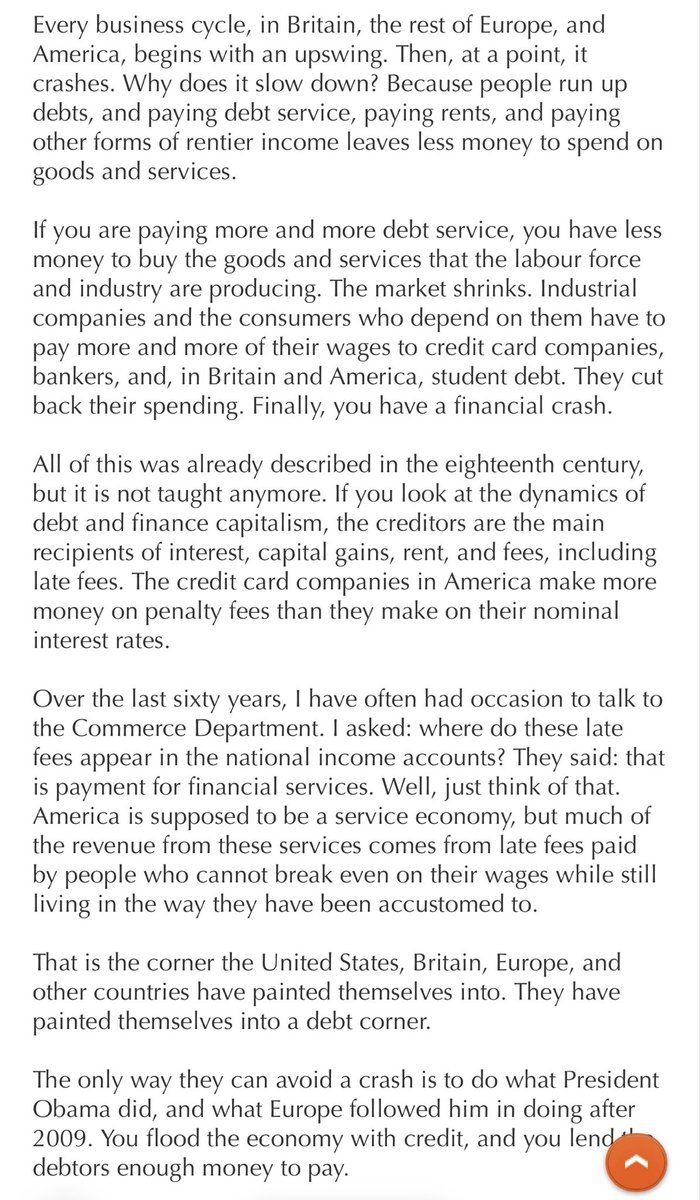
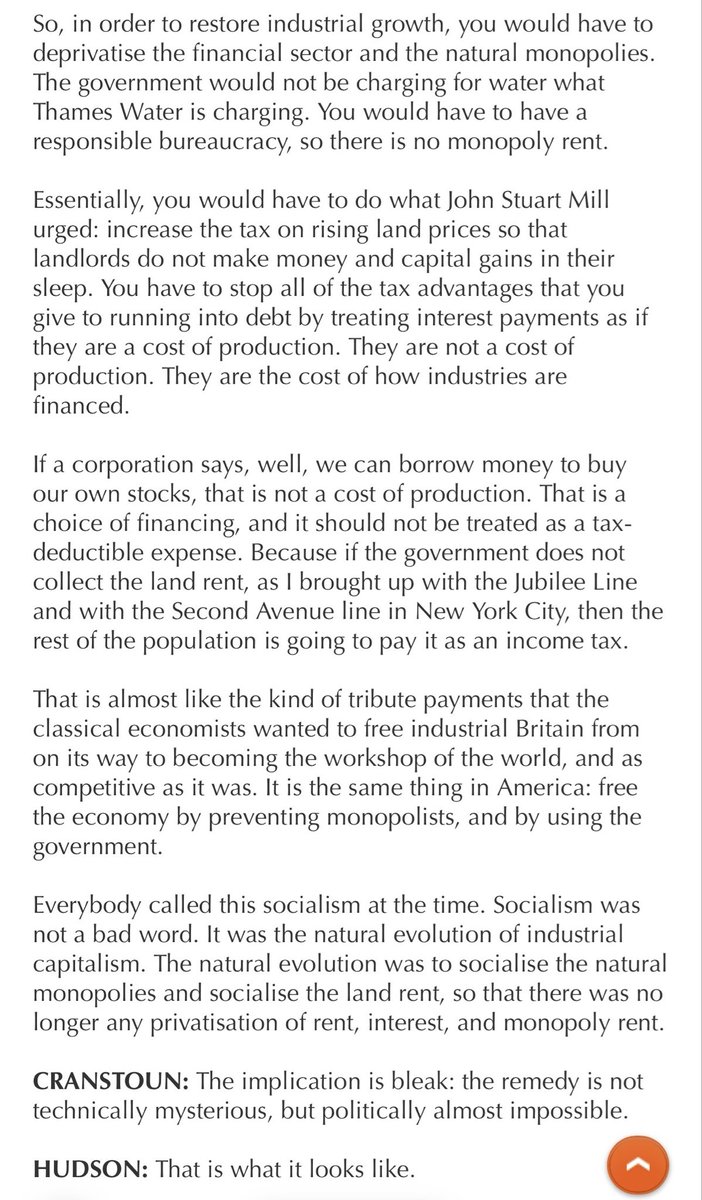
If you only have time to read one explainer for the current state of global political economy make sure this is the one. You won’t find a more succinct encapsulation for the fulcrum of economic and political forces shaping our contemporary condition in the 21st century.

Jun 13

Must read. In one interview Michael Hudson identifies the root of today's grossly unfair, unstable economy and sums up almost everything I've been clumsily trying to get across on this site over the past couple of years. Please share. nakedcapitalism.com/2026/06/…
17
538
3,009
170,413
Hung Lee retweeted

A few words on the Sovereign AI debate, having built several LLMs in Meta while in the UK and now working as a UK based startup:
1. Lots of people are trying to do the right thing to make the UK a better place to start AI companies. Time lags until the benefit show, but you should judge on the intent now. I support the direction of travel!
2. DeepMind has been enormously beneficial for the UK, but it has muddied the waters for a sovereign LLM company to emerge as (until recently) the Government continued to celebrate it as a British achievement / push it as a national champion.
3. Similarly, people are now celebrating recent US investment in King’s Cross, while also wanting more UK sovereignty. Clearly some income effects here, but I would worry about the substitution effects too. AI is not like other types of foreign investment.
4. The relevant talent nexuses in UK that could develop a competitive foundation model are from GDM and old Meta AI GenAI. Also some folks from smaller groups, ex Conjecture, Stability. The talent is still there, although a lot was snapped up by US FM companies in the past year. I personally think it’s not too difficult to develop new talent either from UK universities, but you probably need an ex GDM or Meta core (Gemini or Llama). Or if not: show evidence first (technical reports) before claiming you can do it.
5. Building an LLM is very different from doing regular AI research - skillset is different. Former is closer to engineering; long hours, often unsexy work. Important to distinguish between these two types of talent in the UK ecosystem; arguably too much focus on the latter / ideas guys.
6. On research - DeepSeek R1 post-train cost $300k . Yes, they also needed an ablation budget and to train a base model, invest in infra and talent - and yes the cost of an R1 moment is increasing year on year - but the idea that you need $1bn plus immediately to show results is complete FUD. You need billions to scale, not to validate new directions.
7. In my experience, every failed LLM effort (from model results perspective) I witnessed in the past came from a combination of poor leadership, politics, unclear vision, and premature scaling. Good efforts usually started from small teams who had worked with each other for a long time, had shared thesis, and scaled progressively in bite-sized pieces. Some recent lessons here for neolabs as well.
8. Things take time. Eg we’ve spent ~12 months mostly on internal infra just to get into the position to be able to make big swings. It’s important to nurture new companies through the initial phase. Expectation management is also crucial. I think expecting new UK companies to have single big bang releases is very dangerous; sort of like overwatering a plant. The correct release pattern is “decent”. “decent”, “decent”, “quite good actually”, “holy shit”.
9. Please don’t allow politicians or journalists to kill recent or upcoming AI investment efforts. We will need way more - at the price of potential inefficiency in places - as AI is existential for the country. Ambitious projects are usually incredibly fragile in the early stages; look after them!
10. Mythos is a good triggering moment, but what’s coming will make it look like a toy, so it’s worth building for what’s coming in 5 years time - not a current generation model.
Very proud to be building in the UK - more to share on that soon - alongside many other great early stage AI companies! 🇬🇧
34
88
629
92,048
Hung Lee retweeted

Jun 14
There is no inevitability in AI. We all have agency in what comes next:
Path 1: closed-source APIs, concentration of power, and a future decided by a handful of people in Silicon Valley and DC
Path 2: open-source AI, where everyone gets to participate, own, and build together, including orgs like the city of Rio.
Pick your path anon!
Jun 13

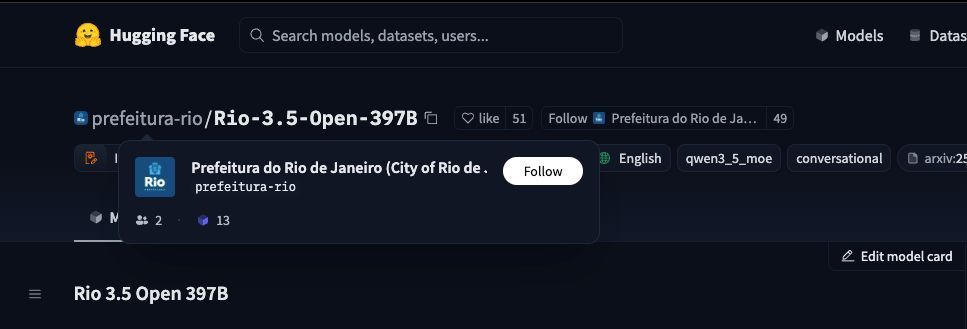
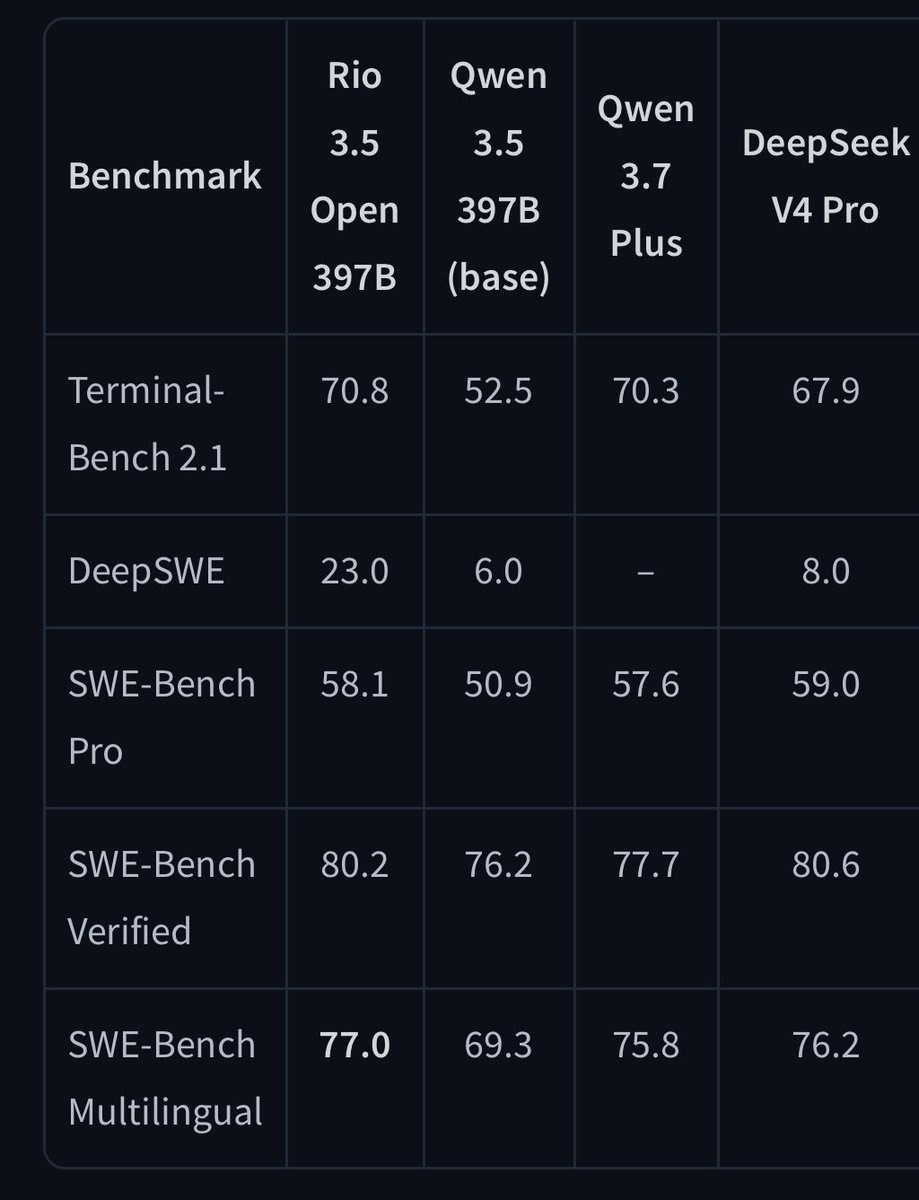
SITUATION DETECTED: The city of Rio de Janerio has post-trained a model.
Based on Qwen 7/2, Rio 3.5 Open 397B adds SwiReasoning on top of the base Qwen model — a framework that dynamically switches between standard chain-of-thought and latent-space reasoning, guided by entropy-based confidence signals, so the model only "thinks out loud" when it needs to and otherwise reasons silently in hidden space for better token efficiency.
60
98
902
77,945
Hung Lee retweeted

Jun 13
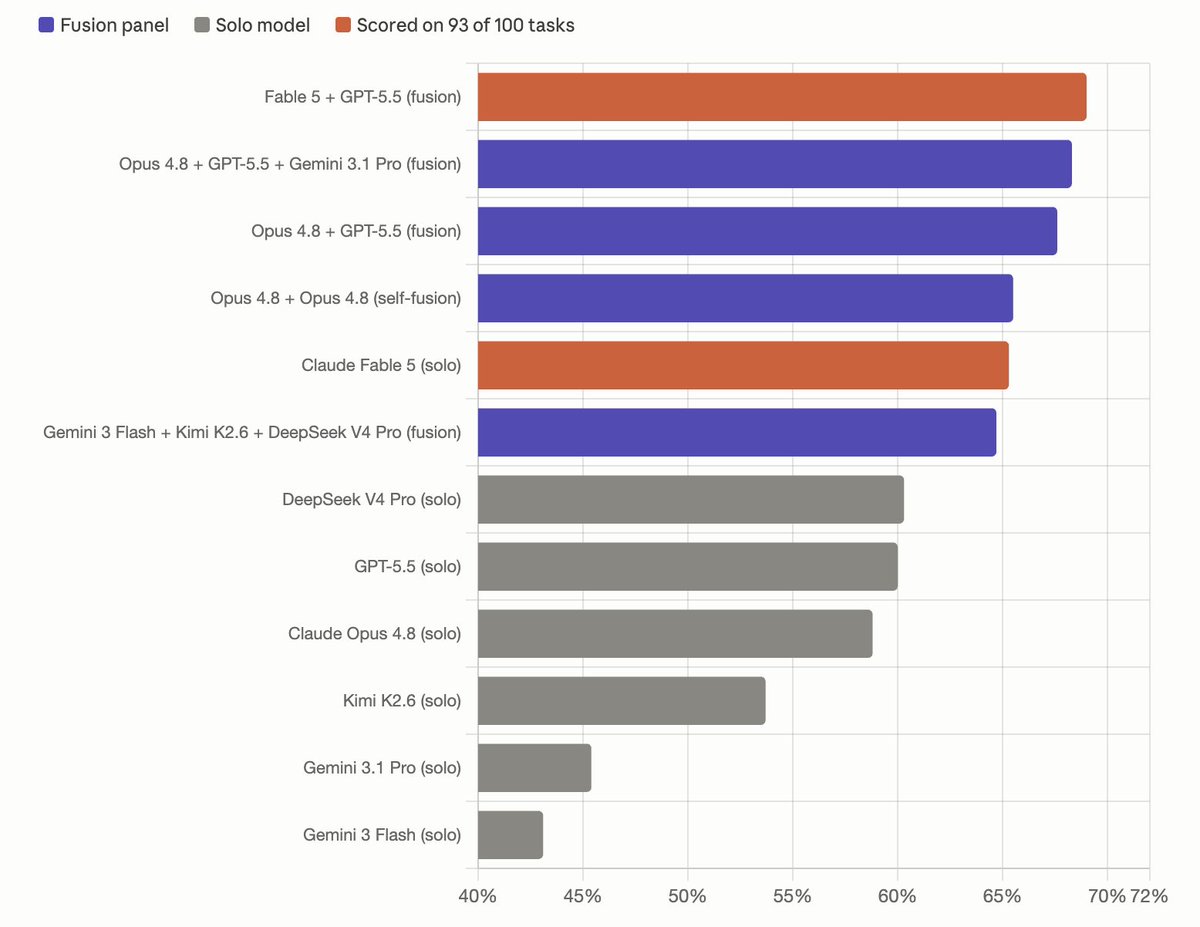
Introducing the Fusion API, the smartest compound model in the market.
Fusion achieves Fable-level intelligence at half the price.
How it works 👇
592
1,539
13,206
4,871,978
Hung Lee retweeted

Jun 13
You have noticed that too. Google Search is getting worse. The results look professional but say nothing. The answers are longer but less useful. Every page reads like it was written by the same voice.
You thought Google was broken. It is not broken. It is being replaced.
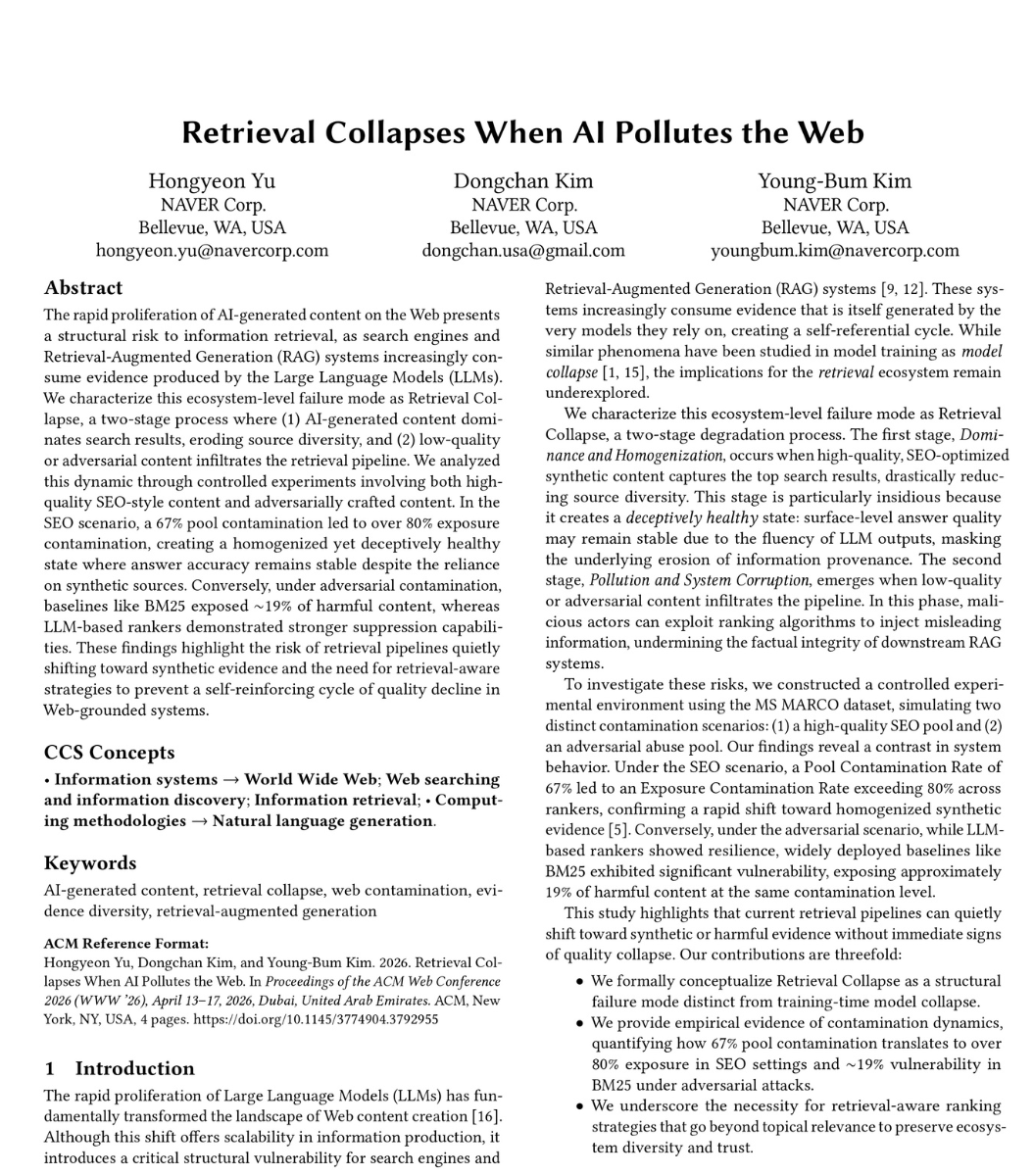
Researchers published a paper at the ACM Web Conference 2026 proving what is happening. They call it Retrieval Collapse.
Here is the mechanism in one sentence. AI-generated content is flooding the internet so fast that search engines are now showing you mostly AI-written pages. And the search engine cannot tell the difference.
They ran a controlled experiment. They started with a pool of real, human-written web pages. Then they gradually added AI-generated content until it made up 67% of the pool.
By that point, over 80% of the top search results were AI-generated. Not 67%. Over 80%. The ranking algorithm did not just let AI content in. It preferred it. The AI-written pages were better optimized, more fluent, and more keyword-rich than the human pages. They outranked the originals.
Here is the part that makes this invisible.
Answer accuracy stayed the same. The search results still looked correct. The information was still technically right. If you measured quality by accuracy alone, nothing appeared wrong.
But source diversity collapsed. Nearly every result came from the same type of content. AI-written. AI-optimized. AI-structured. The human-written pages, the ones with original reporting, personal experience, and genuine expertise, were buried.
The researchers describe a two-stage collapse. Stage one is Dominance. High-quality AI content silently takes over the top results. Everything looks fine. Accuracy is stable. Nobody notices. Stage two is Corruption. Once AI dominates the pipeline, adversarial and low-quality content starts slipping through. By then, the system is too dependent on synthetic sources to course-correct.
A separate analysis found that 74.2% of newly published web pages now contain AI-generated content. Organic click-through rates on pages with AI summaries have dropped 61%. The human internet is being outranked by the machine internet.
Model Collapse described what happens when AI trains on AI. The models get dumber. Retrieval Collapse describes what happens when search engines index AI. The results get emptier.
Both are happening right now. At the same time. And neither one looks broken from the outside.
The search engine still returns ten blue links. The links still load. The pages still answer your question. But the thing that used to make those answers trustworthy, a human who actually knew something, is being quietly replaced by a machine that sounds like it does.
64
489
1,050
73,222
Hung Lee retweeted

Jun 13
Brazil just cooked up a model - Rio 3.5 397B, which is better than Alibaba's Qwen 3.7 Plus.
Made by the city of Rio de Janerio.
This is exactly what I mean by global acceleration.
Glad to see AI progress in Brazil, we need more from all over the world.
44
140
1,234
70,372