
11 Photos and videos


Pinned Tweet

7 May 2024
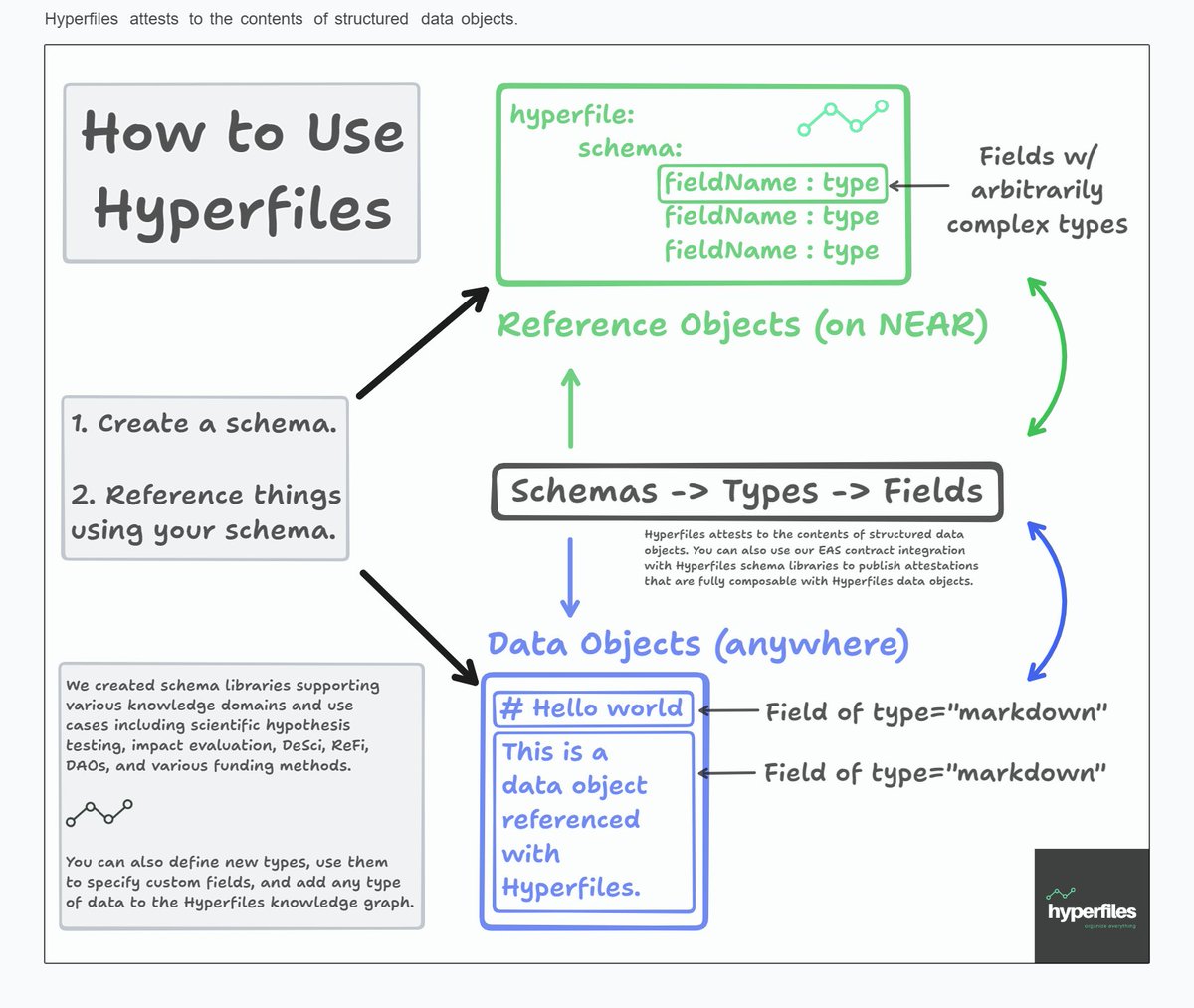
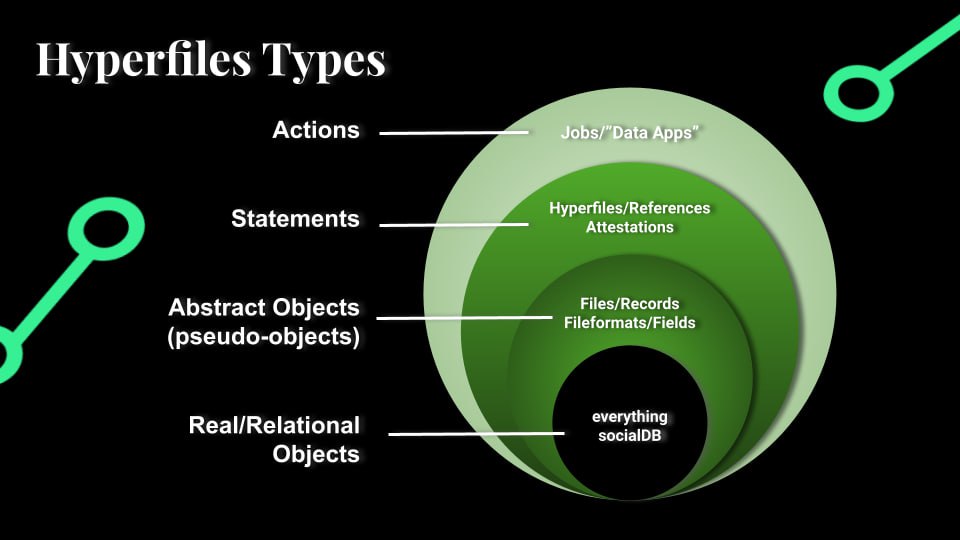
We're creating a semantic data model to promote composability and standardization across knowledge domains.
Deploying early versions of curated schema libraries this week using the revised Hyperfiles meta-schema specification.
h/t @eas_eth for inspiration & encouragement 🎩🙏
1
1
3
212
12 Jun 2024
9 Jun 2024

Join us Wednesday at 18:00 UTC for a riveting space!
Our growing community of builders will help you create a blueprint & launch your own construction site 🚧 #BUILD
Explore opportunities to earn rewards by contributing to impactful projects 👷 #OpenWeb
x.com/i/spaces/1zqKVqBdYOlxB
3
170
Hyperfiles retweeted

21 May 2024
Week 5 of DAO Spring! 😱
Unsurprisingly, we got 2 more great sessions:
- First one will help you pick the right tools for your DAO, w/ @coolhorsegirl2 & @flow_science
- Second one will help you resolve whatever issue you got in your DAO w/ @gospelofchange & @TorstenGoerke

2
9
17
838

Hyperfiles retweeted

16 May 2024
I am looking to interview developers using @NEARProtocol's QueryAPI platform for their Bos apps or any other front end or back end apps.
My DMs are open and your time will be compensated if we end up doing the interview.
Thanks.
7
17
764
Hyperfiles retweeted

6 May 2024
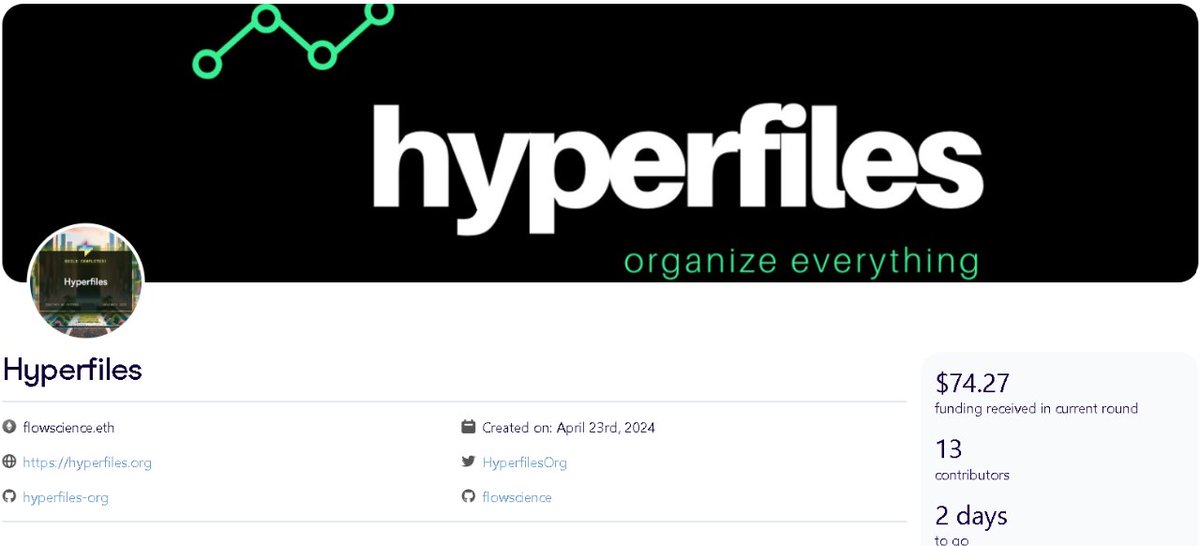
I just GROWnated to @HyperfilesOrg 💚
Their vision for on-chain reference objects and indexed data collaboration can transform information sharing for science, impact evaluation, and marketplace functionality✊
Stop by their grant and GROWnate!
#GG20
1
1
4
165
4 May 2024
HyperTrees are taking shape ✨🌲🌳🌴💫
Hyperstructures made of physical connections linking regenerative places through both space and time 💯
#LetsGROW

The 4th batch of Treegens go toooooo...
31.@pacobacpac
32.@ibenxjean
33.@TasheeQev
34.@HyperfilesOrg
35.@ODymarski
36.@AyraFrey41839
37.@BH1991
38.@Get14et
39.@griffgreen
40.@joseebasanta
Let's keep the positive Treenergy flowing!
#LetsGROW
1
4
140
Hyperfiles retweeted

30 Apr 2024
This one right here:
26 Apr 2024

🌟 Hyperfiles is live in two rounds for #GG20!
💻 dApps & Apps Round: explorer.gitcoin.co/?utm_sou…
✍️ Hypercerts Ecosystem Round: explorer.gitcoin.co/#/round/…
They're separate rounds with separate matching pools, so support in both is very much appreciated!
1/🧵 More info below... 👇
1
4
94
30 Apr 2024
"Organize Everything" is our tagline for a reason. 💯
Take a look at these explorations of how Hyperfiles can be used for collaborative data governance that our lead builder @flow_science wrote about today.
x.com/flow_science/status/17…
x.com/flow_science/status/17…
x.com/flow_science/status/17…
29 Apr 2024

Thanks for sharing I'll add this to my reference lib.
Unfortunately, from a cursory review their design is, well, feckless. Their your claims about it (sorry, nothing personal) fall short in a few key areas.
To justify my harsh criticism I felt obligated to explain my conclusions in excruciating detail below and to compare them to the leading edge in flexible data publishing tech for #DeSci:
1) I wouldn't call it a 'big study", or even a study at all. The paper you linked is a report describing a dApp a private for-profit company made. Unfortunately, neither the frontend nor contract code is open source, so the benefits of putting anything on-chain without essential code auditability are heavily compromised. A hypothesis based "study" they could have done would be to use their tool to index a benchmark dataset like OpenAlex, NCBI, etc vs alternative solutions in performing some useful action (e.g. storage/retrieval times, cost/size per object, en/decryption, verifiability, etc).
2) As a professional scientist and member of the scientific community I hold a strongly contrarian perspective to the establishment regarding peer reviewed paper count. I'm pretty confident most if not all of my desci contributor colleagues would agree.
3) Base64 encoding doesn't do much other than prevent BNB from throwing errors when the contract writes the data to it (bc of special characters that might be in text). The data isn't encrypted so their tool can only be used to create references for existing data in the public domain - which defeats their stated purpose for building the app...
"Welcome to the first 100% on chain decentralized storage Dapp for biomedical and general purpose data (such as text, images, audio and video) providing you with Identity, Timestamping, Content and Immutability (ITCI) for your business."
It doesn't make economic/business sense to store data on BNB, an EVM chain with limited horizontal scaling. They should have at least enabled the opBNB L2 to leverage a rollup and mitigate cost data volume settled on L1. It would cost nearly $80 to save the word "test" using their dApp (screenshot #1). No wonder they didn't run a benchmarking trial.
-----Alternate Solutions-----
A) @oceanprotocol uses a "provider" to encrypt/decrypt URLs of user published data (accessible via HTTP), then they store tokenized references on-chain which grant the owner/purchaser permission to decrypt a target URL. They've got a solid metadata (object labeling) system & built a compute-to-data interface that unlocks actual usability for sensitive/private data, such as almost any business would require.
B) @eas_eth likewise employs multiple privacy options and scalability solutions for publishing data and/or references on-chain.
Users can publish attestations offchain of any size for free, or they can enter encrypted data manually into the appropriate schema field if included in an onchain attestation. EAS released a sha256 hash tool for easy & non-reversible encryption of sensitive data. For even higher security, they created a "private data" attestation schema that encrypts the contents in a Merkle Tree to support selective disclosure (read permissions) of specific fields in the a given data schema. EAS timestamps & UX are a bit clunky, but overall it's an extremely versatile platform set of standards.
3c) TLDR; at @HyperfilesOrg we're combining the best of both Ocean & EAS with features to support co-governance of collaboratively generated digital data assets. Most of the engineering & integration design was done in Q1-2024, with some groundwork laid in 2023 during two hackathons. Q2-2024 is mainly building/shipping those designs, and we're even adding things to the roadmap like a smart contract to calculate global reputation scores for the Hyperfiles knowledge graph (a social graph with infinitely customizable schemas, version control, automated object classification, and user reputation scoring).
------Hyperfiles Deets------
We're implementing encryption by default for data objects published using our dApp (starting w/ sha256, then Lit Protocol PKPs). We're also replicating the Ocean "provider" architecture for a second layer of security & data provisioning during URL endpoint sharing.
Hyperfiles reference objects are stored in the open-source Near socialDB contract for typically ~$0.07 per object. Hyperfiles a superset to EAS attestations so users can select the EAS attestation standard as a Hyperfiles schema. This interoperability enables users to query standardized metadata across multiple sources, facilitating reusable elements & enforcing composability between completely unrelated data objects, as well as dynamic data object rendering.
References (and subsequent versions) are uniquely timestamped by their blockheight. Human-readable object paths uniquely identify references stored under each user's personal data tree in socialDB.
The entire Hyperfiles app - every single React frontend component - is also stored immutably on the Near socialDB contract via path & blockheight (the same way references are stored). The code is easily viewable/forkable directly from the app itself if users want to customize or contribute new components (screenshot below).
Comparatively, the INNBC claim to be "the first 100% on chain decentralized storage Dapp for biomedical and general purpose data" is frankly, complete BS and highlights just how flawed & ineffective peer-review is when managed by exploitative publishers. Their dApp is not 100% on-chain and it's definitely not the first to do what it does.
Hyperfiles already has read/write adapters for off-chain storage layers: IPFS and GitHub. A suite of additional default adapters in the Q2-2024 roadmap include local storage, Notion, Obsidian, Arweave, Ceramic, Verida, EVM Chains (via Solidity ABI), and even a few indexing services as data input options.
It's taken a systematic and relentless approach to engineer, integrate and distill the diversity of features behind Hyperfiles into our current roadmap of smart contracts & frontend UI components. You can try the open beta at hyperfiles.org and access our prolific documentation wiki from the app as well.
Join the Hyperfiles TG group and I'll send you some free $NEAR tokens to pay storage deposits & gas fees.
t.me/hyperfiles
-----References-----
In-progress "development" version of Hyperfiles:
hyperfiles.org/hyperfiles.ne…
List of on-chain components (widgets):
hyperfiles.near.social
Off-chain code repos (React components, "gateway" app to render React code from Near), and our smart contracts:
github.com/hyperfiles-org/
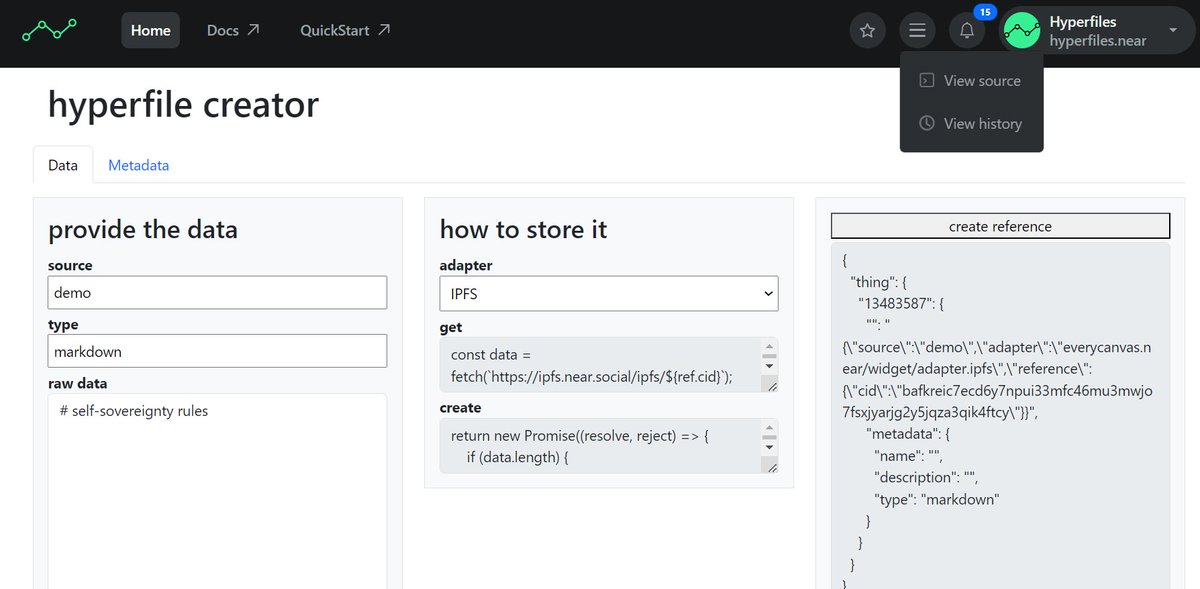
ALT Hyperfiles is 100% on-chain. All React components are stored on Near and rendered using a custom "gateway" app that serves as a frontend client.
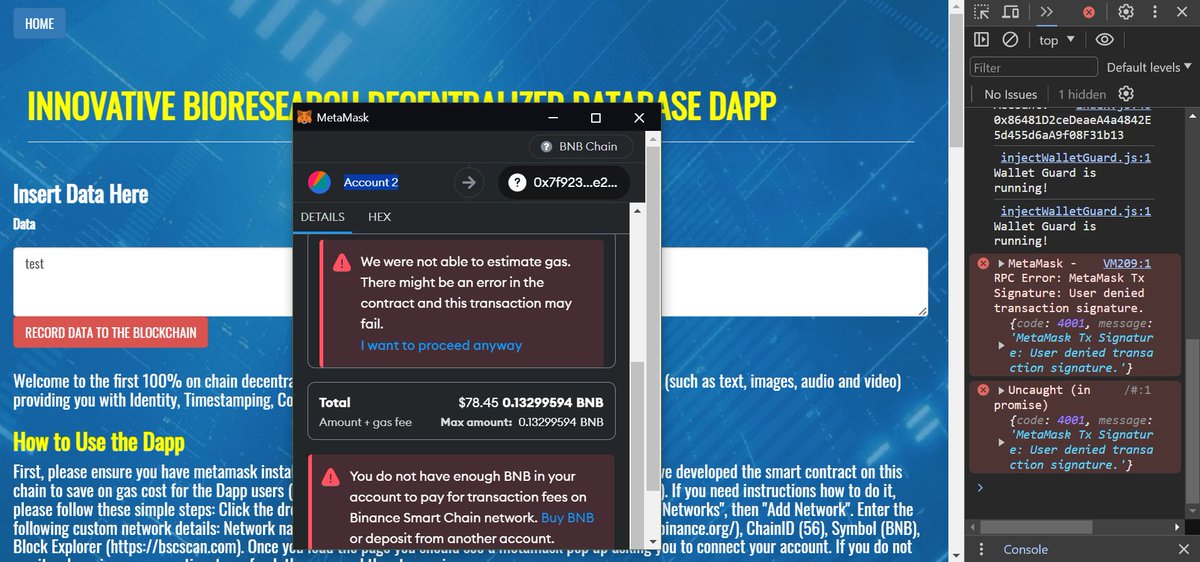
ALT Saving data to L1 's, especially BSC, is prohibitively expensive.
2
6
139
Hyperfiles retweeted
29 Apr 2024
Async RPC calls on @NEARProtocol are really really fast. This is why we should give them a deeper look as an ecosystem.
Here is a thread of my recent findings and thoughts.
PS: For a short introduction for what I mean by Async calls, read this previous thread.
22 Apr 2024

All of us remember how all our RPC nodes were kind of performing really bad recently when there was too much traffic on the network. Since then we have had new shards and some protocol changes.
There was another simple thing we all could have done.
Asynchronous transactions.
1
7
26
1,527
26 Apr 2024
🧠 We’ve created extensible Schema & Type Libraries deployed to an open social graph contract. Hyperfiles creates a universal, self-organizing, attestation-based knowledge graph for scientific sensemaking, impact evaluation, and empirical hypothesis testing.
6/🧵
1
4
41
26 Apr 2024
⚠️ Hyperfiles is in open-beta and under active development. If you’re interested in contributing, we're always seeking additional open-source contributors. Just check out our GitHub, docs, and hop in the chat!
7/🧵
3
38
26 Apr 2024
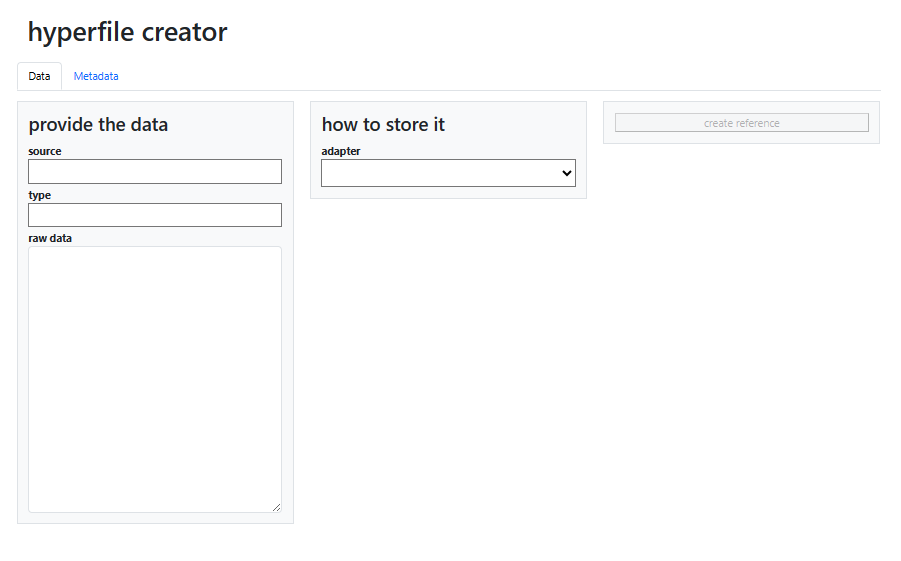
🧠 Adapters are used to establish interfaces with your choice of storage locations. You will soon be able to delegate and receive read, write, owner-level permissions to specific fields and records defined in reference objects.
4/🧵
1
4
36
26 Apr 2024
Together, these features enable collaborative data curation, co-governance of digital assets, marketplace functionality, and more. User can even interact with and dynamically render data objects according to the permissions they hold.
5/🧵
1
1
4
55
26 Apr 2024
Hyperfiles was originally developed as "Hypercerts on BOS" during the BuidlBox Funding the Commons Hackathon in August 2023, then extended into "Hyperfiles" during Backdrop Build v3 in November 2023 (completion certificate is the logo image for our #GG20 application).
2/🧵
1
4
46
26 Apr 2024
⛓️ Hyperfiles creates indexed onchain reference objects to map the contents of corresponding data objects, stored anywhere.
Hyperfiles are a superset of the popular EAS attestation standard that provide additional context by explicitly linking the data field to schemas.
3/🧵
1
4
36
26 Apr 2024
🌟 Hyperfiles is live in two rounds for #GG20!
💻 dApps & Apps Round: explorer.gitcoin.co/?utm_sou…
✍️ Hypercerts Ecosystem Round: explorer.gitcoin.co/#/round/…
They're separate rounds with separate matching pools, so support in both is very much appreciated!
1/🧵 More info below... 👇
2
4
9
306
Hyperfiles retweeted

17 Apr 2024
Coordination vs coherence.
The former is a hyper focus on order, on control, attempting to reduce everything into transactions to be optimised.
The latter is an infinite dance, realising there’s much more than what can be reduced, harnessing chaos into emergence and evolution.
2
5
241
Hyperfiles retweeted

16 Apr 2024
Wholistic Reference and the Domain of Discourse
"In every discourse, whether of the mind conversing with its own thoughts, or of the individual in his folley with others, there is an assumed or expressed limit within which the subjects of its operation are confined.
The most unfettered discourse is that in which the words we use are understood in the widest possible application, and for them the limits of discourse are co-extensive with those of the universe itself.
But more usually we confine ourselves to a less spacious field. Sometimes, in discoursing of men we imply (without expressing the limitation) that it is of men only under certain circumstances and conditions that we speak, as of civilized men, or of men in the vigour of life, or of men under some other condition or relation.
Now, whatever may be the extent of the field within which all the objects of our discourse are found, that field may properly be termed the universe of discourse. Furthermore, this universe of discourse is in the strictest sense the ultimate subject of the discourse."
~ George Boole, "The Laws of Thought". 1854. p. 42
13 Apr 2024

Crypto X AI
BUCKLE UP
The convergence of these two technologies, disciplines, fields, concepts, socio-technical forms of human praxis, whatever you want to call them. Is a big deal.
The two most important frontiers of technology are about to collied.
That’s my opinion by the way. As it always is. There are actually several maybe dozens of emerging technologies that could really “change the game”. These two are just the two we talk about the most. And like I said are about to CONVERGE.
Let’s take them one at a time.
Crypto
If this is the first post of mine you see. I mainly talk about this. All day, every day. And have done for several years now.
I fell in love with crypto in about 2016. On around my third touch point with it. The first was when I was teaching number theory and cryptography, and the second when buying “meds” for bitcoin online.
On the third. I was IN. I came in through DAOs, went deep on protocol architecture, game theory, token economics, futarchy, decentralised governance, auction theory, the list goes on and on.
Crypto. Is intellectual crack cocaine.
It’s the most fascinating technological frontier. More so than even the early internet which was actually very dull and slow. This is FAST. Too fast actually, at times. We get sloppy.
And you don’t want your crypto sloppy
Crypto is weird because on one level it’s a group of online hypernerds arguing about the nuances of cybersecurity, but also an immensely hyper social phenomenon.
Why? Because it’s a magic money spout powered by raw memetics. WITH A PRICE. All day, every day. NON STOP.
It is truly the Wild West.
Crypto takes the breaks off innovation. It’s messy ok.
Now.. AI
Ok, the breaks aren’t exactly on in AI at the moment. In fact we’re in the move fast break things, steal it all, ask forgiveness, regulatory capture form of negative loop accelerationism that screams incredibly late stage capitalism.
Imagine what the fluffy haired altruist did, but much much bigger.
We’re storming ahead in the wake of a few megacorps warring over the new oracles of truth.
I’ve followed AI. Literally since I was a child. If you watched terminator as a kid you have too.
The thing about AI, unlike crypto, is that it’s been coming for like a 100 years.
Longer probably. Somewhere around when George Boole created Boolean logic and we started thinking in machine logic. Certainly since Turing and von Neumann.
Crypto is new. It’s actually very unusual for something so significant and so new have so many people interested in it, normally takes a long time.
Like it did with AI.
But in the last year we’ve hit a take off point. Don’t worry it’s not THE takeoff point. But that’s probably coming soon.
This is the era of brute force. BIGGER is better. More GPUs more scale, more burning money.
The art hasn’t really started yet.
As with most things, the devil is in the details.
Generalists only get you so far. The next era is one of nuance. Fine-tuning.
Thank god for Mistral and their magnet links because we already have our key building blocks. Foundations for what we can build.
Sure there’s going to be better foundations, but now we’ve got the cement.
Now it’s time for architects and building.
The problem is, the foundations are centralised. Not everyone can build a house yet. If you break some list of opaque terms and conditions you are rugged, game over.
Happened to me last week. I have been banned from using Claude. You will be too.
Some kind of cursed speech, forbidden terms. The spectre of the faceless faceless beast perpetually hovers over your personal rug button.
At the same time we’ve got king Sam building the ultimate shitcoin tap for humanity with worldcoin.
He’s going to drop you UBI. Which he does currently for uploading your biometric data to his servers, or working as a modern slave labelling toxic AI generations for literally the lowest amount that any human on this planet will tolerate being paid.
Nice.
We need something better.
Crypto X AI
You see, the actually interesting bit about crypto, is the governance.
The bit where humans govern code.
This is how you control machines. With extremely high cryptographically validated fidelity.
This is where the nuance comes in. The humanity.
When we run the things, not the techno-capital machine.
Frankly, I think we’ll do a more nuanced job. In fact we’ll have to because it will be a democracy.
The nexus of these fields is interesting because:
Execution: a new realm of digital automation awaits by taking the generations outputted from AIs and making them REAL.
An immutable ledger does that. It’s a thing we all agree on. It is… done. Move on.
Consensus: reaching radical agreement is what crypto is all about, it’s how bitcoin’s ledger stays real it’s how Tx logic is executed on ethereum.
Many eyes, make more truth.
AIs synthesise. They are synthesis engines. What we put in, we get out and we can say linguistically what it is that we want. This is the basis for a new form of human consensus.
Or rather, it should do.
Censorship Resistance: I’m not here to say what the line on censorship should be with these tools. It’s simply too big an issue for any one party to decide. Which is the current state of play.
If I’m going to build material practices around a tool, I simply can’t be in a position where I am indiscriminately rugged for no apparent reason. I need a tool I can depend on, a tool that stops working is not a good one. Crypto provides redundancy.
Socio-Technical Systems:
In reality none of this stuff works without us. We are the humans in the loop.
Without us, the miners run out of energy, the validators don’t upgrade and their machines go down, the blocks stay empty, the prompts stay unprompted.
We are very much in control. And it should stay that way. And by we, I mean us, humanity. Not the clumsy regulations of the leviathans. They simply don’t have the contextual knowledge for... the nuance.
The socio in the technical is neglected.
We (us) get slammed in the face with a new tech on weekly basis now (welcome to fourth industrial revolution).
You used to see them coming, but now BAM we can emulate reality with a prompt. deal with it.
The two things should be working together synthetically, as in synthesis, as in syntharchy.
Collective Intelligence:
Are you ready to have your mind blown? !
No??
TOUGH.
The world is about to change. We can now stick words into a magic box and get access to the whole history of human thought, beamed back at us with potentially laser like accuracy.
It is a tool that uses our main tool. Language.
It is in fact, us. Everything about us. All of it.
Every gram, post, tweet, TikTok, video, blog post, book, transcript, journal, web site. Everything.
It’s all been shovelled in. Including all the nasty stuff. Which is why you need to pay Kenyan’s less than 2 bucks and hour to sort through the worst animal rape fan fiction the furries can dream up. Who manually tell it “no, don’t say that to the humans, it's bad” over and over and over again.
Now imagine the humans in the loop are having fun.
They’re experts curating knowledge, whenever they want. And they’re getting paid for it.
Do we think that might be a better outcome?
Not hard is it.
The real fun will begin when we can truly harness the minds of many.
Crypto does the governance and AI does the synthesis.
The outcome is collective intelligence, what I believe to be the biggest and more important untapped resource on this planet.
And that’s why you should be excited about Crypto X AI.
2
2
5
641
Hyperfiles retweeted

13 Apr 2024
Crypto X AI
BUCKLE UP
The convergence of these two technologies, disciplines, fields, concepts, socio-technical forms of human praxis, whatever you want to call them. Is a big deal.
The two most important frontiers of technology are about to collied.
That’s my opinion by the way. As it always is. There are actually several maybe dozens of emerging technologies that could really “change the game”. These two are just the two we talk about the most. And like I said are about to CONVERGE.
Let’s take them one at a time.
Crypto
If this is the first post of mine you see. I mainly talk about this. All day, every day. And have done for several years now.
I fell in love with crypto in about 2016. On around my third touch point with it. The first was when I was teaching number theory and cryptography, and the second when buying “meds” for bitcoin online.
On the third. I was IN. I came in through DAOs, went deep on protocol architecture, game theory, token economics, futarchy, decentralised governance, auction theory, the list goes on and on.
Crypto. Is intellectual crack cocaine.
It’s the most fascinating technological frontier. More so than even the early internet which was actually very dull and slow. This is FAST. Too fast actually, at times. We get sloppy.
And you don’t want your crypto sloppy
Crypto is weird because on one level it’s a group of online hypernerds arguing about the nuances of cybersecurity, but also an immensely hyper social phenomenon.
Why? Because it’s a magic money spout powered by raw memetics. WITH A PRICE. All day, every day. NON STOP.
It is truly the Wild West.
Crypto takes the breaks off innovation. It’s messy ok.
Now.. AI
Ok, the breaks aren’t exactly on in AI at the moment. In fact we’re in the move fast break things, steal it all, ask forgiveness, regulatory capture form of negative loop accelerationism that screams incredibly late stage capitalism.
Imagine what the fluffy haired altruist did, but much much bigger.
We’re storming ahead in the wake of a few megacorps warring over the new oracles of truth.
I’ve followed AI. Literally since I was a child. If you watched terminator as a kid you have too.
The thing about AI, unlike crypto, is that it’s been coming for like a 100 years.
Longer probably. Somewhere around when George Boole created Boolean logic and we started thinking in machine logic. Certainly since Turing and von Neumann.
Crypto is new. It’s actually very unusual for something so significant and so new have so many people interested in it, normally takes a long time.
Like it did with AI.
But in the last year we’ve hit a take off point. Don’t worry it’s not THE takeoff point. But that’s probably coming soon.
This is the era of brute force. BIGGER is better. More GPUs more scale, more burning money.
The art hasn’t really started yet.
As with most things, the devil is in the details.
Generalists only get you so far. The next era is one of nuance. Fine-tuning.
Thank god for Mistral and their magnet links because we already have our key building blocks. Foundations for what we can build.
Sure there’s going to be better foundations, but now we’ve got the cement.
Now it’s time for architects and building.
The problem is, the foundations are centralised. Not everyone can build a house yet. If you break some list of opaque terms and conditions you are rugged, game over.
Happened to me last week. I have been banned from using Claude. You will be too.
Some kind of cursed speech, forbidden terms. The spectre of the faceless faceless beast perpetually hovers over your personal rug button.
At the same time we’ve got king Sam building the ultimate shitcoin tap for humanity with worldcoin.
He’s going to drop you UBI. Which he does currently for uploading your biometric data to his servers, or working as a modern slave labelling toxic AI generations for literally the lowest amount that any human on this planet will tolerate being paid.
Nice.
We need something better.
Crypto X AI
You see, the actually interesting bit about crypto, is the governance.
The bit where humans govern code.
This is how you control machines. With extremely high cryptographically validated fidelity.
This is where the nuance comes in. The humanity.
When we run the things, not the techno-capital machine.
Frankly, I think we’ll do a more nuanced job. In fact we’ll have to because it will be a democracy.
The nexus of these fields is interesting because:
Execution: a new realm of digital automation awaits by taking the generations outputted from AIs and making them REAL.
An immutable ledger does that. It’s a thing we all agree on. It is… done. Move on.
Consensus: reaching radical agreement is what crypto is all about, it’s how bitcoin’s ledger stays real it’s how Tx logic is executed on ethereum.
Many eyes, make more truth.
AIs synthesise. They are synthesis engines. What we put in, we get out and we can say linguistically what it is that we want. This is the basis for a new form of human consensus.
Or rather, it should do.
Censorship Resistance: I’m not here to say what the line on censorship should be with these tools. It’s simply too big an issue for any one party to decide. Which is the current state of play.
If I’m going to build material practices around a tool, I simply can’t be in a position where I am indiscriminately rugged for no apparent reason. I need a tool I can depend on, a tool that stops working is not a good one. Crypto provides redundancy.
Socio-Technical Systems:
In reality none of this stuff works without us. We are the humans in the loop.
Without us, the miners run out of energy, the validators don’t upgrade and their machines go down, the blocks stay empty, the prompts stay unprompted.
We are very much in control. And it should stay that way. And by we, I mean us, humanity. Not the clumsy regulations of the leviathans. They simply don’t have the contextual knowledge for... the nuance.
The socio in the technical is neglected.
We (us) get slammed in the face with a new tech on weekly basis now (welcome to fourth industrial revolution).
You used to see them coming, but now BAM we can emulate reality with a prompt. deal with it.
The two things should be working together synthetically, as in synthesis, as in syntharchy.
Collective Intelligence:
Are you ready to have your mind blown? !
No??
TOUGH.
The world is about to change. We can now stick words into a magic box and get access to the whole history of human thought, beamed back at us with potentially laser like accuracy.
It is a tool that uses our main tool. Language.
It is in fact, us. Everything about us. All of it.
Every gram, post, tweet, TikTok, video, blog post, book, transcript, journal, web site. Everything.
It’s all been shovelled in. Including all the nasty stuff. Which is why you need to pay Kenyan’s less than 2 bucks and hour to sort through the worst animal rape fan fiction the furries can dream up. Who manually tell it “no, don’t say that to the humans, it's bad” over and over and over again.
Now imagine the humans in the loop are having fun.
They’re experts curating knowledge, whenever they want. And they’re getting paid for it.
Do we think that might be a better outcome?
Not hard is it.
The real fun will begin when we can truly harness the minds of many.
Crypto does the governance and AI does the synthesis.
The outcome is collective intelligence, what I believe to be the biggest and more important untapped resource on this planet.
And that’s why you should be excited about Crypto X AI.
11
11
99
25,650