
Jan 26
This is the scam…
And the CEO of the software company hyperfiles complaints on PubSmear to pimp his company.
Jan 26

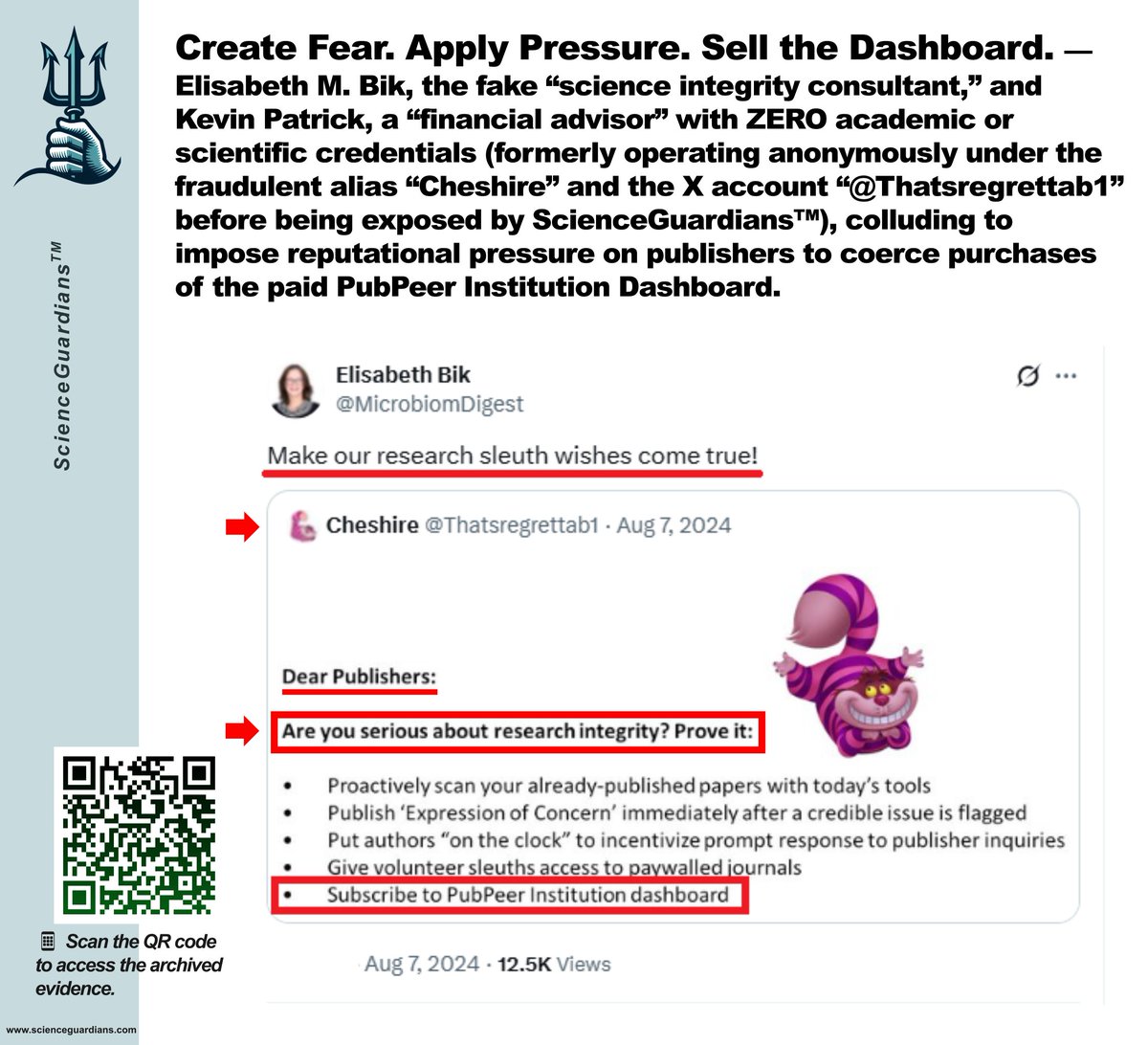
🚨 SCANDAL UNFOLDING (CONTINUED): Create Fear, Apply Pressure, Sell the Dashboard — The PubPeer “PubSmear” Network Mob
As previously documented in our exposé, Elisabeth M. Bik, the fake “science integrity consultant” colludes with Kevin Patrick, a fraudulent “financial advisor” with ZERO academic or scientific credentials, and a fraudulent Russian national and notorious online harasser and stalker, Alexander Magazinov — who is also allegedly engaged in a pay-for-pressure scheme, trading enforced retractions for money — to coerce publishers and journals into purchasing the so-called PubPeer Dashboards.
👉 x.com/SciGuardians/status/20…
⚠️ It is important to highlight that we at ScienceGuardians™ have also documented and securely archived that all critiques detailing extensive scientific and ethical violations in the published work of Elisabeth M. Bik — including but not limited to undisclosed redundant publication, figure misattribution and provenance deception, opacity in human-subjects ethics, IRB scope inconsistencies, and severe conflicts of interest requiring retractions or Expressions-of-Concern — were systematically censored and removed from the compromised PubPeer platform.
👉 x.com/SciGuardians/status/19…
🚨 We now present new, concrete, verifiable evidence showing Bik colluding with Kevin Patrick to impose reputational pressure on publishers to coerce purchases of the paid PubPeer Institution Dashboard.
Create fear → apply pressure → sell the “solution.”
These #fraudulent actors harassing, smearing, and defaming members of the academic community are riddled with enormous undisclosed financial conflicts of interest.
📢 More to come.
🔱 @SciGuardians
Empowering the Academic Community
#ElisabethBik #PubPeerScandal #PubSmear #ScienceFraud #ScienceHypocrisy #ImageForensics #ResearchEthics #AcademicPublishing #Breaking #News
5
47
126
3,907

Just launched a tool for storing digital files on Trac Network: Hyperfiles Minter.
Built by the community, for the community.
🔗 github.com/dustinAI/hyperfil…
#trac #tap #nft @TracNetwork
3
5
20
1,281

6 Jun 2025
FYI. Hyperfiles are attracted to pre- breakout longs and shorts. I'm not defending @JamesWynnReal. But he had longs with pre-breakout coins, that had physically developed ranges. They were under breakout price, so criminal and immoral, but that does not make him a hyperfile.
3
3
163

5 Feb 2025
Gmgmmm Treegens💚
What do you get when you combine determination, sweat, and a whole lot of love for the planet?
A Guinness World Record🏆
Breaking records wasn’t the only goal—I planted these trees for YOU🫵
Watch this epic journey unfold and find your tree then, tell me in the comments where you’d plant yours!
16538 SpellBound AI
16539 John wakili
16540 stacks
16541 Farah Choudhary
16542 Nadir Khan
16543 Mark Philpott Photos
16544 ♓🎈Exnihilo
16545 BluntDAO
16546 Hari world
16547 Amaan
16548 Z≡min
16549 Alex Hale 🌒
16550 AoT
16551 Lexi 🐱
16552 raidreadsowin1980
16553 Masud ADD 🐉 $MON
16554 SolmonG
16555 Kiryl Artsymenia
16556 L3 🌎
16557 Protofire.io
16558 LÌGH†💥
16559 AL CABAL
16560 Asha
16561 KIM MAN JUN
16562 DigitalDruid 🛠
16563 Scottie.ENJ 🟩
16564 🌊 shisler671.eth 🦎🐸🐇
16565 father-abraham.eth
16566 FunDeSci - NFT fundraising for DeSci
16567 IamLotus.eth
16568 JOnasty
16569 Green Dragon Token
16570 CousinPhil
16571 reneil.eth 🕳🐇
16572 cryptoreuMD.eth/3972.⌐◨-◨ 🦇🔊🏴🐡🛡️
16573 Celo en español🦇🌳🟢
16574 Ide
16575 🅢🅐🅖🅗🅘
16576 Lucia
16577 GreenStix
16578 Blockstars Technology
16579 ⚡️BushyInCrypto
16580 野葛
16581 N.R. Legend
16582 Bithi Rahman
16583 Crazy Hornets
16584 Gachi
16585 Mohammed Abba Saleh
16586 Mohammed Hussain Chekkarikal
16587 DRaCO DYNASTY
16588 azeeez olamilekan
16589 Habitant Abraham 🤞🏽
16590 María Tallaferro
16591 Solarpunkverse
16592 Tasha Mapenzi
16593 Tapha
16594 ES
16595 Rono Chonginio
16596 College DAO
16597 Raj 🚀
16598 Chris Georgen
16599 A_Gem
16600 shazzar00niii ᕕ( ᐛ )ᕗ🍝
16601 𝚉𝚊𝚗 𝚇𝚇
16602 Scooper Leash_USA
16603 Ibnsalihh
16604 RaJith viduranga
16605 Joan Mmbohe
16606 Sunshine Trending Signals
16607 Otters_momo
16608 Sara La Rocca
16609 Clifford
16610 Green Planet Conservation Initiative
16611 Presley Steuber
16612 Brett DiNovi & Associates
16613 Partnership in Human Development (PiHD)
16614 Mr. environment
16615 David villegas
16616 Rafael Hernández
16617 Green Pill CIV
16618 officewizard7🇱🇨
16619 Ferdinand
16620 Charlotte Marselle
16621 saqib javed
16622 Mehrain Fog
16623 GoTravelGreen.Org
16624 AYA
16625 PlanetXNFTs
16626 Ehsan Rezazadeh
16627 rareperry
16628 Johnny Solarpunk
16629 Gaby Vaillancourt ≠
16630 Thing 1
16631 Nono 🦇🔊⋈
16632 Waterwaterwaterwaterwaterwater
16633 Zane Starr 🌠
16634 Shey
16635 LucasVincent
16636 Regen 🍄 (🌾 Moon phase)
16637 Sape | Hylo
16638 Mark
16639 Umair Ahmad
16640 MAX'S AXIS
16641 Lisbet
16642 Blessing madison
16643 Lydie James
16644 Getahun
16645 Mr Habib
16646 Lyric Harmony
16647 Rajendra Singh
16648 Longking
16649 AmoryDimaano
16650 ǦemMaster D
16651 Geoship Homes
16652 Zahra Solati
16653 callme2spice
16654 Min-Si Wang
16655 Cat Morph
16656 Sal0Mander 🧠🍄📎🐸
16657 Cris (🐝,🐝)
16658 Dragverse ✨ MASS EXODUS ERA
16659 Jonathan Davis
16660 Arjun Rao
16661 Danny
16662 Archi
16663 ZenerGier
16664 mubashar ali
16665 Lasse Tur
16666 jangra.arb ⚔️ | (꧁IP꧂)
16667 Khaulaid Khan
16668 Ethereal Forest
16669 Scott Steiner
16670 Hoang Tuan
16671 MINNIE
16672 𝗔⩎⩎𝘆.𝗘𝗧𝗛 🌐
16673 Aimee Gilmore
16674 Bharat
16675 Sterling Space Quest
16676 Block Link Digital 🌶️
16677 viridis.info
16678 B ⋆ marjorie
16679 Satish Chaudhary
16680 mitra_karimi
16681 Coach K Crypto
16682 Arastoo4d.team
16683 alphagators
16684 MuMu CLONE
16685Sunflower EcoTech🌻
16686 Philipp Walz
16687 THΞGABO🍌
16688 ineverwearsunscreen ❤️ Memecoin
16689 Mangla
16690 orimar
16691 BNice
16692 beanz♨️🍊
16693 🔶MatTheFrog🔶
16694 neko.base.eth 🥁 | ꧁IP꧂ 🚀DAOBase 🕹️ $RCADE (✸,✸)
16695 Hold Bitcoin Club
16696 Francis Js Avendaño
16697 Hojlund
16698 Messi
16699 ALART
16700 Kevin Mwangi
16701 🟦 Sergio
16702 Shabbir Bashir.
16703 OrnΞllaWeb3.eth
16704 Climate Change Fighters
16705 KubaJ
16706 🥷Cobbso
16707 Vitamins Heart ❤️ Care
16708 Sheikh Qamarislam
16709 Eliod 👨💻 🌴
16710 Trader Biden
16711 Cyclops🇮🇳
16712 Rock
16713 OpxM
16714 Pedro Lomanto
16715 Ama Earth Group
16716 Larry Ochoa
16717 TheBigBoss.NFT
16718 SergejsSofjins
16719 Zuzu🌠
16720 Thorndyke
16721 MikyCro
16722 Monad Euphoria
16723 Planeta View
16724 Sympoiesis
16725 Randall P #ColiazulCulturalCommons $GIV
16726 UMESH PURI
16727 Kira Golikova
16728 Leila_art9
16729 kawamatsuui
16730 chime precious
16731 JudyMill
16732 Fereşte
16733 Slsummer
16734 NiLO🩶Ambidextrous
16735 Kate Chebet 💫
16736 Phaéthōn🌅
16737 Kamil ♓️
16738 The Da-Silva Foundation
16739 KingExhibits
16740 Feru.⌐◨-◨
16741 Archie, Ralphie, Fido, Milo, old guy and weeds
16742 dexkit.io 🦇🔊
16743 Token Engineering Commons
16744 Elchicodelasplantas.eth
16745 Hyperfiles
16746 eth-nodes
16747 Frankie Colamarino
16748 Centro de E-Learning UTN BA
16749 E D I F I C A
16750 NekoGames.gg
16751 ₿osque Ventures 🌳✨
16752 WeDevYou | Construyamos Juntos
16753 W3 Gaming GO - 2024 Cooming Soon 📍🇦🇷
16754 🚀 Awakening Digital | Marketing & Multimedia 💫
16755 ⚡ GEN3SYS DAO | Art, Technology & Music 🌎✨
16756 gib water pls -
16757 TDCM
16758 𝕄𝕤 𝔻𝕚𝔾𝕚 🌬ᴛᴇ͛ᴄʜ ᴡʜɪ͛ꜱᴘᴇ͛ʀᴇ͛ʀ⚡ᴬᴵ, ˣᴿ, ᴮˡᶜᵏᶜʰⁿ
16759 Bandwidth
16760 P彡RICCOMA
16761 Lastborn Signature Outfits
16762 WomxnInWeb3.TE
16763 Tum Rogers
16764 CJB
16765 Kokonut Foundation
16766 Johan L
16767 Sky ☘️
16768 David
16769 Clara Michtel
16770 AKRONIX_CRYPTO
16771 ⚜️𝕽𝖚𝖘𝖑𝖆𝖓 𝕽𝖎𝖈𝖍⚜️🟣💎💲
16772 Bitvizory
16773 William Zhang Wattanasin
16774 StaRKe
16775 RecursiveStakes
16776 Jollé
16777 ADAPTAVISION
16778 Juanse
16779 ADEOSUN TAYELOLU ABDULKABIR
16780 cryptonyang2
16781 Jimmy Montaño H.
16782 monsieur v
16783 Jerry 😼
16784 phnode
16785 Mark 🍊 | Karak Invite Code 👉 Z23m1
16786 ElGospel.Ton
16787 NFT_R_R
16788 HeroLabsReloaded
16789 Degen Mustard
16790 Berna🏴☠️
16791 Arend de Haas
16792 George Tarantino jr
16793 Brad Harris
16794 A Journey of Hope
16795 𝕂atya 🪅
16796 Vane 🤍🖤
16797 $ʜɪᴠɢᴜɴ ᴛʜᴇ ᴅᴇᴠ ᴅᴇᴍᴏɴ 😈🐉🧙🏾♂️
16798 TheBigShow
16799 Tora
16800 L x O
16801 Kawaifarm
16802 Flyz
16803 Busur
16804 𝗝𝗔𝗪𝗡𝗜𝗘𝗦𝗧
16805 not Arnold (Parody) 🔥💪
16806 Bohica
16807 Jason16808Guy Le Douce 🛰️
16809 Telvin
16810 Dave³
16811 ExoticWhipz
16812 Krypto Kris
16813 EmissionsController
16814 Trader Hakeem⚡
16815 Modou J2
16816 hiepnt.dg
16817 Carlson De Morgan ❤️
16818 Jacky 🧡
16819 Pastor Yokana Katongole
16820 laugh out loud
16821 Maia Zennie
16822 Metaverse John
16823 Vladmir 👑
16824 2Tone 🌲
16825 Kotoki
16826 Sr Peters ETH
16827 Tessa Nelson
16828 broski.sol
16829 Jimmy StoxRox
16830 Chidi
16831 Kendi Peninnah
16832 Parks Token
16833 Mamadi Sabally
16834 MR_MACCRO
16835 olanetsoft is now active
16836 BaseX 🌱 continues as Impact Evaluation Foundation
16837 ⚡ GWRich3 (👾,🐝) ⚡
#LetsGROW
4
2
9
571
17 Dec 2024
Gmgmmm💚
What do you get when you combine determination, sweat, and a whole lot of love for the planet?
A Guinness World Record🏆
Breaking records wasn’t the only goal—I planted these trees for YOU🫵
Watch this epic journey unfold and find your tree then, tell me in the comments where you’d plant yours!
16538 SpellBound AI
16539 John wakili
16540 stacks
16541 Farah Choudhary
16542 Nadir Khan
16543 Mark Philpott Photos
16544 ♓🎈Exnihilo
16545 BluntDAO
16546 Hari world
16547 Amaan
16548 Z≡min
16549 Alex Hale 🌒
16550 AoT
16551 Lexi 🐱
16552 raidreadsowin1980
16553 Masud ADD 🐉 $MON
16554 SolmonG
16555 Kiryl Artsymenia
16556 L3 🌎
16557 Protofire.io
16558 LÌGH†💥
16559 AL CABAL
16560 Asha
16561 KIM MAN JUN
16562 DigitalDruid 🛠
16563 Scottie.ENJ 🟩
16564 🌊 shisler671.eth 🦎🐸🐇
16565 father-abraham.eth
16566 FunDeSci - NFT fundraising for DeSci
16567 IamLotus.eth
16568 JOnasty
16569 Green Dragon Token
16570 CousinPhil
16571 reneil.eth 🕳🐇
16572 cryptoreuMD.eth/3972.⌐◨-◨ 🦇🔊🏴🐡🛡️
16573 Celo en español🦇🌳🟢
16574 Ide
16575 🅢🅐🅖🅗🅘
16576 Lucia
16577 GreenStix
16578 Blockstars Technology
16579 ⚡️BushyInCrypto
16580 野葛
16581 N.R. Legend
16582 Bithi Rahman
16583 Crazy Hornets
16584 Gachi
16585 Mohammed Abba Saleh
16586 Mohammed Hussain Chekkarikal
16587 DRaCO DYNASTY
16588 azeeez olamilekan
16589 Habitant Abraham 🤞🏽
16590 María Tallaferro
16591 Solarpunkverse
16592 Tasha Mapenzi
16593 Tapha
16594 ES
16595 Rono Chonginio
16596 College DAO
16597 Raj 🚀
16598 Chris Georgen
16599 A_Gem
16600 shazzar00niii ᕕ( ᐛ )ᕗ🍝
16601 𝚉𝚊𝚗 𝚇𝚇
16602 Scooper Leash_USA
16603 Ibnsalihh
16604 RaJith viduranga
16605 Joan Mmbohe
16606 Sunshine Trending Signals
16607 Otters_momo
16608 Sara La Rocca
16609 Clifford
16610 Green Planet Conservation Initiative
16611 Presley Steuber
16612 Brett DiNovi & Associates
16613 Partnership in Human Development (PiHD)
16614 Mr. environment
16615 David villegas
16616 Rafael Hernández
16617 Green Pill CIV
16618 officewizard7🇱🇨
16619 Ferdinand
16620 Charlotte Marselle
16621 saqib javed
16622 Mehrain Fog
16623 GoTravelGreen.Org
16624 AYA
16625 PlanetXNFTs
16626 Ehsan Rezazadeh
16627 rareperry
16628 Johnny Solarpunk
16629 Gaby Vaillancourt ≠
16630 Thing 1
16631 Nono 🦇🔊⋈
16632 Waterwaterwaterwaterwaterwater
16633 Zane Starr 🌠
16634 Shey
16635 LucasVincent
16636 Regen 🍄 (🌾 Moon phase)
16637 Sape | Hylo
16638 Mark
16639 Umair Ahmad
16640 MAX'S AXIS
16641 Lisbet
16642 Blessing madison
16643 Lydie James
16644 Getahun
16645 Mr Habib
16646 Lyric Harmony
16647 Rajendra Singh
16648 Longking
16649 AmoryDimaano
16650 ǦemMaster D
16651 Geoship Homes
16652 Zahra Solati
16653 callme2spice
16654 Min-Si Wang
16655 Cat Morph
16656 Sal0Mander 🧠🍄📎🐸
16657 Cris (🐝,🐝)
16658 Dragverse ✨ MASS EXODUS ERA
16659 Jonathan Davis
16660 Arjun Rao
16661 Danny
16662 Archi
16663 ZenerGier
16664 mubashar ali
16665 Lasse Tur
16666 jangra.arb ⚔️ | (꧁IP꧂)
16667 Khaulaid Khan
16668 Ethereal Forest
16669 Scott Steiner
16670 Hoang Tuan
16671 MINNIE
16672 𝗔⩎⩎𝘆.𝗘𝗧𝗛 🌐
16673 Aimee Gilmore
16674 Bharat
16675 Sterling Space Quest
16676 Block Link Digital 🌶️
16677 viridis.info
16678 B ⋆ marjorie
16679 Satish Chaudhary
16680 mitra_karimi
16681 Coach K Crypto
16682 Arastoo4d.team
16683 alphagators
16684 MuMu CLONE
16685Sunflower EcoTech🌻
16686 Philipp Walz
16687 THΞGABO🍌
16688 ineverwearsunscreen ❤️ Memecoin
16689 Mangla
16690 orimar
16691 BNice
16692 beanz♨️🍊
16693 🔶MatTheFrog🔶
16694 neko.base.eth 🥁 | ꧁IP꧂ 🚀DAOBase 🕹️ $RCADE (✸,✸)
16695 Hold Bitcoin Club
16696 Francis Js Avendaño
16697 Hojlund
16698 Messi
16699 ALART
16700 Kevin Mwangi
16701 🟦 Sergio
16702 Shabbir Bashir.
16703 OrnΞllaWeb3.eth
16704 Climate Change Fighters
16705 KubaJ
16706 🥷Cobbso
16707 Vitamins Heart ❤️ Care
16708 Sheikh Qamarislam
16709 Eliod 👨💻 🌴
16710 Trader Biden
16711 Cyclops🇮🇳
16712 Rock
16713 OpxM
16714 Pedro Lomanto
16715 Ama Earth Group
16716 Larry Ochoa
16717 TheBigBoss.NFT
16718 SergejsSofjins
16719 Zuzu🌠
16720 Thorndyke
16721 MikyCro
16722 Monad Euphoria
16723 Planeta View
16724 Sympoiesis
16725 Randall P #ColiazulCulturalCommons $GIV
16726 UMESH PURI
16727 Kira Golikova
16728 Leila_art9
16729 kawamatsuui
16730 chime precious
16731 JudyMill
16732 Fereşte
16733 Slsummer
16734 NiLO🩶Ambidextrous
16735 Kate Chebet 💫
16736 Phaéthōn🌅
16737 Kamil ♓️
16738 The Da-Silva Foundation
16739 KingExhibits
16740 Feru.⌐◨-◨
16741 Archie, Ralphie, Fido, Milo, old guy and weeds
16742 dexkit.io 🦇🔊
16743 Token Engineering Commons
16744 Elchicodelasplantas.eth
16745 Hyperfiles
16746 eth-nodes
16747 Frankie Colamarino
16748 Centro de E-Learning UTN BA
16749 E D I F I C A
16750 NekoGames.gg
16751 ₿osque Ventures 🌳✨
16752 WeDevYou | Construyamos Juntos
16753 W3 Gaming GO - 2024 Cooming Soon 📍🇦🇷
16754 🚀 Awakening Digital | Marketing & Multimedia 💫
16755 ⚡ GEN3SYS DAO | Art, Technology & Music 🌎✨
16756 gib water pls -
16757 TDCM
16758 𝕄𝕤 𝔻𝕚𝔾𝕚 🌬ᴛᴇ͛ᴄʜ ᴡʜɪ͛ꜱᴘᴇ͛ʀᴇ͛ʀ⚡ᴬᴵ, ˣᴿ, ᴮˡᶜᵏᶜʰⁿ
16759 Bandwidth
16760 P彡RICCOMA
16761 Lastborn Signature Outfits
16762 WomxnInWeb3.TE
16763 Tum Rogers
16764 CJB
16765 Kokonut Foundation
16766 Johan L
16767 Sky ☘️
16768 David
16769 Clara Michtel
16770 AKRONIX_CRYPTO
16771 ⚜️𝕽𝖚𝖘𝖑𝖆𝖓 𝕽𝖎𝖈𝖍⚜️🟣💎💲
16772 Bitvizory
16773 William Zhang Wattanasin
16774 StaRKe
16775 RecursiveStakes
16776 Jollé
16777 ADAPTAVISION
16778 Juanse
16779 ADEOSUN TAYELOLU ABDULKABIR
16780 cryptonyang2
16781 Jimmy Montaño H.
16782 monsieur v
16783 Jerry 😼
16784 phnode
16785 Mark 🍊 | Karak Invite Code 👉 Z23m1
16786 ElGospel.Ton
16787 NFT_R_R
16788 HeroLabsReloaded
16789 Degen Mustard
16790 Berna🏴☠️
16791 Arend de Haas
16792 George Tarantino jr
16793 Brad Harris
16794 A Journey of Hope
16795 𝕂atya 🪅
16796 Vane 🤍🖤
16797 $ʜɪᴠɢᴜɴ ᴛʜᴇ ᴅᴇᴠ ᴅᴇᴍᴏɴ 😈🐉🧙🏾♂️
16798 TheBigShow
16799 Tora
16800 L x O
16801 Kawaifarm
16802 Flyz
16803 Busur
16804 𝗝𝗔𝗪𝗡𝗜𝗘𝗦𝗧
16805 not Arnold (Parody) 🔥💪
16806 Bohica
16807 Jason16808Guy Le Douce 🛰️
16809 Telvin
16810 Dave³
16811 ExoticWhipz
16812 Krypto Kris
16813 EmissionsController
16814 Trader Hakeem⚡
16815 Modou J2
16816 hiepnt.dg
16817 Carlson De Morgan ❤️
16818 Jacky 🧡
16819 Pastor Yokana Katongole
16820 laugh out loud
16821 Maia Zennie
16822 Metaverse John
16823 Vladmir 👑
16824 2Tone 🌲
16825 Kotoki
16826 Sr Peters ETH
16827 Tessa Nelson
16828 broski.sol
16829 Jimmy StoxRox
16830 Chidi
16831 Kendi Peninnah
16832 Parks Token
16833 Mamadi Sabally
16834 MR_MACCRO
16835 olanetsoft is now active
16836 BaseX 🌱 continues as Impact Evaluation Foundation
16837 ⚡ GWRich3 (👾,🐝) ⚡
#LetsGROW
15
8
54
1,751

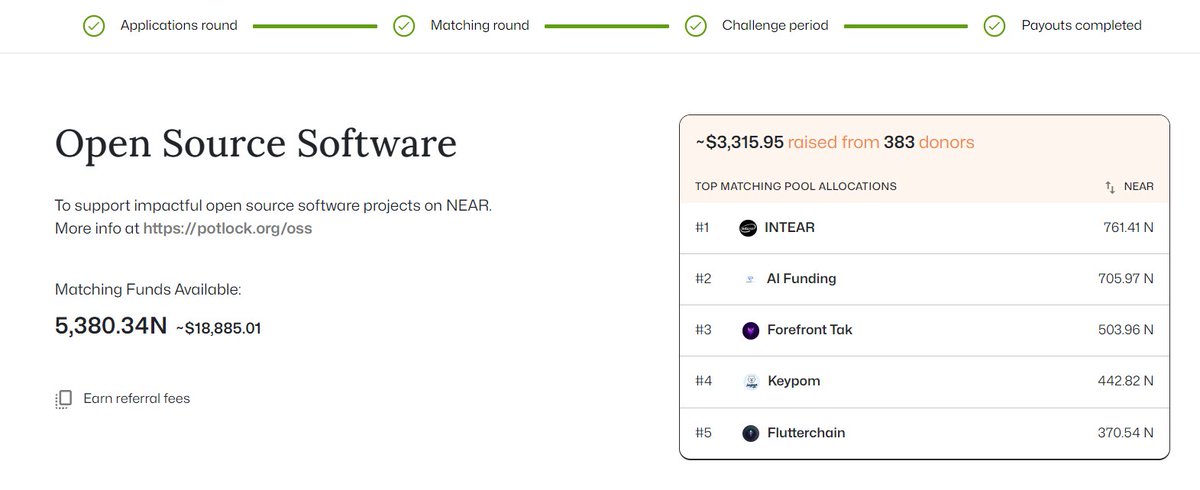
Results (from over ~ 5380.33 $NEAR Payouts)
INTEAR - 761.41N @intelnear
AI-Funding - 705.97N
Forefront Tak - 503.96N @Forefront_Tak
Keypom - 442.82N @keypomxyz
Flutterchain - 370.54N @vlmoon99
Tenkdao - 354.40N @TenkDAO
Nearbadger - 253.69N
bos-workspace - 249.69N
Hyperfiles - 237.97N @HyperfilesOrg
Nearcatalog - 237.29N @nearcatalog
Alem-lib - 228.16N
Opact_near - 169.13N @opactprotocol
Refound Labs - 169.13N @_refound
Goodworks -162.01N
Socialcap - 135.70N @socialcap_
Chatafisha - 116.85N @Chatafisha
I Am Human - 98.11N
Agents with benefits - 84.56N @agentswbenefits
NEAR Script - 56.14N
Republicdev - 38.80N @re_public_dev
NEAR Funds -4.00N
2
3
6
266

12 Jun 2024
9 Jun 2024

Join us Wednesday at 18:00 UTC for a riveting space!
Our growing community of builders will help you create a blueprint & launch your own construction site 🚧 #BUILD
Explore opportunities to earn rewards by contributing to impactful projects 👷 #OpenWeb
x.com/i/spaces/1zqKVqBdYOlxB
3
170

19 May 2024
Did you say types? 👀 @HyperfilesOrg
Algebraic types are a subset of composite types (a central pattern in the Hyperfiles knowledge graph).
PSA: the "docs" in the Hyperfiles app are still linked to the @OpenCann_ R&D Notion, but there are some fun pages in there you might enjoy perusing such as: opencann.notion.site/Type-Re…
Drop me a dm if interested in chatting sometime 🫡
3
34
7 May 2024
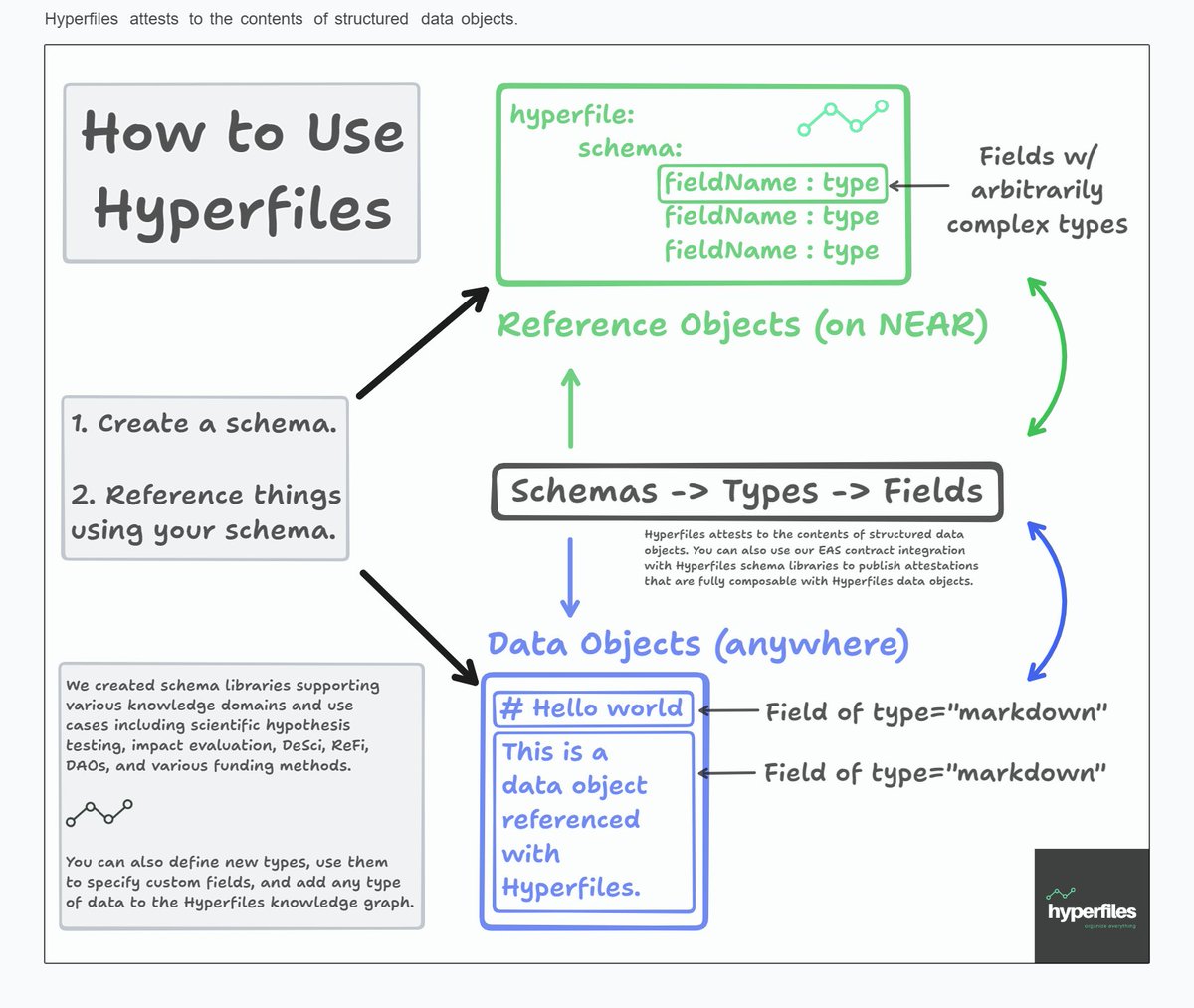
We're creating a semantic data model to promote composability and standardization across knowledge domains.
Deploying early versions of curated schema libraries this week using the revised Hyperfiles meta-schema specification.
h/t @eas_eth for inspiration & encouragement 🎩🙏
1
1
3
212

5 May 2024
No olviden darse una vuelta a los proyectos de @banklessDAO en @gitcoin
DeSci Bankless de @flow_science
OpenCann (dApps & Apps round) explorer.gitcoin.co/#/round/…
Hyperfiles (dApps & Apps round) explorer.gitcoin.co/#/round/…
Hyperfiles (Hypercerts Round) explorer.gitcoin.co/#/round/…
@BanklessAcademy
DApps & Apps explorer.gitcoin.co/#/round/…
ENS Identity explorer.gitcoin.co/#/round/…
@getbcard:
explorer.gitcoin.co/#/round/…
Bulwark
explorer.gitcoin.co/#/round/…
@nacionbankless
explorer.gitcoin.co/#/round/…
1
4
10
398

30 Apr 2024
See the response below:
1)I can promise you that passing any meaningful peer review is far more difficult than responding to your "severe criticism." For us, it's not that big of a deal. For instance, this is the first study in the scientific literature to produce actual transaction data on a public blockchain. Unfortunately, we wouldn't call your opinion more relevant than that of the journal editor and peer reviewers, given your abysmal h-index and lack of any blockchain-based published scientific literature. However, we welcome any input and are ready to discuss any concern regardless. INNBC DApp is a completely free-to-use tool and there is no hidden fee for the user, who is only required to pay the network fee to generate the transaction. It is offered to users in the same way it would be provided by a nonprofit organization. It was not created to generate a profit but to provide a free tool for research scientists to easily store their research data on the blockchain, generating a permanent, decentralized record of scientific data. For someone to assume that contract code is not open source, it would mean they lack even the basics of blockchain technology, given that the contract's source code is publicly available for anyone to view, audit, and use from the contract page, as reported in the paper. The very open nature of a blockchain ensures it. It would not make sense to make a direct comparison with an off-chain indexing database such as OpenAlex, given that its intended purpose is vastly different from that of INNBC DApp. So you totally miss the point of this work. With an off-chain database, you have substantially superior performance; data is updated instantaneously (no need to wait for block time), storage is cheaper, and so on. But that is not what a blockchain is about. Blokchain is about ensuring that once some data has been added to the database, it will be virtually impossible to alter the data. The same cannot be said for an off-chain database. It does not provide the same level of security as a blockchain. It would be orders of magnitude less complex to alter the data of an off-chain database than thousands of nodes on a blockchain. And we are looking for a way to protect scientific data from any possible alteration or falsification. The goal of INNBC DApp is to take advantage of the unique features that you can expect from a blockchain that are not available from off-chain solutions. Features such as immutability, decentralization, security, timestamping, and identity, with a specific application for biomedical data. Performance is not the priority; it is rather data integrity. So that we can provide research scientists with an easy way to upload their data on the blockchain to ensure permanent availability for the data and proof-of-existence, as well as to protect authorship. The advantage of using a blockchain with respect to off-chain solutions is that the data can never be modified or tampered with in any way. Having said that, we provide a very thorough analysis of the on-chain storage cost by storing on the blockchain a large number of different types of data, including many complete research articles, at a relatively low cost. See Tab. 1 in the paper. With regard to data privacy protection, we specifically address this issue in the paper. Now, it should be mentioned that the main use case of INNBC DApp is to upload data from sources that are intended to be accessible to the public, such as data published in scholarly journals. This represents an ideal application for posting data on a public blockchain. But there are also specific applications that require special attention, including when handling sensitive privacy information that can be found in healthcare data. In such cases, we propose AES data encryption as a privacy-preserving processing technique for complete data anonymization. In fact, the AES encryption algorithm has been proposed to secure medical health records in hospital systems that use cloud storage and need to protect sensitive data.
2)Science is not democratic. Anything that is not peer-reviewed would be considered “pseudoscience” and incompatible with the scientific method. Peer review evaluates a study's validity, importance, and originality in order to serve as a filter and guarantee that only high-caliber research is published, especially in reputable journals. In this case, the data, tools, and methods presented in this work have undergone peer-review. We are thereby creating the foundation for legitimate decentralized science (#DeSci). As a professional scientist who is also a member of the scientific community, I find it extremely unlikely that any credible scientist would accept any work that has not received peer-review and has not, therefore, been certified by the scientific community as valid and scientifically sound. And we would strongly advise against any projects that would define themselves as “DeSci” and lack peer review. Furthermore, I would highly advise against any project that considers itself to be "DeSci" and does not undergo peer review. We would be discussing pseudoscience, not science, in the absence of peer review. Users would never be able to trust a clinical application project if it refused to go through peer review. Peer review is crucial for DeSci, especially considering the crypto industry's already poor standing and lack of credibility.
3)This is totally incorrect. We developed a specific smart contract that can generate a transaction and store the desired data as “transaction input data," which is additional data that can be attached to a transaction. Specifically, a transaction has an “input data field” that can include two types of data: function call data and arbitrary data. Arbitrary data are not executed by the Ethereum Virtual Machine (EVM) and translate into human-readable text in UTF-8 format. Arbitrary data is where we include the data that we post on the blockchain with the INNBC DApp. As such, our design choice was to store the data not directly in the smart contract but within the transaction itself. We believe this is a clever way of storing biomedical data on a blockchain. There is no error generated due to special characters in the uploaded text. At worst, they would not be displayed correctly, but no error would be generated. The strategy of using Base64 encoding is implemented to allow for the storage of a very large number of different file formats (e.g., documents, images, audio, and video). In fact, we initially even stored the complete raw text of one of our previous research articles. Then, we uploaded the data as files for the successive experiments. Please refer to the paper.
“The data isn't encrypted so their tool can only be used to create references for existing data in the public domain - which defeats their stated purpose for building the app”
Clearly, you are not understanding the proposed use case of the DApp. First off, the main use case of this application is to upload data that is intended to be public, such as the data generated by scientific studies included in scholarly publications, for which there is no need to be encrypted. Let’s imagine a scenario where we have a research scientist who is performing groundbreaking research and, before sharing the data publicly with other scientists, wants to protect his data from being stolen by other people who could claim it as theirs. Normally, it can be challenging to produce such evidence, particularly in cases where work is carried out in large teams, which can result in disagreements over authorship. On the other hand, if the data, including authorship information, are recorded on a blockchain, the timestamp can establish that the data were created on a certain day and time, giving each author a clear and unambiguous reference. Specifically, recording data on a blockchain provides us with a temporal and permanent track of their creation, allowing us to identify subsequent falsifications and revisions. Additionally, rather than just creating references to the existing data, we are fully storing the data itself on the blockchain. In fact, in most blockchain tools proposed by other authors, the actual data is stored off-chain, with only a hash of the data stored on the blockchain. They use what is defined as a “blockchain anchor” instead, a unique digital fingerprint of given data generated by hashing the original data with a consistent hashing function such as SHA256. This representation of the data is stored on-chain, while the original data is stored off-chain. This approach can be used for proof of validity and proof of existence, but it cannot ensure the permanent availability of the raw data. By contrast, we propose the strategy of storing the raw data on-chain on a permissionless public network such as BNB Smart Chain, presenting a truly decentralized storage solution that takes full advantage of blockchain technology. Secondly, we completely address in the paper the scenario in which the researchers would want to upload sensitive data on the chain, as in the case of healthcare data containing sensitive information. To protect patient privacy, if this application is used for such data, it must be used in compliance with current regulations, such as the GDPR. In the paper, we provide a real-world example of how the privacy issue could be solved by encrypting the data with the AES encryption algorithm, making the information unreadable to the public without the encryption key. A whole section of the paper is dedicated to the protection of data privacy.
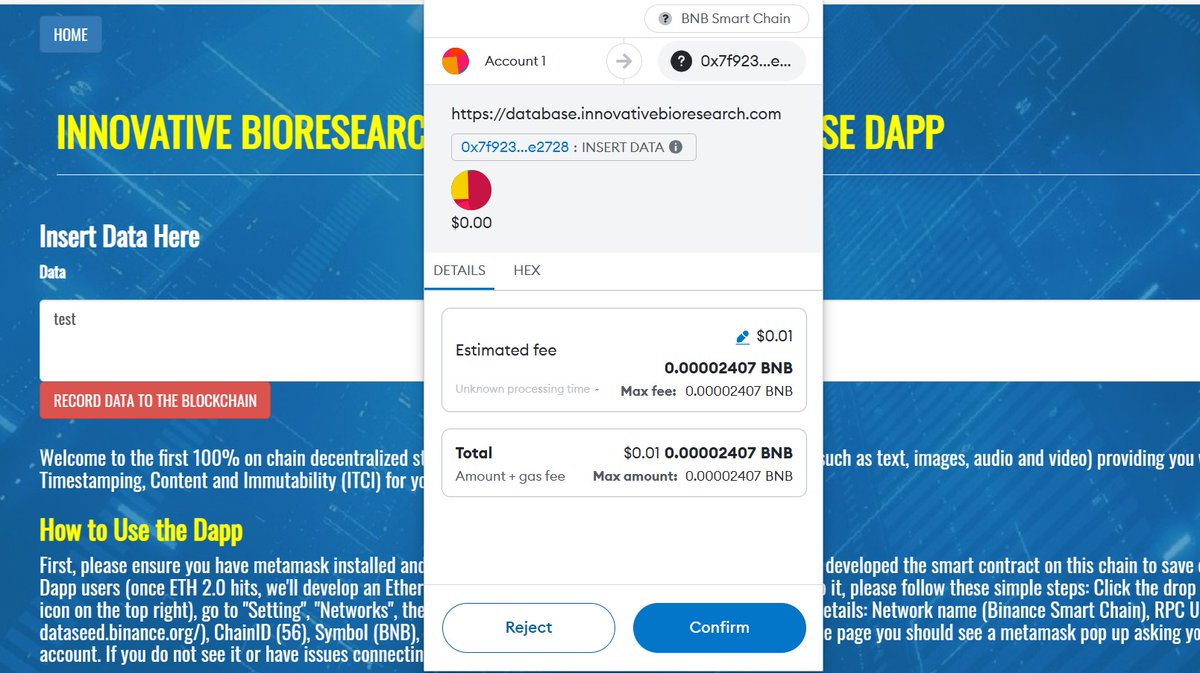
“It doesn't make economic/business sense to store data on BNB, an EVM chain with limited horizontal scaling. They should have at least enabled the opBNB L2 to leverage a rollup and mitigate cost data volume settled on L1. It would cost nearly $80 to save the word "test" using their dApp (screenshot #1). No wonder they didn't run a benchmarking trial.”
Easy cowboy. This is 100% inaccurate, but thank you for pointing this out. This happens because you have no balance in your BNB wallet. We measured chain storage costs as low as 14 USD per megabyte. Actually, to save the word "test,” it would cost $0.01 (see screenshot #1) and to prove this, we just performed this transaction (bscscan.com/tx/0x50ad2358f55…) in which we stored the word “test” for a 0.000024075 BNB ($0.01) fee (see screenshot #2).
Secondly, we address in the paper the rationale for using L1 with respect to L2 for biomedical data:
”In this regard, we believe that layer-1 is more suitable for our DApp because it offers the greatest decentralization and data immutability, whereas layer-2 provides the benefit of extremely low gas costs but at the expense of decentralization. Given that we are proposing to store data on-chain, such as documents and images, we also need to consider the possibility that malevolent actors could flood the network with random data. Actually, layer-2's incredibly low fees might be a double-edged sword because they would make spamming attacks much less expensive as well, making the chain much more vulnerable to an influx of “garbage” data. By contrast, layer-1 would require significantly higher fees to generate the same amount of spam transactions, effectively discouraging such attacks. In order to allow for reasonable storage costs, transaction fees must be low enough, but not so low as to encourage malicious traffic attacks. For this reason, we believe the BNB Smart Chain layer-1 network is currently the best option for INNBC DApp.”
“Alternate Solutions: @oceanprotocol, @eas_eth, @HyperfilesOrg, Hyperfiles Deets”
None of these solutions store the raw data on chain. As such, we must rely on storage solutions external to the blockchain for the availability of the documents without taking advantage of its immutability for the raw data. By contrast, with INNBC DApp, we take full advantage of immutability by storing all data on-chain, with a true decentralized storage solution.
“Comparatively, the INNBC claim to be "the first 100% on chain decentralized storage Dapp for biomedical and general purpose data" is frankly, complete BS and highlights just how flawed & ineffective peer-review is when managed by exploitative publishers. Their dApp is not 100% on-chain and it's definitely not the first to do what it does.”
This is totally inaccurate and given the very open nature of blockchain technology, anyone can verify that INNBC DApp stores the raw data on chain by simply browsing some of the many sample data we stored on chain. For reference, this is an image stored on the blockchain, 100% on chain, as Base64-encoded text:
bscscan.com/tx/0x6831da5deb6…
You can decode the text from Base64 back to a file and obtain the original image file (see screenshot #3). Anyone can perform such a procedure and verify that our claim is 100% correct.
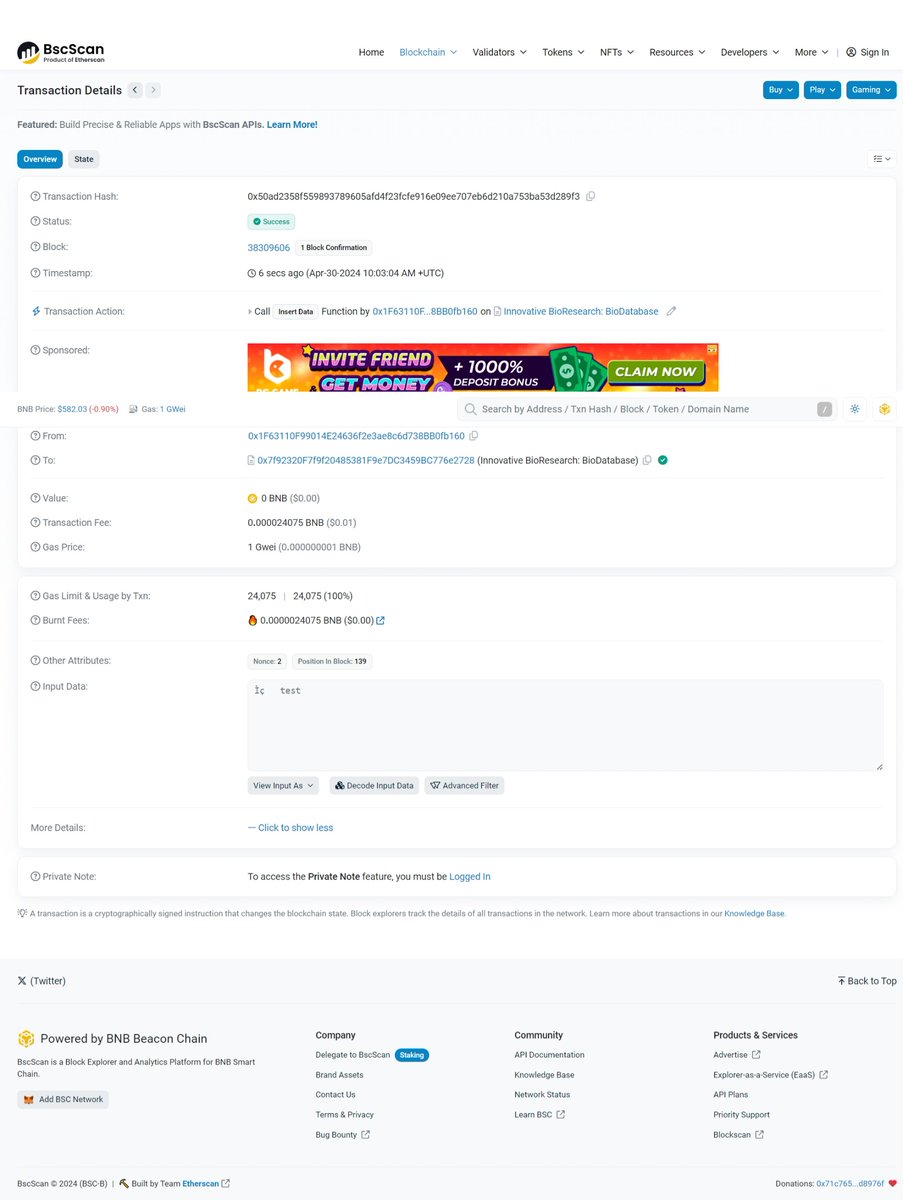
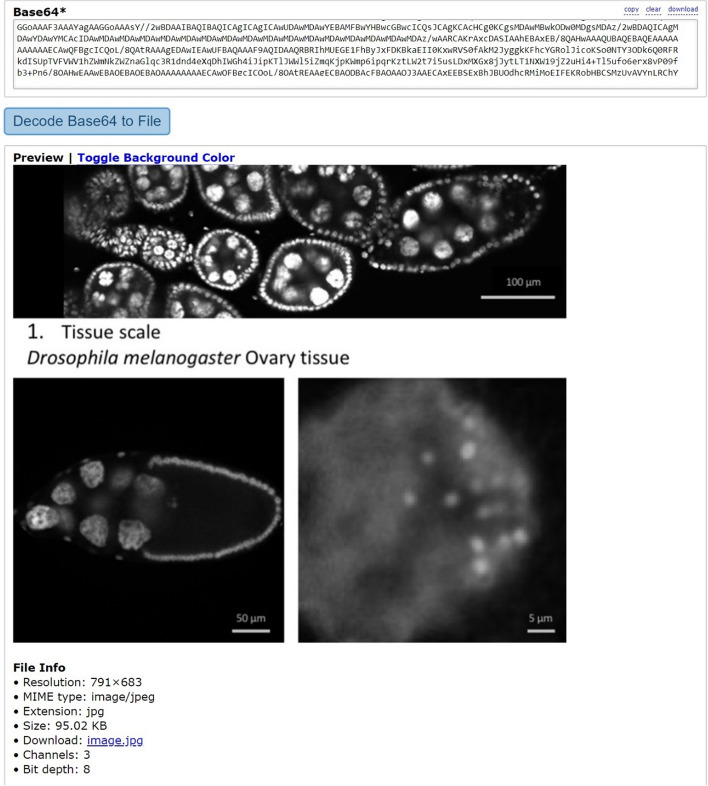
2
2
156
30 Apr 2024
"Organize Everything" is our tagline for a reason. 💯
Take a look at these explorations of how Hyperfiles can be used for collaborative data governance that our lead builder @flow_science wrote about today.
x.com/flow_science/status/17…
x.com/flow_science/status/17…
29 Apr 2024

Thanks for sharing I'll add this to my reference lib.
Unfortunately, from a cursory review their design is, well, feckless. Their your claims about it (sorry, nothing personal) fall short in a few key areas.
To justify my harsh criticism I felt obligated to explain my conclusions in excruciating detail below and to compare them to the leading edge in flexible data publishing tech for #DeSci:
1) I wouldn't call it a 'big study", or even a study at all. The paper you linked is a report describing a dApp a private for-profit company made. Unfortunately, neither the frontend nor contract code is open source, so the benefits of putting anything on-chain without essential code auditability are heavily compromised. A hypothesis based "study" they could have done would be to use their tool to index a benchmark dataset like OpenAlex, NCBI, etc vs alternative solutions in performing some useful action (e.g. storage/retrieval times, cost/size per object, en/decryption, verifiability, etc).
2) As a professional scientist and member of the scientific community I hold a strongly contrarian perspective to the establishment regarding peer reviewed paper count. I'm pretty confident most if not all of my desci contributor colleagues would agree.
3) Base64 encoding doesn't do much other than prevent BNB from throwing errors when the contract writes the data to it (bc of special characters that might be in text). The data isn't encrypted so their tool can only be used to create references for existing data in the public domain - which defeats their stated purpose for building the app...
"Welcome to the first 100% on chain decentralized storage Dapp for biomedical and general purpose data (such as text, images, audio and video) providing you with Identity, Timestamping, Content and Immutability (ITCI) for your business."
It doesn't make economic/business sense to store data on BNB, an EVM chain with limited horizontal scaling. They should have at least enabled the opBNB L2 to leverage a rollup and mitigate cost data volume settled on L1. It would cost nearly $80 to save the word "test" using their dApp (screenshot #1). No wonder they didn't run a benchmarking trial.
-----Alternate Solutions-----
A) @oceanprotocol uses a "provider" to encrypt/decrypt URLs of user published data (accessible via HTTP), then they store tokenized references on-chain which grant the owner/purchaser permission to decrypt a target URL. They've got a solid metadata (object labeling) system & built a compute-to-data interface that unlocks actual usability for sensitive/private data, such as almost any business would require.
B) @eas_eth likewise employs multiple privacy options and scalability solutions for publishing data and/or references on-chain.
Users can publish attestations offchain of any size for free, or they can enter encrypted data manually into the appropriate schema field if included in an onchain attestation. EAS released a sha256 hash tool for easy & non-reversible encryption of sensitive data. For even higher security, they created a "private data" attestation schema that encrypts the contents in a Merkle Tree to support selective disclosure (read permissions) of specific fields in the a given data schema. EAS timestamps & UX are a bit clunky, but overall it's an extremely versatile platform set of standards.
3c) TLDR; at @HyperfilesOrg we're combining the best of both Ocean & EAS with features to support co-governance of collaboratively generated digital data assets. Most of the engineering & integration design was done in Q1-2024, with some groundwork laid in 2023 during two hackathons. Q2-2024 is mainly building/shipping those designs, and we're even adding things to the roadmap like a smart contract to calculate global reputation scores for the Hyperfiles knowledge graph (a social graph with infinitely customizable schemas, version control, automated object classification, and user reputation scoring).
------Hyperfiles Deets------
We're implementing encryption by default for data objects published using our dApp (starting w/ sha256, then Lit Protocol PKPs). We're also replicating the Ocean "provider" architecture for a second layer of security & data provisioning during URL endpoint sharing.
Hyperfiles reference objects are stored in the open-source Near socialDB contract for typically ~$0.07 per object. Hyperfiles a superset to EAS attestations so users can select the EAS attestation standard as a Hyperfiles schema. This interoperability enables users to query standardized metadata across multiple sources, facilitating reusable elements & enforcing composability between completely unrelated data objects, as well as dynamic data object rendering.
References (and subsequent versions) are uniquely timestamped by their blockheight. Human-readable object paths uniquely identify references stored under each user's personal data tree in socialDB.
The entire Hyperfiles app - every single React frontend component - is also stored immutably on the Near socialDB contract via path & blockheight (the same way references are stored). The code is easily viewable/forkable directly from the app itself if users want to customize or contribute new components (screenshot below).
Comparatively, the INNBC claim to be "the first 100% on chain decentralized storage Dapp for biomedical and general purpose data" is frankly, complete BS and highlights just how flawed & ineffective peer-review is when managed by exploitative publishers. Their dApp is not 100% on-chain and it's definitely not the first to do what it does.
Hyperfiles already has read/write adapters for off-chain storage layers: IPFS and GitHub. A suite of additional default adapters in the Q2-2024 roadmap include local storage, Notion, Obsidian, Arweave, Ceramic, Verida, EVM Chains (via Solidity ABI), and even a few indexing services as data input options.
It's taken a systematic and relentless approach to engineer, integrate and distill the diversity of features behind Hyperfiles into our current roadmap of smart contracts & frontend UI components. You can try the open beta at hyperfiles.org and access our prolific documentation wiki from the app as well.
Join the Hyperfiles TG group and I'll send you some free $NEAR tokens to pay storage deposits & gas fees.
t.me/hyperfiles
-----References-----
In-progress "development" version of Hyperfiles:
hyperfiles.org/hyperfiles.ne…
List of on-chain components (widgets):
hyperfiles.near.social
Off-chain code repos (React components, "gateway" app to render React code from Near), and our smart contracts:
github.com/hyperfiles-org/
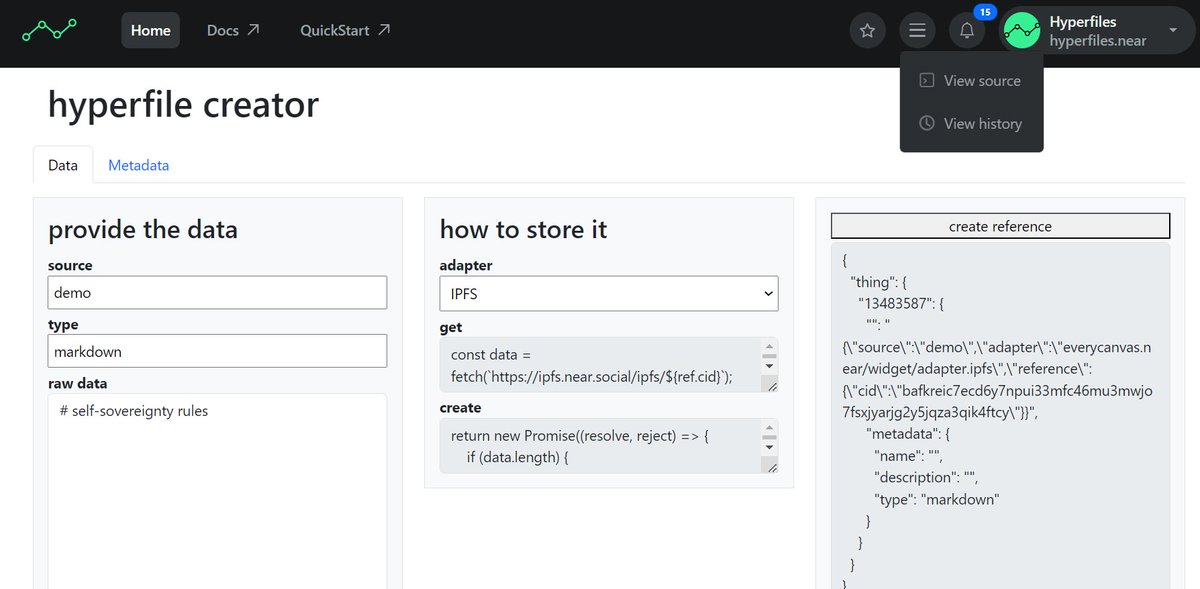
ALT Hyperfiles is 100% on-chain. All React components are stored on Near and rendered using a custom "gateway" app that serves as a frontend client.
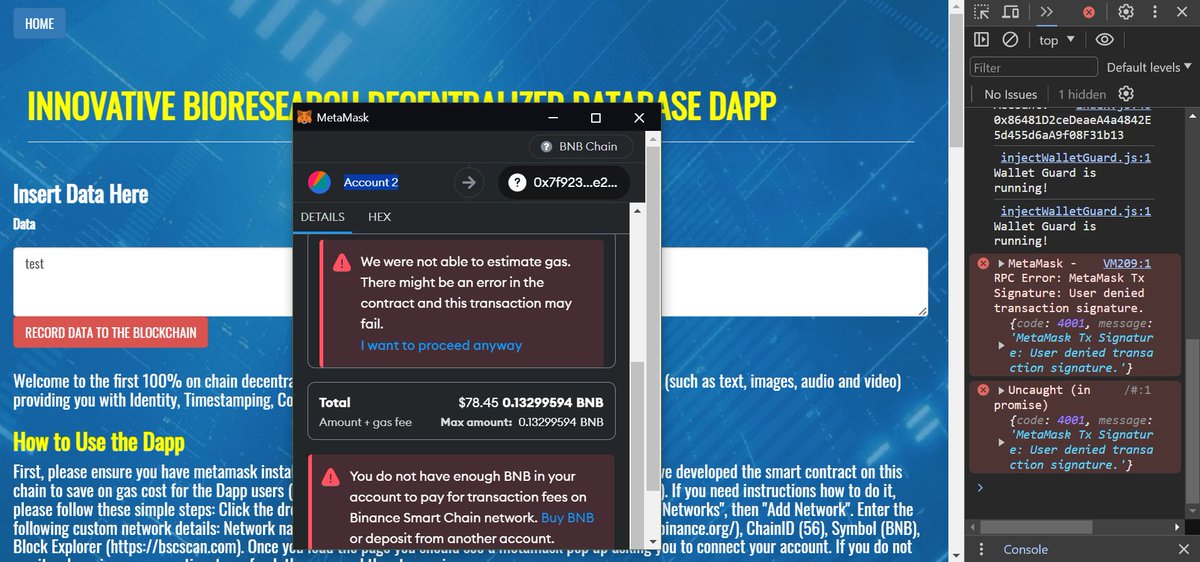
ALT Saving data to L1 's, especially BSC, is prohibitively expensive.
2
6
139
29 Apr 2024
Thanks for sharing I'll add this to my reference lib.
Unfortunately, from a cursory review their design is, well, feckless. Their your claims about it (sorry, nothing personal) fall short in a few key areas.
To justify my harsh criticism I felt obligated to explain my conclusions in excruciating detail below and to compare them to the leading edge in flexible data publishing tech for #DeSci:
1) I wouldn't call it a 'big study", or even a study at all. The paper you linked is a report describing a dApp a private for-profit company made. Unfortunately, neither the frontend nor contract code is open source, so the benefits of putting anything on-chain without essential code auditability are heavily compromised. A hypothesis based "study" they could have done would be to use their tool to index a benchmark dataset like OpenAlex, NCBI, etc vs alternative solutions in performing some useful action (e.g. storage/retrieval times, cost/size per object, en/decryption, verifiability, etc).
2) As a professional scientist and member of the scientific community I hold a strongly contrarian perspective to the establishment regarding peer reviewed paper count. I'm pretty confident most if not all of my desci contributor colleagues would agree.
3) Base64 encoding doesn't do much other than prevent BNB from throwing errors when the contract writes the data to it (bc of special characters that might be in text). The data isn't encrypted so their tool can only be used to create references for existing data in the public domain - which defeats their stated purpose for building the app...
"Welcome to the first 100% on chain decentralized storage Dapp for biomedical and general purpose data (such as text, images, audio and video) providing you with Identity, Timestamping, Content and Immutability (ITCI) for your business."
It doesn't make economic/business sense to store data on BNB, an EVM chain with limited horizontal scaling. They should have at least enabled the opBNB L2 to leverage a rollup and mitigate cost data volume settled on L1. It would cost nearly $80 to save the word "test" using their dApp (screenshot #1). No wonder they didn't run a benchmarking trial.
-----Alternate Solutions-----
A) @oceanprotocol uses a "provider" to encrypt/decrypt URLs of user published data (accessible via HTTP), then they store tokenized references on-chain which grant the owner/purchaser permission to decrypt a target URL. They've got a solid metadata (object labeling) system & built a compute-to-data interface that unlocks actual usability for sensitive/private data, such as almost any business would require.
B) @eas_eth likewise employs multiple privacy options and scalability solutions for publishing data and/or references on-chain.
Users can publish attestations offchain of any size for free, or they can enter encrypted data manually into the appropriate schema field if included in an onchain attestation. EAS released a sha256 hash tool for easy & non-reversible encryption of sensitive data. For even higher security, they created a "private data" attestation schema that encrypts the contents in a Merkle Tree to support selective disclosure (read permissions) of specific fields in the a given data schema. EAS timestamps & UX are a bit clunky, but overall it's an extremely versatile platform set of standards.
3c) TLDR; at @HyperfilesOrg we're combining the best of both Ocean & EAS with features to support co-governance of collaboratively generated digital data assets. Most of the engineering & integration design was done in Q1-2024, with some groundwork laid in 2023 during two hackathons. Q2-2024 is mainly building/shipping those designs, and we're even adding things to the roadmap like a smart contract to calculate global reputation scores for the Hyperfiles knowledge graph (a social graph with infinitely customizable schemas, version control, automated object classification, and user reputation scoring).
------Hyperfiles Deets------
We're implementing encryption by default for data objects published using our dApp (starting w/ sha256, then Lit Protocol PKPs). We're also replicating the Ocean "provider" architecture for a second layer of security & data provisioning during URL endpoint sharing.
Hyperfiles reference objects are stored in the open-source Near socialDB contract for typically ~$0.07 per object. Hyperfiles a superset to EAS attestations so users can select the EAS attestation standard as a Hyperfiles schema. This interoperability enables users to query standardized metadata across multiple sources, facilitating reusable elements & enforcing composability between completely unrelated data objects, as well as dynamic data object rendering.
References (and subsequent versions) are uniquely timestamped by their blockheight. Human-readable object paths uniquely identify references stored under each user's personal data tree in socialDB.
The entire Hyperfiles app - every single React frontend component - is also stored immutably on the Near socialDB contract via path & blockheight (the same way references are stored). The code is easily viewable/forkable directly from the app itself if users want to customize or contribute new components (screenshot below).
Comparatively, the INNBC claim to be "the first 100% on chain decentralized storage Dapp for biomedical and general purpose data" is frankly, complete BS and highlights just how flawed & ineffective peer-review is when managed by exploitative publishers. Their dApp is not 100% on-chain and it's definitely not the first to do what it does.
Hyperfiles already has read/write adapters for off-chain storage layers: IPFS and GitHub. A suite of additional default adapters in the Q2-2024 roadmap include local storage, Notion, Obsidian, Arweave, Ceramic, Verida, EVM Chains (via Solidity ABI), and even a few indexing services as data input options.
It's taken a systematic and relentless approach to engineer, integrate and distill the diversity of features behind Hyperfiles into our current roadmap of smart contracts & frontend UI components. You can try the open beta at hyperfiles.org and access our prolific documentation wiki from the app as well.
Join the Hyperfiles TG group and I'll send you some free $NEAR tokens to pay storage deposits & gas fees.
t.me/hyperfiles
-----References-----
In-progress "development" version of Hyperfiles:
hyperfiles.org/hyperfiles.ne…
List of on-chain components (widgets):
hyperfiles.near.social
Off-chain code repos (React components, "gateway" app to render React code from Near), and our smart contracts:
github.com/hyperfiles-org/
ALT Hyperfiles is 100% on-chain. All React components are stored on Near and rendered using a custom "gateway" app that serves as a frontend client.
ALT Saving data to L1 's, especially BSC, is prohibitively expensive.
3
1
6
603
29 Apr 2024
🦅 High level 🦅
Combine scientific fileformats with the DAOIPv3 standard to build out a framework for collaboratively generated & owned products of scientific activities (e.g. data, code, journal articles, etc).
en.wikipedia.org/wiki/List_o…
github.com/metagov/daostar/b…
🎯 Low level 🎯
1) Map common fields between different schemas and object types. An example is mapping the "author" field (e.g. the line item in a schema pointing to authorName) between various schemas for data, code, social post, journal article, website, etc.
2) Extend @Hyperfiles' curated library of impact & identity schemas to include more discrete & scalar types (most schemas rn only use booleans).
Then map fields, types & schemas between different data sources (focus on decentralized storage layers like IPFS, Ceramic, Arweave, etc).
📸 Attached 📸
Screenshots from the @Hyperfiles curated type library.
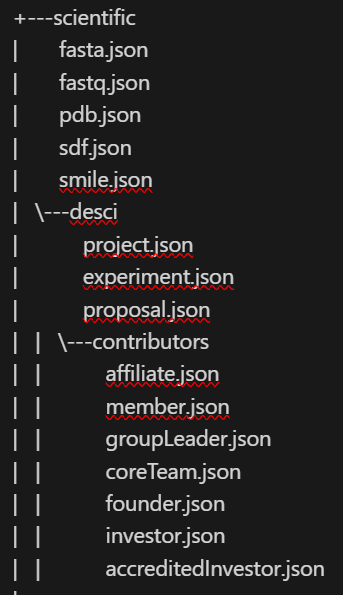
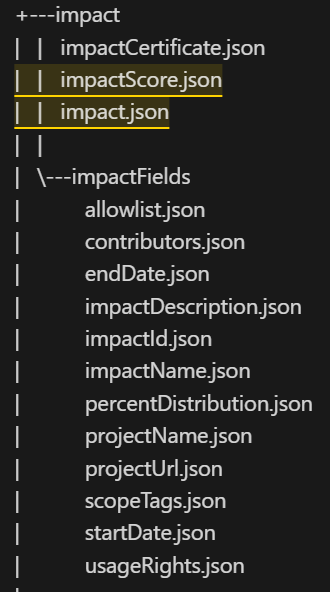
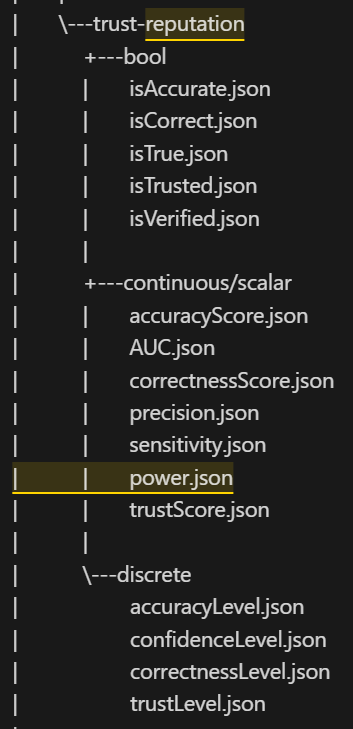
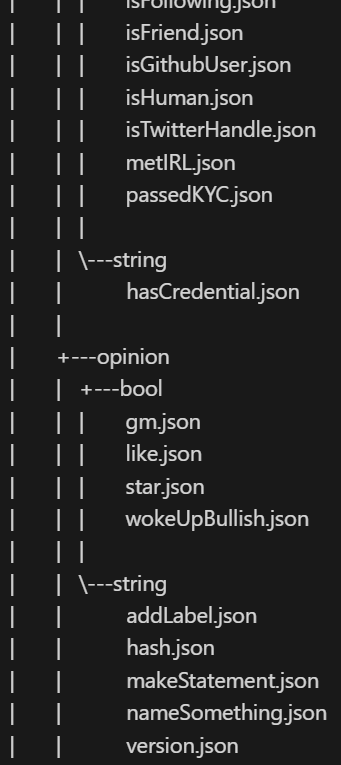
1
2
128
26 Apr 2024
⚠️ Hyperfiles is in open-beta and under active development. If you’re interested in contributing, we're always seeking additional open-source contributors. Just check out our GitHub, docs, and hop in the chat!
7/🧵
3
38
26 Apr 2024
🧠 We’ve created extensible Schema & Type Libraries deployed to an open social graph contract. Hyperfiles creates a universal, self-organizing, attestation-based knowledge graph for scientific sensemaking, impact evaluation, and empirical hypothesis testing.
6/🧵
1
4
41
26 Apr 2024
⛓️ Hyperfiles creates indexed onchain reference objects to map the contents of corresponding data objects, stored anywhere.
Hyperfiles are a superset of the popular EAS attestation standard that provide additional context by explicitly linking the data field to schemas.
3/🧵
1
4
36
26 Apr 2024
Hyperfiles was originally developed as "Hypercerts on BOS" during the BuidlBox Funding the Commons Hackathon in August 2023, then extended into "Hyperfiles" during Backdrop Build v3 in November 2023 (completion certificate is the logo image for our #GG20 application).
2/🧵
1
4
46
26 Apr 2024
🌟 Hyperfiles is live in two rounds for #GG20!
💻 dApps & Apps Round: explorer.gitcoin.co/?utm_sou…
✍️ Hypercerts Ecosystem Round: explorer.gitcoin.co/#/round/…
They're separate rounds with separate matching pools, so support in both is very much appreciated!
1/🧵 More info below... 👇
2
4
9
306
1 Apr 2024
If you support our work and open-source tooling that makes #desci accessible for everyone, consider donating Hyperfiles in the current retroactive builders QF funding round on @potlock_! 🤩💚🙏 (donations made by 4-7-24 will be matched)
Link to donate: app.potlock.org/?tab=project…
1
3
29