261 Photos and videos












Cycling Vet 🏴☠️ 🚴 retweeted

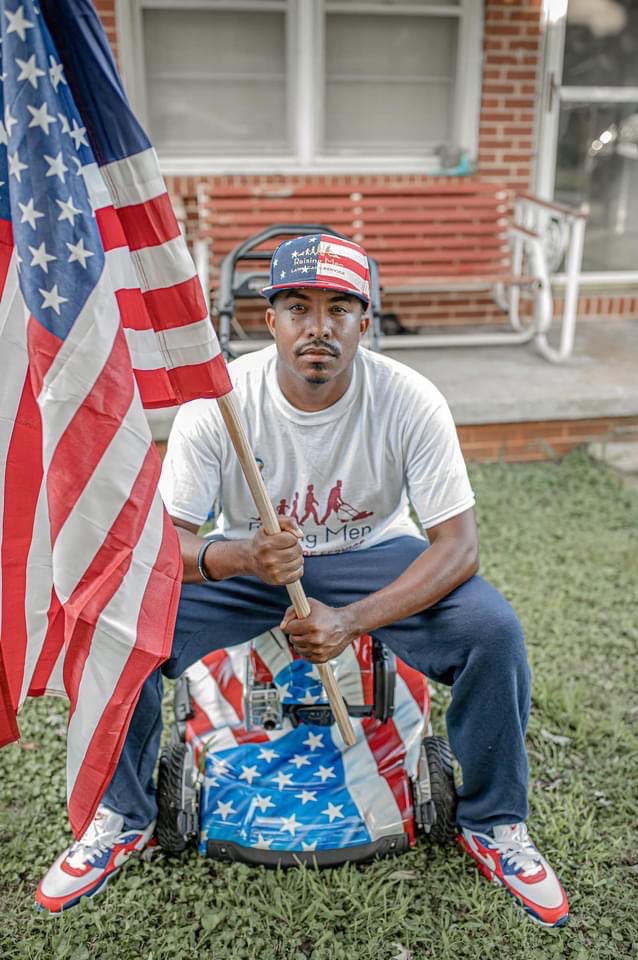
Dear @WhiteHouse, my name is Rodney Smith Jr., founder of Raising Men & Women Lawn Care Service in Huntsville, Alabama. Through our 50 Yard Challenge, over 6,000 kids across the country have signed up to mow free lawns for the elderly, disabled, veterans, active-duty military, first responders, and single parents. With America celebrating its 250th birthday this year and me also being born on July 4th, I wanted to humbly ask if a few kids from our program and myself could travel to Washington, D.C. to help mow the White House lawn for this historic celebration.
More than anything, I want these kids to see how a simple act of service something as ordinary as mowing a lawn for someone in need can lead to extraordinary places. What better lesson in community service than showing them that helping others can take them all the way to our nation’s capital? I’d also love to bring my American flag-themed mower in hopes that the President might sign it, so I can later auction it off and donate 100% of the proceeds to a nonprofit supporting veterans. It would be a once-in-a-lifetime opportunity to highlight the importance of service, patriotism, and the impact young people can have when they choose to make a difference. 🇺🇸
5,233
30,081
107,946
2,274,859
Cycling Vet 🏴☠️ 🚴 retweeted

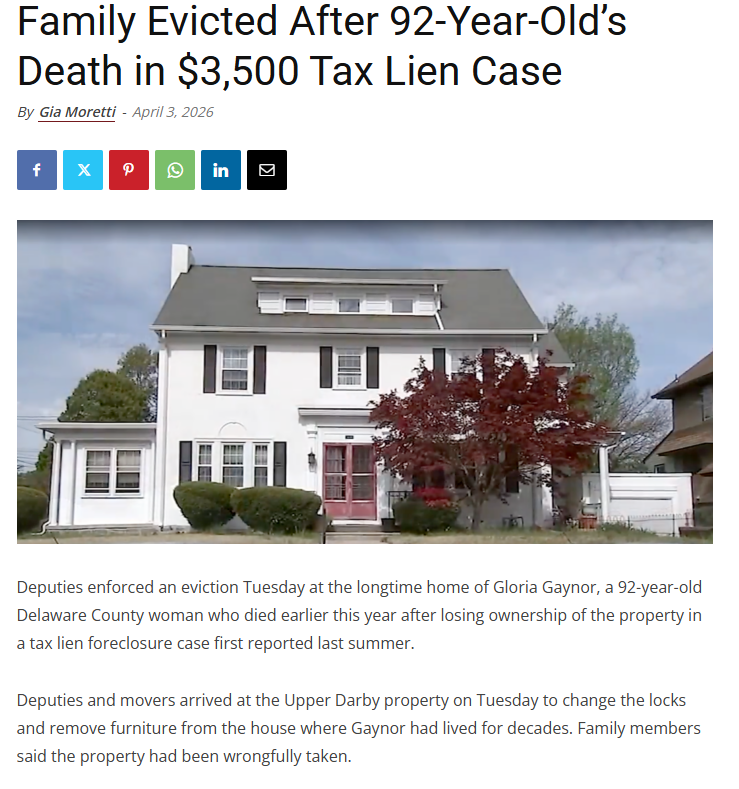
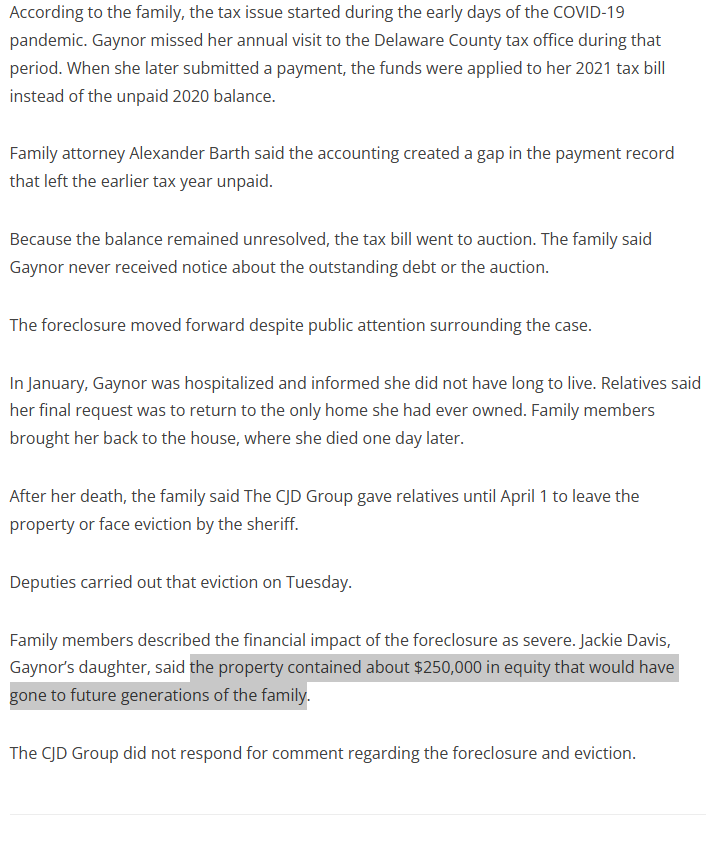
This appears to be legalized theft. A very ill 92-year-old woman lived in this home most of her life and owned it outright. She wanted to pass it on to her family when she died, but instead, the government seized the home ($250k of equity) over an unpaid property tax bill of $3500 (she did not receive any formal notification of this issue until they started the eviction case).
This happened recently in Pennsylvania. I do not want to see the same thing in Florida. Homeowners of all ages need property tax relief!
62
388
1,638
36,236
Cycling Vet 🏴☠️ 🚴 retweeted

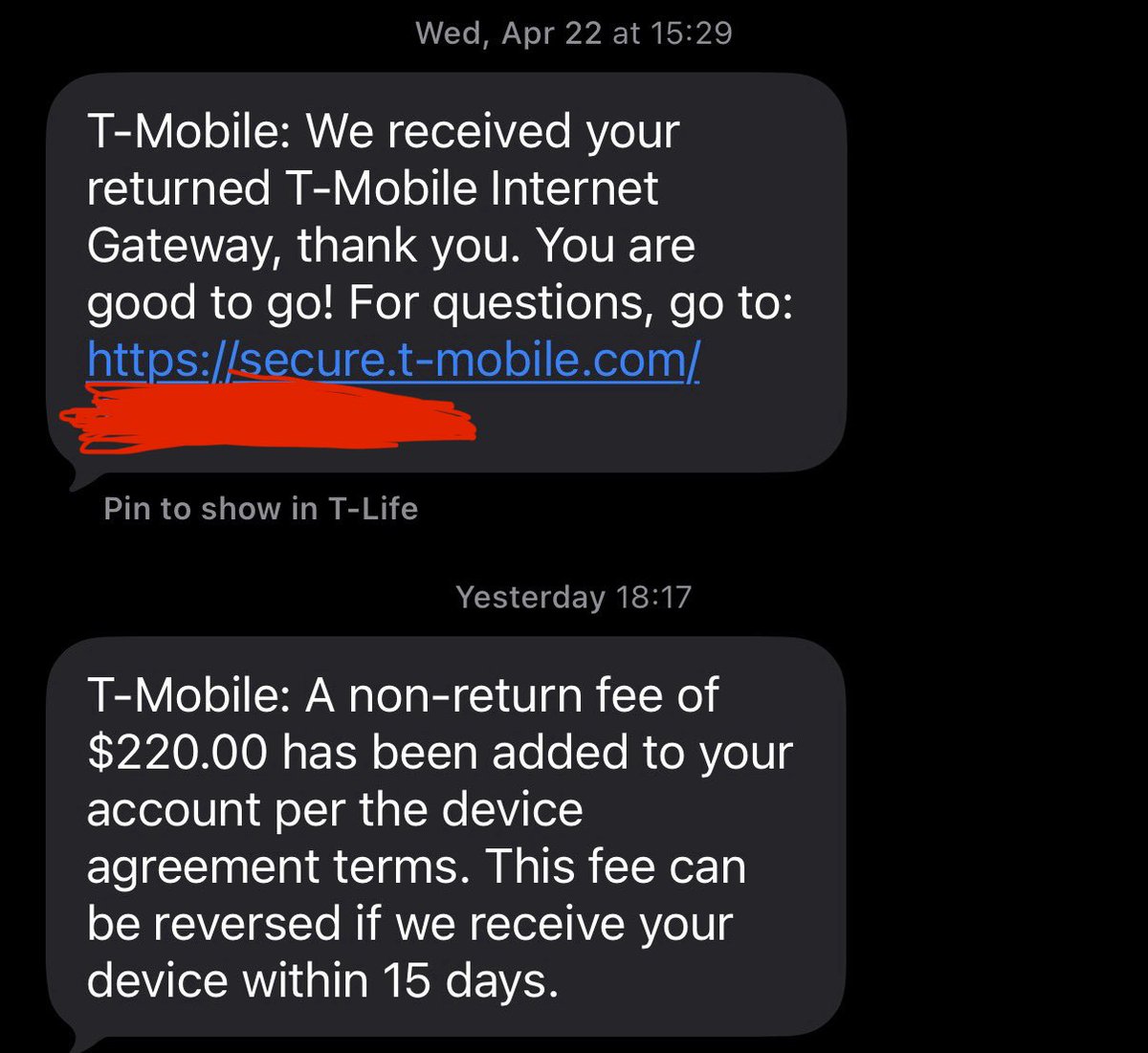
It’s exhausting how every aspect of life in this country boils down to a company trying to screw you over as a consumer and you having to waste time fighting over it.
When companies like @TMobile do this, I should be able to bill them for the time it takes me to correct it.
73
265
6,409
242,855
Cycling Vet 🏴☠️ 🚴 retweeted

May 20
The Illinois legislature passed a "Junk Fee" transparency bill today.
Shockingly, they specifically exempted government taxes and fees from the bill. They don't want you to know how much tax you are paying to the government.
Here's what your gasoline receipt would look like in Chicago if we had tax transparency.

48
439
811
29,307
Cycling Vet 🏴☠️ 🚴 retweeted

May 13
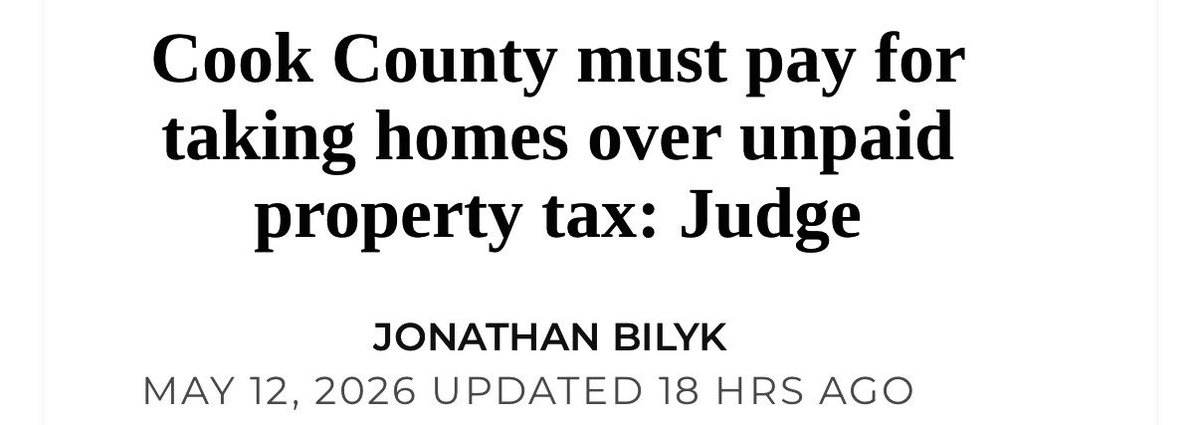
This week a federal judge ruled that Cook County must pay millions to compensate victims whose homes were seized over unpaid property taxes.
The county seized the homes, sold them off, pocketed the massive equity difference, and kept doing it anyway even after the Supreme Court ruled the practice unconstitutional.
Property taxes have exploded 182% over thirty years, more than double inflation. Families now face 300% spikes on single bills. One Chicago homeowner’s bill jumped from seven thousand to twenty-four thousand dollars overnight.
Crushed by the bill. Robbed of the home. Billed again to fix the county’s theft.
Taxpayers lose every single time.
26
277
651
10,155
Cycling Vet 🏴☠️ 🚴 retweeted

Apr 27
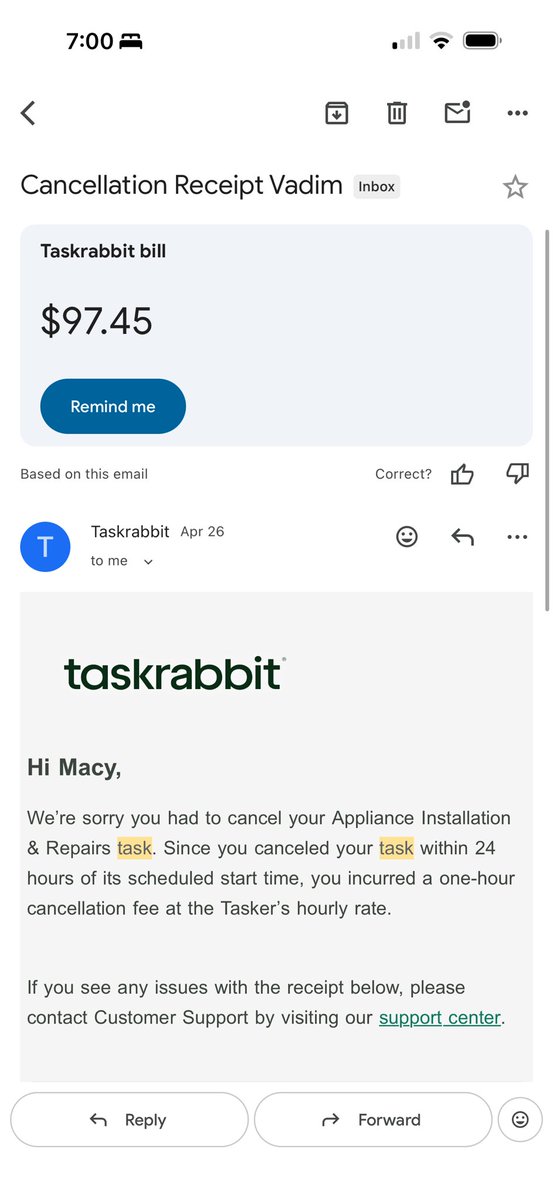
Okay this is some crazy (bad) customer service from @Taskrabbit.
1. Hired someone to install a washer/dryer.
2. The tasker cancelled as they weren’t able to do it at the time the calendar said available.
3. Get this email from them (photo). Reminder. I didn’t cancel, he did.
4. Write them like “wtf, I didn’t cancel.”
5. They insist on giving me a “one-time exception” of a $97.45 credit to my account to use on my next task.
6. I’ve asked for my money back multiple times, as I didn’t receive the service I paid for. They refuse. Say I’m welcome to charge back on my credit card (which I will).
How is this even allowed? 🤯🤯🤯
71
50
2,950
620,267
Cycling Vet 🏴☠️ 🚴 retweeted

Apr 24
I am currently being scammed for $3,300 while using @StubHub @TeamStubHub for tickets.
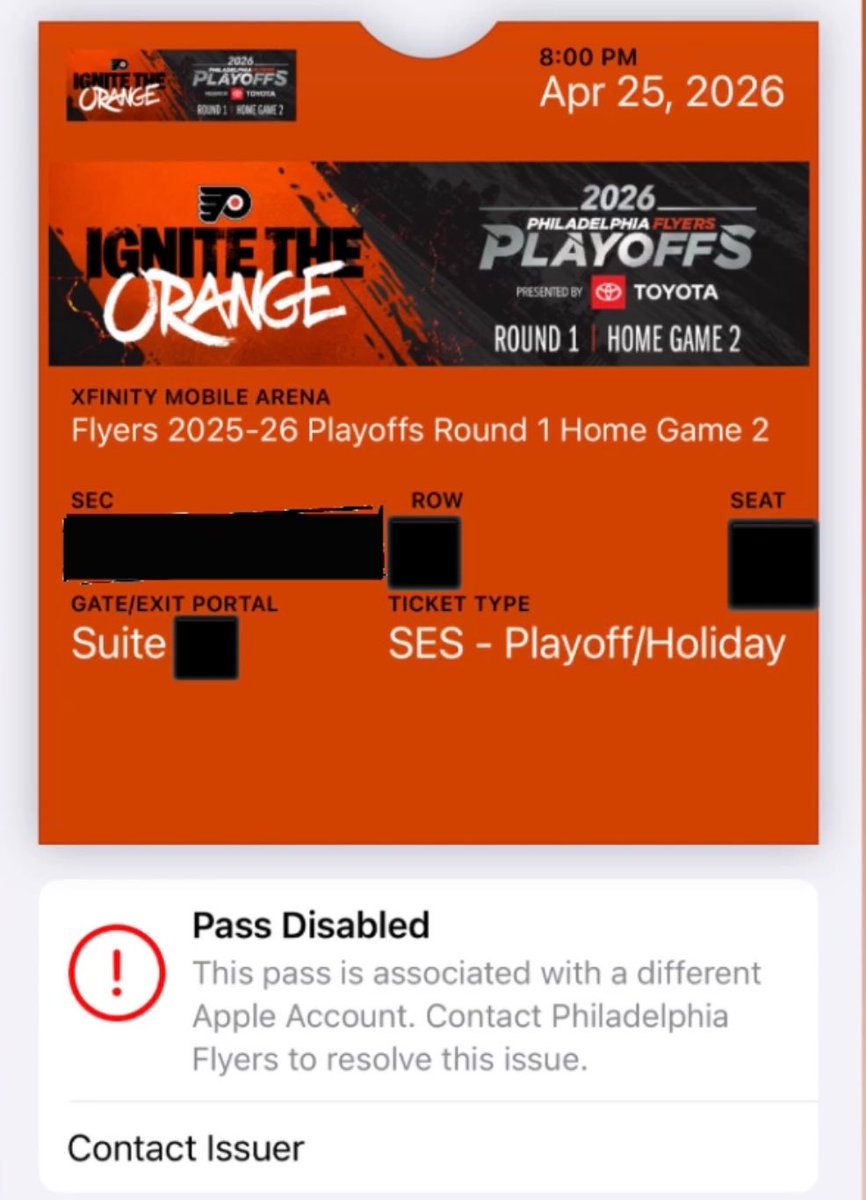
I bought my father (life-long Flyers fan) tickets to a SUITE for $3,300 for his birthday for Game Four this Saturday (tomorrow). The tickets were purchased Wednesday (prior to Game Three) and then subsequently transferred into my StubHub account, added to my apple wallet and available in Ticketmaster app (I have screen recordings of everything).
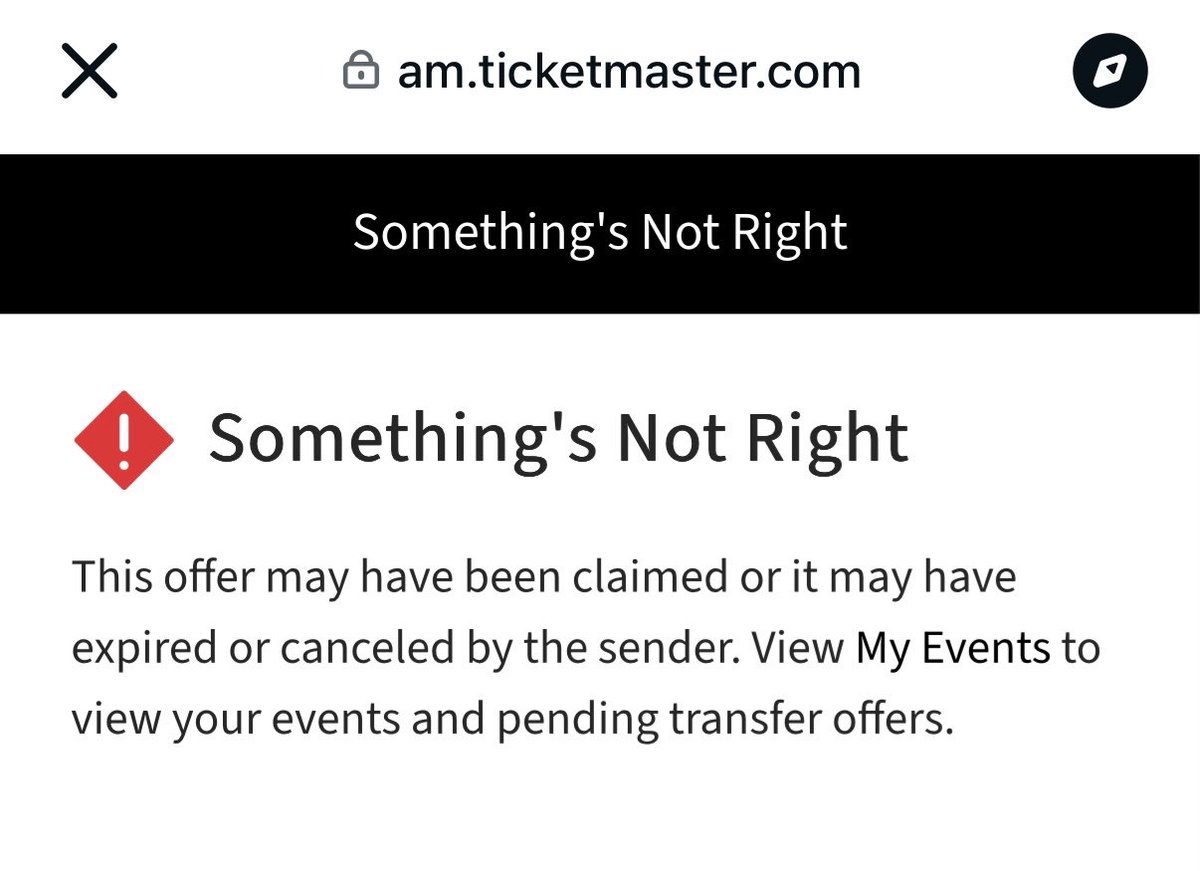
After the Flyers won game 3, tickets for Saturday in the same suite as mine skyrocketed to $2,000 a piece (I bought ours for $1,000 each). I immediately knew what was going to happen next. I got a notification Thursday afternoon saying my tickets had been added to a new apple wallet. The seller had transferred the tickets out of my possession to presumably re-sell them for more. I have now lost access to my tickets via StubHub, TicketMaster AND apple wallet.
In calling customer support, they confirmed the seller had transferred the tickets back and told me they have given the seller 24 hours to return the tickets. The problem? The game is in 26 hours. I’m supposed to wait 24 hours to see if the person who scams me gives me my tickets back? I was told this is a “protocol” and they cannot break the protocol. They also added that we would get comparable tickets or a refund within 24-48 hours if the tickets were never transferred back. The seller is on the west coast, which puts this time frame AFTER the game starts. Again, this was described as a protocol that cannot be broken. I asked if we could just fast track the comparable ticket protocol and get new seats now instead of waiting to see if the person who scammed us gives our tickets back in 24 hours, in which again I was told isn’t possible because of the protocol. The most likely outcome of resolution based off StubHubs’ protocol is going to be waiting 24 hours to see if the person who scammed me for $3,300 gives me the tickets back (which probably won’t happen as the tickets most likely have been already re-sold) and then given their protocol timeframe, we will only be able to get a refund as the game will have already started, so we cannot get comparable tickets.
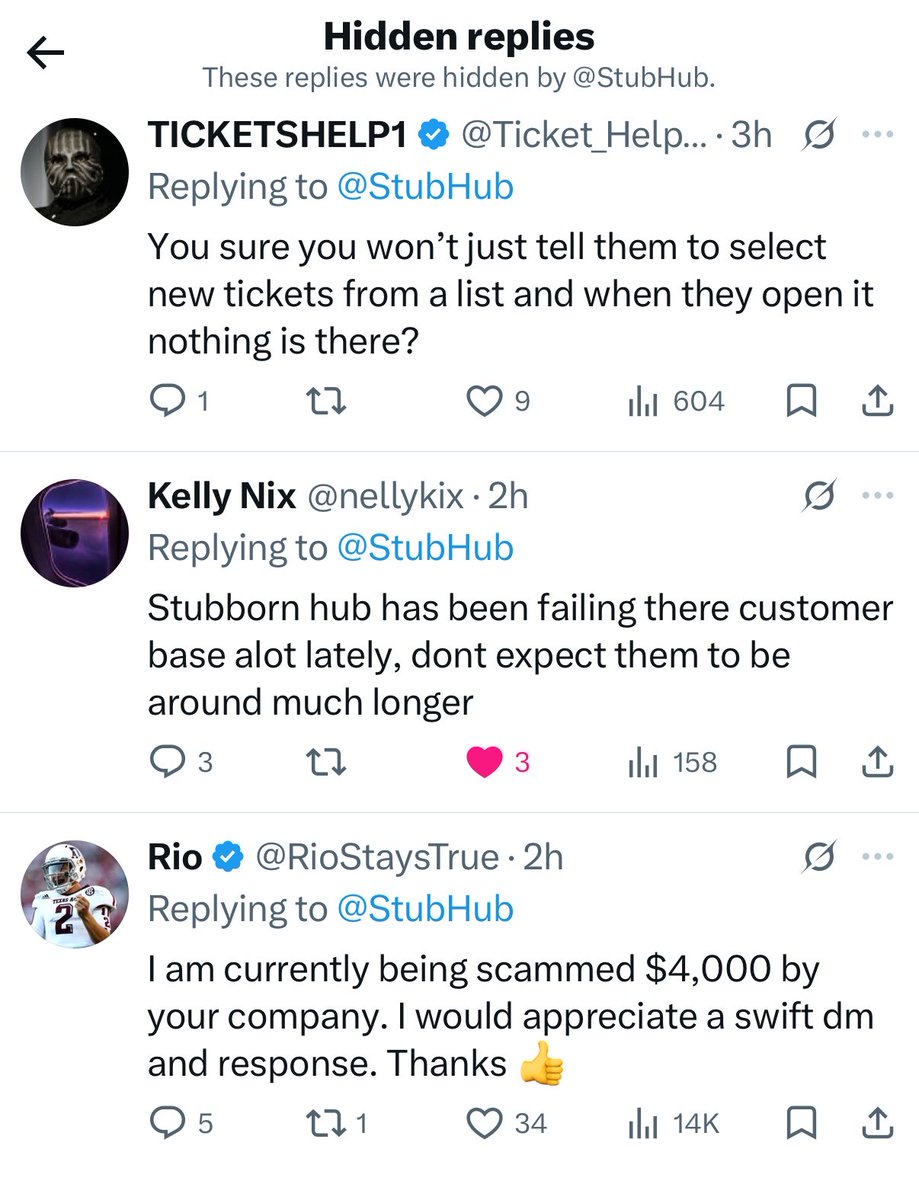
I tried reaching out via DMs and replies in which they HID my reply under their post (see screenshot). I am beyond disappointed in the way this situation is being handled. I hope this can be resolved and my parents can enjoy a @NHLFlyers playoff game.

500
616
6,194
1,464,653
Cycling Vet 🏴☠️ 🚴 retweeted

And splashdown!
America is back in the business of sending astronauts to the Moon and bringing them home safely.
Reid, Victor, Christina, and Jeremy did an outstanding job. These talented astronauts inspired the world and represented their space agencies and nations as humanity’s ambassadors to the stars.
This was a test mission, the first crewed flight of SLS and Orion, pushing farther into the unforgiving environment of space than ever before, and it carried real risk. They accepted that risk for all we stood to learn and for the exciting missions that follow, as we return to the lunar surface, build a Moon base, and prepare for what comes next.
And they were not alone. The entire NASA workforce, our commercial and international partners, and the hopes and dreams of people all over the world were with them. The astronauts know it, and you should too. This mission would not have been possible without you.
Congratulations. Artemis II, mission accomplished.

1,426
5,185
37,628
1,896,253
Cycling Vet 🏴☠️ 🚴 retweeted

Been watching the news 📺 on #ArtemisII. I feel like it’s the 1960’s all over. ☝🏻We must keep our thoughts about our brave Artemis astronauts for their reentry. From what I understand this is going to be tricky. There have been some stories about the heat shield, and the change of angle of entry. A very big deal is about to happen. Reentry is so dangerous, so precise. All my thoughts will be with them as they return to earth.🌎 🙌🏻
565
1,919
24,171
258,960
Cycling Vet 🏴☠️ 🚴 retweeted

Apr 4
The NYT should release the names of every editor who read this and did not correct it. They have multiple layers of editors, especially for the print publication.
That’s what the NYT would demand when the government makes a bad mistake.
They should live up to the same standard.


376
1,734
8,876
407,010
@AppleSupport I'm trying to spend $2,000 with you. It's like you don't want the money. I tried checking out last night & today, using my existing account. I'm locked out yet again! With no easy way to unlock. I don't have any apple devices so it takes days via email!?!?!?
1
1
45
Cycling Vet 🏴☠️ 🚴 retweeted

Apr 1
POV: you walk into Meijer for beans… and the brand you support is sitting on the top shelf with only 4 cans.
That’s the reality right now.
We’re a small family-owned company competing in one of the toughest aisles in grocery. No endcaps. No big displays. Just a few cans, up high, in 97 stores.
So if you already shop for canned beans…
Next time you’re in Meijer, just look up.
If you see Goode Foods, grab a few. That’s how small brands earn their spot. Not by hype. By what actually leaves the shelf.
100% non-GMO. No pesticides. Grown right here in the Midwest.
Real food. Real households. Real support.
91
521
2,836
50,121
64
Cycling Vet 🏴☠️ 🚴 retweeted

Mar 30
At just 35 years old, Chief Petty Officer Leslie Allison Bruner slipped away peacefully in Virginia Beach, surrounded by the family who loved her.
For 16 years she served with quiet strength as an active-duty Cryptologic Technician Collections Senior Chief, supporting Naval Special Warfare Development Group — the tip of the spear.
She deployed multiple times into the heart of Operation Enduring Freedom, working in the shadows so others could strike the enemy. Through the heat, the danger, and the long separations, she earned the respect of every SEAL and sailor who served beside her.
She carried the weight of the Global War on Terror on her shoulders and in her heart — and still smiled through it all.
Her awards tell only part of the story: the Defense Meritorious Service Medal, Joint Commendation Medal, Joint Service Achievement Medal, Navy and Marine Corps Achievement Medal, and many more. But those who knew her will tell you the real medal was the way she showed up for her teammates every single day.
She fought her own brave battle with cancer while still in uniform, never once asking for the spotlight.
Today we honor a warrior who gave everything for her country and her brothers and sisters in arms.
God bless you, Senior Chief Bruner. Your service, your sacrifice, and your unbreakable spirit will never be forgotten.
Rest easy, Chief. The watch is secure.

595
1,138
6,091
72,713
Cycling Vet 🏴☠️ 🚴 retweeted

Ok, the helicopter & the United flight.
You’re hearing that the United jet got an “R.A.” on final approach. This is a “Resolution Advisory” from the “Traffic alert & Collision Avoidance System” (TCAS).
TCAS is a small unit in the jet or helicopter that talks to other TCAS units in other flying machines. Sometimes little airplanes don’t have a TCAS, so the TCAS in that case just listens to that airplane’s transponder.
When TCAS determines that the airplanes will get close, it issues a “Traffic Advisory” (TA). It announces “TRAFFIC, TRAFFIC” over the speaker & colors the visual depiction of the traffic on your screen so you can see who it’s concerned about, what altitude they are at & whether they are climbing or descending. With that information, you know specifically where to look outside to visually acquire the offender.
It’s not too unusual to get a TA. You don’t have to do anything about it & usually the offender levels off a thousand feet above or below you…TCAS doesn’t know that’s the plan though, and it didn’t like the rate of closure, so it spoke up.
Now, if things start getting even closer & TCAS thinks there will be a collision, it issues a Resolution Advisory (RA). TCAS has been planning for this possibility the whole time & coordinating with the other TCAS…they are chatting to each other specifically, even as both continue to talk to all the other little TCAS boxes in the area, too. TCAS can only tell you to climb or descend (it can’t tell you to turn), so they work together to figure out who will climb & who will descend to create separation the fastest…they will *not* issue the same instructions, like having both jets descend.
Even if the other airplane doesn’t have a TCAS, TCAS can perform basically the same thing by listening to that airplane’s transponder…it’s just that the other little airplane without TCAS is probably still clueless that a potential collision is looming.
Anyway, TCAS comes over the speaker & says “CLIMB, CLIMB” (or descend). It puts a target on your attitude indicator to raise the nose to. If it doesn’t like how you’re doing it, it says “INCREASE VERTICAL SPEED”. It will do this until it announces “CLEAR OF CONFLICT”, at which point you return to your ATC cleared altitude.
You *must* obey TCAS. It overrides ATC instructions. There might be a circumstance where you wouldn’t obey it, but it better be bulletproof because you are going to have to explain yourself. Not obeying TCAS has caused at least one major accident.
As soon as TCAS issues an RA, you tell ATC “Responding to TCAS RA” & they know you are busting their clearance. They’ll focus on making sure you don’t become a problem for someone else in the area. Eventually, the whole thing gets written up in reports & the incident is investigated for a loss of separation.
In the DC crash, the TCAS never said a word, and that’s by design. Below a certain altitude, it inhibits itself, as it assumes you are landing…I think it’s around 1,200’, but don’t quote me on that. As you approach to land, there are a bunch of jets on the ground with their transponders turned on…TCAS can’t filter out who is doing what, and if it worked like it did when you were in the air, you’d never be able to land.
So, that’s basically what happened here. Hope it helps!
Mar 26

Another news piece on the US Army Black Hawk crossed the path of a United Airlines flight headed towards John Wayne Airport in Orange County on Tuesday evening. (full story in the comments)
60
53
726
97,187
Cycling Vet 🏴☠️ 🚴 retweeted

Mar 26
After Chicago Mayor Brandon Johnson called the killing of Loyola University student Sheridan Gorman “senseless violence,” her family releasing a statement, “We acknowledge Mayor Johnson’s statement five days after our daughter, Sheridan's murder and his condolences to our family, as well as his recognition of the work of the Chicago Police Department.
But what happened to Sheridan cannot be reduced to a “senseless tragedy,” nor can it be explained in general terms about public safety. Sheridan was our daughter. She was 18 years old. She was doing something entirely normal—walking near her campus with friends. She should be here.
This was not random. It was not inevitable. And it cannot be treated as though it were.
We appreciate the efforts of law enforcement in making an arrest. But safety is not defined by how quickly a case is solved after the fact. It is defined by whether a young woman like Sheridan is protected in the first place.
“Our daughter was not in the wrong place at the wrong time. The system failed her.”
“Calling this ‘senseless’ is not enough. There must be a clear and honest accounting of what went wrong.”
“We are not interested in rhetoric. We are asking for accountability.”
We will not allow Sheridan’s life to be reduced to a talking point or a generalization. We expect leadership that is willing to confront hard truths and ensure that what happened to her does not happen again.
We stand ready to engage with the Mayor and any public official willing to approach this with seriousness, transparency, and a commitment to real change.”

212
1,555
6,010
236,041

Mar 25
I can count on one hand the number of "Congress " that are NOT morons or morally bankrupt. We actually might do better if we voted them all out and started fresh
Mar 25

Hello Senator.
This has already been pointed out but allow us to reemphasize that:
33% of Arizona’s gasoline — including the entire Phoenix refined products market — comes from California refineries via pipeline.
With CA Democrat energy policy forcing the closure of major facilities, this dependency will mean higher prices & tighter supply ahead.
Arizona has ZERO refineries of its own.
With your military background - you of all people recognize that recent events have shown how unwise it is to allow an economy to be at risk of foreign choke points half way across the world.
AZ is no different. We recommend AZ decouple itself from CA energy policy as soon as possible.
Thank you for sharing your views. We will certainly keep them in mind.
23
Cycling Vet 🏴☠️ 🚴 retweeted

Mar 24
After TSA is funded, members of Congress should still stand in line. They aren't royalty. We had a revolution to get rid of that. They are our employees. This is a great place to remind them of that!
Mar 24

Atlanta’s Delta Airlines announced this week that it is suspending its stand-alone service for members of Congress until the TSA is fully funded. #gapol
ajc.com/politics/2026/03/the…
256
3,872
25,057
325,203
Cycling Vet 🏴☠️ 🚴 retweeted

My G*d, Chicago media sucks.
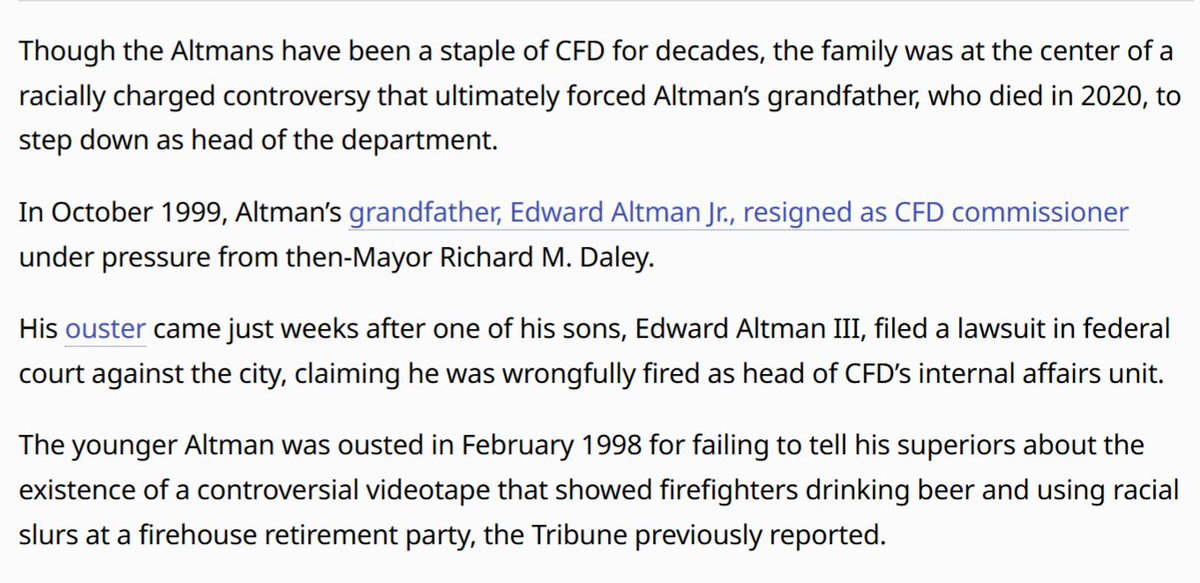
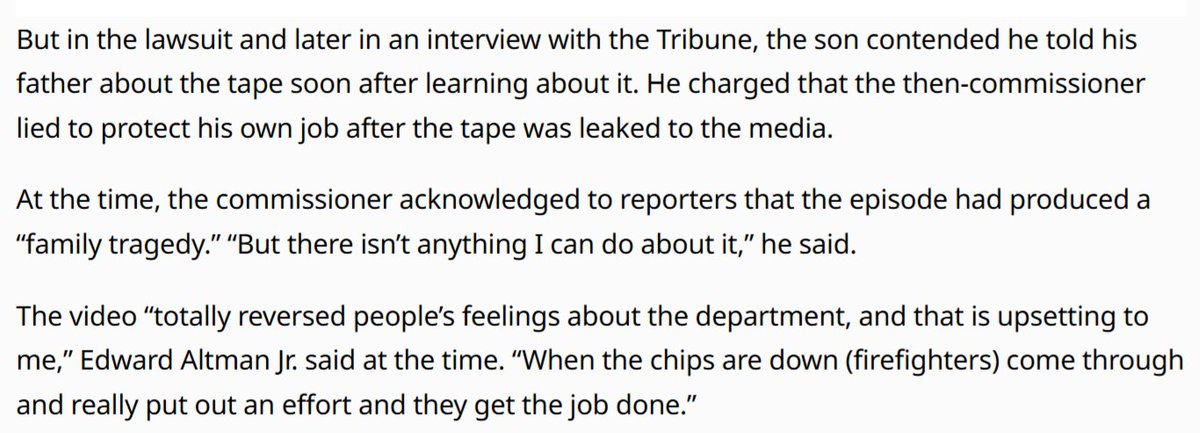
Leave it to @samjcharles to write up a story on a Chicago firefighter who died battling a blaze and include completely irrelevant details from his family, all of which took place decades ago.
Where is Commissioner Annette Nance-Holt to denounce this?
Any elected officials want to weigh in and rebuke this trash story?
109
131
829
92,610