⚖️President of RollingWave Capital. 🟩⬜️ #GoGreen
Joined January 2012
- Tweets 11,130
- Following 738
- Followers 367
- Likes 7,006
566 Photos and videos









Jacob Craton retweeted

Jun 11
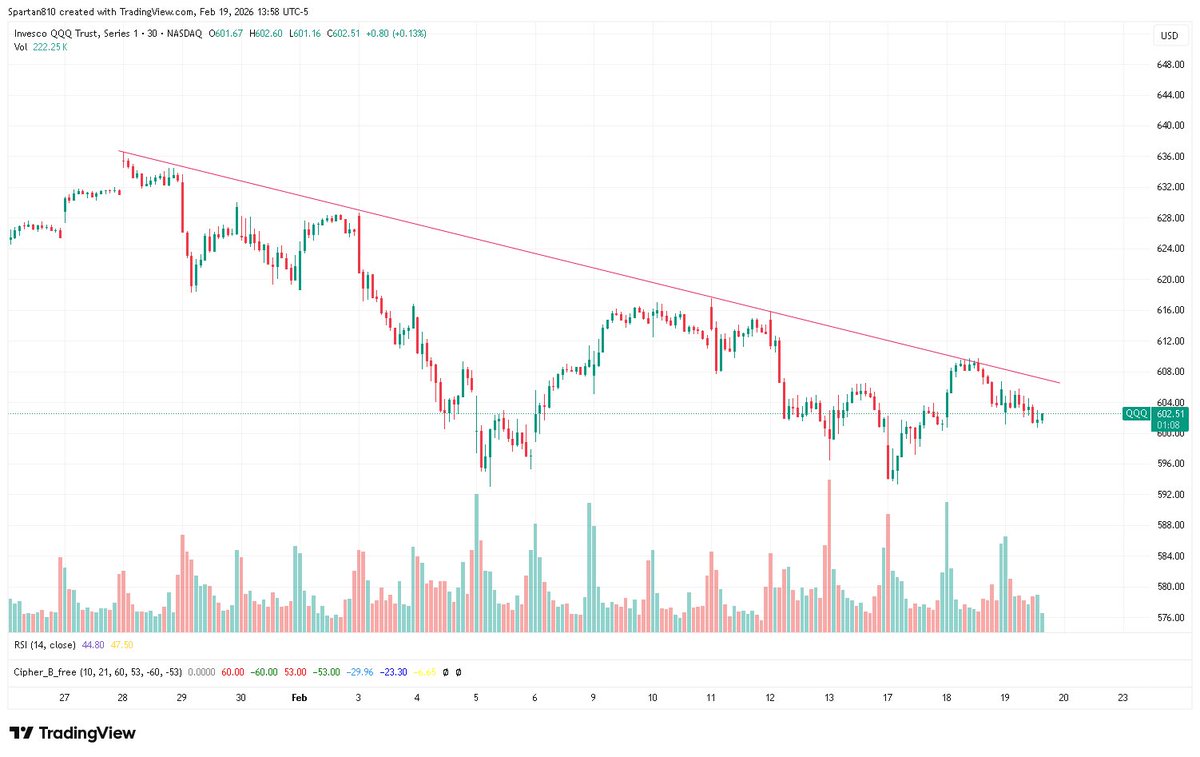
We are now in a harder environment for traditional swing trading.
Breadth is below the 21-day EMA.
Volatility is expanding.
The hardest part is the transition.
The first few weeks after an easy-money environment are where traders do the most damage.
You've probably taken a drawdown.
Maybe a nasty one.
And now you're in make-back mode.
You're no longer focused on what you're up.
You're anchored to the equity high and how much you gave back.
The market doesn't care about your high-water mark.
It only cares whether you're trading the tape in front of you.
The first rule of a regime change:
Stop trading last month's market.
3
2
9
823
Jacob Craton retweeted

Jun 10
POV: Me and the SpaceX lunch lady when she becomes a millionaire after the IPO.
Jun 10

BREAKING: SpaceX's IPO is expected to create 4,000 new millionaires, including some cafeteria workers whose compensation packages include employee stock options, per Bloomberg.
284
2,526
42,645
5,344,756
Jacob Craton retweeted

Jun 10
Crypto is entering a consolidation phase.
In the dotcom era, the markets simultaneously (a) overpriced the losers and (b) underpriced the eventual winners.
The winners and the market size turned out to be way bigger than we imagined.
Top crypto projects with sufficient cash and runway to dominate their respective verticals will sweep the upcoming market.
43
61
338
65,981

Jun 9

% Below All-Time High
Eli Lilly: 0%
S&P 500: -3%
Apple: -8%
Google: -11%
Amazon: -12%
Nvidia: -12%
Tesla: -21%
Gold: -24%
Meta: -27%
Microsoft: -27%
Palantir: -36%
Silver: -46%
Bitcoin: -51%
Ethereum: -67%
MicroStrategy: -78%
Fartcoin: -95%
Trump Coin: -98%
Melania Coin: -99%
2
Jacob Craton retweeted

"Bull markets are born on pessimism, grow on skepticism, mature on optimism, and die on euphoria." Sir John Templeton
I sure think this says we aren't anywhere close to euphoria.
5
1
55
1,585
Jacob Craton retweeted
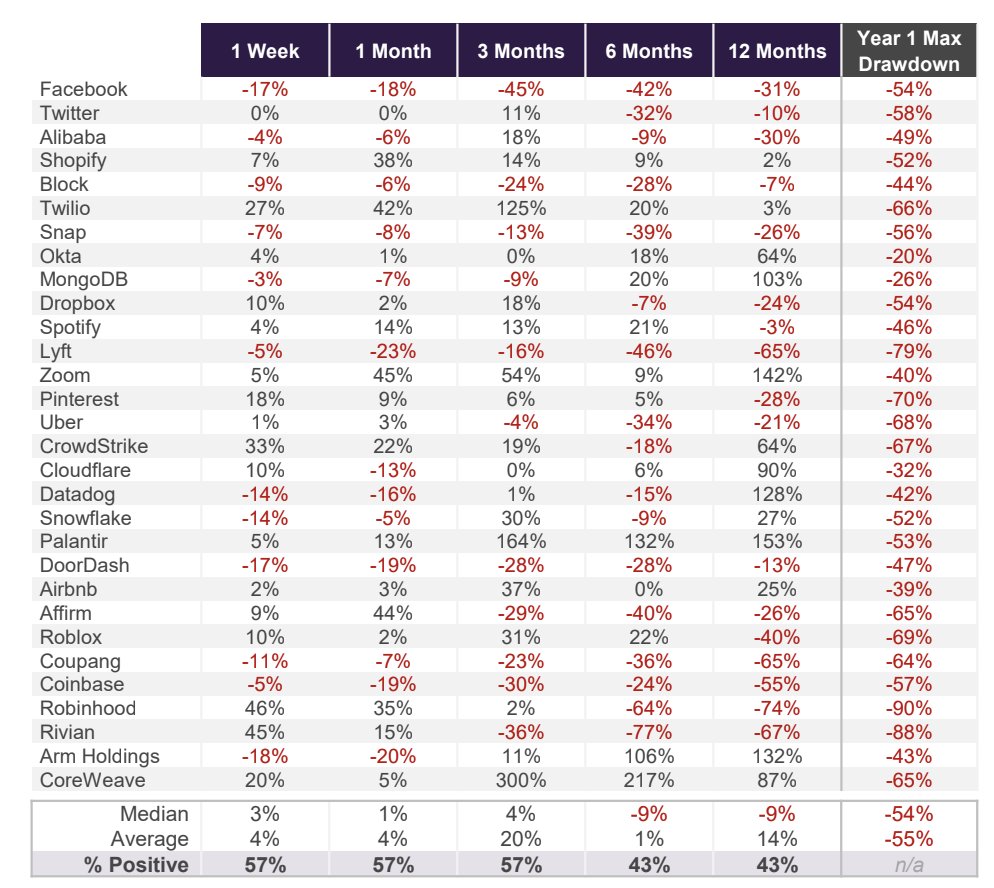
Awesome work by Keith Lerner here on IPOs.

Truist's Keith Lerner took a look at 30 major IPOs. The Year 1 max drawdown column stands out.
14
44
326
60,234
Jacob Craton retweeted

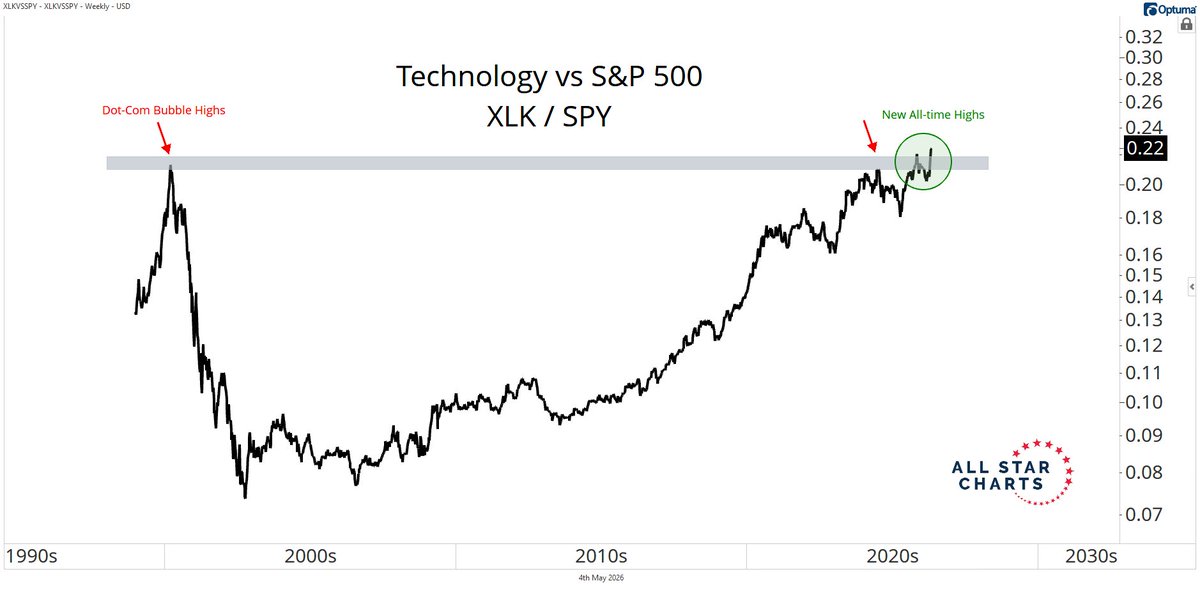
Technology stocks are breaking out to all-time highs vs. the S&P 500, finally clearing the dot-com peak after 26 years.
3
11
82
13,348

This is big... Anthropic just announced a model so powerful they won't release it to the public out of fear over the damage it will cause 😨
Claude Mythos Preview found thousands of zero-day exploits in every major operating system and web browser...
The numbers are hard to believe:
> $50 to find a 27-year-old bug in OpenBSD, one of the most security-hardened operating systems ever built
> Under $1,000 to find AND build a fully working remote code execution exploit on FreeBSD that grants unauthenticated root access from anywhere on the internet
> Under $2,000 to chain together multiple Linux kernel vulnerabilities into a complete privilege escalation exploit
For context: these are the kinds of findings that previously required elite security researchers working for weeks.
Anthropic engineers with no formal security training asked Mythos to find exploits overnight. They woke up to working code the next morning.
The results were so impressive Anthropic assembled Apple, Google, Microsoft, Amazon, NVIDIA, and seven other organizations into Project Glasswing:
A $100M defensive coalition. They're not releasing this model publicly. Instead, they're racing to patch the world's infrastructure before models like this proliferate.
Apr 7

Introducing Project Glasswing: an urgent initiative to help secure the world’s most critical software.
It’s powered by our newest frontier model, Claude Mythos Preview, which can find software vulnerabilities better than all but the most skilled humans.
anthropic.com/glasswing
703
2,449
18,045
4,057,301
Mar 26
Silly stupid market
Mar 26

🚨 TRUMP: WE DONT NEED HORMUZ, IT DOESN'T AFFECT US AT ALL
2
50
Jacob Craton retweeted

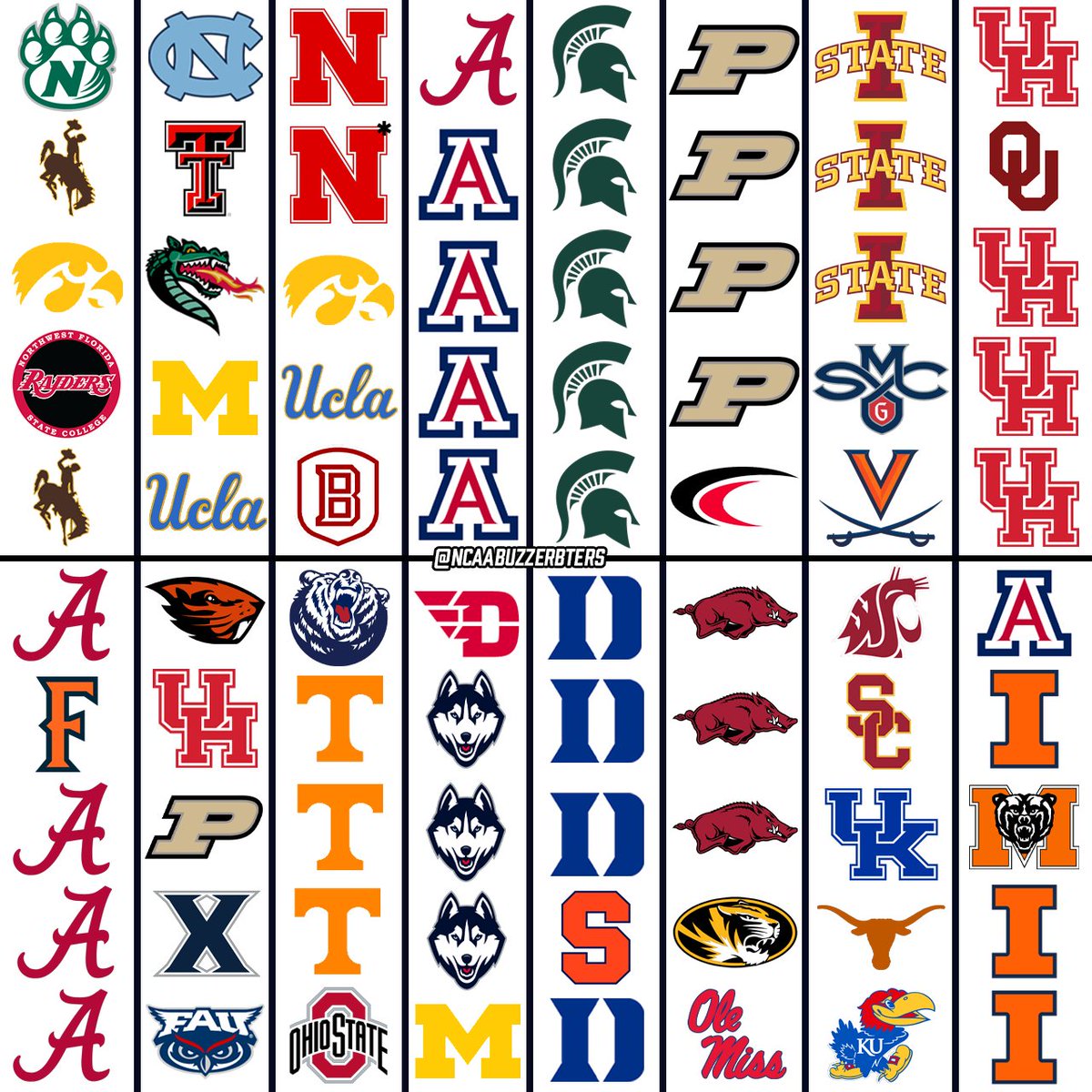
Where every Sweet 16 Team's Starting-5 began playing college basketball.
(Try to figure out which teams are which)
207
376
8,579
1,723,177
Mar 21
Mar 21

OPENAI TO DOUBLE WORKFORCE AS BUSINESS PUSH INTENSIFIES
15
Mar 19
That might be a sign that the bottom is in.
Mar 19
World Health Organization officials are preparing for a nuclear catastrophe if the U.S.-Israel war with Iran escalates further, per POLITICO
1
38


Jacob Craton retweeted

Mar 7
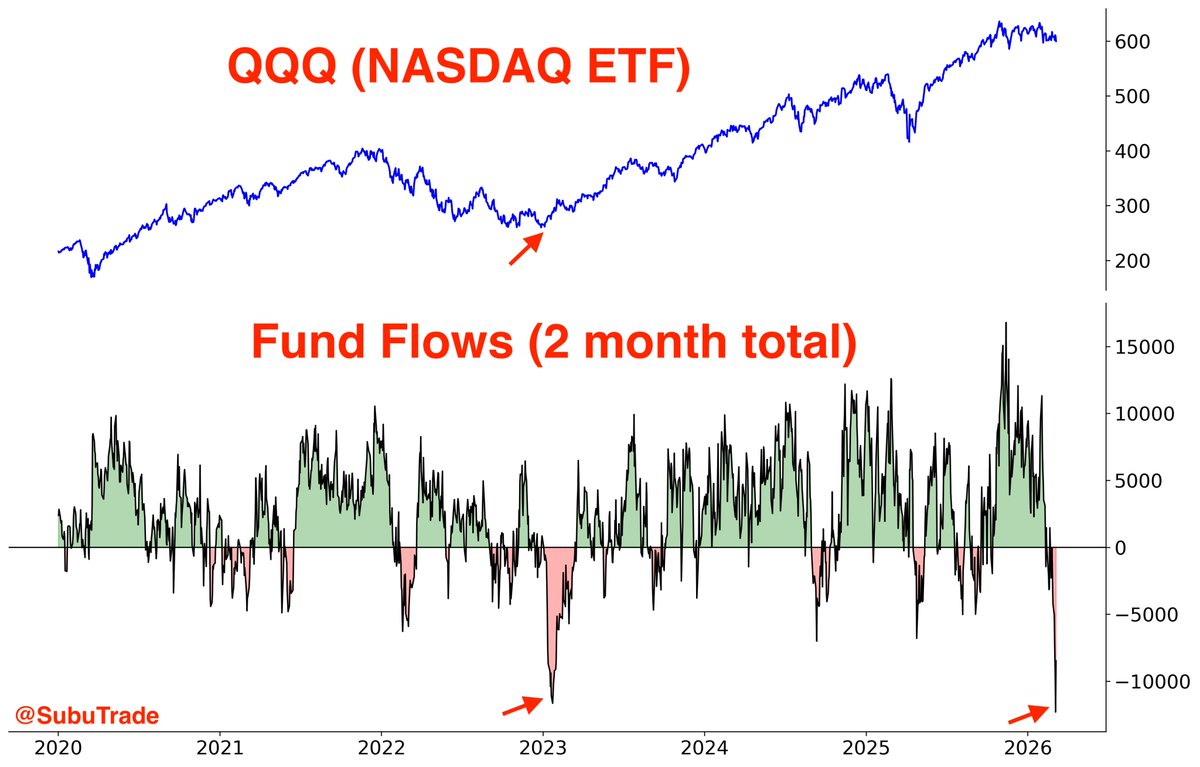
The past 2 months have seen record outflows in $QQQ (NASDAQ ETF).
Even more outflows than at the 2022 bear market bottom.
103
230
1,372
262,279

Jacob Craton retweeted

Mar 4
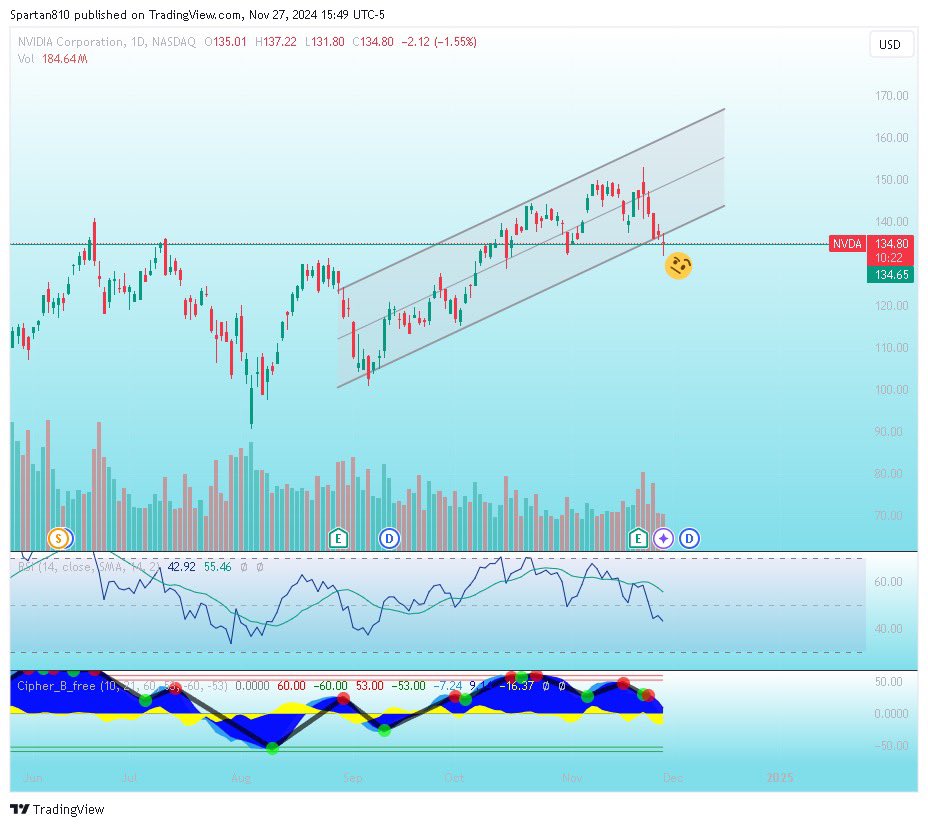
$NVDA CEO ON THE STOCK:
“Of course I care about the stock. I care about shareholders… I care about all of you.”
“We just had the best earnings… I think somebody actually told me that this might be the single best print… in the history of humanity… we had a very good quarter.”
“You can’t hold a stock back… and the reason for that is very simple. Compute equals revenues for companies in the future.”
“Every single company will need compute for revenues… because compute translates to intelligence… to your digital workforce… which translates to your revenues.”
“I’m certain compute equals revenues. I’m certain also that compute equals GDP.”

13
55
495
33,945
Jacob Craton retweeted

Mar 3
On software
Remember just 5 years ago the consensus view was:
1. Nobody would ever go back to the office.
2. Grocery would permanently shift online.
3. No one would shop in person again.
4. Covid vaccines would be a massive LT biz.
5. Business travel was over.
6. Brick and mortar retail was finished.
7. Digital fitness was the future of everything.
8. Suburbs only. Cities were done.
What actually happened?
People went back to offices.
Stores are busy.
Airports are packed.
Cities recovered.
Retail adapted.
We naturally over extrapolate what’s happening in the moment and we underestimate what people actually want and need:
It was kind of obvious looking back.
• Community
• Convenience and experience
• Flexibility, not extremes
• Social interaction
• Physical spaces
Trends accelerate in moments. Then behavior normalizes.
The investing lesson isn’t “ignore change.” It’s don’t price the permanent version of a temporary spike.
$IGV $HACK
3
12
930
Feb 27
And yet rates are 📉
Feb 27
CHINESE HOLDINGS OF U.S. TREASURIES PLUNGE TO LOWEST LEVEL SINCE THE GLOBAL FINANCIAL CRISIS
19
Feb 24
Wow. Absolutely worth a read!
Feb 23

When I was 7 years old I was asked by my father what went into the price of a sandwich. Considering it carefully, I answered.
The lettuce, the tomato, the bread and the meat.
I did not consider correctly. I was short quite a few costs as my father was eager to point out. I had forgot the labor of the worker, the rent of the land, the marketing costs of the chain. I wasn’t seeing the full picture.
Today we are all making a similar mistake with AI. We are not considering what cannot be considered. As foreign to the 7 year old as these excess charges were, so are the downstream affects of AI.
In 1850, if you had told a teamster that his horse and carriage would soon be obsolete, he would have envisioned a world of mass starvation for men of his skill. He could grasp the concept of a faster carriage, but he could not conceive of the interstate highway system, the suburban real estate market, or the roadside motel industry. These were not just new products; they were an entirely new social architecture.
We are currently in the teamster’s shoes. We see AI automating the ingredients of our current economy—the writing, the coding, the data entry—and we fear the void. But history shows that humanity doesn't fall into the void; it builds a floor over it.
Karl Marx looked at the dark satanic mills of the 19th century and saw a terminal point. He argued that as the means of production became more efficient, capital would consolidate and labor would become a worthless commodity. He believed capitalism would eventually eat itself because it would run out of things for people to do.
Marx was wrong because he viewed human utility as a fixed pie. He didn't understand that technology doesn't just subtract labor; it changes the nature of what we consider valuable.
When the mechanical loom made fabric cheap, we didn't stop buying clothes. Instead, we invented the fashion industry. We created brand management, retail psychology, and textile engineering.
We moved from a world where everyone owned two outfits to a world where millions of people are employed in the cycle of seasonal trends.
In the age of the steam engine, "handmade" was a sign of poverty. Today, it is a luxury. We are already seeing a shift where the human touch—the artisanal, the face-to-face, and the physically present—is becoming the high-margin sector of the economy.
Every time we automate a simple task, we move the human to a more complex one. We didn't stop needing accountants when Excel was invented... we simply started asking accountants to perform much more sophisticated financial modeling.
The 7-year-old misses the rent and the marketing because they are abstractions. Similarly, we struggle to see the jobs of 2040 because they rely on problems we haven't even encountered yet. We might see the rise of Personal Data Stewards, who manage the interaction between our private lives and public AI models, or Reality Architects, who ensure that the virtual spaces we inhabit are psychologically grounded.
The world works itself out because humans are fundamentally restless. We do not tolerate a vacuum of purpose, we seek higher function always.
1
13