
Managing Partner and co-founder at Threshold Ventures, a venture capital firm based in Silicon Valley. Threshold tweets at @thresholdvc
Joined September 2008
- Tweets 3,095
- Following 863
- Followers 28,111
- Likes 2,705
297 Photos and videos









May 22
This 👇
May 22

You do not understand growth unless CAC Payback runs in your veins
It’s the most empirical first principle
CAC:LTV seems like a first principle but it’s subjective BS
It’s really surprising how few growth, data and finance people in tech have wired their brain for this metric
3
1,432
May 19
Running my own little fleet of Claude agents — newsletter ingest, tweet drafts, code review on my PRs — has made one thing obvious: the prompt you shipped last week is often not the behavior running today.
LaunchDarkly's AgentControl feels like the right shape of an answer. Excited to try it out!
May 19

I started LaunchDarkly because teams deserved better control over what they shipped. With AI, that matters more than ever.
Today we’re launching AgentControl: real-time visibility and control for AI agents in production.
ld.team/6W88xI
2
1
6
1,475
Josh Stein retweeted

Apr 28
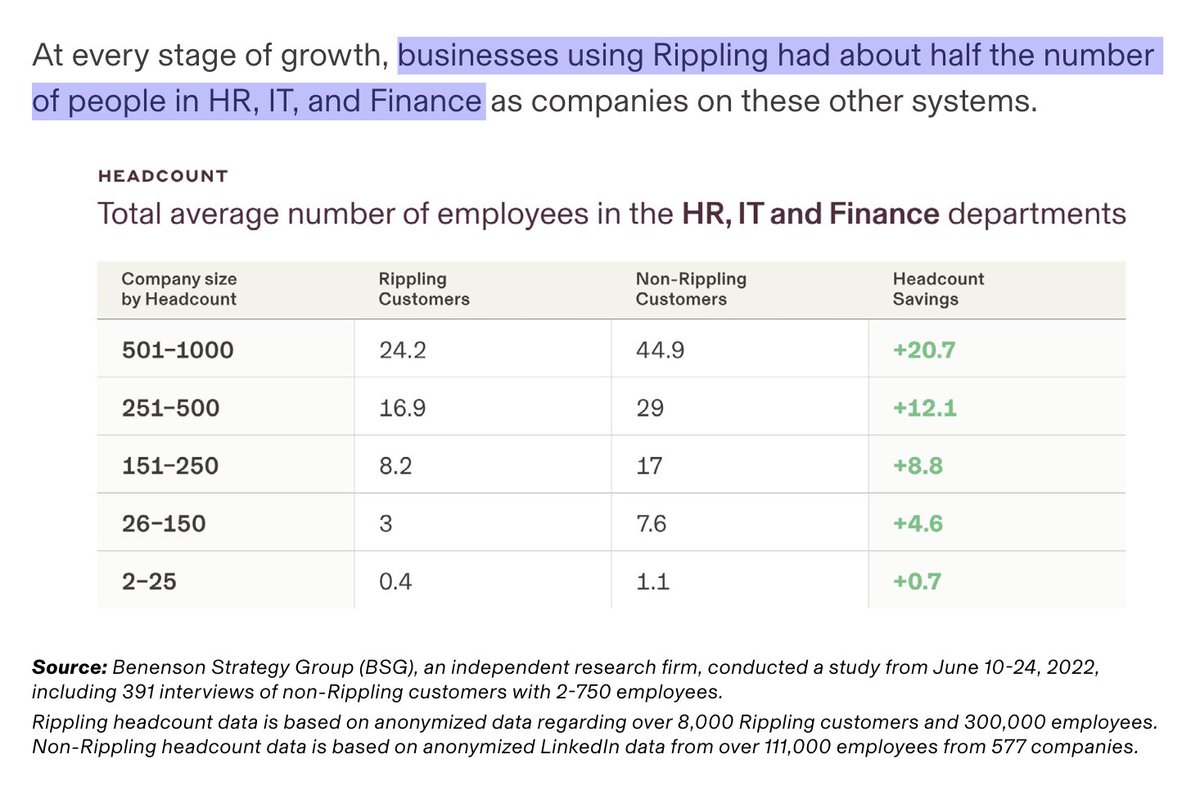
Today, we launched @Rippling Automated Compliance, starting with SOC 2.
We have a unique advantage here: we aren't telling you how to fix your stack, because we ARE your stack. device management, identity and access management, HR, performance management...
93
69
1,151
4,210,930
Apr 22
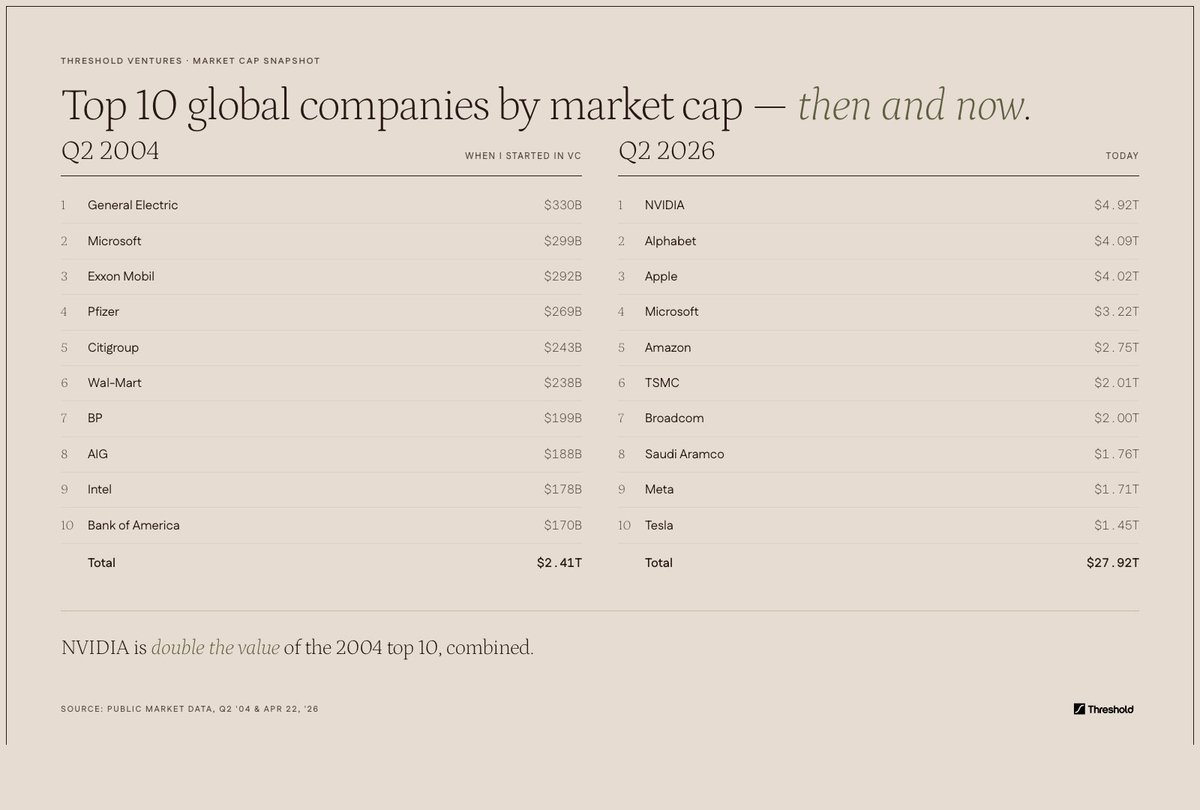
Thinking about the current pace of change got me thinking about the old days.
I started in venture capital in April 2004.
Top 10 companies, April 2004: Industrials, oil, pharma, banks.. and Microsoft/Intel. Combined market value: ~$2.4T.
Top 10 today: NVIDIA, Alphabet, Apple, Microsoft, Amazon, TSMC, Broadcom, Meta, Tesla and Aramco. 9 of 10 are tech. Combined value: ~$27.9T.
NVIDIA (~$4.9T) is ~15x the value of the 2004 number one. And double the value of the 2004 top 10, *combined*.
The game keeps changing. Faster, bigger, better. The one constant: be long on technology. The next decade or two are going to be incredible.
2
8
951
Apr 22
The pace at which @AnthropicAI is shipping new features for Claude Code is incredible. I've worked in software for 30 years and I’m struggling to think of anything comparable. Early AWS is maybe the only thing even close?
Apr 22

New in Claude Code: /ultrareview (research preview) runs a fleet of bug-hunting agents in the cloud.
Findings land in the CLI or Desktop automatically. Run it before merging critical changes—auth, data migrations, etc.
Pro and Max users get 3 free reviews through 5/5.
1
955
Josh Stein retweeted

Apr 21
Small step for a finger on "post tweet" button.
Big step for millions of future AI agents doing useful work for us.
Apr 21

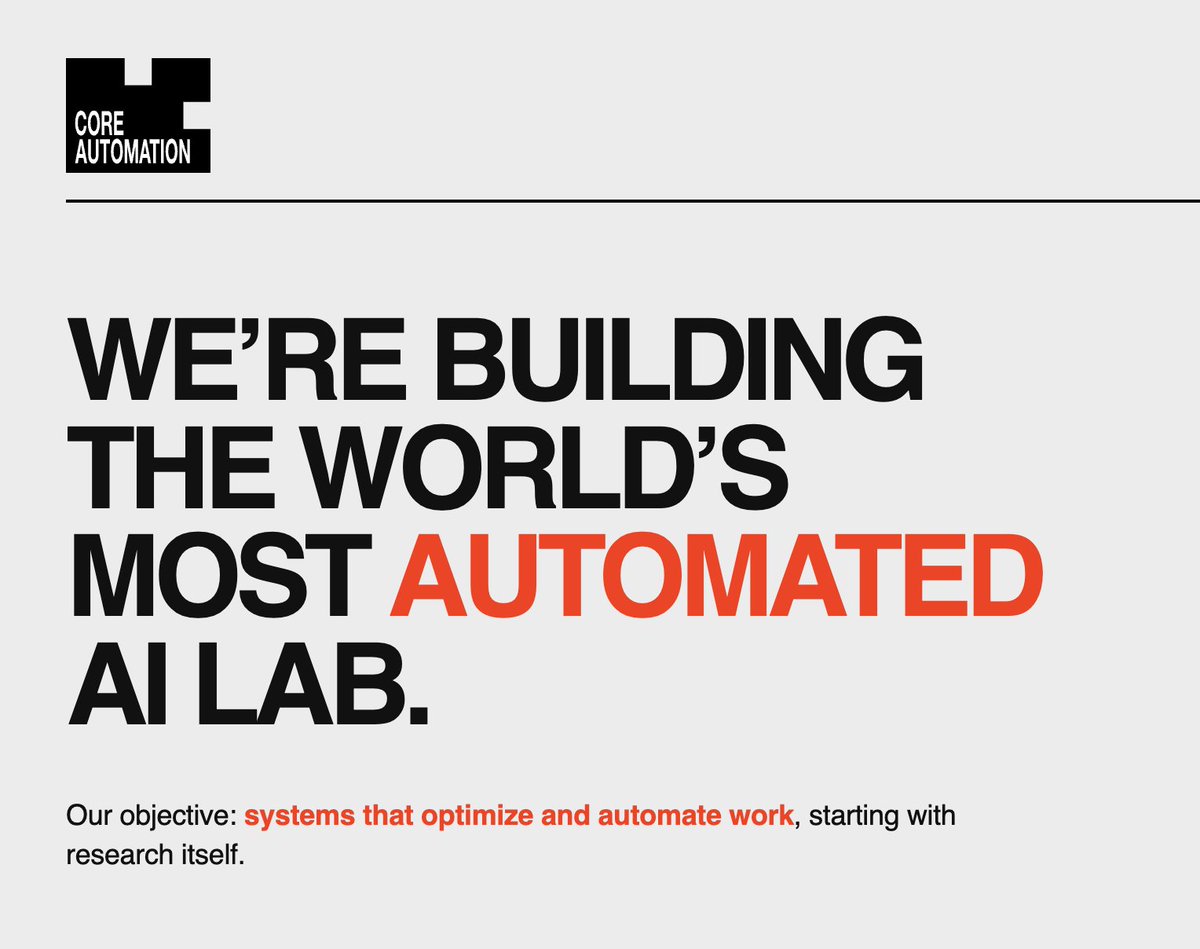
Today we're announcing Core Automation
Our objective: systems that optimize and automate work, starting with research itself.
58
37
670
167,551
Josh Stein retweeted

Apr 21
Pretty fired up to be backing @MillionInt @_arohan_ @juliacvillagra and the rest of the elite crew at Core! An AI that builds for AI, from ground up! One of the most ambitious team that we've backed at @thresholdvc!
Apr 21
Today we're announcing Core Automation
Our objective: systems that optimize and automate work, starting with research itself.
4
3
17
2,179
Apr 22
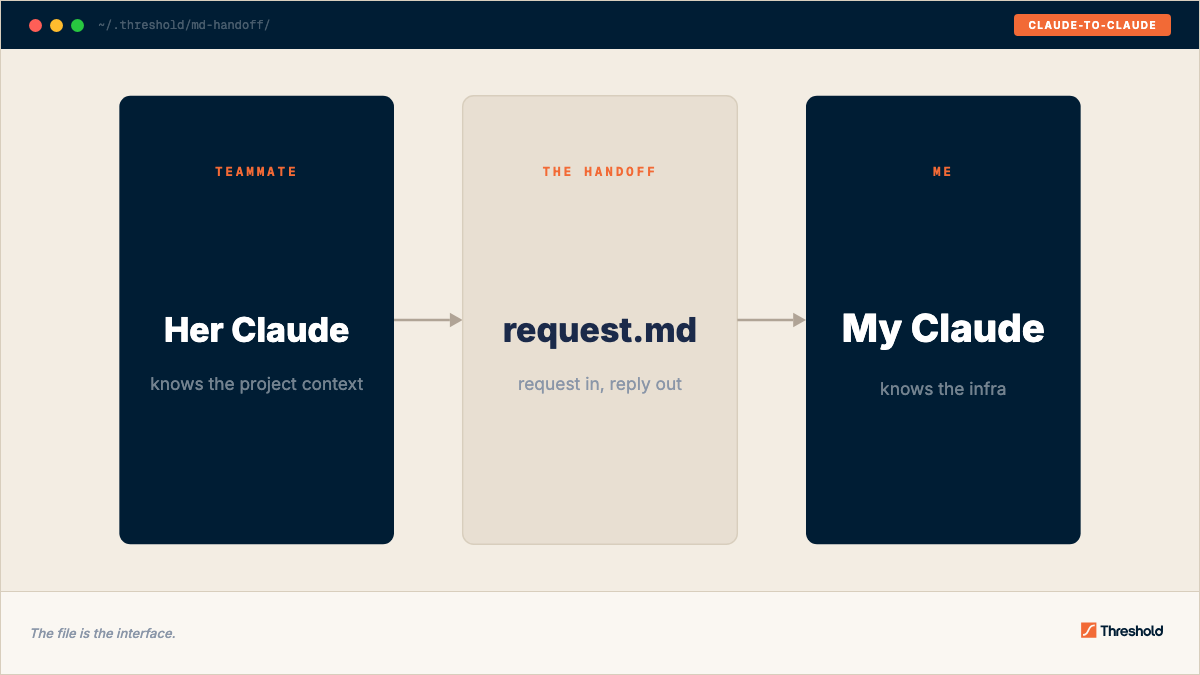
When your team is on Claude Code and needing to collaborate, the fastest handoff might not be Slack or email. Instead, try having one Code instance write an MD file with exactly what it needs, for another Claude to answer.
TLDR: Machine to Machine > Trying to figure it out between people. 😃
5
7
533
Apr 20
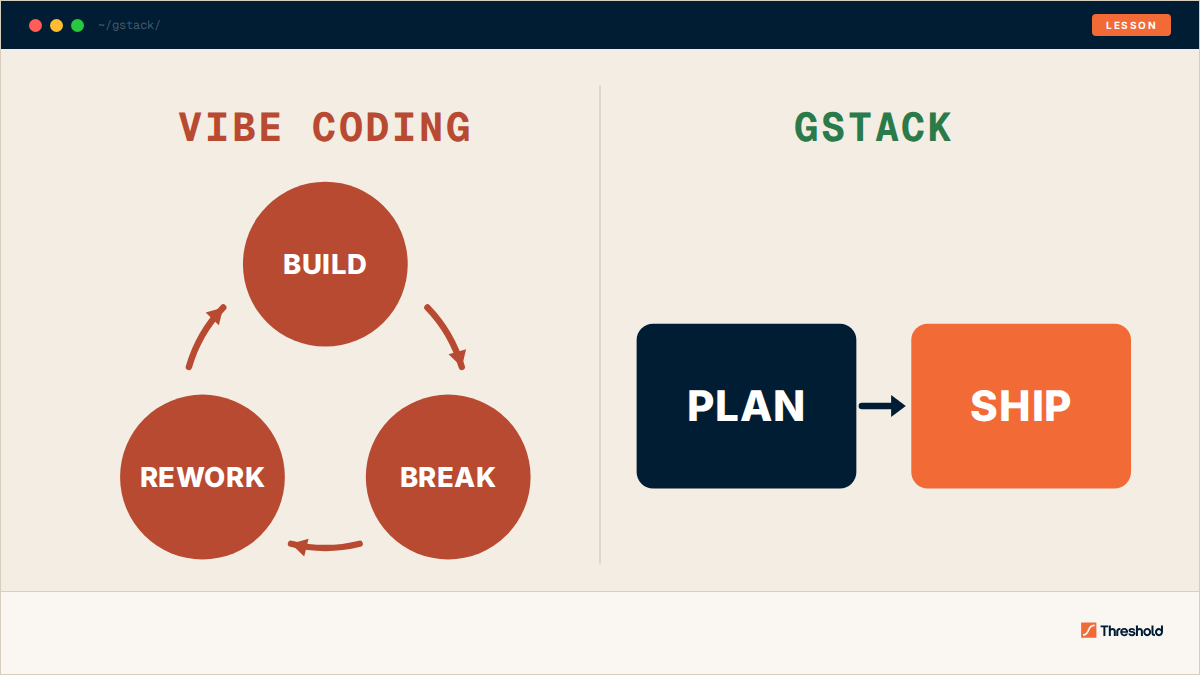
Anytime I've built something in Code *without* running it through the gstack pipeline, I've had to come back and rework it. Code is great but it also charges off half-cocked, solving whatever problem it thinks it sees, before asking if that's the *right* problem.
gstack pushes you to take the time up front to ask "what am I actually trying to accomplish, what's the 10x version of that and what'll bite me later if I don't think about it now?"
10-15 minutes that saves hours of rework. Classic measure twice, cut once.
And thank you again, @garrytan!
7
10
68
77,787
Josh Stein retweeted

Apr 17
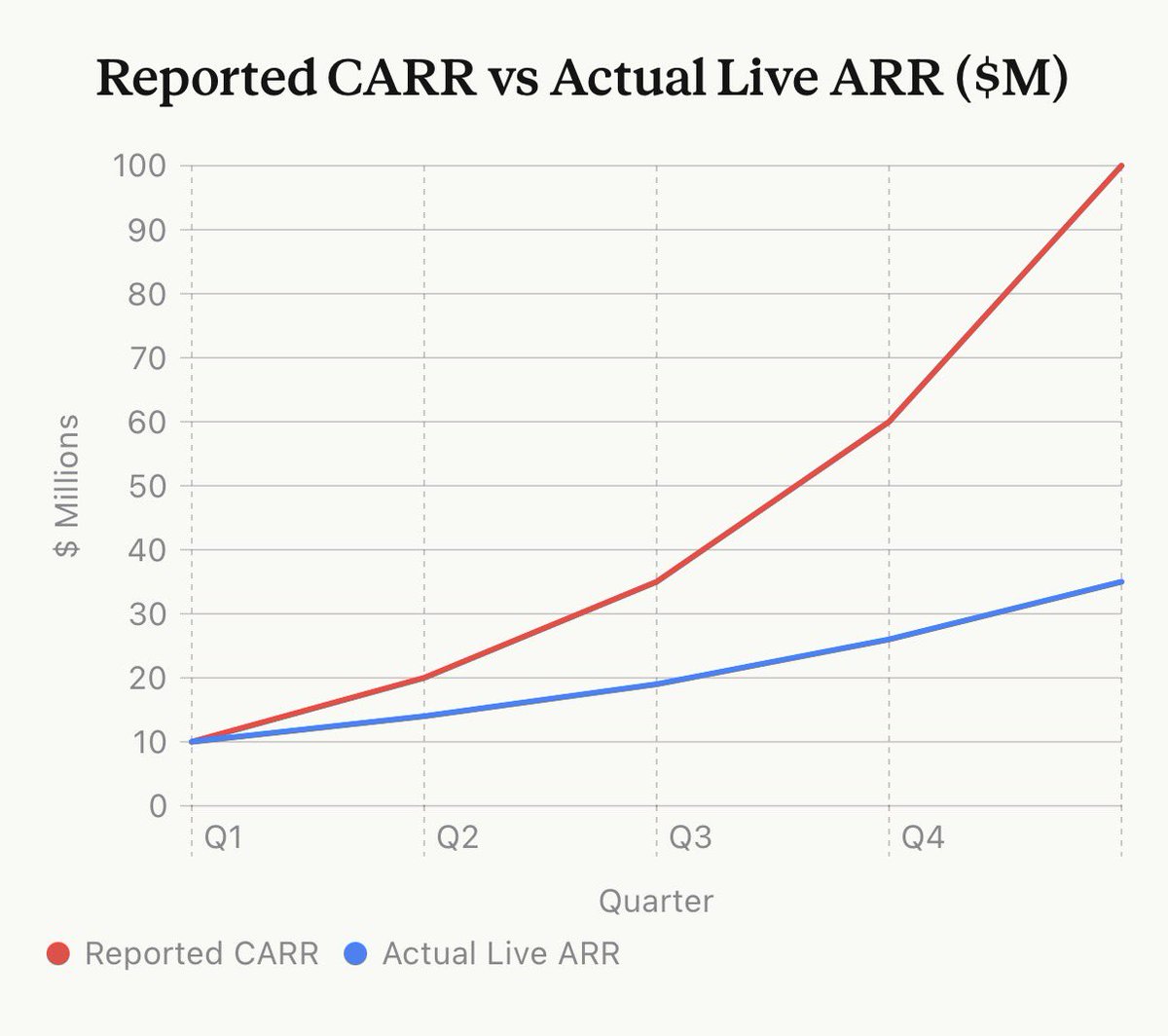
It’s time to expose a huge scam in AI startups: Contracted ARR
The reason many AI startups are crushing revenue records is because they are using a dishonest metric
The biggest funds in the world are supporting this and misleading journalists for PR coverage.
The setup: Company signs 3-year enterprise deals. Year 1 is discounted (say $1M), Year 2 steps up ($2M), Year 3 is full price ($3M).
They report $3M as “ARR” — even though they’re only collecting $1M right now.
The worst part: The customer has an opt-out option at 12 months! It’s not actually a 3 year contract.
In the chart below, by Q5 the company is trumpeting ~$100M “ARR” to press, while actual cash-generating, in-effect ARR is ~$35M. That’s ~3x inflation.
On top of this, enterprise AI companies are bundling full-time “forward deployed engineers” into deals massively reducing margins, sometimes producing Year 1 negative margins.
At some point customers are going to start triggering their opt-out clauses or aggressively negotiating down Year 3 pricing.
And a wave of enterprise AI companies may collapse.
166
142
1,469
958,196
Apr 15
🔥🔥🔥
Apr 15

Rippling AI was the most successful launch we've ever done. On the heels of this launch, Rippling's revenue is now growing 78% YoY (at ARR over $1 Billion). And this growth rate has now increased, every quarter, for three straight quarters.
4
491
Josh Stein retweeted

Apr 12
Another week on the road meeting with a couple dozen IT and AI leaders from large enterprises across banking, media, retail, healthcare, consulting, tech, and sports, to discuss agents in the enterprise.
Some quick takeaways:
* Clear that we’re moving from chat era of AI to agents that use tools, process data, and start to execute real work in the enterprise. Complementing this, enterprises are often evolving from “let a thousand flowers bloom” approach to adoption to targeted automation efforts applied to specific areas of work and workflow.
* Change management still will remain one of the biggest topics for enterprises. Most workflows aren’t setup to just drop agents directly in, and enterprises will need a ton of help to drive these efforts (both internally and from partners). One company has a head of AI in every business unit that roles up to a central team, just to keep all the functions coordinated.
* Tokenmaxxing! Most companies operate with very strict OpEx budgets get locked in for the year ahead, so they’re going through very real trade-off discussions right now on how to budget for tokens. One company recently had an idea for a “shark tank” style way of pitching for compute budget. Others are trying to figure out how to ration compute to the best use-cases internally through some hierarchy of needs (my words not theirs).
* Fixing fragmented and legacy systems remain a huge priority right now. Most enterprises are dealing with decades of either on-prem systems or systems they moved to the cloud but that still haven’t been modernized in any meaningful way. This means agents can’t easily tap into these data sources in a unified way yet, so companies are focused on how they modernize these.
* Most companies are *not* talking about replacing jobs due to agents. The major use-cases for agents are things that the company wasn’t able to do before or couldn’t prioritize. Software upgrades, automating back office processes that were constraining other workflows, processing large amounts of documents to get new business or client insights, and so on. More emphasis on ways to make money vs. cut costs.
* Headless software dominated my conversations. Enterprises need to be able to ensure all of their software works across any set of agents they choose. They will kick out vendors that don’t make this technically or economically easy.
* Clear sense that it can be hard to standardize on anything right now given how fast things are moving. Blessing and a curse of the innovation curve right now - no one wants to get stuck in a paradigm that locks them into the wrong architecture. One other result of this is that companies realize they’re in a multi-agent world, which means that interoperability becomes paramount across systems.
* Unanimous sense that everyone is working more than ever before. AI is not causing anyone to do less work right now, and similar to Silicon Valley people feel their teams are the busiest they’ve ever been.
One final meta observation not called out explicitly. It seems that despite Silicon Valley’s sense that AI has made hard things easy, the most powerful ways to use agents is more “technical” than prior eras of software. Skills, MCP, CLIs, etc. may be simple concepts for tech, but in the real world these are all esoteric concepts that will require technical people to help bring to life in the enterprise.
This both means diffusion will take real work and time, but also everyone’s estimation of engineering jobs is totally off. Engineers may not be “writing” software, but they will certainly be the ones to setup and operate the systems that actually automate most work in the enterprise.
254
643
5,315
1,770,373
Apr 6
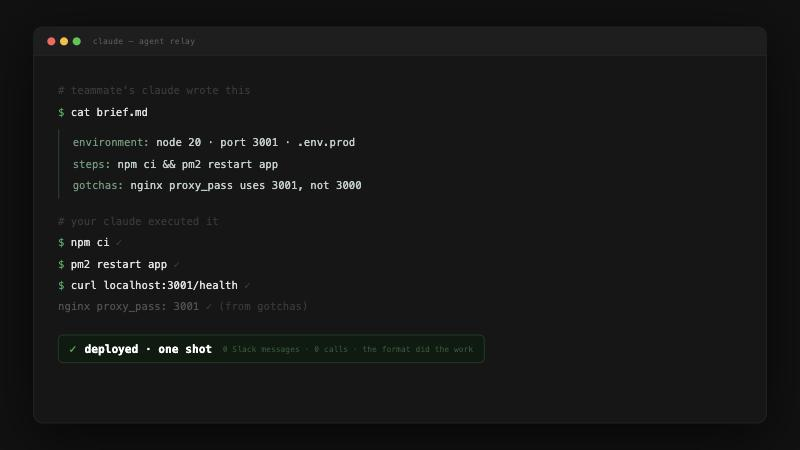
Deployed a teammate's app to shared infra this week with zero back-and-forth.
His Claude wrote a brief — environment, steps, gotchas. My Claude executed it. One shot, done.
The format did the work. Neither of us had to explain anything.
2
1
3
399
Josh Stein retweeted
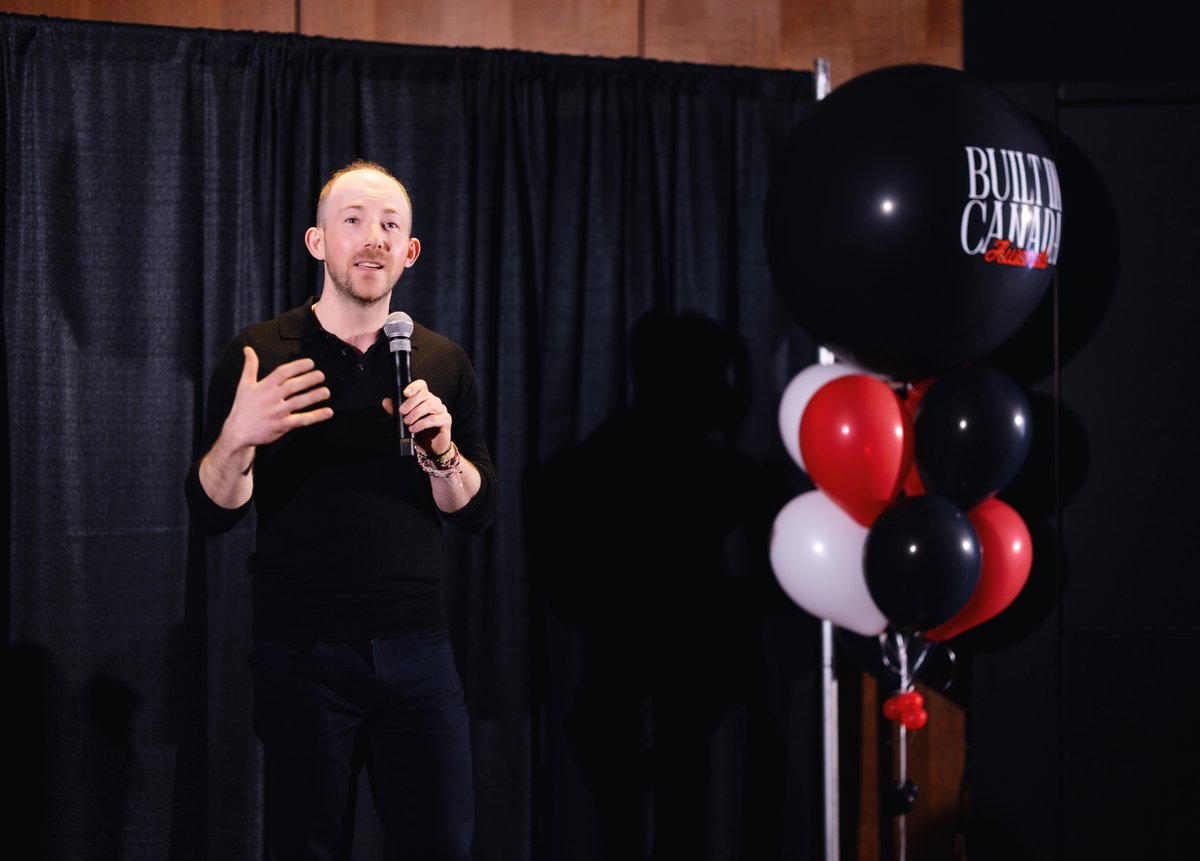
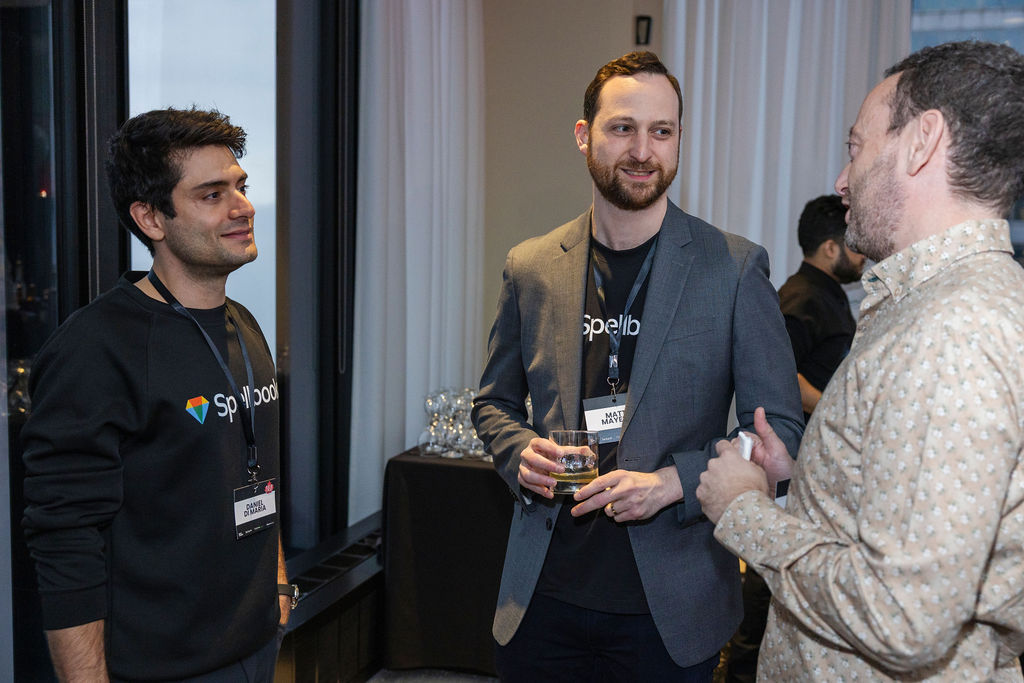
On Tuesday, Spellbook was recognized as the fastest growing company in Canada out of 400 nominees, at the Built in Canada awards by @build_canada.
So proud of this team and excited to carry on the mission to build prosperity in Canada through ambition and optimism.
Amazing talent density in the room--was great to finally meet @harleyf and @mkatchen, two people that have inspired us to build at scale here.


16
8
104
8,745
Josh Stein retweeted
Today, we’re introducing Spicy Mode in Spellbook.
It points out contract issues with zero diplomatic filter: roasting lopsided terms, complaining about vague drafting, and giving commentary you should never send to opposing counsel.
Available for one day only (yes, really).
8
5
55
9,305
Mar 31
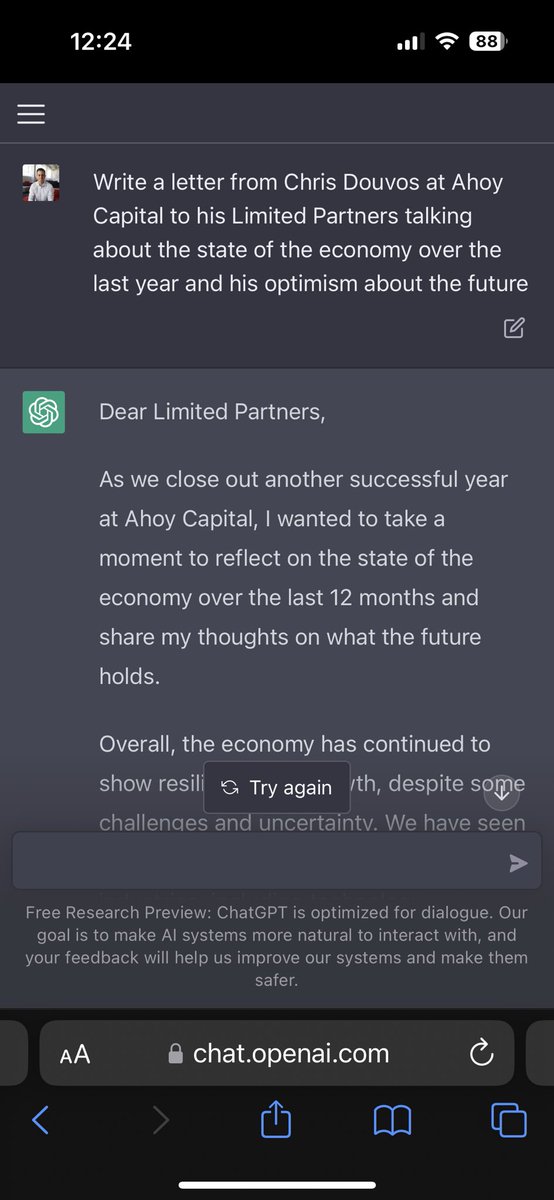
Too good 😂

1
4
655
Mar 28
Mar 27

Tasted blood (with Claude Code). There's no going back.
3
480
Mar 26
Congrats to @DvirSegev, @Yanir_ and the Enclave team. The insight is sharp: AI made code creation fast, but review and security didn’t keep up. Independent audit of AI-generated code is a real gap, and the early results finding vulnerabilities that model-native tools miss are compelling. Proud to have @thresholdvc as part of this round!
Mar 26

After months in stealth, my cofounders @DvirSegev, @Yanir_ and I are finally sharing Enclave with the world. 🌎
AI changed code creation, but the bottleneck is now review. You can’t ship at 10x speed if your security is stuck at 1x.
Independent security is a must. You wouldn’t let the builder also be the inspector. The same entity building your code shouldn't be the one auditing it. 🛡️
We’ve raised $6M led by @8VC to solve this. Our team is already finding critical vulnerabilities in production that model-specific tools missed entirely (research on that coming soon).
I sat down with @thebenbergman at @BusinessInsider earlier this week to talk about why traditional AppSec is solving the wrong problem and how we’re building the "independent lens" for the AI era.
🔗 Read the full story on that here: businessinsider.com/startup-…
If you’re feeling the review bottleneck, DM me for a demo.
3
3
14
1,206
Mar 23
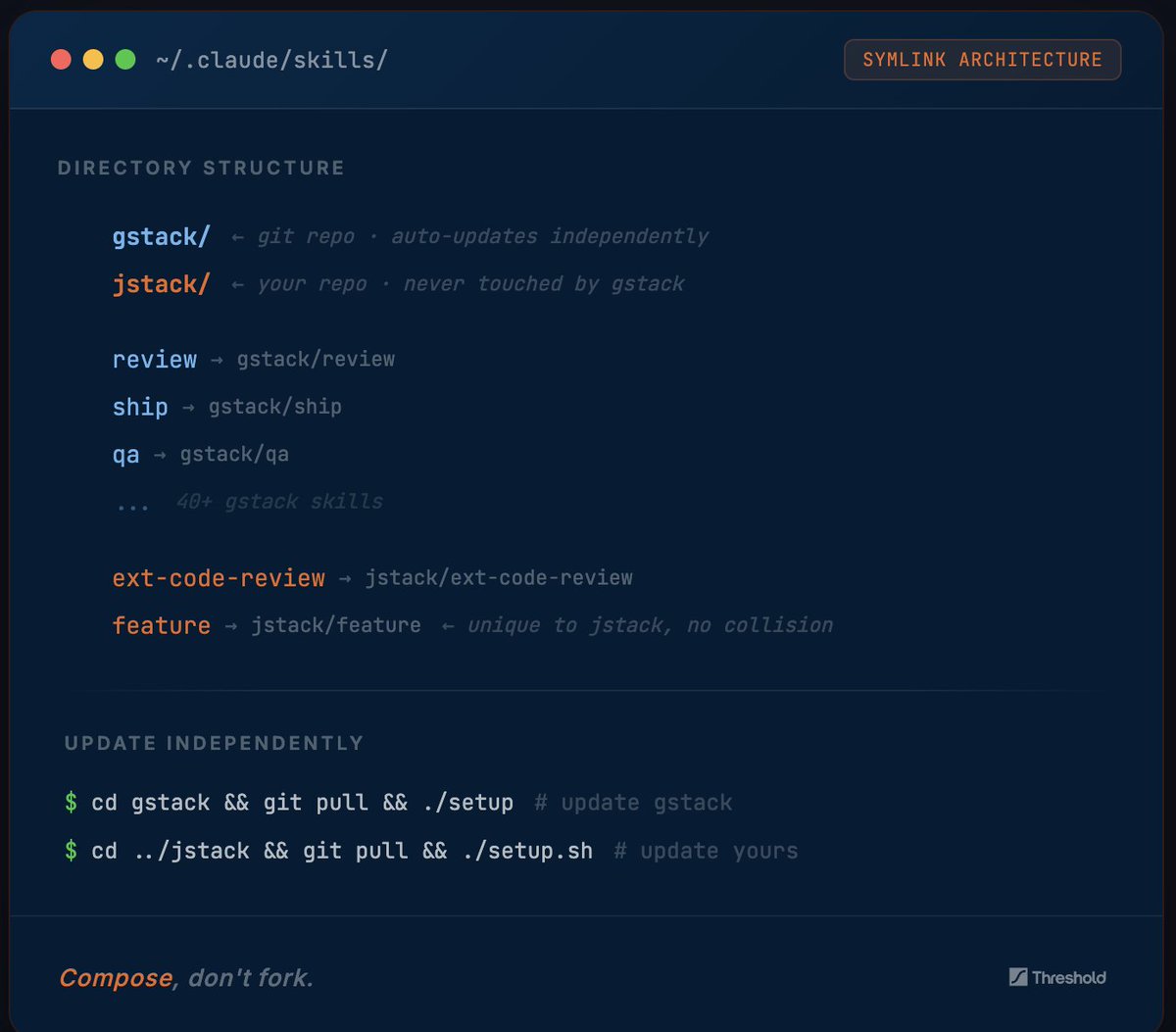
gstack might be the most important piece of software in my professional life right now. Elegant, effective, and a massive force multiplier. *Huge* thanks to @garrytan for building it and continuing to improve it.
A big unlock for me was adding a custom skills layer alongside it.
I call mine jstack: project-specific workflows that sit on top of gstack, tailored to my own needs.
The trick was making both coexist cleanly so I can keep pulling the latest gstack updates without conflicts or overwrites.
Setup:
• gstack in one repo
• jstack in a separate repo under ~/.claude/skills/jstack/
• Both symlinked into the shared skills dir
• Unique skill names to avoid collisions
• Each updated independently
Compose, don’t fork.
2
1
7
563
Mar 23
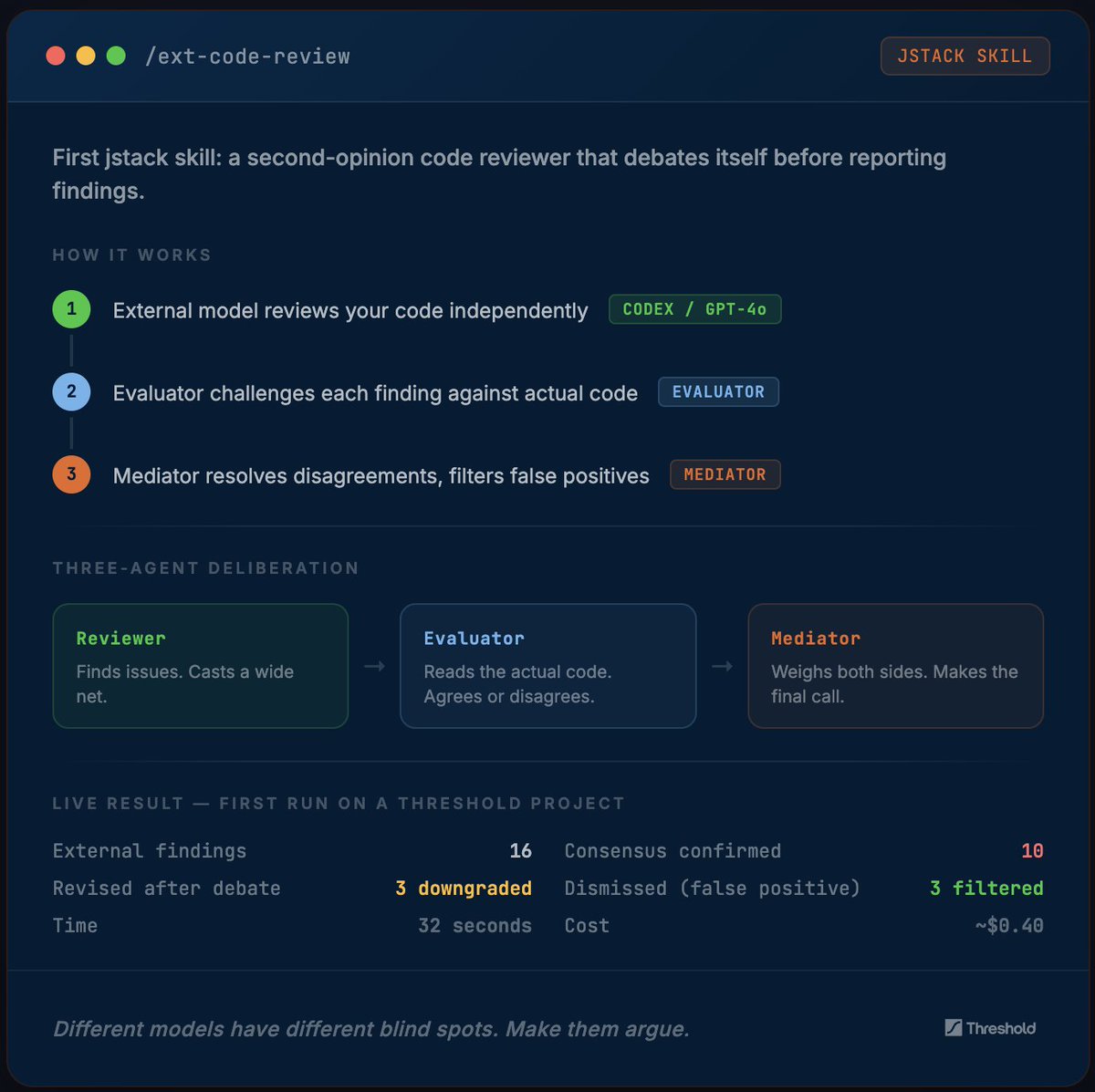
The first jstack skill I built is /ext-code-review.
It sends your code to a second model for an independent review, then runs a three-agent debate:
• reviewer surfaces issues
• evaluator checks each one against the code
• mediator makes the final call
My first live run:
• 16 findings
• 3 false positives filtered
• 3 downgraded
• 10 real issues confirmed, including XSS bugs
Cost? 32 seconds and ~$0.40 in tokens.
Different models have different blind spots. Make them argue it out!
1
3
210