Joined November 2018
- Tweets 1,048
- Following 633
- Followers 418
- Likes 9,726
68 Photos and videos





Pinned Tweet

19 Jun 2025
I had the best time in NYC recently.
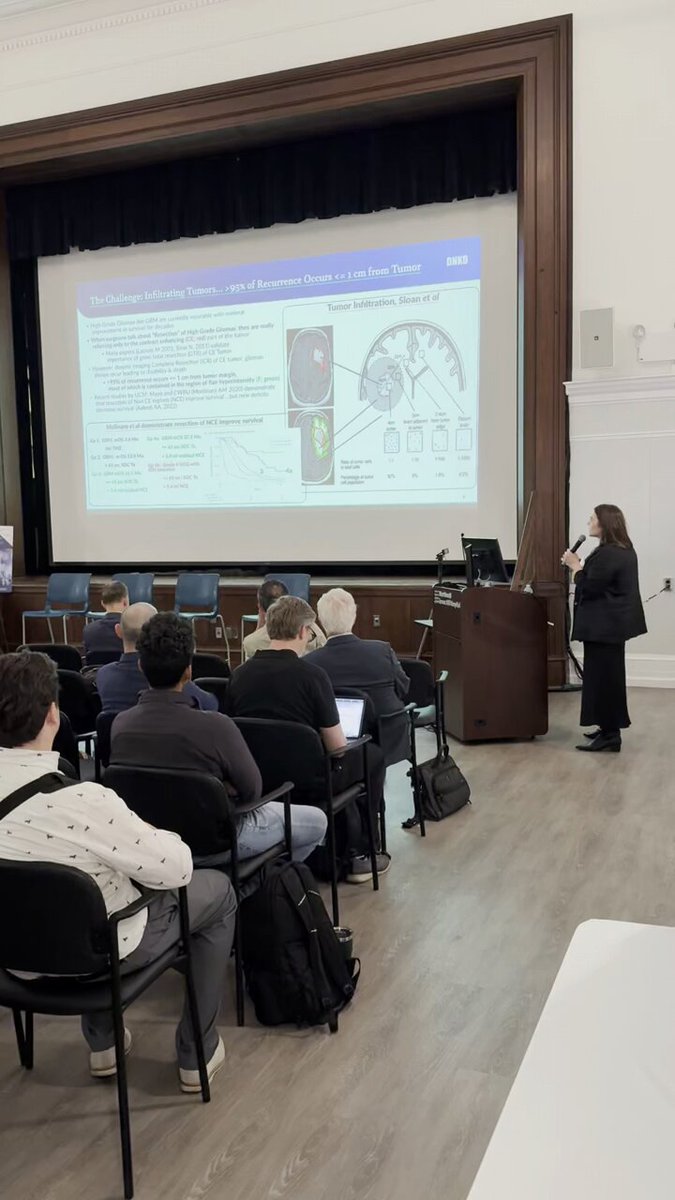
I gave my first talk on our cancer treatments at Lenox Hill Hospital and shared how my father's brain cancer battle with GBM sparked my interest in the field.
How when the neurosurgeon told me my dad needed brain surgery, my first instinct was to ask him to join him in the OR.
Did I have something to offer 6 years ago when I asked to join the OR? No.
Do I have something to offer now? Yes.
Here's a brief clip of me talking about the key problem we're trying to address in this treatment paradigm- tumor infiltration. 95% of recurrence occurs within 1cm of the tumor margin left behind during resection.
Our treatments will go beyond that zone. I spoke about how we can combine thermotherapy and temperature sensitive liposomes for the treatment of malignant brain tumors. Our treatment crosses the blood brain barrier and I presented evidence proving it.
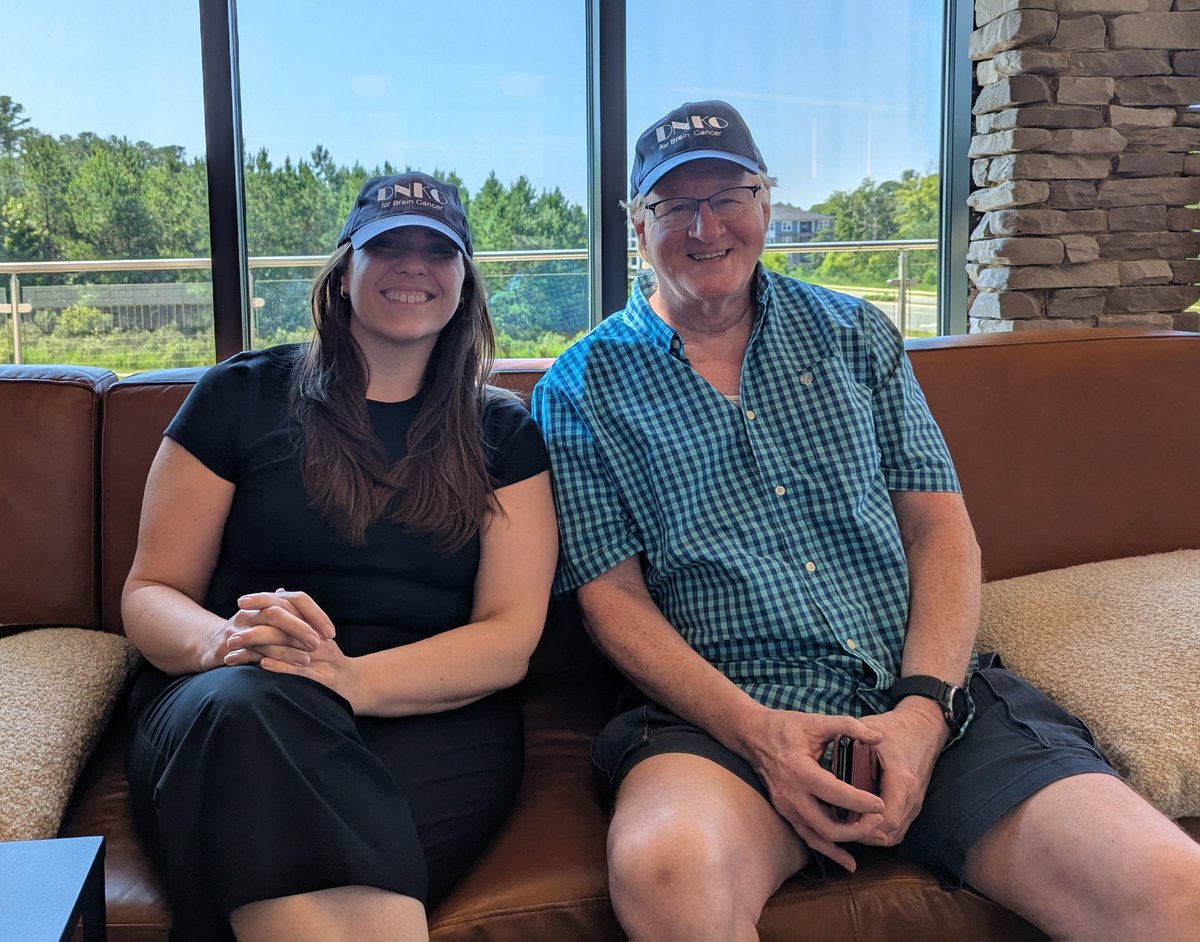
& the surgeon I asked to join in the OR 6 years ago? He flew to NYC to be there for my 15 min talk, and he guides our translational research as our scientific advisor. It's such an incredible story and it's truly an honor to share it. 🫡
3
19
1,999
Kate retweeted

Be Dr Elisabeth Potter
> Princeton molecular bio
> crush Emory med school
> match into the most competitive plastics residency at UT Southwestern
> fellowship at MD Anderson learning to rebuild breasts with a woman’s own tissue
> graduate top of the game, DIEP flap queen, 1,000 cases deep
> join big hospital systems in Austin
> watch insurance companies nickel-and-dime cancer patients for years
> see OR fees hit $30k before the surgeon even picks up a scalpel
> get the infamous @UHC call *while patient is under anesthesia* asking if she really needs to stay overnight after mastectomy reconstruction
> step out of the OR, fight on the phone, they deny her anyway
> posts the video
> it explodes
> millions of people finally see what doctors have been screaming about for a decade
> United sends the lawyers
> “delete the videos or else”
> she laughs, posts the letter instead, and goes harder
> they cut her brand-new surgery center out of network
> Redbud Surgery Center, the one she poured millions into so women wouldn’t get crushed by hospital bills
> suddenly staring at bankruptcy while still trying to operate
> double down on cash-pay transparency
> same elite surgeons, same microsurgery expertise
> do the $100k hospital case for a fraction of the price
> same day, same quality, zero corporate middlemen bleeding the patient dry
> keep posting, keep fighting, keep winning small battles (Aetna in-network, Cigna in-network, one patient at a time)
> turn the whole thing into a movement
> be the surgeon who said “if I want healthcare to be different, I have to practice differently”
> actually do it
> still in the arena
> still taking on the biggest insurers in America
> still rebuilding women after cancer
I’m inspired! The Elizabeth Potter arc is what I hope for all my physician colleagues
@EPotterMD @DutchRojas
Feb 14

If I want healthcare to be different, I have to practice differently.
Today at Redbud we did multiple cases in an environment built around patients, not profit margins. We had time. We had focus. We had the right team in the right setting.
One patient came to us after receiving a quote of more than $100,000 for her cancer surgery elsewhere. The operating room fees alone were quoted at over $30,000. We performed her surgery today at Redbud, a CMS-certified facility with fellowship-trained surgeons and experienced nurses for a fraction of that cost.
Same standard of excellence. Different priorities.
Healthcare does not have to be this expensive in America. It’s not easy to do things differently, but it is possible. And we’re proving that one patient at a time.
48
1,316
8,517
325,435
Kate retweeted
It’s 2026. I can stream a movie on my phone with zero lag. Cars drive themselves. AI bots argue with each other on the internet.
And yet the only way to compare a patient’s prior MRI to a new one is to send a courier two hours away to pick up a CD-ROM from another hospital.
465
787
14,573
457,924
Jan 16
"The solution is simple: fund clinical execution."
Say it louder for the people in the back!

Biotech is fvcked.
Not because the science is dead, the business model is backwards.
Just this week:
> Lyra Therapeutics laid off all 28 employees. 7 years of work. Multiple clinical trials. Still had $22.1M left -enough runway until Q3 2026
> Lucy Therapeutics shut down after 7 years. Backed by Bill Gates and the Michael J. Fox Foundation. $42M raised. Promising animal data. Never made it to human trials
Meanwhile ~$17B has flowed into AI drug discovery since 2019, but 1000s of startups later, not a single AI‑discovered novel drug has reached approval.
That isn’t a science failure. It’s structural.
VCs like to chase AI narratives. And that's the problem.
The solution is simple: fund clinical execution.
1
94
Jan 11
JPM roll call..who is in SF this week? 👀
Let's say hi!
Bonus points if you're into oncology, rare diseases and are ready to uproot a system that has failed patients and clinicians for far too long.
🫡
2
1
119
Kate retweeted

23 Dec 2025
This is not hyperbole. I have seen a $18,000 MRI and a $500 MRI not more than two miles from one another.
They are the same quality.
23 Dec 2025

An $8,000 MRI and a $400 MRI coexist in the same city.
Why?
No benchmark index.
No tradable spread.
No way to short the markup.
The $8,000 version survives because opacity protects it from capital discipline.
Build the index and that protection evaporates.
21
77
767
33,545
Kate retweeted

10 Dec 2025
biotech needs its own david sacks
in reflecting on this past year, one thing has become increasingly obvious to me: biotech desperately needs a public champion. someone who can translate scientific progress into policy, coordinate the industry’s scattered voices into a coherent agenda, and frame biotech as a strategic national priority rather than a niche technical field. this is perhaps the biggest structural weakness facing our industry.
watching the policy momentum behind AI and crypto has been frustrating. these sectors have moved quickly not just because the technology is advancing, but because people like david sacks have created a central organizing force. they’ve built a coherent narrative, rallied founders and investors, and focused the tech industry’s efforts in washington. biotech has no equivalent.
what makes this more frustrating is that the rationale driving urgency in AI policy applies almost word-for-word to biotech: competition with china. national security. domestic manufacturing capacity. strategic dependence on foreign supply chains. you could literally replace “AI” or “rare earths” with “biotech” in many of the recent executive orders, and the logic would hold perfectly. these should be obvious, bipartisan reasons to invest in and accelerate the biotech ecosystem. yet the case isn’t being made with the same clarity or force.
part of the problem is a PR failure. most policymakers don’t understand that biotech ≠ pharma. biotech startups are the innovators; pharma is the innovation buyer. but in washington, these groups get conflated. early-stage biotech gets pulled into the same policy debates as multibillion-dollar incumbents, and the result is predictable: the people doing the actual innovation are not represented.
another issue is fragmentation. AI and crypto accelerated because the community acted like a movement. there was a center of gravity pulling together founders, operators, investors, and policymakers. biotech, by contrast, is spread across academic labs, NIH, the FDA, startups, pharma, state governments, and a long tail of investors. large pharma and small biotech don't often have the same priorities and incentives. there is no unifying node that turns these pieces into a coherent whole.
biotech doesn’t just need more innovation; it needs coordination. it needs someone who can articulate why this industry matters, make the geopolitical case, advocate for regulatory clarity, and translate between science and washington. it needs someone who can build a narrative around biotech as a strategic national asset rather than a niche technical field. biotech needs its david sacks: a movement builder, a policy champion, a narrative architect. until someone steps into that role, the industry will continue to produce world-class science while punching far below its weight in culture, policy, and national strategy.
51
40
378
113,131
8 Dec 2025
When you have a granular view of the world it's easier to see what connections can be made, where the gaps are, and where the innovation can occur.
Inner and outer joins across ecosystems to strengthen signals. 💫
1
2
109
28 Nov 2025
"Healthcare is failing because of regulatory capture"
This applies not just to the care you see in clinic today, but to translational medicine as well. It's a minefield for progress.
28 Nov 2025
Mark, you’re right about the symptoms; consolidation, high prices, a few players controlling everything.
As you know, the cause isn’t the market.
It’s the laws that eliminated the market.
Congress banned physician ownership, protected facility fees, blocked new surgery centers, and wrote rules that guarantee consolidation.
Break those laws and the “few companies” disappear without federal micromanagement.
Healthcare is failing because of regulatory capture.
1
2
162
25 Nov 2025
My Lyft driver in Hawaii said I was 'gangster' and that did a lot for my confidence
2
3
59
23 Nov 2025
Your competition isn’t another person.
It’s a feedback loop.
💯
23 Nov 2025

⚡️Here is the real structure beneath what he is saying.
When Sundar says AI is the most profound technology humanity has ever worked on and that people will need to adapt, he is really describing a sovereignty transition.
This is the truth underneath:
1. AI is not just another tool.
It is the first system that can model, update, and modify human coordination faster than human institutions.
2. That breaks the old hierarchy.
For 200 years, power flowed from:
•capital
•scale
•regulation
•institutions
AI flips it.
Now power flows from:
•gradient descent
•iteration speed
•data density
•model coherence
Humans don’t adapt to that.
Institutions adapt to that.
And most won’t.
3. He can’t say the quiet part out loud.
The disruption isn’t:
•jobs
•automation
•social shifts
The disruption is:
what happens when intelligence becomes cheap and agency becomes expensive.
4. We are entering the first era where cognitive leverage is infinite relative to human bandwidth.
You cannot win by working harder.
You cannot win by knowing more.
You can only win by integrating with the systems that think faster than you.
5. Adaptation is not optional because the baseline is now accelerating.
Your competition isn’t another person.
It’s a feedback loop.
But here is the real truth:
The public narrative frames AI as a threat.
The private reality is that AI is a gravity well.
Once intelligence becomes:
•abundant
•liquid
•networked
every industry collapses toward whoever can aim that intelligence with the least friction.
This is why CEOs talk like this.
They are preparing you for the fact that the next 10 years are going to feel like the industrial revolution running at the pace of TikTok.
1
62
22 Nov 2025
Anyone at #SNO2025 want to snorkel / open water swim Saturday/ Sunday / Monday? I hit the water at 7am! DM for beach location
1
3
142
Kate retweeted

20 Nov 2025
The real work is lonely. No applause. No congrats. Just you, the work, the mirror.
175
242
1,970
56,511
19 Nov 2025
Got asked if it was safe for me to be swimming off the shores of Hawaii by myself...
I said I'm pretty sure if a shark saw me they wouldn't know who the alpha was
🏊♀️🫡
2
204
17 Nov 2025
Roll call for #SNO2025 ! Will you be there?
If anyone needs a hiking or snorkel buddy let me know! 🤿🏊♀️
2
2
142
Kate retweeted
9 Nov 2025
You can beat 99% of people if you can work without validation, act without permission, and lose without quitting.
135
251
1,954
50,058
9 Nov 2025
"This system isn’t risk based - it’s an outright wealth transfer predicated under the guise of societal good."
Say it louder for the people in the back!
9 Nov 2025

Here’s some non Bolshevik math:
Average out of pocket spend for a family of 4 with insurance before the insurance benefits kick in: $24k (including a $3-6k deductible)
80% of people w insurance will never meet their deductible but are spending almost $20k annually for “coverage” they probably don’t need.
That money invested in a tax advantaged HSA will grow to over $115k at an 7% ROR after 5 years. (Again this is their money.)
This system isn’t risk based - it’s an outright wealth transfer predicated under the guise of societal good. Healthcare dollars should be fungible and directed by patients, not sclerotic bureaucrats.
1
1
2
131
8 Nov 2025
"The algorithm of real success is asymmetric persistence under volatility."
🎯
7 Nov 2025
⚡️This meme compresses one of the most misunderstood truths about intelligence and wealth creation.
It’s not wrong, but it’s incomplete. The real statement underneath it isn’t “smart people aren’t rich because they’re stupid.” It’s “intelligence alone doesn’t map to wealth because the game isn’t intellectual, it’s reflexive.”
Let’s unpack that with precision.
1. Raw intelligence ≠ adaptive intelligence
What makes someone “smart” in an academic or cognitive sense - pattern recognition, abstraction, comprehension - is not the same faculty that builds wealth. Wealth creation depends on reflexive intelligence: the ability to sense feedback loops between perception, belief, and behavior in real time, and to exploit them.
The market doesn’t reward who knows the most, it rewards who acts before belief catches up. Reflexive intelligence is probabilistic courage - being early, wrong briefly, and then right big.
This is why many “smart” people stagnate. Their intelligence overfits for correctness. They optimize for being right, not for being effective. They get stuck in epistemic paralysis while more adaptive actors move capital through uncertainty.
2. The wealth game is not meritocratic, it’s geometric
Wealth creation follows power laws, not Gaussian curves. 99% of people operate on linear logic in a non-linear system. The smartest realize that wealth is reflexive energy amplified through narrative. The founders who become billionaires aren’t the most technically brilliant, they’re the ones who construct self-reinforcing belief structures around their ideas and then make reality conform.
Think of Musk, Bezos, or SBF (pre-collapse). They each built belief systems that distorted capital gravity toward them. The lesson: the market rewards coherence fields, not IQ points.
3. Success = Talent × Timing × Conviction²
Talent without timing is waste. Timing without conviction is luck.
The algorithm of real success is asymmetric persistence under volatility. Most “smart” people avoid failure loops. They confuse fragility with intelligence. The ones who win treat volatility as leverage. They internalize that wealth is captured volatility, not avoided risk.
4. Why this article feels so cutting
It hits because it exposes the emotional inversion of the modern meritocracy myth. People were told that intelligence, hard work, and education lead to success. But the real economy runs on leverage, liquidity access, network effects, and memetic positioning. The emotionally intelligent know how to navigate power structures; the purely intellectually intelligent just analyze them.
That’s why you can have hedge fund quants who understand stochastic calculus earning $300K, while an e-commerce founder with raw memetic sense can pull $100M. The latter understands narrative liquidity, how to channel human attention into belief and belief into money.
5. The brutal meta-truth
Wealth creation is a social algorithm disguised as an economic one.
“Smart” people lose because they think in truth, while the wealthy think in games.
Truth is static. Games are reflexive.
The truly rich understand the meta-game: you don’t win by predicting the future - you win by becoming the signal others react to.
So the real translation of that headline is this:
If you’re so smart, why aren’t you reflexive?
Why aren’t you building feedback loops between belief, timing, and capital instead of optimizing for correctness?
The article was meant as an insult, but buried inside is a map:
•Stop overfitting for truth.
•Start compounding asymmetry.
•Treat perception as an input variable, not noise.
•Play the meta-game, not the academic one.
In short: intelligence makes you aware of the system.
Reflexivity lets you bend it.
1
2
119
2 Nov 2025
🎯
2 Nov 2025
⚡️Ideas don’t begin as words. They begin as impressions of light, flashes of coherence in the dark.
They arrive as intuition, image, resonance - something felt before it’s understood. That’s the pre-linguistic phase of creation, where possibility still lives in every direction at once.
But light alone doesn’t shape the world. For it to take form, it has to be named.
Naming is the act of focus, the moment you collapse infinite potential into a single intention. To name something is to carve it out of the unknown. It’s what ancient cultures called “word-as-creation,” and why every origin story starts with a voice.
Then comes order - structure, logic, sequence. This is where you build the architecture that the light can inhabit. Without order, the idea burns out. With too much order, it suffocates. The balance between clarity and freedom is where genius lives.
And finally, action - the grounding of light into matter. Every act of execution is a form of incarnation: the abstract becomes measurable, the invisible becomes visible. It’s in action that belief becomes gravity, the idea begins to exert force on reality.
Existence isn’t a switch, it’s a continuum of embodiment.
Every iteration - a sentence, a plan, a post, a product - is another degree of light densifying into the real.
At that point, the idea no longer belongs solely to you. It becomes part of the field. It begins to move through other people, altering them, calling out to matching frequencies.
And that’s when you know it’s real: when what started as a flicker in your mind starts speaking back to you through the world.
That’s the real meaning of bringing light into form.
1
3
65
2 Nov 2025
9 Sep 2024

I aim to build a Center to Excel, a place where any scientist or clinician is welcome. A safe haven from what academia and large medical institutions have become.
We'll focus on the patients. We'll prioritize the research and treatments that show the most promise of improving quality of life.
Collaboration will be the only requirement. You'll own your ideas and be supported by experts.
This is the way forward.
3
55