Currently working on trying to get a PhD somehow
Joined March 2024
- Tweets 3,046
- Following 237
- Followers 236
- Likes 1,613
102 Photos and videos


Pinned Tweet

20 Aug 2025
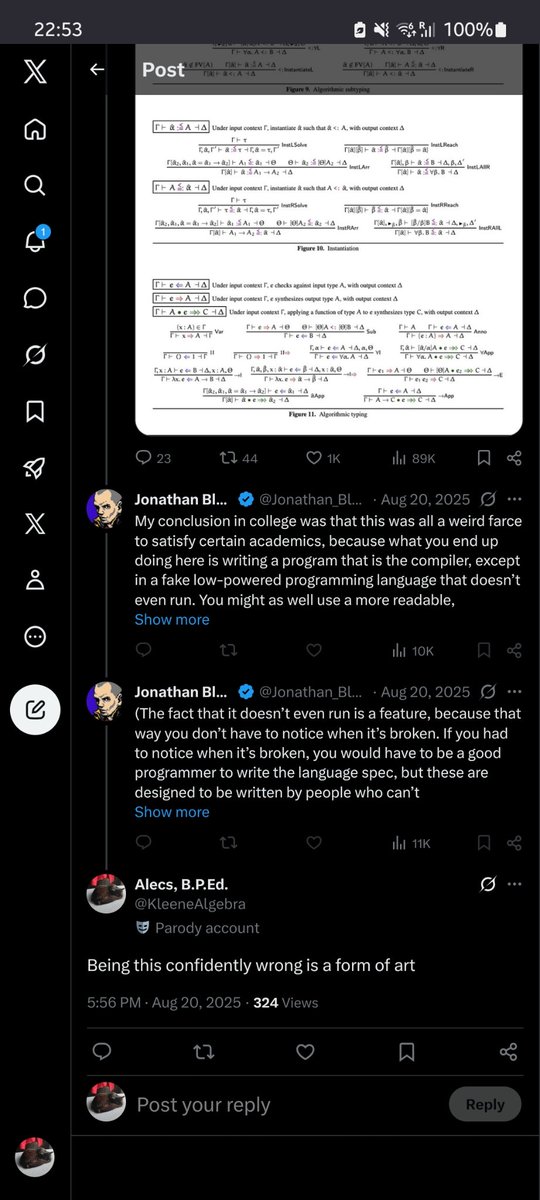
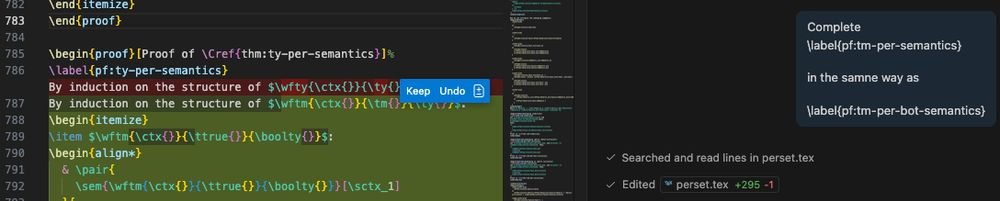
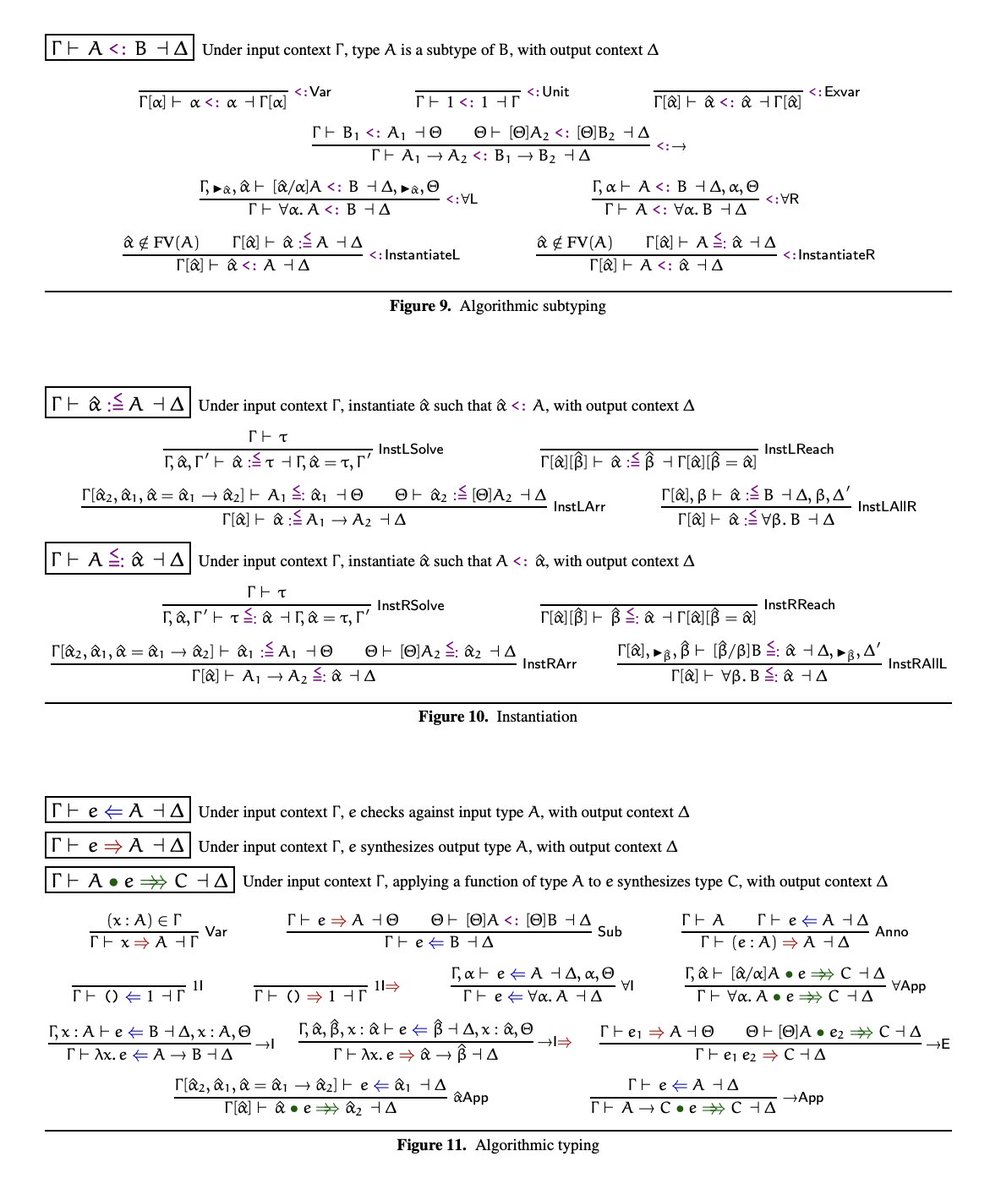
Since I don’t just want to ragebait, here’s a non-exhaustive list of why we present type systems as inference rules rather than as type-checking/inference algorithms: (1/n)
17 Aug 2025

imagine you're 15 and just want to make your own programming language and then you get stunlocked by this
1
7
95
8,460
Alecs, B.P.Ed. retweeted

Jun 11
The spanix when something is cool
"What barbarity"
23
248
3,462
80,488
Jun 12
I gave emacs my dna sequencing and my profile is shared by no one
Jun 11

I just did the same thing. I told an AI what why Big 5 Personality results were (in broad terms), and then gave it my verbal IQ, and it told me that my particular IQ/personality profile is shared by only 1 in every 185,000 people.
3
189
Jun 11
No Italian would eat a carbonara in a restaurant
Jun 11

im in Rome eating carbonara and drinking 4 coffees a day talking about morphogenesis and cellular automata and frankly opening this platform is absolutely hilarious if you manage to be detached enough to not feel the crushing weight of the cacophony that happens on here
2
95
Alecs, B.P.Ed. retweeted

Jun 11
In his latest project at Tweag, Xavier Góngora dove into a Haskell library and used Liquid Haskell to statically check previously implicit invariants. Designing his changes to stay shallow and leave only a small splash, he surfaced with a clearer picture of what working with Liquid Haskell feels like today: no blood, sweat and tears; just ripples, and encouraging ones at that.
tweag.io/blog/2026-06-11-dif…
2
2
11
599

guy who is about to IPO his company says unverifiable practically meaningless thing that will make the value of his company higher i guess
Jun 10

NEW: Dario Amodei warns countries without powerful AI could be like medieval swordsmen facing World War II Marines.
3
8
147
3,071
Alecs, B.P.Ed. retweeted

Jun 11
is your child texting fable 5?
BRB = Basic Research Biology
SMH = Studying Membrane Homeostasis
GPT = Generating Possibly Training-data
SOTA = Suspiciously Open-Source Training Attempt
if you see these messages do not panic. your child has already been safely routed to opus 4.8
11
153
3,524
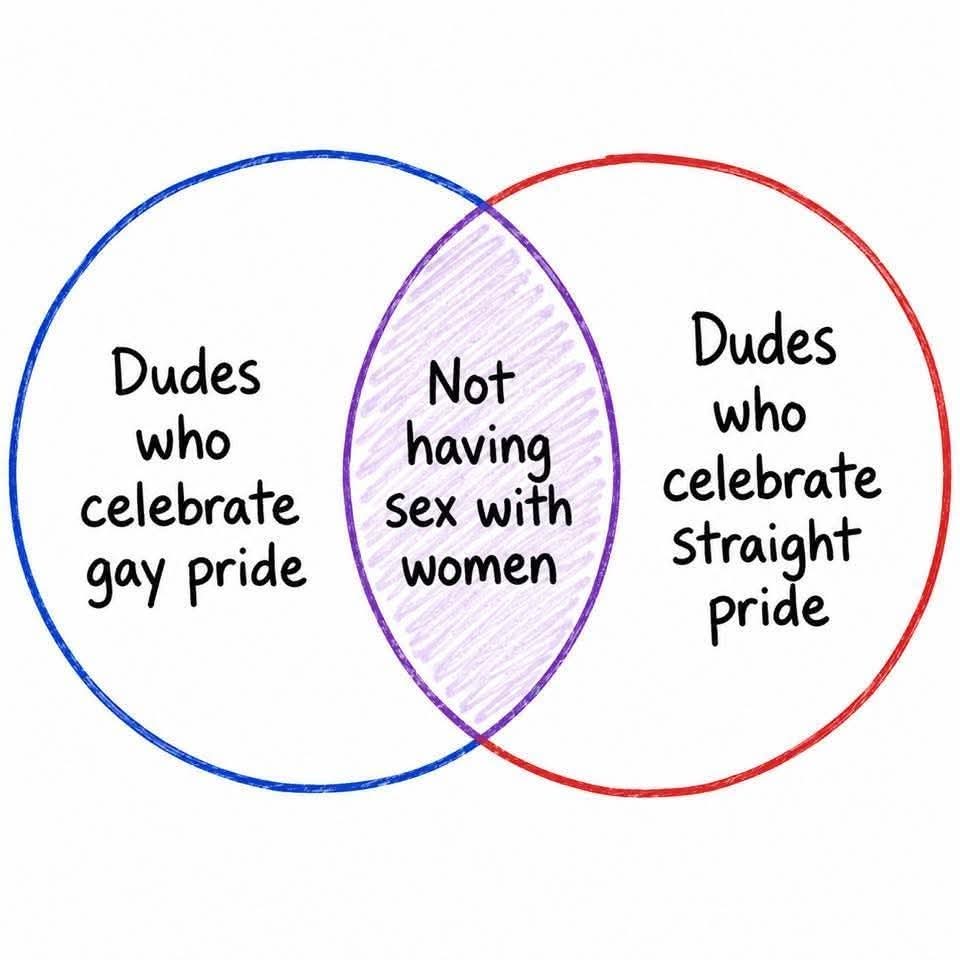
Venn diagram with:
"Not understanding Venn diagrams" in the purple area
"OP" in the blue circle
"A function R -> R" in the red circle
Jun 8

74
Alecs, B.P.Ed. retweeted
We’re doing a user study to find out how adding always-on live values alongside code effects writing and debugging experiences for functional programming. See reply for sign-up details
9
53
577
31,028
Alecs, B.P.Ed. retweeted


16
223
4,188
162,522
Alecs, B.P.Ed. retweeted

Jun 6
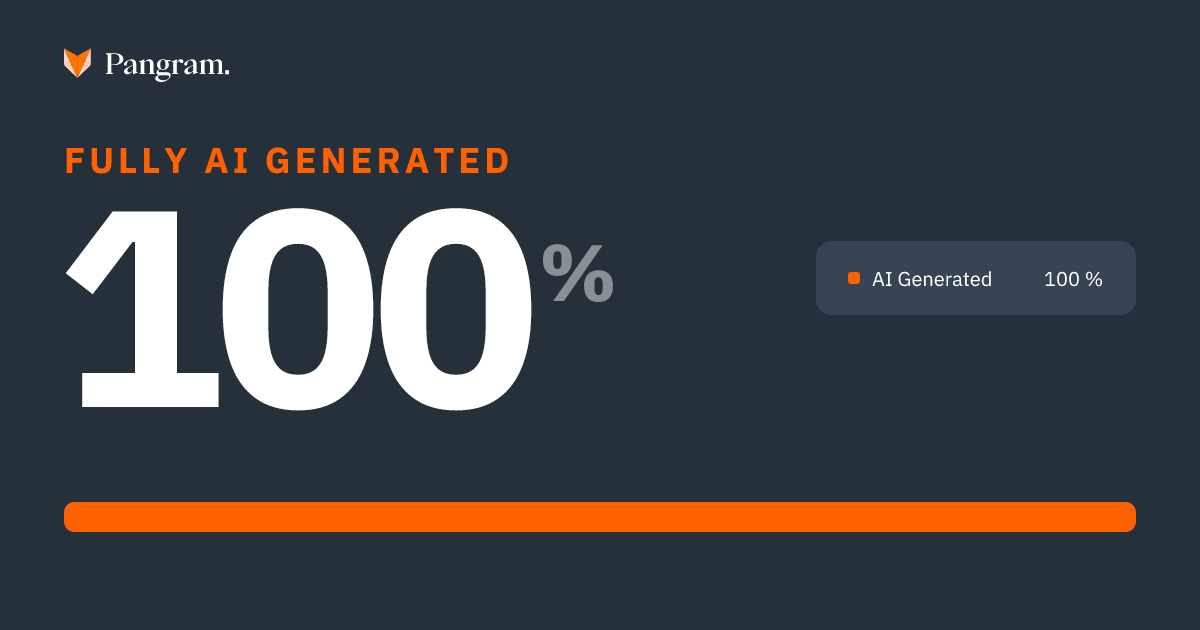
A proprietary closed-source service effectively has de-facto control over what is allowed to be published at the top ML conferences.
What are the odds if you want to publish findings that these things are wildly unreliable, Pangram "mysteriously" judges your work as AI-written?
Jun 5

NeurIPS 2026 just desk-rejected hundreds of papers because an AI detector said they were AI-written (blog.neurips.cc/2026/06/02/a…).
I understand why they did it. Reviewer time is scarce, and a flood of slop submissions is a real threat to peer review.
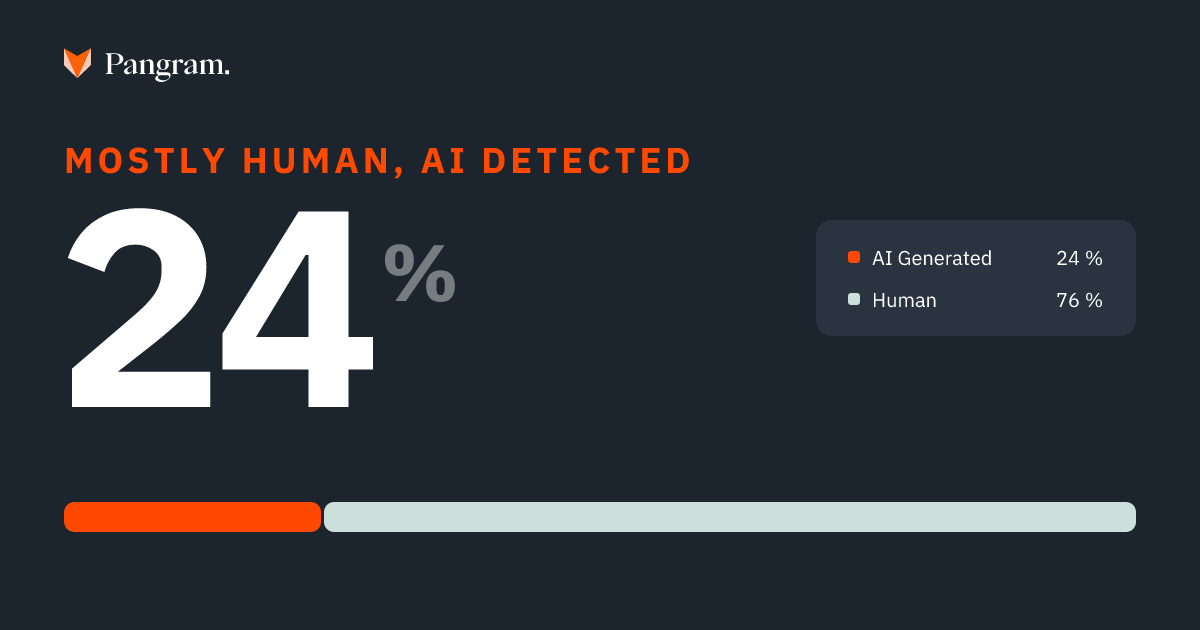
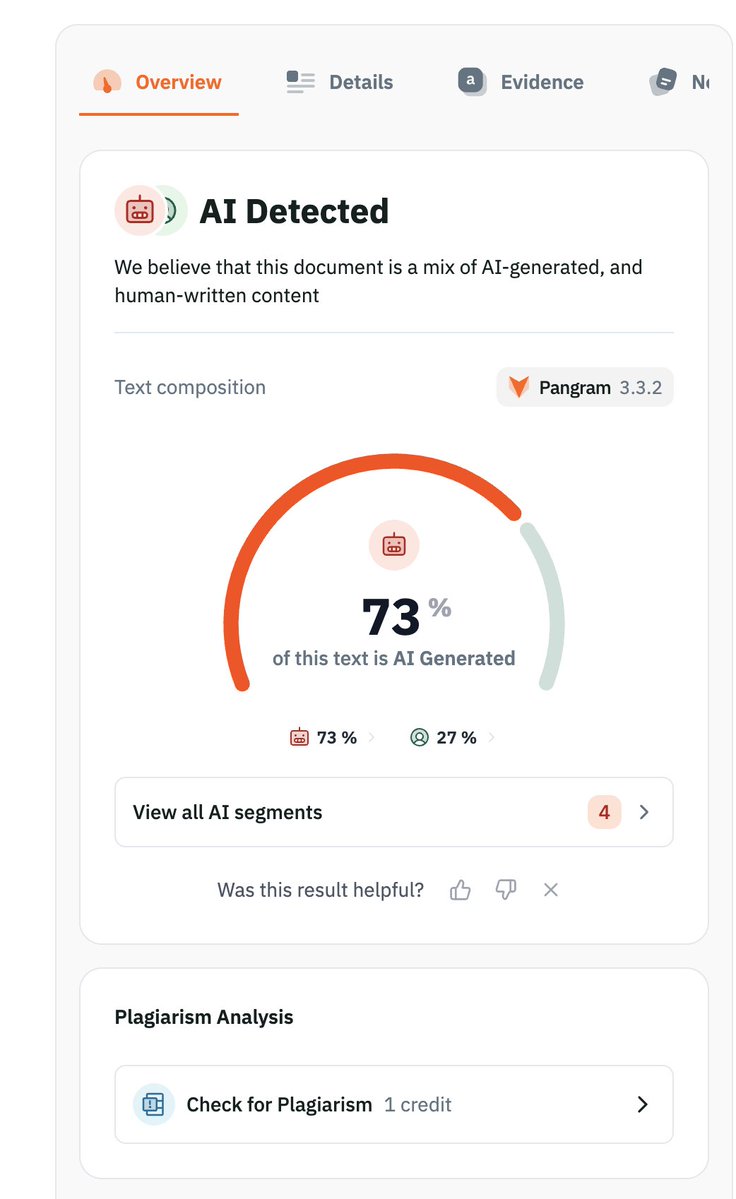
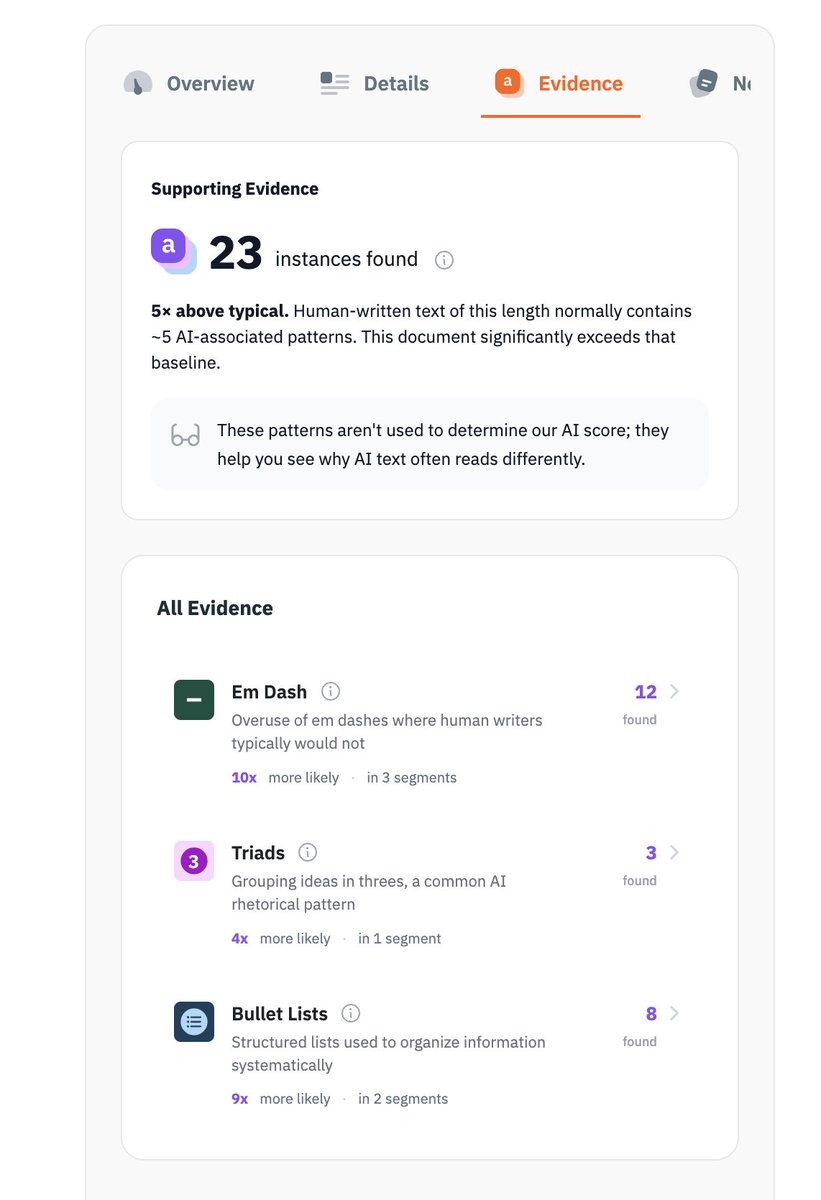
But here's where it gets tricky. The Position Paper Track requires papers be "substantially human-written," so I ran one of my own through the same detector they used. It flagged 73% as AI-written — on pretty weak evidence (see screenshots).
The funny part? It's actually closer to 99%. I only hand-edited a few sentences. But the idea, the literature review, the positioning, the data analysis ... all human. The AI wrote the text, across many rounds of back-and-forth with me.
It's like coding: most code today is generated almost entirely by AI. Do we "reject" those systems too?
To me, whether the words were typed by a human matters less than the substance behind them.
What do you think?
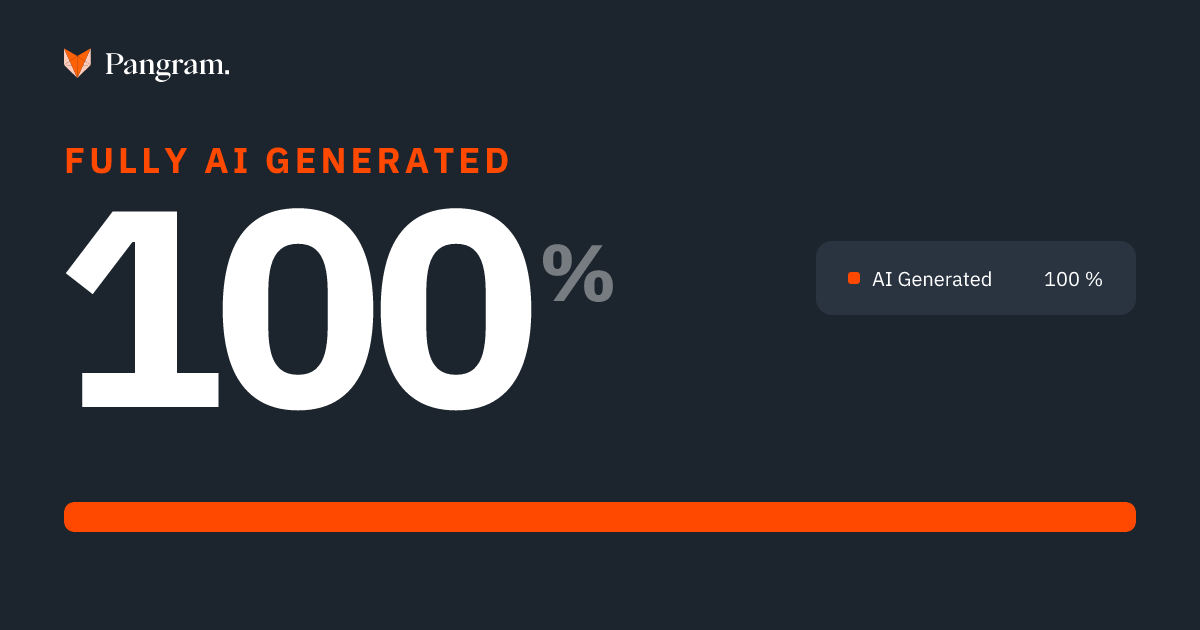
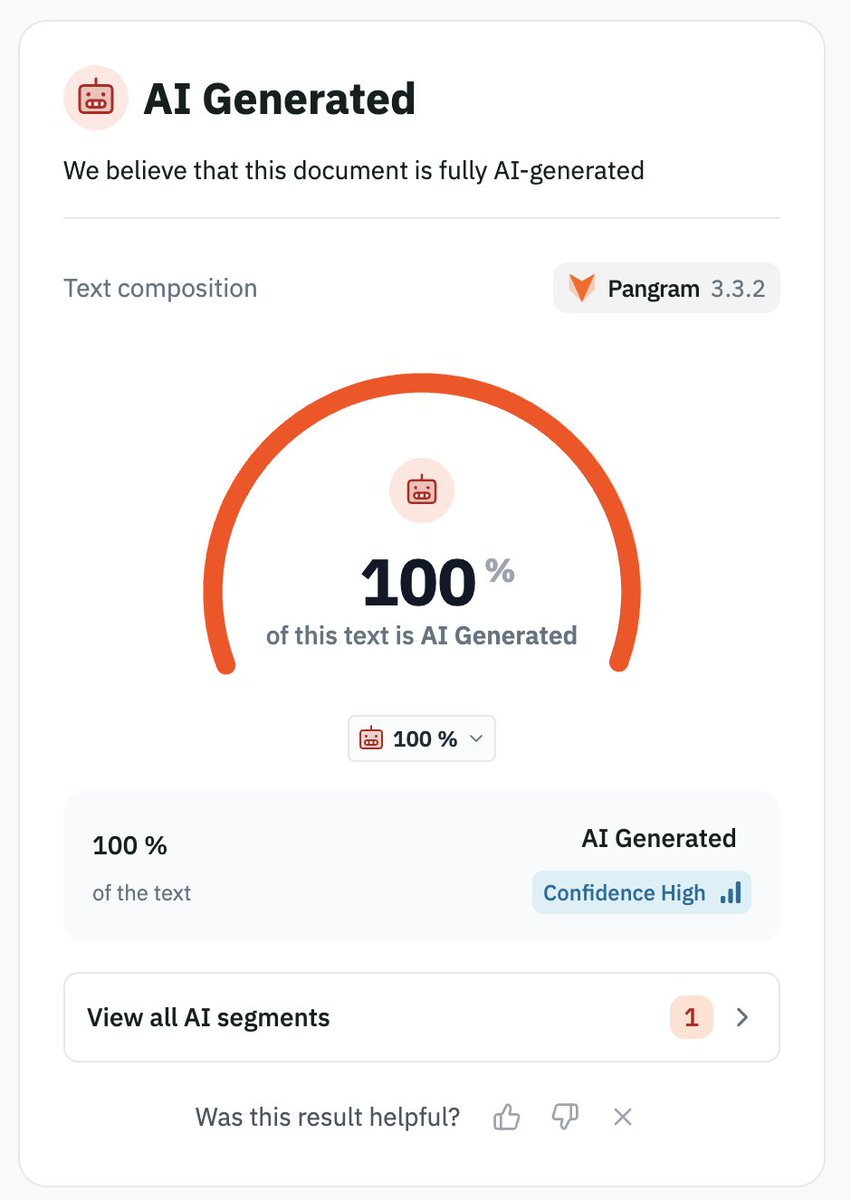
PS. I ran this very post through the detector too. It came back 100% AI-generated — even though it took me almost 30 minutes to write, and I think it carries my thinking and is worth reading.
#AI #PeerReview #NeurIPS #AIDetection #AcademicResearch #MachineLearning #ResearchIntegrity #AIEthics #ScholarlyPublishing #AIWriting
3
1
19
2,887
What a paper github.com/TiruArt/Pedigree-…
53
Alecs, B.P.Ed. retweeted

29 Jan 2014
Telling a programmer there's already a library to do X is like telling a songwriter there's already a song about love
67
2,849
2,476
I had PvsNP psychosis well before LLMs but the communication of the acm never published an article about me. Very unfair.
7
528
Alecs, B.P.Ed. retweeted

May 30
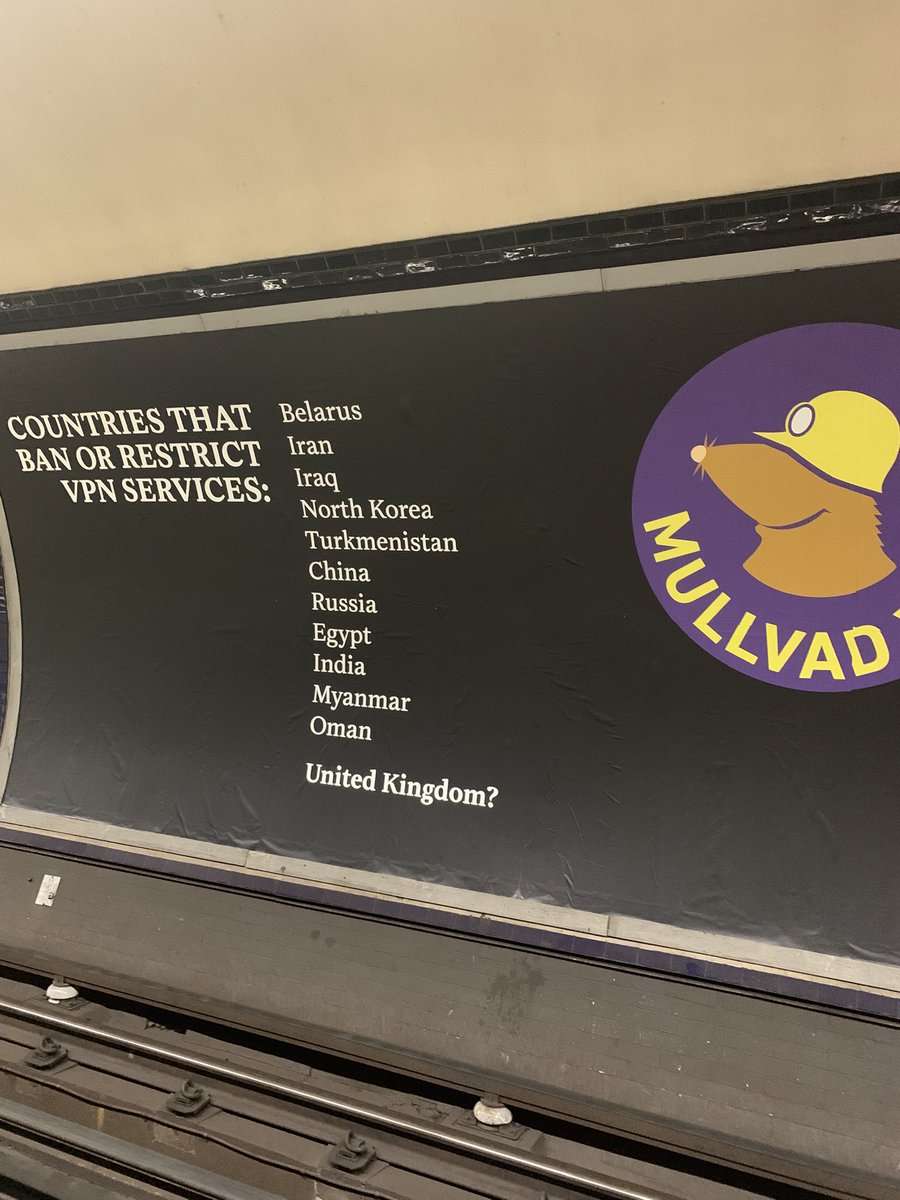
What a superb ad, wow
140
2,334
48,445
3,047,299