IT Geek,Data Geek News addict from finance to green to tech. Want a better world, one has to hope but data can help us on that journey.
Joined November 2008
- Tweets 122,425
- Following 6,033
- Followers 729
- Likes 81,948
15,245 Photos and videos






LOCATEFUN retweeted

Jensen Huang told a room of global investors that AI is not one industry. It is five stacked on top of each other. Most people are investing in layer four and ignoring layers one through three entirely.
He called it the five-layer cake.
Layer one is energy. Jensen said this is the single greatest opportunity for the energy industry in a hundred years.
The first time in a century that the grid in most countries can actually attract serious capital. Nuclear, solar, wind, hydrogen, it does not matter what form. If it produces energy, it gets funded. Siemens, GE Vernova, Mitsubishi. That is why they are all doing so well right now.
Layer two is chips, computers, networking, and silicon photonics. Everything that processes the intelligence.
Layer three is infrastructure. Land, power, buildings, data center operations. Every single one in short supply today.
Layer four is the model layer. OpenAI, Anthropic. The layer everyone talks about.
Layer five is applications. Every startup applying AI to financial services, legal, healthcare, logistics, transportation. Last year alone, a hundred billion dollars of venture capital went into this layer. The single largest VC year in the history of humanity.
Then he said the number that stopped me cold.
We are putting one trillion dollars into this five-layer cake this year. That sounds enormous. Jensen thinks the AI industry will eventually run at twenty trillion dollars per year.
We are one trillion in of a twenty trillion dollar per year ecosystem.
Most people watching AI are staring at layer four. Jensen was describing layers one through five as a single compounding system where every layer feeds the one above it.
The people who understand that will invest differently than the people who do not.
41
203
941
69,212
LOCATEFUN retweeted

10h
NEWS: Tesla's Giga Berlin is raising Model Y production ~20% in July, the plant's manufacturing chief says in an interview with TOSV.
Weekly output rises from ~5,200 cars to a target of 6,200.
Andre Thierig, Tesla's senior director of manufacturing at Giga Berlin, says the plant is hiring 1,000 workers to get there.
A large order backlog in Europe is driving the increase.
Giga Berlin will reach the new rate by cutting cycle time on the line.
Also Tesla's Giga Berlin cars have driven ~150,000 km inside the factory on FSD, the plant's manufacturing chief says.
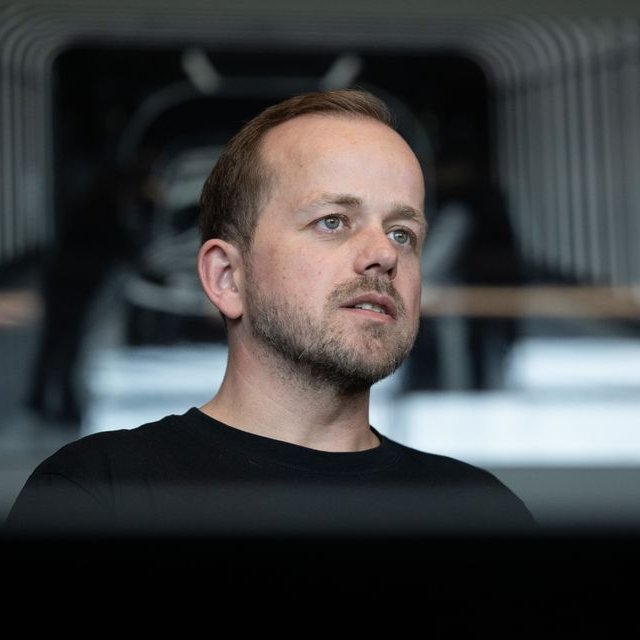

🚀 Exclusive Interview with André Thierig @AndrThie, Senior Director of Manufacturing at Tesla Giga Berlin!
We sat down for a wide-ranging conversation covering the factory’s incredible journey, major recent milestones, manufacturing breakthroughs, factory culture, and what’s next for Europe’s most important Tesla plant.
In this interview we discuss:
• Giga Berlin’s evolution and the meaning behind producing the millionth vehicle
• The new $250 million investment in the 4680 cell factory (18 GWh capacity 1,500 jobs)
• 20% Model Y production increase starting in July — what changed operationally
• Giga casting, autonomous vehicle movement from the light tunnel to outbound yard, and other manufacturing innovations
• The advanced paint shop and how it enables colors like Quicksilver and Midnight Cherry Red
• Sustainability efforts, especially the water and wastewater systems
• The iconic graffiti artwork, “Giga Berlin Casting Pirates” culture, and what it means for the team
• Navigating Germany’s labor environment with IG Metall while keeping Tesla’s speed and intensity
• Key takeaways from André’s recent conversation with Elon Musk
• Europe sales momentum, the “built in Germany” advantage, and what Tesla needs to stay ahead
André also shares his personal message to Tesla owners in Europe and what the world should expect next from Giga Berlin.
If you’re into world-class manufacturing, Tesla’s first-principles approach, or just love seeing how the sausage is made at one of the most advanced car factories on the planet — this one’s for you.
@tesla @teslaeurope @lifeatGFBB @gigafactories
11
101
771
51,351
LOCATEFUN retweeted

RANT: Media hate against Elon Musk
9
11
77
1,580
LOCATEFUN retweeted

2h
Just a reminder… Cybercabs are build fully autonomously. No humans necessary. What’s the maximum speed the production line can handle? Who knows - but quicker than humans can handle no doubt.
Secondly, having spoken to Joe Tegtmeyer about the number of Cybercabs produced… there must be well over 1000 by now. Exciting times.

55 Cybercabs in Dallas, Texas. These things are really stacking up now.
102 Cybercabs were spotted at the outbound lot at Giga Texas yesterday, so a lot more are continuing to be shipped around the U.S. The testing continues!
4
6
34
1,675
LOCATEFUN retweeted

NVIDIA CEO Jensen Huang just shrunk the data center to fit on your desk: 768GB of unified memory in a single DGX Station.
28
42
496
70,056

LOCATEFUN retweeted
Jun 14
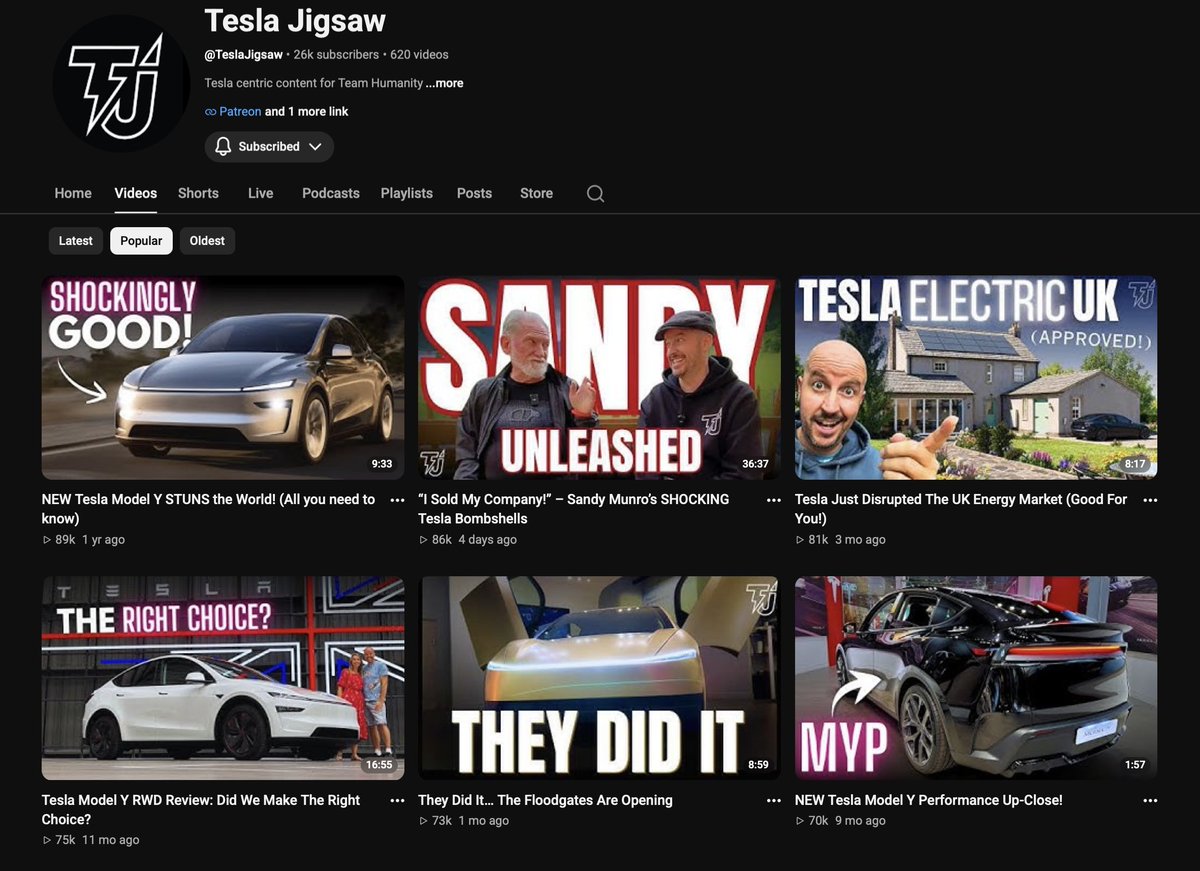
Cool! Looks like my interview with Sandy Munro is heading for my all time high number of views!
86k so far 😎
Did you see it, and what did you think? Please do share!
(Link below if you missed it)
10
14
89
4,338
LOCATEFUN retweeted

Big week for the markets!
Iran Deal reached!
$SPCX just crushed its IPO and now it’s @Tesla's Time!
$TSLA shareholders are split: Should they support or oppose a potential merger with SpaceX?
Plus, it’s a massive week with new Fed Chair Kevin Warsh’s first FOMC meeting.
How do you think all of this will move the stock market this week?
Let’s discuss:
16
6
147
9,242

“She was also the one who said no to going public for years. "I wasn't sure the company would go public," she said on CNBC yesterday.
She resisted the pressure because she believed the public markets would force SpaceX into quarterly thinking, which would kill the mission.”
Jun 13

SpaceX's 11th employee just became a billionaire.
Gwynne Shotwell joined SpaceX in 2002. She was employee number 11, joining as VP of Business Development before the company had proven a single rocket could fly.
She didn't even go there looking for a job. She had taken a colleague to lunch to celebrate him leaving for SpaceX, ran into Musk at the restaurant, and got interviewed on the spot. A week later, she joined him.
Her job: sell rocket launches for a company nobody had heard of. She built the Falcon vehicle manifest to over $5 billion in commercial contracts. She managed SpaceX's growth to 22,000 employees. She was the one who told NASA, the Air Force, and paying commercial customers why SpaceX could get to orbit cheaper and faster than anyone before it.
She was also the one who said no to going public for years. "I wasn't sure the company would go public," she said on CNBC yesterday. She resisted the pressure because she believed the public markets would force SpaceX into quarterly thinking, which would kill the mission.
She finally decided it was time. "I do not want to focus on quarterly earnings," she said on IPO day. "What we're doing is very futuristic."
Her stake is now worth north of $1.3 billion. She's SpaceX's fifth-largest Class A shareholder.
The 24 years of operational work that made yesterday possible have Gwynne Shotwell's fingerprints on them.
1
1
28
LOCATEFUN retweeted

I can confirm. Elon is an amazing person. I have nothing but praises for him everywhere I go. 🫡
Jun 13

SpaceX President Gwynne Shotwell on CNBC yesterday on Elon Musk:
"I think he is very misunderstood across the board. I want people to know him. In fact, he participated in some of the discussions that we’ve had over the last couple of weeks with investors.
The investors left saying: ‘I had no idea that is the man.’
I said: That’s the man I’ve worked for 24 years. I love him."
Gwynne joined SpaceX in 2002 as the company’s 11th employee. She’s awesome. What a journey.
2
4
21
699
LOCATEFUN retweeted

Jun 13
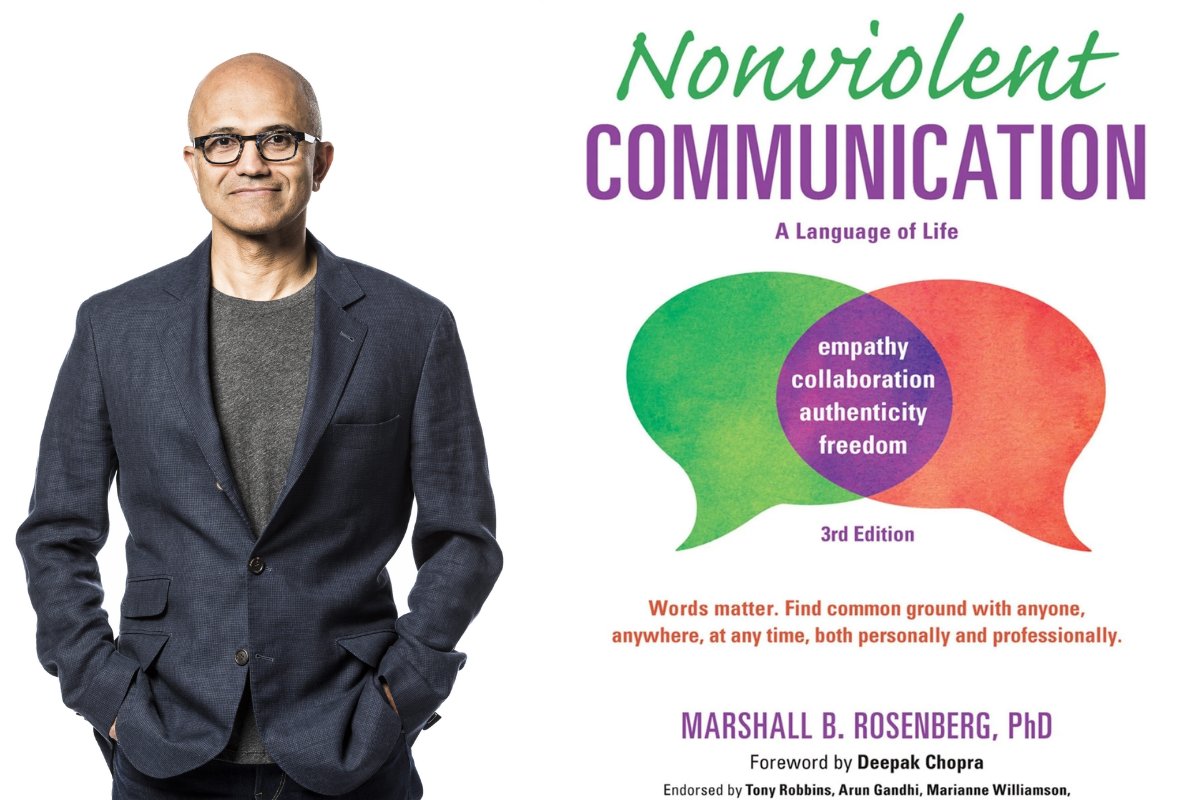
On his first day as CEO of Microsoft, Satya Nadella walked into a meeting with his senior executives and handed each of them the same book, and that single decision turned out to be worth more than 2 trillion dollars over the next decade.
The book was called Nonviolent Communication.
It was written in 2003 by a clinical psychologist named Marshall Rosenberg, who had spent 40 years mediating between gangs, prisons, divorcing couples, and warring tribes in active conflict zones. It had nothing to do with business. It was not on any Harvard MBA reading list.
It was the book Nadella's wife Anu had given him years earlier, and Nadella believed it so completely that he made it the first message he sent to the most senior people in the company.
Microsoft in February 2014 was a wounded giant.
It had missed mobile entirely. It was the punchline of every tech joke. Internally, the culture had rotted into something almost unfixable.
The previous CEO Steve Ballmer had institutionalized a system called stack ranking, where every team was forced to grade a fixed percentage of its members as underperformers, which meant that on every team in the company, the smartest engineers were quietly competing against each other instead of against the actual problems. Meetings were combative. Email threads were brutal. Talented people were leaving for Google and Apple every week.
Microsoft's market cap was roughly 300 billion dollars. It is over 3 trillion today.
The reason Nadella picked Rosenberg's book is that he had diagnosed the real problem correctly. Microsoft did not have a strategy problem. It had a communication problem. The executives were not stupid. They were not lazy. They were just talking to each other in a language that produced defensiveness instead of cooperation, and a decade of that had turned the company into an organism that could not think clearly anymore.
Rosenberg's book teaches one tool. It has four steps.
Observe what is actually happening, without judgment. Not "you are always late," but "the meeting started ten minutes ago."
State the feeling that the observation produces. Not "you are disrespectful," but "I feel frustrated."
Identify the need underneath the feeling. Not "you need to change," but "I need to know I can rely on the team's timing."
Make a specific request. Not "do better," but "would you be willing to text me if you are going to be late?"
The whole book is essentially that four-step model applied to every possible kind of human conflict.
It sounds almost too simple to be useful. The reason it works is that almost nobody does it naturally. Most professional communication, especially under pressure, skips straight to evaluation. "You missed the deadline." "Your design is bad." "The team is failing." Every one of those sentences sounds like a fact and is actually a judgment, and the brain on the receiving end goes into defense mode the moment it hears one, which means nothing useful gets discussed for the rest of the conversation.
Rosenberg's argument is that almost every conflict in the world, from a couple arguing about dishes to two countries arguing about borders, follows the same pattern. Both sides have legitimate underlying needs. Neither side is articulating them. They are firing judgments at each other and getting judgments back. The book is a manual for stepping out of that loop.
Nadella's bet was that if his executives could learn to do this in their own meetings, the entire company would unlock.
He was right.
Within five years, Microsoft had launched Azure into the cloud business, acquired LinkedIn and GitHub, partnered with OpenAI, and become one of the most respected companies in technology again. The culture had inverted. The same building that had run on internal warfare for 15 years was now running on what Nadella publicly called a growth mindset, which was just NVC translated into corporate language.
By 2024 the company was worth more than 10 times what it was the day Nadella started.
You do not need to be running a 200,000-person company to use the book.
You need to be in any relationship where the other person stops listening the moment you start talking.
That is most of the relationships you have.
The fix is 320 pages long. The book costs less than dinner.
Nadella read it because his wife handed it to him.
And one of the largest companies on earth was rebuilt on its margins.
14
69
254
16,761
LOCATEFUN retweeted

Jun 12
Dr. Huberman just made a bold prediction about GLP-1's.
The fitness community is not gonna like this...
15
12
248
81,456
LOCATEFUN retweeted

Jun 12
autonomous robot driving through the field at night. no chemicals. no pesticides. just UV light killing pathogens and pests while everyone sleeps. this is @tricrobotics.
this is what chemical-free pest control looks like at scale.
1,461
10,901
63,931
6,166,494
LOCATEFUN retweeted

Jun 13
🇧🇪 Tesla's FSD has arrived in Belgium, and as this woman shows, it's so mindblowingly good it takes some getting used to
Writers: Mhedi, Ian
93
270
2,531
186,907
LOCATEFUN retweeted

Jun 13
AMD CEO LISA SU HELD A MINI PC ON STAGE THAT RUNS A 235B MODEL AND REPLACES YOUR $440/MONTH AI STACK
amd's ryzen ai max 395 is the first x86 chip that runs a 200 billion parameter model on one piece of silicon. cpu and gpu share 128gb of unified memory, no separate graphics card needed
the gmktec evo-x2 runs qwen3 235b fully, deepseek v3 comfortably and llama 3.3 70b with headroom. on linux you get 110gb of usable vram out of 128gb
amd claimed the chip beat an nvidia rtx 5080 by more than 3x on deepseek r1 inference. a lunchbox sized pc outrunning a $1,000 discrete gpu on a real ai workload
a heavy ai user pays $200 for claude code max, $200 for chatgpt pro, $20 for cursor and $20 for gemini. that's $5,280 a year and the box pays itself off in 9 to 10 months
install ollama, pull the model, point claude code at localhost. same interface, nothing leaves the machine, nothing costs per request
bookmark this and read the article below

258
531
3,943
939,158
LOCATEFUN retweeted

Jun 13
David Sacks on How Anthropic is Ironically Running Surveillance on Their Latest Models
“This is the company that said that it was against government surveillance. They are now retaining for 30 days every prompt and every output you send to one of these Mythos class models.”
92
357
2,767
270,775
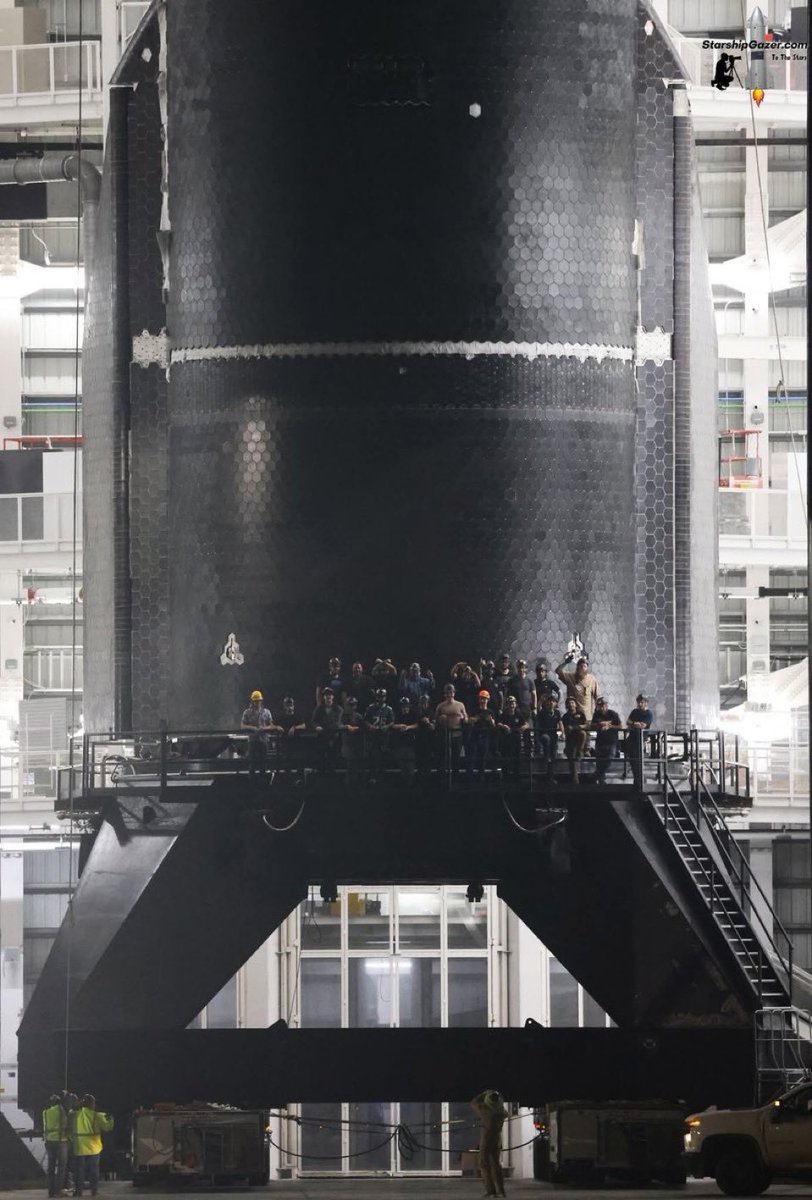
Starship is a very big rocket
Jun 12

SpaceX is a company whose mission is *axiomatically* the love of humanity
To extend the light of consciousness
The power of this kind of love is hard to quantify but clearly makes the impossible far more probable.
8,208
20,823
190,340
22,156,439

Jun 13
Russians Abandon Crimea As Ukrainian Attacks Intensify youtu.be/wh2tnH0Otec?si=rYc9… via @YouTube
23