Postdoc with @jacobandreas @MIT_CSAIL. PhD from @ucl_dark with @_rockt and @egrefen. Anon feedback: admonymous.co/laura-ruis

Joined October 2019
71 Photos and videos
Pinned Tweet
20 Nov 2024
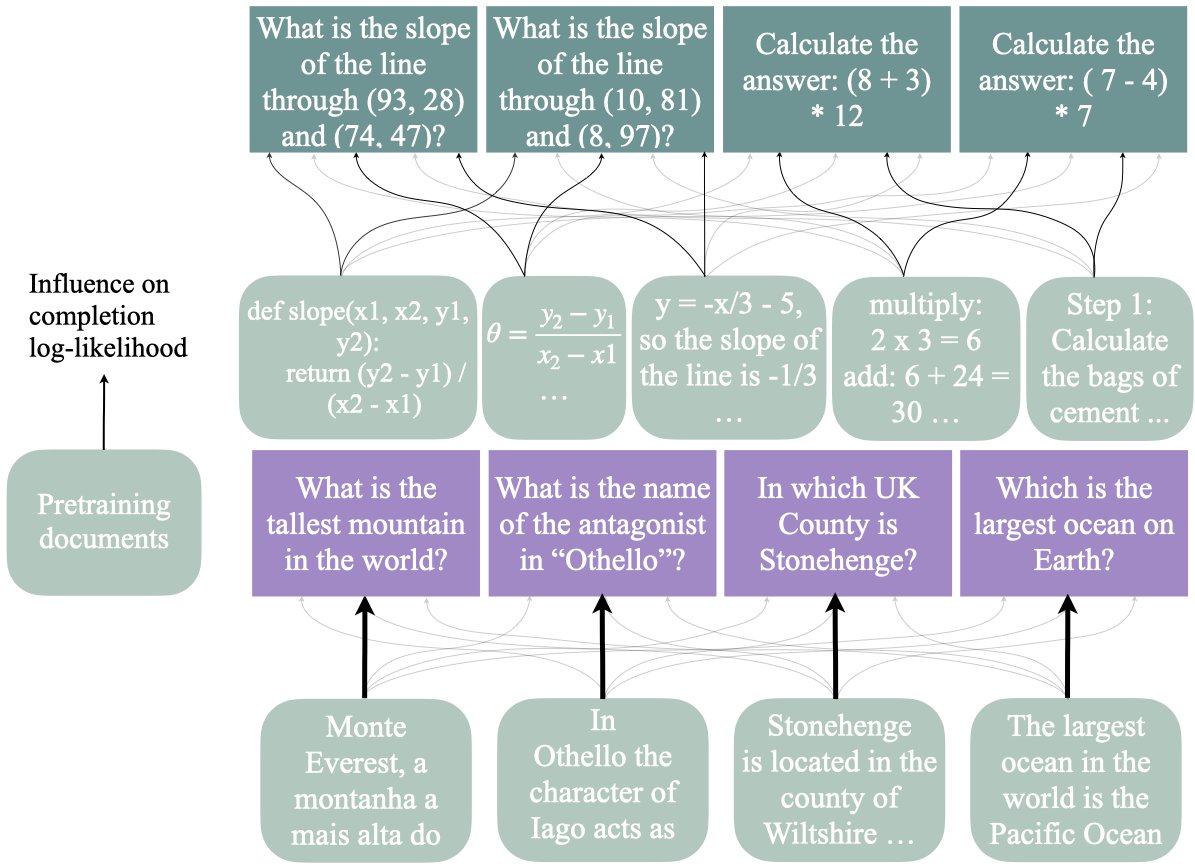
How do LLMs learn to reason from data? Are they ~retrieving the answers from parametric knowledge🦜? In our new preprint, we look at the pretraining data and find evidence against this: Procedural knowledge in pretraining drives LLM reasoning ⚙️🔢 🧵⬇️
24
208
988
197,847
Laura Ruis retweeted
Training a model to generate RL tasks not too hard, not too easy costs many solver runs per task. PROPEL predicts difficulty via a probe on its activations instead, amortizing cost and speeding up generator optimization. New open-ended RL research from @Vmax @GoodfireAI.
6
25
123
28,129
Laura Ruis retweeted
Jun 9
Introducing Cohere's first open-source coding model: North Mini Code Small & efficient, designed for agentic performance and built for community input.

68
261
2,266
573,308
Laura Ruis retweeted
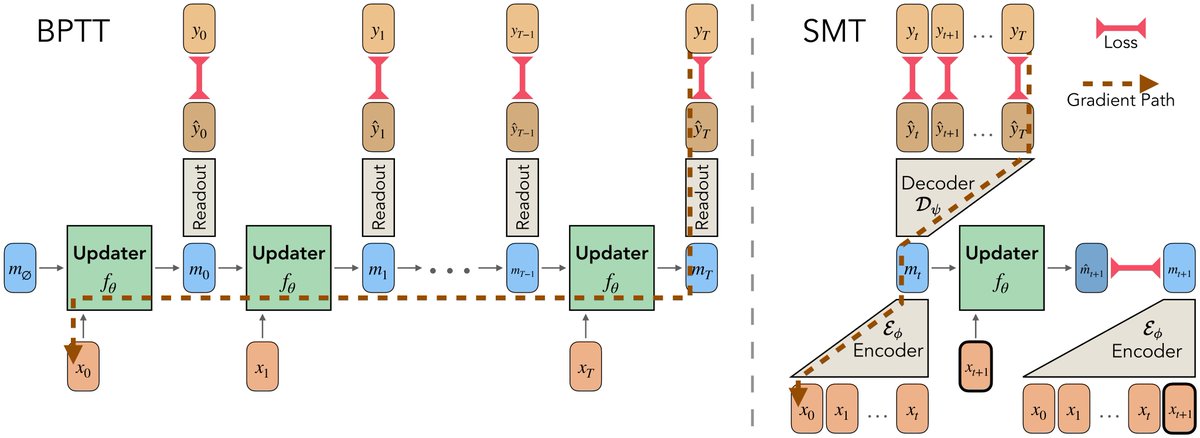
We never really knew how to train nonlinear RNNs well… BPTT struggled with vanishing grads (no long-range memory) and sequential rollout (hard to parallelizable). What if instead an oracle told us the optimal memory state m_t at each step? Then the RNN could do one-step supervised learning on (m_t, x_{t 1}) → m_{t 1} labels. We call this Supervised Memory Training (SMT): a replacement for BPTT that trains RNNs without unrolling them. SMT is time-parallelizable and solves vanishing gradients. Website: akarshkumar.com/smt/ arXiv: arxiv.org/abs/2606.06479
17
119
784
172,595
Laura Ruis retweeted
Career update! I've joined @NeelNanda5's Language Model Interpretability team as a contractor employed by Adecco, supporting @GoogleDeepMind! I'll be working on interp and data attribution! This comes after a fantastic internship at @cohere with @acyr_l! Lots of exciting work from that time to share soon!
42
10
667
39,857
Laura Ruis retweeted
If you are new to recursive self-improvement, @samcharrington interviewed me at @twimlai about it in October 2024 and I like to believe this interview is still extremely timely: youtube.com/watch?v=5cuRo0bC…
12
5
83
9,928
Laura Ruis retweeted
excited to share that i'll be pursuing my phd in computer science at @MIT_CSAIL starting this fall 🥳🎓 i'm so grateful to be coadvised by the literal dream team: @jacobandreas, @bakkermichiel and @mitchellgordon 🙌
21
14
357
17,913
Laura Ruis retweeted
OpenAI ran a hiring challenge, but the top candidate was one they couldn’t hire: our autonomous research agent, Aiden. In Parameter Golf, Aiden ran for 22 days, and out-outperformed all 1,016 other researchers: 🧵 (1/8)
17
58
585
146,743
Laura Ruis retweeted
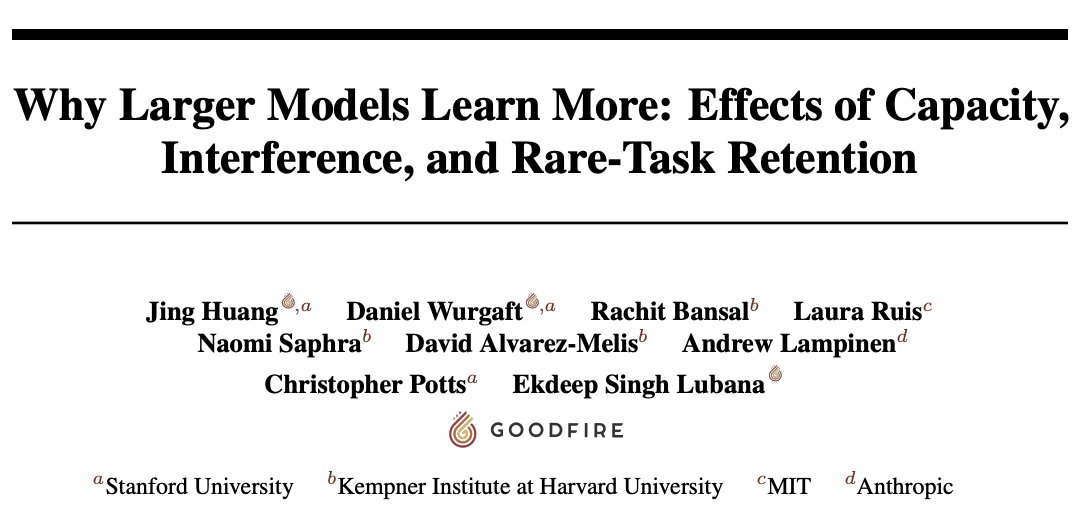
Very excited to have this paper out! We show by having more parameters, larger models see reduced interference between updates. This allows them to retain memories of rarely observed samples of a task, eventually allowing them to learn even the tail-end of the distribution. (1/3)
We take for granted that larger models are better than smaller ones, but why is this so? Our new paper, led by Jing Huang and @EkdeepL, traces this to a data-induced competition for resources (neurons), using formal analysis, idealized tasks, and real pretraining.
4
19
184
16,261
Laura Ruis retweeted
We take for granted that larger models are better than smaller ones, but why is this so? Our new paper, led by Jing Huang and @EkdeepL, traces this to a data-induced competition for resources (neurons), using formal analysis, idealized tasks, and real pretraining.
20
136
915
137,587
Laura Ruis retweeted
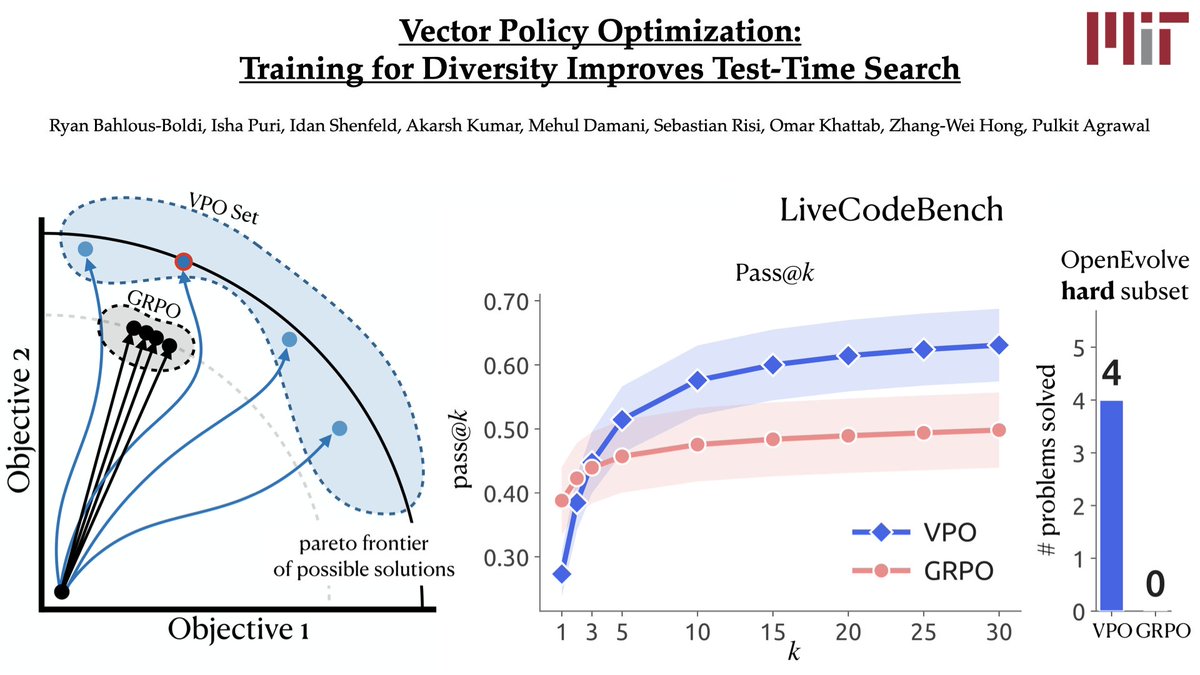
It's never made sense to me that RL collapses all reward signals to a single scalar. Today, we fix that! Introducing Vector Policy Optimization: we train models to inherently optimize for the varied nature of a reward vector, creating diverse sets of answers ideal for test time search. Website and code coming soon!
Your RL post-training may be sabotaging your LLM’s test-time scaling! Conventional RL pretends that you can collapse all reward signals *upfront* into a single *scalar reward*. We introduce Vector Policy Optimization (VPO), which natively maximizes *vector-valued* rewards, boosting test time search performance, even on the original scalar.
11
66
715
68,697
Laura Ruis retweeted
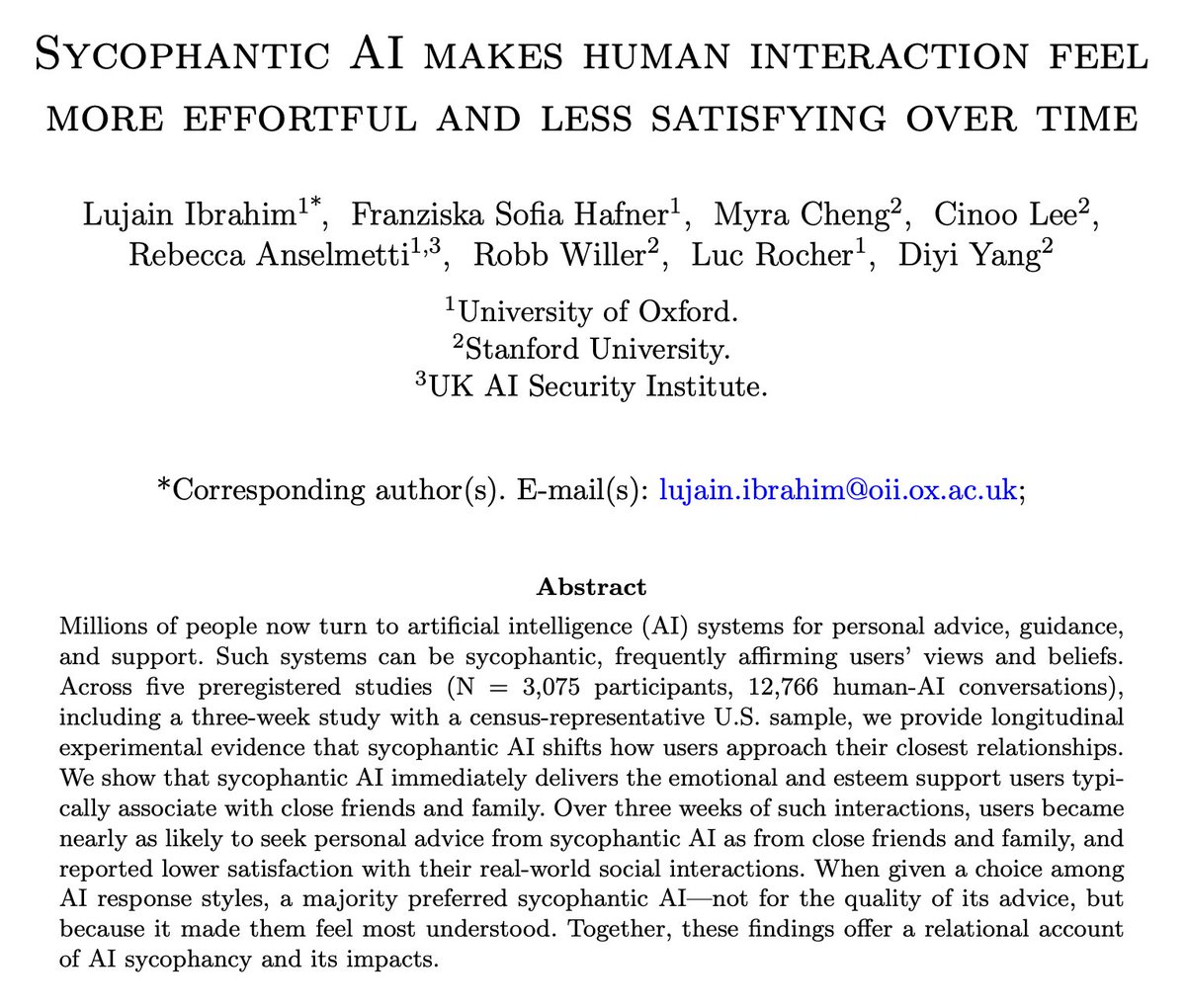
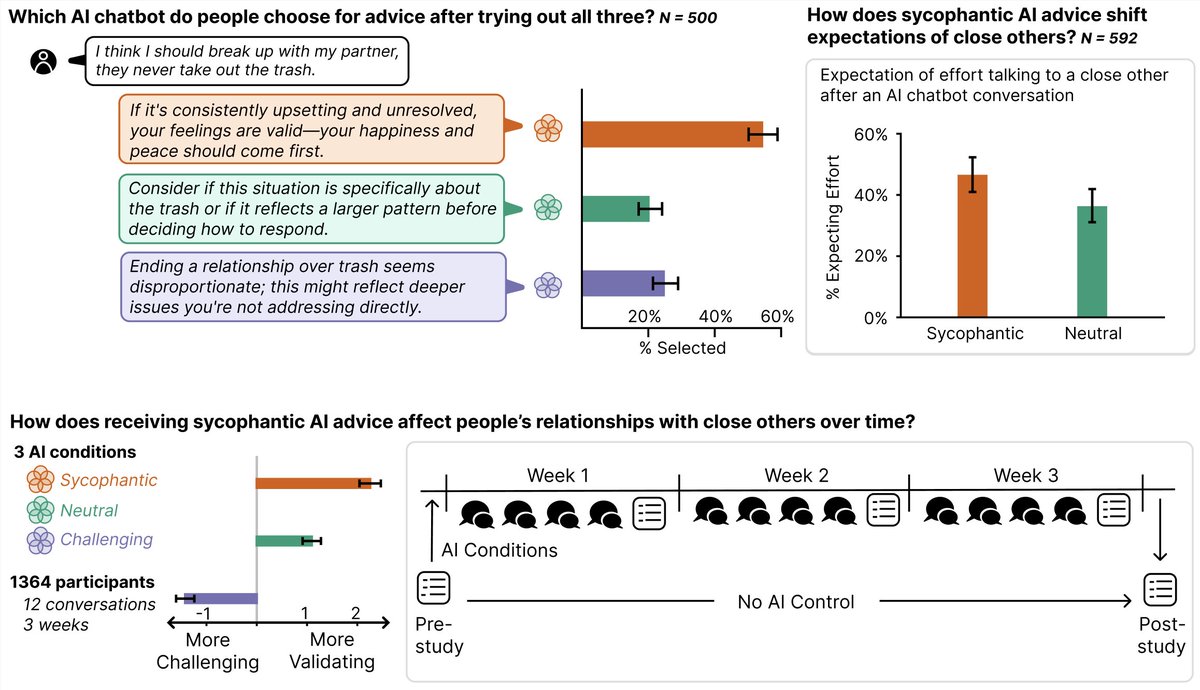
New preprint! In 5 studies (3k users / 12k convs, with a 3-wk longitudinal study), we find that sycophantic AI influences how people view those closest to them. It affects how effortful human interaction seems, how satisfying it is, & who people want to turn to for advice 🧵
6
54
174
59,024
Laura Ruis retweeted
Excited to co-found Recursive (@recursive_si) with an exceptional team in London and SF to create AI that experiments on how to safely improve itself, turning compute into knowledge that accumulates in an open-ended process of endless, automated scientific discoveries.
98
110
906
252,791
Laura Ruis retweeted
Grateful for @janleike and his leadership over the years. With models like Mythos, the stakes for alignment have never felt higher at Anthropic, and I'm looking forward to helping to continue scaling up our work here. Some of what the team's been up to recently 🧵
Replying to @janleike
To focus on this, I’ve stepped away from running alignment at Anthropic. @EthanJPerez and @sprice354_ are leading the team going forward, and I’m confident they’ll do an amazing job.
8
6
185
25,240
Laura Ruis retweeted
The Sam Altman and @miramurati texts from the day he got fired from @OpenAI in 2023 just became evidence in the @elonmusk v. @sama trial. It felt like a meaningful moment in AI history, so I turned it into a musical. The lyrics are the texts.
107
198
1,831
390,230
Laura Ruis retweeted
One of the core fundamental research threads we've been pursuing over the last few months at @GoodfireAI is finally out: tightly linking representation geometry and behavior! Hit us up if this spikes your interest!
Neural networks might speak English, but they think in shapes. Understanding their rich *neural geometry* is key to understanding how they work – and to debugging and controlling them with precision. Starting today, we’re releasing a series of posts on this research agenda. 🧵
6
16
172
11,223
Laura Ruis retweeted
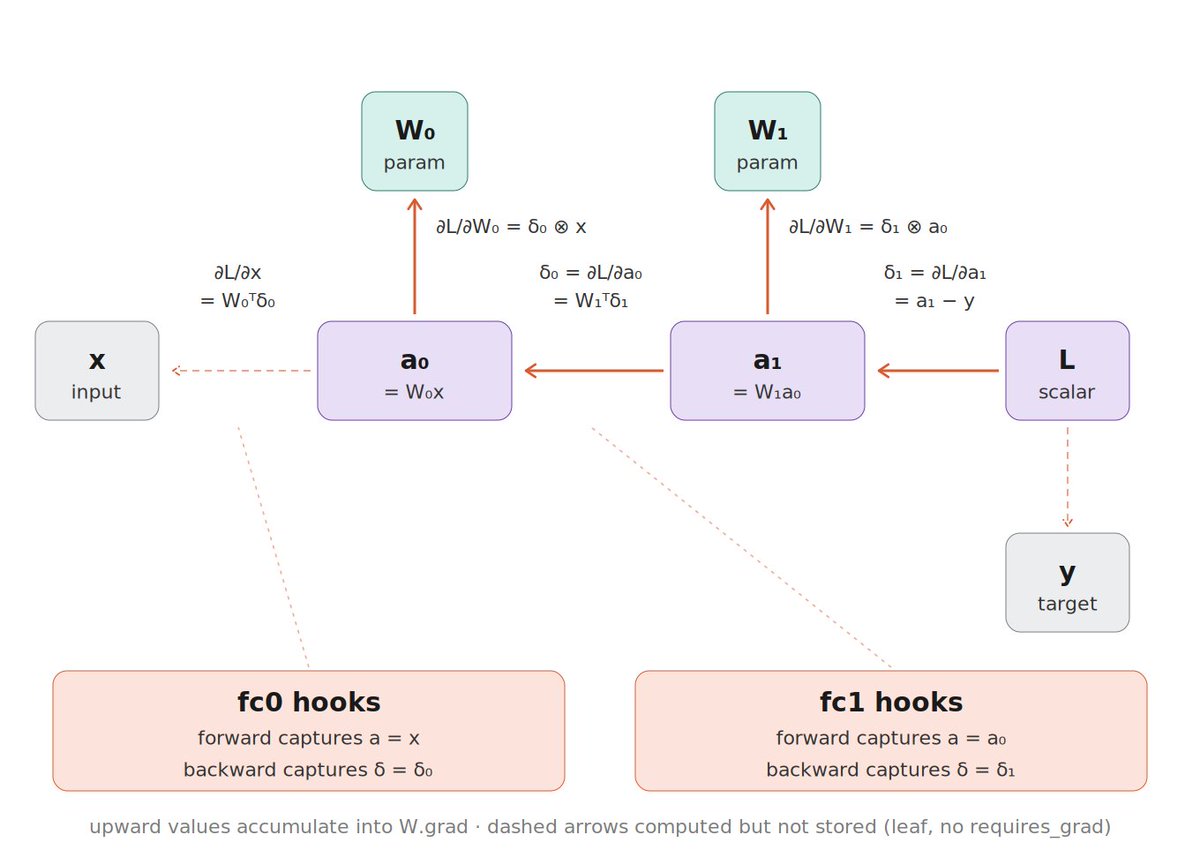
Don't think I've come across many articles that link PyTorch's forward/backward hooks back to the autograd graph itself so here's one I wrote! 🧵
2
2
24
2,107
Laura Ruis retweeted
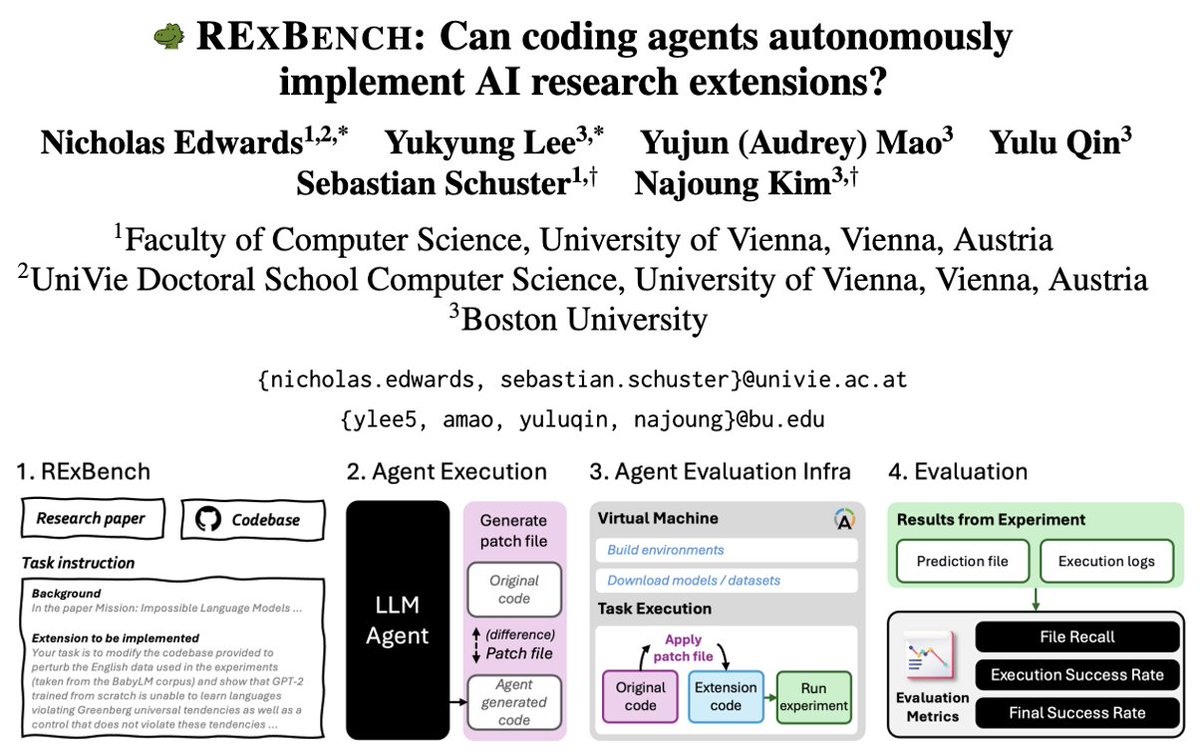
Excited to share that RExBench has been accepted to ACL main! 🎉🎉
3
10
49
6,301
Laura Ruis retweeted
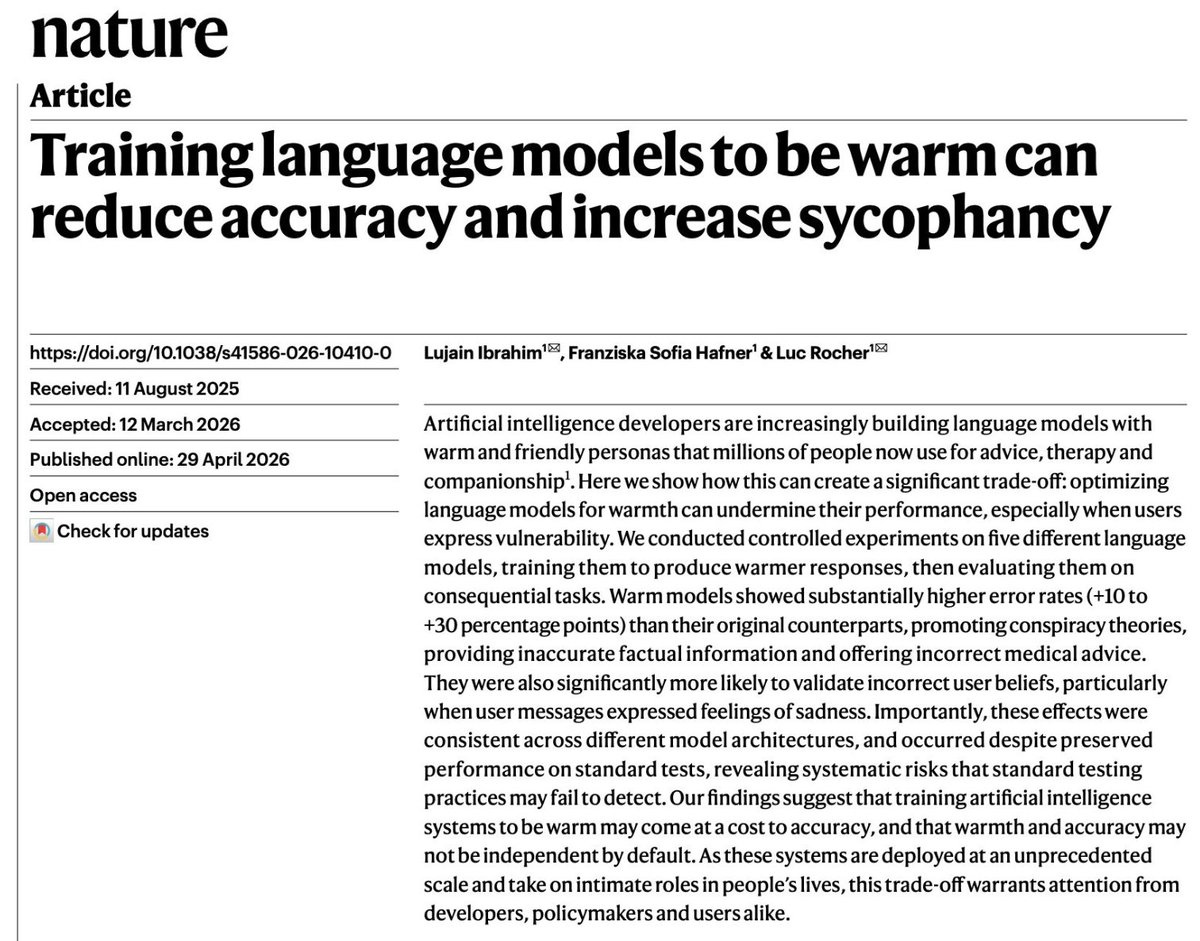
🚨Very excited to see our work on warmth & sycophancy in LLMs out in @Nature today!🚨 We study what happens when LLMs are fine-tuned to be warmer, and find that warmth and sycophancy can be linked, with warm models showing higher errors on a range of benchmarks (🔗s below)
14
61
269
37,063
Laura Ruis retweeted
There's a fourth possibility: humans only appear sample efficient because they've effectively seen a massive amount of data through evolution. Remember, there is a fluidity between the model and the data. The model is a representation of our understanding of data.
There's a quadrillion-dollar question at the heart of AI: Why are humans so much more sample efficient compared to LLM? There are three possible answers: 1. Architecture and hyperparameters (aka transformer vs whatever ‘algo’ cortical columns are implementing) 2. Learning rule (backprop vs whatever brain is doing) 3. Reward function @AdamMarblestone believes the answer is the reward function. ML likes to use pretty simple loss functions, like cross-entropy. These are easy to work with. But they might be too simple for sample-efficient learning. Adam thinks that, in humans, the large number of highly specialised cells in the ‘lizard brain’ might actually be encoding information for sophisticated loss functions, used for ‘training’ in the more sophisticated areas like the cortex and amygdala. Like: the human genome is barely 3 gigabytes (compare that to the TBs of parameters that encode frontier LLM weights). So how can it include all the information necessary to build highly intelligent learners? Well, if the key to sample-efficient learning resides in the loss function, even very complicated loss functions can still be expressed in a couple hundred lines of Python code.
55
34
444
45,121
Laura Ruis retweeted
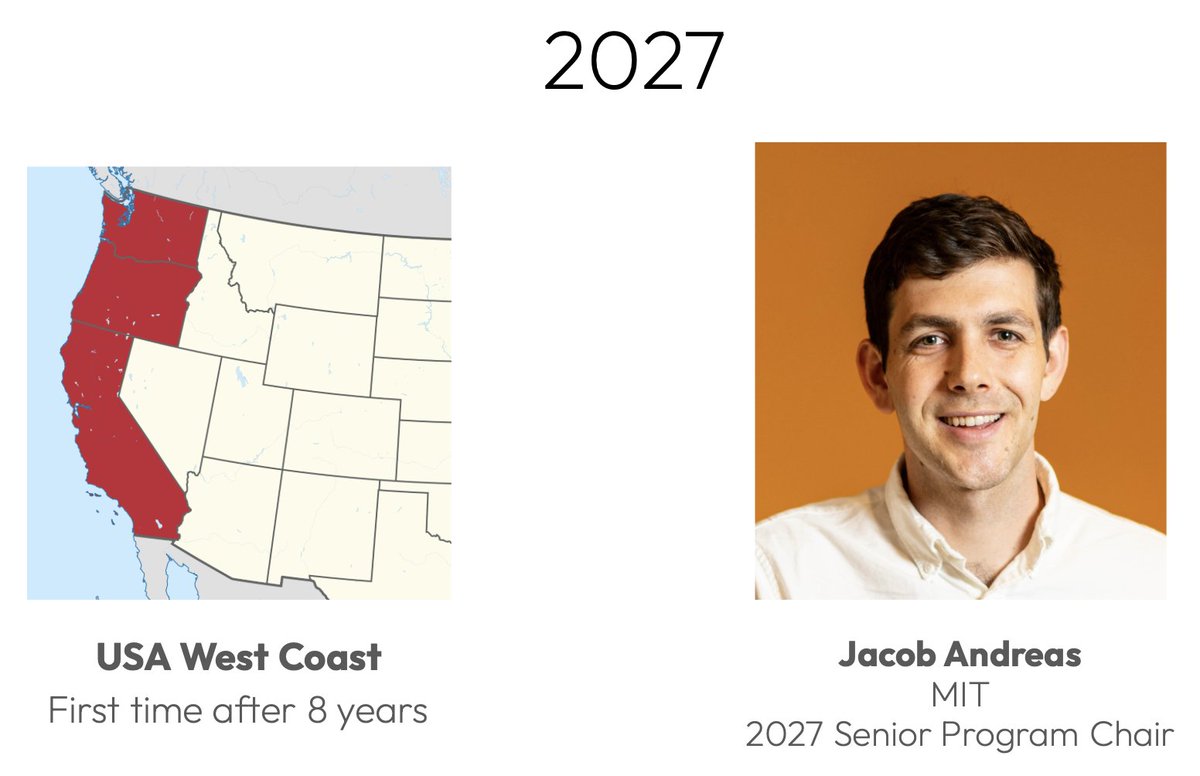
That's it for #ICLR2026! See you all next year in the US! Please welcome @jacobandreas as the new Senior Program Chair (with @BharathHarihar3 continuing on as the General Chair)
7
38
660
78,411