
Assistant Prof. @ National University of Singapore. Neuroscientist interested in neural coding and cognition.
Joined May 2017
- Tweets 623
- Following 204
- Followers 583
- Likes 2,211
23 Photos and videos


Pinned Tweet

16 May 2023
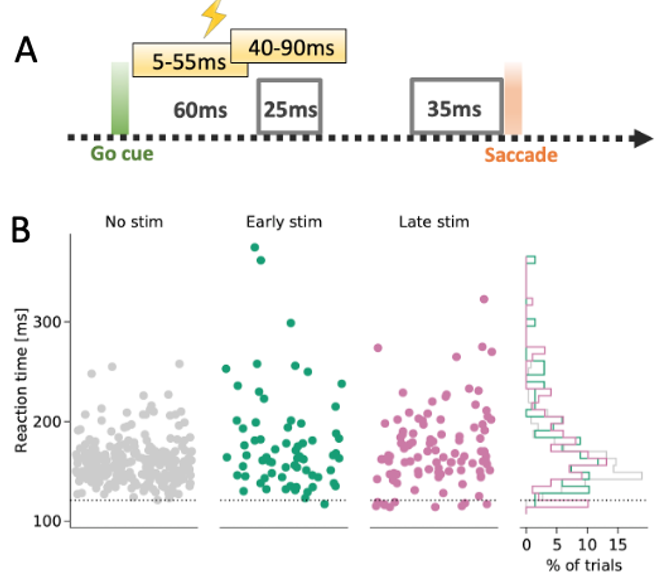
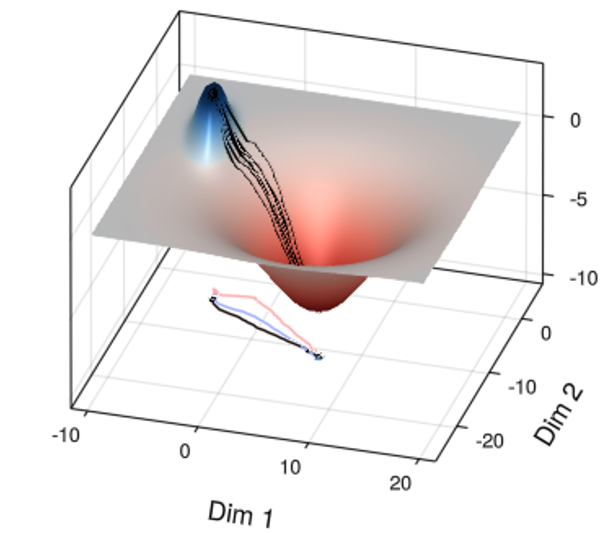
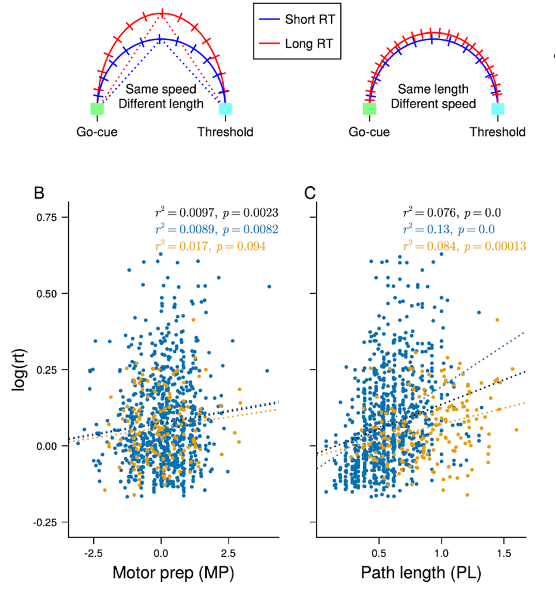
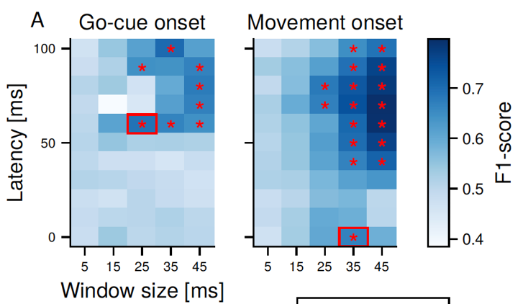
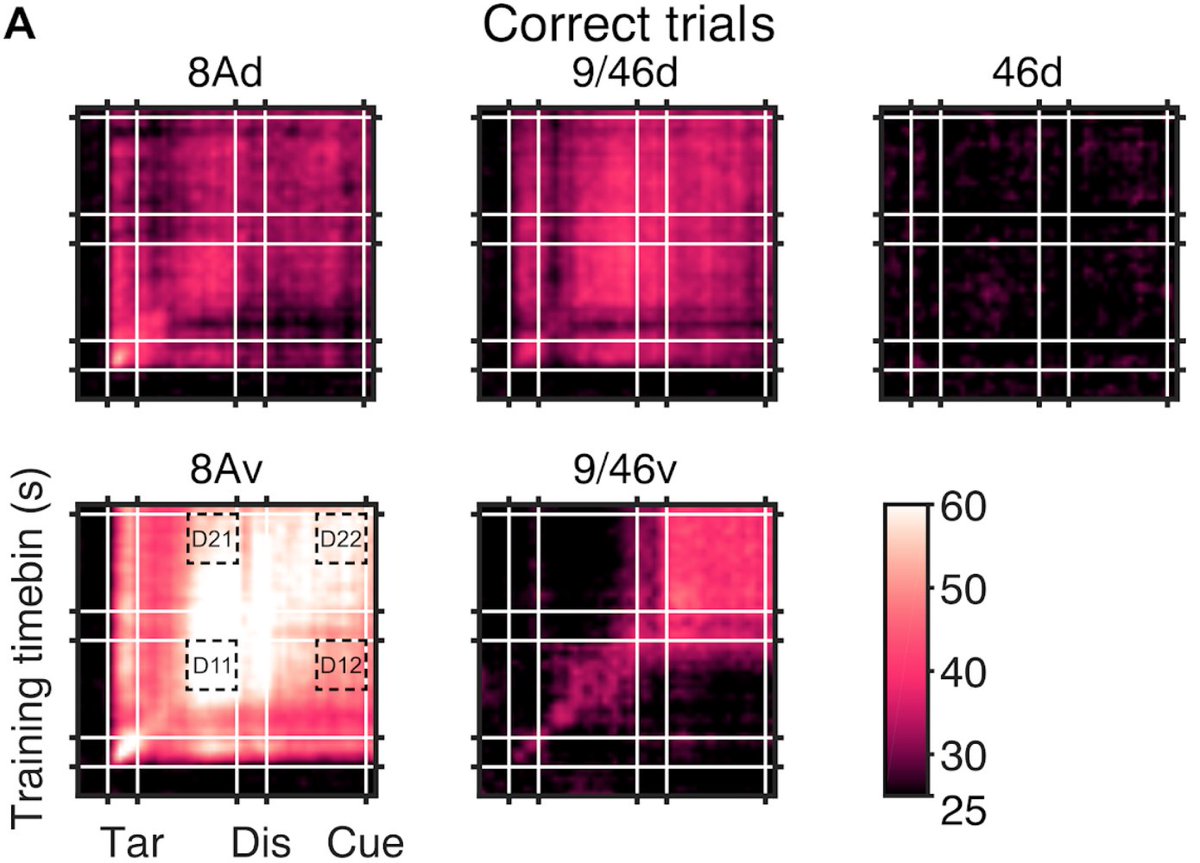
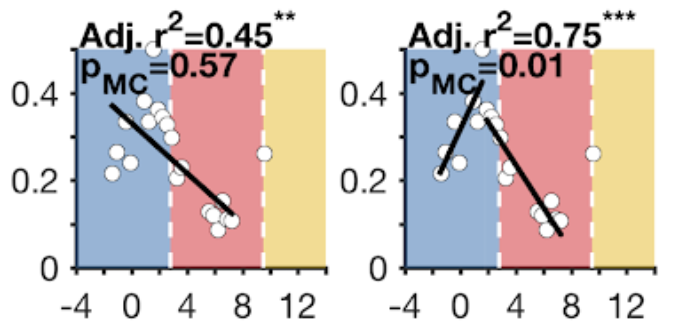
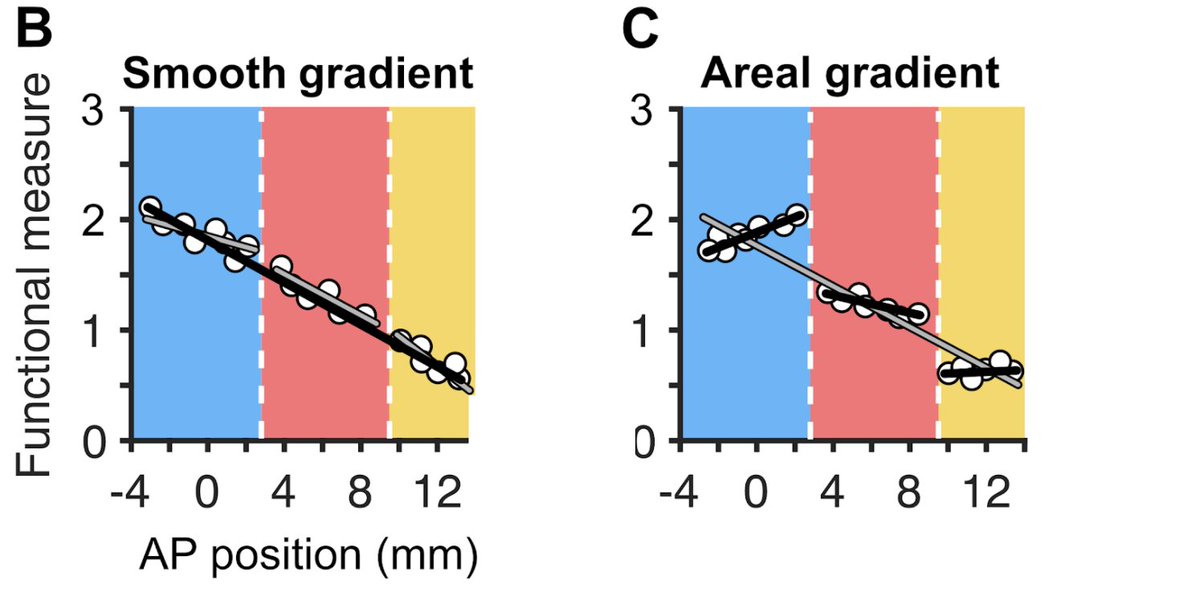
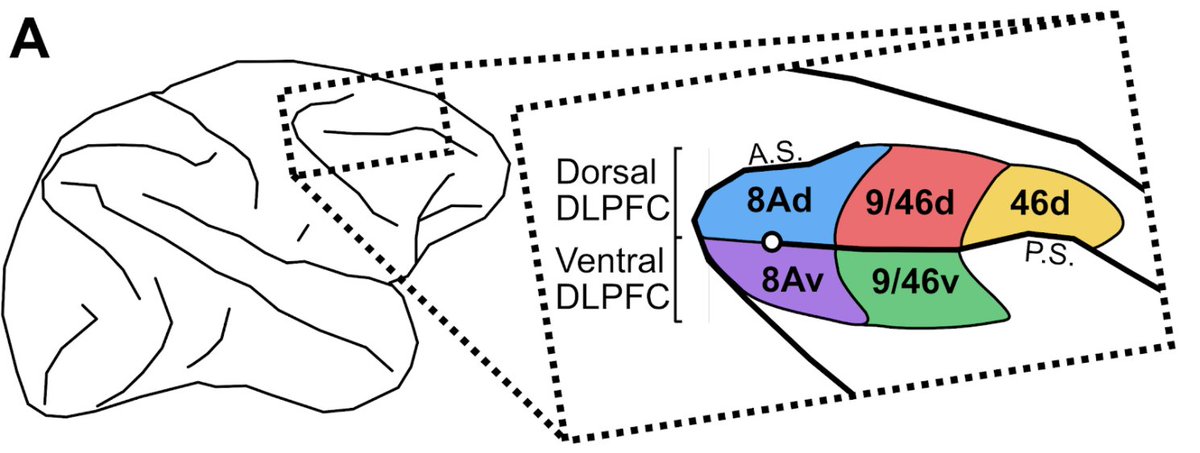
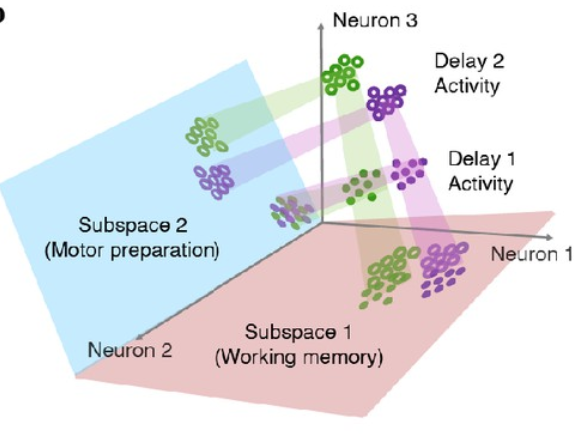
Happy to summarize this work with talented postdoc Roger Herikstad! When you initiate a movement after a sensory go cue, the time between the sensory signal and the movement onset is variable. This reaction time (RT) variability is observed even for well-practiced movements.(1/8)
13 May 2023

Prefrontal Manifold Geometry Explains Reaction Time Variability biorxiv.org/cgi/content/shor… #biorxiv_neursci
3
10
42
8,696
Camilo Libedinsky retweeted

24 Oct 2024
The vocabulary of systems neuroscience may appear daunting to many. Here's a short dictionary of common terms. BTW if you use them in your papers and grants you will have greater success
11
111
670
109,631
Camilo Libedinsky retweeted

19 Sep 2024
Yes, it's true. Monkeys predict US elections. @whartonbrain biorxiv.org/content/10.1101/…
2
11
51
9,581
Camilo Libedinsky retweeted

1 Aug 2024
Our work on individual differences in monkeys and RNNs is out on Nat Comms!
nature.com/articles/s41467-0…
A huge thanks to @aldo_battista @faffofratello Satoshi Tsujimoto @AldoGenovesio and @StefanoFusi2 for the massive work!
A brief recap 👇🧵
1
41
99
12,121
3 Jul 2024
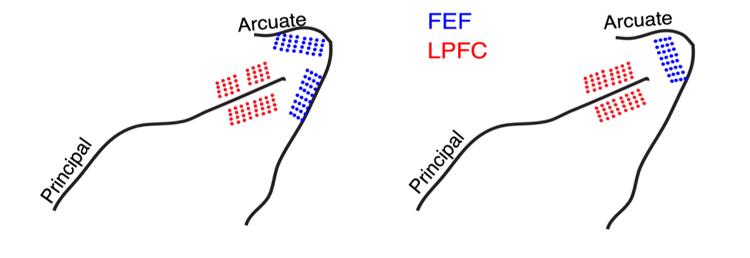
Latest from our lab (with Evangelos Sigalas). We developed a method to estimate connectivity features of brain regions using noise correlation and RNN models. We found that LPFC area 9/46 had a lower proportion of bump attractor architecture compared to the FEF (~7.5% vs ~20%).
3 Jul 2024
Mixed recurrent connectivity architecture in primate prefrontal cortex biorxiv.org/cgi/content/shor… #biorxiv_neursci
5
15
1,376
Camilo Libedinsky retweeted

11 Jun 2024
1/ A century ago, Tolman showed that meaningful learning can occur even without apparent performance improvements. What is the neural basis of this distinction between learning something vs learning to perform? We tackle this in a new manuscript 🔥 🐭🔬📰
biorxiv.org/cgi/content/shor…
5
41
152
26,254
Camilo Libedinsky retweeted

5 Jun 2024
Our study by @jonasfbraun @femke_hurtak @wangchensibo revealing that brain descending neurons form interconnected networks to coordinate motor control is now out in @Nature
nature.com/articles/s41586-0…
@EPFL_en @epflSV @Brainmind_EPFL @EDNE_EPFL @EPFL_BioE
10
31
95
10,773
5 Jun 2024
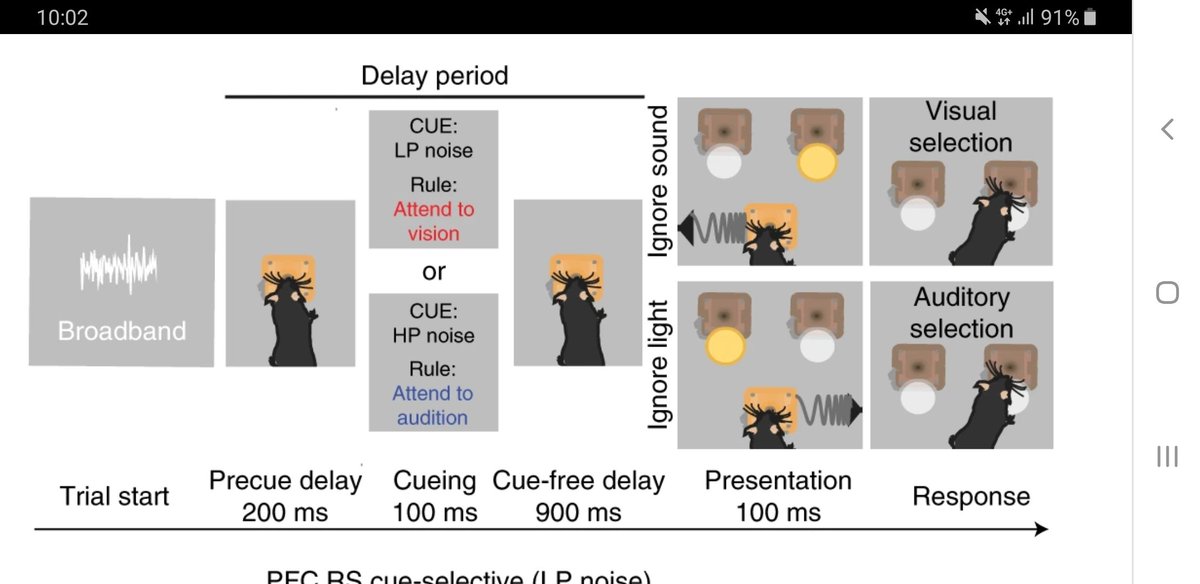
Our grain of salt to contribute to this story. TLDR: in a delay saccade task, populations of selective LPFC neurons show coordinated periods of silence (>100 ms) that are not expected by chance. Caveat: these are very rare (~1 second every 30 mins of memory maintenance)
4 Jun 2024
Evidence of Activity-Silent Working Memory in Prefrontal Cortex biorxiv.org/cgi/content/shor… #biorxiv_neursci
4
10
1,975
Camilo Libedinsky retweeted

29 Feb 2024
Our Lab is hiring! 1 POSTDOC & 2 RESEARCH TECHNICIAN positions available. We use high-count multi-area neuronal recordings & optogenetics to investigate how neurons generate & manipulate mental representations. Check the JOIN US section @ mendoza-halliday-lab.com. Spread the word!
2
12
21
3,140
Camilo Libedinsky retweeted

27 Feb 2024
Nativism strikes back: newborn chicks still show object permanence even if you rear them in bizarre virtual reality worlds where objects are never occluded and can teleport around.
arxiv.org/abs/2402.14641
1
3
643
Camilo Libedinsky retweeted
26 Jan 2024
New paper out in Neuron! Using electrophysiology and optogenetics, we show that the neuronal substrates of feature attention & working memory are dissociable in the primate brain. Work with Bob Desimone & @nilxu.
doi.org/10.1016/j.neuron.202…
3
9
51
5,486
Camilo Libedinsky retweeted

18 Jan 2024
New paper "A ubiquitous spectrolaminar motif of local field potential power across the primate cortex" published today at Nature Neuroscience!
nature.com/articles/s41593-0…
A collaborative effort with @MillerLabMIT, @MendozaHalliday, @alexjamesmajor, Robert Desimone, and others 1/n
6
38
126
17,011
Camilo Libedinsky retweeted

17 Jan 2024
Our latest, showing how humans and recurrent neural nets can learn statistical information unfolding at multiple timescales rapidly and concurrently!

Excited to release this preprint with @AnnaSchapiro and @stslab! Humans and recurrent neural nets can learn slow temporal statistics in the presence of fast timescale dependencies. tinyurl.com/mseu44un
12
41
7,209
Camilo Libedinsky retweeted

24 Dec 2023
I have also followed this situation with appalled fascination. As children, we are taught simple commands, “Do not lie.” “Do no steal.” “Do not cheat.” But then we grow up and learn about the real world. And it turns out that in order not to lie, sometimes you have to lie. This essential contradiction is something that has always bothered me, and it’s why I find it so thrilling to read biographies and learn how Lincoln deftly played politics to ultimately achieve goals that an outward absolutist like Sumner never could, how Beethoven shamelessly lied to his publishers about works he had already sold to others to gain the material support he needed to create his immortal art. Achieving Veritas in any realm is so tortuously difficult and must involve many compromises. Yet, it remains the only thing worth fighting for. In this particular situation, it seems obvious to me where things stand. It is not tenable for the leader of an institution whose central mission is to teach young people to seek Veritas, to have committed these acts and not show any contrition, nor for the board to defend and minimize these acts. This is putting politics before Veritas, not in service of it.
theatlantic.com/ideas/archiv…
7
5
56
51,641
Camilo Libedinsky retweeted

18 Dec 2023
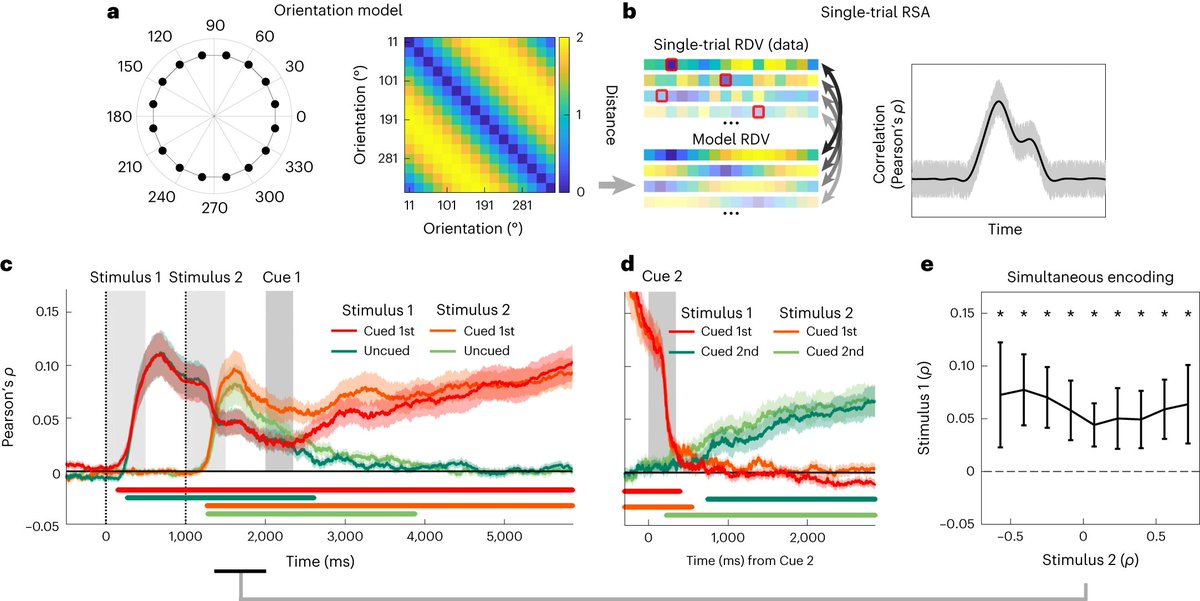
New paper with @BernhardSpitzer , investigating WM through miniature eye movements. We found that, even during attempted fixation, gaze patterns not only reflect memory content but also capture its dynamic evolution over time. Available on @NatureHumBehav nature.com/articles/s41562-0…
2
31
95
15,933
Camilo Libedinsky retweeted
7 Dec 2023
I am beyond excited to share a new paper “Rapid, concerted switching of the neural code in inferotemporal cortex,” led by @Yuelin_Shi and Dasheng Bi. We describe a new form of neural computation in which single neurons rapidly change their tuning to temporally multiplex different functions. In < 20 ms, cells switch from a code optimized for face detection to a code optimized for face discrimination. I think this discovery fundamentally changes our current concept of neural representation. (1/N)
biorxiv.org/content/10.1101/…
8
97
407
108,733
Camilo Libedinsky retweeted

10 Nov 2023
📣 If you are attending the @SfNtweets meeting in DC, don’t miss our nanosymposium co-organized by
@adelardalan and myself on "geometry of task representations in biological and artificial neural networks" 🧠 📐
⏰November 15, 2023, 1:00 PM - 3:30 PM, Room WCC 146C
1
3
5
717
Camilo Libedinsky retweeted

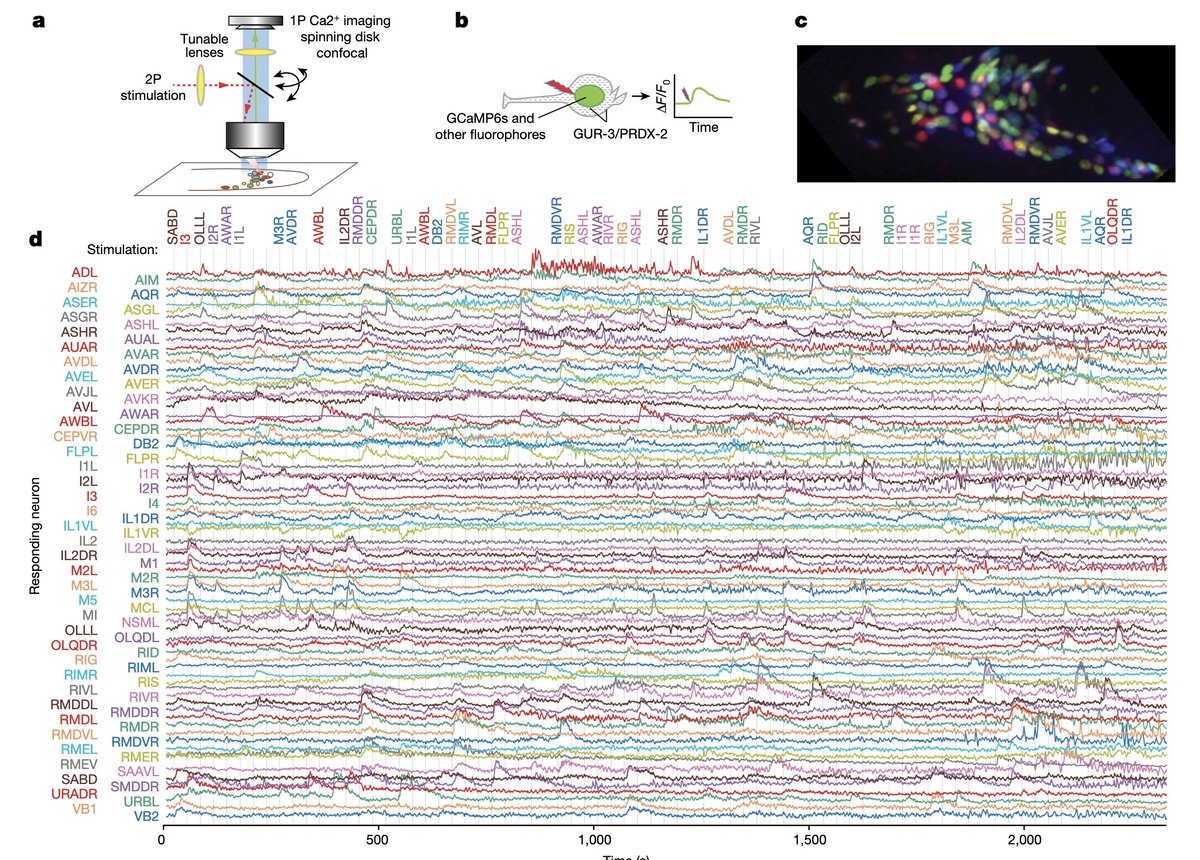
Our signal propagation atlas of C. elegans is now out in @Nature! We measure the network’s response to optogenetic stimulation of each neuron in the head, one at a time-- over 23,000 neuron pairs. Congrats to @francescorandi @aksharma_118 & @DvaliSophie. nature.com/articles/s41586-0…
13
158
540
80,892
Camilo Libedinsky retweeted

27 Oct 2023
Happy to let the world know that we just published a new paper!
Please take a look if you are interested in context-dependent decision making, across-area interactions and low-rank RNN 👇
nature.com/articles/s41467-0…
5
48
201
20,509
Camilo Libedinsky retweeted

25 Oct 2023
Representing context and priority in working memory biorxiv.org/content/10.1101/… RNNs represent 1st-order context (that individuates an item) and higher-order cntxt (that can change unpredictably ) via distinct mechanisms. X-less Quan Wan @adelardalan X-less Jacqueline Fulvio
1
14
38
4,783
Camilo Libedinsky retweeted

10 Oct 2023
The neural basis of swap errors in working memory biorxiv.org/cgi/content/shor… #biorxiv_neursci
4
15
3,906