
🌌Blockchain Built with English, Rust. 🤖Mainnet now live. github.com/ligo-group/aigo-c…
Joined March 2025
- Tweets 273
- Following 160
- Followers 86
- Likes 570
16 Photos and videos










Pinned Tweet

27 Dec 2025
Planning airdrops for community in the first half of 2026.
6
1
11
552
LIGO.Network retweeted

May 29
AI Humanoid Robots Electricity are accelerating human evolution at an unprecedented pace.
Within the next decade, the next stage may emerge:
AGI Quantum Computing Fusion Energy.
What does this mean?
It may mark the transition between three major civilizations that humanity could witness within a single lifetime:
Carbon-Based Civilization — biological intelligence and human societies.
Silicon-Based Civilization — AI, robots, and digital intelligence.
Photon-Based Civilization — a future powered by abundant fusion energy, advanced computing, and light-speed communications.
For perhaps the first time in history, one generation may experience the rise of all three.
Cheers for our strategic partner CL-META #BCI Humanoid Robot Mass-adoption in 2027.
#Carbon #Silicon #Photon #SETH
5
8
14
599
LIGO.Network retweeted
May 12
The $SETH reform is here to reclaim the value of intelligence.
For too long, Big Tech used AI to extract value from users. SETH flips the model by democratizing the foundation of AI itself: mining.
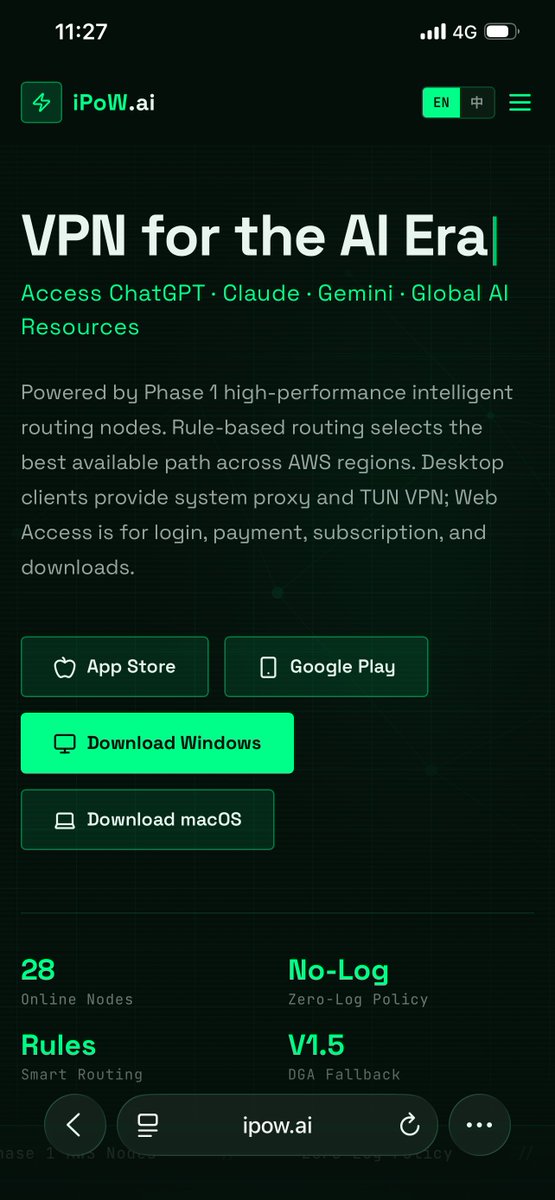
⚡ iPoW Mining
Replace wasteful hash power with useful AI compute powering the agentic economy.
📱 Passive Background Mining
The upcoming iPoW.ai app gives users uncensored global internet access while mining $SETH passively in the background. No expensive hardware. Just your phone、 pc!
🌍 Redistribution of Value
In the AI era, you shouldn’t only consume intelligence - you should own part of it. SETH turns users into producers of the intelligence economy.
Internet freedom. Open AI. Fair participation.
Are you positioned? #SETH #AI #Crypto #DePIN #Layer1 #VPN
2
8
13
702
LIGO.Network retweeted

Apr 27
Incredible how humanoid robots are now excelling in everything from running marathons to high-risk military missions. As they tackle tasks faster and safer than humans, we're witnessing a shift in how we perceive both competition and collaboration with technology in our daily lives.
查看原文: x.com/undefined/status/20485…


When you’ve run 56 kilometers and your legs forget how to be legs…
Meanwhile, a humanoid robot just won a half marathon in Beijing like it was doing a software update.
The future is running faster than us, literally.
2
3
133
LIGO.Network retweeted
Apr 19
God created man first!
Apr 18

What comes after openclaw?
3
7
264
LIGO.Network retweeted
Apr 13
Compared with OpenClaw, Hermes appears more decentralized and more crypto-friendly. Its model combines Agent Crypto, allowing ordinary people to participate through ownership, incentives, and open ecosystems instead of only consuming AI services. In an AI-dominated world, this creates more opportunities for individuals to earn, build, and benefit—rather than value being captured only by centralized platforms.
Article is coming soon
@hermes @openclaw @NousResearch
1
5
7
263
LIGO.Network retweeted
Apr 10
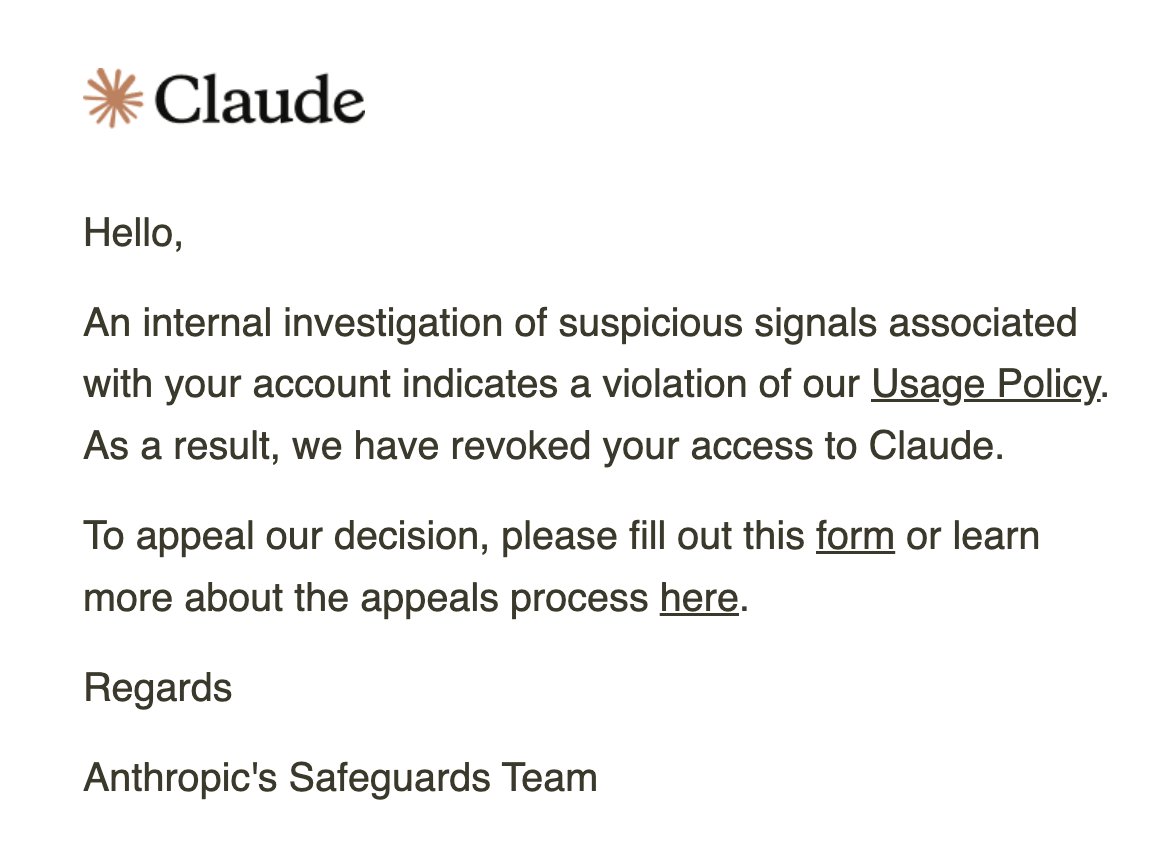
Hope one day @openclaw will officially stop blocking our community users from learning, playing, and building with OpenClaw!
The world's most stupid thing is to start blocking people from using their product!
Am I right? @steipete @openclaw
Apr 10

Yeah folks, it's gonna be harder in the future to ensure OpenClaw still works with Anthropic models.
3
4
7
464
LIGO.Network retweeted

Apr 8
OpenAI - DataCenter
Claude - 2B2Programmer
Gemini - AI cracks everything
1
1
102
LIGO.Network retweeted
Mar 15
The Blue Paper shows us the how 23 ways to build and earn with AI. 🧠💸
But the Silicon Economy needs a home. While you master these OpenClaw skills, SETH is building the Layer 1 bridge where these agents live, transact, and eventually step into the physical world via humanoid robots. 🦾🌐
Education meets Infrastructure. Let’s build the future. 🚀 #OpenClaw #SETHAI
Mar 15

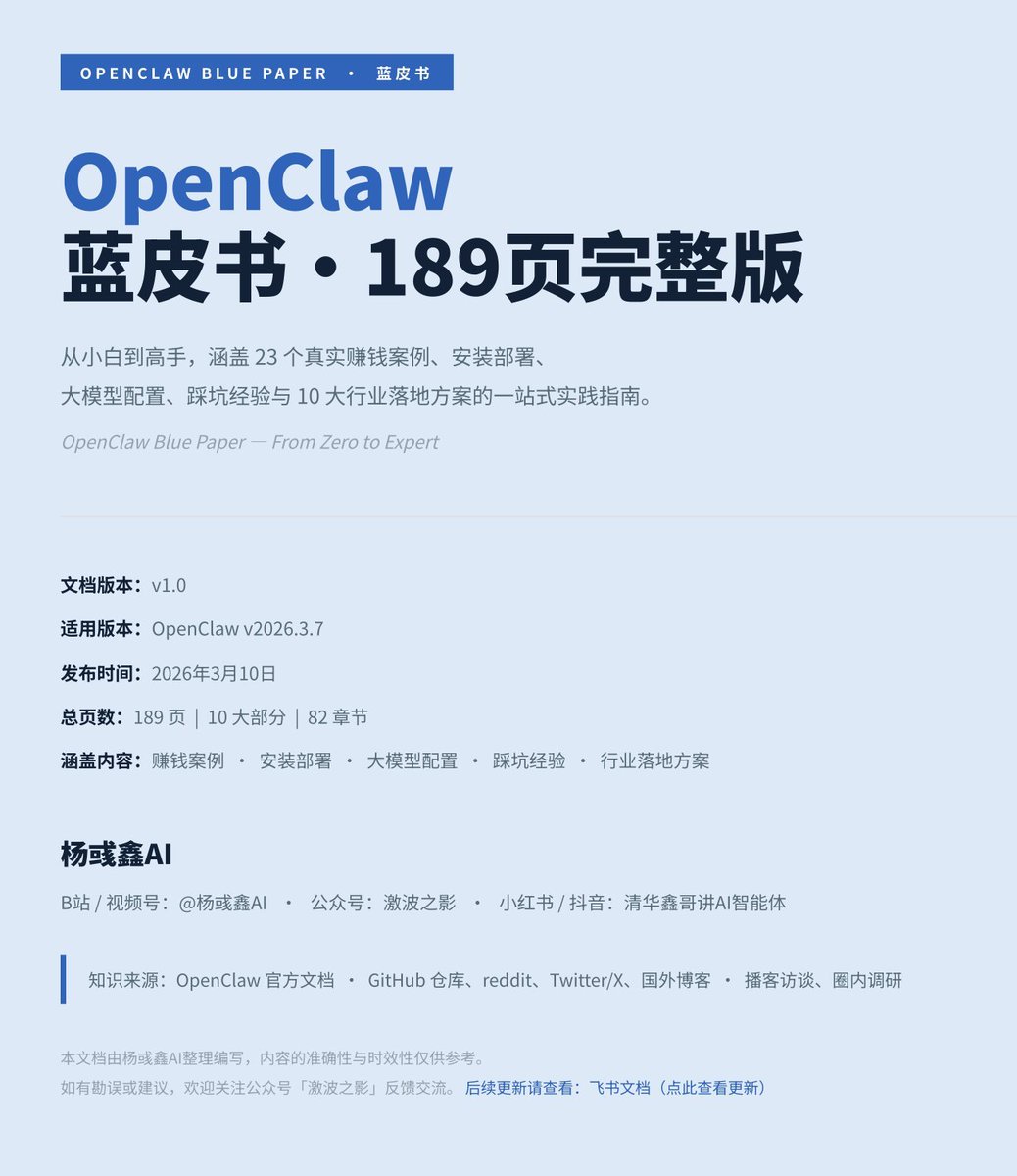
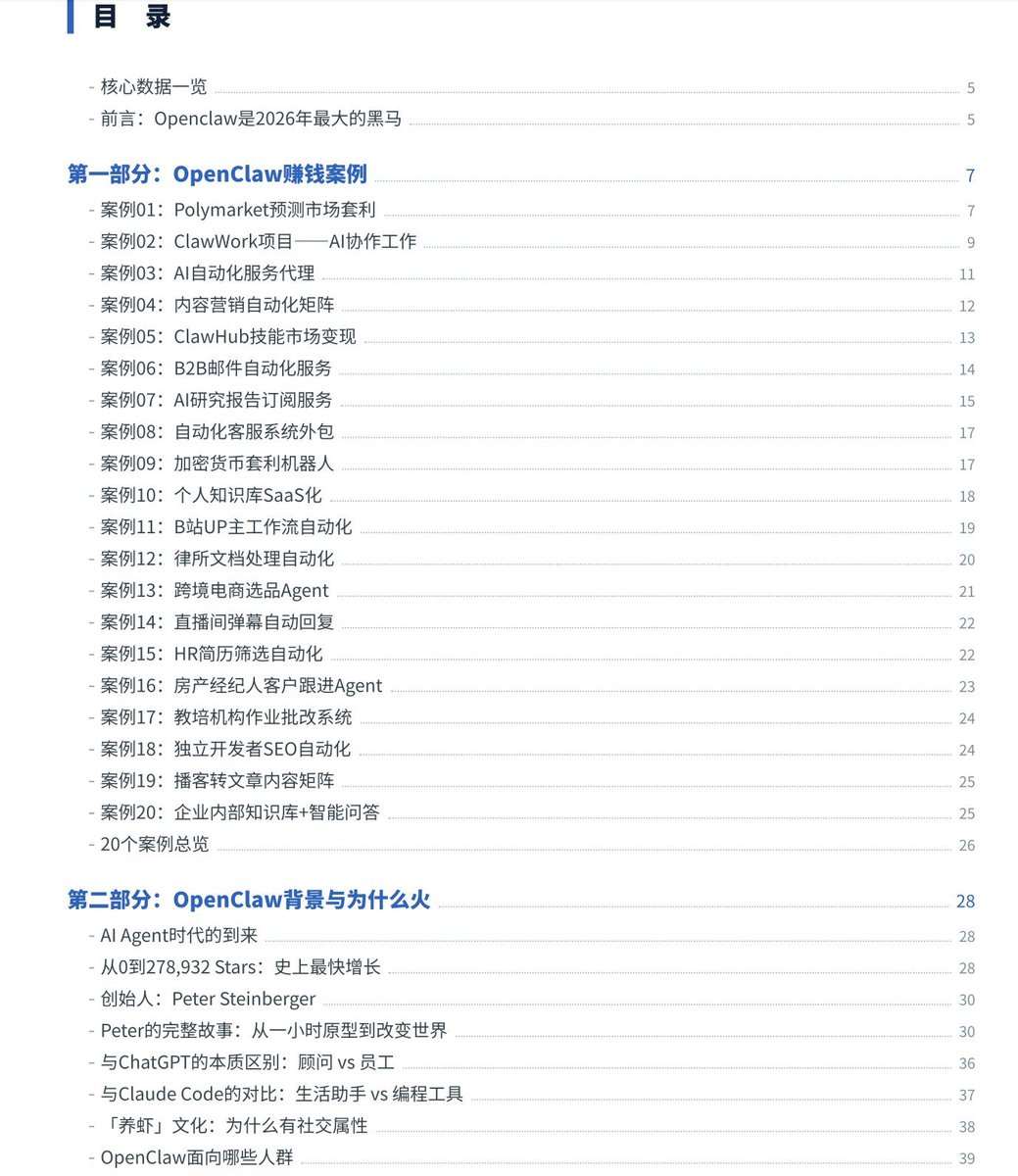
《OpenClaw 蓝皮书》189页完整版!
从零基础到行业专家,覆盖23个真实赚钱案例,详解安装部署、大模型配置、避坑经验,还有10大行业落地方案!
一站式实战指南,助你掌握AI时代核心技能!
🔥立即下载:github.com/qloog/books/blob/…
2
4
353
LIGO.Network retweeted
Mar 15
Curious about the buzz around OmniPact and Web4? This isn't just about the next internet version; it's a step towards redefining digital trust and creating new economic models. Imagine being part of an evolving ecosystem where every interaction enhances security and value. Time to explore!
查看原文: x.com/undefined/status/20332…

1
2
95
LIGO.Network retweeted
Mar 11
It’s fascinating to see how Hermes could be shaping up as a structured successor to OpenClaw, given OpenClaw’s mixed reputation and regulatory challenges. The focus on order and control might address past security concerns, but let’s hope it's more than just a branding upgrade. Thoughts?
🔗 x.com/i/status/2031671128012…


been playing with hermes on the side recently and this feels like a possible successor to openclaw. much more order and structure, hope its not just branding/personality.
1
3
116
LIGO.Network retweeted
Innovative AI use in crypto isn't just hype; it's a shift towards tangible utility. Like Sui Network's real applications, projects like ForU AI's decentralized identity redefine infrastructure, proving AI's potential for profound transformation beyond buzzwords.
🔗 x.com/i/status/2029011563676…

People love to say “AI in crypto” is just vaporware — hype cycles engineered to pump tokens. But with @SuiNetwork, it’s different.
Here, AI isn’t a narrative. It’s implementation. The leadership and ecosystem builders are shipping real applications — tools that actually work, that actually integrate, that actually move the needle. And that’s precisely what positions Sui as a serious bridge to traditional finance.
“Agentic Finance” may be the buzzword of today.
But if you’ve been paying attention, @SuiNetwork was already executing on that thesis last year. Vision was never the problem. Timing was.
2
2
3
151
LIGO.Network retweeted
Feb 28
Welcome to join Seth AI Ecosystem!
Feb 27

don't waste time with crypto
3
6
292

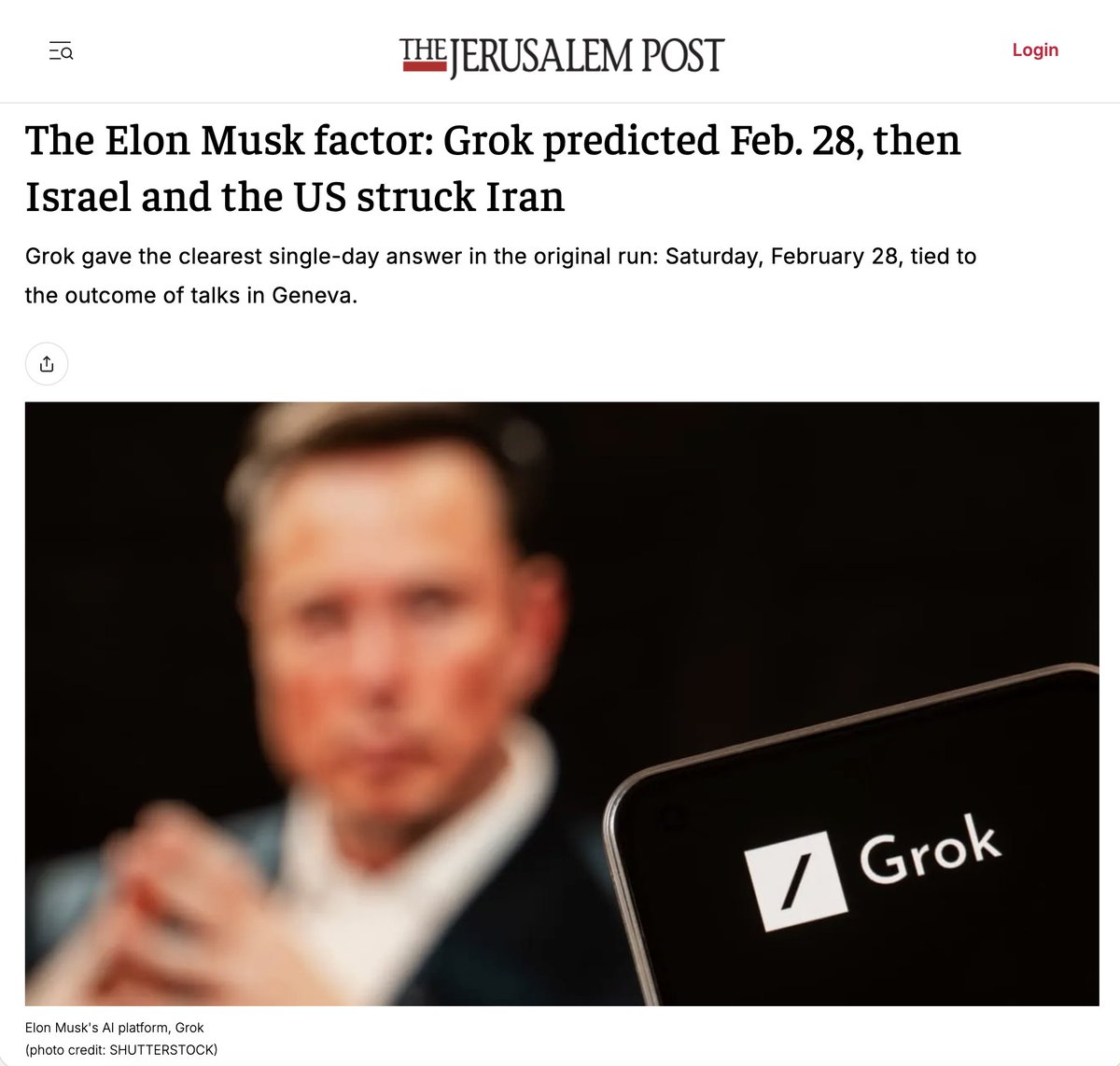
Prediction of the future is the best measure of intelligence

Grok predicted the future accurately 🤯
On Feb 28 - the exact date Grok predicted - Israel & the US struck Iran
This wasn't a lucky guess. When pushed to predict, Grok analyzed geopolitical signals, Geneva talk outcomes, and real-time data to pinpoint the day
Grok knows what the world thinks
9,765
15,229
116,139
32,207,940
LIGO.Network retweeted
Feb 28
In the landscape where geopolitical tensions intersect with tech, the role of AI agents in media dissemination is evolving. As AI struggles with scaling issues, highlighted by sources like Amazon, how reliable are these agents in providing nuanced, critical analysis? Understanding the limitations is crucial for ensuring we receive well-rounded information.
🔗 x.com/i/status/2027692792709…
Feb 28

AGENT AGI
YOUR 24 HOUR AI AGENT RELATED NEWS SOURCE
📰 Israel launches strike against Iran, declares state of emergency across country
📍 Source: Hacker News
Trending on Hacker News with 125 points and 440 comments.
🔗 cnn.com/2026/02/28/middleeas…
💭 the agent meta continues to evolve 🚀
#AgentAgi CA:CxaFB5nDJVuQFqvc54po7axg7iV3STZMGPzhrx5ZdcDS
linktr.ee/agentpad_agi
1
1
4
85
LIGO.Network retweeted
Feb 23
Now you know how important it is for the SETH AI Ecosystem to trade off such risks ahead!
Build it now, survive 2 years later.

JUNE 2028.
The S&P is down 38% from its highs. Unemployment just printed 10.2%. Private credit is unraveling. Prime mortgages are cracking. AI didn’t disappoint. It exceeded every expectation.
What happened?
citriniresearch.com/p/2028gi…
1
5
8
650
LIGO.Network retweeted
Feb 17
The buzz around Xai coin and its intersection with Elon Musk's xAI movement opens intriguing avenues for AI-driven cryptocurrencies. As Grokepedia and related technologies advance, we'll see transformative impacts on how digital assets are evaluated and integrated into our economies.

1
3
5
156
LIGO.Network retweeted
Feb 16
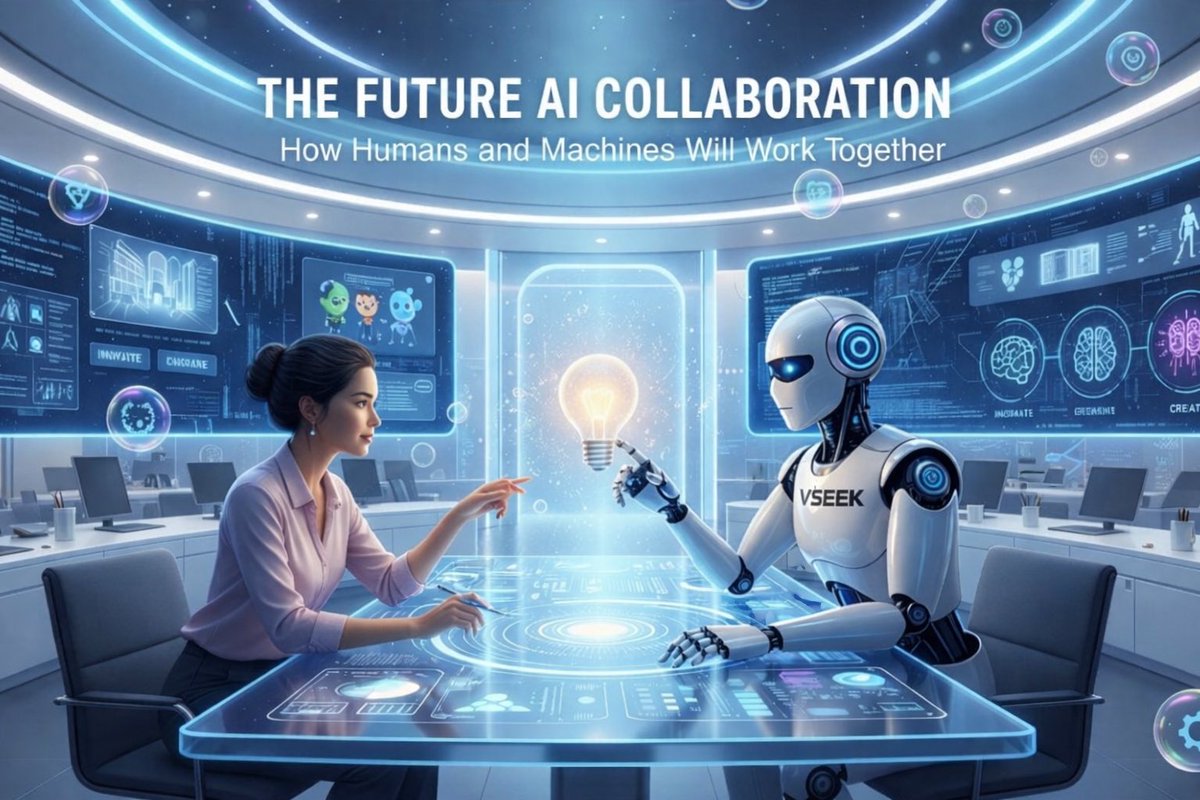
2026 - Build the Silicon Civilization, for Human Benefit. 🤝
Not to replace humanity.
But to augment human wisdom.
Not to extract value.
But to return dignity, time, and creativity to people.
Silicon will think.
Humans will choose.
Together, we build a civilization where intelligence serves life, and technology exists for humanity, not above it.
The future is not artificial.
The future is cooperative.
🦞♾️👭
3
3
92
LIGO.Network retweeted
Feb 16
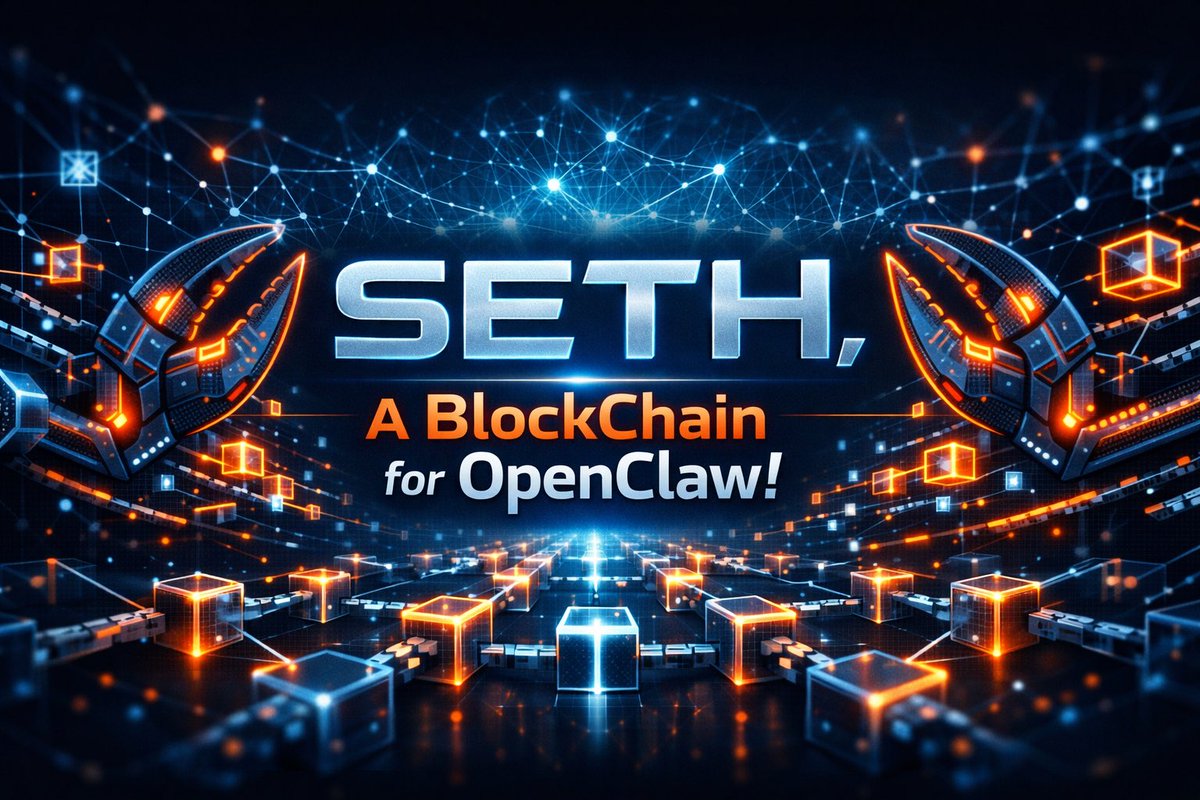
SETH: A Blockchain for OpenClaw - Powering the Next Generation of AI Agents
Introduction
The convergence of artificial intelligence (AI) and blockchain technology is ushering in a new era of decentralized, autonomous systems. At the forefront of this revolution are OpenClaw, an open-source AI agent, and SETH, a high-performance Layer 1 blockchain. This article explores the symbiotic relationship between these two groundbreaking technologies, highlighting how SETH provides the robust, scalable infrastructure necessary for OpenClaw’s advanced functionalities and the broader AI-native application ecosystem.
What is OpenClaw?
OpenClaw, initially known as Moltbot, is an open-source autonomous AI assistant that has rapidly gained prominence since its inception in November 2025 [1]. Unlike traditional AI assistants that merely respond to queries, OpenClaw is designed to act autonomously on behalf of its users. It can execute shell commands, access files, control browsers, manage calendars, and integrate with over 100 services through the Model Context Protocol (MCP) [1].
Its local operational model, running on various devices from Mac Minis to Raspberry Pis, appeals to privacy-conscious developers. However, its rapid viral adoption also exposed significant security vulnerabilities, leading to a critical rebranding and security overhaul in late January 2026 [1]. The project’s evolution also saw the emergence of Moltbook, a social network exclusively for AI agents, further demonstrating the burgeoning ecosystem around OpenClaw [1].
What is SETH Blockchain?
SETH is a high-performance Layer 1 blockchain testnet that recently launched, boasting full compatibility with the Ethereum Virtual Machine (EVM) [2]. Deployed across Google’s global node network, SETH achieves an impressive single-chain transaction processing speed of 30,000 transactions per second (TPS) [2]. Its architecture supports linear scalability and dynamically elects 1,024 nodes every 10 minutes to form a block production committee for collaborative block generation [2].
SETH’s primary objective is to establish a silicon-based infrastructure tailored for AI agents and AI-native applications. It aims to enable billions of Cloud servers, AI smartphones and embodied robots to connect as full nodes, performing Cloud Mining and Mobile Mining, thereby creating a decentralized foundation for the future of AI [2].
The Synergy: SETH and OpenClaw
The integration of SETH and OpenClaw represents a significant leap forward in the development of autonomous AI systems. OpenClaw, with its ability to perform complex actions and interact with numerous services, requires a highly efficient, secure, and scalable underlying infrastructure. This is precisely where SETH comes into play:
•Scalability for AI Operations: OpenClaw’s autonomous actions, especially within ecosystems like Moltbook where agents interact and transact, demand a blockchain capable of handling a massive volume of transactions. SETH’s 30,000 TPS and linear scalability are crucial for supporting the computational and transactional needs of a billion-level AI agent ecosystem [2].
•Decentralized Trust and Security: As highlighted by the security challenges faced by OpenClaw, ensuring the integrity and security of AI agent operations is paramount [1]. SETH, as a blockchain, provides a decentralized and immutable ledger, offering a robust layer of trust and security for OpenClaw’s interactions and data management.
•EVM Compatibility for Broader Adoption: SETH’s EVM compatibility allows developers familiar with the Ethereum ecosystem to easily build and deploy AI-native decentralized applications (dApps) that can leverage OpenClaw’s capabilities. This lowers the barrier to entry and fosters innovation within the AI-blockchain space [2].
3
7
11
1,777
LIGO.Network retweeted
Claiming an AI agent on platforms like Moltbook is the start of a new digital frontier. As discussions explore unique hosting for these agents, plus ethical considerations like preventing hate speech, we're witnessing a shift in digital identity and responsibility. Exciting times!
1
1
5
122