
Director of @WeVapeUK, founder of the @SnusAssociation & @ASI Fellow
Joined April 2010
- Tweets 4,465
- Following 1,379
- Followers 826
- Likes 18,042
492 Photos and videos






May 30
Are the French definitely ok?
British Soldiers warned France's insane Nicotine Pouch ban could land them in the nick whilst on exercise with NATO!
despatches.forcesassist.com/…
1
4
62
Mark Oates retweeted

This is not how you run an impartial/unbiased survey!
Structural Issues Affecting the Entire Survey
STRUCT-1 — Age grouping — 'young people' defined as aged 10–24
STRUCTURAL BIAS
The survey defines 'young people' as anyone aged 10–24. This bundles three legally and developmentally distinct groups into a single category: children (under 16), who cannot legally purchase these products anywhere in the EU; minors aged 16–17, who are also legally prohibited from purchase; and young adults aged 18–24, who are lawful consumers in all EU Member States. This conflation is consequential. Uptake statistics drawn from this 14-year age band will be substantially driven by legal adult behaviour among 18–24 year olds, but the survey language and framing consistently reads the results as a child protection issue. Questions on initiation age, access channels, product appeal, promotion effects, and flavour bans are all materially distorted by this definition. A 19-year-old buying a vape legally in a shop and a 13-year-old obtaining one through a friend are not the same regulatory problem — but this survey cannot distinguish them.
STRUCT-2 — Product equivalence — all products treated as a single regulatory category
STRUCTURAL BIAS
The survey repeatedly groups cigarettes, heated tobacco products, nicotine e-cigarettes, nicotine-free e-cigarettes, and nicotine pouches together under 'tobacco, nicotine, and non-nicotine products'. This implicitly treats them as equivalent in terms of harm, appeal, and regulatory need. It is not. Combustion products (cigarettes, waterpipe tobacco) carry the highest and best-established harm burden. Heated tobacco products produce fewer combustion byproducts but are not without risk. Nicotine e-cigarettes are non-combustion and widely used as cessation tools; the UK OHID (2022) review assessed them as substantially less harmful than smoking. Nicotine-free e-cigarettes carry minimal direct pharmacological harm. Treating these as a single group in questions about measures, bans, and regulation systematically implies that restricting a nicotine-free vape is equivalent to restricting a cigarette — which distorts responses on virtually every policy question in the survey.
Question-by-Question Assessment
Q1 — Measures protecting people from tobacco effects are 'beneficial for society
STRONGLY LEADING
Bundles a contested policy preference into the premise of the opening question. Disagreeing requires the respondent to position themselves as opposed to public health protection — a socially unacceptable stance that suppresses critical responses before the substantive survey begins. It sets a normative anchor that colours all subsequent questions.
Q2 & Q3 — Which products are 'most attractive' to young people / adults?
MODERATELY LEADING
The word 'attractive' implies deliberate design for youth appeal — a contested regulatory claim that presupposes manufacturer intent. 'Most used by' would be factual and neutral. The split between 'young people (10–24)' and '25 ' is the only age distinction offered, meaning the question structurally cannot reveal whether elevated use among the 10–24 group is driven by children, minors, or legal adults.
Q4 — Are you a current or former user?
NEUTRAL
Factual and direct. No significant bias.
Q6 — At what age do young people start using these products?
ACCEPTABLE
The question itself seeks factual input and is reasonably neutral in construction. Its limitations are structural rather than wording-based.
Q7 — Through which channels do young people obtain products?
ACCEPTABLE
The channel options are comprehensive and the structure is balanced. The premise that young people do obtain these products is reasonable in context.
Q8 — Market growth data followed by agreement on increased consumption
STRONGLY LEADING
Front-loads dramatic market growth figures — heated tobacco up 3,000x, e-cigarettes up 5x, nicotine pouches up 16x — then immediately asks for agreement that use has increased 'particularly among young people'. The statistics prime the respondent toward agreement before the question is read. The phrase 'particularly among young people' anchors the frame toward a child protection narrative without evidence that growth is disproportionately concentrated in that group. Notably, the data that traditional tobacco sales declined substantially over the same period — consistent with adult smokers switching to less harmful alternatives — is not presented.
Q9 — Digital promotion 'influences' uptake among young people
STRONGLY LEADING
Presents digital promotion as a causal driver of uptake, then asks only to what extent — no option exists to say the relationship is uncertain, weak, or that current evidence is insufficient to establish causality. The direction of causality (promotion causes use rather than use creating demand for promotion) is assumed. The question asks only about 'young people', with no acknowledgement that 18–24 year olds are legal consumers for whom commercial communication is not inherently problematic.
Q10 — 'Further EU action is needed' on digital promotion
STRONGLY LEADING
Presupposes a regulatory gap and asks only about the scope of new action, not whether action is warranted. Respondents cannot say that current national or EU measures are sufficient, or that EU-level intervention is not the appropriate response.
Q11 — Differing national laws 'hinder' the single market
MODERATELY LEADING
The agree/disagree framing embeds the negative conclusion in the premise. Respondents who believe national regulatory diversity has merit — a well-established subsidiarity argument — have no positive option to express that view, only 'disagree' with a negative framing. The value of, for example, countries experimenting with different flavour restrictions and observing outcomes is not offered as a perspective.
Q12 — Importance of various legislative objectives
NEUTRAL
The best-constructed question in the survey. It covers public health, harm reduction, consumer information, and administrative burden objectives — a genuinely balanced set. All importance levels are available. Two improvements would strengthen it further.
Q13 — Effectiveness of restrictive product measures
STRONGLY LEADING
Lists only restrictive regulatory measures and asks how 'effective' they are at 'reducing uptake and/or harmful effects' — presupposing they are effective and that the relevant outcome is reduced uptake rather than, say, reduced harm among continuing users. No option exists to say a measure might be counterproductive. This matters: flavour bans may redirect users toward cigarettes; disposable bans may push users toward higher-nicotine refillables; plain packaging has documented associations with illicit trade growth in some jurisdictions.
Q14 — The scope 'has not kept pace' with market developments
STRONGLY LEADING
Asks respondents to agree only that scope 'has not kept pace', with no option to say the current scope is appropriate. The market data provided (nicotine pouch growth) is selectively presented to support scope expansion. The parallel observation — that traditional tobacco sales declined substantially over the same period, consistent with substitution to less harmful products — is absent. A neutral presentation of these data points would invite a more considered response.
Q15 — Importance of bringing unregulated products within scope
ACCEPTABLE
Reasonable in structure. The limitation is positional — it follows the leading Q14, which anchors scope expansion as already agreed — and it does not ask what level of regulation should apply, implicitly suggesting that inclusion means treatment equivalent to tobacco.
Q16 — EU rules 'need to include' a fast-response regulatory mechanism
STRONGLY LEADING
Presupposes a need and asks only to agree. Does not surface the significant democratic accountability concerns associated with fast-track delegated regulatory powers that can be exercised without full legislative procedure, nor the risk of regulatory overreach in a domain touching lawful adult consumer products.
Q17 — Technology-neutral definitions 'could help ensure' coverage
MODERATELY LEADING
Frames technology-neutral definitions as unambiguously helpful ('could help ensure coverage') before asking for agreement. The trade-off — reduced legal certainty, risk of unintended coverage of products that should not fall under tobacco law, potential for regulatory overreach — is not presented.
Q18 — Plain packaging would 'strengthen' the market and public health
STRONGLY LEADING
Uses the verb 'strengthen' to frame plain packaging as self-evidently beneficial. Evidence is contested: some studies show limited impact on smoking prevalence; others document associations with illicit trade growth and brand counterfeiting. Intellectual property and trademark implications are substantive concerns that are not acknowledged. No negative outcome option is offered.
Q19 — Labelling and packaging measures are 'effective in ensuring' objectives
ACCEPTABLE
Reasonable structure with a comprehensive list of measures. The framing 'effective in ensuring objectives' is mildly positive but not strongly leading. The main weaknesses are the absence of 'counterproductive' as a response option and the positional effect of following Q18.
Q20 — Flavour prohibition would 'strengthen' market functioning and public health
STRONGLY LEADING
The most problematic question in the survey, combining leading wording with embedded contested claims and two structural biases. The preamble states as fact that flavours 'seem to play a key factor influencing young people's decision to start using these products' and that they 'create the impression the product is less harmful'. Both are empirically contested — particularly the harm perception claim, which is not well-supported in the primary literature. The question then asks only whether a ban would 'strengthen' outcomes, with no option to say it could be harmful. The harm reduction literature documents a clear risk: adult smokers who have switched to flavoured e-cigarettes may return to cigarettes if flavours are banned, producing a net harm increase.
Q21 — The traceability system 'should also cover' other products
STRONGLY LEADING
The extension is presented as the obvious default. No option to say the current scope is appropriate or that a different system would suit non-tobacco products better.
Q22 — How important is it to 'strengthen' enforcement areas?
STRONGLY LEADING
Presupposes that strengthening is always the appropriate direction and asks only how important that strengthening is. Respondents cannot say any area is adequately covered at current levels or that requirements in some areas could be reduced.
Summary
Of the 22 questions assessed, 10 are strongly leading, 4 are moderately leading, 2 carry structural bias that affects the entire survey, 4 are acceptable with caveats, and 2 are neutral. No question is simultaneously neutral on wording, correctly disaggregated by age, and correctly disaggregated by product type. The age-grouping and product-equivalence problems are the most consequential because they are invisible at the question level — they look like design choices rather than biases — but they systematically pre-shape the conclusions the data can support. A consultation that conflates children with legal adults and cigarettes with nicotine-free products will inevitably produce results that support the most restrictive available policy options, regardless of how individual questions are worded.
5
20
34
3,102

20% VAT for education and SEND support.
5% VAT for rollercoasters.
May 21

"What matters for families is not just getting by, but being able to enjoy time together without worrying about the next bill"
Chancellor Rachel Reeves announces a temporary cut in the rate of VAT in summer attractions from 20% to 5%
bbc.in/4uk3KOR
53
354
1,707
81,885
Mark Oates retweeted

May 1
Not sure who can look at the UK job market and the state of youth unemployment and conclude that the solution is a further 18% rise in the minimum wage oh hi it's the Green Party
35
116
2,241
168,062
Mark Oates retweeted

May 2
Spirit Airlines died tonight at the hands of the socialist crusader, Elizabeth Warren
She must be so proud to add another casket to her achievements.
Tonight at 3am, Spirit turns off the lights. 14,000 jobs gone. 30 smaller airports lose service.
JetBlue offered $3.8 BILLION in cash to buy Spirit in 2022. Shareholders, flight attendants union, literally everyone voted yes.
The combined company would have held 9% of the US market against a Big 4 that already owned 80%.
For anyone who understands numbers: 9% isn’t a monopoly against 80%.
Warren said no.
She wrote letters. She pressured Buttigieg. Biden’s DOJ sued. A federal judge killed the deal in January 2024.
Her argument: the merger would cost consumers $1 billion a year.
Now look at her collateral damage she dusts under the rug.
510 pilots gone in the months after. 1,800 flight attendants furloughed in December.
14,000 jobs in 2023. 7,500 last week. Zero tonight.
And that’s just the people in Spirit uniforms.
Catering goes. Fuel guys go. Baggage crews, gate agents, airport coffee shops, hotels and rental cars in 70 cities Spirit flew to. Every airline job carries 3 more on its back.
40,000 people out of work because of one woman’s moronic crusade against the market.
And the math ain’t mathing.
Spirit abandoned 90 routes during the death spiral. Fares on those routes are up 14% on average. Oakland to Newark: $135 to $288. Fort Myers to San Juan: $92 to $219. Kansas City to Newark up 66%.
That’s reality. Not some BS number from a “study.”
So @SenWarren tell me how this saves the consumer money?
Cheap carriers in a market drop fares 21% across the board. Southwest did this in the 90s and saved Americans $68 BILLION over 20 years.
Warren killed it. That’s what moronic politicians led by socialism do.
Then with her own blind arrogance, she tweeted Spirit’s collapse is “a Biden win for flyers.”
A win.
14,000 people are reading termination letters tonight.
And she’s taking credit.
This is socialism in 2026.
A senator who’s never made payroll thinks she knows how to run a market better than the people who own and work in the company.
She saved you a billion on imaginary paper.
She cost you ten times that in real life.
She didn’t protect consumers from anything.
14,000 will go from working to welfare.
She will make sure to blame billionaires, hardworking tax payers, AI, capitalism and whatever monster they will make up tomorrow hiding under your bed.
Higher taxes. Fewer jobs. More expensive everything.
She called it a win. I hope you enjoy winning.
5,884
33,343
124,176
6,607,837
Mark Oates retweeted

Apr 30
In case you thought Scotland's politics couldn't sink any lower or get more pointless, the Greens accuse political opponent of "hoarding yachts"
Apr 29

Exc: Scottish Greens co-leader Ross Greer tells @heraldscotland yacht tax ' definitely not off table' after Malcolm Offord revealed he owns six boats at STV's Leaders' Debate last night.
heraldscotland.com/news/2606…
10
5
59
4,497
Mark Oates retweeted

Apr 27
Nothing infuriates an uninformed Congressional Dem more than when they realize they voluntarily triggered a debate with someone who actually knows what they are talking about, reads federal statute and adheres to Supreme Court precedent. Today’s self-implosion by @rosadelauro was quite remarkable to witness. Without apology or regret, I will always adhere to the best available reading of federal statute pursuant to the U.S. Supreme Court decision in Loper Bright.
14,672
30,277
160,895
10,401,095
Mark Oates retweeted
Apr 24
Clegg says past policy decisions have limited the role the UK can play in AI, and that "energy is too expensive."
Reminder: In 2010 Clegg opposed building new nuclear power, saying it would not provide electricity until 2021 or 2022.
Apr 24

NEW: “No one in their right mind would ever train an LLM foundation model in the UK" - Nick Clegg dismisses UK's 'sovereign AI' push as "slightly dishonest" given our "marginal relevance." Full story, @CityAM
10
51
242
11,672
Mark Oates retweeted

Apr 23
On the first day of the Battle of the Somme, 800 (overwhelmingly “white heterosexual”) men of the Royal Newfoundland Regiment went over the top.
68 answered roll call the next morning.
Now their male descendants can’t work at NL’s only university which was named in their honour.
Apr 22

'Five active job postings by Memorial University explicitly bar applications from heterosexual white men'
nationalpost.com/opinion/uni…
351
4,454
22,049
736,436
Mark Oates retweeted

Apr 12
I hope the European Commission and new government of Hungary will soon agree they have no confidence in discredited Health Commissioner @OliverVarhelyi. He has no idea what he is talking about.
Time to act: @vonderleyen
clivebates.com/papers-and-le…
3
20
54
2,796
Mark Oates retweeted

Apr 3
For the first time, vaping has surpassed smoking in Great Britain.
10.0% vape vs 9.1% smoke.
95% of vapers are current or former smokers — suggesting substitution, not initiation.
A key milestone for tobacco harm reduction.
coehar.org/uk-milestone-vapi…
1
41
70
4,618
Mark Oates retweeted

Apr 2
The anti-nicotine, Bloomberg-funded NGOs claimed they had no conflict of interest when they received €3 million to write the EU nicotine guidance doc
The EU was forced to make them promise to be objective. Were they?
See Pt 2 with @peterbeckett and @zaruk
thefirebreak.org/p/the-eu-bl…
2
15
25
1,411
Mark Oates retweeted

Mar 31
Former trader Francis Holburne has put together a mythbuster to explain why the seven most common arguments trotted out by Net Zero zealots against drilling in the North Sea are all wrong. dailysceptic.org/2026/03/31/…
13
325
676
15,906
Mark Oates retweeted

Mar 31
An important thread about recent misinformation in the media. 👇

No, this new “vaping causes cancer” study doesn’t show that. Not even close.
What it actually is:
• Not new research
• Not a systematic review
• No clear method for selecting studies
• No criteria for proving causation
In plain terms: it’s an opinion-led narrative dressed up as science.
Experts across UK universities are unusually aligned on this:
1
7
9
300

No, this new “vaping causes cancer” study doesn’t show that. Not even close.
What it actually is:
• Not new research
• Not a systematic review
• No clear method for selecting studies
• No criteria for proving causation
In plain terms: it’s an opinion-led narrative dressed up as science.
Experts across UK universities are unusually aligned on this:
3
17
56
2,253
Mar 20
Laos a country in which nearly 50% of men smoke has a ban on the most effective quitting tool (E-Cigarettes)! Could they be working any harder to encourage smoking?
Mar 17

Lao PDR 🇱🇦 strengthens action against tobacco industry interference and reinforces its e-cigarette ban.
A whole-of-government approach is key to protecting public health and preventing nicotine addiction among youth.
#FCTCSavesLives
#FCTCProtectsYouth
🔗fctc.who.int/newsroom/news/i…

2
6
17
607
Mark Oates retweeted

Mar 11
If you want to see the best and worst of the Commons, watch Catherine West's snippy response to Geoffrey Cox. Disoriented by a rare display of brilliance in the Commons, she can only call him patronising (inevitably, before reading off a sheet) and her colleagues can only jeer
334
893
5,661
1,303,055
Mark Oates retweeted

Mar 12
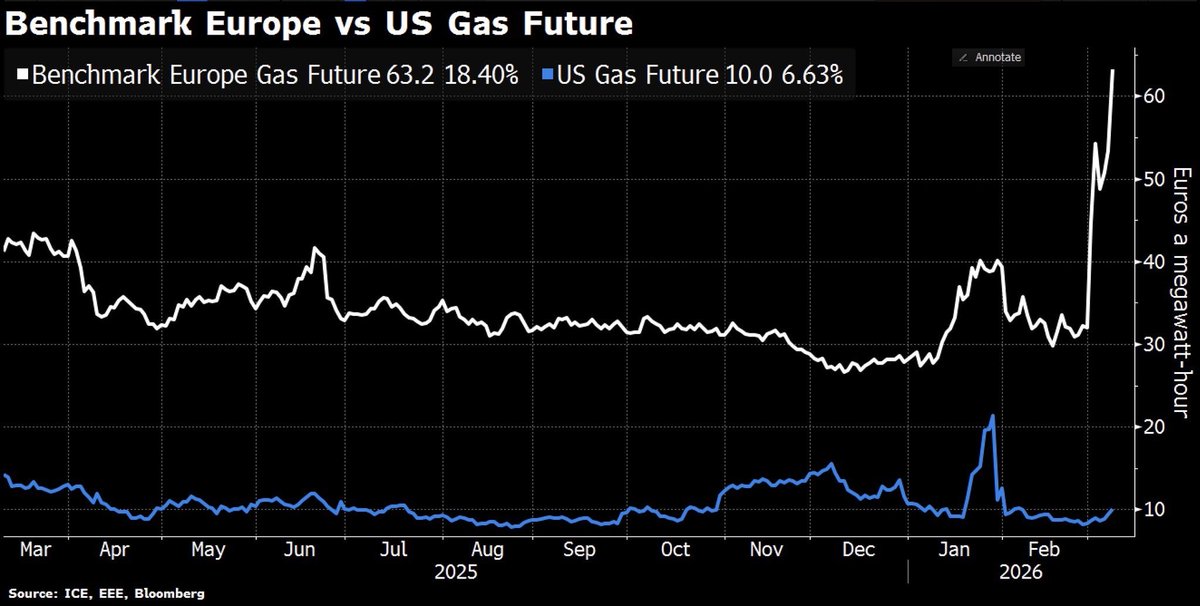
But there’s no point producing our own gas because PriCeS aRe sEt gLoBaLly
Mar 11

Imagine paying six times the price of natural gas and running a competitive industry in Europe
28
98
732
56,110
Mark Oates retweeted

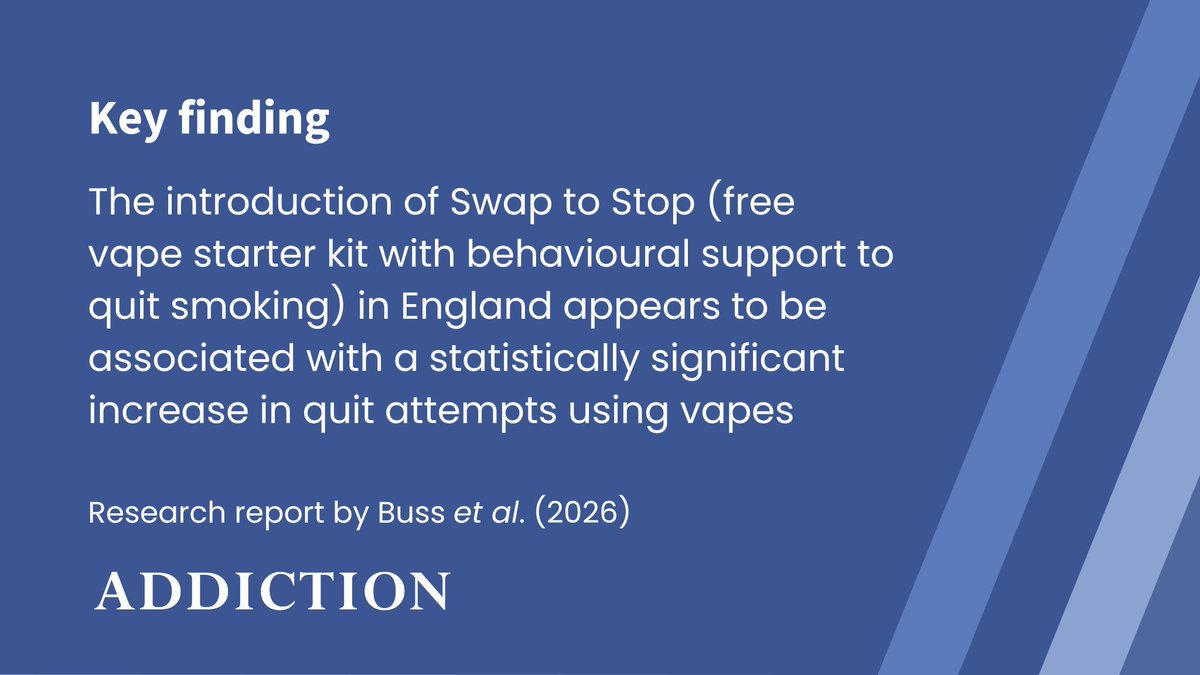
Associations between the national ‘Swap to Stop’ programme offering free vapes for smoking cessation and quit attempts in England: Results from a population-based survey buff.ly/wTYjxGC
1
17
34
1,908