
Marathon is a venture capital firm that invests in founders who are obsessed with defining their categories. @gokulr @mbgilroy @alexgorgoni @ChaseAPackard
Joined December 2024
- Tweets 98
- Following 90
- Followers 2,280
- Likes 280
Photos and videos
Marathon retweeted

Jun 9
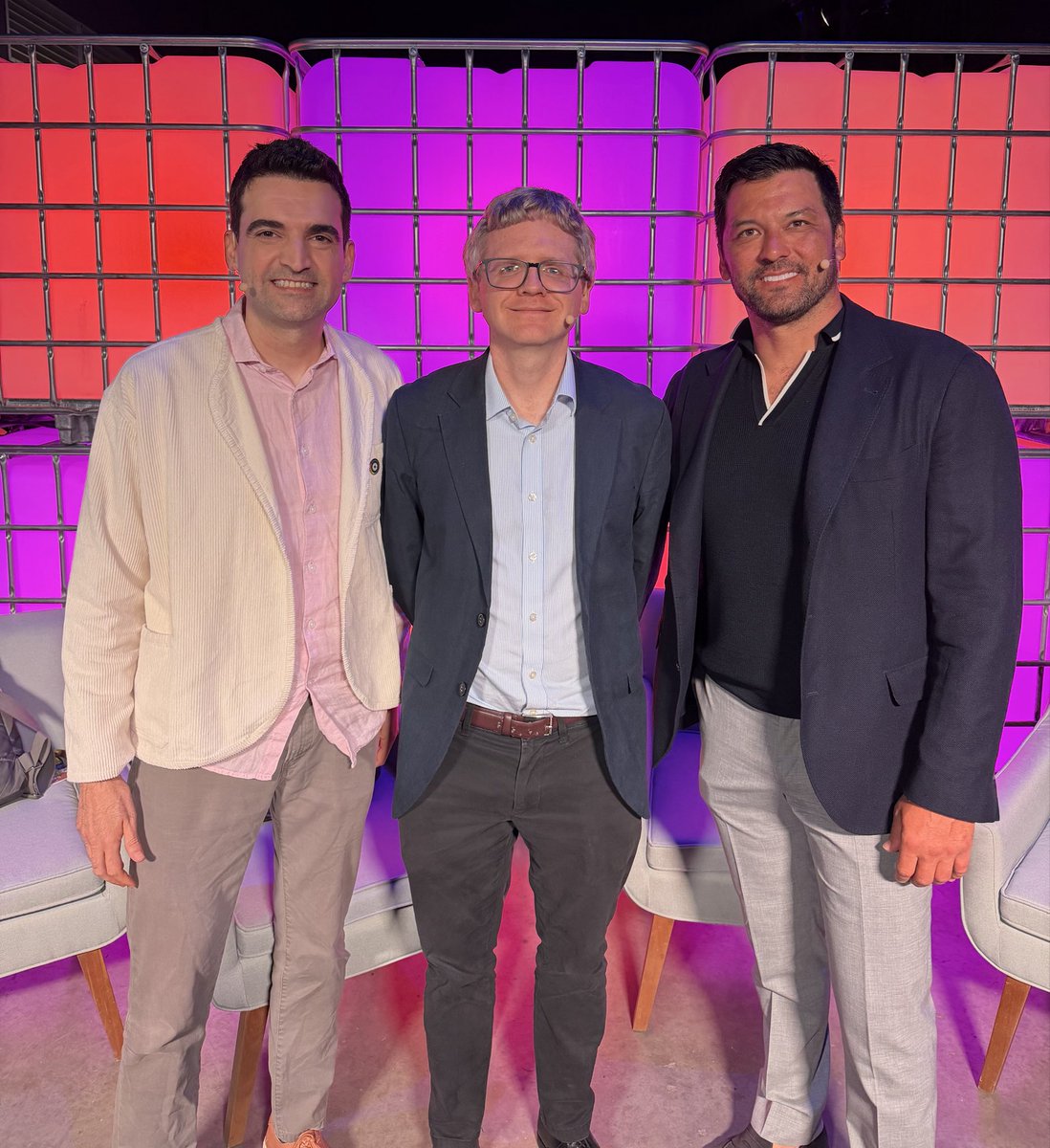
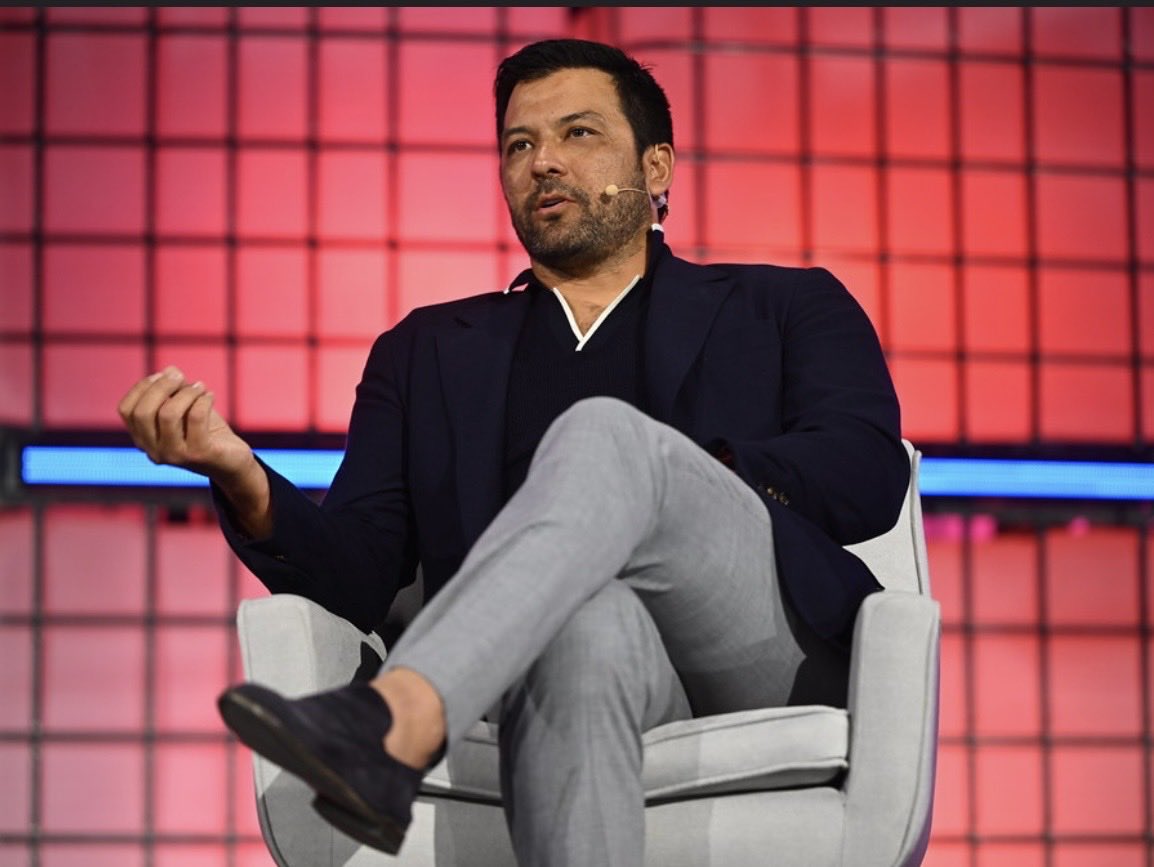
The LatAm tech ecosystem is special. I’ve had the privilege of partnering with @GetClaraCard @cloudwalk and @Bitso over the years. The genuity and grit of these founders are unmatched.
Thank you @WebSummit for allowing me to share the stage today with my good friend @ggiaco and @FT finest @Michael_Pooler.
1
12
1,231
Marathon retweeted

Jun 7
Slow Inference Has Zero Market
Andrew Feldman, Co-founder and CEO, Cerebras, interviewed by @saranormous and @eladgil (No Priors)
Summary: Cerebras went public at $63 billion with a $20 billion-plus OpenAI backlog after spending eight years convincing the industry that GPUs were the wrong architecture for AI inference. Andrew Feldman argues that speed creates new business categories. Fast internet turned Netflix into a movie studio. Fast AI will do the same to workflows we now think of as fixed. The lesson for operators: a 20x speedup requires a different architecture, the chasm between technical proof and market demand can be a multi-year burn, and the companies winning right now treat their old "speed of light" assumptions as soft limits.
1. The Netflix Test. Speed creates new business categories, the way fast internet turned a DVD-by-mail company into a movie studio. Bandwidth opened up an entirely different business for Netflix. The market for slow inference will end up where dial-up and slow search ended up: at zero. Right now AI is still in the "deliver DVDs faster" phase of its potential.
2. Wafer-Scale Bet. A 15 to 20x speedup over GPUs requires a fundamentally different architecture. Cerebras built a 46,000 square millimeter chip the size of a dinner plate while every competitor was building chips the size of postage stamps. Gene Amdahl tried wafer-scale and failed; the rest of the industry called it impossible. The general principle: a 20x improvement requires a design that looks unlike anything that came before.
3. The $8m-per-month Years. From 2017 to mid-2019 Cerebras spent $8 million a month with no working chip and held a board meeting every six weeks to report "still not working." Each failure analysis got the team slightly closer. The chip yielded in summer 2019, and the founders sat staring at it for half an hour because no one had ever done it. That is what hardware conviction looks like measured in cash.
4. Two Years Too Early. Cerebras solved one of the hardest problems in the computer industry and then watched two years pass with almost no one caring. Gen 1 sold around a dozen units, Gen 2 around 300, Gen 3 will sell tens of thousands. Being blisteringly fast was worthless while AI was still a novelty, because nobody uses a novelty every day. The gap between "we built it" and "the market wants it" decides whether deep-tech companies live long enough to enjoy being right.
5. Bridging The Chasm. New compute architectures usually start with supercomputer customers who love speed and tolerate immature software. Cerebras ran the table at the National Labs, then won oil and gas and pharma, then sovereign G42 placed a $1 billion order. That capital let them rebuild the supply chain and battle-test at scale, because you cannot put $100 million of your own gear in a QA lab. By the time OpenAI and AWS showed up, the capacity was ready.
6. OpenAI In 4.5 Weeks. A $20 billion-plus deal went from "first conversation with Sam" to signed master agreement in 4.5 weeks. Term sheet the night before Thanksgiving, master agreement on Christmas Eve, working seven days a week with multiple law firms. Feldman's takeaway: many of the timelines he assumed were the speed of light in dealmaking were soft. Operators in this market are compressing M&A, financing, and data-center build-outs at the same time.
7. The Professional David. Cerebras is Feldman's fifth startup, and every one has been a David against a Goliath. He frames it as identity: if his mother could buy the product, he does not want to make it. The hard part is loving the underdog role for a decade, well past where most founders quit. If you do not love being a David, do not pick a fight with Nvidia.
8. $30K Of Tokens Per Engineer. Eight months ago Cerebras spent under $1,000 per engineer per year on inference tokens; today it is $25 to $30,000. The engineers who have figured it out run eight or ten agents around the clock, with their own QA agents to compensate for known coding-model weaknesses. They went from 10x to 100x. Most people, Feldman included, are still limping along trying to figure out the workflow.
9. The IPO Trade. Going public swaps technology-savvy venture investors for "my dad" in exchange for a slightly lower cost of capital and a much heavier compliance burden. The new wrinkle: three or four companies, OpenAI, Anthropic, Databricks, can now raise public-market sums in the private market. Everyone else still needs the IPO for legitimacy and the right to sell into public-company procurement. Cerebras had something no one else could offer: the only AI pure-play on the market, with 100% of revenue coming from this exact category.
10. The 1,000-Person Malaise. Companies between 1,000 and 3,000 people quietly stop taking the risks that built them. The culture shifts from "what extraordinary thing can we attempt" to "what can we ship in the next rev." Feldman's stated preference: rather fail in pursuit of the extraordinary than succeed in the ordinary. The corollary is recruiting discipline, because putting a butt in a seat to clear a req is death.
11. When To Quit. The honest moment to stop is when you laid out hypotheses for what it would take to win and every one came back negative. The trap is doing this sequentially, "let me test one more thing," and the slippery slope is a beast in business the way it is in ethics. The defense is other former CEOs who remember what you committed to a year ago and pull you back from the warm water before it boils. Articulate what has to change, put a time frame on it, and let someone hold you accountable.
12. Open Source As Oxygen. Open source kept AI research alive when closed-source frontier models were too expensive to use, and now it pressures the leading labs to stay ahead of techniques shipped out of Chinese projects. The result is an active ecosystem where other people's ideas do interesting things on your hardware. Feldman's filter: if you do not love watching other people's ideas take flight on what you built, the infrastructure business is not for you. The flame stays alive because someone keeps pushing the closed labs.
36
14
130
27,199
Marathon retweeted
Jun 8
AI is more profound than Fire or Electricity
@sundarpichai, CEO of Google and Alphabet, interviewed by Nilay Patel (Decoder, The Verge)
Summary: Sundar uses his fifth post-I/O Decoder conversation to argue that the ChatGPT moment forced Google to restructure for velocity, and that the rate of AI progress now matters more than any AGI timeline. He frames the company's organizational overhaul, the unification of Gemini as a common substrate across products, and the migration from chatbots to agents as one continuous response to a technology he still calls "more profound than fire or electricity." If you take him seriously, the next two years are about preparing for very powerful systems regardless of what label you put on them.
1. Foothills of the Singularity. Pichai endorses Demis Hassabis's I/O closing line that the industry is "standing in the foothills of the singularity." Singularity here means the arrival of AGI, defined as a system that can do the wide range of human cognitive tasks comparably well. Frontier-lab consensus, Pichai says, is that AGI lands sooner rather than later, and people only quibble between 3 and 5 years. The implication for executives is to prepare now for systems that quickly outclass current models, because the policy and product runway is shorter than it feels.
2. The Timeline Doesn't Matter. Pichai refuses to put a number on AGI because the question misses the point. The rate of progress means every year from now on, leaders deal with materially more intelligent systems whether or not anyone calls them AGI. Three years from today, the question of whether something qualifies as AGI will be a labeling debate. The useful planning question is what capabilities arrive when, and what you have to build, hire, and govern around them.
3. The ChatGPT Pivot. ChatGPT did not surprise Pichai on the technology. It surprised him on adoption speed, and that triggered the restructure. He merged Brain and DeepMind into Google DeepMind, stood up a centralized AI infrastructure team under Amin Vahdat, installed Koray Kavukcuoglu as Chief AI Architect, and consolidated Search under Elizabeth Reid. Sundar's lesson for any CEO running a platform business is that when the Overton window moves, you reorganize first and ship from the new shape.
4. Velocity Beats Deliberation. Pichai's decision framework is that very few decisions are consequential and most just need to be made fast. The job of a CEO is to keep the company moving, because velocity, not deliberation, sets the ceiling on what an organization can achieve in a fast market. He runs a weekly AI product review where every AI-touching launch crosses his desk, so speed is matched with a single quality checkpoint. The takeaway is to save deep deliberation for the handful of org-defining moves and treat the rest as reversible.
5. The CEO Job Is Not That Complicated. Asked how close AI is to replacing him, Pichai answers that the CEO job is not that complicated and the AI will likely allocate compute more rationally than he does, because he has to weigh appeals and emotions. The deeper point is that AI raises the starting line for every task inside any senior role, the way spreadsheets did for financial analysis 40 years ago. Within a few years no one remembered the pre-spreadsheet workflow. Operators should assume their entire job description gets that treatment.
6. One Common Substrate. The deepest organizational change at Google is that Gemini is now a single model and infrastructure stack that every product consumes. Personal Intelligence, Ask Maps, NotebookLM, Gemini, and Antigravity all run on the same voice stack, the same model, the same agent runtime. That is what lets Google move with intent across 13 billion-user products at once instead of shipping overlapping point features. The lesson for any multi-product company is that the AI moment rewards horizontal infrastructure over vertical autonomy.
7. From Tools to Agent Managers. Inside Google, a growing portion of engineers no longer use AI to assist coding. They direct teams of agents through Antigravity, the same agent runtime Google sells to outside developers. Pichai expects that shift to spread out of engineering into the rest of the company, and Spark is the consumer version of the same idea. Plan now for a workforce where the unit of management is a swarm of agents your best people coordinate.
8. Google Zero, In Their Own Words. Pichai still rejects the term, but Nilay Patel reads him a Roger Lynch quote where the Conde Nast CEO told his teams to "assume there is no Search." Pichai's defense is that the information ecosystem is much wider than Google, that bounce-back clicks are dropping by design, and that Google has actually added more links to AI features lately. He will not tell publishers their business is wrong, and he will not promise traffic either. Publishers should plan as if the referral funnel is permanently smaller.
9. More Opinionated Than It Should Be. Shown a "best Chromebook" search where the AI Overview, sponsored results, Reddit, and the Times each give a different answer, Pichai concedes the AI Overview is "more opinionated than it should be." That admission matters because Google's franchise is the one shared source of truth most people use, and personalization quietly destabilizes it. His promise is that user-satisfaction telemetry corrects over time, but that is a slower fix than the rollout. Expect Search answers to feel less authoritative before they feel more authoritative again.
10. Anxiety Is Not a Marketing Problem. Pichai pushes back when Patel suggests peers are calling AI's image issue a marketing problem. He says people feel anxious about a technology this fast, this consequential, and this entangled with energy prices and job displacement, and they are right to. The real work is industry-government coordination on data center load, ratepayer protection, workforce reskilling, deepfake provenance through SynthID, and citizen voice in democracies. Read this as a CEO refusing to spin a real problem, which is rare enough to notice.
11. The Web Comes Back. Pichai argues the AI wave is reviving the open web, and he himself uses the web more than he did a year ago. Agents are the next evolution of the web, and the Universal Commerce Protocol announced at I/O is, in his view, underrated as a piece of plumbing for that future. People want to publish, connect, and be found, so the substrate keeps mattering even when the interface changes. The frame for operators is to be careful about writing off distribution channels people are still actively using.
12. More Profound Than Fire Or Electricity. Pichai repeats his old line that AI is more profound than fire or electricity, and uses it to justify why industry alone cannot own the rollout. Governments have to move faster, the public has to be involved, and frontier labs have to collaborate on safety primitives like watermarking. The implication for founders is that the regulatory surface area on AI products will expand faster than any prior technology wave. Build accordingly.
8
5
54
17,359
Marathon retweeted
May 28
N of 1 operator and friend. A lot of businesses are trying to follow her but you just cannot replicate @jackiereses vast set of experiences across both Fin and Tech!
She’s also my most newly converted @nyliberty super-fan which is fitting coming from Baba!
May 28

BREAKING: Inside Lead Bank - $56M Investment Now Worth $1.5 BILLION
Jackie Reses is on an iconic run.
@Lead_Bank is the $1.5B tech-first bank powering Stripe, Walmart, Ramp, Affirm & Revolut
Backed by Andreessen Horowitz, Coatue, Greycroft, ICONIQ, Khosla Ventures, Ribbit Capital, Zeev Partners, plus Larry Fink, Rob Goldstein & Larry Summers personally.
CEO & Co-Founder Jackie Reses (@jackiereses)
We cover:
- Sitting on Alibaba's board with Jack Ma, Joe Tsai Masayoshi Son
"Masa would come in & be like, 'Yes, it shall be blessed.'"
- Taking an HR role at Yahoo, then turning it into Chief Development Officer
- Jack Dorsey: "He'll sit in meetings & not say a word. There's real wisdom in his ability to 'just zip it.' "
- Why she's skeptical of the de-banking narrative
- Building Lead to $280M in revenue with no sales team
𝐓𝐈𝐌𝐄𝐒𝐓𝐀𝐌𝐏𝐒
(00:00) Jackie Reses, CEO of Lead Bank
(01:06) The swiss army knife of Silicon Valley
(02:46) Inside the Alibaba boardroom with Jack Ma and Masa
(05:23) Being one of the only Americans on Alibaba’s board
(10:29) What Jack Ma and Masayoshi Son are really like
(12:32) The biggest lessons Jackie learned from Alibaba
(15:12) From Goldman Sachs to Silicon Valley
(17:44) Why Yahoo hired a PE investor to run HR
(22:53) Yahoo was a hot mess
(25:33) The deal that recovered billions for Yahoo
(26:31) How Jack Dorsey recruited Jackie to Square
(29:53) Three engineers, three days, one crypto platform
(33:51) What Jack Dorsey is really like
(36:13) Being Jack Dorsey’s HR lead during Twitter chaos
(40:03) How to spot real innovation vs hype
(42:21) Why debanking is a myth
(48:10) Why buy a 100 year old bank
(51:23) Growing a bank with no sales team
(54:11) The APIs powering the future of finance
(56:03) How AI is transforming banking
(57:07) The JD Vance connection
(58:39) What it feels like inside the White House
(01:02:53) The biggest misconception about government
(01:04:21) Why Lead Bank’s culture feels different
(01:05:35) The next chapter for Lead Bank
5
8
4,508
Marathon retweeted
May 29
Listen to how many times the CEO of @cloudwalk says “customer” and “product” throughout the course of this interview. That obsession has led to 100% growth on >$2.5B of gross revs and >$300M of Net Income. Obrigado my Brazilian hermano @luisbebop
youtu.be/G5x13AdQV1Y?si=FhpC…
May 29

Further proof that Brazilians have the strongest spirit in the world 🇧🇷🇧🇷🇧🇷
1
5
1,228
Marathon retweeted
May 28
The $100M CRO Bubble
[I loved this interview that @HarryStebbings did with Chad Peets and Chris Degnan. Tons of great, counter-intuitive nuggets on how to build and scale sales teams. I'm enclosing an executive summary below]
Chad Peets (Managing Partner, RPT) and Chris Degnan (former CRO Snowflake, $0 to $4BN ARR), interviewed by Harry Stebbings (20VC)
Summary: Two of the operators who built the Snowflake sales org sit down with Harry Stebbings to argue that $1.2M rep packages and $100M CRO offers are inflating a bubble that destroys the meritocracy elite hunters actually live for. Their counter for every other founder: stop hiring from monopolies, never compete on cash, performance-manage every quarter, and let the bottom 10% go before the A players leave first. The case is uncomfortable. The throughline is durability over headline growth numbers.
1. The Comp Bubble. Anthropic is paying individual reps $1.2M total packages and CROs hundred-million-dollar grants, and the math does not survive once burn gets graded again. Peets calls it a bubble inflated by endless funding, where growth numbers are the only thing anyone is grading. When burn stops being a board topic, every comp benchmark in the market gets dragged up to match. The consequence lands in 18 to 24 months: when the bubble pops, the comp models pop with it, and the 500 to 1,000 people earning $10M to $50M packages get hollowed out.
2. Group Quota Kills Hunters. Anthropic ships with a group quota model, which means the best rep in the room and the worst rep in the room get paid the same. Degnan and Peets are blunt about what that selects for: passengers, not drivers, in Frank Slootman's phrasing. Salespeople are capitalists who believe in meritocracy, and pulling individual differentiation out of the comp plan tells the elite hunters that the company does not value their function. The company ends up stocked with $1.2M seat-warmers who never had to open a new logo and never will.
3. Never Hire From Salesforce. A rep at Salesforce or ServiceNow has not opened a new logo in five years because the company is a monopoly and Wells Fargo was already a customer when they started. Peets hires the opposite resume: someone who sold an inferior product at a tier-three brand and still won deals, because that is the only resume that proves pipeline generation. Brand-name logos prove the brand was strong, which is a different question from whether the person was. Stop interviewing by company name. Ask for two or three new logos opened in the last 24 months, with the champion and the economic buyer named for each one.
4. Quality Of The Org Beats Industry Fit. Peets does not hire on industry expertise, and he actively avoids security people because most security companies are channel-driven and never built outbound muscle. The right question is who trained you. "Can I call somebody that I know and respect that this person worked for that says this person is world class?" MongoDB and Whiz under Dolly Ro are the templates: medic disciples who developed their people and held them accountable.
5. Raising A Round Means Nothing. Degnan's first job when a founder gets high on their own supply is to remind them that three guys writing a big check is not an accomplishment. The pattern he sees is CEOs claiming they can hire the best CRO in the world because they just raised at a unicorn valuation. There are four or five CROs on earth who can go anywhere they want, and the math on what they need is not the math on what this Series A has. The job of the advisor is to reset the expectation before the founder makes the offer.
6. Booked Contracts Beat ARR Theater. Monthly recurring lumped into annual recurring is a head fake, and so is "my peak day was 10 grand, extrapolated to $3.6M." Degnan never paid Snowflake reps on on-demand contracts because there was no moat, no friction, no time. A booked contract buys time: if Anthropic ships a feature next month, the customer cannot just flip the switch. Founders who pay sales on usage instead of bookings are funding the next competitor's switch-over.
7. The Forward-Deployed Engineer Trap. FDEs are a glorified professional services function, and the best engineers do not want that job because they want to work on the core product. The pattern Peets has seen: hordes of FDEs ship custom code that never makes it back into the product, and the customer is left holding the technical debt. There is a balance, and the enthusiasm has run past it. "The Forward Deployed Engineer is not as good as the core engineer that's building the core product. That's just fact."
8. Performance Management Is Quarterly. Healthy sales orgs cut the bottom 10% every year, which works out to two and a half percent every quarter, and most companies are not doing it. Degnan's confession: he got lazy after Snowflake's IPO, stopped inspecting one-on-ones, stopped checking forecast calls, and the rot showed up at the second-line manager layer. Bringing Peets back in was the kick. The A-player test: if you tell a real hunter that the bottom 10% gets cut annually, the answer is "you fucking better." If you don't, the A players know they should not be there.
9. Eight Face-To-Face Meetings. The proxy for a working sales org is the second-line manager's travel schedule. If they are at the bottom of the travel report, they are not working. Degnan found a North America lead at Snowflake who had not been on a plane in five weeks, and that was the problem. Flight count predicts revenue better than any AI dashboard.
10. Pick Up The Phone. Every CIO is inundated with AI-generated prospecting emails that have the wrong name and the wrong company, and the volume only grows. The thing that still works is calling, leaving voicemails, texting, calling again. Peets does not let his guys send LinkedIn notes; they have to get the phone number. Nothing replaces a human relationship when the customer's job is on the line if the product fails.
11. Forecasting Is Still Data Driven. Doubling from 50 to 100 used to be a celebration, and now it can put a company out of business, and the way you build the number has not changed. Take productivity per rep, multiply by headcount, factor in attrition and ramp, and you can call the year inside 90 percent. The new wrinkle is the windfall clause: if a rep stumbles into a $20M deal, the company gets to reset the comp plan rather than pay $4M in commission. Degnan invoked his five times at Snowflake.
12. The Exit Drought. Liquidity options have collapsed: the public market is closed below a billion in ARR, tech buyouts are gone, and "look at xAI and Cursor" is not a deep enough exit universe for the rest. The workaround is secondaries and tender offers, which is why CROs are now negotiating the right to sell 20 percent of their shares annually inside the comp plan. The result is two-class workforces inside the same company: tenured executives sitting on tens of millions in liquid stock next to junior reps who have not hit a vesting cliff. The cultural cost of that gap is the next thing founders will need a playbook for.

8
8
75
16,324
Marathon retweeted
May 18
I have been long fintech in LatAm for quite some time. Beyond Silicon Valley, you'll be hard pressed to find a population w more resiliency & entrepreneurial spirit.
I'm excited to chat w my good friend @ggiaco Founder of @GetClaraCard during @WebSummit in Brazil.
@MarathonMP is also co-hosting an event with our good friends at Monashees during the conference.
rio.websummit.com/sessions/r…
1
6
1,066
Marathon retweeted
Apr 27
The @mercury team is very methodically building next major F.I. There is a very carefully curated software suite underpinned by world-class risk / compliance and now the benefits of a bank without needing to trade like one. This is a $100B company in the making.

1/ Today @Mercury received conditional approval from the OCC to establish Mercury Bank, N.A.
I started Mercury in 2017 to build the bank I wish had existed as a founder. Nearly a decade later, we’re getting there.
🧵
1
5
79
14,462

Marathon retweeted
Apr 25
DESIGN: THE FIRST AI CASUALTY
I'm increasingly sure that 2026 signals the end of product design as a full-fledged stand-alone function within companies. If so, it will be the first role / function to be eliminated by AI on a go-forward basis.
Instead of hiring FT designers, startups are hiring / will hire design consultants to create a design system that the founder likes (this takes a few weeks max). Once the design system is finalized, PM/Eng feed it into their AI tool of choice to generate prototypes. The design system is refreshed annually by the same consultant.
Larger companies will likely not backfill design roles and will do some targeted attrition to reduce the design department to 20% the size it is today.
If you're a designer, I think you have two choices:
1. Become an entrepreneur: Start a design agency and become the go-to resource for design systems for startups and even larger companies. This can be a good recurring revenue business.
2. Become a builder: Add PM/Eng responsibilities to become a product builder.
Would suggest you embrace this proactively vs waiting for the other shoe to drop.
I'm really sorry about this - some of my best friends and the people I admire most and have learnt the most from are designers - but it seems inevitable.
284
80
1,072
731,748
Marathon retweeted
Apr 21
THE BUILD CEILING
In the past few weeks, I've seen two different startups lose enterprise deals: one $1M ACV killed at the final stage of approval, another seven-figure ACV (that's been a customer for 2 years) now on the chopping block. Same reason both times: the buyer decided to build internally instead.
This is the new last-mile risk in enterprise sales.
If you're selling application layer or workflow software to any team inside an enterprise, think hard before crossing $500k ACV. Above that threshold, your real competition is an internal employee plus an AI coding agent: not the next vendor on the shortlist.
The math has shifted. A mid-level engineer or a domain expert with Claude Code or Codex can now replicate a functional workflow tool in weeks. Not a perfect one. Good enough. And "good enough" is all procurement needs to justify the kill.
The underlying dynamic: enterprise teams are now being evaluated on AI nativeness. Finance, HR, ops: every functional team has an AI transformation mandate on their 2026 OKRs. The fastest way to demonstrate AI chops is to kill a vendor tool and replace it with something built internally. The switch signals more than cost savings. It signals that the team can build.
At $50k ACV, nobody staffs a project to replace you. At $500k , the VP has a business case that almost writes itself.
Pipes products are largely safe: build complexity is high and switching cost is real. But dashboard-style workflow tools: approval flows, reporting layers, lightweight data apps, form-based operations software: these are exactly the category a mid-senior level employee with domain expertise and an AI coding agent can ship in a sprint.
Call it the build ceiling (TM). Every application layer startup now has one. Most founders don't know where it sits for their category.
Founders selling workflow software: understand your build ceiling and audit every prospect and current customer. And proactively price below the build ceiling: the price point where the ROI of replacing you never pencils out.
51
45
417
96,185
Marathon retweeted
Apr 21
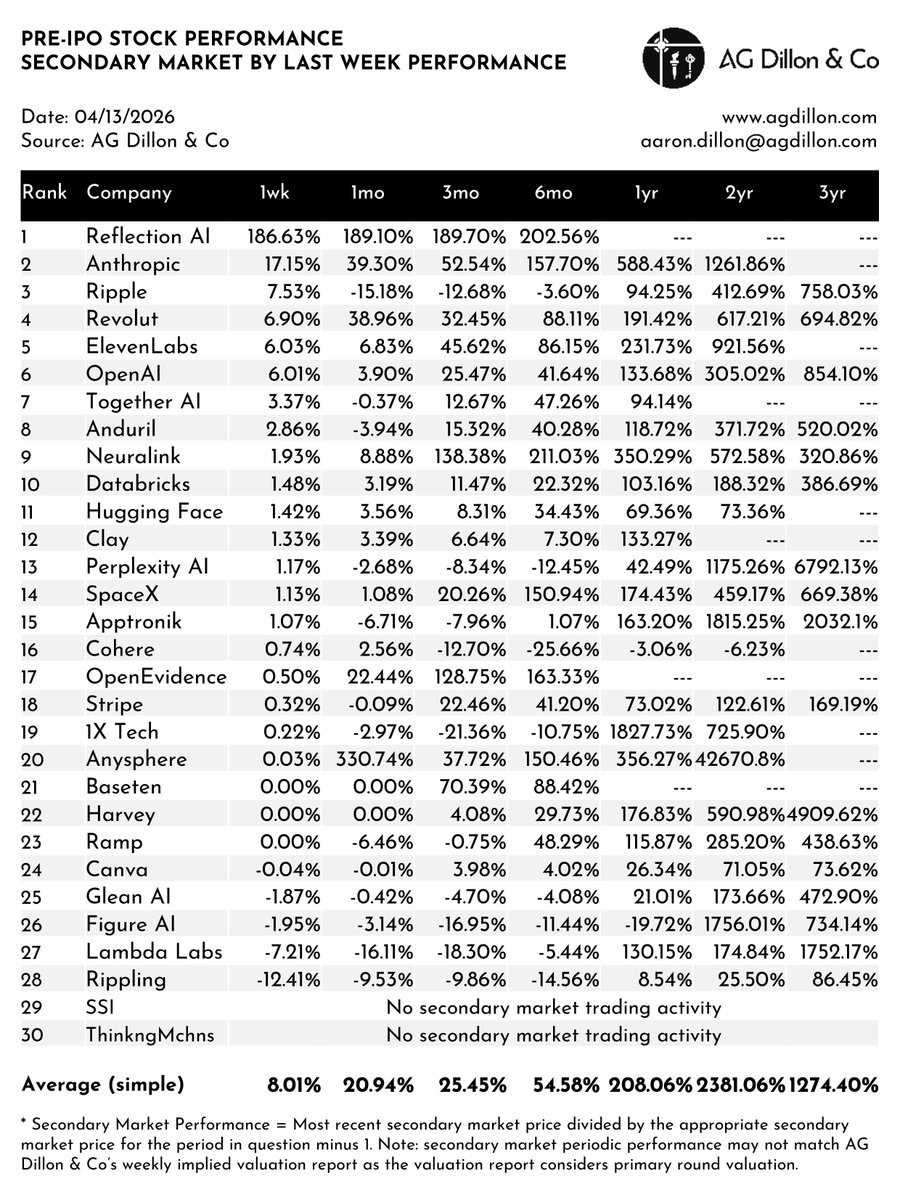
Retail investors completely miss this scaled private market performance. Much of this is driven by a supply/demand imbalance at the super late stage of the ecosystem coupled with an elite level of mental gymnastics.
These companies will only go public when they have completely exhausted their ability to raise capital at an up-round at which point they have such a valuation overhang they're forced to face the music OR compound forever at breakeven hoping they can grow into it.
We are all hoping that these LLMs will make enough money to wash away the sins of the monster co-invests that are happening everywhere... DPI and IRRs beware.
Apr 17

Pre-IPO Stock Secondary Market Performance | as of Apr 13, 2026 | Download full report = agdillon.com/reports
2
6
2,422
Marathon retweeted
Apr 14
And shoutout to our favorite fintech infra business in the world @Lead_Bank and @jackiereses who played a HUGE role in supporting @atlascardhq from day one of the pivot. @Forbes @JeffKauflin did a nice job covering this important moment for the business
Apr 14
Trend ✅
TAM ✅
Business Model ✅
Excited to work with @eladgil and Co
@MarathonMP @gokulr @AlexGorgoni @ChaseAPackard @gggeverettt
1
1
10
1,620
Marathon retweeted
Apr 14
Four years ago, @atlascardhq faced existential challenges that could have doomed it. Instead the team went all-in on super serving a specific segment of its customers, and now has built a consumer brand that’s growing rapidly without ad spend, and has an exceptionally retentive and highly engaged user base. Forbes article linked below:
5
4
65
10,404
Marathon retweeted
Apr 14
Trend ✅
TAM ✅
Business Model ✅
Excited to work with @eladgil and Co
@MarathonMP @gokulr @AlexGorgoni @ChaseAPackard @gggeverettt
Apr 14

NEW: Four years ago, fintech startup Atlas looked like it was on the brink of collapse. Today, tech billionaires are lining up to pay $1,000 a year for its card: forbes.com/sites/jeffkauflin….
2
23
9,781
Marathon retweeted

Apr 14
We’re proud to announce our $40M funding round led by @eladgil and Verified Capital, alongside @01Advisors and @MarathonMP. This capital will expand our foundation, advancing in-house technology and operations, and enhancing our dining, lifestyle and travel offering.
7
9
89
65,993
Marathon retweeted
Apr 13
CHELSEA FURNISHED OFFICE SPACE AVAILABLE
The @MarathonMP NYC team is moving to SoHo, which means we have a furnished, move-in ready 1-year 3400 sq ft sublease in Chelsea (25th & 7th) that can comfortably fit 25-30 people. The 1 year lease provides a lot of flexibility.
If interested, please reach out!
23
5
107
33,023
Marathon retweeted
Apr 8
For some odd reason I feel @jackiereses would also be an excellent farmer..? @Lead_Bank is 10 steps ahead of the few coming after them with a team, infrastructure and bank that will stand the test of time (cycles). 🫡
Apr 6

insane that a farmers bank powers ramp, affirm, revolut, and bridge
> Garden City Bank
> founded in 1928 to bank farmers
> quiet business for 100 years
> enter disgruntled @Square execs
> what are they scheming???
> bought out for $56 million
> renamed to @Lead_Bank
> time to engineermaxx
> api integrations
> algorithmic compliance flagging
> verticalization of services
> everything in real time
> fintechs can finally scale
> square, ramp, affirm, revolut, bridge become customers
> raise from a16z & khosla
> valuation skyrockets from 56m to 1.47b
> 180m revenue in 2024
> mfw a farmer bank is powering silicon valley
seeing a pattern: the biggest fintechs are started by someone addressing their own pain
1
1
9
3,642
Marathon retweeted
Mar 25
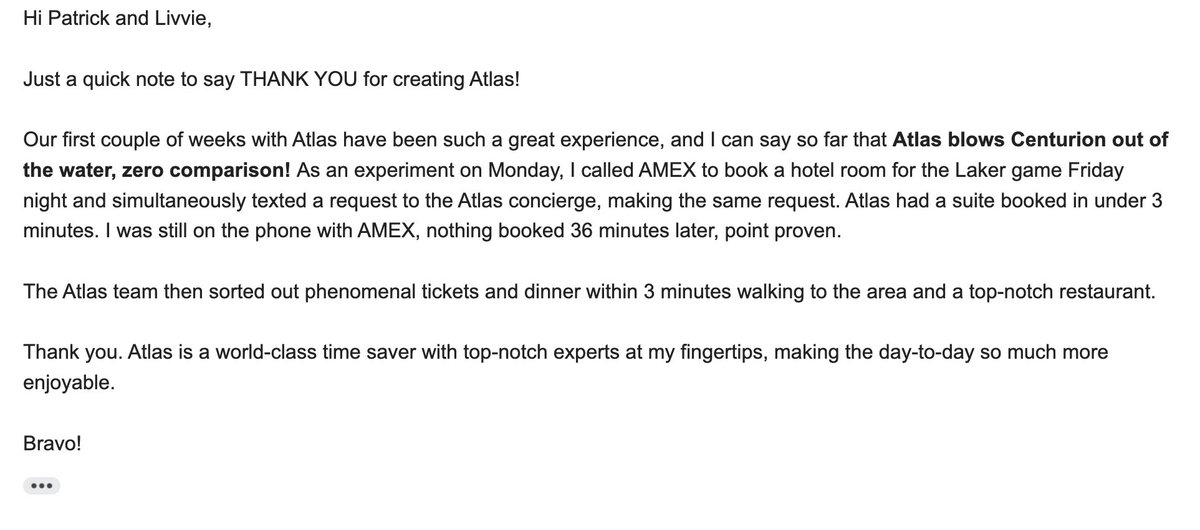
Atlas Card (@atlascardhq ) is a superb example of how to disrupt the legacy incumbent by radically improving the consumer experience. Kudos @patrickmro and team Atlas!
Mar 25
You don’t need to advertise your business when you’re 10x better than the status quo. @atlascardhq is the 1st consumer fintech I’ve ever seen to reach $1B in total processing volume w/o running a single ad. These emails are a weekly occurrence at this point. The Marathon Continues @patrickmro @gokulr @krisfredrickson
1
4
41
15,340
Marathon retweeted
Mar 20
First time founders are seduced by a firm’s “brand”, sometimes at the exclusion of everything else.
Those that have gone through the fire before and have seen firsthand what really matters, are experienced enough to look beyond the veneer of the brand and evaluate the substance of what the firm and partner offer.
Perhaps not a coincidence that a large % of our founders at @MarathonMP are repeat founders.
Mar 19

Why Smart, Repeat Founders Are Less Likely to Raise from Mega Funds:
"Smart founders look beyond just getting $10M quickly from a mega fund and ask what they are actually getting.
We see many cases where the partner who backed the company leaves and the founder is suddenly orphaned inside the fund.
Repeat founders especially understand this risk and look past the glitz of mega fund money." @gokulr
Love to hear your thoughts on this @rabois @PalmerLuckey @tjparker @ilyasu @typesfast
9
7
79
27,006