
Biophysicist | #Postviral syndromes, #longCOVID, #PACVS | Open Source Medicine Foundation | opensourcemed.info
Joined October 2022
- Tweets 4,707
- Following 526
- Followers 575
- Likes 39,033
83 Photos and videos




Pinned Tweet

Jun 10
Post-viral syndromes often present similarly, but we still don’t know if they share common underlying mechanisms.
We’re building a targeted biobank focused on Dengue post-infectious syndrome to investigate this. Dengue remains widespread and offers a valuable window into post-viral physiology that could inform broader approaches to these conditions.
→ opensourcemed.info
48
Matthew Halma retweeted

Since I am now “the writer Hunter Ash” I guess I should dictate some doctrine:
1. The main predictor of knowing true things is wanting to know true things. It took me a long time to understand that an alternative to this is possible: lots of people are not even trying.
Your optimization criterion should be truth. Whatever else you want to accomplish, you’ll accomplish it more effectively if you know true things. Thus, the relationship to truth is a good measure of seriousness across the ideological spectrum.
Most people are not trying to know true things. Don’t be too angry with them about this. Stay true to your path, the path, and give them grace.
When gauging a source, gauge the extent to which they are zealots for truth. If you detect any other motivations, discard them.
2. The discovery of truth happened primarily before you existed, and in the future will primarily happen emergently between minds, not within your own. We learn via evolutionary processes, not rational ones. Rationality is a heuristic that can accelerate the process, a meta-adaptation, but it is not the ground of knowledge. Respect the millions of years of knowledge that built you. If you think you have a better way of doing things, you’re probably wrong.
3. No doctrine is final. No one ever has the full picture, including me. Everything is provisional.

youtube.com/shorts/k_0-xgqbP…
@ArtemisConsort you've graduated to being name dropped in random philosophy-slop youtube shorts
9
12
209
13,992
Matthew Halma retweeted

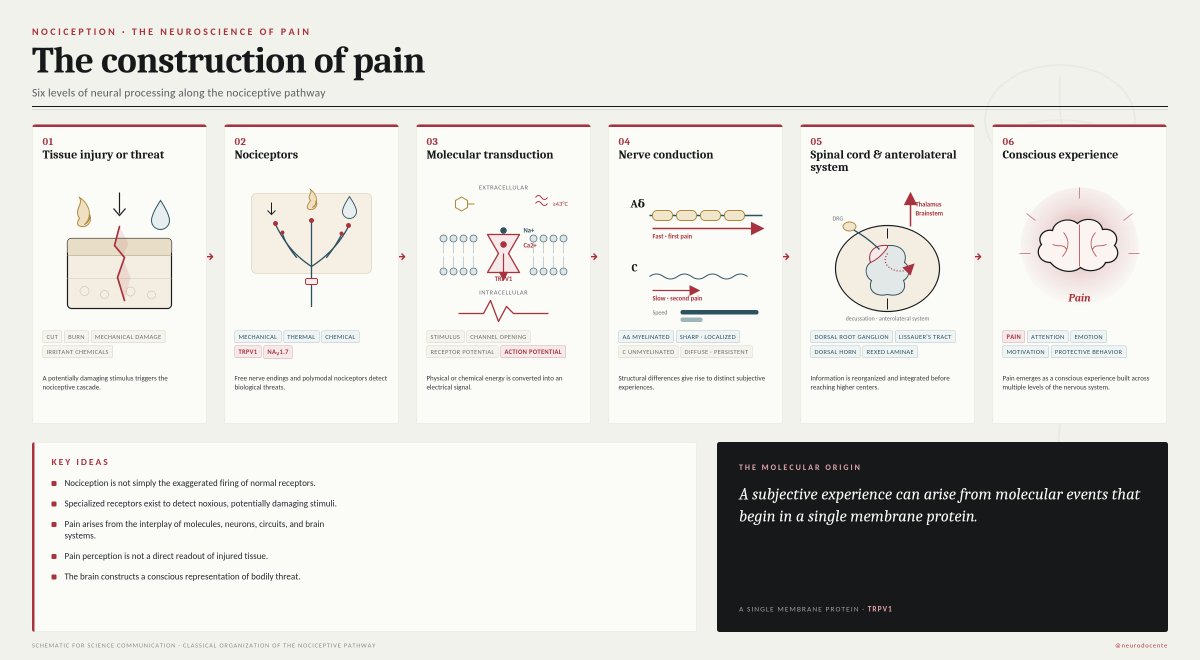
Pain is constructed by the nervous system from nociceptive input. Between peripheral nociceptors and the cortex, the signal is relayed, reorganized, and integrated across multiple levels, so the final perception depends not only on the stimulus that initiates it, but also on the neural processing that shapes it.
5
11
60
1,344
From a Pro-RFK Jr view, I see the addition of these particular liaisons; IMA, AAPS, MAPS and PIC, as ultimately detrimental to the vaccine injured.
They bring advocacy to the table, but not new capacity that can substantively add to the conversation. Groups like @React19org deserve a seat at the table. They've conducted themselves well and in a way that's operable with serious researchers.
This move ultimately delegitimizes real concerns with vaccines, when appointments are ostensibly made as political favors and not based on relevant expertise. This just makes anyone with critiques of vaccines look fringe.
The orgs and individuals who really move the dial for the vaccine injured are going to be those that can back up their observations with data and can make the case in hostile venues; mainstream academic journals and forums, not in blog posts, substacks, and other appeals to the lowest common denominator.

Who are RFK Jr.'s New ACIP Liaison Representatives? Four organizations supportive of his anti-vaccine agenda, explains @AboutPediatrics open.substack.com/pub/stopan…
14

Matthew Halma retweeted

Jun 14
The Singapore of Central America is a great goal.
1
3
43
1,345
Jun 14
I'm pleasantly surprised to see PACVS panels at Long COVID events.
Before the two conditions were almost mutually exclusive; few people accepted both Long COVID and persistent vaccine adverse reactions as phenomenon, it was either one or the other. Antivax people maintain that all long covid is vaccine injury despite unvaccinated people developing it. Furthermore, the Long COVID camp (not all individuals ) was structurally opposed to acknowledging PACVS as it was thought to feed anti-vax sentiment.
Unfortunately great damage has been done to PACVS patients, and 'misinformation studies' bears a lot of blame for this. The removal of post vaccination adverse event groups on social media was a craven act and a very low blow to those already suffering and gaslighted. These 'academics' (who don't study anything and who have preset forbidden conclusions) were instrumental to the COVID censorship regime.
Ironically this came at a time when academia was championing 'lived experience', where perceiving a micro aggression would be sufficient evidence to cost someone their job. However, when millions of people develop persistent illness after vaccination, it's treated as either a coincidence or psychological, even when they have tests.
The fact that there's not a definitive test pointing to a cause, just a bunch of dys regulated biomarkers, makes it more difficult to assign causation.
The operative assumption is that serious illnesses just have a base rate and can be set off at any time. However the starkness of the shift when the trigger event occurs is strong evidence that the two are related. If someone suddenly develops persistent fatigue and post exertional malaise, that had a cause.
If a child was developing normally but rapidly develops autism, that must have had a cause.
Currently, there is an attempt to obscure this, to make it seem random and unavoidable. What this is, is the closest that a scientist will come to believing in magic, regression events are just cosmic mysteries which will never be found out.
Patients deserve effort to find out what is driving their illness, so it can be treated and prevented in the future.
#MECFS #LONGCOVID #PACVS
15
Jun 13
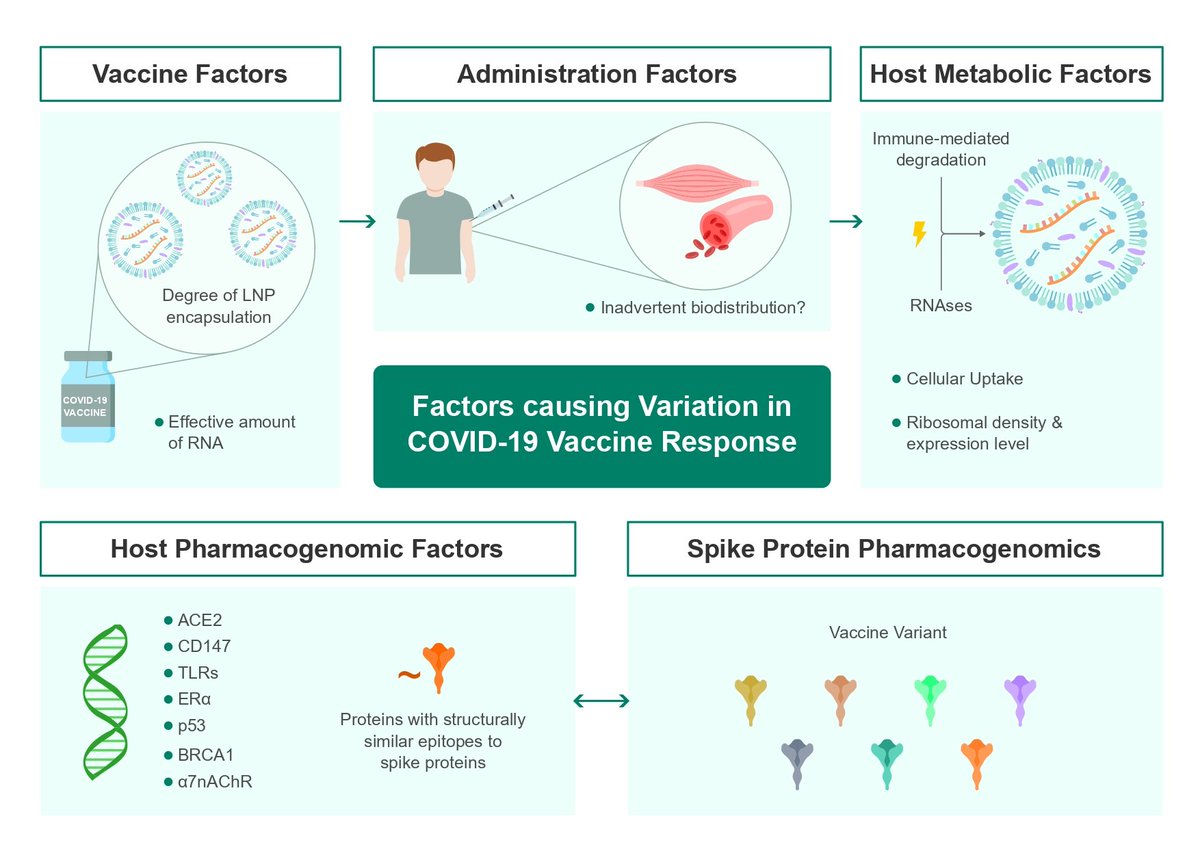
Vaccine adverse reactions are treated as random 'lottery chance' events, not as reactions with an underlying biological mechanism.
Given that it is not random, it has some biological basis, wouldn't it behoove manufacturers and regulatory agencies to at least find out what's going on? At the very least to minimize risk, much as the NTSB has done with plane crashes to make air travel safer over time.
Merely calling adverse events 'rare' (which still leaves a significant injured population) or speaking in terms of overall risk-benefit is of dubious value for the individual. AEs exist, and even this has been contentious, though supporters will maintain that the medical/scientific community has always been fair towards AEs and has long acknowledged them. Establishing this, which has been itself an uphill battle motivates the next questions; how common is it, and what are the risk factors?
Treating AEs as an explainable biological phenomenon rather than a random lottery chance event takes us into a much more productive regime. We begin to discuss risk minimization through design choices or clinical stratification, we can actually begin to understand what happens in conditions like PACVS.
Until it's acknowledged and treated as explainable, there's no way forward. When approached with genuine curiosity, and a desire to find out, it is a tractable, though still complex, problem.
3
4
231
Matthew Halma retweeted

Jun 12
Peter Thiel talked about a lack of a vision for the future beyond the Green agenda, Islamism, and Chinese totalitarianism.
We have our answer: American dynamism.
38
97
1,283
175,473
Matthew Halma retweeted

Jun 12
Latvian Biomedical Research and Study Centre, 81 hospitalized COVID patients.
At 3 months, long COVID blood still showed platelet, complement and vascular injury signals, a clotting linked imprint after severe infection.
cell.com/iscience/fulltext/S…
1
7
23
851
Matthew Halma retweeted

Jun 12
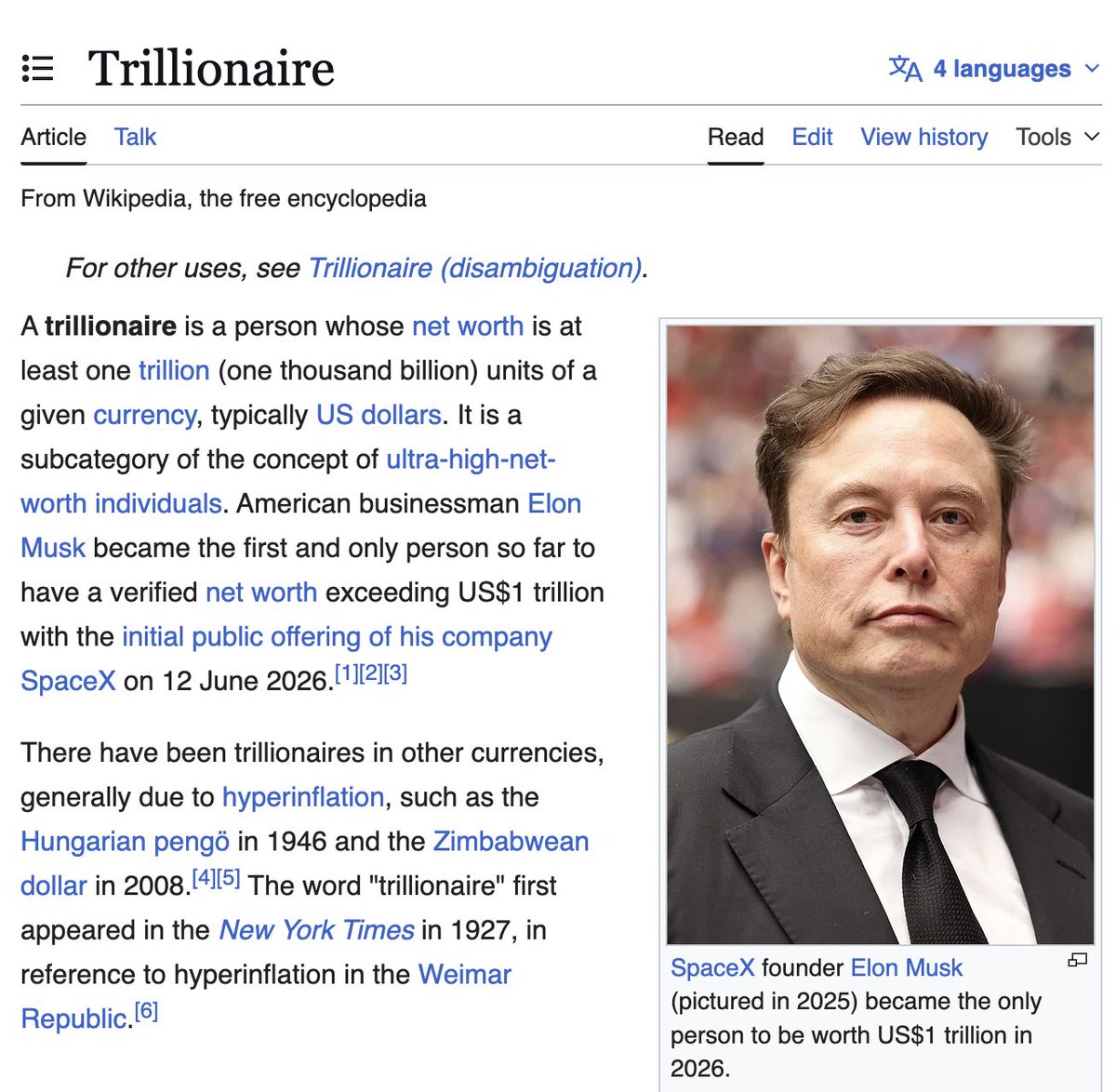
I am filled with optimism at the fact that the world's first trillionaire was made not by hedge funds or market manipulation, but by building the infrastructure to take America to the stars.

698
2,568
37,214
1,164,754
Jun 9
Previously, at the Independent Medical Alliance and the World Council for Health, I led the development of a focused research program on post-acute conditions, including Post-Acute Covid-19 Vaccination Syndrome (#PACVS), drug repurposing, and environmental health.
I have now transitioned fully to the Open Source Medicine Foundation, where this work continues with a sharper focus on rigorous, independent science.
Our mission is to build high-quality evidence for under-served chronic and post-viral conditions through peer-reviewed research, open data infrastructure, and clinically actionable diagnostic standards, making medicine open and transparent.
I partner in this work with Prof. Jack Tuszynski (University of Alberta / Politecnico di Torino), whose expertise in biophysics is helping us better understand complex disease mechanisms. You can see our growing team here: opensourcemed.info/html-file…
This is not advocacy. It is about advancing the research that patients and clinicians actually need.
Our earlier work has contributed to growing recognition of PACVS, with related research now cited in reports to national advisory committees. At OSMF we are expanding that effort through three main initiatives:
Consensus diagnostic criteria for PACVS
Post-viral syndromes biobanking
Development of evidence for low-cost repurposed therapies
The Open Source Medicine Foundation is deliberately lean and transparent. Every contribution goes directly to research, open-access publication, and building the evidence base, not overhead or executive compensation.
If you believe in rigorous, patient-centered science on these important but underfunded areas, I invite you to support our work:
Website: opensourcemed.info
Donate directly: paypal.com/ncp/payment/A2MK3…
Thank you for standing with us.
— Matthew Halma
Executive Director Open Source Medicine Foundation
1
1
191
Matthew Halma retweeted

My sincere condolences to the family and friends of attorney Warner Mendenhall. He was a champion for medical freedom and a true advocate for the COVID injection injured.
78
336
1,915
72,216
Matthew Halma retweeted

Jun 5
The Air Wing commander already had UCMJ charge document written up for him because he failed to return to ship when ordered to. These are the moments of immense moral courage that enabled victory in a true sliding door moment of peril for America. He should have a CVN named for him not another politician.
25
125
1,934
109,868
Matthew Halma retweeted

Jun 4
Everyone needs to hear this…
110
1,582
9,477
350,883
Matthew Halma retweeted

Jun 4
I saw the angel in the marble and carved until I set him free.
– Michelangelo
2
19
265
5,537

Unless you become the media, you will never know the truth

Legacy Media did not want us to know about Henry Nowak’s murder.
Legacy Media did not want us to see the Henry Nowak murder.
Legacy Media did not want people calling for justice for the Henry Nowak murder.
But Legacy Media does not control X.
We are the Media now.
Be loud.
4,886
29,352
165,671
24,425,043
Matthew Halma retweeted

Jun 3
"Please don't politicise the consequences of our treasonous and fatal policies."
22
877
7,747
57,234