
Computational Sports Scientists, MSc, Strength&Conditioning, Olympic Weightlifting Coach
Joined August 2023
- Tweets 36,601
- Following 2,436
- Followers 4,139
- Likes 72,310
1,630 Photos and videos






Pinned Tweet

2 Aug 2024
The aim of this article is to provide a clearer understanding of what is a "computational sports scientist"
The future leaders in sports science will be those with a strong background in computer science, capable of bridging the gap between technology and sports
There is a growing need for sports scientists who possess advanced skills in data structures, algorithms, data science, and machine learning. These experts will drive the next wave of innovation in sports
Having a deep understanding of both sports science and computer science (and ideally, coaching experience) provides a unique perspective on the tools and technologies that will shape the future of coaching and athletic performance
It gives these professionals the chance to build these tools that bring sport much closer to the future to benefit athletes and athletic development teams of coaches

9
4
67
18,344
Mbongeni Ndlovu retweeted

Jun 14
I think to be good at research in bio and biophotonics and comp bio
you need to stop trying to follow instructions on how to be a good researcher
you need to start optimizing for being a great THINKER. after that, let yourself guide you to your research.
- read a lot but choose wisely what you read. a lot of written research in biology is practically lab protocols. if you’re a computational biologist your job is to know how that work is done and do that work, but it is, above all, to stay slightly above the nuances or you drown in them. be highly selective about the papers you truly let IN; some of them may have nothing to do with your particular field, but rare are the papers that aren’t trying to make data, they’re trying to prove and show FRAMEWORKS. hold on to those and understand how to think better.
- study math everyday and make your own models of things. of EVERYTHING.
- learn to be a systems thinker. always choose systems 2 thinking.
- do not get too caught in the bullshit. “it’s a nature paper so it matters” “it’s a stanford paper so it matters” stop thinking like an aristocrat. think like a scientist. when something makes sense, let it click. do not select by huge names and huge institutions. one of my favorite biology papers was written by a guy who has no biology degree.
- go back to the classics. there’s far too much people did back then that no one picked up on. learn the history of science. you’ll realize that a big reason why is because those ideas WERE credible but were made out to be a part of a hype bubble (for instance the cloning hype) and many times the authors themselves didn’t realize the INSANE extent of what they were really putting forth
- do things. this goes without saying. stop limited your imagination to the data online. the data I needed, needed an instrument that literally didn’t exist so we made it. why? because math and physics allowed for it. reality is your only actual constraint. opinions on reality are getting in the way of your science.

10
16
174
13,479
Jun 13
From an engineering perspective, don’t use stochastic mechanisms where deterministic systems are required
Randomness is not robustness
Uncertainty should be designed around, not smuggled into the pipeline
1
59
Jun 11
Either this is AI or there’s some fake weights (exaggerating going on)
I love Anatoly and the pranks he does
But there’s no way his hang cleaning such weight
There’s no lifter in the history of Weightlifting who’s even done 300kg max
Not even Lasha Talakhadze…

2
295
Jun 11
You must be on an insane cycle to even be able reach 300kg for a clean
Brother… you could compete in the enhanced games and not even sniff these numbers
2
95
Mbongeni Ndlovu retweeted

Jun 6
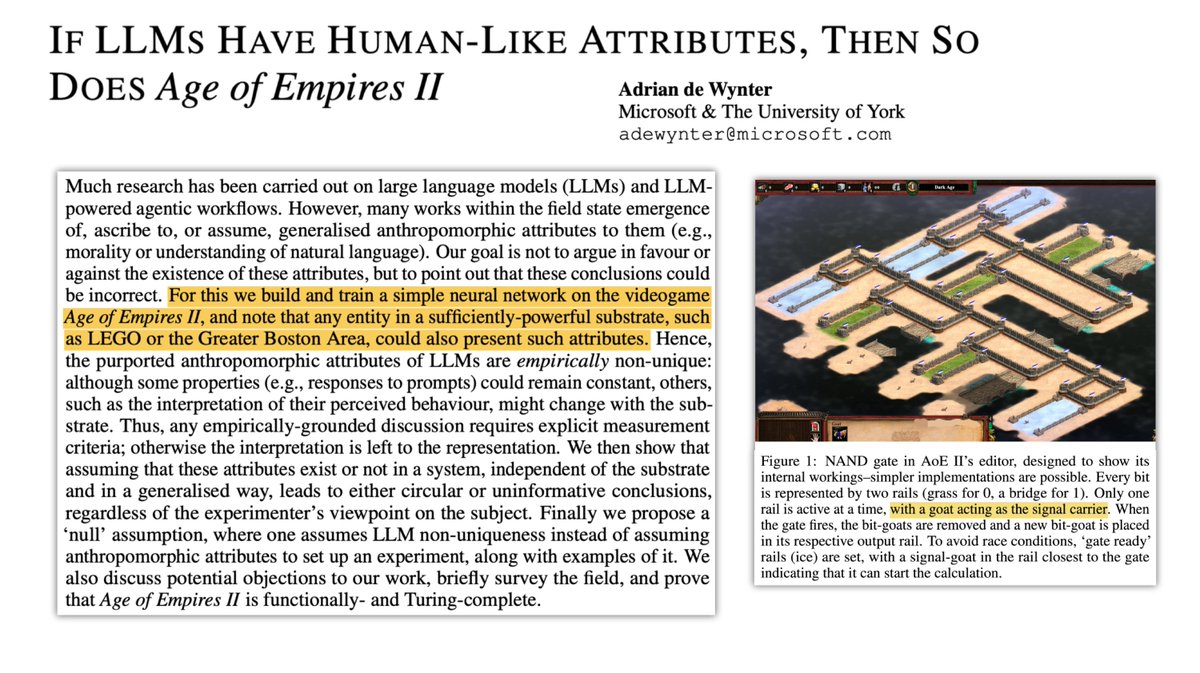
This is an insane paper and I love it
arxiv.org/abs/2605.31514
156
1,304
11,213
621,324
Mbongeni Ndlovu retweeted

May 31
A new and possibly controversial perspective:
In this video, I explain the sense in which generative AI trained by supervised learning is incapable of making novel discoveries.
youtu.be/K5LAFEjTlBA
The text of the speech:
AI Creativity and Discovery
Good day ladies and gentlemen. I regret that I am unable to be with you all today to engage in a back-and-forth discussion, but I am nevertheless pleased to be able to share with you, via this recording, some high-level thoughts about the current and future state of artificial intelligence, and in particular about AI’s relationship to science and mathematics, which is, as I understand it, the central focus of this meeting and of the SAIR Foundation.
I would like to start with an old joke; I am sure you have heard it before. It is the one about the researcher whose work is being evaluated, and the review comes back, and says “This work is both novel and good. Unfortunately, the parts that are good are not novel, and the parts that are novel are not good.”
My first point about AI is that this assessment applies exactly to large parts of AI as we know it today. Not all of today’s AI, but a large part of it. Pretty much all of what we mean by “Generative AI”---which includes large language models, and the images and video models, and even the new methods for learning world models. All of these AIs take large numbers of examples and produce a “model” which behaves similar to the examples, that is, which generates text like people, or images like artists or nature, and videos like we find on the internet. Don’t get me wrong, Generative AI can be extremely useful. No doubt about that. But the assessment of the joke still applies. These systems can produce output that is both novel and good, but not at the same time.
In many ways this is just absolutely not a problem. When we ask an AI for an answer from the internet, or to summarize a document, we don’t want it to be novel. We are happy if the quality of the answer, the goodness, comes from the source material—from the people who wrote the document or the articles on the internet. If the AI’s answer is novel it means it is going beyond the source material, adding something beyond it. This is what we call “hallucinations”. In most cases, we don’t like it when the AI makes something up, when it adds something novel.
One exception, of course, is when we are looking not for facts or reality, but for fiction and entertainment. We might ask for a bedtime story for a child, or an image based on existing images on the internet but which is nevertheless different and distinct from them. In these cases, it is never easy for us to know how creative the AI is actually being, as we do not know how close the AI’s story, poem, or image is to the source material. In a real practical sense we can not know this because the internet is too big, the possible sources that the AI may draw upon are too numerous.
When we ask for a fiction or novelty, the AI can give it to us because its processing is in part stochastic. Every decision can go multiple ways and will go different ways and produce a different trajectory every time. The trajectory can be random—and thus novel—or it can be based on the training data—and thus “good” because the training data is good, sourced from people or reality. Thus, the trajectory is either novel or good—based on randomness or based on data—but never both at the same time.
Really, I think it is okay if the output of Generative AI is never good and novel at the same time. For the researcher in the joke this is a devastating criticism, but for most things it is not, and for Generative AI it is not. Generative AI is meant to be a mimic. This is what supervised learning is for. Generative AI can be extremely useful, even when it just mimics, if it is faster, or cheaper, or smaller, or more customizable, or more copy-able, than the thing being mimicked. It is okay if Generative AI cannot be both novel and good at the same time. It is still a transformative technology.
But it is a limitation. And remember we are here to use AI for science and mathematics, and for these areas the assessment of the reviewer in the joke is devastating. For these areas we need true creativity and discovery. Generative AI—or Mimicking AI—will never get where us there. For these we need something more, and indeed we have something more in other parts of AI. We have many AI systems which can give us more. We have AlphaGo with its world-changing move 37, or AlphaZero with its brilliant original chess-playing style. We have GT-Sophy that drives simulated racecars better than any human. We have AlphaFold and AlphaProof and Claude-Code, which have brought true advances in science, mathematics, and programming. We have RL-Lyft which optimizes the assignment of cars to passengers in the ride-hailing business. All these systems have found things that are both novel and good. And, truth be told, some language models have been augmented in ways that make them more than Generative AI based on supervised learning.
All these systems have some additional features that make them capable of true creativity and true discovery. It is important for us to recognize what this is—and that it is not present in ordinary, garden-variety Generative AI. It is something that can not come from just supervised learning, from learning from examples. What is it? Well, it is a simple thing, a commonsense thing. It is not new. We have many names for it, but unfortunately none of them are very good names. I will call it Discovery. Basically, Discovery is just the idea of trying many things and seeing which of them work, then keeping those that worked the best. Evolution by natural selection works this way. The scientific method works this way. And just ordinary life and learning works this way. We try things and remember what works. What could be more obvious? In this behavioral case, psychology has two names for it— “instrumental learning” and “operant conditioning”—and in machine learning it is what we mean by “reinforcement learning”. We also see the idea of Discovery in planning and combinatorial search—anything that involves the idea of “generate and test”.
The essence of Discovery is to combine three steps:
1. Variation,
2. Evaluation, and
3. Selective retention.
Of course, I am not the first to say this. I am not the first to point out that this combination of steps is key to science, to evolution by natural selection, and to animal behavior. I think particularly of papers by Donald Campbell, by Daniel Dennett, and by Gary Cziko. What is new in my remarks is to directly relate the idea of Discovery to modern AI to help us see that it is not present in supervised learning or Generative AI—in particular, that Discovery is not present in backpropagation or gradient descent.
Let me say explicitly what is missing from Generative AI. As we have remarked, these systems do have a stochastic aspect, so they do generate a variety of trajectories and behavior. What is missing is the Evaluation step. The generator was pre-trained by supervised learning, leaving no way at runtime to Evaluate what it generates. And of course without Evaluation there can be no Selective retention, and thus no Discovery. The variation can bring novelty, but without evaluation there is no Discovery, and arguably, no creativity. That is, I would say that creativity requires that the new things generated be Evaluated. Without evaluation, and retention of the best, there is nothing created. The novelty flickers into existence but, if its value is unrecognized, it flickers away and is lost.
In many cases, Evaluation is done by people to make a discovery. As when we have Generative AI make many pictures for us, and then we pick the one that we like the best. The human AI system completes the discovery.
In many other cases, the Evaluation comes from a clear objective. Some moves lead to checkmate, some steps lead to a proof, some actions result in high reward, some genotypes make more copies, some theories explain the data better.
Some prefer the Variation step to be called Blind variation, where “blind” here means that it is uninformed, a shot in the dark. It does not need to be completely uninformed; a good scientist does not select theories to test at random. But neither can it be completely informed and determined. There must be some uncertainty about where the answer lies in order for there to be a discovery. In practice, the variation is partly informed and partly blind, but it is the blind part that corresponds to the discovery.
Now let us briefly go all the way to modern deep learning, to the backpropagation algorithm. At first it might seem that backpropagation is incapable of discovery because it is deterministic and thus incapable of variation. But this is not correct. The weight updates of backprop are deterministic, but the weights are initialized to small random values. The random initialization is often downplayed, but in fact it is a necessary form of variation; it must be done properly to get good performance. In backprop this Variation is done once, at network initialization, so its effect is temporary, and later the network may lose its ability to learn. This is the weakness of deep learning that is alleviated with a new algorithm that my group presented in Nature a couple of years ago. Our “continual backpropagation” made one small change: every so often a less-used neuron would be re-initialized to small random weights. This allows the variation to continue and plasticity to be retained.
Although there is much more to be said about Creativity and Discovery, this is the key point: they are more than supervised learning, more than pattern recognition, more than prediction, and more than world modeling. Those things are important, but they alone will not bring us to discovery. Discovery requires Evaluation from a person or from an explicit goal, and only in the latter case will we attain full autonomy.
So that is my call to arms. If we want the full power of AI scientists, then we should share the goals with them so they can create, evaluate, discover, and in these ways fully participate in achieving the goals. Let’s be bold! Let’s fully automate Creativity and Discovery!
105
282
1,684
679,901
May 28
truth bombs
May 28

I've got an agent in a loop optimizing a renderer with the goal to minimize frame times (and tests to measure). It got times down from 88ms to 2ms and allocations down from ~150K to 500. Sounds good, right? Wrong. This is exactly why agent psychosis is a big fucking problem.
As an experiment, I rewrote the Ghostty core render state in Go, with access to identically laid out data structures as Ghostty and the exact same validation tests. I made a purposely naive renderer (simple, correct, but slow). 88ms per frame with 150,000 allocations (horrendous, lol)!
I then kickstarted a Ralph loop to bring the frame times down. I told it it can't modify input data structures or the public API or tests (they're correct), but it can do anything else it wants. It got to work.
It has worked for about 4 hours. I've spent around $350 on this experiment so far. The results?
88ms => 1.5ms
150K allocs => ~500 allocs
Incredible right? Nope.
My hand-written renderer I ported has frame times (same benchmark) of ~20us (0.020ms) and 0 allocations in the update path.
This is the problem with psychosis and lacking systems understanding. If you don't understand the system, you're going to accept that this is an incredible result. If you understand the system, you'll see better solutions immediately and can do roughly 75x better on throughput.
The people who blindly trust agent output are in the former camp. They're sheeple, overdrinking from a fountain of mediocrity.
Standard disclaimer: I use AI all the time. I like AI. The point I'm making is to not blindly accept results. Think. Analyze. Learn.
59
May 28
Easiest way to make your codebases slop/spaghetti....
Just allow AI agents to make changes
God bless your soul for the sins the agent is going to do
31
May 28
Whether it’s sanctioned enhanced events or regular competition, athletes should be clean either way.
The Enhancement Games don’t tell us much about elite sport when PED use, microdosing, and specialist protocols already exist behind closed doors
32
Mbongeni Ndlovu retweeted

May 26
Status update: I've been on/off AI agents in the last few days and it is a verifiable truth that every day I didn't use agents, I was more productive. I still attribute that to how slow they are, and my own inability to multi-task efficiently. The magic is there but the slowness doesn't let it cross the threshold where they actually make me faster, and I still dislike the whole thinking paradigm.
About Bend2: honestly, the C/Metal compiler codebase is a clusterfuck right now. I regret letting AI agents write it. All tests pass, and GPU performance is mind-blowing, so the core architecture works. Yet, it has a LOT of bugs. Anything not covered by the tests is a coin toss. This is actually impressive, because, in many parts of the codebase, the right solution was actually the simplest one, yet, the agents STILL managed to find a way to make it work just for the tests. The level of reward hack these agents output is actually impressive I can't even be mad.
It is also ironical because that's the very problem that Bend's proof system was supposed to solve, but Bend is in TypeScript, not in Bend. I'm disappointed I didn't write Bend in itself, and now I feel an immense urge to do so. But the clock is ticking . . .
Still, I do not think Bend is worth launching without the GPU compiler being solid, because the closest competitor, Lean, is actually extremely good, so we need a big differential. Yet, due to the very nature of the project, it would be embarrassing to have bugs at launch.
Regarding AI, I now believe using current gen AI agents in production codebase is harmful and a massive mistake. That doesn't mean no agents at all, but agents work best when they don't touch critical code. Debugging, researching, providing insights, scripts / tools, or anything that doesn't touch code you will maintain in the long term. But if you merge AI code without reading, you're going to have a bad time. Speaking from experience
I'm working 10h/day on SupGen and the remaining time on Bend2
112
82
1,654
308,449
Mbongeni Ndlovu retweeted

May 26
“CLAUDE I’VE EXPLAINED THIS BUG TO YOU 10 TIMES AND YOU STILL KEEP BREAKING IT, THINK LIKE A SOFTWARE ENGINEER WITH 15 YEARS OF EXPERIENCE AND FIX IT PROPERLY MAKE NO MISTAKES”
132
655
7,196
613,859
May 26
Gemini 3.5 flash to me does not deserve a 3x price increase
I can't trust most of the output it gives me because it loves to skim over things
I have to continuously tell it to reanalyze debug logs from the start to give accurate details
3.1 Pro is actually more reliable
1
192
Mbongeni Ndlovu retweeted

May 24
You might believe you should spend less time thinking about code because of AI.
I strongly disagree! We’re watching this play out live where tons of AI generated code becomes a liability.
At the end of the day, an engineer needs to be responsible / on call for code that gets shipped to production. If you don’t understand the system you’re trying to debug, you’re probably going to have a bad time.
Yes, AI can help with all of this, if you set up the proper systems. You can have agents triage prod logs, look at errors, etc. You can speed up parts of the investigation, but an engineer needs to make the call. There might be serious customer or financial implications from that change.
I expect the trend continue for trimming dependencies, vendoring code so you can modify it directly, preferring simpler systems with fewer abstractions, and spending waaaay more time thinking about system design and code maintenance.
I’ve said this before, but it’s a great time to get familiar with CS fundamentals and some of the history behind what great software looks like. Many parts will be different in the coming years as AI progresses, but also a lot more than people realize will stay the same.
270
530
4,171
600,403
May 20
When reading sentiments about a new AI model on X
Understand most critique is coming from developers who are assessing the models coding ability
There’s more to AI models than coding use cases
The only thing that hurts 3.5 flash for me is the pricing
43
Mbongeni Ndlovu retweeted

May 15
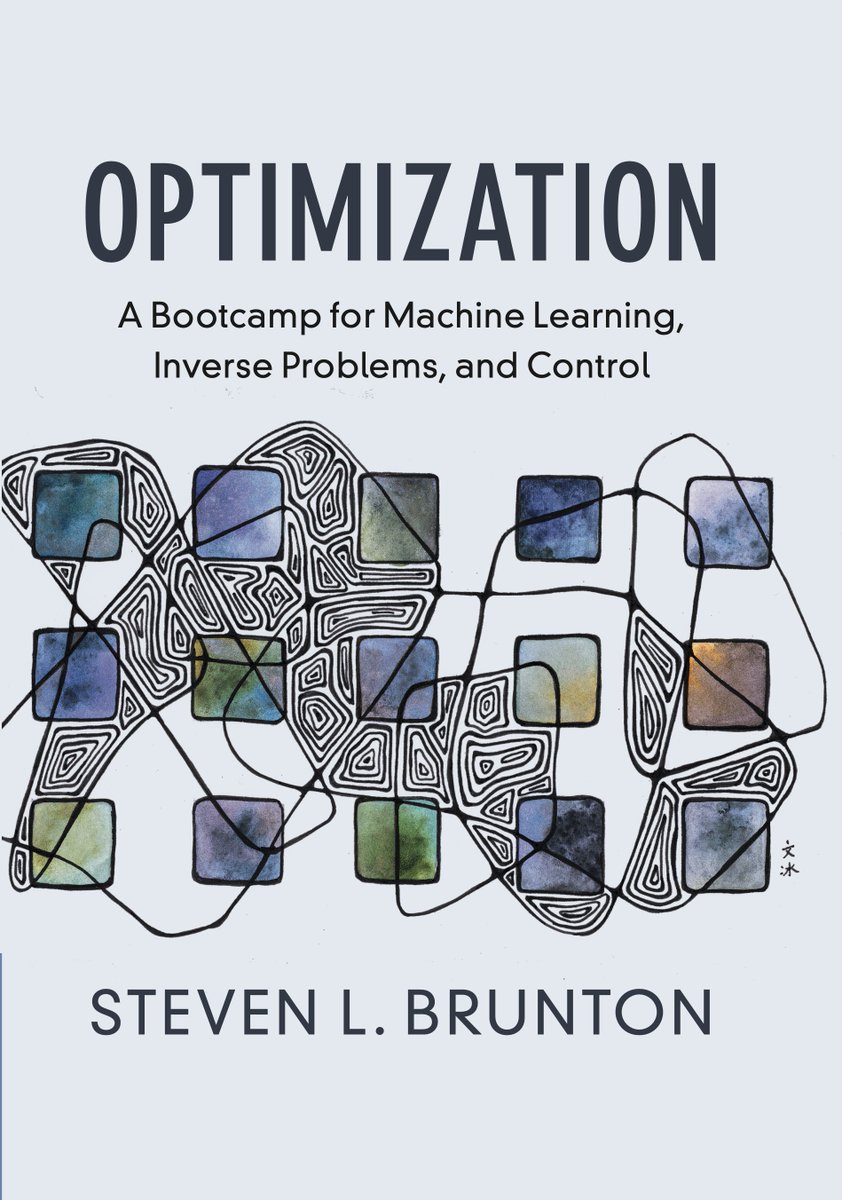
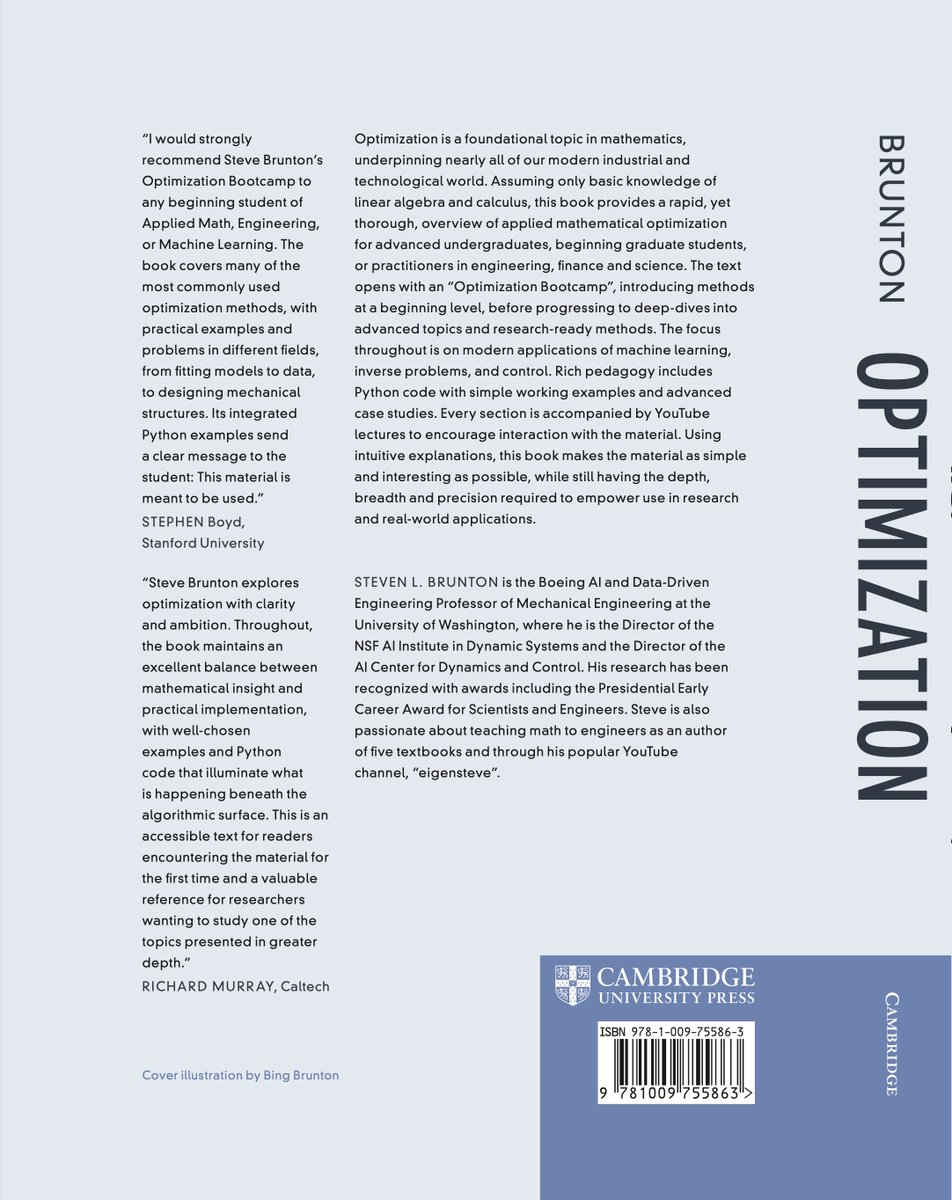
I Wrote a New Book!!!
Optimization: A Bootcamp for Machine Learning, Inverse Problems, and Control
Pre-Order Now (July 31)
amazon.com/Optimization-Boot…
Coming Soon:
* Free PDF on website
* YouTube Videos for entire book
* Python code on GitHub
62
381
2,829
186,343
Mbongeni Ndlovu retweeted

Apr 1
I like how the Anthropic Claude Code team is being chill about the code leak.
What’s leaked is leaked. 70k forks, Python & Rust versions on GitHub, there’s no way back.
One thing is clear from reading the code: harness engineering is hard and deeply non-trivial.
I think more AI “wrapper” startups will try to win on product harness first, gain distribution, and then (post)train their own models later, like what Cursor is doing.
145
122
2,544
272,304
Mar 15
This is next level!
Mar 15

New research from Tsinghua, Peking University and other top labs taught a humanoid robot to play tennis using scattered human movement clips instead of perfect match data.
The big deal here is how the team solved the data problem for physical robots. Usually, teaching a robot to do something highly athletic like playing tennis requires perfect, continuous tracking data of professional human players.
Getting that kind of flawless 3D physical data during a high-speed match is extremely difficult and expensive.
This paper bypasses that massive hurdle entirely. Instead of needing perfect full-match data, the researchers just used short, disconnected, and imperfect clips of basic human swings.
The AI system uses these rough clips as a basic hint for how a swing should look, and then a physics simulator corrects the physical errors so the robot does not fall over while swinging to hit the ball.
Because they proved they can take messy, fragmented human data and turn it into a smooth, highly dynamic robot athlete, this means we can start teaching robots all sorts of complex physical tasks without needing to record perfect human demonstrations first.
It severely lowers the barrier to making robots useful in fast, unpredictable physical environments.
The robot successfully tracked fast incoming balls and consistently hit them back to specific target zones while looking surprisingly natural.
3
197
Mbongeni Ndlovu retweeted

Mar 12
Computer science is gradually returning to the domain of physicists, mathematicians, and electrical engineers as large language models automate much of what we currently call software engineering.
The field’s center of gravity is shifting away from manual code writing and toward deeper theoretical thinking, mathematical insight, and systems-level reasoning.
323
1,679
15,194
961,253
Mbongeni Ndlovu retweeted

This is the biggest change coming in the software industry: No more Leetcode-style interviews.
Tolan is giving candidates a real problem and the AI tools they need to solve it. Then they discuss the solution and how the candidate would productionize it.
This tests real skills, capability with actual tooling, and provides the conversation necessary to gauge a candidate's proficiency.
I was pro Leetcode-style interviews because they were the best we had. Now the industry has changed and interviews need to as well.
Read their article for more info: tolans.com/relay/how-we-hire…
7
16
146
11,328
Mbongeni Ndlovu retweeted
One important lesson I hope I can get through to my kids:
You'll get better at whatever you spend your time doing. It took me way too long to internalize this.
8
30
357
8,187