
Assistant Professor at the Medical University of Warsaw. For several years, I have been making attempts to improve the quality of biostatistics worldwide.
Joined January 2022
- Tweets 339
- Following 963
- Followers 470
- Likes 223
88 Photos and videos

Pinned Tweet

19 May 2023
A few days ago I was notified to become the chair of the just established Statistics Working Group of the World Association of Medical Editors (BMJ, Lancet, etc.). @i_yakoub_agha @_atanas_ @EmmaGuttman @sminaev2015 @ScienceCommuni2 @TheLancet @EAACI_HQ @WAME_editors @PinkasJJ

4
5
10
1,753
Jun 2
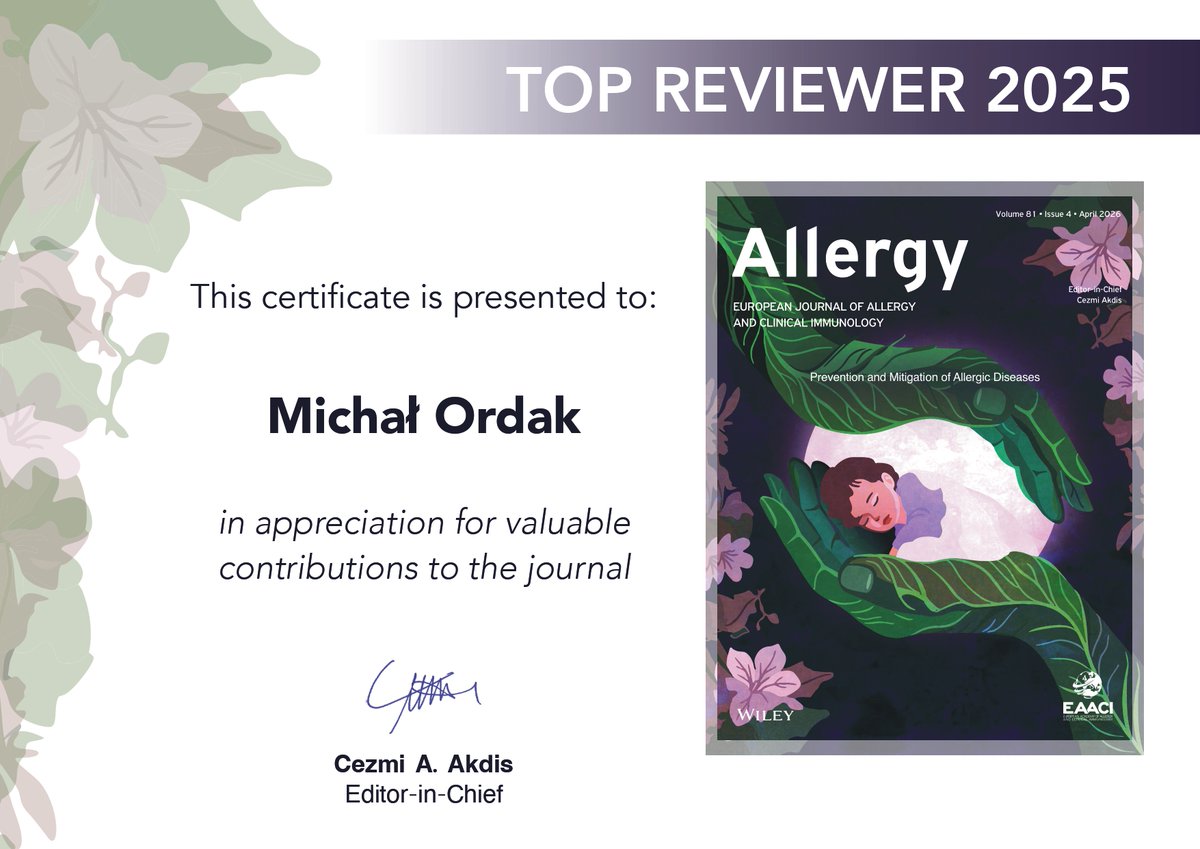
Honored to be recognized once again as a Top Reviewer for Allergy. Thank you to the Editors for this distinction. @AllergyEaaci
1
1
115
May 22
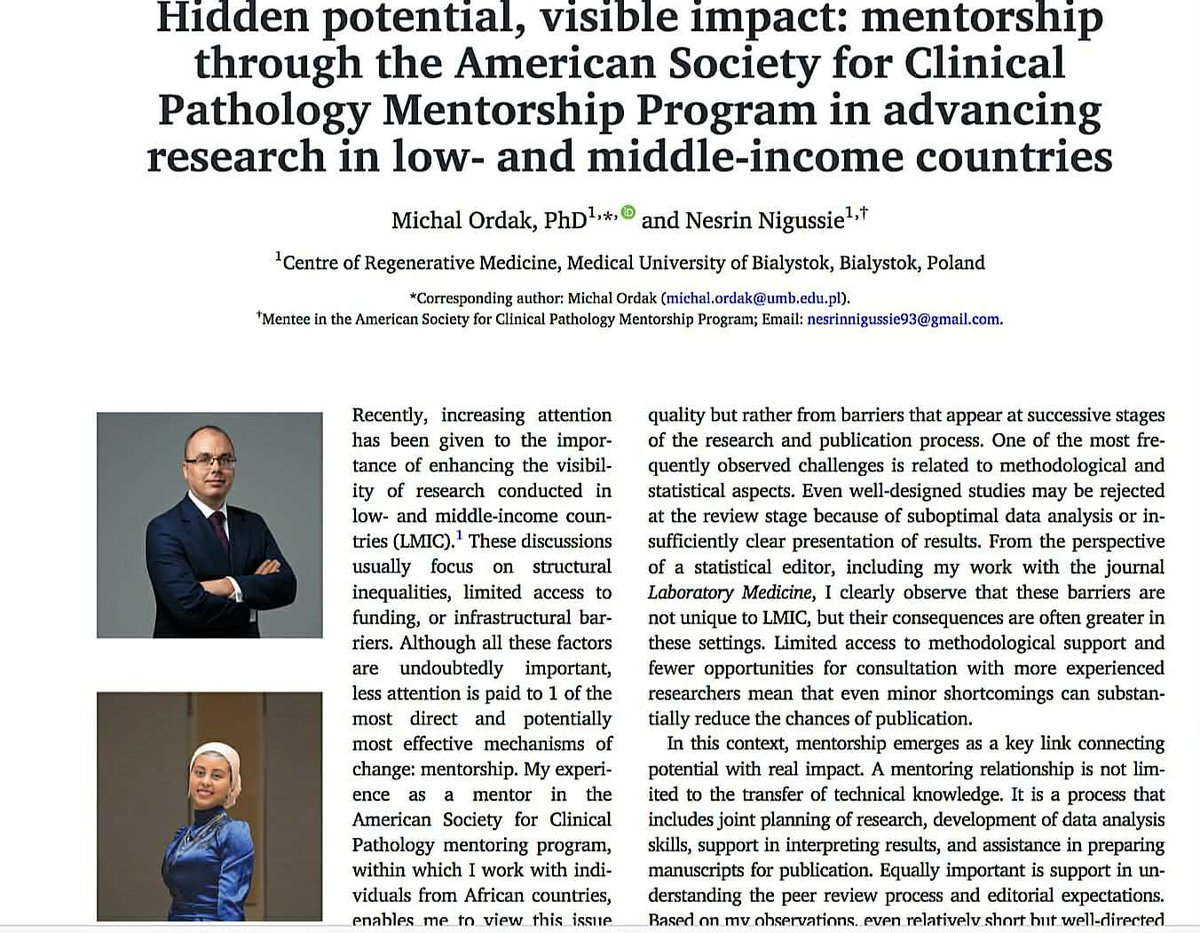
Grateful for the opportunity to work with my mentee from Ethiopia through the @ASCP_Chicago Mentorship Program and turn mentorship into a published scientific collaboration.
15
Feb 27
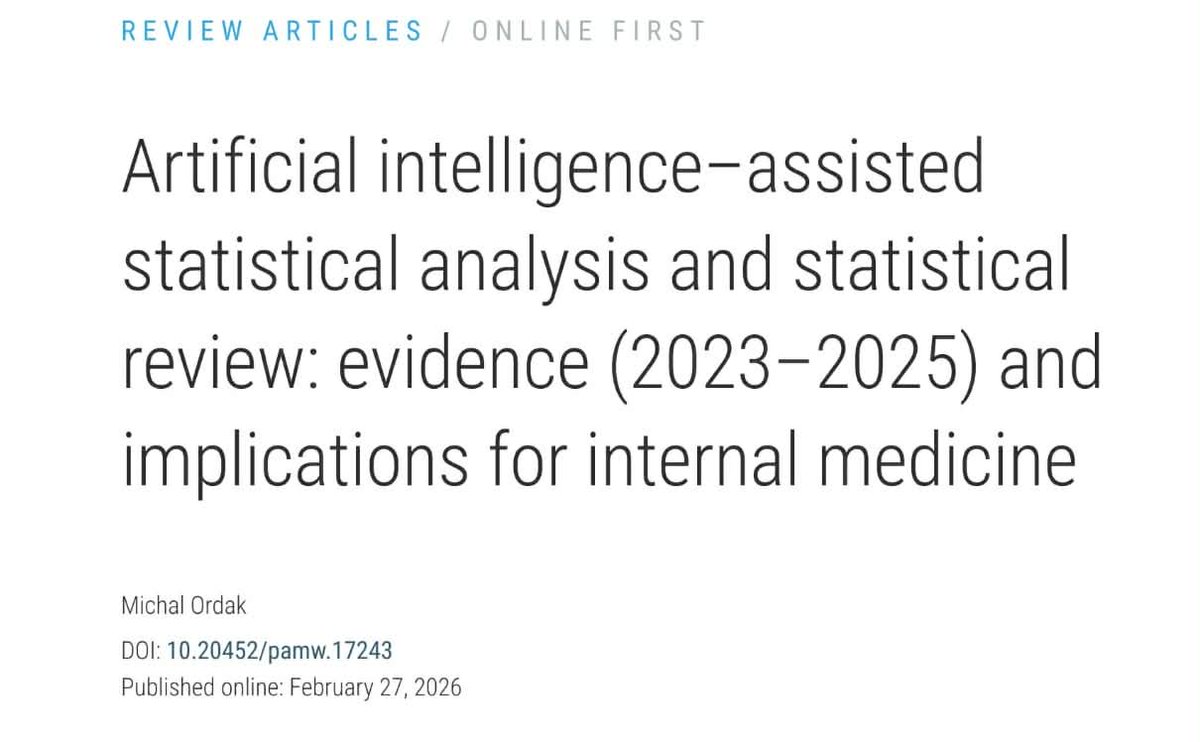
Can AI truly support statistical analysis and statistical peer review? Where are its limits? In this review, I synthesize the 2023–2025 evidence and discuss its implications for internal medicine. @PolishArchives @ScienceCommuni2 @Eur_Sci_Ed @EurekAlert @WCRIFoundation
1
40
Jan 6
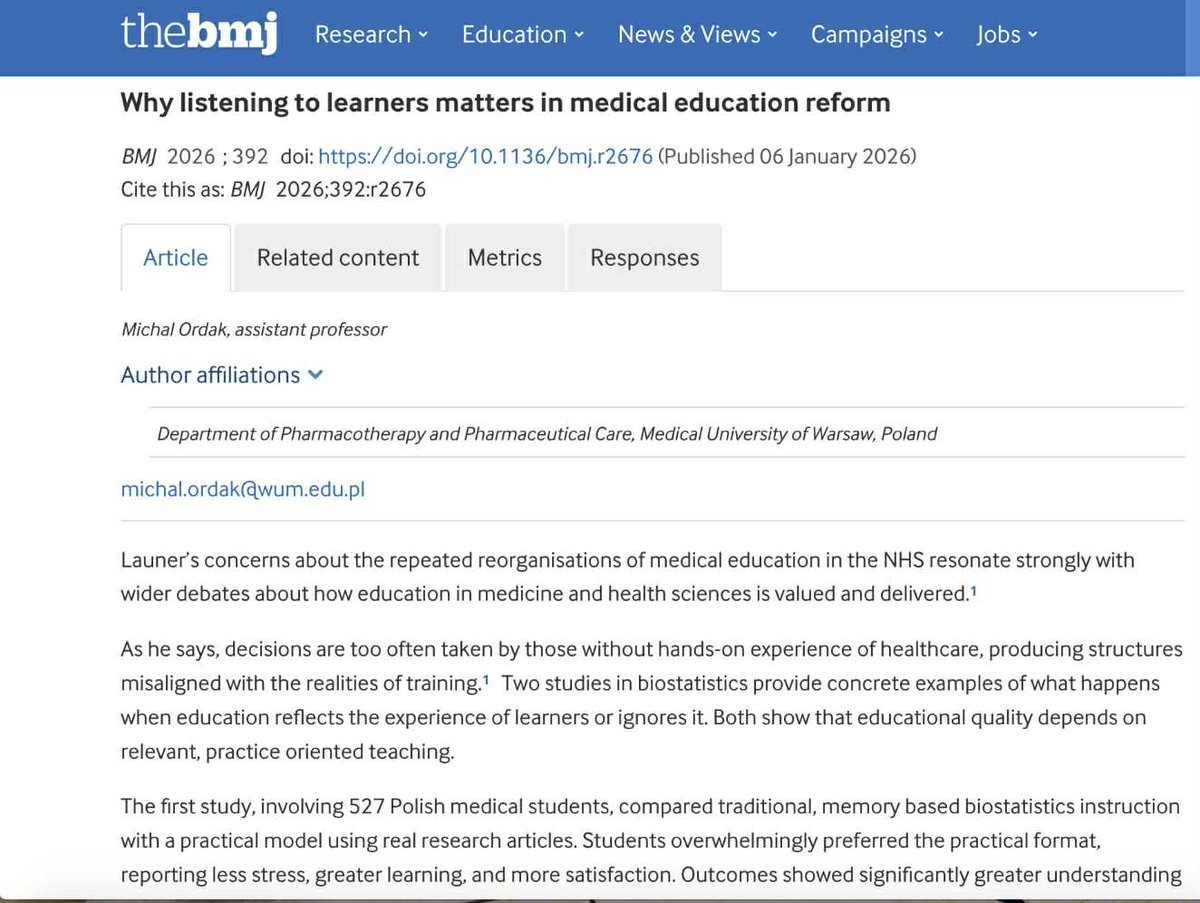
Following an editorial invitation, my article “Why listening to learners matters in medical education reform” was published in @bmj_latest and shows that learner informed, practice oriented education improves outcomes and reduces stress.
14
26 Dec 2025
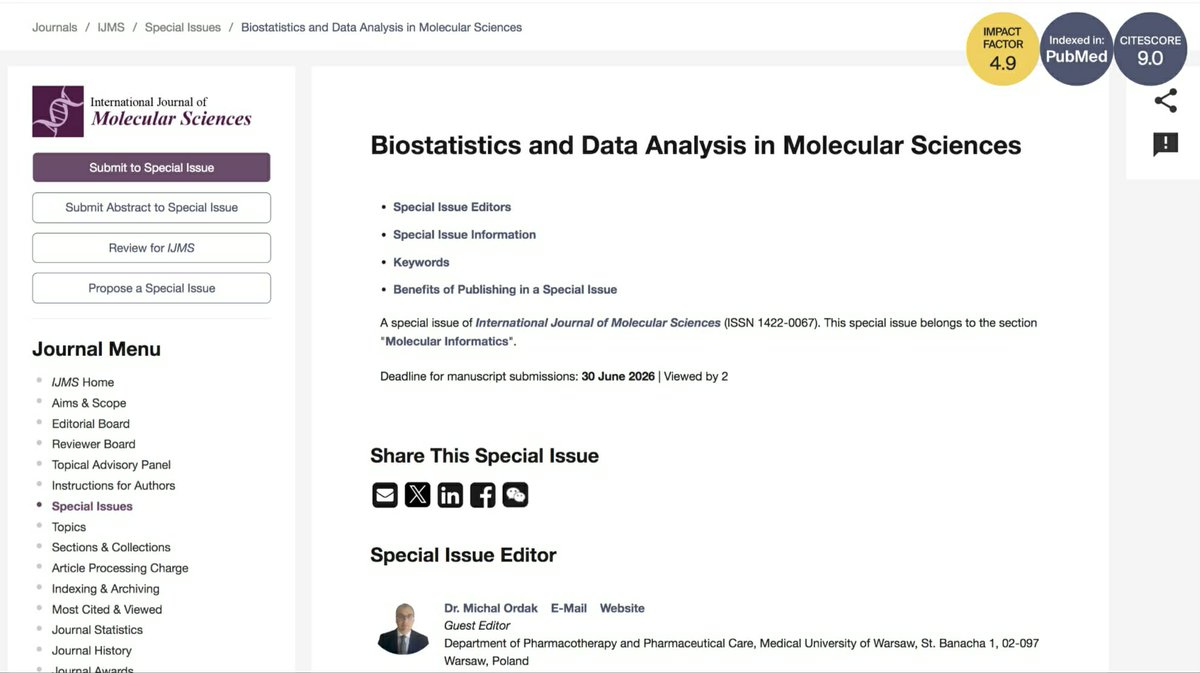
I am pleased to serve as Guest Editor of the IJMS Special Issue "Biostatistics and Data Analysis in Molecular Sciences." It promotes rigorous biostatistical standards to improve reliability and interpretation of molecular research. @MDPIOpenAccess
1
19
17 Dec 2025
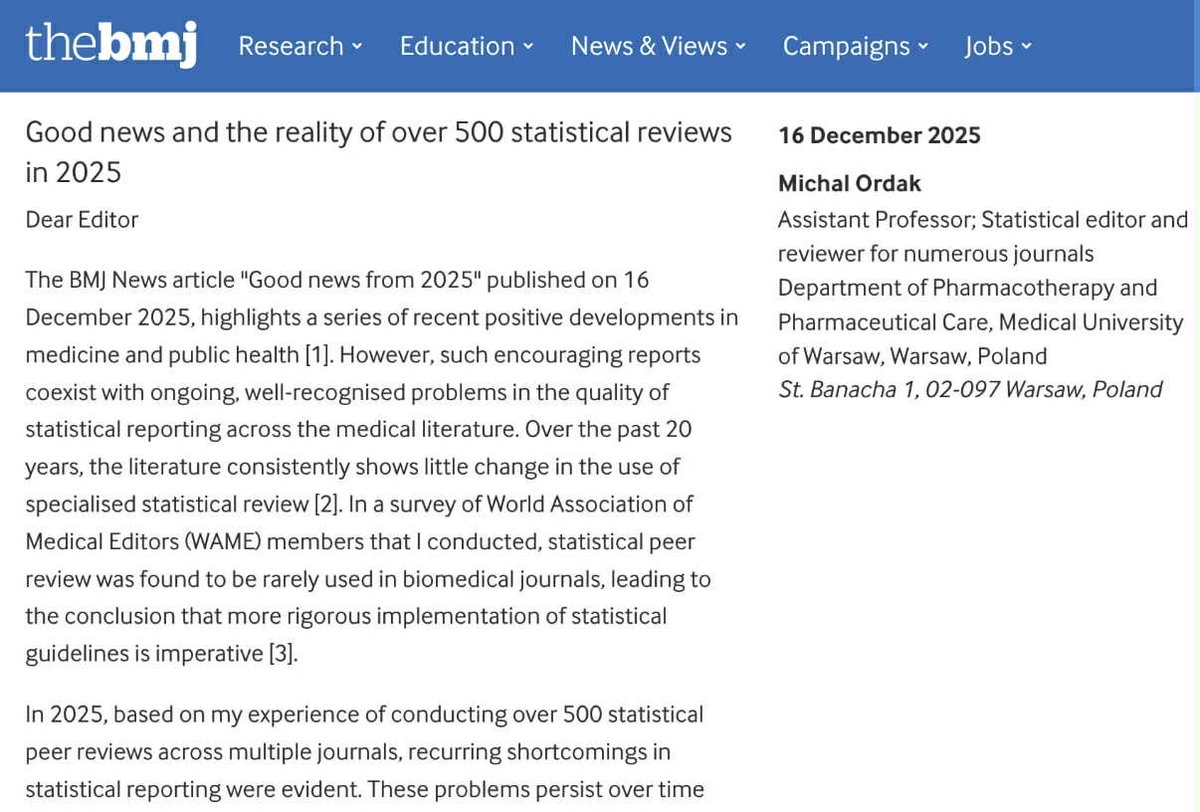
The BMJ News article highlights optimism in medicine and public health. Drawing on over 𝟱𝟬𝟬 statistical peer reviews conducted in 2025, my short piece in The BMJ shows that this optimism is weakened by persistent flaws in statistical reporting. @bmj_latest @GlobalHealthBMJ
27
Michał Ordak retweeted

10 Dec 2025
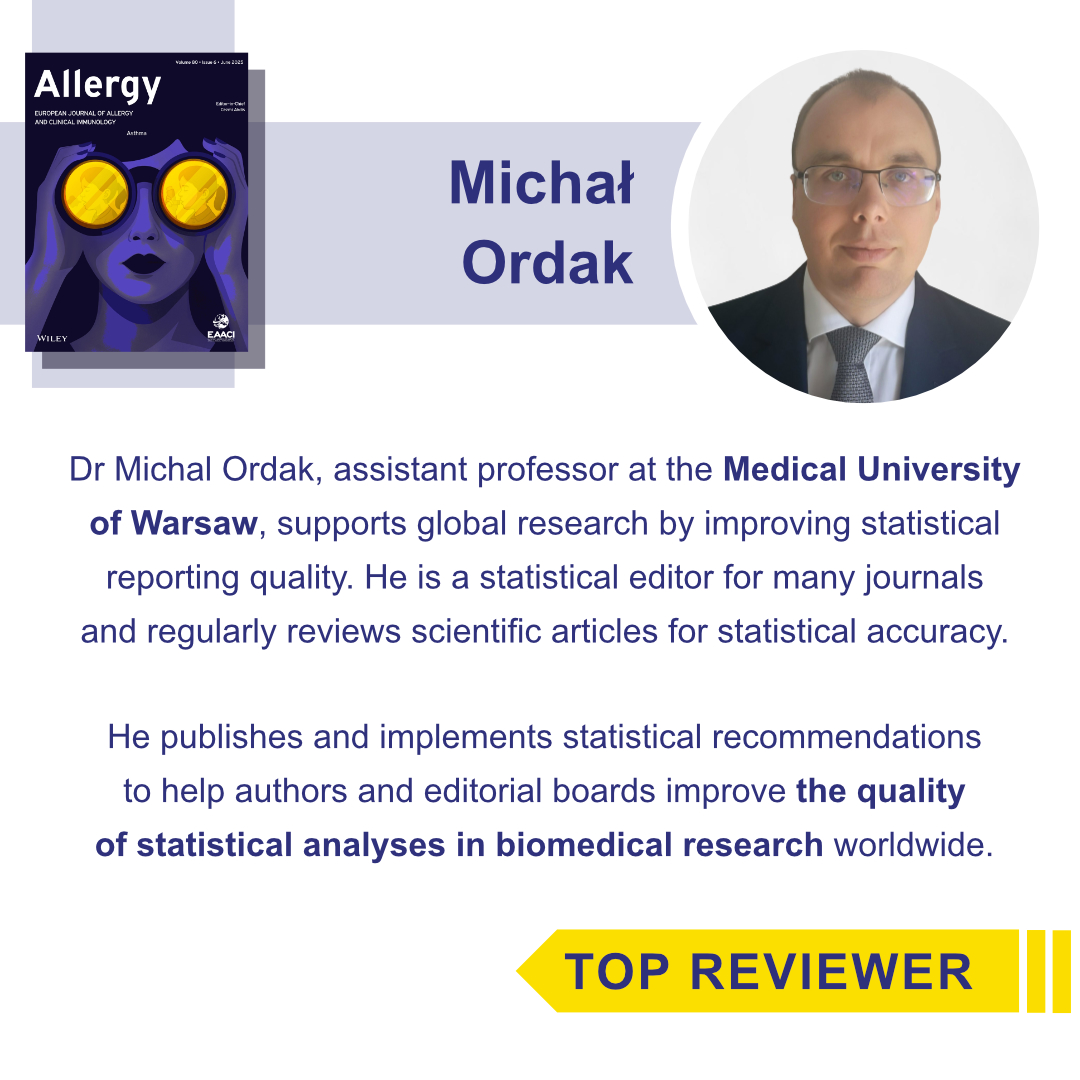
Congratulations to Dr. Ordak receiving Allergy’s Top Reviewer Award.
journalallergy.com
#Topreviewer #Allergy_journal
1
5
184
24 Nov 2025
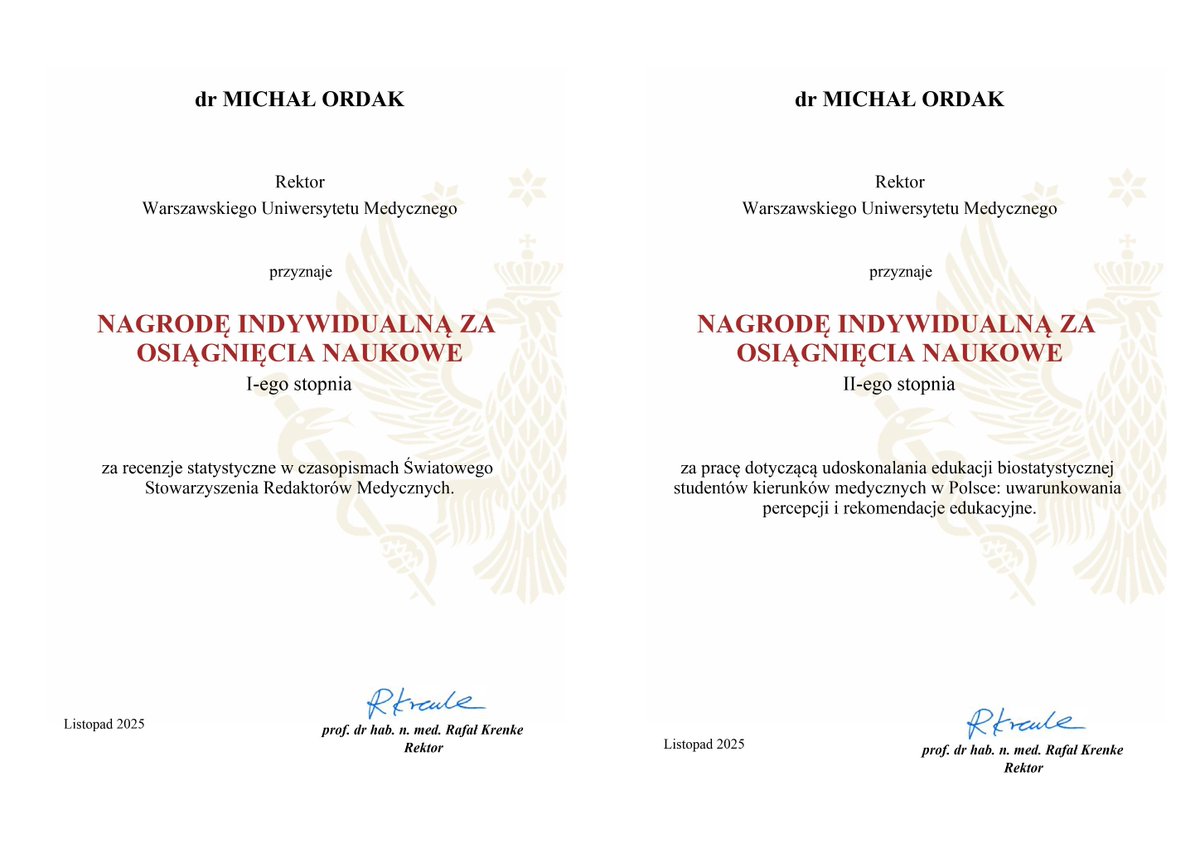
I’m pleased to share that I received two individual Rector’s Awards: a first-degree award for research on WAME members’ views on statistical peer review and a second-degree award for a study on Polish medical students’ views on biostatistics. @PolishArchives @BioMedCentral
1
43
2 Oct 2025
Today in @scholarlykitchn I discuss how clear statistical guidelines can help reduce the pressure for “nice” results and support authors, reviewers and editors.
scholarlykitchen.sspnet.org/…
27
19 Sep 2025
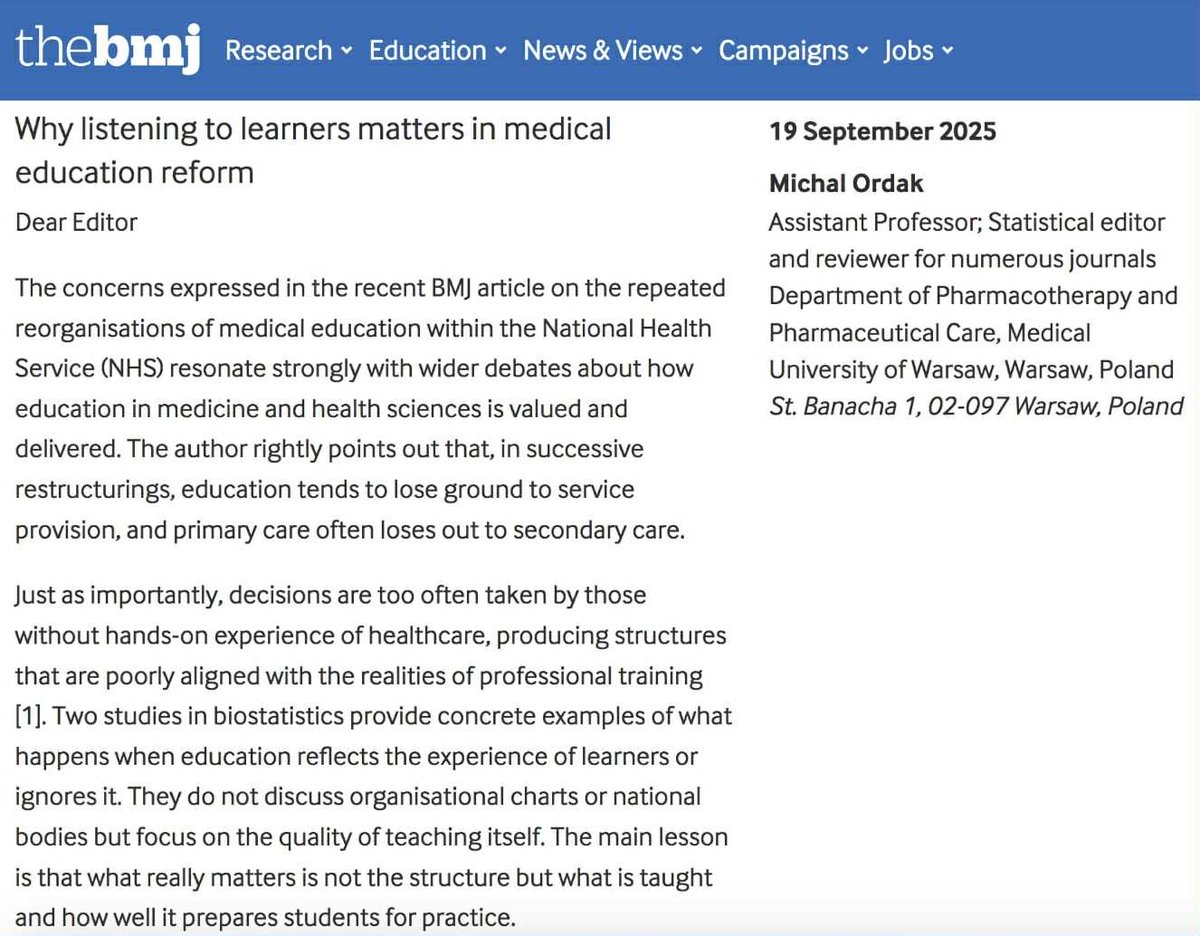
In BMJ I argue that medical education works when it meets real needs; contextual biostatistics teaching improves learning, research quality and patient care. bmj.com/content/390/bmj.r191… @bmj_latest
20
Michał Ordak retweeted
4 Sep 2025
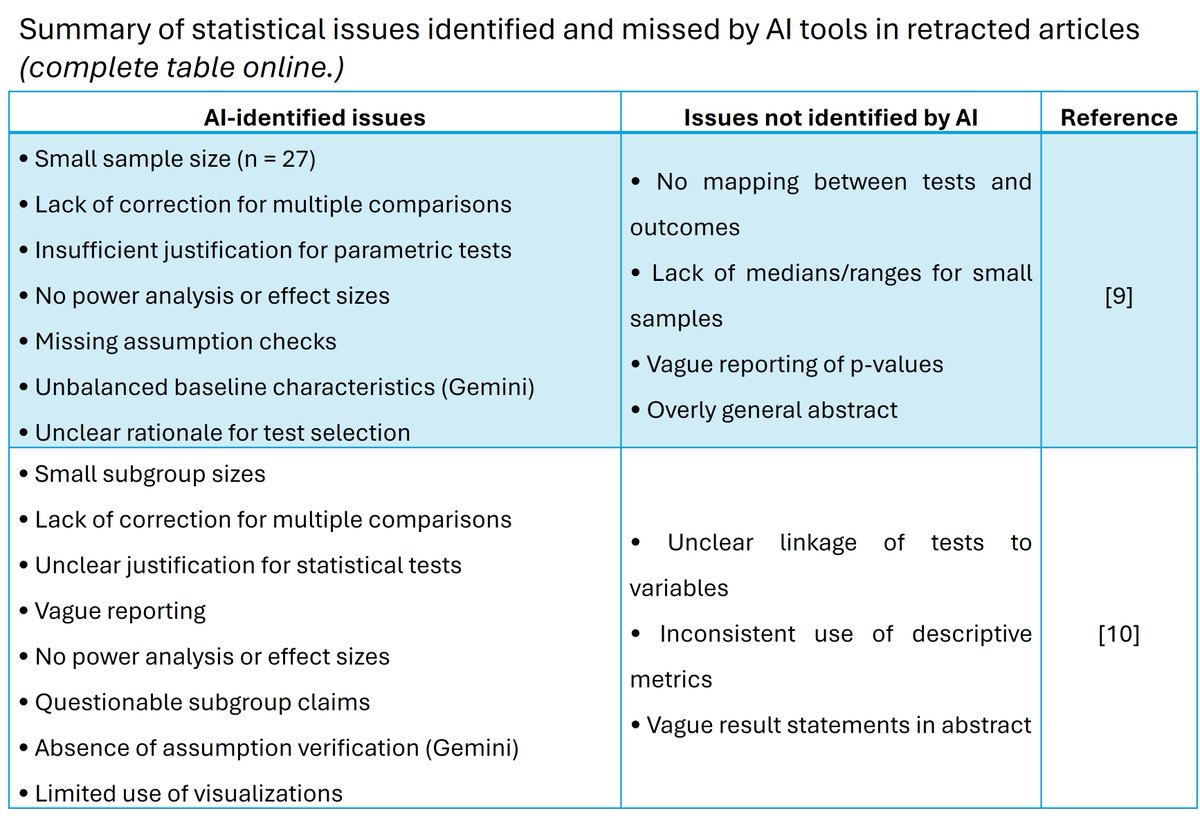
AI-Assisted Statistical Review: Could It Have Averted Retractions? A Case-Based Perspective From #Immunology. Michal Ordak
Read the article here: doi.org/10.1111/all.16669
This study explores the potential and limitations of using AI models to assist in the detection of statistical flaws during peer review. Using #ChatGPT and #Gemini Advanced 2.0, three retracted articles due to statistical errors were queried with questions regarding statistical errors, test assumptions and reporting clarity. Although both models identified issues in all of the articles, their inherent limitations are discussed.
Read more articles published in #Allergy here: journalallergy.com
#allergy_journal
2
3
215
23 Aug 2025
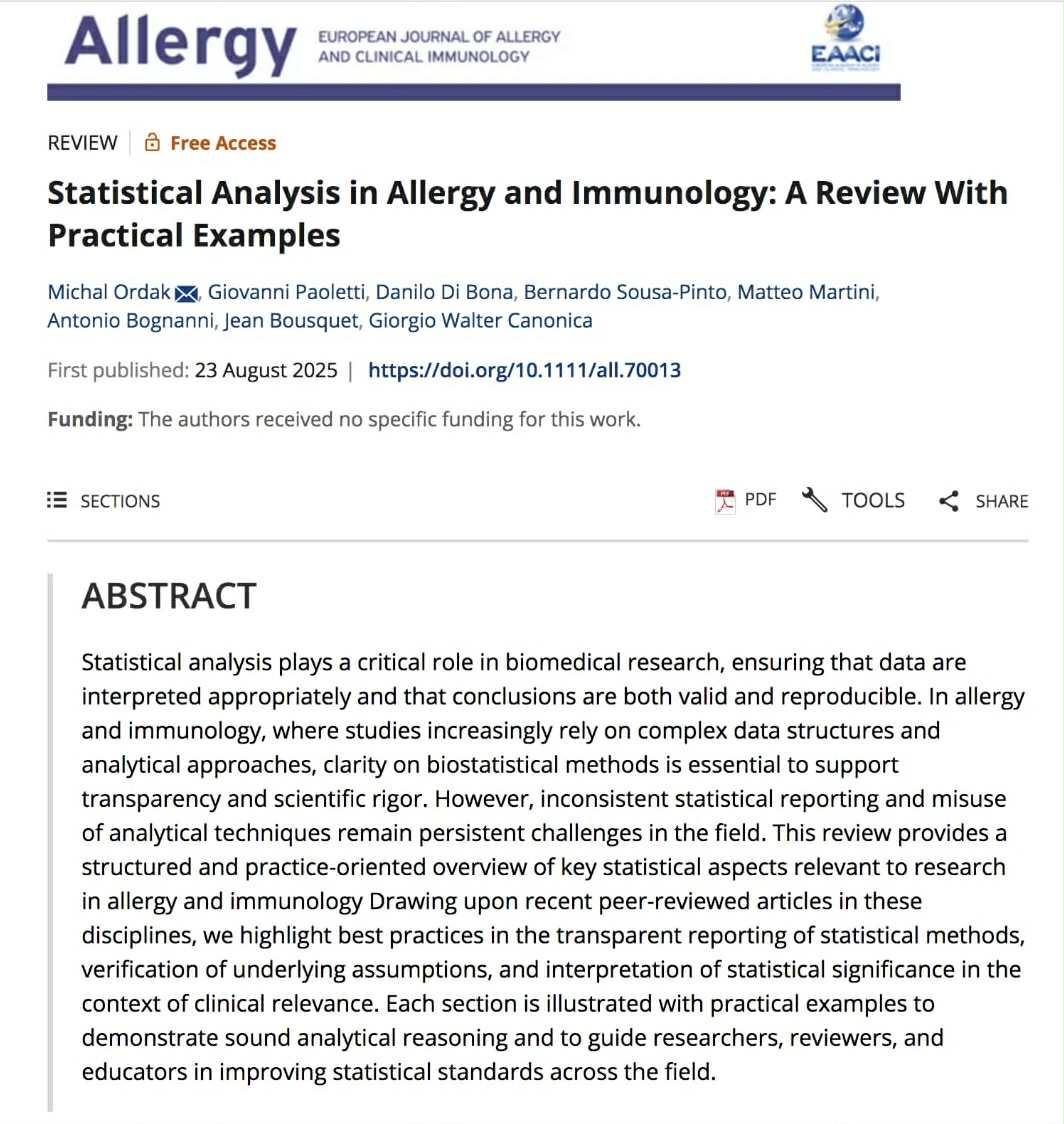
Pleased to share my review just published in Allergy: a structured, example-based overview of statistical methods in allergy & immunology to support transparent reporting and sound interpretation. onlinelibrary.wiley.com/doi/… @AllergyEaaci @EAACI_JM @EaaciKH @pai_eaaci @EAACI_HQ
1
5
234
19 Aug 2025
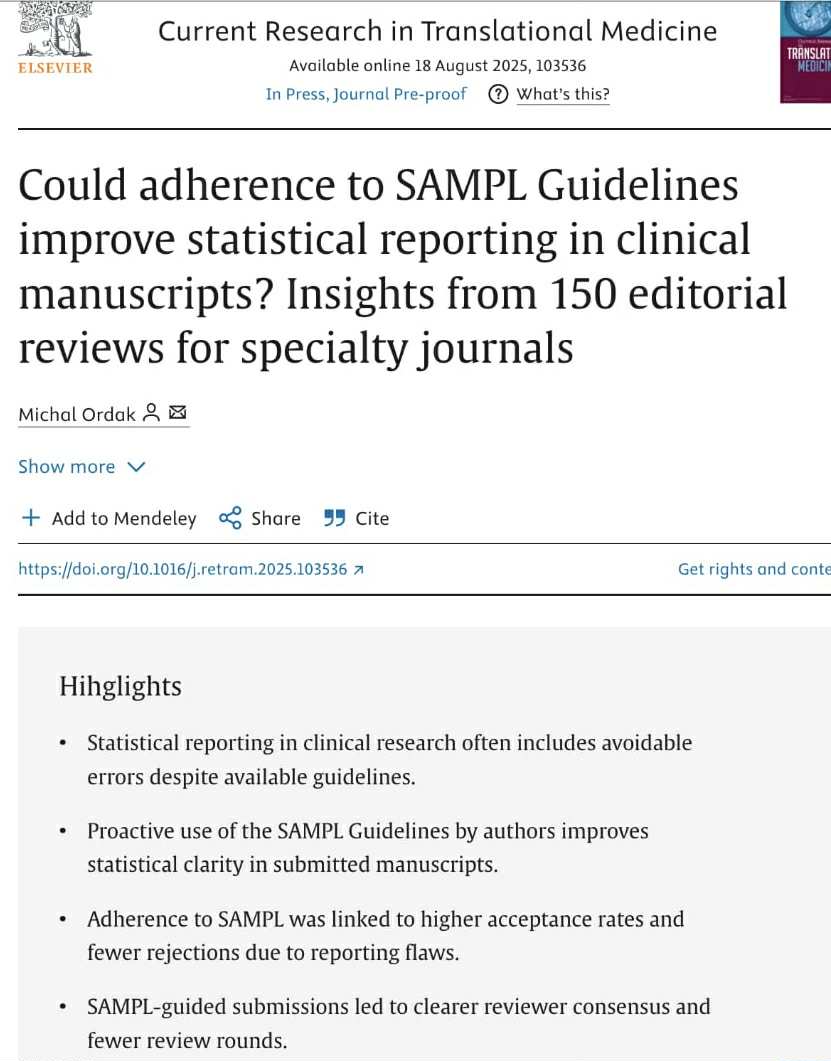
Proactive use of the SAMPL Guidelines improves clarity, acceptance rates, reviewer consensus, reduces errors and review rounds.
@ElsevierConnect @WileyGlobal @SpringerNature @OxUniPress @CellPressNews @tandfonline @i_yakoub_agha
sciencedirect.com/science/ar…
20
12 Aug 2025
Obecny system oceny dorobku sprzyja presji na liczbę publikacji kosztem jakości analiz.
forumakademickie.pl/jak-ocen…
@k_pyrc @naukawpolsce @FNP_org_pl @NCN_PL @NAWAPoland @NCBR_pl @MNiSW_GOV__PL @AgencjaBadanMed @Puls_Medycyny @MenedzerZdrowia
1
84
Michał Ordak retweeted

12 Aug 2025
#Ewaluacja, jeśli ma wspierać jakość, powinna uwzględniać także takie aspekty, jak rzetelność prowadzenia badań. Wymaga to zmian w systemie, który obecnie kładzie zbyt duży nacisk na liczbę publikacji – uważa @MichaOrdak ⤵️
forumakademickie.pl/jak-ocen…

2
8
517
31 Jul 2025
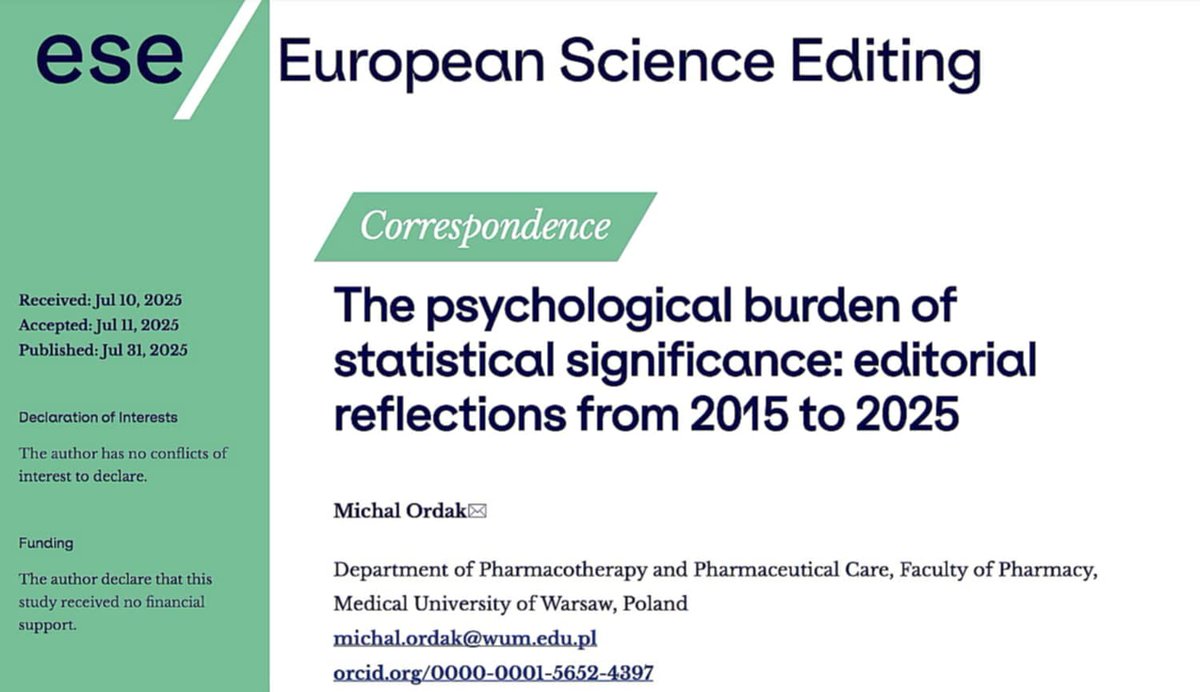
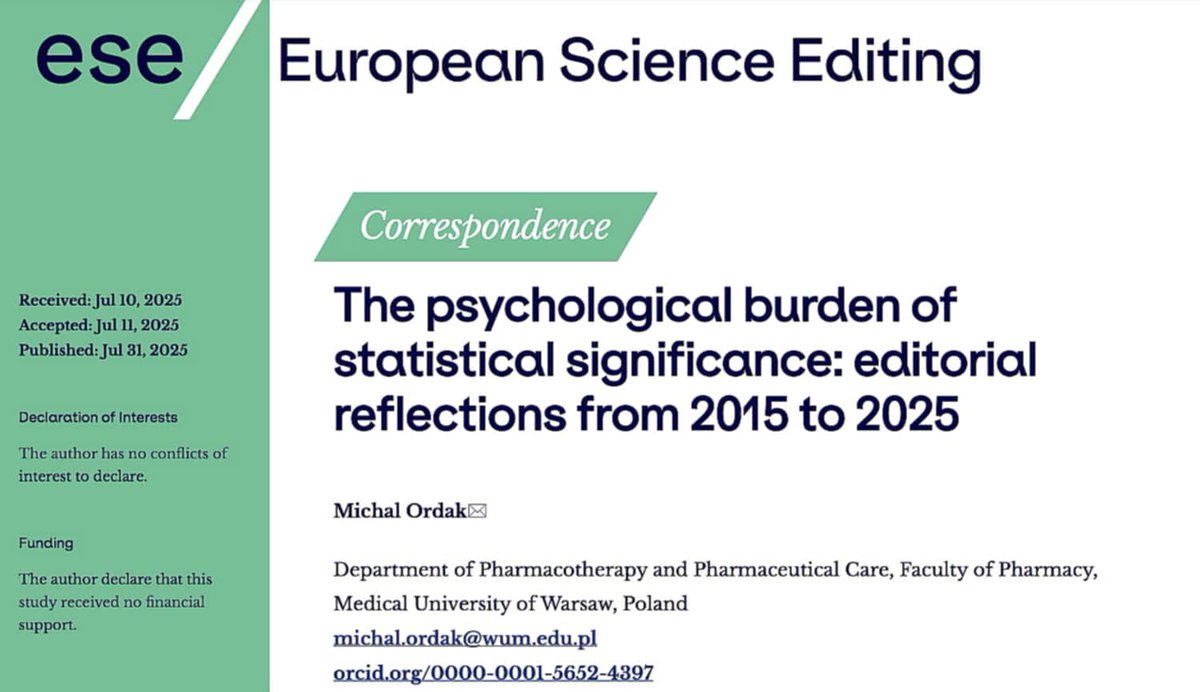
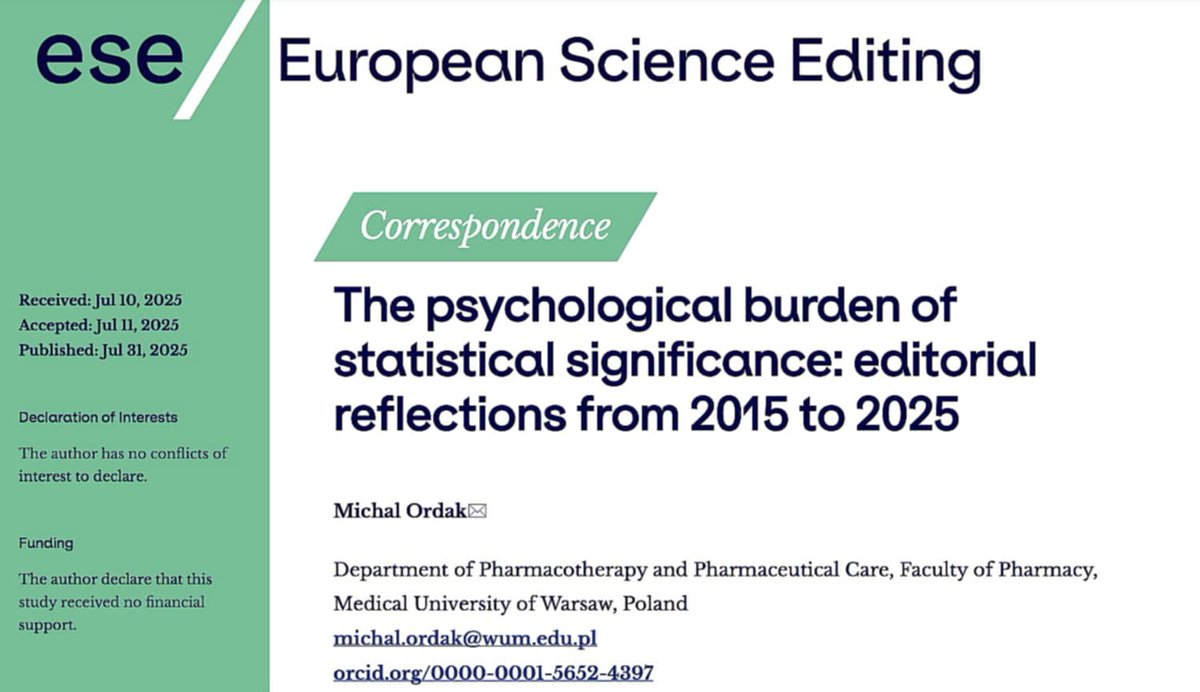
I wrote about how the pursuit of statistical significance distorts science and harms researchers' mental health. @Eur_Sci_Ed @ScienceCommuni2 @i_yakoub_agha @pensoft @TheLancet @JAMA_current @Nature @NatureMedicine @NEJM @ISID_org @LabMedicineEIC @PLOSMedicine @BioMedCentral
1
1
65
31 Jul 2025
For those interested, coverage related to the article has also appeared in a few science and media platforms:
@EurekAlert @EurekAlertAAAS:
eurekalert.org/news-releases…
@alphagalileo:
alphagalileo.org/Item-Displa…
@physorg_com:
phys.org/news/2025-07-psycho…
20
22 May 2025
I responded to H. Holden Thorp’s editorial in Science on political pressure in academia. My eLetter argues that statistical literacy is key to rebuilding trust in science. Read it here: science.org/doi/10.1126/scie…
@ScienceMagazine @ScienceCommuni2 @scienceinvestig @NatureMedicine
1
57
22 May 2025
@PolishArchives - Thank you once again for the opportunity to publish my 2024 article on statistical peer review. That work has now been cited in my eLetter published in Science, in response to H. Holden Thorp’s editorial on political pressure in academia.
37
Michał Ordak retweeted

20 Nov 2024
Cartilage hair hypoplasia can lead to the development of anemia as a possible complication of this rare genetic disease. Learn more in @LabMedjournal: bit.ly/4eRLjZR
1
1
276