
🏈3 Peat Arena Football champion(AFL) 🏈Defensive Line Technician 🥗Health Coach 📚Mentor 🔥Detailed Performance
Joined June 2010
- Tweets 1,279
- Following 137
- Followers 235
- Likes 7,053
77 Photos and videos
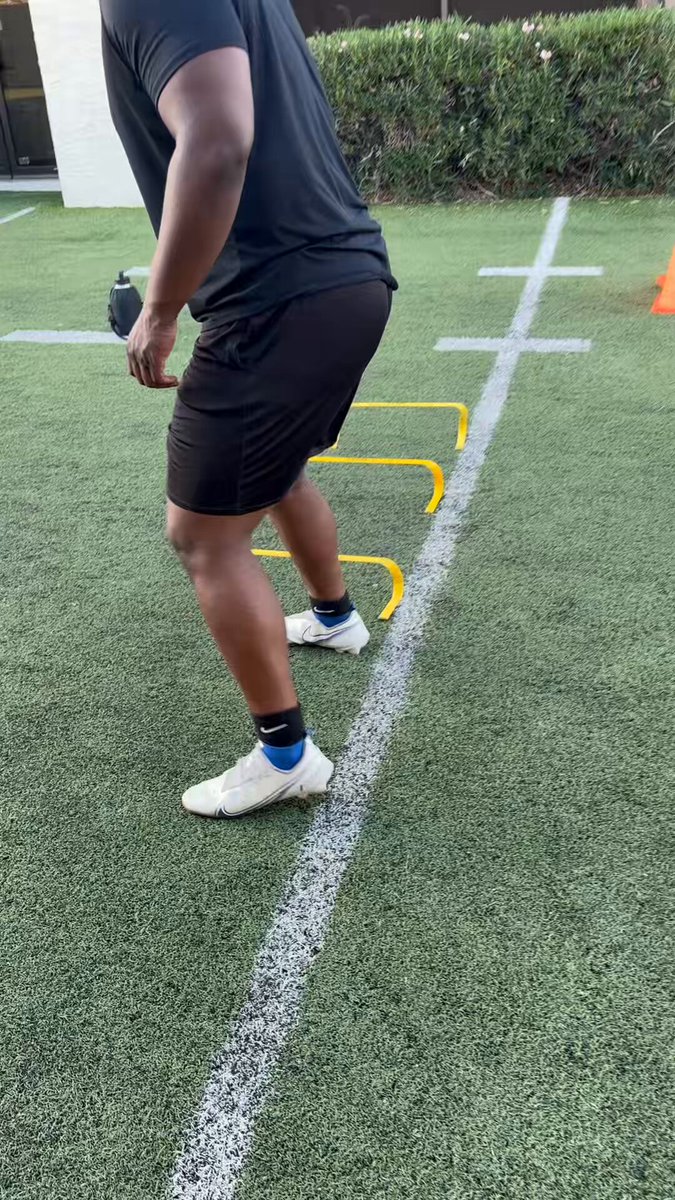
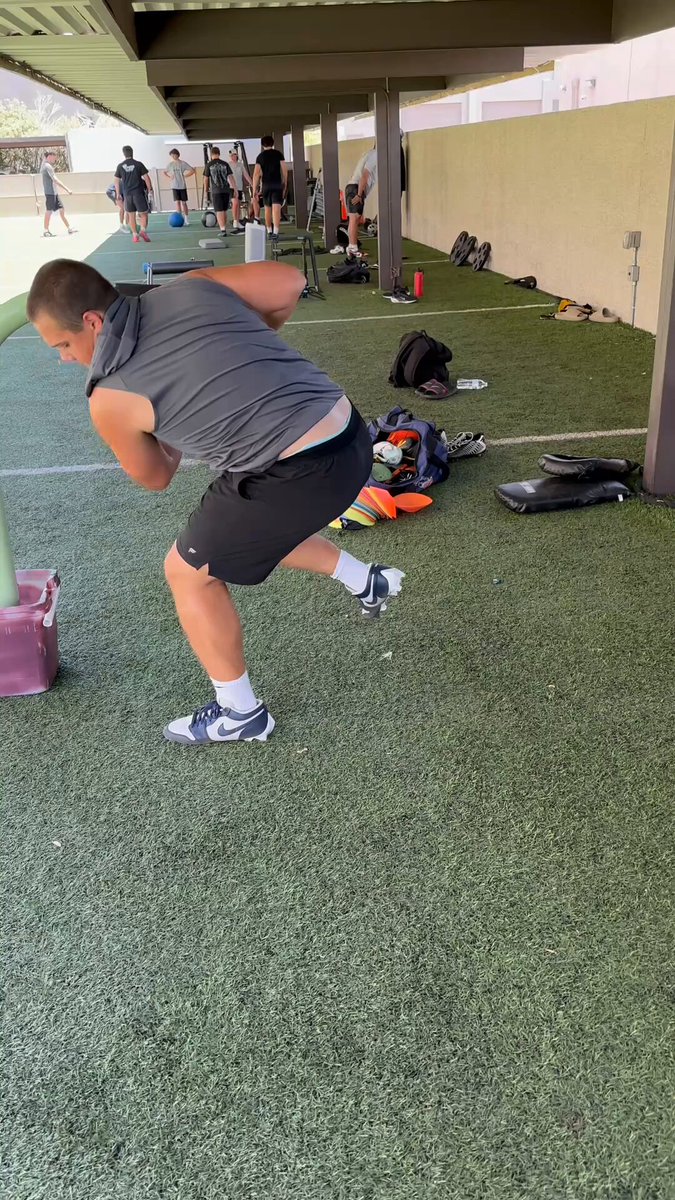
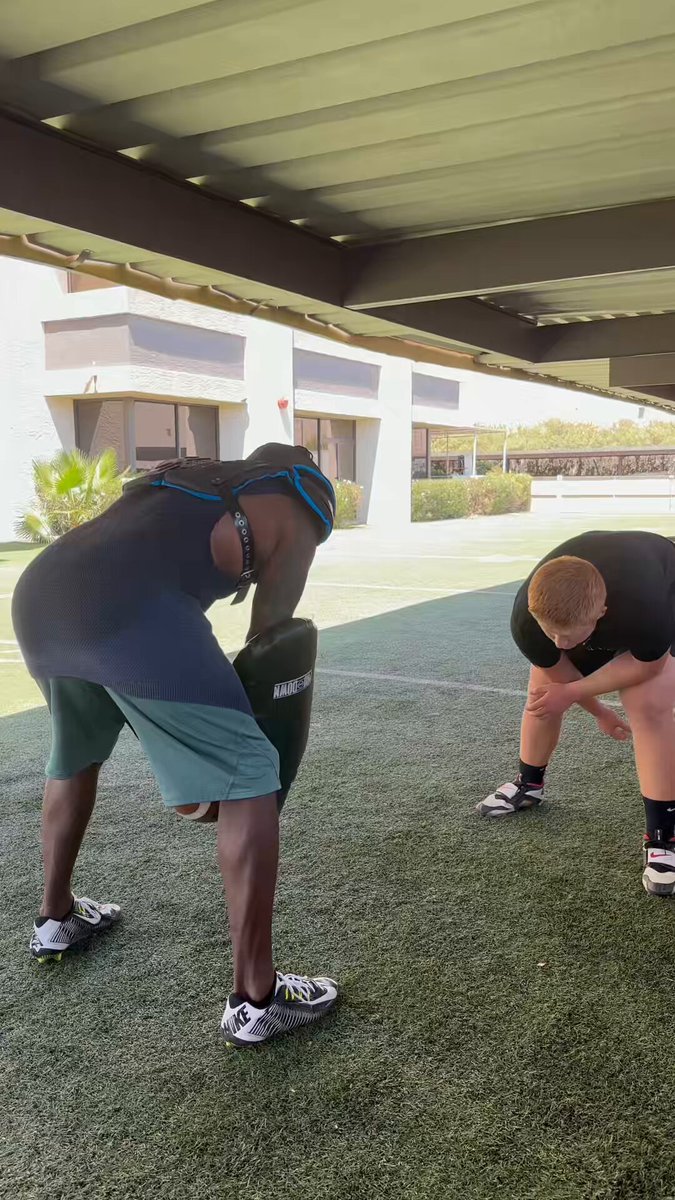
Marcus Pittman retweeted

Straight Animal!!! 12.5 sacks last year!!! Goal is 15 for junior year… Get your 🍿 ready!!!!!! @Ianfullmer99 is one to remember!!!!
@CoachBarro @Coach_Welde @Coach_Mistro @CoachRoyWCU @Jas_Bains_12 @CoachWratten @CoachZim_UJ @CoachPickOC @CoachMetkler @Sethmoore30 @CoachTWebb @CoachGaither_ @Coach_Taura @CoachFalc @CoachMondt @CoachM_Justin @SpencerCrace @CoachBoom26 @coach_ksuttles @CoachBull16 @FLCCoach_Cox @Coach_BMeyer @OUAZFootball @JustinLeathers @gavinlutman18 @Coach_BPerkins @CoachGallasASU @coachscholten @KelleyBeMoore @LFC_FOOTBALL @LCOttsFB @AricWilliams3 @JettSearle1 @tauer34 @Coach_SBrown @FLCCoach_Grinde @Coach_Kizewski @Coach_Wikre @gavinlutman18 @tauer34 @CoachYonBoone @FLCCoach_Cox @CoachDustinHass

Had a great time at the big man asu comp. Thankyou @ASUFootball
@Koach_BrownII
@JaylenJohnson92 @AdamCarterFB
@CoachSweetLou @CoachRocket73
@CoachDiedrick @CoachSLawanson
@CoachEBrown @CoachRomeroCP
@CoachMHazelwood @CoachFam @CoachPickOC @MikeDoc40 @SUUFB_ @UtahTech_Fball @CoachBarro @GametimeRC
@CoachRiversPSP @Coach_D_Mac
@CoachShields @__CoachClark
@CoachClarkJ @CoachRyanHansen @CoachOmura @AState_8 @VinceAmey @Coach_DCollins @CoachNJ_Monroe @GCRecruit @Coach_Champton @Wideoutwhisperr @CoachJoeLorig @CoachKindell @CoachAlexMeans @Jake8Shakes @CoachStubbs @Coach_DGibson @CoachBHen @CoachAbohl @Austin_Maus @CoachZachLarson @MMental7 @KjarEric @CoachStalker
1
7
562
Marcus Pittman retweeted

Jun 12
Had a great time at the UofA Big Man. Lots of good reps and good competition. Thanks @ArizonaFBall for a great event.
@Mesa_FB @mesa_ironjack @Jackrabbits2026 @coachCamngaue @adamgorney @BrandonHuffman @BlairAngulo

Mesa ‘27 Idaho DL commit Joe Haynie with excellent reps at the UofA Big Man Camp.
4
21
967

Jun 11
Practice being uncomfortable until you’re comfortable.
That’s the standard when a defensive lineman gets to college. Most guys arrive having survived on talent — bigger, faster, stronger than everyone in high school. Then they hit a level where everybody was that guy.
This is where real development starts. We break the foundation down to build a new one. Get-off timing gets rebuilt. Pad level gets disciplined. Hand placement stops being a suggestion and becomes a requirement. Every rep that feels awkward right now is a rep your old habits are dying.
It’s not comfortable. It’s not supposed to be. The player who fights through that rebuild walks out a different athlete — one who wins with technique first and talent second. That’s the turnaround.
Defensive linemen are skill players too. Train like it.
#DLine #trenchwarfare #lineman #CollegeFootball #PlayerDevelopment
71
You don’t rise to the occasion. You fall to your training. 🔒
When the ball’s snapped, you’ve got a fraction of a second to win. No time to think about your hands, your pad level, your first step. Your body knows it or it doesn’t.
That’s muscle memory — wired in your nervous system, one clean rep at a time. But your body wires whatever you repeat. Rep sloppy hands, you build sloppy hands.
So we drill the details:
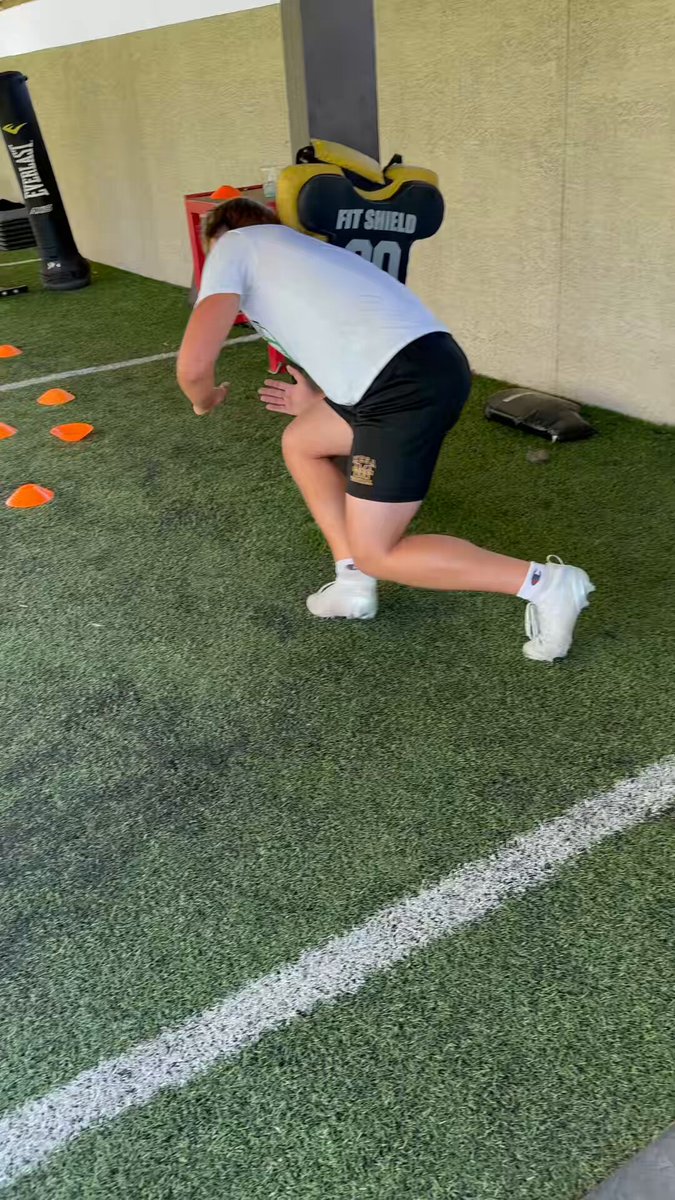
⚡️ First step — short, violent, fast in the ground
⚡️ Pad level — win leverage before contact
⚡️ Hands inside — strike the chest plate
⚡️ Inside foot shin angle — anchor and shed
Slow is smooth. Smooth is fast. 💯
Game day doesn’t make you better. It exposes what you built. Show up to every rep like it matters.
#DetailedDLine #DefensiveLine #DLine #PassRush #DLineTraining #PadLevel #TrenchWork #FootballTraining
173
Swim move at nose = your pads rise, your chest’s exposed, and you just abandoned a gap. 🛑
Pin the snap hand. Punch through. Hands inside, hips rolled, eyes in the backfield, both gaps in front of you.
Anchor and two-gap. Don’t guess. 🔨
#DLine #NoseGuard #dlinedrills #az #Trenches
2
92
Marcus Pittman retweeted

Jun 6
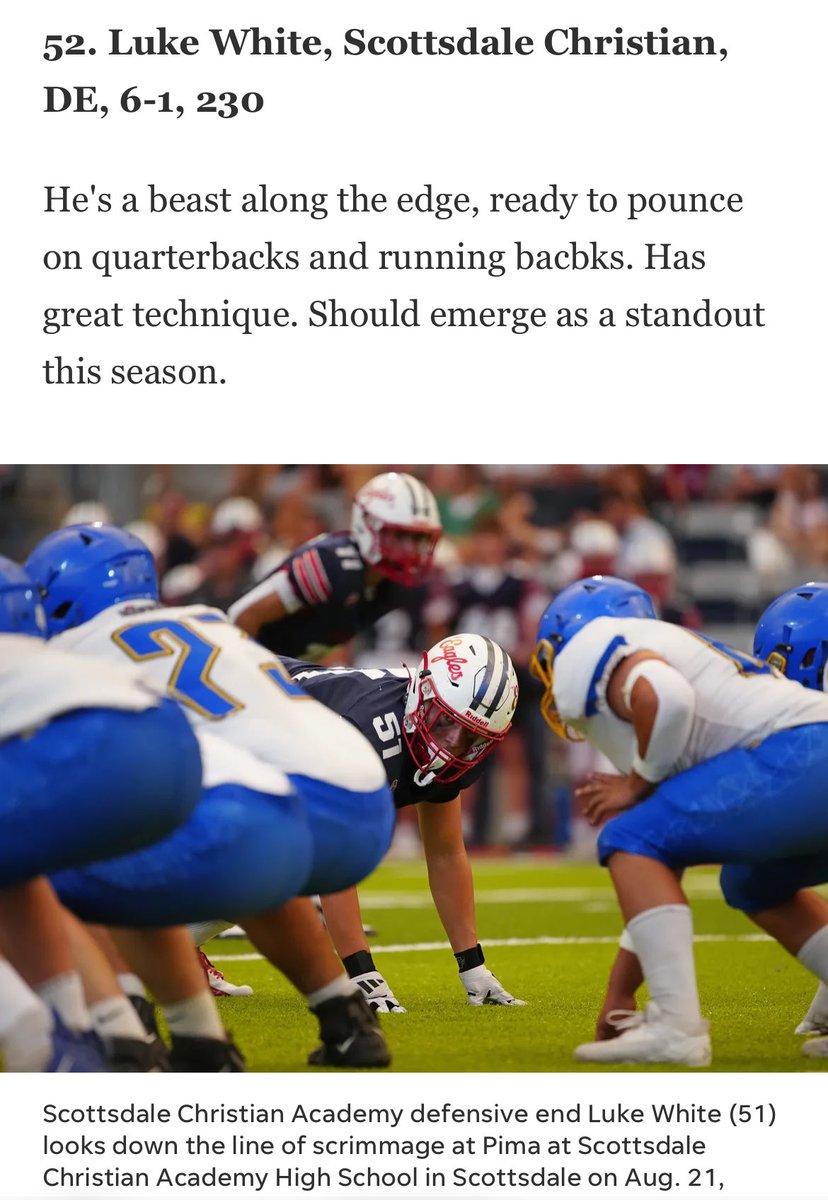
Thank you @azc_obert for the write up in the top 100 2028 players!
@MpPerformanceaz @GametimeRC @FBCoachATaylor @DrakeBulldogsFB @EaglesSCAFB @Coach_TMART_ @firestormfb @TrineThunderFB
2
6
380
Pad Level Wins. Every. Single. Snap. 🔑
The lowest man wins — that’s not a cliché, it’s physics.
Fire off the ball with a flat back, bent knees, and your pads under his pads, and you’ve won the rep before contact. You get under his chest, take his hands, and now he’s playing YOUR game.
Play high? You lose the leverage battle. You get washed out of run lanes. Your get-off means nothing because you can’t transfer power through your hips. Explosiveness wasted.
But playing low isn’t a one-rep thing — it’s a discipline. 👇🏿
🔹 Anchor low against double teams
🔹 Sink your hips to convert speed to power
🔹 Stay low through your rip and swim
🔹 Finish low in the 4th when your legs are tired
The guys who stay low when it hurts are the ones who finish careers — not just plays.
Get off low. Strike low. Finish low. 💪🏿
#DefensiveLine #DLine #FootballTraining #az #dlinedrills
1
100
Getting into the edge starts at the ground. 🔒
Most D-linemen think power comes from the upper body — wrong.
When you attack the edge of an offensive lineman, get LOW and load into your big toe. That’s your push-off anchor. Big toe → ankle → knee → hip — one explosive chain that moves the OL off his spot.
Get on your heels and you’re just hoping.
Get into that big toe and you’re driving through him.
Edge low leverage big toe push-off = a force the OL’s base can’t absorb.
That’s not muscle. That’s physics.
#DLine #DefensiveLine #LinemenLife #FootballTechnique #az
79
The Foundation Has to Come Before the Finish
I don’t care stars — when you come into my program, we’re going back to zero.
Stance. Hand placement. First step. Hip load. All of it gets rebuilt. The habits that got you here won’t get you to the next level.
It won’t look pretty at first. You’ll feel slow. Mechanical. Like you’re overthinking everything. That’s the process.
But when it clicks — when the footwork is instinct and the counters flow without a thought — you stop playing the position and start moving like poetry.
We’re not chasing perfect. We’re chasing automatic.
@haynie_vjoe
#az #DefensiveEnd #CollegeFootball #FoundationFirst #OffseasonWork
2
87
Marcus Pittman retweeted
May 31
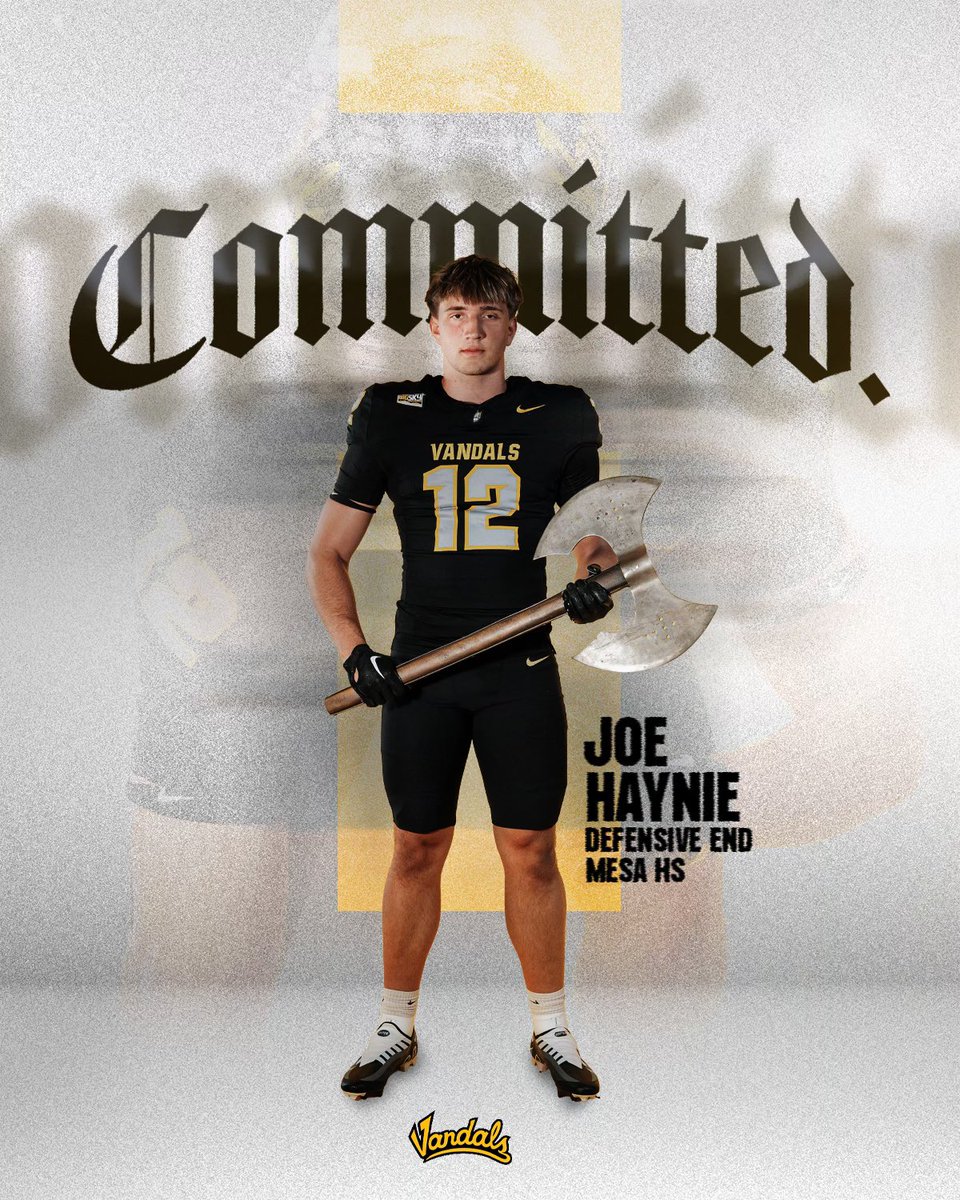
After a great weekend at Idaho. I am excited to announce my Commitment to the University of Idaho Vandals! V’s up!!
I would like to thank @CoachTFord @CoachAvery__ @CoachStalker and @VandalFootball and all of my coaches at @Mesa_FB. @coachCamngaue @Jackrabbits2026
@JUSTCHILLY @therealbeadle @adamgorney @BrandonHuffman @BlairAngulo @ChadSimmons_
9
42
125
17,756
May 29
Here you go:
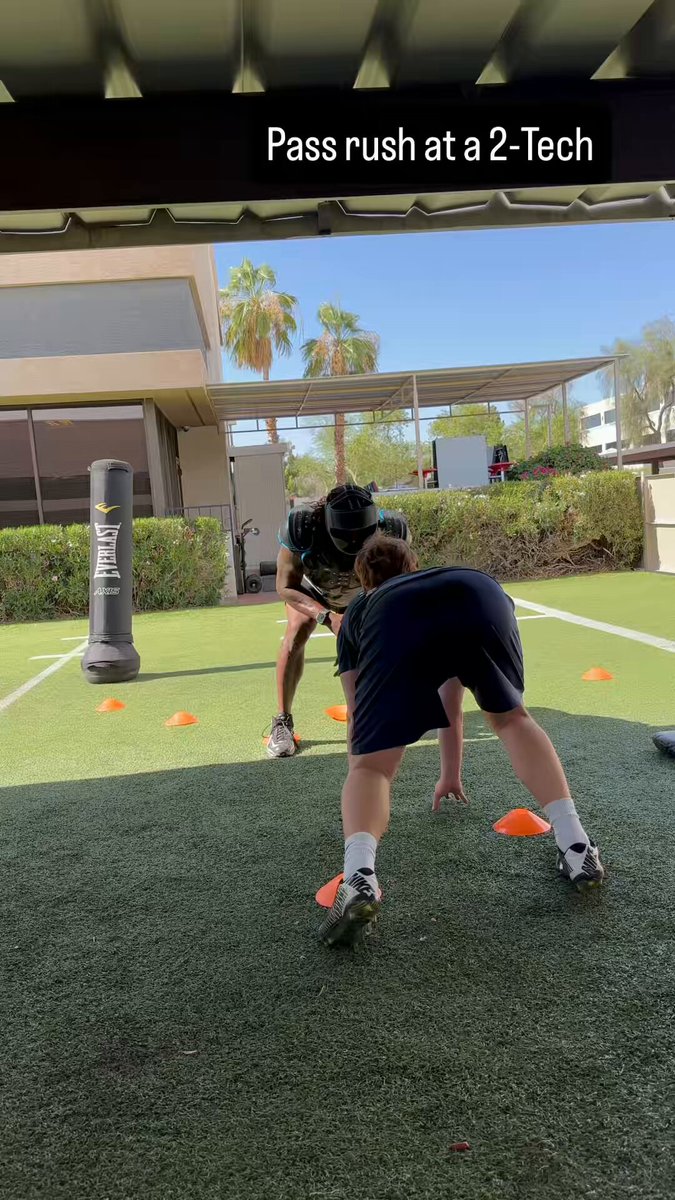
Winning as a Pass Rusher from the 2-Tech 🏈
The 2-technique is where pockets collapse. Here’s how to dominate from the interior:
⚡ Explode off the ball — first step wins, no hesitation
🤝 Attack the landmark — inside hands on the guard’s breastplate before he can anchor
🔄 Have a move and a counter — read his reaction and go opposite
⬇️ Stay low — pad level decides every rep. Low man wins, period.
👀 Finish through the QB — press the pocket all the way through the throw
Own your gap, trust your technique, and make the QB feel you every single snap. 💪
#DefensiveLine #PassRush #2Tech #FootballTech #az #GetAfterIt
91
May 27
The Foundation Starts at the Feet
Every time a new client walks in for their first session — we start from the ground up. No shortcuts.
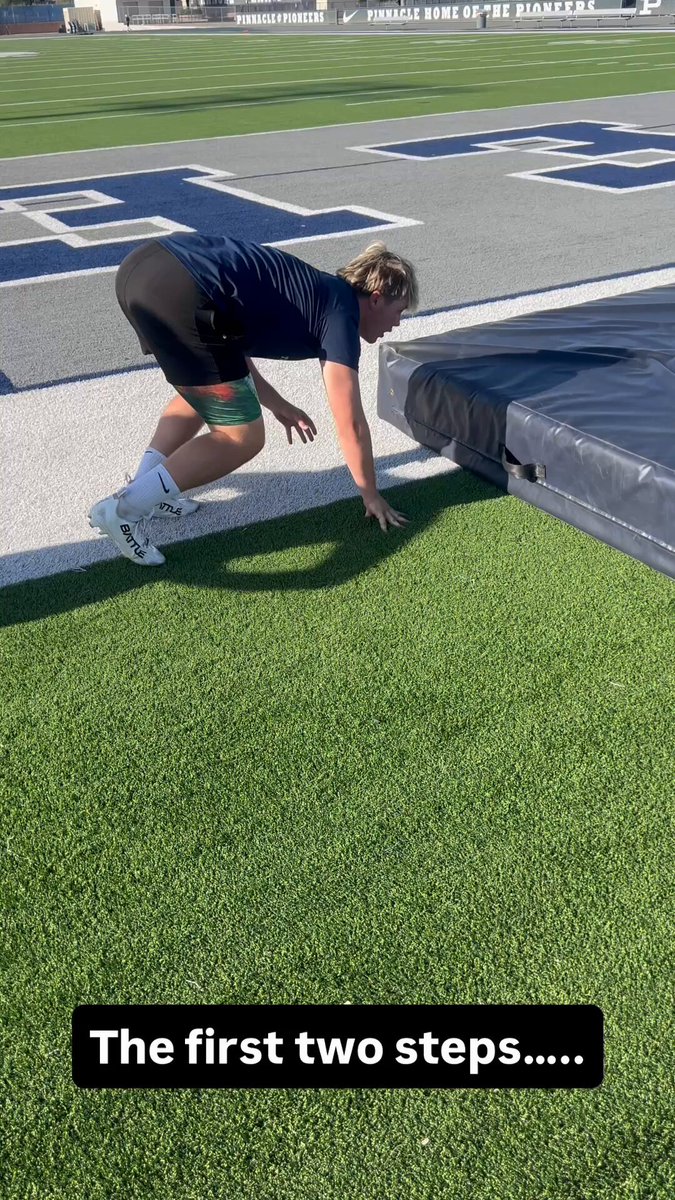
For @haynie_vjoe — 6’4” 235lb DE with a 3.8 GPA and a frame still growing into his potential — Day 1 looks the same as it does for everyone else.
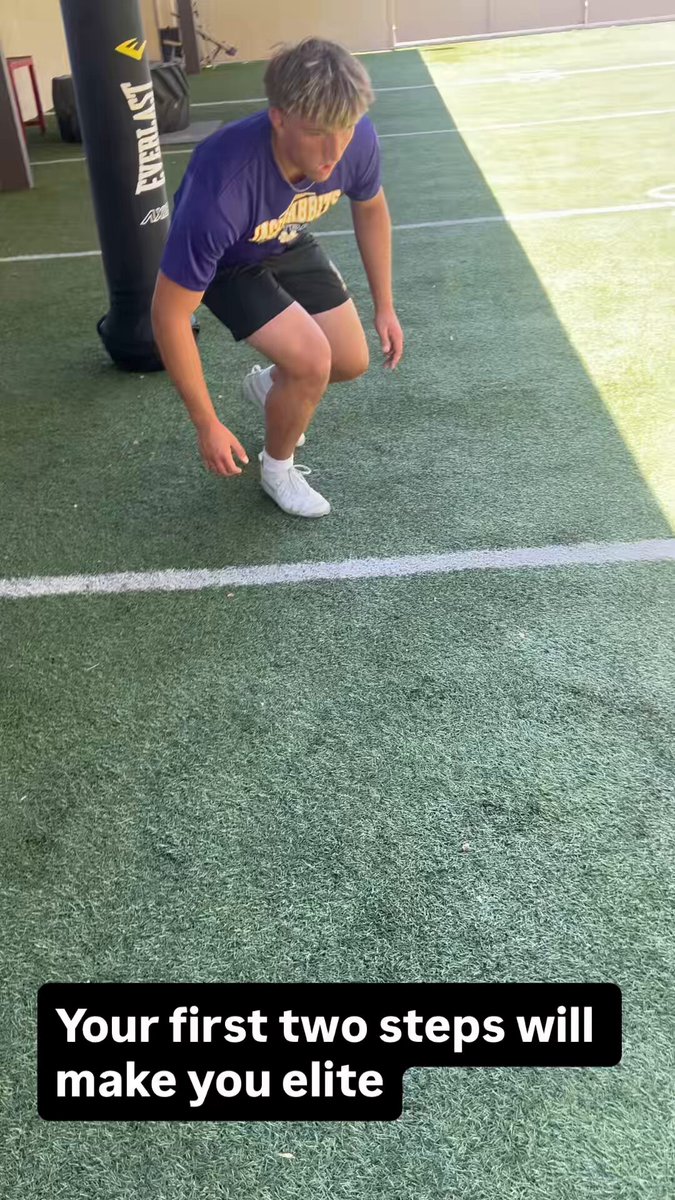
The first two steps out of your stance are where games are won and lost.
Step one sets your explosion, your pad level, your path to the blocker.
Step two confirms your angle and loads your hands.
And they have to look identical every single rep. First snap of practice. Fourth quarter. It doesn’t matter.
When those two steps become automatic — that’s when the real pass rush development begins.
The offers will come. But first, we build the foundation.
⬆️ Tag a young pass rusher who needs to hear this.
#az #defensiveline #collegefootball #defensivelineman #passrush
1
9
1,759
May 23
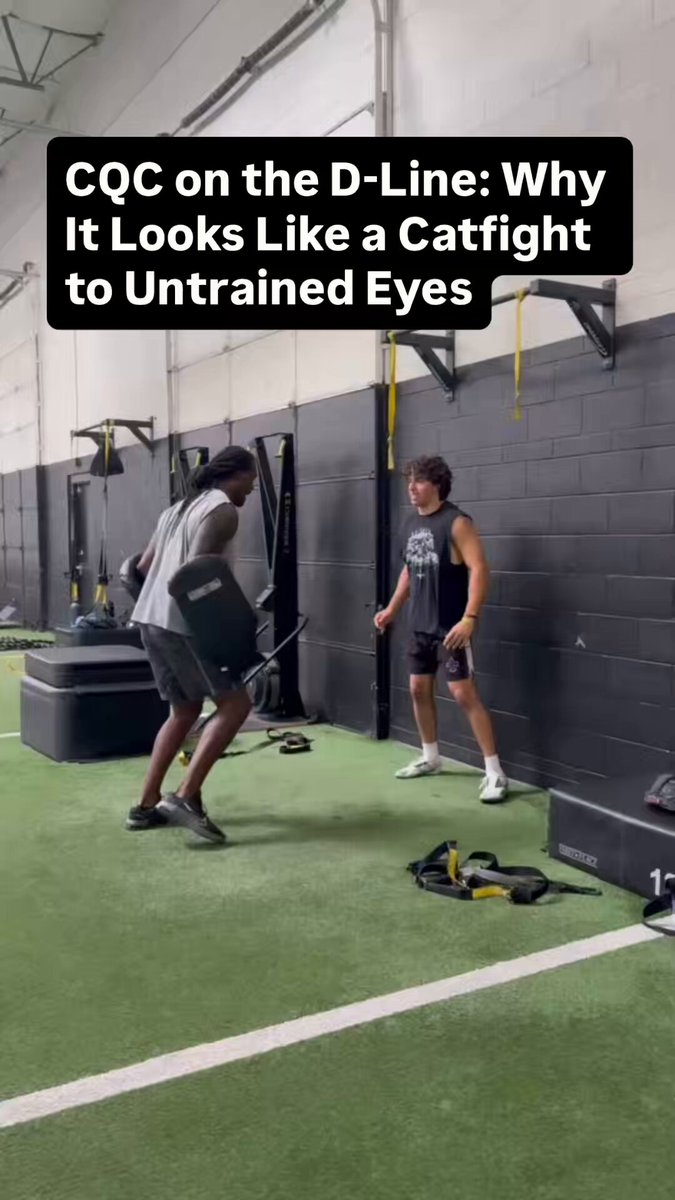
Why D-line hand fighting looks like a cat fight to bad coaches
Untrained eyes see wild arm swatting and grabbing. What’s actually happening is a scripted hand-fighting sequence — chops, rips, and swims that are direct counters to what the OL does first.
The whole battle is decided in 1.5 seconds after the snap. If you don’t know where to look, you missed it.
Low-level coaches watch the ball. Elite D-line coaches watch who got their hands inside first — because whoever wins that exchange controls the block.
A guy “stuck” on a blocker isn’t losing. He might be two-gapping or holding a lane so a linebacker runs free. Stalemate is sometimes the assignment.
It looks like wrestling with no plan. It’s actually wrestling with a 4-second clock and a very specific job. The chaos is the technique.
#az #dline #cqc #football #lineman
1
2
166
May 18
“I’m sure my client is going to tell his teammates that coach had him on a fence fighting for his life lol”
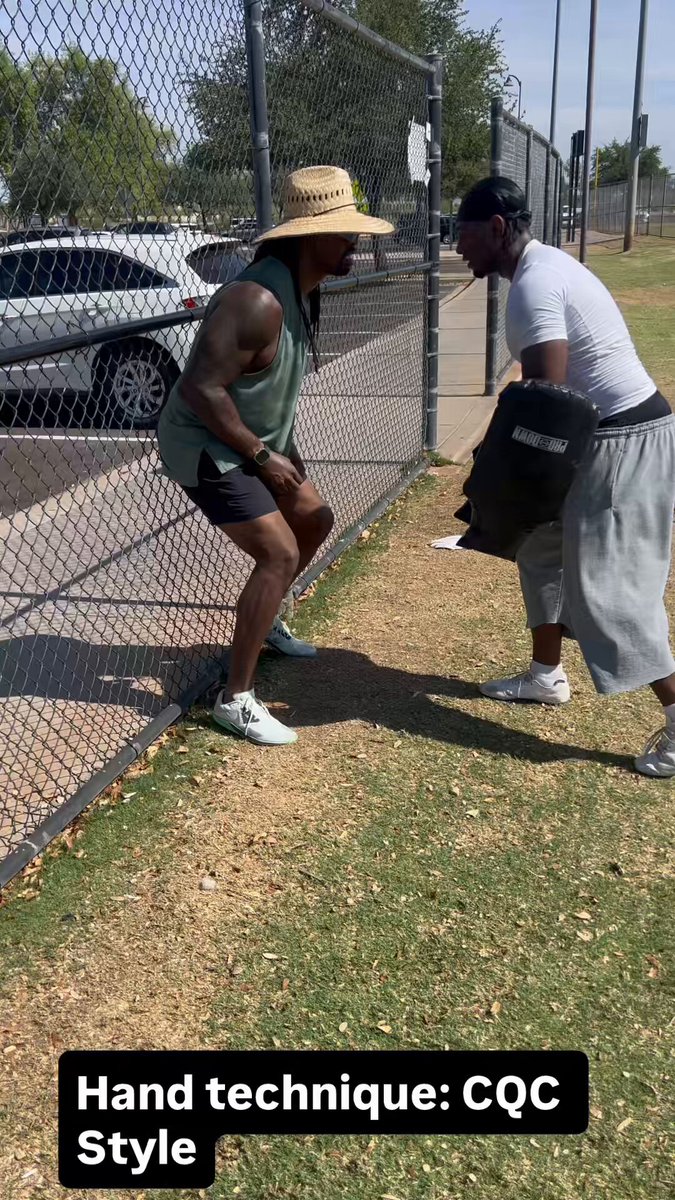
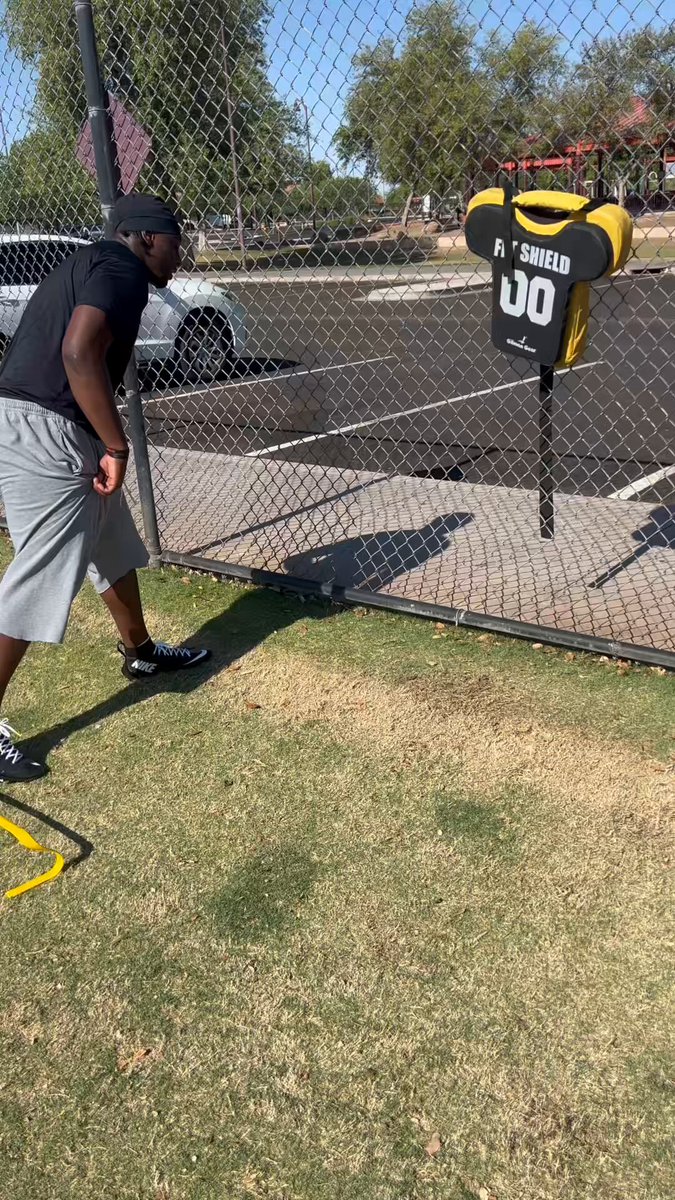
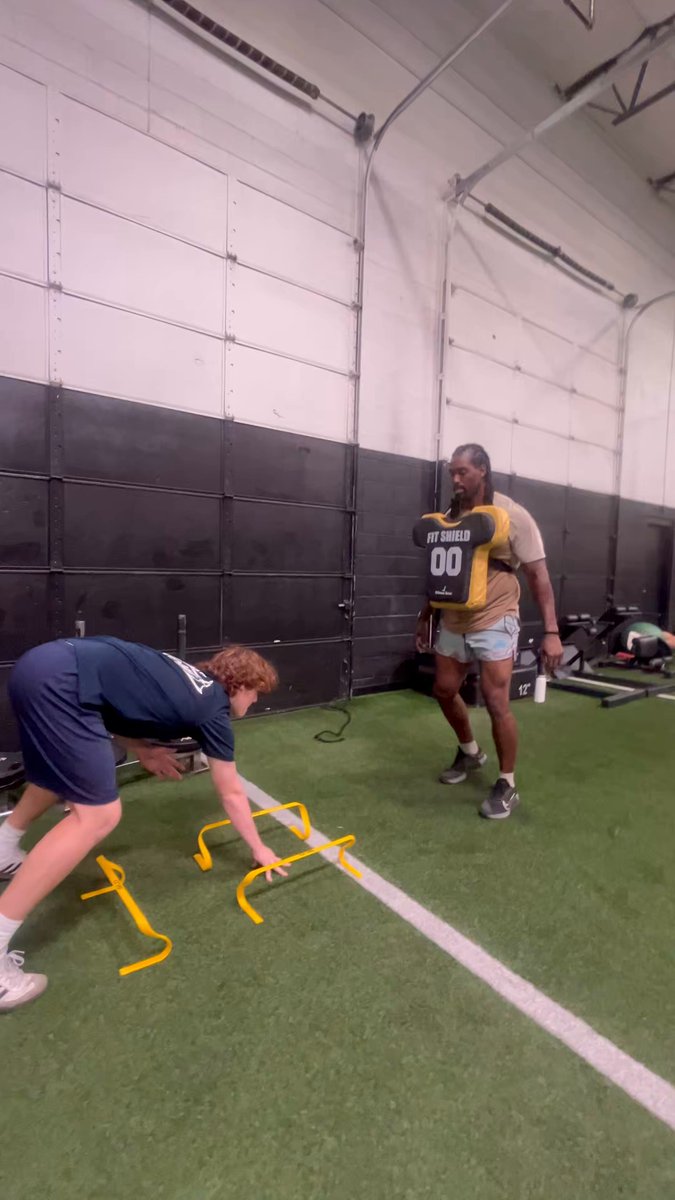
But here’s the thing — that “fence work” isn’t a gimmick. It’s one of the most transferable training tools we use, and it directly mirrors what a defensive lineman does on every single snap.
The fence IS the offensive lineman.
In Close Quarters Combat, the fence is a concept used to control space, manage distance, and set up your attack. You’re not just standing there — you’re reading pressure, absorbing contact, and exploding at the right moment. Sound familiar?
That’s a 1-technique rep. That’s a 3-tech reading the guard’s set. That’s an edge rusher feeling the tackle’s hands before he counters.
Here’s how they connect:
Hand fighting is hand fighting. Whether you’re in a clinch or in the trenches, the guy who controls the inside position wins. We train grip breaks, wrist controls, and underhook battles — all of which show up the moment a tackle tries to latch onto your chest.
Pressure management. CQC teaches you not to panic when someone is physically imposing their will on you. That composure? That’s what separates a D-lineman who gets washed down from one who resets his feet, re-engages, and makes the play.
Explosiveness off contact. In CQC, your best move often comes after the initial collision — when you’ve felt what the other person is committed to. Same concept as a counter pass rush move. Feel the lean, then go.
Stance and base. A wide, athletic base with a low center of gravity is survival in both worlds. You can’t be moved if you can’t be uprooted.
The fence just makes it visceral. It removes the option to drift or reset lazily. You have to solve the problem in front of you — with your hands, your hips, and your head — just like every rep on the field.
So yeah, he was on a fence. And he’s going to be a nightmare for offensive linemen because of it.
#az #dline #defensiveline #CQC #technique
105
May 17
Self-discipline is the real college readiness skill.
Colleges aren’t just looking at what you achieved — they’re looking at evidence that you can function independently.
Grades & Academics
No teacher is going to chase you down in college. High schoolers need to build the habit of managing their own deadlines, studying without being told, and advocating for themselves when they’re struggling.
Athletic Self-Motivation
When coaches aren’t watching, do you still put in the work? College coaches recruit kids who train because they want to be great — not because someone made them. That unsupervised gym session, that early morning run — that’s what separates committed athletes from casual ones.
Body Recovery
Sleep, nutrition, hydration, managing soreness — high schoolers who treat their body like an asset are way ahead of the curve. In college, no one is telling you to go to bed or eat right.
Recovery BodyCare Nutrition Sleep
The Big Picture
Colleges and college coaches are essentially asking: “Can this person manage themselves?” The students who thrive built those self-regulation habits in high school — before they had total freedom.
#Academics #SelfMotivation #CollegeReady #athlete #selfdisciplined
1
1
78
Marcus Pittman retweeted
May 17
Had a good time competing the @LFCollege Showcase. Top 5 for my D-Line group 1on1s
@MpPerformanceaz @MikeSheahan122 @azc_obert @OLDL_Doc @FBCoachATaylor @TrineThunderFB @Coach_TMART_ @GametimeRC
4
8
215
May 14
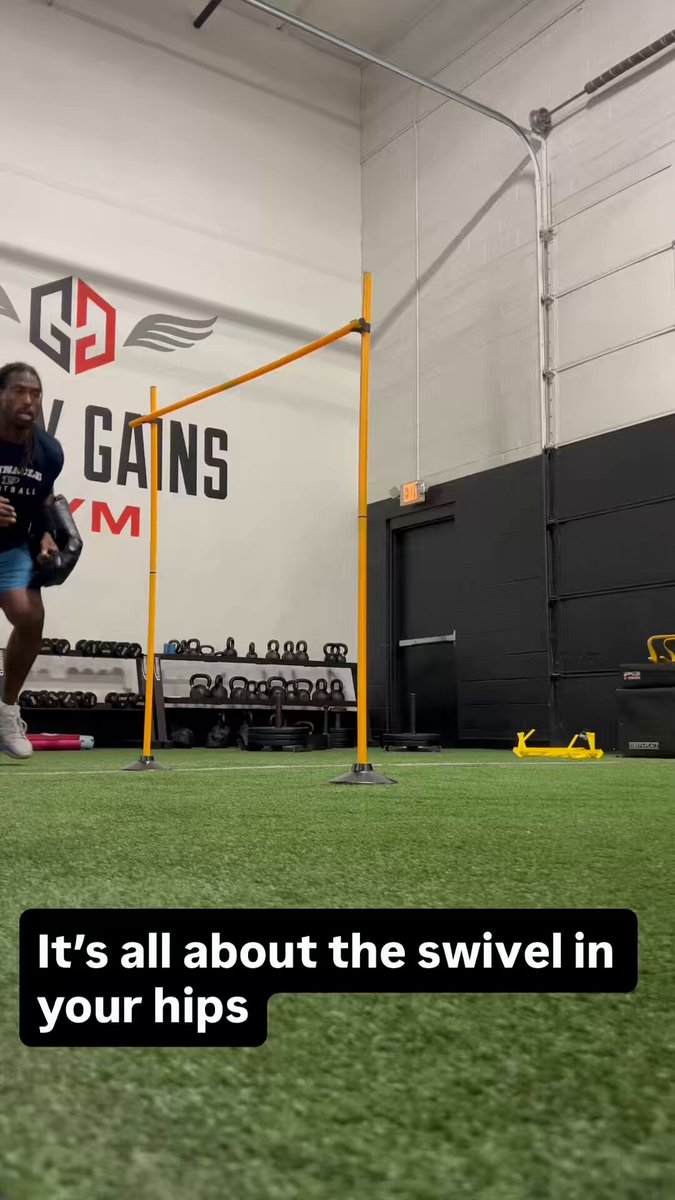
The hips are the engine of a football player’s body — and for a defensive lineman, hip mobility is the difference between good and elite.
Loose hips let a rusher dip and bend the corner tighter, execute spin and rip moves faster, avoid the offensive lineman’s punch at the snap, and stay low in leverage battles without playing upright and stiff.
Better hip mobility equals more explosion, better angles, and quicker counters. Defenders with it are just harder to block.
#az #dline #hips #technique #mobilty
1
1
2
152
May 12
The off-season gives you something the regular season never can: time without consequence. Every rep is a chance to rewire movement patterns, not just survive the next snap.
During the season, your only job is to execute your assignment and win. There’s no time to think about your hands or your first step — you react. This means bad habits get reinforced every single week if they were never fixed. The off-season exists to break that cycle.
#az #dline #offseason #football #passrush
1
56
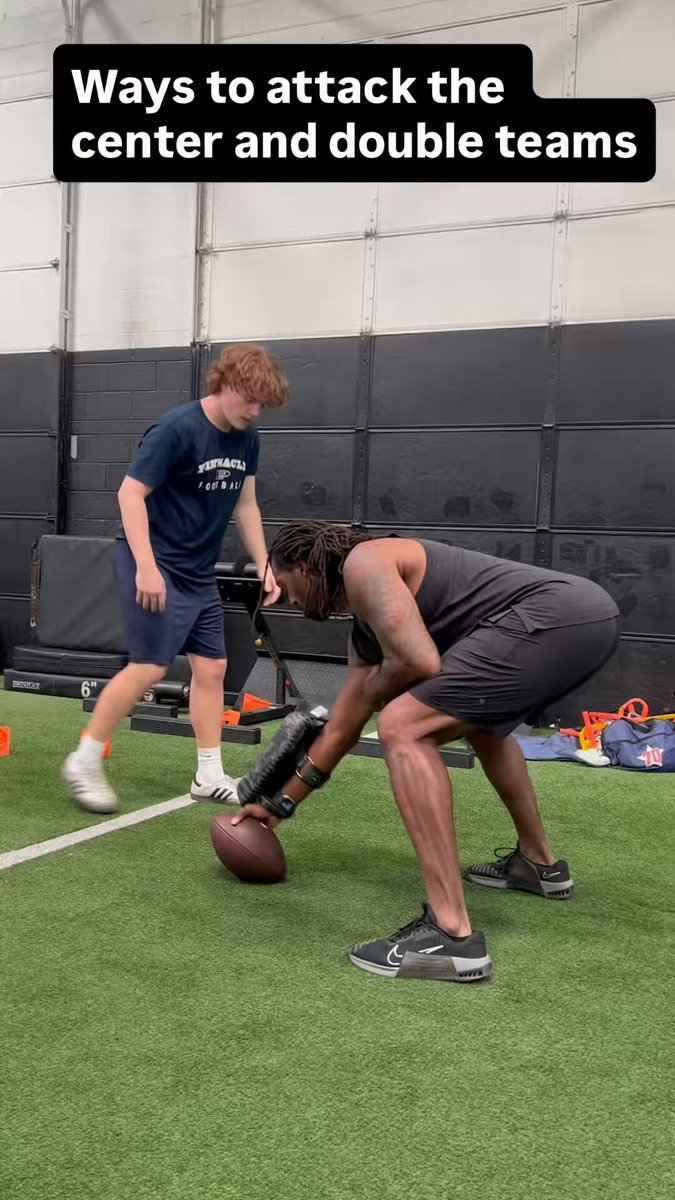
3 Ways to Dominate the Trenches 💪🏈
Want to win at the line of scrimmage? Here’s how to attack a center and create separation like a pro 👇
1️⃣ Attack the Snap Hand
The moment that hand comes off the ground — it’s slow. Strike the wrist, cross-face to that side, or slap it down and rip underneath. That hand is late every single time 🔒
2️⃣ Attack the Free Hand
Chip it inside before he lands his punch. Club it down, rip underneath, or catch it and redirect it across his body. Kill his leverage before he even gets set 🚫
3️⃣ Create Separation
Dip & rip, snatch & pull, push-pull counter — get his hands OFF you. Work your hands inside his and you control everything. Inside hand position = the advantage, every rep 💯
⚡️ The golden rule: win the first step and strike before he sets his hands. An O-lineman locked in is dangerous. Beat him to the punch and the play is yours.
📌 Save this for your next film session or practice rep.
#az #dline #passrush #lineman #technique
130
Hand Placement in the 2 Tech
Hands inside the guard’s frame equals you control the play. Thumbs up, elbows tight. Strike first, stay low, dominate the line.
#az #DefensiveTackle #Football #DLine #FootballTips
165