
Make everyone special no matter the circumstances encourage them to think “outside” the box it’s an enlightening experience🇺🇸#PrecinctStrategy.com🦺🙏🦺
Joined November 2022
- Tweets 158,515
- Following 11,110
- Followers 11,639
- Likes 134,577
4,669 Photos and videos





MrsPositive retweeted

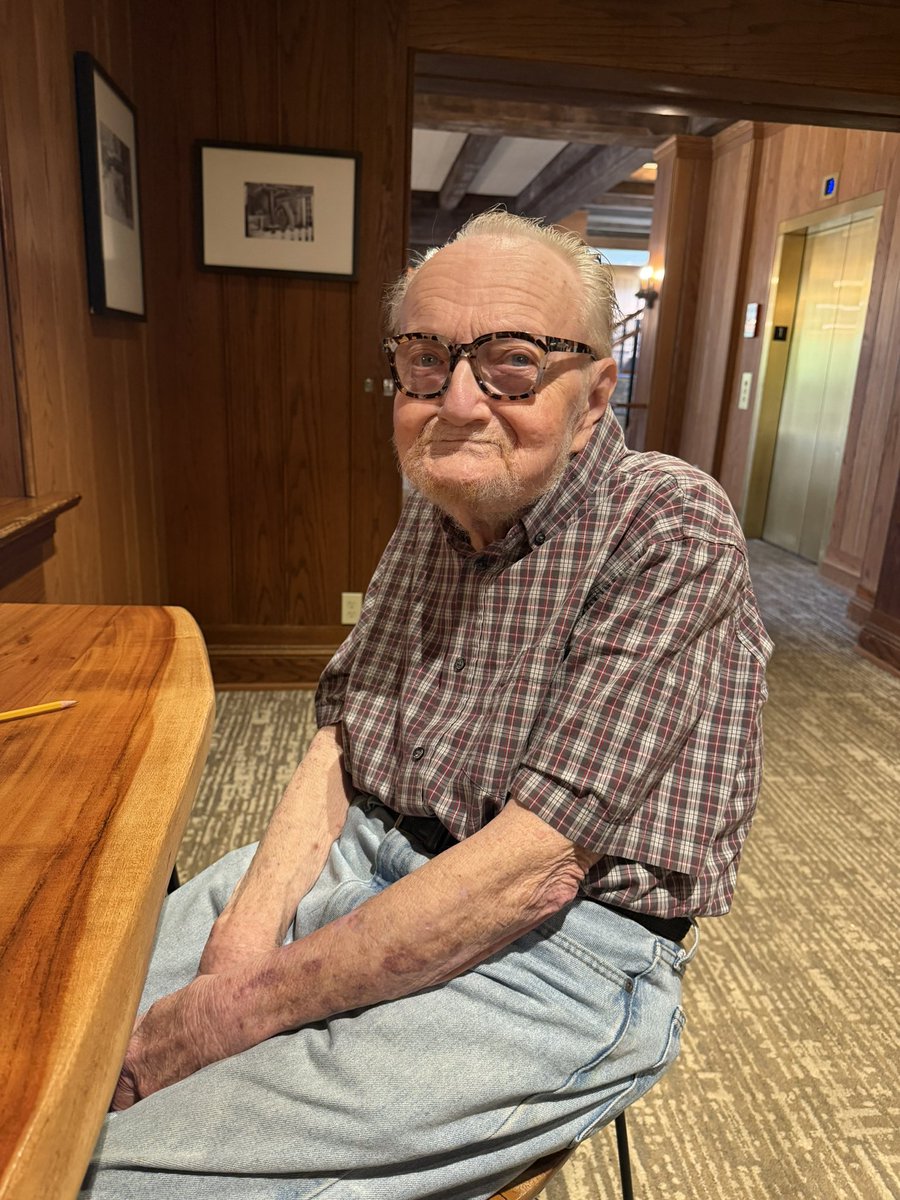
I want to introduce you to Steve. He’s 83. His wife died a few months ago and he comes to this lodge in Spring Mill, Indiana and draws. He taught art in Terre Haute, IN his whole life. He also did courtroom sketches in court cases. In the comments I’ll share some pics from his sketchbook. He was excited when I said I was going to share his sketches with the world.
2,052
5,905
61,440
1,291,438
MrsPositive retweeted

Jun 13
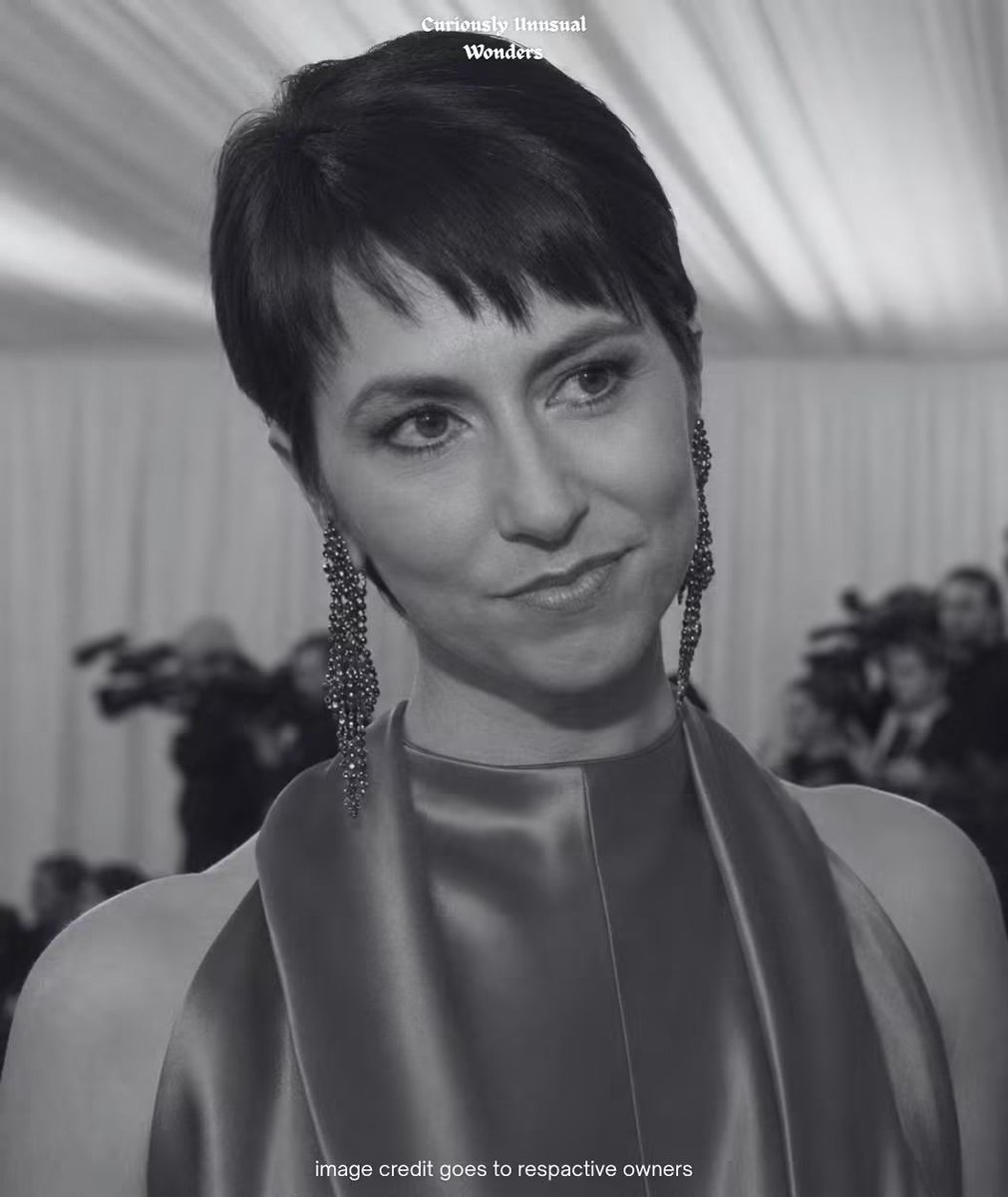
A bedroom in San Francisco. Around 1976.
A six-year-old girl sat on her bed and wrote a book. She titled it The Book Worm. She wrote, by hand, one hundred and forty-two pages.
She was a shy child. She would write elaborate stories for hours alone, the way other children watched television. A few years later, a flood swept through the house and destroyed the manuscript.
She did not stop writing. She kept writing through middle school, through the Connecticut boarding school Hotchkiss, and through Princeton, where the Nobel laureate Toni Morrison taught her in a creative-writing workshop and called her one of the best students she had ever had.
She graduated from Princeton in 1992 with a degree in English.
She moved to New York. She worked at D.E. Shaw, a hedge fund, while she tried to finish her first novel.
At the hedge fund, she sat near a vice president four years older than her, named Jeff Bezos.
Her name was MacKenzie Scott.
She and Bezos married in 1993. The next year, they drove together from New York to Seattle to start, in a converted garage, an online bookstore called Amazon. She was one of the company's first employees. She wrote its first business plan. She handled the accounts. She helped pack the first orders the company ever shipped to customers.
It took her ten years, in between Amazon and the four children she and Bezos raised together, to finish her novel. She published The Testing of Luther Albright in 2005. It won the American Book Award the following year. Toni Morrison, asked to comment on it, called it "a sophisticated novel that breaks and swells the heart."
A second novel followed in 2013.
Then, in January of 2019, after a long trial separation, MacKenzie and Jeff Bezos announced they were getting divorced.
In the settlement, she received about four percent of Amazon. At the time it was worth around thirty-eight billion dollars. It was, by most accounts, the largest marital settlement in the history of the world.
She dropped her married name. She took her own middle name, Scott, in its place.
And then she started writing the cheques.
In May of 2019, four months after announcing the divorce, MacKenzie Scott signed the Giving Pledge.
"I have a disproportionate amount of money to share," she wrote in the letter that accompanied it.
She meant it.
Now here is the part worth sitting with.
Most billionaires set up large foundations with carefully branded names, staffs, grant applications, and quarterly progress reports. MacKenzie Scott did the opposite.
She and a small team began quietly identifying nonprofit organisations doing strong work on racial equity, gender equality, economic mobility, education, public health, and LGBTQ rights. Many of these were small groups whose entire annual operating budgets were smaller than a single one of her cheques. When they decided to fund one, the organisation would typically learn about it by getting a phone call, out of nowhere, from an intermediary they had never heard of, asking how to wire several million dollars into their bank account.
No application. No proposal. No restrictions on how the money could be spent.
In 2022, after years of working in near-silence, Scott set up a website called Yield Giving to publish a record of her grants. In 2023, for the first time, she ran an open call, allowing small non-profits she might never have heard of otherwise to apply.
Then the giving kept accelerating.
By July of 2020, Scott had given out one point seven billion dollars in unrestricted grants to a hundred and sixteen nonprofits.
By the end of 2022, she had passed fourteen billion.
By the end of 2024, nineteen.
By the end of 2025, MacKenzie Scott had given away twenty-six point three billion dollars to roughly two thousand seven hundred organisations across the United States and abroad.
In 2025 alone, she gave seven point one billion. About seven hundred and eighty-three million of that went to historically Black colleges and universities — Howard, Spelman, Morehouse, and many others — more than doubling the round of HBCU gifts she had made five years earlier.
Most of the time, the press did not know until the recipients announced it themselves.
When she finally posted a year-end essay on Yield Giving in December of 2025, she wrote that the dollar totals would dominate the news coverage, but that the real story was happening inside the communities the money had reached.
A six-year-old girl in San Francisco wrote a hundred-and-forty-two-page novel by hand, and lost it in a flood.
She kept writing.
She studied under Toni Morrison at Princeton. She wrote one of Amazon's first business plans. She published two literary novels.
In 2019, she walked out of the largest divorce settlement in history, signed her own giving pledge, and started writing cheques to nonprofits she had picked herself.
She did not put her name on a single building.
She did not start a foundation called the MacKenzie Scott Foundation.
She just kept finding good organisations and wiring them money.
She had spent her life writing.
Now her writing was, mostly, just the cheques.
9
92
295
17,505
MrsPositive retweeted

This will be a never ending saga for the Metcalfs no matter what. Their son is gone and the nightmare will continue for the rest of their lives. I cannot stop thinking about that poor family. Keeping them in prayer.
3
56
626
MrsPositive retweeted

13h
I look forward to the day when your life no longer echos of this scum bag and his dealings. Thanks for your coverage but gosh it must be horrible to wade into their cesspool on the daily.
3
14
625
MrsPositive retweeted

Pauper.
If only someone had set up donations for his defense. And then if only his parents hadn’t bought a new house in a gated community with said defense funds.
IDGAF. 🤷♀️
9
8
283
8,581
MrsPositive retweeted

Thank you, Sarah. Keep up the great work!!
1
6
168
MrsPositive retweeted

🇺🇸AMERICA FIRST or SENATE FIRST?
Ted Cruz talks a big game but has he DONE ENOUGH?
▸ Fought hard enough to boot Leader Thune?
▸ Rallied to FORCE the SAVE America Act?
▸ Pushed to NUKE the filibuster?
▸ Pressured RINOs to deliver the MAGA agenda?
Or has he stayed too quiet while Thune blocks everything 80M Americans voted for?
Drop your take👇🏻… Real America First? or Senate swamp?

404
517
968
18,455
MrsPositive retweeted

PRO TIP: If you keep them in prison, we won’t have to live like this anymore.
Violent criminals do not belong back on the streets.

🚨#BREAKING: OVER A DOZEN SHOTS WERE FIRED INSIDE FOOD COURT IN THE HAYWOOD MALL IN GREENVILLE SC.
PEOPLE BEGAN RUNNING FOR THEIR LIVES AND HIDING IN STORES.
ONE PERSON WITH A GUNSHOT WOUND TO THE NECK.
MULTIPLE PEOPLE IN CUSTODY.
WE DON'T HAVE TO LIVE LIKE THIS!!!!!!
205
2,510
10,987
110,793
MrsPositive retweeted

If there not already they should be this is disgusting

9
10
46
641

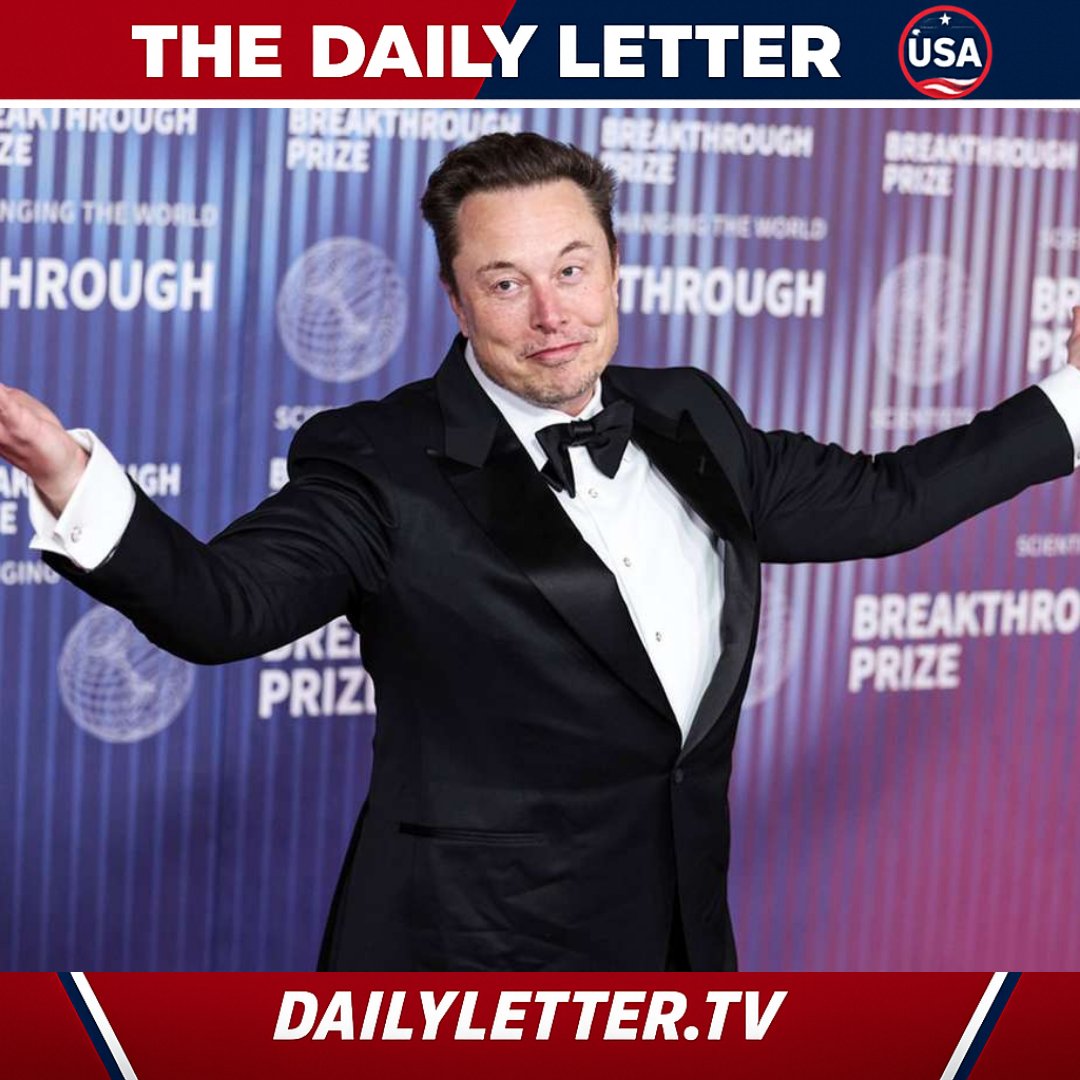
Be brutally honest: Are you deeply outraged that, while hundreds of millions of Americans and I are struggling financially, Elon Musk has now become the world's first trillionaire, with more wealth than he could spend in 1,000 lifetimes? Yes or no?
22,797
663
2,922
399,077
MrsPositive retweeted

Jun 13
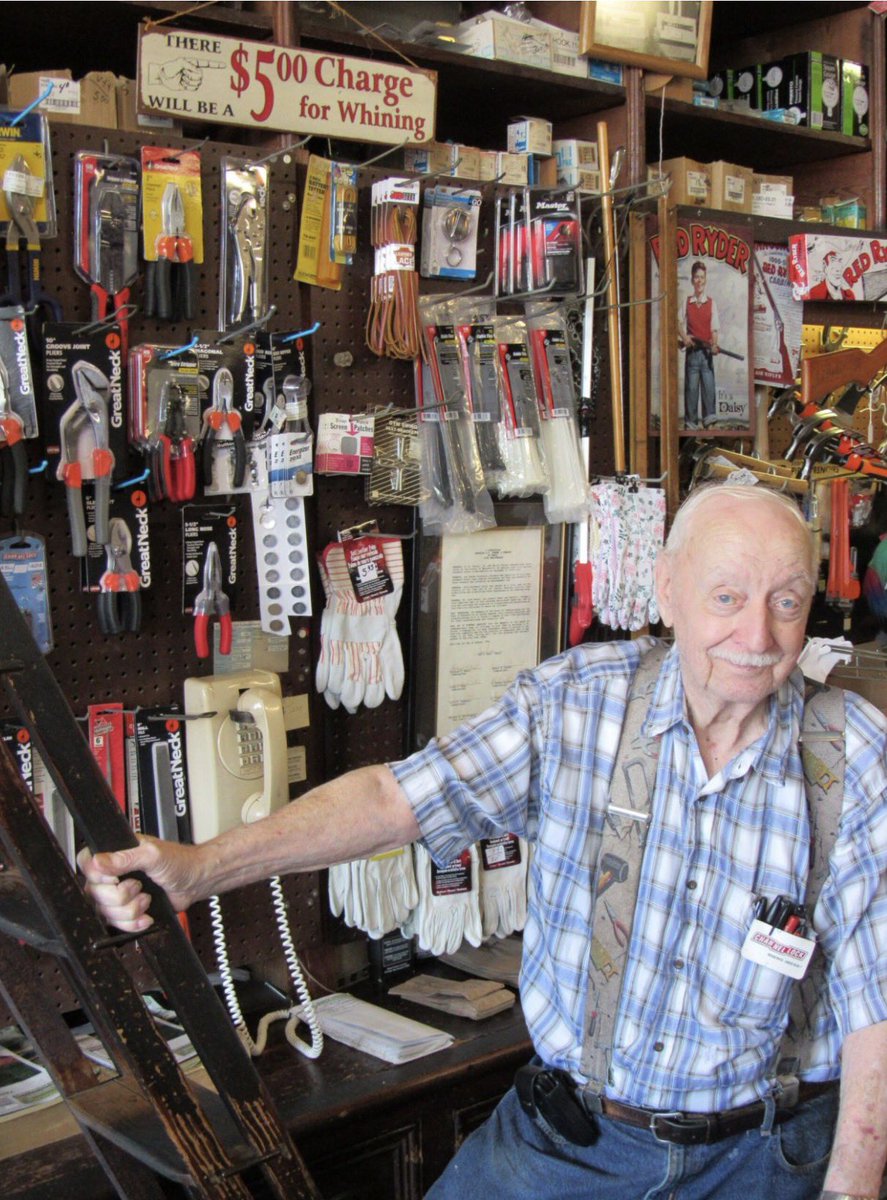
The hardware store closes at 6PM.. It's 5:58 when a kid walks in. The kid can't be more than sixteen. Soaking wet and shaking from the rain...
"We're closing." Tom says.
"Please. I just need a lock. For a door."
Something in the kid's voice. Terror. Desperation.
"What kind of lock?"
"I don't know. Just one that keeps people out."
The kid's got a black eye. Fresh. The kind that's still swelling.
Tom doesn't ask. Just walks to aisle seven. Shows him the locks. The kid reaches for the cheapest one, $8.99.
"That one's garbage," Tom says, "Won't stop anyone determined."
He hands him a deadbolt. Heavy duty. $34.99.
The kid's face crumbles. "I only have twelve dollars."
They stand there. Store empty except for them.
Tom takes the deadbolt to the register. Rings it up. "Twelve dollars."
"But,"
"Sale price. Today only."
The kid knows there's no sale. Knows this old man is lying. Tries not to cry and fails.
Tom bags it. Adds a screwdriver. Free.
"You know how to install it?"
The kid shakes his head...
They drive in Tom's truck. Don't talk. The kid directs him to a rundown duplex on the east side.
Upstairs apartment. Door frame cracked. Old lock broken, hanging loose.
Tom installs the deadbolt. Takes him fifteen minutes. Tests it. Solid.
Hands the kid both keys.
"Someone tries to get in, you call 911. You hear me?"
The kid nods.
Tom's halfway to his truck when he hears it, "Why?"
He turns around. The kid's standing in the doorway, backlit, holding those keys like they're made of gold.
"Why did you help me?"
Tom thinks about his own son. Twenty years ago. Different city. Same desperate eyes. Didn't make it.
"Because you asked," Tom says simply.
He drives home. Doesn't tell his wife. Doesn't think much about it.
Three weeks pass.
A woman comes into the store. Tired eyes but smiling. "Are you Tom?"
"Yes, Ma'am."
"My son told me about you. The lock you sold him." She's crying now. "His father, my ex-husband, he's not a good man. That lock kept us safe until I could get the restraining order. Until we could breathe."
She hands Tom an envelope. "It's not much. But it's the thirty dollars we owed you, plus a little more."
Tom tries to refuse. She won't let him.
"You didn't just sell him a lock," she says. "You saw him. You saw us. When we were invisible."
After she leaves, Tom opens the envelope. Sixty dollars. And a note from the kid:
"Installed three more locks for neighbors who needed them. Taught myself how...
"Going to trade school next year. Maybe I'll work in a hardware store someday. Be someone like you. -Marcus"
Tom's manager notices him crying by the register.
"You okay?"
"Yeah," Tom says. "Just... yeah."
That night, Tom stayed two minutes past closing. Then five. Then ten.
In case someone walks in at 5:58PM. Soaking wet. Desperate. Needing more than just a lock.
Tom learned something.
The last customer of the day may be the most important one we ever serve.
155
1,980
10,339
163,893
MrsPositive retweeted

22h
Austin Metcalf: A brilliant student, standout athlete, and shining light gone too soon. 🕊️🇺🇸 From the football field to the classroom with a 4.0 GPA, Austin was a leader, a peacemaker, and a young man full of promise whose smile lit up every room.
This tribute honors his incredible journey and the beautiful legacy he leaves behind in Frisco. May his memory continue to inspire us all to live with purpose, faith, and kindness.
Rest in peace, Austin. You are deeply missed. 💔
115
767
2,159
27,052
MrsPositive retweeted

Jun 13
About like when Abbott said he would punish the Dems for leaving the state. He went on Fox News acting all tough and didn’t do sht. He’s a pathetic bush/rove repubic and needs to be voted out of office.
2
1
2
67
MrsPositive retweeted

Greg Abbott doesn’t trust judges?
Wasn’t he a judge?
Does he really think the legislature is going to vote to close the primary?
Jun 12

CLOSED PRIMARIES: @GregAbbott_TX says a thoughtful process is needed to determine how Republicans register to vote.
“Legislators can and should be more responsive to Republicans than a judge can be.”
9
7
25
1,472

2
26
200
37,796
Anthropic acaba de lanzar el abogado más barato del mundo
Se llama claude-for-legal.
Y esto es lo que es capaz de hacer:
• Leer y revisar contratos
• Redactar respuestas legales
• Construir tablas de reclamaciones para juicios
• Vigilar fechas de vencimiento y renovaciones
• Conectarse solo a tus herramientas: Slack, DocuSign, Ironclad, Lexis …
Todo eso sin salir de Claude
Cómo funciona:
→ Lo instalas en 60 segundos
→ Funciona en Claude Cowork, Claude Code o tu propia API
→ Es open-source y 100% gratuito
Qué áreas cubre:
• Contratos comerciales y privacidad
• Litigación y regulatorio
• Gobernanza de IA
• Formación jurídica
Lo que antes le llevaba horas a los abogados, ahora se hace en minutos
Enlace abajo👇
May 12

JUST IN: Anthropic rolls out new Claude tools aimed at automating legal work for lawyers & law firms.
180
1,301
10,291
2,641,086

MrsPositive retweeted

May 2
DocuSign Personal: $10 to $15 per month.
DocuSign Standard: $25 to $45 per user per month.
DocuSign Business Pro: $40 to $65 per user per month.
A 10-person team on Business Pro pays $4,800 to $7,800 a year. To put signatures on PDFs.
A team of 50 pays $24,000 to $39,000 a year.
And there is a 100-envelopes-per-year cap on most plans. Send more contracts and you pay extra.
Need SMS delivery? $0.40 per send.
Need ID verification? $2.50 per attempt.
Need premium support? $5,000 to $50,000 per year add-on.
You are rationing digital signatures in 2026.
DocuSign is a $10 billion company built entirely on this pricing model.
Now meet DocuSeal.
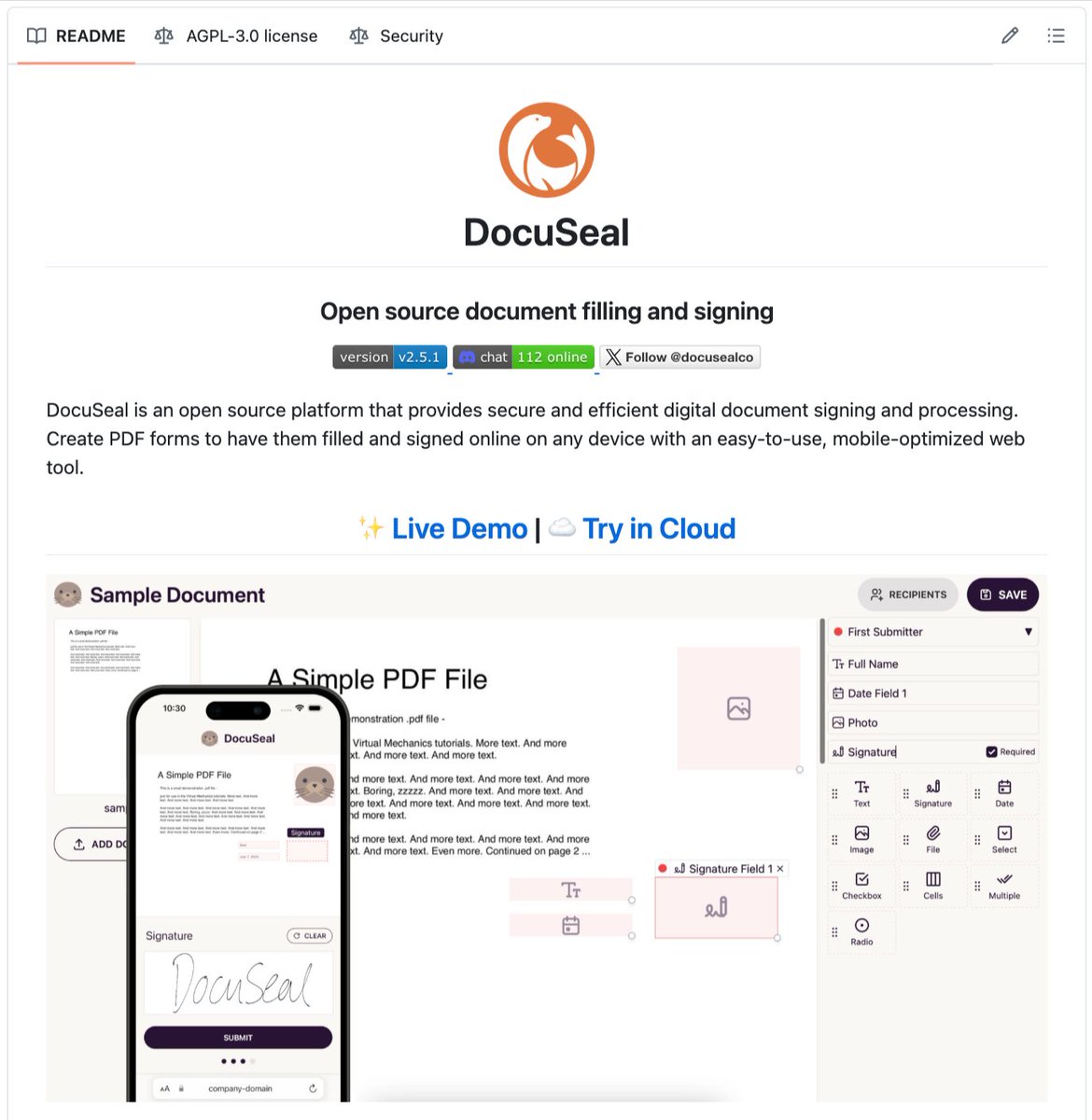
A free and open source alternative to DocuSign.
Created in 2023 by a Ruby developer named Alex who was simply trying to sign one document and realised every solution online was overpriced or required a subscription.
Three weeks later he had a working alternative. He pushed it to GitHub under the AGPL-3.0 license.
Today it has 11,800 stars and over 1,000 forks. Bootstrapped. No VCs. No paywalls.
Here is what DocuSeal does:
- Upload any PDF and turn it into a fillable, signable form
- Drag and drop signature fields, dates, checkboxes, file uploads, and 13 field types
- Send to multiple signers with custom signing order
- Automated email reminders
- Mobile signing on any device
- PDF signature verification built in
- Audit trail for every document
- Bulk send and templates
- Full API access
- Self-host with one Docker command
Here is what DocuSeal costs:
Zero. Forever. Unlimited documents. Unlimited signers. Unlimited storage.
DocuSign limits envelopes. DocuSeal doesn't.
DocuSign charges per SMS. DocuSeal doesn't.
DocuSign charges for ID checks. DocuSeal doesn't.
DocuSign sees your contracts on their servers. DocuSeal doesn't.
Here is the wildest part:
The median DocuSign contract per Vendr is $17,250 per year. One Reddit thread has people saying "they want me to pay $4.80 per e-signature."
Self-host DocuSeal on a $5 cloud server and a 50-person team can sign as many contracts as they want without paying a single dollar.
Your contracts never leave your server. Your client lists. Your NDAs. Your employment agreements. None of it touches a third-party company.
For individuals who only sign a few contracts a year, you save $180.
For small teams of 10, you save up to $7,800 a year.
For a 50-person company, you save up to $39,000 a year.
Your documents. Your signatures. Your server.
100% Open Source. (Link in the comments)
145
403
3,944
1,122,627
MrsPositive retweeted

Jun 12
I'm one of the founders of Firma.dev and we're live on Product Hunt today. Built it after one too many DocuSign bills at $4-5 an envelope. Ours is €0.029 (~3¢), API-first, integrate in an afternoon. Definately proud of this one: producthunt.com/products/fir…
3
1
4
779
MrsPositive retweeted

Most business owners have tried Claude at some point but still think it's just another chatbot.
The truth is, a lot has changed in the last 6-12 months. Claude can now be an actual team member working in your business. It plugs into the tools you already pay for and runs the work that piles up every week.
But with so much going on, it's hard to figure out where to start learning.
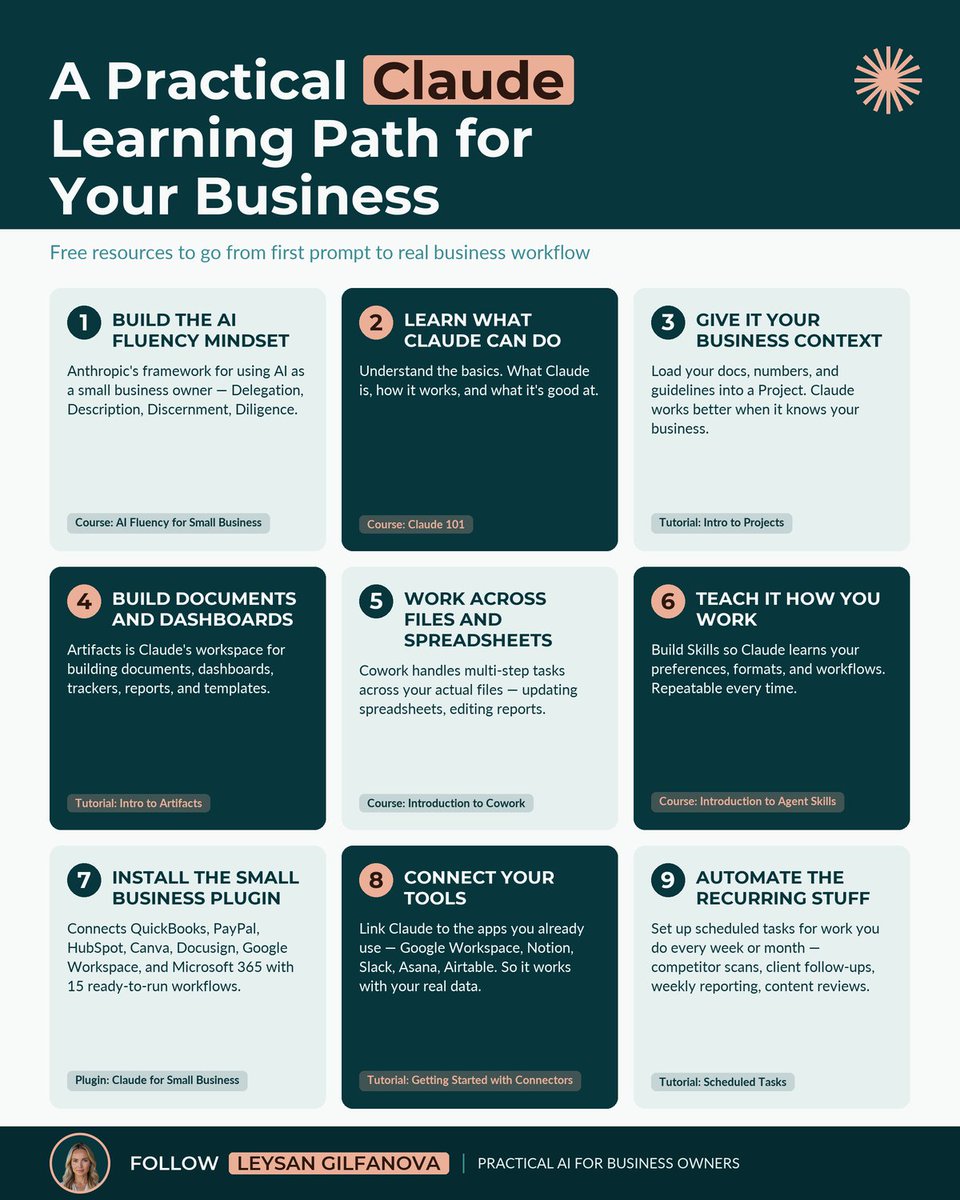
So here's the order I'd actually follow.
Start with how to think about AI → learn the product → make it work with your data → automate the recurring stuff.
1/ Build the AI fluency mindset
The 4D framework — Delegation, Description, Discernment, Diligence — applied to small business. Uses Claude as the tool throughout.
🔗 tinyurl.com/2aoessmd
2/ Learn what Claude can do
The basics. What Claude is, how it works, what it's good at.
🔗 tinyurl.com/2yjrngdg
3/ Give it your business context
Load your docs and guidelines into a Project. Claude works better when it knows your business.
🔗 tinyurl.com/28w4t5ef
4/ Build documents and dashboards
Artifacts is Claude's workspace for the deliverables — reports, trackers, templates, dashboards.
🔗 tinyurl.com/2ytuubfn
5/ Work across files and spreadsheets
Cowork handles multi-step tasks on your actual files — editing a report, updating a cash flow model.
🔗 tinyurl.com/2d6dprxv
6/ Teach it how you work
Skills are reusable instructions Claude follows the same way every time.
🔗 tinyurl.com/2ak4ogpg
7/ Install the Small Business plugin
One toggle in Cowork connects QuickBooks, PayPal, HubSpot, Canva, Docusign, Google Workspace, and Microsoft 365 with 15 ready-to-run workflows.
🔗 tinyurl.com/2cngb4f2
8/ Connect your tools
Link Claude to the apps you already use — Google Workspace, Notion, Slack, Asana, Airtable. So it works with your live data.
🔗 tinyurl.com/244m6me3
9/ Automate the recurring stuff
Scheduled tasks run the work you do every week or month — competitor scans, client follow-ups, reporting.
🔗 tinyurl.com/2d9fmkee
Pick the step you're stuck on and start there. Skipping ahead is fine — the order is a guide.
Which step are you on?
🔖 Save this so the whole path is here when you need it.
1
2
153