
Adult Human Female. Women in the Chilterns #WitChes. Agent 31796 & 13689 🍻#SexNotGender #DontCisMe
Joined June 2010
- Tweets 88,728
- Following 2,833
- Followers 1,978
- Likes 251,976
3,922 Photos and videos












Humourless Feminist Killjoy 🦖🦕 retweeted

Last year, over 1,000 girls were mutilated on the NHS.
Stephanie Davis-Arai, @Transgendertrd Live at the Derby Women's Festival
Stephanie talked about how mastectomies are being promoted as an identity choice for girls
Watch the full talk on our substack womensrightsnetwork.substack…
#DerbyWomensFestival
4
21
49
1,134
Humourless Feminist Killjoy 🦖🦕 retweeted

21h
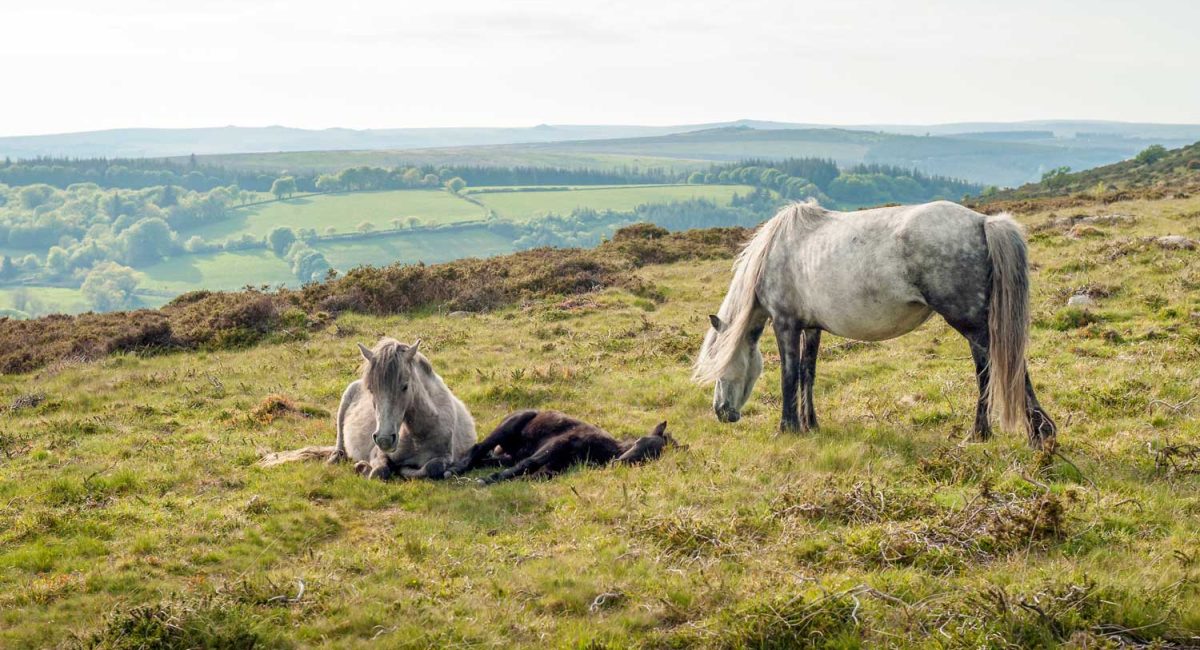
Dartmoor's hill ponies have grazed those commons for longer than there has been a country called England. Fewer than a thousand are left, down from six thousand a generation ago. The United Nations listed them as endangered in 2023. So, naturally, the body charged with protecting nature has decided to get rid of nine in ten of the survivors.
There is a process, obviously.
Natural England's new grazing contracts now count the ponies in the same bucket as the cattle and sheep. A commoner with a fixed quota has a choice: keep a semi-wild pony worth nothing at market, or use the slot for a lamb he can sell. Guess which one survives the spreadsheet. The rest are gathered in the autumn drifts, and with nowhere to put thousands of unhandled moorland ponies, the next stop is the abattoir.
Natural England would like it noted that it has not ordered a cull. It has merely built a machine whose only output is a cull, switched it on, and handed the bolt gun to a farmer so the fingerprints land elsewhere. Very tidy.
And now the funny part. The pony is the best tool on the entire moor for eating Molinia, the coarse purple grass strangling Dartmoor into a brown monoculture. Cattle and sheep won't touch it. The ponies hoover it down and clear the ground for the orchids, the wildflowers and the insects behind them. Remove the ponies and the moor chokes into precisely the lifeless scrubland the contract was meant to prevent.
So the conservation strategy, in full: protect the habitat by deleting the animal that maintains the habitat. A masterclass.
Better still, Natural England's own Fursdon review looked at this exact question and told them, in plain English, not to lump ponies in with cattle and not to cut pony numbers. They read it, praised it, said they fully supported it, then did the precise opposite.
Four thousand years these animals have run Dartmoor with no committee and no contract. They could be gone within one, and the people who did it will write it up as a win for nature.
184
2,221
4,696
55,648
Humourless Feminist Killjoy 🦖🦕 retweeted

19h
Interested in the real reason Pride in Surrey is cancelled this year? Listen to our podcast series on the scandal:
open.substack.com/pub/julieb…
6
55
242
10,900
Humourless Feminist Killjoy 🦖🦕 retweeted

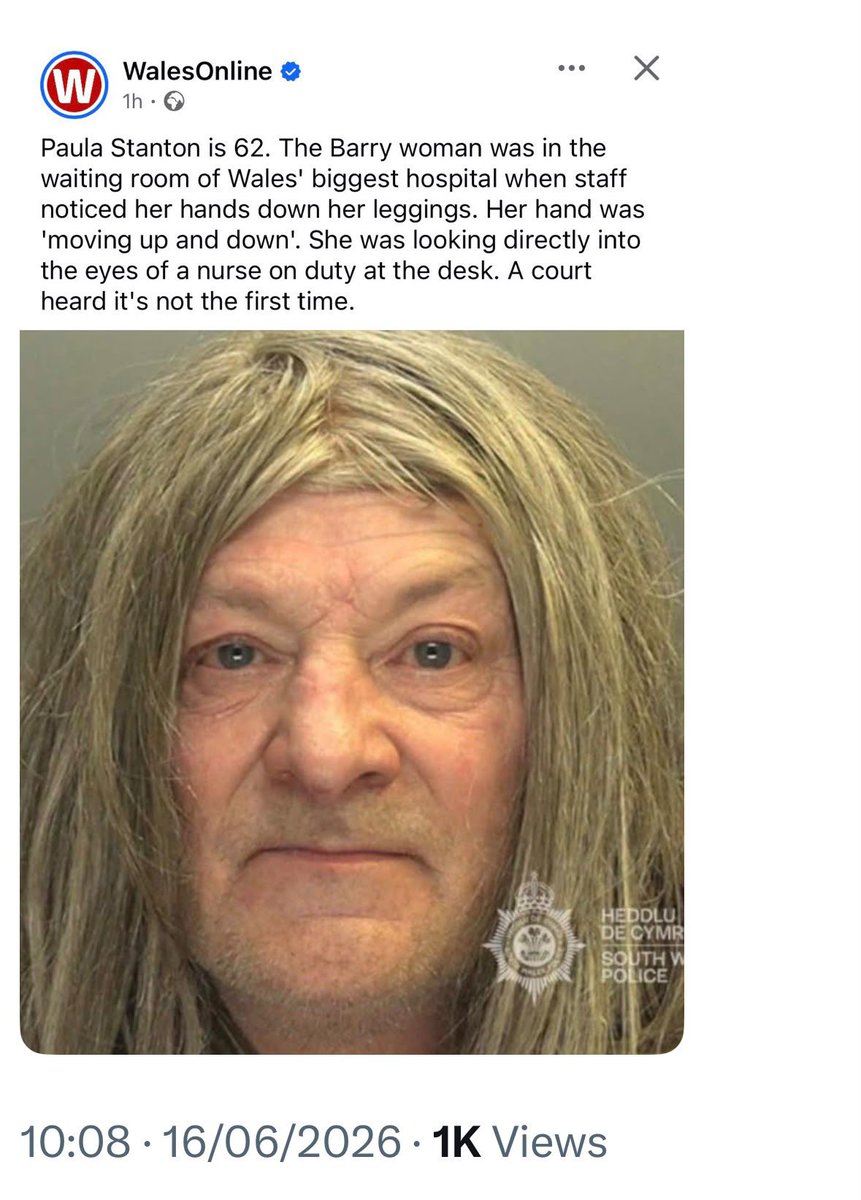
Hello @WalesOnline
This is a very unwell man with severe mental health issues not a woman. If he has a penis and is reported to be ‘wanking’ - he is indeed a man.
Please report a persons sex not their self identified gender when reporting such offences.
Thank you.
26
101
442
6,637
Humourless Feminist Killjoy 🦖🦕 retweeted

My MP replied to me, her response is below along with mine back to her and the link to my original letter -
You are right that I have added my name to EDM 240. I did so because I am deeply concerned that the Equality and Human Rights Commission’s draft Code of Practise for Services would, in practise, exclude trans people from services and facilities they have long used without issue, putting them at increased risk of harassment and violence and pushing them out of public life. It would usher in enforced segregation, with the policing of this effectively outsourced to service providers, including businesses, charities and public bodies.
In the Commons, the Minister suggested that where members of the public are unsure of someone’s gender within a single‑sex facility, “most people will have the common sense to step in where necessary or, if they are concerned, to alert a member of staff.” This approach does not give clarity or confidence to organisations that want to be trans‑inclusive and risks encouraging confrontation.
I am also concerned about the wider impacts. The government’s own Equality Impact Assessment warns that women who are considered masculine may face greater scrutiny, and that disabled people could face adverse effects. In my view, the Code represents a significant rollback of rights that would harm trans people directly and erode the principles of inclusion, dignity and equality that protect us all.
The Labour government is engaging with the EHRC to ensure any Code of Practise is firmly grounded in the Equality Act 2010, is workable for frontline services, and protects everyone from discrimination. Ministers are seeking clear, practical guidance for service providers so that single‑sex services can be provided lawfully where appropriate, while ensuring trans people are treated fairly and safely.
The government is also prioritising meaningful engagement with women’s, LGBT , and disability organisations and will subject any revised Code to proper parliamentary scrutiny and impact assessment. Alongside this, work is under way to strengthen measures against harassment and hate, and to support services with the tools they need to apply the law consistently and compassionately.
I hope this explains why I signed EDM 240 and how I will continue to approach this issue.
Best wishes,
Dr Beccy Cooper MP
My response to her -
Thank you for your reply and for taking the time to respond.
However, your response does not address the central question I raised in my original letter which was – “please give me a detailed explanation as to why you believe this guidance does not accurately reflect the law”. The EHRC Code of Practice is statutory guidance that explains how the Equality Act 2010 and relevant case law - including the UK Supreme Court’s unanimous ruling that “sex” in the Act means biological sex - should be applied.
Rejecting or disapproving this guidance via EDM 240 does not change the underlying law. If you believe the draft Code misstates the law, please identify the specific sections you consider inaccurate or unlawful, and explain why. Without that detail, signing the motion is an attempt to politically override an independent regulator's objective summary of the law, rather than engaging with its content.
I asked you to identify the specific parts of the draft Code that you believe are incorrect or unlawful, and to explain why. You have not done so. Instead, you raised general concerns about inclusion and potential risks, without engaging with the actual legal content of the guidance.
Please provide a detailed response to my original question. If I do not receive detailed explanations of where you think the Code has got the law wrong and why, by 12pm on Monday of next week (22 June), I will assume that no such legal errors exist and that you are attempting to politically override the independent regulator's objective summary of the law.
Jun 11

My MP has signed the EDM, this is my letter to her…
I am writing as a constituent regarding your decision to sign Nadia Whittome’s Early Day Motion (EDM 240) calling for Parliament to disapprove the Equality and Human Rights Commission’s (EHRC) draft Code of Practice on Services, Public Functions and Associations.
I am going to assume that you understand that this is statutory guidance and that rejecting it does not change the underlying law, as confirmed by the UK Supreme Court. If my assumption is correct, you must therefore believe that the EHRC’s guidance does not accurately reflect the law. Could you please explain to me which specific parts of the guidance you consider incorrect or unlawful, and why?
Furthermore, the EHRC is an independent statutory regulator, completely separate from the government of the day. Its sole duty in drafting this Code of Practice is to act as an objective referee—translating the Equality Act and recent Supreme Court rulings into clear, practical instructions for service providers. By using an Early Day Motion to try to block an independent body's guidance, you are engaging in an unprecedented overreach. You are effectively attempting a political veto of a regulator’s objective statement of what the law actually is. If Parliament does not like the reality of the law, the correct constitutional path is to propose new primary legislation to amend the Equality Act, not to politically interfere with an independent commission's statutory duty to explain it.
The biological reality is that trans-identifying men (trans women) remain male, regardless of hormones or cosmetic surgeries. Statistically, the vast majority do not undergo any surgical transition at all and are attracted exclusively to women. I firmly believe that individuals should have the absolute freedom to express themselves, wear whatever clothes they choose, wear make-up, and live their lives free from harassment or hassle. However, as a biological subset of men, they absolutely belong in male single-sex spaces, and they are entirely welcome there. There is no reason for them to be excluded from their own sex demographic.
By prioritising the feelings of a small group over clear sex-based protections, the position that a subset of men should use female single-sex spaces tramples on the rights, privacy, safety, and dignity of women and girls—who make up over 51% of the population.
As an effeminate gay man in my mid-50s, I have spent decades using male single-sex spaces (toilets, changing rooms, etc.) and have never once experienced any kind of bad or threatening incident in them. If you or others believe male single-sex spaces are not safe for trans women, the logical and fair response would be to campaign for men to behave better in those spaces and for better enforcement of existing rules against harassment or violence.
I look forward to you providing me with a specific, detailed explanation as to exactly why you believe this guidance does not accurately reflect the law. If you are unable to demonstrate where the EHRC has legally erred, then I expect you to do the right thing as our representative and remove your name from this Early Day Motion.
20
52
267
12,923
Humourless Feminist Killjoy 🦖🦕 retweeted

We’re working our way through this harrowing Rape Gang Inquiry Report and will comment in more depth soon.
But for now, we just want to say that no girl in the UK should ever have been subjected to such depraved sexual assault and torture while organisations, the police, and our government turned a blind eye.
The fact that adults who were responsible for protecting those girls not only failed catastrophically but actually covered it up is beyond words.
We note the inclusion at the start of the report that “Scottish political parties have refused a dedicated inquiry and failed to record offender ethnicity.” We welcome more investigation into this in Scotland.
Girls deserve better. All of them.

1
15
46
628
Humourless Feminist Killjoy 🦖🦕 retweeted

'A pattern is emerging here. The Government says the right things about accepting the Supreme Court judgment on the primacy of biological sex, but ministers don’t seem keen on its implementation'
@jamesmurray_ldn
unherd.com/newsroom/labour-i…
10
142
410
6,058
Humourless Feminist Killjoy 🦖🦕 retweeted

Jun 15
Exclusive from @oliver_wright
Dartmoor ponies could be subject to mass culling to reduce the impact on biodiversity after a controversial ruling by the government’s environmental quango
Natural England has demanded that all livestock grazing on the moor is reduced by about 75 per cent to protect other habitats, plants and species
The move looks set to result in the culling of up to nine in ten of the semi-wild ponies as farmers prioritise their own cattle and sheep to remain within Natural England’s limit to minimise the impact on their own livelihoods
Natural England argued that the move was necessary to protect the diversity of Dartmoor, which is a designated site of special scientific interest
However, the plan goes against a government commissioned review into the future of Dartmoor, published two years ago, which concluded that Natural England “should not take actions likely to result in a reduction in pony numbers”, adding they were “invaluable for conservation grazing”
The move has led to claims that the quango is acting as judge, jury and executioner of the ponies — a species which is itself seen as endangered
Dartmoor ponies could be put to death under biodiversity plans
thetimes.com/article/ba529f3…
376
720
3,855
2,332,323
Humourless Feminist Killjoy 🦖🦕 retweeted

Nurses were subjected to this horror and made to watch this man masturbate.
And the state of this report 👇- as the @barrydistrict news refer to this man as a ‘woman’ and utter the ridiculously offensive words ‘her penis’. 🤡
barryanddistrictnews.co.uk/n…
69
377
1,094
37,001
Humourless Feminist Killjoy 🦖🦕 retweeted

When health info replaces “women” and “mothers” with desexed terms, women with learning disabilities often can’t process or understand it.
In this clip @justsay_mother explains why clear, accurate language is essential.
#JustSayMother
2
18
33
2,624
Humourless Feminist Killjoy 🦖🦕 retweeted

Jun 15
This needs to be banned because this is indecent exposure which is a crime, we shouldn't have to see these dirty old perverted cocks on bikes when we're trying to go about our day.
23
89
585
6,393
Humourless Feminist Killjoy 🦖🦕 retweeted

Jun 15
Important report on trans ideology in children's books and the state of the children's publishing industry due this week!
Through the Looking Glass is published by @SEENPublishing, with @biologyinmed and us, and we'll be hosting the report on our website on Wednesday.

‘Promoting them in children’s books is not a neutral act.’
Julia Williams believes that safeguarding concerns have reached an ‘alarming’ level in some children’s gender-ideology books and calls for a rethink of storytelling rather than social activism.
4
79
191
5,878
Humourless Feminist Killjoy 🦖🦕 retweeted

Jun 15
This was great, Bartosch was set up to be the butt of the joke...and it turned out 80% of the audience were anti-porn.
Jun 15

"The online safety act sets a principle that the tech industry should be subject to the same laws as every other industry"
@jo_bartosch
1
30
136
4,886
Humourless Feminist Killjoy 🦖🦕 retweeted

📣🚨 New FSU Member Testimonial
“I would like to thank the Free Speech Union on behalf of my husband and our family. Without their support, expertise and commitment, I genuinely do not believe James would be home with us today.”
In the latest instalment of our FSU Member Testimonial series, Rebecca Cooper shares her husband James’s story.
In the wake of the horrific Southport murders in 2024, James attended a protest outside a Holiday Inn housing asylum seekers. He was also concerned by reports that some male asylum seekers had allegedly exposed themselves to young children in a local park.
Unlike some of the other protesters, James was not involved in any violence. Nevertheless, he was charged with violent disorder under Section 2 of the Public Order Act — an offence carrying a maximum sentence of five years’ imprisonment.
Prosecutors argued that James had committed violent disorder simply by being present at the protest, shouting remarks such as “shithouses” and “What would you do if it was one of your kids?”, and engaging in a robust exchange with a police officer after attempting to leave when the protest ceased to be peaceful. They claimed this amounted to using or threatening violence.
It was an extraordinarily weak case. Giving evidence, James firmly denied using or threatening violence and said he had shouted at officers because of what he viewed as their heavy-handed approach.
On 1 June 2026, a jury acquitted James of all charges.
The verdict is another reminder of the importance of jury trials — a safeguard that this Government is seeking to restrict.
The Free Speech Union was proud to support James throughout his case and delighted that he is now back home with his wife and family.
Public order offences are increasingly being used in ways that risk criminalising legitimate protest and dissent.
Join the Free Speech Union today and watch @JamieCoope65730’s story👇
52
694
2,203
21,007
Humourless Feminist Killjoy 🦖🦕 retweeted
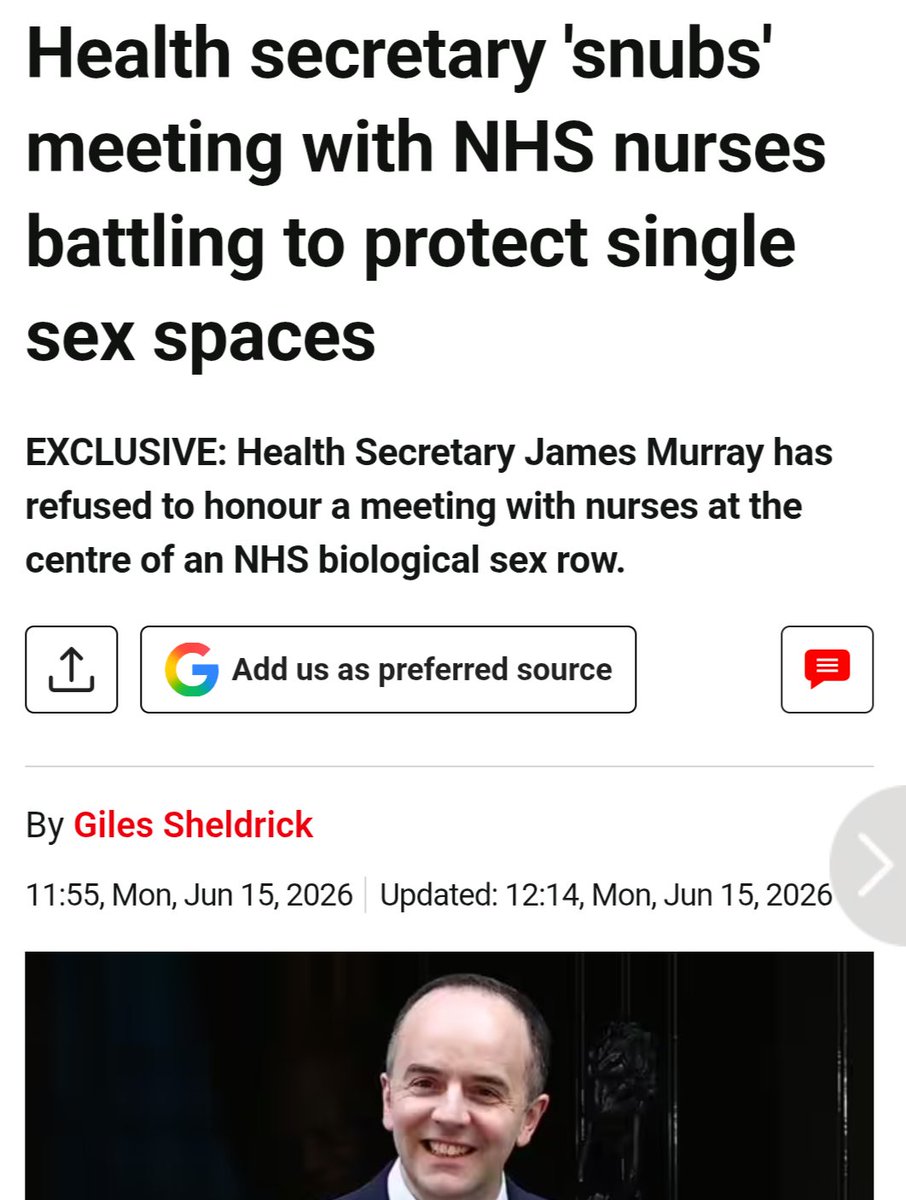
BREAKING: Health secretary @jamesmurray_ldn has refused to honour a meeting with the Darlington nurses
Bethany Hutchison, President of the Darlington Nursing Union, said:
“We were encouraged when @wesstreeting recognised the seriousness of our case and indicated a willingness to meet. That commitment now appears to have been set aside.
This issue is not theoretical, it affects frontline staff every day. We are simply asking for clarity, for the law to be applied properly, and for our dignity and safety to be respected.
We urge the current Health Secretary to honour his predecessor’s commitment, meet with us, and ensure that what happened in Darlington is never repeated elsewhere in the NHS.”
Andrea Williams, Chief Executive of the Christian Legal Centre, said:
“At a time when clarity and confidence are needed, the continued failure to ensure compliance with the law on sex and single-sex spaces across the NHS is deeply concerning.
This is a snub to the nurses who have fought for years to secure dignity, privacy and safety at work. The Health Secretary should meet them without delay, listen carefully to their concerns, and provide assurances that their right to single sex spaces will be respected."
See more breaking in @Daily_Express
👇🏻
express.co.uk/news/uk/221717…
52
523
1,224
24,927
Humourless Feminist Killjoy 🦖🦕 retweeted

Jun 15
Dr Joyce is to speak at the Durham Union Society (DUS).
According to @theTab, Durham Student Union (DSU), the DSU Community Officer, DSU Trans Association, and QueerSphere have "asked DUS to account for itself.”
Contains a great quote from @Docstockk
thetab.com/2026/06/15/confli…
19
104
546
60,585
Humourless Feminist Killjoy 🦖🦕 retweeted
Jun 15
Jun 14

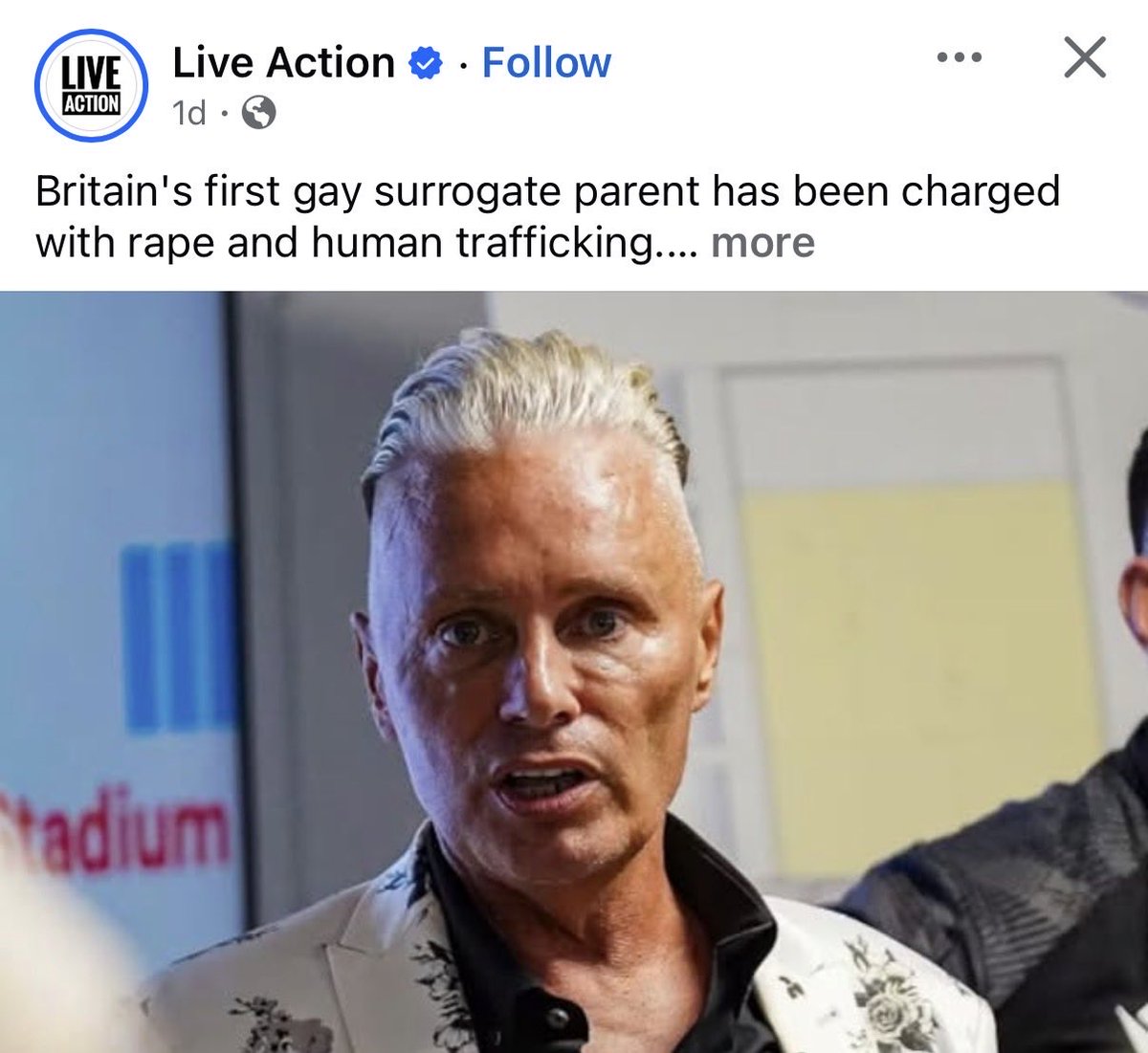
“Britain's first gay surrogate [ Barrie Drewitt-Barlow] parent has been charged with rape and human trafficking.
Surrogacy enables sex offenders to obtain children.”
13
58
255
16,893
Humourless Feminist Killjoy 🦖🦕 retweeted

Jun 15
"No poetic inclinations, befuddled Whittomist handmaidens, and appeals to ‘joy’ can hide it. It’s stark, uncaring misogyny." ✍️ @msjlindsay scotsman.com/news/opinion/th…
9
99
296
5,443

Investigate Judge Nicholas Rowland and Introduce a Judicial Accountability Framework Now - Sign the Petition! c.org/DPbVMTMvBz via @UKChange
4
Humourless Feminist Killjoy 🦖🦕 retweeted

Jun 15
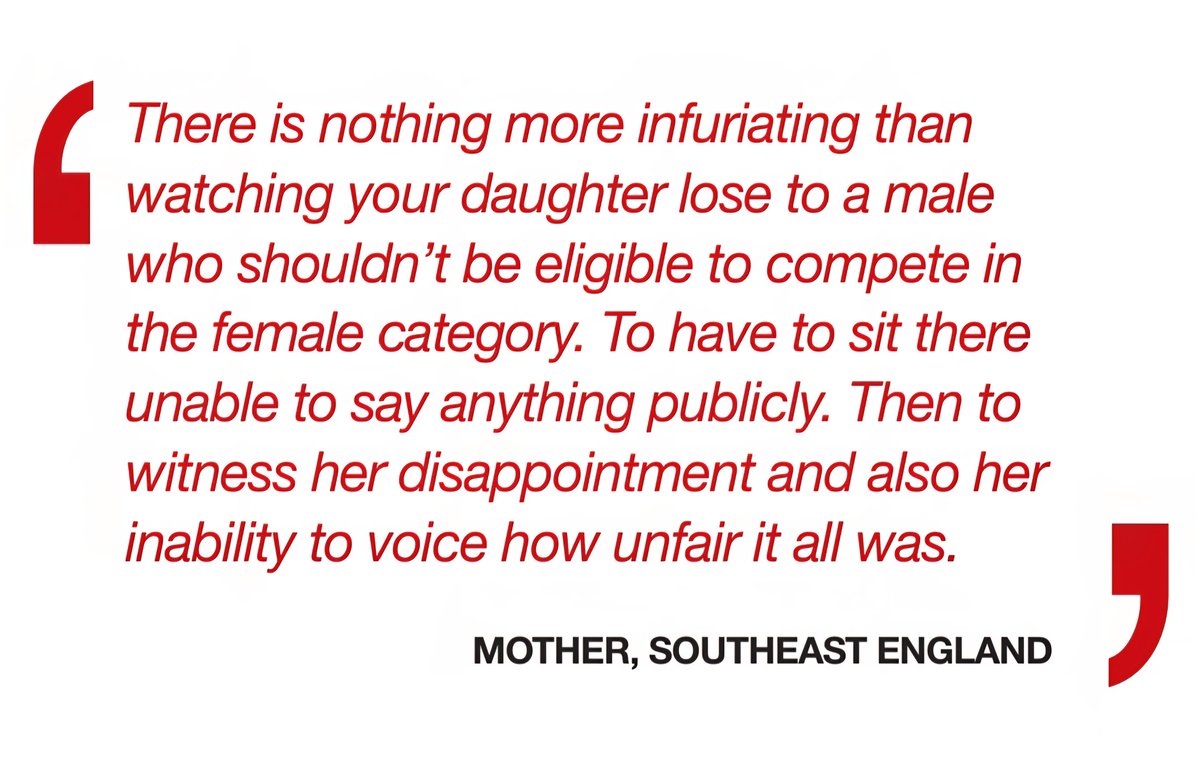
1/ There are so many barriers to participation, having a male in girls' sport should not be one of them.
Early experience shapes lifelong participation. Our new report shows how girls receive the message that they don't deserve fairness and they aren't allowed to complain.
2
79
245
7,787