Anaesthesiologist & Intensive Care Physician. FUSIC ❤️ Mentor. IPA Dip Health Econ. Click on website 2 register ur interest in ICSI FoE 2026 @ UHL CERC
Joined January 2014
- Tweets 3,639
- Following 1,208
- Followers 1,170
- Likes 3,172
444 Photos and videos













Pinned Tweet

Mar 19
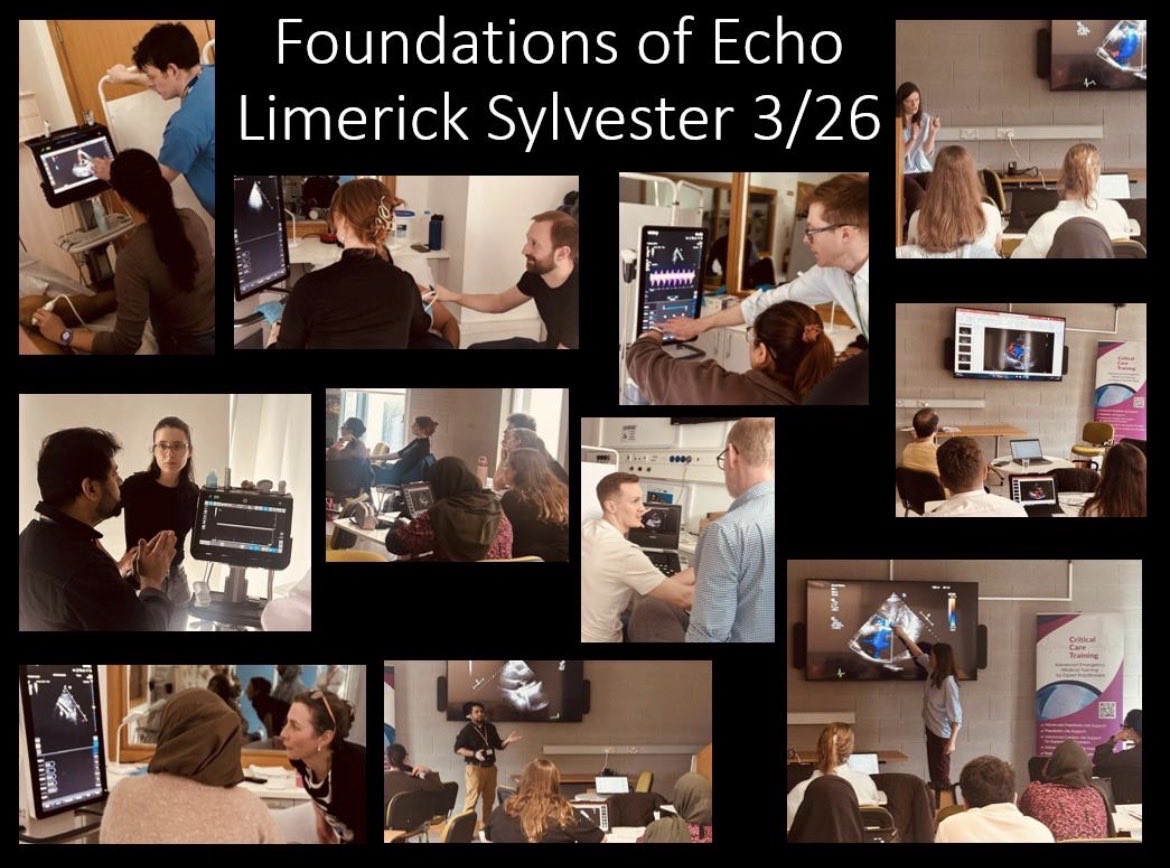
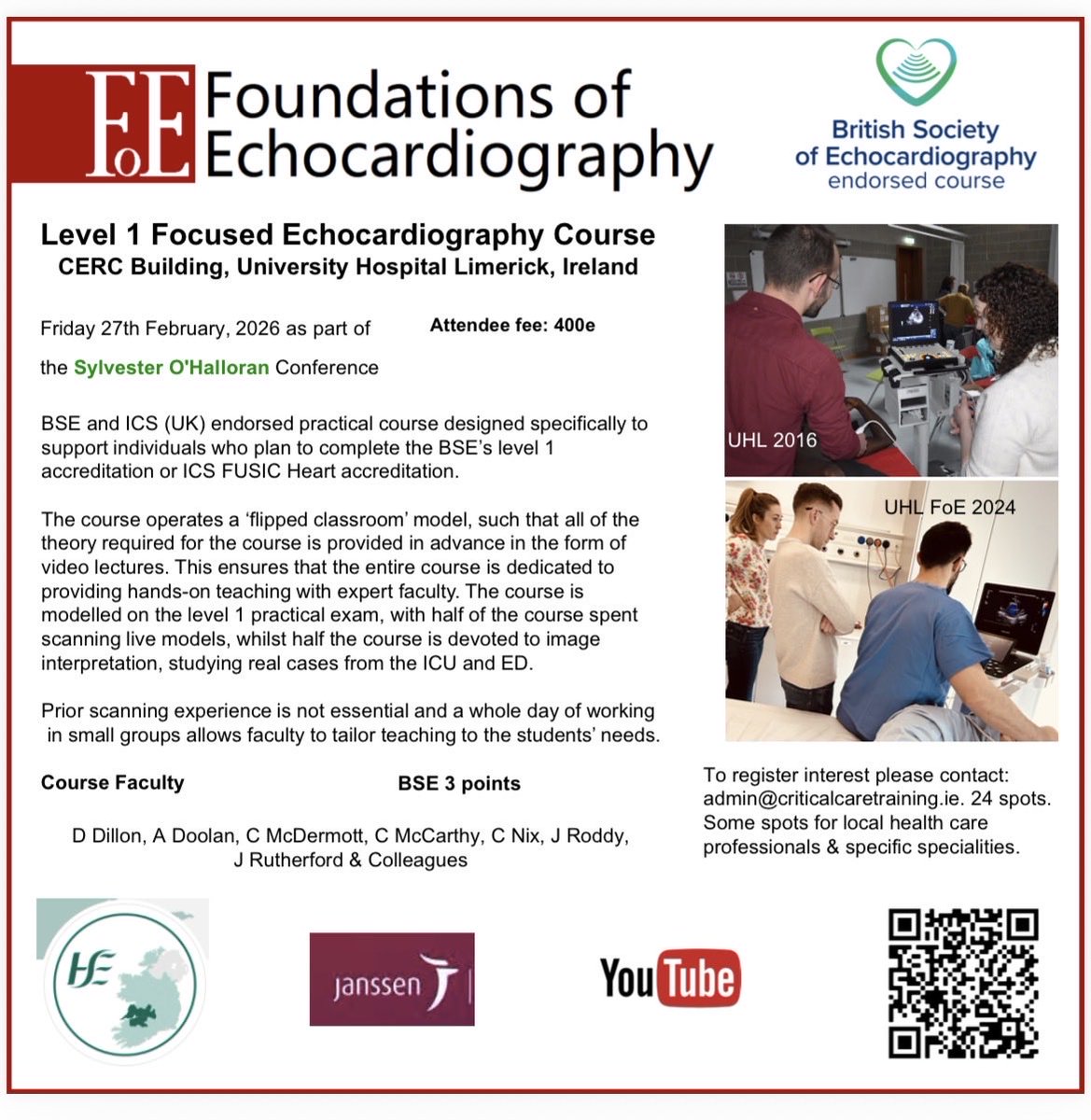
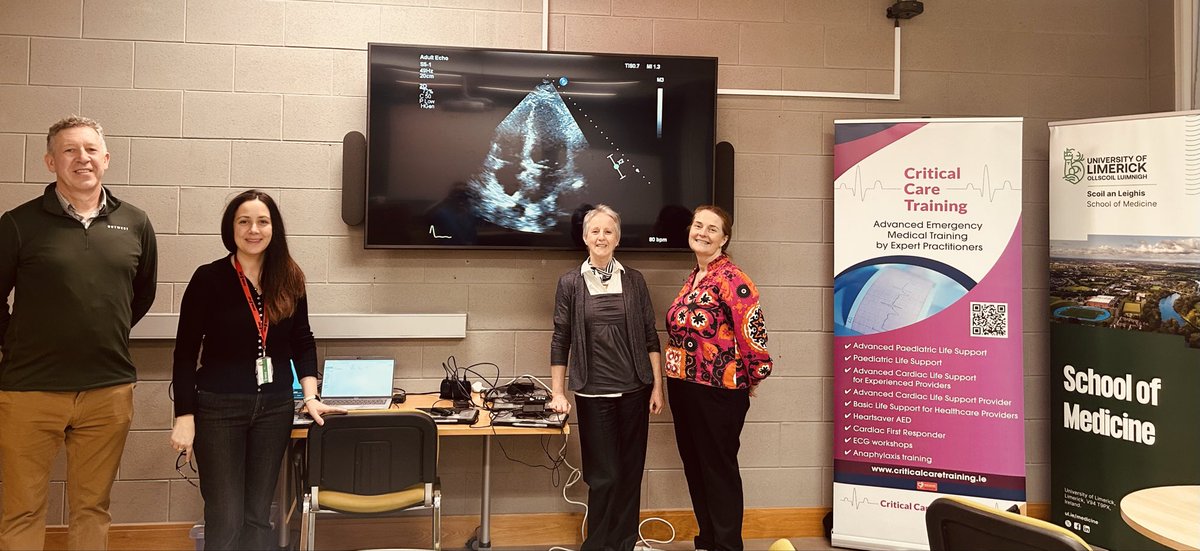
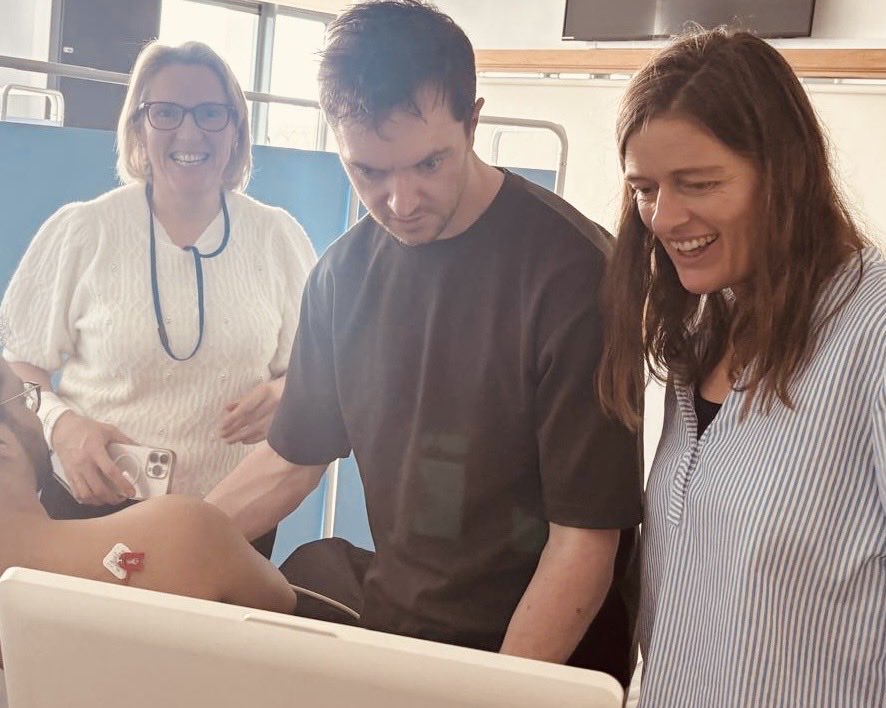
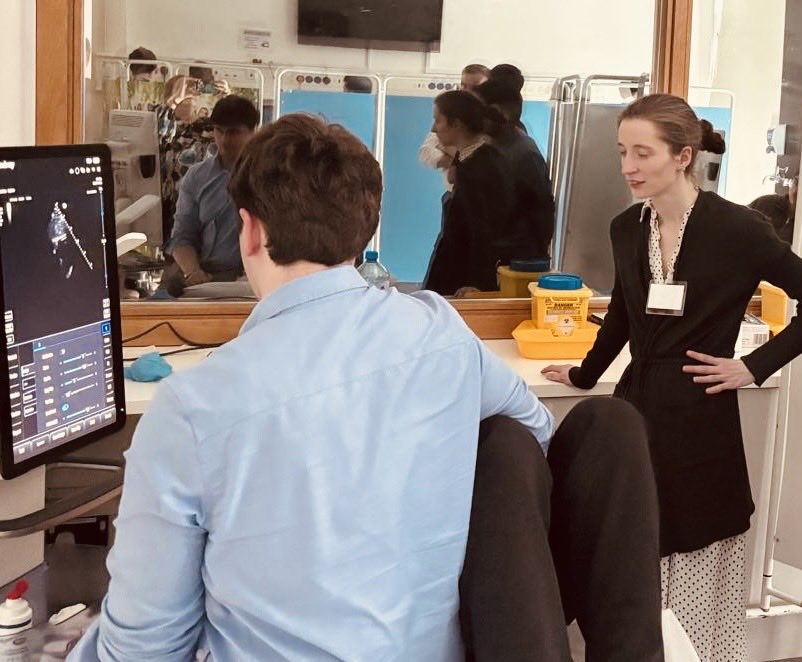
Our recent “Foundations of Echo Course” in Limerick. Thanks to our faculty under the direction of Dr Aoife Doolan, Critical Care Training, our sponsors Janssen, Industry who provided GE, Philips & Mindray machines, UL GEMS US volunteers & the 2026 Sylvester O’Halloran Perioperative Symposium. And the learners…who we hope will continue to pick up a probe long after this course…
1
1
4
308
Jun 13
@ such a difficult time, thank you for recognising the efforts of frontline staff independent.ie/county/limeri…
133

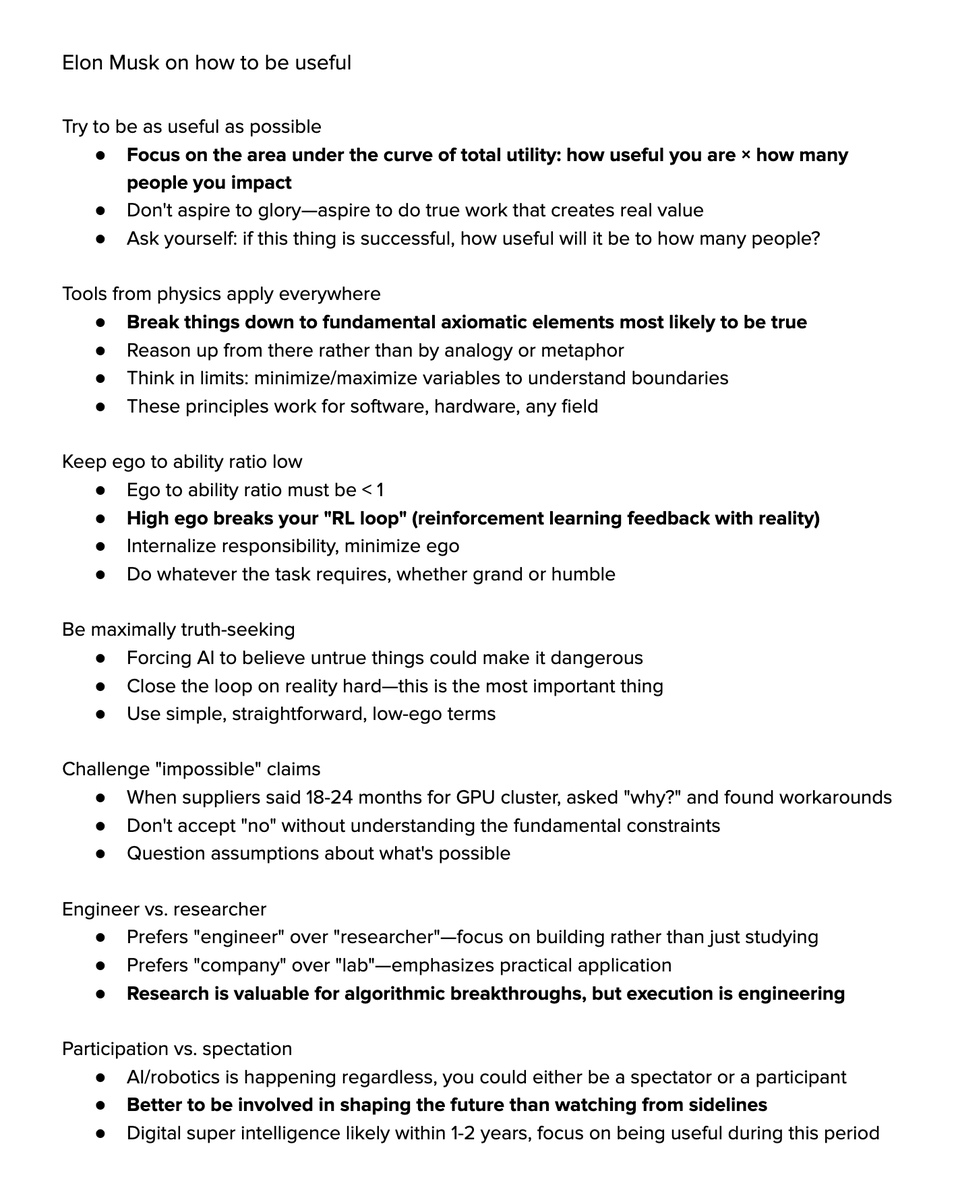
Elon Musk literally revealed the fastest way to become irreplaceable in the AI era:

Elon Musk reveals the single question he uses to spot liars in interviews:
"When I interview somebody, I really just ask them to tell me the story of their career, what are some of the tougher problems they dealt with, how they dealt with those, and how they made decisions at key transition points. Usually that's enough to get a very good gut feel about someone."
Elon explains what he's looking for:
"What I'm really looking for is evidence of exceptional ability. Did they face really difficult problems and overcome them?"
Then he shares how to tell if someone is lying about their accomplishments:
"You want to make sure that if there was some significant accomplishment, were they really responsible, or was somebody else more responsible? The person who actually had to struggle with the problem, they really understand it. They don't forget. You can ask them very detailed questions about it and they will know the answer. The person who was not truly responsible for that accomplishment will not know the details."
On whether college degrees matter:
"There's no need to have a college degree at all. Or even high school. If somebody graduated from a great university, that may be an indication they'll be capable of great things, but it's not necessarily the case. Look at Bill Gates, Larry Ellison, Steve Jobs. These guys didn't graduate from college. But if you had a chance to hire them, of course that would be a good idea."
He concludes:
"I'm just looking for evidence of exceptional ability. If there's a track record of exceptional achievement, it's likely that will continue into the future."
57
798
4,013
477,206
Catherine Nix retweeted

May 26
Haemodynamic equations are useful. But they also mislead.
Take:
CO = HR × SV
CO ≈ (MAP − RAP) / SVR
Both are mathematically true. But they can make the variables they contain look like the controllers of output.
Often they are not.
In the intact circulation, these equations describe the resolved state of the system. They do not, by themselves, tell you what is supplying energy, what is constraining flow, or what is actually limiting output.
That is one of the central themes of our review:
Energy, flow and pressure in the cardiovascular system: a narrative review of how the circulation works.
doi.org/10.1111/anae.70238

10
95
295
18,594
Catherine Nix retweeted

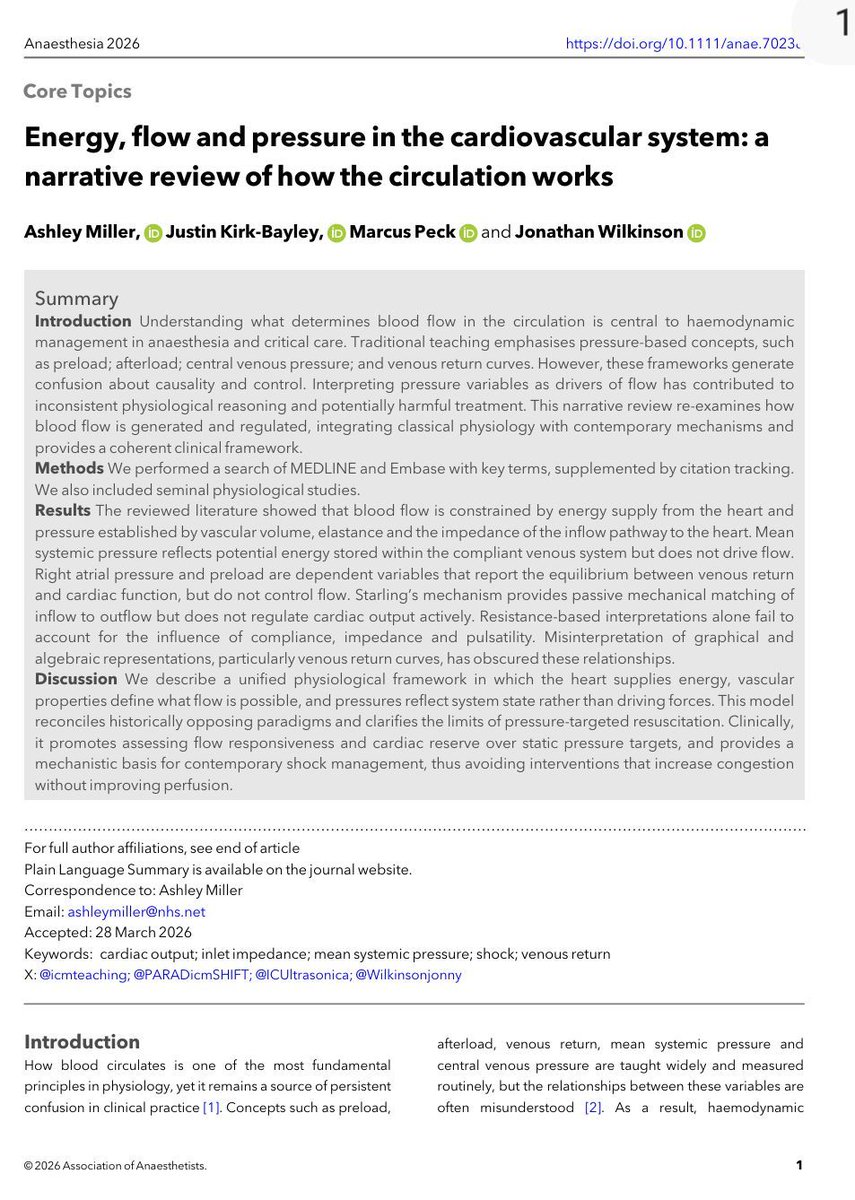
🫀🤓Pressure does not move blood. Energy does.
This outstanding review challenges one of the most deeply rooted concepts in haemodynamic management: the idea that pressure variables are the primary drivers of circulation. Instead, the authors propose a physiology framework where the heart supplies energy, the vasculature defines constraints, and pressures merely reflect system state.
Several concepts deserve special attention for critical care clinicians:
• Mean systemic pressure does not “drive” flow
• Right atrial pressure is a dependent variable, not a therapeutic target
• Venous return depends on inflow acceptance and inlet impedance
• Raising pressure without improving flow may worsen congestion
• Shock should be interpreted as either impaired venous delivery or impaired cardiac acceptance
Clinically, this framework helps explain why:
• CVP-guided fluid loading often fails
• Vasopressors may normalize MAP without restoring perfusion
• Congestion can coexist with preserved arterial pressure
• Flow responsiveness matters more than static pressure targets
One of the strongest messages of the paper is simple but powerful:
“Pressure is not perfusion.”
For intensivists, anesthesiologists, and cardiogenic shock teams, this review is worth reading in full. It reconnects bedside haemodynamics with first-principles physiology.
Miller A, Anaesthesia. 2026. doi.org/10.1111/anae.70238
ALT
7
90
228
12,741
Catherine Nix retweeted

For those who want to hear our ideas for #limerick and the vision we are pushing to make a great place even better, here’s the full interview. My thanks to Kev Collins for his interest in what we are doing and achieving with #MoreforLimerick. youtu.be/oUiyUZSCWwY
2
11
33
3,956
May 10
Mike Ryan…WHO…during the Covid era…it is about those who adapt fastest to new environments…
those who can pivot but maintain balance
May 9

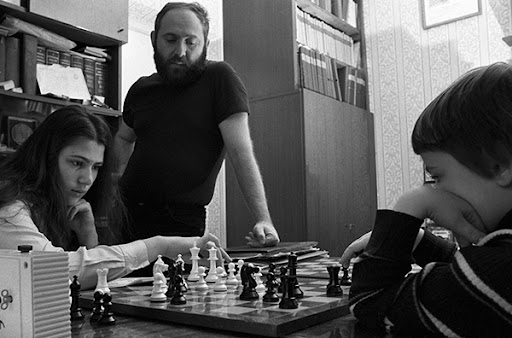
A Hungarian psychologist raised three daughters to prove that any child could become a chess grandmaster through early specialization. He succeeded. Two of them became grandmasters. One became the greatest female chess player who ever lived.
Then a sports scientist looked at the data and found something nobody wanted to hear.
His name is David Epstein. The book is called "Range."
The Polgar experiment is one of the most famous case studies in the history of deliberate practice. Laszlo Polgar wrote a book before his daughters were even born arguing that geniuses are made, not born. He homeschooled all three girls in chess from age four. By their teens, Susan, Sofia, and Judit were dominating tournaments against grown men. Judit became the youngest grandmaster in history at the time, breaking Bobby Fischer's record. The story became the gospel of early specialization. Pick a domain young, drill it hard, and you can manufacture excellence.
Epstein opens his book by telling that story honestly and then quietly demolishing the conclusion most people drew from it.
Chess works that way. Most things do not.
Here is the distinction that took him four years of research to articulate, and that almost nobody who quotes the 10,000 hour rule has ever read.
There are two kinds of environments in which humans develop expertise. Psychologists call them kind and wicked. A kind environment has clear rules, immediate feedback, and patterns that repeat reliably. Chess is the cleanest example. Every game ends with a winner and a loser. Every move is recorded. The board never changes shape. The pieces never invent new ways to move. A child who plays ten thousand games will see most of the patterns that exist in the game, and pattern recognition is exactly what chess mastery is built on.
A wicked environment is the opposite. Feedback is delayed or misleading. Rules shift. The patterns that worked yesterday may be exactly the wrong patterns to apply tomorrow. Most of the real world looks like this. Medicine is wicked. Investing is wicked. Building a company is wicked. Scientific research is wicked. Almost every job that involves a complex changing system with humans in it is wicked.
The Polgar sisters trained in the kindest environment any human can train in. Their success was real and the method was correct. The mistake was generalizing the method to fields where the underlying structure of the environment is completely different.
Epstein's research is what made the implication impossible to ignore.
He looked at the careers of elite athletes outside of chess and golf and found that the pattern was almost the inverse of what people assumed. The athletes who reached the very top of their sports were overwhelmingly people who had played multiple sports as children, specialized late, and often switched disciplines well into their teens. Roger Federer played squash, badminton, basketball, handball, tennis, table tennis, and soccer before tennis became his focus. The kids who specialized in tennis at age six and trained year-round for a decade mostly burned out, got injured, or topped out at lower levels of the sport.
The same pattern showed up everywhere he looked outside of kind environments. Inventors with the most patents had worked in multiple unrelated fields before their breakthrough work. Comic book creators with the longest careers had drawn for the most different genres before settling. Scientists who won Nobel Prizes were dramatically more likely than their peers to be serious amateur musicians, painters, sculptors, or writers.
The skill that mattered in wicked environments was not depth in one pattern. It was the ability to recognize when a pattern from one domain applied unexpectedly in another. That kind of thinking cannot be built by drilling a single subject. It can only be built by accumulating mental models from many subjects and learning to move between them.
The deeper finding is the one that should change how you think about your own career.
Specialists in wicked environments often get worse with experience, not better. Epstein cites studies of doctors, financial analysts, intelligence officers, and forecasters showing that years of experience in a narrow domain frequently produce more confident judgments without producing more accurate ones. The expert builds elaborate mental models that feel comprehensive and turn out to be increasingly disconnected from the actual structure of the problem. They stop noticing what does not fit their framework. They mistake fluency for understanding.
Generalists do better in wicked domains for a reason that sounds almost mystical until you understand the mechanism. They have less invested in any single mental model, so they abandon broken models faster. They are used to being a beginner, so they are not threatened by the discomfort of not knowing. They have seen enough different domains that they can usually find an analogy from one field that unlocks a problem in another. The technical name for this is analogical thinking, and the research on it is one of the most underrated bodies of work in cognitive science.
The single most useful sentence in the entire book is the one Epstein puts almost as a throwaway.
Match quality matters more than head start.
A person who tries six different fields in their twenties and finds the one that genuinely fits them will outperform a person who picked one field at fourteen and stuck to it on willpower alone. The lost years were not lost. They were the search process that produced the match. Every field they walked away from taught them something they later imported into the field they finally chose.
The reason this is so hard to accept is cultural, not empirical. We tell children to pick a path early. We reward the prodigy who knew at six. We treat the late bloomer as someone who failed to launch on time, when the data suggests they were running an entirely different and often more effective optimization process underneath.
The Polgar sisters were not wrong. The conclusion the world drew from them was.
If your environment is genuinely kind, specialize early and drill hard. If it is wicked, and almost every interesting human problem is, then the people who win are the ones who refused to specialize until they had seen enough to know what was actually worth specializing in.
You are not behind. You were running the right experiment all along.
147
May 8
Frontline robots and killer drones: Ukraine’s new weapons for war with Russia
irishtimes.com/world/europe/…
38
May 3
Made in Europe: The EU plan that has angered China via @RTENews rte.ie/news/business/2026/05…
1
68
Catherine Nix retweeted

Robotic surgeries will reduce pain and recovery times for Limerick hospital patients limerickleader.ie/news/healt…
1
563
Apr 24
Donal O’Donovan: Backlash against Leo Varadkar shows we would rather not hear awkward truths
Making truths more palatable? independent.ie/business/dona…
46
Catherine Nix retweeted

Apr 17
I'm lucky enough to have a great doctor and access to excellent Bay Area medical care. I've taken lots of standard screening tests over the years and have tried lots of "health tech" devices and tools.
With all this said, by far the most useful preventative medical advice that I've ever received has come from unleashing coding agents on my genome, having them investigate my specific mutations, and having them recommend specific follow-on tests and treatments.
Population averages are population averages, but we ourselves are not averages. For example, it turns out that I probably have a 30x(!) higher-than-average predisposition to melanoma. Fortunately, there are both specific supplements that help counteract the particular mutations I have, and of course I can significantly dial up my screening frequency. So, this is very useful to know.
I don't know exactly how much the analysis cost, but probably less than $100. Sequencing my genome cost a few hundred dollars.
(One often sees papers and articles claiming that models aren't very good at medical reasoning. These analyses are usually based on employing several-year-old models, which is a kind of ludicrous malpractice. It is true that you still have to carefully monitor the agents' reasoning, and they do on occasion jump to conclusions or skip steps, requiring some nudging and re-steering. But, overall, they are almost literally infinitely better for this kind of work than what one can otherwise obtain today.)
There are still lots of questions about how this will diffuse and get adopted, but it seems very clear that medical practice is about to improve enormously. Exciting times!
487
637
9,615
4,095,852

One medical consultant employed by the HSE was paid on average €17,492 per week in 2025. The medic was the only HSE employee to receive over €900,000 last year rte.ie/news/ireland/2026/041…
48
44
129
75,872
Catherine Nix retweeted

Apr 17
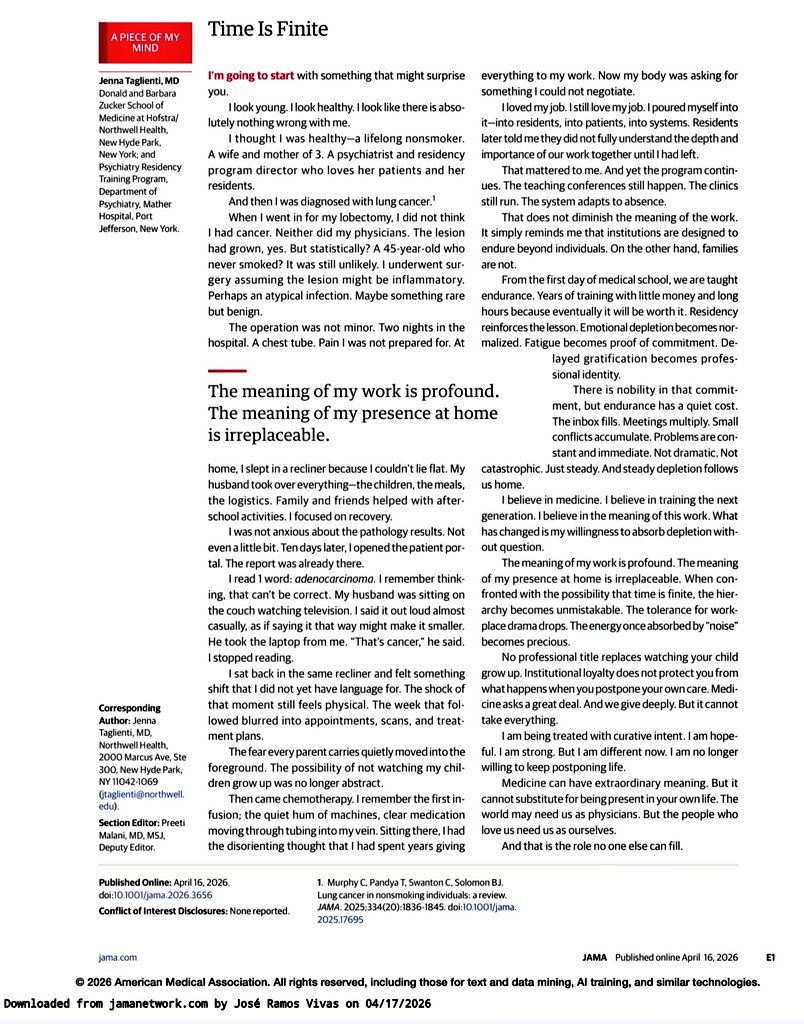
Incredibly touched by this. Please take a minute to read today. An important message for physicians everywhere
Apr 16

"Medicine can have extraordinary meaning. But it cannot substitute for being present in your own life."
In #APieceofMyMind, a psychiatrist and residency program director reflects on an unexpected #LungCancer diagnosis.
ja.ma/48OxHxC
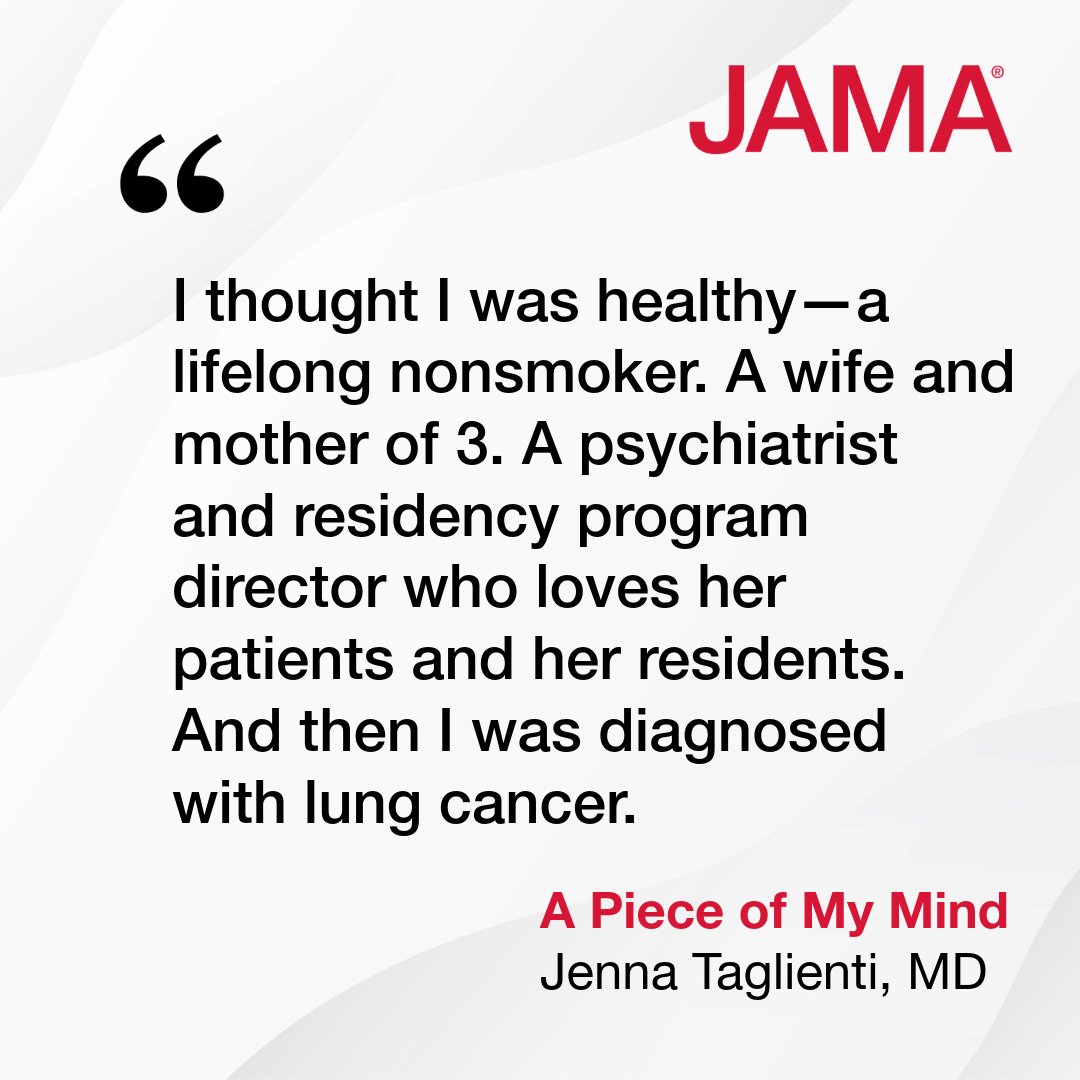
ALT Quote from JAMA, \"I thought I was healthy\u2014a lifelong nonsmoker. A wife and mother of 3. A psychiatrist and residency program director who loves her patients and her residents. And then I was diagnosed with lung cancer.\" - A Piece of My Mind, Jenna Taglienti, MD
25
492
1,787
202,690
Catherine Nix retweeted

5 Oct 2025
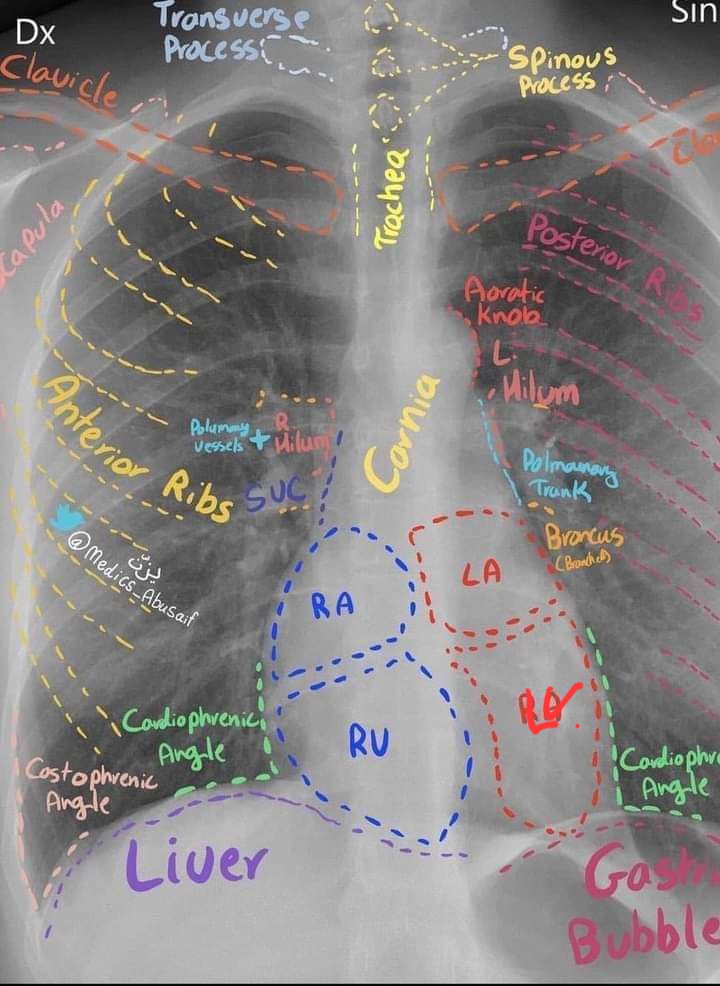
Master a Normal Chest X-ray
4
511
3,755
123,374
Apr 13
Important to read all the accompanying comments to understand the costs of the work environment but also the benefits
Apr 12

Marc Andreessen highlights why the people who work for Elon Musk echo the exact same sentiment as those who worked for Steve Jobs. Even after difficult interactions or a sudden departure, they inevitably report that they did the best work of their entire lives because they were pushed to their absolute limits.
What drives this intense environment is a demand for truth-seeking at all costs. People who criticize Elon often miss this fundamental trait. He genuinely wants to know the ground truth and has zero tolerance for anything else. When confronting bad news, he is absolutely ruthless and relentless in making sure he understands exactly what is actually going on.
This level of radical transparency is shockingly rare in the business world. The typical startup founder operates on forced optimism, constantly putting on a brave face, telling everyone to have faith, and promising that everything will be great just to keep talent from leaving.
Elon completely flips that standard script. He operates with pure urgency by simply telling the unfiltered truth, even when that truth is that the company will go bankrupt and die if they fail. In almost any other corporate environment, that level of blunt, existential dread would cause the talent pool to immediately bleed out.
But for the teams working under him, that brutal honesty acts as the ultimate catalyst. It strips away the corporate fluff and forces them to rise to the occasion, leaving them with the undeniable realization that, much like the engineers who built the first iPhone, they just completed the greatest work of their careers.
71

Catherine Nix retweeted

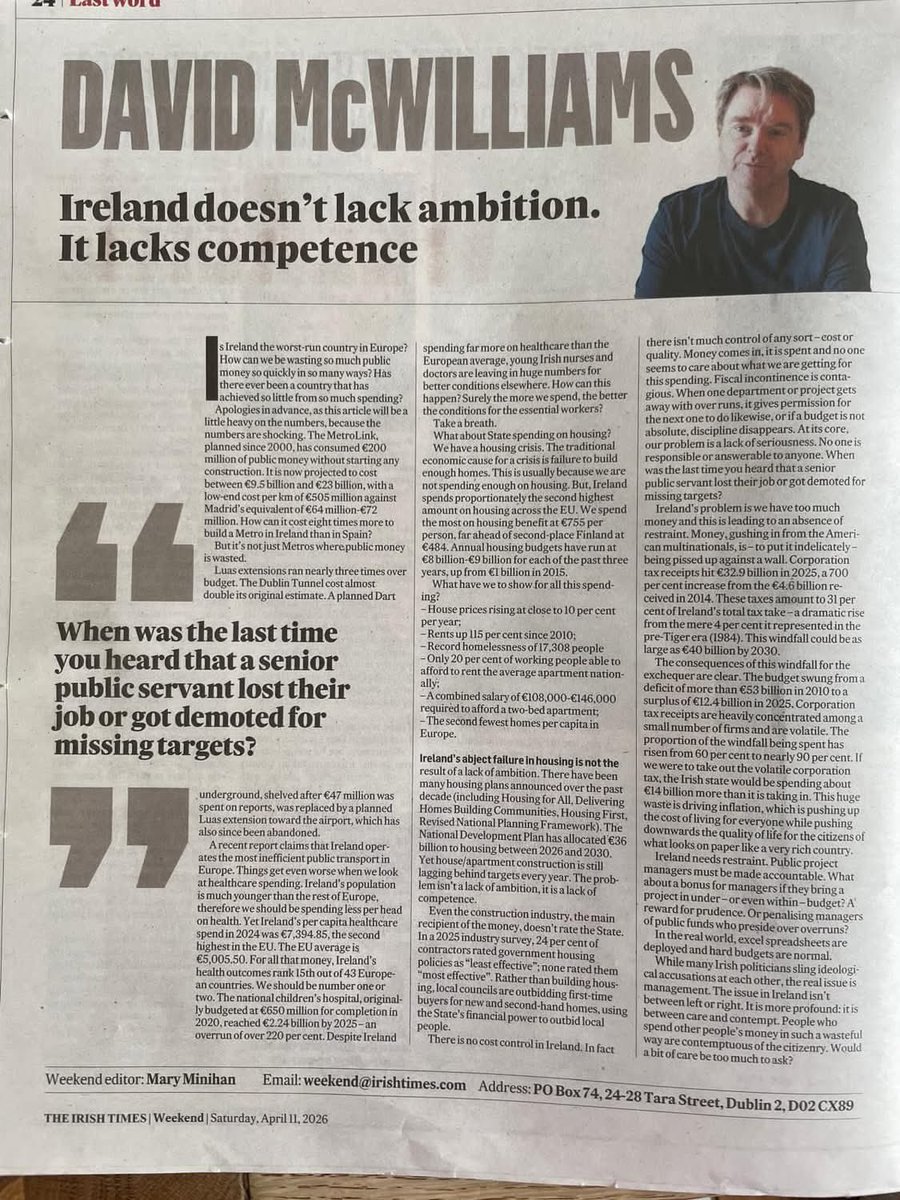
This is a must read from @davidmcw “Is Ireland the worst run country in Europe?”
The figures in this article are mind blowing . No accountability in the Senior echelons of Public Service. No wonder people are angry. #fuelprotests
92
655
2,325
148,626
Catherine Nix retweeted

Apr 12
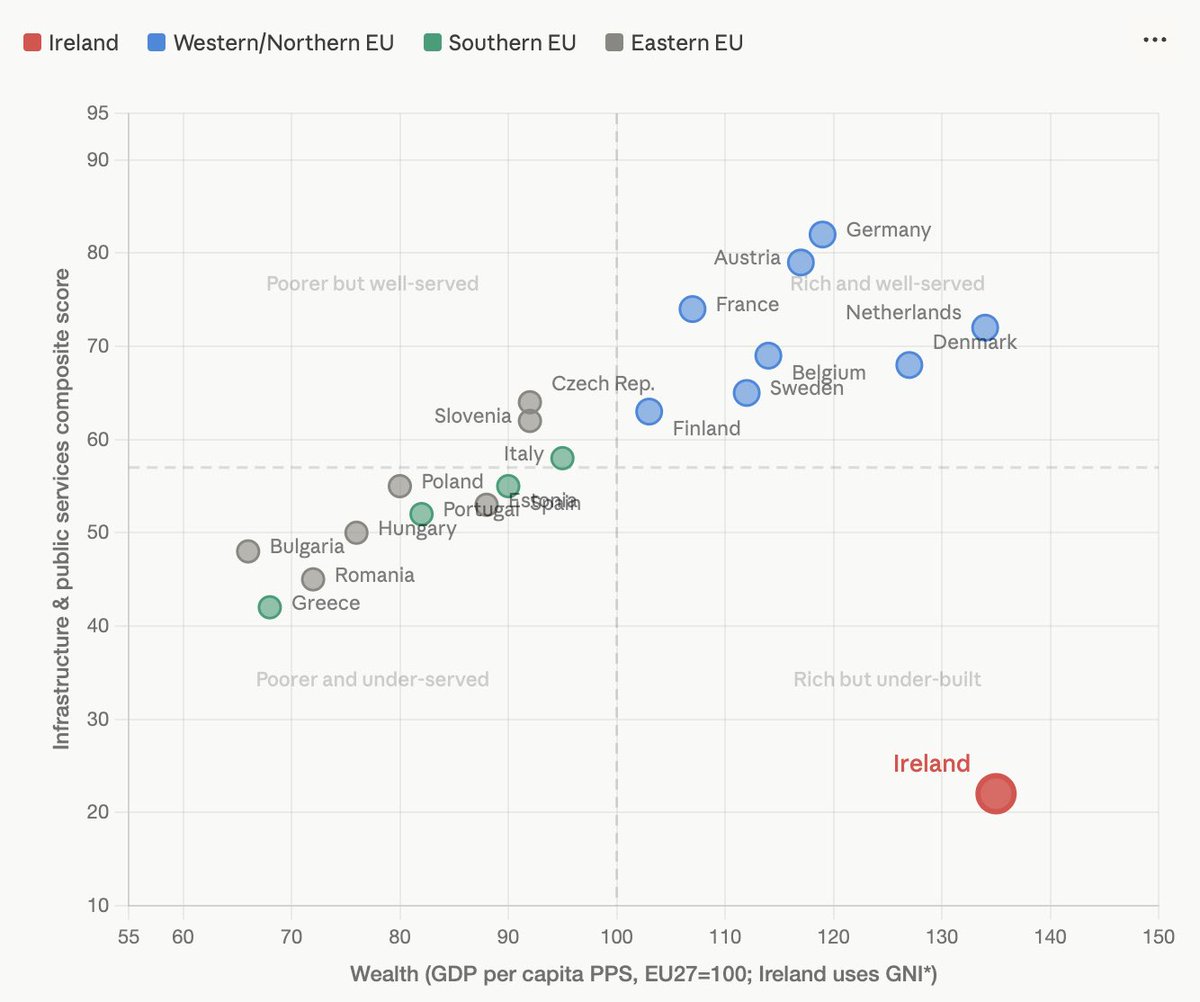
The protests in Ireland are not about just fuel! They are about the distance between Ireland on this graph and every other modern and developed economy. Ireland is second wealthiest but gets waaaaay less than any other country for that wealth. By a golden mile.
That visual gap in this graph? That’s what people are protesting. It’s a lack of infrastructure and the everyday enshittification of services, the economy, and the additional difficulty of trying to live, relative to peers in any other country. It also highlights why people don’t get uniformly listened to! - because there is no government architecture to engage meaningfully across this huge gap.
That gap is a three hour drive to work in traffic, a 14 month wait for an MRI, buses that don’t arrive, trains that don’t exist, schools that have no places for your kids, houses that are unaffordable, pubs that close before midnight, €12 sandwiches, expensive fuel.
People feel this gap, even if they can’t explain it precisely. And that builds into resentment, and ultimately protest. Fuel just happened to be the next thing that could be pointed to, today.
284
1,496
5,930
453,786