Joined February 2011
- Tweets 1,754
- Following 1,197
- Followers 31,148
- Likes 25,148
45 Photos and videos




The Power Threat Meaning Framework retweeted

Jo Watson of @dropthedisorder and I have just launched the Critical Counsellor collective:
If you are a counsellor, psychotherapist, clinical psychologist or trainee who questions the increasing medicalising and pathologising of human distress, come join us!
More to follow....
facebook.com/groups/13173204…

4
10
39
1,736
The Power Threat Meaning Framework retweeted

Jun 11
Literally no one is arguing that there's no place for meds in managing crisis situations and highly agitated patients. This is just a strawman.
2
1
11
579
The Power Threat Meaning Framework retweeted

Jun 10
Beyond Medication: What England’s Experience Can Teach Us About Psychosis Care
By Alison Brabban
madintheuk.com/2026/06/beyon…
#Psychosis #MentalHealth #TraumaInformedCare #Recovery #NHS
2
2
248
The Power Threat Meaning Framework retweeted

I think kaddles speaks for a lot of patients here. A lot of clever psychiatrists on here missing the point because they are blind to the scale of the issue for reasons I outline in this blog. Unfortunately this leads to so many people's lives upended or worse from mostly preventable harm. mhorowitz.substack.com/p/why…
Jun 8

What I think about when I see psychiatrists on social media debating semantics and deftly diverting attention, as someone whose life has been profoundly affected by psychiatric drug harm. 🧵 (1/9)

1
22
52
3,946
The Power Threat Meaning Framework retweeted
I received a number of messages appreciative of me sharing feedback from clinicians on the ground (mostly GPs) who I lecture to about withdrawal and deprescribing (most weeks at least once and sometimes up to three times a week) as an antidote to the general defensiveness, deflection, minimisation and denial that mostly characterises the responses of a small group of very vocal, often quite extreme, ideologically driven clinicians on this platform.
So here are some more de-identified comments from 300 GPs that I lectured to in an English ICB as part of their move to reduce inappropriate antidepressant prescribing.
“This very insightful webinar should be made mandatory for all clinicians in primary care in our region. Can the moderators raise this with the ICB?”
“This was one of the most sensible and interesting webinar I have listened to for a while. Thank you “
“Thanks really clear and useful”
“That was so refreshing. Thanks for being so positive. Can you come and speak to our clinical staff?? 23000 patients”
“Excellent session and does raise the valid point of reviewing these along with other medicines/doses for older patients due to pharmacokinetic/pharmacodynamic changes. We need to be more proactive in reviewing long term medicines and the original indication as you highlighted for the AD”
“If there is a down regulation of serotonin receptors naturally through homeostosis, how is the drug even effective? Wouldn't the extra serotonin be pointless? Is it more of a psychological effect from taking the anti-depressant?”
“does this only apply to patients who are on them for their mental health? what about patients who are on them for chronic pain? secondary care are pushing ALOT for SNRI/SSRI for chronic pain - just had a letter from gynae to use it for a lady with endometriosis.....?! “
“this is fascinating and makes perfect sense. I'm very guilty of doing all the wrong things you have mentioned. I do worry that such a slow withdrawal it is not very practical in the real world. It is making me think about the fact that I think we are too happy to start these medications and give little consideration to the risks of stopping. Though I think this reflects the fact that we have few other options given the waiting times for talking therapies. “
“so does this sort of withdrawal effects in terms of the worst happening on the lower doses, same principle for opioids and gabapentinoids?”
Of course there are numerous practical barriers to implementation pointed out by the GPs as well as lots of clinical dilemmas:
“A bottle of sertraline costs £201.80”
“For patients who’ve been on ADs for many years, and reached a roughly steady state, they’re often very reluctant to come off them. Looking at the prevalence and severity of withdrawal in this cohort, I can see their point. How would you advise these patients? Do the risks of ongoing rx outweigh the risks of withdrawal?”
3
27
64
3,454
Sad loss to our global community - the death of Hearing Voices pioneer Marius Romme madintheuk.com/2026/06/sad-l… via @MITUKTeam
1
7
15
1,334
The Power Threat Meaning Framework retweeted
In my latest @PsychToday post, I examine @AwaisAftab's attempt to rescue psychiatry on pragmatic grounds after conceding longstanding critiques of its foundations.
I argue the defence fails—and it leads not to reforming the psychiatric paradigm, but to moving beyond it.
psychologytoday.com/us/blog/…
10
37
95
12,289
The Power Threat Meaning Framework retweeted
Jun 3
Calling Out the Root Causes of Loneliness
By Jordan Reyne
madintheuk.com/2026/06/calli…
#Loneliness #MentalHealth #LateStageCapitalism #SystemicChange
2
3
3
313
The Power Threat Meaning Framework retweeted
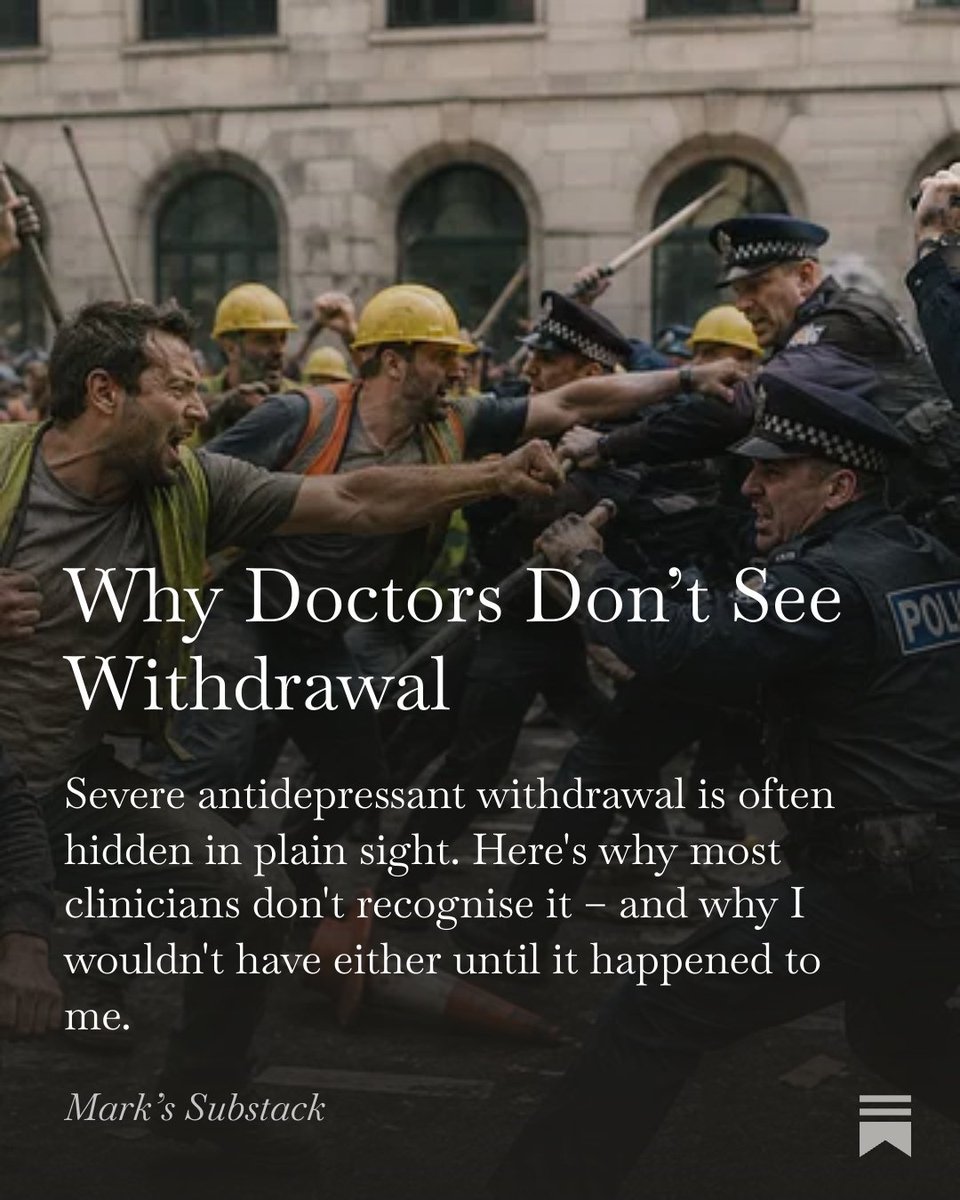
I wrote a blog on "Why Doctors Don’t See Withdrawal:
Severe antidepressant withdrawal is often hidden in plain sight. Here's why most clinicians don't recognise it – and why I wouldn't have either until it happened to me." Link below. Please re-tweet.
14
80
183
43,579
The Power Threat Meaning Framework retweeted
Jun 1
Calling Out the Root Causes of Loneliness
By Jordan Reyne
madintheuk.com/2026/06/calli…
#Loneliness #MentalHealth #LateStageCapitalism #SystemicChange
1
3
2
344
The Power Threat Meaning Framework retweeted
May 31
Check out the blogs we published in May 🧡
Madintheuk.com
3
1
310
The Power Threat Meaning Framework retweeted

Apr 30
1/ Thanks to @MikhailaFuller for allowing me to share my story. 🧵
My experience sits in the uncomfortable space between what patients are routinely told about antidepressants and what can, in many cases, actually unfold over time. It is not simply a story of adverse effects, it is a story about the consequences of incomplete information, overconfidence in simplified narratives and a medical culture that too often defaults to explanation rather than investigation when things go wrong.
I was prescribed the antidepressant Sertraline for situational panic attacks following a house fire when I was younger and remained on it for approximately 13 years. During that time, I was never meaningfully informed about the possibility of physiological dependence, nor about the potential difficulty of stopping the drug after long term use. The phrase “safe and effective” was presented as if it were a stable, universal truth, rather than a context dependent conclusion drawn from limited and biased data.
There was no discussion of what happens when the brain adapts to a drug over more than a decade. No acknowledgement that removing that drug might not be a neutral act. No mention of protracted withdrawal or that stopping could result in a severe and prolonged destabilisation of the nervous system. Informed consent, in any meaningful sense, was absent.
When I eventually came off the SSRI, it was done through a rapid doctor led taper that bore no relation to the duration of my use. What followed was not a return of my original symptoms, but the onset of something far more severe, complex, disabling and life changing.
Almost immediately, I began to experience intense and persistent surges of physiological anxiety and panic. These were not thoughts or worries in the conventional sense. They were full body events; overwhelming waves of adrenaline that arose without psychological trigger, accompanied by a profound sense of internal threat. They were not responsive to reasoning, reassurance or standard psychological strategies because they were not primarily psychological in origin.
Alongside this, I developed widespread neurological and sensory disturbances. I experienced constant “electric” sensations throughout my body, moving unpredictably through my arms, legs, hands and across my head and face. These were often painful, presenting as burning, tingling or sharp nerve like sensations. My muscles began to twitch involuntarily, with fasciculations and spasms becoming a daily occurrence. At times, my facial muscles would contract and twitch without warning.
One of the most severe and distressing symptoms I experienced was akathisia. It is often described clinically as restlessness, but that description is profoundly inadequate. What I experienced was an intense, unrelenting inner agitation combined with a powerful urge to escape my own body, alongside a compulsion to move that made stillness feel intolerable. At its worst, it generated intense suicidal urges, not from hopelessness, but from a desperate need to escape the sensation itself. It was not psychological distress in any conventional sense, it was a physical state that overrode any attempt at control. It is difficult to overstate how severe and destabilising this symptom has been for three years.
Sleep became almost impossible at times. I went through prolonged periods of insomnia, sometimes sleeping only three hours across several days. When I did manage to fall asleep, I was frequently jolted awake by hypnic jerks; sudden, violent awakenings accompanied by adrenaline surges. The cumulative effect of this sleep deprivation was profound, amplifying every other symptom and eroding my ability to cope.
Cognitively, I experienced significant impairment. I developed …
prescribed-harm.com/stories/…
18
48
150
35,416
The Power Threat Meaning Framework retweeted
May 30
What the Shadow Holds: Turning Survival Skills Into Superpowers – Part two
By Matt Benson
madintheuk.com/2026/05/what-…
#trauma #mentalhealth #shadowwork #healing #traumarecovery #psychology
2
263
The Power Threat Meaning Framework retweeted

Fascinating report on the recent American Psychiatric Assn conference. Among the defensive positioning, it is good to see some psychiatrists acknowledging 'meds are not the answer' and severe harms like protracted withdrawal. @EllenBarryNYT nytimes.com/2026/05/24/scien…
6
19
72
2,380
The Power Threat Meaning Framework retweeted
May 27
What the Shadow Holds: Turning Survival Skills Into Superpowers – Part one
By Matt Benson
madintheuk.com/2026/05/what-…
#trauma #mentalhealth #shadowwork #healing #traumarecovery #psychology
3
3
221
The Power Threat Meaning Framework retweeted

May 27
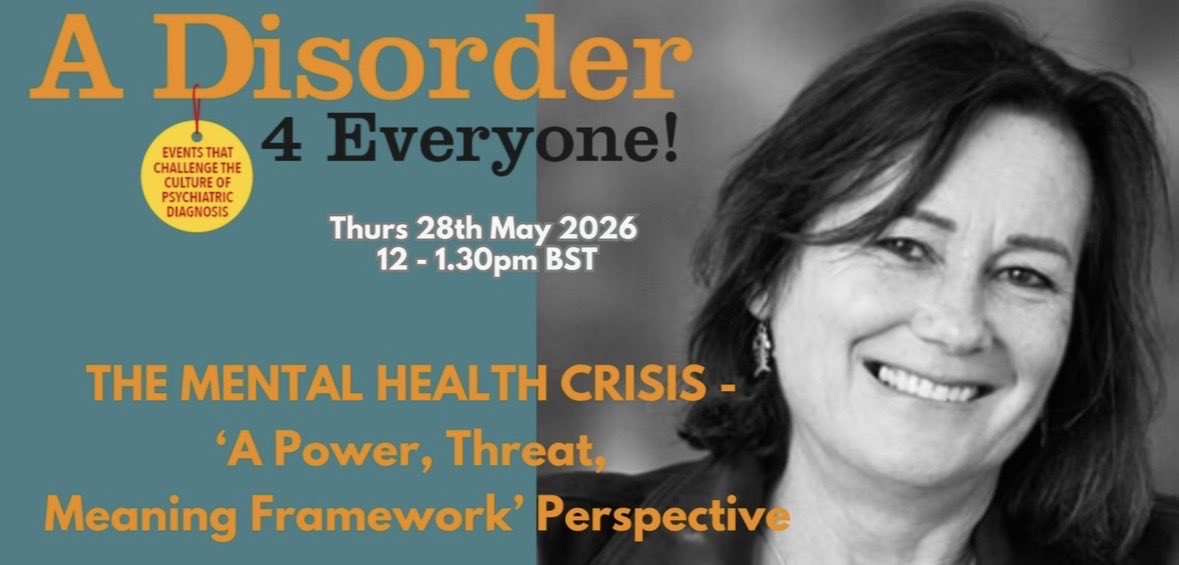
Tomorrow! (28 May)
The ‘Mental Health Crisis’
Should we continue with soaring numbers of drug prescriptions, and calls for more services and research? Or do we need to ask more fundamental questions about our rising levels of unhappiness and despair?
eventbrite.co.uk/e/198391291…
6
5
302
The Power Threat Meaning Framework retweeted

May 26
“What happens when psychiatry claims depression is an illness?”
dx.doi.org/10.1891/EHPP-2026…
5
16
51
3,623
The Power Threat Meaning Framework retweeted
May 25
What the Shadow Holds: Turning Survival Skills Into Superpowers – Part one
By Matt Benson
madintheuk.com/2026/05/what-…
#trauma #mentalhealth #shadowwork #healing #traumarecovery #psychology
2
4
283
Many Selves, One Soul madintheuk.com/2026/05/many-… via @MITUKTeam A moving poem by Catherine Heseltine
1
272
The Power Threat Meaning Framework retweeted
May 21
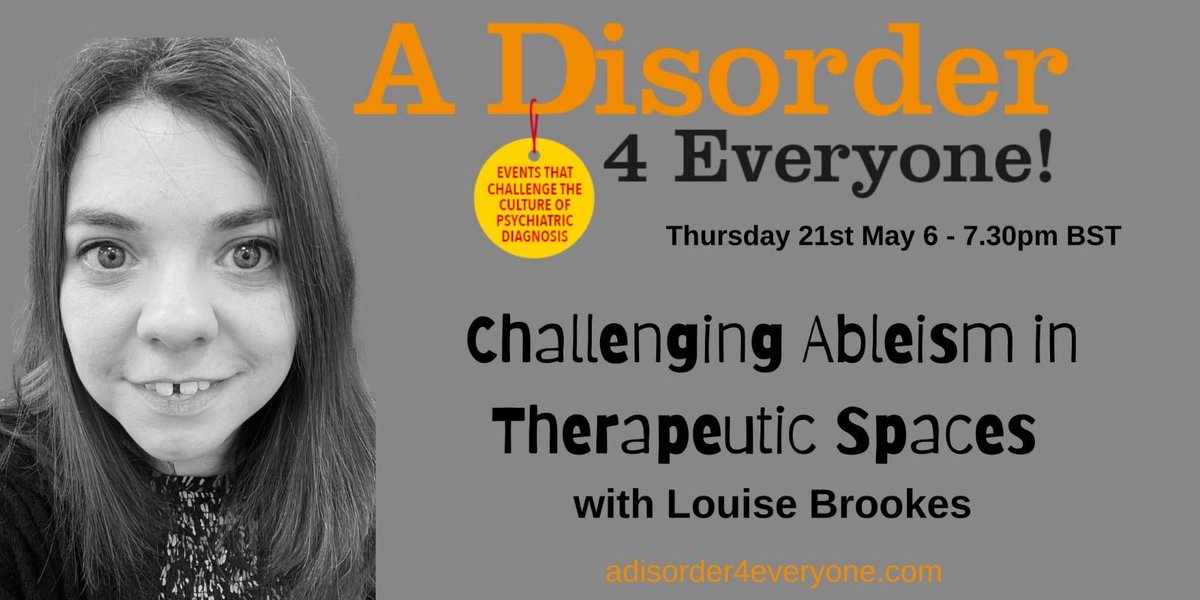
Kicking off in the #adisorder4everyone zoom room in 2 hours! (6pm, 21st May)
Highly recommended to everyone who offers therapeutic and/or supportive spaces for people.
Join us!
The recording is included with every ticket.
eventbrite.co.uk/e/198320897…
3
3
345