1) Chilling/colds bit.ly/4dwvypY (2) WhyC19 became mild bit.ly/3TZVVxI (3)Sex/mutations bit.ly/3YX6m7f (4) Pandemics bit.ly/3TLFQeI
Joined November 2013
- Tweets 20,211
- Following 2,880
- Followers 2,077
- Likes 11,804
3,244 Photos and videos



Pinned Tweet

Jan 24
My allegorical fable⬇️seems to be confusing some people
There are actually three main points
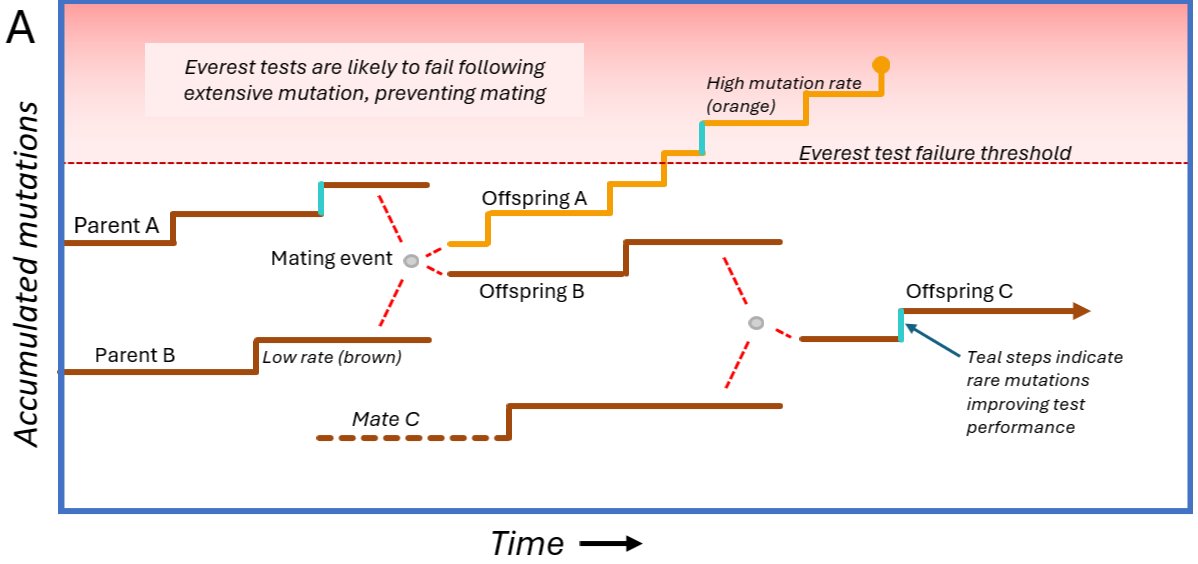
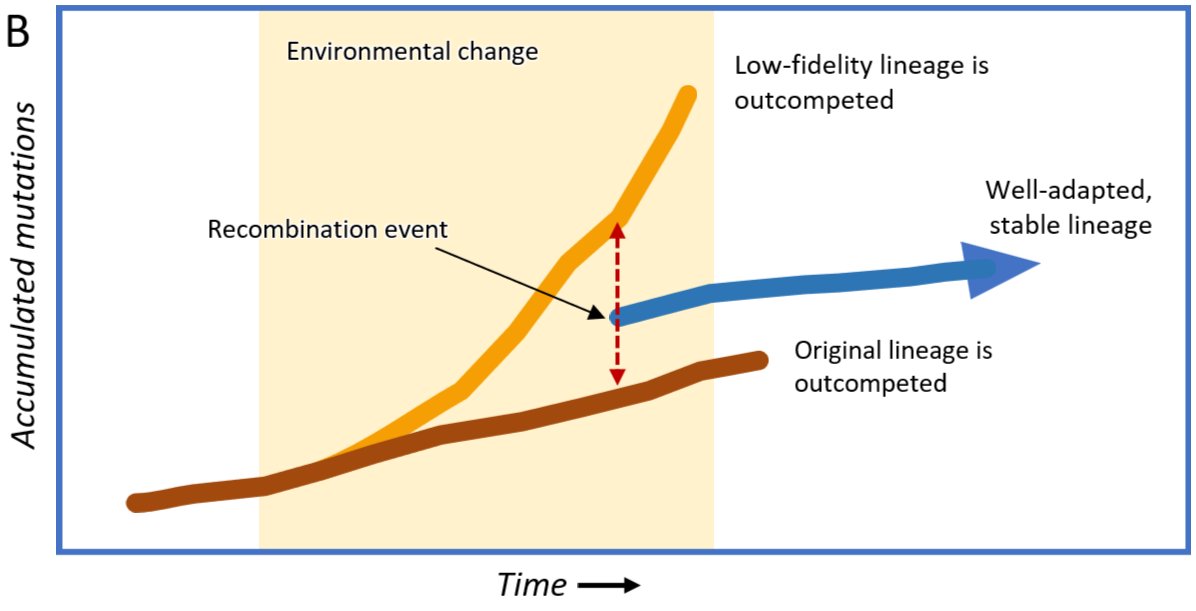
1. sex is a great way to spread innovation to lineages that never evolved them
That's understood. But what many evolutionary biologists don't get is:
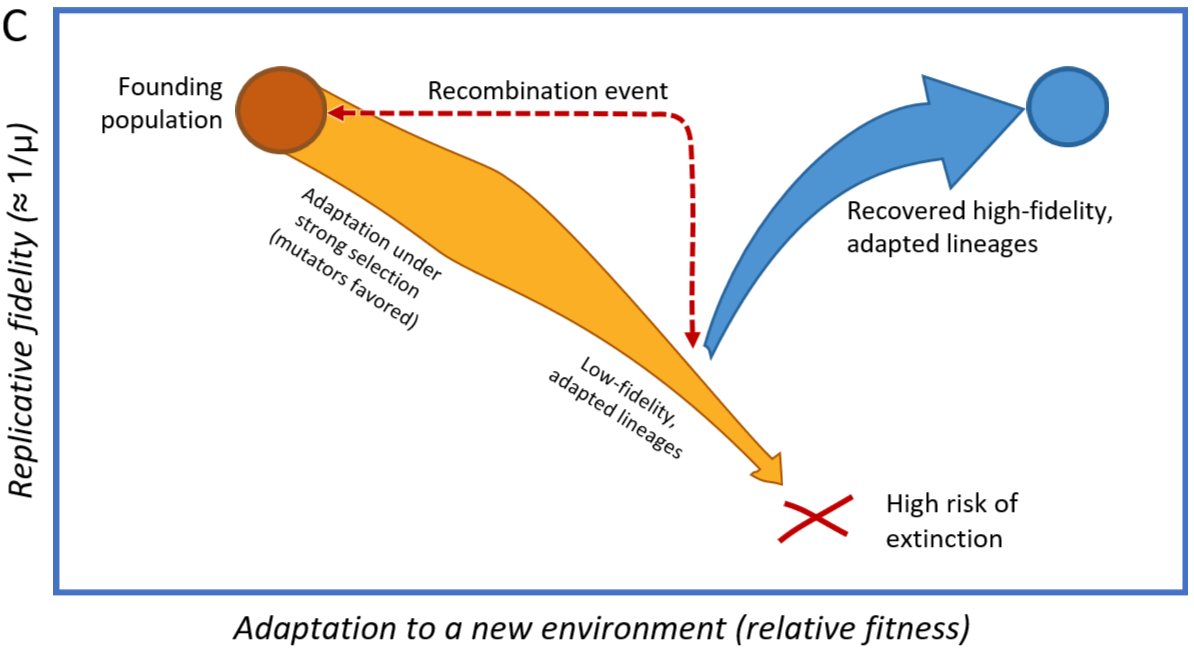
2. Mutation speeds up when a population is under strong selective pressure
3. Sexual selection - focusing on particular traits such as peacocks' tails, birdsong in songbirds, migration, or (in humans) beautiful faces, athleticism and cleverness - can restore accurate replication
Those traits need to be complex - ie the product of many genes - and everyone needs to agree on what is important, so that recent mutations can be picked up
_____________________
At the end of the last ice age, sea levels rose by 120 meters.
As the water rose, about 1,000 humans were marooned on the Fantasian Islands, about 40 miles off the coast of West Africa (at least, I feel that’s where they ought to be). Within decades, people had wiped out all the large mammals on the islands, and they lived on gourds, fruit, and the eggs of blue-footed boobies. However, there was a kind of bean on the islands that could be eaten in small quantities – in larger quantities, it was toxic. There was one family on the island that was particularly stupid and ugly, avoided by the other islanders. This was because both parents had high mutation rates – they had DNA polymerases that couldn’t replicate DNA quite as accurately as others could - their polymerases made slightly more mistakes. Instead of about 100 new mutations per child (mutations the parents didn’t have, that is), their children had about 800. By the third generation, there were a lot of illnesses in the family, but there was one boy who could eat the beans without any ill effects (scientists now believe he had three new mutations that allowed him to tolerate both tannins and lectins). All his siblings died at young ages, but he and his children were strong - although stupid - and his sons mated with the most beautiful girls on the island. These girls had DNA polymerases with very low error rates, so fidelity was restored. After 300 years, everyone on the island was descended from this particular individual, and they were all perfectly healthy and intelligent, with beans forming 60% of their diet.
By the way, it was crucial that the young men sought out the most beautiful girls - as we still do today.
That’s because they were subconsciously looking for accurate polymerases. The story is allegorical, but I think this kind of thing happens all the time with animals, plants, fungi, and microbes – whenever a species is subjected to strong natural selection. For example, when they invade new terrain, an ice age begins, or they infect a new host. That’s why sexual reproduction is so universal – scientists don’t have a good explanation right now for why it’s so popular (check out the Wikipedia article).
I think sexual reproduction a general adaptation to unstable environments and a mechanism to restore replicative fidelity – which is often lost.
Prokaryotes have similar mechanisms, but sex is the most complex and effective
Preprint: vixra.org/pdf/2303.0056v3.pd… (I've since changed the name back to The Everest Hypothesis btw)
1
1
5
510
Patrick Shaw Stewart retweeted

Jun 12
The year is 1949.
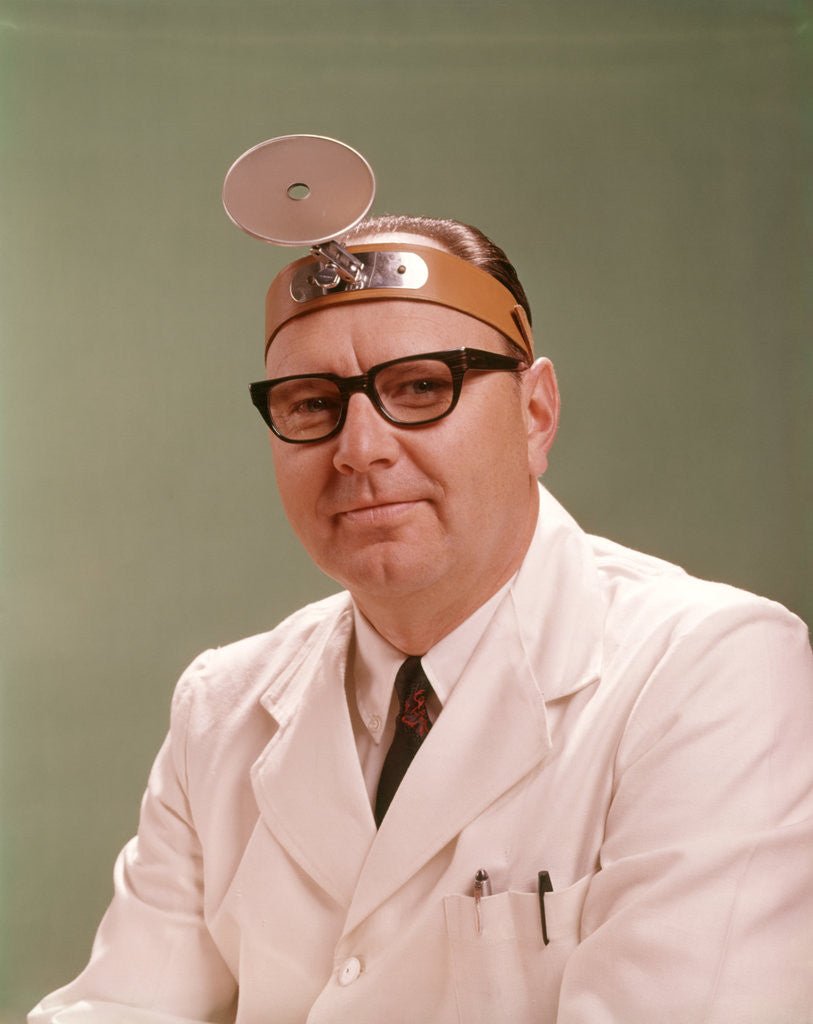
The Nobel Prize in Medicine has just gone to the man who invented the lobotomy. Your doctor suggests one for your sister, who has not been herself since the baby came. It is the most celebrated advance in psychiatry of the age, and he is simply current. By the time the prize curdles into an embarrassment, close to twenty thousand Americans have had the operation, and proportionally more here in Britain.
The year is 1956.
Lay the baby down on his front, the doctor says. So does the most trusted childcare book ever written, the one on every new mother's shelf. On his back he might choke, the reasoning goes. Millions obey. The advice holds for nearly thirty years, long after the evidence has quietly turned, and a generation of cot deaths is counted before anyone thinks to roll the babies over.
The year is 1966.
A bestselling book informs your wife that menopause is a disease, that she is, in the author's word, a castrate, and that a small daily pill will keep her youthful and tolerable to live with. Her doctor agrees. The drug becomes one of the most prescribed in the country. Nobody mentions that the author sat on the payroll of the company that made it. That detail surfaces decades later, in the same year the landmark trial is halted early for raising rates of breast cancer, stroke and clots.
The year is 1979.
Your ulcer is caused by stress and sharp food, the doctor explains. Calm down, drink milk, take the antacid that happens to be the best-selling medicine on earth. Two Australians are about to prove that most ulcers are caused by a bacterium and cured by a fortnight of antibiotics. The profession laughs. One of them eventually drinks a beaker of the stuff to settle the matter. The establishment takes the better part of twenty years to stop laughing. The Nobel lands in 2005.
The year is 1985.
Butter is dangerous, the doctor says. Switch to margarine, it is modern, it is heart-healthy, the experts are united. The spread he nudges you toward is loaded with trans fats, which the next decade will identify as the genuinely dangerous one, and which will eventually be banned outright. The butter goes quietly back in the fridge. No correction is ever printed at the volume of the original warning.
The year is 1992.
There is a pyramid on the surgery wall, and the very same one in your grandchild's classroom. Bread, cereal, rice and pasta form the broad virtuous base, up to eleven servings a day. Fat is exiled to the tiny tip. The chart was reportedly held back a year while the relevant industries had their say. It is wrong at the bottom and wrong at the top.
Now it is today.
Your doctor has new guidelines, new studies, a fresh consensus, delivered with precisely the steady confidence of every guideline above. He believes it, and he has good reason to. So did every doctor in this thread. None of them were villains. Each was sincere, most were kind, and all were certain, reading from a map that somebody else had drawn and handed them. That is the part worth sitting with.
So when the man in the white coat tells you what to eat, what to fear, and what to swallow every morning for the rest of your life, you are allowed to ask. Who paid for the study. What the evidence says beneath the headline. What he was just as certain about thirty years ago, and where that advice sits now.
Then make up your own mind. Call it scepticism, or call it whatever your grandmother called it when she ignored the advert, kept the butter where it was, and lived to ninety-one.
It has outlasted every consensus on this list. It will outlast this one too.
482
5,111
14,882
311,700
Still, the main point is, House is, or was, a lot of fun
Jun 7

Thanks for your critique, Janet. We actually tried a couple of episodes where House (Hugh Laurie) (please put the brackets in the right place) gets it right first time, but they were only 6 minutes long. NBC weren’t happy. Then we tried some where House never gets it right and the patient dies. The audience wasn’t happy.
One could apply your trenchant analysis to other art forms: JS Bach wrote 30 Goldberg variations on the same chord structure; Frida Kahlo painted 50 portraits of herself; Henry Moore, what??
The point is, or was, variations on a theme; if all you see is hospital, medical blah blah, then it wasn’t meant for you.
Nonetheless, I look forward to your first novel!
2
69
Patrick Shaw Stewart retweeted

Jun 6
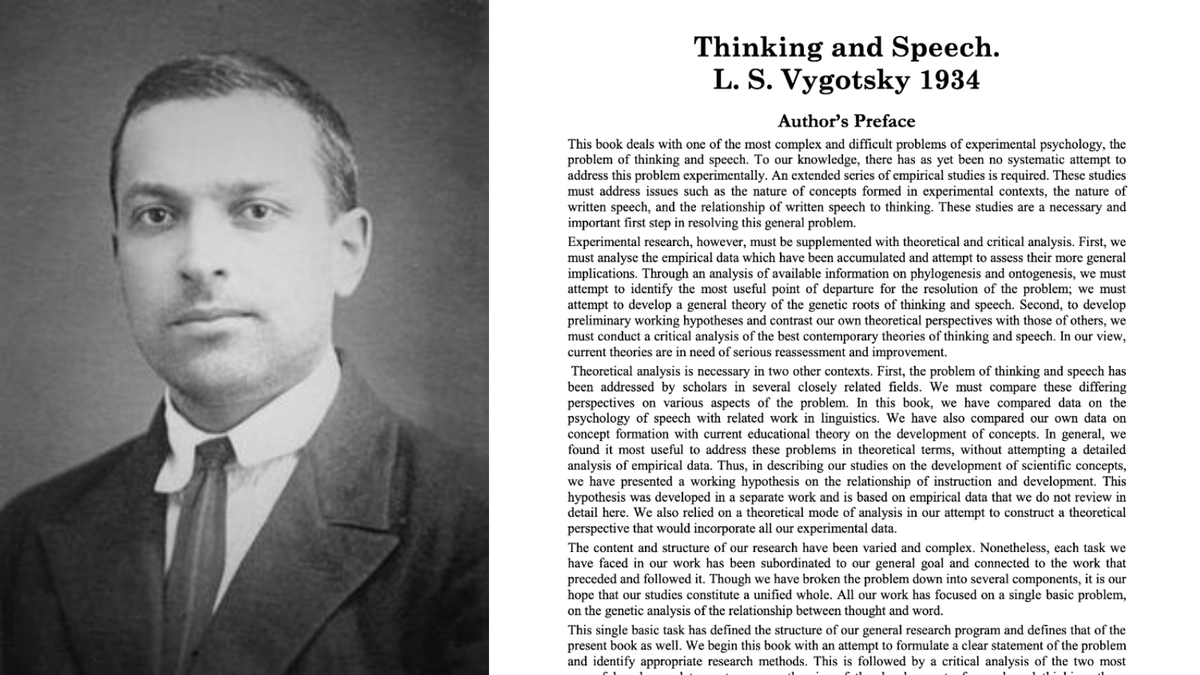
A Russian psychologist spent 10 years proving that the act of talking to yourself out loud is one of the most powerful cognitive tools the human brain has, and almost nobody outside his field has read the work.
His name was Lev Vygotsky.
He worked in Moscow in the 1920s and died of tuberculosis in 1934 at the age of 37. He had no laboratory, no funding, almost no English readers, and a body of work that the Soviet government suppressed for two decades after he died.
He produced the foundational theory of how human cognition actually develops, and the central piece of that theory was a behavior almost every adult is faintly embarrassed about.
Vygotsky noticed that young children talk to themselves constantly. They narrate their own actions, they argue with imaginary opponents, they instruct themselves through tasks out loud.
The dominant theory at the time, from the Swiss psychologist Jean Piaget, said this was a sign of cognitive immaturity that children would eventually grow out of as they learned to think properly.
Vygotsky said the exact opposite.
He argued that this self-directed speech was the most important cognitive event in the entire developmental window, because it was the moment a child first started to use language as a tool to control their own mind. The child was not failing to think. The child was learning how to think by externalizing the process and listening to themselves do it.
He predicted that as children matured, this out-loud self-talk would not disappear. It would go underground. It would become silent inner speech, which is the running monologue every adult has inside their own head for the rest of their life.
The voice you hear when you read this sentence is the direct descendant of a four-year-old narrating their own block tower.
For 50 years almost nobody outside Russia had access to his work, and the few researchers who did pick it up could not get funding to test it. Then in the early 2000s the experiments finally started to pile up, and what they found was that Vygotsky had been right about something even more important than he knew.
The first major study came from Gary Lupyan at the University of Wisconsin and Daniel Swingley at the University of Pennsylvania in 2012. They ran a simple visual search experiment. Participants were shown 20 images at once and asked to find a specific object, like a banana or a chair. In one condition they searched silently. In the other condition they were told to say the name of the object out loud to themselves while looking for it.
The participants who spoke the target name out loud found the object significantly faster, with higher accuracy, than the participants who searched in silence. The effect was strongest when the spoken word matched a familiar object the brain already had a strong category for.
Saying the word out loud literally tuned the visual system to detect that thing better. The researchers called it the label feedback effect, and the implication was that the act of vocalizing a goal physically changes how the brain processes the world while pursuing it.
The second major study came out of the University of Michigan and Michigan State in 2017. The lead researchers were Ethan Kross and Jason Moser, and they used both EEG and fMRI to record what happens inside the brain when people talk to themselves while emotionally upset.
They asked participants to recall painful autobiographical memories and reflect on them in two different ways. Some used the first person, saying things like "why am I feeling this way." Others used the third person, referring to themselves by their own name, saying things like "why is John feeling this way."
The brain scans showed that the simple act of switching from first person to third person, even silently, decreased activity in the medial prefrontal cortex, the region responsible for rumination and self-referential pain. Within a single second of using their own name instead of the word I, participants showed measurably lower emotional reactivity. The shift required no extra cognitive effort. It cost the brain nothing. And it worked.
Kross described the mechanism in his interviews. Talking to yourself by name creates a small amount of psychological distance from your own experience. Your brain processes the situation more like a problem belonging to someone else, which means it can analyze it instead of drowning in it.
What Vygotsky had intuited in 1934 turned out to be even more powerful than the developmental theory he built it into. The voice you use to talk to yourself is not background noise. It is one of the most precise cognitive tools the brain has, and you can change how it works just by changing the pronoun you use.
People who talk through problems out loud are not anxious or unstable. They are running an externalized version of a process the rest of us are running silently and worse. The kindergartener narrating their block tower, the surgeon muttering through a procedure, the engineer pacing a hallway describing a bug to nobody, the athlete repeating a cue to themselves before a free throw, they are all using the same ancient mechanism that builds and steers human thought.
You can run the experiment yourself the next time you are stuck on something hard. Stop trying to solve it silently in your head. Say it out loud. Describe what you are seeing. Walk yourself through the steps as if you were explaining it to a colleague who is not in the room.
And when something genuinely upsets you, switch to your own name. Ask why this person is feeling this way, instead of why I am feeling this way.
The voice you have been told to keep quiet your entire life is one of the oldest pieces of cognitive technology you own.
Most people are still embarrassed to use it.
255
3,045
11,163
405,670
Patrick Shaw Stewart retweeted

Regardless of what you think of the Conservative Party, Kemi Badenoch is quite clearly the most impressive UK party leader right now.
573
229
4,124
109,168
Patrick Shaw Stewart retweeted

Let me categorically Debunk this utter rot. @sainsburys.
I am a poultry Breeder. The hens that lay white eggs (Amberline/White Star) DO NOT have a lower carbon footprint.
Yes they eat a bit less and produce roughly the same amount of eggs as the Brown egg layers (Bovan/Lowman/ISA Brown) but they live shorter lives, are prone to dying suddenly when startled, a flighty and nervous and because they live shorter productive lives (12 -18mnths) vs brown 18/24mnths (both commercial farmed), you have to incubate more which is increased (Electricity/gas costs) and their eggs are not the same quality.
I breed and keep 20 different breeds, including: ISA Brown hens and White Stars. All my hens are 100% free range, Not a single barn kept bird, I have ISA browns that are 5yrs old and still laying beautiful Brown eggs, I have not seen a White star live beyond 3yrs and certainly none have laid eggs past 18-24mnths.
White stars Lay themselves to death. They are slender birds and because they dont eat a lot, it drains their personal vitality to keep up laying the eggs you want to sell because of the nonsensical lie that they are "More Carbon Neutral"
You want to know about eggs, come talk to someone like me, Don't rely on some hairbrained imagination of a buyer who's trying to squeeze the profit margin for a few extra pennies at our expense and to the poor hens detriment.

1,136
8,999
24,715
679,346
Patrick Shaw Stewart retweeted

Jun 2
This is Kemi Badenoch at her best. Hits precisely the right tone here.
Jun 2

Watch in full: @KemiBadenoch's powerful response to the murder of Henry Nowak and the shocking police bodycam footage ⬇️
178
299
2,110
136,752
May 14
Now that's an interesting idea!
May 14

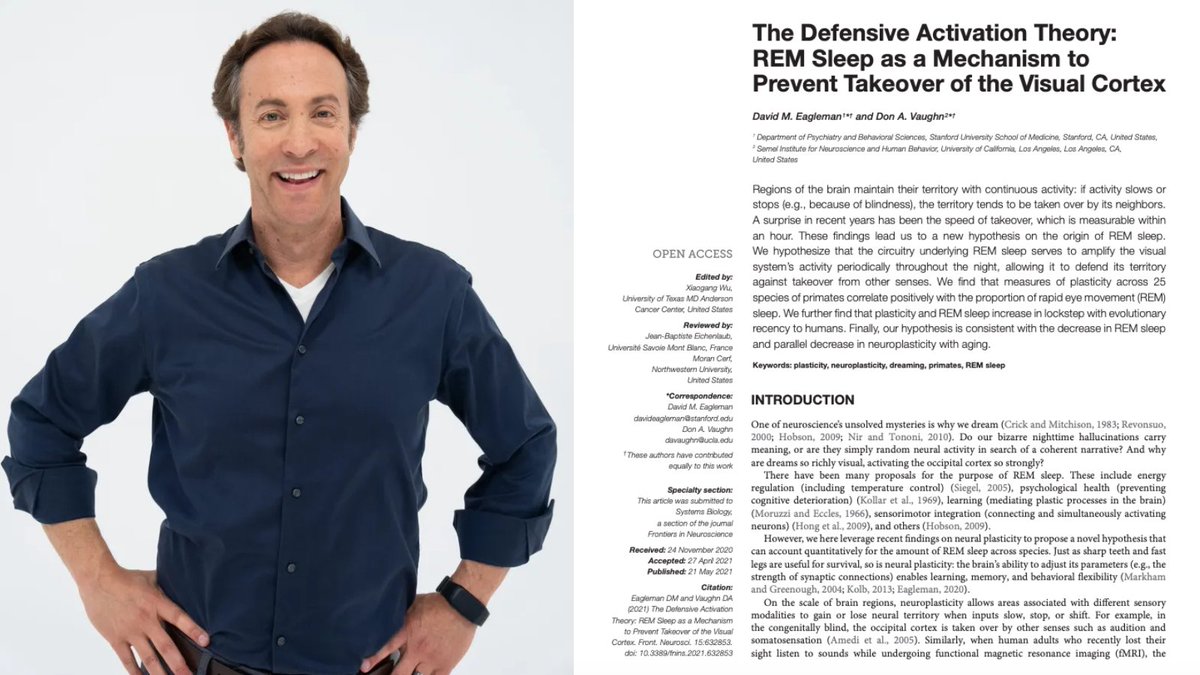
A Stanford neuroscientist published a paper a few years ago that quietly answered one of the oldest questions in human history, and almost nobody outside his field has heard of it.
The question is why we dream. Not what dreams mean. Why they exist at all. Why your brain spends a third of its sleep hallucinating images instead of just resting like every other organ in your body.
His name is David Eagleman.
He runs a lab at Stanford. The paper is called "The Defensive Activation Theory", and the moment you read it the explanation collapses every other theory you have ever been taught about dreams.
Freud said dreams were repressed desires. He was guessing. He had no brain scans. He had no electrodes. He had a couch and a notebook and a century of credibility that nobody has been able to fully scrub off the subject since.
Modern neuroscience replaced him with the memory "consolidation theory". The idea that dreams are your brain sorting through the day, filing things away, deciding what to keep. That story is partially true. Sleep does consolidate memory. But it does not explain the single strangest thing about dreams, which is that they are almost entirely visual.
You do not dream in pure sound. You do not dream in taste. You do not dream in smell. You dream in pictures. Vivid, detailed, often impossible pictures that activate the back of your brain so hard a scientist scanning you would think your eyes were wide open.
Eagleman started from one fact almost nobody outside neuroscience knows. The brain is territorial. Every region holds its turf through constant electrical activity. The moment a region goes quiet, its neighbors start invading. They take the silent territory and reassign it to themselves.
This is called "cortical takeover", and it is not slow. It is not a long process measured in years. In experiments where adults are blindfolded, the visual cortex starts processing touch and sound within an hour. One hour of darkness, and the territory is already being annexed.
In congenitally blind people, the visual cortex is fully repurposed. It runs language. It runs hearing. It runs touch. The hardware never went unused. It was just reassigned to whoever showed up first.
Now sit with the implication of that for a second.
Every night, when you close your eyes and fall asleep, the sun has set. The planet has rotated. The visual cortex, which takes up roughly a third of your entire cortex, is suddenly receiving zero input. For eight hours. Every single night. For your entire life. And evolution has shaped your brain inside a planet that has been spinning into darkness for billions of years.
If cortical takeover happens in an hour, the visual cortex should have been lost a long time ago. Stolen by hearing. Stolen by touch. Reassigned by morning. Humans should have evolved into a species whose vision works fine during the day and then degrades every time the sun goes down because the territory keeps getting renegotiated overnight.
But that did not happen. Vision works the moment you open your eyes. Which means something is defending the territory while you sleep.
Eagleman's claim is that dreams are that defense.
Every 90 minutes through the night, a precise burst of activity fires from the brainstem into the visual cortex. Pontine-geniculate-occipital waves. PGO for short. They are anatomically aimed. They are not general arousal.
They are a targeted volley of signal launched directly at the back of the brain where vision lives. The cortex lights up as if it is receiving real images, and you experience that artificial activation as a dream. The bizarre narrative your conscious mind invents around it later is just your brain trying to make sense of the noise.
The dream is not the point. The dream is the side effect. The point is keeping the territory occupied.
The evidence for this is the part that should haunt you.
Newborns spend roughly 50% of their sleep in REM. Adults spend twenty. Old adults spend fifteen. The amount of dreaming you do tracks almost perfectly with how plastic your brain is. Newborns have the most plastic brains on earth. Their visual cortex is in the highest danger of being overrun by neighboring senses while it develops.
So evolution gave them an enormous defense budget. As you age, your brain becomes less plastic, the takeover risk drops, and the defense system scales down accordingly.
Eagleman and his co-author ran the same correlation across twenty-five primate species. The more plastic a species' brain, the higher the proportion of REM sleep. The relationship held across the entire primate family tree. Plasticity and dreaming move together. They are two halves of the same evolutionary equation.
A species that ranks higher on flexibility and learning also dreams more. A species that is born ready to walk and survive dreams less. Plasticity is the asset. Dreaming is the insurance premium.
And the prediction the theory makes is the one that quietly closes the case.
Of all your senses, only one is disadvantaged by darkness. You can still hear in the dark. You can still feel in the dark. You can still smelll and taste in the dark. The only sense that depends on light is vision. Which is exactly the sense your dreams are made of. The defense system is targeted at the only territory that is actually vulnerable while you sleep.
Memory consolidation is real. Emotional processing is real. Your brain does do those things at night. But Eagleman's argument is that those functions piggyback on a much older system whose original job was simpler and more brutal. Keep the lights on inside the visual cortex while the planet is dark, or lose it.
For thousands of years, people have asked what dreams mean. Prophets wrote about them. Poets wrote about them. Freud built a discipline on them. None of them had access to the actual answer, which is that dreams may not mean anything in the symbolic sense at all.
They may be the visible flicker of a defense system running in the background, the way a screen saver protects a monitor by keeping the pixels moving even when nobody is looking.
The strangest thing about the theory is how cleanly it explains why dreams feel so real. Your visual cortex cannot tell the difference between a PGO wave and an actual photon. It is the same hardware lighting up the same way. The cortex does its job. It builds an image. Your conscious mind, half-awake, wraps a story around it and calls it a dream.
You are not seeing your subconscious tonight. You are watching your brain defend a piece of itself from being stolen.
Every animal that has ever closed its eyes on this planet has done the same thing.
1
1
158

Your point nails a core weakness in Pekar 2022. The phylogenetic case for two spillovers rests on assuming early human cases would have been spotted efficiently enough to rule out unsampled intermediates. But as you say, doctors routinely default to familiar diagnoses for odd symptoms in novel outbreaks—delaying recognition. That makes hidden chains far more likely than the model credits, collapsing the "no intermediates = multiple jumps" logic. Solid critique.
1
1
2
86
Mar 31
Whichever way you look at it, it's odd, and depressing, that Science would publish this stuff
Mar 31

What's a little surprising is that the result from their own data, model, and simulations already pointed to a single spill even without taking into account that time-dependent ascertainment.
1
14
565
Mar 31
Pekar 2022 tries to use a phylogenetic tree to show that SARS-CoV-2 spilled over to humans twice in the Huanan Market
But a phylogenetic tree on its own can't possibly tell you what the host was at any particular node
So the whole argument revolves around whether there was a cluster of unseen human cases that infected those early market patients, as opposed to animals
And whether such a cluster would have been noticed
But we know doctors are very reluctant to diagnose new diseases - they naturally assume they're dealing with an existing illness, just with unusual symptoms
So it's highly unlikely that very early cases would have been picked up efficiently - and the whole Pekar narrative collapses
It's so odd for a prestigious journal to publish this nonsense
Mar 30
My paper showing that the famous multiple-spill Pekar paper got its conclusion upside down by a math error is now published. Links below. I think that the press who covered the original should cover the real result with the opposite (single spill) conclusion.
3
33
1,072
Patrick Shaw Stewart retweeted

Mar 30
Article: econjwatch.org/articles/an-a…
Interview with Jamie Robins: econjwatch.org/podcast/micha…
Substack discussion: michaelweissman.substack.com…
2
23
106
17,126
Mar 30
Why do scientists get things completely wrong so often?
Mar 29

1968-1973: The Minnesota Coronary Experiment runs at a state mental hospital.
9,000 patients. Randomised controlled trial. One group eats saturated fat. The other group eats vegetable oil instead. This is the gold standard study design. If vegetable oil is healthier, this will prove it.
The results come in. They're... not published.
Decades pass. The study is forgotten. The lead researcher Ancel Keys dies in 2004. The data sits in boxes somewhere.
2016: A research team at NIH stumbles onto something while doing a systematic review. They find a reference to a large Minnesota study that was never published. They track down the data.
It's sitting in boxes. In a researcher's attic. For 43 years.
They extract the data and publish the results in BMJ.
The vegetable oil group had LOWER cholesterol. That part worked as predicted. But they had HIGHER death rates. For every 30-point reduction in cholesterol, there was a 22% increase in mortality risk.
The group that ate vegetable oil instead of saturated fat had lower cholesterol and died more.
This is the study that was supposed to prove vegetable oils were healthier. Instead it proved they were deadly.
So they hid it in an attic for four decades.
While the data was hidden, global vegetable oil consumption exploded. Governments recommended seed oils. Restaurants switched to them. Food manufacturers used them in everything.
The study that proved vegetable oils kill people was hidden in boxes while the world was told to eat more vegetable oils.
It wasn't suppressed by some conspiracy. It was just... forgotten. Because the results were inconvenient.
2
106
Patrick Shaw Stewart retweeted
Mar 29
India ran the most important cardiovascular study of the 20th century by accident, and then immediately forgot about it.
In 1967, Dr. S.L. Malhotra published a study in the British Heart Journal examining heart disease rates among 1.5 million Indian railway employees. The population was extraordinarily useful for research purposes: same employer, same healthcare access, comparable income and working conditions, spread across the entire country.
The only meaningful variable was geography. Which meant diet.
North Indian railway workers: Punjab, Rajasthan, UP, ate a diet built around ghee and dairy fat. They consumed up to 19 times more fat than their southern counterparts. The fat was primarily saturated: clarified butter, milk fat, the short-chain saturated fatty acids that Ancel Keys had recently been telling the Western world were arterial death.
South Indian railway workers ate a diet based on rice, sambar, and seed oils: groundnut oil and sesame oil, primarily. They ate considerably less fat overall. By the standards of dietary advice being formulated in the 1960s, they should have been the healthy ones.
Heart disease mortality in South India: 135 per 100,000.
Heart disease mortality in North India: 20 per 100,000.
Seven times higher in the population eating seed oils.
Among railway sweepers specifically, the lowest-paid, most physically active workers, the gap was even wider. Heart disease was fifteen times more common in the South Indian sweeper population than in the North Indian sweeper population.
Malhotra controlled for everything he could reach: smoking, where Northerners actually smoked more. Activity levels, where the relationship was inconsistent. Socioeconomic status, where executives died more often than sweepers regardless of region. He found no variable that explained the gap except the type of fat in the diet.
He published the data. In a peer-reviewed journal. In 1967.
The study was cited periodically, acknowledged as methodologically interesting, and then set aside.
The decade in which Malhotra published was the decade in which Ancel Keys's fat hypothesis was being converted into policy. The American Heart Association was issuing guidance recommending polyunsaturated vegetable oils as replacements for saturated animal fats. The food industry was producing seed oils at industrial scale. The infrastructure of seed oil promotion was being built, expensively and with great institutional momentum.
A study showing that populations eating animal fat had a fraction of the heart disease of populations eating seed oils was not, in that context, a study that anyone particularly wanted to follow up.
Nobody followed up.
Almost sixty years later, the finding stands unrefuted in the literature.
It is not in the dietary guidelines.

232
3,172
9,811
654,240
Mar 16
I've just thought of a perfect analogy. Let's say you're interviewing candidates for an office manager job. You want to know if they are honest, hardworking, intelligent etc, but you also want to know if they are meticulous, which is usually not obvious at first. So you set them a test after the interview to copy information into a document where mistakes will immediately show up.
That's why the peacock has a large, complex tail: it shows the peahen that the peacock can copy its genes accurately.
Can anyone think of a good way to test this idea !?
Feb 22

Here's the latest version of my conservation of fidelity/sexual selection hypothesis
Submitted this morning to a good journal
vixra.org/pdf/2302.0006v2.pd…
The Everest hypothesis says the elaborate embellishements of sexual reproduction — from courtship displays to long distance migrations — are multigenic tests of DNA replication fidelity. Mate choice and selective fertilisation can then purge lineages that have slightly elevated mutation rates.
Honestly, it's pretty obvious I'm right - the conventional explanations are weak
1
102
My interpretation is that these extraordinary migrations have been co-opted by evolution to reveal something else: DNA replication fidelity.
Explanation below⬇️

🚨 JUST IN: A migratory bird just shattered world records — flying 8,425 miles (13,560 km) NON-STOP across the Pacific without landing once.
The bar-tailed godwit doesn’t stop to eat, drink, or sleep during its migration across the Pacific Ocean. Its journey from Alaska to Australia takes roughly 11 days of continuous flight, covering over 13,000 kilometers through storms, headwinds, and open ocean with zero land beneath it the entire time.
Before departure, it does something almost surgical to its own body. It shrinks its digestive organs down to almost nothing, converting the stomach, intestines, and liver into raw fuel. The bird essentially eats its own gut to make room for fat reserves that will power its wings for nearly two weeks straight.
The brain doesn’t fully sleep either. Half of it stays active while the other half rests, alternating in shifts mid-flight at altitude over the open Pacific. The godwit is simultaneously unconscious and navigating with magnetic field sensitivity that no human instrument in the 18th century could replicate.
What makes this genuinely staggering beyond the physical record is the navigational precision involved. The bird leaves Alaska and arrives in New Zealand with accuracy that would embarrass early GPS systems. It reads Earth’s magnetic field, atmospheric pressure gradients, star positions, and potentially quantum-level compass mechanisms inside its eye that literally let it see magnetic field lines overlaid on its visual field.
Evolution spent millions of years building an aerospace navigation system inside a 300 gram animal.
We spend billions engineering machines that do what this bird does on instinct, fat reserves, and half a sleeping brain.
The longest recorded non-stop flight by a commercial aircraft is around 20 hours.
This bird does 11 days.
Without a runway.

1
109
The Everest hypothesis
x.com/PatrickSSte/status/202…
Feb 22
Here's the latest version of my conservation of fidelity/sexual selection hypothesis
Submitted this morning to a good journal
vixra.org/pdf/2302.0006v2.pd…
The Everest hypothesis says the elaborate embellishements of sexual reproduction — from courtship displays to long distance migrations — are multigenic tests of DNA replication fidelity. Mate choice and selective fertilisation can then purge lineages that have slightly elevated mutation rates.
Honestly, it's pretty obvious I'm right - the conventional explanations are weak
42
What I find amazing is the black stuff
That's got to be having a big effect
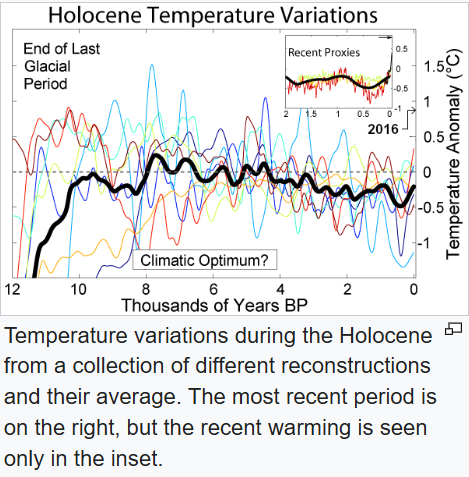
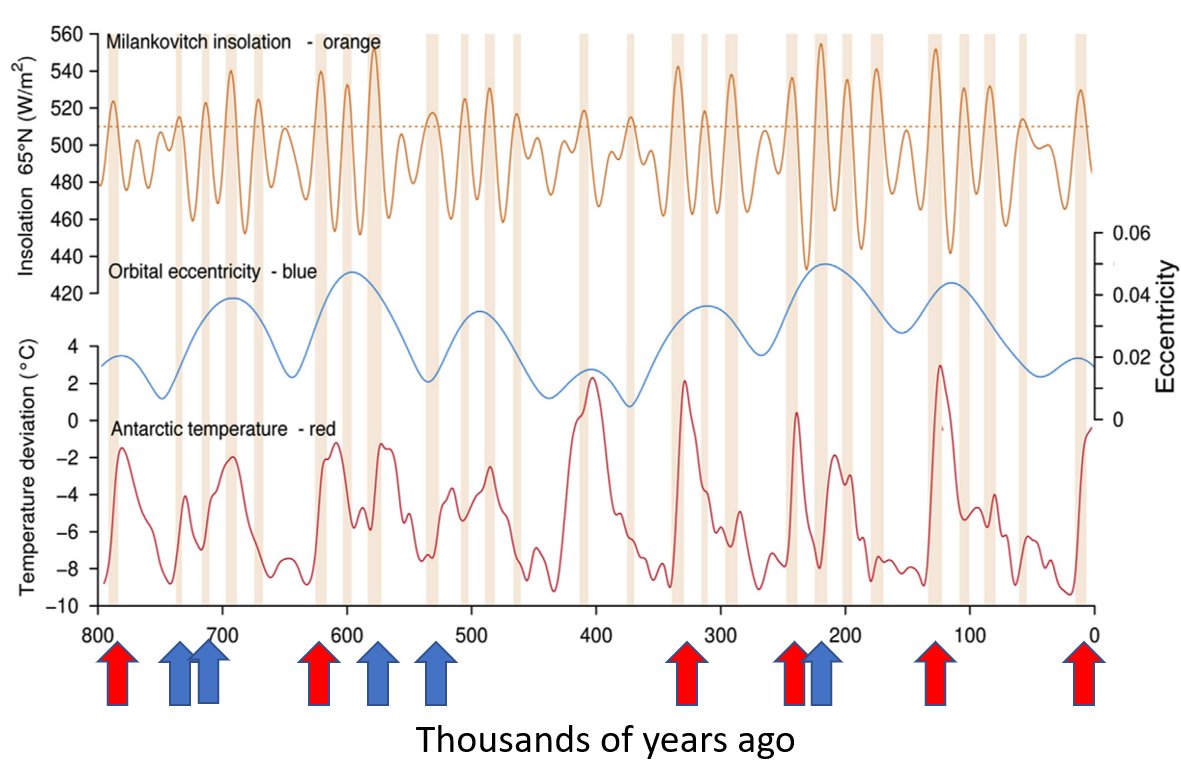
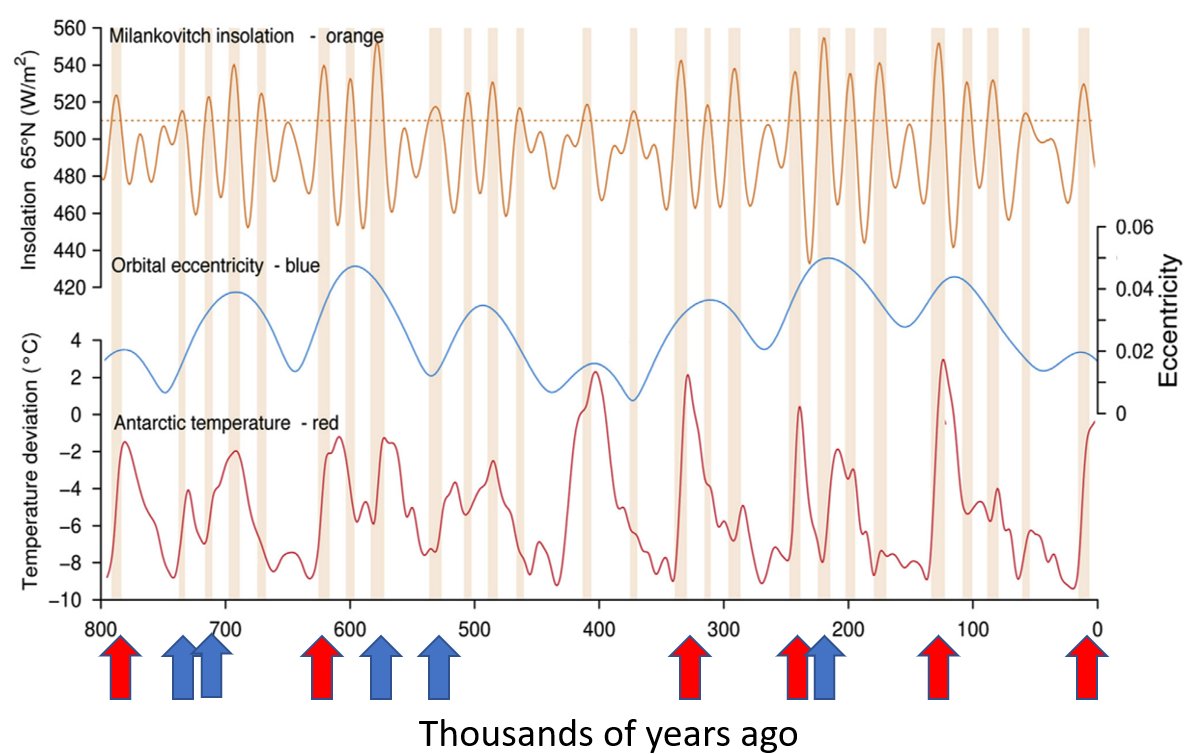
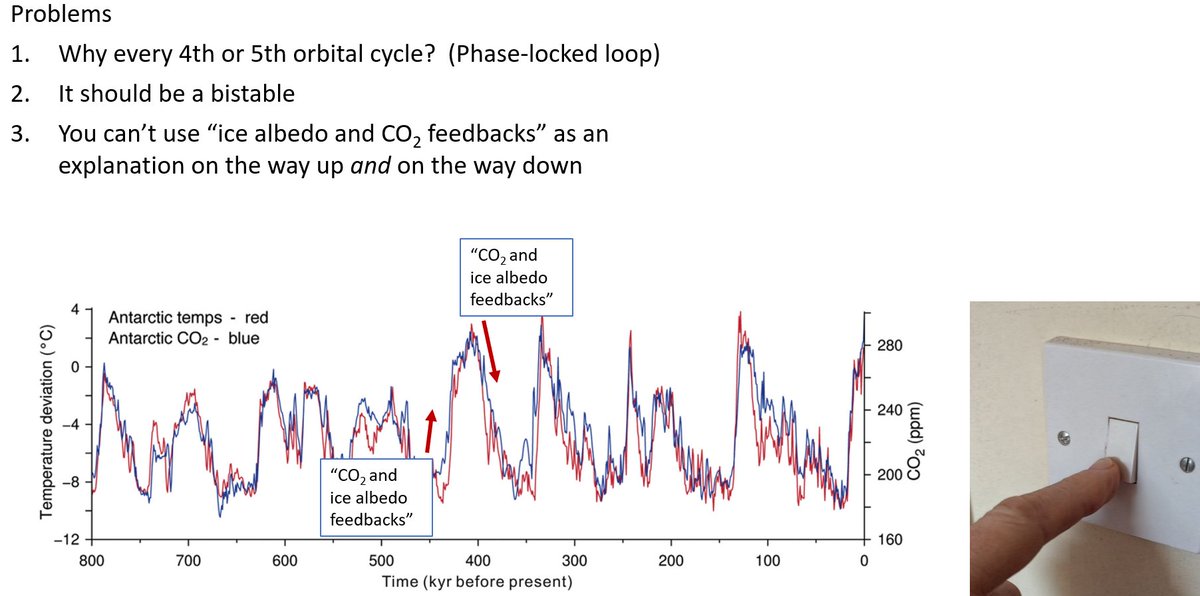
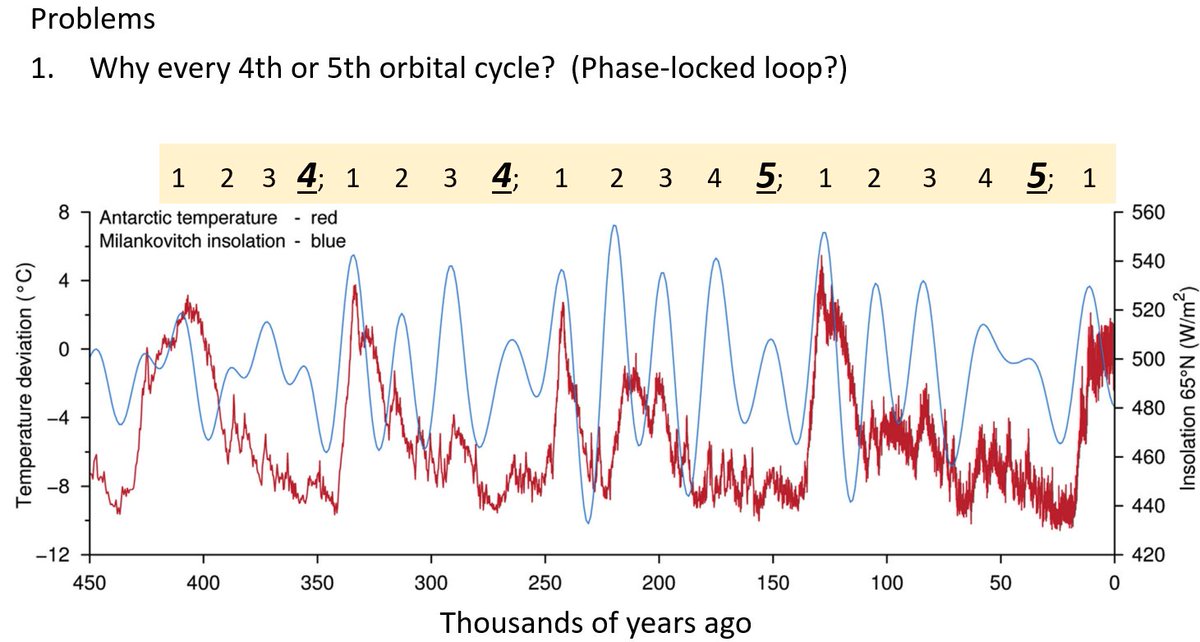
The ice ages almost certainly ended because of something similar - plants died off on high ground and brown (iron-containing, luckily) dust landed on snow and ice and caused dramatic warming.
Albedo tends to be much more important than the greenhouse effect
1
3
136
Article here
climatechangedispatch.com/ic…
1
1
4
82
Discussion of dust landing on ice here
x.com/PatrickSSte/status/194…
20 Jul 2025
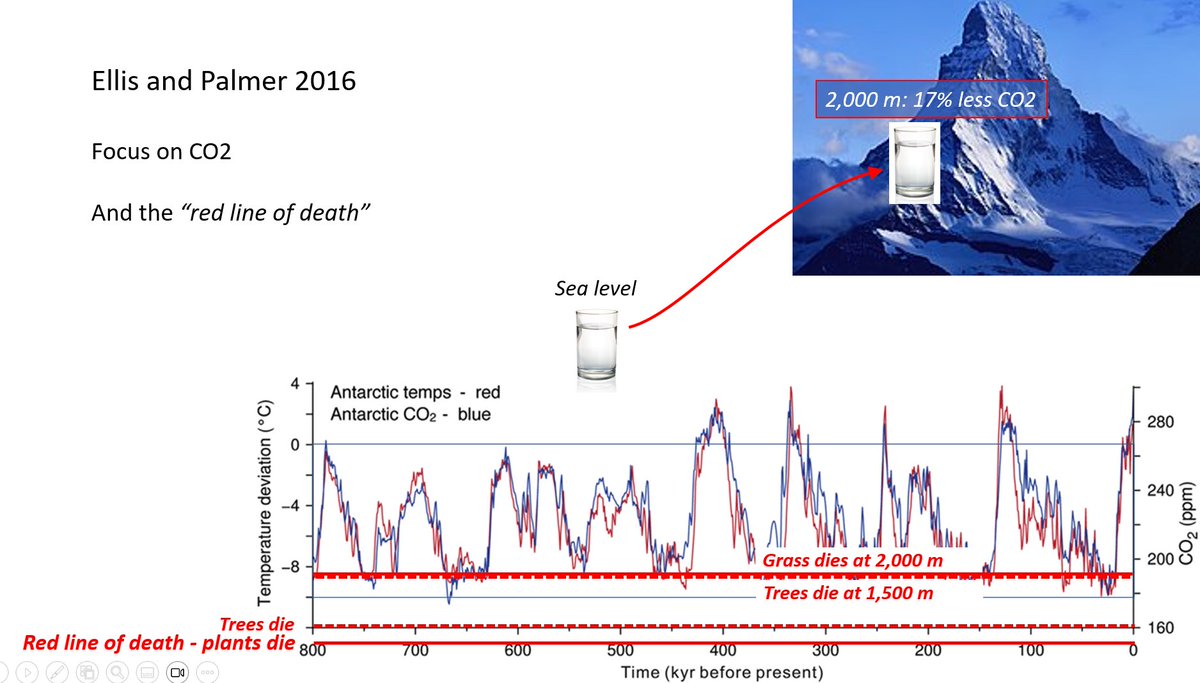
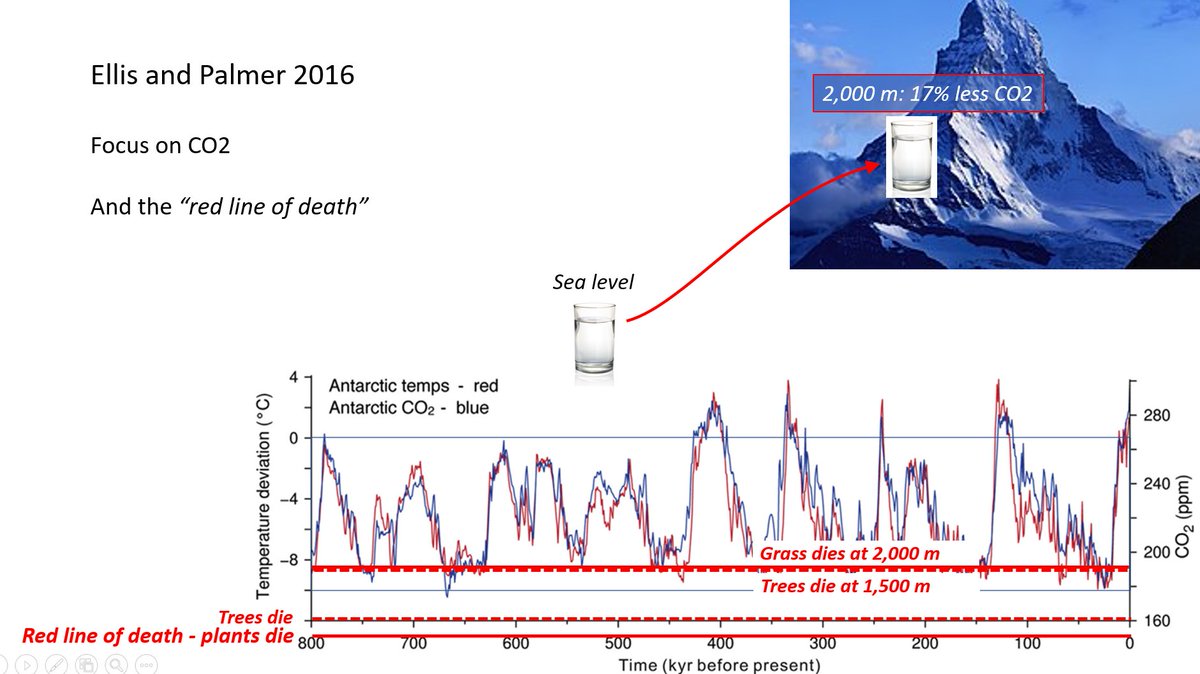
Actually, the opposite extreme almost certainly explains how the ice ages ended
CO2 got so low during the ice ages that on all high ground plants died: there simply wasn't enough CO2 for them to live
This resulted in dust that landed on ice and ended the glacials
(Luckily for us, iron is brown)
All explained by Ellis and Palmer 2016, discussed here:
youtu.be/5XRJgZYP4UU?si=mGEN…
1
1
61