
Economist and communist scientist.
Joined November 2013
- Tweets 14,883
- Following 465
- Followers 5,959
- Likes 1,749
464 Photos and videos



Paul Cockshott retweeted

Jun 13
Apartheid South Africa and Nazi Germany needed compliant judges to provide a legal veneer to their darkest crimes.
Judge Johnson joins their wretched company. He overturned a jury's conviction of four anti-genocide activists for criminal damage and sentenced them as terrorists instead.
As one their barristers pointed out, the four defendants were initially arrested by police on suspicion of involvement in an act of terrorism. But the prosecution decided not to charge them with terrorism offences because it knew no jury would ever convict them based on the evidence.
Instead the Crown held two trials: a sham one for the jury, and the real one conducted in secret by the judge. That is not justice. It is a show trial worthy of the worst tyrannical regimes.
Jun 12

Here’s injustice Jeremy Johnson handing down the sentences at today’s disgusting stitched up Palestine Action trial.
Any faith I ever had in the fairness of the British justice system is completely is dead.
583
6,600
15,273
345,733
Paul Cockshott retweeted

Y si fascismo y comunismo eran lo mismo, ¿Por qué con la derrota del fascismo en la Segunda Guerra Mundial los fascistas no huyeron en masa al campo comunista y, sin embargo, se quedaron en sus países o se fueron a otros países capitalistas?
84
83
559
20,269
Paul Cockshott retweeted
Jun 12
BREAKING: Justice Jeremy Johnson has ruled that the Filton 4 will be sentenced as terrorists – even though two juries refused to convict them of violence charges over their efforts to disable an Israeli factory in the UK making killer drones for use in Gaza. They were found guilty of a minor charge of criminal damage.
Judge Johnson kept the jury in the dark of his plans to sentence the four as terrorists. This is the first time in British legal history that anyone has been sentenced as a terrorist for damaging property. It's a very dark moment in an increasingly authoritarian Britain.
Thousands of legal professionals complained about Johnson's clear abuses of legal procedures to help the government's case for proscribing Palestine Action as a terrorist group.
Johnson has now proved this was always a show trial.
I explain how he rigged the two trials here: jonathancook.substack.com/p/…

404
4,062
6,427
178,906
Paul Cockshott retweeted

Jun 12
One half of the Labour Party defends mass impoverishment of our people to feed the gullets of the military industrial complex and war after war. The other half is demanding even more!
17
77
314
10,802
Paul Cockshott retweeted

Jun 12
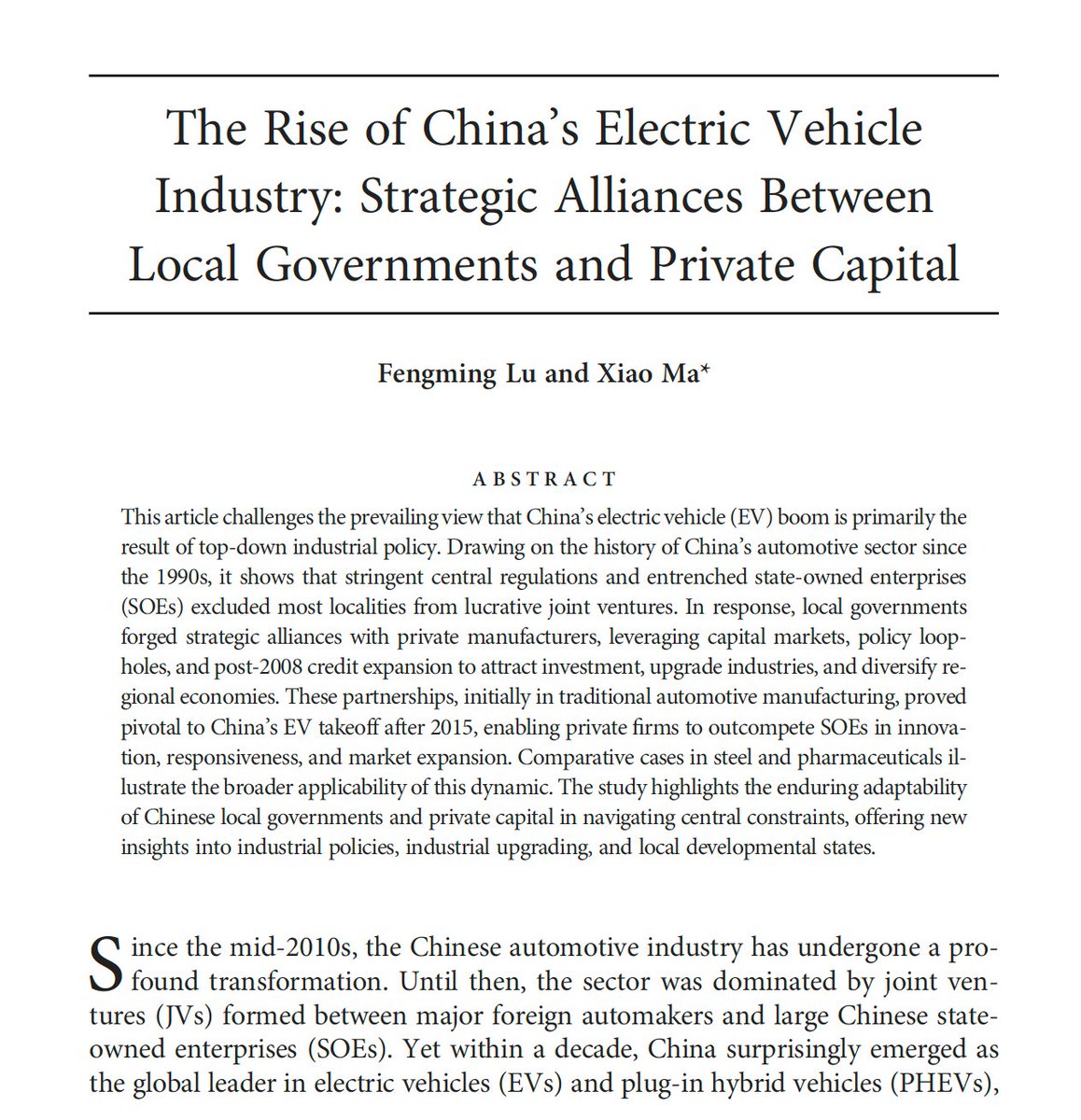
This is a really fascinating paper that everyone interested in China's industrial policy should read.
It destroys so many myths (see below), and is written by deeply credible people who conducted over three years of fieldwork in China and interviewed 60 Chinese officials, entrepreneurs, and engineers. When it comes to China studies, it literally doesn't get more rigorous than this.
First myth it destroys: contrary to popular belief, Beijing's industrial policy didn't build the companies that became China's EV champions. They rose largely **despite** it, through its cracks.
For sure, Beijing did favor EVs as an industry and pushed hard for it but their big bet was SOEs (State Owned Enterprises): research grants, pilot programs, licenses, cheap credit - virtually all of it flowed to state firms.
The result? China's actual EV champions - BYD, Geely, NIO, XPeng, Li Auto, etc. - are overwhelmingly private firms that succeeded despite Beijing favoring their SOE competitors.
How so? Because, when favoring SOEs, the central government didn't just pick winning companies, it picked winning cities, each SOE being anchored in a specific city: Shanghai (SAIC), Changchun (FAW), Wuhan-Shiyan (Dongfeng), etc.
Which means that every city not on the list, that wanted a piece of the auto boom, had only one option left: team up with private entrepreneurs who were equally excluded from central government favor.
That's what truly fueled China's EV miracle: an alliance of the excluded, between local private entrepreneurs and local mayors.
This is the biggest misconception this paper destroys: the reality is that the "Chinese state capitalism" that many in the West think powered the EV boom actually tried to block many of these companies from existing. In effect, it was closer to an obstacle course that local actors (mayors and provinces) learned to game.
Geely - now the third largest automaker in China - is a fantastic example of this.
First of all, it started off illegal since, to build passenger cars, you had to have a central government license and they couldn't get one. Zhejiang Province told them to go ahead regardless because the province had hundreds of auto parts suppliers but no carmaker of its own.
It's only a couple of years later, recognizing the fait-accompli that Geely was producing cars and was competitive, that the central government admitted them to the National Sedan Catalog - effectively legalizing them retroactively because there were facts on the ground.
Then there was the Volvo acquisition in 2010, which is fair to say - looking back - proved to be the most strategically valuable acquisition in Chinese automotive history. Despite it being presented at the time (and still described this way today) as "China buying Volvo", all 3 major state-backed banks in China (Export-Import Bank, China Development Bank, Bank of China) refused to finance the deal. The only state-bank money Geely managed to get was a $200 million loan from a provincial branch of China Construction Bank - a tiny fraction of what the deal required.
Geely actually did the deal with Goldman Sachs money via Hong Kong plus loans and equity from four local governments (Chengdu, Zhangjiakou, Daqing, Shanghai's Jiading district), each of which bought in by securing a Volvo plant or headquarters for itself.
In effect, the doors that Beijing controlled were largely closed to Geely, but it made it because the doors subnational actors controlled were opened.
Which all means this paper destroys another very common myth: the big merit of the central government in all this was to be relatively chill about it, to NOT be dictatorial.
I just imagine if that had happened in France and you had - say - the mayor of Lyon or Marseilles open, fund and promote an unlicensed carmaker against Renault: the préfet would shut it down within weeks, and the mayor would be lucky to escape prosecution.
That's the irony: on industrial policy, the supposedly "totalitarian" Chinese state proved more tolerant of local defiance than most Western liberal democracies would be. Beijing's greatest contribution to the EV miracle wasn't the plan - it was looking the other way while the plan was being violated.
To be sure, the paper doesn't hide the costs of this system: ferocious local competition also produced what's known today in China as "involution" (内卷-Neijuan, basically a hypercompetitive price war), as well as some spectacular failures. For instance one county lost 6.6 billion yuan on a carmaker that never really made cars.
But that's precisely the point: this is a high-risk, high-reward model of decentralized experimentation, the very opposite of the careful central planning Westerners imagine.
I've repeated this countless times but it bears repeating again: the single greatest misconception people have about China is - probably because we wrongly associate communism with centralized control - that it is a monolith run from Beijing. Some even say it's run by "one man."
The reality is the exact opposite: China is, in practice, one of the most decentralized countries on earth. Roughly 85% of government spending in China happens at the subnational level - against about 30% in the average OECD country (and even less in France, which is actually one of the most centrally controlled countries on earth). A Chinese mayor commands fiscal resources, land, investment funds and policy latitude that virtually no Western mayor could dream of.
Last but not least, I'd be remiss not to mention what the paper has to say on the positive legacy of Mao and its role in the rise of EVs (given I myself wrote an article titled "Mao's economic record wasn't bad, actually": arnaudbertrand.substack.com/…).
When it comes to China myths, none is more entrenched than the idea that Mao left behind nothing but ruins.
This paper confirms a key argument of my article: Mao's deliberate dispersal of industry across China (during the Great Leap Forward and Cultural Revolution decentralizations) left dozens of cities with their own small auto works. Inefficient, yes - but these scattered factories survived into the 1990s and became the seed stock of everything that followed: the industrial base, the engineers, and the production licenses that EV startups would use to enter the market.
The paper even says it outright: the fragmentation that industrial policy "sought to eradicate" is "precisely" what "ironically enabled" the EV sector's rapid rise.
This is exactly the mechanism I described in my Mao article: structures built in the Mao era - communes becoming township governments, commune enterprises becoming TVEs, Third Front factories seeding interior industrialization - became load-bearing foundations of the reform miracle.
Fittingly, the spark for China's first municipal carmaker adventure was literally a TVE (Township and Village Enterprise), the institutional descendants of Mao's commune enterprises: Tongbao, a kit-car maker in Wuhu whose success stunned local officials into building what became Chery (one of China's biggest carmakers today). You can't tell the story of China's EV miracle without crediting the legacy of Mao.
What's the biggest lesson in all this for Western policymakers?
The obvious one is that the part of industrial policy that most people assume China does and that they sometimes want to copy - i.e. the state picking winners - is actually the part that failed.
The part that did succeed is the China nobody in the West believes exists: a radically decentralized system with a high degree of tolerance for disobedience and experimentation.
We imagine China as a country where nothing happens without Beijing's approval when the reality is closer to the opposite: China's EV miracle happened precisely because localities asked for forgiveness rather than permission.
All in all, and this is the lesson I often come back to, this is yet another illustration of the importance of understanding China for what it is as opposed to the caricature we've built of it. This matters whichever "camp" you're in. If you see China as a rival, you can't compete with someone you don't understand. If you see them as a source of lessons, you can't emulate what you've misunderstood. Whatever you want from China - to compete with it or learn from it - the entry fee is the same: genuinely understanding it.
Jun 10

Why did private firms, not state-owned enterprises (SOEs), come to dominate China’s EV sector?
My new @ChinaJournal article (co-authored with Xiao Ma @maxiaoalex) challenge the "top-down industrial policy" narrative.
The real engine? Strategic alliances between local governments and private capital. 🧵
Based on 3 years of fieldwork, 60 interviews (with officials, entrepreneurs, and engineers), and rich first-hand accounts, we show how strict central regulations inadvertently drove local states to bet big on private EV players.
Here is the story: (1/15)
73
565
1,932
188,149
Paul Cockshott retweeted

Jun 12
Every time I suggest equality under the law as the right principle for Israel-Palestine, many of my fellow Jews tell me it's dangerously unrealistic, that I don't understand the region etc. It's exactly what I heard from white South Africans as a kid. But I rarely heard a Black South African during apartheid say that legal equality was unrealistic, or would produce more violence, just as I rarely hear that from Palestinians today.
Jun 11

I believe states should treat people equally under the law, irrespective of ethnicity, religion or race. I support that principle in the US, India, Iran, Israel-Palestine, everywhere. I believe such states tend to be safer for everyone because when people have equal representation in government they're less likely to take up arms. @mdubowitz disagrees. I'd welcome discussing this with him. I'm sure I'd learn something. And if my views are as odious and nonsensical as he suggests, he should want to expose them as such for as wide an audience as possible.
241
632
2,770
232,276
Paul Cockshott retweeted

Jun 11
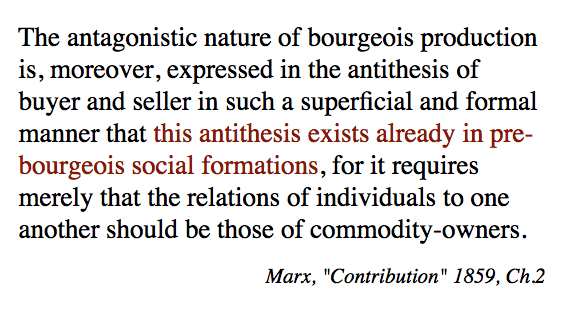
Marx publicly criticized the »superficial and formal manner« of our noisy commodity abolitionists and verbose value form fetishists in 1859 already:
2
4
32
878
Paul Cockshott retweeted

Jun 11
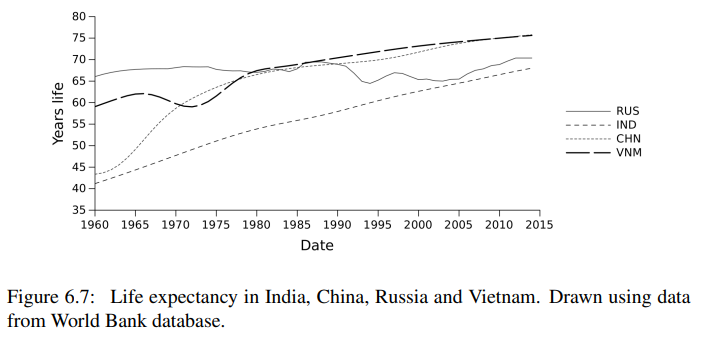
Communism has many unbeatable achievements:
- it’s all real Communism, you dumb-dumb
- Communism eradicated more poverty than anything else in human history
- Communism destroyed fascism
- Communism invented space travel
The wildest part is that Communism does all this (and much more) while under constant attack. But more importantly for this topic, if Communism is so bad, why must we see such ridiculous lies about it constantly?
Jun 10

Communism has one unbeatable achievement:
Convincing millions of people that every failure was “not real communism.”
At some point, the excuse becomes the evidence.
82
48
362
13,150

May 30
Oh come on. Go back to Von Neumann, he shows that the problem of planning maximal economic growth is a simple eigenvalue problem and thus eminently tractable.
May 30

The "economy" is resource alocation under constrains, uncertanty, and noise, its a monumental hard problem to tackle even on a small scale. Why he refuses to admit that is beyond me. Its a nomlinear, nom convex, integer optimization problem, and that is for a static solution.
4
3
70
6,012
Paul Cockshott retweeted

May 29
Britain has the dirtiest rivers, the most expensive energy, the least reliable trains, the most overcrowded prisons, the worst access to healthcare and the widest gap between rich and poor in all of Europe. If you want a verdict on 40 years of neoliberalism, there it is.
295
2,993
9,147
178,152
May 28
At one level no different from in a capitalist country: availabilities of workforce, transport, power etc. A committee weighs it up and decides.
May 28
Now i could be wrong, you are the professor, but from my read lineary is hinted at but not proven, and continuity is assumed, constraints are left to another layer.
So how can answer: wheres hould we build a factory, in province A or B? Using what you propose.
1
1
18
1,672
May 28
But in a planner system other policy issues come in: regional development, ecology,national defence implications that a profit maximising firm ignores.
1
1
23
883
Paul Cockshott retweeted

May 28
Дело в неспособности управлять. Дело в том что сцществующий строй в СССР, мешал новой буржуазии реализовать свои интересы как господствующего класса. Именно поэтому СССР и был демонтирован.

2
7
15
1,042
Paul Cockshott retweeted

May 28
Also worth noting that you can easily major in econ, of all things, without reading Hayek. Econ is barely taught as a social science at this point, and many depts don't bother with the history of economic thought. Just ahistorical p-set slop for aspiring finance/consultant types.
12
13
299
13,487
Paul Cockshott retweeted

May 28
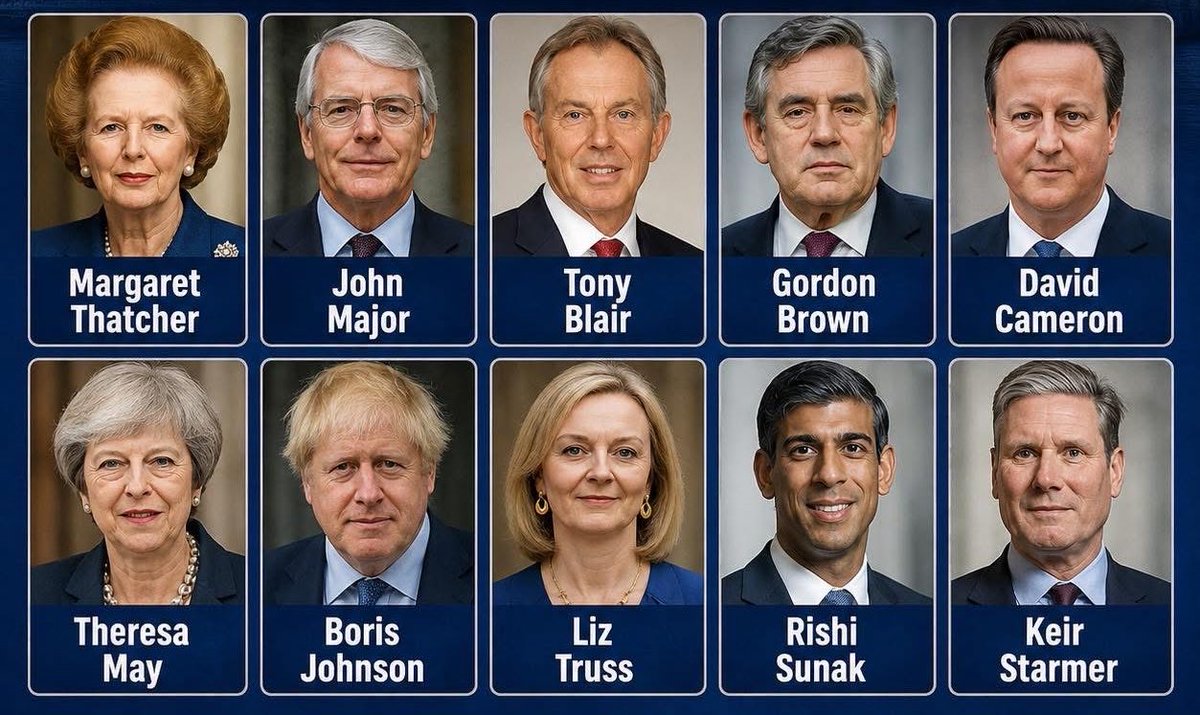
All of those are terrible.
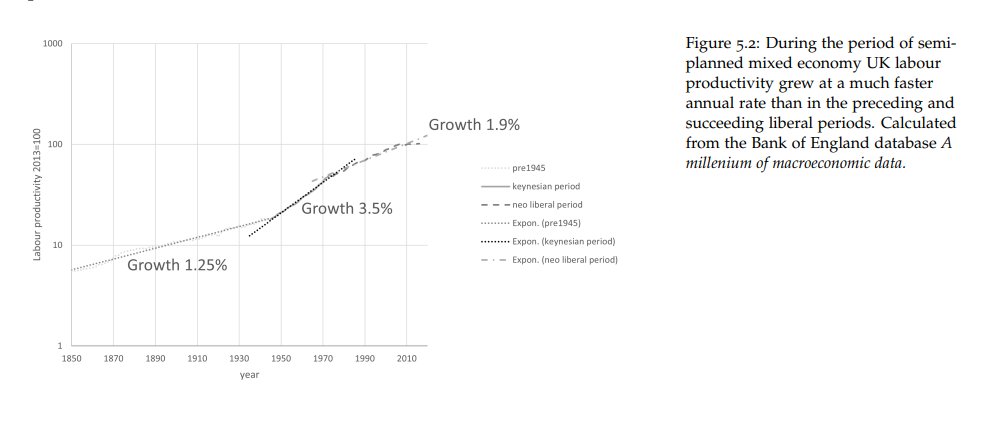
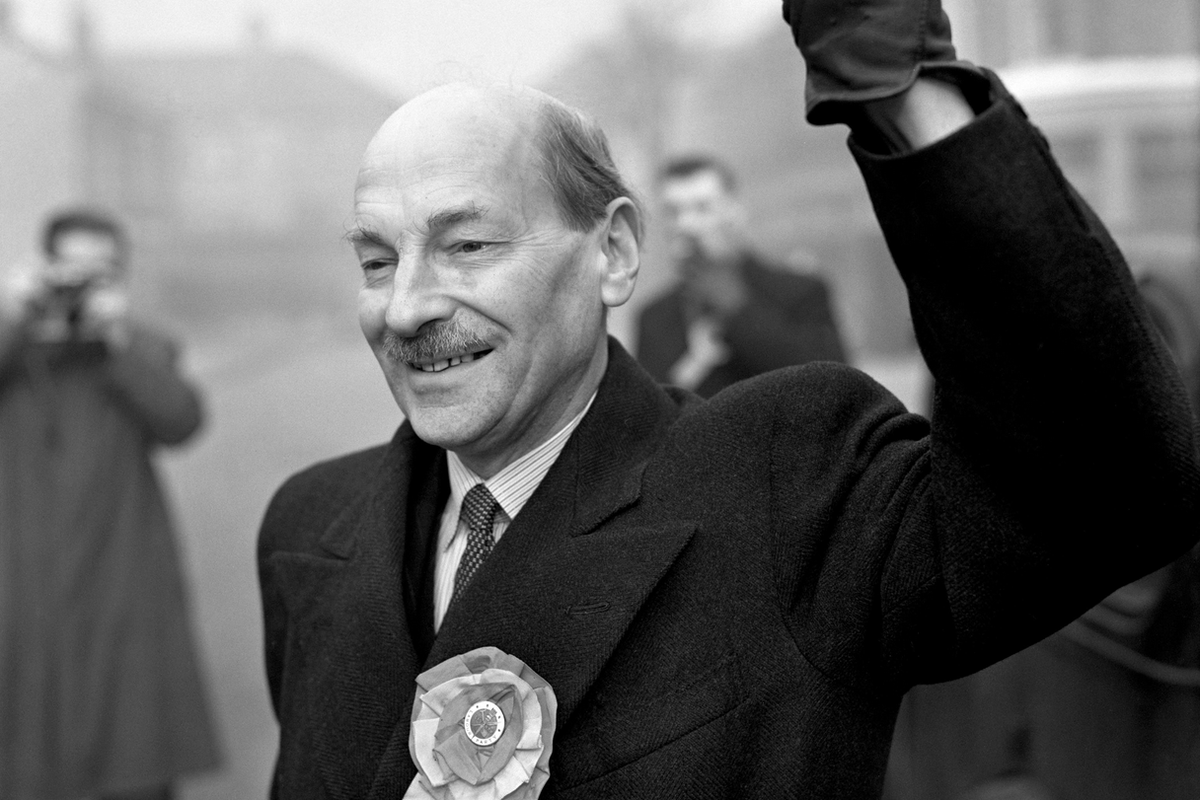
Clement Attlee was the best and only good PM the UK has had since WW2.
Beat Churchill, Nationalised everything, Britain boomed for 30 years until they started to undo his work.

95
194
1,701
214,629
Paul Cockshott retweeted

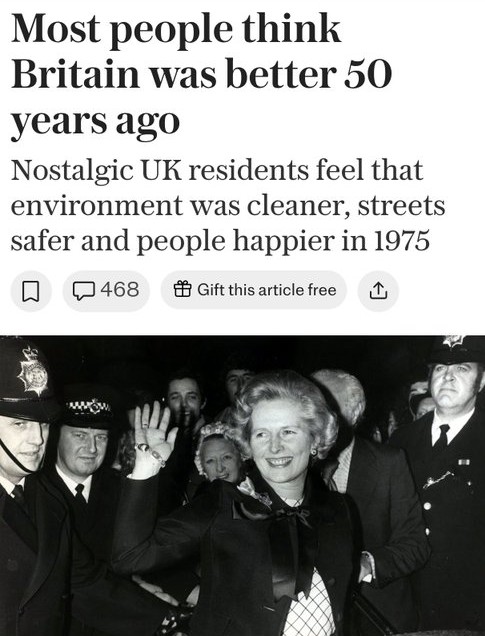
Britain was a basket case before 1945 and became a basket case after 1979. The intervening period was one of unprecedented economic growth. All Thatcherism did was create all these suddenly rich people by asset stripping the socialist state.
4
16
26
1,394
Paul Cockshott retweeted

Thatcher destroyed this country n sold off everything she could .even our water .the effect of that is great if you're a shareholder( few of us) but horrific if you're not (most of us ).nothing works here anymore .not sure it ever will now .espesh with a populace so apathetic

Britain was a basket case before 1945 and became a basket case after 1979. The intervening period was one of unprecedented economic growth. All Thatcherism did was create all these suddenly rich people by asset stripping the socialist state.
3
10
637
Paul Cockshott retweeted
May 27
Milton Friedman caught lying yet again.
The famines in USSR was long before it was "one of the most richly supplied countries with natural resources" and long before it industrialized.
The first, in 1932-33 was the product of backwards and underdeveloped agriculture, grain diseases (mostly one called rust), the fact that they had yet to accomplish a modern transportation system (they were still transporting grain on horse and buggy, for example), sabotage, rodent infestations, and things of this nature.
The second was less of a famine and more of a severe shortage, but was directly because of World War 2 and the Nazis invading.
The lie Sowell commits here is the same lie all lackeys, cuckolds, and toadies of the ruling elites commit. They get pats on the head to tell you that people like Epstein are actually the good guys, hard working entrepreneurs, and those evil workers just want to slack and they can't handle responsibility.
Well, those workers rolled the most advanced and powerful military of the era in WW2. So... maybe there's something to getting rid of parasitism and people working for themselves, rather than leeches, huh?
And maybe there's a reason Sowell leaves out real causation and allows you to draw false conclusions?
Maybe...
May 26

Thomas Sowell:
“The Soviet Union was one of the most richly supplied countries with natural resources—and probably the most richly supplied.”
“The irony is, one of the world’s great famines occurred in the Soviet Union ... Milton Friedman once said that if the government took over the Sahara Desert, there’d be a shortage of sand. The Soviet Union was just that way.”
21
56
364
9,308
May 27
Impossible in 1920. But all that changed in 1928 with the first 5 year plan which was so 'impossible' that the USSR soon far outgrew German industry.

As a young socialist, Hayek read Ludwig von Mises’ 1920 paper “Economic Calculation in the Socialist Commonwealth.”
Mises showed that socialist central planning isn’t merely inefficient, it’s impossible.
Without private property and genuine market prices, planners lack any rational way to allocate scarce resources or determine real costs and needs.
Even Oskar Lange, a leading socialist in the calculation debate, effectively conceded the point.
While he promoted “market socialism” with trial-and-error pricing by a central board, real-world socialist planners in Eastern Europe quietly relied on world capitalist market prices as a guide.
Without external free-market price signals, pure socialism would be economically blind and coordination would collapse.
Mises went further, arguing that interventionism, the “middle way” of government meddling, is inherently unstable.
Each intervention creates problems that invite more interventions, eventually leading to full socialization.
Price controls cause shortages, subsidies distort production, and the cycle continues until the economy is fully planned.
The lesson is clear.
Rational economics requires genuine market prices emerging from voluntary exchange and private property.
Half-measures don’t stabilize the system. They accelerate the drift into central planning.
The Austrian School understood this decades before the collapse of the Soviet bloc proved it in practice.
7
19
258
11,237
May 27
This precisely

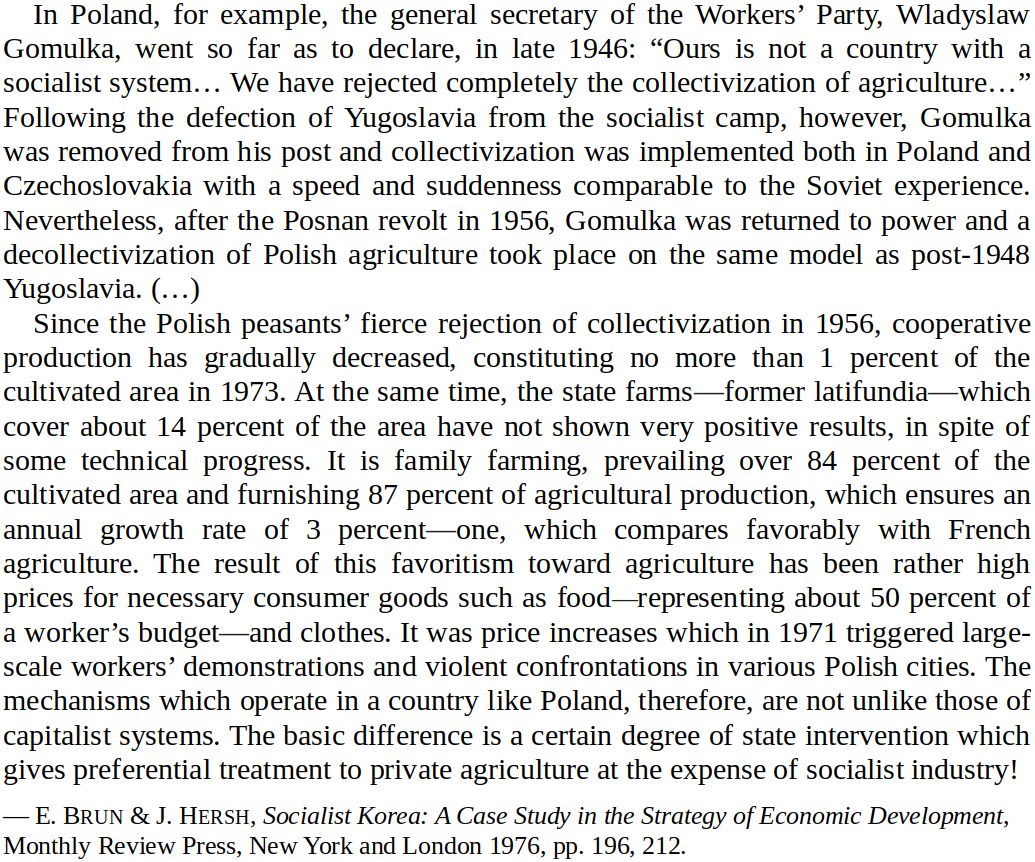
Food shortages in Poland were the effect of private farmers owning more than 80% of arable land and forcing high procurement prices on the state to make money through monopoly sales instead of increasing production.
1
4
34
1,070