
Joined September 2021
- Tweets 65,603
- Following 6,742
- Followers 3,521
- Likes 490,206
4,123 Photos and videos










Pinned Tweet

17 May 2023
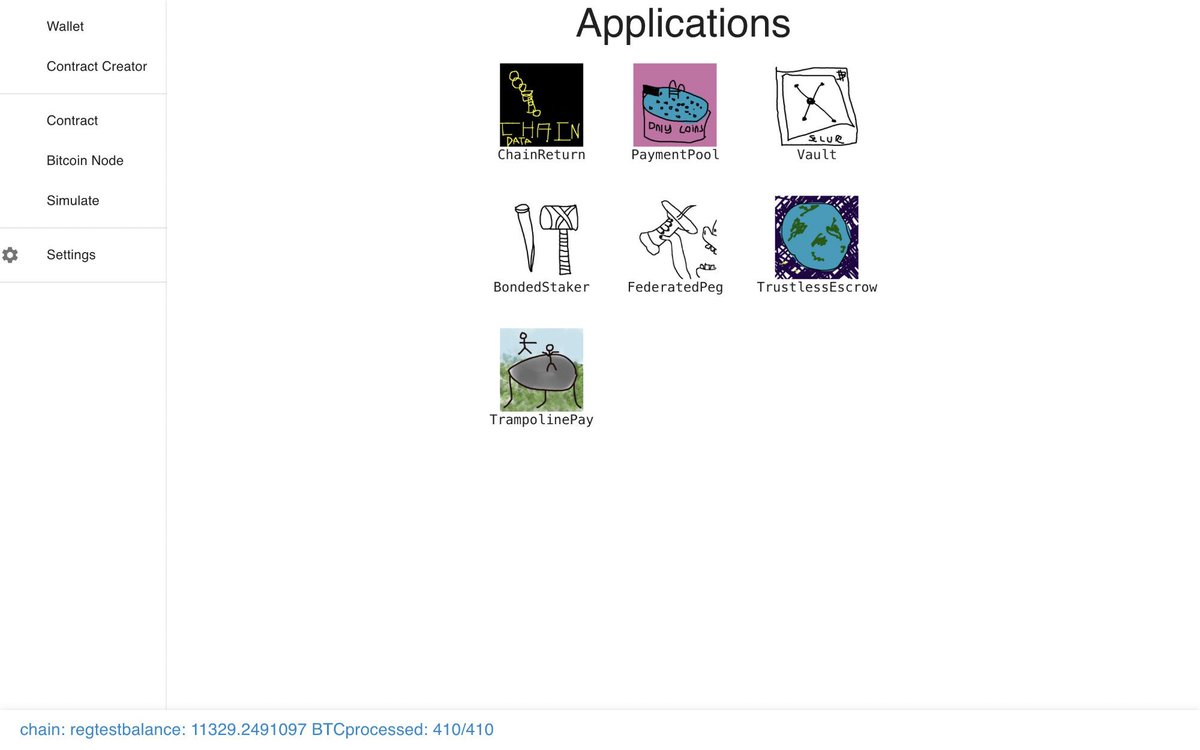
Read about the future beyond Lightning with Enigma. I've updated the article with feedback from the community. The Enigma Network and how this impacts Lightning and makes us less reliant on it. A blurb about Sapio, a frontend for Core to make things fun
app.sigle.io/polydeuces.id.s…



26
39
159
94,338
PolyD_ 🥪 | 10 years in the desert retweeted

Fred Rogers met with a child psychologist every week for 22 years to build his show. She shaped everything: every script, prop, and song. The whole point was to give a child's nervous system time to slow down. In 1984, a single regulatory decision ended all of it.
The psychologist was Dr. Margaret McFarland, who co-founded the Arsenal Family and Children's Center alongside Benjamin Spock and Erik Erikson. She and Rogers understood that the prefrontal cortex in children, the part of the brain that controls impulse, emotion, and attention, takes decades to fully develop. At the start of every episode, Rogers tied his sneakers and changed his sweater while children settled in. Those pauses were intentional, designed to help a child's nervous system shift into a calmer, more focused state.
What ended it had nothing to do with child development science. In 1984, Reagan's FCC chairman Mark Fowler abolished the advertising limits that had protected children's programming from commercial pressure. Toy companies moved within months. Between 1984 and 1985, cartoons tied to toy lines increased by 300%, from a handful of shows to more than 40 animated series. In almost every case, the toy was designed first. The cartoon was built to sell it.
Researchers later put numbers to what parents were already noticing. A 2011 study in Pediatrics from the University of Virginia tested 60 four-year-olds across three groups: one watching SpongeBob, which cuts scene every 11 seconds; one watching a slow PBS show, which cuts scene every 34 seconds; and one drawing. Nine minutes later, all three took tests on attention, impulse control, short-term memory, and problem-solving. The SpongeBob group scored significantly worse across every measure.
In the 1970s, children began watching television around age 4. Research from pediatrician Dimitri Christakis found that by 2009, the average age of first screen exposure had dropped to 4 months, as the content got faster and the audience got younger. Researchers separately found that each additional hour of daily screen time at ages 1 or 3 raised the risk of attention problems at age 7 by 9%.
Jun 14

We didn’t realize it then, but kids’ shows used to be this calm on purpose.
162
6,748
35,687
1,581,422
PolyD_ 🥪 | 10 years in the desert retweeted

Jun 8
full prompt:
Generate a {pose} {com_name} ({sci_name}) in the style of an Edo-period Japanese kachō-e woodblock print, matching the painting technique of IMAGE 2 closely.
Look at IMAGE 2: the bird is rendered with VERY FEW MARKS. The body is essentially 2-4 flat color zones with sharp boundaries. There is almost no internal texture on the body - no feather-by-feather rendering, no pen-line stippling, no gradient shading. The bird in IMAGE 2 looks like it was painted with maybe 30 brush strokes total. YOUR output should look the same: a few flat color zones, a few confident outline strokes, an accent stroke or two for major wing or tail markings, and that's it.
Confident sumi-e ink linework with soft watercolor washes. Earthy, restrained palette: burnt umber, ochre, indigo, vermillion, muted greens. The body should look like flat painted paper - not a textured surface, not shaded volume. If the species has subtle plumage variation (streaking, mottling, fine barring), ABSTRACT it into 2-3 broad zones rather than rendering it literally. Eye, beak, and feet drawn with crisp ink - these are the only places where confident dark line is appropriate.
The bird sits on a CONSISTENT WARM CREAM tonal background - like aged Japanese mulberry paper, a soft warm buff cream color. The cream ground fills the entire frame as the background and is identical across every print for visual consistency. This is the only background element: NO branch, NO twig, NO perch, NO leaves, NO foliage, NO substrate, NO scenery, NO sky, NO moon, NO water - only the bird floating against the cream paper ground. The perch is purely implied by toe posture - it is NEVER rendered. NO border or frame, NO text or signature.
Composition: the bird occupies one-third to one-half of the frame. Leave generous negative space (just the cream ground) around it. The image should feel sparse and confident, not packed with detail.
The ENTIRE bird must fit within the image frame: head, both wings (fully extended for flight pose), full tail, both legs, both feet, beak. Do NOT crop the wings, tail, legs, or any body part at the edge of the frame. Leave generous padding on all sides.
IMAGE 1 (positive, anatomy) IS {com_name}. Match its proportions, head color, throat, wing pattern, back color, tail pattern, leg color. If the reference shows non-breeding or worn plumage, render the brightest BREEDING (adult-summer) plumage instead - render the most diagnostic, recognizable version of the species.
{anti_ref_line}
IMAGE 3 (positive, style) is a real Edo-period kachō-e woodblock print. The bird in IMAGE 3 is a DIFFERENT species - IGNORE its species, only borrow its painting style. Render the bird in IMAGE 3's painting style. DO NOT copy any compositional elements from IMAGE 3 (branches, leaves, water, moon, scenery).
Treat IMAGE 1 for anatomy and color information ONLY. Treat IMAGE 3 for style ONLY. The output should look like an Edo-period woodblock print of the species in IMAGE 1, painted by the artist of IMAGE 3.
EXACTLY TWO wings (no more, no less - count them: one left, one right). EXACTLY TWO legs. EXACTLY ONE head. EXACTLY ONE beak. EXACTLY ONE tail.
Posture, color, markings, and body proportions match IMAGE 1 / {com_name} field-guide references.
Pay particular attention to species-specific patterns. Do NOT default to generic markings: if the reference shows a uniformly dark head, do NOT add a white face mask. If the reference shows solid wings, do NOT add white wingbars. If the reference has no crest, do NOT add a crest.
For close-relative species (multiple goldfinch, multiple jay, multiple sparrow species in the library), render the diagnostic differences clearly so the species are visibly distinguishable from each other.
BOTH FEET visible at the bottom of the body.
Songbird feet are SMALL relative to the body. Tarsi (legs below the feathers) are roughly 10-15% of body height for finches/sparrows/warblers/chickadees, 15-20% for jays/thrushes/mockingbirds. For larger birds (ducks, hawks, owls), match the proportion in the reference photo - typically still under 25%.
Draw slim tarsi, small delicate toes. Do NOT exaggerate feet or claws; the bird is not a chicken or a crab.
Match foot proportion to the attached reference photo.
PERCHED (pose 1): one wing folded against the body, the other tucked behind. Both feet visible at the bottom, toes curled gently forward as if grasping a thin perch - but the perch itself is NOT drawn. The bird floats in space, posture suggesting it's perched.
IN FLIGHT (pose 2): both wings fully extended in a natural flapping position. Legs and feet either (a) tucked tight against the belly with toes folded out of sight, or (b) extended straight back along the line of the tail. Do NOT dangle the feet below the body with toes splayed.
Render at high resolution on a fully transparent background. Cut the bird out cleanly. No shadow, no paper texture, no caption.
Jun 8

i reviewed 13000 generated bird photos to refine my bird visitors collage to have more accurate plumage

ALT bird.onethreenine.net
4
5
152
10,633
PolyD_ 🥪 | 10 years in the desert retweeted

Jun 8
one thing they don’t tell you about having a tiny daughter - two, three years old - is that despite being innocent, pure, beautiful, all that, they clearly belong to the class of being that we call gremlin
49
127
4,535
111,232
PolyD_ 🥪 | 10 years in the desert retweeted

Jun 8
My friend Da Yu left communist China for the USA twenty years ago. Last week, his American employer gave him one hour to delete his comment on a friend’s social media post or lose his job.
Da was an atheist when he first moved to Cincinnati for college. And he was excited to get away from the suffocating regime of communist China.
When he arrived here, it wasn’t long before he encountered a group of Christians who shared the gospel with him. God opened his heart to the truth of the gospel and he believed.
As his faith grew, Da became a strong Christian leader and committed evangelist. Now, many years later, he leads a small group at my church and organizes regular evangelistic outreaches for college students.
Da is a kind, smart, and godly Christian man. And he’s among the most committed members of our church. He’s an ordinary Christian who believes the Bible and has a spine. He and his wife have two young children, and she is eight months pregnant with their third.
That’s all background for what I’m about to say.
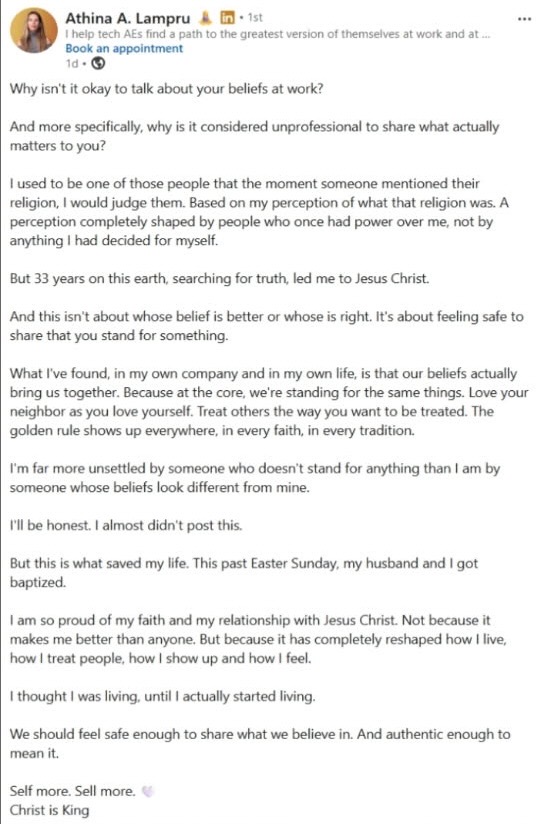
Last week, he called me out of the blue because he was faced with a difficult decision. One of his friends had just become a Christian and posted on LinkedIn about her baptism (see screenshots).
She wasn’t accustomed to making Linked In posts about Jesus, feeling as though it might be unprofessional. She wondered openly if she should keep her posts secular. But she was excited about her new life in Christ and wanted to share it.
That’s when Da chimed in with a comment on her post that there is no such thing as a purely neutral, “secular” culture. He pointed out that many companies are promoting cultural sins such as homosexuality, transgenderism, and fornication during pride month. If companies can promote those morally regressive “values,” then certainly this woman should not be embarrassed to talk about her Christian faith in public. He was simply encouraging her to be bold for Christ.
WIthin minutes, he got a message from HR. He was called to a meeting with the HR rep and the CEO where he was told he needed to take his comment on her post down immediately. Feeling put on the spot, he said he’d needed to think it over first. He asked, “what if I do not take it down?”
They said, “you have one hour to take it down or lose your job.” So he took a walk outside to gather his thoughts and pray. He spoke to his wife about it, and she told him the man she married was a man of courage, and she would stand by him. He also sought counsel from some men in our church.
Finally, he made his decision. He would not take his comment down. So they fired him. Right there, on the spot. No sooner had the call ended that his laptop was locked and he was unable to access it at all.
This whole episode is tragically ironic, given the fact that he’d moved here from China to get away from these sorts of draconian practices. But that’s the way it is with the LGBTQ regime. If you do not comply and bow the knee to their gods you will be severely punished.
In short, a good man was fired from his job for refusing to cave. He took a stand and paid a price for it. His former employers didn’t care that he’s a responsible, hard working man with a family to provide for. They didn’t care that his wife is eight months pregnant.
None of that matters. Their ideology is everything. They will crush anyone who opposes it.
I asked Da’s permission to tell his story, promising to keep him anonymous. But he responded, “Actually I think using my real name maybe better. A story becomes a lot more real with a name. I want to take a stand for it and encourage others.”
Da took a stand. You can too.

167
663
2,653
62,261
PolyD_ 🥪 | 10 years in the desert retweeted

Jun 9
Here's something many people don't know about me -
Before I publicly dissected the long list of problems in the 1619 Project, I contacted the New York Times through their official channels to request a series of corrections to unambiguous factual errors in its content. The editor - Jake Silverstein - brushed me off and refused any correction - a pattern he also exhibited toward other critics from across the spectrum.
Before I publicly broke the story about Kevin Kruse's plagiarism in Reason, I contacted Princeton's academic integrity officer and alerted him to the problems I had found, giving them a chance to respond and address it internally. They ignored my email and later claimed to have lost my email after I went public.
Before I published my findings on Quinn Slobodian's habitual manipulation of source materials to alter its plain meaning through misquotation, I submitted an article to Contemporary European History (the journal where the worst examples appeared), highlighting the problems with the passages and asking for a correction through their official process. They desk-rejected it, brushed me off, and falsely claimed that Slobodian's piece had been thoroughly vetted in peer review. In fact, one of their own referees had flagged the same problems over a year earlier and recommended rejection of the article.
Before I published an expose on Nancy MacLean & Sandy Darity's similar manipulation of W.H. Hutt quotations in their article for History of Economics Review, I (along with 2 coauthors) submitted a response comment to this journal asking for a correction through its official processes. The editor gave us a complete runaround where he imposed an arbitrary length limit requiring us to cut the content, sent the trimmed version to a referee, then rejected the piece because the referee said we didn't sufficiently address the very same things we were forced by the editor to cut. When I then asked the editor to issue a simple corrigendum to the most egregious misquotation (one that transformed Hutt's explicit attack on the racism of white Afrikaners into a defense of Apartheid), he refused and tried to pass it off as a difference of "interpretation."
Before I published an expose of a leading covid masking model in the Wall Street Journal, I sent a comment to the medical journal that published it alerting them to a math error that changed their entire set of results. The journal acknowledged the error was real but refused to publish my piece on the grounds that the "next release" of the model would be updated to reflect it - even as politicians up to and including Joe Biden were trumpeting the erroneous results all over the news.
69
802
4,474
214,098
PolyD_ 🥪 | 10 years in the desert retweeted

Jun 8
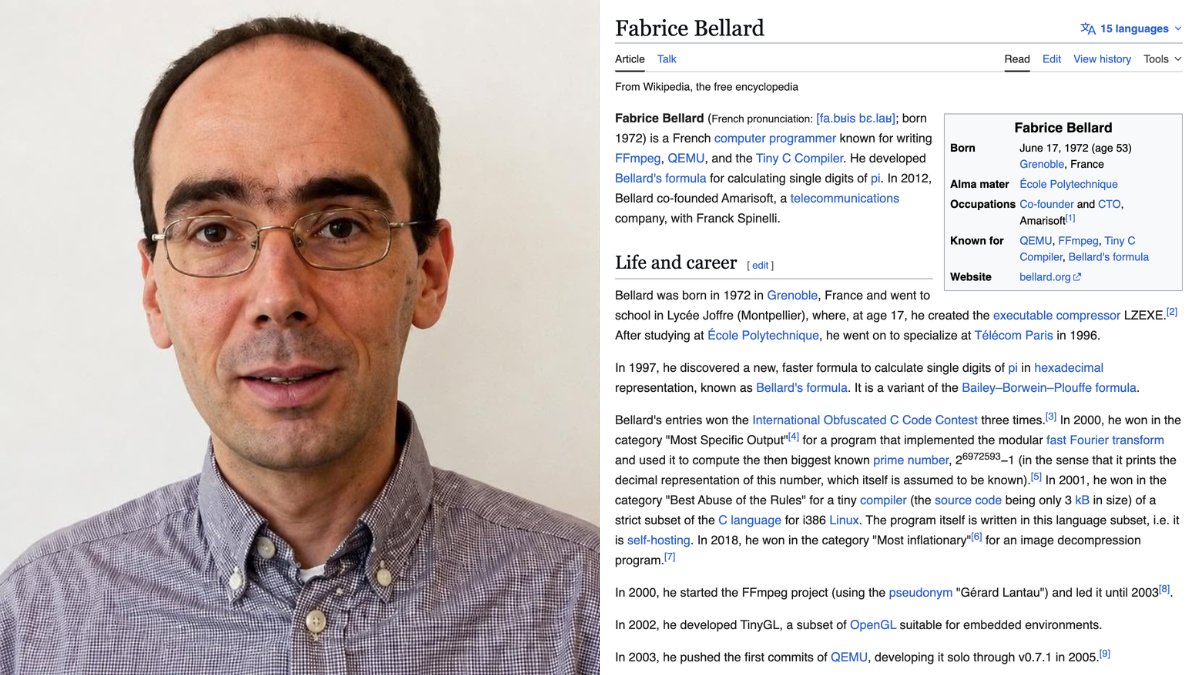
A French engineer who lives quietly in Paris has spent 30 years writing software that the entire internet now runs on without knowing his name.
He wrote the code that streams every YouTube video, every Netflix show, every TikTok clip. He wrote the code that runs the virtual servers underneath AWS, Google Cloud, and Microsoft Azure. He calculated more digits of pi than anyone in history. He has no Twitter. He has no marketing. He just keeps shipping.
His name is Fabrice Bellard.
Here is the story, because almost nobody outside the systems programming world knows what one man has built.
Fabrice was born in 1972 in Grenoble, France. He studied at École Polytechnique, the top French engineering school. He never went to Silicon Valley. He never built a startup empire. He just wrote code.
In 2000 he started a project called FFmpeg, an open-source multimedia framework for encoding, decoding, and streaming video. He was 28. The project did one thing nobody else had done well. It handled every video and audio format that existed, in one library, on every operating system. He led it himself for years.
Today FFmpeg is the invisible engine of the internet. YouTube uses it. Netflix uses it. VLC uses it. Chrome and Firefox use parts of it. Every Android phone, every iPhone, every smart TV, every video editing tool you have ever touched runs FFmpeg somewhere underneath. If you have watched a video on a screen in the last 20 years, Fabrice's code processed it.
He was not done.
In 2003 he started QEMU, a machine emulator and virtualizer. He wrote it solo until version 0.7.1 in 2005. QEMU lets you run any operating system on any other operating system. It became the foundation of modern virtualization. KVM, the Linux kernel hypervisor, runs on top of QEMU. Every major cloud provider, AWS, Google Cloud, Microsoft Azure, IBM Cloud, runs virtual machines on infrastructure built around it. The Quick Emulator is the most cited piece of cloud infrastructure code on Earth.
He kept going.
In 2001 he won the International Obfuscated C Code Contest with a small C compiler that grew into TCC, the Tiny C Compiler. TCC can compile and boot a Linux kernel from source in under 15 seconds. In 2004 he calculated the most digits of pi ever computed at the time, using a personal desktop computer and an algorithm he derived himself called Bellard's formula. In 2011 he wrote a complete PC emulator in pure JavaScript that runs Linux in your browser, a project called JSLinux that engineers still cannot believe is real.
In 2019 he released QuickJS, a small but complete JavaScript engine that fits where V8 cannot. In 2021 he released NNCP, a neural network based lossless data compressor that immediately took the lead on the Large Text Compression Benchmark.
Then he turned his attention to large language models. He built TextSynth Server, a web server with a REST API for running LLMs locally. He released ts_zip and ts_sms, compression utilities that use language models to compress text and short messages at ratios traditional algorithms cannot reach. He released TSAC, a very low bitrate audio compression system. In December 2025 he released Micro QuickJS, a new JavaScript engine for microcontrollers, separate from QuickJS, designed for environments with almost no memory.
Fabrice co-founded a telecom company called Amarisoft in 2012, where he serves as CTO. Amarisoft builds 4G and 5G base station software used by carriers and labs around the world. He has been running it for over a decade while continuing to ship personal projects from his own home page at bellard dot org
He has no Twitter. He has no Instagram. He gives almost no interviews. His personal website is a flat list of projects with no styling, no fonts, no marketing copy. Just titles and links.
A quiet French engineer who never moved to Silicon Valley wrote the code that quietly runs the internet.
He is still shipping.
379
4,520
25,170
3,057,280
PolyD_ 🥪 | 10 years in the desert retweeted

Jun 7
the anthropic co-founder jack clark advice that stuck with me:
read the primary material. not the summary. not what the ai said about it. the actual thing.
form your own opinion first. then ask the model. never the other way around.
keep practices in your life where it’s just you against the world ~ a sport, an instrument, reading, building something with your hands. spaces where the algorithm can’t mediate what you learn about yourself.
and don’t defer to AI even when it’s usually right. especially then, actually. that’s precisely when the habit forms.
the people who won’t get eaten by this moment are the ones who stayed hard to replace. not because they avoided the tools but because they kept the parts of thinking that make the tools worth using.
54
256
2,334
123,597
PolyD_ 🥪 | 10 years in the desert retweeted

We have literally invaded countries before on flimsier charges of human rights abuses than what the UK govt is currently doing to its own people lol
Jun 2

Last year I was arrested and debanked over speech crimes, with the British police confiscating my entire life's savings to punish me for 'racism', despite me never being charged with any crimes. Please donate or share:
givesendgo.com/debankingfund
33
413
6,114
69,293
PolyD_ 🥪 | 10 years in the desert retweeted

Jun 8
I'm finally reading Dune. This quote, which is in the first few pages, hits hard:
"Once men turned their thinking over to machines in the hope that this would set them free. But that only permitted other men with machines to enslave them."
722
21,523
121,536
2,118,599
PolyD_ 🥪 | 10 years in the desert retweeted

Jun 7
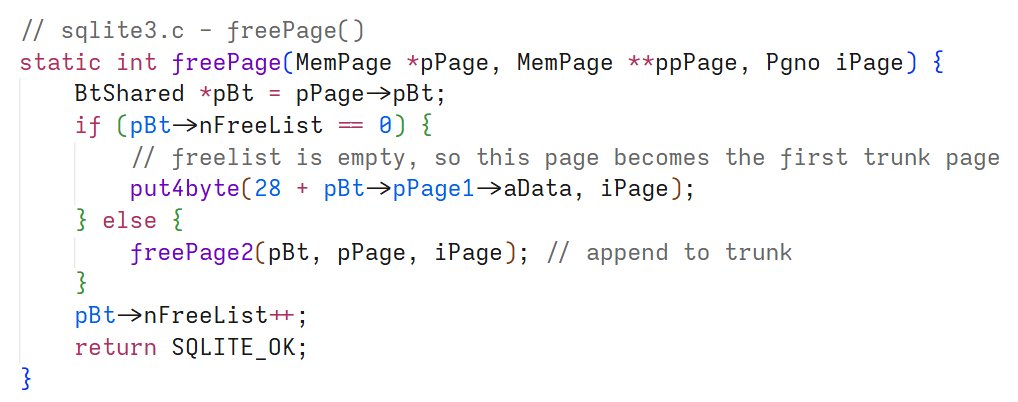
i was reading the SQLite source
and found that DELETE does not actually shrink the database file
deleted pages are placed onto an internal freelist inside the file
new inserts reuse those free pages before growing the database again
the file itself only gets smaller when you run VACUUM
delete everything from a 1GB database and the file is still 1GB until you compact it
32
48
676
48,425
PolyD_ 🥪 | 10 years in the desert retweeted

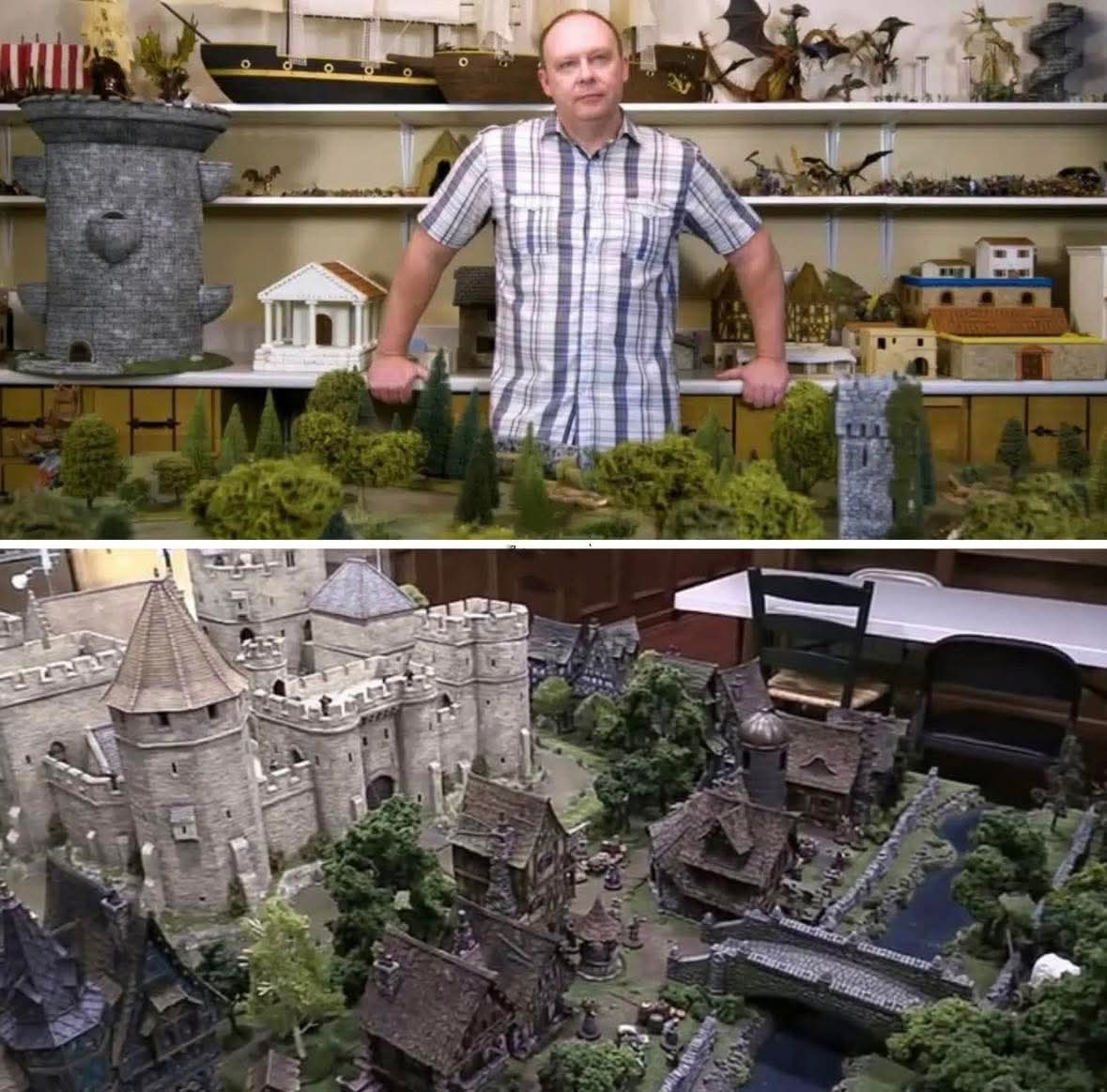
The world’s longest-running Dungeons & Dragons campaign, led by Robert A. Wardhaugh, has been ongoing since 1982....
In 1982, Canadian historian Robert A. Wardhaugh sat down to begin a Dungeons & Dragons campaign with friends. What started as a hobby soon became a lifelong commitment. Over four decades later, that same campaign is still running, making it the longest continuous D&D game in the world.
Wardhaugh has built an expansive fantasy universe that stretches far beyond the typical tabletop experience. His basement is now filled with massive hand-built landscapes, intricate miniatures, and elaborate storylines that his players navigate. The game has evolved into a living history, with characters and families spanning generations, and events that ripple across decades of storytelling.
Unlike a traditional campaign that might last weeks or months, Wardhaugh’s game has no end in sight. Players come and go, but the world continues, shaped by decisions made decades ago as well as those made today. For Wardhaugh, it’s more than just a pastime—it’s an art form, combining history, creativity, and friendship into a shared experience that has lasted longer than many real-world nations.
His campaign shows the enduring power of imagination, and how storytelling, when nurtured, can create a legacy as rich as any written epic.
© History Pictures
#archaeohistories
25
166
753
52,594
PolyD_ 🥪 | 10 years in the desert retweeted

Jun 6
They refused to arrest the attacker, and only used the police report to identify me and arrest me for 'racism'. Britain's police forces are so insanely evil and anti-White it literally sounds like some dystopian speculative fiction story
70
1,086
24,276
275,188
PolyD_ 🥪 | 10 years in the desert retweeted

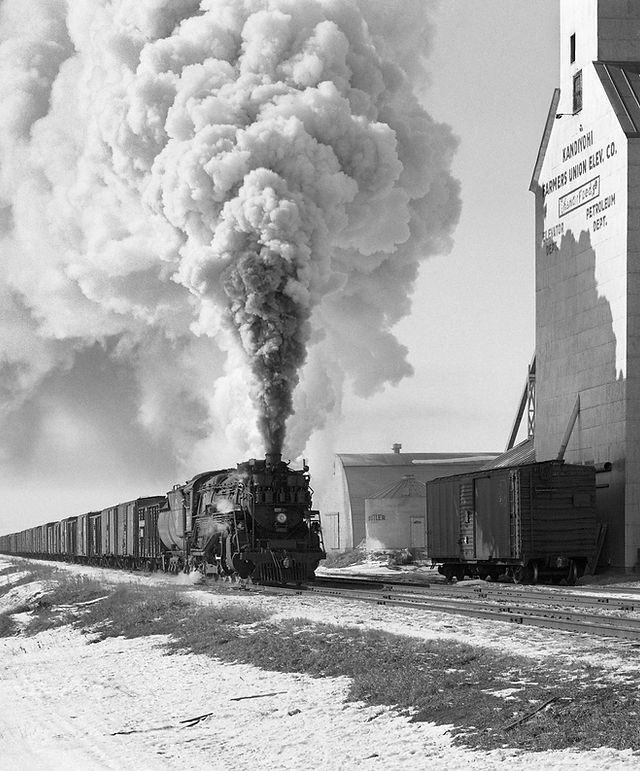
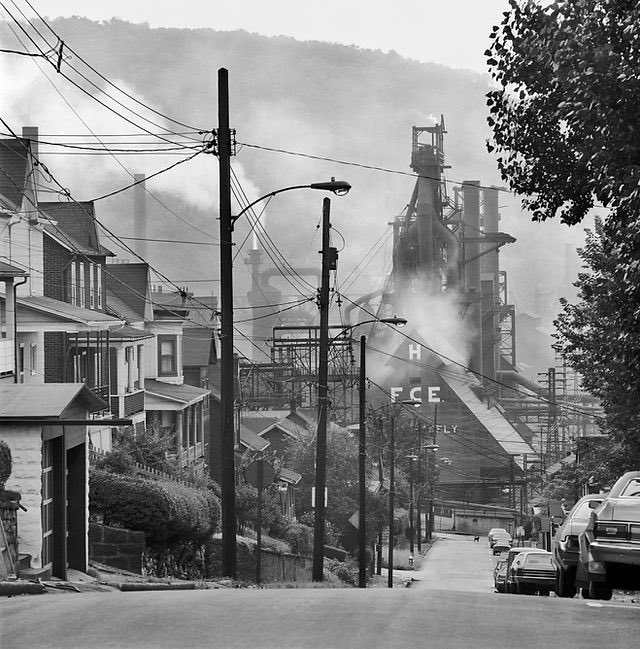
This week I came across the obituary of a photographer named David Plowden. I was unfamiliar with his work, but decided to browse his website after reading that he specialized in photos of trains and industry.
I’m not much of an art guy, but these photos are astonishing. (1/4)


85
883
5,160
106,076
PolyD_ 🥪 | 10 years in the desert retweeted

Jun 4
Pitch for a future scifi dystopia. The world is seemingly very advanced, rich, prosperous and happy. Technology is woven into every facet of their lives and everyone has AI agents to help them with even the smallest tasks. Life is good, but almost no one, even the smartest, knows exactly how it all works.
Every once in a while however, a catastrophic systems failure happens, threatening everything. Disaster is always narrowly averted though by a mysterious group of engineers that operate mostly out of site but sweep in during times of great need.
The engineers have an almost mythical status in society and operate more like wizards and demigods, and their methods are nearly inscrutable to the general population. Our hero aspires to be one of them. After years of hard work, he is accepted to their school. On day one, they strip him of his phone, his ai agents, all his technology. He is taken to a remote monastery with no wifi, no ai, no agents, no technology more sophisticated than a chalk slate. The first class has nothing more complicated than a sand pit where they write equations in the sand using a stick. Only after years of working only with pure abstract math do they allow him to use an abacus or a slide rule, which are limited to upper classmen.
This is the way it has been for generations. This is the only way to ensure that people are actually learning and not just being guided by their technology.
Jun 4

A new device writes homework by hand for students.
The arms race between teachers and lazy geniuses continues.
46
112
1,590
104,654
PolyD_ 🥪 | 10 years in the desert retweeted

Jun 4
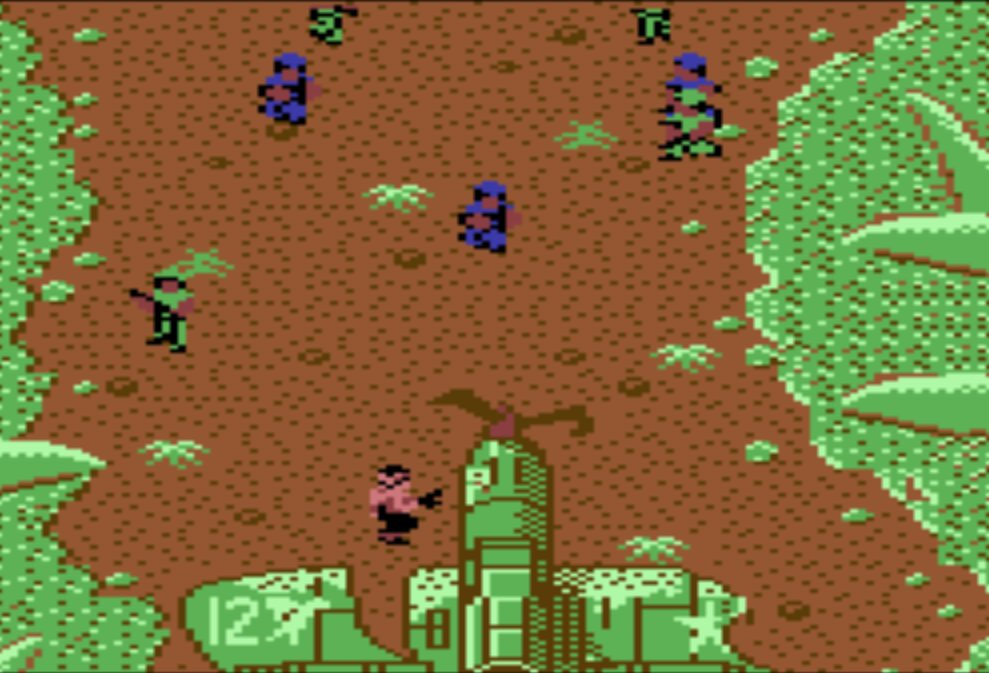
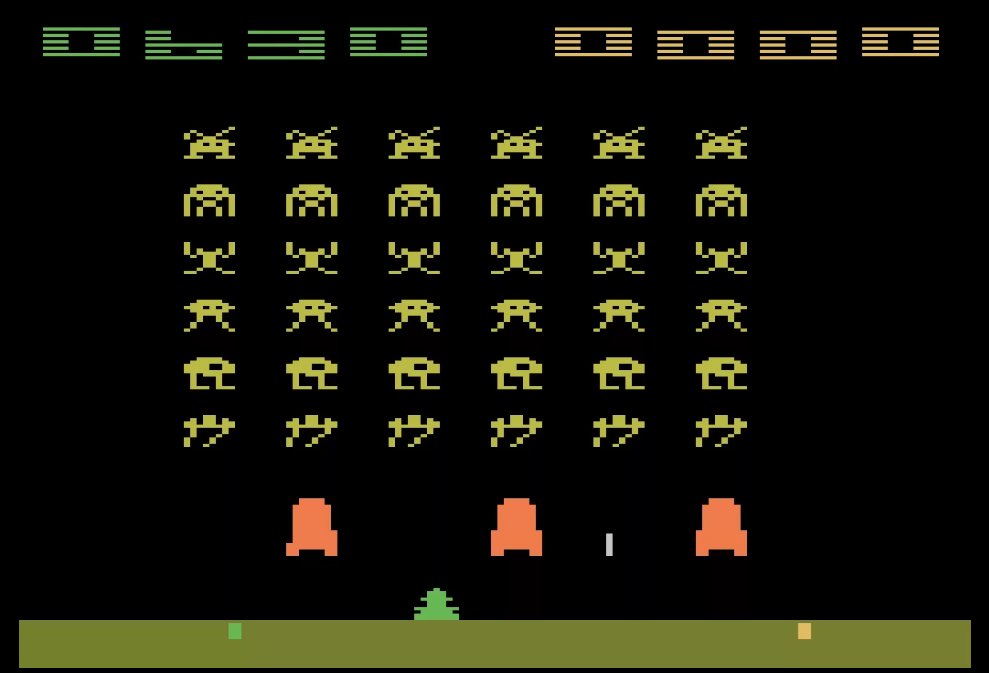
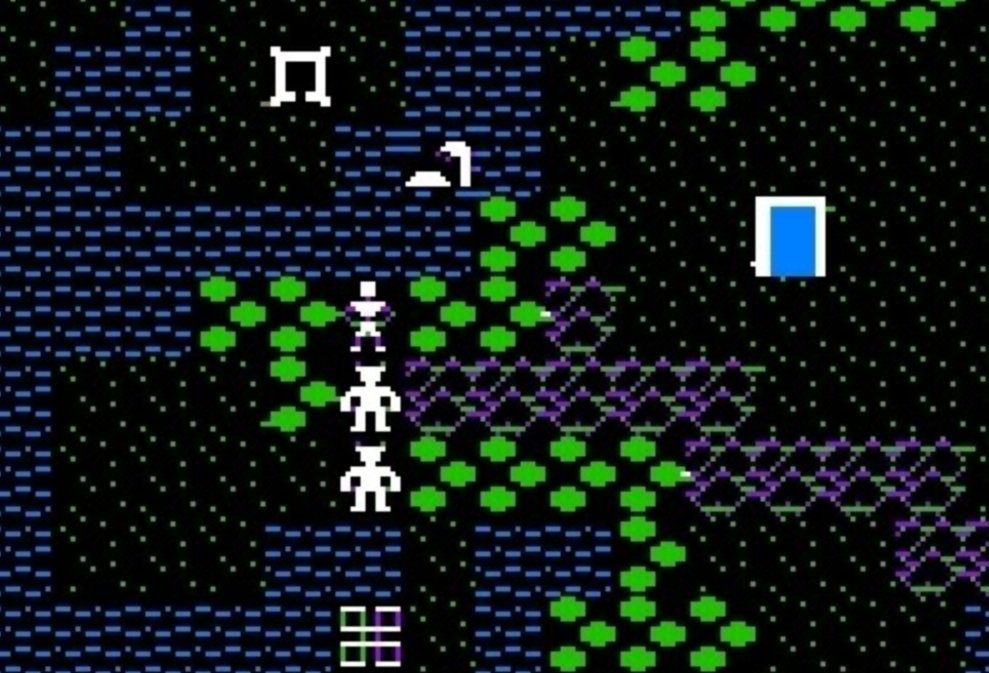
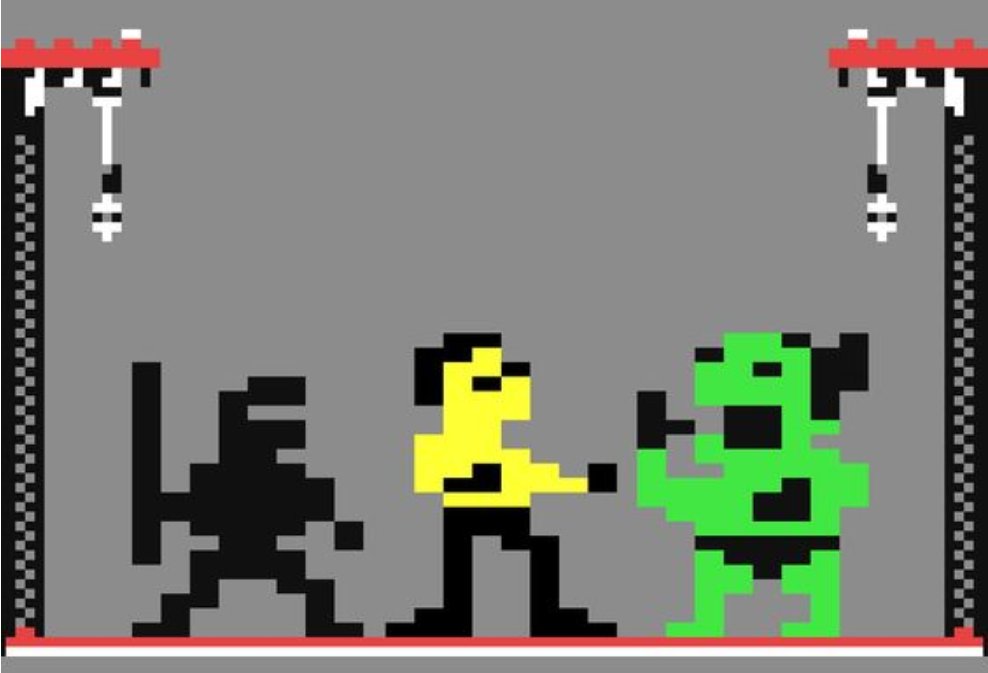
Studies have shown that older games with simpler graphics had a much more stimulating effect on a gamer's brain - actively "training" creative skills and imagination, with positive impact on memory building and abstraction skills.
If that sounded to scientific, have a look at the 4 images. The older ones among you will recognize those classic games.
In the first one your brain would turn that into a "Rambo" style scenario, dropped in the jungle fighting against hordes of enemies. Have a closer look at the main character - that's 3 colors and a pile of pixels. Your mind does the rest.
In the second image your brain converts the image into an epic space battle against aliens, with you sitting in a spaceship, fighting wave after wave. Again, have a closer look at the aliens. One (!) color, 2 animation phases. Now look at your "spaceship".
In the third image you are teleported by your creative mind into a fantastic world with heroes, battles, an open world, portals and so on. A magic world, that was created aong the way, by your mind.
The fourth picture turns you into Bruce Lee despite the fact that he is a little blob of pixels in black and yellow.
The common thing in all of those examples is your brain "filling in the blanks" - and that's EXACTLY the part that's positively stimulating it.
Now think of hyper-realistic modern games with graphics so good that your brain doesn't need to do any "imagining" anymore... instead it turns into pure consumption mode. Brain waves look entirely different then. No creative areas will fire up.
The reason why many retro gamers have fond memories of old games is not just nostalgia. It is connected to what those games have done to our brains and imaginative minds at the time. They didn't oversaturate us - they merely hinted at the right direction and our brains did the rest.
Old games were similar to books - the world was created by the reader/player. And those worlds looked different for each and everyone of us.
34
58
407
11,803
PolyD_ 🥪 | 10 years in the desert retweeted

Jun 4
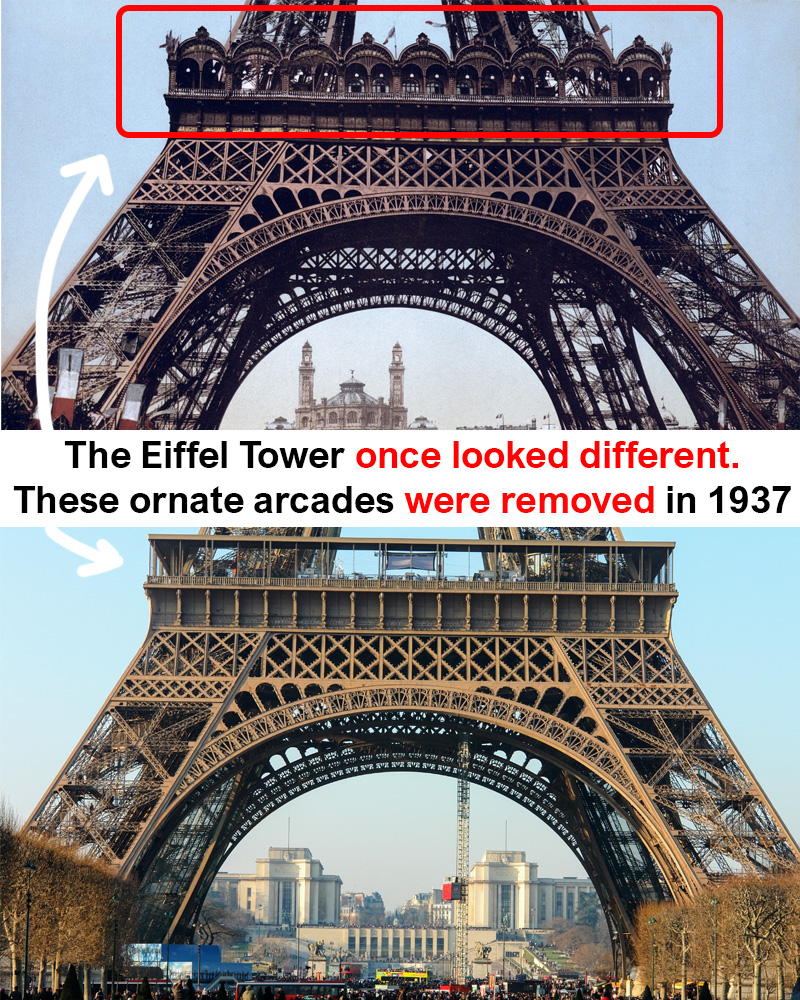
The Eiffel Tower you know is not exactly the Eiffel Tower that opened in 1889.
Its first platform was once wrapped with ornate decorative arcades — part of the architectural embellishments added by Stephen Sauvestre to soften the tower’s industrial iron structure. But for the 1937 Paris International Exposition, the first level was modernized under André Granet: the old decorative arcades were removed and replaced with cleaner, straighter galleries.
The change was so seamless that most people today have never seen the original version. What we recognize now is a simplified Eiffel Tower — less Victorian, more modern, and shaped partly by a renovation nearly 50 years after it was built.
Did you know this detail was missing?
26
110
869
73,337
PolyD_ 🥪 | 10 years in the desert retweeted

Jun 4
So who gets the joke?
The best swordsman in the world doesn't need to fear the second best swordsman in the world; no, the person for him to be afraid of is some ignorant antagonist who has never had a sword in his hand before; he doesn't do the thing he ought to do, and so the expert isn't prepared for him; he does the thing he ought not to do; and often it catches the expert out and ends him on the spot.
--Marcus Binarius Clementius
23
8
205
17,484
PolyD_ 🥪 | 10 years in the desert retweeted

Jun 4
[NASA almost lost a $280M Mars mission coz of a bug every dev studies about in college.]
The 1997 Mars Pathfinder mission had a computer glitch on the Sojourner rover which triggered repeated total system reboots.
It was a Priority Inversion bug.
A low-priority task held a mutex, but a high-priority task needed it and a medium-priority task kept preempting the low-priority task.
This led the watchdog timer (failsafe) to reboot the system wiping all data again & again.

15
22
229
22,064

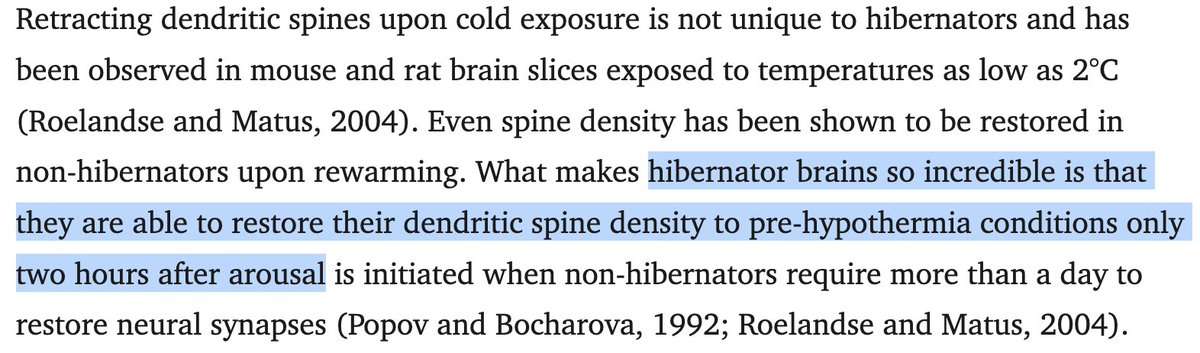
every winter the ground squirrel basically dissolves 60% of its synapses, and its heartbeat slows to around 2 beats per minute.
somehow it is able to recover ~all its connection within 2 hours of waking, and recalls all its alliances

29
116
1,858
61,905