- Tweets 380
- Following 221
- Followers 62
- Likes 2,533

















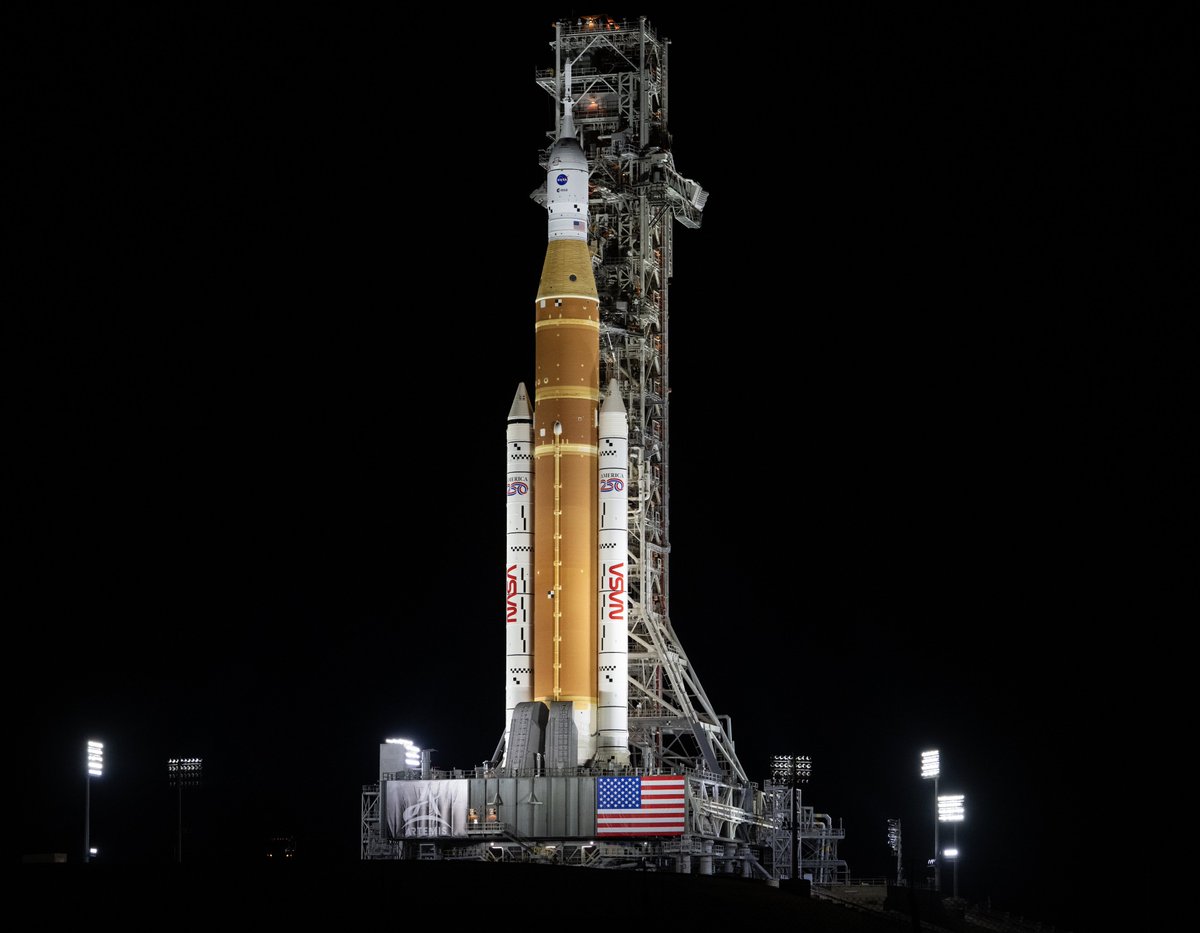
ALT NASA’s Space Launch System (SLS) rocket and Orion spacecraft, secured to the mobile launcher, are seen at Launch Pad 39B, Saturday, Jan. 17, 2026, at NASA’s Kennedy Space Center in Florida. NASA’s Artemis II test flight will take Commander Reid Wiseman, Pilot Victor Glover, and Mission Specialist Christina Koch from NASA, and Mission Specialist Jeremy Hansen from the CSA (Canadian Space Agency), around the Moon and back to Earth no later than April 2026. NASA/Joel Kowsky

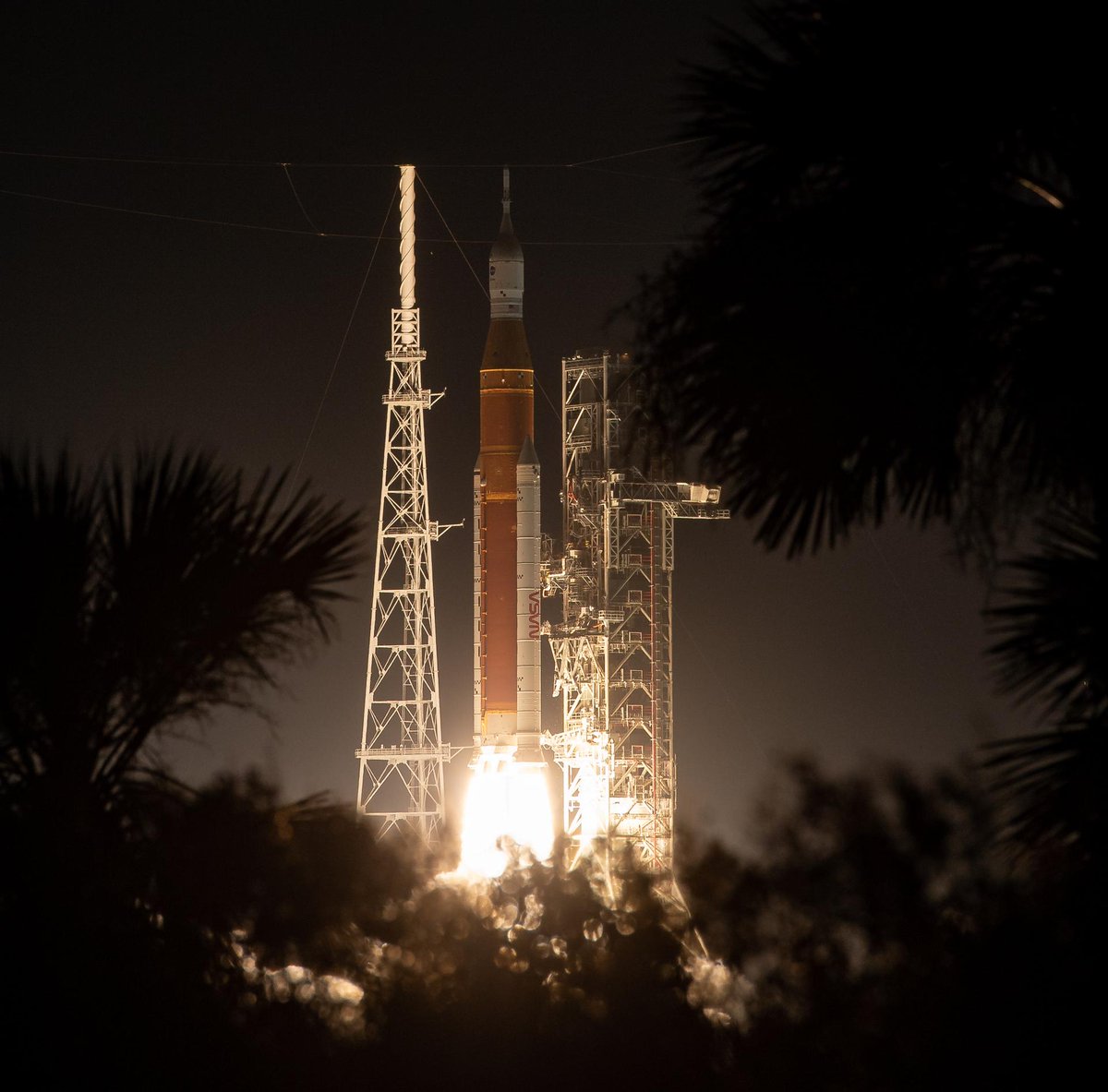
ALT NASA’s SLS (Space Launch System) rocket carrying the Orion spacecraft launches on the Artemis I flight test on Nov. 16, 2022, from Launch Complex 39B at NASA’s Kennedy Space Center in Florida. The rocket has an orange core stage and two white boosters on either side. The glow underneath the rocket is illuminating the night sky. Palm trees in silhouette in the foreground partially cover the view. Credit: NASA/Bill Ingalls