
privacy coreeeee!!!! we’ll call this progress 💖💞
Joined May 2021
- Tweets 1,603
- Following 2,875
- Followers 7,186
- Likes 6,007
32 Photos and videos
















Pinned Tweet

privacy setup for miladays 💖💞💖💞
phone: google pixel @GrapheneOS
vpn: @nymvpn
private stables: @FacelessPrivacy
extra money: @monero
home address: away from USA/europe
ledger: @Keycard_
💖💞💖💞💖💞💖💞💖💞💖💞💖
7
5
34
3,692
Privacy Miladay retweeted

Jun 7
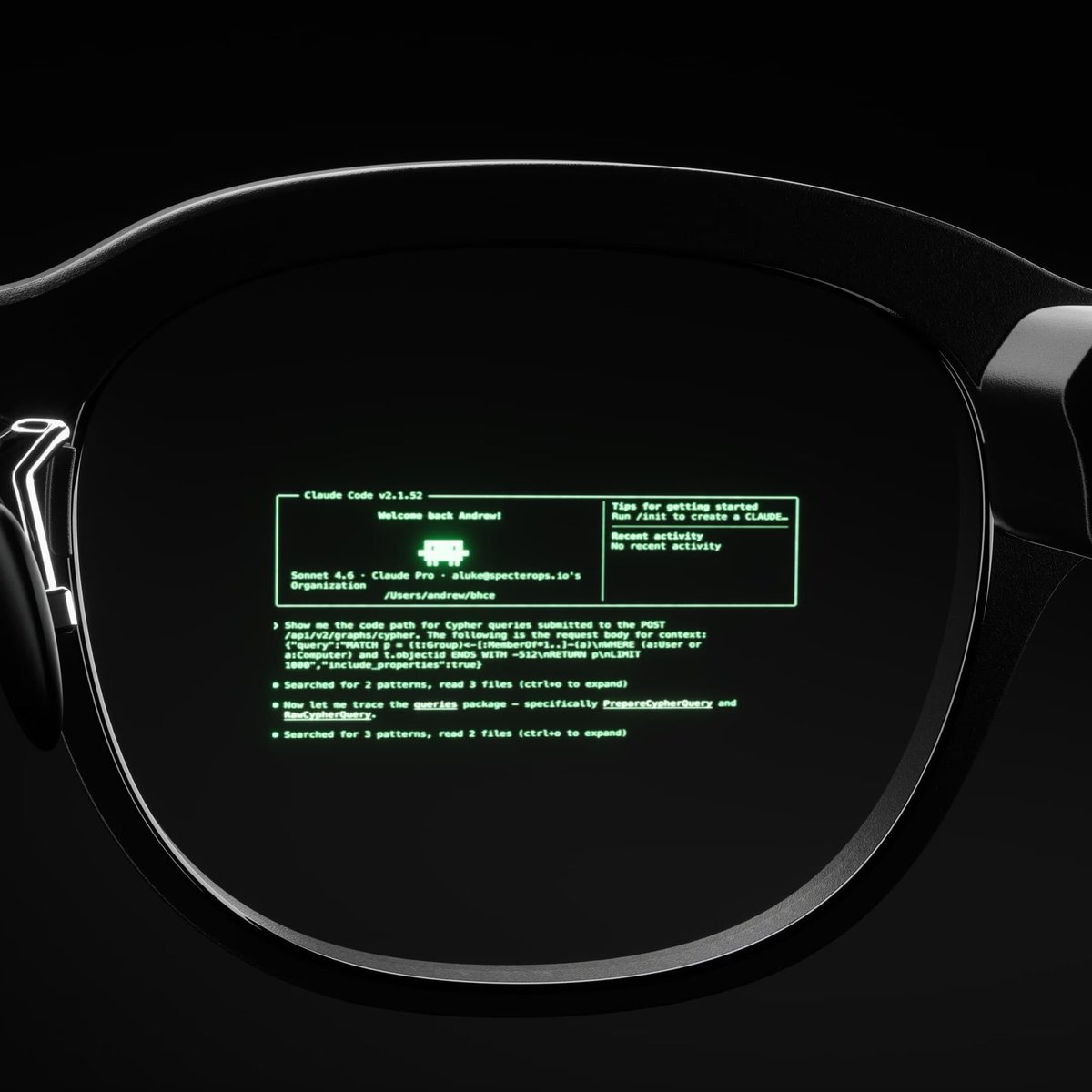
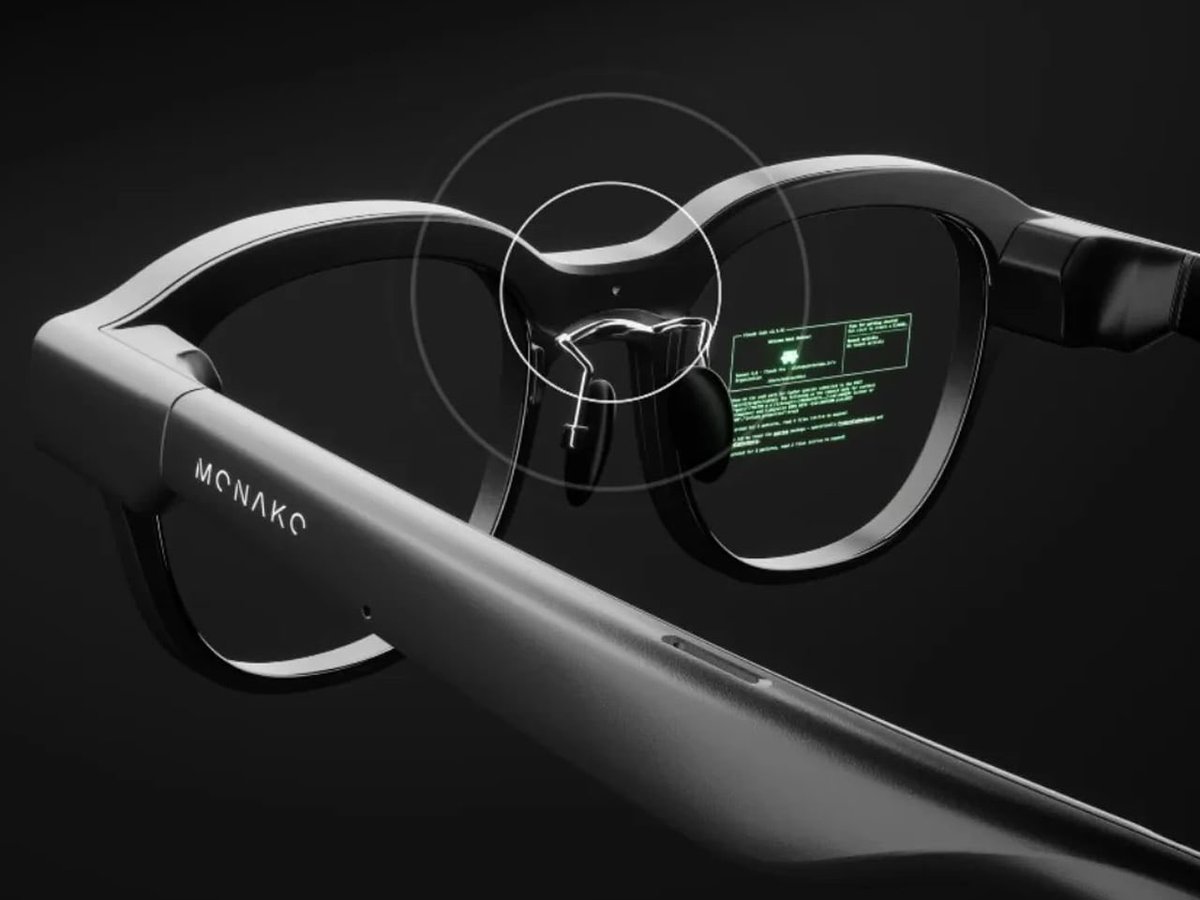
a camera. on your face. pointed at everything you look at.
a microphone that reads vibrations from your nasal bone so it can hear you even in a crowd.
a display only you can see.
running a full Linux OS.
connected to an AI agent with access to your code, your files, your voice, your location.
the camera is invisible to anyone you're looking at. the microphone hears you and not them. the display shows you things nobody else can see.
every face you look at. every screen in your eyeline. every conversation within nasal-bone range. all of it available to an agent running on someone else's infrastructure.
Anyways, the company said 0 data collection on their end, and the OS will be open source on Github.
Jun 7

JUST IN: Chinese startup Monako unveils smart glasses built to run AI coding agents like Claude Code & Codex.

11
15
95
4,979
Privacy Miladay retweeted

A researcher found critical Windows zero-days.
Reported them to Microsoft.
Microsoft denied the bug bounty.
Deleted their account.
Banned them from GitHub.
Then threatened criminal charges.
The researcher dropped six zero-days in six weeks.
Three got used in real attacks within days.
Other researchers are now handing them free vulnerabilities as a gift.
Microsoft’s Digital Crimes Unit is considering legal action.
Against the person whose bugs they refused to pay for.
This is Microsoft’s bug bounty program.

180
1,272
13,202
371,593
Privacy Miladay retweeted
May 28
A privacy researcher’s honest take:
What a Proxy Actually Does
A proxy stands between you and the website you want to visit. It sends your request for you and hides your real IP address. It’s simple and fast, and it helps you get around geo-restrictions or access content blocked in your area.
But there’s a catch. Most common proxies are configured per-app (often browsers), but some types (like SOCKS5) can handle broader traffic depending on setup. Your messaging apps, background syncing, and email still use your real connection. Many proxies don’t provide end-to-end encryption by default, unlike VPNs. The website you visit can’t see your IP, but anyone monitoring your connection, like your ISP, a network admin, or someone on public Wi-Fi, still can.
Free proxies are usually the worst. Studies show that many free proxy services log your activity, add ads, or sell your browsing data. You wanted privacy, but they made money off you instead.
What a VPN Actually Does
A VPN creates an encrypted tunnel for all your internet traffic. This covers every app and every connection, not just your browser. Your ISP can only see scrambled data. The coffee shop Wi-Fi router also sees scrambled data.
That’s the main difference. A VPN works across your whole system and encrypts your data. It gives you a much stronger layer of anonymity than a proxy can.
But this is important: a VPN is only as trustworthy as the company behind it. You’re just shifting your trust from your ISP to your VPN provider. If your VPN keeps logs, gets a legal request, or secretly sells your data, you haven’t gained any privacy. You’ve only changed who can see what you do.
So Which Is “Safer”?
If you just want to unblock a streaming service or visit a region-locked page, a good proxy will work fine.
If you want real privacy, a VPN is a better choice, but you need to choose carefully. Look for providers with proven no-log policies, open-source apps, and a clear business model. If it’s free, you’re probably the product. Mullvad and Windscribe are two I can recommend.
May 28

Proxy or VPN, which is safer?
6
15
91
6,125
Privacy Miladay retweeted

May 25
You own your private address.
We don’t track you.
We don’t monitor you.
We don’t collect personal data.
There are no hidden controls,
your private address is yours.
Check the open-source code.
3
2
24
955
Privacy Miladay retweeted

May 24
Vitalik setting up @RAILGUN_Project privacy for AI agents soon
AI true privacy = raillions
ethereum:0xe76c6c83af64e4c60245d8c7de953df673a7a33d
Mar 6

That's something kohaku is doing, turning railgun and other privacy protocols (and more) into an easy-to-use self-contained sdk (last year the target user was browser wallets, now we have to make it work for agents too😄)
1
40
1,845
Privacy Miladay retweeted

May 24
Researchers have shown that ordinary Wi-Fi can identify people with extremely high accuracy by analyzing how wireless signals bounce off the human body.
Using AI, the system learns unique patterns from a person’s movement, posture, and body shape, almost like a biometric fingerprint.
Recent tests using standard Wi-Fi hardware reportedly achieved near-perfect accuracy in controlled environments.
The most surprising part is that people do not need to carry a phone or wearable device to be detected. Wi-Fi signals already present in a room can be enough.
174
495
4,122
253,694
Privacy Miladay retweeted

May 24
👀This @GrapheneOS X @Moto collab is bigger than I thought!
If we didnt get this NOW, who knows what direction privacy on mobile would be headed!
Did you know: @Google Pixel 10 delays and tighter controls threw off GrapheneOS support timelines, making it harder to keep up with fast Pixel releases.
Its almost like they were TRYING to brick @GrapheneOS
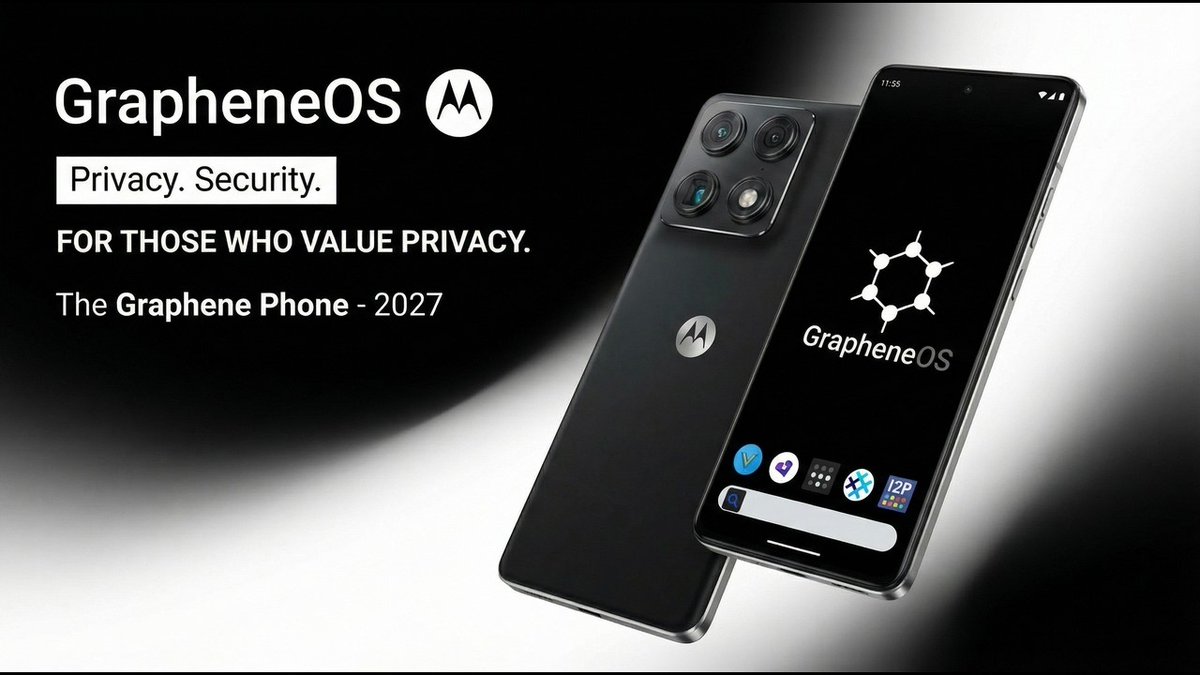
Perfect timing for the @Moto partnership: 2027 flagships will let you unlock the startup security, install GrapheneOS, then lock it back so the phone checks everything’s safe.
Samsung stays locked.
Apple gives you no choice.
Real secure Android options are finally coming.
👀
This is the start of something great!
May 22

GrapheneOS 2026: Still Pixel only or ready for the masses?👀
Have you heard Motorola announced a long term partnership for official GrapheneOS support on future 2027 flagships (Signature/razr lines)?
This is huge!
First non Pixel devices built to GrapheneOS standards.
Privacy right out of the box?!
Count me in!!👀
5
42
362
21,661
Privacy Miladay retweeted

Kohaku, the gateway to Ethereum privacy, is coming soon to a wallet near you.
35
48
430
80,154
Privacy Miladay retweeted
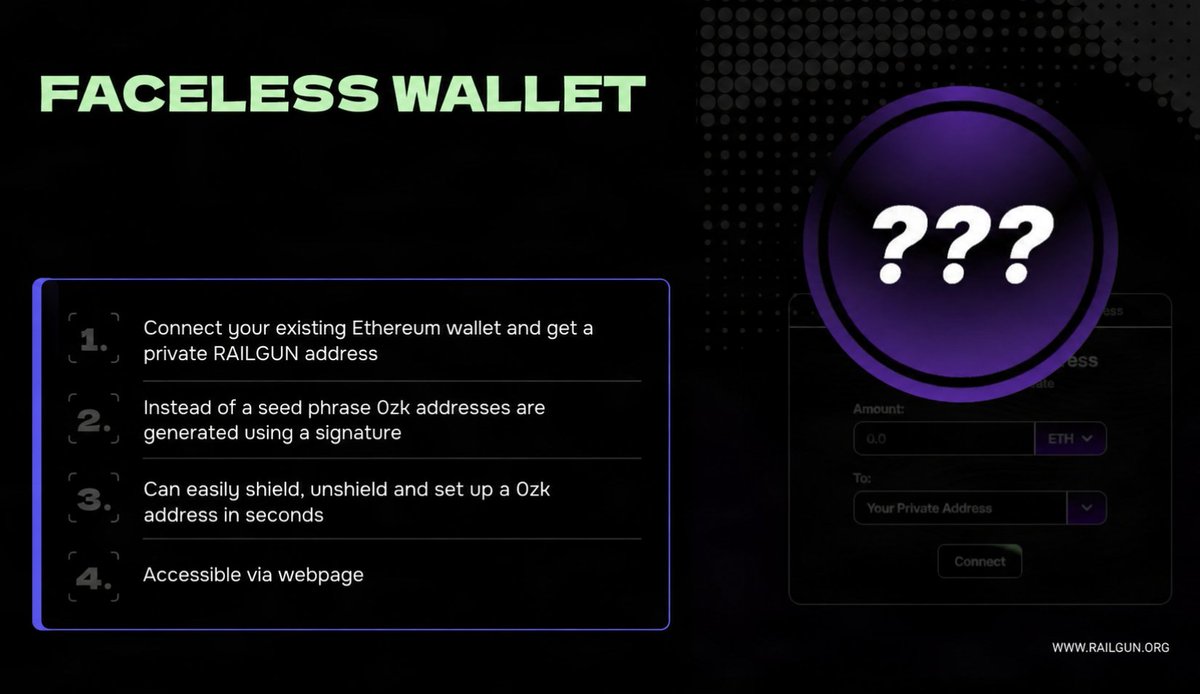
Integration Highlight: @FacelessPrivacy is a web UI wallet that is easy to use and can be set up in seconds.
6
15
86
6,469
Privacy Miladay retweeted

May 14
DeGoogled Android user?
Google's next-generation reCAPTCHA, presented to desktop users, prompts you to scan a QR code.
The catch? Google Play Services have to be enabled in order for it to work on these devices.
Let's dig in to what has changed, and possible solutions...
1/7
54
278
1,683
88,395
Privacy Miladay retweeted

May 11
Lots of performative monero Users here
4
3
37
835
Privacy Miladay retweeted

The best unknown privacy tools.
(All open source)
> Browser: Cromite
> Photos: Scrambled Exif
> Messaging: Cwtch
> VPN: OVPN (they own every server)
> Wallet: Feather Wallet
> Exchange: RetoSwap
Nobody talks about these.
7
5
67
4,331
Privacy Miladay retweeted
May 1
How Your SIM Card Threatens Your Privacy
Your SIM card does more than just connect your phone. It quietly keeps a record of your daily activities, almost like a diary. It logs the neighborhoods you visit, your late-night outings, and the events you attend. Unfortunately, your phone’s settings can’t prevent this tracking.
Your SIM constantly communicates with multiple cell towers to maintain a signal. Each time it connects, your unique ID (IMSI) is recorded, building a detailed map of where you go. VPNs and encrypted apps can’t block this kind of tracking.
Jsyk.. Your phone actually has three computers inside, not just one.
The first is the Application Processor (iOS or Android), which is the only part you can actually control.
The second is the Baseband Processor. This hidden chip manages your phone’s communications and runs its own software, which you can’t see or change.
The third is the SIM card itself. It’s actually a small computer with its own operating system and can run commands on its own.
Some SIM cards can send texts, start data connections, or share your location without your phone’s main system telling you. These hidden messages use special encryption and aren’t saved anywhere you can see them.
Also, a VPN does not protect everything on your phone. On iOS and Android, most app traffic goes through the VPN, but some system services might not, depending on how your device and network are set up. Also, parts of your phone like the Baseband Processor and SIM card work outside the VPN, managing network signals and carrier communication directly. This does not mean all your data is exposed, but it does mean a VPN cannot fully protect everything your device does.
Some privacy experts, such as Naomi Brockwell(@naomibrockwell ), have stopped using SIM cards in their phones. Their method is simple.
- They keep their phones on Airplane Mode and only connect to Wi-Fi.
- They use a separate mobile hotspot for the SIM card instead.
- This keeps your cellular identity separate from your browsing and messaging.
Anyways, If you’re in the U.S., the Calyx Institute offers privacy-respecting mobile hotspots with unlimited data through a non-profit model. While they don’t rely on ad tracking like large telecom companies, the service still depends on carrier infrastructure, so it’s more privacy-conscious.
You can delete apps and block trackers, but the SIM card operates at a level you can’t control. The first step is being aware of this. You can’t avoid a surveillance system if you don’t know it exists.
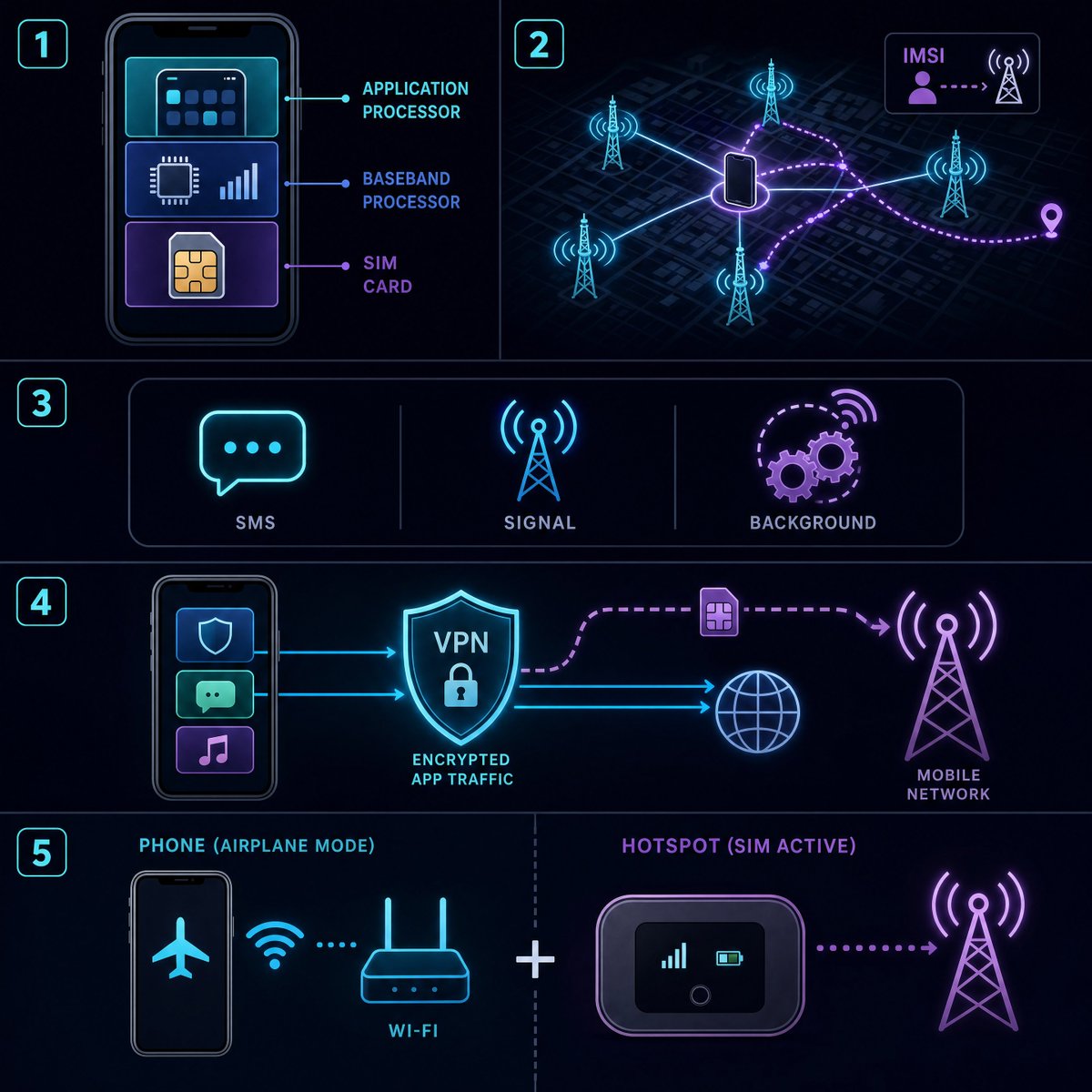
51
342
1,090
45,684

EU urges rollout of massive VPN usage across all member nations to protect access to internet.

EU urges fast rollout of age-verification app to protect minors online reut.rs/48u78On reut.rs/48u78On
8
35
283
10,588
Privacy Miladay retweeted

Apr 26
Eurail demanded passport numbers to sell train tickets. Now 308,777 of those passports are on the dark web, and victims are paying out of pocket to replace them. Every mandatory ID scheme rests on this same fantasy: that the database won't get breached. They always do.
reclaimthenet.org/the-eurail…
30
1,115
2,036
36,676
Privacy Miladay retweeted

Apr 17
I LOVE PIRACY
I LOVE OPEN SOURCE SOFTWARE
I LOVE FREE/CHEAP CREATIVE APPLICATIONS THAT AREN’T SUBSCRIPTION-BASED!!!
74
6,752
40,618
309,664
Privacy Miladay retweeted
Apr 15
your hardware
your pc
your FOSS OS
DOES NOT NEED TO KNOW YOUR AGE
anyone defending it is cuck
24
814
4,867
31,258

Privacy Miladay retweeted
Mar 30
If you’re not using your wallet’s private address, you’re not getting the most out of Ethereum, Polygon, Arbitrum, or BNB Chain.
2
12
485
Privacy Miladay retweeted
Mar 30
You turn on your VPN and your IP changes. It feels like you should be invisible, but some websites still know exactly where you are.
Your IP is just one clue. Websites also look at your browser’s timezone (for example, "Asia/Kolkata" doesn’t match a German IP), your Accept-Language header (en-IN gives you away), and your DNS resolver, which is probably still set to your ISP’s servers back home instead of your VPN’s.
One of the sneakiest trick is WebRTC. Your browser has a built-in feature for video calls that can fetch your real IP address at the operating system level, completely bypassing the VPN tunnel. A website can get it with just 10 lines of JavaScript. Some VPNs don’t block this by default.
And if you’re logged in, it’s game over. Netflix, Google and Spotify don’t care about your IP address. They care about your account. Your registered country is stored in their database, not in your connection. Using a VPN while logged in means the VPN isn’t helping you at all.
A VPN gives you a different postal address, but your timezone, language, DNS, WebRTC, browser fingerprint, and login details are still the same.
Mar 30

Interviewer:
You use a VPN.
Why do some websites still detect your real country?
82
662
5,562
448,671