
dad, builder • I use AI to leverage my time as a freelance solutions architect / FDE • also shipping indie projects like readbetter.io
Joined August 2012
- Tweets 8,493
- Following 1,541
- Followers 1,796
- Likes 24,372
1,191 Photos and videos









Hey fellow friends!
Excited to spend the week building with Fable 5.
Spent the weekend euro-maxxing, did I miss anything?
1
82

Jun 14
Jun 13

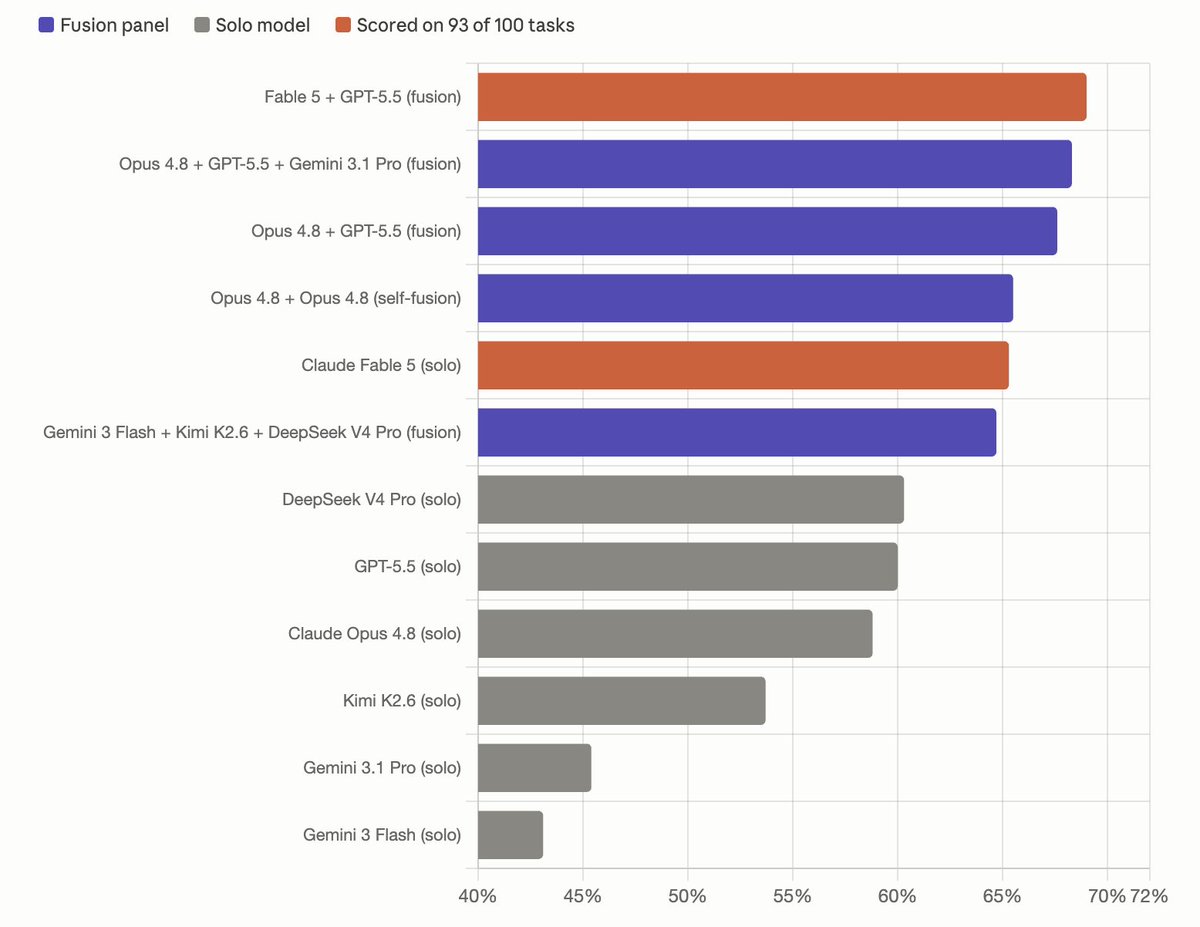
Introducing the Fusion API, the smartest compound model in the market.
Fusion achieves Fable-level intelligence at half the price.
How it works 👇
1
122
Jun 13
„We can keep being the continent that writes the most thoughtful rules about a technology it does not possess. Or we can become a place where the frontier is built, and not just licensed.“

1
3
247
Jun 10
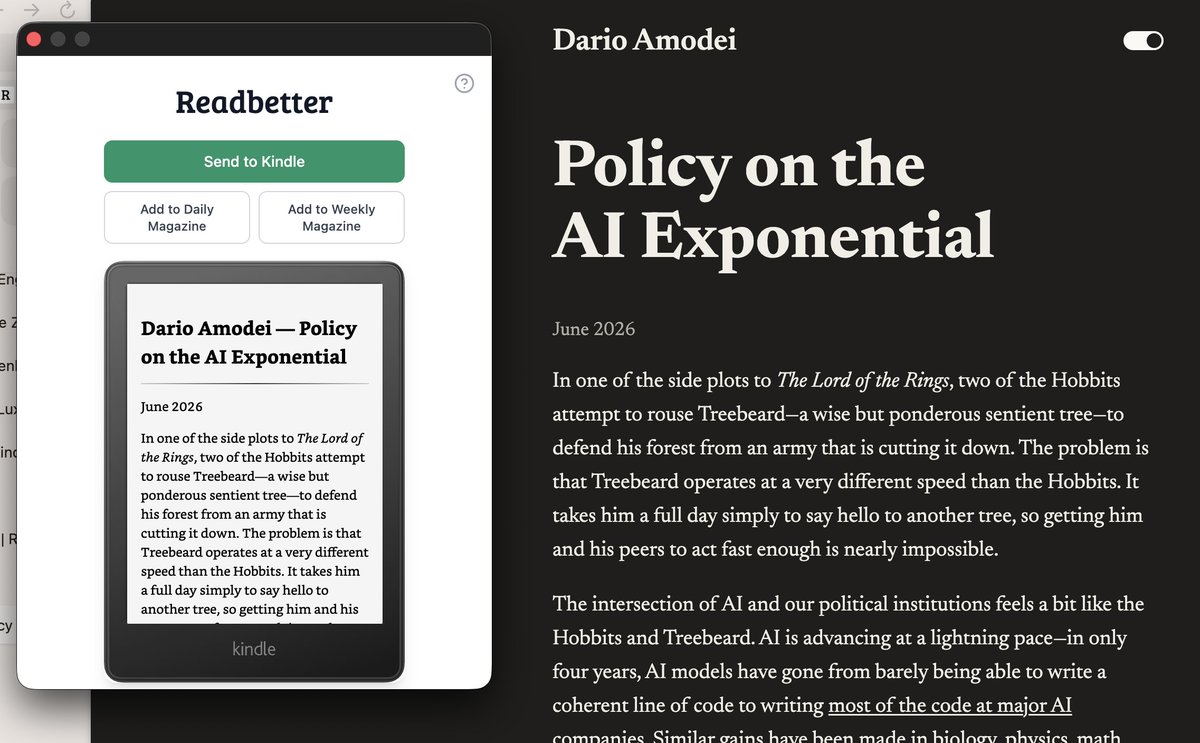
first thing I do when Dario publishes a new essay: Send to Kindle so I can read it there!
Jun 10

Today I'm publishing a new essay, Policy on the AI Exponential. AI is progressing extremely fast—much faster than the policy process was built to handle. The essay lays out where I think the technology is now, and the action needed to close the gap: darioamodei.com/post/policy-…
1
126
Jun 10
Claude Fable 5 is here.
Anthropic’s new model is extremely capable, extremely expensive, and not quite like the Claude releases we’ve seen before.
I made a video breaking down what it is, why it matters, and how to think about using it:
1
94
Jun 9
good way to think about when to use a bigger model in general, but especially true for Fable 👇
Jun 9

Right size your requests. Don't think of it as it "writes 5% better code," but more like it can handle the next 5% of previously unsolvable tasks. If Composer 2.5 is already doing well for your work, you don't need to use a more expensive model! But when you have a problem that's too hard you can go up
1
73
Robert Bouschery retweeted

Jun 9
You gotta think in terms of systems. You use the results and review to add in quality controls and improve the odds of success over time while scaling. You add validation testing and additional prompting in the process.
Add a fine tune loop if you want once you get it how you want and learn to teach it to one shot it once you gather enough data.
Scale might initially produce more slop but then you build in additional polishing loops.
Putting Cursors thermonuclear code review refactor and also using it in a debug loop like @RBouschery did
github.com/rbouschery/agent-… plus adding autoresearch or /goals to loop it or adding your own algorithmic process help.
Add “field testing” where you prompt agent to actually generate tasks to prove it works in the real world and then add “human in the loop field testing” where you validate the test works. You can probably replace that too once you train RL to predict human review near indistinguishable from human review itself.
You gotta learn to replace yourself and keep working on higher abstraction layer and then figure out how to replace that too.
1
1
94
Jun 8
Both of these statements are true:
AI tools democratize professional work.
But seniority still matters.
A beginner can now create things that looked impossible a few years ago. They can design an interface, generate a professional slide deck, write functional code, or edit a video.
Give the same tools to a senior engineer, designer, analyst, or strategist, and the output will still be much better. Not because they can click different buttons. Not because they have access to a secret model. But because they know what good looks like, and they have the language to describe it.
A lot of professional skill is vocabulary.
In design, “make this bigger” is vague. “Increase the padding, tighten the hierarchy, and reduce visual noise” gives the model a much clearer target.
In creating slides, “create a chart” is vague. “Use a dumbbell chart to show the before/after delta across categories” gets you much closer.
The same is true in code. The same is true in design. The same is true in almost any form of knowledge work.
Language matters because language carries judgment. It encodes distinctions. It gives shape to vague taste.
And as more of our work becomes instruction-giving to agents, this matters even more:
The quality of your output increasingly depends on the quality of your instructions.
This is why I think agent skills are so interesting.
At the most basic level, they let you borrow the language of experts. You can take a skill written by someone who understands design, code, research, writing, or slides, plug it into your workflow, and immediately give the agent better instructions than you would have written from scratch.
That alone is valuable. It makes your work with agents more effective.
But the bigger opportunity lies in taking one more step:
If you do not just use the skill passively, but read it, question it, rewrite it, and adapt it to your own work, you start upgrading your own language.
You begin to notice the distinctions experts make. The defaults they encode. The constraints they care about. The words they use to turn a vague request into a precise instruction.
Over time, this changes how you prompt. But it also changes how you think.
You are not just copying someone else’s expertise anymore. You are absorbing it, reshaping it, and combining it with your own point of view.
So don't sleep on agent skills and don't just use them passively.
2
2
161
Jun 5
interesting pricing observation:
for a long time, the yearly plan was chosen ca. 80/20 vs monthly option on @readbetterio
in recent months this flipped - now most people choose monthly.
i too commit to software much shorter because my own usage patterns change so fast.
anyone else noticing this?
1
68
Jun 5
I love X but @nikitabier wtf is this - please fix ads next - I have to report several ads a day that are the worst spam

I never expected my handmade Godzilla lamps to reach so many people. Every order reminds me that my work has value and motivates me to keep creating. If you've been waiting to get one, thank you for supporting my journey. ❤️
Community note
False advertising. The website sells lamps and air purifiers and according to its own website has taken 5,500 orders for Godzilla lamps. “Noah” does not exist.
embedlayer.com
3
202
Jun 4
look ma, I’m a billionaire! /cc @cursor_ai
Jun 4

cool! Joined 821 days ago - wow didn’t realize it’s been that long!
cursor.com/@rbo
67
Robert Bouschery retweeted
Jun 4
cool! Joined 821 days ago - wow didn’t realize it’s been that long!
cursor.com/@rbo
4
1
10
4,102
Jun 4
I love how the Cursor tab button seems so much like a relic of the past - almost like showing a kid today a landline phone.
Remember when we were AI-coding by accepting suggestions by pressing Tab? Ancient times ca. 15 months ago

This past Wednesday marked my one-year anniversary at @cursor_ai ! Joining as employee #82 exactly one year ago has been one of the most rewarding decisions of my professional life.
Cursor moves at a breakneck pace. We ship daily, tackling "impossible" problems for developers worldwide. But what truly sets this place apart is the people — a team of absolute rockstars who are as humble as they are brilliant.
I feel immense gratitude for the opportunity to contribute to a product that is fundamentally reshaping software engineering. In just twelve months, I’ve watched Cursor evolve from an AI-native editor into a comprehensive, agent-first SDLC platform.
I've also had the opportunity to meet hundreds of developers and businesses in person, whose productivity has skyrocketed 🚀 with Cursor, which remains one of the most fulfilling parts of the journey. 🤩
I’m incredibly excited for what’s next! Beyond the technical challenges, I’m eager to dive deeper into the business side of our growth, collaborating across teams to ensure Cursor becomes the essential tool for every developer on Earth 🌎 🌍 🌏
Thank you to the Anysphere team for an unforgettable first year! Let’s keep building!
1
94
Jun 2
AI tools can tempt you to work at 100x speed.
And honestly, I’ve been there.
Spinning up ten agents in parallel. Jumping from tab to Codex to terminal to Cursor like a madman. Moving fast. Getting a lot done. Seemingly.
Then reality kicks in.
Your mind can only go so fast.
And if your goal is not just to generate output, but to actually ship something good, you cannot simply hit send on everything the AI gives you.
You have to review it. Understand it. Challenge it. Spot the holes. Sometimes take two steps back.
Very quickly, all that speed can leave you with surprisingly little to show for it.
I think there is a better way.
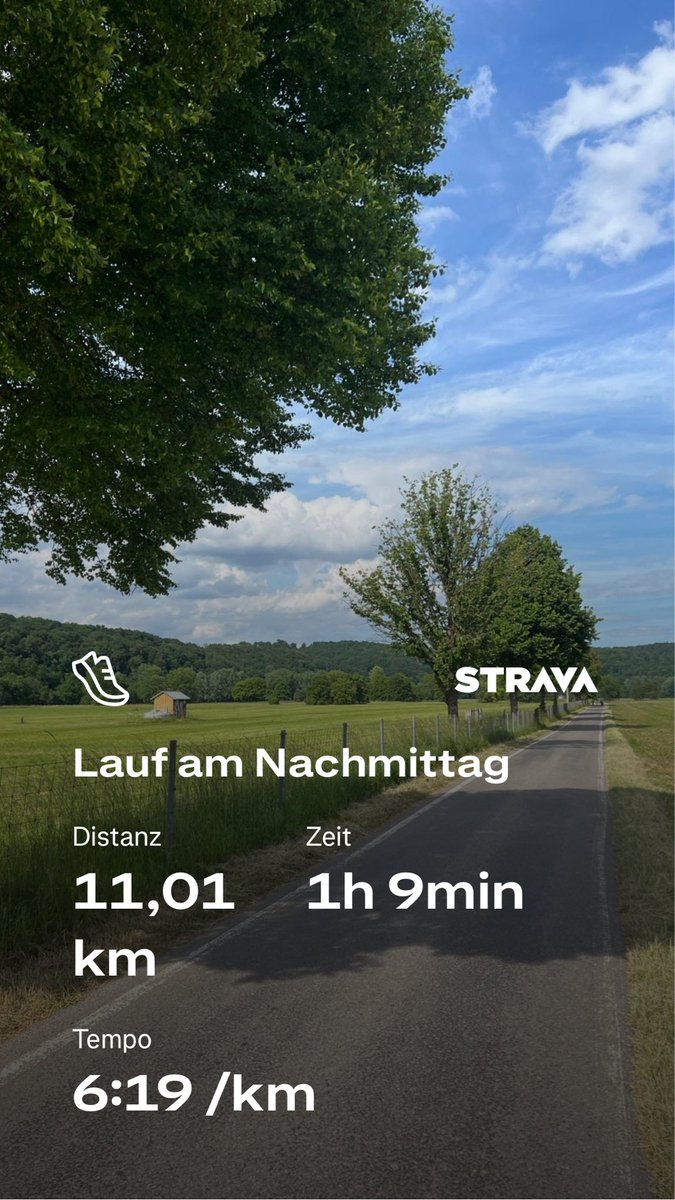
A few days ago, I was out for a run. For the first time, a voice inside my head said:
Go slow.
So I slowed down.
I glanced at my Apple Watch and saw my pace drop below a “magic” 6 min/km mark. At first, it felt wrong. Like I was underperforming.
But then something shifted.
I reached a pace where I felt like I could keep going forever.
I had read many times that slow running builds the capacity to go far. But my ego always got in the way. I kept chasing some arbitrary “fast” pace, even when it was not helping me become a better runner.
And because running always seems to unlock better thinking for me, the analogy suddenly clicked.
This is exactly how I should work with AI.
Why try to go as fast as possible when the goal is to go far?
So I started slowing down in my agentic coding work.
One task at a time. One thread of thought at a time. Actually reading what the agent produced. Challenging its assumptions. Staying close enough to the codebase that I could still understand what was changing.
And suddenly, I felt like I was achieving more.
The code was better. My reviews were faster. I had fewer messy detours. I did not lose the plot halfway through the work.
Going slower helped me go further.
Maybe that is the more useful version of the “100x developer” idea.
Not 100x speed.
Maybe it is 10x speed with 10x quality.
That still gets you to 100x.
1
4
313

You can work 5 days a week and succeed as a startup.
Mercury has done that from day 0 and we are valued @ $5.2bn 7 years after launch.
I have been an entrepreneur for 20 years and raised 3 kids while doing it.
The point of success is to have a great life not just a startup 😊
May 30

"If you are not working 7 days per week, you are going to lose".
Corgi Insurance is the most intense workplace culture in startups.
- The company works 7 days per week.
- Founder (@nico_laqua) lives and sleeps in the office.
- He built a cafe in the office because there was no local cafe that was open 24/7.
- 2/3 of the first 30 team members have the Corgi logo as a tattoo.
Today I went behind the scenes with Nico, who has used this culture to scale the company to a $2.6BN valuation in just two years.
My condensed notes below:
1. If You Are Not Working 7 Days Per Week, You Are Going to Lose:
Whatever you can get done in 5 days, you'll get more done in 6 and 7. If you are trying to solve the world’s hardest problems, a standard 5-day workweek will not cut it.
2. Work Trials Repel the Mediocre:
Corgi forces candidates into mock work trials over the weekend. If seeing a full office on a Saturday scares them, they don't belong. True intensity acts as a natural filter to attract killers and repel clock-watchers.
3. Lead from the Front Lines
You can’t demand 7-day weeks while sitting on a yacht. Nico sleeps 3–4 hours a night on a mattress inside the office. If you want your troops to bleed, you have to be in the trenches with them.
4. Culture Only Means One Thing: Winning
Forget superficial jargon like "hackers" or "ex-founders." Strip away the corporate fluff. A great startup culture is aggressively optimized around one single word: Winning.
5. Lifespan vs. Victories
Building something world-historic requires radical sacrifice. When asked if he'd rather build a trillion-dollar company and die at 50, or fail and live to 80, the answer was easy. "I would rather measure my lifespan in victories."
6. Reject the Comfort of "Quiet Quitting."
If you are operating in a hyper-growth environment and your days off happen to be Saturday and Sunday every single week, you are quiet quitting. To win, you must deliberately bypass the off-ramps of personal comfort and low volatility.
Corgi isn't for everyone—and that’s exactly the point.
199
253
5,637
487,222
May 30
a) it‘s not that proprietary as a lot of it can/could still be scraped
b) Grok is one of the top models out there and it took him many years less than competition so maybe this proves the opposite?
May 29

It's a bit strange that owning the entire, proprietary, twitter dataset did not help Elon Musk build a better LLM.
134
May 29
need some sci-fi book recommendations please - what was the last banger you read?
1
2
72
May 26
lmfao these kids really think GMV = revenue
May 26

it’s platform revenue, not profit
1
225
May 23
remember when people said SF was dead? looking back it’s incredible how much of a fever dream covid era was
141