
psychologist obsessed with markets, advisors, and new financial media
Joined July 2018
- Tweets 12,138
- Following 528
- Followers 1,940
- Likes 35,011
621 Photos and videos








Pinned Tweet

4 Apr 2025
figured someone could use some baby giggles today
4
2
24
4,713

May 15
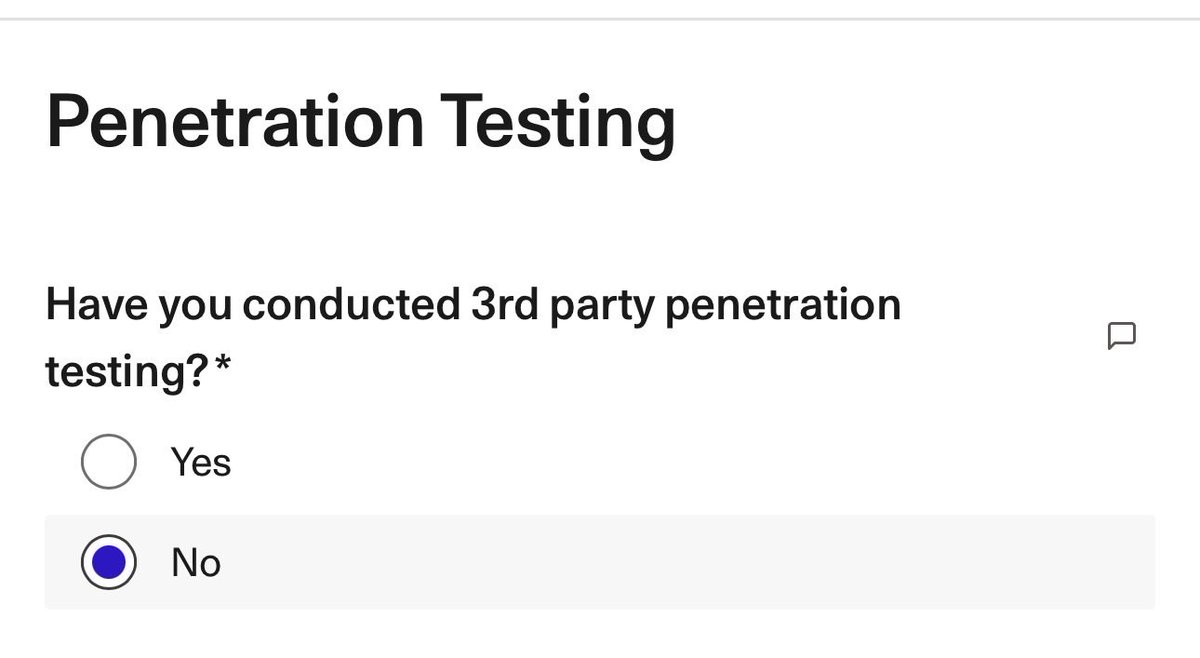
This is a funny question I had to answer for Vendor Security Assessment
4
104
Rachel 🤸♀️ retweeted

May 14
has anyone ever wanted to open a powerpoint doc in the browser instead of the desktop?
why in god’s name is that the default
5
2
32
5,094
May 6
“Action comes first, and the feeling follows.”
May 5

Winston Churchill fought his depression with bricks. He'd lay them for hours at his country home in Kent. He joined the bricklayers' union. And in 1921 he wrote about why it worked. It took psychology another 75 years to catch up.
He called his depression the "Black Dog." It followed him for decades. His method for fighting it back was as basic as it sounds: laying brick after brick, hour after hour.
Churchill spelled out his theory in a long essay for The Strand Magazine. People who think for a living, he wrote, can't fix a tired brain just by resting it. They have to use a different part of themselves. The part that moves the eyes and the hands. Woodworking, chemistry, bookbinding, bricklaying, painting. Anything that drags the body into a problem the mind can't solve by itself.
Modern psychology now calls this behavioral activation. It's one of the most-studied depression treatments out there. Depression sets a behavior trap. You feel bad, so you stop doing things, and doing less means less to feel good about. Feeling worse makes you do even less. The loop tightens until you can't breathe inside it.
Behavioral activation breaks the loop from the action side. You schedule the activity first, even when every part of you doesn't want to. Doing it produces small rewards: a wall gets straighter, a painting fills in, a messy room gets clean. Those small rewards slowly rewire the brain. Action comes first, and the feeling follows.
Researchers at the University of Washington put this to the test in 2006. They studied 241 adults with major depression and compared three treatments: behavioral activation, regular talk therapy, and antidepressants. For the people who were most severely depressed, behavioral activation matched the drugs. It beat the talk therapy. A 2014 review of more than 1,500 patients across 26 trials backed up the result.
Physical work like bricklaying does something extra on top of this. It crowds out rumination, the looping bad thoughts that grind people down during the worst stretches of depression. Bricklaying needs both hands and gives feedback brick by brick: each one is straight or crooked. After an hour you can see exactly how much wall you built. No room left for the mental chewing.
The line George Mack used in his post, "depression hates a moving target," is good poetry. The science behind it is sharper. Depression hates a brain that has somewhere else to be.
4
189
Rachel 🤸♀️ retweeted

Apr 28
I don’t think it’s an exaggeration to call this the greatest piece of prediction market content created to date.
87
768
6,825
523,043
Rachel 🤸♀️ retweeted

Apr 26
What's the best KPop Demon Hunters song?
19
2
15
10,884
Rachel 🤸♀️ retweeted

Apr 25
Everyone survived!
Apr 24

Everyone in the world has to take a private vote by pressing a red or blue button. If more than 50% of people press the blue button, everyone survives. If less than 50% of people press the blue button, only people who pressed the red button survive. Which button would you press?
523
318
9,168
401,281
Apr 24
👀 50k votes and counting
Apr 24
Everyone in the world has to take a private vote by pressing a red or blue button. If more than 50% of people press the blue button, everyone survives. If less than 50% of people press the blue button, only people who pressed the red button survive. Which button would you press?
1
2
141
Apr 23
Democratizing VC huh 🙄

Introducing USVC - a single basket of high-growth venture capital, for everyone.
No accreditation required, SEC-registered, and a very low $500 minimum.
Includes OpenAI, Anthropic, xAI, Sierra, Crusoe, Legora, and Vercel. As USVC adds more companies, investors will own a piece of that too.
Liquidity typically comes when companies exit, but we’re aiming to let investors redeem up to 5% of the fund every quarter. This isn’t guaranteed, but if we can make it work, you won’t be locked up like in a traditional venture fund.
It runs on AngelList, which already supports $125 billion of investor capital.
And I’ve joined USVC as the Chairman of its Investment Committee.
—
Go back to the 1500s, you set sail for the new world to find tons of gold - that was adventure capital.
Early-stage technology is the modern version. It says we are going to create something new, and it’s risky. It’s daring.
But ordinary people can’t invest until it’s old, until it’s no longer interesting, until everybody has access to it. By the time a stock IPOs, most of the alpha is gone. The adventure is gone. Public market investors are literally last in line.
This problem has become farcical in the last decade. Startups are reaching trillion dollar valuations in the private markets while ordinary investors have their noses up to the glass, wondering when they’ll be let in.
Investing in private markets isn’t easy. You need feet on the ground. You need judgment built over years. Most people don’t have the patience to wait ten or twenty years for an investment to come to fruition.
But there is no more productive, harder-working way to deploy a dollar than in true venture capital.
USVC enables you to invest in venture capital in a broad, accessible, professionally-managed way, through a single basket of innovation, focused on high-growth startups, at all stages.
It is how you bet on the future of tech: the smartest young people in the world, working insane hours, leveraged to the max, with code, hardware, capital, media, and community. Your dollar doesn’t work harder anywhere.
There is an old line - in the future, either you are telling a computer what to do, or a computer is telling you what to do. You don’t want to be on the wrong side of that transaction.
USVC lets you buy the future, but you buy it now. Then you wait, and if you are right, you get paid.
Get access here:
usvc.com
1
3
489
Rachel 🤸♀️ retweeted

Jan 7
66
113
844
130,635
Rachel 🤸♀️ retweeted

Apr 20
Luxury is quickly becoming synonymous with human made or human curated, cultivated, delivered. Just being able to talk to another human as a function of a good or service is becoming more of a luxury every day... especially one who has an passion for true hospitality.
1
3
85
Rachel 🤸♀️ retweeted

Apr 18
Taste is priceless
Apr 18

We'll soon see the rise of the "Chief Clipping Officers" at companies
The person who figures out the 47 second moment inside the 2 hour podcast that gets 10M views
Probably will be the highest paid marketing hire of 2027
1
3
760
Rachel 🤸♀️ retweeted

Apr 17
Greatest city in the world. Anything is possible here.

57
9
338
37,048
Rachel 🤸♀️ retweeted
Apr 14
“Unanimous sense that everyone is working more than ever before. AI is not causing anyone to do less work right now, and similar to Silicon Valley people feel their teams are the busiest they’ve ever been.”
1
1
1
178
Rachel 🤸♀️ retweeted

Apr 13
Asking your friends, scrolling through Reddit, or querying your favorite AI for financial advice works fine when you're trying to figure out which ETF to buy or how to set up a basic wallet.
But when you're sitting on millions in crypto? That's like bringing a calculator to an engineering exam.
The real conversations I have with large crypto holders aren't about finding the next 18% APY farm or optimizing gas fees. They're about custody architecture that can handle eight-figure positions without breaking a sweat. Estate planning that doesn't leave your family with a treasure map of seed phrases. Liquidity strategies that let you access millions without moving markets or triggering tax tsunamis.
Most portfolio tools assume your biggest decision is Coinbase vs. Kraken. But when you're managing generational wealth in digital assets, you need infrastructure that thinks like institutional money while staying crypto-native. Multi-sig setups, institutional custody relationships, tax-efficient rebalancing, succession planning that actually works.
The yield is just one ingredient in a much more complex recipe. The real alpha comes from having systems that scale with your wealth, not against it.
We're moving past the early days where being your own bank meant doing everything yourself. Professional-grade crypto wealth management isn't about giving up control — it's about building better systems for keeping it.
@protocol_wealth

1
2
5
327
Rachel 🤸♀️ retweeted

Apr 11
Told my 10yo and my 5yo to stop hitting each other or I'd destroy their entire civilization.
Now they are still fighting but I have to put a twenty dollar bill in a machine on their door to go into their room
10
7
197
12,154
Rachel 🤸♀️ retweeted

Apr 8
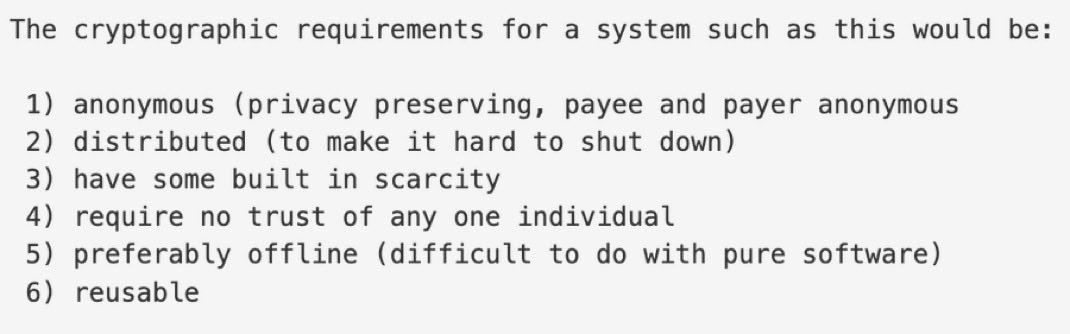
So … what do you think: Is Adam Back Satoshi?
34%
Yes, NYT very convincing
66%
No, the hyphens lie
388 votes • Final results
16
2
15
107,926