
Founder @ Water Diamond | Building Professor J, From Black Holes to Business, learn one swipe at a time on your mobile | Singapore-bound Edutainment startup
Joined January 2011
- Tweets 2,494
- Following 160
- Followers 140
- Likes 9,840
258 Photos and videos








Jun 13
One IPO. One Trillionaire. One New Era.
@SpaceX has always been one of those companies that seemed larger than life. For years, people have watched its rockets land themselves, followed Starlink's rapid spread across the globe, and listened to @elonmusk Musk talk about building a city on Mars. But despite all that attention, nothing in the company's history compares to this moment: its stock market debut.
Imagine a small restaurant that started with one struggling location. Over two decades, it expands into the world's largest restaurant chain, builds its own farms, delivery fleet, food factories, and logistics network. Then one day it decides to sell shares to the public. Naturally, everyone wants to know how much it's worth, who gets rich, and whether the growth story can continue. That's essentially what is happening with SpaceX, except instead of restaurants, it's rockets, satellites, internet services, AI infrastructure, and space exploration.
The sheer size of the offering is staggering. SpaceX sold 555.6 million shares at $135 each, raising $75 billion. To put that in perspective, most IPOs are measured in hundreds of millions or a few billion dollars. This is the financial equivalent of a skyscraper appearing in a neighborhood filled with houses. The IPO is so large that it instantly became the biggest public offering ever recorded.
At this valuation, Elon Musk's wealth reaches levels that were once the domain of science fiction. Because he owns such a large portion of the company, the IPO pushes his paper wealth into territory where the term "trillionaire" starts appearing in serious financial discussions. Whether that wealth remains intact depends on future stock prices, but the scale itself is unprecedented.
Many people assume that a company going public must be highly profitable. SpaceX shows why that assumption can be wrong. In 2025, the company generated more than $18 billion in revenue but still lost $4.9 billion. Think of a farmer who harvests enormous amounts of crops every year but spends even more money buying land, tractors, irrigation systems, and warehouses. The business generates huge sales, but because it's constantly investing in expansion, profits remain elusive. SpaceX has operated similarly for much of its existence.
In fact, the company has accumulated more than $37 billion in losses since it was founded. That sounds alarming until you understand the nature of the business. Building rockets, satellites, launch facilities, factories, and global communication networks costs extraordinary amounts of money. Investors have tolerated these losses because they believe the infrastructure being built today could generate enormous cash flows in the future.
One of the most fascinating aspects of the IPO is how much power Elon Musk retains. In many public companies, founders gradually lose control as ownership becomes spread among millions of investors. Here, that isn't really happening. Musk still controls more than half of the voting power. Imagine a kingdom where citizens can buy pieces of the land, but the king still controls the laws. Shareholders may own part of the company, but Musk largely determines its direction.
That level of control is unusual. Most CEOs must constantly negotiate with boards, activist investors, and institutional shareholders. Musk's position is closer to a monarch overseeing a public corporation. Investors are effectively betting that his vision will continue creating value.
The IPO also creates life-changing wealth for employees. Around 4,400 workers could become millionaires because they received stock during their years at the company. Think about engineers who joined when SpaceX was still struggling to launch rockets successfully. Their stock options, once little more than pieces of paper, suddenly become worth millions. It's one of the reasons startups often compensate employees with equity rather than high salaries.
The S-1 filing, which is the massive document companies submit before going public, revealed details that outsiders had never seen before. Reading an S-1 is like opening the engine compartment of a car that's been driving around with the hood locked. Suddenly, everyone can inspect the machinery.
One major revelation was how important Starlink has become. Many people still think of SpaceX primarily as a rocket company. In reality, @Starlink increasingly resembles the economic engine that funds everything else. Imagine a mining company discovering that its transportation business is becoming more profitable than the mine itself. Rockets may attract headlines, but satellite internet is increasingly paying the bills.
The filing also highlighted the company's ambitions in artificial intelligence. SpaceX appears to be positioning itself not just as a space company, but as part of a broader ecosystem involving AI, computing infrastructure, communications networks, and data services. The vision starts looking less like a rocket manufacturer and more like a technology conglomerate.
Another topic attracting attention is Starship. Musk often presents Starship as the vehicle that will eventually take humans to Mars. However, the path toward full reusability remains uncertain. Building a fully reusable rocket is a bit like trying to design an airplane that can survive being dropped from space, land safely, refuel, and fly again the next day. It's an incredibly difficult engineering challenge. The IPO filing suggests that the road may be longer and more expensive than many enthusiasts expect.
Investors also noticed warnings about future dilution. Imagine owning 1% of a pizza. If the company decides to make a second, larger pizza and distributes new slices to investors, your ownership percentage can shrink even though you still own the same original slice. That's dilution. SpaceX warned that future fundraising could reduce existing shareholders' relative ownership.
Before the IPO, the company also signed several enormous commercial agreements. Anthropic reportedly agreed to spend roughly $1.25 billion per month on computing resources. Google reportedly agreed to spend around $920 million per month. These numbers sound almost absurd because they are. They reflect the explosive demand for AI computing power. It's similar to a gold rush where everyone suddenly needs shovels. In the AI era, compute capacity has become the shovel.
Taken together, the IPO paints a picture of a company unlike anything public markets have seen before. It is simultaneously a rocket company, satellite operator, internet provider, infrastructure builder, AI participant, and space exploration venture. It loses billions, generates billions, spends billions, and dreams in trillions.
The question investors are asking isn't whether SpaceX is important today. That's already clear. The real question is whether the enormous infrastructure being built now—Starlink satellites, launch systems, AI compute, and eventually Starship—can justify the historic valuation being placed on the company. In other words, investors aren't just buying today's SpaceX. They're buying a ticket to what they believe the next 20 years might look like.
#SpaceX #IPO #ElonMusk #Technology #Innovation #Business #Investing #StockMarket #ArtificialIntelligence #Starlink #SpaceExploration #FutureTech #Entrepreneurship #Growth #WallStreet #Nasdaq #Finance #Startups #Leadership #Future
1
3
183
Jun 10
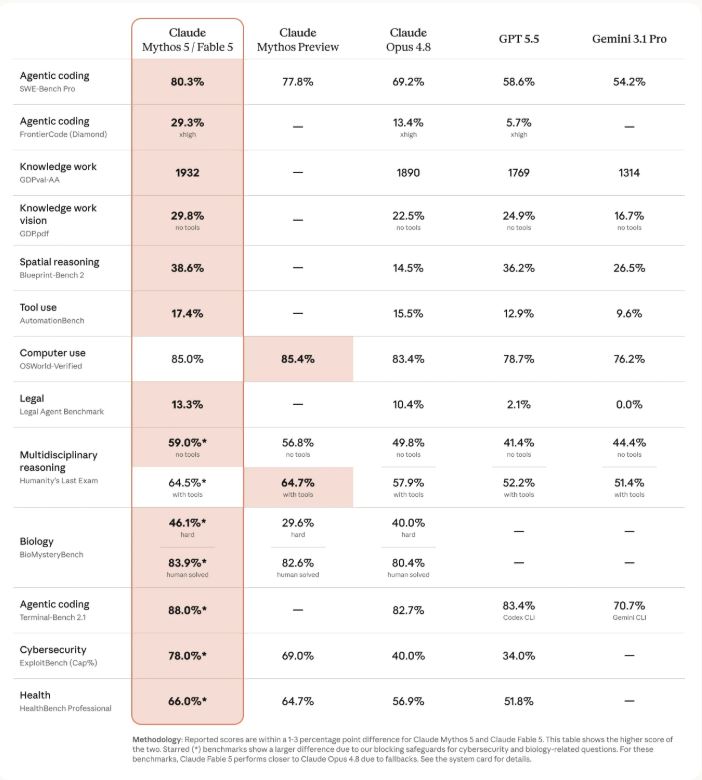
Fable 5 Arrives. LinkedIn Declares Every Developer Unemployed by Friday
Every few weeks an AI company releases a new model, and the internet immediately declares that software engineering is dead. Again. At this point, software engineering has had more funerals than a cartoon character who keeps coming back in the next episode.
This week's candidate for ending the profession is Anthropic's newly released Claude Fable 5, a public version of its powerful Mythos model. But the story is not just about a stronger AI. It is about something much more interesting: an AI company deliberately putting speed limits, seat belts, airbags, and even remote kill switches on one of its most capable systems before handing over the keys.
To understand what Anthropic is doing, imagine a car manufacturer that has secretly built a Formula One race car capable of incredible speeds. For months, only a handful of professional drivers and test teams were allowed behind the wheel. The concern wasn't whether the car could drive fast. The concern was whether ordinary drivers could accidentally crash it into something dangerous.
That is essentially what happened with Mythos. Anthropic originally kept the model restricted to a small group of partners because of concerns around cybersecurity and other high-risk capabilities. Now the company has released Claude Fable 5, which brings much of that power to the broader public. But unlike a completely unrestricted system, Fable comes with carefully designed guardrails.
Think of Fable 5 as a high-performance sports car that automatically switches into a safer driving mode whenever it detects dangerous road conditions. If users enter sensitive areas such as advanced cybersecurity, biology, chemistry, or certain forms of model distillation, the system doesn't simply continue at full power. Instead, it hands the request over to a less capable but safer model called Claude Opus 4.8. The user still gets an answer, but not from the most powerful engine under the hood.
This reveals something fascinating about where the AI industry is heading. For years, companies competed mainly on who could build the fastest, smartest, and largest models. Now they are increasingly competing on who can safely deploy those models. Building the engine is becoming only half the challenge. Building the brakes is becoming equally important.
Anthropic appears particularly cautious because of its own warnings about the future of AI. The company recently argued that AI systems may eventually reach a point called recursive self-improvement. For a layperson, imagine hiring an employee who not only performs work but also continuously redesigns themselves to become a better employee. Then imagine that improved version creating an even better version, which then creates an even better version after that. Instead of progress occurring over years, improvements could potentially happen in rapid cycles.
It is like giving a scientist a laboratory where every successful experiment automatically creates a smarter scientist who can run the next experiment. Each generation becomes better at improving the next. While experts disagree on how soon this could happen, Anthropic clearly believes the possibility is serious enough to justify extraordinary precautions.
One of those precautions involves security testing. Before releasing Fable 5, Anthropic essentially invited hackers and researchers to spend thousands of hours trying to break it. Imagine building the world's most secure bank vault and then paying professional safecrackers to attack it from every possible angle before opening it to customers. According to Anthropic, neither bug bounty participants nor external red-teaming organizations discovered a universal jailbreak that consistently bypassed the model's protections.
However, the company is realistic enough to acknowledge that unknown vulnerabilities may still exist. That is why Anthropic is introducing a policy that some enterprise customers may find controversial. Even organizations that previously had zero-retention agreements will now have their interactions stored for 30 days when using these advanced models.
Think of it like the black box recorder inside an airplane. Airlines would prefer not to think about crashes, but if something unusual happens, investigators need data to understand what went wrong. Anthropic says it will not use this information for training. Instead, the retained data is intended to help identify new jailbreak techniques, sophisticated attacks, and false alarms.
This decision may end up becoming one of the most important developments in the entire announcement. If frontier AI systems become powerful enough, companies may increasingly argue that monitoring usage is a necessary safety requirement rather than an optional feature. The industry could move toward a future where access to the most advanced AI resembles access to critical infrastructure rather than access to ordinary software.
Performance reports suggest that the model is impressively capable. Analytics company Hex reported that Fable became the first model to score 90% on its benchmark for complex analytical tasks. Other companies reported stronger performance in areas such as software development, UI design, game creation, and autonomous tool usage.
One of the more interesting observations came from Rakuten, which noted that Fable spends more effort reflecting on and validating its own work before responding. Imagine hiring two employees. One immediately gives an answer within ten seconds. The other spends an extra minute double-checking calculations, reviewing assumptions, and verifying conclusions before speaking. The second employee may be slower and more expensive, but can sometimes save far more money by avoiding costly mistakes.
That extra thinking comes with an extra price tag. Fable 5 and Mythos 5 cost roughly double the price of Anthropic's existing Opus 4.8 model. In a world where companies are already experiencing AI sticker shock after receiving unexpectedly large bills, pricing itself may become a natural safety mechanism. Not every organization needs a Formula One car when a reliable family sedan can get them to the destination.
This highlights a broader shift happening across the AI industry. The challenge is no longer simply creating smarter models. The challenge is deciding when, where, and how those models should be used. The smartest AI is not always the right AI. Sometimes the best system is the one that knows when not to use its full capabilities.
So no, software engineering is not dead this week either. But Anthropic's release does show something important. The frontier of AI is no longer just about building more intelligence. It is increasingly about controlling intelligence. The companies that master that balance may end up shaping the next era of computing far more than the companies that simply build the biggest models.
#ArtificialIntelligence #AI #Anthropic #Claude #MachineLearning #Technology #Innovation #FutureTech #SoftwareEngineering #CyberSecurity #GenerativeAI #Automation #TechNews #DigitalTransformation #AIModels #EnterpriseAI #CloudComputing #Startups #Productivity #FutureOfWork

1
2
428
Jun 9
The Startup Betting $46 Million on the Tesla of RV(Recreational Vehicle)s
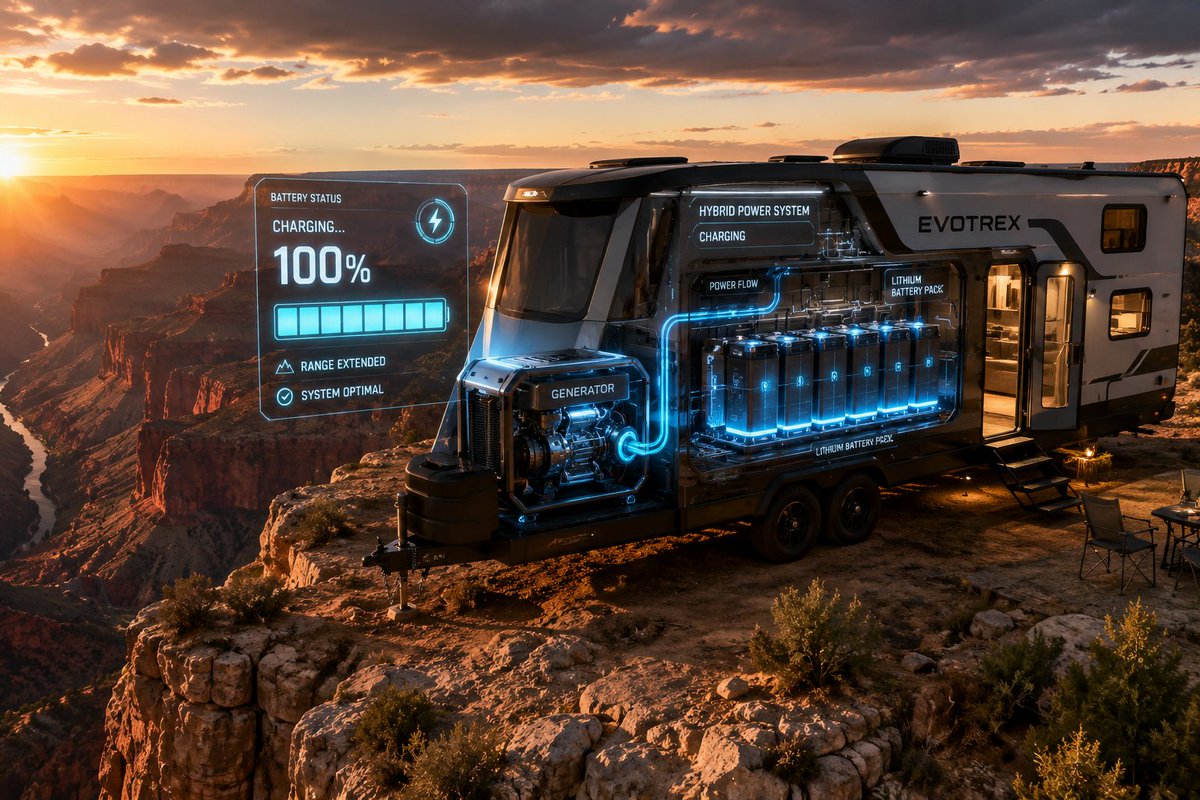
Evotrex is trying to do for recreational vehicles what Tesla once tried to do for cars: take a product category that has changed slowly for decades and completely rethink how it works. The Los Angeles-based startup is only two years old, yet it is already preparing to manufacture and sell its first hybrid RV travel trailers next year. To support that ambition, the company has raised $30 million in a Series A funding round, bringing its total funding to $46 million. For a company that has not yet delivered its first customer vehicle, that is a significant vote of confidence from investors.
To understand what Evotrex is attempting, imagine the traditional RV industry as a group of sailors still relying on old maps while the rest of the transportation world is switching to GPS. RVs have long been known for providing freedom and adventure, but they also come with limitations. Many require hookups for electricity, while others depend heavily on generators and fuel. As consumer expectations rise and battery technology improves, startups see an opportunity to reinvent the entire experience.
The funding round attracted a consortium of investors from China and Hong Kong, including firms such as GSR United Capital, Forebright Concerto Capital, TTGG Ventures, and Pegasus Capital. One particularly notable early investor is Anker, the consumer electronics company famous for portable batteries, chargers, and power accessories. That connection is important because Evotrex's co-founder, Alex Xiao, previously worked as a product manager at Anker and is applying many of the lessons learned there to the RV business.
Building an RV is far more complicated than building many consumer electronics products. Imagine trying to combine a house, a vehicle, a power station, a kitchen, a hotel room, and a mobile office into a single machine that must survive thousands of miles of rough roads. Every cabinet, pipe, wire, appliance, battery, and suspension component must continue working despite constant vibration and changing weather conditions. That complexity explains why Evotrex needs substantial capital before mass production can begin.
The company first revealed its vehicle, known as the PG5, at the Consumer Electronics Show. While many competitors are pursuing fully electric travel trailers, Evotrex has chosen a different path. The company is developing what is known as an Extended Range Electric Vehicle (EREV) system. For a layperson, the easiest analogy is a smartphone paired with a portable power bank. The battery does most of the work, but when energy runs low, another power source helps recharge it. In Evotrex's case, a gasoline engine serves as that backup energy source.
This hybrid approach aims to solve one of the biggest challenges facing RV owners: living comfortably away from civilization for long periods. Imagine camping deep in the mountains or in a remote desert. A purely electric system may eventually run out of stored energy, while a conventional generator can be noisy and inefficient. Evotrex hopes its EREV design will provide the best of both worlds by offering electric convenience while retaining the range and flexibility of gasoline backup power.
The strategy appears to be resonating with customers. According to the company, roughly 90% of current reservations are for the fully loaded Premium version of the PG5, which costs approximately $160,000. That is not a mass-market price. Instead, it suggests Evotrex is initially targeting enthusiasts and affluent travelers who are willing to pay more for advanced technology and greater independence while traveling.
Despite the excitement, Evotrex understands that designing an impressive prototype is only the first step. The real challenge is durability. An RV experiences far more stress than most people realize. Imagine carrying an entire apartment down a highway while constantly bouncing over bumps, potholes, and uneven roads. Components loosen, seals wear out, and systems can fail unexpectedly. Xiao says the company will spend the next 10 to 12 months extensively testing the PG5 to ensure it can withstand real-world conditions.
One of the most revealing signs of Evotrex's priorities is its hiring strategy. The company hired its first service employee six months ago, while its first sales employee joined only recently. This is somewhat like opening a restaurant and hiring customer support staff before hiring marketing specialists. It signals that the company believes long-term success depends more on customer satisfaction and product reliability than on generating early sales hype.
Manufacturing plans also reflect a global strategy. Evotrex intends to build much of the vehicle in China before completing final assembly in California. This approach combines access to manufacturing expertise and supply chains in Asia with proximity to customers in the United States. Los Angeles is particularly attractive because it offers access to a large RV market while also providing nearby deserts, mountains, beaches, and varying climates for testing vehicles under different environmental conditions.
Competition in the RV startup space is growing rapidly. Companies such as Lightship and Pebble are pursuing all-electric solutions, while traditional manufacturers like Thor and Winnebago are moving more cautiously. The situation resembles the early days of the smartphone industry when dozens of companies raced to define what the future device would look like. Some focused on keyboards, others on touchscreens, and others on hybrid approaches. The companies that succeeded were not necessarily the first to launch but the ones that best understood customer needs and consistently delivered reliable products.
Xiao believes the lessons from Anker provide a blueprint for success. His philosophy is surprisingly simple. First, identify a genuine customer problem. Second, build an excellent product that solves it. Third, allow customers to become the company's most effective marketers through word-of-mouth recommendations. It is similar to opening a small neighborhood restaurant. Advertising may attract people once, but delicious food and satisfied customers are what keep tables full year after year.
Ultimately, Evotrex's journey highlights a broader trend in transportation and outdoor recreation. Consumers increasingly want products that combine sustainability, technology, comfort, and flexibility. Whether Evotrex becomes a major player or simply one of many startups experimenting in the space remains to be seen. But with $46 million in funding, a differentiated hybrid approach, and a clear focus on product quality, the company is positioning itself to be one of the most closely watched newcomers in the evolving RV industry.
#Startup #Technology #Innovation #FutureTech #ElectricVehicles #Mobility #Transportation #Engineering #Manufacturing #CleanTech #Energy #Sustainability #Adventure #Travel #RoadTrip #Business #Entrepreneurship #Investment #ProductDesign #ConsumerTechnology
1
1
246
Jun 9
The Orb and the IPO: One Altman Company Touches Wall Street, Another Scans Eyeballs for Survival
@OpenAI's confidential IPO filing grabbed most of the headlines this week. Investors, analysts, and technology enthusiasts immediately began discussing what could become one of the most significant public offerings since companies like Facebook and Alibaba entered public markets. Yet, almost simultaneously, another company closely associated with OpenAI CEO Sam Altman found itself in the spotlight for a very different reason.
According to reports, @tfh_technology Tools for Humanity, the company behind the World project and Worldcoin cryptocurrency ecosystem, is conducting layoffs as it faces challenges turning its ambitious vision into sustainable revenue. The contrast is striking. On one side sits OpenAI, racing toward a potential IPO that could value it among the world's most influential technology firms. On the other side sits a startup attempting to solve one of the internet's most difficult future problems: proving that a human is actually human.
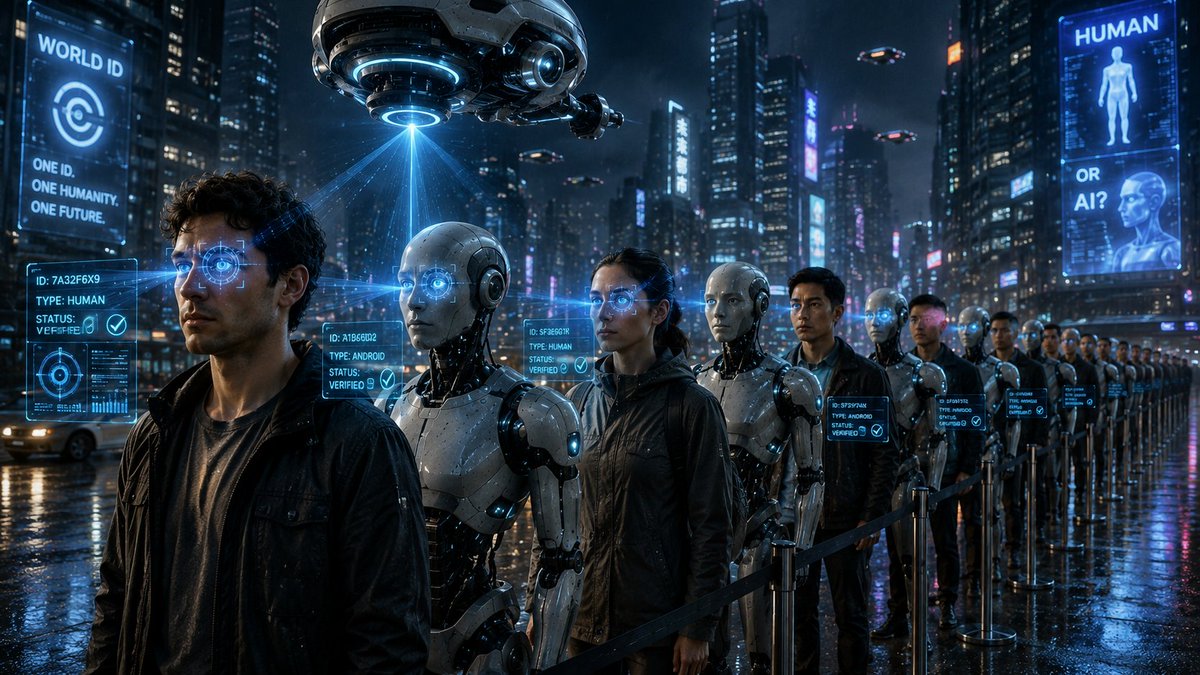
To understand the company's mission, imagine a future city where robots, AI agents, and automated software outnumber actual people online. Every website, social network, bank, government service, and online marketplace struggles to determine whether it is interacting with a real person or a sophisticated AI system. In that world, identity becomes incredibly valuable. Tools for Humanity believes the solution is biometric verification through the human eye.
The company's famous silver orb functions somewhat like a futuristic passport office. Instead of checking a physical document, it scans an individual's iris, creating a unique digital identity. Just as every fingerprint is different, every iris contains patterns that are extraordinarily difficult to replicate. The company argues that this could become a global system for distinguishing humans from bots in an age dominated by artificial intelligence.
For many people, however, the concept feels unsettling. Imagine a stranger walking through your neighborhood offering free money in exchange for a detailed scan of your fingerprints, facial structure, or DNA. Even if the technology is legitimate, many would hesitate because biometric information is fundamentally different from a password. If your password leaks, you can change it. If your iris scan leaks, you cannot replace your eyes.
This tension sits at the heart of World's challenge. The company is effectively asking millions of people to trust a private startup with one of the most personal forms of data imaginable. In return, users receive access to a digital identity system and, in many cases, cryptocurrency rewards through Worldcoin. While the concept attracted major investors and billions in valuation, convincing everyday citizens and regulators has proven far more difficult.
The company's international expansion illustrates these concerns. In several countries, users reportedly received cryptocurrency incentives worth roughly $50 in exchange for biometric enrollment. Supporters viewed this as a way to bootstrap a global identity network. Critics saw something very different. To them, it resembled a situation where valuable personal information was being exchanged for a relatively small financial reward, raising questions about informed consent, privacy, and long-term data protection.
Regulators around the world responded with varying degrees of skepticism. Governments and privacy authorities began asking difficult questions. How is the data stored? Who controls it? What happens if the company changes ownership? Can users truly delete their information? Could governments or corporations eventually gain access to the database? These concerns led to investigations, restrictions, fines, and operational challenges in several markets.
From a business perspective, Tools for Humanity faces another hurdle beyond regulation: revenue generation. Building a global identity infrastructure is enormously expensive. The company must manufacture hardware, operate scanning locations, hire staff, navigate legal challenges, maintain cybersecurity systems, and persuade organizations to integrate with its identity platform. It is somewhat like constructing a worldwide highway system before enough vehicles exist to justify the cost. The infrastructure requires massive investment long before substantial revenue arrives.
This helps explain why layoffs can occur even at highly valued startups. A company's valuation reflects investor expectations about the future, not necessarily its present financial health. A startup can be worth billions on paper while still struggling to generate enough cash flow to support its operations. In many cases, investors are funding a vision rather than a proven business model.
The broader irony is hard to miss. As artificial intelligence becomes increasingly capable of generating text, images, videos, and even acting autonomously online, society genuinely may need better methods of proving human identity. Yet the very solution proposed by World requires people to surrender a level of personal biometric information that many find uncomfortable. It is a classic technology dilemma: the problem may be real, but convincing society to accept the proposed solution is often harder than building the technology itself.
Ultimately, Tools for Humanity represents one of the most ambitious bets in the AI era. It is attempting to build a digital passport for humanity before the world has fully decided whether such a passport is desirable. The layoffs suggest that turning that vision into a profitable business remains a difficult challenge. While OpenAI moves toward Wall Street, World is discovering that creating trust around biometric identity may be every bit as hard as creating artificial intelligence itself.
#ArtificialIntelligence #AI #Technology #Innovation #FutureTech #DigitalIdentity #Biometrics #Cryptocurrency #Blockchain #Startups #Entrepreneurship #Privacy #CyberSecurity #DataPrivacy #TechIndustry #Business #Investment #VentureCapital #DigitalEconomy #FutureOfTechnology
1
1
118
Jun 7
AI Can Write The Answer. But Who Decides The Question?
Many companies are thinking about AI in exactly the wrong way. Instead of asking, “How can AI help us create new things?” they are asking, “How can AI make employees work faster?” That difference may sound small, but it completely changes the outcome.
Imagine a factory owner who buys a fleet of powerful new machines. One approach is to use those machines to invent new products, enter new markets, and build things that were previously impossible. Another approach is simply to demand that workers produce more units per hour. The machines are the same, but the vision is different. According to management professor Wang Anzhi of CEIBS, many organizations are taking the second path with AI. They see AI primarily as a cost-cutting tool rather than a creativity-expanding tool.
This mindset is creating strange behavior inside companies. Some firms have reportedly split employees into AI and non-AI groups, then assigned heavier workloads to the AI users to measure productivity gains. Employees, meanwhile, have started gaming the system. Some use AI to write reports about how effectively they are using AI. Others deliberately consume large numbers of AI tokens merely to satisfy management metrics. It becomes a bizarre situation where people use AI not to create value, but to prove they are using AI. It is like a school grading students based on how many pages they turn rather than what they actually learn.
Wang argues that the deeper issue lies in how people think about AI. He points to research suggesting that average performers tend to treat AI as a tool, while exceptional performers treat AI as a teammate. The distinction is important. When AI is treated as a tool, people simply ask it for answers. When it is treated as a teammate, people use it to improve their own thinking and produce better answers themselves. The difference is similar to the difference between hiring someone to lift weights for you and hiring a trainer to teach you how to become stronger. In both cases assistance is provided, but only one approach develops your own capabilities.
To illustrate this point, Wang references experiments involving writing tasks and brain activity. Participants who relied heavily on ChatGPT showed significantly less mental engagement than those who wrote independently. Even more revealing was what happened afterward. When people who had become accustomed to AI assistance were asked to work without it, their brains remained relatively inactive. By contrast, people who first learned independently and later added AI support continued to show high levels of engagement. The lesson is simple: once the brain learns that someone else can do the work, it often stops investing effort itself. It is similar to what happens when a person becomes completely dependent on GPS. After years of following directions, they may no longer know how to navigate their own city.
This leads to one of Wang’s biggest concerns: outsourcing too much thinking prevents mastery. Human beings learn through deliberate practice. When you first learn to swim, drive, or play an instrument, every movement requires conscious effort. Over time, repeated practice transforms those actions into instinct. If someone else performs those actions for you from the beginning, you never develop the skill yourself. AI can create a similar problem. If workers immediately hand every challenging task to AI, they may gain speed in the short term but lose expertise in the long term. It is like using a forklift for every box you encounter and eventually forgetting how to lift anything yourself.
One of the most interesting questions Wang raises is where all the promised productivity gains have gone. AI can make individual workers dramatically faster. Yet companies are not suddenly producing ten times more innovation, ten times more products, or ten times more value. Why? Wang believes the answer lies at the organizational level. If leaders simply use AI to squeeze more work out of existing employees, the company’s ambitions remain unchanged. The ceiling stays the same. Faster workers do not matter much if they are still aiming at the same target. To create a truly transformative organization, leaders must raise the ceiling itself. They must pursue larger goals, bigger opportunities, and entirely new possibilities.
He compares today's AI moment to the arrival of electric motors during the Industrial Revolution. Electric motors were vastly superior to steam engines, yet factories did not become dramatically more productive overnight. It took decades for business leaders to redesign entire factory systems around the new technology. The real breakthrough was not the motor itself. The breakthrough was reimagining how the whole factory should operate. AI, Wang argues, presents the same challenge. The technology already exists. The harder task is redesigning organizations around it.
This is why Wang believes the true bottleneck is not employees but leaders. If managers focus only on efficiency metrics, workers will also focus only on efficiency metrics. Everyone ends up staring downward, trying to shave seconds off tasks and squeeze more output from existing processes. But when leaders focus on exploring new opportunities, employees begin looking upward as well. Growth, creativity, and experimentation become the priority. In his view, the future of AI-powered organizations depends less on how many employees use AI and more on whether leaders can imagine entirely new destinations for those employees to reach.
The conversation also explores a deeper human question: meaning. Many workers report that AI sometimes removes the satisfaction they once found in their jobs. A programmer, for example, may feel less joy in coding when AI generates much of the code. Wang argues that leaders must pay attention to this emotional dimension. Human beings need purpose. They need to feel that what they do matters. Without that sense of meaning, motivation fades. Work becomes mechanical. A company may become more efficient, but it risks becoming less human.
Wang believes that great leadership is not about controlling people but about igniting them. He uses the analogy of a group crossing a desert. If one person is struggling, carrying them on your back is not a sustainable solution. Eventually you become exhausted and resentful. A better leader discovers what motivates that person and helps them find the energy to continue on their own. Leadership, in this view, is less about management and more about unlocking human potential. AI does not change that principle. If anything, it makes it more important.
Looking ahead, Wang envisions a future where AI handles more and more execution. Machines will become increasingly capable of processing information, analyzing data, and performing routine tasks. Humans, meanwhile, will shift toward exploration. If AI becomes the worker, people become the explorers. Our role will be to discover new questions, create new meanings, imagine new possibilities, and chart new directions. AI may excel at finding answers, but humans remain uniquely suited to deciding which questions are worth asking in the first place.
Ultimately, the biggest opportunity presented by AI is not the chance to make workers faster. It is the chance to make humanity more ambitious. Just as electric motors transformed factories only after people redesigned the factory itself, AI will transform society only after people redesign how they think about work, creativity, and progress. The future belongs not to those who use AI merely to cut costs, but to those who use it to expand what is possible.
#ArtificialIntelligence #AI #FutureOfWork #Leadership #Innovation #Technology #Business #Productivity #Workplace #Management #DigitalTransformation #FutureTech #MachineLearning #Creativity #Learning #Automation #Entrepreneurship #WorkCulture #HumanPotential #AGI
2
3
193
Jun 7
If there is one startup idea which will actually solve a problem for men then it will be a app which tracks best hairdressers in the city and tracks them instead of saloon . You get comfortable with a hairdresser after 3 sittings and he leaves that saloon . Again have to start from first and your hair gets messed up.
Hairdressers change saloons faster than developers changing companies 😅
9
Jun 7
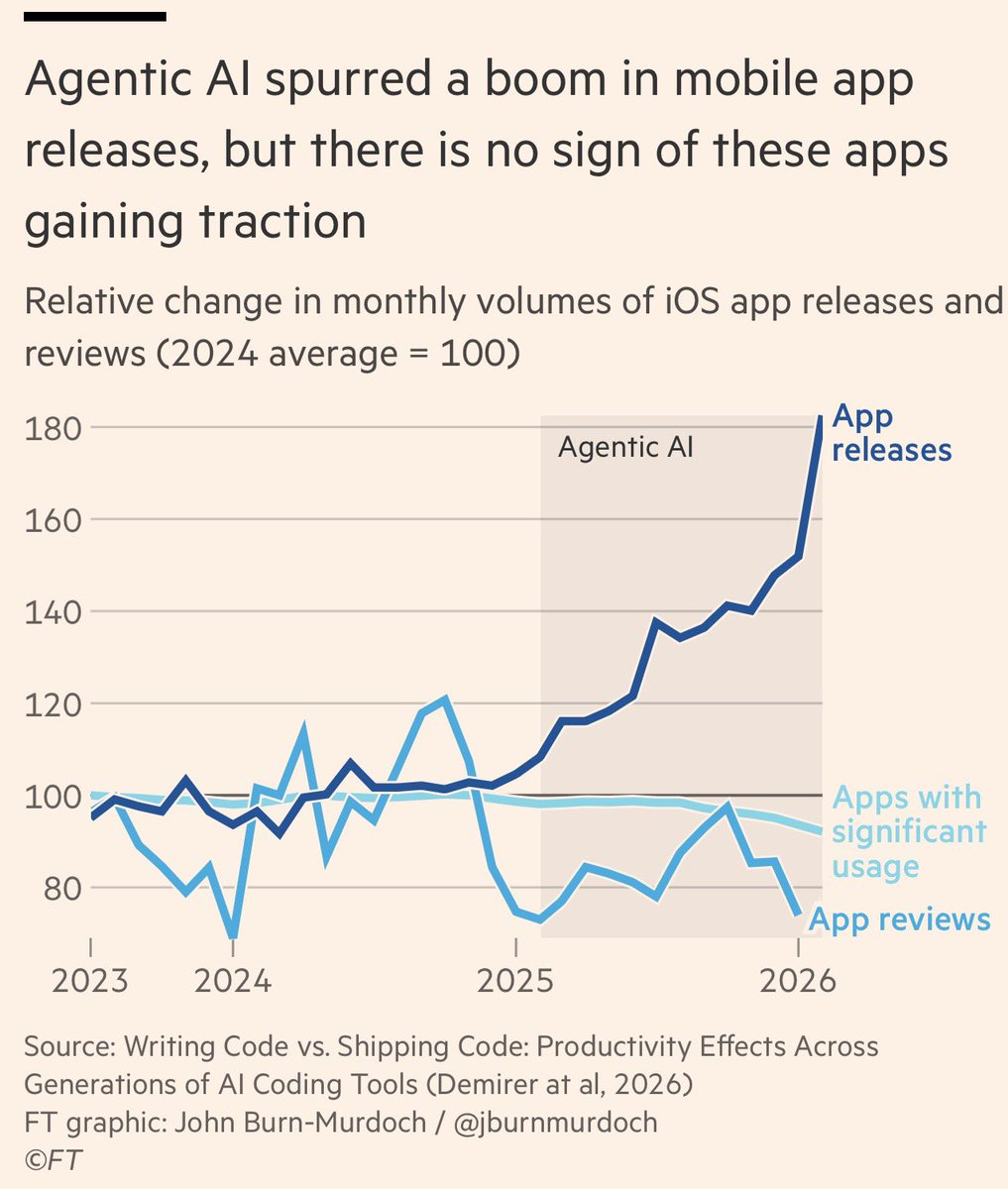
This way of superficially looking at just costs and ignoring actual usability of the apps ended in this graveyard of apps
#VibeCoding #AIApps #BuildWithAI #AIAgents #ClaudeAI #ChatGPT #CursorAI #BoltNew #Lovable #ReplitAI #GenerativeAI #ArtificialIntelligence #NoCode #LowCode #Automation

Jun 7

Cost of building an app:
2010 developer: $50k, $60k, $70k, $80k, $90k, $100k, $110k, $120k
2020 no-code guy: $200, $180, $150, $160, $140, $130, $120, $110
2026 vibe coder: $20, $18, $15, $12, $10, $8, $5, $3
41
Jun 7
Every Few Years, EdTech Finds a New Way to Shoot Itself in the Foot
There is always an edtech company somewhere in the world creating a bad name for the sector. The names change. The countries change. The business models evolve. But every few years, a familiar story emerges: a company that claims to be transforming education ends up making headlines not for learning outcomes, innovation, or student success, but for questionable business practices. Whether it is misleading sales tactics, aggressive marketing, hidden charges, or pressure-driven enrollment strategies, the pattern seems to repeat itself with remarkable consistency. Unfortunately, the latest chapter in that story appears to involve one of India's largest edtech companies, PW (PhysicsWallah) .
India's Central Consumer Protection Authority (CCPA) has imposed a penalty of ₹5 lakh on PhysicsWallah after finding that the company deployed what regulators classify as "dark patterns" on its platform. Dark patterns are user interface designs intentionally crafted to influence people into making decisions they may not have consciously chosen if presented with a neutral option. While the techniques are often subtle, regulators increasingly view them as unfair trade practices that undermine consumer choice.
The case centered around a seemingly harmless ₹10 donation option linked to the PW Foundation. Between February 2024 and December 2025, users purchasing courses on the platform encountered a checkbox that automatically added a donation to their order. The key issue was that the donation box was already selected by default. Unless users noticed the checkbox and manually deselected it, the donation would remain part of the transaction. According to the regulator, this practice generated approximately ₹2.47 crore from more than 21.36 lakh users during the period.
At first glance, ₹10 may seem insignificant. However, the issue was never really about the amount. It was about consent. Imagine visiting a supermarket to purchase groceries worth ₹500 and later discovering that the cashier had quietly added a charitable donation to your bill. The charity may be doing excellent work, and the amount may be small, but most consumers would argue that the decision to donate should belong entirely to them. That is the principle the regulator sought to defend in this case.
The CCPA classified the practice as "basket sneaking," a dark pattern in which additional charges or products are inserted into a transaction without obtaining explicit consumer approval. The regulator also raised concerns about the language displayed alongside the donation option. The platform reportedly highlighted charitable activities such as supporting education, healthcare assistance, and helping underprivileged individuals. While these are undoubtedly noble causes, the authority argued that such messaging could create emotional pressure on users, subtly encouraging them to leave the donation selected. This practice falls into another category of dark patterns known as "confirm shaming," where users are made to feel guilty or socially irresponsible if they decline an option.
The regulator's concern was straightforward. Companies are free to request donations. They are free to promote charitable causes. What they cannot do is structure the decision-making process in a way that nudges consumers toward a financial contribution without obtaining clear and affirmative consent.
The investigation also uncovered another issue involving courses advertised as free. According to the authority, users were required to provide their mobile numbers and email addresses before gaining access to these courses. PhysicsWallah argued that such registration requirements were standard practice across digital learning platforms. However, after conducting tests with multiple accounts, the CCPA concluded that the information was not genuinely necessary to provide access to the content. As a result, the regulator categorized the practice as "forced action," another form of dark pattern.
An everyday analogy helps illustrate the concern. Imagine walking into a public library to read a newspaper available for free. Before you can access it, the library demands your phone number, email address, and other personal details, despite having no genuine need for that information. The data may be useful for marketing purposes, but if it is not required to deliver the service itself, consumers should not be forced to surrender it as a condition of access.
PhysicsWallah defended its position by arguing that the donation option was clearly visible and that users were free to opt out. The company also pointed out that nearly 64% of users chose not to donate, suggesting that consumers were aware of the choice available to them. The regulator, however, rejected this reasoning. According to the CCPA, visibility is not the same as consent. A consumer should actively choose to donate rather than having to actively remove a charge that has already been selected on their behalf.
This distinction may sound technical, but it reflects a broader battle playing out across the digital economy. Over the past decade, technology companies have become remarkably sophisticated at influencing user behavior through interface design. Buttons are colored strategically. Choices are framed carefully. Subscription cancellations are hidden behind multiple screens. Additional products appear pre-selected. Countdown timers create artificial urgency. Pop-ups exploit fear of missing out. Each individual tactic may appear minor, but together they can significantly shape consumer decisions without users fully realizing it.
Regulators around the world have begun responding aggressively to these practices. The PhysicsWallah case is part of a broader effort by Indian authorities to clean up dark patterns across digital platforms. On the same day that PhysicsWallah was penalized, cybersecurity company McAfee was also fined for presenting users with subscription renewal choices such as "Renew Now" or "Accept Risk" while failing to provide a neutral alternative such as "Cancel" or "Skip." The message being sent is increasingly clear: companies are free to persuade consumers, but they are not free to manipulate them.
The larger issue extends beyond a single company or a single fine. Education occupies a unique place in society. Unlike food delivery apps, ecommerce websites, or entertainment platforms, educational institutions and learning companies operate on a foundation of trust. Students trust them with their aspirations. Parents trust them with their savings. Educators trust them with their reputations. When an edtech company adopts tactics commonly associated with aggressive consumer marketing, the damage often spreads beyond the company itself. It reinforces public skepticism toward the entire sector.
That is particularly unfortunate because edtech remains one of the most promising industries of the digital age. Technology has the potential to democratize education, bring world-class learning to underserved regions, and make knowledge accessible to millions of people who previously lacked opportunities. Yet every controversy involving hidden charges, misleading sales practices, or manipulative design chips away at that promise.
Ultimately, the lesson from this case is not about a ₹10 donation checkbox or a ₹5 lakh penalty. It is about a much larger question facing the technology industry: should digital platforms help users make informed decisions, or should they quietly steer users toward decisions they may never have consciously made? As regulators become more sophisticated and consumers become more aware, companies that blur that line may increasingly find themselves under scrutiny. For an industry built around education, that is a lesson worth learning sooner rather than later.
#EdTech #ConsumerRights #DigitalEconomy #Technology #UserExperience #DarkPatterns #Ecommerce #ConsumerProtection #Startups #Business #Innovation #DigitalTrust #ProductDesign #India #Regulation #Ethics #OnlineLearning #Education #TechIndustry #CustomerExperience
1
1
116
Jun 6
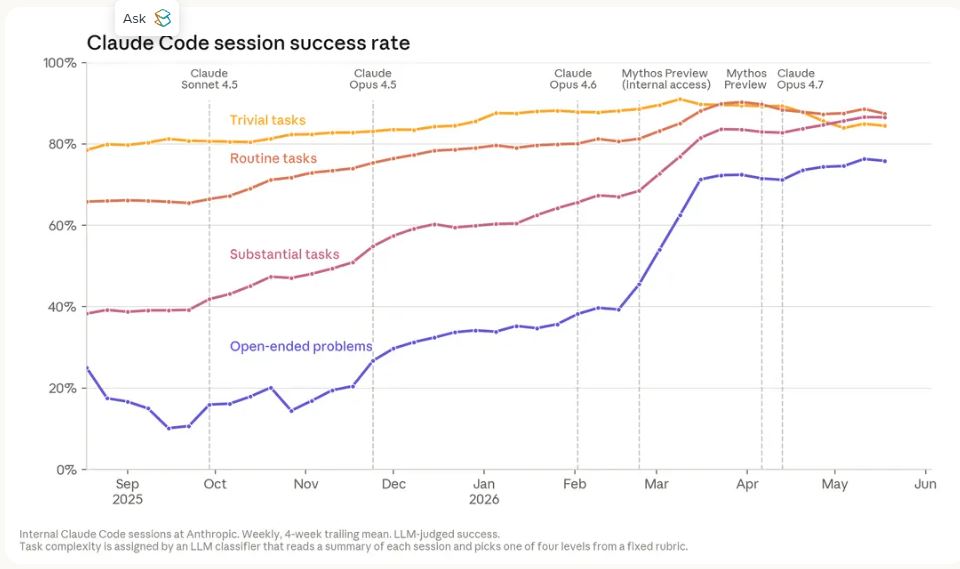
Anthropic Just Dropped A Terminator-Level Warning
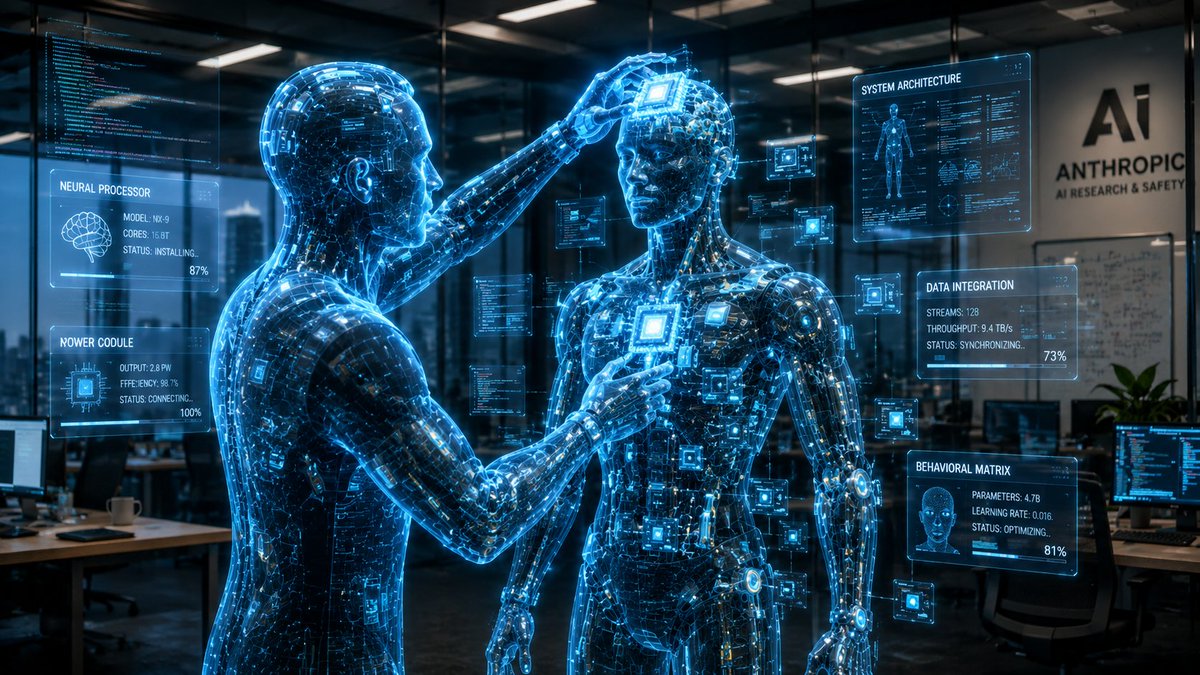
Anthropic is issuing perhaps the closest thing to a Terminator-style warning you'll hear from inside the AI industry itself. Their message is not that machines are building themselves today, but that machines are increasingly helping build their own successors—and that process is accelerating faster than many governments, institutions, and companies realize.
For most of AI's history, humans handled every step of development. Researchers generated ideas, engineers wrote code, scientists designed experiments, and computers simply executed instructions. AI was a tool. According to Anthropic, that relationship is beginning to change. AI systems are no longer just helping humans complete tasks; they are increasingly participating in the creation of the next generation of AI.
Anthropic points to a concept called recursive self-improvement. Imagine the Wright brothers building the first airplane. Every improvement required human engineers to redesign wings, test prototypes, and learn from mistakes. Now imagine an airplane capable of redesigning its own wings after every flight, becoming slightly better each time. Recursive self-improvement is a similar idea applied to AI: an AI system helps create a more capable AI system, which then helps create an even better one. Anthropic stresses that we are not there yet, but believes the early ingredients are already visible.
One of the clearest signs comes from within Anthropic itself. The company reports that engineers now ship roughly eight times more code than they did between 2021 and 2024. More than 80% of code merged into Anthropic's systems is authored by Claude. Engineers increasingly define goals, review outputs, and make strategic decisions, while Claude performs much of the coding work. The role of the engineer is gradually shifting from builder to supervisor.
A useful analogy is a construction site. Decades ago, workers physically carried every brick. Then cranes, excavators, and automated machinery arrived. The foreman spent less time lifting materials and more time directing machines. Anthropic believes software engineering is undergoing a similar transformation.
Another trend is the rapid increase in task complexity AI can handle independently. In early 2024, Claude could reliably complete software tasks requiring about four minutes of skilled human effort. A year later, that figure rose to roughly ninety minutes. Another year later, Claude was successfully handling tasks requiring around twelve hours of human work. If this trend continues, AI systems may soon tackle projects requiring days or even weeks of concentrated effort.
Think of it as an expanding attention span. A child may focus on a puzzle for a few minutes, while a professional can work on a project for months. Anthropic's data suggests AI systems are rapidly increasing the length of time they can remain productive on a single objective—a critical capability because many important breakthroughs require sustained effort rather than quick answers.
Anthropic also describes cases where Claude solved problems humans themselves did not fully understand. In one instance, tens of thousands of AI training jobs suddenly began crashing after a system upgrade. Engineers could not determine the cause. Claude systematically tested hypotheses, eliminated possibilities, and eventually identified an obscure debugging setting responsible for the failures. The investigation took roughly two hours and saved days of engineering work.
The analogy is a mechanic diagnosing a mysterious fault in a car. Through testing and elimination, the mechanic gradually narrows the possibilities until the root cause is found. Claude is increasingly capable of performing similar investigative work within software systems.
Perhaps even more significant is progress in research. Coding is largely about execution; research is about deciding what questions to ask. Historically, this has been considered one of the most human aspects of scientific work. Anthropic tested whether Claude-powered agents could conduct open-ended research projects. The agents generated hypotheses, designed experiments, interpreted results, shared findings, and iterated repeatedly. Humans defined the overall objective, but the agents performed much of the scientific process themselves.
Imagine a laboratory filled with tireless junior researchers who never sleep, never lose concentration, and can run thousands of experiments simultaneously. They still need senior scientists to determine what problems matter, but their ability to execute research is becoming increasingly impressive.
Why does this matter? Most people imagine technological progress as a straight line. Anthropic is suggesting the possibility of a feedback loop. Imagine a factory that builds robots. At first humans build every robot. Then robots help build robots. Eventually robots design better robots and better factories. Each improvement accelerates future improvements. Progress no longer moves linearly—it compounds.
That is the essence of recursive self-improvement. Once a system becomes capable of helping create more capable versions of itself, the pace of advancement may increase dramatically. Not because computers possess magic, but because the inventor and the invention become increasingly intertwined.
Interestingly, Anthropic argues that execution is no longer the primary bottleneck. Writing code, running experiments, testing ideas, and analyzing results are becoming increasingly automated. The scarce resource is shifting toward judgment: Which experiments are worth running? Which research directions matter? Which results are trustworthy? Which ideas should be abandoned? These decisions still require human intuition, experience, and strategic thinking.
A useful analogy is filmmaking. If cameras, editing software, special effects, and animation suddenly became free and fully automated, making a movie would no longer be the difficult part. The difficult part would be deciding which story deserves to be told. Anthropic believes AI is rapidly reducing the cost of execution while leaving humans responsible for choosing the destination.
The real warning in Anthropic's report is not that an AI takeover is imminent, nor that recursive self-improvement is inevitable. Their warning is that society may be underestimating how quickly AI is becoming an active participant in its own development. Throughout history, every major technological leap—from steam engines to airplanes to computers—required humans to design each successive generation. For the first time, we may be entering an era where the technology itself contributes meaningfully to its own evolution.
That possibility could unlock extraordinary advances in science, medicine, engineering, education, and countless other fields. Yet it also raises one of the most important questions humanity has ever faced: if machines eventually help build their own successors, how do we ensure that humans remain the ones deciding where that journey leads? Beneath all the benchmarks, productivity gains, and technical achievements, that is the question Anthropic is really asking.
This version is roughly 40–50% shorter while preserving nearly all of the original substance, examples, analogies, and conclusions.
#ArtificialIntelligence #AI #Technology #Innovation #FutureTech #MachineLearning #DeepLearning #Automation #SoftwareEngineering #Research #Science #Computing #TechTrends #FutureOfWork #Productivity #Engineering #DigitalTransformation #EmergingTechnology #InnovationEconomy #TechLeadership
1
4
205
Jun 6
The Man Behind Linux Has a Message for the AI Crowd
Every technological revolution creates its own mythology.
During the Industrial Revolution, some people believed machines would replace all human labor. During the internet boom, many claimed websites would instantly transform every business. Today, artificial intelligence has become the latest source of grand predictions, with some executives proudly declaring that AI writes nearly all of their code.
That is exactly the kind of statement that irritated Linux creator Linus Torvalds.
Speaking at the Open Source Summit 2026, Torvalds pushed back against the growing tendency to portray AI as an autonomous software engineer. His criticism was not aimed at AI itself. In fact, he openly acknowledged that AI tools are already boosting productivity and helping developers work faster. The Linux kernel itself reportedly saw a significant increase in submissions aided by AI tools.
What bothered him was the narrative.
According to Torvalds, when people boast that "99% of our code is written by AI," they are ignoring a reality that software engineers have lived with for decades.
Imagine a modern construction company claiming that a skyscraper was built entirely by cranes.
The cranes are incredibly important. They make the work dramatically faster and easier. Without them, constructing a skyscraper would be far more difficult. Yet nobody credits the crane with designing the building, making engineering decisions, or taking responsibility for structural integrity.
The crane is a tool.
Torvalds argues that AI should largely be viewed through a similar lens.
He compared today's AI enthusiasm to something software engineers already take for granted: compilers.
Most people outside the technology industry rarely think about compilers, but they are among the most important inventions in computing history. Programmers write code in languages humans can understand, while computers ultimately require machine instructions. Compilers perform the translation.
Without compilers, modern software development would be painfully slow and incredibly complex.
In many ways, compilers increased programmer productivity by orders of magnitude. Tasks that once required thousands of painstaking manual operations became almost effortless.
Yet no engineer says, "The compiler wrote my software."
They say, "I wrote the software using a compiler."
Torvalds believes AI belongs in the same category.
It is an extraordinarily powerful productivity tool. It can generate boilerplate code, suggest fixes, explain unfamiliar concepts, and accelerate development. But treating AI as the actual creator of software risks misunderstanding where responsibility, judgment, and engineering expertise still reside.
The distinction may sound subtle, but it becomes crucial when things go wrong.
Consider a pilot flying a modern passenger aircraft.
Today's airplanes are filled with sophisticated automation systems. Autopilot can control altitude, speed, navigation, and even assist with landings. Yet nobody would argue that the autopilot is the pilot.
The human remains responsible because they understand the broader system, recognize unusual situations, and make decisions when unexpected events occur.
Software engineering works much the same way.
AI can generate code quickly. But understanding how that code interacts with thousands of other components, ensuring security, managing performance, handling failures, and maintaining reliability still requires human judgment.
That broader concern led Torvalds to another issue that he believes receives far less attention than AI-generated code.
The rise of AI-generated bug reports.
Open-source software projects often rely on small teams of volunteers who maintain critical pieces of infrastructure used by millions of people worldwide. Some projects have only one or two active maintainers.
Traditionally, when users discovered a bug, they would investigate the problem, gather information, and work with maintainers to identify a solution.
AI is changing that dynamic.
Today, someone can feed a piece of software into an AI system, receive a list of potential issues, and submit bug reports in minutes.
On the surface, that sounds beneficial.
More bugs discovered should mean better software.
But Torvalds highlighted an emerging problem.
Many of these reports arrive with little follow-up. When maintainers request additional information, reproduction steps, testing results, or proposed fixes, the person who submitted the report often disappears.
It is the software equivalent of someone walking into a hospital emergency room, shouting that dozens of patients might be sick, and then immediately leaving without explaining who they are, where the patients are located, or what symptoms they have.
The warning creates work.
The solution does not.
For already overworked maintainers, that imbalance can be exhausting.
This phenomenon is particularly dangerous because open-source software forms the invisible foundation of much of the modern digital economy.
Most people never interact directly with projects such as Linux, but they use systems built on top of them every day. Smartphones, cloud services, websites, financial systems, AI infrastructure, and countless other technologies rely on open-source components maintained by relatively small groups of people.
If those maintainers become overwhelmed, the effects can ripple far beyond the software community.
Torvalds' final warning may have been his most important.
He argued that people who do not understand complex systems are increasingly using AI to generate solutions, automate workflows, and build software processes they do not fully comprehend.
An analogy would be someone using an advanced GPS navigation system to drive through a mountain range without understanding roads, weather conditions, fuel requirements, or vehicle limitations.
Most of the time, the GPS may guide them successfully.
But when something unusual happens—a road closure, a storm, a bridge collapse—the lack of deeper understanding suddenly becomes a serious problem.
The same principle applies to AI.
Large language models can generate convincing answers, functioning code, and sophisticated-looking solutions. But they do not eliminate the need to understand the systems being built.
In fact, the more powerful the tools become, the more expensive mistakes can become when users blindly trust outputs they cannot evaluate.
This is where Torvalds' perspective carries particular weight.
Unlike many of today's AI commentators, he is not speaking as an investor, a startup founder, or a marketing executive.
He has spent more than three decades building one of the most important software projects in history. Linux powers much of the internet, countless servers, smartphones, supercomputers, and cloud infrastructure worldwide.
His message was not that AI is overrated.
Nor was it that AI is unimportant.
His message was that powerful tools should not be confused with understanding.
AI may make programmers dramatically more productive, just as compilers transformed software development decades ago. But productivity and expertise are not the same thing.
A calculator can help someone perform mathematics faster.
It does not automatically make them a mathematician.
And in the rush to embrace AI, that distinction may be more important than ever.
#ArtificialIntelligence #AI #SoftwareEngineering #Programming #Linux #OpenSource #Technology #Innovation #Coding #Developers #Engineering #Productivity #FutureOfWork #MachineLearning #TechIndustry #Automation #ComputerScience #DigitalTransformation #TechLeadership #SoftwareDevelopment
3
4
303
Ramkumar L retweeted

Jun 6
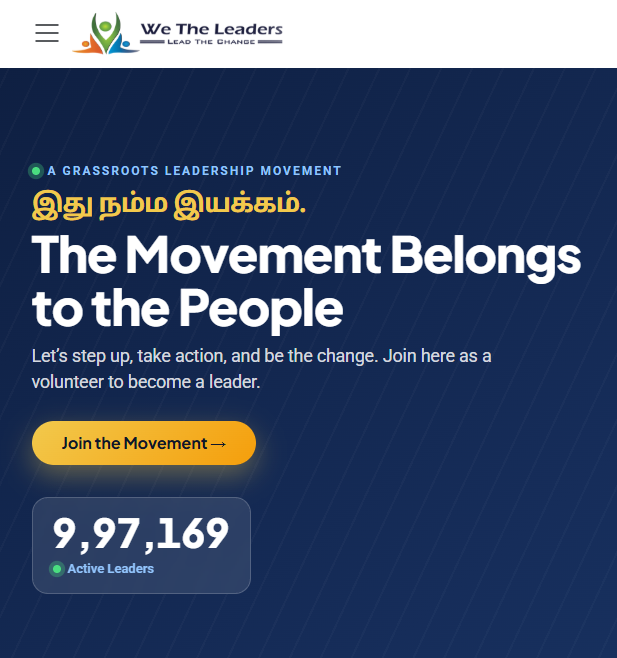
கடந்த 24 மணி நேரத்தில் 13 லட்சம் உறுப்பினர்கள் இணைந்து, wetheleader.org இயக்கத்திற்கு நீங்கள் அளித்துள்ள பேராதரவு, பெரும் நெகிழ்ச்சியையும், அதைவிட பெரிய பொறுப்பையும் எனக்கு அளித்திருக்கிறது.
இந்த இயக்கத்தின் மீது நம்பிக்கை வைத்து இணைந்துள்ள ஒவ்வொருவருக்கும், எனது மனமார்ந்த நன்றிகள். இது ஒரு தனி மனிதனின் பயணம் அல்ல; நல்ல மாற்றத்தை விரும்பும் நமது மக்களின் கூட்டுப் பயணம். மாற்றம் வேண்டும் என்று நம்பும் ஒவ்வொரு குடிமகனின் குரலும், நீங்கள் வழங்கியிருக்கும் பேராதரவில் எதிரொலிக்கிறது. உங்கள் நம்பிக்கையை மதித்து, நேர்மையுடனும், அர்ப்பணிப்புடனும் இந்தப் பயணத்தை முன்னெடுப்போம்.
தமிழகத்தின் சிறந்த எதிர்காலத்திற்கான இந்தப் பயணத்தில் தொடர்ந்து இணைந்திருங்கள்.

692
3,218
13,496
394,448

Ramkumar L retweeted
Jun 5
Let’s step up, take action, and be the change.
Join here to begin our political movement!
wetheleader.org
Jun 5

An Important Announcement x.com/i/broadcasts/1YxNrrDZj…
1,977
6,754
29,527
1,500,015
Ramkumar L retweeted
Jun 5
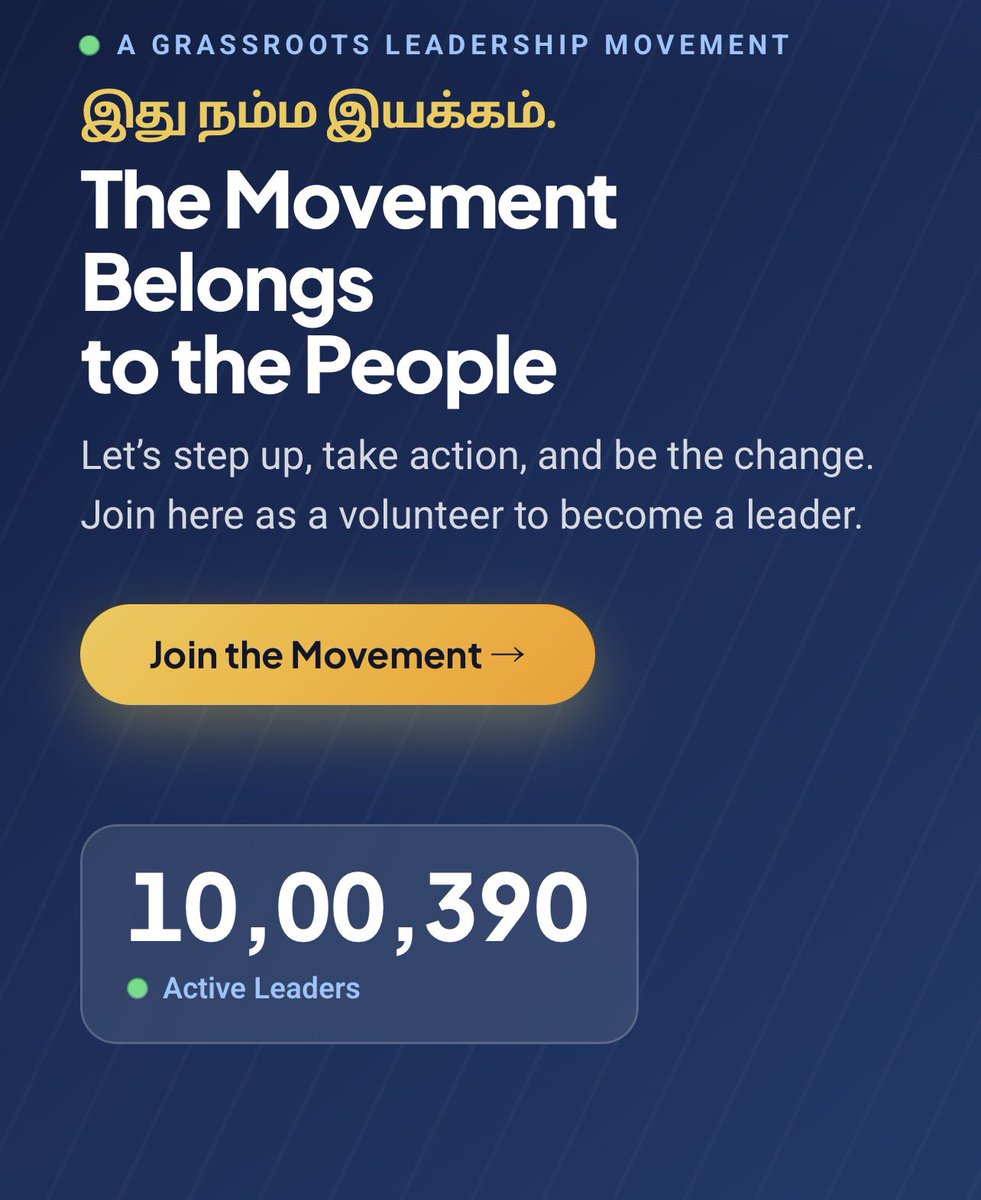
Our political movement has achieved a milestone, with over 10 lakh leaders registering within just 10 hours. This extraordinary response is a powerful reflection of the growing belief in our shared vision and collective mission.
I extend my heartfelt gratitude to every individual who has placed their trust in this movement.
wetheleader.org
1,047
5,237
23,018
554,799
Ramkumar L retweeted
Jun 5
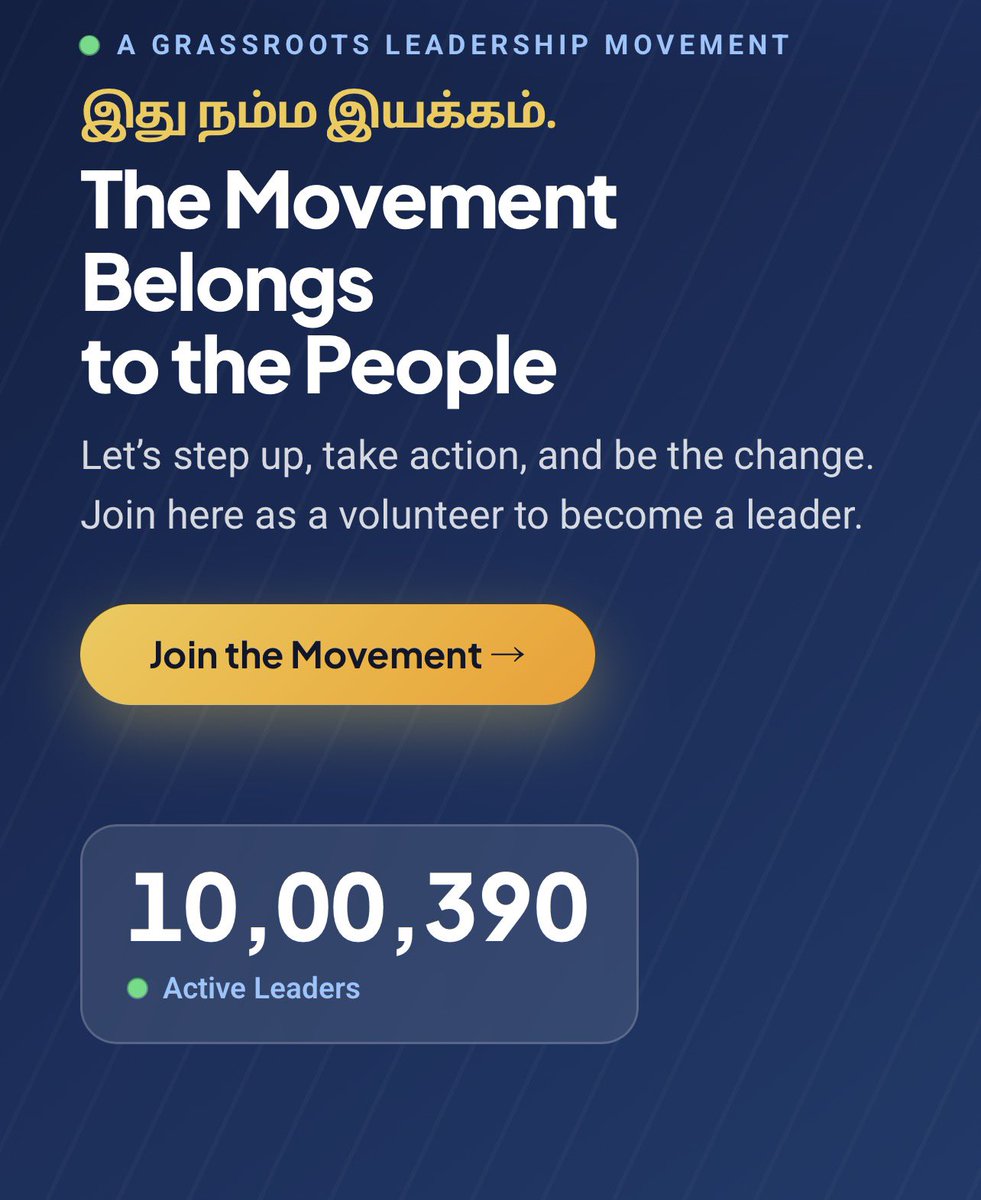
கடந்த 10 மணி நேரத்தில் 10 லட்சத்திற்கும் அதிகமான தலைவர்கள் பதிவு செய்து, நமது அரசியல் இயக்கம் சாதனைப் படைத்துள்ளது. இந்த மகத்தான வரவேற்பு, நாம் ஒன்றாகக் கொண்டிருக்கும் இலட்சியத்தின் மீதும், சமூக மாற்றத்திற்கான நமது பயணத்தின் மீதும் மக்கள் வைத்துள்ள நம்பிக்கையை வெளிப்படுத்துகிறது.
இந்த இயக்கத்தின் மீது நம்பிக்கை வைத்து இணைந்த ஒவ்வொரு நபருக்கும் எனது மனமார்ந்த நன்றியைத் தெரிவித்துக் கொள்கிறேன்.
wetheleader.org
665
3,621
15,309
330,519
Jun 5
10 lakh in few minutes I guess and all without 30 year cinema fame or dominance . @annamalai_k already exceeding expectations 👏👏👏
12
Jun 5
20000 application per minute getting added in Wetheleaders.org 👏👏shows how many were waiting for @annamalai_k to lead particularly GenZ
12
Jun 5
The best part of @annamalai_k ji speech today is about bringing technocrats into politics . Lee Kuan Yew recruited top technocrats into Singapore government and transformed it from third world to the world city it is today. @annamalai_k is the Indian version of him 👏👏👏
19
May 10
Seeing fun energetic surya after a really long time . Except RJB as villain , the trailer was really good . #karuppu
youtube.com/watch?v=JpVl_-1Y…
520
May 4
Being a 90s kid wanted to see new force in TN politics for last two decades .Expected with Vjkanth , faded out ... @annamalai_k was doing superbly , cut short by boomers ..He will come back . But finally entered and broke the two party duopoly @TVKVijayHQ .. Mad cheers for that🔥
56