
public affairs @PensionBee | cofounder @goodmoneygirl | Pensions Doctor @Telegraph | #money journalist | author #ESG | lately, #longcovid #longcovidkids
Joined December 2008
- Tweets 10,401
- Following 4,435
- Followers 4,663
- Likes 18,399
199 Photos and videos










Pinned Tweet

3 Jan 2023
Happy New Year! And so excited to kick things off with some personal news. I start today as director of public affairs at @pensionbee. Couldn't be happier and just can't wait to get going 🥳
23
3
104
28,359
Rebecca O'Connor retweeted

Yahoo News UK: 'Penrith couple share reality of living with ME at Parliament'
A Cumbrian couple are calling for greater recognition and support for those living with complex long-term health conditions
uk.news.yahoo.com/penrith-co…
5
15
269
Rebecca O'Connor retweeted

NINDS is funding the FIRST EVER research into the role of toxic mold in ME/CFS
S/o to the scientists & advocates who ignored this for decades, I hope you find righteousness in knowing that patients who rotted while pleading for this were angry & uncouth
reporter.nih.gov/search/5w7x…
1
7
20
1,087
Rebecca O'Connor retweeted

Long COVID & ME/CFS teilen oft denselben autonomen Phänotyp – 92% reduzierter zerebrovaskulärer Blutfluss, 95% autonome Dysfunktion. Das sind KEINE psychischen Erkrankungen. Das sind messbare, neurologische Befunde. #MECFS #LongCovid #POTS
pubmed.ncbi.nlm.nih.gov/4157…
11
129
434
12,559
Rebecca O'Connor retweeted

May 30
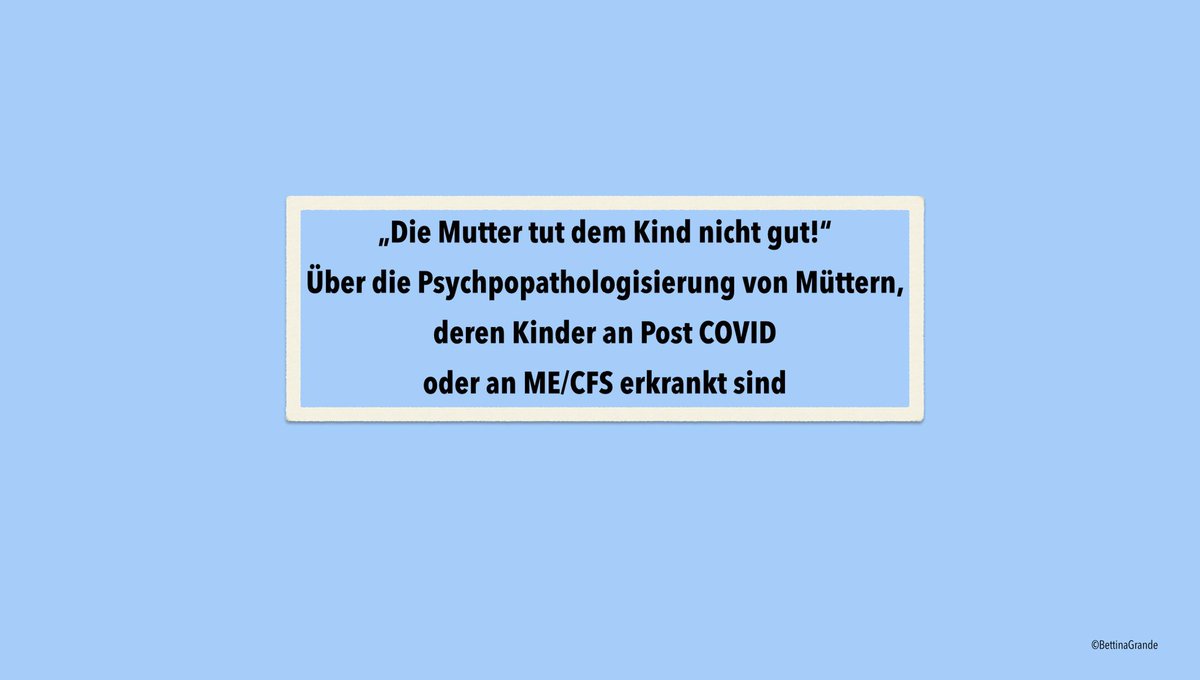
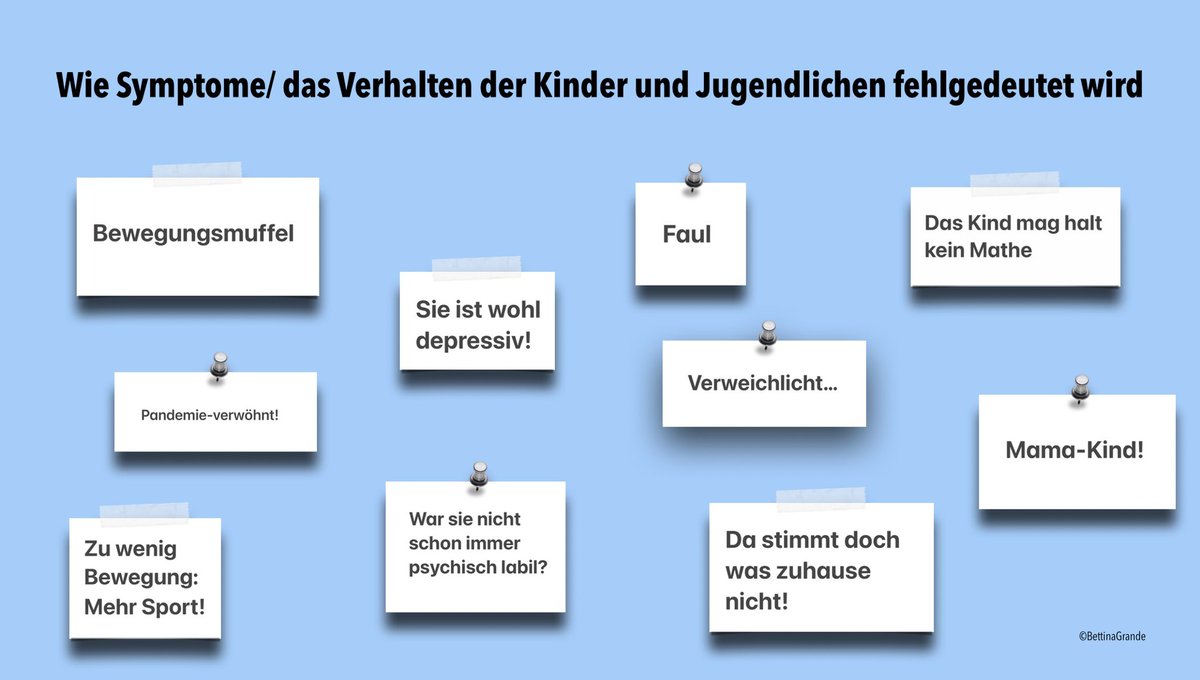
Statt medizinischer Unterstützung Münchhausen by Proxy Verdacht:
Das Leid und Unrecht,
das Eltern und ihren an #MECFS #PEM erkrankten Kindern durch Unkenntnis, Psychologisierung
und sogar Inobhutnahme widerfährt, ist ungeheuerlich.
@BMG_Bund, @ninawarken:
Aufklärung jetzt!
9
109
297
4,972
May 27
I have authored a report for @pensionbee on the impact of disability - esp youth disability - on long term finances and the ability to build a decent pension against the odds. It's called 'Sick, Tired and Never Retired?' pensionbee.com/uk/press/youn… - let me know what you think
1
2
6
179
Rebecca O'Connor retweeted

This is actually a great way to explain ME to people. Absurdist comedy!

Brilliant. Credit to themsbloke. Nice to see someone with another illness advocate for ME.
21
108
5,019
Rebecca O'Connor retweeted

May 12
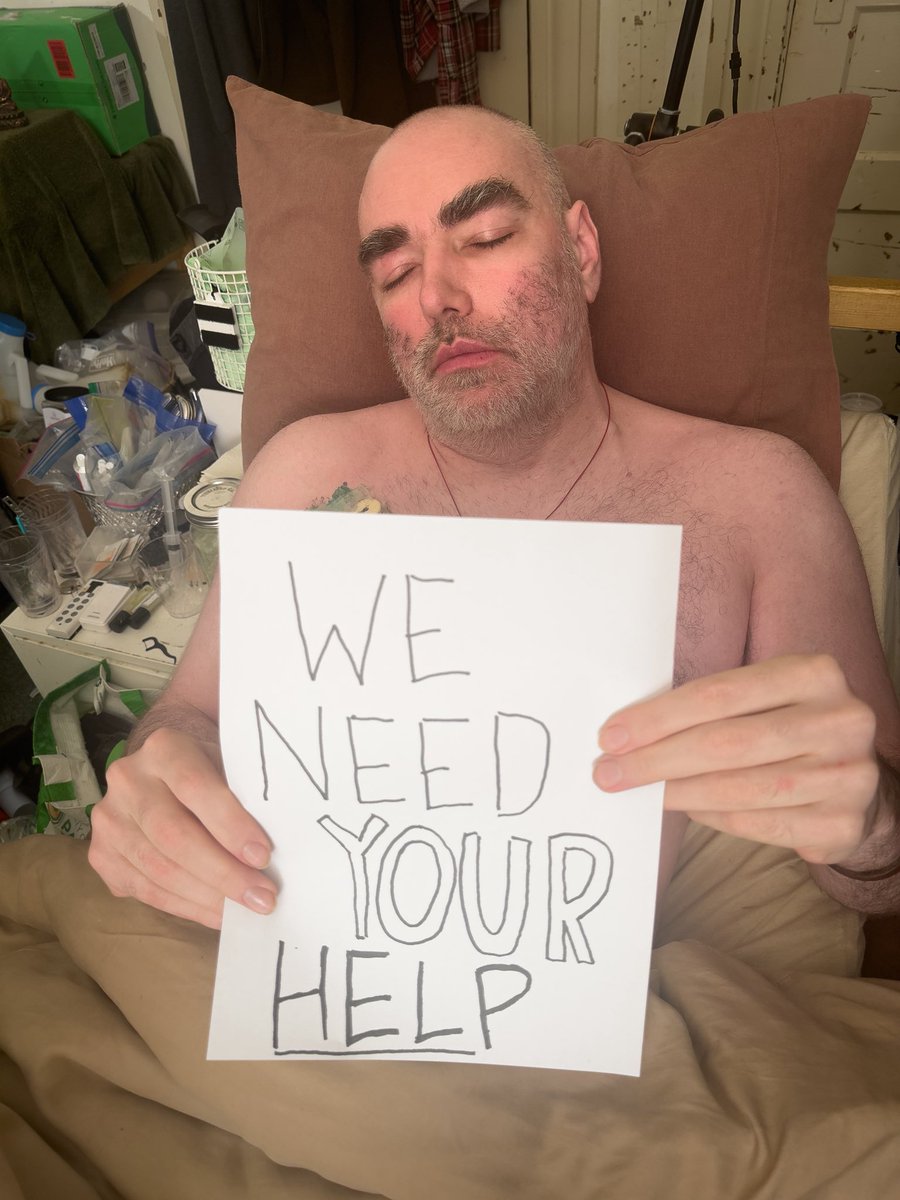
We Need Your Help
Imagine starving to death and being allergic to all food. And everyday trying to decide between starvation and a deathly allergic reaction. ME/CFS is like an allergy to energy expenditure. Imagine everyday trying to decide between doing something that makes you feel alive or deathly sickness. The more you do, the less alive you feel. And the less you do, the less alive you feel. And the more you do, the less you are physically capable of doing. That is ME/CFS. Everyday. For decades.
But if you don’t have ME/CFS, and are not allergic to life itself, you could decide right now to help us. And it won’t cost you anything but an extra work day, or one less toy or luxury, or some other small sacrifice in an otherwise life full of blessings and opportunity. Which I would not want to take away for a second. But a small sacrifice from you would go a long way towards helping people living in absolute hell.
Go here to donate to ME/CFS research:
whitneydafoe.com/donate
Learn more about ME/CFS here:
whitneydafoe.com/mecfs/whati…
=================
=================
#mecfs #mecfsawarenessday #mecfsawarenessday2026 #chronicillness #pwME #spoonie
10
151
462
11,177
Rebecca O'Connor retweeted

May 12
Did you know our ‘national treasure’ NHS still only approves Cognitive Behavioural Therapy as treatment for ME?
Simultaneously: they ban people with ME from donating blood…
Gaslighting millions of people all to save money.
A travesty and betrayal of patients.
May 12

The world's first genomic study into ME, or Myalgic Encephalomyelitis, has been announced.
Researchers are hoping that by building a genetic map of the illness, it will help pave the way for a future diagnostic test and even treatments.
But charities have warned that there is more to do and this must only be the start.
6
31
118
11,287
Rebecca O'Connor retweeted

May 12
🟠 On #WorldMEDay, I’m proud to stand with Action for ME as a parliamentary champion for people living with the condition. It is estimated that around 1.3 million people in the UK are living with ME or ME-like symptoms, which can often be associated with Long Covid.
12
38
162
2,973
Rebecca O'Connor retweeted

May 12
The world's first genomic study into ME, or Myalgic Encephalomyelitis, has been announced.
Researchers are hoping that by building a genetic map of the illness, it will help pave the way for a future diagnostic test and even treatments.
But charities have warned that there is more to do and this must only be the start.
22
213
577
43,574
Rebecca O'Connor retweeted

It took 7 years but we have managed to publish an article in the physiotherapy frontline magazine "Do no harm". Thank you to the @thecsp for publishing. Over 65,000 UK physios will see this important message about #pwme @PhysiosForME
May 12

This #MEawarenessDay we are delighted to have an article published in in the Chartered Society of Physiotherapy's magazine "Frontline", which goes out to all chartered physiotherapists in the UK (that's over 67,000!)
csp.org.uk/frontline/article…
12
51
156
3,403
Rebecca O'Connor retweeted

May 8
Wes Streeting wants GPs to stop writing so many sick notes and send people to the gym.
Worth remembering Brynmor John MP had #MECFS and died on Westminster Bridge in 1988 after exercising in the House of Commons gym. He had been advised to exercise his way back to fitness.
13
169
462
23,171
Rebecca O'Connor retweeted

Beautiful and emotional message on national television during Knappe Koppen (Bright Minds) from two young #LongCovid patients and their parents to Dr. @RobWust, thanking him for his incredible work to uncover the biological cause of PEM in Long Covid (or Long Covid ME) & #pwME.
8
116
396
14,629
Rebecca O'Connor retweeted

Apr 30
Isla aged 10 has #ME and because a group of people decided decades ago that hers was not a valid illness she thinks she is going to die. These people continue to wage war on all people with ME by consistently denying its existence. It’s criminal behaviour.
Apr 30

“She actually asked me a couple of times, you know, am I going to die? She felt so unwell.”
Isla is 10 and developed #MECFS after a COVID infection. She is 95% housebound and just wants to “have fun and do things with her friends”.
From BBC Lifeline: Action for ME
44
130
2,490
Rebecca O'Connor retweeted
May 1
Jo Platt MP, who lives with #MECFS and #LongCovid, told UK Parliament the COVID-19 Inquiry found Long Covid was repeatedly dismissed despite affecting nearly 2 million people.
She asked the Government what steps it will take to act on the Inquiry’s findings, 23 April 2025.
13
98
290
6,583
Rebecca O'Connor retweeted
Apr 22
Excellent piece in New Scientist on exercise research in #LongCovid and #MECFS.
Highlights studies ignoring post-exertional malaise, the PACE trial, and comments from David Tuller, Tom Kindlon and Todd Davenport.
Full article:
archive.is/2026.04.22-142143…
8
110
292
9,041
Rebecca O'Connor retweeted

This is a professional who understands ME and failed metabolic recovery, aka post exertional malaise or PEM*.
ME is physiological illness that has historically been incorrectly framed in psychological terms, at incalculable cost in terms of suffering and loss of life and living.
There is a critical psychological element, but it’s not the one that has been misused and abused.
The psychological element is that, as some stages of illness, especially but not only when mild, people with ME will repeatedly do too much, thinking that energy that feels available can safely be used in a way that would be normal for someone without ME.
This causes post exertional malaise, which is a painful and dangerous reminder of the illness. In time, the baseline level of function (hopefully) returns, and the cycle repeats.
💭 I feel like I have some energy
💭 I can use the energy to get things done
💭 I’ve done a normal amount of things but now I have crashed (failed metabolic recovery)
💭 I need to lie down and rest, urgently
💭 I feel like a failure because it’s happened again
💭 I feel frustrated and guilty for resting
💭 I feel like I have some energy
It’s a cycle without learning until the consequences of overexertion are bad enough and repeat often enough.
Eventually, hopefully, you learn to pace. This is a science and an art requiring enormous mental strength and discipline, especially in an always-on society that prizes the opposite. You have to unlearn your old ways - “charging about”, people pleasing, over committing - and get good at pacing. Ironically, you need to do this quickly, before your illness progresses and PEM damage sets in. Pacing is the only thing you can really rely on.
* sometimes post exertional symptom exacerbation (PESE), or post exertional neuroimmune exhaustion (PENE) are used by different groups.
26 Feb 2024

I have NEVER – EVER – had to encourage someone with ME to do more.
I always – ALWAYS – have to persuade them to do LESS.
To stop a favourite activity.
To adjust a task to lessen the effort.
5
61
271
9,627
Rebecca O'Connor retweeted

Microclots, exercise and rehabilitation in long COVID - New research report by Prof @DrMark_Faghy
#longcovid #longcovidtheanswers
11
119
412
12,865
Rebecca O'Connor retweeted

Apr 13
How Covid impacted a healthy teenage boy, from Chelsea Barton-Ellab (chelseaschaos) on TikTok:
“For those who didn’t believe COVID was real..here is my very healthy and active 15 year old...”.
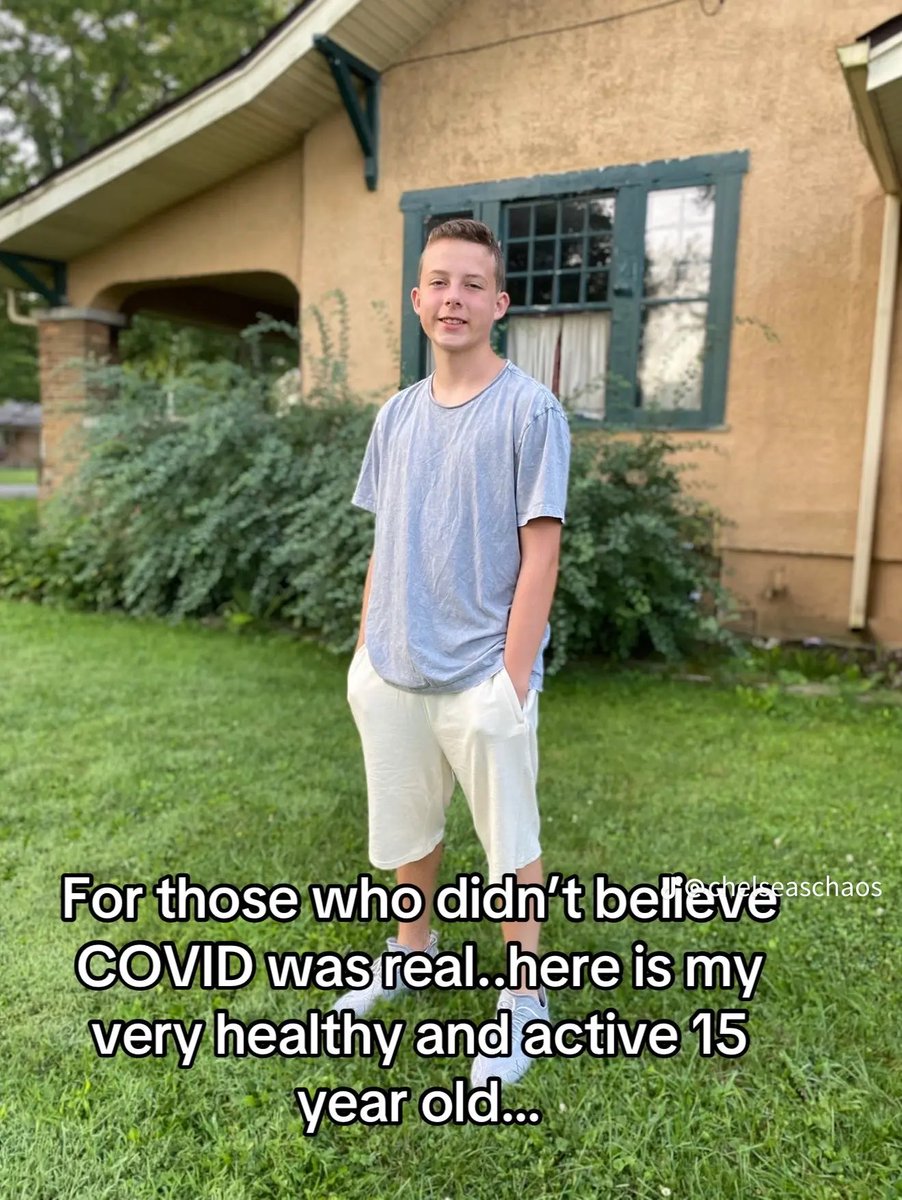
ALT For those who didn’t believe COVID was real..here is my very healthy and active 15 year old...
42
406
1,537
240,355