
Crypto enthusiast that likes to tweet, blog, and vlog about all things crypto.
Joined June 2021
- Tweets 22,589
- Following 1,727
- Followers 2,188
- Likes 15,697
2,501 Photos and videos





Pinned Tweet

Jan 23
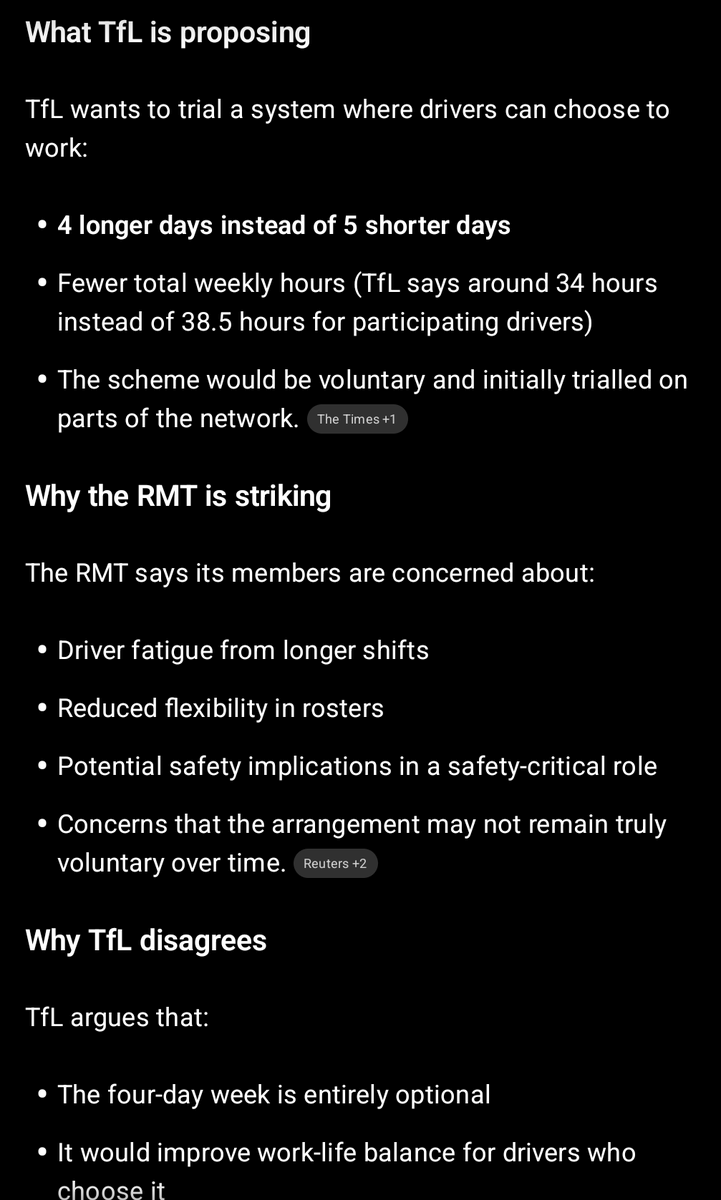
Globalization made the UK richer.
But it also made it more unequal, less resilient, and politically unstable.
👇
1
1
1,497
ReddSpark retweeted

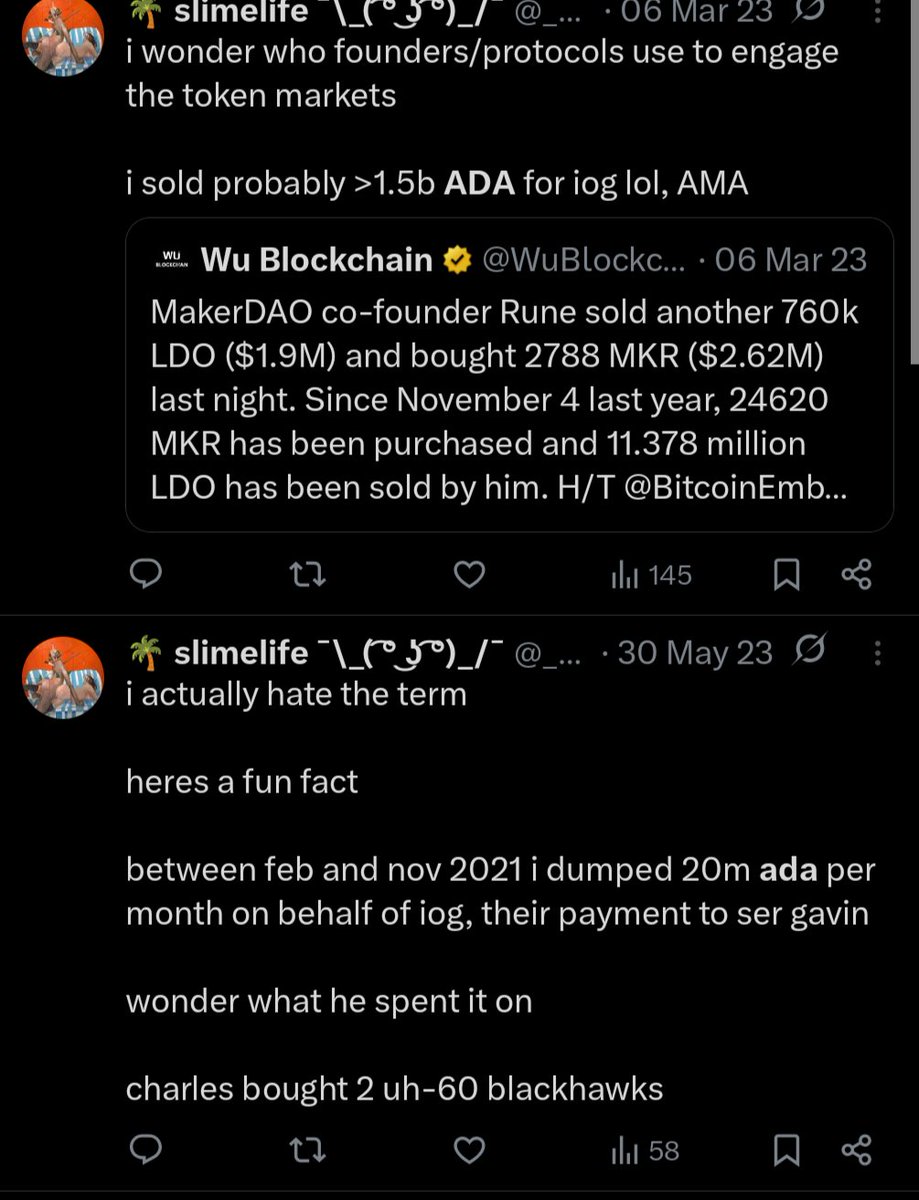
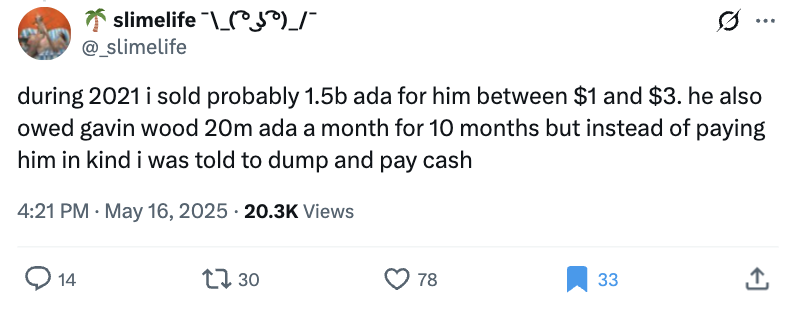
A May '25 tweet claims @IOHK_Charles sold ~1.5B ADA in the '21 hype cycle, plus 10x 20M payments to @gavofyork.
Rather than take its word, i wanted to check the chain.
Tracing funds is hard, but those x10 20M payments are a solid place to start:
🧵👇
adagenesistransparency.com
141
137
582
346,852

Jun 7
ChatGPT reckons the current natural price point for Canton Coin (that the BME mechanics mechanics is trying to get to) is $0.10.
See: chatgpt.com/share/6a25a0a4-3…
1
1
369
Jun 7
I like this old thread of mine.
14 Oct 2024

I was there Gandalf. So let me explain. In the last cycle Cardano was being billed as the promised child. The prince that was promised. The one to finally provide real competition to the Ethegomony.
Smart contracts were about to be launched, hundreds of developers were ...
2
57
Jun 6
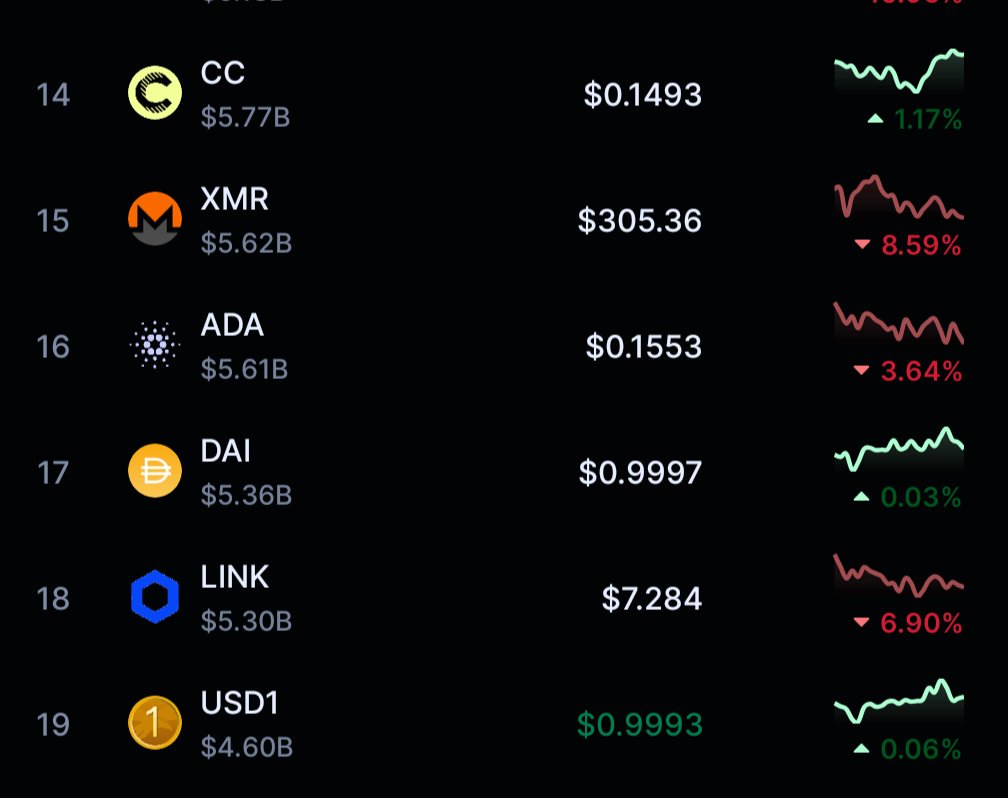
Cardano has breached 16th for the first time, though the gap between 14th and 18th isn't all that big. But where to next? 👀
Jun 5
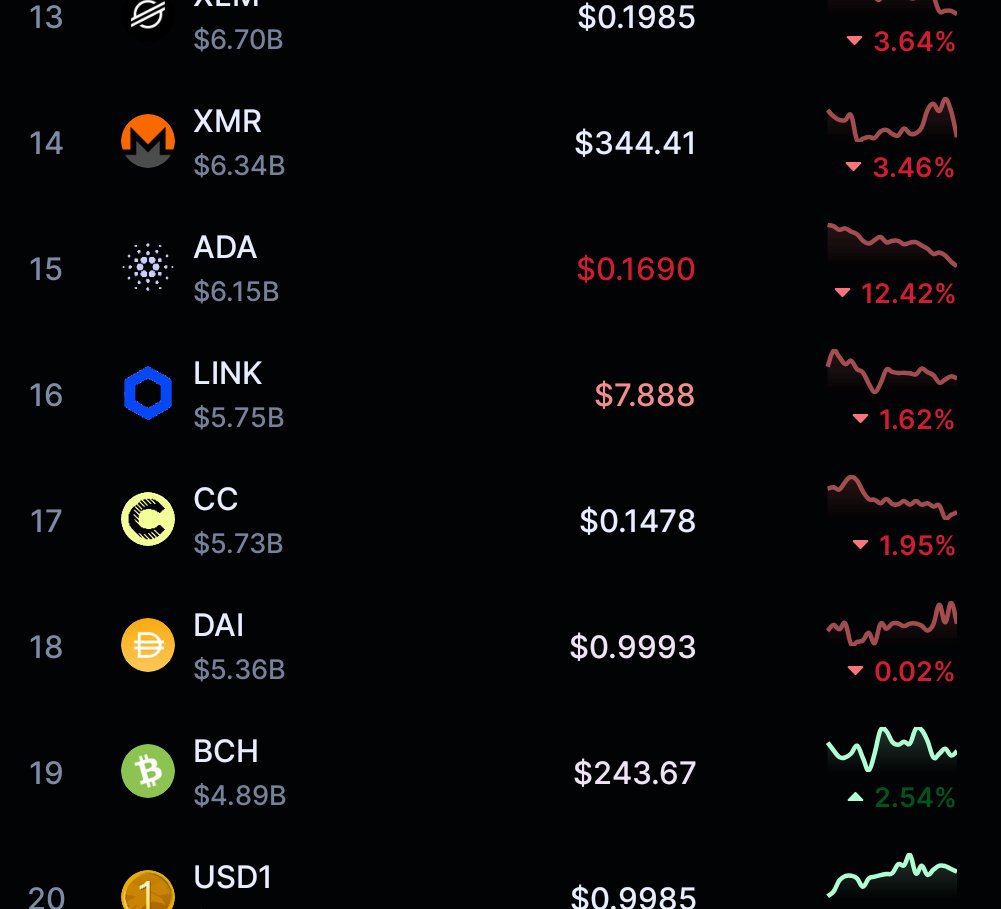
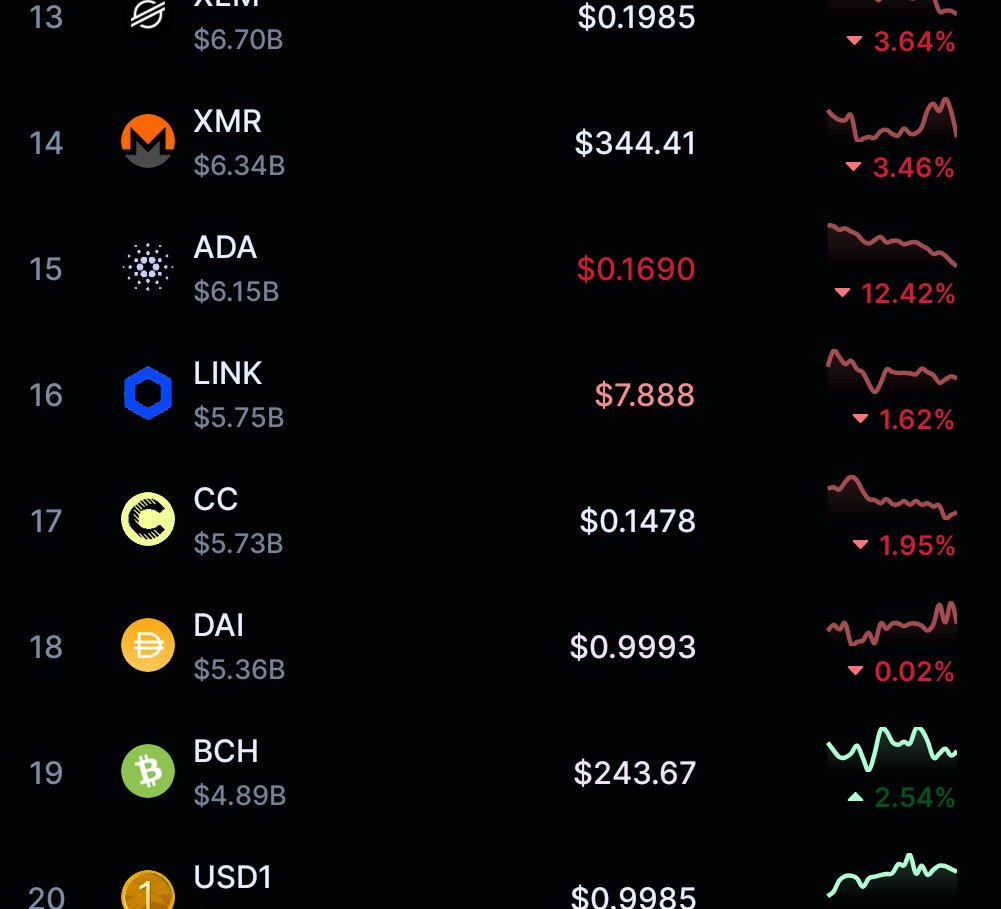
Now that 15th position has been breached by Cardano, it's going to be a rapid plummet down to below 20th from here.
Cardano members, switch over to Canton.
3
1
4
989
ReddSpark retweeted

Jun 5
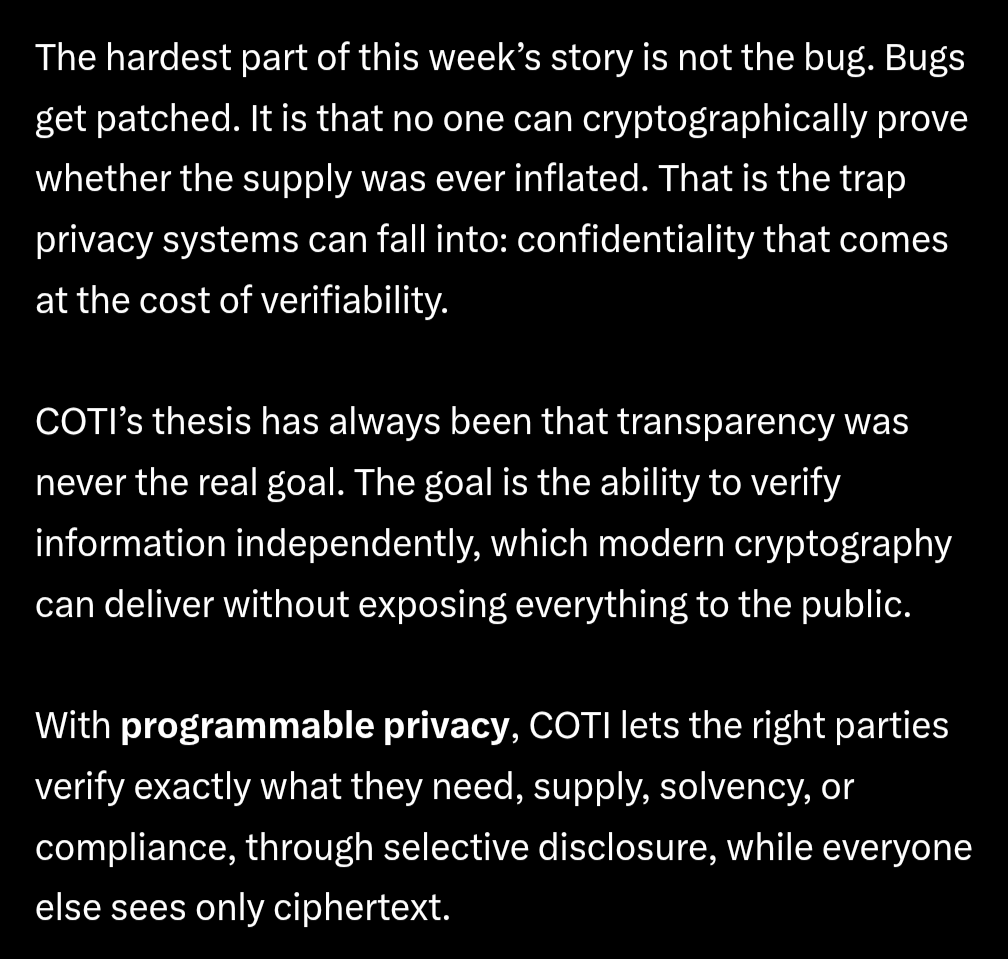
Not All Privacy Protocols are Created Equal
The ZEC flaw proved why cryptographic foundations matter.
COTI Garbled Circuits are Built Different
→ Compute on encrypted inputs through MPC
→ No single proving circuit
→ Built on symmetric-key cryptography
🛡️ Privacy you can verify

2
22
113
6,080
ReddSpark retweeted

Jun 5
We're just getting started. I'm so excited for our partnership with @Visa and @cuysheffield:
investor.visa.com/news/news-…
canton-network:native
16
31
218
11,581
Jun 6
At this point it might be a race to see who creates a fork of Cardano first:
CCV: Cardano - Charlies Vision
or
CCV: Cardano - Community Vision
1
1
346
Jun 5
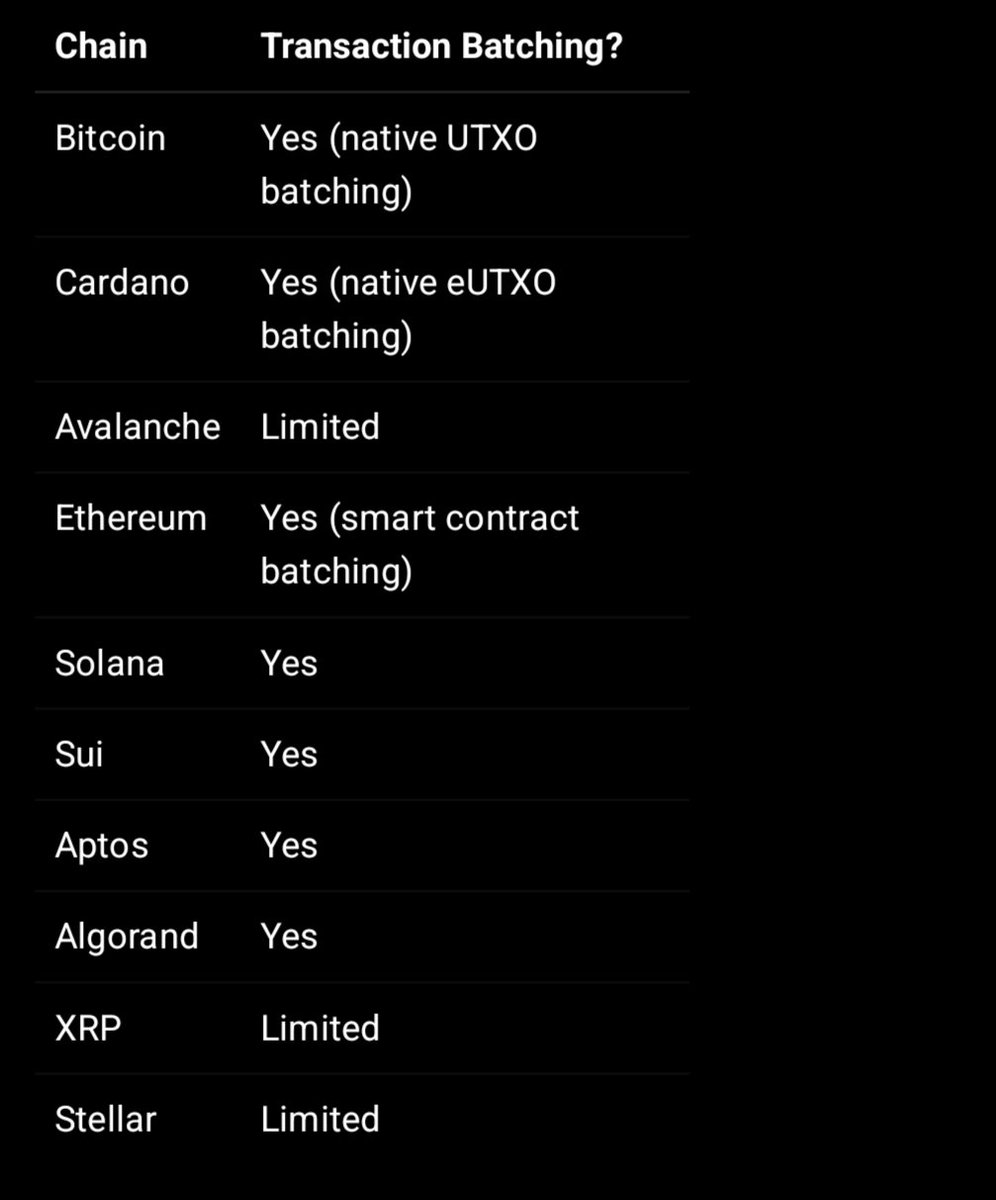
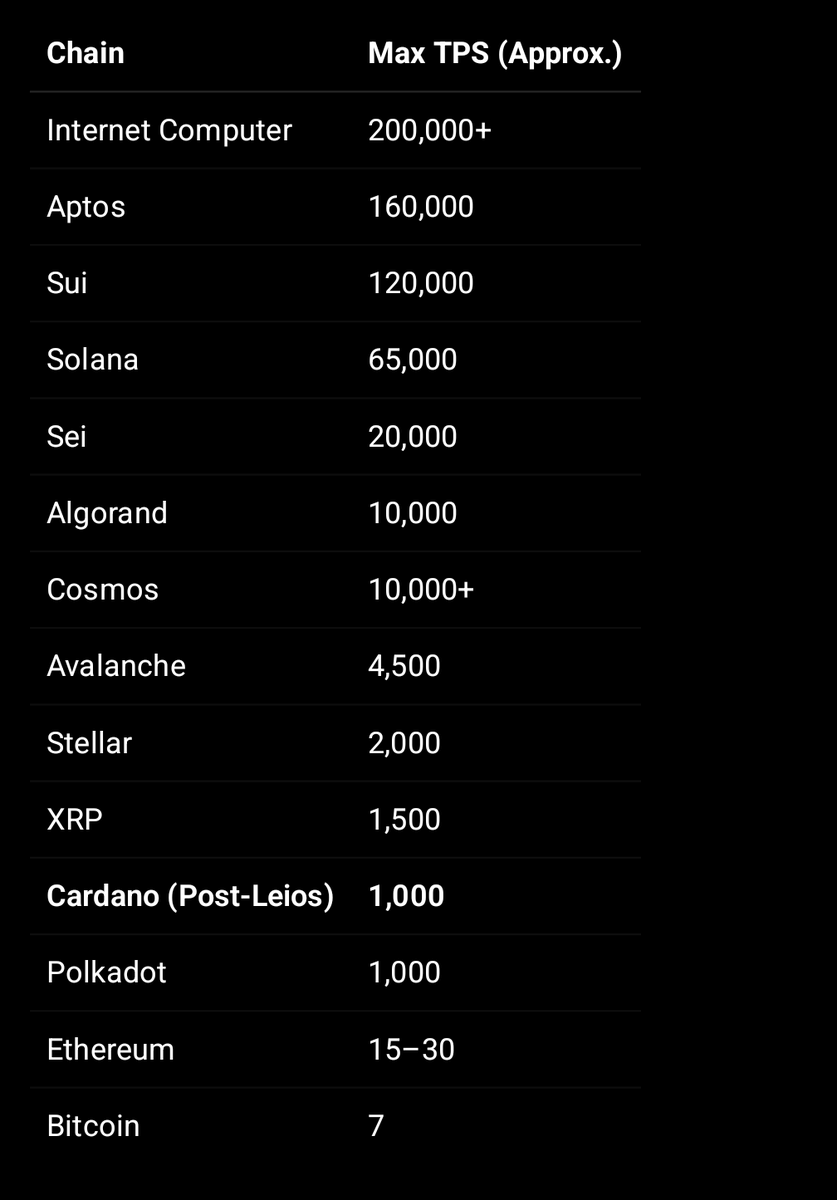
I heard that Cardano will scale to 500 tps and then 1000 tps in coming weeks and months...
7
1
18
2,584
ReddSpark retweeted

Jun 5
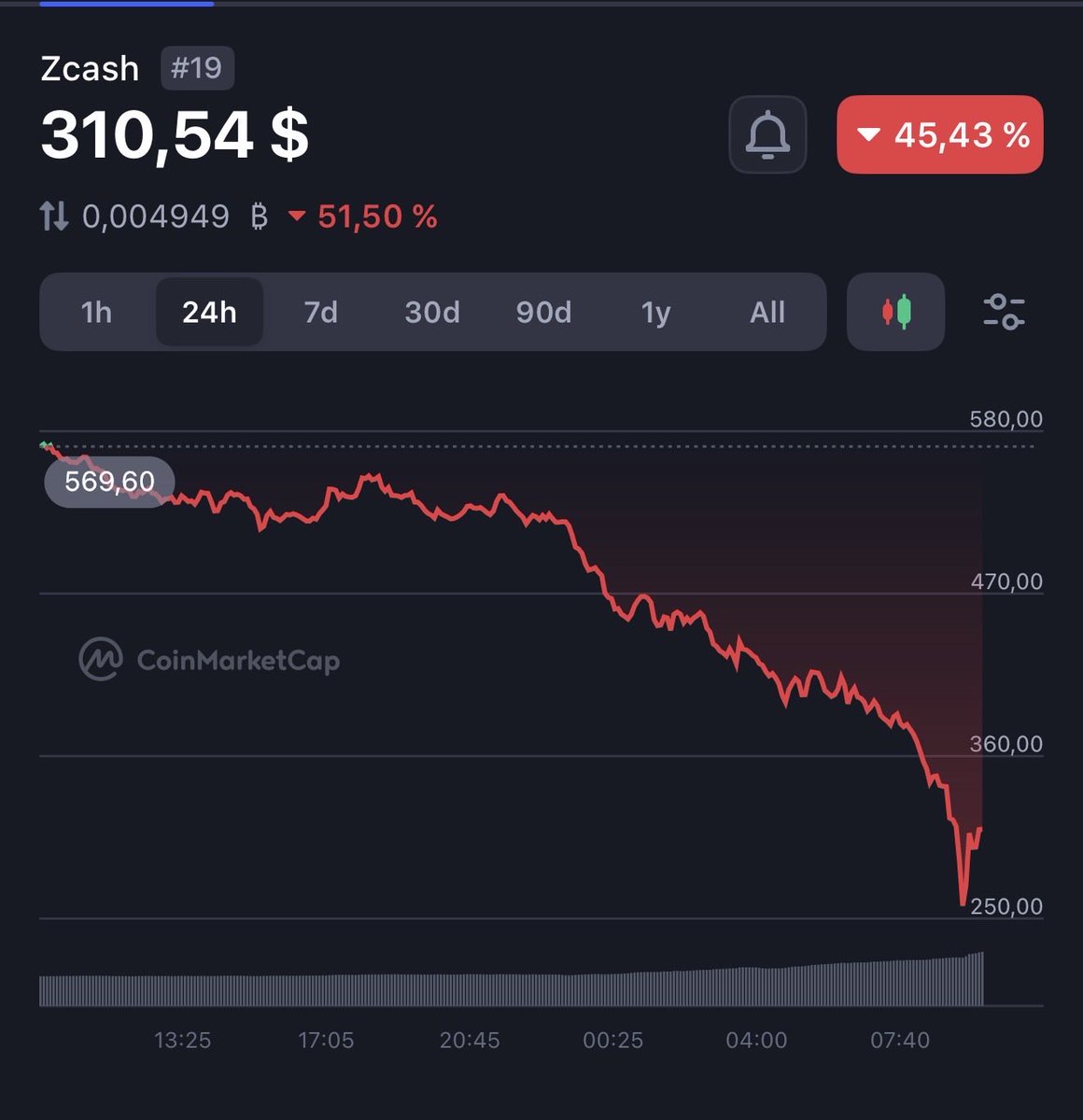
The worst case scenario for $ZEC just became reality 🚨
- vulnerability discovered inside Orchard
- Zcash’s main shielded pool active since May 2022
- remained unnoticed for more than 4 years
- discovered on May 29, 2026 by security researcher Taylor Hornby
- using Claude Opus 4.8 as part of the review process
the vulnerability
- could create counterfeit ZEC
- unlimited amounts
- completely undetectable inside Orchard
Taylor reportedly built a working exploit
- generated counterfeit ZEC
- successfully tested it
- exploit considered real
the problem
- Orchard is private
- privacy hides transaction details
- privacy hides balances
- privacy hides supply flows
which means
- nobody can prove the vulnerability was never exploited
- nobody can prove counterfeit ZEC was never created
- nobody can prove the circulating supply was never affected
even the Zcash team admits this
“There is no definitive way to determine whether exploitation occurred.”
the Zcash team is now discussing
- a new shielded pool
- migration away from Orchard
- turnstile accounting
- supply verification mechanisms
- formal verification of Orchard
Probably one of the most frightening vulnerabilities ever discovered in a privacy coin.

84
29
333
25,040
ReddSpark retweeted

Charles used his 7of7 genesis key control to peramiterize the network to give himself 30% more rewards than 99.99% of users and allow himself to control stake distribution. This action led to billion$ leaving the ecosystem. Today’s problems are downstream of centralized decisions
4
18
615
Jun 5
Now that 15th position has been breached by Cardano, it's going to be a rapid plummet down to below 20th from here.
Cardano members, switch over to Canton.
2
3
943
Jun 4
Will my prediction about Cardano dropping out of the top 20 come true? 👀
22 Jul 2024
Last cycle it pumped on the promise of a dapp ecosystem that would rival Ethereum. News: That did not happen.
Cardano will drop out of the Top 20 this cycle. It's hopes and prayers are on Leios which won't be around till next cycle.
5
389

May 24
The Cardano community always seem to put two and two together late. My tweet below was already quite late in the day but it's taken another two years since then for the Cardano community to finally understand.
x.com/i/status/1783143684202…
@ItsDave_ADA
@jasonappleton
@navi_gat0r
24 Apr 2024
Well you see if the research paper had been released already, other companies such as DC spark could have evaluated whether they wish to bid for the work. But instead you'll have the freedom to vote for one vendor and only one vendor to implement Leios. And you will have to accept the invoice fee no matter what.
To paraphrase Roosevelt:
"The structure of a world chain cannot be the work of one man, or one company, or one nation...it must be a chain which rests on the cooperative development of the whole world."
5
3
12
766
ReddSpark retweeted

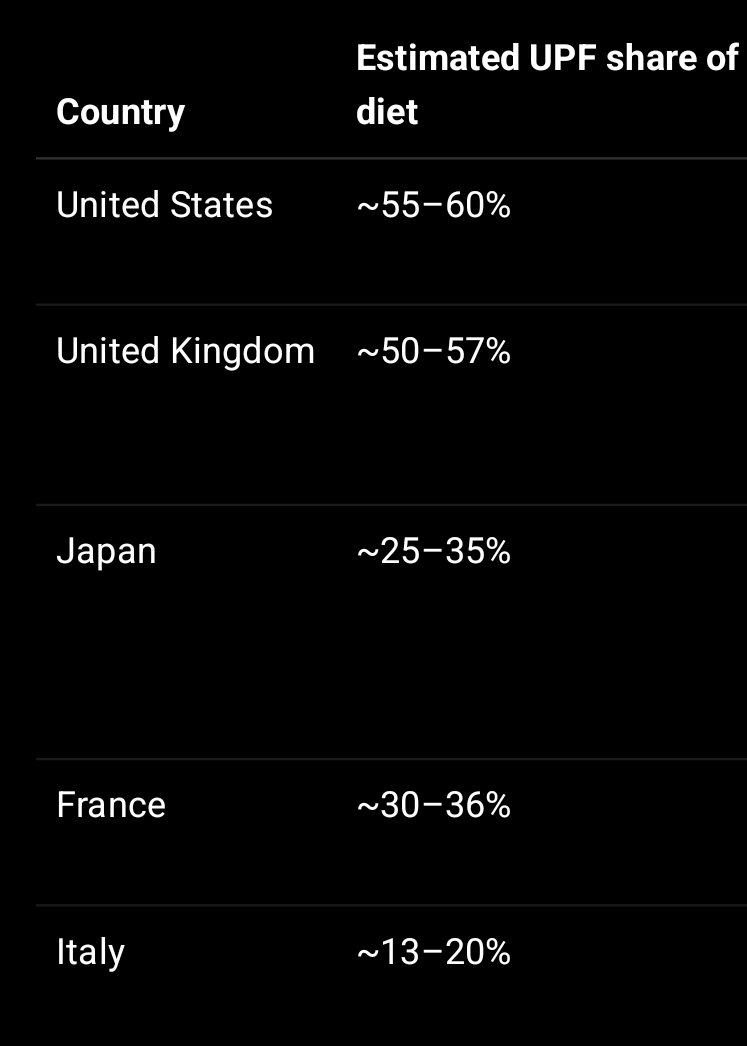
I was young in the 80s/90s in the UK.
I don’t remember my parents ever going out to eat, except when we were on holiday (in the UK).
I don’t think they ever took me to a fast food restaurant, or ordered takeaway food.
People today have no clue how working people lived.
/1
May 22

Boomers seem to forget that fast food used to be a normal, everyday expense for them because it was affordable. You could get a burger easily on minimum wage, it wasn’t some fancy treat you had once a year as a reward for pulling yourself up by your bootstraps.
1,088
443
8,960
2,490,076
May 15
This is significant. Right now a lot of transactions happen on subnetworks which never consume CC.
May 14

We have an early model of how to charge for CC burn in sub networks. We’re looking at the different use cases to make sure the model scales across models, and if so, we will run it through the tokenomics committee and then roll it out.
It’s a top priority, but we want to make sure we get it right.
135
May 13
KOL accounts that use LLMs to appear smart but not actually smart enough to understand what they are saying is becoming quite common. Seeing it in particular in the Canton community.
May 13
You do realise this is a stupid response right? You're so dependent on ChatGPT you're not processing what you're saying.
It's apparent in a lot of your comments that you're using ChatGPT, getting an inane response, but not realising it.
69
ReddSpark retweeted

May 11
We made our commitment to @CantonNetwork in Q1 2025, almost 1.5 years ago now. That shift took @ZenithFdn building for real-time proving (sub ~12s blocks) for the Ethereum Foundation to then investigate RISC-V for Canton.
After co-architecting and redesigning the solution with guidance from @digitalasset's CPO and CTO, we found a solution that unlocked the greatest network contribution: deploying Canton subnets with value-aligned EVM (and SVM) atomicity.
Appreciate you spotting us @zackabrams in this @a16z/@a16zcrypto investment piece. Organic awareness and education like this are critical in becoming part of the long-term conversation. We're humbled to be included here.
Here's our value prop:
Zenith isn't another narrative piggybacking EVM wrapper. I've been following and working tangentially with Digital Asset for nearly a decade with the same vision of bringing blockchain to global capital markets, so I immediately knew the potential that Canton Network was offering from the jump.
Our team committed itself to building alongside @digitalasset long before all of the big press releases, partnerships, and fundraising announcements. We've been some of the earliest and most vocal Web3 advocates amplifying educational materials and championing @yuvalrooz.
Why this is different from any L2 or rollup:
Politically:
➜ Deep, consensus-level integration: As a Tier-1 Super Validator with max governing weight (sitting alongside DTCC, Nasdaq, Visa, etc.), Zenith doesn't sit "on top" of @CantonFdn it participates day after day within its governance, foundation, and global synchronizer.
Technically:
➜ external_call() gives deterministic, atomic composability between Daml contracts and unmodified Solidity/Rust code in the same transaction. No multi-phase hacks. No economic trust assumptions. Real atomicity at the protocol level.
➜ Dynamic scaling that protects the base layer: Zenith absorbs high-frequency EVM execution pressure (parallel VBs, horizontal sharding) so Canton Mainnet stays lean for low-latency settlement and privacy. Every EVM TX still routes through the Global Synchronizer.
Economically:
➜ We’re the direct conduit to every major stablecoin issuer, DeFi protocol, and ERC tokenization engine in Web3. These teams all want to mitigate the multi-quarter delay of a new language and necessitate the immediacy of lift-and-shift repos.
➜ With Zenith, they deploy as-is, instantly tap Canton’s institutional access, incentivization mechanisms, and settlement rails, and GTM without a second thought.
I cannot emphasize this enough. THIS IS FULLY ACCRETIVE AND NON-EXTRACTIVE.
Every Zenith transaction burns $CC as if it were a TX on Canton Mainnet. It increases base-layer utility through mature, production-grade protocols, connects institutions to DeFi apps requested across multiple RFPs we've seen, and creates sustainable dogfooding of transaction volume for the entire Canton ecosystem.
Developers get familiar tooling and massive real-world liquidity. Canton gets the developer flywheel and usage that makes $CC more than just a settlement token, it becomes a direct reflection of the intended onchain capital markets activity. This is the exact flywheel prescribed by @cantonstrategic and @markwendlandcsh.
We didn't build another sidechain. We built the onramp that lets Ethereum and Solana's innovation machine plug directly into the only L1 that's already moving trillions for Wall Street.
This is how you close the gap between crypto-native velocity and institutional-grade rails. Not by forcing institutions onto public memepools, but by bringing battle-tested dev tooling onto rails that were purpose-built for regulated scale. It's the Trojan Horse in @wesarn_real and @ShaulKfir's anecdote; it's boiling the frog.
$CC burns that actually matter.
Long-term conviction.
Real alignment.
@ZenithFdn
Zth.
May 10

Canton Network developer Digital Asset eyes $300 million raise at $2 billion valuation, led by a16z crypto: Bloomberg theblock.co/post/400647/cant…
10
11
80
4,500
May 11
𝗜𝘁’𝘀 𝘁𝗵𝗲 𝗕𝗠𝗘, 𝘀𝘁𝘂𝗽𝗶𝗱: 𝗪𝗵𝘆 𝗖𝗮𝗻𝘁𝗼𝗻’𝘀 𝗽𝗿𝗶𝗰𝗲 𝗶𝘀𝗻’𝘁 𝗯𝗲𝗶𝗻𝗴 𝘀𝘂𝗽𝗽𝗿𝗲𝘀𝘀𝗲𝗱
Canton’s own whitepaper explains why the price is not being suppressed... at least not manually
canton.network/hubfs/Canton%…
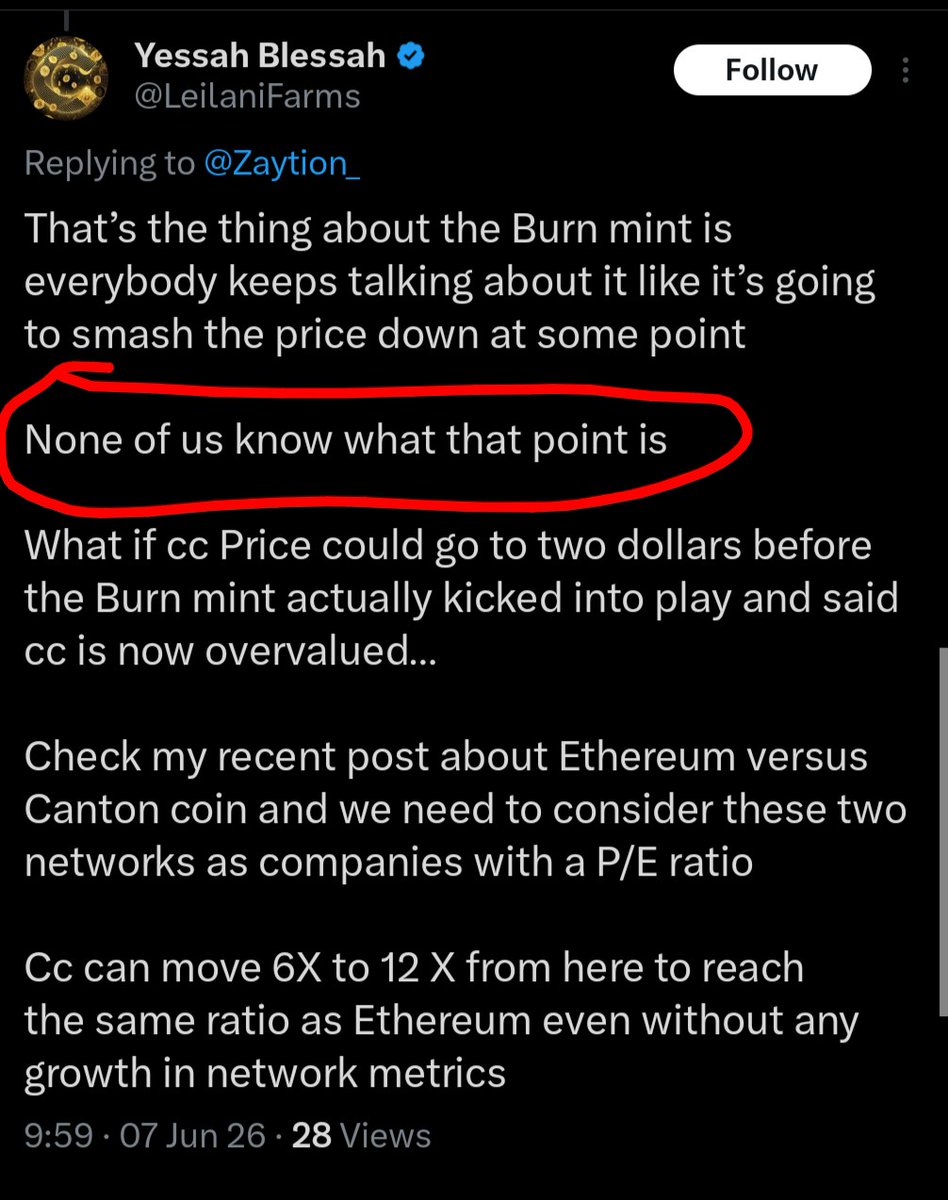
The Burn-Mint Equilibrium (BME) is designed so purely speculative price deviations should eventually gravitate back toward network utility value.
If price runs too high → fewer CC are burned for the same $ of network usage.
If price falls → more CC are burned.
That creates a natural economic anchor over time.
Add in the fact that Canton trading volumes are relatively low right now, and what many call “price suppression” may simply be the tokenomics doing exactly what they were designed to do.

53