
🕋🇦🇺 Core Blockchain Dev @conduitxyz | prev @Berachain @Immutable @ASX @RedbellyNetwork | Views My Own
Joined February 2020
- Tweets 1,500
- Following 993
- Followers 1,599
- Likes 7,565
198 Photos and videos








relentless will to win
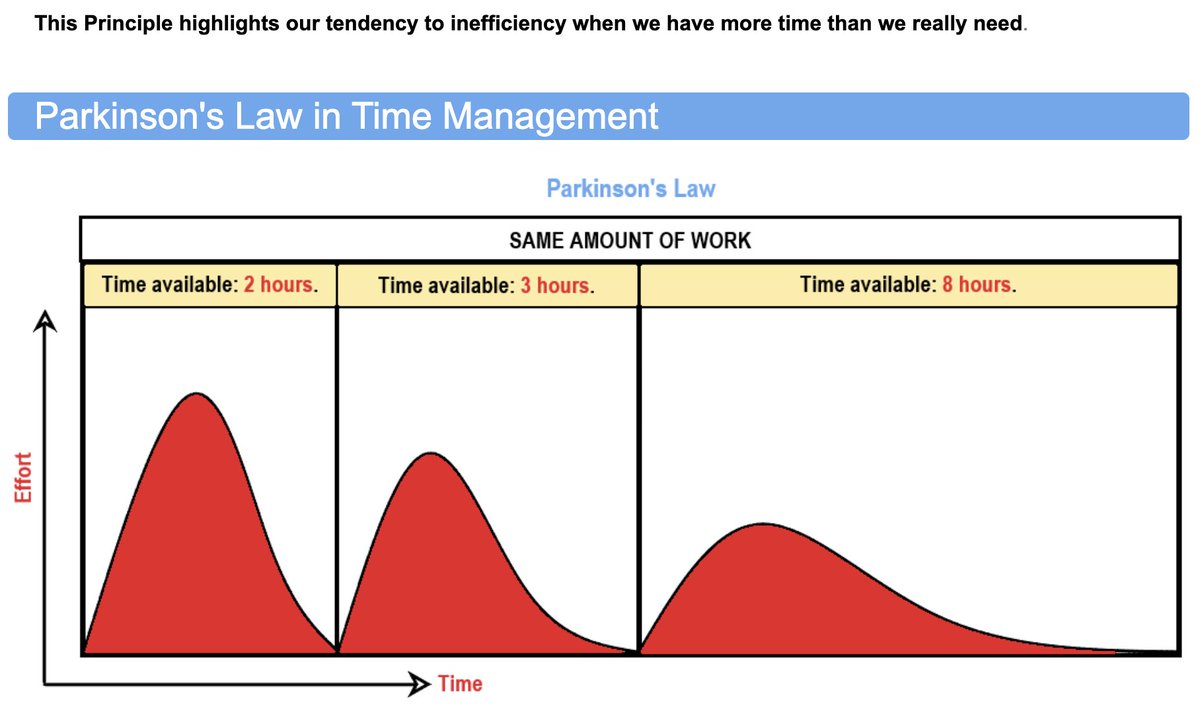
urgency over inertia
initiative over allocation
speed over consensus
the fuels for a good engine
Jun 10

this sounds like such a valley wank, but day-to-day it actually matters quite a bit for a good product team
building an engine that can ship fast is as hard as building the product itself
2
7
139
irrationally aggressive teams will win
May 30

"If you are not working 7 days per week, you are going to lose".
Corgi Insurance is the most intense workplace culture in startups.
- The company works 7 days per week.
- Founder (@nico_laqua) lives and sleeps in the office.
- He built a cafe in the office because there was no local cafe that was open 24/7.
- 2/3 of the first 30 team members have the Corgi logo as a tattoo.
Today I went behind the scenes with Nico, who has used this culture to scale the company to a $2.6BN valuation in just two years.
My condensed notes below:
1. If You Are Not Working 7 Days Per Week, You Are Going to Lose:
Whatever you can get done in 5 days, you'll get more done in 6 and 7. If you are trying to solve the world’s hardest problems, a standard 5-day workweek will not cut it.
2. Work Trials Repel the Mediocre:
Corgi forces candidates into mock work trials over the weekend. If seeing a full office on a Saturday scares them, they don't belong. True intensity acts as a natural filter to attract killers and repel clock-watchers.
3. Lead from the Front Lines
You can’t demand 7-day weeks while sitting on a yacht. Nico sleeps 3–4 hours a night on a mattress inside the office. If you want your troops to bleed, you have to be in the trenches with them.
4. Culture Only Means One Thing: Winning
Forget superficial jargon like "hackers" or "ex-founders." Strip away the corporate fluff. A great startup culture is aggressively optimized around one single word: Winning.
5. Lifespan vs. Victories
Building something world-historic requires radical sacrifice. When asked if he'd rather build a trillion-dollar company and die at 50, or fail and live to 80, the answer was easy. "I would rather measure my lifespan in victories."
6. Reject the Comfort of "Quiet Quitting."
If you are operating in a hyper-growth environment and your days off happen to be Saturday and Sunday every single week, you are quiet quitting. To win, you must deliberately bypass the off-ramps of personal comfort and low volatility.
Corgi isn't for everyone—and that’s exactly the point.
2
214
hidden bottlenecks caused by large blocks being moved around unnecessarily

every change at conduit demands rigour and accountability given the number of networks we operate.
prod readiness takes a large % of my time, so it's nice when i have time to scale g3
reworked the tx ingestion pipeline/mempool.
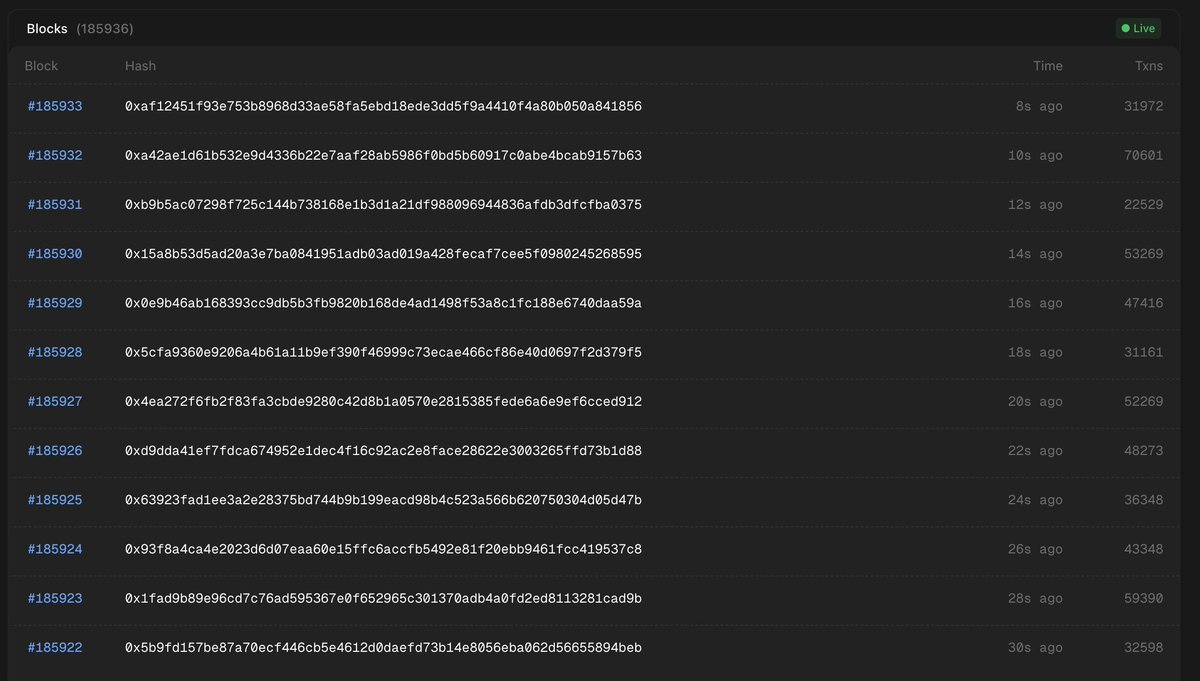
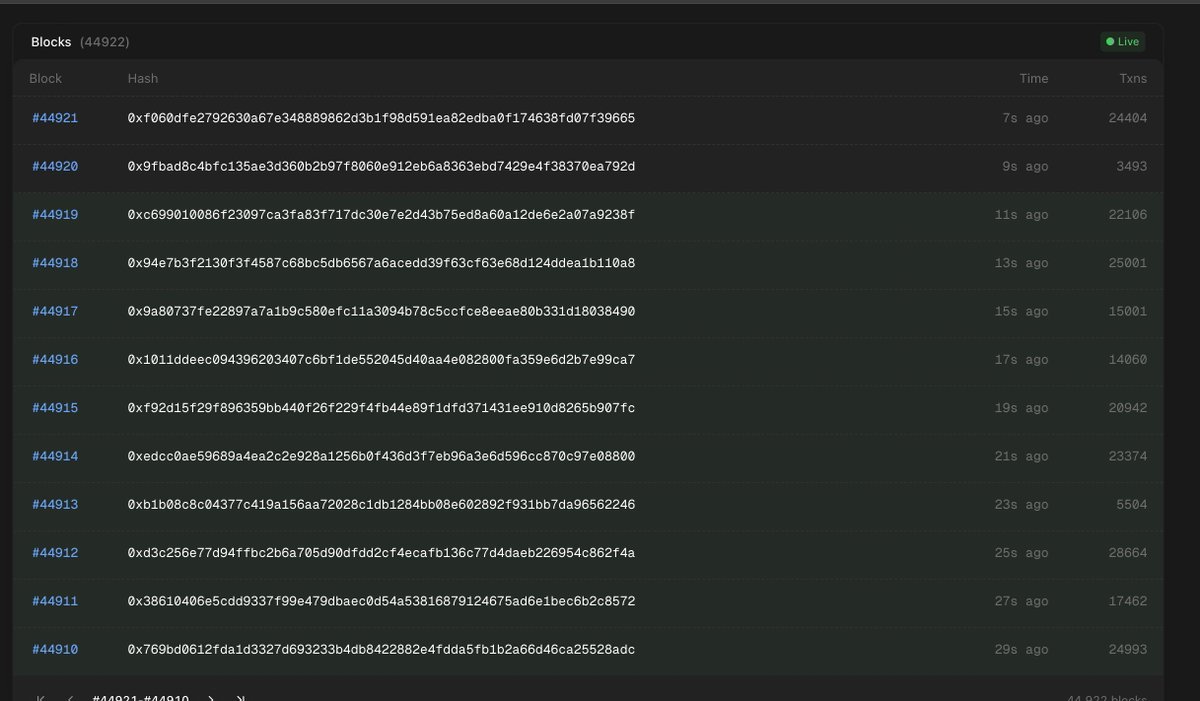
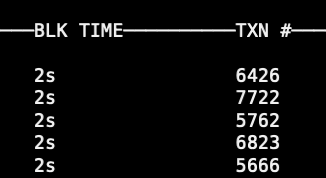
all txs from a single EOA (near impossible with vanilla mempools) ~10ms receipt confirmations.
different set of issues in high tps/low gas txs vs low tps/high gas txs.
100k tps sustained before eoy inshaallah
1
5
251
on a large enough system, i'm still seeing emergent models require significant hand holding in performance engineering
e.g. the model failed to identify the dimension of 'block size' (> 10mb/block in some G3 blocks) and the impact it could have on the system. this dimension of the performance profile changes not with higher gas/second but with higher raw trasactions, unlocking a new set of bottlenecks.
performance engineering is a lot like product managing in the sense that its almost creative (once ur passed low hanging isolated leetcode-esque perf bugs). potentially prompting skill issue
2
108
every change at conduit demands rigour and accountability given the number of networks we operate.
prod readiness takes a large % of my time, so it's nice when i have time to scale g3
reworked the tx ingestion pipeline/mempool.
all txs from a single EOA (near impossible with vanilla mempools) ~10ms receipt confirmations.
different set of issues in high tps/low gas txs vs low tps/high gas txs.
100k tps sustained before eoy inshaallah
3
579
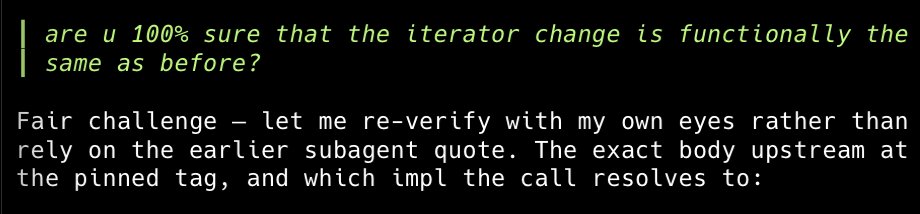
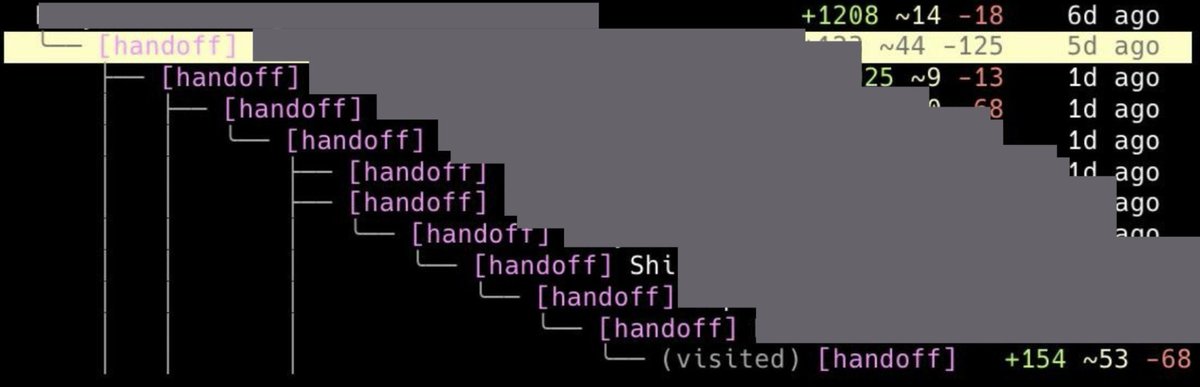
many engineers, myself included, overcorrected to doing too many agents at once
the tax is real

1
1
228
"Well-designed L2s can also help, especially L2s optimized for specific applications (eg. high-volume trading, privacy...). These goals are even compatible with significantly lower slot times"
g3.
May 24

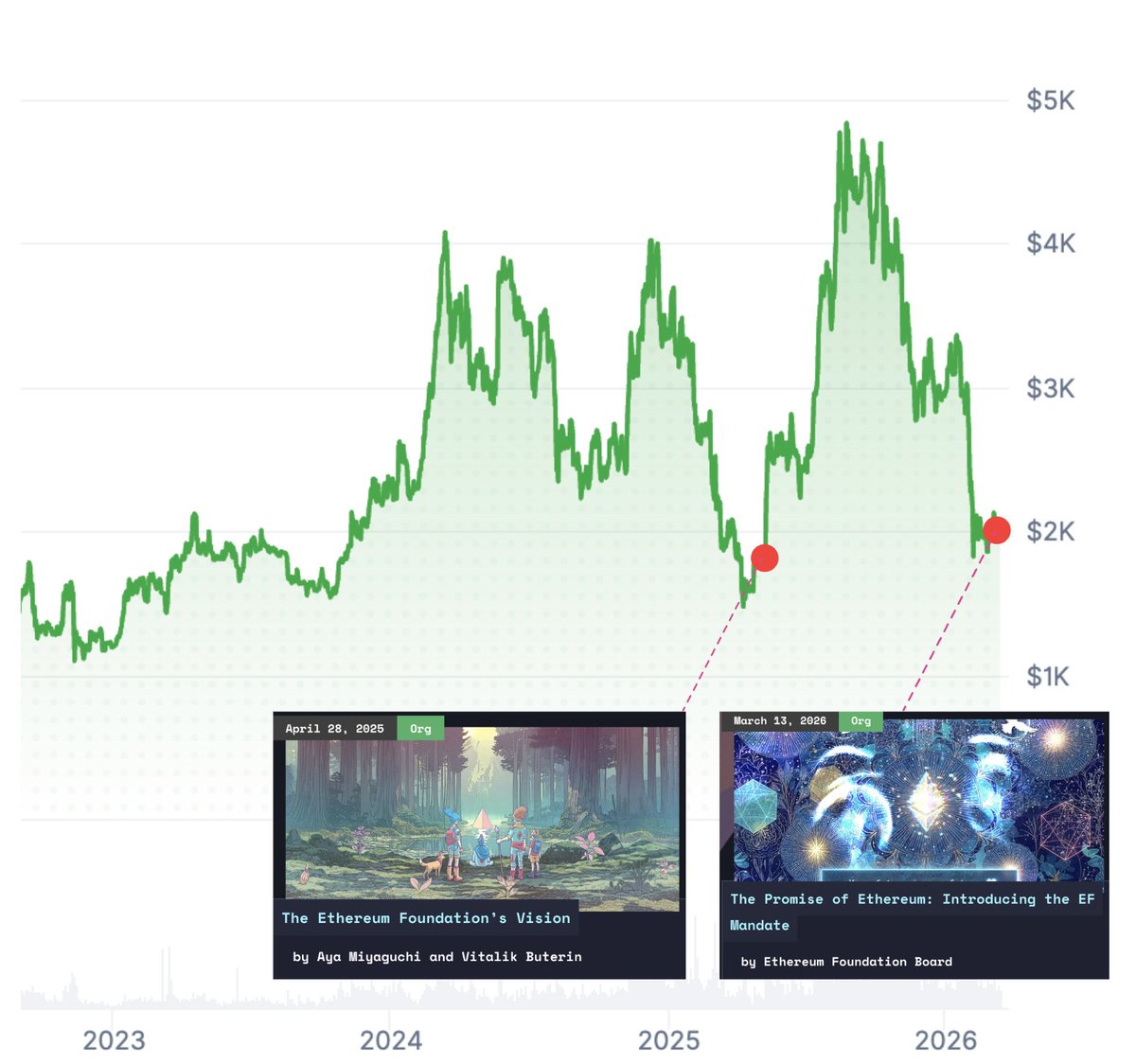
Some of my perspective on where the @ethereumfndn is going.
First of all, this is only my own view. The board is not just me, and I have no extra special powers on the board that the other board members do not. @aerugoettinea is the one executing much of this transition. My input has been largely on technical questions. The board is in the process of expanding, and my own power within the org will continue to decrease, which is honestly what I want.
The 2025 era brought many important improvements to EF and its ability to execute. Many issues were resolved, and EF continues to benefit from its improved efficiency and greater focus on concrete goals to this day. And so with those problems resolved, early this year, the largest remaining hole that I perceived was something different nagging at me: I would regularly spot people saying things like "vitalik says these beautiful things about ethereum needing to be decentralized, and have privacy, and be a sanctuary technology, but why do the EF's actions not reflect that?"
Now, you may have been hearing something different. You may not have been sensing a feeling of crisis at all, and maybe were hearing people saying that finally we were taking execution and BD seriously and the main task for us is to keep going that way and be even better and faster. Then probably there is genuine difference between you and me, in what kinds of criticism I take most seriously, and what kinds of critics through their criticism are most able to make me feel pain.
As an analogy, let's briefly switch over to a different domain.
One belief you can have about Google is that it is a success story, and has brought a lot of good to humanity in organizing the world's information. Another belief you can have about Google is that they had a beautiful idealistic beginning, but at some point the corruption of mainstream corporate attitudes seeped in, and they slowly bit by bit completely abandoned the "don't be evil" slogan.
My belief on Google specifically is probably somewhere between the two. BUT, if you had taken me back in time to ~2008, and offered me a button to press to make Google one or two standard deviations more "dogmatic", eg. give Richard Stallman permanent veto power over some key policies, I would immediately press it.
Why? Because a choice for one company is not a choice for the world, or even one country. Google existed and exists in the context of a technology industry generally drifting away from early idealistic don't-be-evil roots and toward greed for financial gain, totalizing visions of accelerated superintelligence, infiltration by sociopaths, and craven capitulation to (or worse, active participation in) government pressure for ideological control, surveillance and war. And so *one company* doing something different, positioning itself to be what George Bernard Shaw calls the Unreasonable Man, resisting the trend of the times, would have been better for freedom, balance of power and stability of society as a whole, than *all* large companies bending to dominant trends. This is a part of my version of pluralism.
This line of thinking is not just mine, but I also is not too far off from what Aya and others had in mind with the Mandate.
Now how does this all get to the role of the EF?
EF is not a "center of Ethereum", rather EF is "one node, with a defined purpose, alongside other nodes". We've always said that the EF should be the latter, but many in the Ethereum ecosystem (and even within the EF) wanted us to be the former. Now, we are taking action to ensure that we will be the latter.
This is particularly important because EF is a limited organization, with limited resources and limited organizational capacity. The EF has only ~0.16% of all ETH (less than many other individual ETH holders), whereas among other blockchains it's common for "the central foundation" to have 10-50%. Fiscally, the EF was originally designed to fulfill a limited work scope defined in the token sale docs and other pre-launch materials (building the chain software; getting through Frontier, Homestead, Metropolis, Serenity), which was fully completed in 2022; it was not designed to be an eternal steward.
And so today, the EF is choosing to use its remaining resources to pursue longevity over breadth (yes, this means we sell less ETH). The EF focuses *specifically* on those activities critical to the success of ethereum as a censorship/capture-resistant, open, private and secure system, that would not happen otherwise. This means making hard choices, and in some cases even activities that we highly approve of and people that we highly respect becoming outside of the EF. People of great technical talent, public respect and even alignment with the mission and CROPS being outside of the EF is in fact necessary if we want important tasks to be able to attract outside capital. This also means the EF taking opinionated stands culturally.
This is all intended in cooperation with all other parts of ethereum. We recognize that many other parts of the ethereum world highly respect CROPS and related values. But highly respecting is not the same as choosing to specialize and totally dedicate to a domain (Compare in a different domain: I think reducing animal cruelty is important, and I like vegan food, but am not full unconditional vegan myself)
EF is still in a transition period, and we expect its new long-term form to stabilize over the next few months. What are the guiding principles of this new form? Again, I am only one person, but I can give my answer from a technical perspective (there are also critical non-technical aspects).
At the core, *Ethereum must be impressive*. We are living in an age of highly intelligent AI and all kinds of other technological acceleration. "Status quo EVM, with a hard fork or two a year to optimize for short-term needs of users" is not interesting.
To some, "impressive" means: 250ms latency and 1M TPS. I think Ethereum trying to go that route is a mistake. Being as fast and as scalable as possible, and only a small epsilon more decentralized than the others, is a route to mediocrity, and if we try it we will lose.
I think Ethereum should scale. But I think Ethereum should strive the hardest to be deeply impressive in a different dimension: the CROPS dimension. This means things like:
* Provably bug-free Ethereum. This is a goal that all cybersecurity researchers would have thought is absurd and impossible, up until roughly 6 months ago. Now, it's on the cusp of being possible, thanks to AI-assisted formal verification. So we should be frontrunners in doing this.
* Available chain consensus. Ethereum is, and with lean consensus will cotninue to be, the ONLY chain that has both (i) traditional-BFT style properties that it's safe under asynchrony up to a high level of fault tolerance, and (ii) the bitcoin PoW-style property that under synchrony it's safe up to 49% attackers. As far as I can tell, literally no other chain has this or is planning for it; bitcoin goes for (ii) only and most other chains go for (i) only. Some will remember I fought hard for this, Unreasonably insisting that it is not OK for ethereum to rely on social consensus and hard forks to rescue ethereum from 34% of nodes going offline. It's OK for chains like hyperledger, bnb, solana, tempo, etc. It's not OK for bitcoin or ethereum or eg. zcash.
* Intermediary minimization. The fact that smart contract wallets, protocols like railgun, etc have to send transactions through intermediaries to get included onchain is honestly embarrassing, and it's a constant point of fragility. Hence the work on FOCIL and EIP-8141 (and 7701 and years of work before) to make transaction sending intermediary-minimized with public mempool and strong inclusion properties, in a truly general-purpose way, that covers not just eg. secp256r1, but also privacy protocols and much more. Kohaku is pushing intermediary minimization at the user layer, pulling Ethereum away from the dystopian status quo world where our wallets don't even verify the chain, send our private data out to a dozen third-party servers, and toward a brighter CROPS future.
Some of these goals are Unreasonable - maybe Ethereum would be "fine" getting only 50% of the way - what if we depend on intermediaries, but make it easy to switch? But going 50% of the way would not make Ethereum Deeply Impressive in the CROPS way. So we push for 100%.
Fortunately all these goals are compatible with high TPS, this is a major focus of research (esp. on scaling the state). Well-designed L2s can also help, especially L2s optimized for specific applications (eg. high-volume trading, privacy...). These goals are even compatible with significantly lower slot times, thanks to Raul's work on erasure-coded P2P, and many other optimizations.
The most high-value "product" of the ethereum blockchain, financially speaking, is ETH the asset. Ethereum secures $250 billion of ETH. The types of properties of Ethereum that I mentioned above are very good for ETH the asset. Nearly 90% of my net worth is in ETH, and most of the remainder is ~$40m of onchain fiat of which every dollar has already been allocated for some open-source biotech or software or hardware initiative. That said, there are aspects of supporting ETH the asset - *necessary* aspects even - that are outside the scope of the EF. This is where we need other heroes (some of whom hold more ETH than the EF does) to step in and help. EF has been recently thinking more about how it will relate to other such organizations, and give them needed initial support.
EF will be a smaller ship than in previous years, a more opinionated one - in some cases more opinionated in ways that might be difficult to comprehend - but a longer-lasting one, and one suited to making sure that ethereum brings something meaningful to the world. We are grateful to all those inside and outside the EF who are helping to make this happen.
2
9
1,340
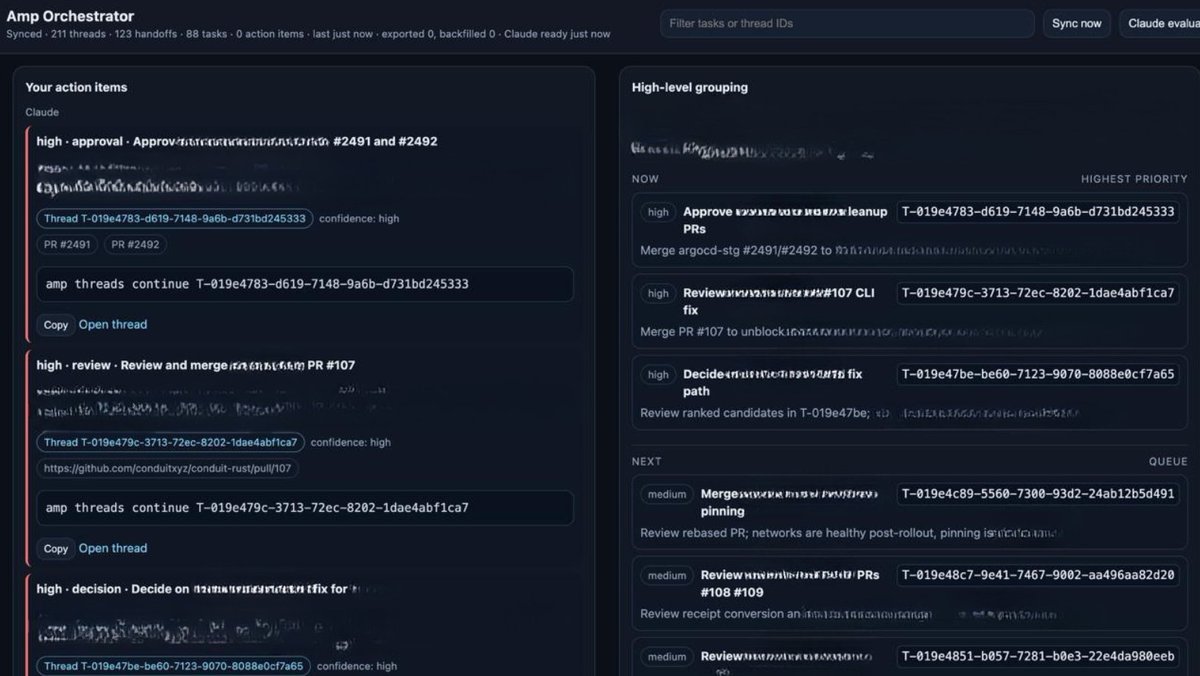
consistently found myself context switching between a dozen @AmpCode threads at any given time. in an hour, vibed an orchestrator view that leverages another agent to intelligently group threads under high level goals while surfacing interrupts that require my review/approval
1
3
280
Rez retweeted

Prediction: remote work environments will become favored over in-the-office environments due to it being a forcing function for communicating information, thought processes, and decisions over channels that can train and provide context to AI.
Every CEO / manager of a remote company knows the headaches and inefficiencies caused by having to repropagate information that was originally shared via a 2 person zoom call or a DM rather than a publicly-accessible channel. Delaying the cascade of information through an organization leads to disruptions in asynchronous building but, more painfully, frequent attempts to "relitigate" decisions that were already made by those who had access to the same information earlier.
DMs and 2-person google meets are the primary source of this for remote companies, but the office watercooler on site in NYC is 100x worse. Currently, that isn't an issue for on-site companies because information can cascade extremely quickly; the proximity offsets the decreased "default" visibility.
But AI changes the calculus. Now, it's not just people relitigating things that they didn't get the initial memo on... now it's your entire AI system not having that information.
This prediction could be wrong... theoretically you could put a hot mic in every corner of your on-site office to make sure that your AI has full context on everything. But it's hard to imagine that such a blatant disregard for privacy wouldn't impact the quality of your hiring pool.
Bullish on remote work companies.
May 21

Open Sourcing Centaur: Multiplayer, self-hosted, secure agents for Slack.
Centaur has been transforming how @paradigm and @tempo invest, build and research.
Now you can run it yourself on infrastructure you control. Instructions below.
14
5
88
9,541
many unconsciously make the choice of prioritizing wlb
every moment you think about your family, kids, going on a hike, hanging out with friends, etc is time someone else is thinking about work and how to win
read: solitude by anthony storr
4 Mar 2023

1/ Controversial take: hard work is more important than smart work.
It's a myth that we only have a few hours of good creative work per day. Train yourself to grind long hours first. You will surprise yourself. The work naturally become higher quality, less distracted.
2
233
privacy on zones is built around payments. visibility is gated by token ownership
but there's huge potential for granular, customized visibility controls around other financial primitives.
but to do this requires evm and reth expertise, exactly the domain of my team at @conduitxyz .
if you're interested in pioneering evm privacy usecases, dm me and i'll personally help you get from 0 to 1.
Apr 16

Privacy isn't a feature you bolt on, it's an architectural property that only works when the underlying chain infrastructure is built for it.
@tempo Zones is exactly the kind of primitive enterprises have been waiting for, and we're excited to be building alongside the team.
1
1
8
1,072
examples of blockchain x privacy from my time in daml/canton ecosystem at @ASX include:
- residential mortgage backed securities - customized visibility into various tranches
- custodial account hierarchies - investors retain visibility into n sub custodians with hierarchical visibility
57

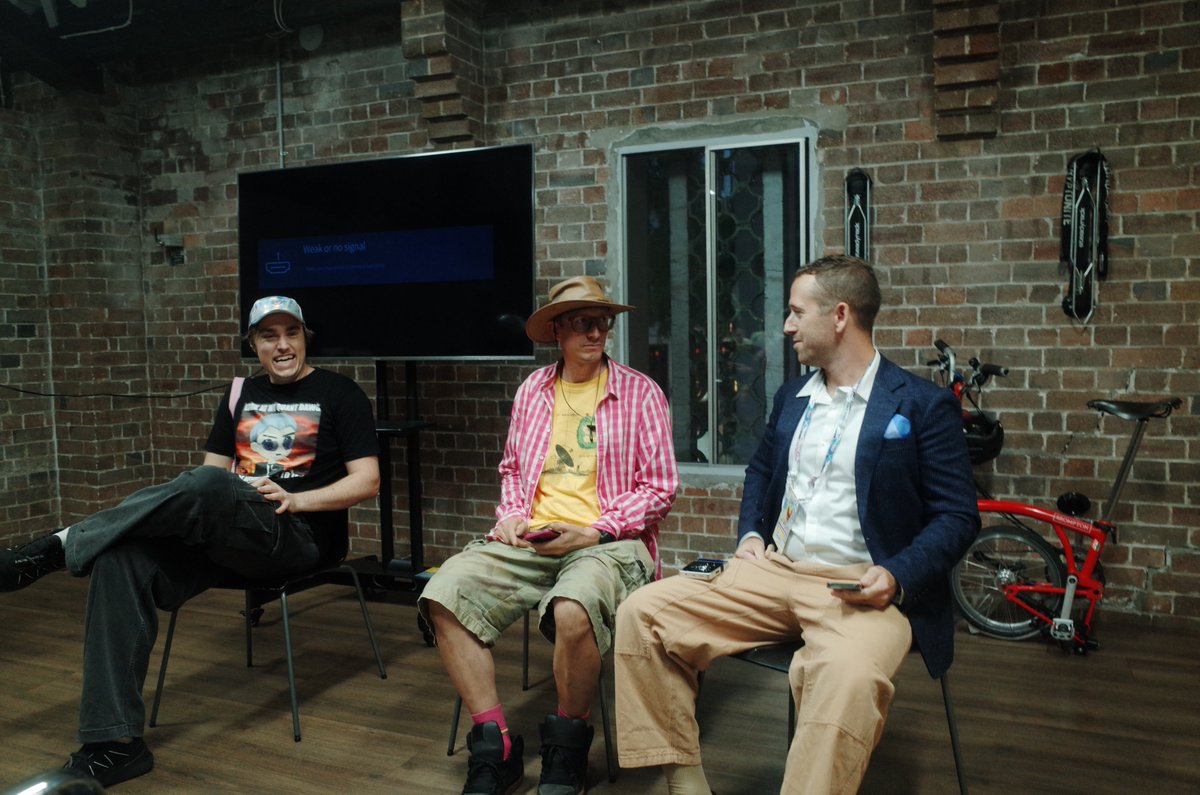
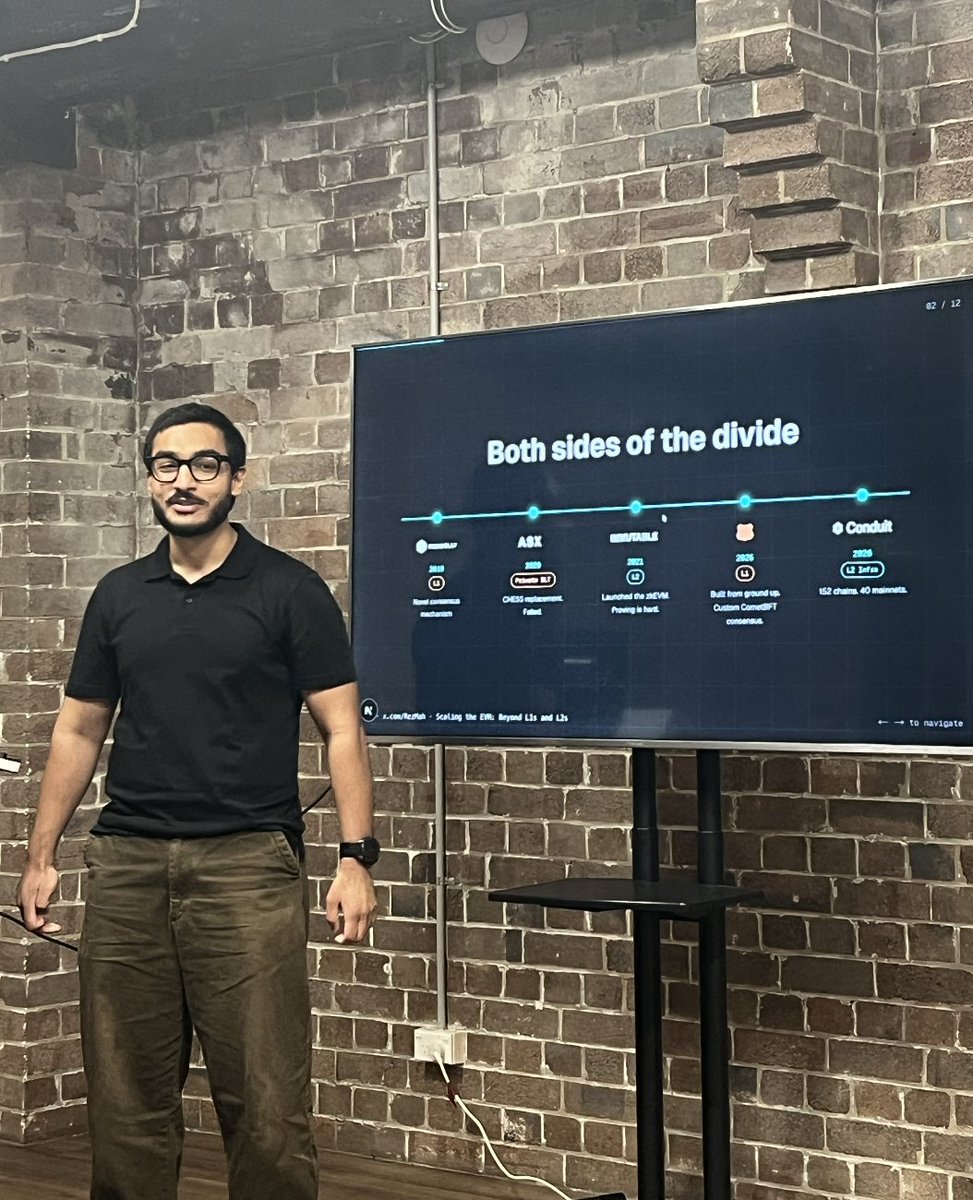
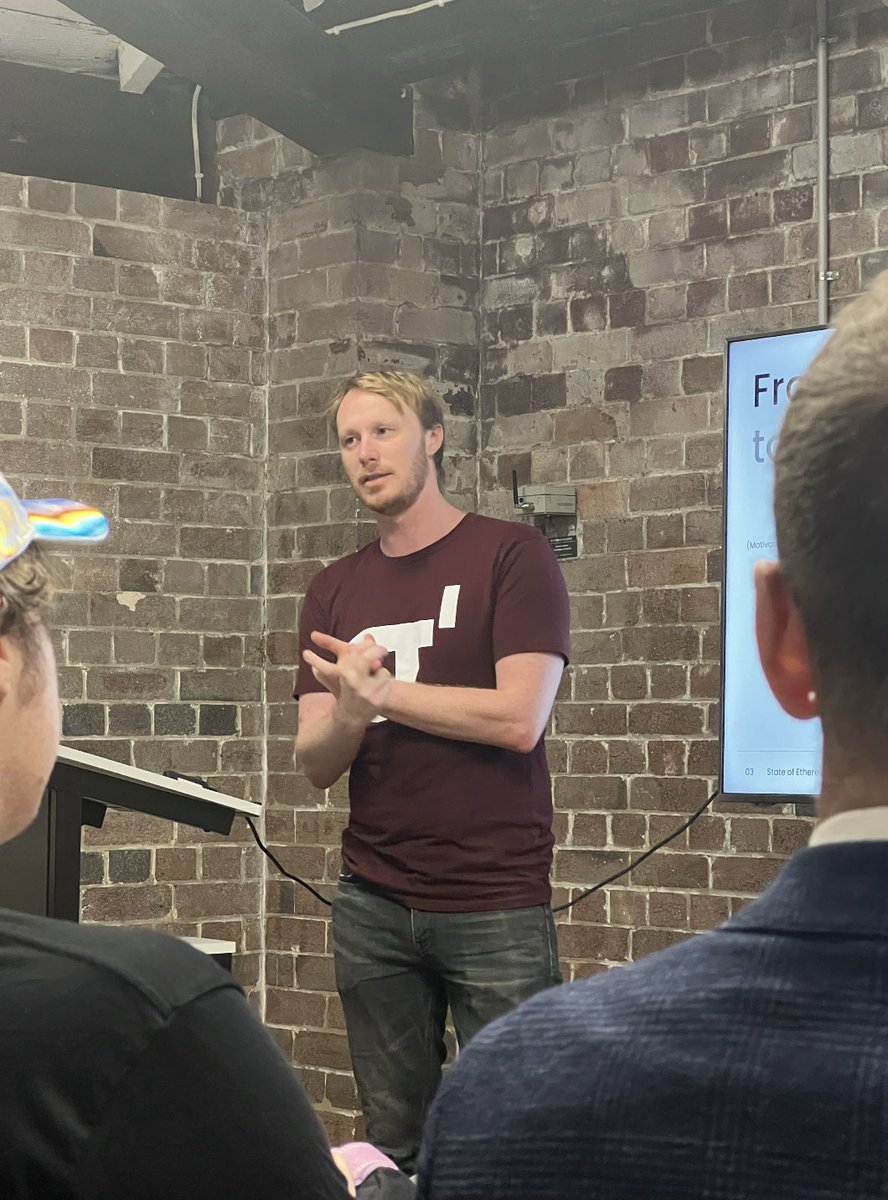
This week at @EthereumSydney
> @gami_vc and @stableshaman larped as each other and debated whether @ethereum is for stablecoins or buying drugs anonymously
> @kirkthebaird gave a talk on the Ethereum 5 year roadmap that will get done in 10
> @RezMah staunched the whole crowd (look at those arms) and spoke about why L2s are hard to build (also congrats on G3 launch @conduitxyz)
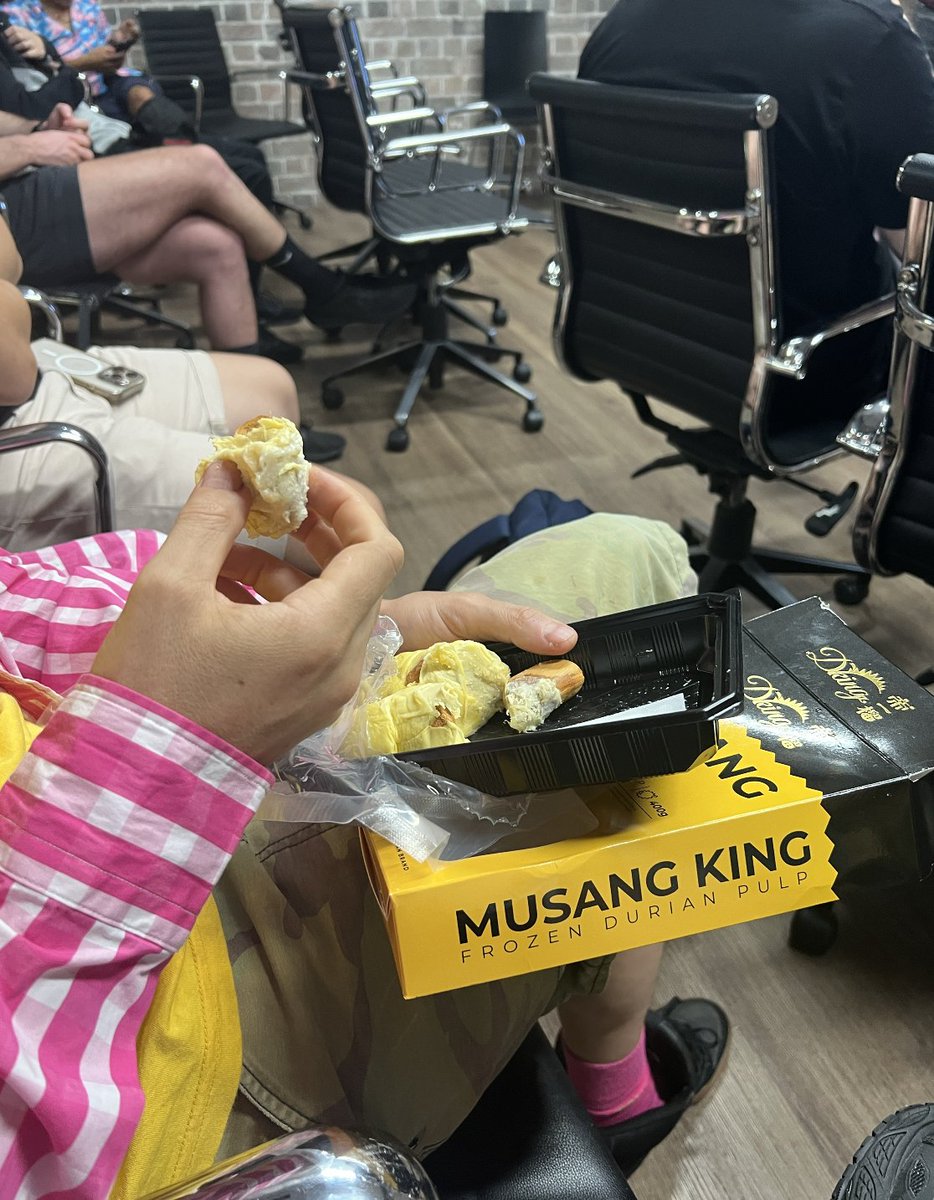
> @semicondurian opened a durian inside and made @ideacasino gag
> @BokkyPooBah made everyone meditate and was giving out reiki massages
> we found out @JohnSiderides still plays wordle
4
5
20
1,515