
1,969 Photos and videos
















Robert retweeted

May 26
“Evolution is just a theory”
In science, a theory is a well-tested explanation supported by a large body of evidence.
16
17
128
17,780

May 20

Science is hard. You have to prove it, test it, and reproduce the results.
Pseudoscience is easy. Make it up. Add fear. Watch it spread.
1
179
Robert retweeted

May 18
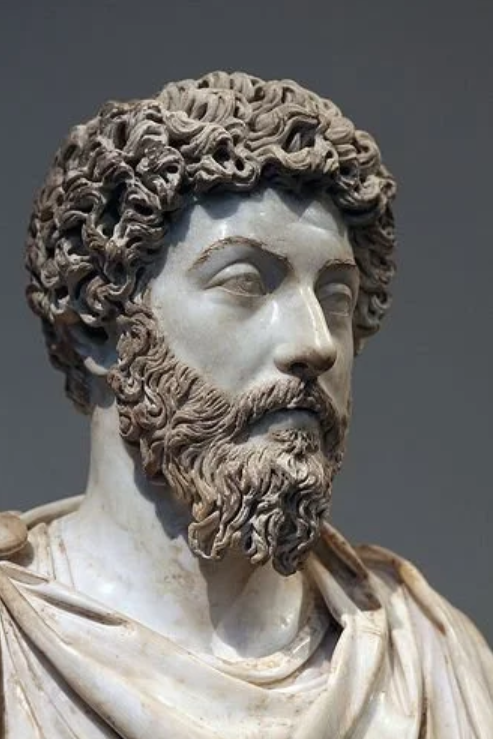
Marcus Aurelius cured anxiety 2,000 years before therapy existed.
Emperor of Rome. Plague. Civil war. A racing mind under impossible pressure.
His private journal is the cleanest manual for a calm mind ever written.
7 lines from it that still work 🧵
29
300
1,764
603,448
Robert retweeted

May 18
You’re basically just parroting North Korea’s official narrative there, and well done on those stats Douglas.
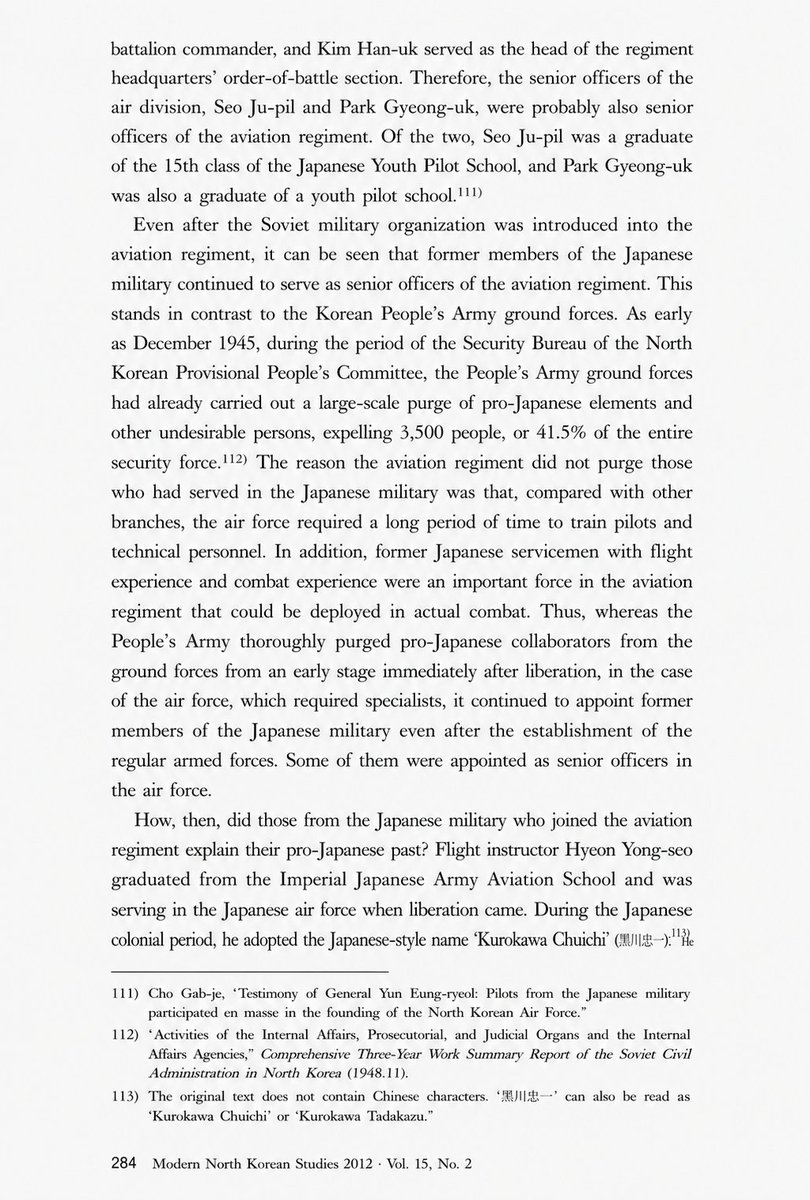
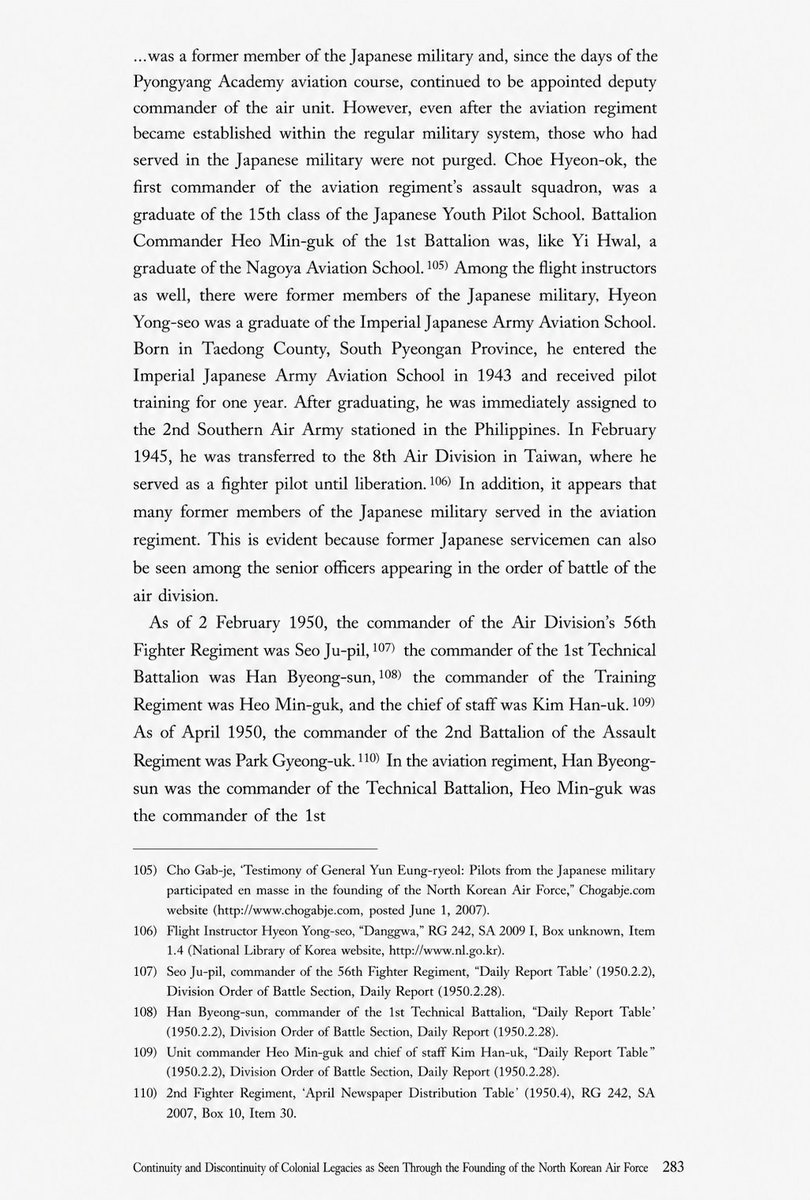
North Korea did purge pro-Japanese elements when it could afford to,but as soon as it needed rare skills, it kept them. In the North Korean air force, it’s clear that former members of the Japanese army were still serving as pilots, commanders, technical staff, and even senior officers after the regular army was established.
DPRK sold a myth of revolutionary purity,but in reality,the state also relied on Japanese colonial personnel when it suited them, even though the DPRK had natural resources and industry.
The ROK has absolutely no resources,no skills outside of collaborators,no industry,and no natural resources.
DPRK had the luxury of acting the part of the revolutionary moral authority but chose not to,ROK could not afford to be moralistic, so they were forced to rely on skilled manpower from the former colonial administration.

South Korea's ruling class is mostly former Japanese collaborators during the occupation and their descendants
while North Korea's ruling class is mostly Righteous Army descendants (guerilla fighters in Manchuria against the Japanese) and their descendants
4
9
60
4,757
Robert retweeted

May 11
People hate leftists because modern leftists are like you. Odious freaks that have nothing to do with any of the labor reforms of old. You aren’t a labor activist fighting The Man for free healthcare, you’re a performative faggot for updoots

People hate leftists without realizing it's because of leftists that they have a lot of the privileges they take for granted
15
163
1,876
36,060
Robert retweeted

May 3
these evidence shows that "communism"-style sharing and egalitarianism only functioned in very small, tight-knit communities, typically small indigenous bands where everyone knew each other and was closely related. In other words, non-expanding, low-density tribes living in relative harmony with their environment.
Trying to impose the same model on large, complex, developed societies is mathematically impossible due to coordination, information, and incentive problems. Historical attempts at communism were largely experiments driven by ambitious young intellectuals chasing own agenda, and they repeatedly failed. while the best outcomes have come from societies with fair capitalism paired with sensible kindness and common sense, voluntary cooperation and rule of law.
1
4
203
Robert retweeted

Apr 22
Yes, the people who call themselves 'trans' exist and they deserve exactly the same rights as everyone else, which, fortunately, they already have in the UK. It would rightly be considered discrimination if a person was refused employment, housing or the vote because they identified as trans.
'Trans women are women' is a thought-terminating cliché. Men are not women. That doesn't mean they're not allowed to present themselves however they like, call themselves whatever they like and believe whatever they like about themselves. It means they haven't changed sex.
If we replace the objective, observable characteristic of sex with the unfalsifiable concept of gender identify, women and girls lose, among other things, their right to fair and safe sport and women-only spaces, including changing rooms, prison cells and rape crisis services.
Women and girls are provably more vulnerable to forms of abuse including sexual assault, harassment and voyeurism in mixed-sex spaces. There is no evidence that trans-identified men don't have exactly the same rates of criminal offending as all other men.
Trans people exist. I have no desire for them not to exist; indeed, I wish them safety, happiness and health. However, 'existence' does not, and should not, mean the violation of other people's right to privacy, dignity and freedom of speech, or the reconfiguration of society to indulge a fallacy.
607
5,577
35,584
2,348,747
Robert retweeted

Apr 21
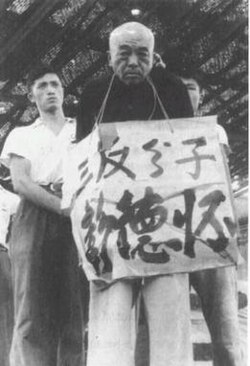
At the 1959 Lushan Conference, Marshal Peng Dehuai quietly warned Mao that the Great Leap was killing people. Mao purged him as a rightist and doubled down on the madness.
The next eight years of Peng's life were a nightmare of torture and imprisonment. Seized by Red Guards in December 1966, he was dragged back to Beijing, beaten in over 130 interrogation sessions, and paraded through public “struggle sessions” where his ribs were fractured and his spine damaged so badly he could no longer walk by 1973.
Denied proper medical care as lung cancer spread to his brain, he endured constant pain, sleep deprivation, and degrading isolation in a military prison cell until he finally died in custody on November 29, 1974. The regime kept his passing a secret from his wife for another two years.
In communism, not even the regime’s own heroes can speak truth without being destroyed.
134
1,644
5,971
355,298
Robert retweeted

Apr 15
China isn’t some communist success story, it’s a contradiction they rely on.
It’s a one party authoritarian state that had to introduce markets, trade, and private production just to avoid collapse.
The wealth comes from those elements.
The control comes from the part that’s still actually communist.
So when you point to China, you’re not pointing to communism working. You’re pointing to a system where markets create wealth and the state captures it.
If communism worked on its own, you wouldn’t need hybrids. You’d point to countries that stayed closest to full central planning.
You don’t. Because those examples don’t outperform, they stagnate or collapse.
Apr 14

Astonishing that Americans can write stuff like this whilst their country falls further and further behind Communist China.
22
53
246
5,671

There is a reason people do not debate Flat Earthers or Moon landing deniers. It is not because the evidence is weak. It is because the conversation is rigged from the start. You can bring measurements, physics, engineering, independent tracking, international verification, and experiments they can do in their own backyard, and none of it matters. The moment the facts show up, they shout fake, edited, CGI, conspiracy, or “that’s just your belief.”
You cannot debate someone who treats every piece of evidence as invalid by default. You cannot debate someone who demands proof and then rejects the proof the second it appears. You cannot debate someone who thinks their personal disbelief outranks measurable reality.
A debate requires both sides to accept evidence. Flat Earth and Moon landing denial collapse the moment evidence enters the room, so the only move left is to deny the room exists.
That is why people do not debate them. Not because the globe is fragile, but because the argument they bring is. You cannot have a real discussion with someone who decided ahead of time that nothing you show them will ever count.
1,050
1,530
10,343
477,186
Robert retweeted

Apr 1
Gravity is fully explained physically.
Electromagnetism is fully explained physically.
Nuclear decay.
Nucleosynthesis and the production of the elements.
Weak interactions.
Strong interactions.
Higgs coupling and mass generation.
And more.
All explained completely physically.

Science has never shown that anything was fully explained by material causes, therefore there is no such thing as an inductive argument from the success of science for materialism.
56
8
225
11,565
Robert retweeted

Mar 30
This sentence by Dostoyevsky never fails to hit hard:
“You sensed that you should be following a different path, a more ambitious one, you felt that you were destined for other things but you had no idea how to achieve them and in your misery you began to hate everything around you.”
66
745
6,272
337,611
Robert retweeted

Mar 29
Marcus Aurelius was the most powerful man on earth.
He could have had any woman he desired. Been drunk and partying for the rest of his life. No one would have stopped him.
He chose none of it.
Instead, he spent his nights writing privately about his daily struggle to live better. Those notes, never meant to be published became Meditations. The foundational text of a 2,000-year-old philosophy called Stoicism.
Here's what it actually teaches.
At its core, Stoicism begins with a single, uncomfortable truth: most things are not up to you.
Your relationships, your finances, your reputation, your body. You can influence these, but never fully control them. Even if you do everything right, misfortune can still find you. The economy collapses. Partners leave. Bodies fail.
But here's where Stoicism flips the script.
While you can't control what happens to you, you can always control how you respond. Your opinions, your actions, the position you take toward the world. These belong entirely to you. And according to the Stoics, that's where all your energy should go.
This doesn't mean becoming cold or emotionless, a common misconception about Stoicism.
The Stoics saw emotion as a deeply human characteristic. What they understood, though, is that it's not the emotion itself that determines your mood. It's the position you take toward it. When you learn to observe your feelings rather than be consumed by them, they lose their power over you. Emotions become like waves: they rise, they pass, and you remain standing.
That shift in perspective changes everything.
Marcus Aurelius lived this philosophy every single day. He had every reason not to.
Each morning, before facing the demands of running the world's most powerful empire, he practiced what the Stoics called praemeditatio malorum, negative visualisation. He would mentally prepare himself for the difficulty ahead:
"Today I shall be meeting with interference, ingratitude, insolence, disloyalty, ill-will, and selfishness."
This wasn't pessimism. It was readiness. A mind that has already confronted difficulty isn't rattled when it arrives.
He also carried memento mori, the constant reminder that life is temporary. Not as a morbid obsession, but as a tool to stay focused on what truly matters and let everything trivial fall away.
And that, ultimately, is what Stoicism is about.
We live in an age of endless distraction: notifications, opinions, noise competing for our attention at every turn. It's easy to scatter your energy across things you can't change and exhaust yourself in the process.
Stoicism offers a quiet, clear alternative: point your energy toward what's essential, and release everything else.
Marcus Aurelius had unlimited power, unlimited pleasure, and unlimited distraction available to him. He chose none of it and spent his nights writing about how to be better.
That alone might be the most Stoic lesson of all.
37
389
1,595
164,282

Robert retweeted

Mar 13
This guy literally explained why Marcus Aurelius had unlimited power and chose to live like he had none.
The philosophy behind it is 2000 years old and more relevant than ever. Stoicism
Watch this:
37
805
3,477
179,379
Robert retweeted

Mar 8
“Empathy” now means moral cowardice dressed up as performative compassion.
Mar 7

“Empathy” might be the most abused word of the 21st century.
27
403
2,751
49,033
Drug addicts are not victims of society.


122
Robert retweeted

Mar 4
Postmodernism is ideological poison dressed up as profoundness; it denies objective truth in the social sciences and permits a pluralism of interpretations as being legitimate.
1
8
654
Robert retweeted

19 Nov 2025
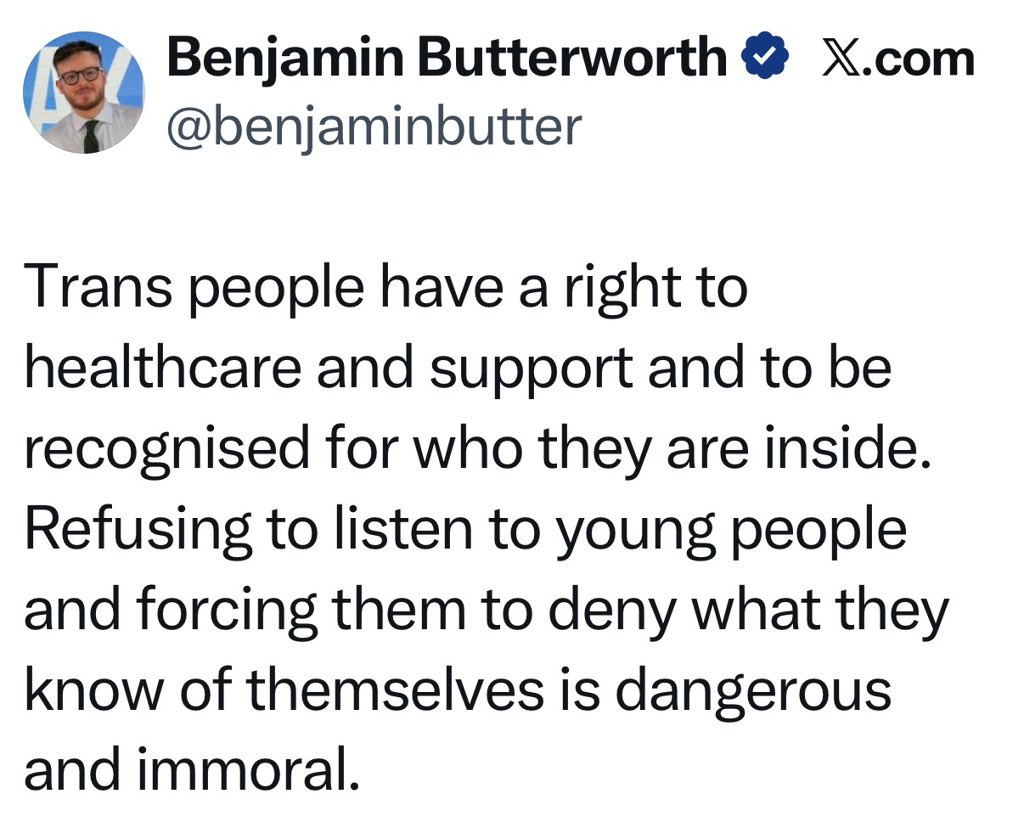
No one has the “right to be recognized for who they are on the inside.” No one is obligated to understand or be interested in your personal thoughts about “gender,” your sexual interests, your favourite outfits, or your politics. This is stupid and narcissistic. You go to the doctor to get treatment for health issues not so that your personality can be “validated”
41
137
1,047
23,541