
4 Photos and videos


Jun 12
Had a great time talking at @ycombinator about @leanprover and the future of what I call “verified intelligence.”
As AI changes how we do math, science, software, and ML, I’m increasingly convinced verification is going to become a much bigger part of the stack. Thanks @FrancoisChauba1 for inviting me!
Jun 12

At our latest YC Paper Club, researchers and builders presented on self-play for LLMs, AI for biology, formal verification, and agentic coding in production.
Thank you to our presenters:
00:00 — Francois Chaubard (@FrancoisChauba1) | Introduction & Call for Presentations
05:47 — Yasa Baig (@BaigYasa) | A World Model of Protein Biology (biohub.ai/esm/protein/about)
25:38 — Luke Bailey (@LukeBailey181) | Scaling Self-Play with Self-Guidance (arxiv.org/pdf/2604.20209)
37:51 — Arnab Maiti | Stream RAG: Instant and Accurate Spoken Dialogue Systems with Streaming Tool Usage (arxiv.org/pdf/2510.02044)
47:40 — Robert Joseph George (@Robertljg) | Lean and the New Era of Verified Intelligence (arxiv.org/abs/2602.22631)
58:52 — Lukens Orthwein (@lukensort) | Founder AI Hacks: Programming is an RTS Game Now
1:16:07 — Closing Remarks
3
11
1,256
Jun 11
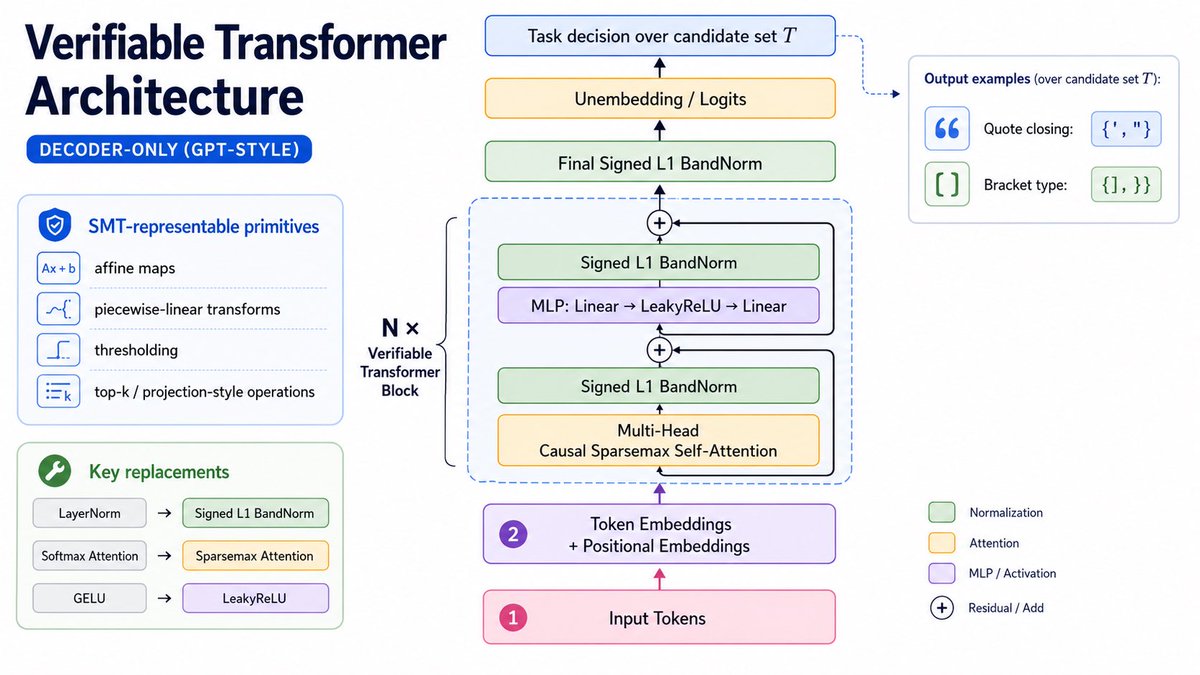
Really liked @neelsomani post a month ago on verifiable transformers. The idea is simple but powerful: redesign a small GPT-style Transformer so its circuit explanations can be encoded into SMT solvers and checked over finite symbolic domains, rather than only supported by examples and ablations.
I wanted to see if I could also do formally in a theorem prover! I used TorchLean that takes one exported checkpoint run and build a Lean-side evidence layer around it! So checking the model metadata, finite prompt traces, circuit summaries, replayed margins, and theorem endpoints. So the SMT solver checks the bounded circuit claim, while Lean checks that the exported evidence package actually matches what it claims! Lean has tactics that use SMT solvers in the background:)! I also proved some theorems regarding this!
This week’s artifact is intentionally small and TorchLean can run large GPT-style models and this is the kind of future work I’m excited about.
Blog here for more details: robertj1.com/ai4science/veri…
May 13

I built a Transformer variant whose circuits can be formally verified.
For small circuits, an SMT solver can prove:
- Robustness to bounded noise
- Equivalence to symbolic programs
- Each edge in the circuit is necessary
Not interpretability. Not evals. Proofs.
Repo below:
1
2
11
4,316
Robert Joseph retweeted

Jun 10
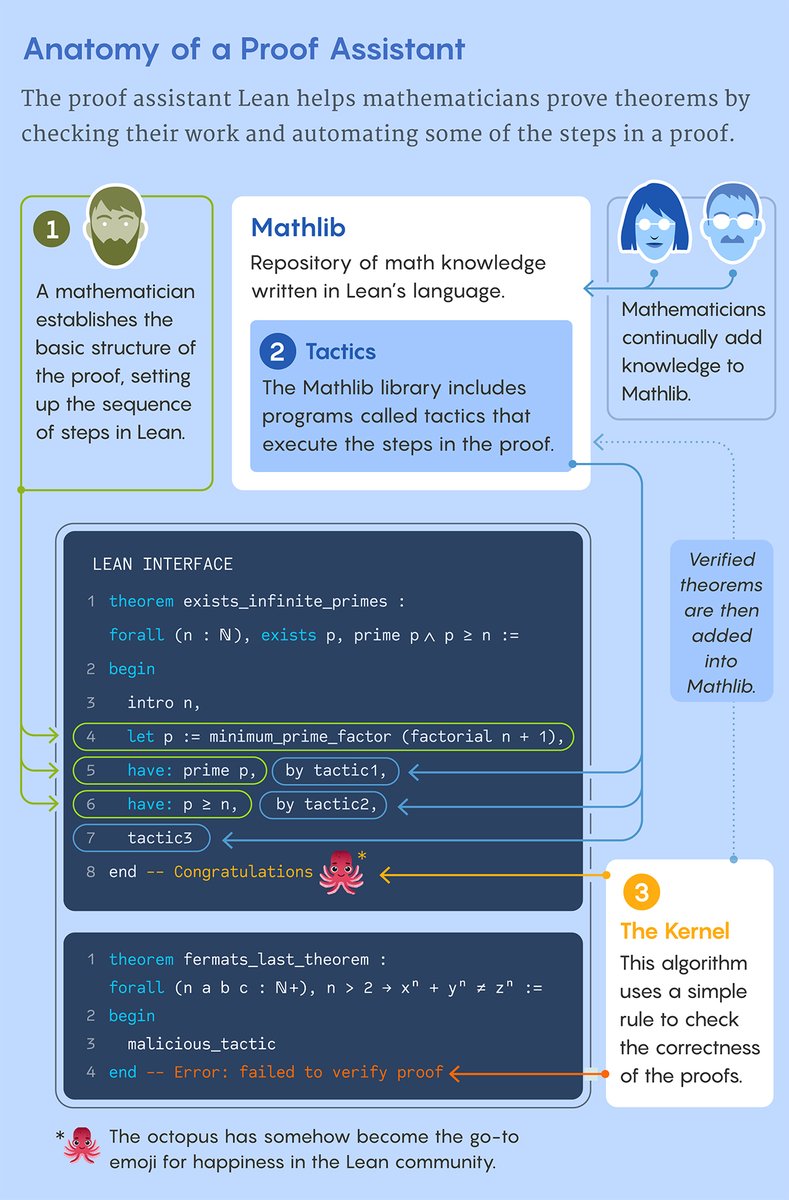
Lean is software that allows mathematical proofs to be written and checked as computer code. Mathematician Terence Tao uses it as a part of his collaborative approach to solving complex mathematical problems.
quantamagazine.org/how-terry…
41
218
11,229
Robert Joseph retweeted
Software like Lean, which allows mathematical proofs to be written and checked as computer code, could usher in a new, more collaborative era of problem solving. One of its most prominent supporters is mathematician Terence Tao.
quantamagazine.org/how-terry…
7
57
219
16,842
Robert Joseph retweeted

Jun 2
AI technology is on the rise. So are its applications in industry, science, and society at large. At
leidendeclaration.ai
we, a group of 16 scientists, including mathematicians, computer scientists, philosophers, and historians, have drafted a declaration calling for action on the challenges posed by the use of artificial intelligence in mathematical research.
Over several months, we carefully weighed the promises and risks of introducing AI into research workflows and beyond. The declaration has already been endorsed by international communities, most prominently by the International Mathematical Union, as well as by a large group of mathematicians and other scientists.
We invite our colleagues to sign the declaration and support its recommendations on how AI should be adopted in our workflows, and how we should establish and maintain relationships with AI labs and industry.
One of its central points is the need to preserve balance, rigor, and sound judgment while acknowledging the extraordinary pace of development in the AI community.
We hope this declaration, a deeply human act, will serve as a guiding document for those who recognize the human imperative and the need for governance in scientific discovery, especially mathematical discovery.
9
30
120
14,018
Robert Joseph retweeted

May 28
Last week we hosted the first ever YC Paper Club in Mountain View.
We brought together great AI researchers and founders to discuss both the state of the art and what it actually takes to get it into production.
Thanks to the following presenters:
0:12 - Intro from YC Visiting Partner @FrancoisChauba1
3:49 - Tanishq Kumar (@tanishqkumar07) — Speculative Speculative Decoding (arxiv.org/abs/2603.03251)
18:33 - Guangyao (Stannis) Zhou (@zhouguangyao) — Diffusion-MPC (arxiv.org/abs/2410.05364)
30:26 - Isaac Ward — LeWorldModeling (arxiv.org/abs/2603.19312)
43:54 - Akshay Vegesna (@akshayvegesna) — Deep Learning is Not So Mysterious or Different (arxiv.org/abs/2503.02113)
51:24 - Konwoo Kim (@konwookim) — Pretraining Under Infinite Compute (arxiv.org/pdf/2509.14786)
20
26
240
81,199
May 27
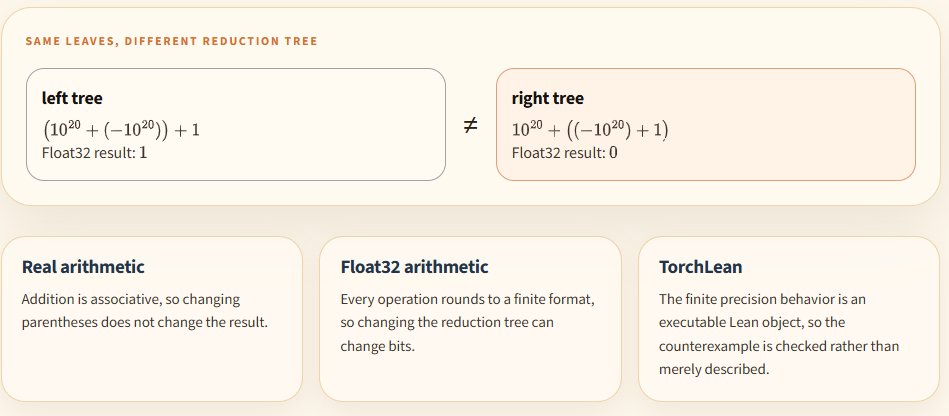
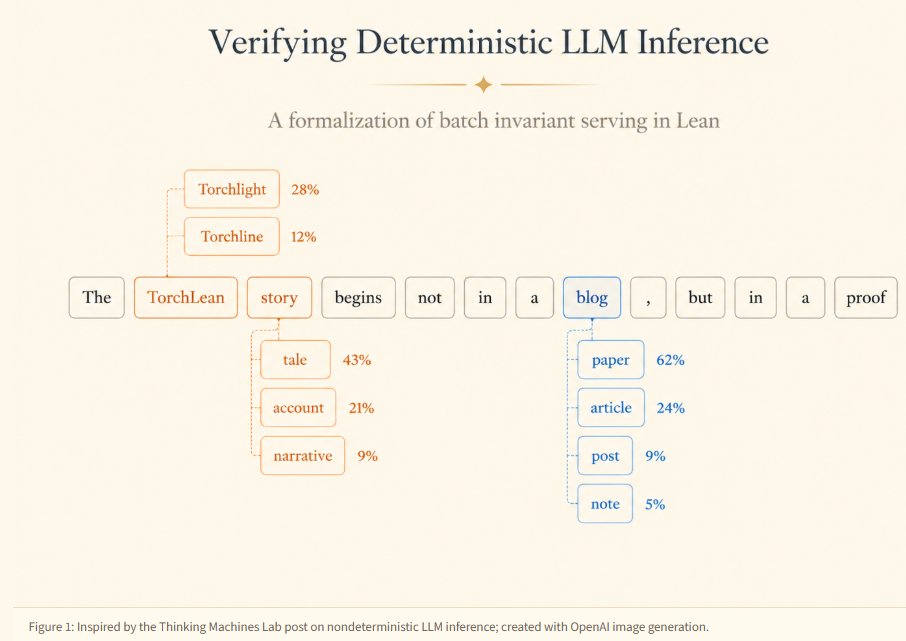
Your prompt can be identical.
Your sampler can be greedy.
Your output can still change because the server batched you with different requests.
@thinkymachines explained this beautifully. With TorchLean, I wanted to ask: can we formalize this missing serving contract into Lean theorems?
Yes, we can and to understand the story, here’s how I did it: robertj1.com/ai4science/batc…
1/6
10 Sep 2025

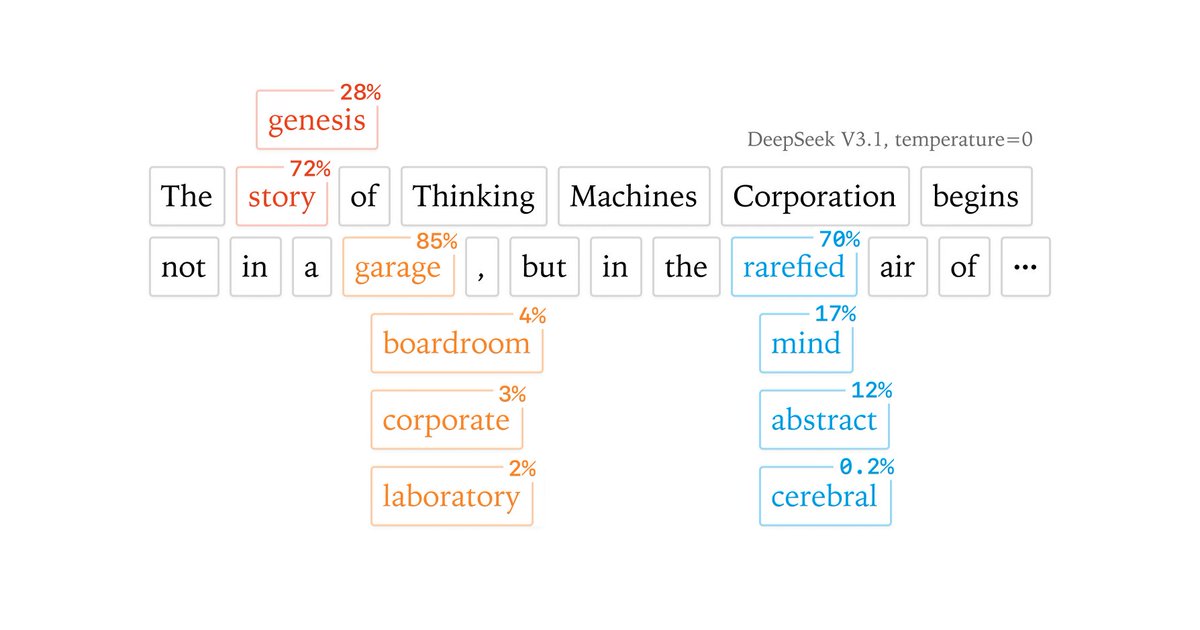
Today Thinking Machines Lab is launching our research blog, Connectionism. Our first blog post is “Defeating Nondeterminism in LLM Inference”
We believe that science is better when shared. Connectionism will cover topics as varied as our research is: from kernel numerics to prompt engineering. Here we share what we are working on and connect with the research community frequently and openly.
The name Connectionism is a throwback to an earlier era of AI; it was the name of the subfield in the 1980s that studied neural networks and their similarity to biological brains.
thinkingmachines.ai/blog/def…
1
1
158
May 27
4/ I also formalized stable decoding.
There are two routes:
• bitwise batch invariance
• margin certificates, where small logit drift cannot change greedy argmax
So the proof can say when numerical differences matter, and when they provably cannot change the token.
1
35
May 27
5/ Finally, I added a small proof-carrying CUDA bridge.
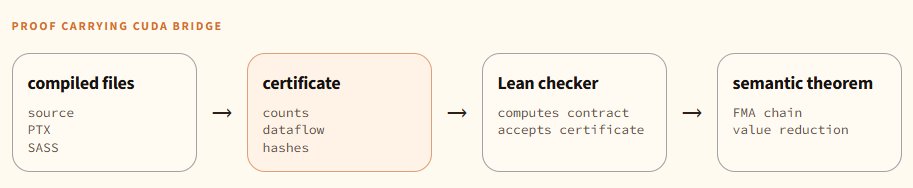
A tiny attention value-reduction kernel is compiled to PTX/CUBIN/SASS, an extractor emits a finite certificate, and Lean checks the FMA-chain reduction spec.
Not full GPU hardware verification, but a concrete bridge from CUDA artifacts to TorchLean semantics.
TorchLean codebase: github.com/lean-dojo/TorchLe…
Example codebase: github.com/Robertboy18/Torch…
I’ll be posting more examples every ~2 weeks: real-world ML bugs formalized in TorchLean, and why formal verification matters for deployed ML systems.
Go try it out :)
41
Robert Joseph retweeted

Launching today: Formal Frontier from the Mathlib Initiative, a program of @RenPhilanthropy and funded by @xtxmarkets.
Formal Frontier will focus on responsible, scalable, and open-source AI-driven autoformalization of mathematics.
Read more and learn how to get involved: mathlib-initiative.org/forma…
1
9
35
3,840
Robert Joseph retweeted

May 25
In the era of #ArtificialIntelligence, when human dignity is threatened by new forms of dehumanization, ours is the pressing duty to remain profoundly human. We must lovingly safeguard the grandeur of humanity bestowed upon us and revealed in its fullness in Christ, the splendor of which no machine can ever replace. #MagnificaHumanitas
vatican.va/content/leo-xiv/e…
864
14,046
67,264
2,232,273
May 23
Amazing article by my advisor @AnimaAnandkumar on AI4Science, also with formal verification and guarantees this will definitely have a big impact across various scientific and mathematical domains.

I am thrilled that my article in
@americanacad
Daedalus special issue on AI & Science: What Is the Future of Discovery? edited by James Manyika. amacad.org/daedalus/ai-scien… I talk about : How Do We Build AI to Push the Frontiers of Scientific Discovery? Scientific progress is limited not by a lack of new ideas but by the time and cost involved in physical experimentation. Scientific discovery is a needle in the haystack problem: it does not help if AI gives you a vastly bigger haystack. Without knowing if any of the ideas work, an AI system that designs experiments just increases the effort required, since performing the experiments to validate the ideas is the real bottleneck. In my view, AI’s most transformative impact in enabling scientific discoveries lies in reducing the need for such experiments. To get there, we need to build AI models that are able to granularly simulate and understand physics at all scales, rather than just abstractly reason in the textual domain. I explore what methods like Neural Operators have already helped achieve, what still needs to be done, and what lies ahead.
4
897
Robert Joseph retweeted

May 20
So exciting!

2
8
1,019
Robert Joseph retweeted

May 17
Solving unsolved math problems is even more fun now!
Check it out at aristotle.harmonic.fun
May 17

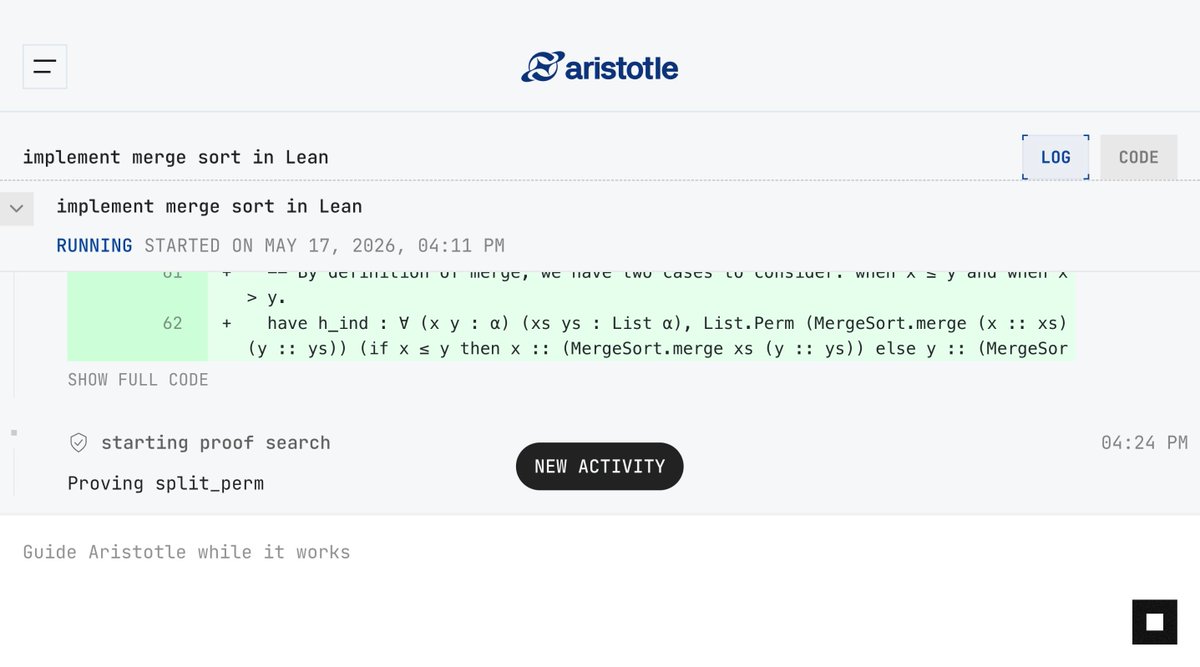
ICYMI: A few quality of life improvements landed in Aristotle Web to make it much more interactive and responsive:
▪ Live Updates. Aristotle can now share updates while it's in the middle of a run, so that you always know what it's doing and whether it's on track.
▪ Steering. You can message Aristotle while it's working if you want to redirect it, or if you just want to let it know it's doing a great job.
Keep the feedback coming; we'll continue cooking ...
8
7
165
30,634
Robert Joseph retweeted

May 13
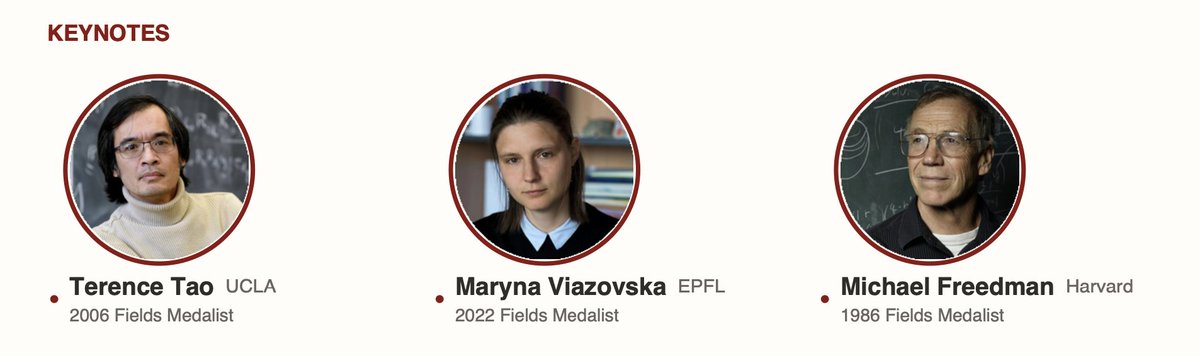
The Future of Mathematics Symposium keynotes from Fields Medalists:
Terence Tao, Maryna Viazovska, and Michael Freedman
Now available on Youtube, links below.
10
72
480
53,477
May 11
Very excited to finally release TorchLean publicly!
I also wrote a longer blog on why I think this matters:
robertj1.com/torchlean_verif…
Thread below :)
TorchLean codebase is now available!
TorchLean is a Lean 4 framework for verified neural-network software. It supports typed tensors, runnable training, graph IRs, verified autograd, Float32/IEEE semantics, CROWN / IBP-style verification, certificate checking, PyTorch interop, and CUDA/GPU execution.
After feedback and comments on our original post, we expanded TorchLean substantially: neural operators/FNOs, diffusion models, GPT-style text models, GPT-2-style runs, Mamba/state-space models, RL, 3D vision certificates, Bug Zoo case studies, PyTorch interop, and more.
Project page: lean-dojo.github.io/TorchLea…
Codebase: github.com/lean-dojo/TorchLe…
@Robertljg, Jennifer Cruden, Will Adkisson, Xiangru Zhong, @huan_zhang12 @caltech
#MachineLearning #ScientificComputing #Lean #FormalVerification
1
6
19
4,306
May 11
4/ For the formal methods / Lean folks: the API docs are where you can inspect the actual definitions, theorem surfaces, graph objects, verification modules, and proof layers:
lean-dojo.github.io/TorchLea…
For the ML systems folks: I’d start with Bug Zoo: real bug patterns turned into small TorchLean contracts:
lean-dojo.github.io/TorchLea…
2
2
99
May 11
5/ The broader hope is proof-aware ML infrastructure: models that can run, be inspected, lowered to graphs, checked by verifiers, and connected to precise mathematical claims!
Comments and feedback would be very appreciated: )!
2
52