
Director & Founder | Maddock’s Accounting & Advisory
Joined October 2013
- Tweets 642
- Following 310
- Followers 204
- Likes 2,609
8 Photos and videos




Ryan Maddock retweeted

Jun 10
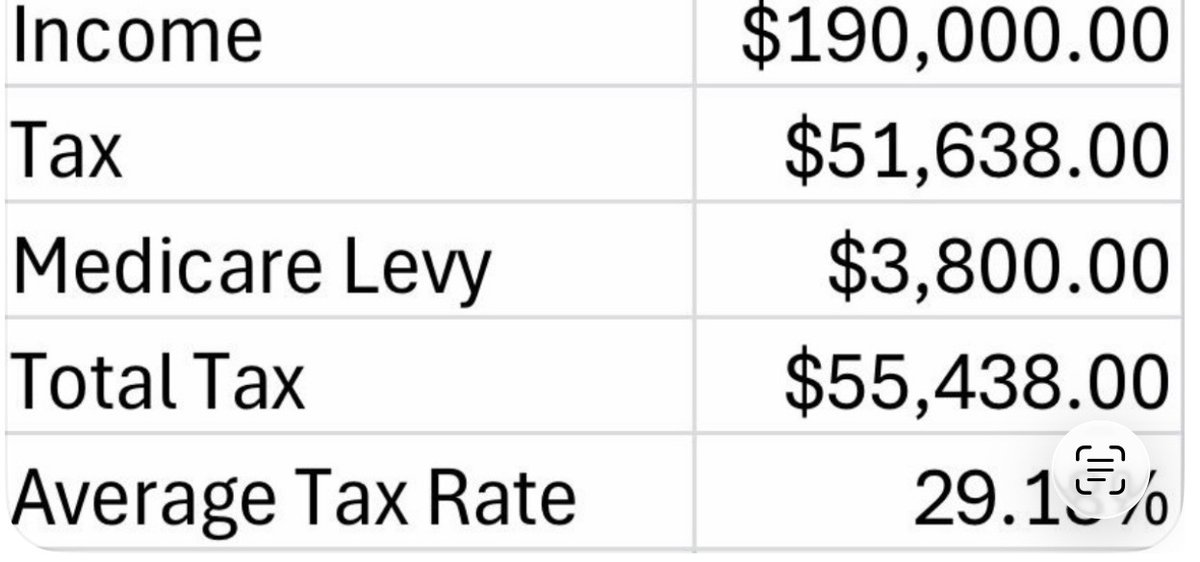
Putting aside the complexity of the proposed CGT changes, there is a simple illustration of why the minimum 30% tax rate just seems unfair in our system.
Someone on $190,000 of earned income a year has an effective tax rate of less than 30%.
Anyone under that (most Australians) will have a lower effective rate.
Yet, if they make a capital gain as part of their income, it has a minimum rate higher than their marginal tax rate. High income earners aren't affected because their rate is already higher.
So the proposed system only penalises lower income earners.
There are many flaws in this legislation, but the minimum tax rate seems to be the worst one in my view.
89
138
1,033
52,011
Ryan Maddock retweeted

Jun 9
Under Labor's new capital gains tax, if you're on the top tax rate, have a 6% mortgage and 2.5% inflation, you need to earn 9.1% investing - no small feat - just to break even with putting your money in a mortgage offset account. That's before you are compensated one cent for the risk you took, the double taxation, the time and effort.
Say you want to make at least 3% after tax above putting money in your offset account. A modest benefit. You would need to make 14.76% in the market. Do that consistently and you would be ranked amongst the greatest investors of all time. That's right - Labor's hurdle for investing as an Australian is you need to be amongst the greatest investors of all time. So if you're John Templeton or Walter Schloss, no worries.
41
34
345
54,102
This nails the whole point about how badly conceived the proposed changes are and worth a read

The responses to this have confirmed my point: a lot of people are treating these CGT changes as a moral issue instead of an economic one.
I get it. It sounds fair and common sense to say that all kinds of economic activity should be taxed the same. But that’s not how any tax system in the world works.
Why? We tax some activities more heavily and others more lightly because we care about incentives. We tax tobacco heavily to discourage smoking, for example. Super concessions are there to encourage saving. CGT concessions encourage people to invest their savings in businesses that create jobs. Everybody benefits from this.
I agree there is too much leveraged speculation in the housing market. The default path to getting wealthy in Australia shouldn’t be leveraging up on as many investment properties as possible. But there are targeted ways to address that without hitting all forms of productive investment.
1
141
Ryan Maddock retweeted

If Andrew was being honest, he wouldn’t refer to “returning” to the pre-99 system, which:
- had an averaging rule to limit bracket creep effects of multi-year gains
- had no 30% minimum tax
- applied indexing to companies
- excluded pre-85 assets
Why would he omit that?
Jun 5

Bitcoin or Australian businesses? Labor’s tax reforms ask a simple question: should the tax system encourage speculation or productive investment that helps grow the Australian economy? We’re choosing productivity #auspol
12
11
78
3,342
Ryan Maddock retweeted

Australia’s new minimum wage is $26.44 an hour. A full-time worker earning the legal minimum now falls into the middle income tax bracket. Bracket creep has reached the point where minimum wage workers are being taxed as “middle income”.
It isn’t easy under Albanese.
#auspol
67
227
2,006
105,110
Ryan Maddock retweeted

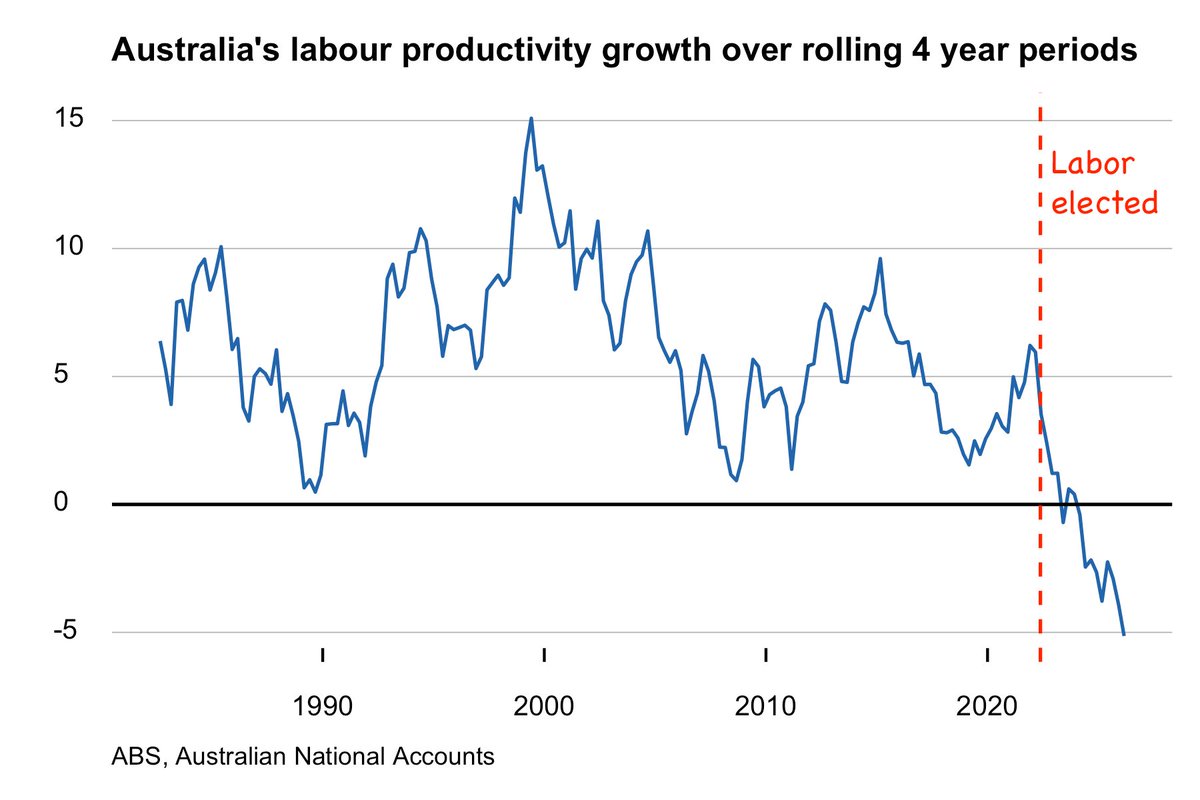
Labour productivity had NEVER fallen over a 4 year period UNTIL the election of this Labor government.
If you want to understand why things are costing more, why interest rates are going up and why your living standards are going backwards, this is the answer.
90
310
1,220
20,568
Ryan Maddock retweeted

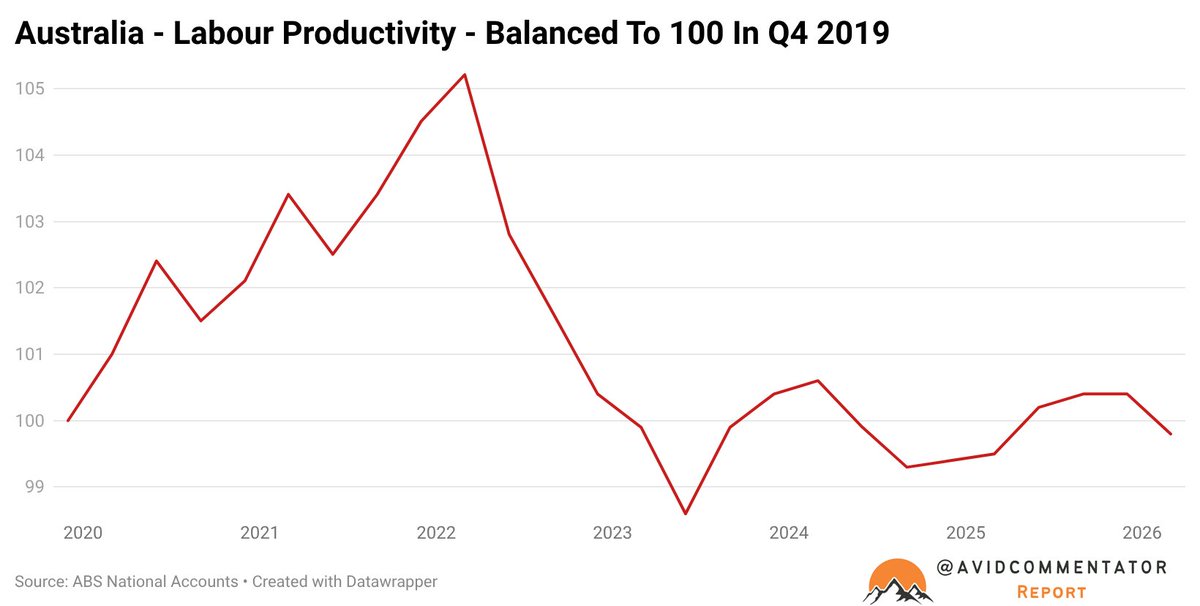
Let's check in on Australian productivity growth....
Oh.....That's not gone well...
27
14
190
11,667
Ryan Maddock retweeted
In Q1, the Australian economy grew by 0.27%.
The working age population grew by 0.64%.
Working increasingly hard to go nowhere or flat out backwards.
22
29
270
6,892
Ryan Maddock retweeted

Jim Chalmers wants Australians celebrating a tax cut.
What he doesn't want them asking is:
📈 Is the total tax burden falling?
📈 Is government spending falling?
📈 Are workers keeping more of their income over time?
The answer to all three is no.
This is classic Chalmers statsplaining.
A small tax cut is being advertised loudly while much larger tax increases on investment, housing, savings and wealth creation are pushed through quietly. Labor's broader tax package raises tens of billions through changes to capital gains tax, negative gearing and trusts.
Meanwhile, workers continue to be hit by bracket creep and inflation. A tax cut that doesn't keep pace with rising costs is not a path to prosperity.
The real measure isn't whether taxes fall by a few dollars next month.
The real measure is whether Australians are keeping a larger share of what they earn and whether government is consuming a larger or smaller share of the economy.
Labor's answer is:
❌ higher taxes on investment
❌ higher government spending
❌ bigger government
❌ more redistribution
A genuinely pro-worker government would reward both work and investment, because tomorrow's jobs, wages and opportunities depend on today's savings, capital and entrepreneurship.
A worker who buys shares is a worker.
A worker who invests in an ETF is a worker.
A worker who starts a business is a worker.
A worker trying to buy an investment property is a worker.
Prosperity comes from encouraging all of them — not setting workers and investors against each other.
The problem with this Budget is that it celebrates consumption today while taxing the investment that creates prosperity tomorrow.
Jun 2

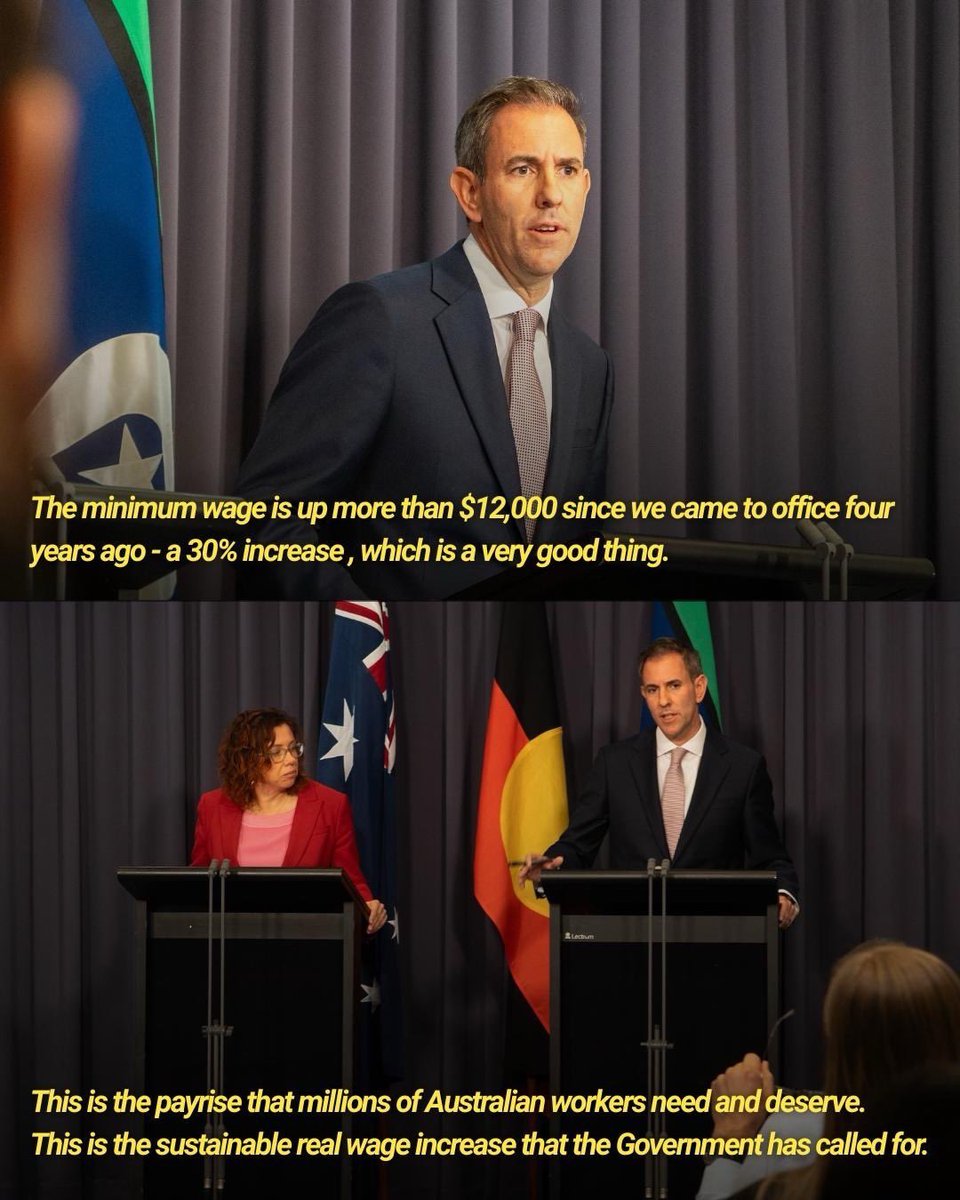
We welcome the decision from the Fair Work Commission today that 2.7 million award wage workers will get a pay rise of at least 4.75% from July 1.
6
17
67
3,344
The govt tells us these are the biggest changes in decades to the tax system yet they want to rush them through. So much for running on a platform of better governance and thorough consultation - our future generations deserve better

Labor allows just two days to scrutinise CGT, negative gearing changes afr.com/politics/federal/lab…
7
Ryan Maddock retweeted

Jun 1
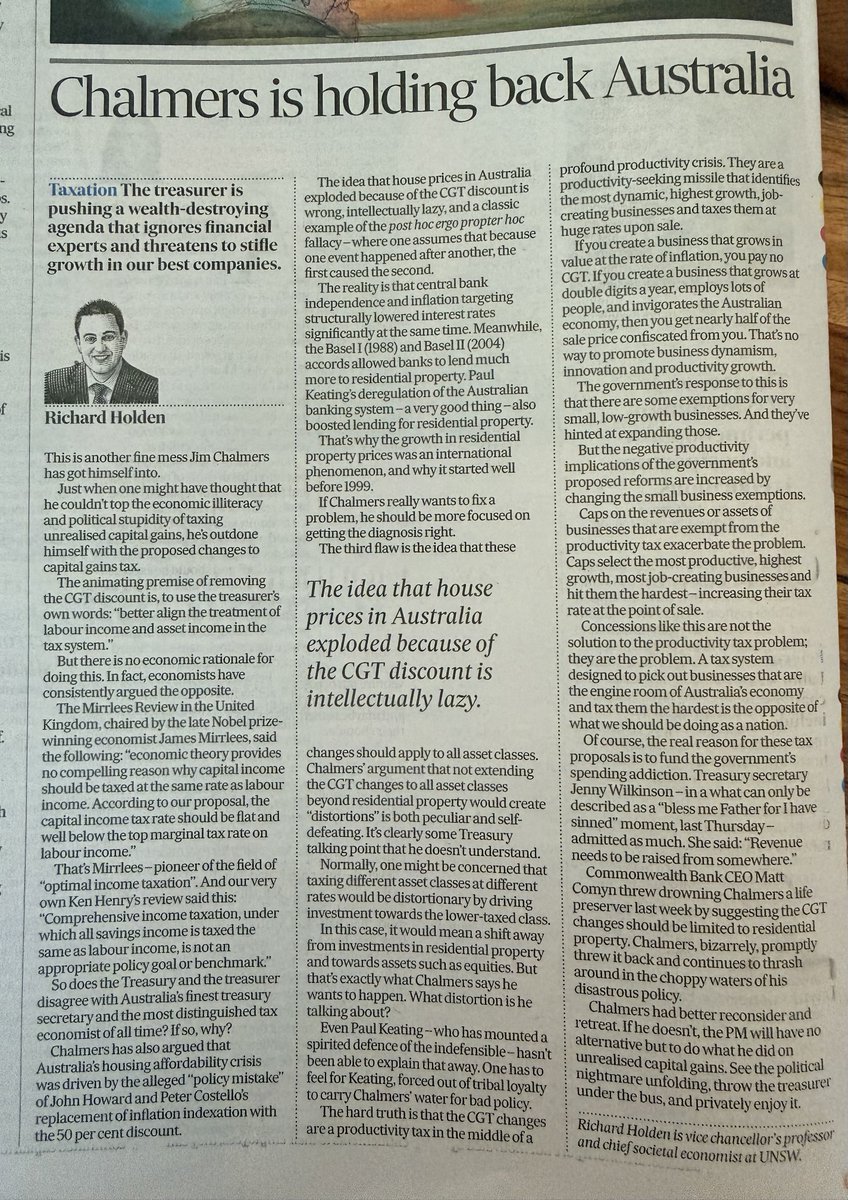
Great article in the AFR today from @profholden. The proposed changes to CGT are an act of self-harm which will incentivise businesses to stay small and grow slowly--the opposite of what we should be doing in a productivity crisis.
53
100
642
17,684
Ryan Maddock retweeted

May 31
> Comes to office claiming it’s a supply only problem
> Imports a million people during a housing shortage
> Fails to deliver new supply to meet growing demand
> Housing becomes even less available and affordable
> Blames tax settings in place for over 2 decades
> Raises capital gains tax on all types of investment
> Claims this is all about fairness for young people
May 31

Home ownership isn’t just about housing. It’s about what kind of country we want Australia to be.
122
308
1,441
30,763
Ryan Maddock retweeted

May 27
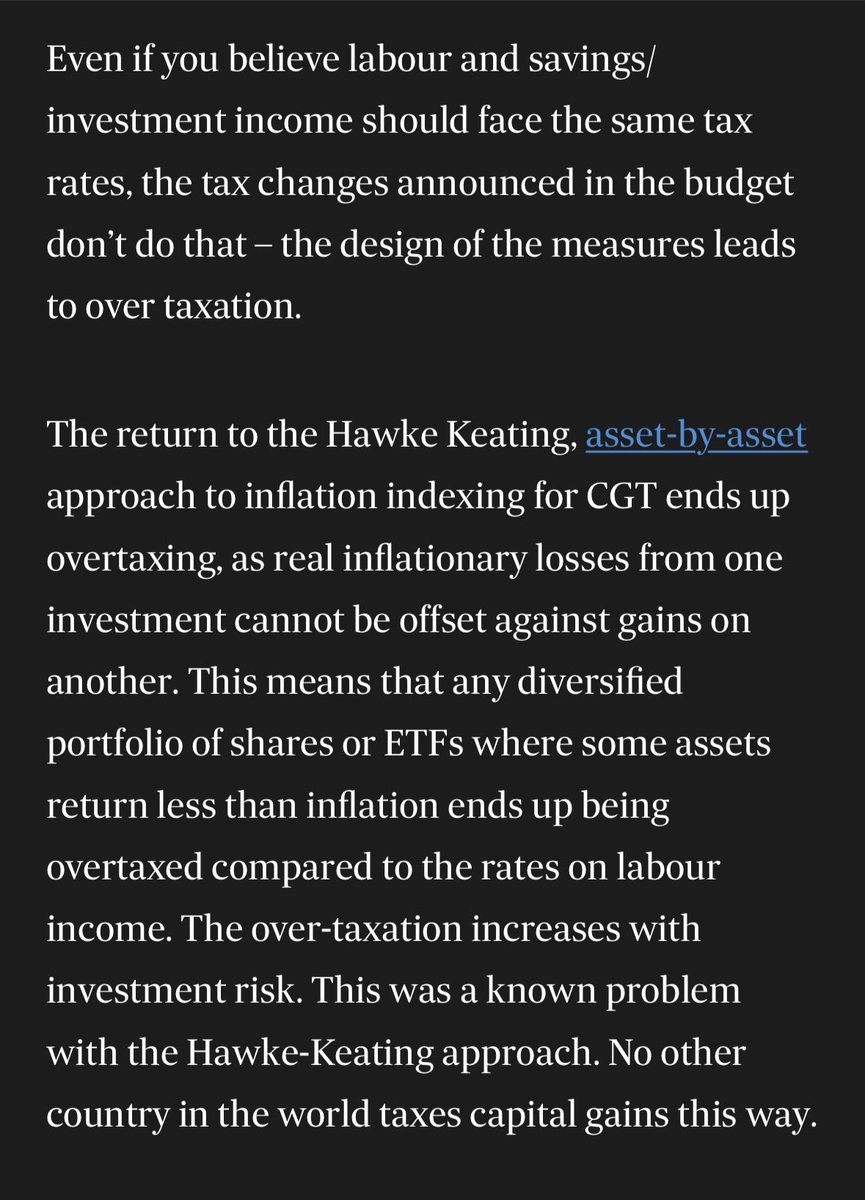
This is a genius summary...
May 26

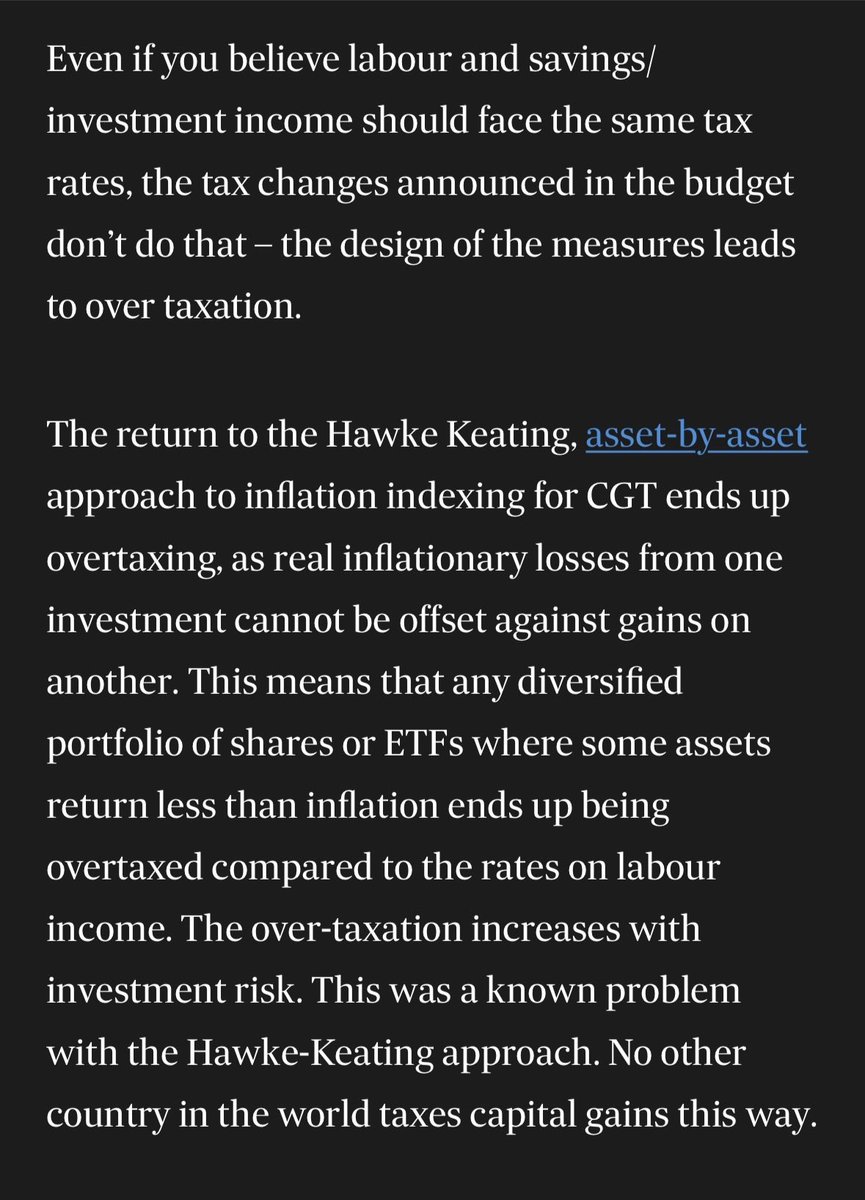
This is one of the clearest explanations so far of why the proposed CGT changes are economically flawed and could damage long term investment in Australia, written by former Treasury official Geoff Francis.
One of Geoff’s key criticisms is the return to inflation indexation on an asset by asset basis, something I’ve also been raising over the past week. Because inflation adjusted losses on one investment can’t offset gains on another, diversified investors can end up paying tax rates higher than their actual real returns. It also suggests the housing changes are based on flawed assumptions about property investors and will likely reduce housing supply, increase rents and hurt long term renters.
More broadly, Geoff argues the reforms do little to improve productivity or economic growth. He also points out that the additional tax revenue isn’t being used to reduce inefficient taxes elsewhere, but instead to fund more spending and debt, while the modest WATO tax offset will likely be quickly eroded by bracket creep.
afr.com/politics/federal/lab…
15
40
289
13,578

May 26
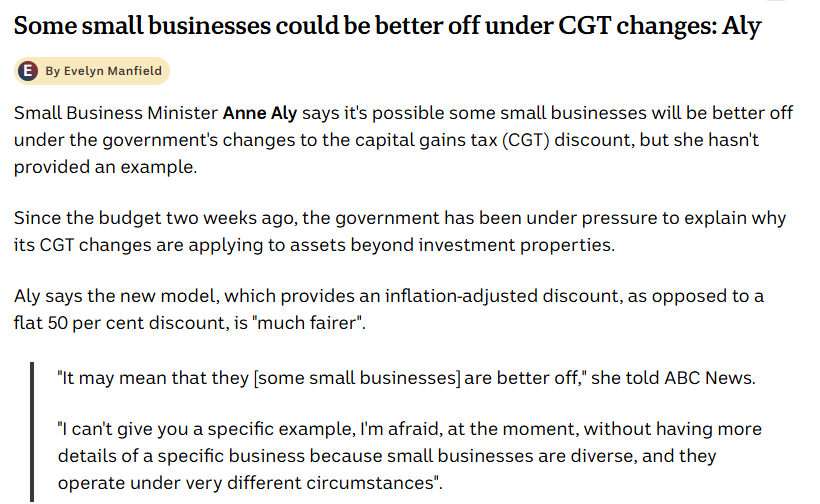
Why can't the Minister for Small Business provide an actual example? If there was a clear benefit, you'd think this would be any easy question to answer.
6
Ryan Maddock retweeted
May 26
An analysis by former Treasury tax official Geoff Francis shows that under the government’s CGT changes, investors with a typical diversified portfolio where one-third of shares underperform inflation will face real effective capital gains tax rates of between 42 per cent and 65 per cent...
In addition to indexing capital gains for inflation, Labor will impose a minimum tax rate of 30 per cent on real gains. However, real profits and losses from shares won’t be treated evenly. Only nominal losses, where the share price declines below the share purchase price, will continue to be permitted to be offset against real gains.
Chile, one of the few countries in the world to use an inflation indexation model for capital gains, allows real losses to be offset against real gains.
Labor’s model will penalise investors who spread their investments and record large gains on some stocks and big losses on other stocks, such as volatile biotech, technology and mining exploration companies.
In the budget papers, Treasury cited e61 Institute senior economist Matt Nolan’s analysis of the existing 50 per cent capital gains discount as evidence for why it was better to move to an indexation model to compensate investors for inflation.
Nolan said on Tuesday that although he supported indexing for inflation across the tax system, Labor’s CGT proposal had serious flaws.
“If they’re not going to allow the real component of losses, that very much betrays the principle and can lead to strange distortions. It would penalise risk, so it does become quite a problem. You need to treat the upside and downside on gains and losses symmetrically.”
afr.com/policy/tax-and-super…
31
89
436
10,542
Ryan Maddock retweeted

May 25
Owning stocks has been a backbone of building wealth, but an issue with Labor’s capital gains tax changes cloud its future. Budget 2026: bit.ly/4nPPE5x
17
28
102
7,702

Just the craziest policy you could ever see from a government
May 23

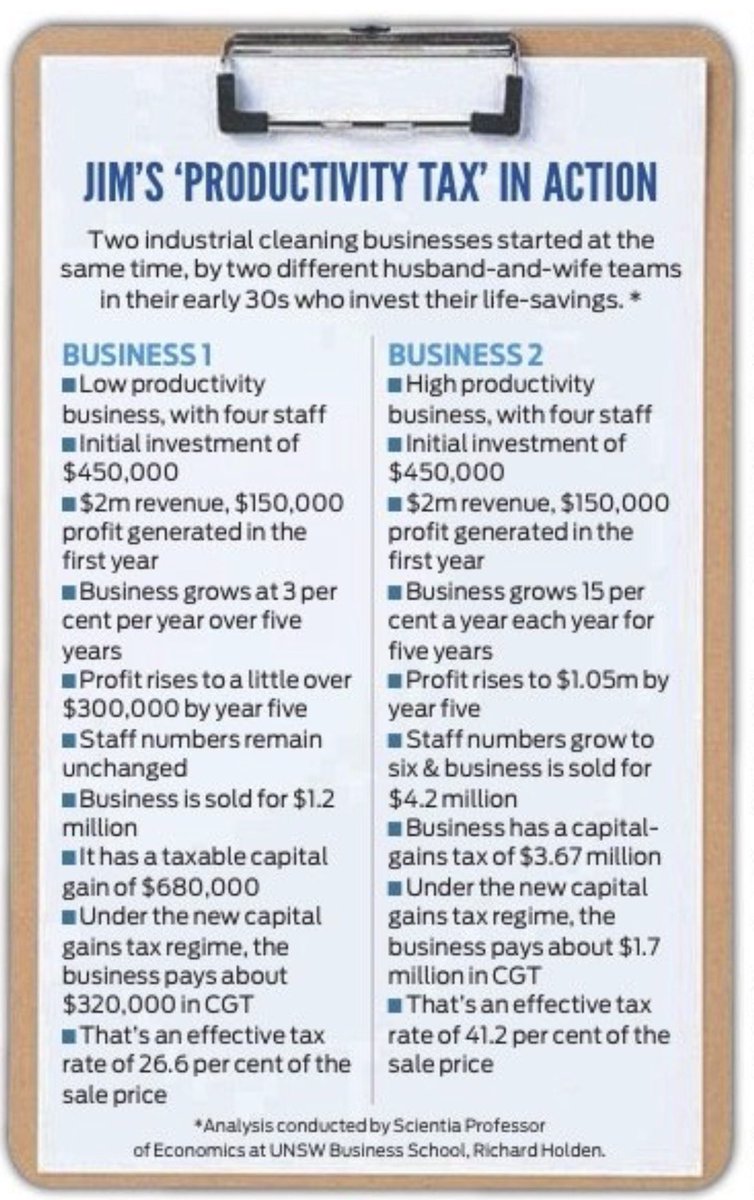
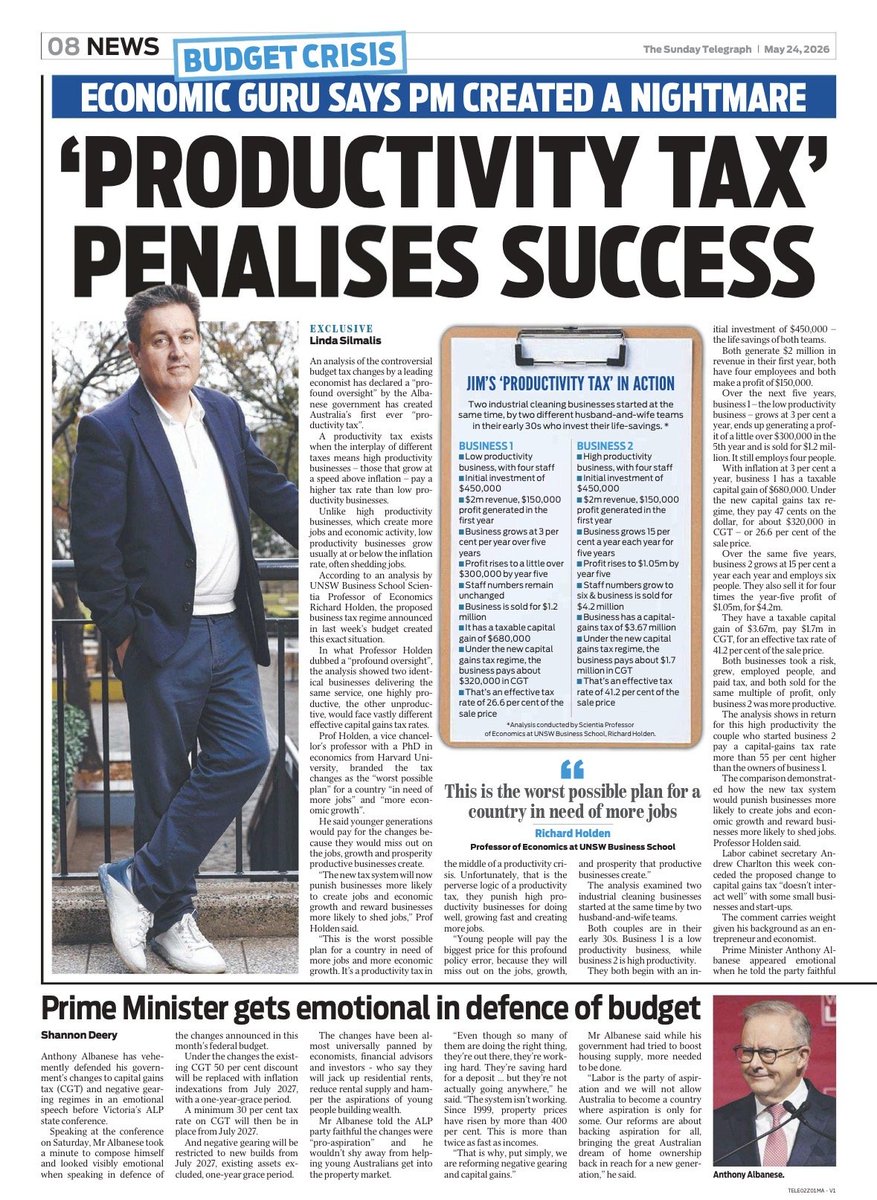
The last thing we need in the middle of a productivity crisis is a productivity tax.
"The new tax system will now punish businesses more likely to create jobs and economic growth and reward businesses more likely to shed jobs...This is the worst possible plan for a country in need of more jobs and more economic growth."
11
25
137
16,312
Ryan Maddock retweeted

May 23
The last thing we need in the middle of a productivity crisis is a productivity tax.
"The new tax system will now punish businesses more likely to create jobs and economic growth and reward businesses more likely to shed jobs...This is the worst possible plan for a country in need of more jobs and more economic growth."
35
77
375
34,012
Ryan Maddock retweeted
May 22
This is so incredibly good:
Economist Joseph Schumpeter warned that capitalism weakens when prosperous societies become so comfortable they forget where prosperity came from – and begin resenting the entrepreneurial class that created it.
A country might survive high taxes for periods of time. What becomes dangerous is something deeper: the moral suspicion of ambition itself. The creeping belief that commercial success is inherently exploitative, that profit is morally dubious, or that founders should quietly accept punishment for surviving years of uncertainty.
Prime Minister Anthony Albanese and Treasurer Jim Chalmers should think carefully about the signals embedded in this budget. Tax policy communicates values. This budget signals that founders are not viewed as partners in national prosperity, but simply reservoirs of revenue whose success is viewed with suspicion...
Civilisation advances because some people are willing to bet on tomorrow before tomorrow exists. Australia should be doing everything possible to encourage those people to build businesses here. Because once a society begins treating ambition as something suspect rather than admirable, it eventually discovers that no nation can remain prosperous after teaching its most ambitious people that they are unwelcome.
afr.com/politics/federal/bud…
75
278
1,289
79,051
Ryan Maddock retweeted
May 22
Charlton looking smart with these remarks today, which are the first sensible comments I have seen thus far:
"Assistant Science Minister Andrew Charlton has conceded the new capital gains tax regime “doesn’t interact well” with small businesses that have a low capital base, validating the sector’s concerns about the reform.
Mr Charlton, the Labor cabinet secretary, told ABC Radio National on Friday morning the decision to scrap the 50 per cent CGT discount for an inflation indexed model would not work for startups and small businesses that have “nothing to inflate off”.
The decision to impose the inflation model and minimum 30 per cent tax rate across all asset classes has sparked fierce backlash from the business sector.
Asked if the outcry was “unwarranted,” Mr Charlton replied: “No, I think there are real concerns”.
“Start-ups and some small businesses are a real concern because what I just explained is that we’ve got this new type of capital gains discount which is based on inflation, and the point that many start-up founders, the point that many small businesses have been making is valid.
“It’s a valid point because that new regime doesn’t interact well if you have a really low capital base because you’ve got nothing to inflate off. So, there are real concerns out there.
“The government recognised those concerns, the Treasurer recognised them. Before the budget, there was a statement in the budget recognising them and we are consulting on them. So, we definitely hear those concerns.”"
@ALeighMP @Charlton_AB
theaustralian.com.au/nation/…
20
19
128
8,819